Cinema Review: Wild Horse Nine (2026)
Directed by Martin McDonagh
Written by Martin McDonagh
Produced by: Graham Broadbent, Pete Czernin, Martin McDonagh & Anita Overland
Main Cast: John Malkovich, Sam Rockwell, Steve Buscemi, Tom Waits & Parker Posey
Cinematography by Ben Davis
Music by Carter Burwell
*** MAY CONTAIN SPOILERS ***
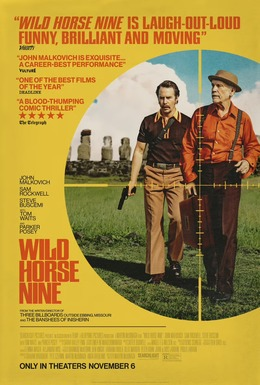
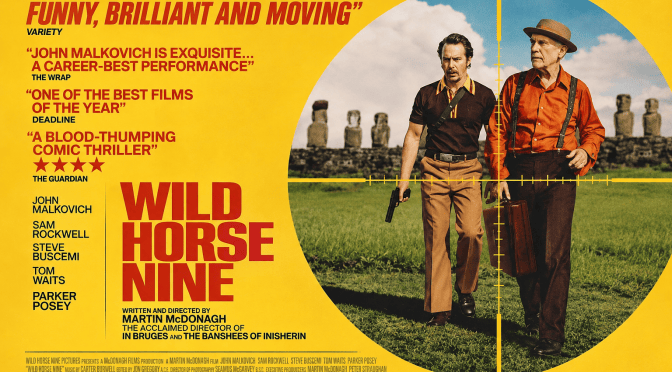
Martin McDonagh returns with Wild Horse Nine (2026), an ambitious, frequently hilarious but ultimately uneven concoction of conspiracy thriller, existential drama, political satire and pitch-black comedy. Set in 1973, against the backdrop of political upheaval in Chile, the film follows two CIA operatives, portrayed by John Malkovich and Sam Rockwell, who are dispatched to the remote Easter Island on a mysterious assignment, where their troubled pasts, professional loyalties and increasingly fragile grip on reality begin to unravel.
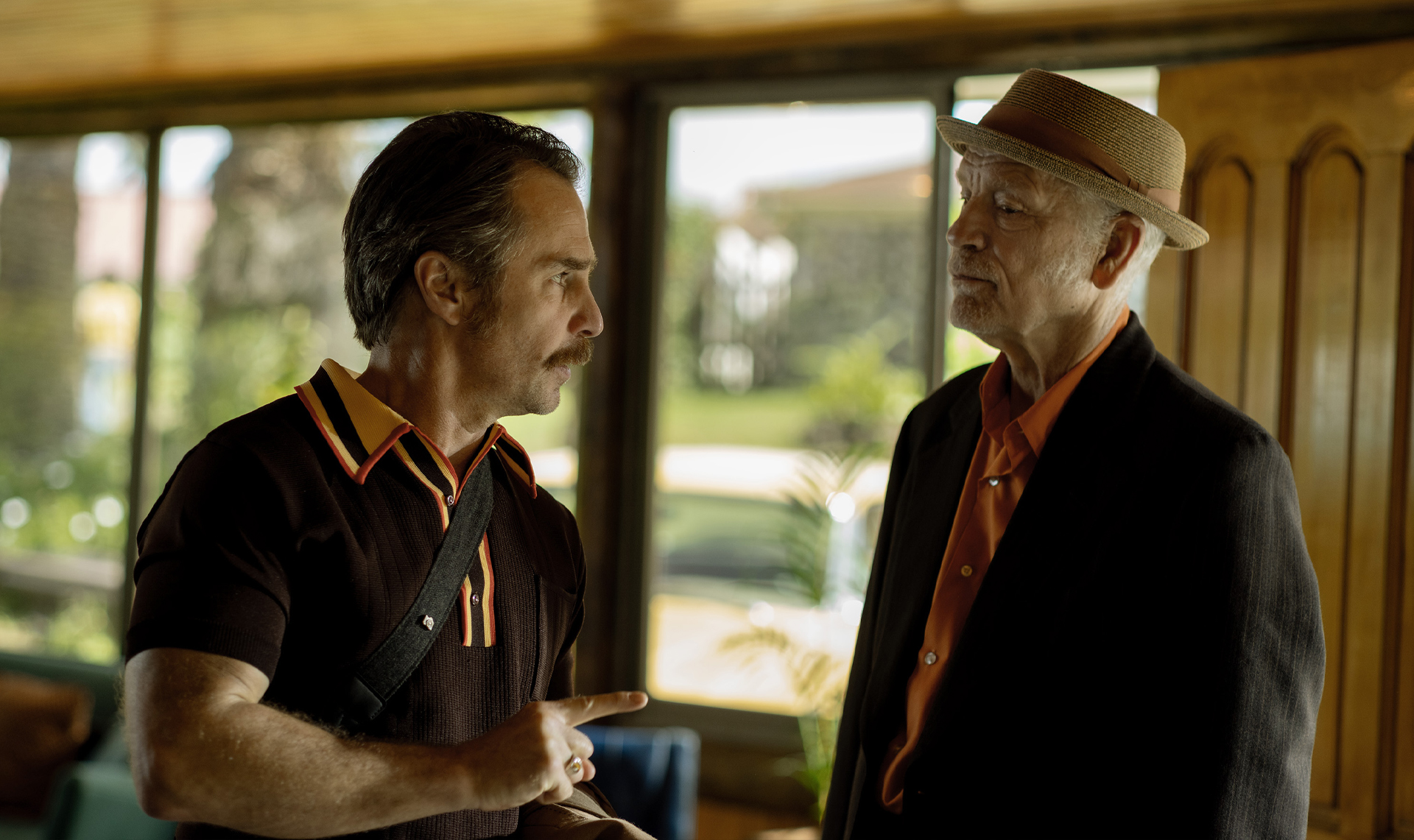
John Malkovich and Sam Rockwell are quite wonderful as the two bickering agents, delivering McDonagh’s acerbic dialogue with impeccable comic timing while revealing the regret, guilt and emotional damage lurking beneath their cynical exteriors. Their verbal sparring is frequently the film’s greatest pleasure, with both actors effortlessly navigating the absurdity and melancholy that have become hallmarks of McDonagh’s work. Malkovich, in particular, is a delight, while Rockwell once again demonstrates why he is such a natural interpreter of the filmmaker’s distinctive dialogue.
The other undeniable star is Easter Island itself. Its extraordinary landscapes, dramatic coastline and fascinating wildlife provide a magnificent setting, offering a striking contrast between the natural world’s timeless beauty and the petty, destructive machinations of government bureaucracy. There is something wonderfully absurd about watching two morally compromised representatives of American imperialism squabble over their assignments against a landscape that makes their entire existence seem utterly insignificant.
And therein lies Wild Horse Nine‘s most interesting thematic territory. McDonagh explores existentialism, regret, addiction, conspiracy theories and the absurdity of human existence, asking whether men who have spent their lives carrying out morally questionable orders can ever escape the consequences of their actions. The contrast between nature’s indifference and mankind’s obsession with power and control is particularly compelling. Unfortunately, these fascinating ingredients never quite combine into a satisfying whole. The film continually shifts between conspiracy thriller, political commentary, existential meditation and knockabout comedy without finding a convincing balance. Individual scenes are frequently brilliant, the dialogue often hilarious and unexpectedly poignant, but the overall narrative feels less assured than McDonagh’s finest work.
The political backdrop is particularly disappointing. The 1973 Chilean coup, with all its historical significance and American involvement, should provide considerable dramatic and moral weight. Instead, despite some occasional acerbic commentary, it often feels like window dressing. Moreover, Parker Posey’s character also feels frustratingly underdeveloped, particularly given the actress’s considerable talents. There is also the rather fundamental question of why we should care about these two men? However entertaining Malkovich and Rockwell may be, their characters are ultimately assassins serving a corrupt American government.
McDonagh has always demonstrated an extraordinary ability to find humanity in deeply flawed individuals, but here the emotional connection is considerably weaker. These anti-heroes are simply not as empathetic, tragic or compelling as the characters inhabiting In Bruges (2008) or The Banshees of Inisherin (2022). Both those films, with their almost Pinteresque exchanges and echoes of The Dumb Waiter, transformed seemingly inconsequential conversations into profound explorations of guilt, friendship, mortality and the human condition. I consider The Banshees of Inisherin (2022) a masterpiece, a beautifully constructed tragicomedy in which every absurd exchange seemed to carry emotional and philosophical significance. Wild Horse Nine (2026), by comparison, feels closer to Seven Psychopaths (2012), although thankfully more grounded in a recognisable reality than that film’s self-conscious exercise in meta-screenwriting.
There are also several plot holes, some awkward tonal transitions and a frustrating reliance on the murky interior cinematography that seems increasingly fashionable in contemporary filmmaking. The breath-taking day-time exterior photography makes the occasionally impenetrable darkness of the interior scenes all the more irritating. Yet, for all these reservations, there is still an enormous amount to enjoy as McDonagh remains one of cinema’s most distinctive voices.
Ultimately, Wild Horse Nine (2026) is a film of wonderful moments rather than a completely satisfying whole. Its philosophical ambitions, political intrigue and absurdist humour occasionally collide rather than complement one another, but even when McDonagh misses the target, the results remain more interesting than most filmmakers’ direct hits. A lesser Martin McDonagh film, perhaps, but still better than many other filmmakers’ finest achievements.