Tag Archives: Barry Keoghan

CINEMA REVIEW: SALTBURN (2023)

CINEMA REVIEW: SALTBURN (2023)

Directed by Emerald Fennell

Written by Emerald Fennell

Produced by Emerald Fennell, Josey McNamara and Margot Robbie

Cast: Barry Keoghan, Jacob Elordi, Rosamund Pike, Richard E. Grant, Alison Oliver, Archie Madekwe, Carey Mulligan, Paul Rhys, etc.

Cinematography by Linus Sandgren

*** MAY CONTAIN SPOILERS ***
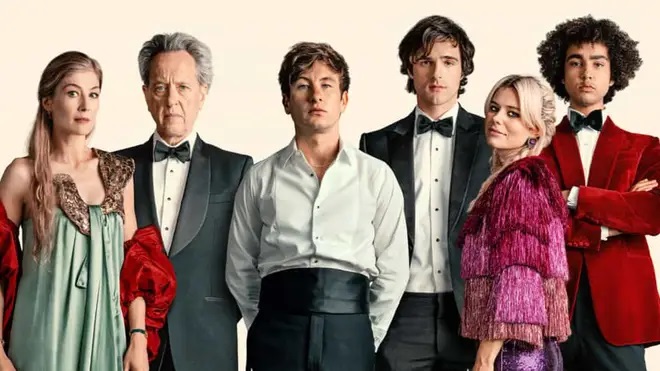


As the awards garnered upon Emerald Fennell’s brilliant Promising Young Woman (2020) will testify, she is clearly a major talent. Fennell has also acted in TV shows such as Call the Midwife and The Crown, as well as writing and producing the second series of Killing Eve. Not only is Fennell an excellent actress, writer, director and producer, but is also now an Oscar and BAFTA winner. Thus, Fennell’s “difficult second film” arrives in the guise of the pitch black comedy, Saltburn (2023). Although to describe this hilarious, bleak, sexy, and often twisted exploration of the British class system as such evidently tests the very definition of comedy.

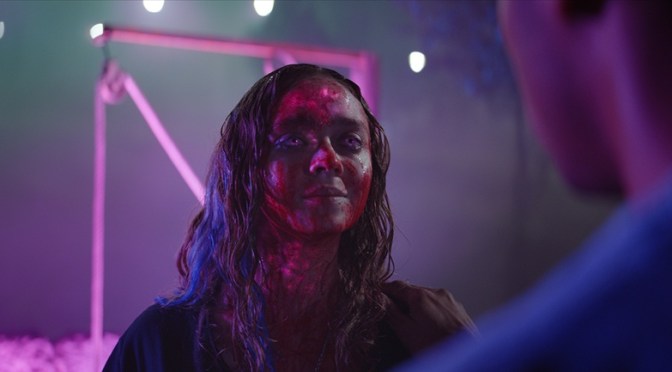
Saltburn (2023) is set in 2006. Oliver Quick (Barry Keoghan) attends Oxford University as a naive fresher with an inferiority complex and desire for company. While he is incredibly intelligent, coming from a lower class background places bookish Oliver as a very small fish in big water. Especially when compared to the so-called Oxford elite including handsome and wealthy, Felix Catton (Jacob Elordi) and his cousin, the handsome and not-as-wealthy, Farleigh Start (Archie Madekwe). While Farleigh is suspicious of Oliver, Jacob soon befriends him and takes the Northerner under his wing. The two connect and form an “odd couple” bromance, with Felix even going so far as to invite Oliver to his stately home, Saltburn, for the summer. There we meet the rest of Felix’s family including his flaky sister, Venetia (Alison Oliver), eccentric father, Sir James (Richard E. Grant) and effervescent mother, Lady Elspeth (Rosamund Pike).
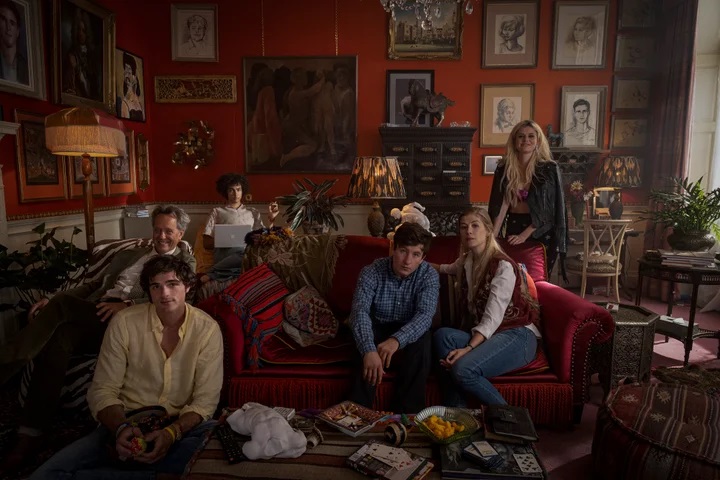


After building Oliver and Felix’s characters carefully during their time at Oxford, Fennell’s savage and satirical screenplay gathers pace in the second act at Saltburn. Here Oliver tries to fit in and ingratiate himself into the Catton family, but it soon becomes clear that however friendly they may be, he will only ever be an outsider to them. Simultaneously, Farleigh sees Oliver as a rival for the Cattons’ emotional and financial affections and the two begin a retaliatory personal war amidst the balmy summer days, breakfasts, dinner parties and social gatherings. Oliver’s main journey is to connect as much with Felix as possible, so much so his passion veers toward obsession. But Felix is a roaming spirit and a hedonist and does not quite requite Oliver’s feelings. Yet, Felix does show compassion for Oliver, as illustrated when he drives him on a mercy mission to visit Oliver’s family. This is where the story takes an intriguing and ever deadly turn.

I cannot recommend Saltburn (2023) enough for its fantastically witty script, devastatingly brilliant cast and some quite disgustingly explicit, but contextually justifiable, character moments and scenes. Fennell takes the setting and structure of Evelyn Waugh’s Brideshead Revisited and turns it upside down, spinning a devious tale of infatuation, love, privilege and social climbing. Through the character Oliver Quick, and I really don’t want to give anything away, there is a powerful and jaw-dropping character arc of upward mobility. Rosamund Pike’s and Keoghan’s performances are both amazing and award-worthy. While the final act twists certainly do shock and surprise they arguably are rushed when compared with the more effective pacing of the opening and middle acts. Moreover, I am also unsure why the exquisite cinematography and stunning locations were presented in the 4:3 (1:33:1) aspect ratio. Why squeeze in Linus Sandgren’s light and framing and not expand them to the widescreen format?

Ultimately, Emerald Fennell proves herself an important voice in British cinema. Unafraid to test the boundaries of taste, genre, and audience expectations, she has crafted one of the most consistently challenging films of the year with Saltburn (2023). One could easily describe the themes presented here as a critique of the upper classes and how the uber-rich are bad people to be brought down to their knees. However, Fennell’s script is not that simplistic. It cleverly careers between love/hate for the characters and irony-bombing the class system, before becoming a damning indictment on the darkest flaws of humanity. Lest one forget the indelible one-liners throughout and THAT final dance sequence, which are both to die for!
Mark: 9.5 out of 11


CINEMA REVIEW: THE BANSHEES OF INISHERIN (2022)

CINEMA REVIEW: THE BANSHEES OF INISHERIN (2022)

Written and Directed by Martin McDonagh

Produced by: Graham Broadbent, Peter Czernin & Martin McDonagh

Main Cast: Colin Farrell, Brendan Gleeson, Kerry Condon, Barry Keoghan, etc.

Cinematography: Ben Davis

Edited by: Mikkel E. G. Nielsen

Music by: Carter Burwell

*** MAY CONTAIN SPOILERS ***


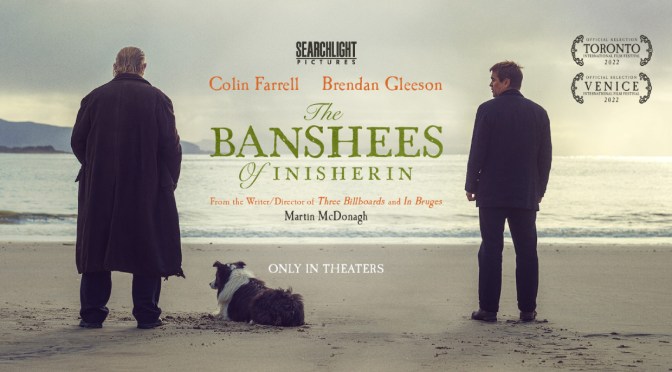
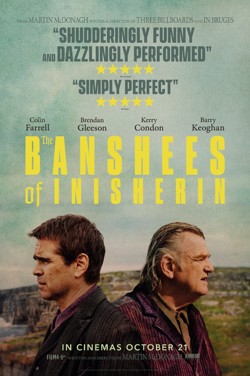
The Banshees of Inisherin (2022) is Martin McDonagh’s latest cinematic masterpiece. Not only is it one of the best films of the year he has, as with Three Billboards Outside Ebbing, Missouri (2017), constructed one of the most formidable screenplays of many a year. As a playwright McDonagh has won many awards for his works. His debut film, In Bruges (2008), was a deceptively simple story of two hitmen on the run which, with rich thematic power, became a darkly hilarious existential cult classic. His follow-up Seven Psychopaths (2012), a heady mix of criminals versus writers in a meta-fictional Hollywood-based narrative was brilliantly written and acted, if slightly lacking thematic clarity. Like Three Billboards Outside Ebbing, Missouri (2017), The Banshees of Inisherin (2022) is a highly emotional human drama which contains intelligent allegory, incredible characterization, and cracking dialogue.

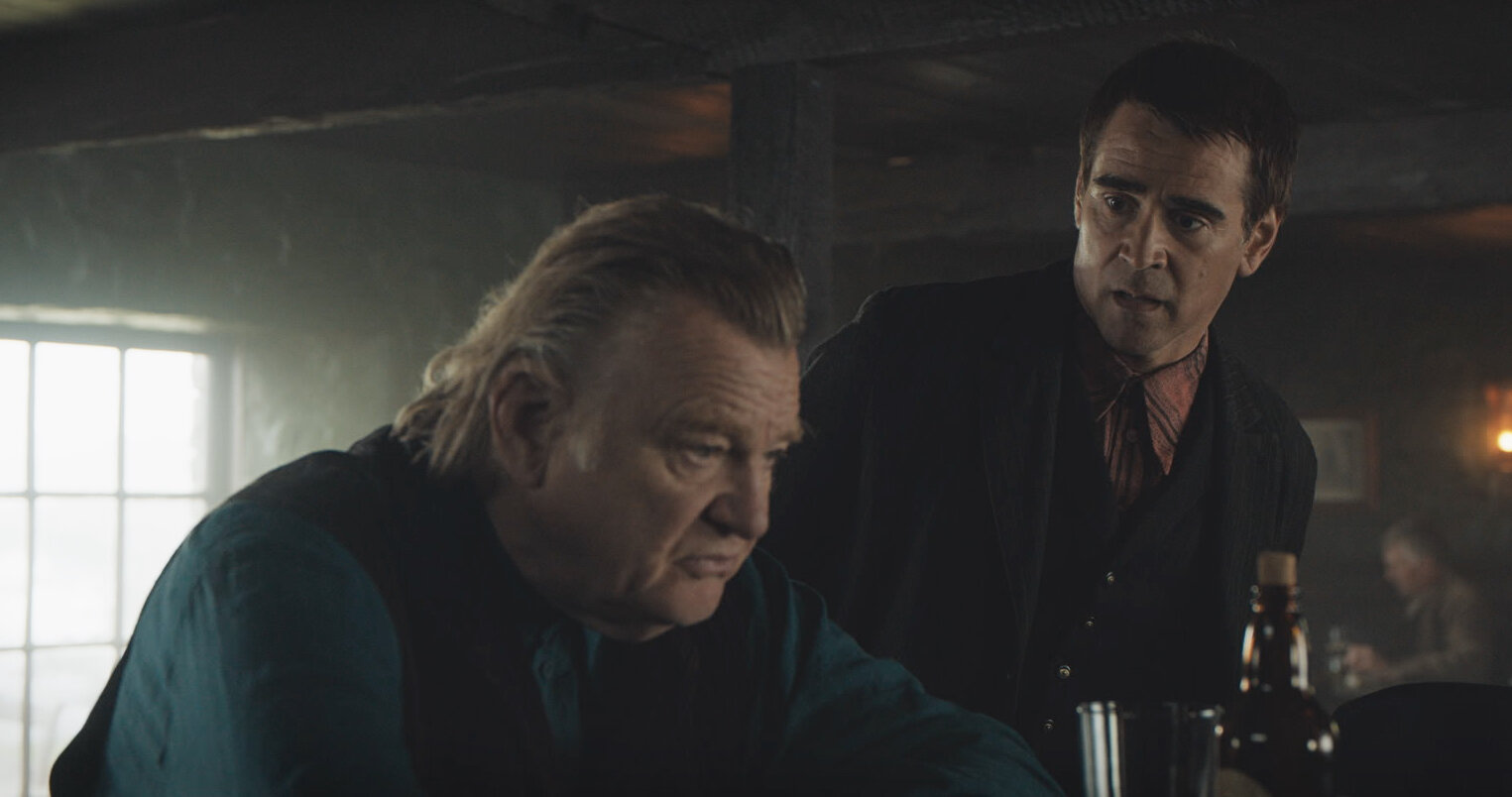
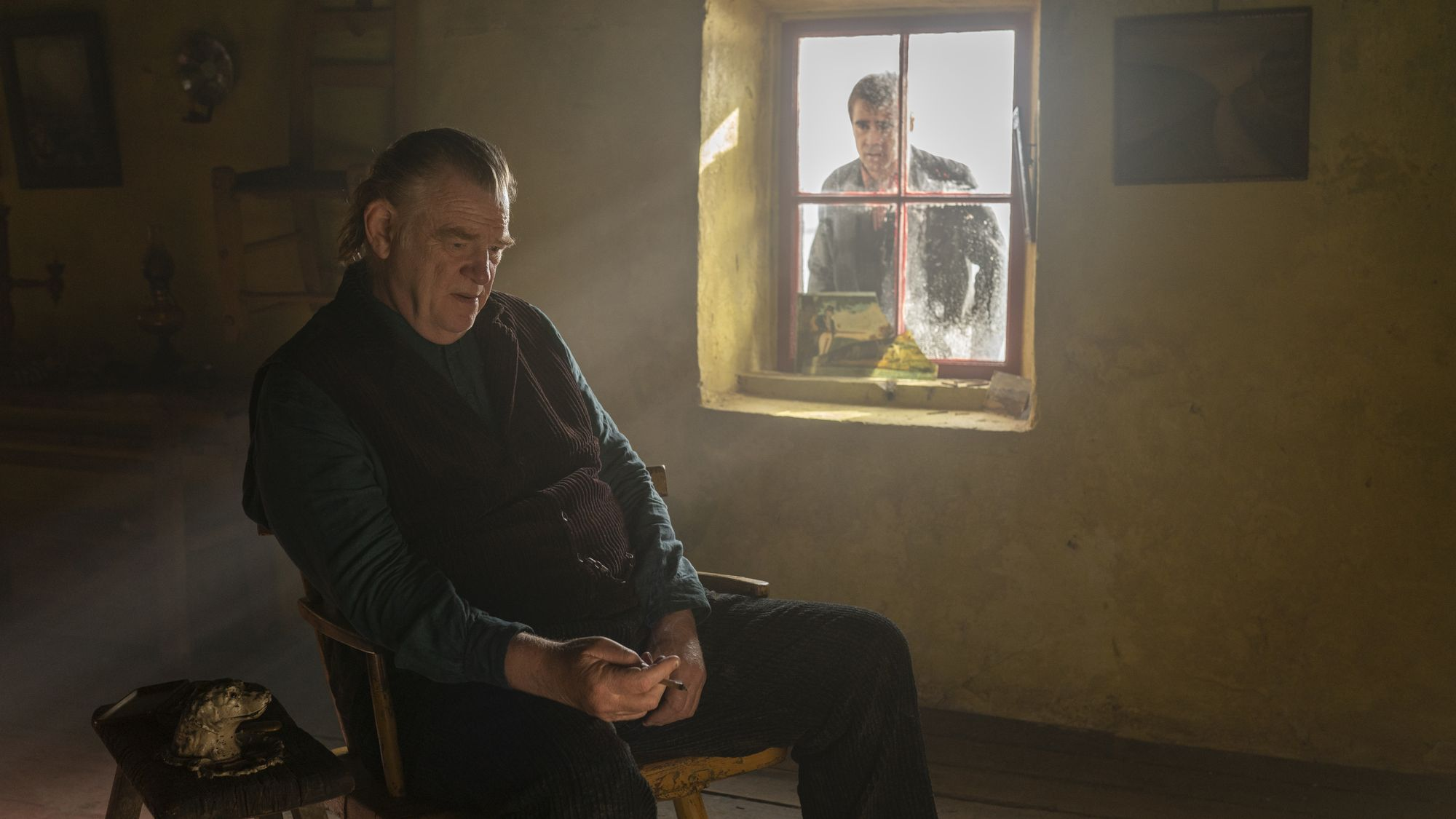
Set in 1923 on an island off of Southern Ireland called aptly Inisherin, the film opens by focussing on genial everyman farmer, Pádraic Súilleabháin (Colin Farrell) and his daily routine. After tending to his animals, he usually calls for his friend, Colm Doherty (Brendan Gleeson) to go to the island pub, the J.J. Devine or Jonjo’s. In England there is an idiom called, “sending someone to Coventry.” This means to ignore or ostracize an individual or individuals. So, basically Colm chooses to do this to his long-standing friend, Pádraic. This shunning completely bemuses Pádraic and despite Colm’s pleading for Pádraic to respect his wishes, he continually seeks an answer to his former friend’s decision.


After this intriguing premise is established, what follows is a tremendously original, darkly funny and emotionally penetrating succession of scenes. The exchanges between the two characters begins as bickering but then descends into some seriously disturbing acts of recrimination. Attempting to make them see sense are various eccentric characters on the island who provide many witty and absurd exchanges that McDonagh specialises in. Further, Pádraic’s sister Siobhán (Kerry Condon) is almost the one voice of reason as the feud escalates. As she tries to diffuse the conflict, even Barry Keoghan’s young idiot, Dominic Kearney, the initial comic relief in the film, attempts to make these two men see sense.

Visually, The Banshees of Inisherin (2022), is incredibly rich. The territory displays gorgeously photographed shots of the rocks, the sea, the stone roads and the lush green countryside. But while there is a sense of expanse and freedom initially, the feeling of isolation pervades. As the story continues the characters feel more and more segregated by the sea and their own or other’s decisions. None more so than Farrell’s Pádraic. A simple man who just wants to do his work and get drunk with his friend, he finds he is sequestered by Colm’s desire to self-isolate and concentrate on his music. Here, Farrell and Gleeson give tremendous character work. Farrell especially has rarely been better as Pádraic’s attitude turns initially from shock to bitterness over the journey of the narrative.


A film director’s job is for me about making key creative choices. Martin McDonagh makes brilliant choices while working from his own exceptional script. I loved everything about The Banshees of Inisherin (2022). The look, the performances, the pacing, the locations and Carter Burwell’s phenomenal score are absolutely first class. I haven’t even mentioned Barry Keoghan’s memorable supporting turn. He surely is one of the most naturally gifted actors of his generation. Not to forget other striking characters in the ensemble such as the creepy, Mrs McCormick (Sheila Flitton), an old harridan who acts as a portent for death on the island.

Martin McDonagh expertly combines a superb ear for dialogue, a psychologically absorbing analysis of the human condition with elements from Waiting For Godot and Channel Four situation comedy, Father Ted. Above all else, The Banshees of Inisherin (2022) is a darkly, spectacular cinematic experience which works on many levels. On one level it is about the isolation of island life and its inhabitants. On another it’s about the death of a friendship. While on yet another level it is about the analogous absurdity of civil war and how conflict can start for the merest of reasons. While the best cinema is certainly about showing and not telling, McDonagh proves again that dialogue-driven films can produce cinematic theatre, comedy and tragedy of the highest order.

Mark: 10 out of 11


LFF – ROUND-UP REVIEWS INCLUDING: CALM WITH HORSES (2019), COLOR OUT OF SPACE (2019) & WAITING FOR THE BARBARIANS (2019)

LFF 2019 – ROUND-UP REVIEWS

One of the great things about film festivals is you can find loads of lower budget and independently made cinematic gems, amidst the big studio projects. Thus, I like to try and see as many smaller scale films if I can, rather than just watch the ones that are likely to go on general release anyway.

Due to my daily work commitments I didn’t get to see as many films as I would like, but here are three I have seen this week. Each is very different, but they all demonstrate, despite featuring some well- known actors, an independently-minded cinematic spirit.

***** SPOILER FREE *****


CALM WITH HORSES (2019)

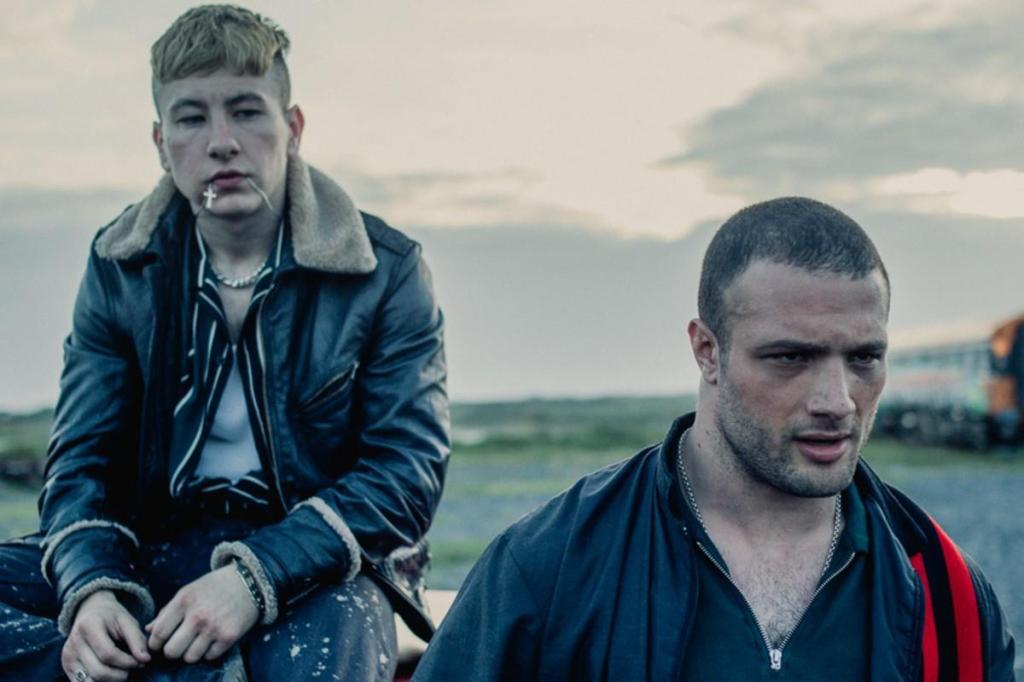
First time director Nick Rowland has an assured debut with this contemporary rural gangster film set in Southern Ireland. Caught between the right and wrong side of the law, Arm, portrayed with brutal tenderness by Cosmo Jarvis, finds his loyalties torn between his family and venal crime bosses. The ever-impressive Barry Keoghan features as his drug dealer friend, who doesn’t necessarily have his best interests at heart.

It’s a harsh tragedy with an element of hope represented by Niamh Algar’s struggling single mum, hoping to escape for a better life. Ultimately, the story beats inhabit familiar territory, with elements of Mean Streets (1973), Of Mice and Men (1937), Bullhead (2011) and Miller’s Crossing (1990), echoing amidst the slashes of violence, colourful language and tough Irish characters.

Mark: 8 out of 11


COLOR OUT OF SPACE (2019)

Filmmaker Richard Stanley had not directed a film for over twenty years, so when I saw he had filmed a HP Lovecraft short story – I WAS IN! Stanley was famous for being sacked from the ill-fated Island of Dr Moreau (1996). Indeed, the 2014 documentary, Lost Soul (2014), is still one of best docs I have seen about filmmaking. Mainly because everything went wrong, but also because Richard Stanley is such as interesting person too. Thankfully, this latest low-budget horror film was completed without too much trouble.

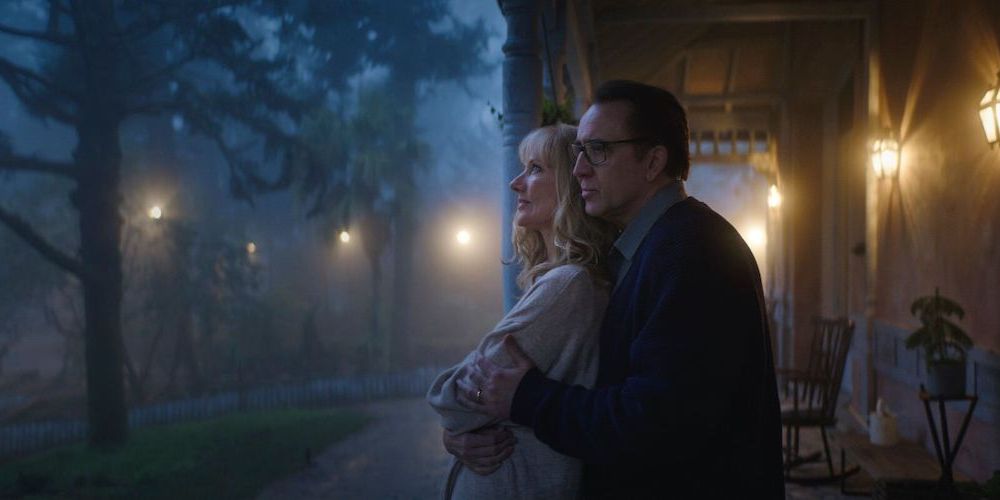
Given it is an adaptation of Lovecraft, Color Out of Space (2019) is unsurprisingly a cosmically bonkers horror film, which descends into all manner of insane occurrences. It centres on the Gardner family, portrayed by Nicolas Cage and Joely Richardson, who along with their teenage kids, must confront the terrors that befall them when a meteorite hits their isolated farm. Building slowly, all hell breaks loose in the final act, as Cage lets rip with another crazed performance. Trippy and stylish with some fantastic gore, it lacks depth, but has cult film written all over it!

Mark: 7.5 out of 11


WAITING FOR THE BARBARIANS (2019)

Set in a desolate border town, the film opens with the kindly Magistrate (Mark Rylance) meeting Johnny Depp’s venal Colonel Joll for the first time. Joll is convinced those “Barbarians”, who live in the desert and mountain areas are going to threaten the fabric of the mighty Empire’s society. So, Joll begins a campaign of torture and oppression against them. The Magistrate and Joll constantly clash as the former seeks understanding and empathy over brute force.

This cerebral and allegorical drama is based on a famous literary classic, written by J. M. Coetzee. Brought to the screen by the ultra-talented Columbian filmmaker, Ciro Guerra, it’s quite slow, but I found it absorbing nevertheless. Mark Rylance is absolutely spellbinding. No one can do contemplative acting quite like him. His character was so noble and just, I really felt for him and the oppressed indigenous peoples’ cause. Arguably, the film could have been more dramatic in places, however, it still presents a damning indictment of colonialism and heavy-handed military rule.

Mark: 8.5 out of 11


CHERNOBYL (2019) – HBO TV REVIEW

CHERNOBYL (2019) – HBO TV REVIEW

Created and written by: Craig Mazin

Executive Producers: Craig Mazin, Carolyn Strauss, Jane Featherstone

Producer: Sanne Wohlenberg

Directed by: Johann Renck

Starring: Jared Harris, Stellan Skarsgard, Paul Ritter, Jessie Buckley, Emily Watson, Con O’Neill, Adrian Rawlins, Sam Troughton, Robert Emms, David Dencik, Ralph Ineson, Barry Keoghan etc.

Composer: Hildure Guonadottir

Cinematography: Jakob Ihre

**MAY CONTAIN SPOILERS**

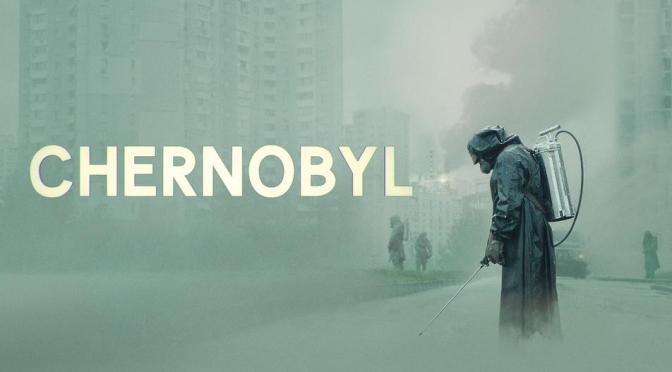
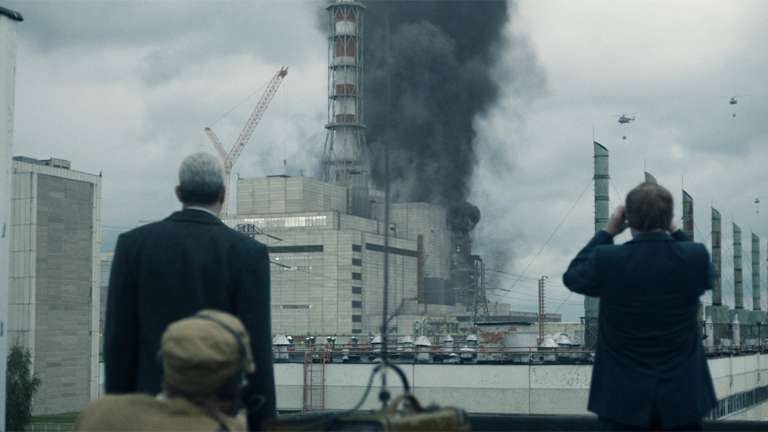
The horror. The human error. The inhumane error. The terror. Meltdown during a safety test. Flaws in the system as ghosts envelop the machine. Science in a brave new world invents progress with which we venture into, only to find we are murdering ourselves.

The terrifying events which took place are chartered with grey, brutalist accuracy. Regular Soviet families live in proximity to a ticking time bomb; believing they are protected by the State. The State trusts the science. The science trusts men to follow nuclear procedures to the letter. But what of pride? What of targets? What price the desire to obsess and force a flawed system?

On that fateful day on 26th April 1986, the nuclear time-bomb exploded. Initially, it was believed it could be contained. The Soviet machine could handle the fallout. Heat. Water. Steam. Graphite. Fire. All conspire to create one of the biggest disasters ever perpetrated against nature.

The Chernobyl nuclear disaster is well documented but for years the alleged truth was covered up. Death toll rose but official statistics stayed low. Naked miners, radiation sickness, blood, pus and falling hair. Style and look was natural and under-stated. Verisimilitude only heightening the horror.

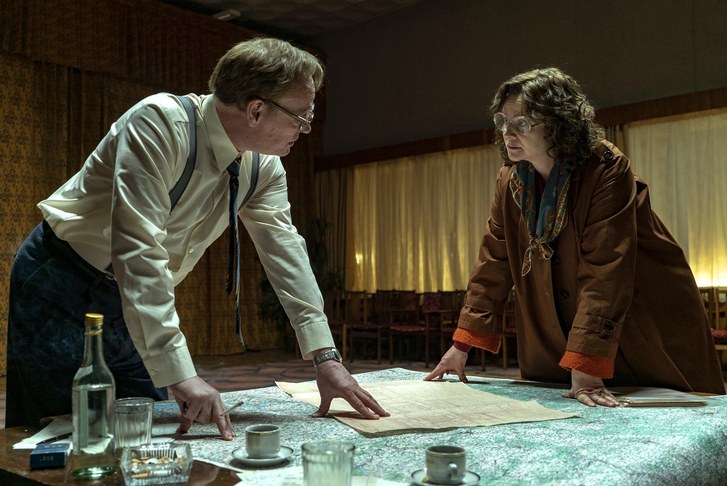
Johann Renck directs with steely commitment from an incredible Craig Mazin screenplay. Jared Harris, Stellen Stensgaard, Jessie Buckley and Emily Watson lead a stirling cast of formidable character actors. The attention to detail in the HBO production is second-to-none. Thankfully the vicarious fear is palpable and I am able to view such events in the comfort of my own home.

We did this to ourselves but it could have been worse. When will humanity learn that we will bring about our own judgement on Earth. The Scientists led by Valery Legazov and composite character, Ulana Khomyuk, fought at length to contain and prevent this ever happening again. Who really believes it won’t? There are approximately four hundred and fifty nuclear power plants in the world. The threat hangs over humanity like a cancer.

I was at school in April 1986. Just sixteen years old. I saw events on the news. Historical dramas such as Chernobyl make real the fear that was there at the time. The site is still poisoned. The exclusion zone remains two-thousand and six-hundred square metres; uninhabitable for twenty thousand year, according to an online source. This event teaches us to never take anything for granted. We have built our own gallows.

1986. Former Soviet Union. Ukraine. Pripyat. Chernobyl Nuclear Power Plant. Disaster. Recovery. Suppression. Lies. Liquidation. Death. Suicide. Exclusion.

The horror. The horror.

Mark: 10 out of 11

THE KILLING OF A SACRED DEER – LONDON FILM FESTIVAL 2017 – REVIEW

THE KILLING OF A SACRED DEER – LFF 2017 – REVIEW

I started writing film reviews a few years ago and the main reason was because I wanted to try and understand why I liked or disliked a film. I also wanted to improve my creative writing by understanding the thought process of others.  Living filmmakers whose work I have consistently enjoyed, save for the odd one here or there, are: Martin Scorsese, Quentin Tarantino, The Coen Brothers, Lynn Ramsay, Jonathan Glazer, Woody Allen (even some of the later ones), Park Chan Wook, David Fincher, Edgar Wright, Jacques Audiard, Darren Aronofsky, Kathryn Bigelow; and many others no doubt!

Such directors capture the quintessence of what cinema is for me. Not simply just in style and form but also powerful themes, imaginative concepts and sheer bloody entertainment. Filmmakers, of late, you can add to that list are: Denis Villeneuve, S. Craig ZAHLER and Greek filmmaker Yorgos Lanthimos. I have now seen three of his films, namely: Dogtooth (2009), The Lobster (2015) and his next release The Killing of a Sacred Deer (2017), and they all defy conventional film conventions to deliver absurd, surreal, funny, dark, thought-provoking and imaginative visions of human nature. Also, let’s not forget the writer too; so kudos to his writing partner Efthymis Filippou, who combines with Lanthimos to create such memorable cinematic offerings.

the-killing-of-a-sacred-deer-cannes-win

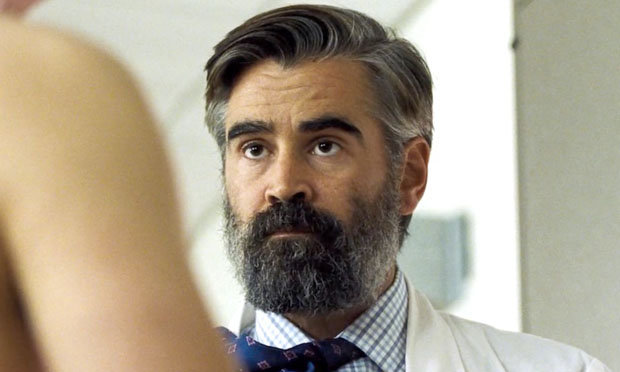
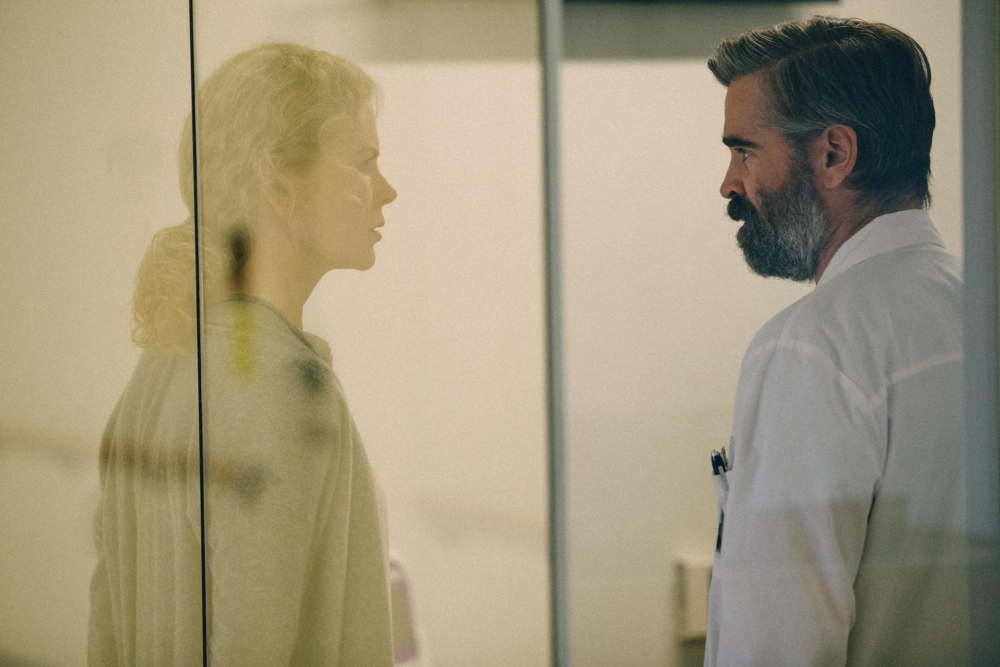
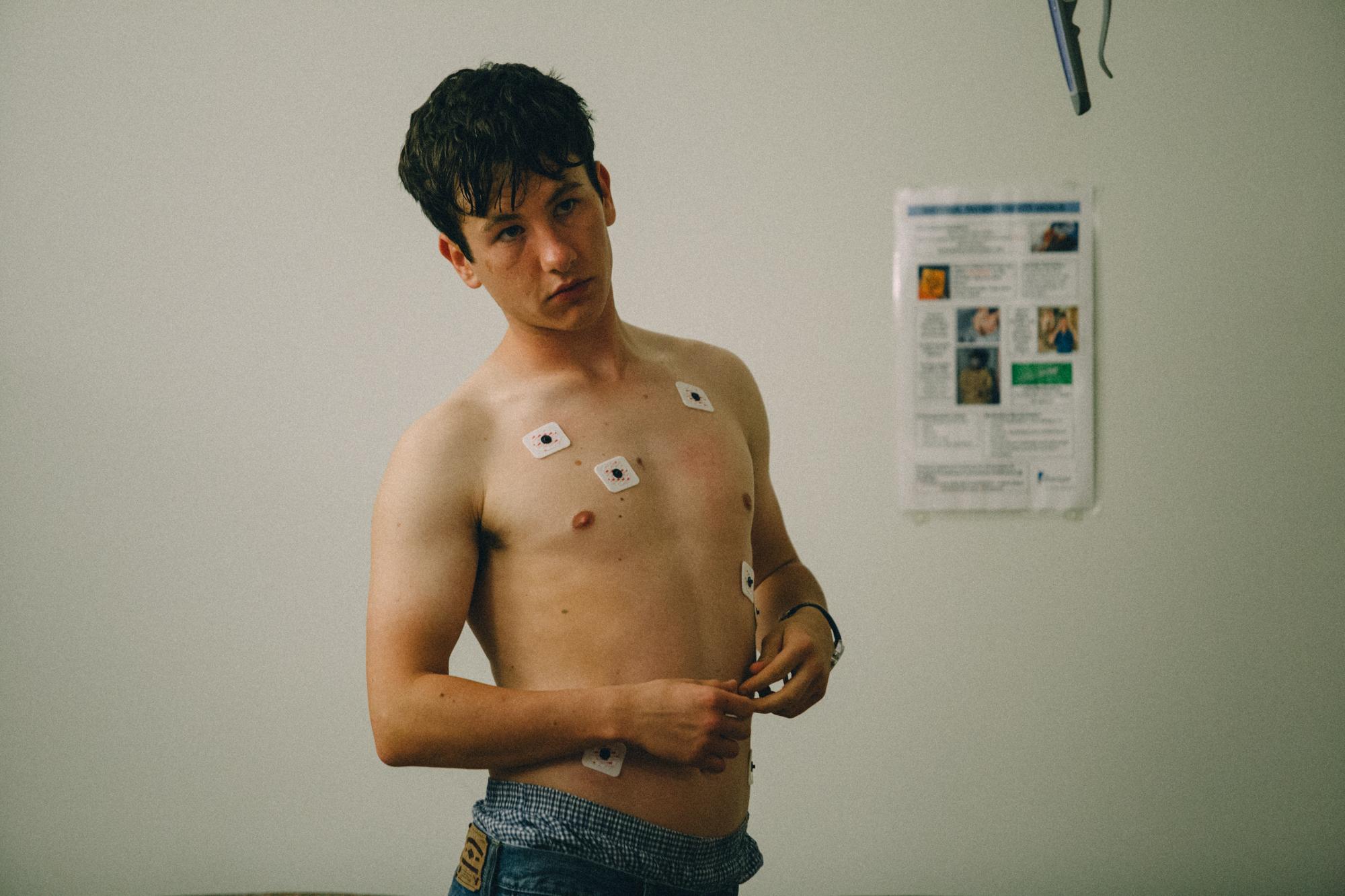
The story itself begins in a reasonably conventional fashion. Colin Farrell’s successful surgeon, Steven Murphy, is happily married to his wife, Anna, portrayed with glacial precision by Nicole Kidman. They have two healthy and intelligent children, a boy and a girl, and their lives are a picture of upper middle class contentment. Steven and Anna’s family equilibrium is skewed when a teenage boy, Martin, brilliantly portrayed by Barry Keoghan, inveigles his way into their lives through a combination of innocent charm and surreptitious pathos. Martin is a dark angel representative of the cloud of sickness and guilt and remorse and his actions force Steven and Anna to have to face up to a parents’ worst nightmares.

killing_deer

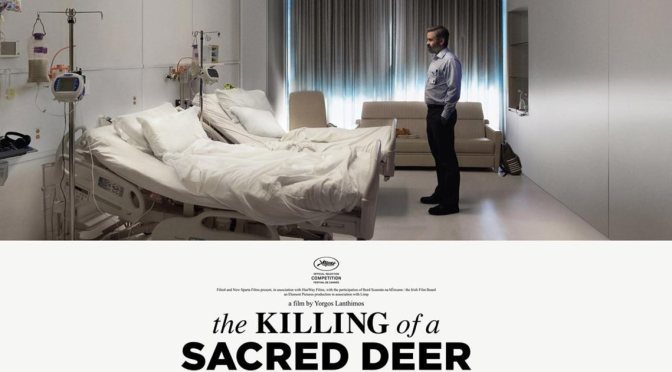
Lanthimos and Filippou, in Godardian fashion, constantly calls attention to cinema form; especially with a strangely effective form of anti-acting where, Farrell notably, dryly delivers dialogue as unconnected non-sequiturs. The words also constantly surprise us as the characters speak at each other with phrases that create humour and emotional disassociation. Nonetheless, such artifice only adds to the off-centre and sinister nature of the piece. The film is also beautifully shot with a wonderful symmetry to the composition of many shots. I also liked the choice of wide-angle lenses and the flowing Steadicam shots. Many were pitched at just over head-height, and provided an eerie floating sensation throughout the drama.

killing-of-a-sacred-deer

Colin Farrell (as he did in The Lobster (2015), Nicole Kidman and the rest of the cast buy completely into Lanthimos and Filippou’s striking vision which takes its’ influence from l Greek tragedy. But while Farrell excels in another praiseworthy under-stated deadpan performance, Barry Keoghan steals the show. The young actor follows up his impactful supporting appearance in Dunkirk (2017), with a compelling character study and eerily mature portrayal. Overall, this is a gripping, absurd thriller-turned-horror film which constantly wrong-footed me with its plot turns. It is a truly chilling, yet darkly comical and surreal genre film that manages to be somehow extremely accessible too.

(Mark: 9 out of 11)