Tag Archives: business

Cult Film Review: Mermaid Legend (1984)

Cult Film Review: Mermaid Legend (1984)

Directed by Toshiharu Ikeda

Screenplay by Takuya Nishioka

Main cast: Mari Shirato, Junko Miyashita, Kentarō Shimizu, Jun Etō, etc.

Cinematography by Yonezou Maeda

Music by Toshiyuki Honda

*** MAY CONTAIN SPOILERS ***
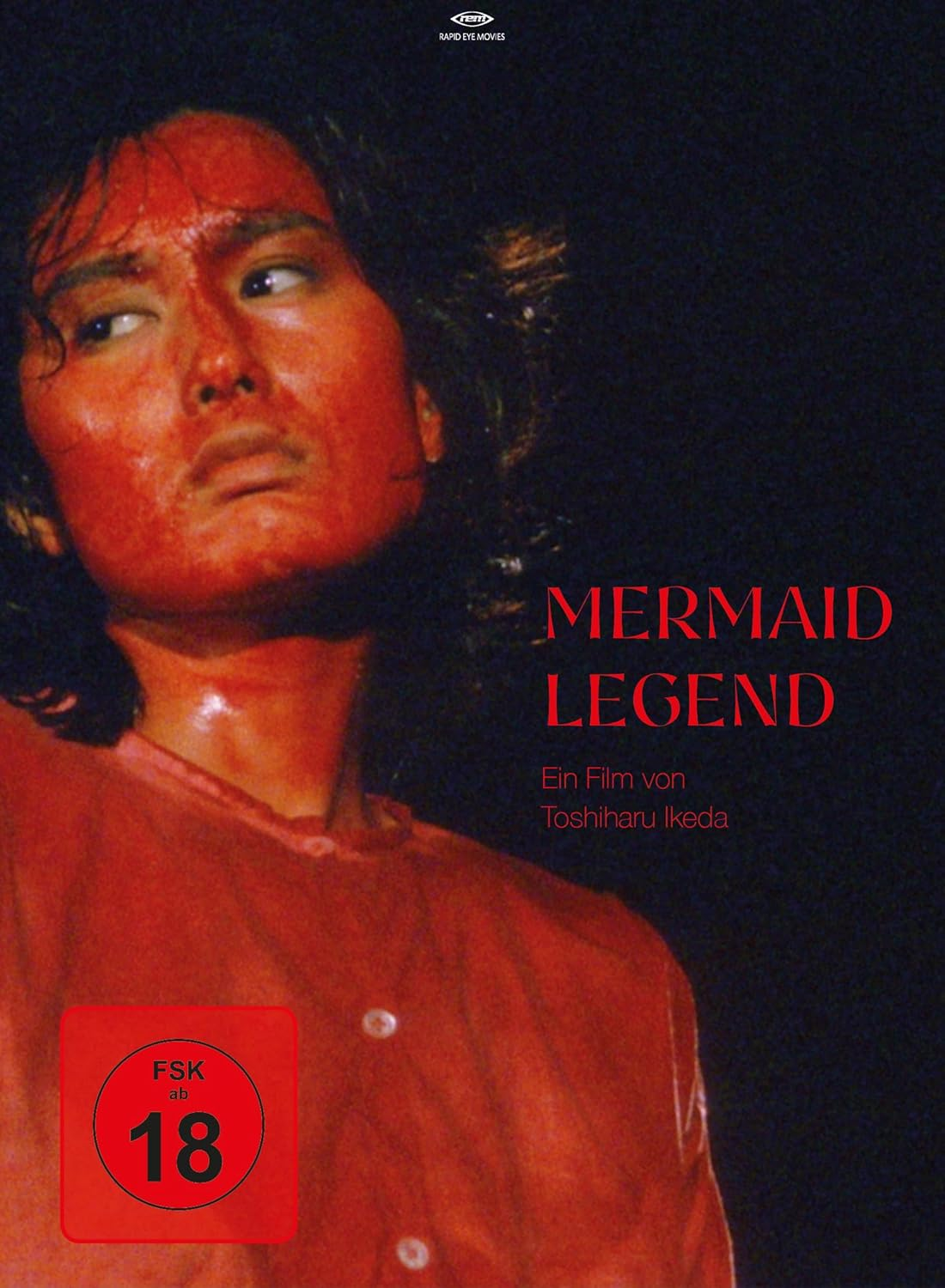


I took a gamble on an unknown Japanese film at the Nickel Cinema and walked out genuinely shaken. Mermaid Legend (1984) isn’t just a cult oddity—it’s a film that mutates before your eyes, seducing you with beauty before drowning you in blood. I was stunned by how something so lyrical could also be so brutally confrontational.

The story begins almost modestly, as a coastal drama about a fisherman and his wife, Migiwa. They bicker constantly, their marriage worn thin by poverty and exhaustion, yet there’s an undeniable bond beneath the arguments. That fragile domesticity is shattered when the fisherman stands in the way of an industrial development scheme. The business developers—faceless, polite, and utterly ruthless—have him murdered, disposing of his life as casually as industrial waste.

From there, Mermaid Legend (1984) transforms again. What starts as marital realism becomes a corporate espionage murder mystery, steeped in anger at nuclear energy, environmental destruction, and the cold machinery of corporate greed. Migiwa, a powerful-lunged pearl diver, initially hides, retreating into grief and the sea itself. But this is not a film about quiet mourning. When she decides to act, she does so with mythic force.



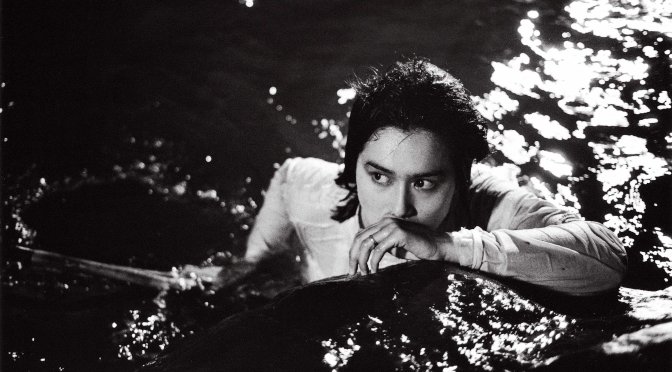
Played by the ethereal and astonishing Mari Shirato, Migiwa becomes something halfway between woman, avenging angel, and sea spirit. Shirato’s performance is magnetic—serene, sensual, and terrifying. As her vengeful pursuit begins, the film plunges headlong into extreme violence and explicit sexuality, reclassifying itself yet again as one of the most shocking exploitation epics I’ve seen from Japan in recent years. These scenes aren’t gratuitous in the lazy sense; they’re confrontational, weaponized, daring you to look away while refusing to let you feel comfortable for a second.

What makes Mermaid Legend (1984) so intoxicating is how its elements collide. Poetic underwater cinematography turns the ocean into a womb, a grave, and a cathedral. Religious, angelic, and environmental imagery blur together, as if Migiwa is both martyr and executioner. The music is heavenly—soaring, mournful, almost sacred—creating a surreal contrast with the carnage on screen. Beauty and brutality coexist in the same frame, each intensifying the other.

And then there’s the ending. The final, elongated pier stabbing rampage is completely off the chart—relentless, bloody, and hypnotic. It plays out like a ritual rather than an action sequence, stretching time until violence becomes abstraction, then meaning, then release. By the time the last body falls, Mermaid Legend (1984) has fully shed realism and entered the realm of legend, justifying its title in blood.

This is a film that shouldn’t work, yet does—furiously, defiantly. A genre-shifting fever dream that moves from domestic drama to political thriller to erotic exploitation to mythic revenge tragedy, Mermaid Legend (1984) is both beautiful and brutal, and I can’t stop thinking about it. Seeing it by chance at the Nickel Cinema felt like discovering a secret too powerful to stay hidden.

Mark: 9.5 out of 11


Sky Cinema Review: The Apprentice (2024) – a mesmerizing portrayal of the rise of Donald Trump!

Sky Cinema Review: The Apprentice (2024)

Directed by Ali Abbasi

Written by Gabriel Sherman

Produced by Ali Abbasi, Louis Tisné, Ruth Treacy, Julianne Forde, Jacob Jarek, Daniel Bekerman

Main cast: Sebastian Stan, Jeremy Strong, Martin Donovan and Maria Bakalova, etc.

Cinematography Kasper Tuxen

*** CONTAINS SPOILERS ***


Ali Abbasi’s previous directed films such as Holy Spider (2022) and Border (2018) are brilliant and powerful films centered around stories relating to serial killers and trolls, respectively. So, I had to pause for a moment and ask: what attracted him to a film about businessman, reality TV personality and now, President of the USA, Donald Trump?

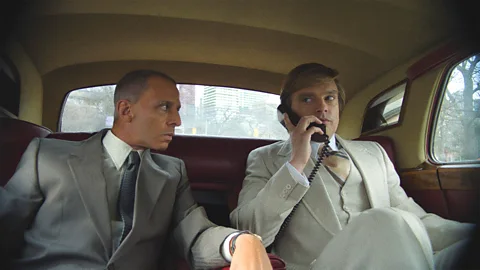
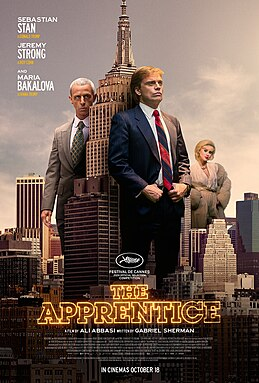
Abbasi’s The Apprentice (2024) is less a deep psychological excavation than a chillingly slick chronicle of power corrupted at its root. Framed like a “greatest hits” package of Donald Trump’s (Sebastian Stan) formative years, the film charts his transformation from brash outer-borough real estate hustler into the ruthless media manipulator and future political juggernaut — all under the tutelage of the infamous Roy Cohn (Jeremy Strong) and his three essential rules of business and life.


Sebastian Stan delivers a startling performance as a young Trump, capturing the man’s bravado, insecurity, and relentless hunger for dominance without slipping into caricature. Opposite him, Jeremy Strong is mesmerizing and serpentine as Cohn — a master manipulator who recognizes, nurtures, and ultimately weaponizes Trump’s worst instincts. Together, they form a grotesquely compelling duo: two charismatic monsters locked in a dance of mutual ambition and moral decay.

While the film occasionally skims across the surface of its characters — opting for scenes that feel like historical checkpoints rather than dramatic revelations — it compensates with a queasy momentum and sharp stylistic flair. It also looks great with the film and video stock reflecting the era of which it is set. Overall, this isn’t a biopic searching for sympathy or redemption; it’s a portrait of the making of one of the most divisive figures in modern history, seen through the lens of a mentor whose own legacy drips with cynicism and menace. In conclusion: The Apprentice (2024) may not dig as deep as it could, but what it shows is enough: monsters aren’t simply born — they’re coached.

Mark: 8 out of 11


SKY TV REVIEW – GANGS OF LONDON (2020)

SKY TV REVIEW – GANGS OF LONDON (2020)

Created by: Gareth Evans, Matt Flannery

Directors: Gareth Evans (2 episodes), Corin Hardy (4 episodes), Xavier Gens (3 episodes)

Executive producer(s): Thomas Benski, Lucas Ochoa, Jane Featherstone, Gabriel Silver

Producer(s): Hugh Warren

Writers: Claire Wilson, Peter Berry, Joe Murtagh, Gareth Evans, Matt Flannery, Lauren Sequeira, Carl Joos,

Cast: Joe Cole, Sope Dirisu, Lucian Msamati, Michelle Fairley, Mark Lewis Jones, Narges Rashidi, Parth Thakerar, Asif Raza Mir, Valene Kane, Brian Vernel, Jing Lusi, Pippa Bennett-Warner, Orli Shuka, Richard Harrington, Jude Akuwudike, Emmett J. Scanlan, Colm Meaney etc.

Production company(s): Pulse Films, Sister Pictures, Sky Studios

**CONTAINS SPOILERS**


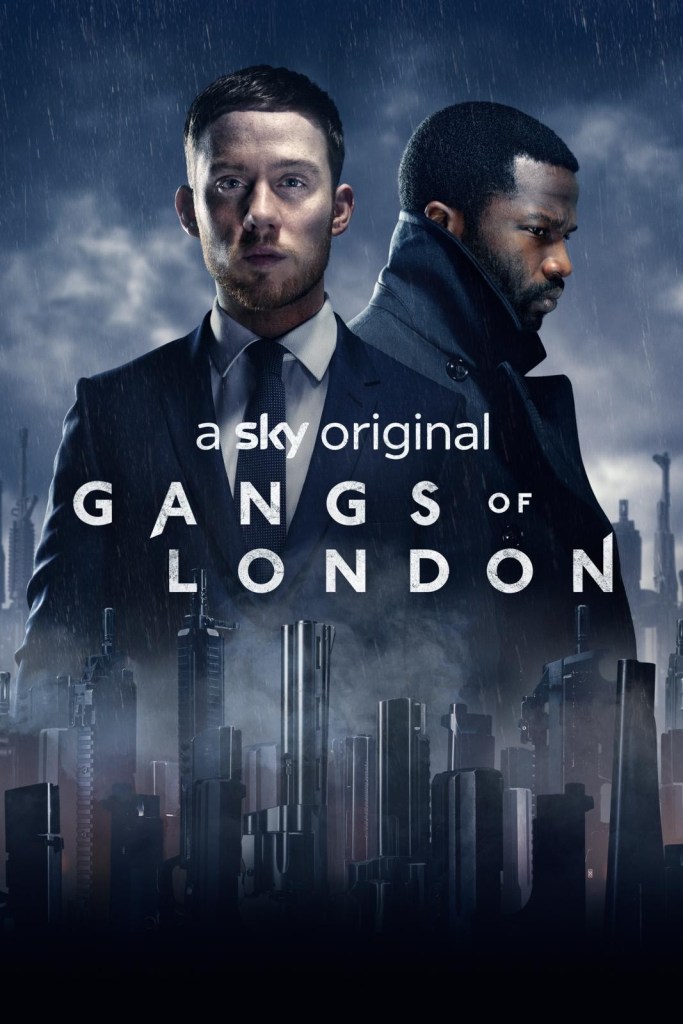
The British, or more specifically, London-based gangster narrative is a well-trodden pathway for writers, directors and filmmakers. In fact, when Guy Ritchie’s Lock, Stock and Two Smoking Barrels (1998) was a low-budget sleeper hit, agents and film companies were never more than a few feet away from a cheeky-chappie-laddish-gangster script. Ritchie obviously has made his name in the crime genre and his most recent film, The Gentlemen (2020), was another rollicking piece of entertainment. However, Ritchie’s stylish geezer model doesn’t always show the serious side of the British crime yarn. Films such as: Villain (1971), Get Carter (1971), The Long Good Friday (1980), Mona Lisa (1986), The Krays (1990), Sexy Beast (2000), Legend (2015), and many more, represent the dark and brutal face of hard-nut masculinity and the profession of violence. Enter the new Sky drama, Gangs of London (2020), which over nine episodes pitches itself as a similarly stern contemporary gangster fable, but with lashings of explosive action set-pieces, savage fisticuffs and a few severed hands thrown in for good measure.

From the opening scene — which finds heir apparent to the Wallace Corporation, Sean (Joe Cole), burning alive and dropping a low-level hoodie off a sky-scraping construction building — the brutal tone is set. Flashbacks then reveal the reason for Sean’s ire. His father, Finn (Colm Meaney), was murdered while on the Albanian mafia’s turf and thus he demands revenge. So far, so Hamlet! Yet, this is no singular character’s journey into the psychological depths of real or invented madness. Mostly, we find a sprawling, multicultural and international ensemble piece with the world of crime represented by aforementioned Albanians, Nigerians, Kurdish freedom fighters, Chinese gangs, Pakistani drug cartels, Welsh travellers and various other criminal elements.

While there is some soul searching for Sean as Finn Wallace’s buried secrets are latterly exposed within the drama, this is very much a symbolic and sadistic manifestation of Brexit. Moreover, it critiques the rise of gangster culture from the mean capital streets into the corporate boardroom. The Wallace’s billion-pound construction business acts as a front for money laundering, drugs deals, prostitution, people smuggling, gun-running and other nefarious crimes. Business has never been so good; that is until Finn Wallace is killed. Henceforth, all hell breaks loose on the streets of London and the police, who all seem to be in the pockets of the gangs, are unable or unwilling to control it.


The gangster genre can be a challenge for writers, directors and actors as they attempt to sidestep the cliches. Moreover, these stories predominantly show violent and amoral characters attacking or cheating or back-stabbing one another. Thus, it can be difficult to create empathy for such nasty people. Nonetheless, given the continued success of such narratives, the anti-heroic ensemble represented by the likes of the Wallace, Dumani, Afridi, Dushaj and Edwards’ families, among others, give the audience plenty to get our teeth into. There are so many different characters, motives, actions and desires on show that the sheer pace and twists in the narrative can leave one breathless. That isn’t to say the pace is rapid. There is a brooding suspense and grave depth to the overall direction. At times the drama, as well as the casting of Michelle Fairley (Lady Stark), reminded me of Game of Thrones in crime form. It gives us high-quality genre storytelling interspersed with some incredibly violent fight scenes and shoot-outs. It doesn’t quite have the heroes that Games of Thrones had though. The closest we get to a rootable character is Sope Dirisu’s low-level enforcer, Elliott Finch, who has a big secret to hold onto. Dirisu gives a powerful performance both emotionally and physically as he fights his way up the Wallace chain of command.

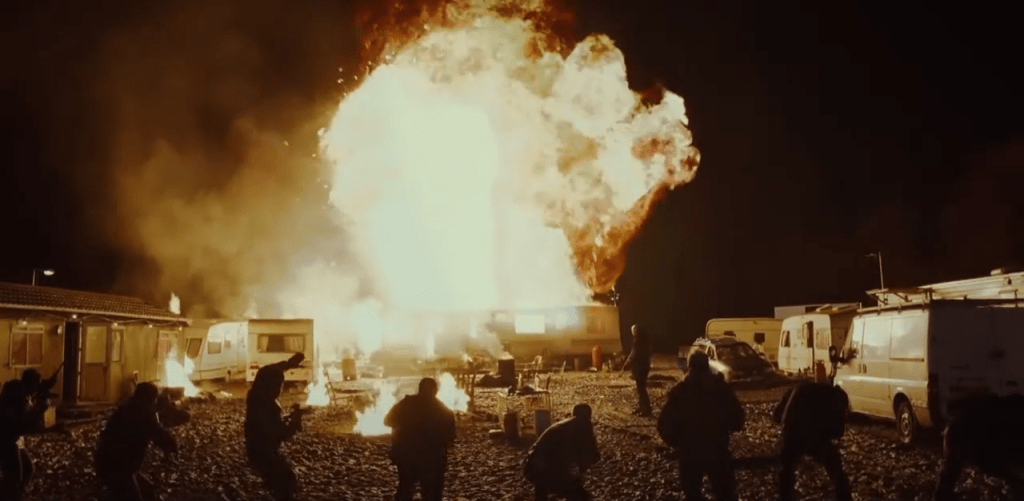
Gangs of London (2020) was created by Gareth Evans and Matt Flannery for Cinemax and Sky Studios. Evans, of course, is the talented Welsh filmmaker who had to go all the way to Indonesia and direct Merantau (2009), The Raid (2011) and The Raid 2 (2014), in order to make a name for himself in the film industry. He is a director with a special set of skills, especially when it comes to the knuckle-breaking and heart-stabbing fight sequences. Thus, the episodes he directs stand out among the best of the series. Notably Episodes 1 and 5, which feature an incredible bare-knuckled-table-leg-glass-in-the-face bar fracas and a bloody-mercenary-raid-on-a- country-farmhouse set-piece respectively. The remainder of the series arguably pales a little where the action is concerned, however, there remains some shockingly grotesque acts of violence as the corpses mount up the further the series proceeds. Indeed, as Sean Wallace attempts to locate his father’s killer and order from the chaos, he will find little in the way of salvation, redemption and satisfaction in the life of a London gangster. If only he’d watched more crime films, he’d know that already.

Mark: 9 out of 11