Produced by: Dede Gardner, Jeremy Kleiner, Christina Oh
Cast: Steven Yeun, Han Ye-ri, Alan Kim, Noel Kate Cho, Youn Yuh-jung, Will Patton, etc.
Cinematography: Lachlan Milne
Music by: Emile Messeri
*** MAY CONTAIN SPOILERS ***
I missed Minari (2020) at the cinema. Which is a shame because out of all the Oscar-nominated films from earlier in the year it is now my favourite. Further, it should certainly have won the best film award. (Note: I have yet to see The Father (2020).) It has the heart and warmth and realistic hope that eventual winner, Nomadland (2020) lacked. Chloe Zhao’s powerful character study was arguably too meditative and glacially paced, without any real diversion from the plodding repetition of monotonous existence. I love slice-of-life and character-driven work, but I want some drama too. While Minari (2020) has certain meditative qualities, writer-director Lee Isaac Chung has crafted a supeb cinematic memoir of tender power and emotion.
Set in 1983, Minari (2020), centres around the Yi family. They had been working in California, but have moved to Arkansas to farm the land. The father, Jacob (Steven Yuen) dreams of growing produce to sell to fellow Korean businesses. However, the farm and static caravan he has purchased is remote with no guarantee of water to ripen the fruits and vegetables. Jacob must either pay exorbitant prices from the water company or find a natural spring underground. Alas, rain rarely threatens the Arkansas plains.
Jacob’s wife, Monica (Han Ye-ri) hates the caravan and does not share his farming dream. This marital conflict drives the much of the narrative as the two argue constantly. Monica is especially angry that her young son, David (Alan Kim) is so far from a hospital. The boy has a heart condition and like any good mother she consistently worries. Their teenage daughter, Anne (Noel Kate Cho) is too young to be a full-time caregiver to David while Jacob and Monica support themselves working at a local chicken factory. To placate Monica, Jacob brings grandmother, Soon-ja (Youn Yuh-jung) to the farm for support. Here a beautiful and funny parallel plot begins as David and his grandmother’s relationship comes to the fore.
I watched Minari (2020) on a Sunday morning at home, relaxed and cosy, filled with breakfast and coffee. I loved experiencing the film. The music wondrously supports the beautiful photography that illuminates the green and wheats that fill the lens’ gorgeous palette. Like the masterpiece, Parasite (2019), Minari (2020) represents a working-class family striving to stay together and survive in difficult times. The main difference though is the Yi family were doing it with honest hard graft rather that grifting, ducking and diving. The Yi’s connect with nature and the land rather than skimming the city and the rich. I really rooted for the Yi’s. Jacob’s desires and battles to find water reminded me of the equally moving French classic,Jean De Florette (1986).
Minari (2020) doesn’t take the obvious route of making the Arkansas locals racists who rail against the Yi’s. While there are some scenes involving cultural clashes, much of the drama and humour derives from the families interactions with each other. Indeed, the scenes where David antagonises his unconventional grandmother are hilarious. Youn Yuh-jung as the elderly matriarch is fantastic, deservedly winning a best supporting actress role at the Oscars. Moreover, Lee Isaac Chung gets a miraculous performance from child actor, Alan Kim. Special mention for a busy, but nuanced portrayal of a troubled but helpful worker, Paul, by Will Patton. His deeply pious character could have easily been made an antagonist, but Chung ensures he is another relatable human being in a film full of them.
SIX OF THE BEST #34 – AMAZING FILMS I DO NOT LIKE!
Are there box office hits, cinematic phenomena and damned fine films loved by critics which you DO NOT like? That isn’t to say they aren’t great films, but subjectively you just don’t enjoy them? I mean some people dislike much of Christopher Nolan’s work! What!? Okay, Interstellar (2014), was not his best, but hey that’s just my opinion. It’s all just opinions.
Now, I like to be positive on this blog and have critical balance when writing my reviews. In fact, some films I choose not to review because I don’t want to slag something off which is just not for me. I also generally avoid reviewing films I consider terrible because I prefer to avoid negativity.
Thus, this article is not about having a pop at classic films or saying they are over-rated for attention. The truth is – I AM IN THE WRONG HERE! But I think it’s interesting to examine why I don’t like these six excellent films. After all, many talented people have worked passionately on them, so in no way do I want to disrespect their craft. Which is why, I repeat, I am wrong!
*** CONTAINS SPOILERS ***
AVATAR (2009)
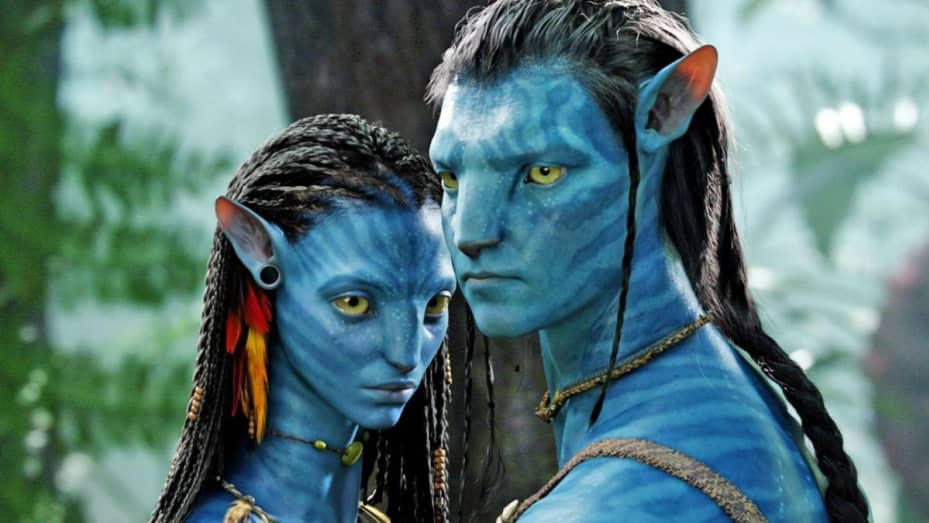
James Cameron is one of the greatest genre filmmakers of all time. He is also a technological innovator and genius. In Avatar (2009), he truly topped himself in regard to creating not only the beautiful world and inhabitants of Pandora, but by using never-seen-before motion-capture cinematic techniques. Moreover, the film would go on to make over $2 billion at the box office, so I’m not worthy enough to criticise Avatar (2009). But the script is incredibly flat and derivative. The lead characters are mostly unlikable and I genuinely found the amount of blue on show irritating to the eye. Worst of all is the hypocrisy that a film this expensive, and with a carbon footprint this big, is critiquing capitalist corporations who destroy the natural world.
THE BLAIR WITCH PROJECT (1999)
Yes, this horror film had one of the smartest and ingenious marketing campaigns of all time. Yes, I should be praising it because I love horror films and also get excited when indie filmmakers hit the big time with low budget films. But, The Blair Witch Project (1999) has no real story as it just a clever series of jump scare set-ups. More importantly, it has no characters you can root for as they are so stupid and obnoxious. Worst of all it wasn’t scary or suspenseful. That’s because I wanted the bickering trio to die. I mean, who throws away a map. They were morons! Plus, this expertly crafted movie committed the worst crime of all – bringing back the found footage film! Now, don’t get me started on THAT cinematically moribund subgenre!
CLOSE ENCOUNTERS OF THE THIRD KIND (1977)
What’s not to like about an award winning, box office smash directed by arguably the most brilliant director of a generation? Furthermore, Close Encounters of the Third Kind (1977) also contains some of the most breath-taking and ground-breaking special effects. So, with the Oscar winning cinematography and majestic score, why don’t I enjoy this Steven Spielberg sci-fi masterpiece? In short, I cannot stand the choices Richard Dreyfus’ character makes. I did not believe his journey. Why would you want to go to space and connect with aliens? Why would you abandon your family and head off on some frantic search for something from the sky? Eat the mash potato! Don’t make mini-mountains out of it. I get that there is pseudo-religious metaphors going on, but why were we meant to care? Amazing spectacle, but devoid of emotional connection and an ending that didn’t make much logical sense to me.
THE MASTER (2012)
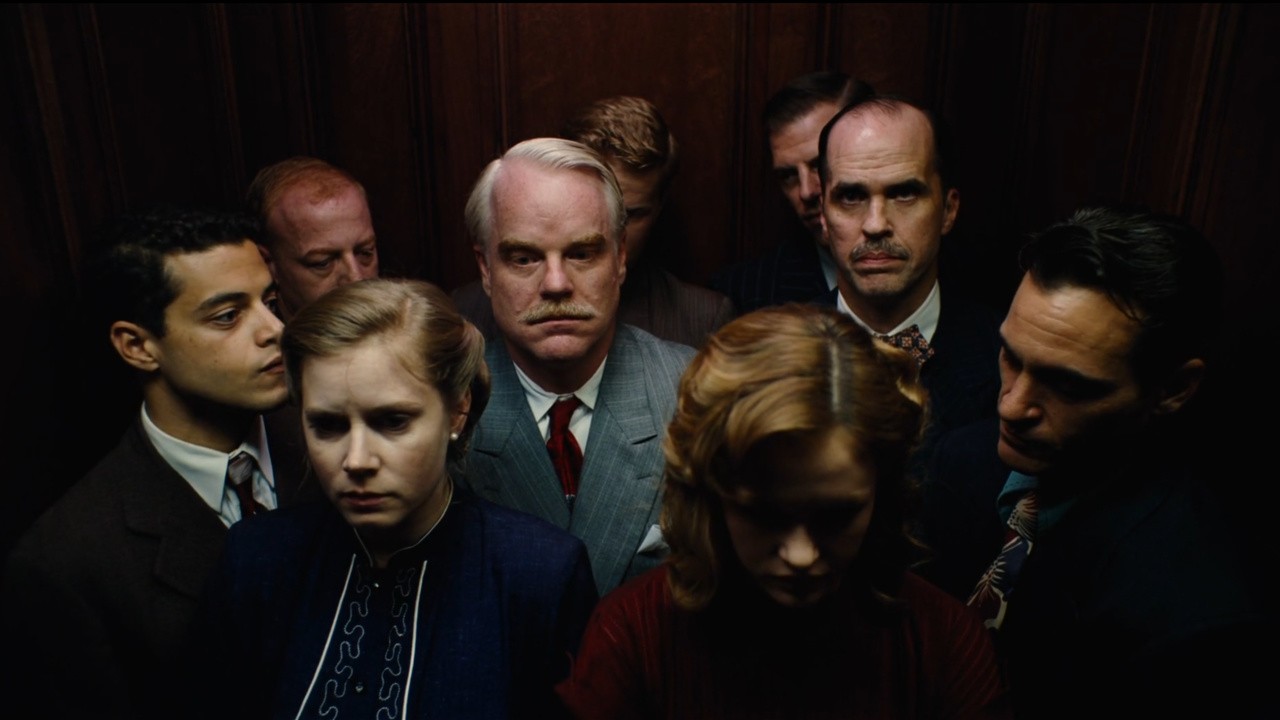
I really love films and documentaries about cults. Especially where religion is used to control human beings and make them do crazy things. What possesses another person to want to control others? They are often extremely charismatic and talented people too, so always fascinating to explore. In Paul Thomas Anderson’s The Master (2012), and while this has been denied, he studies the relationship between a lost soul drawn to a movement that may or may not be a reflection of Scientology. Freddie Quell (Joaquin Phoenix), a World War II veteran is pulled toward Lancaster Dodd (Hoffman), a leader of a cult known as “The Cause”. But not much happens other than Quell having a series of breakdowns amidst post-traumatic stress and alcoholism. Anderson is one of the great humanist and existential filmmakers working today, but The Master (2012) was too impenetrable and alienating for me.
MULHOLLAND DRIVE (2001)
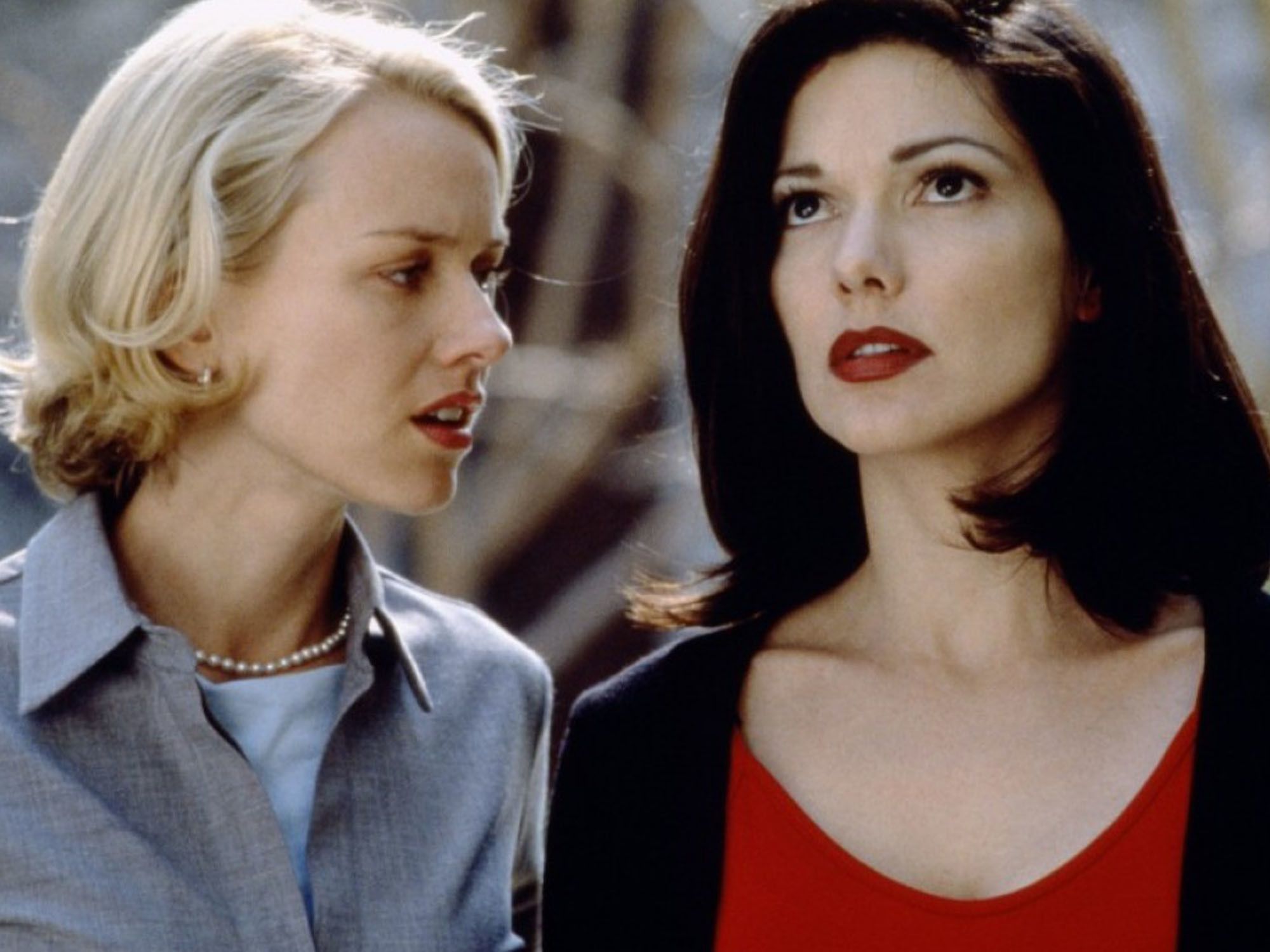
I am a massive fan of David Lynch’s oeuvre. He is one of the most incredibly idiosyncratic and original voices is cinema. Lynch is visually, aurally and cinematically able to deliver both coherent and surreal narratives that blow your mind and heart out. After bamboozling audiences with Lost Highway (1997) he delivered an emotionally moving road movie in The Straight Story (1999). After that I’m not sure what was in his damn fine coffee when Mulholland Drive (2001) was devised. My understanding was it was a rejected filmed pilot which transmuted into a feature film. Crossing many genres including thriller, detective, horror and romance, the narrative splinters via many characters in Hollywood, notably Naomi Watts portraying an actress experiencing a career and identity crisis. That’s just the tip of an extremely enigmatic iceberg and the bottom line was I just didn’t care. Critics love Mulholland Drive (2001) and it often tops best film lists. I have absolutely no idea why.
THE WITCH (2015)
My filmmaking and screenwriting career is more a hobbling hobby these days. Other than not getting on the right career train, or getting lost in the smoke of an overcrowded creative platform, one main reason I may not have succeeded is because I arguably don’t have an original vision. Maybe I am just too generic. One cannot say that about Robert Eggers. This is one truly talented filmmaker. His debut film The Witch (2015) was a low budget folk horror masterpiece which became a sleeper hit at the box office. Set in 1630s New England, it is an authentically designed and brilliantly acted period drama with Anya Taylor Joy standing out. But aside from the historical accuracy of the language, locations and costumes the story was SO slow. I realise The Witch (2015) is an arthouse classic, but I just did not connect with the characters and was bored all the way through. There are some occasional scares, but it’s more a film which draws horror from underlying dread and enigma rather than the classic horror style I prefer.
Cast: Jason Schwartzman, Olivia Williams, Bill Murray, Brian Cox, Seymour Cassel, Mason Gamble, etc.
*** CONTAINS SPOILERS ***
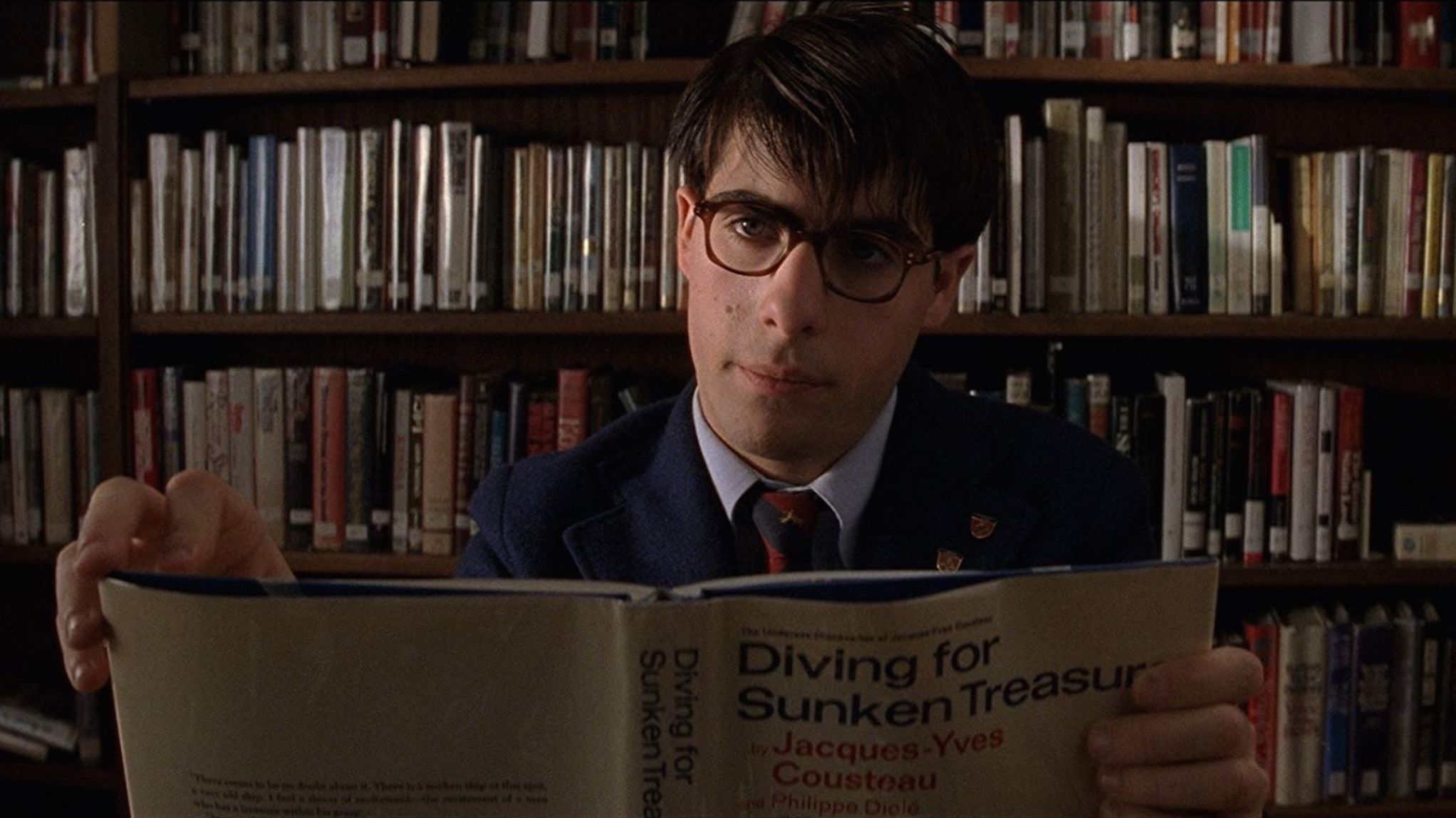
Having recently written positively about my favourite films of Wes Anderson I was spurred to revisit my favourite work of his, Rushmore (1998). It’s a smart, funny and poignant rites-of-passage narrative which spins off from the classic Hollywood teen films of John Hughes to deliver an esoterically beautiful set of empathetic characters. Like Hughes’ best work it is witty, warm and highly memorable.
At the heart of the story is Max Fischer (Jason Swartzman), a fifteen-year-old boy who attends Rushmore Academy. Like Ferris Bueller, he’s a maverick who drives his tutors up the wall with his rebellious behaviour. But Max is not all about looking cool, driving fast cars and singing to a crowded Chicago parade. He is far from the slacker that Ferris is, in fact he has started virtually all of the Rushmore clubs including: karate, fencing, French, and the ‘Max Fischer Players’. Their version of the film Serpico (1973), is absolutely hilarious. However, all such activities have impacted his grades causing Max to be placed on probation by the exasperated Principal, Nelson Guggenheim (Brian Cox).
Max is arrogant, confident, determined and forthright in his belief he is better than everyone, including the adults around him. But it’s a long-developed defence mechanism against one of the integral themes of Anderson’s film, grief. All the main characters including Max, Herman Blume (Bill Murray) and Rosemary Cross (Olivia Williams) are grieving the loss of a loved one. Amidst the quirky comedy Anderson therefore gives the film an air of mournful pathos, bringing us ever closer to the characters. With the theme of loss in play the Oedipal love triangle which plays out in the middle act is all the more humorous and sadder.
Max is a flawed character, but so driven that one cannot help but find him appealing. He hides his socio-economic situation, perhaps not ashamed of his working class background, but more a projection of where he wants to be. His Dad (Seymour Cassel) is a barber, not the surgeon Max tells everyone he is. Yet, there is love and respect between the two as they have clearly suffered loss together. As with Williams and Murray, Cassel gives a wonderful supporting performance.
Over the course of Rushmore (1998), amidst Max’s unrequited love for Rosemary, vengeful attacks on Herman, crazy schemes, school expulsion and hilarious plays, Max matures slowly, makes friends and finds his place in the world. Max also forges relationships with teenagers his own age and slowly releases his shield of grief. Jason Schwartzman is perfect as Max, delivering a winning combination of pathos, intellectualism and deft humour. Incredible to think it was his film debut beating, according to IMDB, 1800 auditionees to the role.
Screenplay by: Jon Spaihts, Denis Villeneuve, Eric Roth
Based on: Dune by Frank Herbert
Produced by: Denis Villeneuve, Mary Parent, Cale Boyter, Joe Caracciolo Jr.
Cast: Timothée Chalamet, Rebecca Ferguson, Oscar Isaac, Josh Brolin, Stellan Skarsgård, Dave Bautista, Stephen McKinley Henderson, Zendaya, Chang Chen, Sharon Duncan-Brewster, Charlotte Rampling, Jason Momoa, Javier Bardem, etc.
Cinematography: Greig Fraser
***MAY CONTAIN SPOILERS***
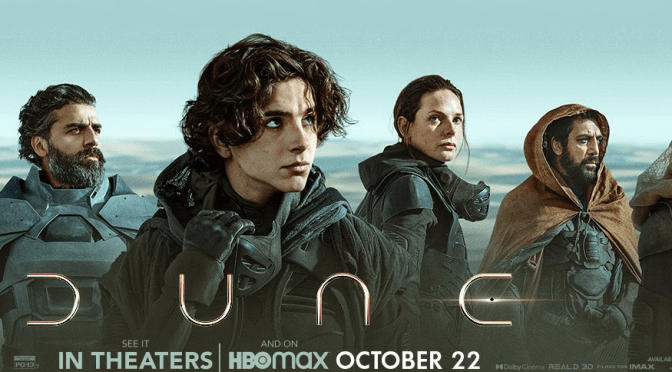
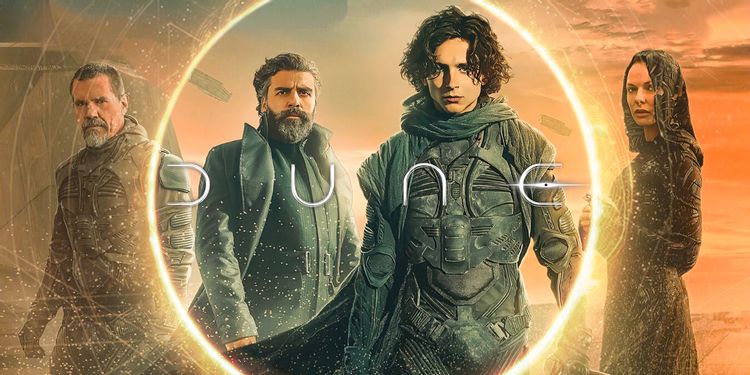
I truly hope Dune: Part One (2021), an epic adaptation of Frank Herbert’s legendary Dune literary series, has a second part, otherwise I would have wasted well over two hours of my life watching the Denis Villeneuve helmed film version. Having said that, there were times where I felt the glacial pace of the narrative caused time to stand still, boring me in the process. But, I get it. It’s part one and setting all the major players up and building a strange world both visually and imaginatively. As such perhaps Herbert’s books may have suited a HBO TV adaptation rather than a cinematic version.
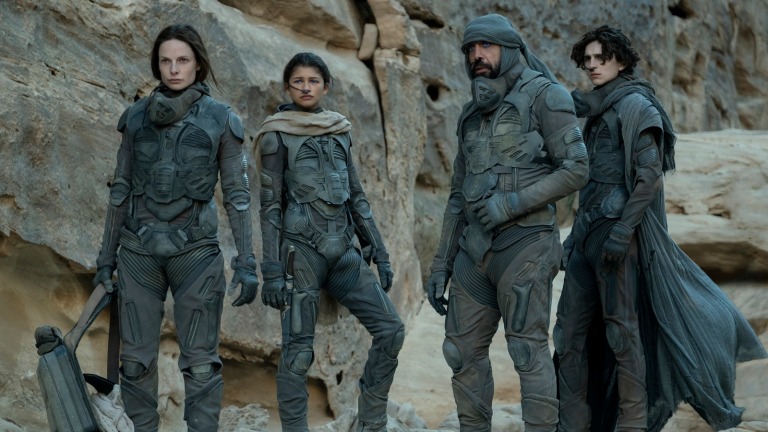
Maybe I’m jaded and cynical though. Have I seen too many films and stories? Is Dune: Part One (2021) even worth the journey and perhaps it’s too old-fashioned a sci-fi story to create resonance for myself and these times? Well, it absolutely looks amazing. The special effects, sandy landscapes, behemoth buildings, underground monsters and space vessels are rendered with such believable authenticity they genuinely looked real on the screen. Frank Herbert’s (I haven’t read the books) vision is astoundingly realised as this futuristic world in a far, far galaxy felt like a moving work of art. But, it was extremely beige and brown and sandy looking on Arrakis, so much so that I was glad of the dark contrast in the scenes involving House of Harkonnen. By the way, I’m not often a fan of the natural cinematography style used here where during big action scenes at night I could hardly see anything. Moan over.
The story of Dune (2021) felt a bit old-fashioned as a classic hero’s journey. It didn’t help that the in-the-sand screenplay and Denis Villeneuve’s meditative, confident direction was too subtle for this story. I mean why do we care about Timothee Chalamet’s Paul Atreides and his family’s inheritance of the spice world’s of Arrakis? Without giving anything away it becomes a poisoned chalice politically in this world and Paul’s, his parents, and the House of Atreides’ lives all become endangered. So, while Frank Herbert’s novel was originally released to powerful acclaim in 1965 and five other novels would follow year’s later, a film version of Dune (2021) now feels outdated in terms of subtext. Villeneuve is a genius filmmaker, but I’m not sure, aside from the beautiful look of the locations, sets and actors there is much of a narrative to get our teeth into. Just another ‘white saviour’ quest, which is so drawn out in terms of the interminable slow pace at times.
Of course, the cast are wonderful to look at, but Chalamet is miscast for me. He is an incredibly talented young actor, but he is not given any character to get his teeth into. Villeneuve does a less-is-more style that I love and he’s obviously playing the long game withDune (2021), yet he really needed a young Ryan Gosling to carry Paul Atreides as Chalamet isn’t given enough to do in terms of acting. Yes, there are massive worms and big explosions and floating fat men, but the story dragged. Thankfully, Jason Momoa injected some movie star charisma in his action sequences, while Rebecca Ferguson and Javier Bardem sprinkled some of their own spice amidst the over-controlled Villeneuve design.
I really wanted to like Dune (2021). I won’t see a more attractive and technically perfect rendition of a sci-fi world in the cinema in years. But, I could not connect with the narrative or drama. I mean, Paul is possibly the chosen one or something or other but why do we care? His mother is connected to some weird cultish sect — with the “Force” — and there are big worms which made me want to watch Tremors (1990); a far superior and shorter version of the hero’s journey. Watch that instead.
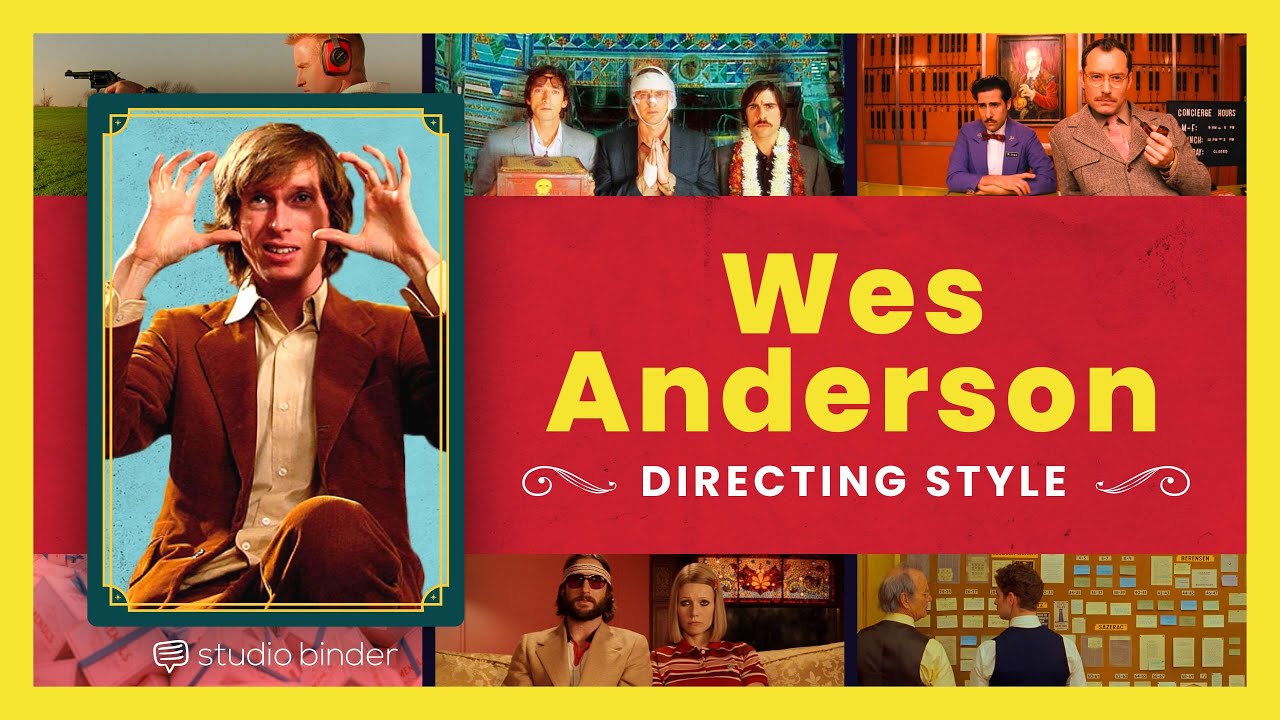
I thought I’d save myself a lot of time using the above variant words in one go. Because they, and the word auteur, are utterly inevitable while writing a short article in praise of the Wes Anderson films I rate. It’s intriguing to write about Anderson though. While many of the pieces in the My Cinematic Romance series concentrate on people in cinema I absolutely adore, he is more a filmmaker who I respect rather than have an undying emotional connection with.
Wes Anderson is a phenomenal filmmaker with an imaginative set of style and narrative conceits. Everyone one of his releases is a rich tapestry containing memorable ensemble casts, adjacent framing, effervescent use of colour, geographical pertinence, intellectual humour and subjects situated in the far left field of genre cinema. Yet, I don’t enjoy ALL of his films. Often they veer too far into eccentric pretentiousness. Indeed, I was going to write a review of The French Dispatch (2021), but I found it frustratingly dull and, other than the tremendous story set in the asylum with the mad artist (Benicio Del Toro) disconnected with it on the whole. But, I must say, it was another admirable work of cinema, but one I did not enjoy as a paying punter.
So, rather than write a middling review about a genius filmmaker’s latest work, here is a piece about my favourite five films of Wes Anderson.
***MAY CONTAIN SPOILERS ***
BOTTLE ROCKET (1996)
Anderson’s debut feature film is based on his short film of the same name. Co-written with Owen Wilson, it is a freewheeling take on the heist movie which eschews hard-boiled professionals for a group of hapless losers led by the positively loopy Dignan (Wilson again). Shot way before Anderson got his ruler and set square out, it’s a naturally filmed, hilarious character comedy that destabilises crime genre conventions with charming effect. Launching the acting careers of the Wilson brothers it is an oddly charming filmic treat.
RUSHMORE (1998)
This is still my favourite Wes Anderson film because it combines a perfect combination of uncommon humour and prevailing verisimilitude. What I mean is I did not feel I was watching a showcase of artistic flourishes, but a true human story full of empathetic characters, feeling and emotion. It is also incredibly funny as we follow the rites of passage story of school maverick, Max Fischer (Jason Schwartzman), a working class kid rebelling against the adults he believes are beneath him. Bill Murray’s career renaissance began here and his character’s vengeful battles with Max are one of the film’s many highlights.
THE ROYAL TENENBAUMS (2001)
The first Wes Anderson film that saw the stylistic devices and themes so prevalent in his later work to truly come to the fore. The ensemble cast crammed with famous names, the omnipotent narrator, symmetrical framing, consistent and complimentary colour palettes, typography, fantastic use of nostalgic music, distinctive costumes and stories structured in chapters of the literary kind. The Royal Tenenbaums (2001) contains many absurd comedic moments, but has several tragic scenes too. This demonstrates Anderson’s growing maturity and remains a confident vision of a dysfunctional American family of geniuses and misfits.
THE GRAND BUDAPEST HOTEL (2014)
While Rushmore (1998) is my favourite film of Wes Anderson, his best is the tour-de-force comedy, The Grand Budapest Hotel (2014). It’s the pinnacle of bravura style and well-honed narrative competence, confidently presenting the rags-to-riches story of Zero Moustafa beginning in 1930s. Europe. Moustafa’s story takes in his first love, his job at the opulent hotel and his moving friendship with the prideful Gustave, an amazing Ralph Fiennes. It’s a film packed with invention, colour, humour, sadness and romance all wrapped in themes of the rise of fascism, loss, love and the wonder of friendship.
ISLE OF DOGS (2018)
Put aside ridiculous millennial online accusations of cultural appropriation and submerge yourself within Anderson’s rich canine narrative and stop-motion tapestry. As aforementioned, I’m not always a fan of his story subjects but he is a master of style and form. Isle of Dogs(2018) is no different and is a wonderful cinematic experience. Set in Japan we concentrate on, hence the title, a bunch of stray dogs dumped on a wasteland left to die and their subsequent adventures. This is much darker than prior Anderson films, but full of the imagination, wit, colour and brilliant technique, containing funny gags and twisting drama throughout. I preferred this to his version of the Roald Dahl classic, Fantastic Mr Fox (2009), as Bryan Cranston and the marvellous cast breathe life into the Anderson’s visionary animated box of tricks.
Who doesn’t like a great movie death? Well, people who abhor violence and gore on the screen. But I am not one of those people. Thus, if done right in terms of combining emotional context and cinematic imagination, there’s nothing I like more than revelling or lamenting a character’s end in fine bloody fashion. Lastly, I hear you ask why no Zahler, Scorsese, Cronenberg, Miike, Peckinpah, Jackson, Fulci, Roth, Romero, Argento etc. on this list? So much death and only six make it, so please suggest any of the thousands I have missed off in the comments.
*** CONTAINS SPOILERS ***
ALIEN (1979) – “Do these eggs taste off?”
I think it may have been something Kane (John Hurt) ate or maybe something that ate him? Anyway, one of the most spectacularly surprising scenes ever still holds amazing power to this very day.
THE FURY (1978) – Separated at death!
This under-rated tele-kinetic thriller is a spiritual sequel to Carrie (1976). Adding a spy conspiracy plot to Amy Irving’s rites of passage character arc, it has a whip-cracking-pace and classic DePalma set-pieces. None more so than the explosive end of the baddie-in-black.
PSYCHO (1960) – Take a bath next time!
What more can be written about one of the most shockingly original scenes in cinema history? Not only did Hitchcock break all narrative rules killing off the main protagonist halfway through, he did it with one of the most ingenious uses of montage, music and murder ever.
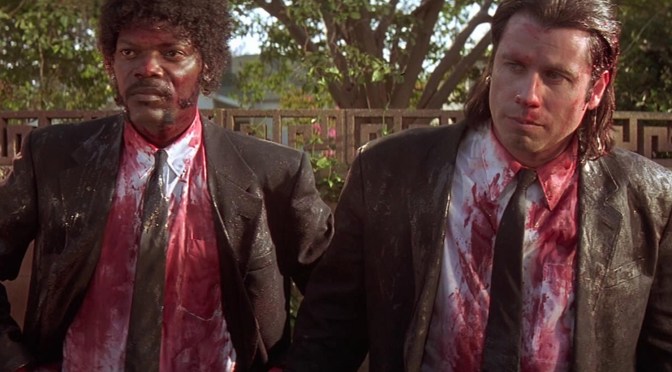
PULP FICTION (1994) – The original “face-off!”
Marvin never saw it coming. But let’s face it – none of us did!
ROBOCOP (1987) – Toxic Wasted!
Whoever designed this action scene, no doubt Paul Verhoeven had much to say, delivered one of the most excessive demises in 1980’s cinema. The vehicle crash, the toxic waste, the melting bad guy, the steam coming off his body and the final disintegration are just cinematic perfection.
WILD AT HEART (1990) – Bobby Peru loses his mind!
David Lynch’s vibrant adaptation of Barry Gifford’s romantic thriller contains many colourful characters. Willem Dafoe’s Bobby Peru is a particularly nasty piece of work and he gets his comeuppance in an incredibly visceral and disturbing way!
GREAT ENSEMBLE FILM CASTS #6 – AUGUST: OSAGE COUNTY (2013)
Directed by: John Wells
Screenplay by: Tracy Letts
Based on: August: Osage County by Tracy Letts
Produced by: George Clooney, Grant Heslov, Jean Doumanian, Steve Traxler
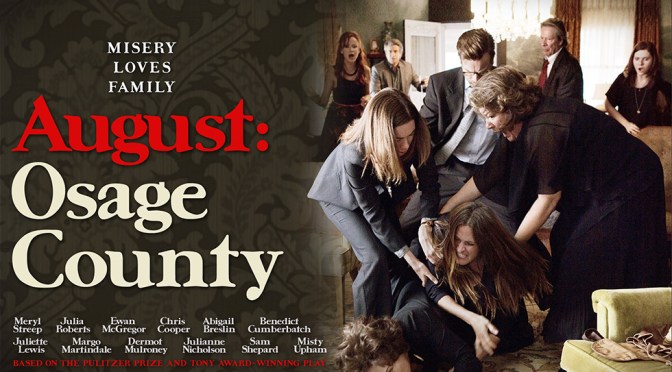
Cast: Meryl Streep, Julia Roberts, Ewan McGregor, Chris Cooper, Abigail Breslin, Benedict Cumberbatch, Juliette Lewis, Margo Martindale, Dermot Mulroney, Julianne Nicholson, Sam Shepard, Misty Upham, etc.
Cinematography: Adriano Goldman
*** MAY CONTAIN SPOILERS ***
Unsurprisingly, the play, August: Osage County, from the typewriter of Tracey Letts – the formidable playwright behind Killer Joe and Bug – about a family suffering loss of a “loved” one was not going to be a feelgood and uplifting affair. Instead, over the period of a month we are introduced to a whole host of characters with a variety of anger, addiction and attitude issues. Brought together by apparent grief, when patriarch, Beverley Weston (Sam Shepard) drowns, the extended Weston family fight and vent spleen at each over current and past dramas, with many a secret soon to be revealed.
Winning the Pulitzer Prize for Drama in 2008, Letts play was subsequently adapted into the dark, feel-bad and tragi-comedy film in 2013. Directed by John Wells, August: Osage County (2013), brought together an unbelievable ensemble cast of actors who did spectacular work with Letts acerbic and razor-sharp dialogue. Given that many of the personalities in the narrative are dominant matriarchal characters, the casting of Meryl Streep and Margo Martindale in the roles of Violet Weston and Mattie Fae respectively, is certain to create sparks on the screen. So, it proves.
Streep has delivered so many memorable characterisations over the years, but as Violet Weston I’m not sure she’s been so bilious and cancerous, both literally and symbolically. Her daughters, portrayed by Julia Roberts, Juliette Lewis and Julianne Nicholson, all have their own issues to deal with, but with such a vicious mother it’s a surprise they aren’t in a psychiatric ward. As harsh truths and bitter revelations unfold over the dinner and kitchen table conversations, Letts shows the complex nature of family existence; how it traps us with people we have nothing in common with. Women are seemingly in charge of the Weston family as the men, represented by Ewan McGregor, Benedict Cumberbatch, Sam Shephard and Chris Cooper, appear more passive and bullied.
Altogether, August: Osage County (2013), is a difficult to watch as there’s not a lot of love shown in the Weston household. Nonetheless, as an acting and writing tour-de-force there are few films that can best it. I guess we all have family problems and many ups and downs to deal with in life. What we can learn from this play and film is that this is definitely NOT the way to behave to people you’re meant to love and care for.
TO BOLDLY REVIEW #12 – STAR TREK: NEXT GENERATION – SEASON 7 (1993 – 1994)
Based on Star Trek & Created by: Gene Roddenberry
Season 7 writers (selected): Joe Menosky, Jeri Taylor, Ronald D. Moore, Brannon Braga, René Echevarria, Michael Piller, Naren Shankar, Jean Louise Matthias, James E. Brooks, Michael A. Medlock, Christopher Hatton, Nick Sagan, Spike Steingasser, Dan Koeppel, etc.
Season 7 directors (selected): Les Landau, Cliff Bole, Winrich Kolbe, Alexander Singer, Robert Weimer, Robert Scheerer, Adam Nimoy, Patrick Stewart, Jonathan Frakes, Gabrielle Beaumont, James L. Conway, LeVar Burton,Gates McFadden,etc.
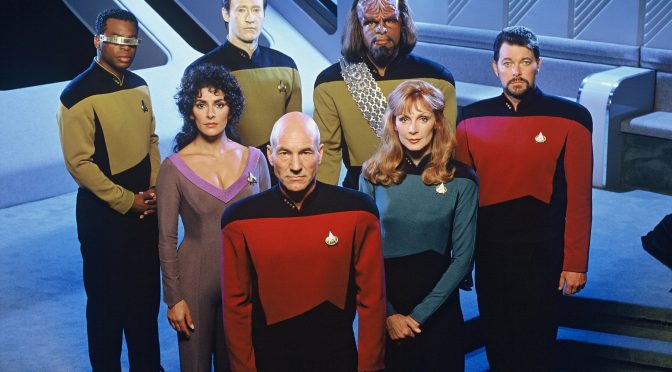
Cast: Patrick Stewart, Jonathan Frakes, LeVar Burton, Whoopi Goldberg, Colm Meaney, Michael Dorn, Marina Sirtis, Brent Spiner, Gates McFadden, Michelle Forbes, Majel Barrett, Rosalind Chao, John De Lancie, Wil Wheaton, Kirsten Dunst, Paul Sorvino, Dwight Schultz, etc.
Music/Composers: Alexander Courage, Jerry Goldsmith, Dennis McCarthy, Ron Jones, Jay Chattaway
Production Company(s): Paramount Television, CBS Television
**** CONTAINS SPOILERS ****
My Star Trek journey started when I was a kid many moons ago. I used to watch the original series on my portable telly in the kitchen while eating dinner. I loved the adventures of Kirk, Spock, Bones, Uhuru and the rest of these bold space heroes. Thus, it was surprising that the whole of the Next Generation era of shows, including DS9 and Voyager, passed me by. Nonetheless, I have, since writing and producing two Star Trek fan films, been on a dedicated mission to watch every episode and film of the franchise that has been released.
This escapade began with the original series and my first blog review can be read here:
Subsequently, and three engrossing years later, I have finally completed watching the last season of The Next Generation. I have to be honest that this marathon viewing project is certainly a big cultural task. Furthermore, I still cannot work out how the hell they managed to produce so many episodes per season for TNG. It truly beggars belief the amount of high quality TV that was produced. I mean, I was exhausted watching it, so how those making it felt I do not know. I guess the fan’s respect and money and joy of being part of the Star Trek legacy was more than compensation.
Season 7 was again a mammoth twenty-six episode tranche. One might think there would be a drop in quality and there was some element of this in certain episodes. However, that was more to do with attempting to crowbar in a satisfactory ending for certain characters, notably Wil Wheaton’s anaemic, Wesley Crusher. Family ties and dramas linked many of season 7’s narratives, yet there was also the usual high concepts and socio-political themes explored throughout. Thus, dearest Next Generation, I thank you for taking me on a bold ride to the final frontier of journey’s end. Here are six of my favourite episodes of season seven!
ATTACHED – EPISODE 9
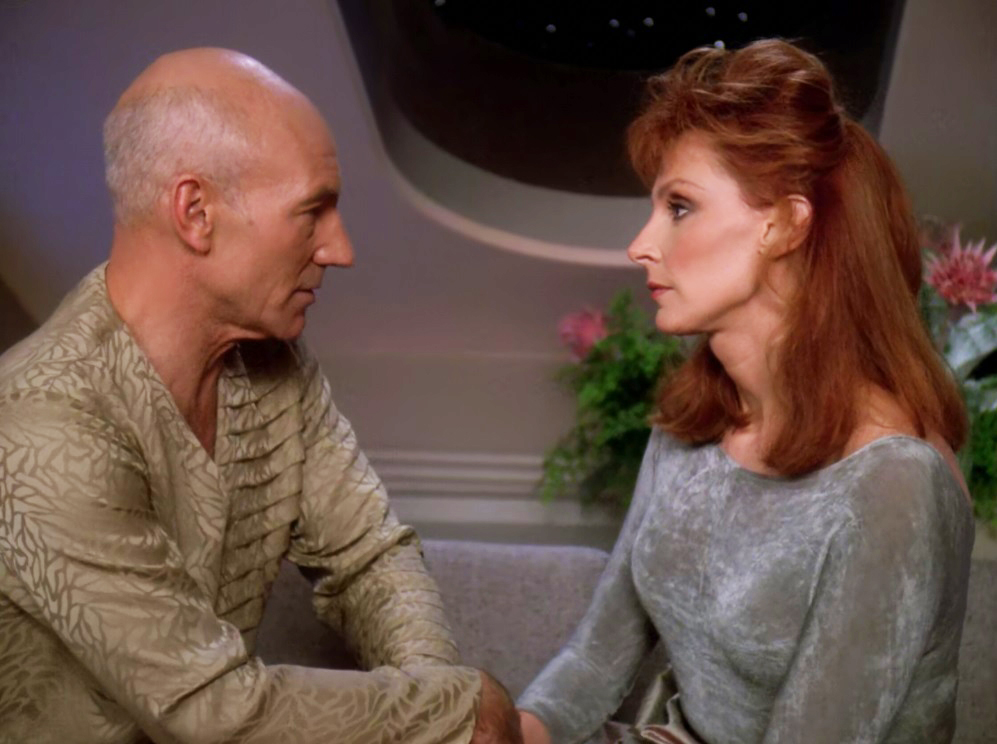
One of the great pleasures of watching The Next Generation is that the show always gave us mature romantic relationships. The “will they-won’t they” romance of Dr Crusher and Captain Picard is directly addressed in Attached, as the two find themselves shackled physically and telepathically by a paranoid alien race. As they attempt to survive and escape capture the two explore their hidden feelings in a moving episode of some power.
THE PEGASUS – EPISODE 12
Commander Riker (Jonathan Frakes) is portrayed as a dynamic action hero of strength and skill, so it is always interesting when his character is tested. In The Pegasushe is faced with both the sins of the “father” and of his own past. The surrogate father is this case is Captain Erik Pressman, portrayed brilliantly by Terry O’Quinn. Pressman is determined to track down the lost ship, ‘The Pegasus’ before the Romulans get to it. He places pressure on Riker to keep confidential the secrets the missing vessel has as the episode contains great drama and conflict.
HOMEWARD – EPISODE 13
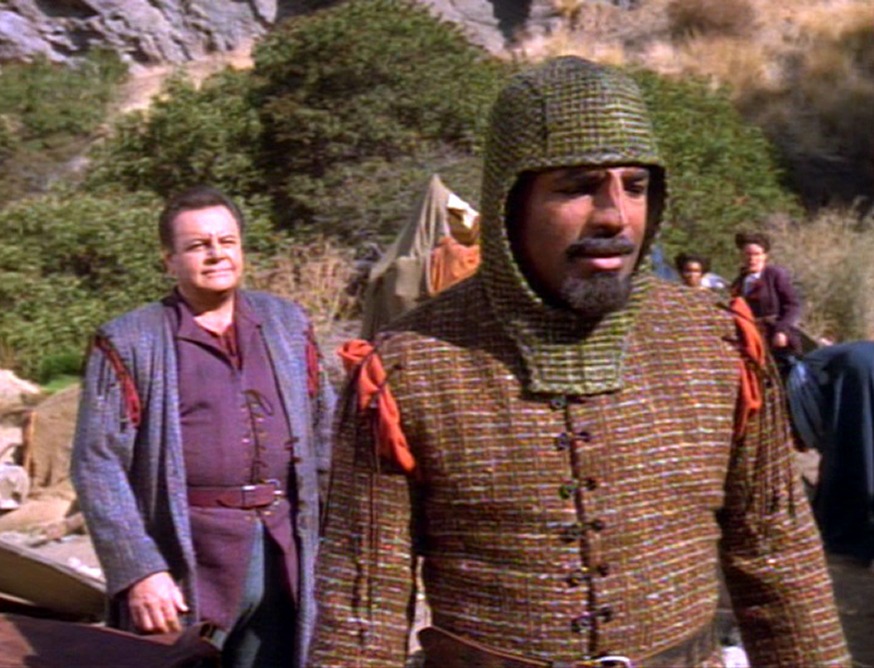
When shows have been going for many seasons they often have to introduce previously unknown siblings, parents or love interests to manufacture storylines. I totally get this and often it creates fantastic episodes. In Inheritance we get to meet Data’s “mother”, but an even better episode is Homeward where Worf’s foster brother, Nikola (Paul Sorvino) rebels against the ‘Prime Directive’ to save the Boraalan people. It’s a great episode full of twists and some excellent scenes between Paul Sorvino (not playing a gangster for once) and the ever-excellent, Michael Dorn. The use of the holodeck as an integral part of the narrative is highly inventive too.
LOWER DECKS – EPISODE 15
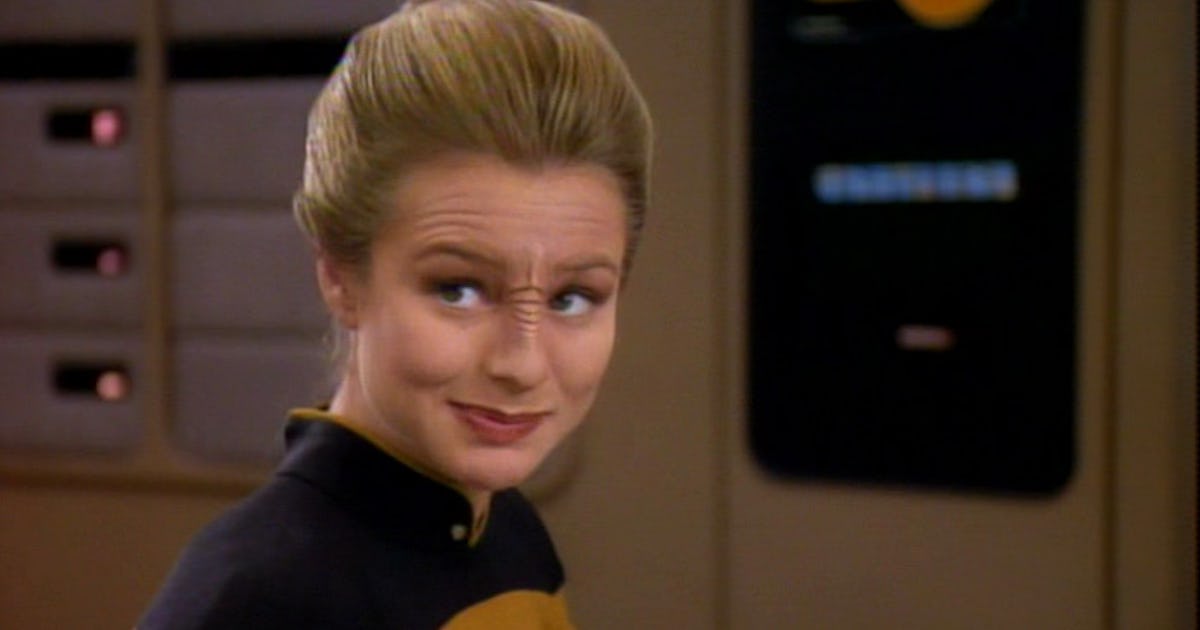
Most episodes of Star Trek will focus on the core characters with a leaning to one or two of the main cast. But Lower Decks turns that around with the fantastic premise of profiling some of the younger crew members. It’s a well written narrative which focusses attention on a Starfleet promotion with Ensigns Sito Jaxa, Sam Lavelle and Taurik in “friendly” competition to achieve the goal. We immediately warm to their personalities as the witty dialogue adds much fizz, but the drama of the piece is heightened when Bajoran, Sito Jaxa, is sent on a dangerous mission, leading to a powerfully emotional denouement.
GENESIS – EPISODE 19
I loved this episode because it contained a fantastic melding of sci-fi and horror genres with some monstrous creatures on show. With Gates McFadden directing her only episode, the story finds the Enterprise crew falling ill and regressing to various animal states. Worf has reverted into an aggressive predator attempting to mate with Troi; Riker an Australopithecine (Caveman); Troi an amphibian; and Barclay a spider. Even Spot the cat has become an iguana. While it may sound weird and a bit silly I loved the imaginative animal transformations as the cast shed both their human skin and inhibitions.
ALL GOOD THINGS – EPISODES 25/26
As they say all good things come to an end. So, after boldly going for many seasons, The Next Generation finally concluded with a moving and inventive two-parter. I must admit that while it was clever to call back to the first episode, Encounter at Farpoint, I was never a massive fan of the character, Q. Even though John De Lancie’s performance always brought great energy to every episode, I just felt that this character with uber-God-like powers could always resolve the drama with a Deus ex Machina click of the fingers. Nonetheless, the idea that he was always testing humanity was a great theme, and once again in All Good Things, he puts Jean Luc Picard through a trio of trials in the past, present and future. It’s a superbly written, acted and directed finale and possibly one of the best final episodes of a long-running TV show of all time! The last scene with Picard finally joining his crew at the poker table is truly logical! Make it so – Number One!
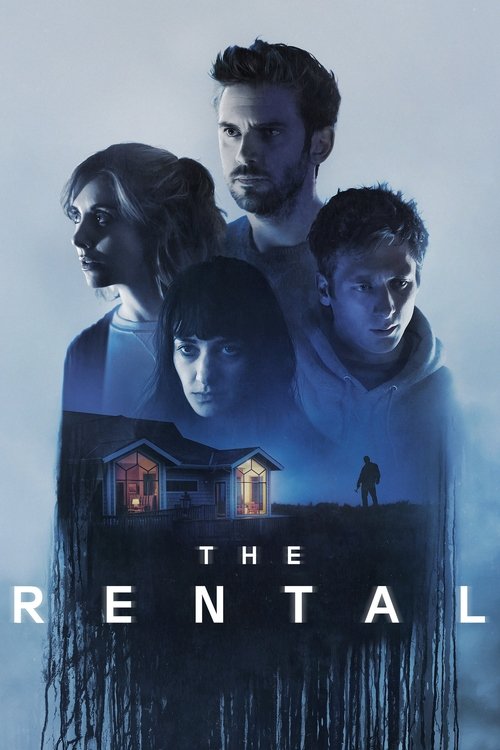
Produced by: Dave Franco, Elizabeth Haggard, Teddy Schwarzman, Ben Stillman, Joe Swanberg, Christopher Storer
Cast: Dan Stevens, Alison Brie, Sheila Vand, Jeremy Allen White, Toby Huss
Cinematography: Christian Sprenger
*** MAY CONTAIN SPOILERS ***
If you’re old like me you will remember the golden era of video rental stores in the 1980’s and 1990’s. I used to love going to the video shop at the weekend and choosing which films to watch. For example, on a Saturday afternoon at Blockbuster I would choose three films usually. One would be a banker like a high quality release or made by an acclaimed filmmaker whose work I was certain to like. Another would be a more commercial choice like a high concept action film or comedy; something to take the brain out for. Lastly, I would take a gamble on either an arthouse or foreign or indie character-driven film; OR an even bigger gamble on a lower-budget or unheard horror film or thriller with a back-of-the-video-box pitch that grabbed me. Often the latter choice would end up being a terribly arty bore or a schlocky B-movie disaster. However, every now and then I would find a film gem which totally gripped me.
With streaming now there’s not so much of a gamble as you haven’t had to walk or drive to the video shop. Even better there’s no need to return the tapes on time and risk getting fined. You switch on your streaming device and choose your film. If you don’t like it you can turn it off, although I do tend to see things through to the end on most occasions. But hey Paul, enough about comparing the past with the present – WHAT’S YOUR POINT! Oh yes, the Dave Franco directed The Rental (2020) is one of those films which I took a chance on because of the cast and the back-of-video-box-pitch (i.e. the Amazon online trailer). I’m glad I did watch it, as it is a terrific thriller with a tension-filled script which leads and misleads you through a series of compelling twists. It’s a simple premise, involving two couples spending the weekend at a beautiful rural property where poor choices destabilise their harmony, only for all hell to break loose when a serious crime escalates the action.
The cast of Dan Stevens, Alison Brie, Shiela Vand and Jeremy Allen White are arguably punching below their weight where the B-movie material is concerned. Yet, they bring quality to the proceedings as the initial peace between the characters descends into chaos when first infidelity and then murder rears its ugly head. One of my favourite character actors, Toby Huss, is excellent here too as the suspicious property manager. I’ve seen some so-so reviews for The Rental (2020), but it’s the kind of tightly plotted suspense thriller I really thrive on. What starts as an idyllic getaway for two relatively wealthy couples is carefully unravelled by Dave Franco’s well-paced direction, complimented by Brie and Steven’s committed performances, has wonderful locations and a seriously proper killer ending.
Created and written by: Steve Pemberton & Reece Shearsmith
Directors (Season 6): Matt Lipsey, Guillem Morales
Original Network: BBC (available on BBC Iplayer)
No. of Episodes: 6
I have written exhaustively about how brilliant this television programme is, so much so I don’t think I can add any further other than I believe it deserves regaling as TV national treasure. Just when you think Reece Shearsmith and Steve Pemberton could be running out of creative steam they prove you wrong with another superb series of Inside No. 9. If you are interested, here are prior articles I have written about it.
However, to recap, if you have never seen Inside No. 9 I urge you to do so. It is an exceptional anthology series with six stand-alone episodes per series. Individual episodes feature a whole host of different characters and amazing actors each time led by the multi-talented Pemberton and Shearsmith. As per the prior seasons, the latest one is absolutely unforgettable. It again privileges tightly woven thirty-minute short narratives, which more often than not, feature a twist in the tale. Moreover, the events usually unfold in one location with rarely more than a handful of characters. This makes the narratives feel more focussed, intense and intimate. In series 6, there is even more growth within the anthology genre and much risk-taking where style and form are concerned.
So, here are my mini-reviews of each episode from Season 6 with marks out of nine (obviously).
*** BEWARE: POTENTIAL SPOILERS ***
EPISODE 1: WUTHERING HEIST
Main cast: Paterson Joseph, Gemma Whelan, Kevin Bishop, Reece Shearsmith, Steve Pemberton, Rosa Robson, Dino Kelly etc.
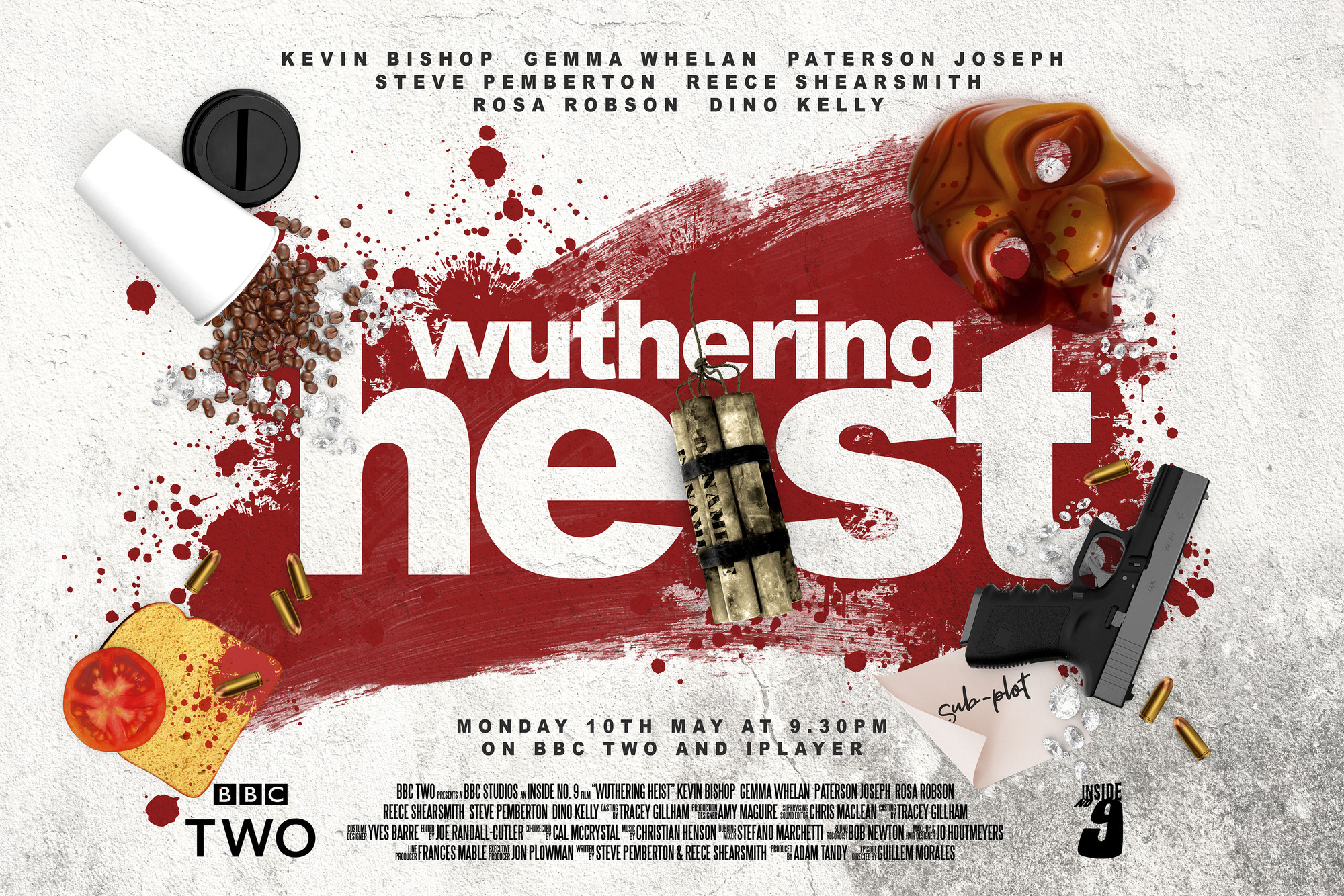
Not only are Pemberton and Shearsmith accomplished actors, writers and directors, they are also acutely aware how fans revel in their incredible work, devilishly mocking their own mythology and playing with audience expectations. They do this to dizzying impact in the puntastic opening episode, Wuthering Heist. Marrying elements from farce, crime, Commedia dell’arte and the plot of Reservoir Dogs (1992), the players wear masks, prat about and bleed over each other while attempting to pull off a diamond heist. Set in one location, a disused warehouse, Gemma Whelan is superb as the fourth-wall breaking narrator attempting to hold all the story innards together. Pretty soon though one realises that the flurry of puns, sight gags, plot contrivances and comical misunderstandings are intended as wondrous and silly fun. The lack of emotional depth is the joke here and the writers know this. Because Shearsmith and Pemberton’s script has a gag every four seconds, be it a sight jape or involve some sparky verbal dexterity. Lastly, not only do they know they are jumping the shark, but they revel in doing so during this hilarious meta-work.
Mark: 8 out of 9
EPISODE 2: SIMON SAYS
Cast: Reece Shearsmith, Steve Pemberton, Lindsay Duncan, Nick Mohammed
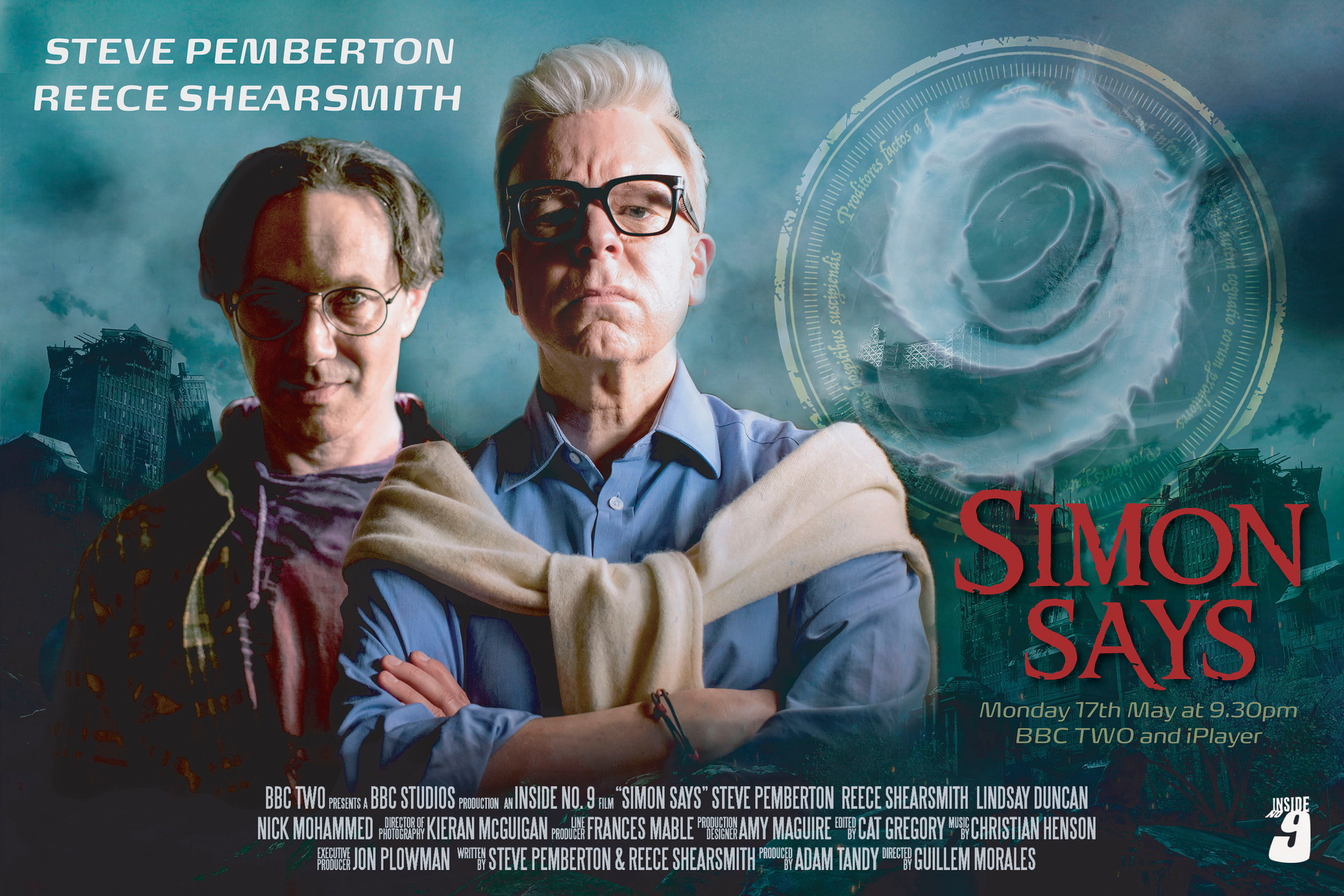
Among many of the recurring pleasures of watching Inside No. 9 is wondering what the number nine will refer to. It’s been a myriad of things including: a karaoke booth, a hotel room, a train sleeper car, a dressing room, a referee’s changing room, and even a shoe. In Simon Says it’s the name of a television epic called The Ninth Circle. This show is very similar to Game of Thrones in genre and scale, and likewise has a battalion of fans across the country who feel the final series undid the majesty of the prior seasons. The episode opens with immediate mystery as Steve Pemberton’s writer, Spencer, enters his flat with blood staining his clothes and conscience. Suddenly, Simon (Reece Shearsmith), is at the door saying he has evidence Spencer has committed a serious crime. Simon, a Ninth Circle uber-fan then blackmails Spencer into, among others things, rewriting the whole of the last season of The Ninth Circle into something more fan-friendly. Managing to be both funny and suspenseful in equal measures, Pemberton and Shearsmith’s characters play cat-and-mouse expertly, throwing in several big plot twists at the end of this compelling tale.
Mark: 8 out of 9
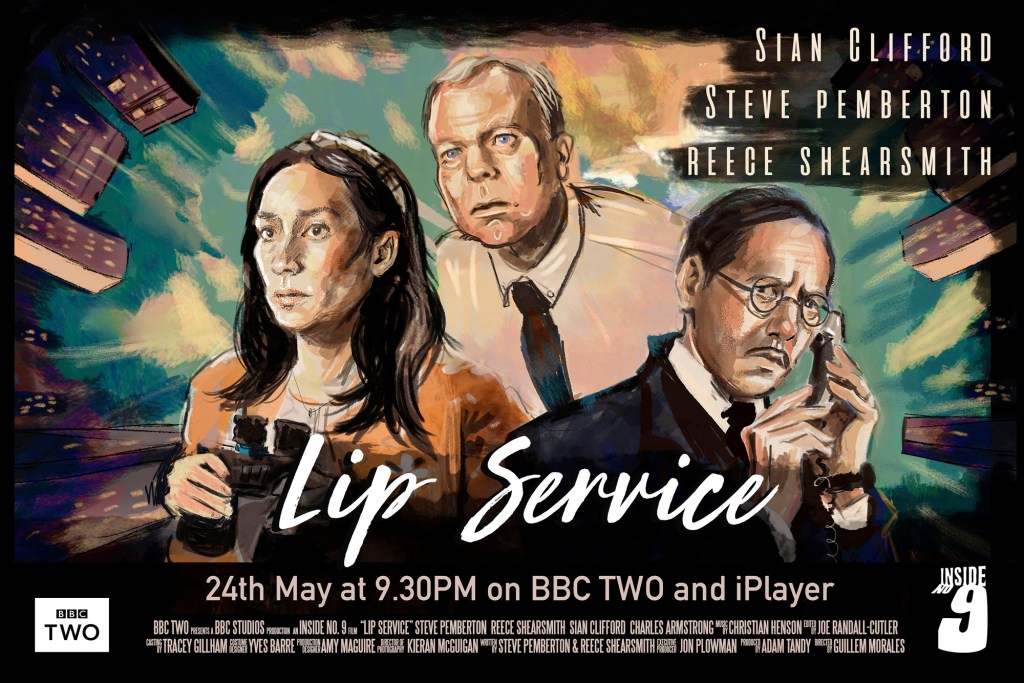
EPISODE 3: LIP SERVICE
Cast: Sian Clifford, Steve Pemberton, Reece Shearsmith
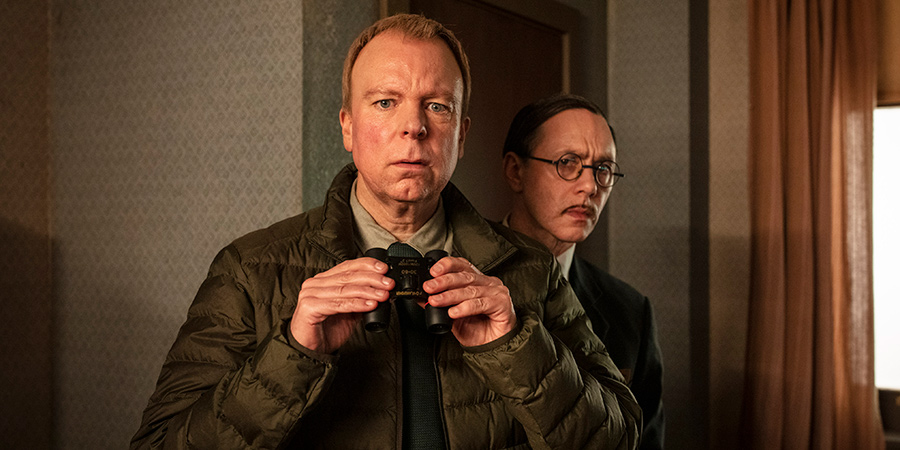
I watch some television series and films and am often struck at how much time is wasted in setting up the protagonists and story. Similarly, in unnecessarily long TV series you get either eight or ten episodes full of padding in the middle which destabilizes the momentum of the story. Nothing of the sort occurs in Inside No. 9. Stories are set-up with stylish economy and the situations immediately grab you by the throat and rarely let go. In Lip Service, Steve Pemberton’s downtrodden Felix is holed up in a hotel room waiting to liaise with a woman. But it’s not what you think. Sian Clifford’s Iris arrives and it turns out she is there to offer her services as a lip-reader. Felix suspects the woman he loves is having an affair and he requires Iris to read her and a possible lover’s lips at an adjacent hotel suite. I’ve now seen this episode three times and it truly is breathtaking. There’s empathy for Felix’s lost soul, some fine linguistic comedy, a potential romance, Clifford’s performance knocking it out of the park, Reece Shearsmith having great fun as an officious German hotel manager and THAT ending. The denouement, while totally believable, comes out of nowhere and leaves you genuinely speechless.
Mark: 8.5 out 9
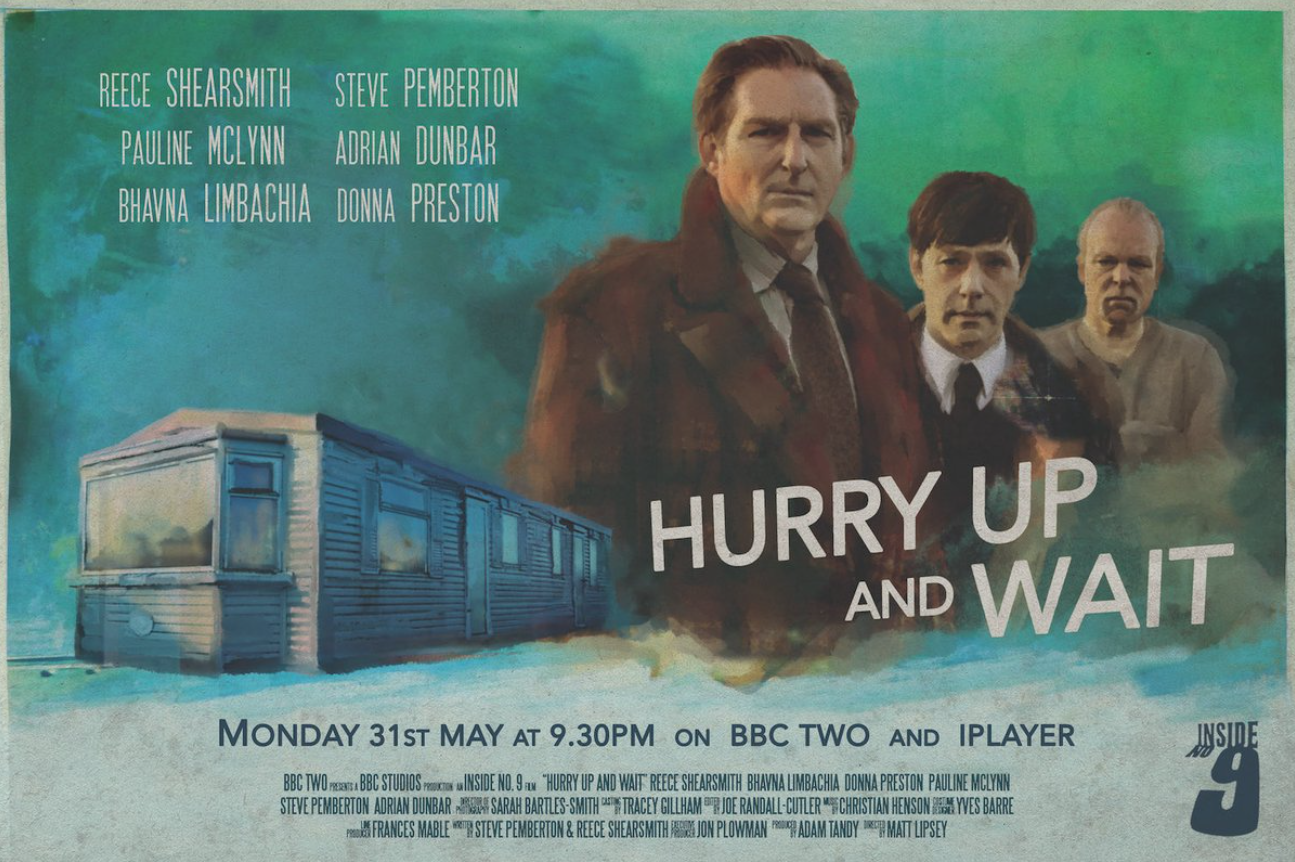
EPISODE 4: HURRY UP AND WAIT
Cast: Adrian Dunbar, Steve Pemberton, Reece Shearsmith, Donna Preston, Bhavna Limbachia, and Pauline McGlynn
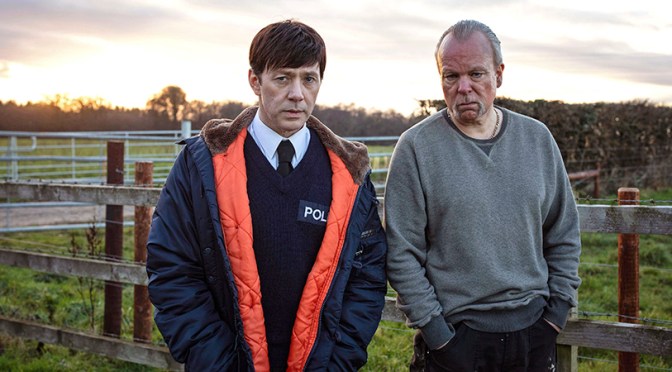
Quite possibly my favourite episode of the series, Hurry Up and Wait manages to achieve that difficult juxtaposition of being meta-textual and containing some real emotional power. Because it is one thing to be self-referential and satirise the creative process, in this case the making of a television police drama starring famous actor Adrian Dunbar, but it’s quite another to build in a murder mystery and empathetic characters who you root for. While Reece Shearsmith is always excellent playing angry characters, here he portrays James, a mild-mannered actor, who has got a break playing a scene with the precious talent, Dunbar. The TV drama they are in concerns a missing child and the “green room” happens to be a static caravan owned by a working-class family who may have important information about said grisly crime. Steve Pemberton and Pauline McGlynn play the parents of immature, Beverley – the brilliant Donna Preston – adding much comic relief, but all possibly hiding a dark secret. As James learns his lines he also plays detective seemingly discovering the truth until the truly chilling ending is revealed.
Mark: 9 out of 9
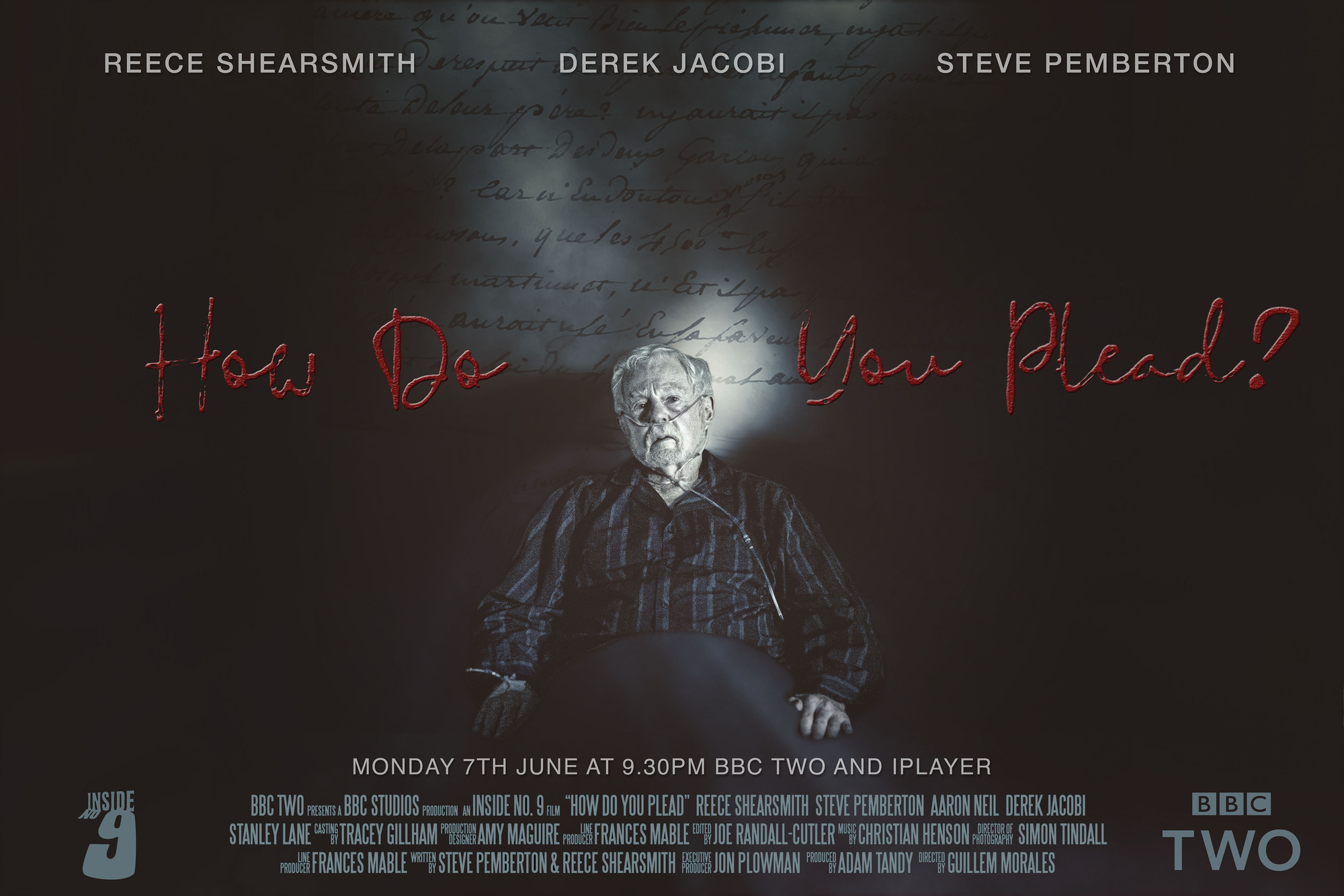
EPISODE 5: HOW DO YOU PLEAD?
Cast: Steve Pemberton, Reece Shearsmith, Derek Jacobi
Arguably the darkest tale, both in terms of the noir lighting and foreboding themes, it is difficult to discuss this tale of soul-searching guilt and justice without giving away too much of the story. Thus, I’ll talk about the actors and characters more. Derek Jacobi gives a deeply moving performance of a dying barrister who prides himself of, after an upturn in his early legal career, never losing a case in court until retirement. As he lies dying in bed, lungs heavy around his heart, he feels guilt about one case where he defended the indefensible. As he confesses his regret to Shearsmith’s cheery carer, it is soon revealed both men have sins they buried in the past which will soon come back to bite them. Watching these two fine actors spark off one another is as compelling as television drama can get, but there’s also comedy there too as Shearsmith delivers some spirited one-liners in between Jacobi’s grand screen gravitas. But where’s Pemberton I hear you ask? He’s sitting there waiting patiently in the shadows of this evocatively lit and thrilling tale.
Mark: 8 out of 9
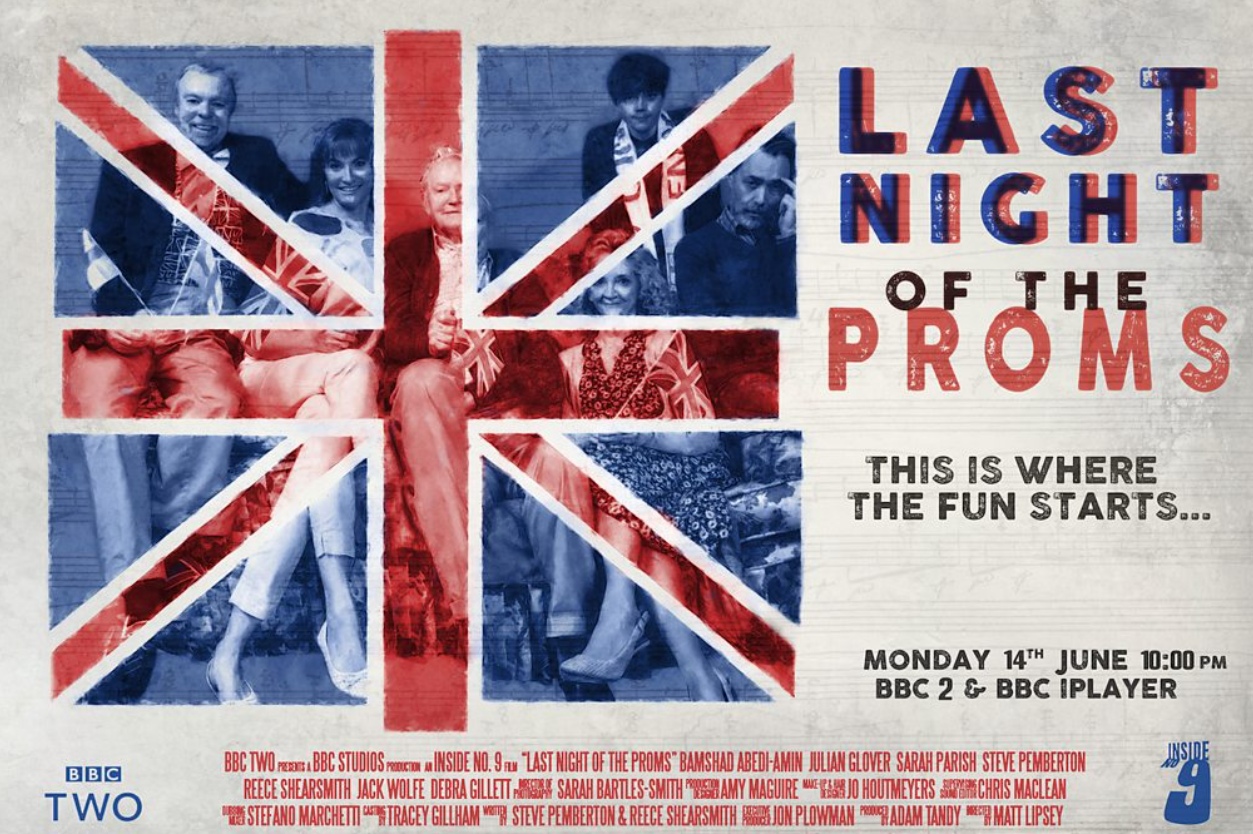
EPISODE 6: LAST NIGHT OF THE PROMS!
Cast: Steve Pemberton, Reece Shearsmith, Julian Glover, Debra Gillett, Bamshad Abedi-Amin, Sarah Parish etc.
Are you aware of the work of Dennis Potter? He was one of the finest writers in British television from the 1960’s way into the early 1990’s. His scripts were always highly erotic, political and incredibly controversial. They skewered very British and human themes and burnt great sacred cows of the church, government, family, sex and marriage on the TV barbecue, leaving charcoal remains in their stead. Potter was a genius and with Last Night of the Proms, Pemberton and Shearsmith match him for bravado in deconstructing human nature and what it means to be British. Set in a well-to-do, middle-class household, a family of three generations sit down to watch the Last of the Proms on the BBC. It’s a big traditional classical music event and cultural celebration of what it means to be British. It makes me sick! Britain isn’t great. The British are racist, imperialistic and hardy murderers, who have a history and present (fucking Brexit!) they should be ashamed of. The thought-provoking screenplay here is heavy on compelling themes, memorable imagery and striking symbolism. This is a jarring and messy episode and what it lacks in precise plotting it more than makes up for in juxtaposing horror, satire, drama, surrealism, Jesus, social commentary and comedy to rather mesmerising effect. Potter’s ghost would have watched with glee and disgust and hate and love and pity and sadness; which is much how I felt witnessing Last Night of the Proms.












 The Cinema Fix presents