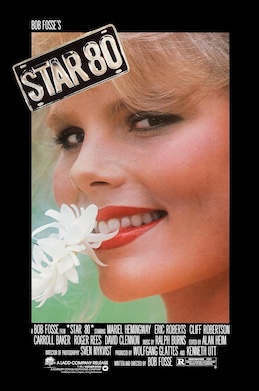
Films that Got Away #18 – Star 80 (1983)
Directed by Bob Fosse
Written by Bob Fosse – Based on Village Voice article, “Death of a Playmate” by Teresa Carpenter
Produced by Wolfgang Glattes & Kenneth Utt
Main cast: Mariel Hemingway, Eric Roberts, Cliff Robertson, Carroll Baker, Roger Rees, David Clennon, etc.
Cinematography by Sven Nykvist
*** CONTAINS SPOILERS ***
Bob Fosse remains one of the most singular figures in American entertainment — a director and choreographer whose style fused seduction, cynicism, theatrical precision, and emotional exhaustion into something instantly recognizable. Emerging from Broadway before conquering Hollywood, Fosse developed a visual language built around angular movements, tilted hats, snapping fingers, smoky jazz-club sensuality, and a relentless awareness of performance as both liberation and self-destruction.
Films like Cabaret (1972), Lenny (1974), and especially All That Jazz (1979) transformed the movie musical into something darker and psychologically raw, stripping away optimism in favour of obsession, ego, mortality, and the corrosive cost of show business. His influence can still be felt across modern cinema, music videos, and stage choreography, from contemporary Broadway revivals to filmmakers drawn to stylized performance and fractured antiheroes.
His final film, Star 80 (1983), stands as perhaps the bleakest expression of that worldview. Based on the true-crime murder of Playboy model Dorothy Stratten by her estranged husband Paul Snider, the film abandons glamour almost entirely in favour of a grim examination of exploitation, fame, misogyny, and possessive violence. Despite strong performances and critical admiration over the years, Star 80 remains comparatively difficult to encounter on television or major streaming platforms, partly because of the film’s emotionally punishing tone and its frank, lascivious depiction of the exploitation surrounding Stratten’s rise and death.
Unlike nostalgic Hollywood biographies that soften tragedy into inspiration, Fosse offers no comforting catharsis. The film ends not with redemption, but with the crushing inevitability of a young woman destroyed by the appetites of the men around her. That uncompromising darkness has contributed to the film’s lingering reputation as both a major work and an uncomfortable one — admired more often than it is revisited. So, thanks to the Nickel Cinema in London for screening this dark 1970’s based cult classic.
In Star 80 (1983), Mariel Hemingway gives an emotionally vulnerable performance of as Dorothy Stratten. Hemingway captures Stratten not as a caricature of Playboy fantasy, but as a genuinely sweet, almost painfully open young woman whose natural beauty and modest charm made her seem like the quintessential girl-next-door suddenly thrust into the machinery of adult celebrity. There is an innocence in Hemingway’s performance that never feels naïve or artificial; she understands Dorothy as someone eager to please, hungry for affection, and slowly awakening to her own independence just as the forces around her become more dangerous. Fosse frames her as both radiant and tragically exposed — a woman transformed into an object of desire by an industry that sees glamour as currency and vulnerability as weakness.
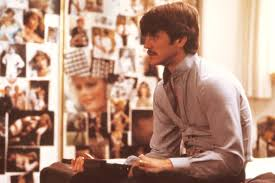
Opposite her, Eric Roberts delivers a frighteningly intense performance as Paul Snider, one that avoids simple imitation in favour of total embodiment. Roberts plays Snider as a man consumed by insecurity, narcissism, and desperate possessiveness, turning toxic masculinity into something sweaty, twitching, and deeply pathetic. He is not charismatic in the conventional movie sense; instead, Roberts makes him volatile and emotionally ravenous, a man whose entire identity depends on controlling the woman he helped “discover.” The performance becomes increasingly difficult to watch because of how recognizable the psychology feels — jealousy mutating into resentment, then humiliation, then violence.
Fosse refuses to sensationalize that descent in Star 80 (1983). The naked glamour of the Playboy world, the pornographic undercurrent of the entertainment industry, and the seductive surfaces of Los Angeles all become drenched in sordid, emotional decay. There is nudity and a sense of exploitative lingering on the feminine form, but there is understandable context. Cliff Robertson’s appearance as Hugh Hefner is not simply a caricature, but rather a caring, avuncular figure, despite building an empire out of, arguably, the exploitation of women. Further, Aram Nicholas (a thinly veiled, Peter Bogdanovich ) is a film director who tries to make Dorothy Stratten a movie star, but begins an affair too, sending Snider over the edge. Thus Stratten’s body and soul pinballs between these dominating men.
Overall, Star 80 (1983) lingers long after it ends. Fosse, Hemingway, Roberts and Sven Nykist’s cinematography contribute memorable work. Beneath its glossy imagery lies an overwhelming feeling of bleakness — the sense that every flashbulb, every photo shoot, and every promise of fame is shadowed by exploitation, stolen innocence, and inevitable tragedy.