Tag Archives: pornography

Films that Got Away #18 – Star 80 (1983)

Films that Got Away #18 – Star 80 (1983)

Directed by Bob Fosse

Written by Bob Fosse – Based on Village Voice article, “Death of a Playmate” by Teresa Carpenter

Produced by Wolfgang Glattes & Kenneth Utt

Main cast: Mariel Hemingway, Eric Roberts, Cliff Robertson, Carroll Baker, Roger Rees, David Clennon, etc.

Cinematography by Sven Nykvist

*** CONTAINS SPOILERS ***
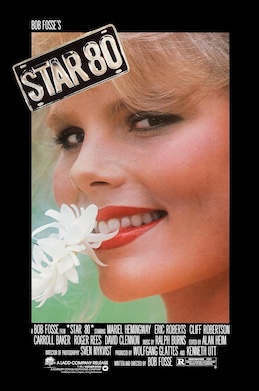


Bob Fosse remains one of the most singular figures in American entertainment — a director and choreographer whose style fused seduction, cynicism, theatrical precision, and emotional exhaustion into something instantly recognizable. Emerging from Broadway before conquering Hollywood, Fosse developed a visual language built around angular movements, tilted hats, snapping fingers, smoky jazz-club sensuality, and a relentless awareness of performance as both liberation and self-destruction.

Films like Cabaret (1972), Lenny (1974), and especially All That Jazz (1979) transformed the movie musical into something darker and psychologically raw, stripping away optimism in favour of obsession, ego, mortality, and the corrosive cost of show business. His influence can still be felt across modern cinema, music videos, and stage choreography, from contemporary Broadway revivals to filmmakers drawn to stylized performance and fractured antiheroes.

His final film, Star 80 (1983), stands as perhaps the bleakest expression of that worldview. Based on the true-crime murder of Playboy model Dorothy Stratten by her estranged husband Paul Snider, the film abandons glamour almost entirely in favour of a grim examination of exploitation, fame, misogyny, and possessive violence. Despite strong performances and critical admiration over the years, Star 80 remains comparatively difficult to encounter on television or major streaming platforms, partly because of the film’s emotionally punishing tone and its frank, lascivious depiction of the exploitation surrounding Stratten’s rise and death.

Unlike nostalgic Hollywood biographies that soften tragedy into inspiration, Fosse offers no comforting catharsis. The film ends not with redemption, but with the crushing inevitability of a young woman destroyed by the appetites of the men around her. That uncompromising darkness has contributed to the film’s lingering reputation as both a major work and an uncomfortable one — admired more often than it is revisited. So, thanks to the Nickel Cinema in London for screening this dark 1970’s based cult classic.
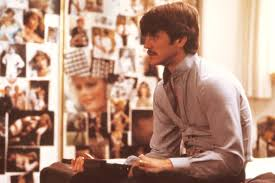


In Star 80 (1983), Mariel Hemingway gives an emotionally vulnerable performance of as Dorothy Stratten. Hemingway captures Stratten not as a caricature of Playboy fantasy, but as a genuinely sweet, almost painfully open young woman whose natural beauty and modest charm made her seem like the quintessential girl-next-door suddenly thrust into the machinery of adult celebrity. There is an innocence in Hemingway’s performance that never feels naïve or artificial; she understands Dorothy as someone eager to please, hungry for affection, and slowly awakening to her own independence just as the forces around her become more dangerous. Fosse frames her as both radiant and tragically exposed — a woman transformed into an object of desire by an industry that sees glamour as currency and vulnerability as weakness.

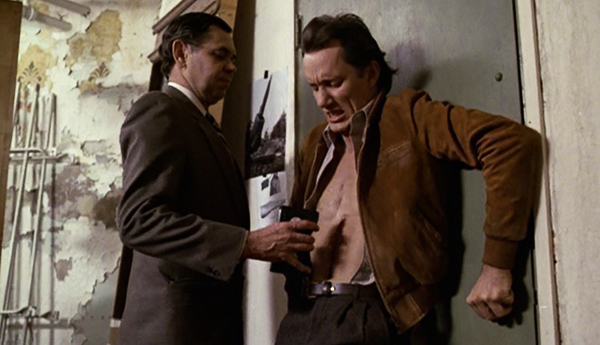
Opposite her, Eric Roberts delivers a frighteningly intense performance as Paul Snider, one that avoids simple imitation in favour of total embodiment. Roberts plays Snider as a man consumed by insecurity, narcissism, and desperate possessiveness, turning toxic masculinity into something sweaty, twitching, and deeply pathetic. He is not charismatic in the conventional movie sense; instead, Roberts makes him volatile and emotionally ravenous, a man whose entire identity depends on controlling the woman he helped “discover.” The performance becomes increasingly difficult to watch because of how recognizable the psychology feels — jealousy mutating into resentment, then humiliation, then violence.

Fosse refuses to sensationalize that descent in Star 80 (1983). The naked glamour of the Playboy world, the pornographic undercurrent of the entertainment industry, and the seductive surfaces of Los Angeles all become drenched in sordid, emotional decay. There is nudity and a sense of exploitative lingering on the feminine form, but there is understandable context. Cliff Robertson’s appearance as Hugh Hefner is not simply a caricature, but rather a caring, avuncular figure, despite building an empire out of, arguably, the exploitation of women. Further, Aram Nicholas (a thinly veiled, Peter Bogdanovich ) is a film director who tries to make Dorothy Stratten a movie star, but begins an affair too, sending Snider over the edge. Thus Stratten’s body and soul pinballs between these dominating men.

Overall, Star 80 (1983) lingers long after it ends. Fosse, Hemingway, Roberts and Sven Nykist’s cinematography contribute memorable work. Beneath its glossy imagery lies an overwhelming feeling of bleakness — the sense that every flashbulb, every photo shoot, and every promise of fame is shadowed by exploitation, stolen innocence, and inevitable tragedy.


CULT FILM REVIEW – VIDEODROME (1983)

CULT FILM REVIEW – VIDEODROME (1983)

Written and directed by: David Cronenberg

Produced by: Claude Herroux, Pierre David, Victor Solnicki

Cast: James Woods, Sonja Smits, Deborah Harry, Les Carlson, Jack Creley, Peter Divorsky etc.

Music: Howard Shore

***CONTAINS SPOILERS***


With the lack of cinema-going action, I am now looking at building other review ideas and articles into my blog. I have regular new release reviews, classic film reviews, great ensemble casts and under-rated film reviews. I suppose that’s enough really, but there are some films that don’t quite fit these categories and they are cult movies. How does one define a cult film? It could have been a box-office bomb or be a no-budget gem, be transgressive or have controversial subject matter. Conversely, it could be a video nasty or banned or even an ultra-arthouse film which defies classical filmmaking conventions. More importantly, I do not have to actually like the film for it to qualify as a cult film. It could be a difficult film I am evaluating or re-evaluating from a fan or academic perspective. Lastly, it could just simply be a film that is uncategorizable or so bad it’s bad or so bad it’s good.

My first review in this category is David Cronenberg’s body-horror film, Videodrome (1983). Now, it may fit the specific rules of an under-rated classic laid down in previous articles, however, Videodrome (1983) is not necessarily a film I love or believe is a classic. It is a remarkably original narrative descent into the hellish and surreal world of demented psychological snuff television. It contains amazing practical special effects by the legend Rick Baker, yet, having re-watched it last week I cannot say it’s a film one can enjoy from an entertainment perspective. Don’t get me wrong, David Cronenberg is a true auteur and genius filmmaker, it’s just Videodrome (1983) is a hallucinatory and disturbing nightmare of a film that works outside the boundaries of usual image systems and narrative conventions. Basically, it’s more a powerful set of concepts and scenarios rather than a simple and satisfying story.

The story opens with anti-heroic, Max Renn (James Woods) as president of CIVIC-TV, seeking new content for his Toronto-based TV channel. Despite Woods’ charisma as an actor he is an expert at playing dominant alpha male types who challenge the audiences’ empathy. He portrays Max with a sleazy charm hunting for, what one may consider, soft-pornographic shows for his station. He’s basically an addict looking to push the walls of taste for his sex-hungry viewers. Max then discovers a channel, via a grainy satellite feed, called Videodrome. It shows unfiltered torture and sexual aggression, and Max becomes determined to tap into that market. At the same time, he begins a sado-masochistic sexual relationship with a radio host, Nikki Brand (Deborah Harry). Soon, these two intense narrative strands entwine and threaten Max’s mind, body and very existence.


Videodrome (1983) is a highly intelligent shocker which explores the nature of television violence, notions of taste and censorship, fears of technological programming, and the mental damage caused by over-exposure to violent pornography. It is an extremely psychologically and physically graphic film to watch. Nevertheless, it is also full of incredible imagery involving on-screen murder, Renn being swallowed by his TV; and also literally transforming into a human video cassette player. While an audience may not like Max Renn as a person, his journey is one that grips with magnetic shock and disgust. As he gets ever closer to the Videodrome channel his downward spiral plays out like a demented morality story, with Max representing the journey of those audience members who lose themselves in the illusory realities of television product. As he begins to lose touch with reality, Max experiences a complete lack of control over his mind and desires, all seemingly controlled by a heinous corporation led by insidious suit, Barry Convex (Leslie Carlson).

Incredibly, David Cronenberg apparently turned down directing The Return of the Jedi (1983) to write and direct this more personal vision of cinema. Could there be two more different films? Nonetheless, while it may not be a film I can easily recommend to those of a sensitive disposition or those who like their horror to have tidy conclusions, Videodrome (1983), retains its relevance and power to this day as a shocking critique of modern media. Hence qualifying it as a cult horror film which pushes all the wrong buttons in the right way.


SIX OF THE BEST #23 – FILMS ABOUT FILMMAKING

SIX OF THE BEST #23 – FILMS ABOUT FILMMAKING

It’s no surprise there are an abundance of films about the actual process of filmmaking. Firstly, if you follow the idea of “writing what you know” literally, a filmmaker, screenwriter or director will certainly have first hand experience of this. Secondly, and most importantly, is that the film industry is full of rich possibilities in terms of drama, action, tragedy, romance and comedy. Lastly, cinema down the years is replete with imaginative, tough, evil, spoilt, egotistical, eccentric and frankly insane individuals working in the film industry.

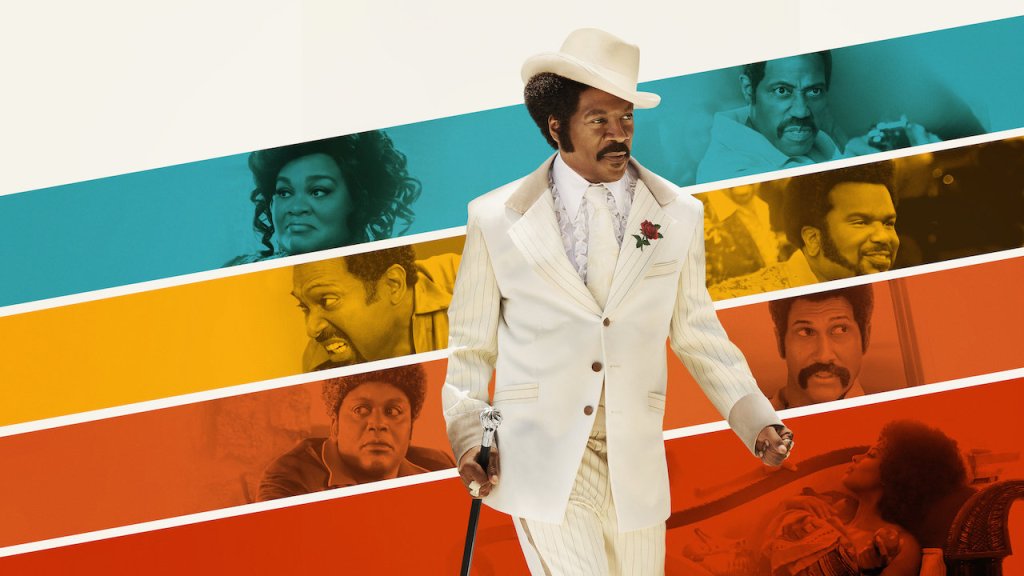
Therefore, over the course of cinematic history there have been many great films about the movie-making business. I personally love the sub-genre and probably could’ve have chosen a top twenty. Indeed, the following could also have been picked too: 8 1/2 (1963), Dolemite is My Name (2019), Shadow of the Vampire (2000), Sullivan’s Travels (1941), Barton Fink (1991), State and Main (2000), Once Upon A Time In Hollywood (2019), Hugo (2011), Living In Oblivion (1995) etc. However, as is the case with this feature, I’ve selected just six of the best.

**CONTAINS SPOILERS**


BOOGIE NIGHTS (1997)

“Wait a minute. You come into my house, my party, to tell me about the future? That the future is tape, videotape, and not film? That it’s amateurs and not professionals? I’m a filmmaker, which is why I will never make a movie on tape.” Jack Horner

Mark Wahlberg, Burt Reynolds, Ricky Jay, and Jack Wallace in Boogie Nights (1997)

THE DISASTER ARTIST (2017)

“Not closed set. Open set. Life is not closed set! I want everyone to see!” Tommy Wiseau

James Franco in The Disaster Artist (2017)

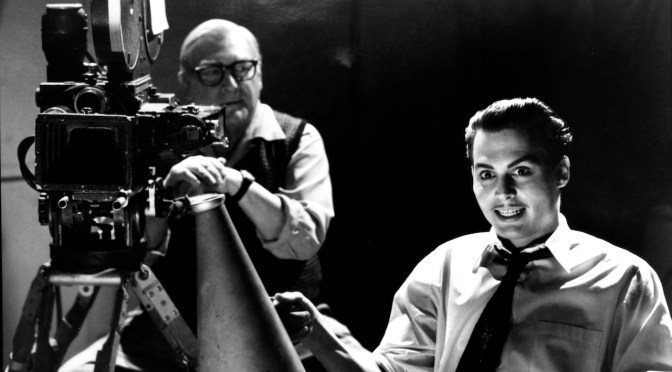
ED WOOD (1994)

“Really? Worst film you ever saw. Well, my next one will be better. Hello. Hello.” Ed Wood

Johnny Depp in Ed Wood (1994)

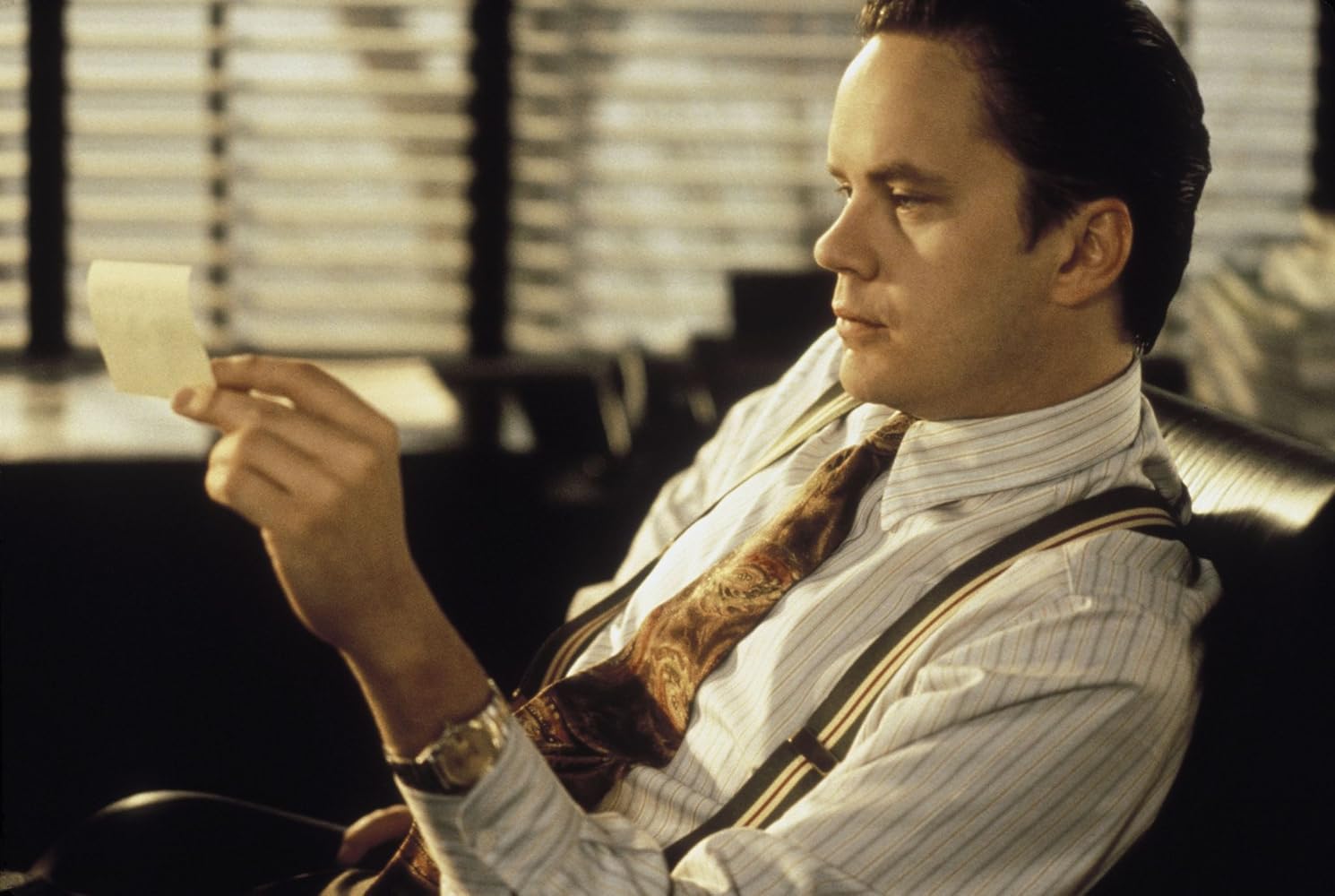
THE PLAYER (1992)

“I was just thinking what an interesting concept it is to eliminate the writer from the artistic process. If we could just get rid of these actors and directors, maybe we’ve got something here.” Griffin Mill


SINGIN’ IN THE RAIN (1952)

“Why bother to shoot this film? Why not release the old one under a new title? You’ve seen one, you’ve seen them all.” Cosmo Brown

Singin' in the Rain (1952)

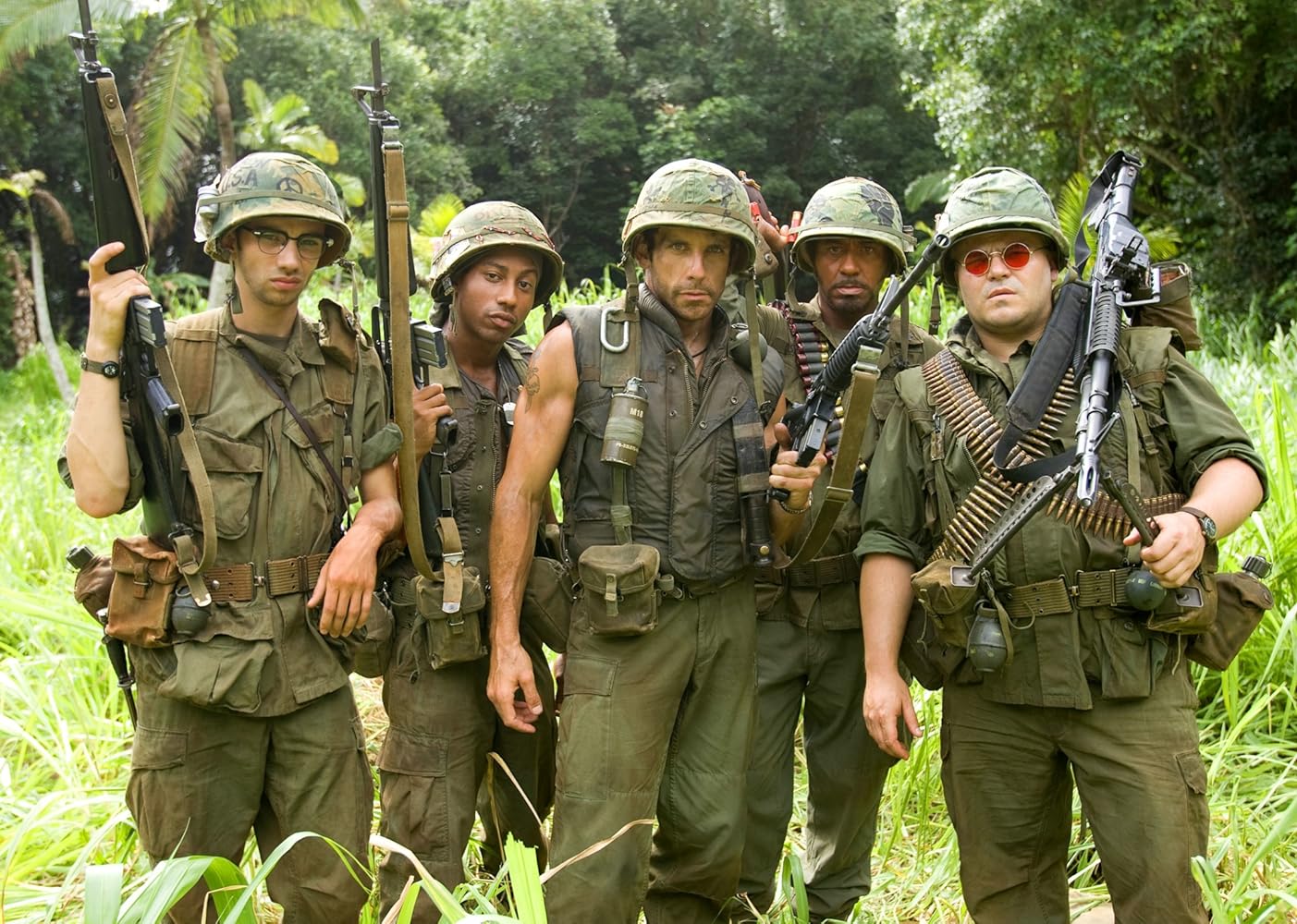
TROPIC THUNDER (2008)

“First, take a big step back… and literally, FUCK YOUR OWN FACE! I don’t know what kind of pan-pacific bullshit power play you’re trying to pull here, but Asia Jack is my territory. So whatever you’re thinking, you’d better think again!” Les Grossman

Robert Downey Jr., Ben Stiller, Jay Baruchel, Jack Black, and Brandon T. Jackson in Tropic Thunder (2008)

THE DEUCE (2017 – 2018) – SEASONS 1 & 2 – HBO REVIEW

THE DEUCE (2017 – 2018) – SEASONS 1 & 2 – HBO REVIEW

Created by: George Pelecanos & David Simon

Producer(s): Jessica Levin, Maggie Gyllenhaal, Mark Henry Johnson

Writers: George Pelecanos, David Simon, Richard Price, Lisa Lutz, Anya Epstein and more.

Directors: Michelle McClaren, James Franco, Ernest Dickerson, Alex Hall, Roxann Hall, Uta Briesewitz and more.

Starring: James Franco, MaggieGyllenhaal, Gbenga Akinnagbe, Chris Bauer, Gary Carr, Chris Coy, Dominique Fishback, Lawrence Gilliard Jr., Margarita Levieva, Emily Meade, Natalie Paul, Michael Rispoli, Luke Kirby, Jamie Neumann

**MAY CONTAIN SPOILERS**

Pornography is a strange stain and paradoxical phenomenon within humanity and society. Most of us are born from the natural act of sexual intercourse and as such lust and passion and love are catalysts for this. For some though conventional relationships do not satisfy desires and of course there are those without a romantic or sexual partner who will need an outlet for their desires. Because deep down whatever you say we are animals and the basest instinct is to pro-create. But what happens if we are denied that opportunity? A person may seek satisfaction elsewhere and one such avenue is pornography.

Pornography sounds dirty. It’s a dirty word. Yet, since way before the internet, photography, video and film were invented humans have always found a means either through literature, theatre, poetry or art to represent sex. As technology has progressed the rise of pornography has reached epidemic proportions. It is massive business and billionaires have been made by the sex industry. In my opinion pornography is like war. It happens every day and while most of us are not involved in it, one feels powerless to stop it. Ultimately, you can argue it’s empowering to the men and women and contributes to our capitalist economy. However, one cannot escape the fact that it, like war, pornography would have left many, many people exploited and damaged.

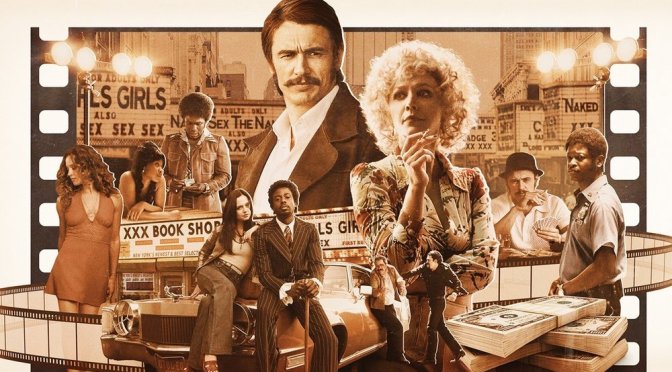
Eschewing any socio-political criticism of pornography, HBO’s big budget television show The Deuce presents a massive American slice-of-gritty-mean-street-porn-life in 1970s New York. It is created by David Simon and George Pelacanos, who as writer-producers possess a great track record for creating acclaimed shows such as: The Wire, The Pacific, Treme, Generation Kill etc. Here they have created another ensemble period drama which show-cases a cavalcade of colourful characters including: pimps, prostitutes, police, bar flies, gangsters, dealers, gigolos, film producers, actors and politicians. The show essentially reflects the lives of those at ‘the Deuce’; an intersection of 42nd Street between Seventh Avenue and Eighth Avenue. It accepts that, for good or for worse, the sex industry is part of our existence and people basically are just trying to survive or escape anyway they can.

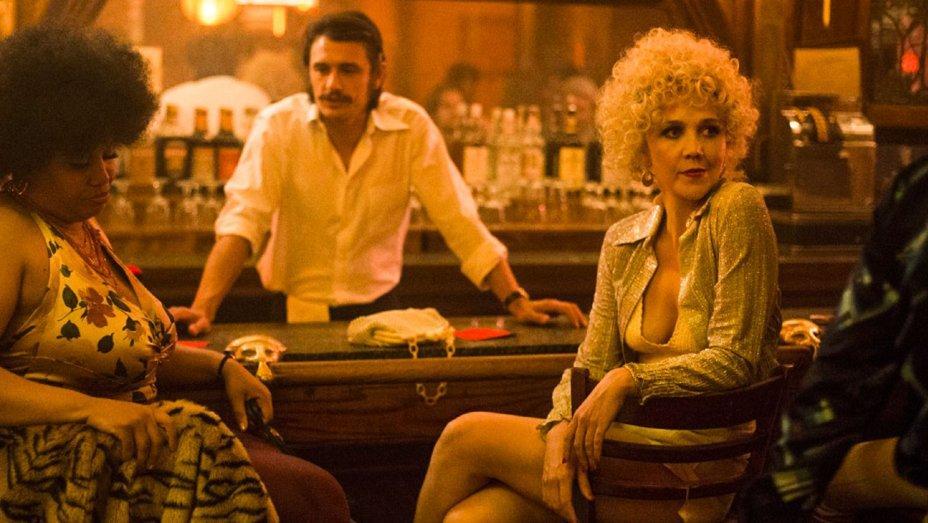
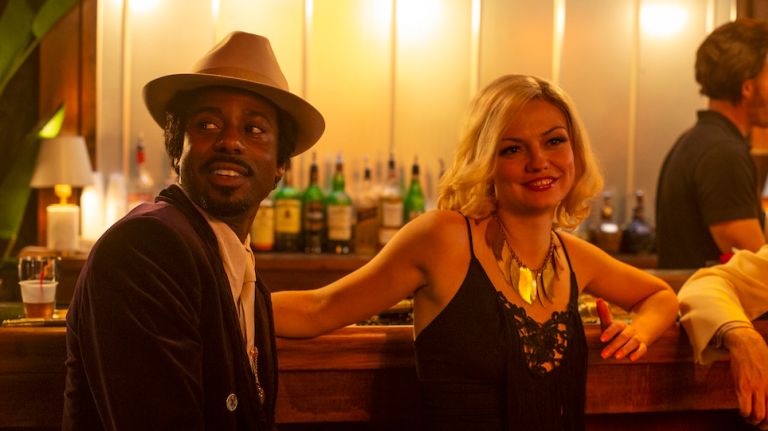
The first season starts in 1971. Main characters include: Maggie Gyllenhaal’s fiercely independent prostitute ‘Candy’; James Franco as twin brothers feckless Frankie and bar manager Vincent; Gbenga Akinnagbe as Larry Brown, an intense pimp; Chris Bauer as Bobby Dwyer, a construction foreman who is dragged into the sex industry; Gary Carr as C.C., a stylish but ruthless pimp; Dominique Fishback as Darlene, a sweet-natured sex worker striving for educational betterment; Lawrence GilliardJr. as Chris Alston, an incorruptible NYPD patrolman; Margarita Levieva as Abby Parker, a college student who rejects her wealthy upbringing by striking up a relationship with Vincent; and Emily Meade as Lori Madison, an impressionable young woman who C.C. entangles in his pimp web. Plus, there are a whole slew of characters that appear within each season; so many in fact in does get a bit crowded in the complex drama.

There is a lot of sex in both seasons; straight and gay. It’s presented not simply as titillation but also humorously and realistically as part of the life the characters lead. Sex sells but it also has a dark, violent side and the programme often shows this. The sex worker’s customers and pimps regularly commit acts of violence as the danger of working the streets is palpable. The exploitation by the mob bosses too who front the money for the sex parlours and peep shows is sad to witness and much empathy is gained for those trapped by poverty and drug addiction. Aside from a few good cops many of the NYPD are happy to take bribes to line their pockets.

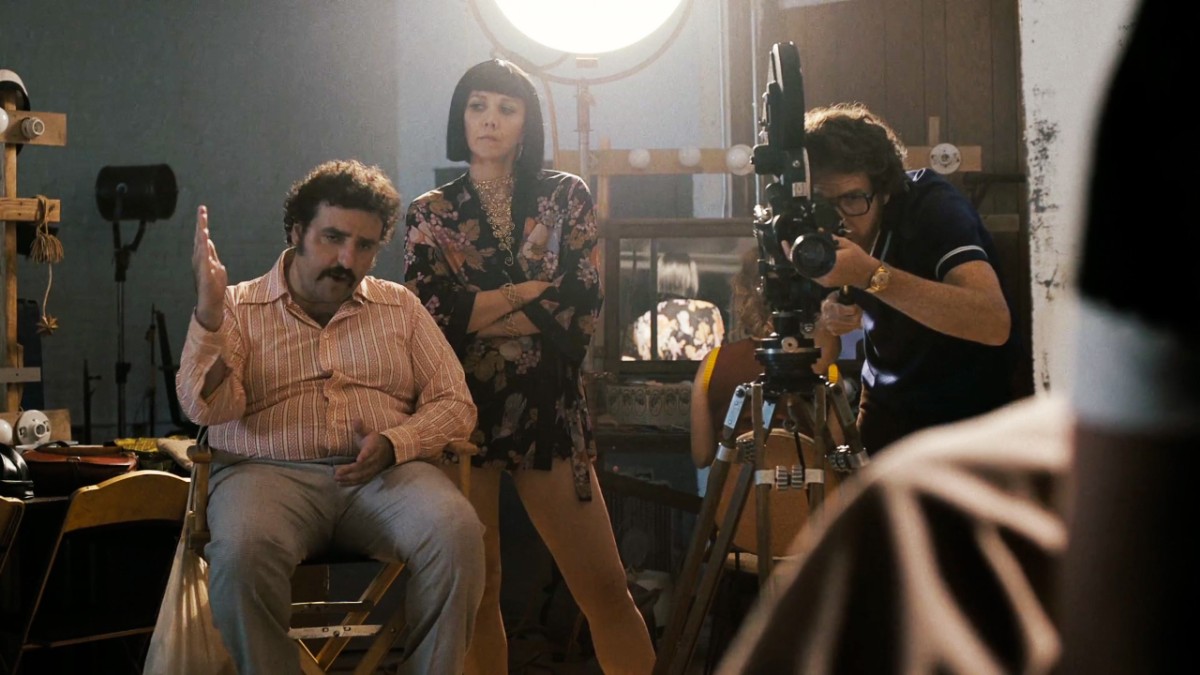
Season 2, which moves forward to 1977 is a lot more political. The rise of feminism, activism and protest is reflected in the character Abby who works with others to provide a safe space for the women on the street. Moreover, City Hall is trying to clear up ‘The Deuce’ in an attempt to welcome rich corporate businesses to the area. Candy meanwhile has worked to get off the street and is now pornographic film director with artistic designs. Frankie is still gambling and ducking and diving while his brother Vincent begins having doubts about his involvement with the mob and sex industry. The second season, for me, was more focussed narratively;especially where Candy’s porn adaptation of ‘Red Riding Hood’ called Red Hot is concerned. Mirroring the reality of masculinity exploiting humanity, the predatory wolf chasing women and ravaging them is a thematic strongpoint of the season. But Candy is striving to turn the tables and female empowerment is a key driving force for her work.

The Deuce is ultimately a glorious production which is not for the faint-hearted. It holds up a dark mirror to a flawed society; and does it with humour, wit, compassion, lashings of sex and smatterings of sudden, brutal violence. I for one believe the world should do without pornography but The Deuce demonstrates that human beings are drawn to it like moths round a flame. It’s money, drugs, vice and sex that seems to excite many people and because of this exploiters will make money out of them.

Finally, as this is a HBO production the acting, direction, cinematography, editing, soundtrack, costume and period design are flawless. The writing is exceptional as the dialogue stings from the exceptional ensemble cast like written bullets. Season One was slightly slow building the characters but Season Two really found its’ feet dramatically and emotionally.  On occasions I felt like some episodes lacked pace due to the sheer number of characters presented; but Season Two had real dramatic momentum. The final season is due for release next year and I highly recommend it if you are a drawn to the corrupted elements of humanity on screen; and characters just trying to make it with odds stacked against them. On ‘the Deuce’, like in life, sadly not everyone makes it out alive or in one piece. 

Season 1 – Mark: 8 out of 11

Season 2 – Mark: 9 out of 11