
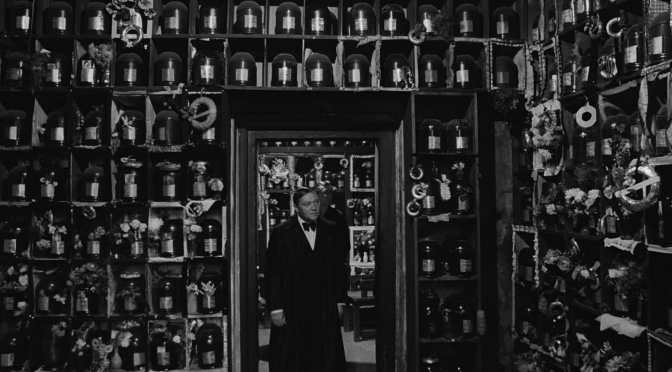
Cult Film Review: The Cremator (1969)
Directed by Juraj Herz
Written by Ladislav Fuks & Juraj Herz
Produced by Ladislav Hanuš
Main cast: Rudolf Hrušínský, Vlasta Chramostová, Jana Stehnová, Miloš Vognič, etc.
Cinematography by Stanislav Milota
Music by Zdeněk Liška
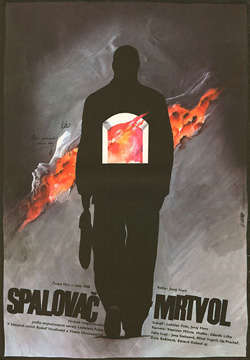
Few films feel as spiritually diseased as The Cremator (1969). Directed by Juraj Herz at the height of the Czech New Wave, the film is not simply a horror story about fascism or madness — it is a suffocating psychological descent into moral annihilation. Released in 1969, shortly after the crushing of the Prague Spring, the film arrived like a nightmare smuggled out of a collapsing world.
At first glance, The Cremator (1969) appears grotesque, even absurd. Its protagonist, Karl Kopfrkingl, is a Prague crematorium worker obsessed with death, cleanliness, Tibetan mysticism, and social respectability. But as the film unfolds, its black comedy slowly curdles into something far more terrifying: an anatomy of how spiritual emptiness and ideological seduction can fuse into psychopathy.
Set during the backdrop of the political radicalization of Europe during the 1930s, and the installation of the Protectorate of Bohemia and Moravia under Hitler’s Germany in 1939, the events become a startling microcosm of the Nazi onslaught against humanity. The film’s power lies not only in its themes, but in the unnerving collision of performance, photography, editing, and tone. It is funny, horrifying, philosophical, and surreal all at once — a cinematic experience unlike almost anything else.
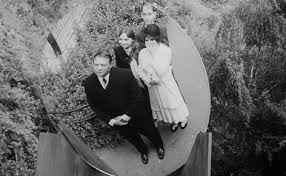
At the centre of the film is the extraordinary performance by Rudolf Hrušínský. His portrayal of Karl Kopfrkingl may be one of the greatest performances in horror cinema, precisely because he never behaves like a conventional villain. Kopfrkingl is soft-spoken, polite, articulate, even charming. He speaks in comforting aphorisms and philosophical musings. He adores his wife. He dotes on his children. He smiles constantly. Yet every sentence he utters feels faintly poisoned.
Hrušínský plays the character with such eerie serenity that the horror emerges not through aggression, but through calmness. He embodies a man who has entirely dissolved the boundary between compassion and cruelty. When Kopfrkingl speaks about cremation “liberating souls from suffering,” he genuinely believes himself to be merciful. That conviction is what makes him terrifying. The performance captures a specific kind of psychopathy rarely depicted on screen: not the explosive violence of rage, but the bureaucratic psychopathy of moral detachment. Kopfrkingl is capable of atrocity because he has transformed murder into an abstraction. He speaks of death with the same pleasant tone one might use to discuss gardening or architecture.
In this sense, the film becomes a chilling study of fascism’s psychological appeal. Fascism in The Cremator (1969) is not introduced through screaming speeches or military spectacle. It arrives through vanity, social aspiration, pseudo-spiritual rhetoric, and the desire to belong to something “pure.”
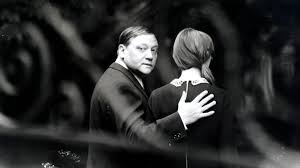
One of the film’s most unsettling dimensions is its use of Buddhist imagery and philosophy. Kopfrkingl constantly references the Tibetan Book of the Dead, reincarnation, liberation from suffering, and transcendence. Yet the film presents these ideas not as genuine spirituality, but as corrupted fragments filtered through narcissism and delusion. Real Buddhist philosophy emphasizes compassion, ego dissolution, and liberation from suffering through awareness. Kopfrkingl instead weaponizes spiritual language to avoid confronting guilt or empathy. He uses metaphysics to anesthetize morality.
Unlike many anti-fascist films, The Cremator (1969) does not portray Nazism as an external force invading society. Instead, fascism emerges as something already latent within ordinary life. Kopfrkingl is primed for it long before political ideology fully enters the narrative. He is obsessed with order, status, beauty, ritual, and cleanliness. He fears impurity. He wants social advancement. He craves meaning. Nazism merely gives structure to impulses already present within him.
The crematorium itself becomes the perfect metaphor for industrialized fascism. It is clean, efficient, mechanical, and emotionally sterile. Bodies move through the system with ritualistic precision. Death becomes administration. Kopfrkingl thrives in this environment because it allows him to feel spiritually important while remaining emotionally absent.
Visually, The Cremator (1969) is astonishing. Its black-and-white cinematography feels simultaneously elegant and diseased, full of warped close-ups, fisheye distortions, drifting shadows, and claustrophobic compositions. Faces loom unnaturally close to the camera. Rooms seem to bend inward. Mirrors fracture identity. The world feels unstable even before the narrative fully collapses into horror.
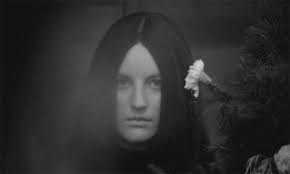
The editing in The Cremator may be its most radical achievement. The film’s montage structure constantly fractures time, space, and emotional continuity. At times, the film feels like it is edited according to subconscious logic rather than narrative logic. This creates a sensation of spiritual suffocation. The viewer experiences Kopfrkingl’s psychological fragmentation from the inside as he begins his reign of murder. The film itself begins to think like its protagonist. What is remarkable is how modern the editing still feels. The film doesn’t simply tell a story about insanity — it formally reproduces insanity.
Perhaps the film’s greatest achievement is its impossible tonal balance. The Cremator (1969) is genuinely funny. Kopfrkingl’s pompous speeches, obsessive vanity, and bizarre philosophical tangents often border on absurdist comedy. Some scenes play like dark satire, exposing the ridiculousness of authoritarian self-importance. And yet the laughter quickly becomes uncomfortable. This fusion of horror, drama, and comedy is what makes the film feel so original. Most horror films separate terror from satire. The Cremator (1969) understands that the truly grotesque often contains both simultaneously. The result is a film that feels spiritually corrosive in the best possible way — a nightmare that smiles while it strangles you.


![Screen Shot 2018-01-15 at 4.20.43 PM [www.imagesplitter.net].jpeg](https://thecinemafix.com/wp-content/uploads/2018/08/screen-shot-2018-01-15-at-4-20-43-pm-www-imagesplitter-net-jpeg.jpg)

