Films based on “true” stories are interesting to review as they will inevitably distort situations in the name of drama. I personally do not mind if a film compresses times, characters and incidents as I am interested firstly in my emotional response to the story and characters more than historical authenticity. If I want accuracy I’ll rely on Wikipedia.
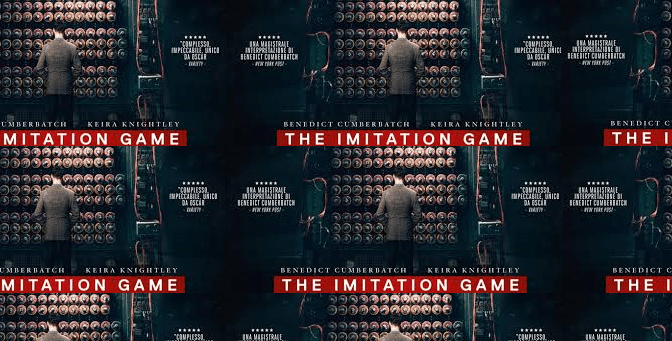
Yet, as films based on ‘real’ events go The Imitation Game (2014) is a creditable distillation of the WWII code-breaking heroics as well as being a high class theatrical tragedy in cinematic form. Having said that while the film acts as an excellent tribute to the genius of Alan Turing (phenomenal Benedict Cumberbatch), the work of others in the field such as the Polish code-breakers, Tommy Flowers and many others must also be recognised. But perhaps that is for another film altogether.
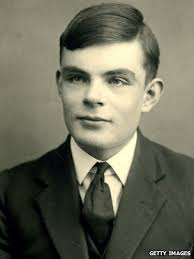
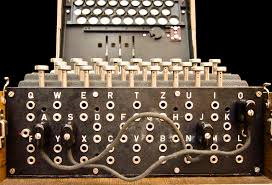
I didn’t know much about main protagonist Alan Turing prior to seeing this movie but having done some basic research one soon realises what a great British hero he was in terms of cracking the Nazi Enigma codes. Moreover, his incredible mind also contributed in some way to the invention of what you are reading this very review on right now. No, not http://www.wordpress.com but the actual computer itself.
The fact that one of humanity’s greatest minds was treated so badly because of his homosexuality is a genuine war crime. It’s also a massive indictment AGAINST the Government and the Official Secrets Act that Turing is only just being truly recognised for his outstanding work in the last few years. Indeed, one of the films main strengths — not forgetting Andrew Hodges’ book on which it is based — in bringing Turing’s story to the screen is it acts as a thrilling monument to a man so cruelly destroyed by an intolerant 1950s society.
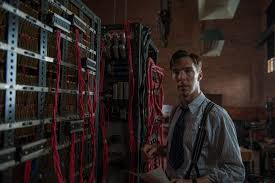
The narrative switches between Turing’s life pre-war, post-war and in-between. Graham Moore’s screenplay is deftly written and well-paced; both personable and witty. In terms of genre we are in biography and war film territories with a sprinkling of espionage and suspense thrown in. The code-cracking team at Bletchley Park are a kind of super-intelligent version of Marvel’s Avengers and include a handsome cast supporting Cumberbatch including: Matthew Goode (the next James Bond I reckon), always reliable Mark Strong and a commendable turn from Keira Knightley.
Firstly the team clashes with the prickly and arrogant Turing. Then, of course, over time they come to respect him. Meanwhile, idiosyncratic Turing finds his main ally in Joan Clarke (Knightley) as their “romance” becomes the heartbeat of the piece amidst the manipulation of machines. Both hearts and minds are drawn to each other and the two get engaged. But Turing’s sexuality proves an obstacle to the marriage and there’s a wonderful scene which reflects this; beautifully played by Cumberbatch and Knightley and echoes — albeit more seriously — the classic “No one’s perfect” end-scene from Some Like It Hot (1959).
There is so much heartache in the character of Turing. The flashbacks to Turing’s school years when he was bullied and suffered personal loss garners further pathos. Moreover, the “peas and carrots” scene alludes to the possibility of Turing having Asperger’s or similar high-functioning autism. And in Benedict Cumberbatch we have an actor who imbues Turing with a grandiose pain which I found genuinely moving. Here’s is an actor — who while cornering the market on misfit geniuses — once again shows terrific range and surely he will be nominated come Awards ceremony time.
This is a tremendous drama directed by Morten Tyldum which is arguably more televisual than filmic. Indeed, it reminded of those amazing BBC Play For Today productions I grew up watching when a young boy. It works mainly as a fine biopic of an incredible man so cruelly persecuted for just being born slightly different. Yet it is also has touching romance and high drama as shown when having cracked the Enigma the team face the agony of having to hide the fact as a strategy to win the war. Ultimately, I left the cinema uplifted by the work these amazing code-breakers did and but also with anger in my heart; anger at the damned British Government for not rewarding Alan Turing for his miraculous contribution to the war effort. He deserved so much more.
“Hey – Paul! Do you want to see Book of Mormon? It’s a musical!”
“Oh – I can’t stand musicals! Apart from Grease maybe. Or a Sondheim one I can’t remember the name of.”
“But it’s made by the guys who did South Park!”
“Really? I love South Park. How much are tickets?”
“HOW MUCH?!”
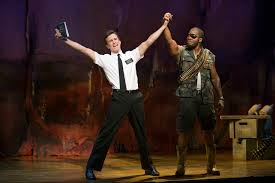
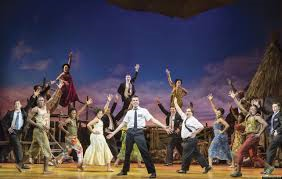
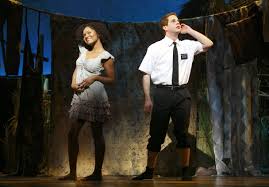
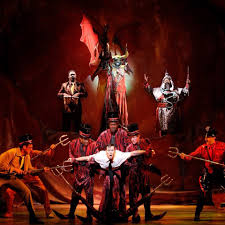
So on a cheaper Wednesday matinee showing myself and a friend ventured to the Prince of Wales Theatre to see Trey Parker and Matt Stone’s wonderfully irreverent and offensive (depending on your point-of-view) musical The Book Of Mormon. And a great time was had by all. It was funny, energetic and warm and of course very rude but strangely uplifting and like all great art (high or low) it got me thinking about my own values and spirituality.
I have never been what you would call a religious person. I am not a believer or associate myself with a particular faith. In fact since I was young I always held a staunch antagonism toward doctrines which remove free-thinking in the individual from birth. Furthermore much of the world’s conflicts over history have been caused in the name of religion; that and greed and money and power.
Having said that over the years my approach to religion has matured and I have become less didactic in my thoughts. Because you know what: religion or faith can be a positive thing and give people a true set of values with which to live their life. It’s not God’s fault that human beings use his or her name to commit acts of war and spread intolerance. In fact, in recent times the move toward Atheistic and Scientific Fundamentalism (led by the Grand Wizard Richard Hawkins) itself has also caused intolerance to rear its ugly head too.
I prefer to believe in nothing; not a void as such but no particular deity or belief system. They provide great comfort for many but it’s not something I feel I need. I believe in freedom of choice and speech and the basic human principle of just be tolerant of, and good to others. Because as the song says: “Religion don’t kill people – humans do!” Of course I just made that lyric up for humorous effect and that is precisely what occurs in the wonderful, hilarious and uplifting theatrical musical Book of Mormon.
The backstory tells us of Joseph Smith who “found” the sacred eponymous text on the gold plates of Nephi. After which he gave birth to a new religion in 1830 which went viral, spreading quicker than a dancing cat video on YouTube. Flash forward loads of years and the Church of Latter Day Saints is one of the World’s largest cults; sorry, organised religions. And this is the starting point for the story.
Our two main protagonists are Elder Price (Billy Harrigan Tighe) — a handsome, young go-getter — and Elder Cunningham (A.J. Holmes) who is, of course, his nerdier, less confident and insecure counterpart. Cunningham is also a compulsive liar which gives the story an essential characteristic and running theme. Together they are sent from the Missionary Training Centre in Utah to of all places, Uganda to spread the word of Mormon. But Uganda is a godless place full of famine, disease and war and hardship so religion is a hard thing to see to those with no hope.
Humour is mined from the clashes between the two wildly different cultures as the songs compare the upbeat door-knocking optimism of the Mormons with the downtrodden, hungry, maggot-balled, AIDS-ridden, clitoris-castrated Africans; who are war-lorded over by hilariously named General Butt-Fucking Naked. As with South Park the writers use all manner of stereotypes with which to cram as many offensive jokes in as possible.
However, there is heart to the story too as it is revealed that Elder Cunningham has joined the Mormons to try and fit in and find his place in the world and most importantly: friends. He is particularly taken with the preening narcissistic Elder Price despite the latter’s obvious discouragement and dislike of Cunningham. It’s no surprise then that while Price is clearly the more talented “salesperson” yet it is Cunningham who becomes a hit with the natives. Having said that he does so having “made-up” loads of stories from the Book of Mormon incorporating tales from Star Wars, Star Trek and Lord Of The Rings. From his distortions from the text plus bravery in standing up to the General Cunningham becomes a beacon of hope in the village.
Stories and faith are at the core of the satire here as Book of Mormon both lampoons and deep-down admires the Missionaries. While what Elder Cunningham says seems completely stupid and ridiculous it gives the villagers hope and faith for the future. Overall, the word of Joseph Smith is arguably “fictional” yet the message is a positive one with togetherness being the way forward. The show asks us: if something gives hope in a hopeless world does it matter if it’s real or not?
I have no frame of reference with regard to musicals. The only one I’ve seen outside the movies was Fame – The Musical starring ‘H’ from Steps. But this was an absolute joy with an incredible cast and songs to boot. My personal favourites were: Two By Two, Making Thing’s Up Again and Spooky Mormon Hell Dream. The shifting of sets, movement and pace were fast yet controlled and the show was clearly the result of a culmination of an incredible amount of creativity, rehearsal and hard work. As a dynamite new season of South Park currently runs on Comedy Central – I can certainly say Matt Stone and Trey Parker have another work of genius to add to their incredibly offensive yet hilarious CV. Thank God, Allah, Ganesh, Buddha, Jesus, Mohammed, Nephi, Joseph Smith et al for them I say!
**IF YOU CAN WORK OUT THE PLOT – THERE ARE SPOILERS**
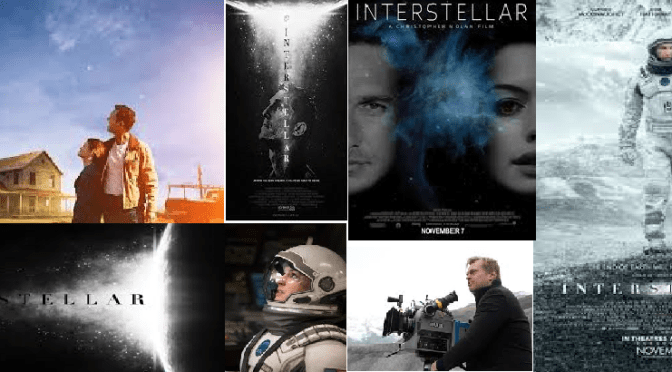
So, Paul – what’s Interstellar (2014) all about?
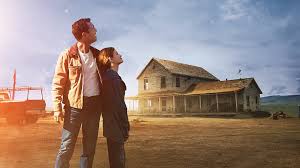
Well, the film is a science-fiction epic about the end of the world. Some astronauts are sent on a deadly mission – led by Matthew McConaughey’s ‘Coop’ – farmer – to try and find habitable existences in outer-space. To do so they must travel into the unknown across the heart of darkness; through worm-holes; through black-holes; crossing temporal and spatial dimensions to find a solution to save the human race.
Meanwhile, the emotional meat of the story is supplied by McConaughey/Cooper’s relationship with his daughter portrayed by Mackenzie Foy/Jessica Chastain. He had a son as well but apparently he didn’t matter as much and was ultimately used as weak final act plot point.
Sounds complicated?
Yes. It is. And also very very long. So load up on popcorn.
What did you like?
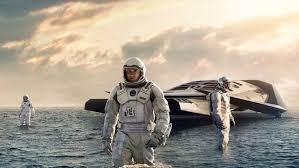
This is a visually stunning experience with some incredible set-pieces on Earth, in Space and on other planets. But from a visual and conceptual genius such as Christopher Nolan I expected as much. The “wave” sequence on ‘Miller’s Planet’ is an oxygen-stealing delight and I was gasping at the awe of it all.
Moreover, space has never looked so beautiful and dangerous and Nolan — clearly inspired by Stanley Kubrik’s seminal 2001: A Space Odyssey (1968) — delivered a truly spectacular experience when Cooper’s craft hurtles through the black hole Gargantua at the end of the lengthy middle act.
The film also has some wonderful science-fictional ideas relating to time and space and being a big Doctor Who fan I almost got my head around them; sort of. Such concepts will of course solidify on further viewings once the blood in my buttocks begins to re-circulate. Did I say it was a very long film?
Yes. Yes you did. So, Paul, what didn’t you like about the film?
Well, I think there is an Alfred Hitchcock quote – which I’m paraphrasing now – where the Master said “if the audience is thinking too much they’re not feeling.” Something like that.
Oh, that’s clever. Using another director’s words to critique another.
Yeah – it is. And my main problem with the film was that I was so busy trying to get my head around the plethora of concepts in the screenplay that I didn’t feel ANYTHING for the characters. I would have been happy with the film on a visual and poetic level if ALL the dialogue had been removed and emotion allowed to arrive between the spaces. But by over-reaching it dragged the whole film itself into a black hole of incomprehension.
To me the best science fiction marries concept with emotion. Some of the acting was fantastic notably from McConaughey but – like the superior Inception (2010) – many of the characters are reduced to mere expositional tools – Anne Hathaway’s Brand being an example of this. Inception worked better because it was grounded in the heist movie genre where Interstellar is all over the shop from: disaster-movie-to-space-opera-to-thriller-to-art-cinema-genres.
There were numerous plot-holes throughout beginning with the awful first act which set up the characters badly and then ran with poor characterisation throughout the film. Many of the cast, notably Jessica Chastain, Casey Affleck and Matt Damon, were given a bit to do but far too late in the narrative. And the speed with which concepts are thrown at us in the last 40 minutes are just damn confusing.
What did you think of the film overall?
Watching Christopher Nolan’s over-expensive and humourless folly was like eating your favourite cake for 3 hours on a rollercoaster. I loved it – then I hated it – then I loved it – then I hated it – then I felt horrifically sick and wanted to get off. By the end – like life itself – I wondered whether it was all worth it.
It felt like a big-budget apology to his family for perhaps being an absent father. Perhaps it’s a film to watch with the sound off and classical music on; although I did enjoy Hans Zimmer’s score . Yet, the over-loaded plot-lines and weak-movie dialogue ruined the stunning visuals and action set-pieces for me. Indeed, I watched Nightcrawler (2014) on the same night and that took a simple premise with one major character and rinsed that idea for all the suspense and drama it could.
Nolan has made some great films with clever ideas such as: Memento (2000), The Prestige (2006) and aforementioned Inception (2010) which retain their emotional impact while delivering some mind-bending concepts. Moreover, he breathed life into the Batman franchise with his brilliant take on the Caped Crusader. However, Interstellar is a fail for me. It’s a magnificent looking jigsaw but if the maker doesn’t give you all the pieces, or the bits you do have don’t seem to fit properly; all you’re left doing is banging the table in frustration.
Who do you think you are slagging off one of the great filmmaker’s of our time?
I am no one. I work in a Scrap Metal Yard. But I paid my £11 entry fee and thus feel like I am entitled to an opinion. My feeling after watching Interstellar – and following his involvement in the dire Man of Steel (2013) – is that Nolan the director should sack Nolan the screenwriter. Perhaps he’s spread himself too thin producing and directing several big budget films in a short period of time? Nonetheless there is no doubt Nolan is a genius filmmaker creating marvellous blockbusters-with-brains. But, as a storyteller he is losing the plots somewhat and in danger of disappearing up his own black hole.
This is a sensational pitch black character piece that allies a powerful script with violent social satire; all glued together by an Oscar-worthy lead performance from the ever-excellent actor Jake Gyllenhaal.
It’s about monsters. The monster of ambition. The monster of obsession. The monster of humanity. The monster of the Media. The monster of a bloodthirsty public searching for the next violent clip to trend or share on Twitter or Facebook over their morning coffee. Gyllenthaal plays the main monster: Lou Bloom. He’s an anti-anti-anti-hero of our times. A personification of capitalist evil.
Dan Gilroy’s cutting script makes no attempt to make him likeable or even sympathetic. We first meet him stealing scrap metal and beating the crap out of a Security Guard. He then has the balls to try and get a job at the yard he’s selling stolen goods to. So why was I immediately enthralled by Lou Bloom? Well, he has ambition. He has drive. He has linguistic charisma. He has a thirst for success. A thirst for money. And a thirst for blood.
Lou Bloom is a vampire – a night creature creeping between the shadows and he finds the perfect vehicle for his nefarious wants. He discovers he can make money filming car wrecks and violent crimes on the streets of Los Angeles and sell them to a local News station. His TV handler Nina (Rene Russo) takes him under her wing but it’s not long before Bloom is taking flight and manipulating her to his own needs.
With the smooth patter and greasy complexion of a snake-oil salesmen Bloom extends his operation by taking on down-on-his-luck Rick (Riz Ahmed) and competes on the dark, mean streets of LA with veteran ‘crawler’ Joe Loder (Bill Paxton). Bloom will stop at nothing to achieve his expansion goals. The drama really cranks up as he races to record one gut-churning tragedy after another eventually manufacturing violence to his own gain. These guys are filming and selling death – with echoes of Michael Powell’s classic horror film Peeping Tom (1956) – and WE the voyeuristic public are buying it.
I enjoyed the fact that Bloom was a ghost; a shell of a man with little in the way of backstory and yet through his actions we absorb the horror of his character. I was drawn in so much by Gyllenthaal’s magnetic performance as well as a fine supporting cast. Incredibly this is a DEBUT film from respected Hollywood screenwriter Dan Gilroy. However, he directs with aplomb and the end shoot-out and car-chase was a memorable piece of filmmaking – full of tension – with a quite breath-taking pay-off.
I loved this film. It takes the idea of the News Media as not merely objective representatives of fact but rather sensationalist manipulators where murder has become a natural by-product of their lust for ratings. Films such as Gone Girl (2014) and Anchorman 2 (2013) have examined darkly and humorously the role of TV News in society recently but the stylish neo-noir Nightcrawler trumps them. Through Bloom the parasitic press and public are shown to both be vampires draining the life out of humanity. WE ARE ALL MONSTERS AT HEART!
With Christopher Nolan’s Interstellar (2014) orbiting the cinemas this week I thought I’d look back at the film which he made in between breathing life into the Batman franchise. No doubt Nolan is an important genre filmmaker and as his budgets have got more grandiose then so have his ideas. I just love that he is interested in attempting to make intelligent blockbusters where ideas, character and theme lead the story rather than rely simply on action, explosions and special effects (no offence Michael Bay.)
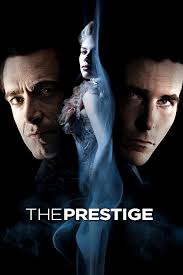
Memento (2000) was a stunning and complex low-budget noir which dealt with obsession, murder and memory and Nolan continued these themes in superior cop thriller Insomnia (2002). Having delivered a cracking origins film in Batman Begins (2005) the director followed this up with a story about battling magicians based on Christopher Priest’s novel called The Prestige (2006). For me it confirmed him as a force-to-be-reckoned with director. Following on the themes and tropes established in his prior films, The Prestige is centred around two obsessives brilliantly portrayed by the always excellent Christian Bale as Alfred Borden and the never-been-better (until Prisoners (2013), Hugh Jackman, playing his bitter rival, Robert Angier. The story starts at the end with Borden facing the hangman for Angier’s murder. After which the narrative flashes back to a time when the pair were freshman trick-smiths learning the ropes from mentor Cutter (always solid Michael Caine). When the cockney and cocky Bordens’ actions accidentally lead to the death of Angiers’ wife (Piper Perabo) – during a particularly complex and dangerous trick – the two go their separate ways. This sets in motion a story full of bitter twists of active and reactive vengeance. Each protagonist becomes so obsessed outdoing the other – with the ultimate trick – they are prepared to sacrifice the ones they love in doing so.
The film is rich in plot, character and theme and investigates thoroughly the very human aspects of obsession and revenge. The double or doppleganger trope is also integral to the story as the writers Jonathan and Christopher Nolan literally dissect the characters’ souls. The gritty, dirty period of Victorian London is wonderfully evoked and the fascinating world of magicians and their mysterious secrets is expertly represented. At it’s heart the story begins by showing us the cons of the magicians and the lengths they will go to amaze and astound an audience. By the end though the film becomes something much different with a chilling and fantastic turn which you think you see but ultimately don’t see coming.
Brilliantly directed by Christopher Nolan The Prestige is inventive, intelligent and ingenious. His cast does not let the magical screenplay down with the gorgeous Scarlett Johannson and – albeit briefly – pretty Piper Perabo bringing some glamour to the gritty proceedings. Rebecca Hall is also on commanding form bringing a subtle pain to the role of Borden’s wife.
Overall, it’s a challenging big-budget tale in which you never quite know what is real or what is a con. It keeps you guessing to the end, leaving you with a jaw-dropping final act as the story moves from sleight-of-hand tricks to science fact and finally science fiction. Ultimately, the film successfully combines fantastical, existential, and scientific elements. The film gives us a kind of magic but asks whether it’s worth the damage it causes to lives? THAT, for me, is The Prestige’s greatest trick.
Following my tribute to Ryan Gosling a while ago the second in my little paeans to cinematic people I admire is the wonderful Julianne Moore. Here I pick out seven memorable performances which make me fall in love with her over and over again.
SHORT CUTS (1993)
Moore is a versatile actor who, along with appearing in some cinematic classics, has been in some right old tosh over the years. However, SHE is ALWAYS great in EVERYTHING! She can do vulnerable. She can do funny. She can do romance. She can do sexy. She can do sweet. She can do evil. And boy can she do neurosis! My earliest memory of her was from Robert Altman’s fractured ensemble classic Short Cuts where she spends a lot of time naked from the waist down. It certainly took er… balls for Moore to take on such a role and she is a stand-out as an artist on the edge of a nervous breakdown.
BOOGIE NIGHTS (1997)
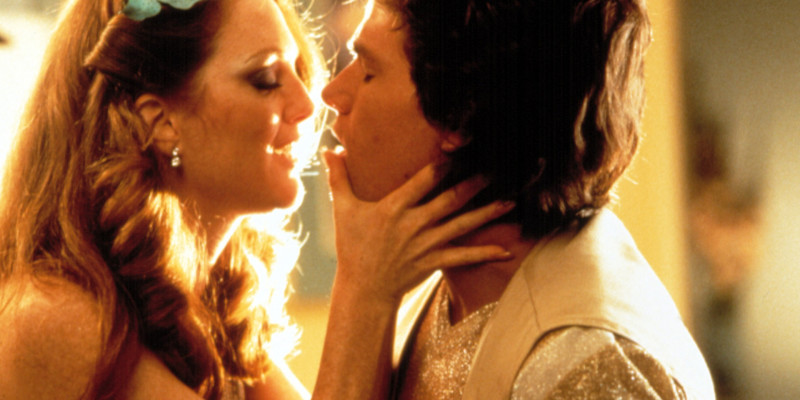
I still think this is Paul Thomas Anderson’s best film. Well, it’s my favourite of his brilliant oeuvre. I mean it takes some kind of genius to make a film about the porn industry and imbue it with heart, humour, sexuality, Oedipal tragedy and humanity without poking fun and merely relying on smut or underlying sleaziness. Moore portrays “Amber Waves” the tragic mother-figure of the porn “family” who, estranged from her own young son, provides emotional support to the young porn actors such as Rollergirl and Dirk Diggler. She is wonderful as a pained addict trying but failing to achieve a conventional lifestyle, instead finding comfort and solace with Burt Reynolds’ led dysfunctional troupe of sex actors.
THE BIG LEBOWSKI (1998)
Much has been made of Jeff Bridges wonderfully comic and laconic i.e. stoned-off-his-nut performance in the Coen Brothers’ much-adored cult classic The Big Lebowski, but the many idiosyncratic supporting characters deserve praise too. The film is a delightful patchwork of eccentricity and none more so than Moore’s Maud Lebowski – a privileged, upper class artist who seduces The Dude in a strange side-story to already hyper-convoluted kidnapping-gone-wrong-right plot. The Coens’ satirise rich artistic types via Maud as she too as uses The Dude to her own ends. Moore dominates the screen with her witty portrayal and even ends up in one of The Dude’s hallucinogenic dreams as a Viking goddess of some sort.
MAGNOLIA (1999)
Paul Thomas Anderson’s does Altman’s Short Cuts up to eleven with a modern mosaic of human dysfunction, loneliness and tragedy. It’s a difficult but compelling watch as Anderson removes the humour palette, so richly used in Boogie Nights, to present a cross-section of characters each struggling with existential and familial estrangement. Moore role is a risky one inasmuch as she is a self-confessed adulterer who married for money and only now — with her elderly husband (Jason Robards) about to die — does she feel any kind of remorse. It’s a complex character who you feel little sympathy for — even when she attempts suicide — but as car-crash humanity and drama go it’s difficult not to be drawn in by her incredible performance.
END OF THE AFFAIR (1999)
An amazing feat of literature from Graham Greene is adapted into a heart-cracking film by Neil Jordan; full of eroticism, stellar cast, lingering looks, exquisite photography and elegant Michael Nyman score. I watch a lot of films and am not often moved emotionally but the doomed love affair between Moore and Ralph Fiennes really gets my tear ducts on the go. Love is very difficult thing to get right on the silver screen but the intensity of the acting really is a thing of beauty. There’s been some amazing love stories set during wartime down the years but this has to be one of the most memorable. Moore was deservedly nominated for an Oscar but lost out to Hilary Swank.
FAR FROM HEAVEN (2002)
Todd Haynes pristine Sirkian melodrama is a honourable pastiche of 1950s films in both form, setting and content. It sees Moore wearing the skin of Cathy, a neglected American rose, who ventures into a forbidden love affair with local gardener Raymond Deagen, (Dennis Haysbert). Once again, Moore is drawn to a character who is pushed to the outside of society, her character becoming a victim of gossip and recrimination within a closely knit bigoted community. American small-town attitudes to race and sexuality are critiqued with director Todd Haynes beautifully designed colour palette and cinematography contrasting the dark subtext at work. Moore was rightly nominated for another Oscar but lost out to Nicole Kidman’s prosthetic nose.
THE KIDS ARE ALRIGHT (2010)
This was a laidback, fun kind of movie which found Julianne Moore in a relationship with Annette Bening’s obstetrician. It’s a lower-budget independent gem with a fine cast including: Mark Ruffalo, Mia Wasikowska and Josh Hutcherson. The story finds Moore and Bening’s sperm donee children searching for their father (Ruffalo) and the ensuing first world drama and “chaos” this brings. Moore’s budding landscape gardener plays a relatively sane character as she argues with the children and the more dominant Bening, before falling into bed with the more Bohemianesque character of Ruffalo. Moore ‘s character suffers a minor mid-life crisis compared to other cinematic meltdowns in her oeuvre. Nonetheless, her kind, natural, earth-mother performance is very enjoyable. Fear not though it would appear in her latest film — David Cronenberg’s Map to the Stars (2014) — finds her back on full neurotic alert as an actress flailing in the age-conscious, superficial Hollywood system.
Getting on stage and making a room full of strangers laugh spontaneously through a joke, impression, improvisation, song etc. is arguably one of the mightiest challenges facing a performer. But for many successful stand-up comedians the thrill of reducing a room to shakes of laughter is not enough; hence why so many have attempted to transfer their undoubted comic and acting artistry to the silver screen. Plus there’s more dough involved in making movies. As a massive fan of both cinema and stand-up comedy I thought it interesting to look at some of the best dramatic performances committed to celluloid by stand-up comics.
Eddie Murphy – 48 Hours (1982)
Before Eddie Murphy single-handedly set about making his very own list of the worst movies ever made he took his raw, rap, crack and pop stand-up persona and committed to screen great performances in Trading Places (1983) Beverley Hills Cop (1984) and Walter Hill’s rock hard-boiled 48Hours (1982). Buddied-up with Nick Nolte’s life-frazzled cop, Murphy was perfectly cast as cool convict Reggie Hammond. Murphy is tough, uncompromising and funny: spitting out classic dialogue such as “I’ve been in prison for three years. My dick gets hard if the wind blows” – with a verve that is sorely missing from virtually all his film output of the last 15 years.
Woody Allen – Crimes and Misdemeanours (1989)
Arguably, Allen’s recent movies have not been up to the quality of his earlier “funnier” films but I like them nonetheless as he has consistently produced work rich with great lines, ideas and characters. In the 1980’s Allen’s films matured and more often than not centred around familial, human and sexual relationships. As well as writing and directing Allen also acted in most of his films using his Jewish, neurotic, angsty persona to comic and dramatic effect. In Crimes and Misdemeanours (1989) he delivers another fine performance drawing out pathos, empathy and pain as a documentary filmmaker who is trying to make sense of life and why we are on this planet. The film is multi-stranded with a wonderful ensemble cast including Alan Alda and Martin Landau on particularly great form.
Whoopi Goldberg – The Color Purple (1985)
Multi-talented Emmy, Oscar, Tony winner Goldberg is one of the most versatile comedian/actors to grace the stage and screen. She developed her abilities at the Blake Street Hawkeyes Comedy troupe where her work and would then be cast in Spielberg’s adaptation of Pulitzer Prize winning The Color Purple (1985). While Goldberg would earn an Oscar for her over-the-top turn in potter’s-wheel-ten-hankie-weepie Ghost (1990), but it is her first ever screen appearance which will stay in the memory. Goldberg’s Celie Johnson is a character battered and beaten by life but whom amidst the misery and abuse retains a strength and desire to not let life destroy her. Goldberg brings a tremendous innocence, fortitude and compassion to the part; and considering it is her first ever movie role it is an amazing achievement.
Will Ferrell – Stranger Than Fiction (2006)
Ferrell cut his comedy fangs in The Groundlings, an LA improv group, and would later take his comic creations onto Saturday Night Live. Hilarious turns as hick racing driver Ricky Bobby in Talledega Nights (2006) and more famously as Ron Burgundy – the king of unreconstructed male chauvinist stupidity – in Anchorman (2004) would cement Ferrell’s success as a movie actor. Famous for stupid haircuts, overcharged yelling and screen-mugging Ferrell toned it down as tax inspector Harold Crick in Marc Forster’s moving dramedy, Stranger Than Fiction (2006). Ferrell’s Crick is a lonely individual, a man of routine and commonplace whose life is turned topside down when he hears his every move being narrated by Emma Thompson’s meta-omnipotent author. As he struggles to find ‘the voice’ Crick begins to question his whole existence and this gives Ferrell the opportunity to live a character with depth and emotion hitherto unseen in his previous screen caricatures.
Jamie Foxx – Ray (2004)
While Chris Rock arguably takes the stand-up comic kudos between these two graduates of influential American sketch show, In Living Color, Foxx’s film career has flourished with a series of fantastic movie performances. But it was playing Ray Charles in Ray (2004) that Foxx left Rock’s movie career, in comparison, eating the proverbial dust sandwich. Of course it won him the Oscar but it was more than just an impression of Charles as Foxx gave this musical genius a flawed humanity and pain that moved both the audience and the Academy. Foxx threw himself into the role with abandon musically and dramatically, showing Charles’ darker addictive side as well as his magnetism, humour and incredible drive. Unsurprisingly, the same year, Foxx was also nominated for his sterling work in Mann’s urban noir Collateral losing out in that category to the king-of-expositional-voiceover Morgan Freeman.
Robin Williams – One Hour Photo (2002)
A running trope in this list finds many of the acts turning their manic comedic persona on its’ head and internalizing the mania or psychosis with understated performances. Indeed, I have read articles which link certain mental states with the comedic mind and in Robin Williams you could not get a more manic, fevered, out-of-this-world performer. After a slow start cinematic success would arrive eventually and I could have chosen Good Will Hunting (1997) or Good Morning Vietnam (1987) or Dead Poet’s Society (1989)as these were great roles for Williams. But in 2002 he took a couple of darker turns in Nolan’s pre-Batman thriller Insomnia and a lower-budget thriller called One Hour Photo. The latter found Williams playing a solitary Photo Technician who takes an unhealthy interest in one particular family. Yet Williams’ character is no ordinary psycho but rather a pained individual longing to be part of a family unit. The actor terrifies the audience with his obsessive nature but at the end the performance humanizes the character rather than making him a one-dimensional lunatic he could so easily of been.
Jim Carrey – Man On The Moon (1998)
Carrey is an absolute force of nature as a stage and sketch performer and brought that dynamic physicality, silly voices and zany gurning to great effect in films such as: Dumb and Dumber (1994) and Ace Ventura: Pet Detective (1994). As he gained further success he would stretch his acting muscles with more dramatic and riskier roles. He was ideally cast as Intergender Wrestling Champion of the world Andy Kaufmann and (best known for his role in U.S. sitcom Taxi) and also doubled-up by playing Kaufmann’s alter-ego Tony Clifton (with Paul Giamatti.) Kaufmann was arguably the very first anti-comedian; gaining laughs or at the very least trying to get laughs from being deliberately unfunny and antagonistic. Carrey takes on all the incarnations with much skill and humour and rather than be just a very good impression he zones his usual mania, creating a complex character whose life was tragically cut short by cancer. The film was criticized by some for taking liberties with Kaufmann’s life and it was a relative failure at the box office, but Carrey deservedly won many awards and nominations for his diverse performance.
Billy Connolly – The Debt Collector (1997)
Connolly’s performance in Mrs Brown would be the most obvious choice for Scotland’s imperious stand-up comedy legend, however, I’m not a fan of films about the Royal Family and the brutal Debt Collector is more to my taste. The Big Yin is compelling in this grim, gritty thriller inspired by career criminal turned artist/novelist, Jimmy Boyle. Connolly’s working class and artistic background also resonates in the Nicky Dryden character trying to go straight; only to be pursued relentlessly by Ken Stott’s obsessive cop. Connolly’s raconteurial, larger-than-life stand-up style is in complete contrast to the serious character of Dryden who having escaped the mean streets of snooker halls of Glasgow is now a feted figure on the art scene. Stott’s vindictive cop cannot abide Dryden’s success and sets about bringing Dryden down. The scenes between Connolly and Stott are the stand-out in this dark, violent tale which is unflinching in tone and certainly darker than anything Connolly has been in before or since.
Richard Pryor – Blue Collar (1980)
Paul Schrader wrote existential urban Western Taxi Driver (1976) but also directed some compelling dramas. Blue Collar is probably his best film and it is my favourite Richard Pryor performance. Pryor had reinvented himself as a stand-up comedian shifting his persona from likeable TV friendly gag-man to a snarling, coked-up, angry social satirist. He would roughen out the edges of this act to become the slick, effervescent and honest performer who turned the dramas and stories of his life into comedy gold. Pryor would be a natural comic force on silver screen and formed a fine double act with Gene Wilder. However, Blue Collar is the best film I saw him in as it combines the humour, drama and social commentary that Pryor himself included in his act. Set in Detroit it highlights the hypocritical machinations of Union practices at a car plant. Pryor provided some humour but his character shows an anger and energy throughout which may or may not have been fuelled by his Olympic coke-taking. Egos clashed among cast (including Yaphet Kotto and Harvey Keitel) and crew and it shows on screen in a fiery examination of the working class man and his lot.
Jerry Lewis – The King Of Comedy (1983)
To be able to steal the acting honours from Robert DeNiro at the height of his golden acting period takes some beating. But that is what old-school-crazed-slapstick-movie-mad-man Jerry Lewis did in Scorcese’s dramedy about obsessives. DeNiro is funny, embarrassing and tragic as the bottom-runged comedian but Lewis’ performance as hangdog, lonely and jaded chat-show host Jerry Langford stole the show. Langford, a successful TV presenter, remains at the height of his career but lives a seemingly lonely life with just his work for company. On the surface a decent guy but underneath he’s a jaded workaholic. DeNiro’s Pupkin enthusiastic, aspirational, hero-worshipping comic stalks him and becomes Langford’s own worst nightmare. There are so many painful scenes of toe-curling embarrassment in this movie notably when deluded Pupkin invites himself to Langford’s country retreat. When Langford is left at the mercy of Sandra Bernhard’s unhinged harpy Lewis’ performance is one of raging deadpan as he simmers with rage until he bursts like a pustule on escape and leaps down the road with tape around his ankles like bicycle clips. A truly under-rated gem of a performance and film.
Eric Bana – Chopper (2000)
Australian actor Bana started off in stand-up and TV sketch shows and was a novice dramatically speaking when cast as violent-criminal-turned-best-selling-novelist Marc Brandon Read. Given his comedic background Bana’s rendition is very funny but ultimately there is a dark drama and bloody violence too in the representations of this powerhouse of the Melbourne underworld. His creation is a paranoid, angsty, neurotic monster capable of terrific rage one moment then over-powering guilt the next. It’s a rounded version of a split-personality both interested in robbing drug dealers but also with his own myth, persona and media representation. There’s some terrific dialogue and Aussie banter between Chopper and the various low-lifes he encounters; and some visceral violence, notably when Chopper gets his ears cut off to navigate a route out of jail. The film holds a mirror up to a twisted society which creates celebrities out of killers and those who act outside of the law and it is to Bana’s credit that he makes this monster funny and likeable despite his actions deserving the contrary.
Mo’Nique – Precious (2009)
I wasn’t aware of Mo’Nique’s background as a stand-up comedian when I first saw this heartwrenching drama, but after witnessing her incredible performance I did some research and found she worked her way up from the open-mic circuit of Baltimore to the lofty heights of Best Supporting Actress. Her character Mary Lee Johnson is an emotionally-damaged-dysfunctional-car-crash-human-bully who puts her daughter Precious (equally brilliant Gabourey Sidibe) through all manner of abuse and neglect. As horror after horror befalls the story’s heroine her mother sits on the sofa barking, castigating, demanding; making her life a living hell. It’s a monstrous creation but one which is not without compassion as shown in one of the final scenes in the film where Mary Lee Johnson, in tears, asks, “Who was gonna love me?” And the strength of the performance is that we almost feel bad for this woman. Almost.
Steve Martin – The Spanish Prisoner (1997)
Steve Martin’s film career is quite similar to Eddie Murphy’s inasmuch as his early films matched the brilliance and energy of his stand-up career only to find him moving later to more sub-par-Hollywood-generic-remakes like Bilko. But you can’t blame a performer wanting to make a living and Martin is one of the great Renaissance Men. He also wrote of one of the greatest books I’ve read about comedy: Born Standing Up. As an actor he’s always really funny playing downtrodden man-children or idiots happy to send himself up gaining laughs from crazed anger while remaining totally unthreatening; e.g. Planes, Trains and Automobiles (1987). In David Mamet’s The Spanish Prisoner he played against type with a sinister turn in this cold, twisting thriller. Martin underplays throughout with intelligence and handles Mamet’s crisp dialogue with aplomb. It’s a fine film and performance utilising his linguistic skills expertly and I have no Clouseau why he didn’t go darker more often.




 The Cinema Fix presents