Tag Archives: food

Cult Film Review: Ms. 45 / Angel of Vengeance (1981) – a beautiful looking yet grisly exploitation classic!

Cult Film Review: Ms. 45 / Angel of Vengeance (1981)

Directed by Abel Ferrara

Written by Nicholas St. John

Produced by: Richard Howorth, Mary Kane

Main cast: Zoë Tamerlis (Lund), Albert Sinkys, Steve Singer, Jack Thibeau, Peter Yellen, Darlene Stuto, Helen McGara etc.

Cinematography by James Momel
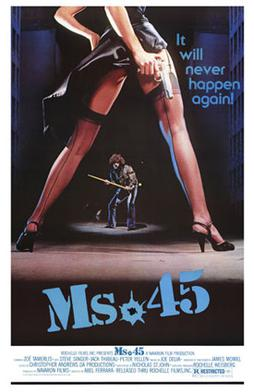


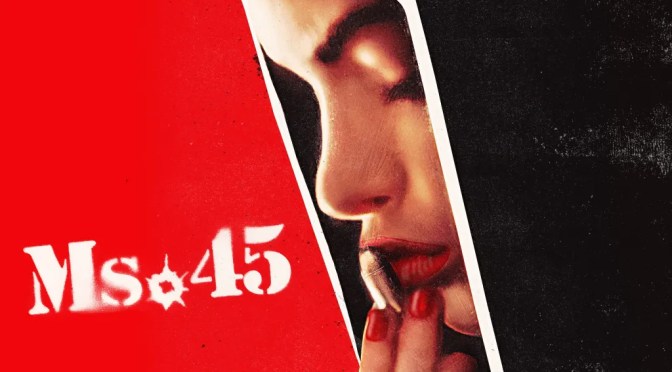
In its latest 4K restoration, Ms. 45—Abel Ferrara’s 1981 revenge thriller—has never looked more electrifying, or more disturbing. A stunning new rendering of Ferrara’s gritty vision, Ms. 45 showcases New York City in all its stark, seething chaos: a place of beautiful ugliness, where the streets pulse with danger, desperation, and decay. The film, originally shot on 16mm, feels both of its time and eerily timeless, especially now in ultra-high-definition, where every grainy detail of Ferrara’s oppressive, neon-lit streets shines in a raw, unapologetic manner.

At the heart of this urban nightmare is Thana (Zoë Lund, credited as Zoë Tamerlis), a mute seamstress whose world shatters after she is brutally assaulted by a man on her way home, then attacked again in her home. Her muteness is both a powerful thematic element and an artistic choice, amplifying her trauma, her rage, and her vengeance in a way that spoken words never could. Thana’s descent into violence is stark, visceral, and unrelenting, making her a strange kind of anti-hero in this world of moral decay. Ferrara’s direction is clinical, cold, and absolutely uncompromising—each frame holds a sharp, almost surgical precision, magnifying the madness of her mind and the city itself.

What truly elevates Ms. 45 beyond its genre limitations is the electric performance of Zoë Tamerlis/Lund. At just 17 years old when the film was made, Lund’s portrayal of Thana is nothing short of revelatory. She is the beating heart of this disturbing narrative, lighting up the screen with a fierce, magnetic presence that could have easily made her a Hollywood star—had the industry been ready for her. While many of the supporting cast either cannot act or over-act, Lund’s both vulnerable and terrifying, her expression often the only indication of her character’s state of mind. Her journey from victim to vengeful force is tragic, yet always compelling.
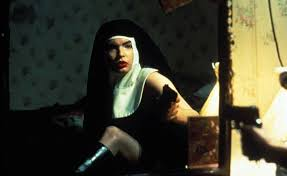

Had Lund chosen to pursue a more conventional career, she would likely have ascended to Hollywood’s A-list—her look was captivating, her screen presence undeniable—but the indie, underground scene was where she truly thrived. In Ms. 45, she is a tragic figure of youth lost to the violence of the world around her, and in the midst of it all, she shines, her performance capturing the raw, cathartic essence of a girl pushed too far. Further, Lund’s performance peaks in one of the most iconic sequences of the film—Thana’s nun fancy-dress shootout. Drenched in blood and surrounded by chaos, she dissects the partygoers in slow-motion with a terrifying calm, her eyes wide with cold sorrow. It’s a juxtaposition of innocence and savagery, like a child playing with fire and discovering its destructive power. Kudos to the deranged soundtrack here which really ramps up Ferrara’s nightmarish vision.

Ms. 45 is NOT a film for the faint of heart or the easily offended. It’s violent, raw, and unapologetically brutal, with moments that will leave you questioning your own reaction to Thana’s vengeful spree. There is something deeply primal about the film—the way it feeds off its viewers’ discomfort, forcing them to confront Thana’s rage. It’s a film that revels in its own madness, and yet somehow, Ferrara and Lund manage to make revenge feel like an art form. It’s as stylish as it is savage, as haunting as it is exhilarating.

In conclusion, Ms. 45 is a genre-defining thriller, a masterpiece of violent cinema that has lost none of its power with time. The 4K restoration is a perfect showcase for Ferrara’s vision, and Zoë Lund’s performance is a revelation—her beauty and intensity burn through the screen, making you wonder what might have been had she chosen a different path. But for those of us lucky enough to witness this film in all its gritty glory, it’s impossible not to see her as a true underground legend. Whether or not you’re ready for it, Ms. 45 is visceral, stylish, and uncompromising cinema—one that will stay with you long after the credits roll and that evil saxophone soundtrack beat fades out.
Mark: 9 out of 11


Classic Film Review: Bleak Moments (1971) plus Mike Leigh Q & A (Prince Charles Cinema, London.)

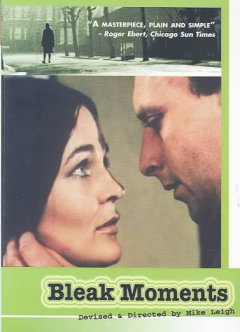
Classic Film Review: Bleak Moments (1971)

Directed by Mike Leigh

Written by Mike Leigh – Based on 1970 stage play by Mike Leigh

Produced by Leslie Blair

Cast: Anne Raitt, Sarah Stephenson, Eric Allan, Joolia Cappleman, Mike Bradwell, Donald Sumpter etc.

Cinematography by Bahram Manocheri

Camera Assistant: Roger Pratt

Edited by Leslie Blair


One of the quiet yet profound joys of cultural life is finding a creative or sporting figure—or team—whose journey you follow from an early age, growing alongside their work as it evolves. Whether it’s the cinematic brilliance of the Coen Brothers or Mike Leigh, the ever-shifting energy of Primal Scream, or the lifelong, often agonising commitment to Tottenham Hotspur FC, these long-term relationships offer a deep sense of continuity. They become personal landmarks in our emotional and cultural landscapes, threading through decades of change and grounding us with shared history, joy, and—especially in Spurs’ case—a touch of heartache.

I was born just a year before Mike Leigh’s Bleak Moments debuted in 1971, and it became a defining cultural touchstone for me. First encountering it in the early 1980’s, I was captivated by its raw honesty and quiet power—a film I returned to again and again on that solid-format VHS tape over the years. It marked the beginning of a lifelong relationship with Leigh’s work, a body of cinema that has shaped and shadowed my own personal and cultural journey. That connection endures to this day, most recently renewed with his 2025 release, Hard Truths—a testament to a career and vision that continue to evolve with undiminished integrity.


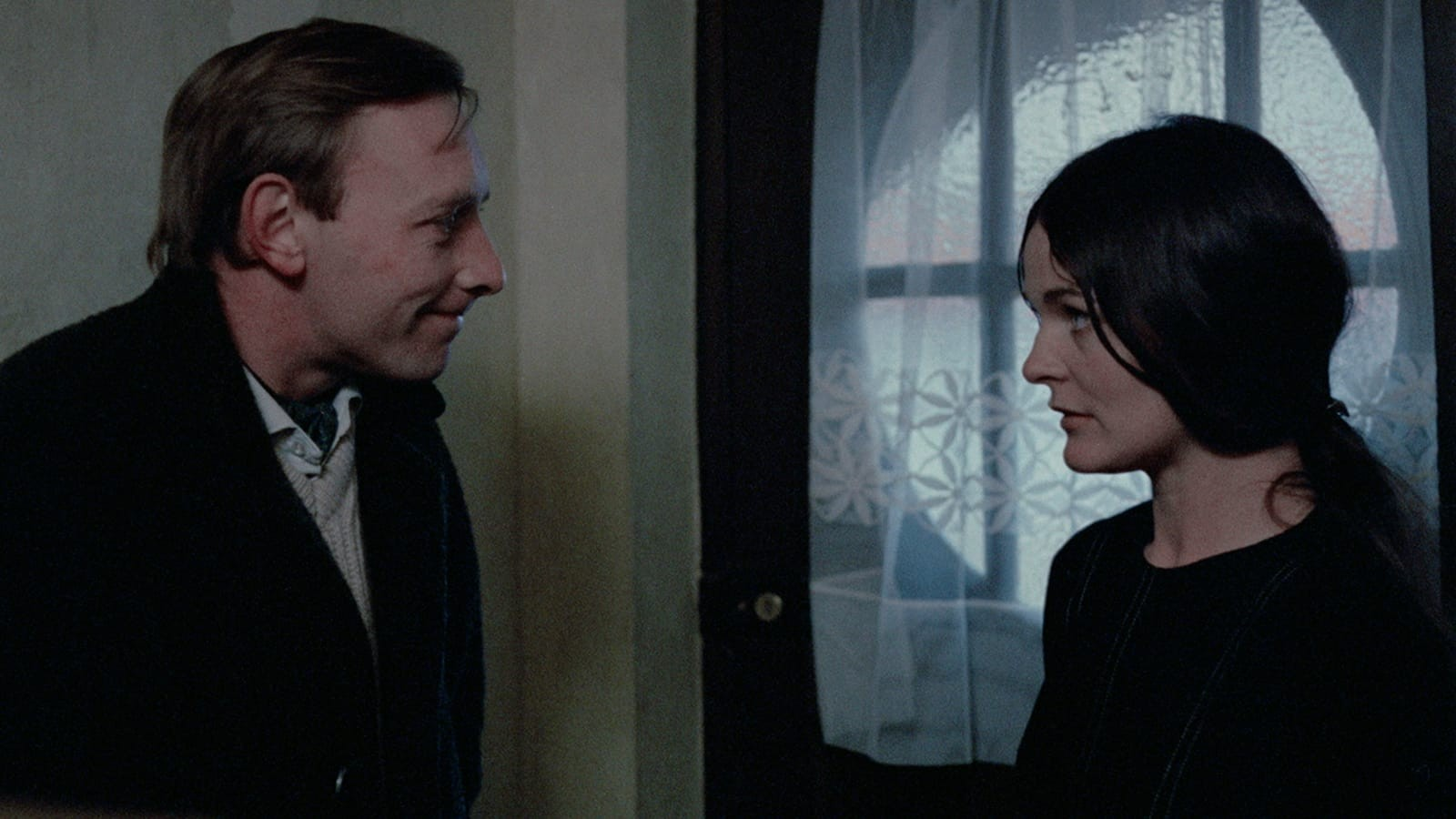
Bleak Moments centres on Sylvia (Anne Raitt), a lonely, introspective young woman navigating the quiet desolation of her suburban life while caring for her mentally challenged sister, Hilda (Sarah Stephenson). Trapped between duty and desire, Sylvia reaches tentatively toward human connection—most notably with a shy schoolteacher—yet every encounter is marked by awkward silences and emotional hesitations. Mike Leigh crafts a delicate, unflinching portrait of isolation and unmet longing, where the most powerful moments are found in what remains unsaid. Indeed, I would say it would have a powerful influence on awkward cinema or television such as Gervais and Merchant’s, seminal show The Office.

I hadn’t seen the film for twenty years and in a packed Prince Charles Cinema, what struck me was how Bleak Moments, while raw and unvarnished in style, unfolds with a beautifully episodic structure that gently accumulates emotional weight. Each scene offers a quiet vignette—moments of everyday awkwardness, tentative exchanges, and domestic stillness—that together create a deeply human portrait of loneliness and restraint. Despite its sombre tone, the film is laced with dry, observational humour and a deep sense of pathos, revealing the absurdity and ache of unspoken lives.

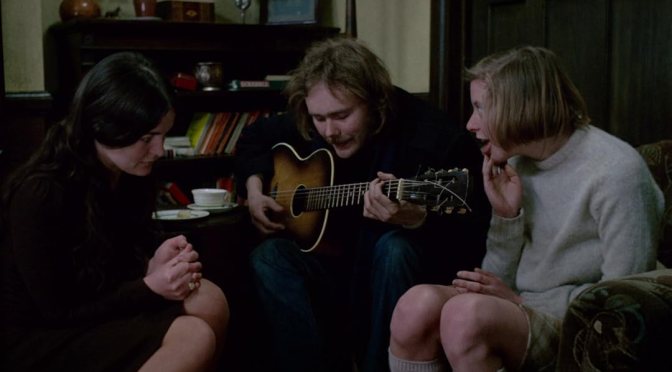
Mike Bradwell’s Norman and his dryly hilarious songs, and the most awkward of “romantic” dinner scenes in the Chinese restaurant just stood out to me as deeply funny. Raitt’s performance too is a masterclass of comedic understatement. Overall, these qualities—emotional nuance, character-driven storytelling, and a commitment to realism—would become defining hallmarks of Mike Leigh’s oeuvre, already fully formed in this striking debut. Finally, it was great to see and hear from Leigh, now in his eighties, answering some great questions with sharp wit and batting away some stupid ones too with his usual intelligence and droll honesty. Leigh remains a hero in my life’s cultural journey.


CINEMA REVIEW: BONES AND ALL (2022)

CINEMA REVIEW: BONES AND ALL (2022)

Directed by Luca Guadagnino

Screenplay by David Kajganich

Based on Bones & All by Camille DeAngelis

Produced by: Luca Guadagnino, Theresa Park, Marco Morabito, David Kajganich, Francesco Melzi d’Eril, Lorenzo Mieli, Gabriele Moratti, Peter Spears, Timothée Chalamet

Cast: Taylor Russell, Timothée Chalamet, Michael Stuhlbarg, André Holland, Chloë Sevigny, David Gordon Green, Jessica Harper, Jake Horowitz, Mark Rylance, etc.

Cinematography: Arseni Khachaturan

*** CONTAINS STORY SPOILERS ***


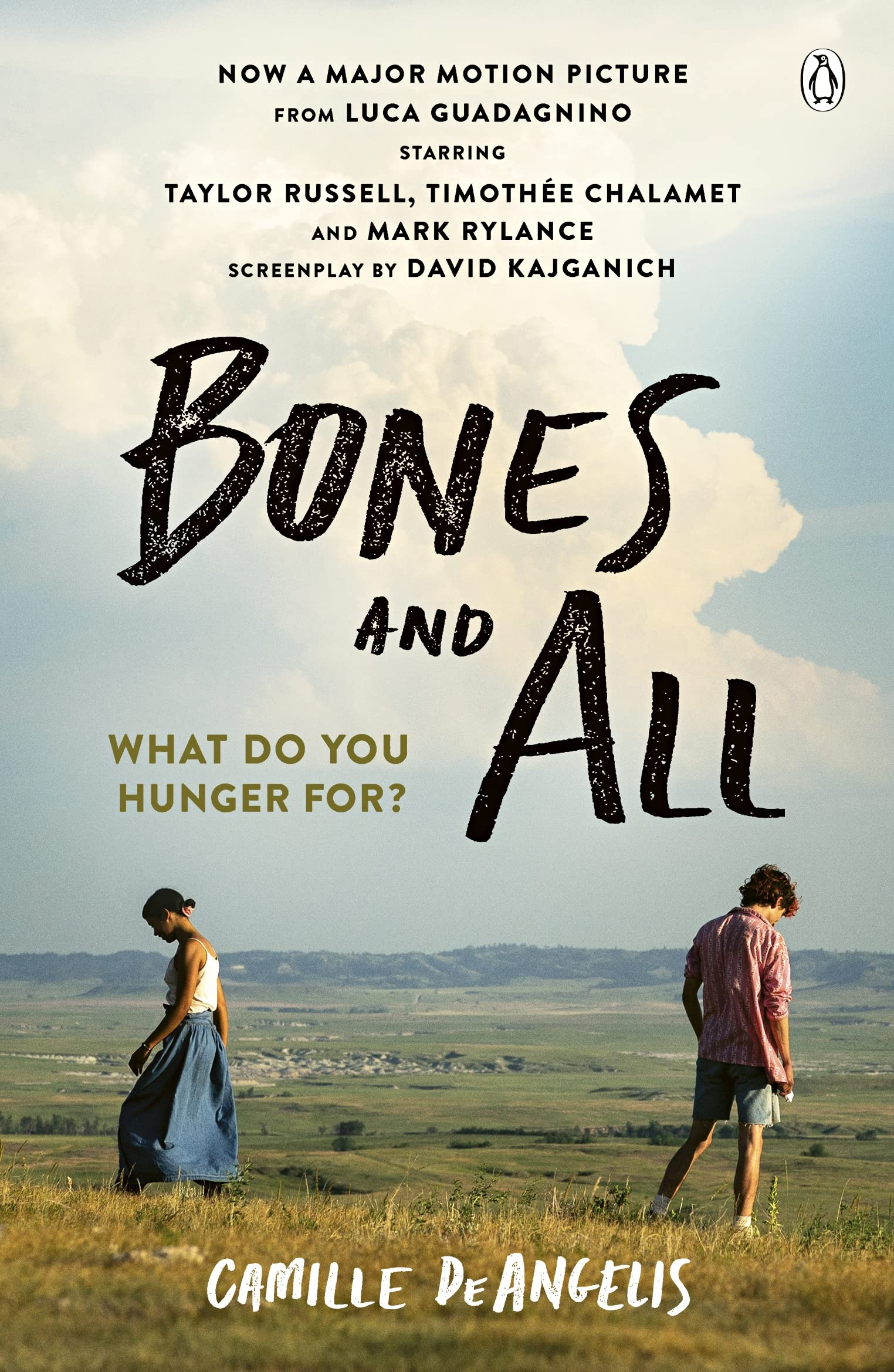
After reviewing The Menu (2022) last time out, here’s another film where food and eating and death are at the very marrow of the narrative. I must confess though it’s very difficult to discuss the excellent hybrid genre film, Bones and All (2022) without giving away the main ingredient within this film. So, I give prior warning that I’m going to have to reveal it in the review. I will state therefore if this film had been called, Fine Young Cannibals, I would not have been surprised in the least. Because the theme of people eating human meat is at the heart of the story.

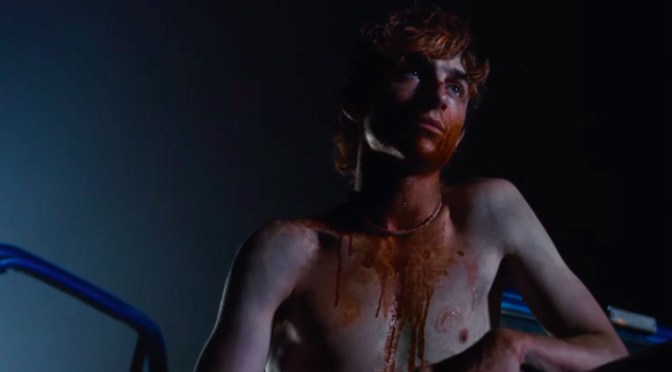
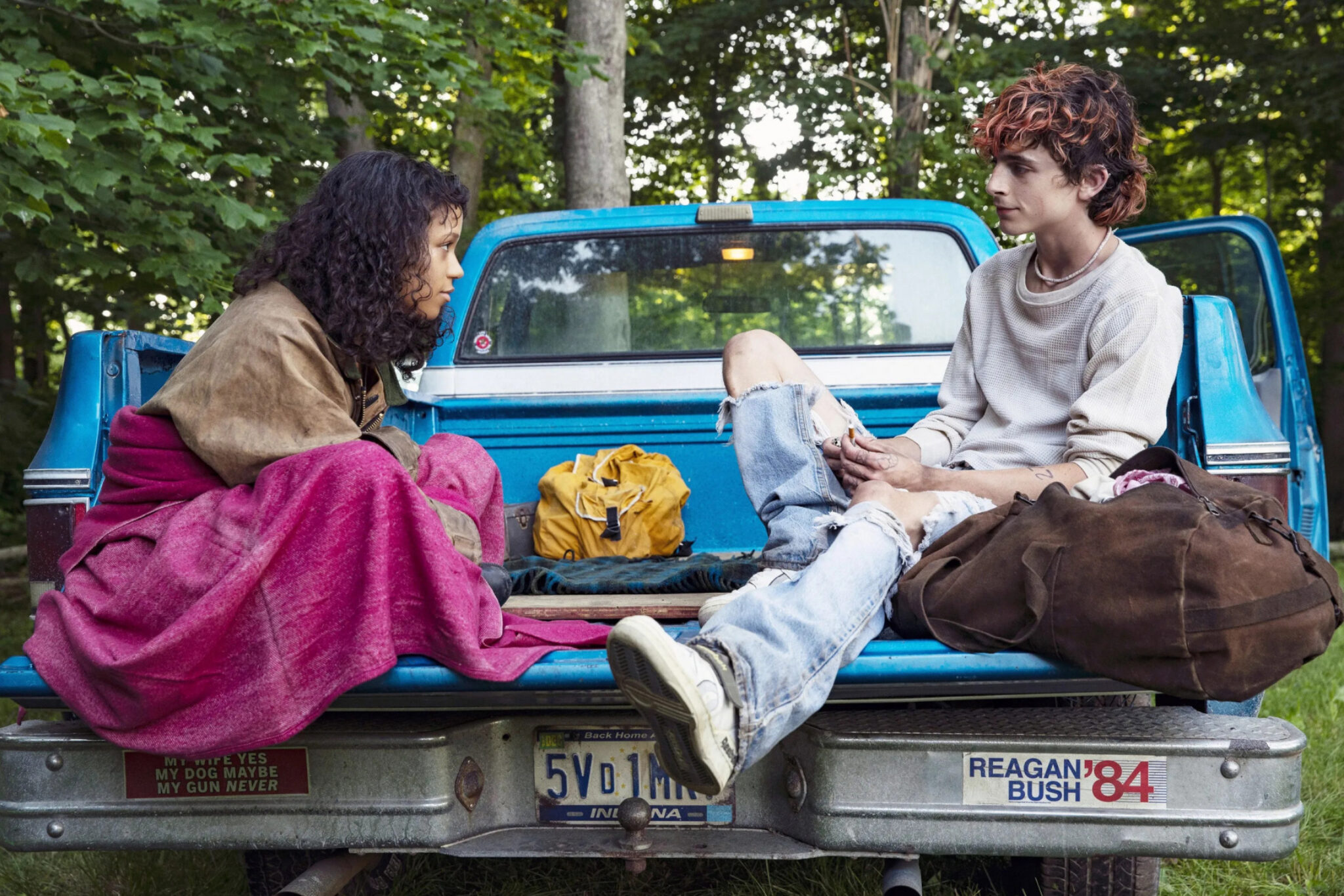
Bones and All (2022) is not a B-movie zombie film with bloody images of flesh-eating monsters devouring people. Yes, there are some gory scenes to satisfy horror fans, however, this arthouse adaptation of Camille DeAngelis’ 2016 novel, is more subtle and sympathetic to the young protagonists with a yearning for mortal flesh. Here murder and cannibalism occur, but it is represented as a curse for both Maren (Taylor Russell) and Lee (Timothee Chalamet), who struggle with their consumptive urges. Moreover, the feeding on flesh is highly symbolic, representing a sensual and almost religious experience for the couple. As they travel across various States, they grow as characters and people. They also explore their own love and share other people’s bodies, romance bleeding through in the process.


Bones and All (2022) is set in the 1980s. It begins with teenager Maren living with her father (Andre Holland) in Virginia. After hitting eighteen years of age, and causing a particularly nasty event at a friend’s sleepover, she is abandoned by him. Left with a cassette tape explaining her family history, Maren sets out to find her mother, meeting Lee along the way. The two are immediately drawn to each other and while driving set about sating their desire for fresh meat. This causes conflict between the couple as it is clear they are not comfortable with the nasty business of killing. Unlike the pursuing serial-killer-trophy-collecting antagonist, Sully (Mark Rylance). He is a venal force of nature, taking animalistic glee during the sacrifice of his victims.

Bones and All (2022) is directed with glacial majesty by Luca Guadagnino. He expertly blends and cooks the genres of horror, period drama, rites-of-passage, romance and road movie with a well balanced approach to tone. Extracting attractive performances from Chalamet and Russell, their onscreen chemistry is potent and touching. Acting legend Mark Rylance steals the show though as the slithery Sully. Overall, I felt the film could have been cut for pace slightly and the Romeo and Juliet-with-a-twist ending was too tragic for me. I think, despite their cannibalistic needs, Maren and Lee deserved a future together. But ultimately it’s all a matter of taste.

Mark: 8 out of 11


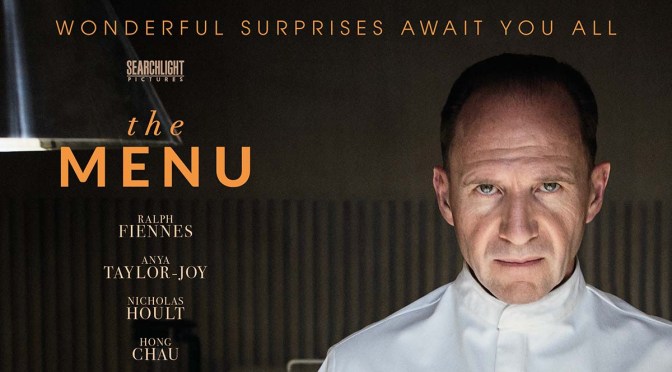
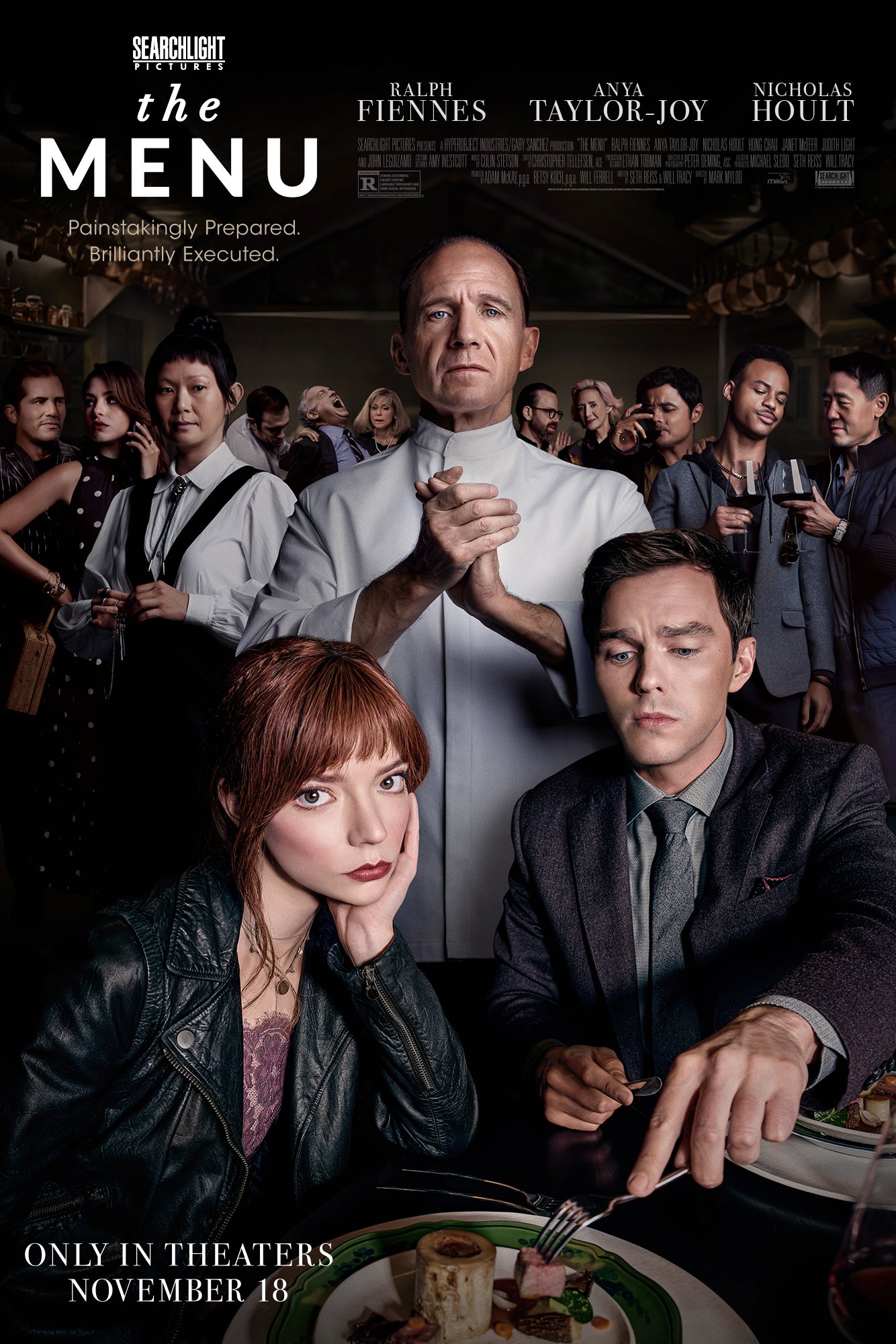
CINEMA REVIEW: THE MENU (2022)

CINEMA REVIEW: THE MENU (2022)

Directed by Mark Mylod

Written by: Seth Reiss, Will Tracy

Produced by: Adam McKay, Betsy Koch, Will Ferrell

Cast: Ralph Fiennes, Anya Taylor-Joy, Nicholas Hoult, Hong Chau, Janet McTeer, Reed Birney, Judith Light, John Leguizamo, etc.

Cinematography Peter Deming

*** MAY CONTAIN SPOILERS ***


I love cinema and films like The Menu (2022), as much as I love food and drink. Wow, some of the food shown on screen looked absolutely delicious, while some of it was that weird cuisine so gorged on by the pompous moneyed folk of this world. I must admit that I have had an unhealthy relationship with food. I have been an overeater and also overweight. I am a food addict, notably sugar and alcohol. I have attempted to control it with various dietary ventures. Low calorie, low carbohydrate, low sugar, running, gym, fasting, temperance and other (un)successful attempts at moderation have ensued. Presently, I am pretty fit from a cardio perspective, and twenty kilos lighter than I was ten years ago. But I could do much better.

I’ve always strived to eat healthily, but fine dining was never really for me. It was only when I met my wife eight years ago that I was introduced to gourmet dining and the dreaded tasting menu. Aside from the over-priced food, I just find those posh restaurants too pretentious for a working-class boy from Battersea. Yet, I would go out with my wife for a treat and eat at some wonderful restaurants in Edinburgh, Copenhagen, Cornwall, London and many more. Some were amazing and some I found were not really value for money. The personality cult of the celebrity chef continues to thrive also. Aside from enjoying Ramsay’s Kitchen Nightmares they’ve never really interested me. Yet, I was onboard while imbibing the skewered satire of The Menu (2022). Because it’s a sharply scripted horror film which comes to the boil slowly before delivering a killer set of courses throughout.


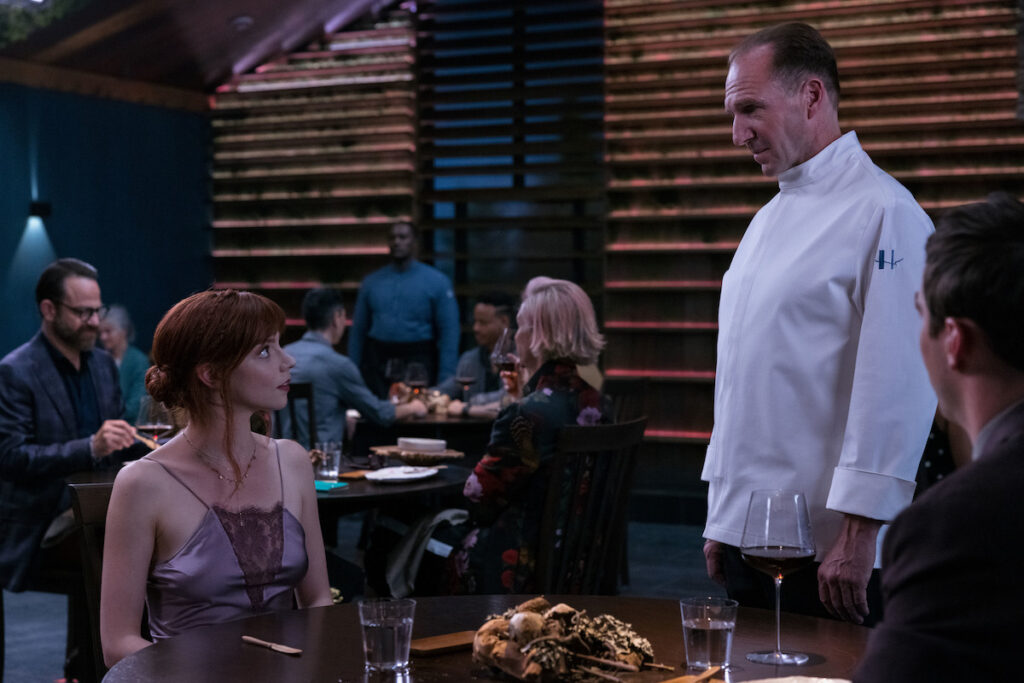
It’s best to experience The Menu (2022) without knowing too much. The surprises in the inventive script are a constant joy. The setting is an exclusive and expensive restaurant on a remote island called Hawthorne. The host, menu architect and epicurean is celebrity chef, Julian Slowik. Chef is portrayed with intense control and focus by Ralph Fiennes. Slowik finds himself worshipped by his kitchen acolytes, who adhere to his every demand. He is brilliant and to be feared, like many a charismatic cult leader before him. Eat your heart out, Gordon Ramsay.

Arriving by boat to the blighted isle are twelve restaurant-goers such as a team of rich finance guys, a once famous Hollywood actor (John Leguizamo) and his PA, a wealthy middle-aged couple, a food critic (Janet McTeer) and her yes-man assistant, plus the mis-matched couple, Margot (Anya Taylor-Joy) and Tyler (Nicholas Hoult). Tyler is a sycophantic fanboy of Slowik’s food and career, something that later comes to horrifying catharsis. Indeed, as well as the mysterious menu, many of the guests are harbouring a secret that this hell’s kitchen is more than prepared to burn.

Structured, unsurprisingly, around the courses of a tasting menu with titles separating each dish, the food delivered is both imaginative and beautifully presented. Margot’s character pushes back on what she considers to be both ostentatious and insubstantial food, much to Tyler’s annoyance. Their conflict intersperses the rising suspense that derives from Julian’s menu, which raises the stakes gradually, before events truly reach boiling point. In Slowik’s restaurant the customer is definitely NEVER right. Similar to Ready or Not (2019), The Menu (2022) is a fantastically twisted and funny genre film. Fiennes, Taylor-Joy, Hoult and Hong Chau are on terrific acting form. Further, the production design and cinematography make the visuals succulent and palatable. Ultimately, for those who love food, fear and vengeance, this film is certainly best served hot!

Mark: 8.5 out of 11


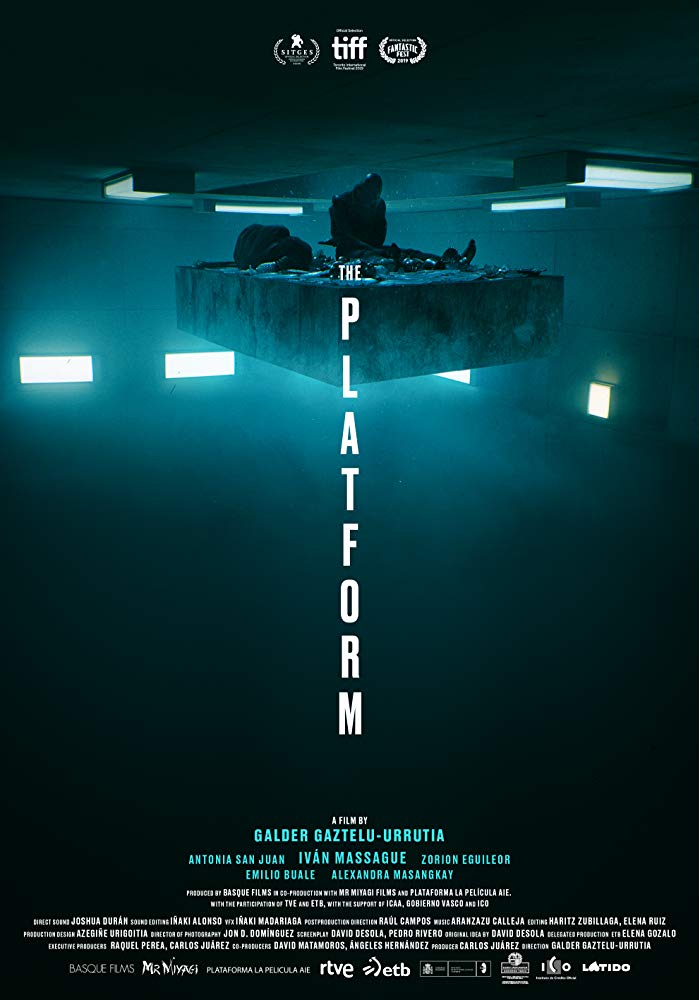
NETFLIX FILM REVIEW – THE PLATFORM (2019)

NETFLIX FILM REVIEW – THE PLATFORM (2019)

Directed by: Galder Gaztelu-Urrutia

Written by: David Desola and Pedro Rivero

Cast: Ivan Massague, Antonia San Juan, Zorian Eguileor, Emiliano Buale Coka, Alexandra Masangkay

Cinematography: Jon D. Dominguez

Original Platform: Netflix

*** MAY CONTAIN SPOILERS ***


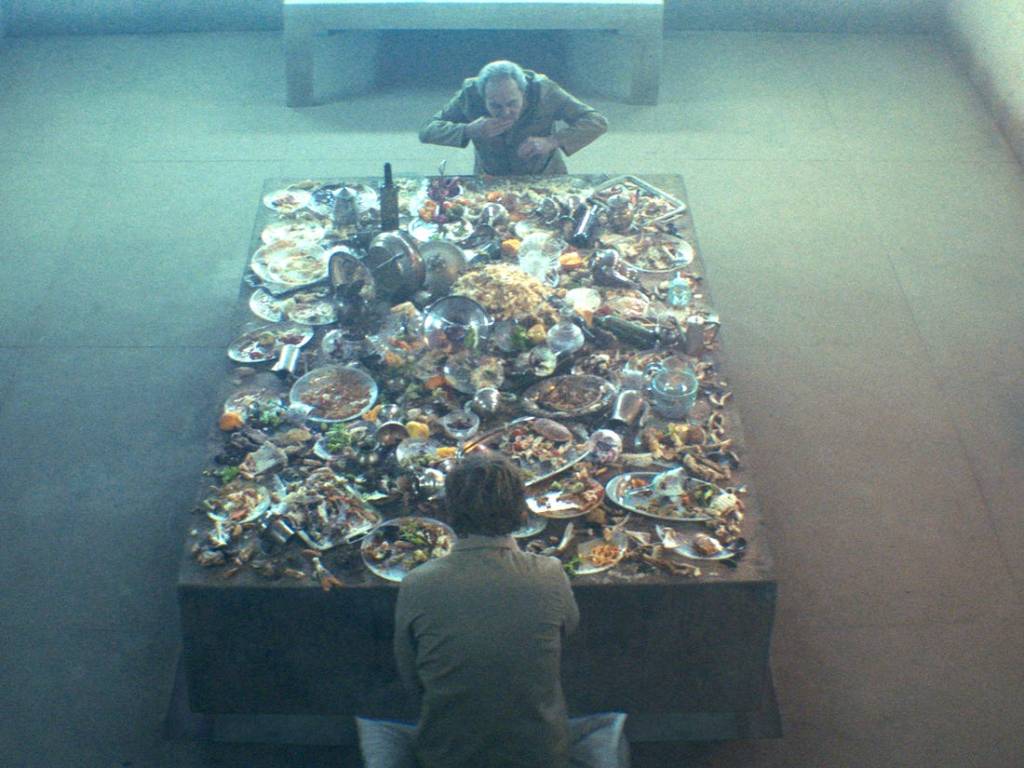
Last night, just under a week into the stricter UK social distancing procedures, I finally got pangs of withdrawal symptoms from NOT going to the cinema. Of course, my feelings or emotions at this time pale into insignificance when compared to the thousands of people affected by or those who have lost their lives to the COVID-19 virus. Moreover, while one could describe our planet as currently resembling a massive open prison, it’s nothing compared to the horrific conditions of the vertical prison in Spanish horror thriller, The Platform (2019). Be warned: do not watch this film while eating your dinner, as it could affect your appetite.

While I recently wrote an article about some films that could make you feel better in this global crisis (link here), paradoxically a horror film such as The Platform (2019) can also work to make you feel better too. Because a film where prisoners are trapped in a multi-level jail and whose food intake is based on how high they are within the prison, is an ingenious, yet terrifying concept. Knowing my life can never be as bad as the main protagonist and the prisoners he encounters made me feel somewhat relieved. Furthermore, the gore levels, plot twists and social satire on display took my mind off the reality of my own situation.


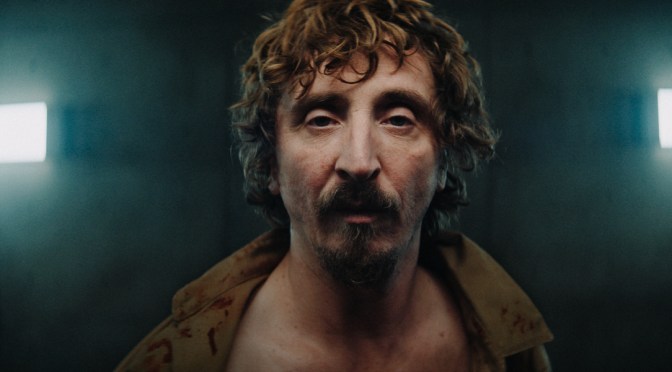
Ivan Massague, with his hangdog-Zlatan-Ibrahimovic features is Goreng, our reasonable everyman at the start. For some bizarre reason he has volunteered to be in this Kafkaesque hell for reasons I won’t spoil. His first cellmate is an older man, Trimagasi (Zorian Eguileor). He is in for committing manslaughter. Trimagasi explains how the system works in the jail. Food comes down on a platform and is meant to be shared with everyone from top to bottom. Of course, it doesn’t work like that as greed prevails. The lower down you are the less food you get. What happens when you don’t eat? You look for alternative food sources. Goreng is naive initially, while Trimagasi knows how to play this vicious game, especially because they never know what level they will be on month to month. This is no Shawshank Redemption (1994), where the mentor coaches the younger man positively. In this environment it is a dog eat dog world; and it’s every dog for him or herself.

The Platform (2019) has a brilliant script, thus is a wicked delight from start to finish. Even the ambiguous ending, which while leaving our gallant lead protagonist’s fate open to interpretation, is fitting for a constantly surprising genre film. It is both a joy as horror film and social commentary. Indeed, the film has its pound of flesh and eats it. I just have to say there is some fantastic gore and memorably crunching deaths throughout of man, woman and beast. The film doesn’t have all the answers. In fact, it is actually quite nihilistic about human behaviour and our inability to share the wealth around. But as high concept and low budget horror movies go, it’s one of the most entertaining I have seen in sometime. Anything to take one’s mind off what is really happening in this world can only be positive.

Mark 9 out of 11


GREEN BOOK (2018) – CINEMA REVIEW & OSCAR BINGO #4

GREEN BOOK (2018) – CINEMA REVIEW

Directed by: Peter Farrelly

Produced by: Jim Burke, Brian Hayes Currie, Peter Farrelly, Nick Vallelonga, Charles B. Wessler

Written by: Nick Vallelonga, Brian Hayes Currie, Peter Farrelly

Starring: Viggo Mortensen, Mahershala Ali, Linda Cardellini

**MAY CONTAIN SPOILERS**

I have to be honest I am getting very tired of racism and racists, so lord knows how the people who it affects deal with it on a day to day basis. To judge and attack people because they have a different race, background or skin colour is, and has always been, the height of stupidity. We are all humans and should be judged on our actions and behaviour and NOT our physical appearance, social background, sexuality or gender. Furthermore, we must not treat someone a certain way based on general experience of how others behave too. I subscribe to individualistic judgement and the desire for peaceful attempts to resolve conflict and differences. Those that attack and bully and abuse any other human being are wrong and their minds must be changed.

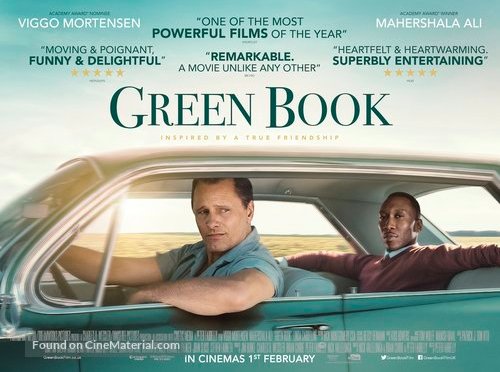
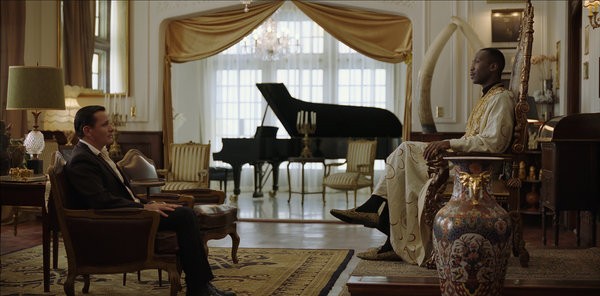
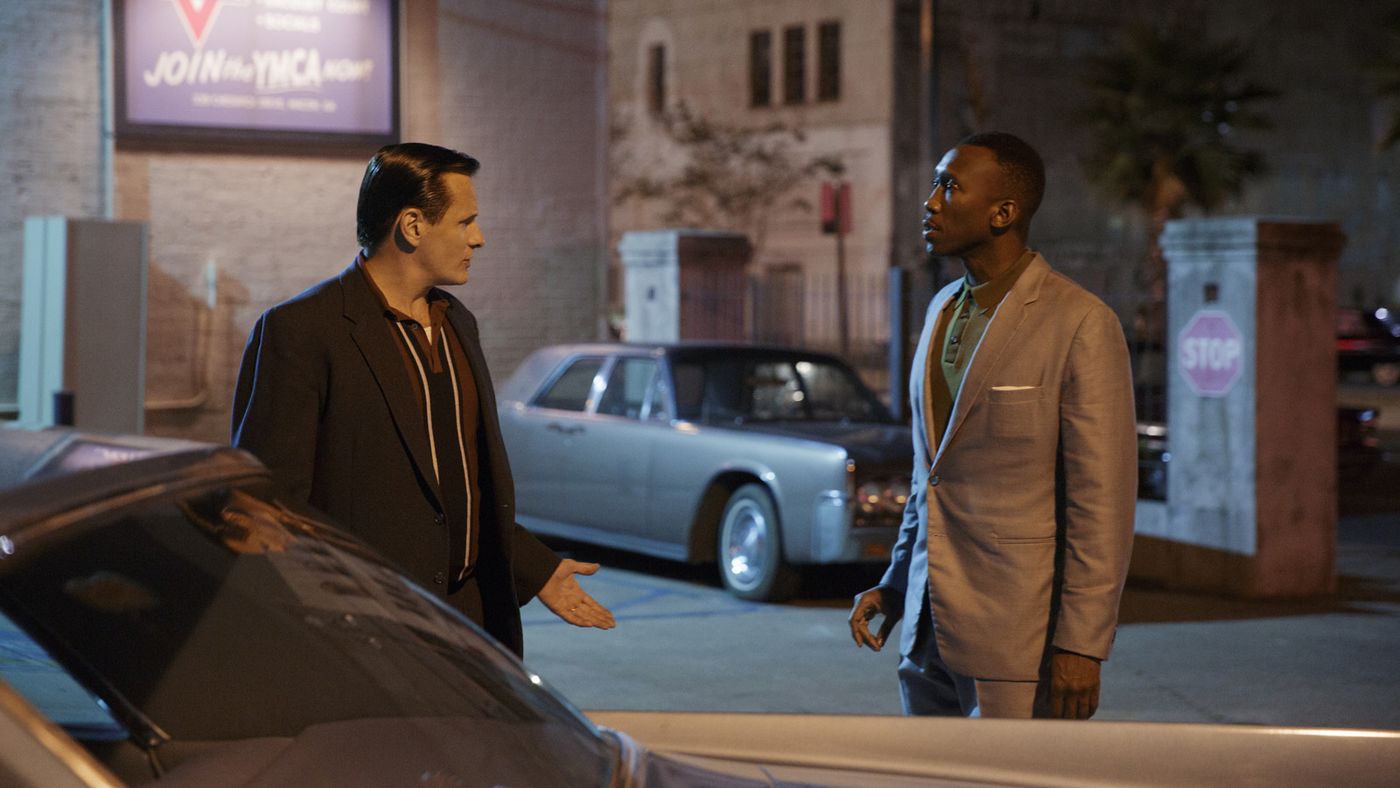
If a feel-good film such as Green Book (2018) can at the very least change one person’s negative attitude then it will be a success. It makes very broad points in regard to race relations and while arguably simplistic, in the very fabric of its story remains a heartwarming call for tolerance, understanding and friendship. Directed by Peter Farrelly, Green Book is based on the true story of Dr Don Shirley, a genius musician, and his brave trip across the deep South of America in 1962 with working class Italian driver, Tony “Lip” Vallelonga. Safe to say the road tour is not without its ups and downs and the men, after initial differences, find common ground, loyalty and friendship.

BEST PICTURE CHANCES – 8/10

As aforementioned in a previous review I would say Roma (2018) will probably win best film at the Academy Awards. Green Book has a decent chance based on the sheer energy and persuasion of the story. Moreover, it attempts to marry comedy with social drama and on the whole succeeds. Peter Farrelly directs with skilled aplomb and the guy is a past-master of the road movie genre with films such as: Dumb and Dumber (1994), Kingpin (1996), There’s Something About Mary (1998) and Me Myself and Irene (2000), all comedies which adhered to road movie genre tropes. I guess that’s one thing that holds Green Book back and that is it’s very “by-the-numbers”, however, that’s also one of the joys of the story in that it hits the heights of genre expectations so well. Finally, Farrelly marshals the road trip, musical gigs and period setting really impressively and film made me feel all glowy by the end.

ACTOR IN A LEADING ROLE CHANCES – 8/10

Viggo Mortensen is such an intelligent actor and has often been cast in intense roles which require much internal conflict. Here, his Tony Lip, is a larger-than-life Italian tough guy, handy with the bullshit and his fists. He eats like a horse and loves his family. Further, he’s stand-up guy who won’t be dragged into the Mafia underworld no matter how broke he is. The character verges on the Italian stereotype we have seen many times before but Mortensen imbues the lovable rogue with a humanity, humour and a do-the-right-thing spirit throughout. It’s his journey we follow as he moves from prejedicial jerk to something more socially acceptable. Lastly, Mortensen’s scenes with Ali are just brilliantly acted; the two bouncing off each other with wit and perfect timing.

ACTOR IN A SUPPORTING ROLE CHANCES – 10/10

Mahershala Ali should win this. He is absolutely outstanding. While Mortensen’s character is big and splashed across the screen in ebullient effervescence, Don Shirley quietly steals the show. His erudite, intellectual and refined exterior hides a pained and lonely soul who just does not fit in to society anywhere. While his music is loved and his genius revered he just cannot find inner peace. I mean I know nothing about playing the piano but Ali impresses here too with his conveyance of the musicianship of the character. Lastly, Ali’s performance is one of the best of the year, and while he won previously for Moonlight (2016), this performance is so good he should be on the list of leading actor role nominations.

BEST SCREENPLAY CHANCES – 8/10

The structure of the screenplay adheres to the classic Hollywood model to a tee. There are few surprises as the set-up of two opposite characters meet and go through a literal and figurative journey of discovery and change. Along with the lead performances, what raises the story though, is a fizzing script full of conflict and comedy. We get set-up-punchline, set-up-drama, set-up punchline, set-up feelgood moment throughout, making it a metronomically impressive piece of writing. The letter-writing running gag, for example, is pure comedic gold. Moreover, the script is littered with tremendous dialogue exchanges between the lead roles and ensemble characters which had me laughing and emoting throughout. Perhaps, historical and political accuracy could be queried by some and there is a reliance on familiar archetypes, but that doesn’t interfere with a zinging story.

CONCLUSION

Green Book is a film that has its chicken and eats it. It is full of life, food, music, family, friendship while making important points about racial issues. It also raises many laughs with heartwarming poignancy, highlighting the inequalities of 1960s with a broad hand. While these issues are not as intriguingly addressed as in BlacKKKlansman (2018), they elevate the generic road-movie-opposites-buddy-bromance tropes and structure. More than anything this is a story about friendship and while it treads a well worn road, mirroring films such as Planes, Trains and Automobiles (1987) and Midnight Run (1988), it does so with verve, humour and heart.

Mark: 9 out of 11