Tag Archives: Germany

Cinema Review: Nosferatu (2024) – At the Intersection of Horror and Eroticism!

Cinema Review: Nosferatu (2024)

Directed by Robert Eggers

Screenplay by Robert Eggers

Based on Nosferatu by Henrik Galeen and Dracula by Bram Stoker

Produced by Jeff Robinov, John Graham, Chris Columbus, Eleanor Columbus, Robert Eggers, etc.

Main Cast: Bill Skarsgård, Nicholas Hoult, Lily-Rose Depp, Aaron Taylor-Johnson, Emma Corrin, Willem Dafoe, Simon McBurney, etc.

Cinematography by Jarin Blaschke

Music by Robin Carolan

*** MAY CONTAIN SPOILERS ***
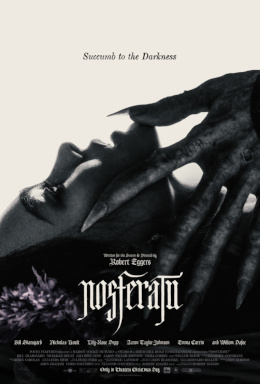


Firstly, Nosferatu: A Symphony of Horror, the 1922 silent German Expressionist vampire film directed by F. W. Murnau remains one of the greatest and most iconic horror films of all time. It is arguably the greatest adaptation of Bram Stoker’s, seminal gothic classic, Dracula, too. Of which there have been many. So, who would be brave enough to attempt to master another version of this often-told monstrous tale. Step forward the acclaimed and relatively young American auteur, Robert Eggers.

Robert Eggers has built a reputation for crafting films that blend mythical and fantastical elements with folk horror and psychological thriller sensibilities. His works often transport audiences to meticulously recreated period settings, which serve as the foundation for his exploration of human fears, desires, and the supernatural. His debut feature film. The Witch (2015) exemplified folk horror rooted in Puritanical fears of the supernatural. Set in 1630s New England, it drew heavily from folklore, historical accounts, and period-authentic dialogue. The film explored themes of isolation, religious paranoia, and the breakdown of a family due to their belief in the presence of witches.

Similarly, The Lighthouse (2019), a psychological thriller merged maritime folklore with hallucinatory horror. Set in the late 19th century, the film delved into isolation-induced madness as two lighthouse keepers grappled with mythological themes such as mermaids, sea gods, and Promethean punishment. Moreover, as with his short films Hansel and Gretel (2007) and The Tell-Tale Heart (2008) he is drawn towards established texts, with the bruising, battering ram of The Northman (2022) covering the original myth on which Hamlet was based. Eggers vision immersed the viewer in violence, Viking culture, shamanic ritual and mysticism. Unsurprising therefore, he has now delivered the German Expressionist classic, Nosferatu (2024) with his signature period aesthetic and focus on the macabre.
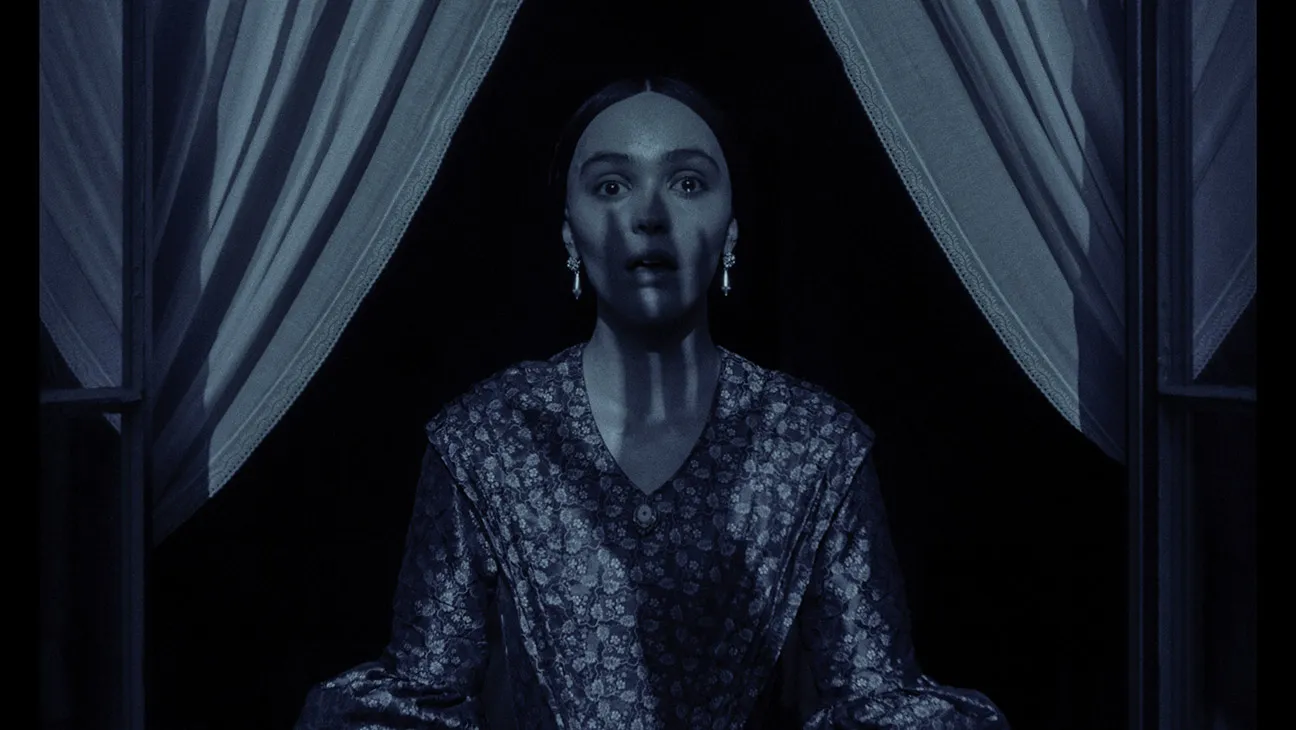


With a stellar cast, production design and incredibly stylish vision, Eggers has produced a praiseworthy example of fantastical cinema. As usual there appears to be meticulous historical research, including accurate costumes, set design, and period-specific dialogue. This attention to detail in Nosferatu (2024) grounds the supernatural elements in a believable world, enhancing their impact. Furthermore, Eggers creates a sense of dread through his use of sound design, stark cinematography, and claustrophobic settings. His restrained pacing allows for the gradual unraveling of characters’ psyches, making the supernatural elements more impactful.

Yet, while steeped in folklore, Nosferatu (2024) centres on human struggles—family disintegration, fate, guilt, madness, lust and sex. Indeed, Nicholas Hoult’s Thomas Hutter (née Harker) does not stand a chance. From the opening scene his sensual wife, Ellen, is inextricably linked via a lustful fever dream to a mysterious figure, who, if you couldn’t guess, is Count Orlok (an unrecognizable Bill Skarsgård). It is Ellen’s orgasmic connection across oceans of time which drives Orlok to lure Thomas away and commit blood-draining murder as he creeps cross-country and sails the seas from Transylvania to Germany. Ellen’s surreal and orgiastic desire unfortunately brings the plague and causes the death of extraneous supporting characters portrayed by the likes Aaron Taylor-Johnson and Emma Corrin. A note to say Willem Dafoe is as usual a joy as the ‘Van Helsing’ substitute.

Nosferatu (2024) is undeniably a sumptuous adaptation, brimming with signature attention to period detail, atmospheric dread, and a striking visual palette. However, for those seeking a viscerally terrifying Dracula film, the movie might fall short, leaning heavily into the realm of erotic horror and psychological tension rather than outright scares. While the stunning cinematography, the film’s shadow-drenched landscapes, intricate set design, and haunting score evoke the satanic allure of the original silent film this focus, however, shifts the film away from raw horror and toward a more introspective exploration of vulnerability and eroticism. Ultimately, the film’s reinterpretation of Count Orlok and its restrained approach to gore might alienate viewers expecting a more terrifying vampire film. This left me impressed but more disturbed by the overlong runtime than by the nightmarish allure of the bloodthirsty undead.
Mark: 8 out of 11


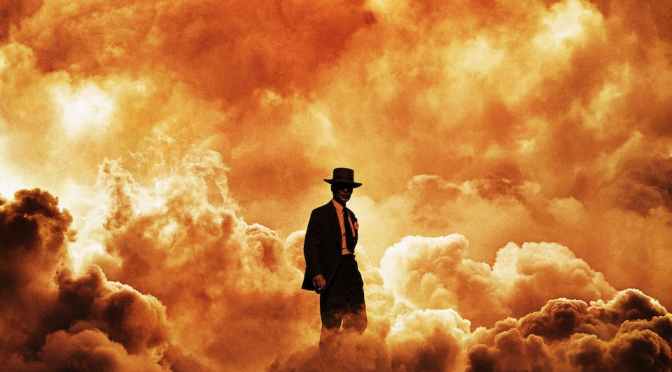
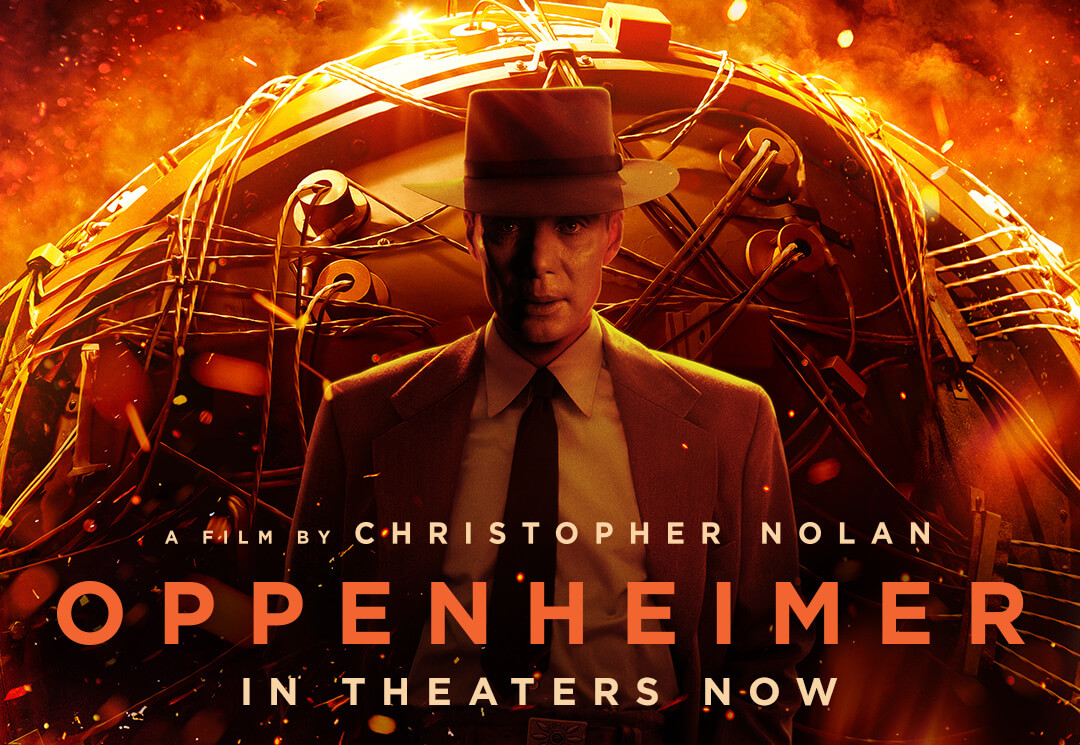
CINEMA REVIEW: OPPENHEIMER (2023)

CINEMA REVIEW: OPPENHEIMER (2023)

Directed by: Christopher Nolan

Screenplay by: Christopher Nolan

Based on: American Prometheus by Kai Bird and Martin J. Sherwin

Produced by: Emma Thomas, Charles Roven, Christopher Nolan

Cast: Cillian Murphy, Emily Blunt, Matt Damon, Robert Downey Jr., Florence Pugh, Josh Hartnett, Casey Affleck, Rami Malek, Kenneth Branagh, Tom Conti and many more.

Cinematography: Hoyte van Hoytema

*** MAY CONTAIN SPOILERS ***


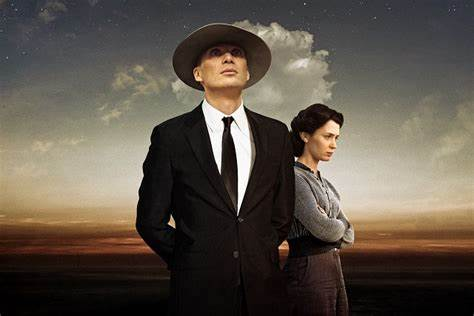
One wonders if Christopher Nolan sees himself reflected, on some subconscious level, in the character of J. Robert Oppenheimer. Both are geniuses within their chosen field, and both have had their critics who do not always agree with their choices. The intrinsic difference is that the work of Oppenheimer and his team of scientists created one of the most expensive and deadly weapons the world has even seen. His actions led to destruction and death on a mass scale. Christopher Nolan, on the other hand, merely creates expensive drama and destruction on a cinema screen for our entertainment.

J. Robert Oppenheimer is clearly a complex character to bring to life on the screen. Indeed, scientists are not always the most riveting of characters, nor particularly cinematic. Especially since they spend their days in laboratories, classrooms and have their heads buried in books. Thus, visually speaking it is a constant challenge for filmmakers to present such biopic narratives. Moreover, thematically, and philosophically there is much internal conflict to wrestle with. Especially someone as (in)famous as Oppenheimer. I mean, how does a man overcome the guilt of being responsible for the deaths of so many people?

Having said that, Oppenheimer, as the leader of the ‘Manhattan Project’ at Los Alamos, could also be interpreted as the saviour of lives. The invention of nuclear weapons is an act of aggression, but paradoxically also a shield of peace. Such is the fear generated by such a devastating tool we will never know how many lives the existence of nuclear bombs has saved. Unfortunately, human beings find other ways to kill each other. That sadly will never stop. Does Nolan explore these themes within the intense three hours of cinematic propulsion, Oppenheimer (2023)? It is certainly there in the subtext, but perhaps not as pronounced as I would have hoped.


Adapting American Prometheus by Kai Bird and Martin J. Sherwin, Christopher Nolan’s screenplay is highly intelligent and clearly professionally researched. It is also, when compared with the often-baffling Tenet (2020), simply structured. Events from Oppenheimer’s early life, post-war troubles with the United States government and the key stages of the ‘Manhattan Project’ are cut together in juxtaposing timelines throughout the lengthy running time. Nolan builds from the Senate and court hearings Oppenheimer faces after the war, where his security status is threatened with revocation due to his alleged association with the Communist party before the war.

That McCarthyistic-Red-Scare-paranoia was vilifying genuine heroes such as Oppenheimer is quite incredible, but unsurprising. I mean, here is a man, who served his country to personal cost and his own mental degradation. It is therefore a measure of his character, as presented via Cillian Murphy’s formidable portrayal, that he refuses to break in the face of constant questioning of his patriotism and commitment to America. I felt that the constant jolts from the Senate hearings, where Robert Downey Jnr’s, Lewis Strauss, is seeking election, to Oppenheimer’s security status “trial,” brought about an overly repetitive and talky series of scenes which bogged down the emotions for me.

Where the film truly blooms is when Oppenheimer makes his scientific breakthrough, builds his team of geniuses and the construction and testing of the nuclear weapons at Los Alamos. There is palpable suspense (even though we know what happens) in the race with the Germans to make the bomb first. Imagine if the Germans had won the race? It does not bear thinking about. The history of the world would have been irrevocably altered beyond comprehension. Nolan also does an effective job of keeping the scientific language at an understandable level, as he promotes personalities over jargon. Indeed, Nolan’s ultra-talented ensemble cast including Matt Damon, Rami Malek, Josh Hartnett, Dane DeHaan, Jason Clarke, Florence Pugh and the best of the lot, Robert Downey Jnr, are all superbly marshalled by the director.


As well as being rich in history and thematic power, Oppenheimer’s (2023) visuals, allied with Hoyte Van Hoytema’s pristine cinematography, are unsurprisingly impressive. Nolan makes the choice to switch between black-and-white and colour photography. This is initially jarring but works with the shifting character perspectives it is intended to denote. On the other hand, I would say the pulsating sound design and score felt overbearing at times. Similarly, one could argue the overload of cutting, aural battering and switching of film colour stock combine to overload the viewer and remove emotional and dramatic resonance.

Oppenheimer (2023) is another Nolan masterwork as he and Cillian Murphy will surely get Oscar nominations. Lastly, the film works best as a bullet-pointed history lesson, a fine tribute to a complex and flawed genius, and a powerful damnation of United States paranoid politics. However, the solipsist nature of Oppenheimer’s character study and crowd of talking heads often becomes dizzying, watering down the drama and emotion of this immaculate and nuclear work of cinema.

Mark: 9 out of 11


NETFLIX REVIEW: DARK (2020) – SEASON 3 – AND SO CONCLUDES ONE OF THE BEST TV DRAMAS EVER MADE!

NETFLIX REVIEW: DARK (2020) – SEASON 3

Created by: Baran bo Odar, Jantje Friese

Written by: Jantje Friese, Ronny Schalk, Marc O. Seng, Martin Behnke, Daphne Ferraro

Directed by: Baran bo Odar

Cast: Louis Hofmann, Karoline Eichhorn, Lisa Vicari, Maja Schöne, Stephan Kampwirth, Jördis Triebel, Andreas Pietschmann, Paul Lux, Moritz Jahn, Christian Hutcherson, Oliver Masucci, Peter Benedict, Gina Stiebitz, Deborah Kaufmann, Daan Lennard Liebrenz, Julika Jenkins, Carlotta von Falkenhayn, Tamar Pelzig, Dietrich Hollinderbäumer, Mark Waschke, Leopold Hornung, Christian Pätzold, Will Beinbrink, Hermann Beyer, Christian Steyer, Lisa Kreuzer, Anne Ratte-Polle, Walter Kreye, Lydia Maria Makrides, Tom Philipp, Nele Trebs, Tatja Seibt, Lea van Acken, Shani Atias, Max Schimmelpfennig, Ella Lee, Peter Schneider and many more.

Composer(s): Apparat, Ben Frost

Executive producer(s): Justyna Müsch, Jantje Friese, Quirin Berg, Max Wiedemann, Baran bo Odar,

Cinematography: Nikolaus Summerer

Original Network: Netflix

***MAY CONTAIN SPOILERS***


“Time is an illusion.” ― Albert Einstein


And so the end is nigh, and we reach the final season of uber-drama, DARK. If you have Netflix and you like to have your mind scrambled and heart moved, then I urge you to watch it. It is easily one of the best television dramas I have seen in a long time. It’s edgy, nightmarish, confusing, twisted and to be honest, virtually unreviewable. I say that because I don’t want to give away any spoilers but, trust me, if you like emotionally, structurally and artistically complex plots involving multiple characters, locations and timelines then this German thriller is for you. It had me confused in a good way and totally immersed in the plot and characters. You will be lost, searching for the light, yet you will be astounded too by the audacity of the writing, direction and looping insanity of the show.

Time, space and dimensional rifts are central to the drama. The cycles of life and death are also integral within the fabric of DARK. The action occurs in the German town of Winden as the narrative entwines the past, present and futures of four families: Kahnwald, Nielsen, Doppler, and Tiedemann.  One could argue that the state of Saṃsāra is invoked as a key theme. Saṃsāra is a fundamental concept in all Indian religions. It is linked to the karma theory, and refers to the belief that all living beings cyclically go through births and rebirths. The term is related to phrases such as the cycle of successive existence, including the karmic cycle or the wheel of life. What occurs within the twenty-six episodes of DARK is a cyclical lunar convergence of 33 years, taking place initially in 1987 and 2020. Well, that’s just in season one. From season two onwards things temporally twist beyond into other years on the cycle.

During season two and much of season three I was often lost with the various characters criss-crossing each other on different timelines and at various ages of their lives. I finally found some semblance of understanding in DARK, after much frustration and almost giving up, by distilling the events to the human strands of childhood, adulthood and old age. Like a moving vision of Titian’s painting, The Three Ages of Man, all the major characters, notably Jonas Kahnwald, Claudia Tiedemann and Ulrich Nielsen, feature in these three stages of existence. Interestingly, the programme events show they have different agendas and perspectives, with older versions either teaching their younger selves or acting as their own nemesis. Proving that existentially speaking life is ultimately a constant battle with oneself.


Temporal paradox is central also to DARK. More specifically, it features the Bootstrap Paradox. This refers is a theoretical paradox of time travel that occurs when an object or piece of information sent back in time becomes trapped within an infinite cause-effect loop in which the item no longer has a discernible point of origin. Indeed, closed causal loops, such as the Predestination Paradox or Bootstrap Paradox, find time running in a repeating circle. When such circles over-lap in DARK, conflict is derived in the story because certain characters are trying to keep the loops going and others are trying to destroy them.

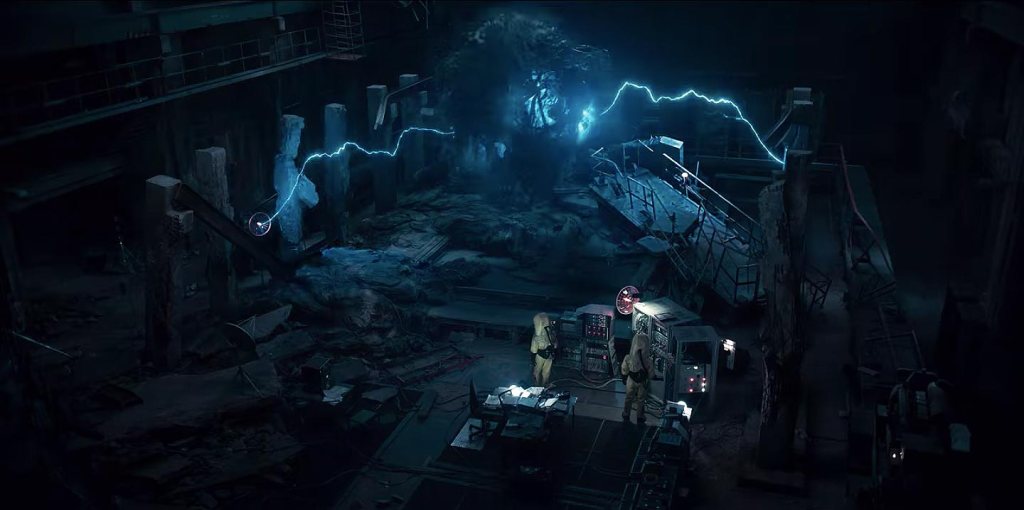
Which brings us to another major theme of the drama, the death of the self and death of the world. With the spectre of Chernobyl hanging over the town of Winden, the nuclear power station becomes a central harbinger of catastrophe throughout the various cycles. In the early years it is a beacon of prosperity, energy and employment. In later years it is the precipitous location for the apocalypse. Lastly, philosophically the textual richness in DARK is endless. While temporally speaking the looping timelines can be confusing, the final season, while leaving many questions unanswered provides a satisfying closure to this extremely human story. Amidst the science fact and fiction and philosophical explorations of life and death this is ultimately a television series about family and community. Because as soon as the cracks begin to show in the family unit we are destined to fall through the fissures of destiny. Only together can we conquer fate; but only if time allows.

Mark: 10 out of 11


LFF REVIEW – JOJO RABBIT (2019) – SPOILER FREE

LFF REVIEW – JOJO RABBIT (2019)

Written and Directed by: Taika Waititi

Based on: Caging Skies by Christine Leunens

Produced by: Carthew Neal, Taika Waititi, Chelsea Winstanley

Cast: Roman Griffin Davis, Thomasin McKenzie, Taika Waititi, Sam Rockwell, Scarlett Johansson, Rebel Wilson, Alfie Allen etc.

***SPOILER FREE***


After watching the astounding Joker (2019) earlier in the day, and having my psyche shook by that descent into hell, I needed something lighter to watch afterwards. A comedy about the Nazis, World War II and Hitler himself, therefore, probably wasn’t the ideal choice. Nonetheless, I really enjoyed Taika Waititi’s furiously funny war satire.

Essentially, JoJo Rabbit (2019), is a rites-of-passage comedy with a heavy dose of pathos, tragedy and combat thrown in. The story concerns JoJo Betzler (Roman Griffin Davis), a young German boy who has a staunch commitment to the Hitler Youth and the Nazi Party. So much so he conjures up a vision of Hitler (Taika Waititi), to act as a kind of spirit guide through his everyday life. Safe to say, Hitler isn’t the best teacher, especially with Waititi’s mischievous and ridiculous representation.

JoJo Rabbit (2019) has a wonderful character arc for the lead protagonist, who benefits from an empathetic performance by sterling young actor, Roman Griffin Davis. JoJo, through his wartime experiences slowly learns the horrors of Nazi propaganda and the real truth about the Jewish people. It’s a heartwarming and touching story which advocates love over hate, even in the face of such dark terror.


This image has an empty alt attribute; its file name is jojo-rabbit-trailer.jpg

While Waititi’s comedic turn as Hitler threatens to plunge the film into tonal chaos, Scarlet Johansson and Thomasin McKenzie ground the film in emotional depth with moving acting portrayals. Sam Rockwell also contributes brilliantly as a German Captain, charged with training JoJo and other Hitler Youth members. Stephen Merchant is also ideally cast as a fastidious Gestapo Officer. The scene where he and his Nazi cohorts search JoJo’s house is one of many memorable scenes throughout the film.

Overall, Jojo Rabbit (2019), takes an incredible risk creating humour out of such tragic events as war and the Holocaust. But, by ridiculing Hitler and the Nazis, there is a sense that Waititi is taking back power through rapid humour. Conversely, the jokes come thick and fast. There are sight gags, physical humour, puns, cartoon violence, illustrations, slapstick and so many zinging one-liners in the irreverent screenplay.

At times it was like ‘Monty Python’s Flying Germans’, such was fast pace, sketchy and surreal nature of the jokes. One could argue that the jokes undermine the more tragic elements of the story. It’s a tough thing to do, to make you laugh AND cry; as the bombs fall and bullets fly. Nevertheless, by the end, Waititi manages to just about retain the balance between parody and pathos.

Mark: 9 out of 11


THE TIN DRUM (1979) – CLASSIC FILM REVIEW

THE TIN DRUM (1979) – CLASSIC FILM REVIEW

**THIS REVIEW CONTAINS SPOILERS**

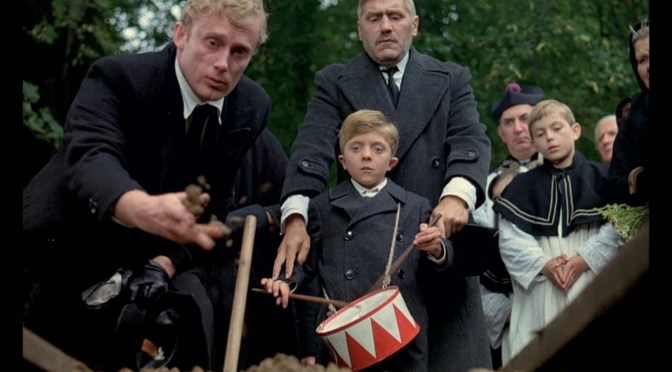
I’d never seen this film before and am so glad I did because it now in my top twenty best films I have EVER witnessed. It is a tour-de-force of writing, directing, acting, design, narration, humour, drama, sound and imagination. Based on Gunter Grass’ exceptional novel The Tin Drum – directed by Volker Schlondorff – it is set in the realistic backdrop of post-World War 1 Germany, and during World War 2, before veering into magical realism and surrealism to present a giddy allegorical tale of some wonder.

The comical opening contains a prologue which sets the ambiguous tone of humour and darkness.  It establishes the ancestry of our leading character Oskar Matzerath (amazing David Bennent) and clearly echoes and influences current filmmakers such as Paul Thomas Anderson, the Coens and Wes Anderson with its’ curious oddity. From there on Oskar himself enters the world and while initially reluctant he is forced into life and what a life that is!

Born with the mind of an adult, at the age of three, Oskar decides that he will NOT grow up for as long as he chooses. Anyone who crosses him is subject to a visceral scream which is loud enough to shatter glass. In addition, Oskar also smashes a tin drum incessantly revealing a psychotic pathology which disregards the pain and suffering of those around him. My reading is that Oskar is representative of the rise of fascism and Hitler in these difficult socio-political times for Germany. This idea is further supported by the fact his mother has two men chasing her affection; a gruff German grocer, Alfred, and gentler Polish man, Jan; and either could be Oskar’s father. These are divisive and confusing times for Germany, and a child, especially one who is as precocious, strange and violent as Oskar.

The meat of the film is continual conflict, death and dark situations. The scenes on the beach with eels being captured using a dead horse’s head is full of symbolism and a black humour I will never forget.  More conflict for Oskar ensues as he rejects all authority including religion.  When his mother dies, seemingly from overwhelming guilt, and his friend, a Jewish toymaker, commits suicide following Nazi oppression, Oskar’s life is further stained by death. Latterly, the film enters a stage where – while he is still physically a three-year-old – he hits puberty and become sexually active. The explicit sex scenes involving Maria, a sixteen year old shop girl, are disturbing and unforgettable and this leads to further conflict with Oskar’s father who eventually marries Maria.  Anger and jealousy provokes Oskar so much he literally runs off with the circus and becomes part of a troupe that entertains German soldiers during the war. It is not long though before further tragedy strikes and his strange romance with dwarf singer Roswitha, ends suddenly with her demise.


The Tin Drum is intense, visceral and brave filmmaking. While it uses history as a backbone, its’ muscle, skin and clothes are eccentricity, allegory and insanity. It was one of the most financially successful German films of the era and won the 1979 Oscar for Best Foreign Film. I guess I missed it because it is rarely shown on television, no doubt due to the controversial sex scenes involving 11 year-old Bennent. Overall, it is one of the most original stories I have seen on screen and the child actor who played Oskar was a revelation. I have rarely been so horrified, moved and made to laugh as much as I have by a recent cinema visit. I would heartily recommend this film to anyone serious about making films and those who demand intensity in their cinema viewing.