Tag Archives: Ireland

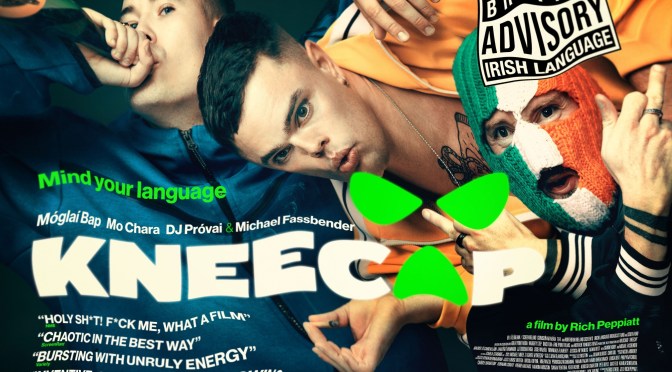
Amazon Prime Film Review: Kneecap (2024) – Irish rap rebels substitute words-for-bombs in riotous youth-in-revolt triumph!

Amazon Prime Film Review: Kneecap (2024)

Directed by Rich Peppiatt

Screenplay by Rich Peppiatt

Story by Rich Peppiatt, Liam Óg Ó hAnnaidh, Naoise Ó Cairealláin, JJ Ó Dochartaigh

Produced by Jack Tarling and Trevor Birney

Main cast: Naoise Ó Cairealláin, Liam Óg Ó hAnnaidh, JJ Ó Dochartaigh, Josie Walker, Fionnuala Flaherty, Jessica Reynolds, Adam Best, Simone Kirby, Michael Fassbender, etc.

Cinematography by Ryan Kernaghan

*** MAY CONTAIN SPOILERS ***
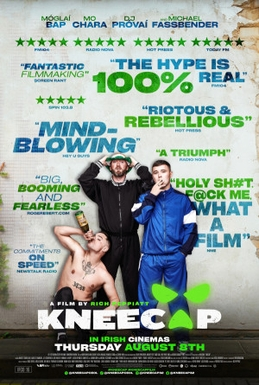


The 2024 film Kneecap is a riotous, politically charged portrait of youth in revolt, channeling the raw energy of punk and hip-hop into a uniquely Irish-language rebellion. Starring the real-life Belfast rap trio—Mo Chara, Móglaí Bap, and DJ Próvaí—as fictionalized versions of themselves, the film blends anarchic humour, biting satire, rites of passage, and cultural defiance to tell the story of how a group of working-class misfits wove their frustrations into musical gold.

Set in post-Troubles West Belfast, the film captures the lingering scars of British occupation and the generational trauma it left behind. Liam (Mo Chara) and Naoise (Móglaí Bap) are introduced as small-time drug dealers navigating poverty, police harassment, and fractured families. Their lives take a turn when JJ Ó Dochartaigh, a disillusioned Irish-language teacher, discovers their lyrical talents and joins them as DJ Próvaí. Together, they form the eponymous group, an Irish-language rap group that weaponizes music as a form of cultural resistance.

The film is unapologetically rebellious, using the Irish language not just as a means of communication but as a symbol of defiance. Arlo (Michael Fassbender), Naoise’s father and a former republican paramilitary, encapsulates this sentiment when he declares, “Every word of Irish spoken is a bullet fired for Irish freedom” . This philosophy permeates the group’s music, which tackles issues like British colonialism, drug culture, and the complexities of identity in a divided society.
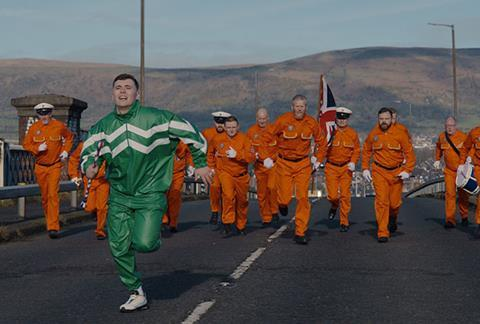


Kneecap (2024), while a bold and electric celebration of youth rebellion arguably overstretches itself emotionally by attempting to cover too many themes at once. In its ambition to be both a political statement and a coming-of-age tale, a musical odyssey and a generational cry for recognition, the film occasionally dilutes its emotional impact. As the film juggles a multitude of weighty themes: the trauma of post-Troubles Northern Ireland, the fight for Irish-language preservation, the drug culture plaguing working-class communities, the fractured nature of family life, absent fathers and mothers, and the burden of political legacy. Add to this the rise of a rap group in an unexpected cultural context, and the film becomes a whirlwind of ideas competing for attention. The result is a film that sometimes feels like it’s racing to say everything at once, rather than letting its most resonant emotional threads breathe.

Nonetheless, director and co-writer, Rich Peppiatt, displays strong visual flair evoking the urban vibrancy of Trainspotting (1996) and underdog musical joy of The Commitments (1991). It helps that the film is often fucking hilarious. Plus, I realise it’s a raw reflection of their life choices, I could take or leave the perpetual scenes of gratuitous drug-taking. At the same time, the film doesn’t shy away from the gritty realities of its setting. It portrays the trio’s clashes with radical republican groups, their run-ins with the police, and the family and romantic struggles that come with their newfound fame.

Amidst the chaos, Kneecap (2024) maintains a sense of humour and humanity, offering a nuanced look at the power of art to challenge the status quo and inspire change. In essence, Kneecap is a ballsy and risk-taking celebration of rebellion, a testament to the enduring power of language and music as tools of resistance, and a vivid portrayal of youth challenging the remnants of a colonial past and a country attempting to find peace and identity after centuries of conflict.

Mark: 8.5 out of 11


BFI PLAYER FILM REVIEWS: THE BEASTS (2022) and THE QUIET GIRL (2022)

BFI PLAYER FILM REVIEWS: THE BEASTS (2022) and THE QUIET GIRL (2022)

I watched DUNE: Part II (2024) at the cinema but was not drawn to write a review of that masterly sci-fi-behemoth and technical marvel, such was the life-draining and utterly emotionless lack of reaction on my behalf. Instead, for my latest reviews I have chosen lower budget films, in comparison, which offer compelling characters and drama which made me feel and think something.


THE BEASTS (2022)

Directed by: Rodrigo Sorogoyen

Written by: Isabel Peña and Rodrigo Sorogoyen

Main Cast: Denis Ménochet, Marina Foïs, Luis Zahera, Diego Anido,
Marie Colomb
etc.

Multiple Goya award-winning drama The Beasts (2022) is an intelligent and muscular drama that reminded me of the equally compelling Jean de Florette (1987) and Only the Animals (2019). The latter also starred the sizable talent that is Denis Ménochet. Here he inhabits the character of former teacher, Antoine Denis, who along with his wife, Olga (Marina Foïs) have taken to renovating properties and farming eco-vegetables in the area of Galicia, Spain.

Honest and hardworking the Denis’ are unfortunately considered outsiders and a threat to the locals, notably the brutish Anta brothers, led by the menacing Xan (Luis Zahera). The conflict is exacerbated as Xan blames them for losing his family money when the Denis’ blocked the sale of land to a wind energy company. Luis Zahera provides a formidable performance as the intimidating bully who begins by poisoning their water before moving onto even more vile and threatening acts.

The theme of city academics versus rural folk is explored with intensity, at times evoking Sam Peckinpah’s more exploitational film, Straw Dogs (1971). But rather than containing an explosive and violent ending, The Beasts (2022) delivers a more slow-burn, riveting and moving denouement. Superbly directed, filmed, and acted throughout, this is a fine work of cinema, only let down for me, by a final act which could not deliver on the highline suspense and tension established in the first two.

Mark: 8.5 out of 11


THE QUIET GIRL / An Cailín Ciúin (2022)

Directed by Colm Bairéad

Screenplay by Colm Bairéad – Based on Foster
by Claire Keegan

Produced by Cleona Ní Chrualaoí

Main cast: Carrie Crowley, Andrew Bennett, Catherine Clinch, Michael Patric, Kate Nic Chonaonaigh etc.

Not only is this 1980’s set Gaelic drama about a quiet girl, it is very much a quiet film that is quietly devastating in mood and emotion. Centred around nine-year old, Cait (Catherine Clinch), she is a neglected outsider, and one of many siblings to a pregnant-again mother and horrible father. Worried about being able to cope, her mum “fosters” Cait to distant cousins, Eibhlín (Carrie Crowley) and Sean Kinsella while she is in the latter stages of pregnancy. Thus begins a meditative forming of a heartfelt relationship between the girl and the Kinsellas.

Initially the film’s narrative unfolds very slowly, being light on pace and exposition, but deft in mood and feeling. There is a certain poetry in the lighting and framing against the beautiful countryside landscapes. The Kinsellas and Cait, while reserved on the outside, are hiding strong emotions and even more powerful secrets. Colm Bairéad’s confident screenplay slowly reveals certain enigmas, but still plays his story cards close to his chest. Yet, the warmth of the leading characters and the interpretive dramatic subtext expertly pulls you into their lives, rather than distance you from them.

The Quiet Girl (2022) broke box office records for the opening weekend of an Irish-language film and became the highest-grossing Irish-language film of all time. Further, it received 11 nominations at the 18th Irish Film & Television Awards (IFTAs) in March 2022, and won in seven categories. It’s no surprise given the quality of the writing, photography, acting and direction that the film has achieved such accolades. Indeed, Catherine Clinch as Cait is a phenomenon. By the end I defy anyone not to be moved by the heart wrenching final scenes, as the film ultimately proves less is most certainly more.

Mark: 9 out of 11


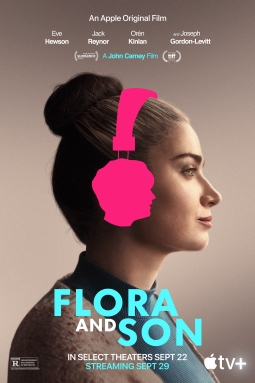
APPLE TV FILM REVIEW : FLORA AND SON (2023)

APPLE TV FILM REVIEW: FLORA AND SON (2023)

Directed by John Carney

Written by John Carney

Produced by: Anthony Bregman, John Carney, Peter Cron, Rebecca O’Flanagan and Robert Walpole.

Main Cast: Eve Hewson, Jack Reynor, Orén Kinlan and Joseph Gordon-Levitt.

Cinematography: John Conroy

Edited by: Stephen O’Connell


John Carney is a brilliant and honest filmmaker who is attracted to outsiders and people with real emotional turmoil. They tend to be at crossroads in their lives and are struggling with their dreams and relationships. He also loves musicians, flaws and all. In Begin Again (2013), a washed-up musical executive, portrayed by Mark Ruffalo, meets unhappy singer-songwriter, Keira Knightley and their first-world romance is played out to bittersweet consequences. Similarly, in Sing Street (2016), a troubled teenager comes of age through his 1980’s pop band and bittersweet romance with a rebellious and equally-troubled schoolgirl. Notice a pattern? Well, this style of music, gritty city backdrops and salty romances were established in Carney’s breakout hit, Once (2007) and are continued in his current underdog musical comedy, Flora and Son (2023).

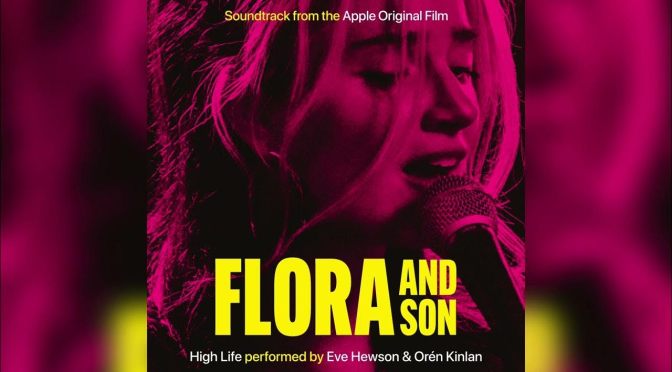
Flora and Son (2023), believe it or not, is set in Dublin and centres around a single mum, Flora and her delinquent teenage son, Max (Oren Kinlan). Eve Hewson is the foul-mouthed-council-estate-joker, who uses anger and black humour to hide her feelings of insecurity and loss. A mourning for the loss of youth having brought up a child virtually single-handed. Her relationship with Max’s father, Ian (Jack Reynor) is fractured to say the least and they spit sarcastic barbs at each other as shared custodians of disaffected Max. While leaving her cleaning job at a middle-class household, Flora finds a battered guitar in a skip. Attempting to bond with Max, by giving him the guitar, Flora finds herself shunned. She then opens another bottle of wine, picks up the guitar and gives it a crack herself.

Taking online guitar lessons from charming and chilled American musician, Jeff (Joseph Gordon-Levitt), Flora initially flirts but then knuckles down to learn the plucking instrument. The stakes aren’t particularly high here, but the feelgood acoustic numbers from Carney and co-composer, Gary Clark, certainly breeze along nicely and breath gold onto the screen. Max’s white-rap-Irish-hip-hop tracks are pretty good too and the video he and Flora make is really funny. Thus, you get the theme again from Carney that music helps to connect and heal and provide salvation to the most troubled of human situations. Overall, Flora and Son (2023), is a slight but enjoyable film with enough earthy humour, strumming harmony and kicking beats to please most.

Mark: 7.5 out of 11


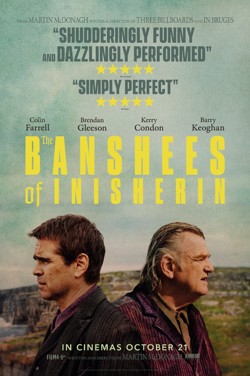
CINEMA REVIEW: THE BANSHEES OF INISHERIN (2022)

CINEMA REVIEW: THE BANSHEES OF INISHERIN (2022)

Written and Directed by Martin McDonagh

Produced by: Graham Broadbent, Peter Czernin & Martin McDonagh

Main Cast: Colin Farrell, Brendan Gleeson, Kerry Condon, Barry Keoghan, etc.

Cinematography: Ben Davis

Edited by: Mikkel E. G. Nielsen

Music by: Carter Burwell

*** MAY CONTAIN SPOILERS ***


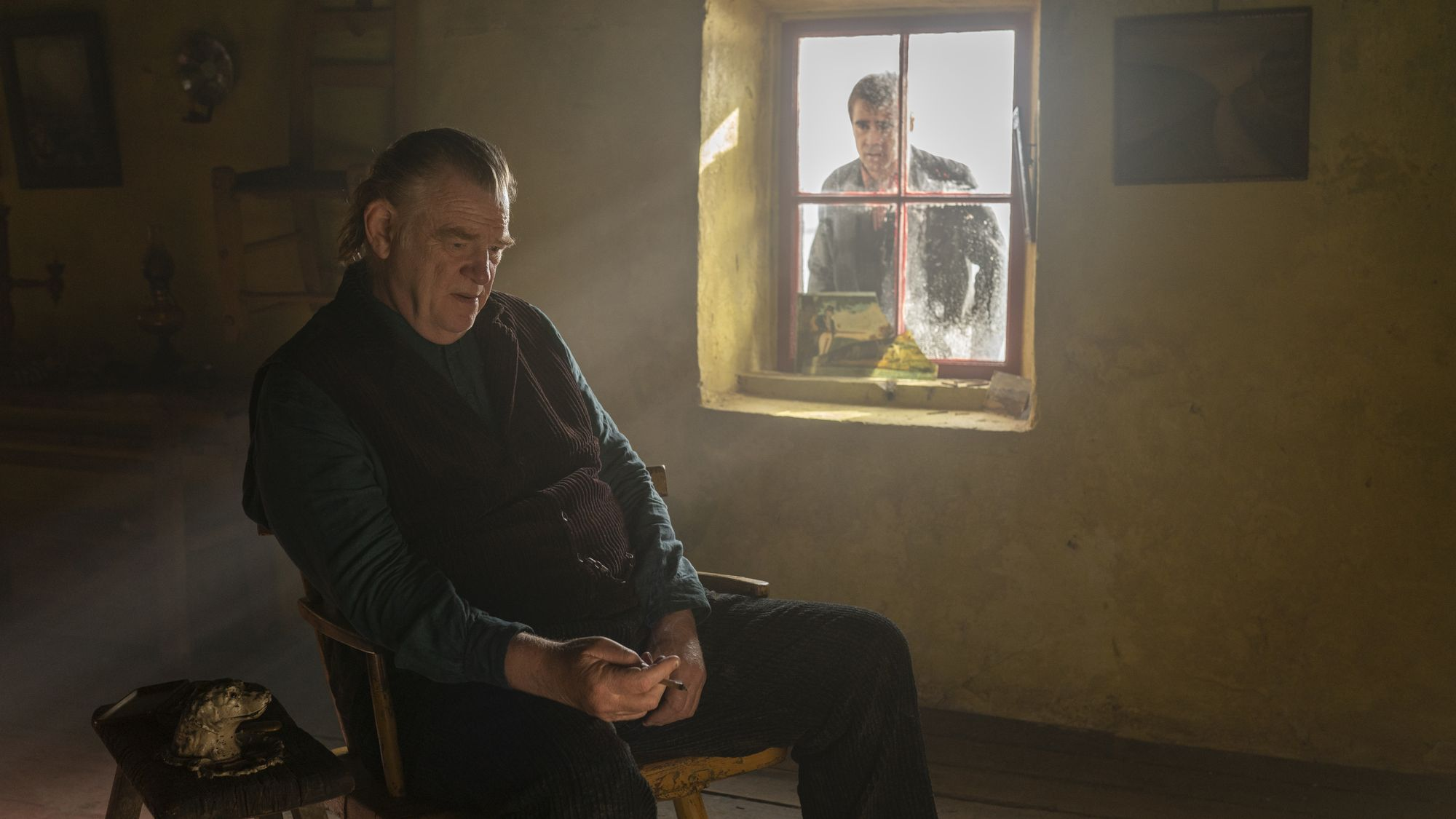
The Banshees of Inisherin (2022) is Martin McDonagh’s latest cinematic masterpiece. Not only is it one of the best films of the year he has, as with Three Billboards Outside Ebbing, Missouri (2017), constructed one of the most formidable screenplays of many a year. As a playwright McDonagh has won many awards for his works. His debut film, In Bruges (2008), was a deceptively simple story of two hitmen on the run which, with rich thematic power, became a darkly hilarious existential cult classic. His follow-up Seven Psychopaths (2012), a heady mix of criminals versus writers in a meta-fictional Hollywood-based narrative was brilliantly written and acted, if slightly lacking thematic clarity. Like Three Billboards Outside Ebbing, Missouri (2017), The Banshees of Inisherin (2022) is a highly emotional human drama which contains intelligent allegory, incredible characterization, and cracking dialogue.

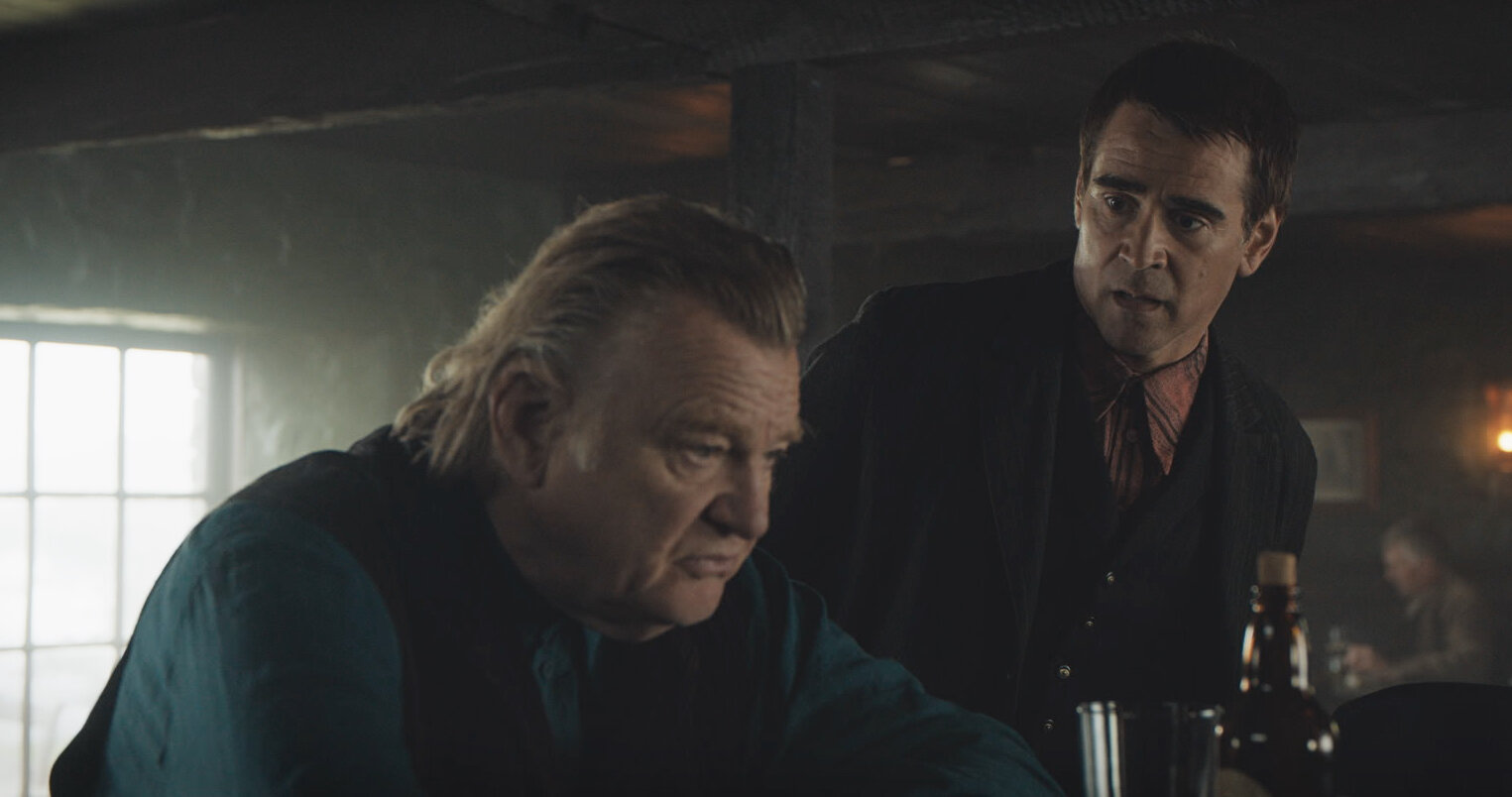
Set in 1923 on an island off of Southern Ireland called aptly Inisherin, the film opens by focussing on genial everyman farmer, Pádraic Súilleabháin (Colin Farrell) and his daily routine. After tending to his animals, he usually calls for his friend, Colm Doherty (Brendan Gleeson) to go to the island pub, the J.J. Devine or Jonjo’s. In England there is an idiom called, “sending someone to Coventry.” This means to ignore or ostracize an individual or individuals. So, basically Colm chooses to do this to his long-standing friend, Pádraic. This shunning completely bemuses Pádraic and despite Colm’s pleading for Pádraic to respect his wishes, he continually seeks an answer to his former friend’s decision.


After this intriguing premise is established, what follows is a tremendously original, darkly funny and emotionally penetrating succession of scenes. The exchanges between the two characters begins as bickering but then descends into some seriously disturbing acts of recrimination. Attempting to make them see sense are various eccentric characters on the island who provide many witty and absurd exchanges that McDonagh specialises in. Further, Pádraic’s sister Siobhán (Kerry Condon) is almost the one voice of reason as the feud escalates. As she tries to diffuse the conflict, even Barry Keoghan’s young idiot, Dominic Kearney, the initial comic relief in the film, attempts to make these two men see sense.

Visually, The Banshees of Inisherin (2022), is incredibly rich. The territory displays gorgeously photographed shots of the rocks, the sea, the stone roads and the lush green countryside. But while there is a sense of expanse and freedom initially, the feeling of isolation pervades. As the story continues the characters feel more and more segregated by the sea and their own or other’s decisions. None more so than Farrell’s Pádraic. A simple man who just wants to do his work and get drunk with his friend, he finds he is sequestered by Colm’s desire to self-isolate and concentrate on his music. Here, Farrell and Gleeson give tremendous character work. Farrell especially has rarely been better as Pádraic’s attitude turns initially from shock to bitterness over the journey of the narrative.


A film director’s job is for me about making key creative choices. Martin McDonagh makes brilliant choices while working from his own exceptional script. I loved everything about The Banshees of Inisherin (2022). The look, the performances, the pacing, the locations and Carter Burwell’s phenomenal score are absolutely first class. I haven’t even mentioned Barry Keoghan’s memorable supporting turn. He surely is one of the most naturally gifted actors of his generation. Not to forget other striking characters in the ensemble such as the creepy, Mrs McCormick (Sheila Flitton), an old harridan who acts as a portent for death on the island.

Martin McDonagh expertly combines a superb ear for dialogue, a psychologically absorbing analysis of the human condition with elements from Waiting For Godot and Channel Four situation comedy, Father Ted. Above all else, The Banshees of Inisherin (2022) is a darkly, spectacular cinematic experience which works on many levels. On one level it is about the isolation of island life and its inhabitants. On another it’s about the death of a friendship. While on yet another level it is about the analogous absurdity of civil war and how conflict can start for the merest of reasons. While the best cinema is certainly about showing and not telling, McDonagh proves again that dialogue-driven films can produce cinematic theatre, comedy and tragedy of the highest order.

Mark: 10 out of 11


FILMS THAT GOT AWAY #9 – ONCE (2007)

FILMS THAT GOT AWAY #9 – ONCE (2007)

Written and directed by: John Carney

Produced by: Martina Niland

Cast: Glenn Hansard, Marketa Irglova

Original songs by: Glenn Hansard, Marketa Irglova and Interference.

Cinematography: Tim Fleming


**** MAY CONTAIN SPOILERS ****


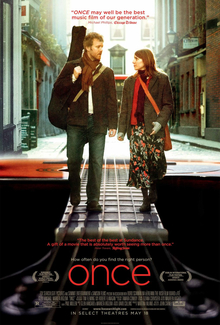
I am not sure why I missed this film first time around, however, it’s most likely due to prior prejudices against musical or music-based films. Yet, since I married in 2016, I have began to watch and enjoy more musicals. This is mainly due to my wife being a massive fan of musical cinema and theatre. While it’s still not necessarily my favourite genre, every now and then an utter gem of a musical will emerge. John Carney’s beautifully moving love story between a hoover repair guy and a flower-selling girl, Once (2007), is certainly one of those.

John Carney is an honest filmmaker who is attracted to outsiders and people with real emotional turmoil. They tend to be at crossroads in their lives and are struggling either with their dreams or their relationships. He also loves musicians, flaws and all. In Begin Again (2013), a washed-up musical executive, portrayed by Mark Ruffalo, meets unhappy singer-songwriter, Keira Knightley and their first-world romance is played out to bittersweet consequences. Similarly, in Sing Street (2016), a troubled teenager comes of age through his 1980’s pop band and bittersweet romance with a rebellious and equally-troubled schoolgirl. Notice a pattern? Well, this style of music, gritty city backdrops and salty romances were established in Carney’s breakout hit, Once (2007).

Made for a ridiculously low budget of around $150,000, this ultra-realistic musical contains songs that burst with love and pain from the characters of Guy (Glenn Hansard) and Girl (Marketa Irglova). The two meet and connect, but this is no conventional romance as they both have powerful emotional histories between them. It’s the beautiful music and their authentic dialogue exchanges which drive the story. Hansard’s singing and guitar playing are so powerful and moving. Their duet in the music shop of the song, Falling Slowly is a tour-de-force. I was not surprised when I saw it had won the Oscar for best original film. Overall, Once (2007) is a surprisingly brilliant no-budget feature, shot on the streets of Dublin, which deservedly became a big hit.

Mark: 9 out of 11


ALL 4 TV REVIEW – DERRY GIRLS (2018 – 2019) – SEASONS 1 & 2

ALL 4 TV REVIEW – DERRY GIRLS (2018 – 2019) – SEASONS 1 & 2

Created and written by: Lisa McGee

Directed by: Michael Lennox

Cast: Saoirse-Monica Jackson, Louisa Harland, Jamie-Lee O’Donnell, Dylan Llewellyn, Nicola Coughlan, Tara Lynne O’Neill, Siobhan McSweeney, Tommy Tiernan, Ian McElhinney, Kathy Keira Clarke etc.

Original Network: CHANNEL 4 – (Available on ALL 4 and Netflix)

**MAY CONTAIN SPOILERS**


There have been many dramas over the years on the stage and screen about the “Troubles” in Ireland. For decades, civil war had divided the Catholic and Protestant people of Ireland, precipitated by the English occupation of Northern Ireland. Many lives were lost in the fighting and the tragedies. It unsurprisingly drew attention from writers, artists and dramatists. Recently though Lisa McGee created and wrote a comedy called Derry Girls, which was also set during this era; and very funny it is too.

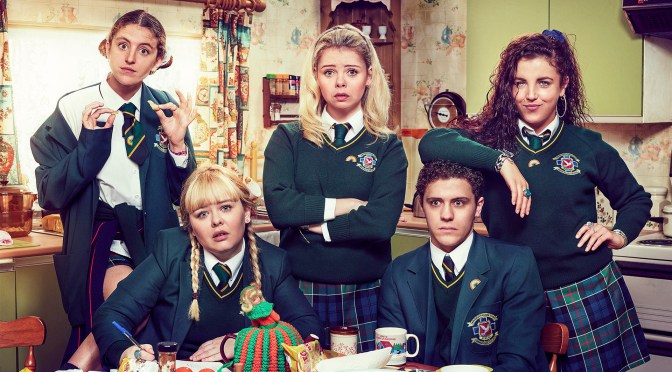
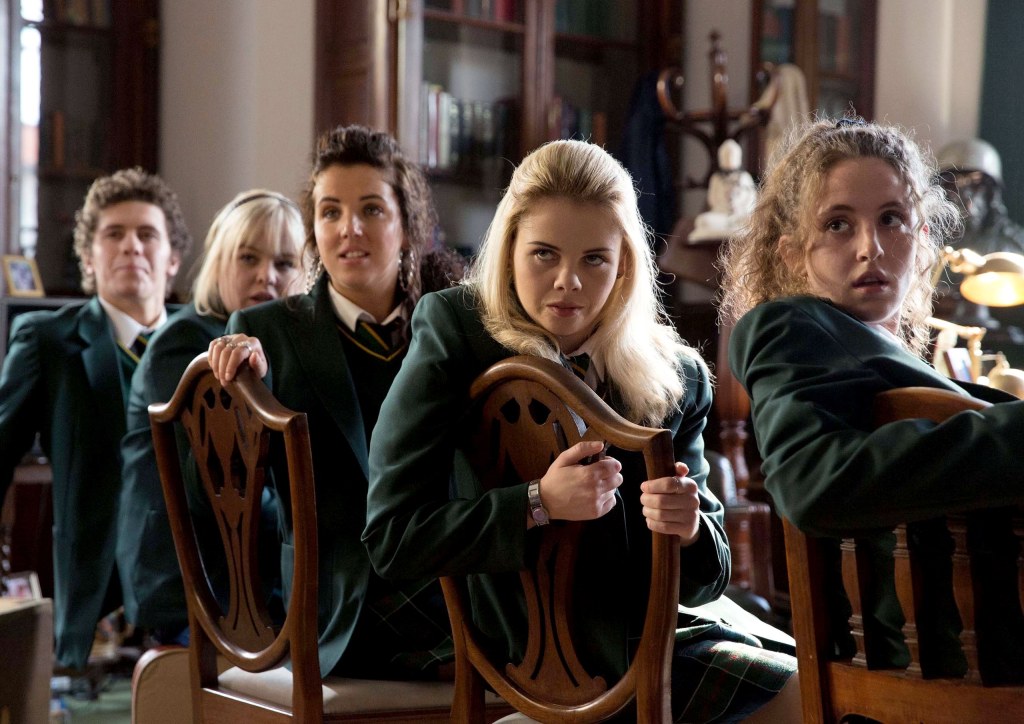
Set in Derry (also known as Londonderry) in the 1990’s, Derry Girls introduces us to four teenage girls, their families and friends during these difficult times. The main characters are: the vocal and passionate Erin (Saoirse-Monica-Jackson); the voice of reason Clare (Nicola Coughlan), often crude, anti-authoritarian, Michelle (Jamie-Lee O’Donnell); and detached eccentric Orla (Louise Harland). Joining them is James (Dylan Llewellyn), an English kid who has to join the girls’ school for fear of what the Irish boys may do.


As well as the British army’s occupation of Derry and the divide between Protestants and Catholics providing a backdrop to the girls’ everyday lives, they also manage to find themselves in loads of other trouble too. Episodes centred around: family squabbles, romance, sex, music, drugs, school projects, religious artefacts and holidays create a relatable familiarity to many episodes. The events and energy evoking the girls’ school days reminded me especially of another Channel Four hit comedy, The Inbetweeners.

While the performances by our lead protagonists are very good, scenes are often stolen by the older supporting cast. Siobhan McSweeney as the deadpan and jaded Sister Michael is really funny. As is one of my favourite stand-up comedians, Tommy Tiernan. His downtrodden Dad tries to keep the peace, but often finds himself at the butt of abuse from Ian McElhinney’s contemptuous remarks. Nonetheless, the humour is always good-natured and not nasty, especially toward faith or authority figures.

Overall, Derry Girls is a fast-paced and very funny situation comedy. It’s well written, acted and directed comedy, with loads of fun and eccentric characters to enjoy. While not overtly political in its representation of the “Troubles”, it uses that situation intelligently as part of the narrative and wider social context. Above all else, however, it shows through many fine comedic episodes, that despite the ongoing divide within the country, humans will strive to overcome adversity through friendship, family, community and humour.

Mark: 8.5 out of 11