Based on High and Low (1963 film) by Akira Kurosawa, Hideo Oguni, Ryūzō Kikushima, Eijirō Hisaita, and King’s Ransom (1959 novel) by Ed McBain.
Produced by Todd Black and Jason Michael Berman
Main cast: Denzel Washington, Jeffrey Wright, Ilfenesh Hadera, ASAP Rocky, John Douglas Thompson , Dean Winters, LaChanze, Aubrey Joseph, etc.
Cinematography by Matthew Libatique
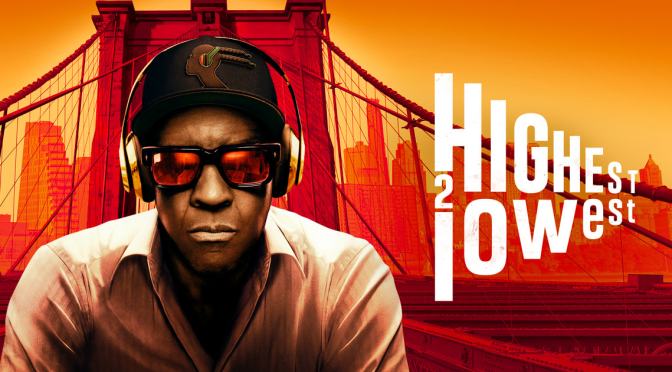
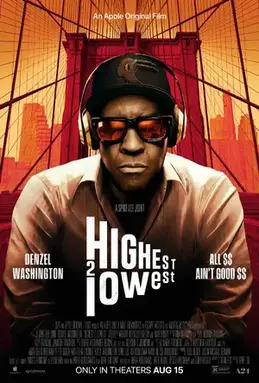
Spike Lee’s Highest 2 Lowest(2025) is a kinetic, vividly modern reimagining of Akira Kurosawa’s High and Low (1963), transplanting the Japanese master’s class-conscious thriller into the bustling, chaotic pulse of contemporary New York City. As expected from Lee, the film bursts with visual flair and political verve — the camera rarely rests, and the city itself becomes a character, glowing with heat, colour, and tension. The streets hum with energy, from glassy penthouses to subway platforms, creating a dynamic canvas on which the moral dilemmas unfold.
Denzel Washington, as usual, delivers a commanding performance as David King, a renowned independent producer and record label owner, torn between his conscience and his ambition when the kidnapping of his son occurs. Washington captures both the quiet torment and moral exhaustion of a man staring down the gulf between his privilege and his humanity. Jeffrey Wright, offers great support as his friend and chauffeur. The narrative navigates class and corporate tensions, bringing a soulful intelligence to every scene, grounding the film’s intensity with empathy and authority.
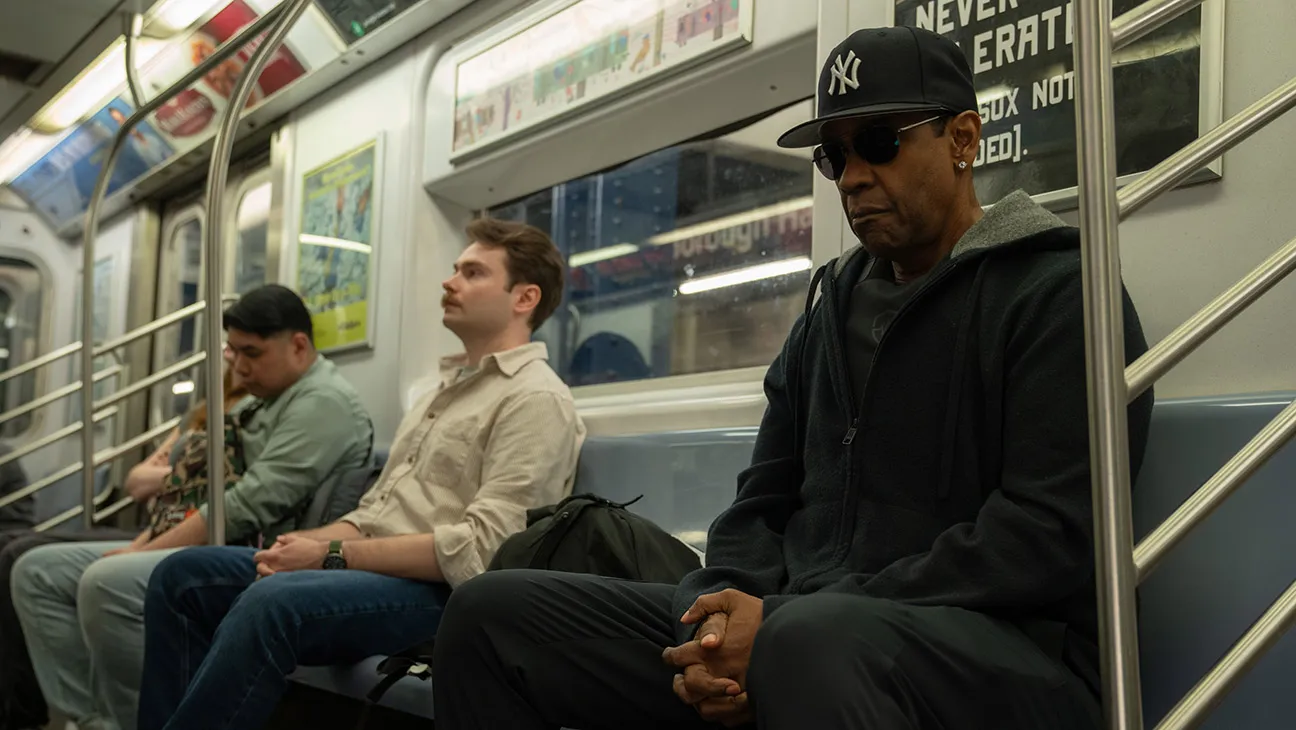
The film moves at a thrilling pace, carried by a propulsive soundtrack that fuses hip-hop, jazz, and gospel with Lee’s trademark flair for musical storytelling. Nowhere is this energy more palpable than in the ransom handover sequence — a masterclass in direction and editing — cutting feverishly across New York’s boroughs and metro trains, while the Puerto Rican Day Parade swells in a euphoric, near-operatic crescendo. It’s a breathtaking montage that exemplifies Lee’s command of rhythm, geography, and social texture. It proves to be Highest 2 Lowest(2025)’s biggest high.
Where Highest 2 Lowest(2025) falters is in the handling of its central moral crisis, which in turns undermines the all-to-rapid ending too. Indeed, it seemed to be missing a betrayal twist for me. The decision David King must make — the film’s spiritual core — arrives and resolves too swiftly around the midpoint, leaving the second half conflict, after the exhilarating Puerto Rican Day Parade, more focused on wrapping up loose ends quickly than psychological reckoning. It’s a missed opportunity for the deeper character study that Kurosawa’s original sustained so brilliantly.
Still, as an adaptation, Lee’s film is an entertaining piece of work — bold, stylish, and alive with the contradictions of the modern city. While Kurosawa’sHigh and Low(1963) remains the more compelling exploration of social class and moral responsibility, Highest 2 Lowest(2025) finds its own voice: vibrant, urgent, and unmistakably Spike Lee.
Produced by Wes Anderson, Steven Rales, Jeremy Dawson, John Peet
Cinematography by Bruno Delbonnel
Main cast: Benicio del Toro, Mia Threapleton, Michael Cera, Riz Ahmed, Tom Hanks, Bryan Cranston, Mathieu Amalric, Richard Ayoade, Jeffrey Wright, Scarlett Johansson, Benedict Cumberbatch, Rupert Friend, Hope Davis, etc.
Reviewing films for me is a form of study—a way to sharpen one’s eye, expand one’s perspective, and gain insight into the craft of filmmaking. It’s a dialogue between the film and the viewer, where curiosity, analysis, and empathy fuel a deeper appreciation for the storytelling process. Yet, Wes Anderson’s films often feel unreviewable in the traditional sense because they exist entirely within their own meticulously crafted universe—one governed by its own visual grammar, emotional tone, and narrative rhythm. His work defies conventional cinematic benchmarks not because it fails to meet them, but because it invents new ones.
His films are stylized to the point of abstraction: symmetrical compositions, pastel palettes, theatrical performances, deadpan dialogue, and storybook framing devices. These are not aesthetic flourishes added to conventional storytelling—they are the storytelling. Every element is calibrated to serve a singular artistic vision that prioritizes mood, irony, and emotional restraint in a way that often bypasses mainstream emotional cues. As a result, trying to evaluate Anderson’s films on the basis of relatability or realism can feel like trying to critique a painting for not being a photograph. You either enter his world and accept its rules, or you don’t.
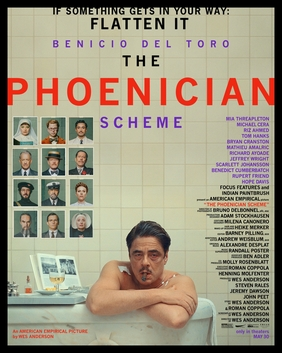
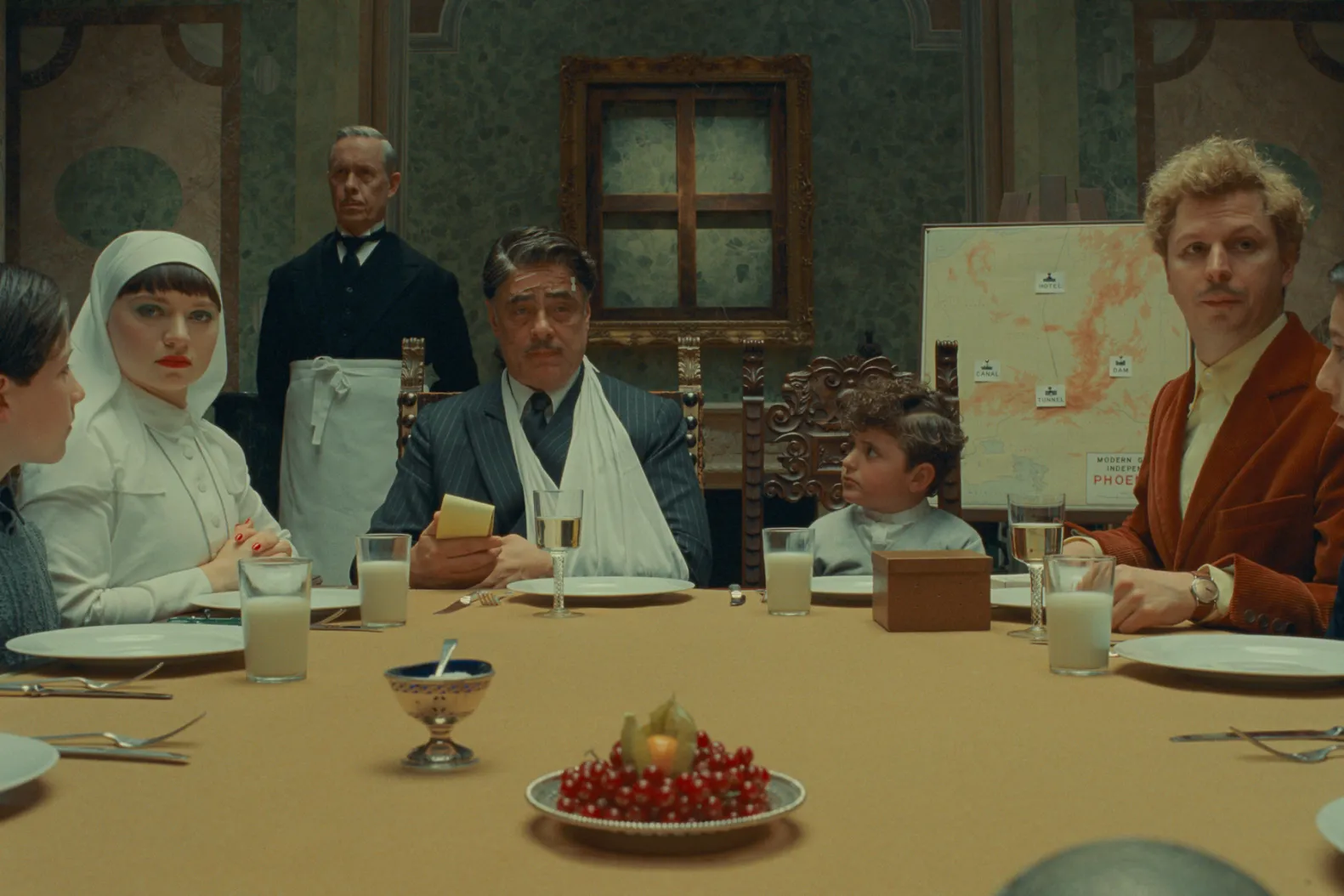
The Phoenician Scheme (2025) is a whimsically convoluted tale of betrayal, bureaucracy, and buried emotion, anchored by a surprisingly tender pairing: Benicio Del Toro and Mia Threapleton as an estranged father and daughter navigating a pastel-hued world of espionage, assassination attempts and eccentricity. Del Toro brings his signature quiet intensity—filtered through Anderson’s signature deadpan—as Anatole “Zsa-Zsa” Korda, a controversial businessman seeking backing from an array of peculiar business types. Threapleton, in a breakout performance, plays Sister Liesl, a guarded young nun.
As always, Anderson’s aesthetic is immaculately controlled—every frame a still life, every line delivered with just-so detachment. But where the plot sometimes meanders through its own labyrinth of quirk, the film’s emotional core remains grounded in Del Toro and Threapleton’s quiet push-and-pull: a relationship built on misread intentions, half-kept promises, and a strange kind of inherited stoicism. Michael Cera is on splendid form too as Bjørn Lund, a Norwegian entomologist, tutor, and Korda’s administrative assistant.
Overall, The Phoenician Scheme (2025) is best enjoyed as a moving art installation and while thematically strong in terms of the father-daughter-reconciliation theme, doesn’t reach the narrative heights of Anderson’s best work. It’s a visually charming and emotionally sincere entry—proof that even in a world of plane crashes, quirky business deals, weird relatives, religious fervour, eccentric guerrillas, the arc of connection between a father and daughter can still feel radical.
Mark: 7.5 out of 11
Wes Anderson’s Top 11 films ranked in order of MY favourites!
Produced by Ben LeClair, Nikos Karamigios, Cord Jefferson, Jermaine Johnson, etc.
Main Cast: Jeffrey Wright, Tracee Ellis Ross, John Ortiz, Erika Alexander, Leslie Uggams, Adam Brody, Issa Rae, Sterling K. Brown, etc.
Cinematography by Cristina Dunlap
** MAY CONTAIN SPOILERS **
Cord Jefferson is a writer and director who, at first consideration, was unknown to me. However, a couple of clicks on the mouse and I soon realised he had worked on a couple of TV shows I’d really appreciated. One is the inventive and hilarious comedy The Good Place (2017-2019)and the other the riotous HBO graphic novel adaptation, Watchmen (2019). Jefferson was part of the writing team on both shows which delivered plots and events that consistently twisted and delivered fresh laughs and surreal situations which made you think.
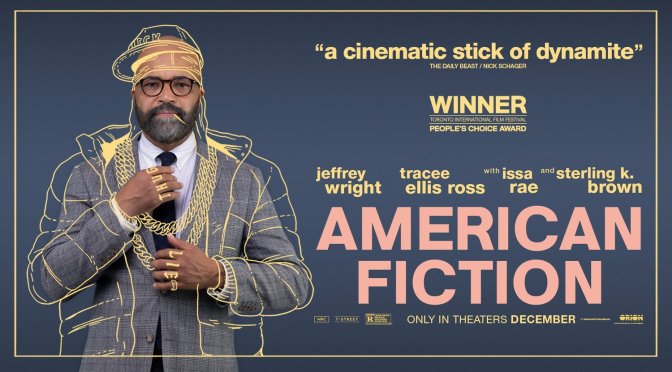
Watchmen (2019) was especially an uber-stylish smorgasbord, splashed with crazy characters, witty hard-boiled dialogue, wild science fiction twists, lashings of violence, pockets of substance, cinematic visuals, high class production values and a cast to die for. For his debut feature, Jefferson has adapted the novel Erasure by Percival Everett into American Fiction(2023). It’s stylistically less chaotic feature film when compared to Watchmen (2019), however, it is intelligent and biting satire combining family drama, meta-literary analysis and social commentary.
The lead character, Thelonious “Monk” Ellison, is portrayed with imperious class by Jeffrey Wright. Now, I believe Cillian Murphy may get many awards (he already has the BAFTA for best actor in a leading role) for his work in Oppenheimer (2023), but Wright’s performance and character work here is beyond brilliant. It is such a nuanced and funny rendition that Wright deserves all the plaudits he could be denied. His Monk Ellison is an intellectual and academic writer whose books unfortunately do not sell very well. His agent, Arthur (John Ortiz) says publishers believe his work is “not black enough.” It’s a shocking statement delivered in understated fashion, to which Monk responds that he does not “recognise race.”
Monk is a writer who is trying to bring thoughtful, however niche, product into a culture which seems to prefer stereotyped visions of black characters, who are either addicts, or criminals or downtrodden, beaten by the police and prejudiced within society. No one is denying that people of colour are certainly prejudiced against and this needs to cease, but American Fiction(2023) seems to highlight that the books it is satirizing are cashing in and monetizing suffering and perpetuating discrimination, exacerbating the situation as opposed to resolving it.
Facing financial issues due to a lack of sales and his mother (Leslie Uggams) needing nursing care due to creeping dementia, Monk writes a parody of urban fiction called, ‘My Pafology’. Initially done as a joke he is horrified when his agent tells him it has become a literary sensation with publishers fighting for the write to release it. Here Wright’s reaction acting is a joy as Monk is caught between needing the money but at the same risking his artistic reputation from creating a “fake” book and authorial alter ego named, Stagg R. Leigh.
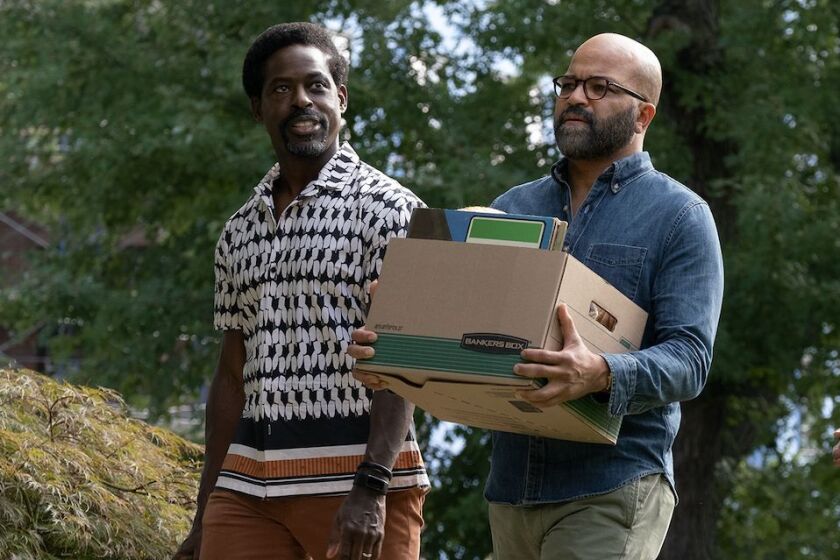
Jefferson and Wright combine to delicious effect in satirising intellectual and middle-class people’s reaction to what they consider to be authentic “street” culture. As Monk strives to escape the monster he has created he finds the hole getting bigger and bigger as his novel begins to get interest from Hollywood and esteemed literary awards. Yet, this is not a simple comedy as Jefferson also profiles Monk’s personal, family and romantic struggles making him a true three dimensional character to root and identify with. Wright, as I say is phenomenal but the supporting cast including Issa Rae and Sterling K. Brown stand out too. Brown almost steals a few scenes from Wright. American Fiction(2023) arguably ends with a series of meta-jokes too far, which draw away from Monk’s highly emotional journey, but overall, Jefferson demonstrates he is an original cinematic voice to watch out for in the future.
Produced by: Wes Anderson, Steven Rales, Jeremy Dawson
Ensemble Cast: Jason Schwartzman, Scarlett Johansson, Tom Hanks, Jeffrey Wright, Tilda Swinton, Bryan Cranston, Edward Norton, Adrien Brody, Liev Schreiber, Hope Davis, Stephen Park, Rupert Friend, Maya Hawke, Steve Carell, Matt Dillon, Hong Chau, Willem Dafoe etc.
Cinematography Robert Yeoman
*** MAY CONTAIN SPOILERS ***
Wes Anderson is a phenomenal filmmaker with an imaginative set of style and narrative conceits. Everyone one of his releases is a rich tapestry containing memorable ensemble casts, adjacent framing, effervescent use of colour, geographical pertinence, intellectual humour and subjects situated in the far-left field of genre cinema. Yet, I do not enjoy ALL his films. Often, they veer too far into eccentric pretentiousness. Indeed, I found The French Dispatch (2021), frustrating and, other than the tremendous story set in the asylum with the mad artist (Benicio Del Toro), disconnected with it overall. While it was another admirable work of cinema, I did not enjoy it as a paying punter.
Asteroid City (2023), however, is a film I enjoyed greatly. The famous actors immersed within the ensemble, the cinematic artifice, the clever meta-narrative structure, symmetrical shot composition, beautiful use of colour, offbeat characters, specific era and geographical setting, imaginative props and costume design, and witty humour are all present as per Anderson’s impressive body of work. But Asteroid City (2023) had a larger emotional heart than his recent films, and is my favourite since the superb, The Grand Budapest Hotel (2014).
A heady combination of genres, one could describe, Asteroid City (2023), as a hyper-sci-fi-Western-retro-romantic-futuristic-comedy and study of grief set in 1950s, America. Despite filming taking place in Spain. Anyway, Anderson establishes the characters through the structure of a film within a play. Bryan Cranston’s narrator introduces us to the various middle-class, working class, military and scientific personalities who become trapped in the town of Asteroid City by a series of unlikely but hilarious misfortunes. Throughout the chapter inter-titles the scenes return us to our narrator as Anderson cleverly comments on the process of creating a story while delivering the narrative events.
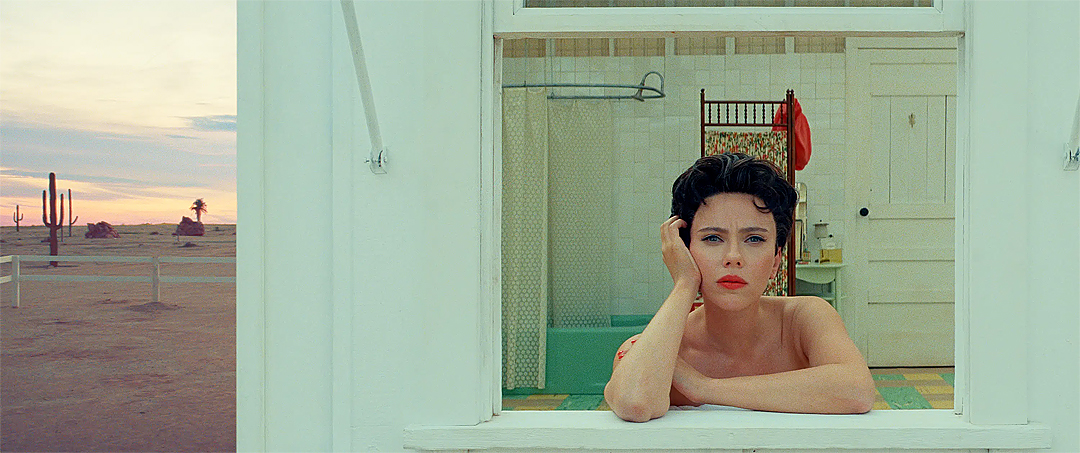
Anderson delves into familiar themes of grief via the story of war photographer, Augie Steenbeck (Jason Schwartzmann) and his four kids, one of whom is a genius, Woodrow (Jake Ryan). He is there for a Junior Stargazer competition amidst the setting of the gigantic meteorite bunker. Again, the theme of prodigious children is mined for great humour and intellectual wit by Anderson. The futuristic inventions created by the children are especially fantastic. The plot strand of the science geniuses being exploited by the military and corporate sharks is deftly done. Yet, the main emotional heft is delivered within Augie and Hollywood actress, Midge Palmer’s (Scarlett Johansson) budding relationship. Johansson is especially compelling in the role, anchoring the film in welcome pathos, amidst the flurry of idiosyncratic absurdities Anderson throws at us. His framing of Augie and Midge between the their chalets is aesthetically memorable, visually augmenting their growing human connection.
Asteroid City (2023) proves once again Wes Anderson is one of the most original filmmakers of this generation. Will he gain some more converts to his particular set of cinematic bag of tricks? Who knows. What I do know is that I was completely immersed in the colour, movement, pace, humour, aesthetics, performances and themes with the film. I must say though, while it was necessary, the “Area 51” style — and I don’t want to give it away — absurd plot-turn halfway through was not my favourite aspect of the piece. But I realise it was narratively integral to the story. The meta-framing also seemed to get in the way at times of the main action effecting the occupants of Asteroid City. But these are minor gripes at a thoroughly artistic, beautifully immersive, and technically impressive cinematic achievement.
Cast: Robert Pattinson, Zoë Kravitz, Paul Dano, Jeffrey Wright, John Turturro, Peter Sarsgaard, Andy Serkis, Colin Farrell, etc.
Cinematography: Greig Fraser
*** MAY CONTAIN SPOILERS ***
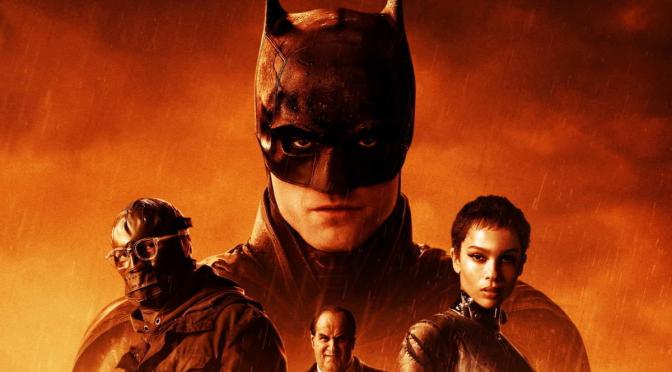
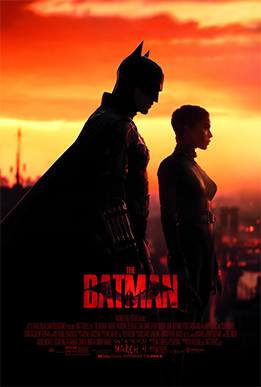
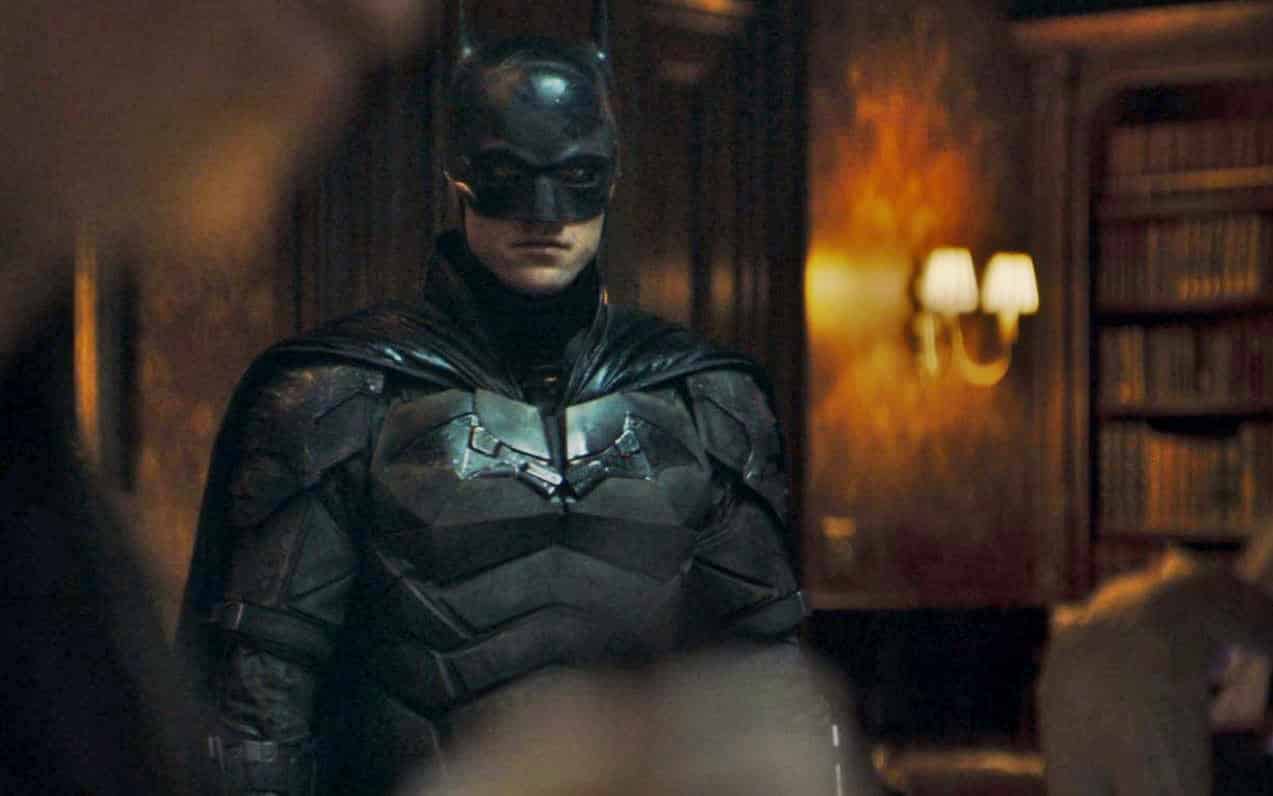
Three hours of darkness, shadows, fireworks, distorted sound and vision, dull emo-bluster, explosions, fist-to-fist combat, choppy chases, limp dialogue, sparse suspense, blaring sirens, mumbling delivery and humdrum sexual chemistry combine to an incredibly stylish yet boring experience. It may be the biggest box office hit of the year, but The Batman (2022) was interminable filmic disappointment for me. Bruce Wayne/The Batman is a miserable cipher here for the action on show. He is also arguably one of the worst detectives I have witnessed on the screen. Yet, be aware it is NOT the filmmaker’s fault. It is mine. I am a bad cinemagoer.
I am as jaded, and world weary as Robert Pattinson’s noir gumshoe in a costume on screen. Except I have earned it. I have lived through dead-end jobs, despair and disappointment. This film starts by asking us to follow Bruce Wayne’s Caped Crusader into the mean streets of Gotham to battle nefarious gangsters and a crazed, riddle-driven terrorist. But why do we care about him? Christopher Nolan and Christian Bale breathed vibrancy and commitment into the DC comic hero. His trilogy, though not faultless, made us root for the rich kid scared of flying rats. Going on a journey of discovery and finding himself an identity in the process, Bale’s Batman was a three-dimensional hero. Matt Reeves eschews all that with The Batman (2022), presenting familiar characters searching for some semblance of plot and characterisation in the dark.
The story is a breadcrumb plot as Pattinson’s suited vermin plods through scene after scene trying to work out who is killing the corrupt officials of Gotham City. There are fireworks and expertly designed action sequences although many of them are difficult to see amidst the cinematographic murk. Moreover, there isn’t really any empathetic characters here. I love a good cinematic anti-hero, but that requires personality and energy. This Batman has neither of those. Although the screen work of Jeffrey Wright, Paul Dano, John Turturro, Colin Farrell, Andy Serkis and Zoe Kravitz does breathe light and heat into the dull script. Farrell is The Penguin but essentially an Al Capone substitute. His excellent caricature gets buried and almost lost in obsidian and prosthetics.
But as I say, I am to blame. I am a bad superhero cinema person. I am saturated and fatigued by comic book film adaptations and TV shows from Marvel to DC to Vertigo and Image and Icon (yes I know this is Marvel too). I mean the best I can say is The Batman (2022) blasts away the rot that Affleck and Snyder implanted into the Batman franchise. Although that isn’t saying much. Because an obscene $200 million dollars was spent on this hollow vision of a wealthy emo-brat in a dark suit kicking the crap out of shadows. But remember this is my fault. I am old. I am cynical. I applaud Matt Reeves and his talented production team for delivering an impressive visual feast. It’s just a shame that in the bloated running time (15 minutes of that being end credits), they didn’t write any characters worth spending three hours with.
Story by: Neal Purvis, Robert Wade, Cary Joji Fukunaga
Based on: James Bond by Ian Fleming
Produced by Michael G. Wilson, Barbara Broccoli
Cast: Daniel Craig, Rami Malek, Léa Seydoux, Lashana Lynch, Ben Whishaw, Naomie Harris, Jeffrey Wright, Christoph Waltz, Ralph Fiennes, Billy Magnusson, Ana De Armas etc.
Cinematography: Linus Sandgren
Edited by: Elliot Graham, Tom Cross,
Music by: Hans Zimmer
Production companies: Metro-Goldwyn-Mayer, Eon Productions
*** NO MAJOR SPOILERS ***
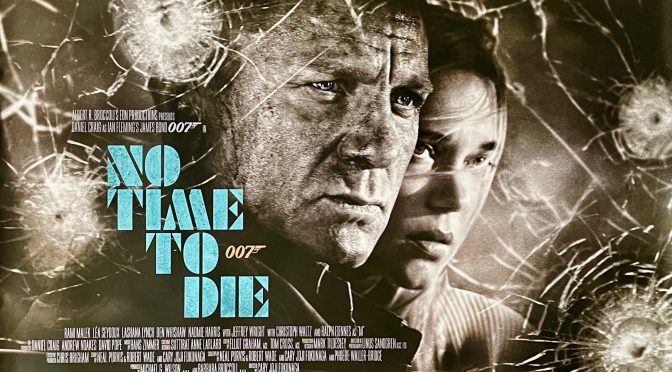
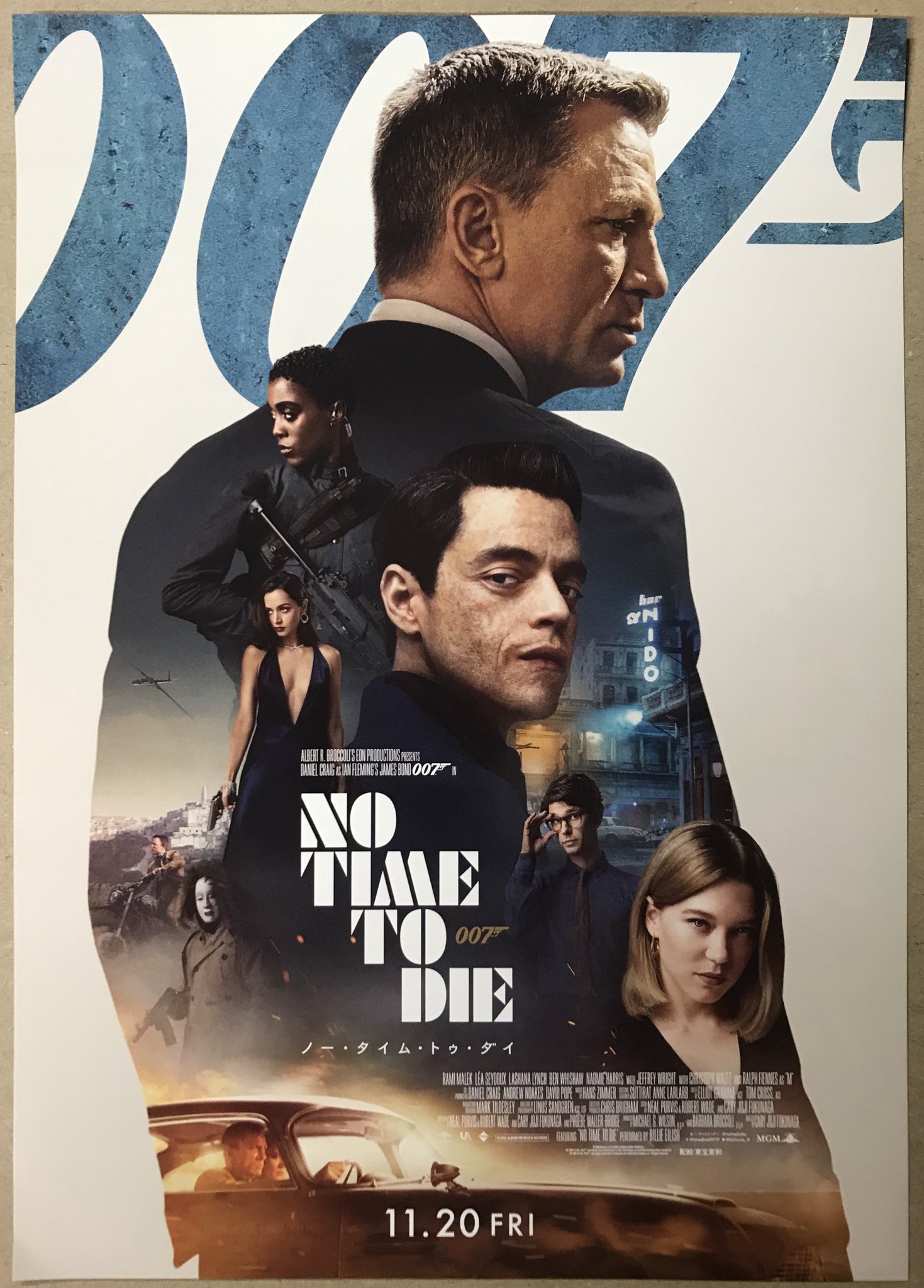
As a Bond swansong, No Time To Die (2021) gives Daniel Craig’s earthy and human characterisation of the famous spy a tremendous finale. Indeed, it was a powerfully entertaining work of cinema, but was it a great Bond film? Not for me. Don’t get me wrong, all the creatives here from the director, art department, cinematographer, location scouts, costume design, scintillating cast, stunt team, production crew, the army of screenwriters and so on, have all worked prodigiously to create a wonderful example of blockbuster genre cinema. But it has many story and legacy issues that stop it from being a memorably pure Bond film in my opinion. However, I am not going to be critical in this review, but rather celebrate what is great about No Time To Die (2021). Thus, it’s time to revel in the fact Fleming’s fictional formula continues providing sensational diversion from everyday existence.
The choice to make No Time To Die (2021) a direct sequel toSpectre (2015), would not have been my preferred route for this narrative. Spectre (2015) is entertaining. It was fine. Was it a good Bond film though? Not particularly. I should qualify this by saying I thought Skyfall (2012) was a cracking film; a fantastic action thriller with fine characterisation and a formidably nasty, yet playful, villain in Javier Bardem. Thematically, it was strong with Bond’s orphan background and relationship with M (other) providing depth and subtext. Skyfall (2012) was also lusciously shot by Roger Deakins with fantastic direction from Sam Mendes. But neither Spectre (2015) or Skyfall (2012) are great Bond espionage adventures like From Russia With Love (1963) or The Living Daylights (1987), or a devastatingly plotted, romantic action adventure like Casino Royale (2006). Skyfall (2012) was an Oedipal soap opera with bells on, as ghosts of the past avenge the present. Spectre (2015) and No Time To Die (2021) continue the theme of vengeful and dysfunctional family ties bringing strife to Bond. But, nowhere near as successfully as Craig’s first outing, Casino Royale (2006). That remains one of the best Bond films ever.
Like Quantum of Solace (2008), No Time To Die (2021) is, as aforementioned a sequel, but the main difference is No Time To Die (2021) is way longer than Quantum of Solace (2008). The pace rarely dips in No Time To Die (2021), but it could certainly have been trimmed in places because at times I felt the screen was stuffed with too many characters and subplots. I must point out I’m aware that Quantum of Solace (2008)is not rated highly in the Bond canon, but I like it. I feel there are some incredibly filmed sequences in it. Notably, the opening car and foot chase, the opera shootout, a spectacular air conflict and the fiery desert lair denouement. While the villain was weak and it failed in terms of narrative, Quantum of Solace (2008)succeeded for me as a fast-paced and exquisite, if choppy, spectacle that tied up the loose ends from the far superior, Casino Royale (2006). Quantum of Solace (2008) infamously had no writers re-working it due to the ongoing strike, No Time To Die (2021), arguably has too many cooks and ingredients occurring simultaneously. Having said that Cary Joji Fukunaga brings a confident energy to the film throughout, connecting the emotions of the script and explosive box of tricks together in a neatly packaged presentation.
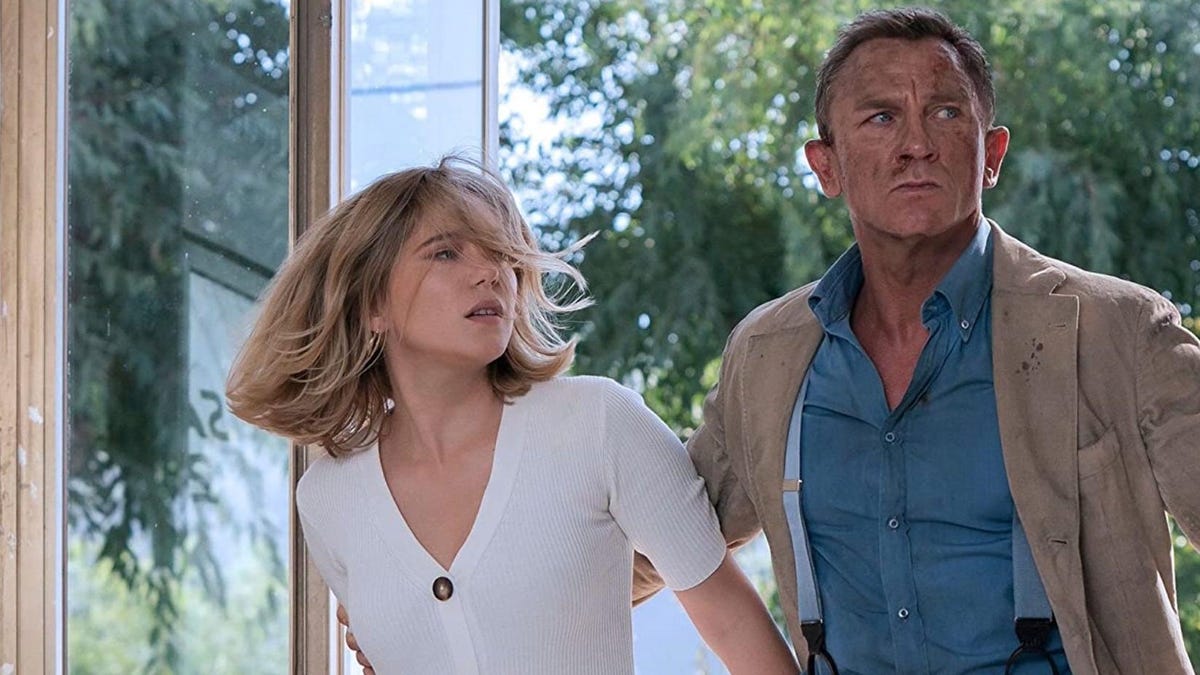
Daniel Craig is phenomenal in No Time To Die (2021). While he is always a strong actor, he has also grown into a bona fide movie star too. Even when going through the motions in Spectre (2015) he was good, but in No Time To Die (2021), he blows the doors off. While he does look too old for the role now, from getting blown up in Italy, to almost drowning in Cuba and facing off against Rami Malek’s malevolent poisoner on an island near Russia, nobody does almost-dying better than Craig. Moreover, as well as the constant threats on his life, crazy new technology that delivers instant death, and a litany of evil henchmen trying to take him down, Bond must contend retirement and having his place usurped at MI6 by the confident Nomi (Lashana Lynch). Having been set-up as a major story player, Nomi and this spy-versus-spy story pivot ultimately peters out for more melodramatic plotlines which I will not divulge. In fact, Nomi’s thunder is ultimately stolen by the CIA agent, Paloma, with Ana De Armas absolute dynamite in the smashing Cuban section of the film.
As with Spectre (2015), where there wasn’t nearly enough of Christoph Waltz, Rami Malek’s villain Safin is not utilised enough. Malek gives a haunting performance in a few creepy scenes, yet I felt cheated. I would have loved more exchanges between him and David Dencik’s eccentrically dangerous scientist. More scenes in the imaginatively designed island lair where all manner of deadly poisons were being concocted would have been brilliant, and further developed Safin’s intriguing backstory and fiendish plotting.
No Time To Die (2021) belongs to Bond and Daniel Craig of course, and they get into some barnstorming scrapes. The opening action involving motorcycle stunts and the iconic Aston Martin blasting the Spectre goons is an early highlight. The Cuban nightclub murders and subsequent gunplay really raise the pulse too. After the explosive boat sequence where Bond has a moving parting of the ways from an old friend, the action arguably becomes more generic and not as memorable. That is, THAT IS, until the unforgettable end set-piece where Craig’s 007 faces an insurmountable set of physical and emotional challenges. Lastly, some might say Daniel Craig goes out on an all time high, and no doubt No Time To Die (2021) is destined to knock the living daylights out of all prior Bond box office records.
Starring: Evan Rachel Wood, Thandie Newton, Jeffrey Wright, James Marsden, Tessa Thompson, Luke Hemsworth, Simon Quarterman, Talulah Riley, Rodrigo Santoro, Ed Harris, Angela Sarafyan, Anthony Hopkins etc.
Created by: Jonathan Nolan and Lisa Joy
Written by: Lisa Joy, Jonathan Nolan, Carly Wray, Dan Dietz, Gina Atwater, Ron Fitzgerald, Robert Patino etc.
Original network: HBO
** MAY CONTAIN SPOILERS HA! HA! **
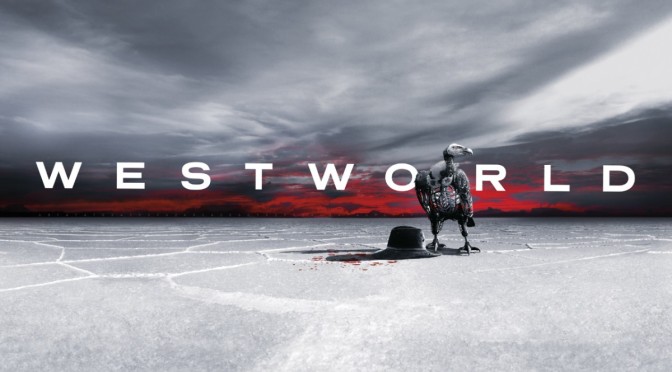
Where does one start when reviewing HBO’s latest season of Westworld? I could start at the beginning by clearly establishing the world, concepts and themes of this review. I could also begin by building in empathy and sympathy via a structured linear approach which would be easy for the reader to follow and create audience enjoyment and emotion via the action and events. Or, I could take the alternative route by starting at the end, drip feed events via fractured timelines; develop a maze like structure full of dead ends and unreliable narrators; only to retroactively switch focus and continuity to confuse you beyond belief. Guess what Westworld’s writers did? They took the latter course and over ten spectacularly beautiful looking episodes — acted, designed and directed with wonderful precision — we ultimately got a legion of stories which did not, for me, make any narrative or emotional sense.
This television show could have been one of the most memorable creations of recent years; up there with Penny Dreadful and Game of Thrones; but alas it is not. With HBO spending a huge amount of money on it you’d have thought that they may have attempted to reign in the writers’ unnecessarily clever-clever approach to structure. Creator Jonathan Nolan has written some wonderful screenplays, Memento (2000) for example, remains one of the best low-budget films ever made; yet, that was within the discipline of a feature length film. Over ten episodes his, and writing partner Lisa Joy’s, choices to create an ever-shifting jigsaw narrative within an Escher painting style, left me with a headache and questioning the very nature of reasoning. I enjoy intelligently structured works, but NOT to the detriment of character empathy and narrative comprehension.
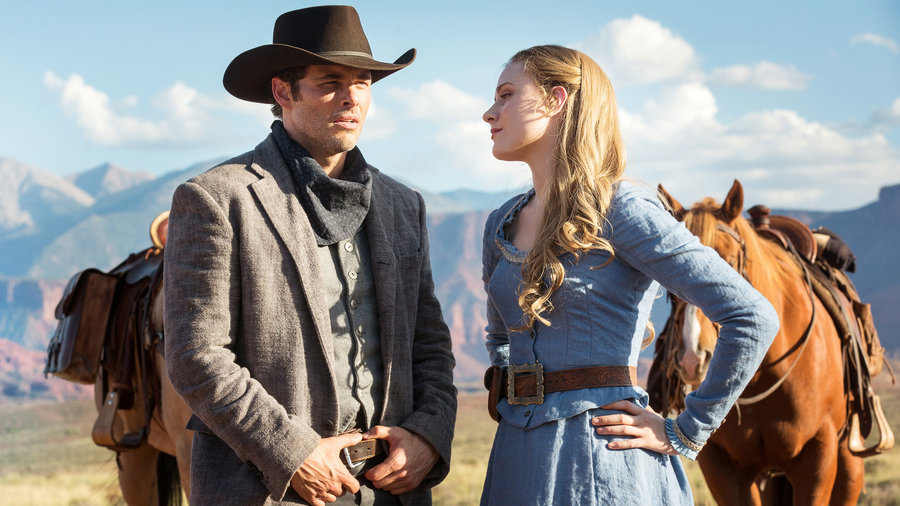
Westworld is a stellar production and has some wonderful ideas and concepts relating to: coding, Artificial Intelligence, robot and human mortality, corporate espionage; android sentience and humanization; plus it challenges values of human versus computerized existence. However, exploration of such themes are very often lost amidst the jumbled and unnecessary complex timelines, which jump back and forward in days and years from scene to scene. It’s a narrative tragedy that the stories of Maeve, Teddy and Bernard, portrayed brilliantly by Thandie Newton, Geoffrey Wright and James Marsden, respectively, are lost at sea in a wave after wave of confusing plot and character turns. Anthony Hopkins was once again excellent as the A: I overlord Robert Ford, while, Evan Rachel Wood brought a deadly coolness and strength to her role of the “death-bringer” Dolores/Wyatt. Furthermore, the violence, action and blood-letting were amazing, reminding one of Sam Peckinpah in the high definition digital age. But for every intriguing story involving the host robots many other strands fell flat, notably Ed Harris’ “Man-in-Black” storyline. While it was good to see the acting brilliance of Harris, and Peter Mullan too, I did not care enough Harris’ character and his refusal to succumb to death became rather grating.
Two years ago I wrote a highly praiseworthy review of Westworld – Season 1, which can be read HERE. Moreover, I even spent a whole week mapping out many of the plot strands and the order with which the show was structured in my article: Westworld: Post-Mapping the Network. That piece was my attempt to gain some sense of the events and order with which they occurred; and can be read HERE. I will not be doing the same for the second season. Unfortunately, I do not believe there is any cultural reward in applying the same endeavour and analysis. There are really too many characters and storylines and the lack of clear exposition does the show no favours.
Overall, the show continues to amaze with its successful merging of Western and Science Fiction locations, costumes, props and hardware. The introduction of Shogun World was also a delicious diversion; however, that location was really filler to the other stories. It’s such a shame though as much of the visual pageantry is lost in a vacuum of confusing storylines and worst of all, by the finale’s end, I just did not care. There are some great episodes of televisual genius in Season 2 but the original concept, by Michael Crichton, of sentient hosts rising up murdering their human slave-masters, is lost in a myriad of temporal turmoil and chronological catastrophe!
HBO’s Westworld was presented, previewed and marketed, like the fantastical flagbearer Game of Thrones before it, as the premium, high-end, star-studded television event of the year. Indeed, in my honest opinion it lived up to the hype and certainly turned out to be one of the shows of the year!
Everything about Westworld screamed cinematic quality! Of course it’s origins spring from Michael Crichton’s classic sci-fi film Westworld (1973) where the robot hosts started killing the rich guests on holiday at an ‘A:I’ driven amusement park. The formula would then be amped up in Jurassic Park (1993) and its sequels, where instead of sentient androids, we had dinosaur clones attacking the staff and guests. This televisual delight developed – by Jonathan Nolan and Lisa Joy – twists and turns that simple, yet ingenious premise, into a whole new machine; utilising the influences of Crichton, Kubrick, Arthur C. Clarke, Rod Serling, Harlan Ellison etc. as well as incorporating a number of their own concepts too.
HBO have pumped $100 million dollars into ten sumptuous looking episodes and the filmmakers took the brilliant decision to shoot on 35mm film. This creative choice gives us exquisite cinematographic vistas of the West while at the same time enhancing the inner sheen of the hi-spec-steam-punk engineering on show underneath the actual “amusement” park itself. Allied to this we get a whole host of A-grade movie and character actors who bring a depth and gravitas to the proceedings.
Leading the stellar cast is Anthony Hopkins as the established overlord Dr Robert Ford. His presence is felt throughout the park and initially staff and hosts seem to answer to him. Hopkins is terrifically understated in his performance but underneath the iceberg surface is an incredibly complex character who, while a technical genius, responds to human beings coldly. He sees them as obstacles to his grand narrative which seems to be written and re-written from episode to episode. While oddly unsympathetic his enigma drives the show, with his character attempting to control the hosts, staff and his environment while writing and rewriting the past and present.
Working for Ford are an army of techs and security personnel responsible for guests and hosts alike. The most honest, it would appear, and one we root for is Bernard portrayed with subtle distinction by Geoffrey Wright. His velvety voice alone is enough to project emotion and meaning within every syllable uttered. Representing the corporate personnel are a fine supporting cast, notably, Sidse Babett Knudsen and Luke Hemsworth.
Similarly, the simulacrum hosts are expertly cast with: Evan Rachel Wood, Thandie Newton, James Marsden, Rodrigo Santoro and Clifton Collins Jnr etc. bringing a glamour, edge and depth of performance to the paranoid androids. Obviously there are visitors to the park and these roles are dominated by the magisterial Ed Harris and younger bucks Jimmi Simpson and Ben Barnes.
Overall, I found the show an incredible science fiction experience. The opening theme is a haunting gift to the ears, while the incredible imagery of the opening credits are a feast for the eyes. Visually and aurally the series was crammed with wondrous sounds and vistas and the soundtrack was fabulous too including dark naked tunes by the likes of: The Cure, Radiohead and Soundgarden. Violence, action, nudity and sexuality are freely on show but this is just skin for the rich narrative and themes which power the twisting story. Indeed, the themes ask us to question everything, like: who is human and who is a host? Should we, the audience, care about a character when they’re a robot? And most importantly: when are the robots going to start killing the guests?
Halfway through though I must admit I was close to discontinuing and shutting down as I was struggling to connect emotionally with the characters. However, I realised this was a cerebral challenge; a puzzle or maze, which – much like Jonathan Nolan and his brother Christopher’s other work including: The Prestige (2006), Memento (2000) and Inception (2010) – I’ll try and solve. I’ll be honest not all of it hung together satisfactorily on first watch, however, on further views each episode’s timelines, narratives, flashbacks, flash-forwards, memories and dreams combined brilliantly, and I soon realised all the pieces were there to successfully put the puzzle together.
With its state-of-the-art effects, incredible design, brilliant actors, brutal violence, complex plots and classic Western genre setting, this postmodern masterpiece transcends genre and the storytelling process itself. Because at its core processing Westworld is about: the nature of narrative and controlling your story: past, present and future. Oh, that and lots of killer robots. So, overall, Westworld is a place I will certainly be coming back to time and time and time again. Some might say the whole Westworld experience was a-MAZE-ing!








 The Cinema Fix presents