Tag Archives: John Carpenter

Cinema Review: The Substance (2024) – A Dark Exploration of Identity

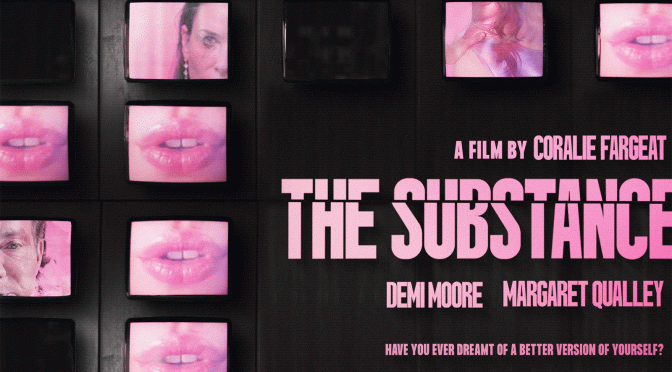
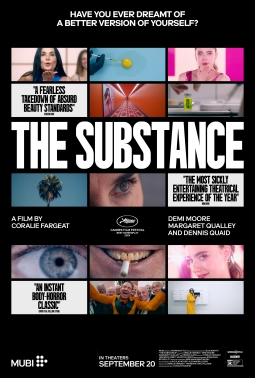
THE SUBSTANCE (2024)

Directed by Coralie Fargeat

Written by Coralie Fargeat

Produced by: Coralie Fargeat, Tim Bevan and Eric Fellner

Main Cast: Demi Moore, Margaret Qualley and Dennis Quaid

Cinematography by Benjamin Kracun

*** MAY CONTAIN SPOILERS ***


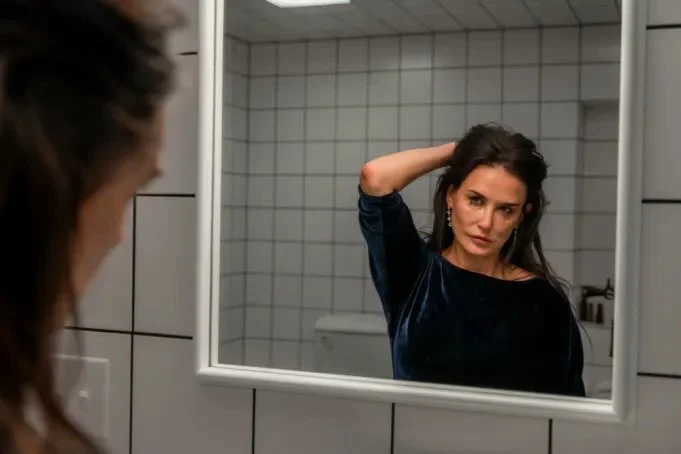
The Substance (2024), directed by Coralie Fargeat, is a visually striking and visceral film that pushes the boundaries of body horror and psychological terror. Fargeat, known for her raw and relentless style in Revenge (2017), once again delivers an unforgettable experience by weaving references to classic literature and horror cinema into a narrative that is at once familiar and entirely original.

Demi Moore portrays a former Hollywood star, Elizabeth Sparkle, now relegated to doing a mildy successful cable TV aerobics show. However, Dennis Quaid’s oily production executive is on the lookout for younger talent. Elizabeth soon finds herself on the media scrapheap. Desperate to regain her youth and career, Elizabeth is drawn to the hypnotic promise of a new product called ‘The Substance.’

Before you can say, “Dorian Gray”, Elizabeth is lured to a strange white room full of lockers and has committed to the process. Similar to Gremlins (1984), there are rules to follow. As she follows the steps and injects the potions, Elizabeth goes through a painful and incredibly impactful transformation process. She literally gives birth to a young and beautiful alter ego called, Sue (Margaret Qualley). Elizabeth and Sue then get seven days each to live their life before they have to swap back. What could go wrong?


The film’s core themes draw heavily from Robert Louis Stevenson’s Dr. Jekyll and Mr. Hyde, exploring duality, identity, and the monstrous potential hidden within human nature. Like Stevenson’s tale of inner conflict, The Substance delves into the consequences of scientific ambition. It investigates moral transgression but with a modern, feminist twist. Fargeat’s use of body horror, particularly in the transformation sequences, echoes the grotesque, unsettling work of David Cronenberg. The nightmarish atmosphere and surreal visuals are reminiscent of David Lynch’s unsettling dream logic. This is notably seen in Eraserhead (1977) and Mulholland Drive (2001).

The film also pays homage to John Carpenter’s The Thing (1982), with its transmogrifying frights, sense of creeping paranoia and rising conflict. But rather than a group of men fighting each other Elizabeth and Sue turn on each other over ownership of their physical existence and Hollywood status. The final act descends into hellish and bloody satire echoing Peter Jackson’s Braindead (1992), with gore galore. Moreover, Stanley Kubrick’s influence is palpable in the film’s meticulous framing, production design and tension-building. The climactic body-morphing scenes, however, most clearly nod to Brian Yuzna’s Society (1989), with its grotesque depictions of class and conformity, fused with Fargeat’s unique vision of female empowerment, revenge and resistance.

The Substance (2024) feels like a bigger budget film in look and style, but you soon realise the minimal number of sets used and a lack of crowd scenes, finds the narrative effectively becoming a two-hander in the middle act by focusing on Sue and Elizabeth’s internal retaliatory vindictiveness. There are some amazing framing, colour design and cinematographic choices as showers become tombs to trap the protagonists. The book-ended Hollywood star montage and returning final shots are imaginative and unforgettable. Got to say that Demi Moore, as an actress taking on a role of an aging and neurotic former star is genius casting. While Qualley delivers a sexually charged and energetic performance, it is Moore who carries the weight of the complex themes as Elizabeth’s journey dives deeper into the stuff of nightmares.

Overall, The Substance (2024) is a postmodern classic and a film that honors its influences while forging its own path. Fargeat uses these references to enrich the narrative, creating a damned ugly and beautiful satire on those seeking narcissistic perfection through unnatural means, ultimately paying the price of those seeking eternal youth and fame.

Mark: 9 out of 11


SIX OF THE BEST #26 – ENNIO MORRICONE (R.I.P 1928-2020)

SIX OF THE BEST #26 – ENNIO MORRICONE – (R.I.P – 1928-2020)

“If you scroll through all the movies I’ve worked on, you can understand how I was a specialist in westerns, love stories, political movies, action thrillers, horror movies, and so on. So, in other words, I’m no specialist, because I’ve done everything. I’m a specialist in music.” Ennio Morricone


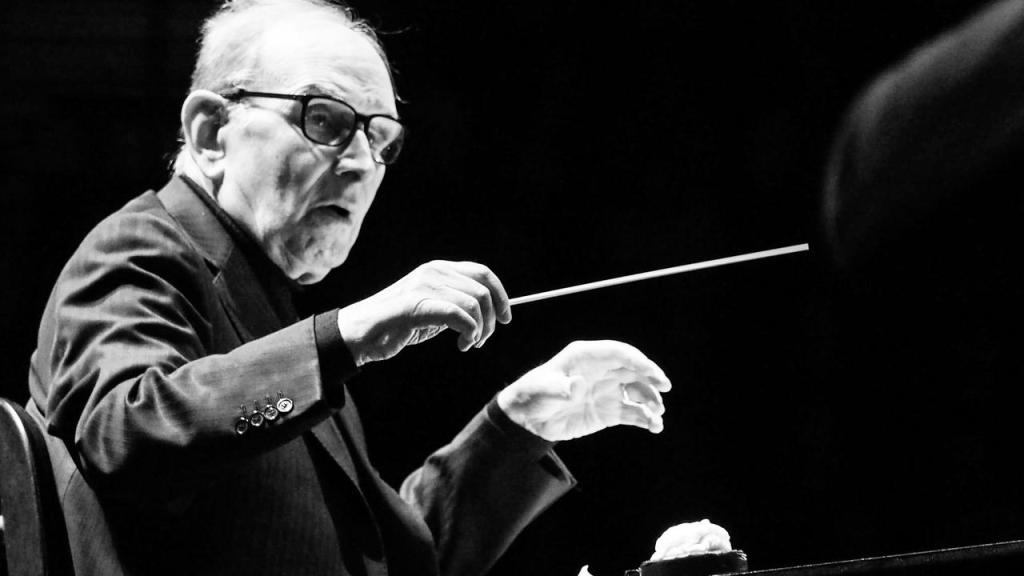
As if 2020 couldn’t get any more dramatic, one of the greatest musical composers and dramatists ever known has passed away. Ennio Morricone, rather incredibly, wrote the scores for over four hundred films and television works. He also managed to write well over one hundred classical pieces. To say Ennio Morricone was a prolific genius is somewhat of an understatement.

Morricone won six BAFTAs, eleven Nastro d’Argento, three Grammy Awards, three Golden Globes, six BAFTAs, ten David di Donatello, two European Film Awards, the Golden Lion Honorary Award and the Polar Music Prize. In 2007, he received the Academy Honorary Award for his outstanding commitment to cinema. Moreover, he was also nominated for a further six Oscars. Lastly, Morricone had to wait until 2016 to receive his only competitive Academy Award for the haunting score to Quentin Tarantino’s The Hateful Eight (2016). For Morricone to receive only one Oscar for musical composition is astounding and proves once again there is no justice in the world.

A meagre blog piece from a London-based hack will never be enough of a tribute to a composer who worked in every cinematic genre and with an incredible array of famous and infamous filmmakers. Notables include: Sergio Leone, Oliver Stone, Warren Beatty, John Carpenter, Quentin Tarantino, Sergio Corbucci, Dario Argento, Duccio Tessari, Sergio Sollima, Henri Verneuil, Bernardo Bertolucci, Mauro Bolognini, Giuliano Montaldo, Roland Joffé, Don Siegel, Mike Nichols, Brian De Palma, Barry Levinson and many more companies including advertisers, singers, recording artists and fashion designers. Morricone even found time to compose the 1978 World Cup theme song.

Thus, as a tribute to one of the greatest cinematic artists I have selected six of Morricone’s best film orchestrations. Although given his brilliance and spectacular output, one could certainly pick many more; even sixty of the best!! Riposa in pace, Ennio, il maestro!


THE GOOD, THE BAD AND THE UGLY (1966)


THE GREAT SILENCE (1968)


ONCE UPON A TIME IN THE WEST (1968)


ONCE UPON A TIME IN AMERICA (1984)


THE MISSION (1986)


THE HATEFUL EIGHT (2016)


FILMS THAT GOT AWAY #4 – HALLOWEEN (2018)

FILMS THAT GOT AWAY #4 – HALLOWEEN (2018)

Directed by: David Gordon Green

Produced by: Malek Akkad, Jason Blum, Bill Block

Written by: Jeff Fradley, Danny McBride, David Gordon Green

Based on characters created by John Carpenter and Debra Hill

Cast: Jamie Lee Curtis, Judy Greer, Andi Matichak, Will Patton, Virginia Gardner etc.

Music by: John Carpenter, Cody Carpenter, Daniel Davies

***MAY CONTAIN SPOILERS***


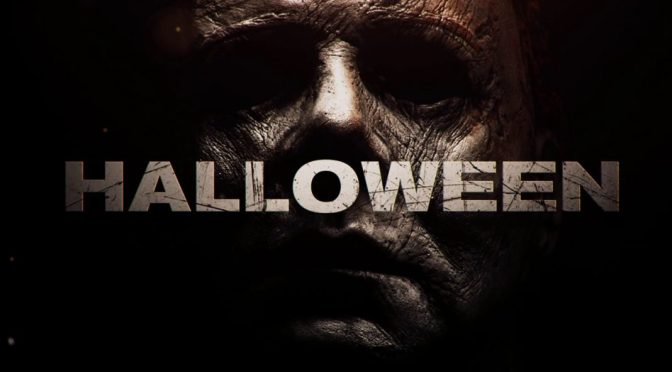
John Carpenter’s Halloween (1978) is a seminal horror film experience. It spawned an army of sequels and sidequels and reboots which darkened the cinemas, mostly failing to get anywhere near Carpenter’s low-budget masterpiece in terms of quality and scares. It also gave birth, along with Black Christmas (1974), to the slasher film genre. Of course Hitchcock’s classic Psycho (1960), could make claim to that too, but following the success of Carpenter’s Halloween (1978), the bloodgates opened. What followed was a deluge of stabbing and slashing copycat killer movies from the late 1970s onwards.

Flash forward to 2018 and with Halloween (2018), we now have the ELEVENTH film in the franchise. Having read some decent reviews I sat down to watch it last night on, aptly enough, Halloween night. My expectations were pretty low, but I was encouraged by the return of Jamie Lee Curtis, plus David Gordon Green has proved himself a very solid filmmaker in the past. Movies like decent stoner comedy, Pineapple Express (2008), and dramas Joe (2013), and Stronger (2017), were very watchable. Least said about Your Highness (2011), the better.


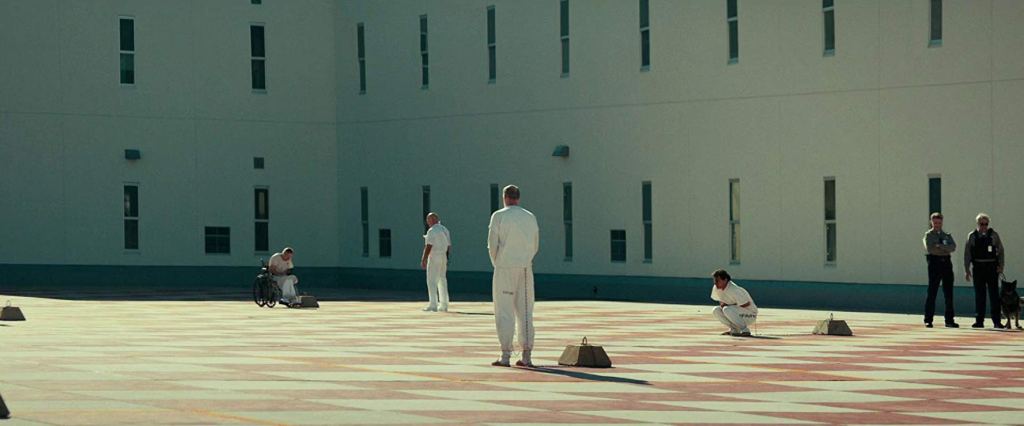
The film opens with an excellent set-piece establishing Michael Myers, some forty years older, in a maximum security mental health institution. Two reporters have come for an interview for their latest true crime podcast. Safe to say Myers isn’t interested in communicating. The editing and imagery and music combine to create a very unsettling experience, so the film starts strongly. We then re-establish Myers’ narrative counterpart, Laurie Strode (Jamie Lee Curtis).

Now, you have to swallow the fact that this is a direct sequel to the original Carpenter classic. None of the other films happened; which essentially works, despite some wonky dialogue and exposition. Thankfully, with Lee Curtis on excellent form as the post-traumatised Strode, we have a flawed but compelling heroine to root for. Strode has been waiting for Myers and preparing with firepower, high security and wits in order to defeat him. Sub-plots involving Strode’s daughter (Judy Greer) and granddaughter (Andi Matichak) are developed, but kind of lose their way as the murderous Myers mayhem begins. Still, at least they tried to write some depth into the screenplay.


After a very strong start the film begins to unravel in the middle. The machinations of the plot to get Myers on the Halloween rampage felt random and illogical in places. An important event occurs off-screen and this impacted my commitment to the story. This isn’t really a criticism as such, because genre conventions and a high death rate need to be met. However, despite some well directed set-pieces, whenever Laurie Strode was off-screen the film lost some emotional power. Having said that, if it is deaths with knives, hammers, cars and crow-bars you want, this film contains that and more.

Overall, I really wanted to enjoy this film more than I did. I think the work of Gordon Green and Curtis is especially good. The script however, suffered during a messy second act, although the final showdown was really well executed (sorry.) With $250 million made at the box office, it goes to show though that the Halloween franchise is alive and kicking and two further sequels are planned. It has some scary moments, some brilliant gore and the iconic music still haunts me to this day. Nonetheless, this reboot doesn’t hold a pumpkin flame to the original. Then again, not many horror films do.

Mark: 6.5 out of 11