Tag Archives: music

Apple TV+ Film Review: Highest 2 Lowest (2025) – a vibrant, musical and pacy, if unnecessary, remake.

Apple TV+ Film Review: Highest 2 Lowest (2025)

Directed by Spike Lee

Screenplay by Alan Fox

Based on High and Low (1963 film) by Akira Kurosawa, Hideo Oguni,
Ryūzō Kikushima, Eijirō Hisaita, and King’s Ransom (1959 novel) by Ed McBain.


Produced by Todd Black and Jason Michael Berman

Main cast: Denzel Washington, Jeffrey Wright, Ilfenesh Hadera, ASAP Rocky, John Douglas Thompson , Dean Winters, LaChanze, Aubrey Joseph, etc.

Cinematography by Matthew Libatique


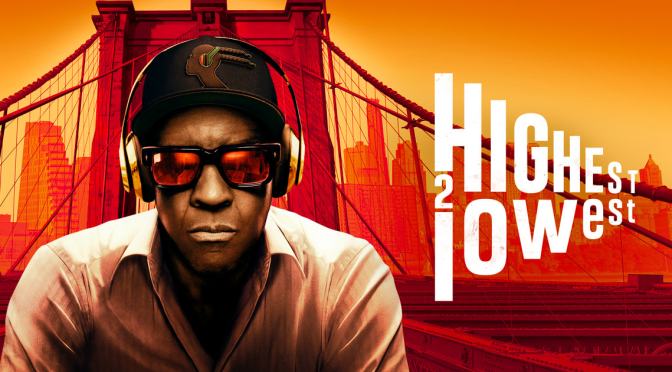
Spike Lee’s Highest 2 Lowest (2025) is a kinetic, vividly modern reimagining of Akira Kurosawa’s High and Low (1963), transplanting the Japanese master’s class-conscious thriller into the bustling, chaotic pulse of contemporary New York City. As expected from Lee, the film bursts with visual flair and political verve — the camera rarely rests, and the city itself becomes a character, glowing with heat, colour, and tension. The streets hum with energy, from glassy penthouses to subway platforms, creating a dynamic canvas on which the moral dilemmas unfold.

Denzel Washington, as usual, delivers a commanding performance as David King, a renowned independent producer and record label owner, torn between his conscience and his ambition when the kidnapping of his son occurs. Washington captures both the quiet torment and moral exhaustion of a man staring down the gulf between his privilege and his humanity. Jeffrey Wright, offers great support as his friend and chauffeur. The narrative navigates class and corporate tensions, bringing a soulful intelligence to every scene, grounding the film’s intensity with empathy and authority.
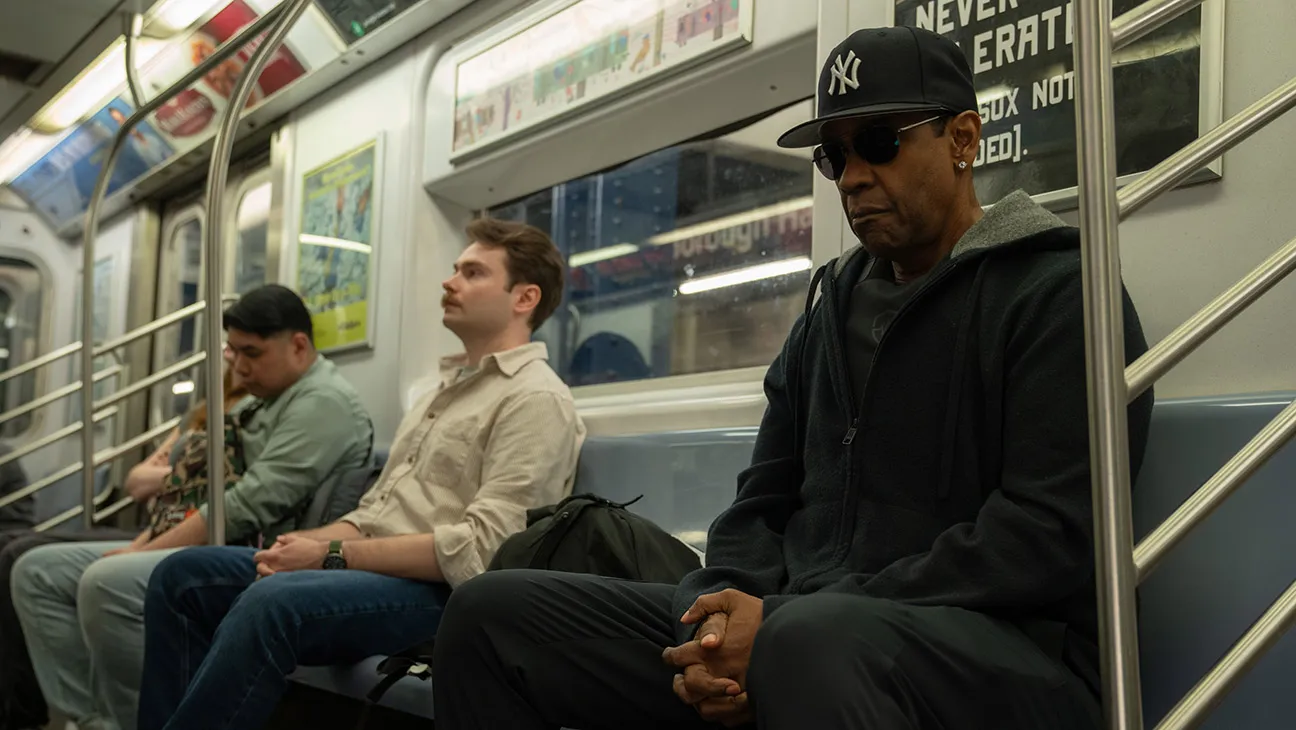


The film moves at a thrilling pace, carried by a propulsive soundtrack that fuses hip-hop, jazz, and gospel with Lee’s trademark flair for musical storytelling. Nowhere is this energy more palpable than in the ransom handover sequence — a masterclass in direction and editing — cutting feverishly across New York’s boroughs and metro trains, while the Puerto Rican Day Parade swells in a euphoric, near-operatic crescendo. It’s a breathtaking montage that exemplifies Lee’s command of rhythm, geography, and social texture. It proves to be Highest 2 Lowest (2025)’s biggest high.

Where Highest 2 Lowest (2025) falters is in the handling of its central moral crisis, which in turns undermines the all-to-rapid ending too. Indeed, it seemed to be missing a betrayal twist for me. The decision David King must make — the film’s spiritual core — arrives and resolves too swiftly around the midpoint, leaving the second half conflict, after the exhilarating Puerto Rican Day Parade, more focused on wrapping up loose ends quickly than psychological reckoning. It’s a missed opportunity for the deeper character study that Kurosawa’s original sustained so brilliantly.

Still, as an adaptation, Lee’s film is an entertaining piece of work — bold, stylish, and alive with the contradictions of the modern city. While Kurosawa’s High and Low (1963) remains the more compelling exploration of social class and moral responsibility, Highest 2 Lowest (2025) finds its own voice: vibrant, urgent, and unmistakably Spike Lee.

Mark: 7 out of 11


Amazon Prime Film Review: Sing Sing (2023) – displays the redemptive power of art and performance!

Amazon Prime Film Review: Sing Sing (2023)

Directed by Greg Kwedar

Screenplay by Clint Bentley & Greg Kwedar

Story by Clint Bentley, Greg Kwedar, Clarence Maclin & John “Divine G” Whitfield

Based on “The Sing Sing Follies” by John H. Richardson and Breakin’ the Mummy’s Code by Brent Buell

Produced by Clint Bentley, Greg Kwedar & Monique Walton

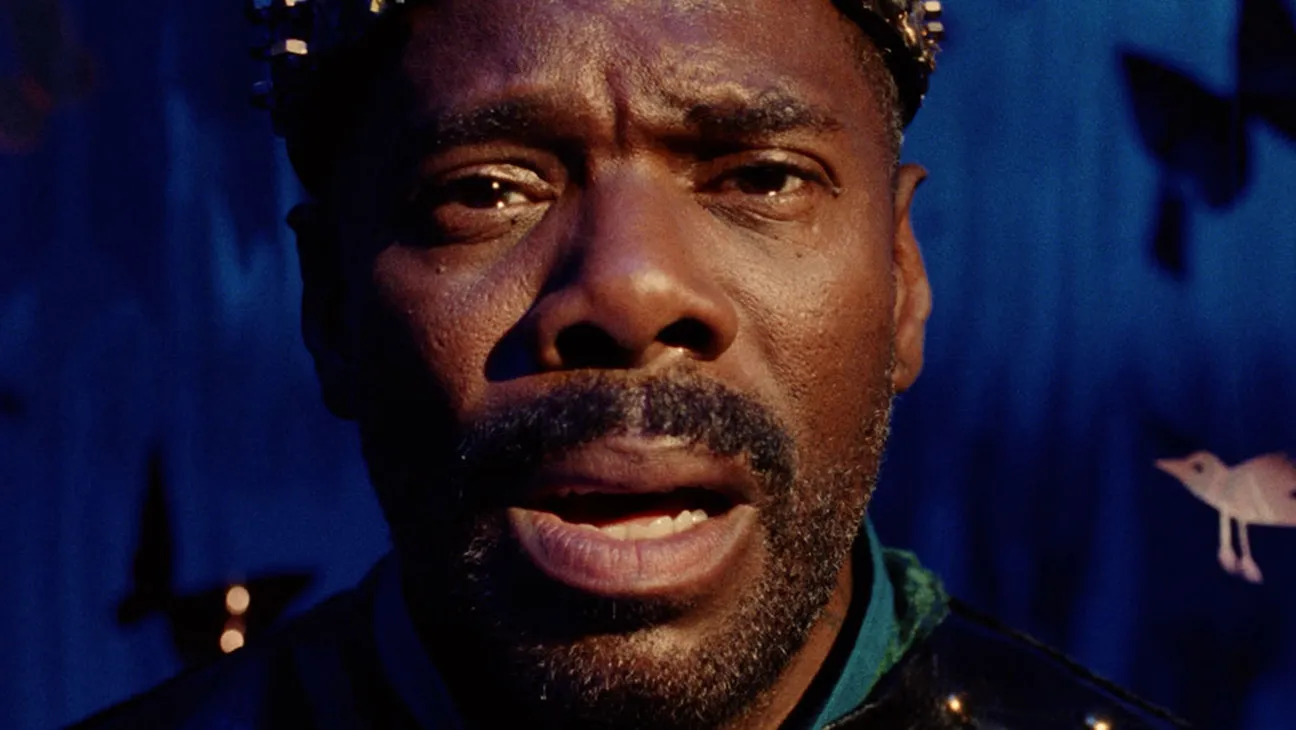
Main cast: Colman Domingo, Clarence Maclin, Sean San José,
Paul Raci, Sharon Washington, Jon-Adrian “JJ” Velazquez, Patrick “Preme” Griffin, Sean “Dino” Johnson, Miguel Valentin and more.


Cinematography by Pat Scola


Sing Sing (2023) is a powerful prison drama directed by Greg Kwedar, based on the real-life Rehabilitation Through the Arts (RTA) program at New York’s Sing Sing Correctional Facility. The film follows John “Divine G” Whitfield (portrayed by Colman Domingo), a wrongfully convicted man who finds purpose and transformation through participation in a prison theatre group. As the group prepares to stage an original comedy, tensions arise, particularly between Divine G and a new, skeptical member, Clarence “Divine Eye” Maclin (played by himself).

The reported $2 million budget for the prison-based theatrical drama Sing Sing (2023) underscores a powerful truth in filmmaking: emotional impact and narrative power are not dictated by the size of a production’s budget. In an industry often dominated by multi-million dollar spectacles and high-concept visual effects, Sing Sing (2023) stands out as a reminder that authenticity, performance, and purposeful storytelling can achieve more than sheer spending ever could. In this way, the film charts a path forward for filmmakers: it shows that profound emotional connection comes not from lavish resources but from the courage to tell deeply human stories with clarity, care, and conviction.

By investing modestly but wisely—prioritizing casting choices, intimate direction, and a grounded script—the filmmakers harness the emotional gravity of the story itself. Featuring real formerly incarcerated individuals alongside professional actors, the film creates a resonance that can’t be manufactured with money alone. The restraint in budget mirrors the thematic focus of the film: confinement, transformation, and human dignity. There’s a raw, stripped-down sincerity in Sing Sing (2023) that aligns with its financial humility, allowing viewers to focus not on spectacle but on spirit.


At the heart of the film is Colman Domingo majestic performance. Without question he is one of the most enthralling actors working today. With a presence that radiates both gravitas and vulnerability, he has the rare ability to inhabit characters so fully that they feel less like performances and more like revelations. In Sing Sing, his work is restrained, generous, and deeply moving—serving not just as a lead, but as a quiet conduit for the emotional power of those around him. It’s the kind of performance that reminds you what acting is for.

There’s a grounded nobility to Domingo’s recent choices—films that matter, that uplift overlooked voices, and that seek to transform rather than simply entertain. In an era where so many talented actors get absorbed into the ever-expanding Disneyverse or other IP-driven machines, one can only hope that Domingo continues on this path. His gifts are too profound, too precise, to be flattened into quips and CGI battles. He belongs in films like Sing Sing (2023) where the stakes are human and the impact is lasting.

Directed with subtle power by Greg Kwedar he delivers a drama of transcendent creative expression as the inmates forge deep bonds, confront personal demons and change societal perceptions. Featuring performances by both professional actors and real-life formerly incarcerated individuals, Sing Sing (2023) offers an authentic and moving exploration of redemption, resilience, and the transformative power of art. Of course not all of them are innocent and are guilty. The film does not apologise for their crimes or glamourise them, but allows these men to find light amidst the darkness; a spiritual and cultural escape from the walls and bars which surround them.

Mark: 9 out of 11


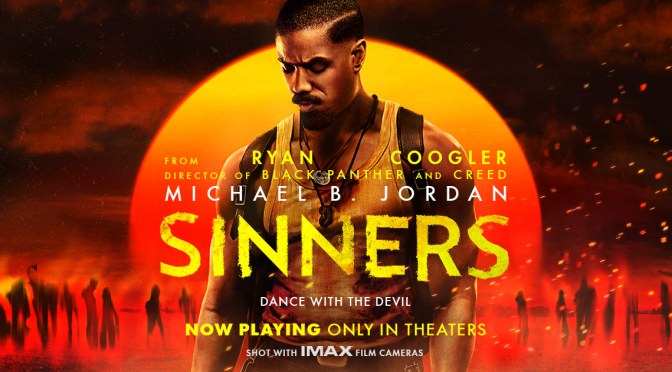
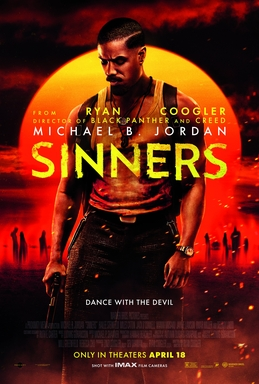
Cinema Review: Sinners (2025) – a blazing, bold and bloody blues opera!

Cinema Review: Sinners (2025)

Directed by Ryan Coogler

Written by Ryan Coogler

Produced by Zinzi Coogler, Sev Ohanian, Ryan Coogler

Main cast: Michael B. Jordan, Hailee Steinfeld, Miles Caton, Jack O’Connell, Wunmi Mosaku, Jayme Lawson, Omar Miller, Delroy Lindo, etc.

Cinematography by Autumn Durald Arkapaw


After the bleakly lustful vision of Robert Eggers’ Nosferatu (2024) — a film steeped in shadow, dread, and tragic sensuality — Ryan Coogler offers a wildly different, electrifying take on the vampire mythos: a bold, colourful, and deeply soulful experience that pulses with life even as it drinks from the dead. Where Eggers lingers in gothic majesty, with Sinners (2025), Coogler surges forward with kinetic energy, blending grind-house thrills and emotional depth with From Dusk Till Dawn-style narrative turns.

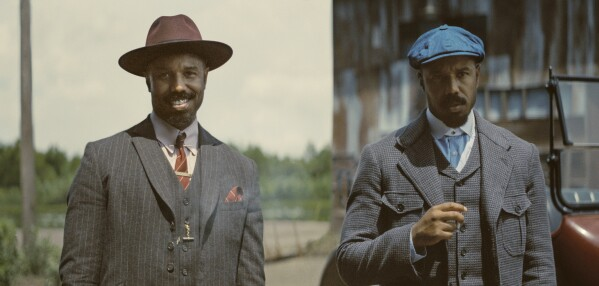
Coogler’s film is set in the richly textured American South of the 1930s, a world still nursing the scars of the Great War and on the cusp of social upheaval. Into this volatile landscape, he drops the muscular Michael B. Jordan as twin war veterans turned Chicago gangsters, Smoke and Stack — men who carry both physical and spiritual wounds from the trenches — now repurposed as businessman looking to set up a juke joint. These characters feel reminiscent of the working class anti-heroes of Peaky Blinders, their emotional trauma rendered in everything from flickering glances to bursts of brutal, operatic violence. The twins have ghosts of the past and present to battle including relationship issues with Stack’s ex-girlfriend, Mary (Hailee Steinfeld), as well as Smoke’s painful reunion with his wife, Annie (Wunmi Mosaku).

Sinners (2025) plot is muscular and sinewy, establishing the characters impressively before shifting the moody Southern gothic tale into an all-out genre-bender. The film contains a fine ensemble cast knitting a series of substantial supporting characters each with their own personalities, humour and wants. The most striking is Miles Caton as the twins’ cousin, Sammie “Preacher Boy” Moore, a young blues musician with an incredible ability, that proves to be a somewhat dangerous talent. Delroy Lindo also throws in another memorable performance as the ebullient pianist, Delta Slim. With the first night’s festivities in full swing three mysterious strangers appear from the near dark, desiring to be let in. Their leader is charismatic Remmick (Jack O’Connell) and he has more than partying in mind.


Visually, Coogler lets his imagination loose, notably in a memorable cross-generational musical montage that literally burns up the cinema screen. Gone is the shadow-heavy monochrome of Eggers; in its place is a palette of dusk reds, moonlit silvers, and deep bayou greens. The film pulses with colour, sex, motion, and sweat. Blood flows, but it never feels gratuitous — it feels earned, ritualistic, even sacramental. But what ultimately makes Coogler’s film so potent is its soul. Amid the genre thrills and gore, there’s a beating heart full of soul. These vampires are not romanticised, nor merely feared; they are hungry creatures. Coogler gives them back their humanity, and in doing so, reanimates the genre with urgency.

Music is where the film truly soars. Coogler and his production team, attuned to the cultural pulse, curate a soundtrack that fuses Delta blues, Appalachian folk, and early jazz into a feverish, ghostly soundscape. There are scenes where the music alone tells the story: a backwoods funeral scored by a bone-dry slide guitar; a juke joint confrontation where the rhythm of violence matches the stomp of the blues; a haunting lullaby sung by Remmick the migrant vampire that channels generations of sorrow. It is music as memory, as resistance, as raw emotional texture.

Sinners (2025) is not just a vampire film. It’s a blues opera. A folk horror elegy. A pulpy, poignant, and powerfully visceral story about the things that haunt us, and how we fight to keep our humanity intact. What begins as a slow-burning period drama smolders into a blood-soaked explosion of action and moral reckoning. Coogler even delivers a Klan-blasting and redemptive shoot-out final act set-piece. Lastly, in Coogler’s hands, the vampire becomes more than a monster; it’s a metaphor for trauma, addiction, religion, racism, and survival. Coogler reclaims the myth for a new generation, one shaped by history, crime, grief, music, and spiritual struggle, delivering a genre masterpiece that bites deep and lingers long after the lights come up.

Mark: 9.5 out of 11


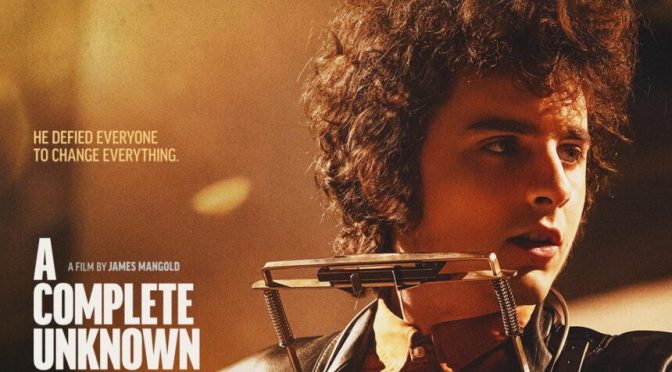
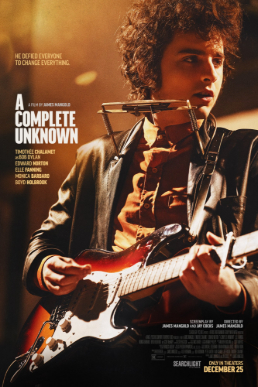
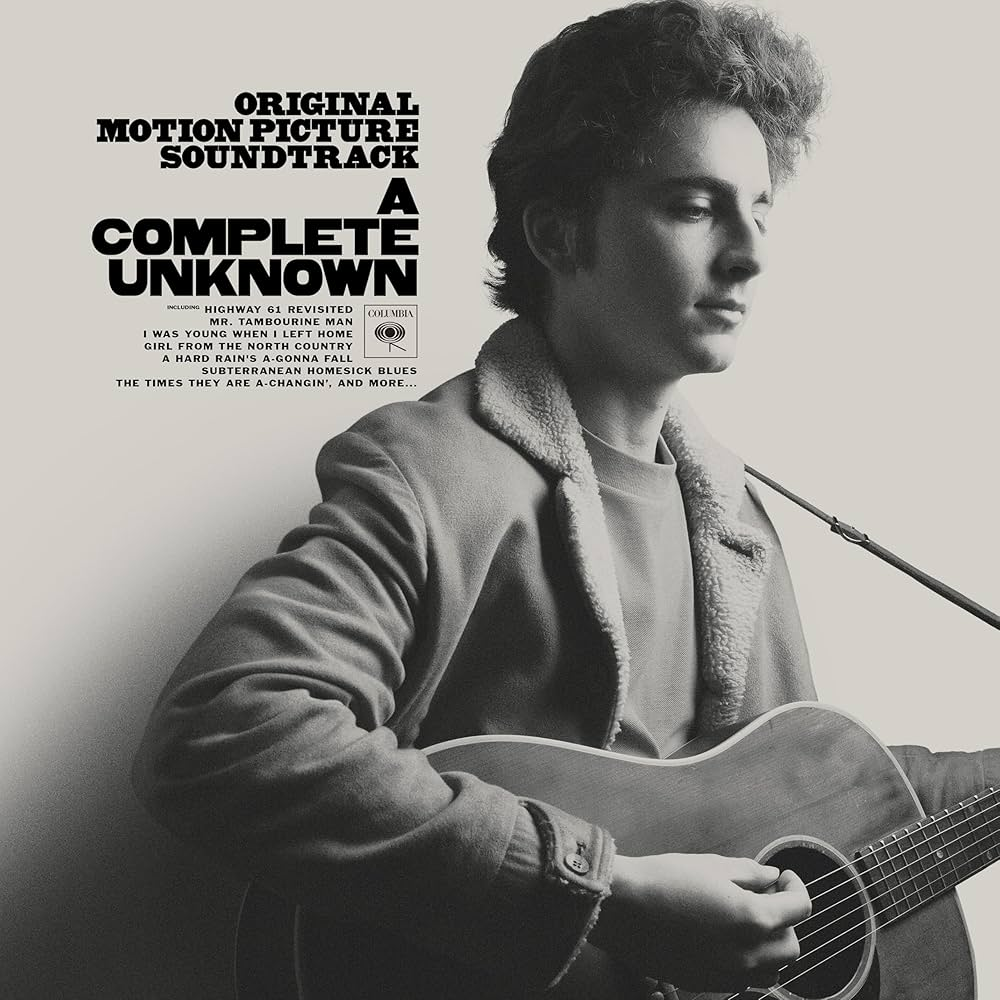
Cinema Review: A Complete Unknown (2024) – an electric but over-polished cover version!

CINEMA REVIEW: A COMPLETE UNKNOWN (2024)

Directed by James Mangold

Screenplay by James Mangold and Jay Cocks

Based on Dylan Goes Electric! by Elijah Wald

Produced by Peter Jaysen, James Mangold, Alex Heineman, Bob Bookman, Alan Gasmer, Jeff Rosen, Timothée Chalamet, Fred Berger etc.

Main cast: Timothée Chalamet, Edward Norton, Elle Fanning, Monica Barbaro, Boyd Holbrook, Scoot McNairy, Dan Fogler, etc.


James Mangold is rarely mentioned as one of the best directors around. Probably because he is not a flashy cigar-munching quote machine or a even a household name. Yet, he has consistently delivered a series of extremely entertaining genre films over the past few decades. These include: Copland (1997), Identity (2003), Girl, Interrupted (1999), Walk the Line (2005)3:10 to Yuma (2007), Logan (2017) and Ford v Ferrari (2019). His films always feature solid characterisation, compelling conflict and well-structured plots. They also have a pristine and attractive look and style. Further, they always attracts impressive A-list actors and striking ensemble casts. His cover version of the music biography, Dylan Goes Electric! by Elijah Wald is no different.

A Complete Unknown (2024) showcases events from the era of 1961 to 1965 where Dylan rose to major stardom delivering stunning and poetic lyrics with hypnotic melodies. This period culminates in his movement from acoustic guitar to full electric band, causing controversial and violent reactions from the audience and organisers of the Newport Folk Festival. This furore may seem mildly inconsequential in today’s social-media digital coliseum where intellectual debates are fought with emojis by individuals with nano-seconded attention spans. But for many, Bob Dylan’s perceived treachery of moving from the purity of folk over to the dark side of rock was a significant event of the epoch. Having said that, Dylan was always an enigmatic maverick and genius who marched to the time of his own drum. Thus, such audial rebellion was no surprise, especially when looking back at it now.


As a tribute to the incredible musical and writing brilliance of Dylan, A Complete Unknown (2024) is definitely worth a watch. Timothée Chalamet does a sterling job with the musicianship, mannerisms and vocal duties. He even brings a suggestion of character to someone who isn’t just a musician. Dylan’s a shape-shifter, a poet, a myth, a paradox wrapped in a harmonica riff. To play Dylan is not to “become” him but to capture the way he constantly eludes being known. Personally, I enjoyed Chalamet’s charismatic performance in Wonka (2023 more, but he is commanding as Dylan nonetheless. The supporting cast are terrific too, notably Edward Norton as the affable folk singer Pete Seeger and Boyd Holbrook as a muscular Johnny Cash. Mangold deserves much praise for getting so many consistently fine performances, even if the script could have been punched up with more drama throughout. Dylan being a bit of a self-driven “arsehole” and slight philanderer hardly raises the pulse.

Overall, Mangold directs with a sure hand and there are many fantastic musical set-pieces, gigs and recording sessions. But the film’s glossy sheen feels at odds with the grit of the 1960’s Greenwich Village folk scene. The world Dylan emerged from was smoky, messy, and filled with hungry artists scraping by in dimly lit coffeehouses, where folk music wasn’t just a style but a battle cry. A Complete Unknown (2024) captures the aesthetic—the period costumes, the dimly lit clubs, the jangling guitars—but everything feels just a touch too manicured, too cinematic. Dylan’s rise was not glamorous and the film makes the counterculture movement feel almost nostalgic rather than revolutionary. It’s an engaging snapshot, and Chalamet’s performance is undoubtedly compelling, but much like a pristine re-recording of an old folk song, the imperfections—the very thing that gave the music its soul—are missing.

Mark: 7.5 out of 11


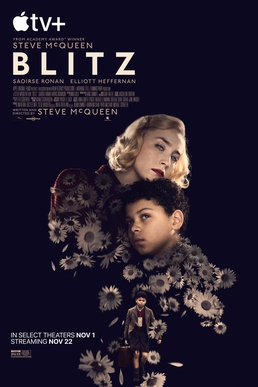
Apple TV+ Film Review: Blitz (2024) – A fine testament to the Human Spirit during Wartime!

Apple TV+ Review: Blitz (2024)

Directed by Steve McQueen

Written by Steve McQueen

Produced by Tim Bevan, Eric Fellner, Steve McQueen, Anita Overland, Adam Somner, Arnon Milchan, Yariv Milchan, Michael Schaefer

Main Cast: Saoirse Ronan, Elliott Heffernan, Harris Dickinson, Benjamin Clementine, Kathy Burke, Paul Weller, Stephen Graham etc.

Cinematography by Yorick Le Saux

*** MAY CONTAIN SPOILERS ***


Officially classed as acclaimed filmmaker Steve McQueen’s first feature since the release of Widows (2018), Blitz (2024) is a WW2 drama of extremely high quality. But before I get into the review, lest we forget the series of films Steve McQueen delivered to the BBC a few years. The ‘Small Axe’ anthology should and shall be revisited as one of the most important documents of British history, such is its searing power, dramatic drive and the stunning rich tapestry of characterful moments. So, I urge you to watch, if you haven’t, what I consider to be Steve McQueen’s masterworks. I have reviewed the first one Mangrove (2020) here and the remaining of the collection here:


Blitz (2024) is a bigger budgeted production when compared to the ‘Small Axe’ anthology. But, similarly, it is a period piece, focusing on the working class and Black experience, this time set during the brutal bombing of London in 1940. McQueen shoots very much from the perspective of George (Elliot Heffernan), his mother, Rita (Saoirse Ronan) and grandfather, Gerald (Paul Weller). George, like many war children, is packed on a train to the relative safety of the countryside, while parents live in the hope of surviving the incessant German bombs.

After establishing the close family bond between the Hanways, and the wrenching emotion of sending her son away, Rita continues working in a munitions factory and sings beautifully on a national radio show. At the same time, George, finds trouble with a gang of child bullies on the train, before fighting back and jumping off. A tough and resourceful boy, George, makes the perilous choice to return to battered and burning London to reunite with his mother. The city, scarred by the relentless ‘Blitzkrieg’, is a treacherous labyrinth of collapsing buildings and choking smoke, but George’s determination burns brighter than the fires raging across the skyline.


Like a modern Oliver Twist, Blitz (2024) George’s journey through the devastated capital is both a physical and moral odyssey, with each encounter shaping his understanding of loyalty, survival, and the fragile threads that bind people together in times of crisis. George becomes trapped by his own choices, the bombs, bricks, buildings and characters he meets on the way. Some are friendly, but others exploit George preventing his return home. McQueen’s script also finds time to flashback to show Rita meeting George’s father, providing significant context to his mixed race background. Indeed, through George, McQueen explores themes relating to race and his emotional journey to find his place in the world as a person of colour.

Blitz (2024) is a superbly shot and designed film, with Yorick Le Saux’s cinematography rendering war torn London with an almost mythical beauty. However, Hans Zimmer’s overblown soundtrack is too much for me. Further, Steve McQueen’s hagiographic and episodic approach does somewhat diminish the raw drama and bloody horror of war. Notably, the under-use of Kathy Burke and Stephen Graham’s gutter snipe thieves. Plus a thrilling action set-piece during a flooded tube station that cuts away from George’s almost-demise, denying us suspense and dramatic catharsis. Thus, at times, the film sacrifices potential complexity during George’s journey, making his survival seem almost predestined rather than hard-fought. Still, Steve McQueen remains one of the country’s most important cinematic artists and Blitz (2024) is yet another fine testament to the strength and resilience of the human spirit.

Mark: 8 out of 11


CINEMA REVIEW: TRAP (2024)

CINEMA REVIEW: TRAP (2024)

Directed by M. Night Shyamalan

Written by M. Night Shyamalan

Produced by Ashwin Rajan, Marc Bienstock, M. Night Shyamalan

Main cast: Josh Hartnett, Ariel Donoghue, Saleka Night Shyamalan, Hayley Mills, Alison Pill, Jonathan Langdon, etc.

Cinematography by Sayombhu Mukdeeprom


*** CONTAINS SPOILERS ***


If you’re into mysterious and suspenseful genre films, M. Night Shyamalan’s most recent works Old (2021) and Knock at the Cabin (2023) left a lasting impression on me. Both movies dive deep into the human psyche, exploring themes of time, fear, and the unknown, and I really enjoyed them. Old (2021) combined Shyamalan’s signature twisty narrative with a meditation on the passage of time. Sure, the ending was over-cooked but I thought it was a brilliant Twilight Zone infused ensemble suspense twister. Meanwhile, Knock at the Cabin (2023) was a compelling claustrophobic apocalyptic thriller finding a family faced with making a horrendous sacrifice. While he is not everyone’s cinematic cup of tea, I for one have enjoyed Shyamalan’s recent output.

His latest high concept B-movie thriller is called Trap (2024). It stars Josh Hartnett as a loving and attentive father, Cooper Adams, who takes his teenage daughter, Riley, to see Lady Raven (Saleka Night Shyamalan) in a huge concert venue. Obviously, musical-based films such as A Star is Born (2018), Purple Rain (1984), and Bohemian Rhapsody (2018) feature gigs as part of their genre conventions. Here in Trap (2024) the concert becomes much more than that. Because Cooper is in fact a serial killer, and acting on a tip-off, the authorities and FBI profiler, Dr Josephine Grant (Hayley Mills), mobilize to turn the location into a means to ensare him. Thus, the whole concert becomes a living, breathing trap, a maze with which Cooper must avoid capture while ensuring his daughter, and the law, do NOT discover his evil dark side.


What follows is a dynamic series of situations where Shyamalan asks the audience to identify with Hartnett’s ‘Butcher’ and see if he can escape the law as they close in. As the music blares and the lights flash, you’re drawn into the tension of a manhunt. The ‘R and B’ pop music, while not my thing, is actually pretty decent as performed by Shyamalan’s daughter, Saleka Night Shyamalan. Can ‘the Butcher’ outsmart the law and vanish into the night, or will he be caught in this electrifying game of cat and mouse? The script certainly answers that in a thrilling set of scenes and confident twists. Of course, it’s all highly improbable and preposterous, but I found all the contrivances incredibly entertaining.

Trap (2024) has some dark and crafty humour in there too, notably in Hartnett’s committed performance. At times I almost thought he was going to speak to the audience directly. I love it when you can see an actor reveling in their performance and Hartnett has so much fun playing this OCD-controlling-complex-double-life-leading family man and serial killer. Thematically, the film is strong too as Cooper is locked in a psychological and emotional struggle against powerful matriarchal figures who inhabit his world. These are represented by his deceased mother who haunts his thoughts and the very-much-alive, Doctor Grant, the psychologist charged with stopping him.

While Trap (2024) requires the audience to swallow a huge piece of “suspend disbelief” pie, Shyamalan infuses Hitchcock levels of suspense – think Rope (1948) on steroids – that had me gripped all the way. It isn’t meant to be taken too seriously and does contain some massive plot-holes you can drive a tour bus through. But I didn’t care as Trap represents another chunk of thoroughly enjoyable genre cinema from M. Night Shyamalan.

Mark: 8 out of 11

Cinema Review: TAR (2022)

Cinema Review: Tár (2022)

Written and directed by Todd Field

Produced by: Todd Field, Alexandra Milchan and Scott Lambert

Cast: Cate Blanchett, Noémie Merlant, Nina Hoss, Sophie Kauer, Julian Glover, Allan Corduner, Mark Strong etc.

Cinematography Florian Hoffmeister

*** MAY CONTAIN SPOILERS ***


Tar (definition): a dark, thick flammable liquid distilled from wood or coal, consisting of a mixture of hydrocarbons, resins, alcohols, and other compounds. It is used in road-making and for coating and preserving timber.

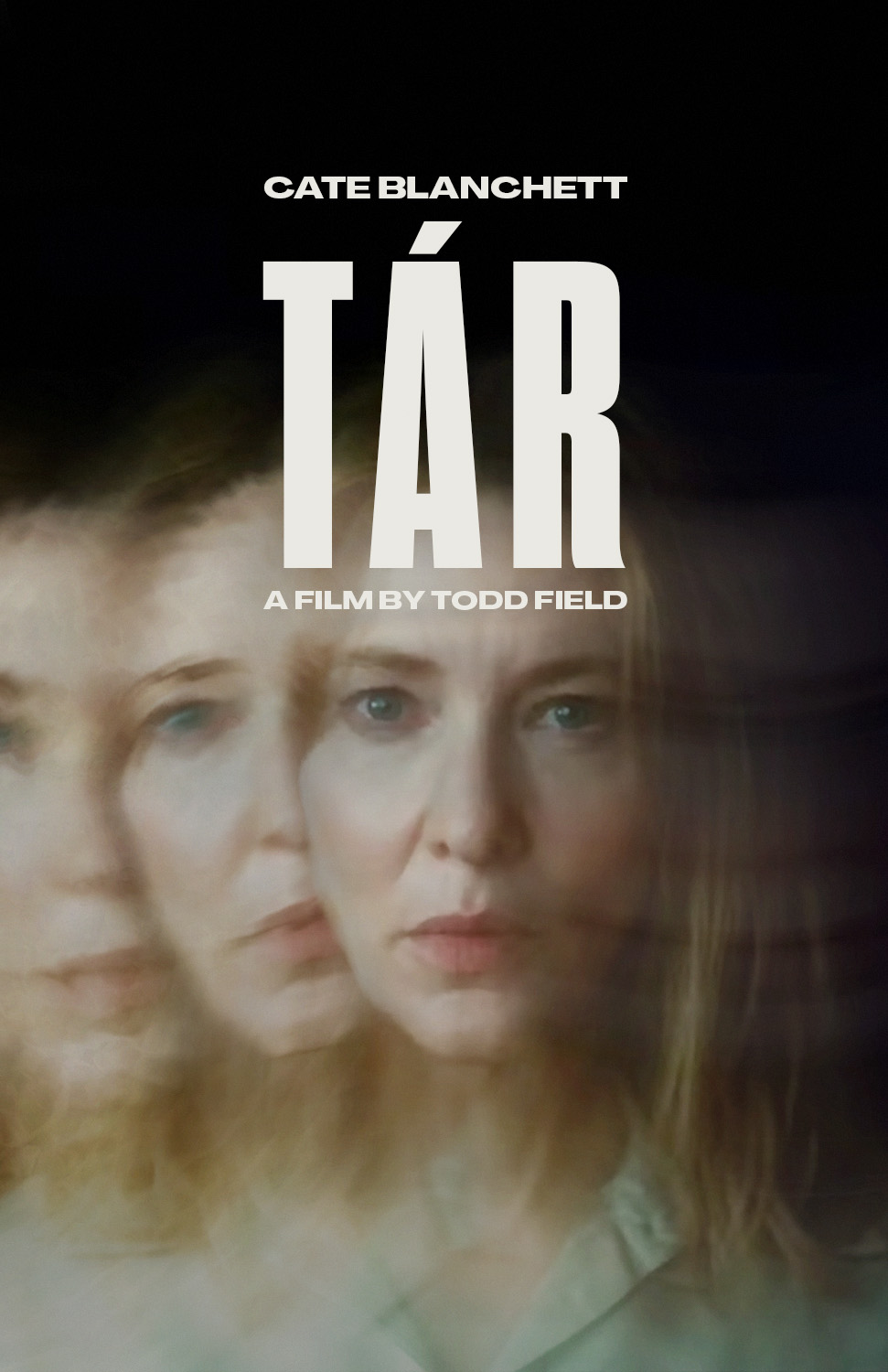
Todd Field’s classical film masterpiece, Tár (2022), was hailed by critics when released late last year in the U.S.A and made many top ten film of the year lists. I saw it in the first week of 2023 and while I don’t always concur with the gushing hyperbole of professional film critics, I have to say if I see a better cinema release all year I will be amazed. Let’s hope I do.

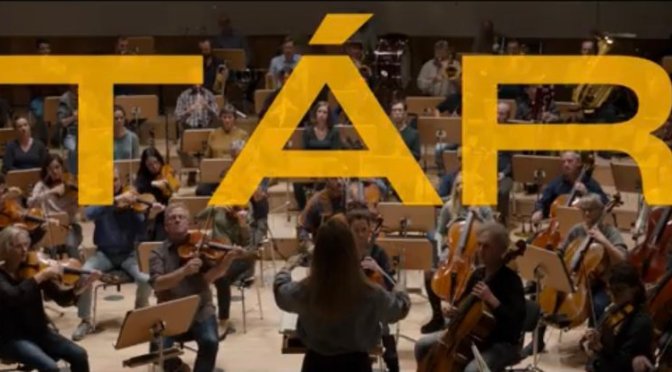
Tár (2022) is a film which works on many genre and narrative layers. It is a psychological drama, an absorbing character study, a backstage musical, a complex morality play, with suggestions of hallucinatory horror during the final act of the film. It is a triumph of filmic brilliance expertly delivered by Todd Field. It is incredible to think this is only the third film he has directed. Certainly a case of high quality over quantity. But Field confirms himself an auteur, exerting absolute control over the material. Such is his, and the production team’s, meticulous research, writing, planning, design and execution that if I hadn’t seen the credits, I would have said the maestro Stanley Kubrick had made this film.


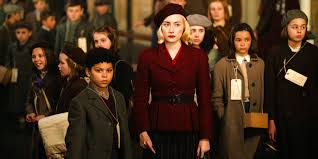
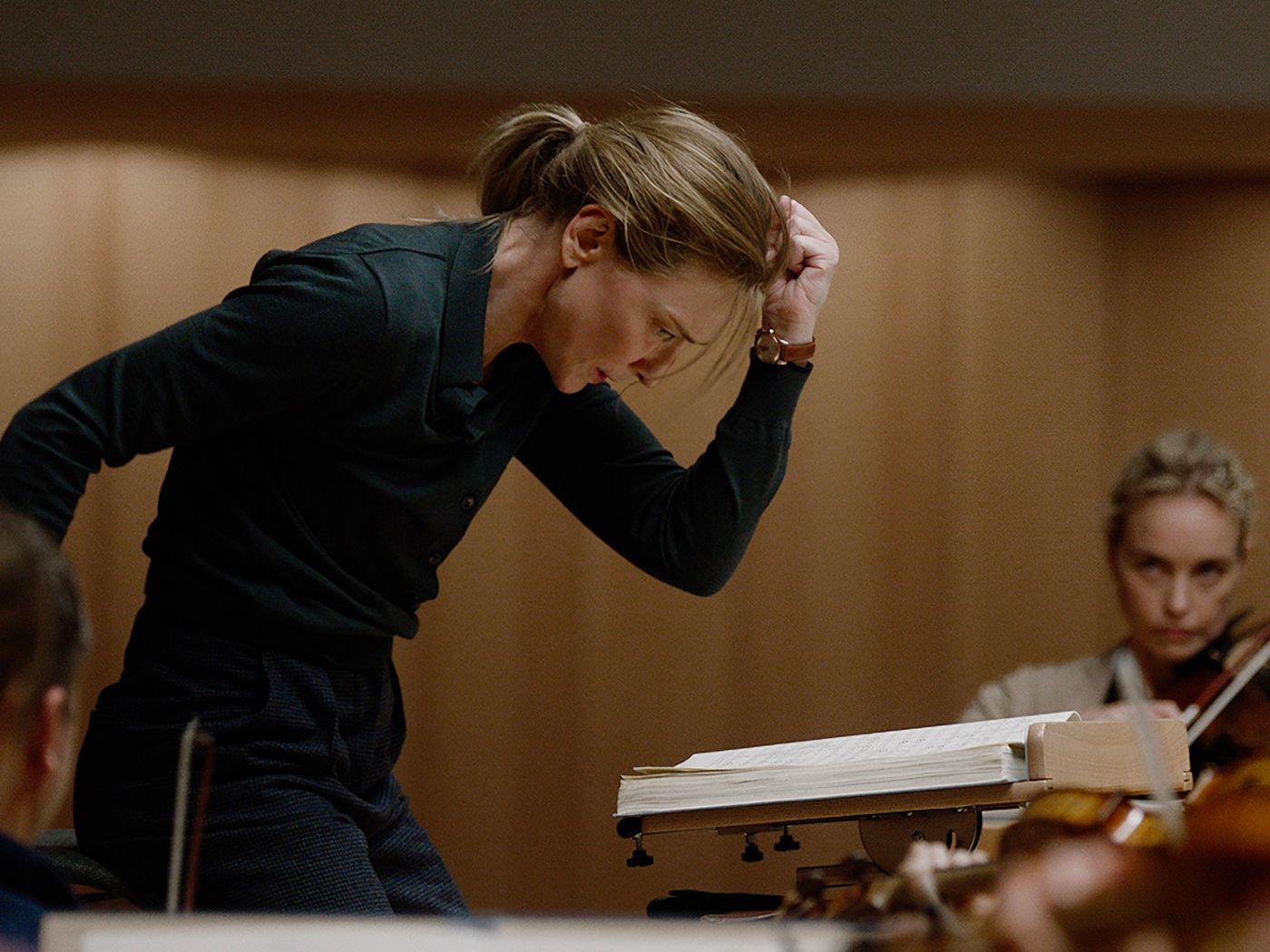
Tár (2022) opens with haunting singing over the imaginatively presented credits that slowly fill a black screen. Field demonstrates control from the start before we are introduced to Lydia Tár (Cate Blanchett). Now, I thought the film may have been a story about a female conductor attempting to break into a traditionally male dominated world. However, Lydia Tár is at the top of her game as a conductor and composer, heralded for her genius interpretations of the music of Mahler and own oeuvre. Plus, having won numerous awards for her cinema, theatre and television compositions. Lydia Tár is soaring and about to release a book Tár on Tár and conduct a live recording of Mahler’s Fifth Symphony for the Berlin Philharmonic. So, where’s the drama? What could go wrong?

Field structures the linear narrative around Tár’s day-to-day working and family life and the process of rehearsing Mahler’s Fifth. Methodically we are then introduced to actions from Tár’s recent past which threaten to haunt her. As a character who is so revered and in control of her world, Tár’s talent and confidence is magnetic and admirable. However, having no doubt been a force of nature to make it this competitive world, her arrogance and lack of awareness of a changing culture threatens to cancel her prodigiously built dominion. I won’t say anymore but Todd Field brilliantly explores resonating themes of the zeitgeist with razor-sharp intelligence. There are no easy answers either.

I could not take my eyes or mind off the screen during Tár (2022). It is cerebrally, aesthetically and psychologically all-encompassing. The stark cinematography, exhilarating classically-driven soundtrack, imposing Berlin architecture and claustrophobic feel of the Philharmonic offices and rehearsal spaces collude to create further emotional tension. Further, the film not only works impressively as absorbing drama, but also as interpretive ambiguity with subtle and mysterious suspense. Lastly, if Cate Blanchett does not win a best acting Oscar for her performance in Tár (2022) I will be stunned. Never less than metronomically astounding, Blanchett has taken Field’s precise writing and breathed physical, mental and spiritual vivacity into a challenging personality. Thus, take many-a-bow maestros, Blanchett and Field. Encore! Encore! Encore!

Mark: 10 out of 11


CINEMA REVIEW: WEST SIDE STORY (2021)

CINEMA REVIEW: WEST SIDE STORY (2021)

Directed by: Steven Spielberg

Screenplay by: Tony Kushner

Based on: West Side Story by Jerome Robbins, Leonard Bernstein, Stephen Sondheim and Arthur Laurents

Produced by: Steven Spielberg, Kristie Macosko Krieger, Kevin McCollum

Cast: Ansel Elgort, Ariana DeBose, David Alvarez, Mike Faist, Rita Moreno, Rachel Zegler etc.

Cinematography: Janusz Kamiński

Choreography: Justin Peck

Music by: Leonard Bernstein

*INEVITABLE SPOILERS WITH THIS STORY*


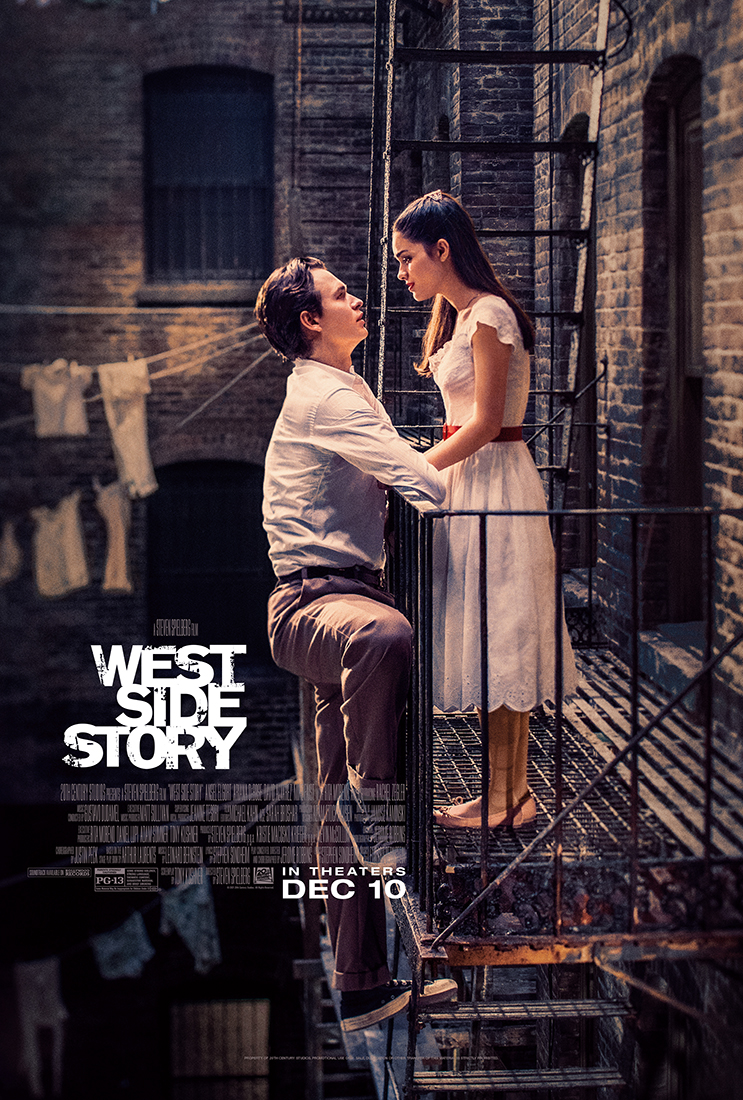
Well, if you removed all the songs and added more dialogue to West Side Story (2021), then I guarantee it would make an amazing stage play. Oh, it has already. I thought it felt extremely familiar. Silly jokes aside, one often hears the decrying of originality in Hollywood cinema. Sequels, prequels, remakes, adaptations and reboots are plentiful as big business. Known quantities are a better bet to executives than original never-heard-of speculative screenplays. And not everyone is averse to re-doing fully developed properties. Thus, one of the most talented filmmakers of a generation, Steven Spielberg, has delivered a stunning remake of a film adaptation of a stage musical that was developed from William Shakespeare’s Romeo and Juliet.

You know the story. If you don’t, stop reading. Young star-crossed lovers fall in love against their families wishes. Their romance explodes into unbridled passion as war escalates between the two rival factions. As the lovers attempt to find a way to be together the conflict brings about eventual tragedy. Shakespeare was a genius and knew how to structure and spin a yarn. No surprise his works have been adapted infinitely to much success. One of the greatest was the musical West Side Story (1961). Exchanging Verona for New York and pitting the Puerto Rican Sharks against the local firm, the Jets, the play and film contain some of the most incredible numbers ever sang and danced to. The original play won awards and broke box-office records. The film West Side Story (1961) deservedly won many Oscars. It is considered almost a perfect musical. How could it be improved?


West Side Story (2021) cannot possibly be classed as better than the original because Jerome Robbins, Arthur Laurent, Leonard Bernstein and Stephen Sondheim, plus their incredible team, had already done all of the challenging work crafting the production. But with this new version Steven Spielberg has once again proved he is one of the great genre directors. Assembling an ultra-talented team including Josh Peck as choreographer, Tony Kushner as screenwriter, Janusz Kaminski as cinematographer and an effervescently wonderful cast.

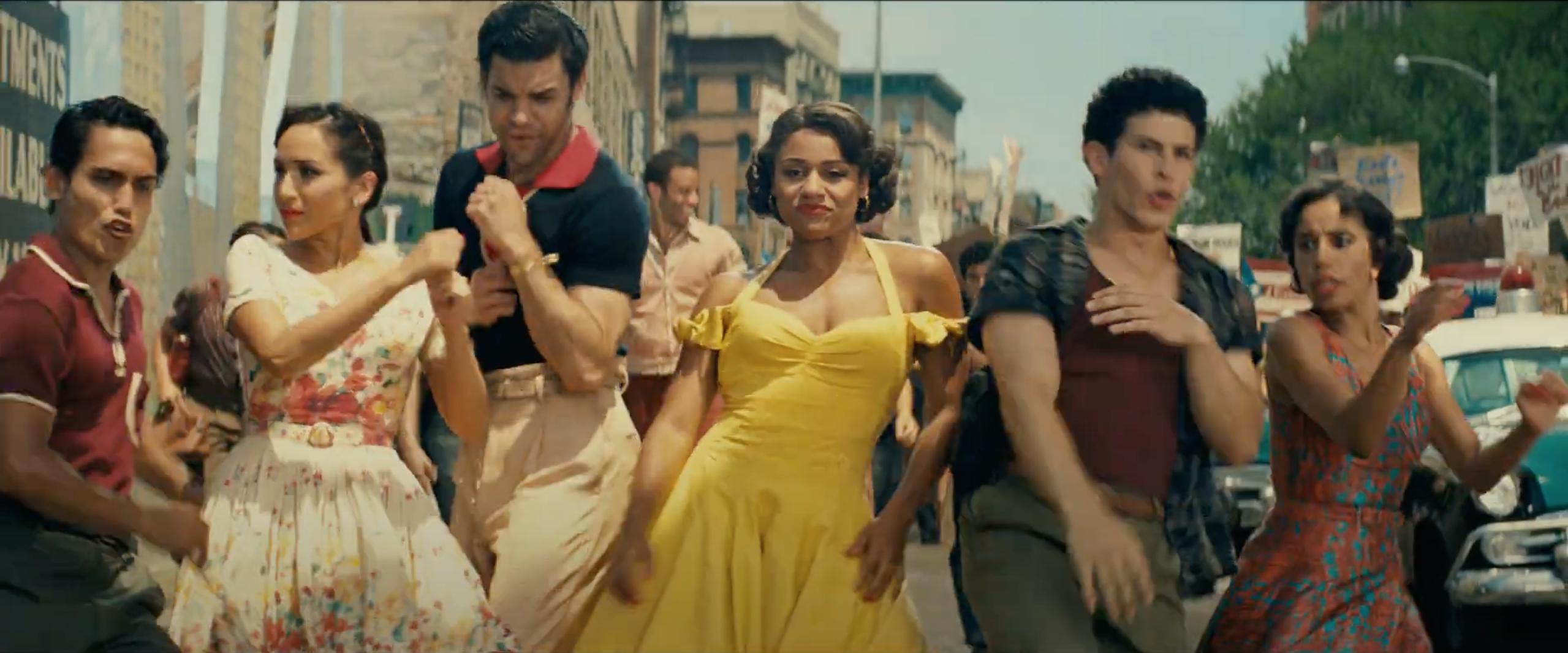
Everything about the film screams colour, energy and movement. The dancing and editing and swinging beats take you on a breathless journey through the romance and street war. Tony (Ansel Elgort) and Maria’s (Rachel Zegler) love story is bounced effortlessly between the expertly devised gang battles. Moreover, West Side Story (2021) keeps all the memorably catchy songs such as: Maria, Tonight, America, Cool, and Somewhere, capturing the heart and imagination in equal measure. If there is a better directed, choreographed and edited set-piece all year in the Gee, Officer Krupke number then I haven’t seen it.

The cast are uniformly excellent with Ansel Elgort, while lacking slightly in the vocal department, more than making up for it with his magnetic screen presence. Rachel Zegler is charming if bland as Maria, but Ariana DeBose absolutely steals the scenes with her all-round performance as fiery Anita. The cast all deliver Tony Kushner’s excellent dialogue and the iconic songs with aplomb. Lastly, West Side Story (2021) is an absolute tour-de-force as cinematic entertainment. However, there is a sense that it is a missed opportunity for Steven Spielberg and his team to perhaps update the themes for the modern day. Kushner’s script hints at some analysis of racism that ultimately only scratches the surface. Spielberg is satisfied emulating a classic adaptation of a classic play, remaining trapped in a shiny post-modern time-warp full to the brim with powerful nostalgia.

Mark: 9 out of 11


SIX OF THE BEST #30 – FAVOURITE FILM MONTAGES!

SIX OF THE BEST #30 – FAVOURITE FILM MONTAGES!

Who doesn’t love a film montage!? The passage of time edited and set to a memorable soundtrack is fine cinematic tradition. Not only is a montage a great way to tell a story visually, it can also give pace to a narrative, provide a perfect cinematic bridge to the final act or even supply emotional impetus at the start and middle of a film.

Here I choose six of my favourite movie montages. All have been selected due to both the style and content of the sequence, plus the music accompanying the montage. Of course, I could have chosen a more artistic aspect to montage by including examples from Eisenstein, Kubrick or the incredible editing in the The Godfather (1972), when Michael Corleone wipes out his rivals during his nephew’s baptism. That I will save for another day.


ROCKY (1976)

No film franchise has exploited the fight montage and training sequence to the max like Rocky. I could have chosen others, but the original remains the best. I love the urban locations and the Philadelphian streets are just so gritty as Stallone’s down-on-his-luck boxer gets a crack at the championship of the world! That music just soars too!

SCARFACE (1983)

With a combustible screenplay written by Oliver Stone, Scarface (1983), is a cocaine driven and incendiary viewing experience. Everything is ramped up to eleven, including: the violence, shouting, swearing, shooting, politicking, drug-taking, sex, killing, avarice, cocaine, money-making, decadence and corruption. It is an epic film with many classic scenes, but the 80’s pop-synth-driven montage here adds real pace to the brutal proceedings.


THE KARATE KID (1984)

Another fighting film and another John G. Avildsen pick! More than just a teenage Rocky rip-off, The Karate Kid (1984) is a terrific rites-of-passage drama that incorporates a love story and a boy overcoming bullies with the help of a wise mentor. Joe Esposito’s song, “You’re the Best” was originally chosen for Rocky III, but ultimately ended up here in the fantastic fighting tournament montage.


FERRIS BUELLER’S DAY OFF (1986)

John Hughes fast-paced-set-in-one-day-comedy-classic has some brilliant dialogue and is anchored superbly by Matthew Broderick’s cocky lead performance as mischievous Ferris Bueller. For all the craziness on show one of my favourite scenes is when Hughes slows the pace down at the museum. Here we get some wonderfully framed shots, sly humour and a beautiful instrumental version of The Smiths’ song, “Please, Please, Please, Let Me Get What I Want!”


UP (2009)

So many films struggle to establish empathy for their characters either through bad writing or poor creative choices. Pixar, however, are masterful at establishing both character identification and motivation. None more so than in this classic montage featuring the mostly blissful life of Carl and Ellie Fredericksen. With Michael Giacchino’s iconic score called “Married Life” providing energetic and poignant emotional support, this is one of the most moving four minutes in movie history.


DJANGO UNCHAINED (2012)

Tarantino’s epic Western runs the gamut of action, violence, comedy and drama, even throwing a buddy-buddy dynamic in there for good measure. While often known for his quotable dialogue, Tarantino’s films always feature crisp editing and a powerful visual storytelling too. I love this montage in Django Unchained (2012), with Django and King Schultz framed against the wonderful snowy vistas as Jim Croce sings his catchy tune.


NETFLIX FILM REVIEW – MA RAINEY’S BLACK BOTTOM (2020)

NETFLIX FILM REVIEW – MA RAINEY’S BLACK BOTTOM (2020)

Directed by: George C. Wolfe

Produced by: Denzel Washington, Todd Black, Dany Wolf

Screenplay by: Ruben Santiago-Hudson

Based on: Ma Rainey’s Black Bottom by August Wilson

Cast: Viola Davis, Chadwick Boseman, Glynn Turman, Colman Domingo, Michael Potts etc.

Music by: Branford Marsalis

Cinematography: Tobias A. Schliessler

*** MAY CONTAIN SPOILERS ***


The spectre of death hangs over us all as time effortlessly drains the life from us. It is an unstoppable force that will quicken on occasion to take a human being way before they deserve. What if said individual has knowledge of their end? Aside from the fear they must be feeling, there is clearly a moment of clarity and strong focus. Something that makes their work gather an altogether unique power. Both player and audience feel such power palpably. This is most certainly the case where Chadwick Boseman’s acting performance is concerned in the screen adaptation of August Wilson’s powerful play, Ma Rainey’s Black Bottom (2020). As talented, hustling and arrogant musician and songwriter, Levee Green, Boseman is a charismatic vision of drive, confidence, energy and naivety, ready to take on the world, not quite knowing the odds are stacked against him.

Boseman steals the film from under the lungs of the formidable Viola Davis as the titular blues legend, Ma Rainey. Her laconic singer with a voice that stops the clocks is being paid to record a series of songs at a Chicago recording studio in the year 1927. Much conflict is derived from Levee Green’s desire to spice up Ma Rainey’s more traditional blues arrangements. Ma Rainey will not give in to what she perceives as ideas of populism and selling out to white producers who want to water down the blues for a white audience. As Ma Rainey, Viola Davis, excels as this irascible and world-weary diva, fighting off her exploitative manager and record producer. Rainey and the other band members try to dampen Levee Green’s enthusiastic ardour, however, the younger trumpeter will not listen to the advice of more experienced musicians. This eventually comes at a grave cost to those within the play.


Events of Ma Rainey’s Black Bottom (2020) are set mainly within a day and in the confines of the recording studio. The mix of a hot day, tempestuous characters and colliding personalities all combine in the enclosed space to create much dramatic tension. Given the screenplay is based on August Wilson’s acclaimed play, what the film loses in cinematic visuals, it more than makes up with sensational dialogue and stellar acting performances. Indeed, the supporting cast including: Colman Domingo as Cutler, Glynn Thurman as Toledo and Michael Potts as Slow Drag provide sterling contributions as Ma Rainey’s band. They banter and battle and spar, especially with the argumentative Levee, desiring to simply play the music and get paid. Safe to say therefore the wonderful blues songs performed are beautifully played. They fill the screen with humour and pathos, puncturing the fizzing dialogue of Wilson’s many fine soliloquys with poignant joy.

Amidst the conflict and music, August Wilson’s original text also contains great thematic power within the words. At the heart of the drama and eventual tragedy there is the underlying critique of the black musicians’ songs and style being stripped away from them by unscrupulous record producers. Ma Rainey stands strong rejecting attempts to assimilate her work and personality and voice into the mainstream. Those songs are her lifeblood, and she refuses to entirely sell her soul. Levee Green does not see the bigger picture and is sucked in by the promise of money, women and fame. He is blinded by the bright city lights and the closer he gets to them the easier it is for the record producers to pick his pocket. In such a tragic character August Wilson has created a memorably complex persona, perfectly rendered by the acting genius, Chadwick Boseman.

Mark 9 out of 11