Tag Archives: Rick Berman

To Boldly Review #16 – Star Trek: Enterprise (2001 – 2005) – Seasons 1-4

To Boldly Review #16 – Star Trek: Enterprise (2001 – 2005) – Seasons 1-4

Created by Rick Berman & Brannon Braga

Based on Star Trek by Gene Roddenberry

Showrunners: Brannon Braga (2001-2004) & Manny Coto (2004-2005)

Production companies: Paramount Network Television, Braga Productions & Rick Berman Productions

Selected writers: Brannon Braga, Rick Berman, Manny Coto, Mike Sussman, Phyllis Strong, Judith Reeves-Stevens, Garfield Reeves-Stevens, André Bormanis, Chris Black, David A. Goodman, Fred Dekker, and more.

Selected directors: Roxann Dawson, LeVar Burton, Robert Duncan McNeill, Allan Kroeker, David Livingston, Winrich Kolbe, James L. Conway, Mike Vejar, Michael Grossman, Marita Grabiak, Brennan Spencer, Michael S. Watkins, Vincenzo Natali, and more.

Main cast: Scott Bakula, John Billingsley, Jolene Blalock, Dominic Keating, Anthony Montgomery, Linda Park, Connor Trinneer etc.

Notable guest actors: Jeffrey Combs, Vaughn Armstrong , Gary Graham, Matt Winston, Randy Oglesby, James Cromwell, Brent Spiner, Daniel Dae Kim, Fionnula Flanagan, Robert Picardo, Tony Todd, Bruce Davison, Seth MacFarlane, Steven Culp, Noa Tishby, Rene Auberjonois, Peter Weller, Dean Stockwell etc.

Composer(s): Dennis McCarthy, Jay Chattaway, Brian Tyler, John Frizzell, Mark McKenzie, David Bell, Velton Ray Bunch, Kevin Kiner &
Paul Baillargeon

*** MAY CONTAIN SPOILERS ***


It’s been a while since I reviewed Star Trek on the site. But I have now finally completed the task I set myself to watch and review all the legacy Star Trek series. I am currently on the fence regarding the more recent Star Trek offerings. Anyway, having reviewed Voyager (see below) last year, I can now provide a detailed report back on Enterprise.


Star Trek: Enterprise occupies a fascinating corner of the franchise’s sprawling canon. Set a century before Kirk and more than a century after humanity’s first steps into spaceflight, the series charts the formative years of Starfleet—before there even was a “Starfleet” in the sense fans recognize. Its premise alone is rich: a pre-Federation frontier where humanity is inexperienced, unsteady, and often outmatched, yet eager to join a much larger galactic community. In this sense, Enterprise is both a prologue and a missing link, retrofitting the swaggering optimism of The Original Series with a more grounded, early-21st-century sensibility.

The show’s commitment to exploring those transitional years is what secures its place in canon. Enterprise seeds the diplomacy, technology, and interspecies tensions that future shows build upon—from the first warp-5 engine, to early encounters with Vulcans, Andorians, and the ever-shadowy Temporal Cold War. Watching Captain Jonathan Archer and his crew stumble toward the ideals later embodied by the Federation gives the series a distinctive historical weight. It doesn’t merely fit into Star Trek continuity; it actively sculpts the bedrock beneath it.

Central to the show’s appeal is Scott Bakula, whose performance as Captain Archer blends warmth, stubbornness, and a palpable sense of moral growing pains. Bakula gives Archer a grounded humanity that stands apart from the polished command styles of Picard or the passionate Sisko, yet his sincerity and resolve make him every bit their equal. When the writing rises to meet his talent—as in standout episodes like “Cogenitor,” “The Andorian Incident,” “Carbon Creek,” or the Xindi arc’s best moments—the show can reach the emotional and thematic heights of The Original Series and The Next Generation.
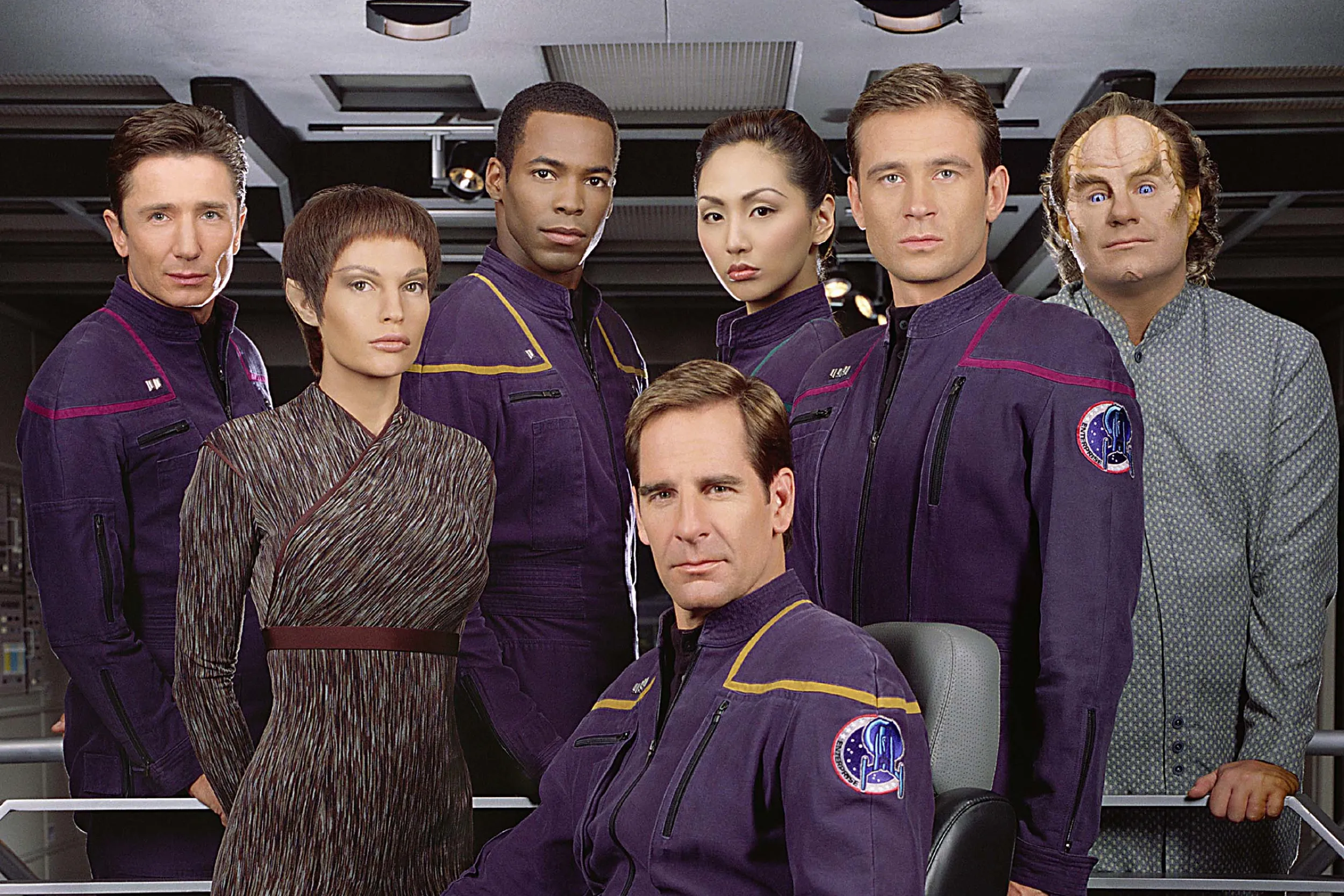


But Enterprise is also a series defined by uneven execution. For every episode that lands with classic-Trek resonance, there are others hampered by muddled plotting, bland direction, or creative decisions that feel more reactive than visionary. The show often struggled to decide whether it wanted to be a rough-edged prequel, a 2000s-era action drama, or a traditional episodic Trek—frequently trying to be all three at once. While it contains genuinely excellent science-fiction storytelling, its overall writing and directorial cohesion never consistently matched the clarity, ambition, or confidence of its most celebrated predecessors.

Yet despite its flaws, Star Trek: Enterprise remains an essential and often underrated part of the canon—a show whose best moments remind us exactly why Trek endures, and whose imperfections make its aspirations feel all the more human. Here are eight of the best episodes I watched – two per series.


Series 1 – The Andorian Incident (Episode 7)

This episode is the first truly great hour of Enterprise—the point where the show proves it can handle nuanced political storytelling within the Trek universe. The introduction of Jeffrey Combs as Shran is a masterstroke; he immediately brings depth, wit, and volatility to the Andorians. The plot, centered on Archer and his crew discovering that a supposedly pacifist Vulcan monastery is hiding darker secrets, reshapes our understanding of Vulcan–Andorian tensions. Strong direction, tight pacing, and a morally thorny reveal make this the first episode that feels essential to larger Star Trek canon.


Series 1 – Dear Doctor (Episode 13)

A thoughtful, character-driven story told through Dr. Phlox’s personal logs, “Dear Doctor” represents Enterprise at its most philosophically ambitious. It confronts the ethics of medical intervention, cultural evolution, and the limits of humanitarian aid—classic Trek territory handled with sensitivity and restraint. John Billingsley delivers one of the best performances of the season, infusing Phlox with curiosity, compassion, and unsettling pragmatism. The episode’s controversial ending also resonates, sparking debate among fans and critics alike. It’s a quietly powerful hour that demonstrates the series’ potential for moral complexity.


Series 2 – Carbon Creek (Episode 2)

Widely regarded as the highlight of Season 2—and for many, the best Enterprise episode of its first two years—“Carbon Creek” is a charming, unexpectedly heartfelt detour into Trek history. Told by T’Pol as a possibly-true, possibly-mythic story, it follows a stranded Vulcan survey team living incognito in 1950s Pennsylvania. The fish-out-of-water premise is handled with warmth, humour, and subtle social commentary, while Jolene Blalock shines in a dual role that lets her explore a softer, more playful Vulcan persona. It’s imaginative, character-rich, and quietly profound—the kind of tonal experiment that pays off beautifully.


Series 2 – Regeneration – (Episode 23)

A tense, surprisingly effective prequel to The Next Generation’s Borg storyline, “Regeneration” threads a tricky needle: introducing Borg elements without breaking canon. The episode smartly uses the wreckage from Star Trek: First Contact as its entry point, turning the narrative into a chilling, atmospheric thriller. The direction is sharp, the pacing taut, and the danger feels unusually real for this era of Trek. The crew’s desperation—fighting an enemy they can’t possibly understand—creates some of the season’s most gripping moments. It’s both fan-pleasing and genuinely suspenseful.


Series 3 – Twilight – (Episode 8)

Often cited as the masterpiece of Season 3, “Twilight” is a time-bending character drama that blends emotional storytelling with classic Trek sci-fi ingenuity. When Archer becomes afflicted with a neurological condition that erases his short-term memory, the episode jumps forward into an alternate future where humanity has been nearly wiped out by the Xindi. What follows is a surprisingly intimate exploration of Archer and T’Pol’s relationship, played with sincerity and restraint by Scott Bakula and Jolene Blalock. The script balances tragedy, hope, and big ideas without feeling gimmicky. It’s moving, tightly written, and stands alongside the franchise’s finest “what-if” stories.


Series 3 – Azati Prime – (Episode 18)

“Azati Prime” is the moment Season 3’s slow-burn storytelling snaps into urgent, high-stakes clarity. The episode follows Archer’s attempted suicide mission to destroy the Xindi superweapon, giving Scott Bakula one of his strongest performances in the entire series. The moral weight is heavy, the action tense, and the pacing relentless. Crucially, this is where the Xindi cease being abstract antagonists and become three-dimensional political factions torn between fear and diplomacy. The episode’s final act—Enterprise under brutal assault—is among the most cinematic sequences the series ever produced, setting up the endgame of the season with real emotional gravity.


Series 4 – United – (Episode 13)

“United” is Enterprise finally fulfilling its prequel potential—showing the messy, reluctant, and hard-fought beginnings of what will eventually become the United Federation of Planets. The political maneuvering is smart and grounded, the Andorian–Tellarite tension is played with grit and humor, and Jeffrey Combs delivers another magnetic performance as Shran. The episode’s centerpiece—the Andorian duel where Archer must fight to prevent a larger war—is tense, dramatic, and deeply character-driven. It’s classic Trek diplomacy mixed with riveting conflict, all while pushing the franchise’s history forward in meaningful ways.


Series 4 – In a Mirror, Darkly – (Episodes 18–19)

One of the most stylish and purely fun stories Enterprise ever told, this two-parter fully embraces the decadent brutality of the Mirror Universe. The production team goes all-in: redesigned sets, re-imagined uniforms, a pulpy remixed title sequence, and a stunning recreation of the USS Defiant from The Original Series. The cast seems to relish the opportunity to play villainous, unhinged versions of their characters—especially Jolene Blalock and Connor Trinneer. Visually bold, lore-rich, and brimming with dark humour, “In a Mirror, Darkly” is a love letter to both TOS and long-time Trek fans.

TO BOLDLY REVIEW #15 – STAR TREK: VOYAGER (1995 -2001) – SEASONS 1 – 7

TO BOLDLY REVIEW #15 – STAR TREK: VOYAGER (1995 -2001) – SEASONS 1 – 7

Created by: Rick Berman, Michael Piller and Jeri Taylor

Based on Star Trek: by Gene Roddenberry

Main Cast: Kate Mulgrew, Robert Beltran, Roxann Dawson, Jennifer Lien, Robert Duncan McNeill, Ethan Phillips, Robert Picardo, Tim Russ, Garrett Wang, Jeri Ryan etc.

Notable guest stars: Kurtwood Smith, Marina Sirkis, Dwight Schultz, Joel Grey, Sarah Silverman, John De Lancie, The Rock, Michael McKean, Jason Alexander, Virginia Madsen, Tom Morello etc.

Theme music composer: Jerry Goldsmith


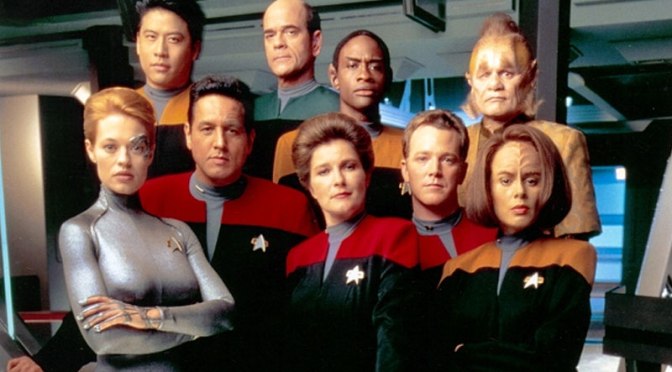
It’s been over a year since I reviewed the Star Trek: Deep Space Nine here. Thus, much of 2023 was spent watching the seven series of Star Trek: Voyager. The main concern with this cultural project of watching every Star Trek show and film released is that I could get serious franchise fatigue. However, Voyager was a fantastic series with some of my favourite ever Trek episodes experienced within the seven seasons.

Paramount Pictures commissioned the series after the cancellation of Star Trek: The Next Generation to run alongside Deep Space Nine in the schedules and launch their new UPN network. Created and developed by Rick Berman, Michael Piller and Jeri Taylor, Voyager uses the template of a Federation crew exploring new worlds and making contact with unknown species, but with a serious goal in place – to return home.

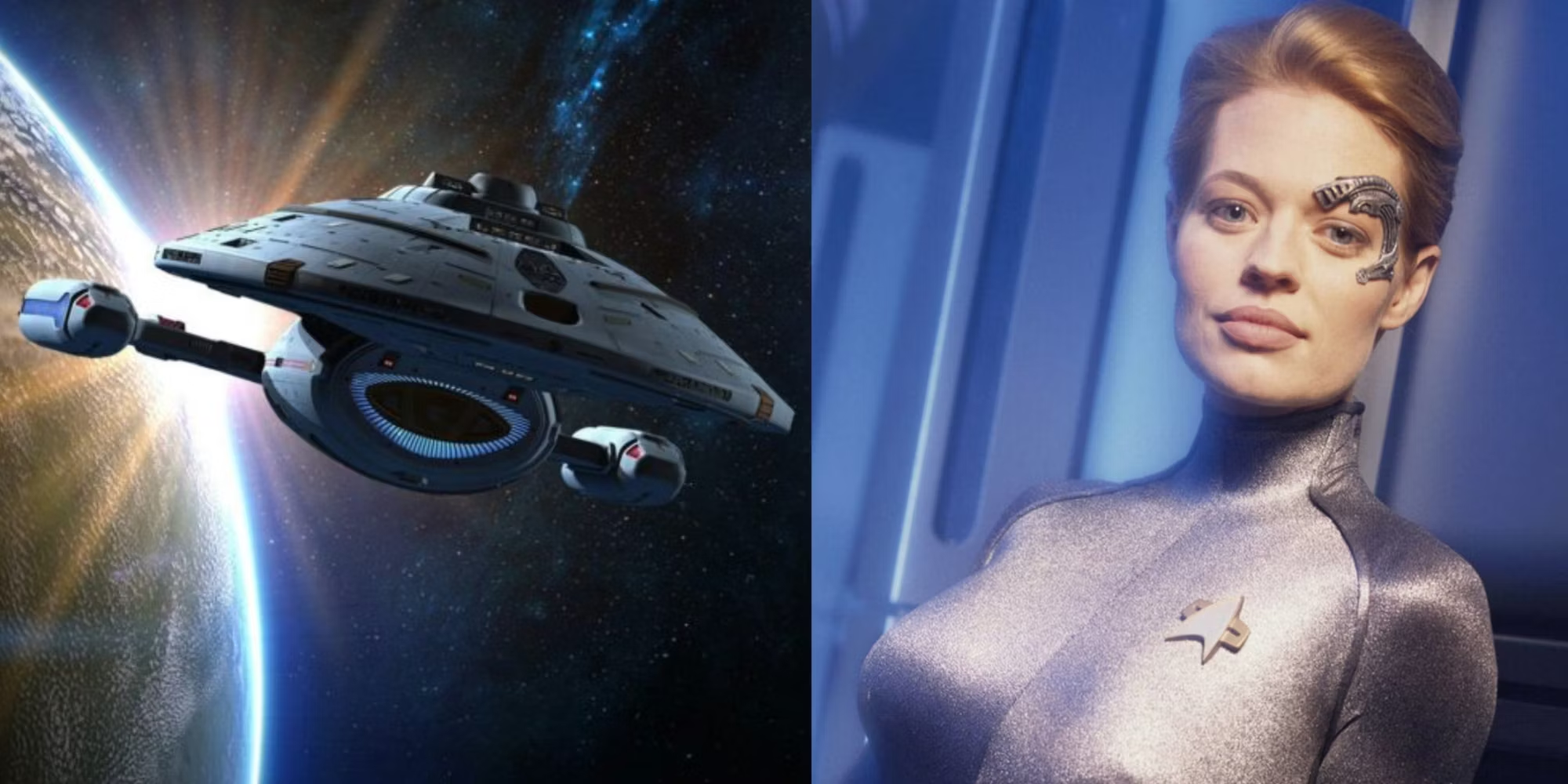
Because in the first episode, The Caretaker, Voyager is enveloped by a powerful energy wave that strands it in the galaxy’s Delta Quadrant, more than 70,000 light-years from Earth. I think this critical narrative drive raises the stakes and sense of jeopardy throughout the series and also gave the writers the opportunity to introduce alien species as recurring characters, namely the Kazon, Vidiians, Hirogen, and Species 8472. Having said that, the main nemesis ultimately ended up being the Borg.

Voyager was the first Star Trek series to feature a female commanding officer, Captain Kathryn Janeway (Kate Mulgrew), as the lead. Mulgrew is a terrific actor and provided formidable characterisation throughout. Interestingly, Geneviève Bujold, was originally cast as Janeway, but quit a day and a half into shooting the pilot and was replaced. Mulgrew is notably supported in the ensemble cast by Robert Beltrani, Robert Picardo, Tim Russ, and the later introduction of fan favourite, Borg designation ‘Seven-of-Nine’ portrayed by Jeri Ryan. Robert Picardo as the hologram Doctor was also especially entertaining with many fine storylines.

I enjoyed the dynamic set-up of Starfleet officers having to work with rebels such as the Maquis, and that conflict provided much drama, pathos and joy throughout the series as their relationships developed. Further, important new Trek discoveries were introduced during the show such as: holo-emitters (so the doctor leave the ship and participate in more episodes), a tachyon core, trans-warp coil, Astrometrics lab, detailed information on the Borg and Delta Quadrant inhabitants, quantum slipstream drive, nano-viruses and access to the Borg’s Transwarp hub.

So, to end this summary I’d like to pick SEVEN of my favourite episodes – one from each season. They represent some of the best examples of Voyager, an often brilliantly written, well acted, funny and moving science fiction series.

** MAY CONTAIN SPOILERS **


VOYAGER – SEVEN GREAT EPISODES (FROM EACH SEASON)

SEASON 1 – CARETAKER

The opening two hour pilot is a terrific introduction to the players and storylines which will inhabit the next seven seasons. On the hunt for Maquis rebels finds the Voyager crew dragged into the Delta Quadrant, where they lock horns with the omnipotent power that is the ‘Caretaker.’ As well as establishing all the main players from Starfleet, the show successfully welcomes series mainstays Kes and Neelix.


SEASON 2 – TUVIX

What is essentially a version of The Fly (1989) in space, Neelix and Tuvok get combined at a molecular level to create a new character called Tuvix (Tom Wright.) What initially seems quite goofy is in fact a heartfelt exploration of morality and ethics. Janeway has an almost impossible decision to make with character actor, Wright, excelling and imposing pathos as the tragic Tuvix.


SEASON 3 – SCORPION – PART 1 and 2

Just when you thought things couldn’t get worse for Voyager they meet a foe even the Borg are fearful of, namely Species 8472. In this brilliant two-parter, Janeway and her intrepid crew find themselves caught in the middle of a war between the Borg and Species 8472. These thrilling episodes also saw the first appearance of ‘7 of 9’ (Jeri Ryan.)


SEASON 4 – YEAR OF HELL – PART 1 and 2

A truly epic two-parter with a story that could easily have made an incredible feature film. The abuse of power via time travel is at the core of the story as Kurtwood Smith’s Annorax obsessively changes his time to his own will as part of the Krenim Imperium. Janeway are enslaved under threat of being wiped from existence but fight back with tremendous resilience as the writing, directing and acting reach a peak for the series as a whole.


SEASON 5 – COURSE: OBLIVION

A direct sequel to Episode 24 from Series 4, Demon, Course: Oblivion is a brave episode for a number of reasons. It has a dreamy, surreal and latterly nightmarish quality to the style and the storyline, notably the ending, is one of the bleakest in Trek history. What is so clever is that as the writing and performances make us care for the characters when they begin to perish, even though we know nothing is what it seems.


SEASON 6 – BARGE OF THE DEAD

‘7 of 9’ (Jeri Ryan) took a lot of the character development plaudits during the last three seasons, but Roxann Dawson as B’Elanna Torres had some terrific episodes too such as this and Lineage in season 7. She is brilliant in this episode as her psyche is breached by a near-death experience and has to confront her family’s past and the heft of Klingon lore and history.


SEASON 7 – BODY AND SOUL

Obviously Star Trek contains episodes that are very serious and dramatic, but it has its fair share of comedic shows too. This re-imagining of gender swap comedy, All of Me (1984), finds ‘7 of 9’ (Jeri Ryan) switching bodies and mind with the Doctor (Robert Picardo) to hilarious effect. Now Picardo has always demonstrated sharp wit throughout Voyager, but Jeri Ryan is particularly impressive as she successfully mimics the Doctor’s mannerisms to hilarious effect, contrasting her usual deadpan and stoic Borg personality.

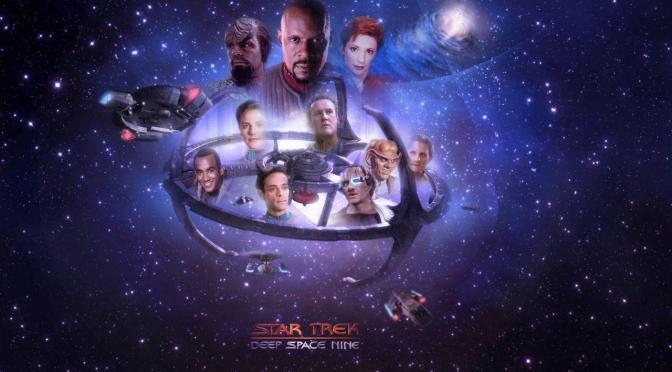
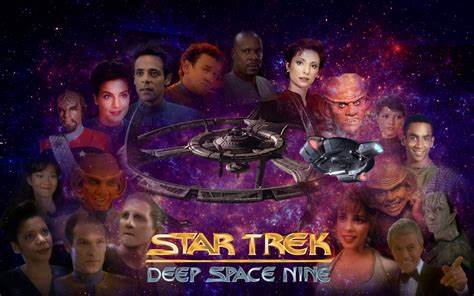
TO BOLDLY REVIEW #14 – STAR TREK: DEEP SPACE NINE (1993 -1999) – SEASONS 1 – 7

TO BOLDLY REVIEW #14 – DEEP SPACE NINE (1993 -1999)

Created by: Rick Berman, Michael Piller

Based on Star Trek: by Gene Roddenberry

Showrunners: Michael Piller (1993–1995) and Ira Steven Behr (1995–1999)

Main Cast: Avery Brooks, René Auberjonois, Terry Farrell, Cirroc Lofton, Colm Meaney, Armin Shimerman, Alexander Siddig, Nana Visitor, Michael Dorn, Nicole de Boer, etc.

Theme music composer: Dennis McCarthy

*** MAY CONTAIN SPOILERS ***


It’s been over a year since I reviewed the Star Trek feature films here. Thus, much of 2022 was spent watching the seven series of Star Trek: Deep Space Nine. The fact that I got through all seven seasons of the show illustrates two things:

  1. I am determined to finish this viewing project of watching every Star Trek produced film and television show released from the original series to now!
  2. Star Trek: Deep Space Nine was a really excellent show that made me want to watch it the end.

While containing lots of genre and narrative similarities to the previous Trek television productions, Star Trek: Deep Space Nine (DS9), expanded further the characters, worlds and vision established brilliantly by The Next Generation. Crossing over and surpassing the TNG timeline, DS9‘s narratives centralized around the space station positioned close to the planet of Bajor.

The Bajorans occupy the Alpha Quadrant and had one of the oldest and richest cultures in Star Trek lore. Driven by a spirituality similar to Buddhism, they are a proud people who suffered greatly during the invasion by the Cardassians, who built Deep Space 9 to control the Bajorans and the Alpha Quadrant. After the defeat of the Cardassians, Starfleet were assigned to manage DS9 and the series starts with Captain Benjamin Sisko (Avery Brooks) taking his place as commander of the station. To his surprise, Sisko becomes “Emissary” to the Bajoran prophets. A holy position which drives many storylines throughout the series and conflicts with the logical aspects of his role as Captain.


Deep Space Nine has many fine standalone episodes, however, what makes it differ greatly from the previous franchise series is the complex narrative and character arcs which dominated the latter seasons. These were directly linked by the brutal war which developed between Starfleet, their allies and the Dominion and the Cardassians. Personally, I could have done without many of the romantic “pairings-off” we got between the characters, however, they did raise the emotional stakes for them and brought greater narrative resonance. Lastly, the expansion of the Star Trek universe through use of the wormhole, allowed many other alien species to be introduced to the ever-growing Star Trek universe.

While sci-fi shows can live and die on their scientific concepts and themes, great characters are always at the heart of Star Trek. Sisko is a commanding presence throughout, yet Odo (René Auberjonois), a shapeshifter, was arguably the most complex of all characters, especially when a massive narrative reveal is dropped during Season 3. The familiar face of Worf (Michael Dorn) joined in Season 4 and he provided seriousness when compared to the more energetic characters of Jadzia Dax (Terry Farrell) and the scheming, but humorous Ferengi, Quark (Armin Shimerman). The Bajorans on the station were represented by Nana Visitor’s formidable, Kira Nerys, while Doctor Julian Bashir (Alexander Siddig) and Miles O’Brien (Colm Meaney) had a fine bromance. Finally, Deep Space Nine also had some fantastic guest actors, notably Louise Fletcher, Frank Langella, Iggy Pop, Tony Todd, James Darren and Andrew Robinson as Garak. The latter two actors became virtual regulars and Garak, the mysterious and exiled Cardassian, was probably my favourite character in the whole show.

To end this short review I’d like to pick seven of my favourite episodes – one from each season. They represent some of the best examples of, Deep Space Nine, an often brilliantly written, powerfully acted, funny and moving science fiction series.


DEEP SPACE NINE – SEVEN GREAT EPISODES

1. EMISSARY – EPISODE 1

A fine introduction to the characters, setting and themes which will dominate the next seven seasons.


2. THE JEM HADAR – EPISODE 26

A brilliant episode which introduced the fearsome Dominion soldiers, The Jem Hadar.


3. IMPROBABLE CAUSE / THE DIE IS CAST – EPISODES 20 & 21

Odo investigates a murder attempt on Garak on the space station. Their complex relationship thickens within a superbly scripted espionage thriller, full of twists and revelations.


4. THE VISITOR – EPISODE 3

An amazingly involving narrative which finds Sisko lost in a temporal void, with his son, Jake, prepared to make the ultimate sacrifice to save his father.


5. TRIALS AND TRIBBLE-ATIONS – EPISODE 6

An incredible episode full of amazing production values as it merges both present and past characters from Star Trek. The DS9 crew are sent back in time where they encounter their Enterprise predecessors and those damned pesky Tribbles.


6. FAR BEYOND THE STARS – EPISODE 13

Developed like a BBC Play for Today drama, this episode is thematically meta-rich, exploring science-fiction writing and racism in 1950’s America. How Avery Brook’s dual identities of Benny Russell and Captain Sisko connect across the universe is enigmatic, poetic and utterly compelling.


7. WHAT YOU LEAVE BEHIND (Parts 1 and 2) – EPISODEs 25/26

Despite replacing Jadzia with an inferior (Ezri) Dax, and containing a few unnecessary filler episodes with that character, the final season ultimately brought the war with the Dominion to an astounding dramatic conclusion. Sisko’s journey as the Emissary also reached a spiritually emotional and intelligent denouement. One of the best final television seasons of all time, perhaps?


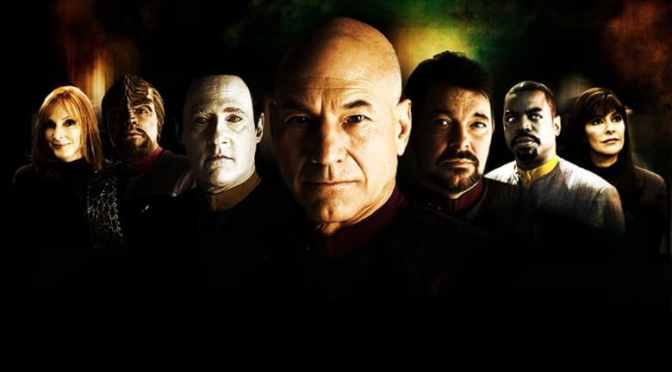
TO BOLDLY REVIEW #13 – STAR TREK – THE NEXT GENERATION FILMS!

TO BOLDLY REVIEW #13 – STAR TREK – THE NEXT GENERATION FILMS!

I have to admit I started getting Star Trek fatigue having watched seven seasons of The Next Generation, the original series, and films over the last couple of years. Thus, I had a bit of a break. But now am ready to visit the many series of Deep Space Nine.

What of the The Next Generation feature films though? The creative danger of adapting television series into feature films is that they often fall into the trap of being two episodes stuck together without the texture , scope or feeling of a cinematic presentation. Not that the studio executives will care ultimately, because their films will likely make money due to the desirous power of the show’s fanbase. How successful were the TNG film releases in avoiding the pitfalls of small to big screen adaptations? Let us see.

*** CONTAINS SPOILERS ***


Star Trek: Generations (1994)

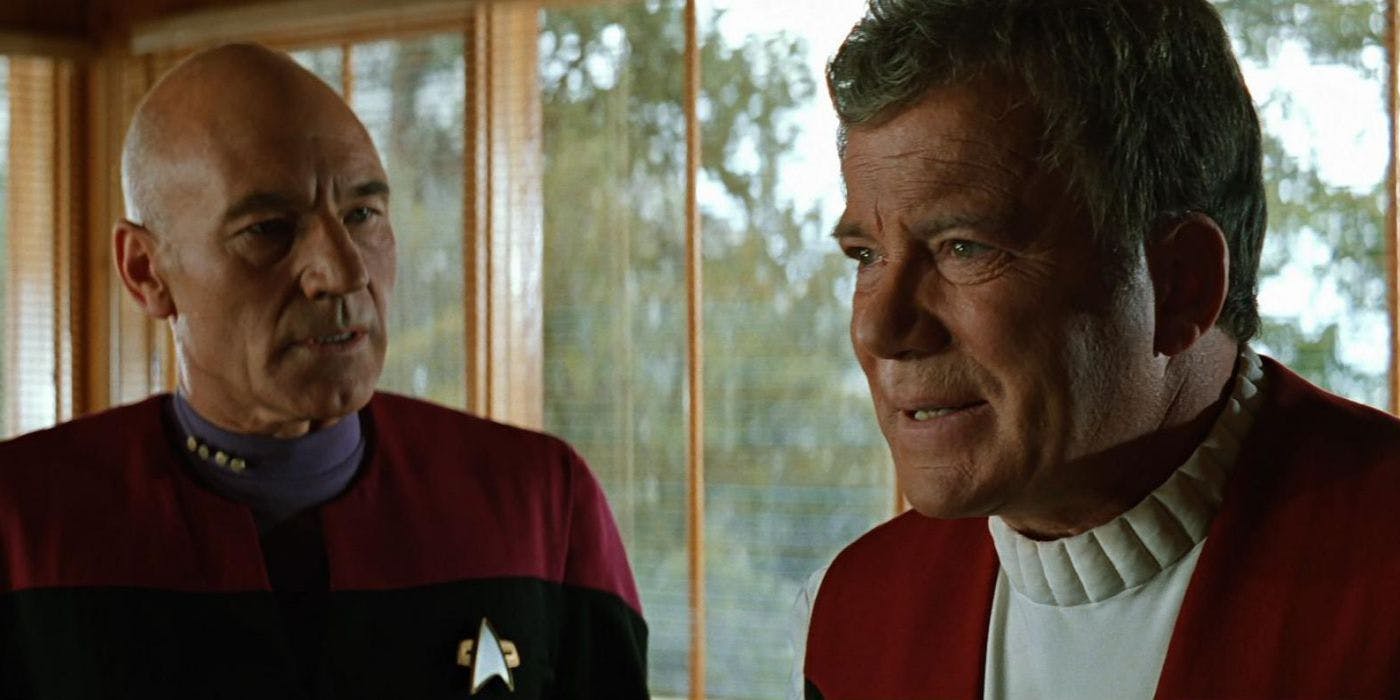
Generations sees Captain Kirk (Shatner) and Captain Picard (Patrick Stewart) meet across the time-streams in a giddy mix of philosophy and temporal variance. Malcolm McDowell as an obsessive scientist, Soran, plays a good baddie. However, this is more a collection of fascinating concepts conjoined unevenly to get Picard and Kirk on screen together. What it lacks in proper cinematic drama and suspense, it serves the fans well with a fun mix of the original and Next Generation series actors. Who doesn’t love seeing Patrick Stewart and William Shatner inhabit their characters with gusto trapped in the mind-bending realm of the Nexus?

Mark: 7 out of 11


Star Trek: First Contact (1996)

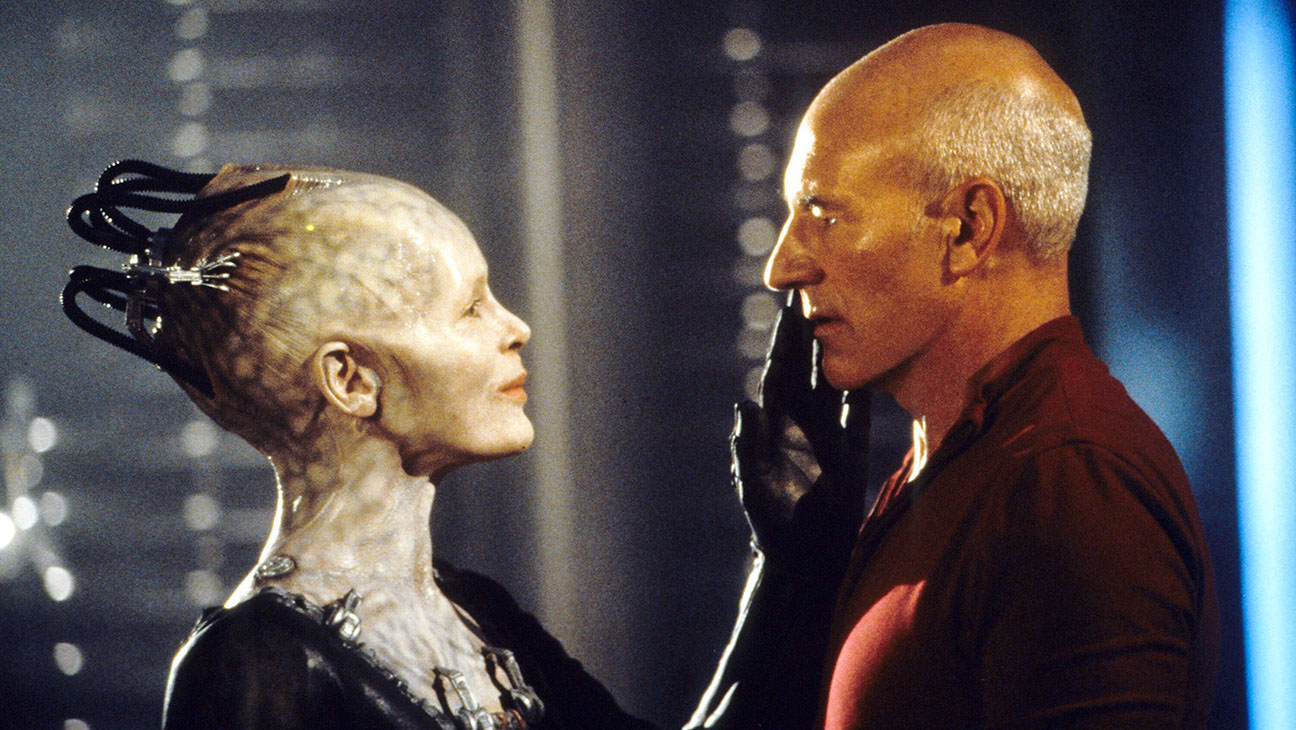
In First ContactPicard and crew fight the formidable Borg with the former flexing both his verbal and physical muscles. This is great and easily one of the best Star Trek films. Patrick Stewart is always brilliant, but you can see his Picard is driven, Captain Ahab-like, to pursue revenge against the Borg, even ignoring Starfleet orders along the way. Alice Krige as the Borg Queen is particularly memorable too. Time travel is integral again to an involving plot. Senior crew members led by Riker (Jonathan Frakes) go back in time to when warp was invented by unlikely legend, Zefram Cochrane (James Cromwell). With two strong narrative strands combining to create superb drama and conflict, First Contact, is both entertaining and moving, standing as a fine tribute to thirty years of Star Trek.

Mark 8.5 out of 11


Star Trek: Insurrection (1998)

With a title suggesting uprising and revolution, Insurrection rather slows the pace down when compared to the dynamic, First Contact. Moreover, in the “fountain of youth” themed plot, Captain Picard falls in love, with Patrick Stewart flexing his romantic muscles here. I actually enjoyed Insurrection with the crew of the Enterprise endeavouring to protect a peace-loving community called the Ba’ha from several surprising foes. I am aware the script went through a number of drafts and iterations, so the narrative holds up surprisingly well. The thematic exploration of the prime directive, vanity and mortality provide emotional depth. Although the biblical metaphors of Picard leading the natives to the “promised land” is a bit much. Still, F. Murray Abraham is brilliant as antagonist, Ru’afo, even under all the prosthetics. Overall, Insurrection, while a mixed bag of ideas and story strands, is certainly very entertaining.

Mark: 7.5 out of 11


Star Trek: Nemesis (2002)

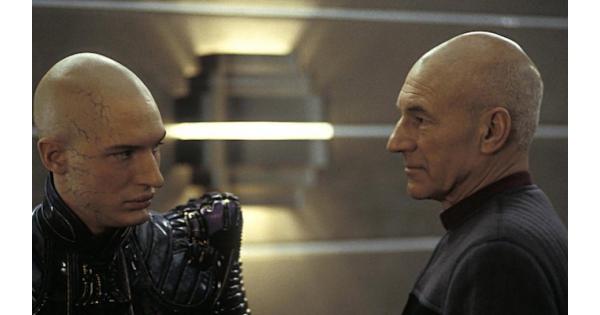
More interesting for the casting choices rather than the strength of the screenplay, plot and themes, Nemesis (2002) was unfortunately a box office failure. It isn’t surprising though as Stuart Baird was arguably not the right director for the franchise, as the film is helmed like a generic action film without the essence of true Next Generation style. Having said that I quite liked the concept of Picard facing Shinzon (Tom Hardy), an enigmatic character who knows a lot about the Enterprise captain. Despite some energetic set-pieces Nemesis (2002) doesn’t quite catch fire dramatically, but Stewart pitting his acting chops against a very young, Tom Hardy, provides some frisson of excitement. Mostly though this could be any bog-standard sci-fi story and is a disappointing final TNG cinematic salvo.

Mark 6.5 out of 11

TO BOLDLY REVIEW #10 – STAR TREK: NEXT GENERATION (1991 – 1992) – SEASON 5

TO BOLDLY REVIEW #10 – STAR TREK: NEXT GENERATION (1991 – 1992) – SEASON 5

Based on Star Trek & Created by: Gene Roddenberry

Season 5 writers (selected): Michael Piller, Michael Wagner, Rick Berman, Jeri Taylor, Lee Sheldon, Melinda Snodgrass, Richard Manning, Ronald D. Moore, David Bischoff, Joe Menosky, Drew Deighan, Brannon Braga, J. Larry Carroll, Hilary J. Bader, Harold Apter, Stuart Charno, Sara Charno, Maurice Hurley, Susan Sackett, Sara Charno, Stuart Charno, Randee Russell, Peter Allan Fields, Rene Echevarria etc.

Season 5 directors (selected): Jonathan Frakes, Winrich Kolbe, Corey Allen, Robert Weimer, Les Landau, Robert Scheerer, Cliff Bole, Paul Lynch, Chip Chalmers, Timothy Bond, David Carson, Gabrielle Beaumont, Patrick Stewart, David Livingston, Marvin V. Rush, Chip Chalmers, Peter Lauritson, Robert Lederman, Paul Lynch, etc.

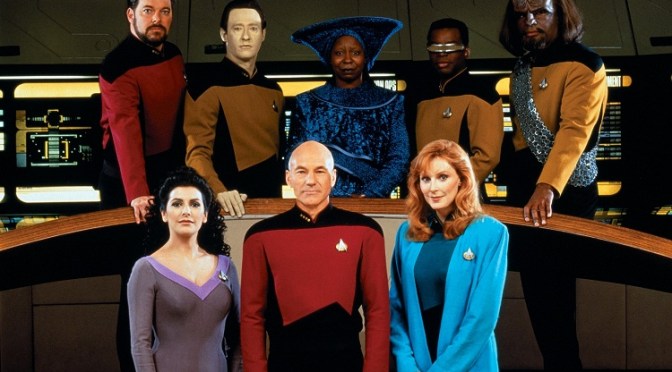
Main Cast: Patrick Stewart, Jonathan Frakes, LeVar Burton, Whoopi Goldberg, Colm Meaney, Michael Dorn, Marina Sirtis, Brent Spiner, Wil Wheaton, Gates McFadden, Michelle Forbes, Majel Barrett, Rosalind Chao, plus guests: Matt Frewer, Ashley Judd, Kelsey Grammer and Famke Janssen etc.

Music/Composers: Alexander Courage, Jerry Goldsmith, Dennis McCarthy, Ron Jones, Jay Chattaway

Production Company(s): Paramount Television, CBS Television

**** CONTAINS SPOILERS ****


I have just finished boldly watching Season 5 of STAR TREK: THE NEXT GENERATION and it was an extremely excellent raft of science fiction television episodes. I have to say though that TWENTY-SIX episodes was a hell of a lot of TV to produce. I know they had big budgets and an army of staff working on the show, but to produce such high quality viewing, albeit within the established formula, is overall incredibly impressive.

Season 5 was up there in consistency of quality writing, acting and directing with the superlative Seasons 3 and 4. Once again the creatives and storyline team explored issues of the day (i.e. 1990s) and married them to the STAR TREK values and philosophies. Of course, we get the usual alien enemies, such as the Romulans and Ferengi, paying a visit to the Enterprise. Yet, we also found new foes, obstacles and allies encountering the Enterprise. Lastly, the formidable Michelle Forbes as the Bajoran, Ensign Roe, was a welcome addition to the crew.

Sadly, Gene Roddenberry passed away during this particular season’s making. This would cause create sadness in the STAR TREK universe, but the production was, by now in very safe hands, as they paid fine tribute to their creator during Season 5. Here are SIX of the best episodes well worth visiting or revisiting. Live long and prosper.


REDEMPTION – PART II – EPISODE 1

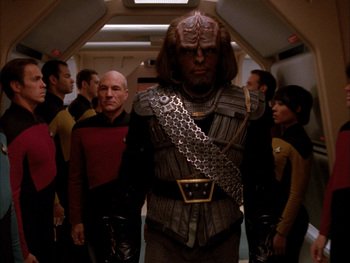
The concluding part to the prior season’s cliffhanger found Lt. Worf (Michael Dorn) continuing to fight for honour alongside his brother, Kurn (Tony Todd), against the Duras hordes. There are many moments of high tension throughout the episode with Dorn impressing again as the divided, but ultimately united and redeemed Klingon. Overall, the episode is full of memorable plot turns and fantastic Romulan and Klingon villains, notably Lursa and B’Etor.

See the source image


UNIFICATION – PARTS I & II – EPISODES 7 & 8

Chosen more for nostalgia as opposed to stellar storytelling, UNIFICATION is a two-parter which sees the return of a famous Trek character, namely Spock (Leonard Nimoy). We also get Mark Lenard’s final appearance as Spock’s father, Sarek, as he and Picard (Patrick Stewart) share a thoroughly moving final scene together. The story finds Spock attempting to repair years of conflict between Vulcans and Romulans, however, Starfleet believe he has defected. Thus, Picard and crew attempt another search for Spock. The narrative pace is steady, nonetheless it is great to see Nimoy don the ears and ultra-logic for a further outing as Spock.


See the source image

CONUNDRUM – EPISODE 14

While STAR TREK: THE NEXT GENERATION had more than its fair share of emotionally powerful episodes, sometimes a fast-paced and twisting plot with a bit of space espionage was more than welcomed. In CONUNDRUM, the Enterprise crew have their memory wiped by an unknown force dedicated to destroying an alien race. The audience finds suspense and dramatic irony in knowing the crew’s minds have been tampered with as they race against time to prevent war. Riker (Jonathan Frakes) and Ensign Ro’s (Michelle Forbes) simmering sexual tension adds romance and humour to a packed storyline.


See the source image

CAUSE AND EFFECT – EPISODE 18

Easily one of my favourite TNG episodes of this and many a season. This is because it features a fantastic temporal-causality loop plot and extremely high stakes where the Enterprise is concerned. Here the crew are trapped in a perpetual time cycle where the end of it results in the destruction of the Enterprise. Essentially GROUNDHOG DAY (1993) in space (even though this episode came before that classic film), it truly fizzes along with a brilliant script and powerful drama. Kelsey Grammer also guests, adding to the overall quality on display.


See the source image

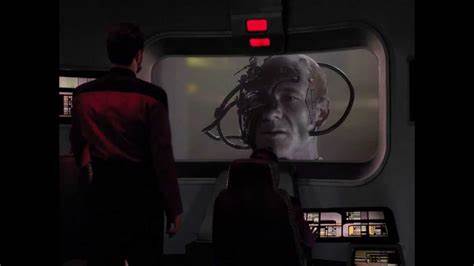
I, BORG – EPISODE 23

Could an evil machine ever be humanized? That is just one of the fascinating questions posed in this thoughtful and provocative episode? While they owe much to the Cybermen, the Borg remain a powerful weapon in the STAR TREK storytelling arsenal. The only problem is they are virtually invincible, so tough to write stories for. Rather cleverly in I, BORG, the episodes isolates a single unit and Picard, Guinan (Whoopi Goldberg) and La Forge (LeVar Burton) especially, confront their hatred and desire for revenge. As the Borg unit, or Hugh (an excellent Jonathan Del Arco) as he becomes known, spends time on the Enterprise he positively changes. This provides much to consider for the crew with their emotions shifting toward Hugh/the Borg.


I Borg Star Trek TNG HD.jpg

THE INNER LIGHT – EPISODE 25

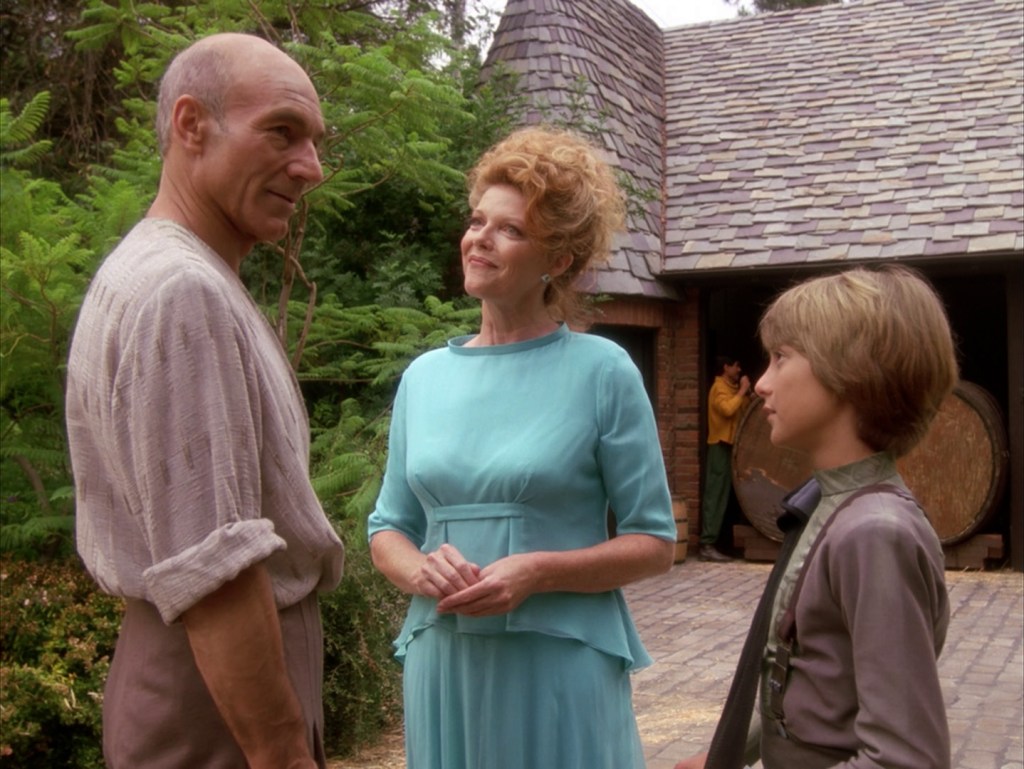
Not only is this one of the best episodes of STAR TREK: THE NEXT GENERATION, but it is also one of the best episodes of STAR TREK ever. The story is precipitated by an unknown probe which scans the Enterprise and directs an energy beam at Picard, who wakes up to find himself on Kataan, a non-Federation planet. Here Picard attempts to escape his existence as Kamin, but over time he grows into this strange new life. What begins as a simple body swap plot, unfurls into something all the more emotionally grander. We know Patrick Stewart is a fine actor, but he imbues Picard/Kamin with a gravitas of enormous propensity. I also loved how Picard, the Captain, is humbled by a more domestic life full with life and love. Lastly, Jay Chattaway’s score is absolutely beautiful.


TO BOLDLY REVIEW #9 – STAR TREK: NEXT GENERATION (1990 – 1991)– SEASON 4

TO BOLDLY REVIEW #9 – STAR TREK: NEXT GENERATION (1990 – 1991)– SEASON 4

Based on Star Trek & Created by: Gene Roddenberry

Season 4 writers (selected): Michael Piller, Michael Wagner, Rick Berman, Jeri Taylor, Lee Sheldon, Melinda Snodgrass, Richard Manning, Ronald D. Moore, David Bischoff, , Joe Menosky, Drew Deighan, Brannon Braga, J. Larry Carroll, Hilary J. Bader, Harold Apter, Stuart Charno, Sara Charno, Maurice Hurley, Shari Goodhartz, Timothy DeHaas, Randee Russell, Ira Steven Behr, Rene Echevarria etc.

Season 4 directors (selected): Jonathan Frakes, Winrich Kolbe, Rob Bowman, Robert Weimer, Les Landau, Robert Scheerer, Cliff Bole, Robert Legato, Tom Benko, Chip Chalmers, Timothy Bond, David Carson, Gabrielle Beaumont, Patrick Stewart, David Livingston, Marvin V. Rush, Chip Chalmers etc.

Main Cast: Patrick Stewart, Jonathan Frakes, LeVar Burton, Whoopi Goldberg, Colm Meaney, Michael Dorn, Marina Sirtis, Brent Spiner, Wil Wheaton, Gates McFadden, John De Lancie, Dwight Schultz, Majel Barrett, Rosalind Chao etc.

Music/Composers: Alexander Courage, Jerry Goldsmith, Dennis McCarthy, Ron Jones, Jay Chattaway

Production Company(s): Paramount Television, CBS Television

**** CONTAINS SPOILERS ****


My simultaneous retrospective and futuristic journey into space and time continues, and I have finally finished watching Season 4 of Star Trek: The Next Generation. It’s commonly admitted to being one of the most consistently excellent seasons of TNG. I very much enjoyed the mixture of sci-fi concepts, drama, humour and tragedy within the well established formula of the Starship Enterprise boldly exploring various galaxies.

Major themes of the season related to family, honour, love, espionage, war and divided loyalties. While the Wesley Crusher character left for the Starfleet Academy (Wil Wheaton left the show), the majority of our favourite characters remained. Indeed, Miles O’Brien (Colm Meaney) was given more airtime and a marriage subplot. More dramatically the Klingons and Romulans featured heavily as pillars of conflict, with many of the best episodes featuring Romulan deceptions and Klingon brutalism.

Star Trek: The Next Generation continues to be a compelling show to watch and look back on with respect and nostalgia. While I continually enjoyed pretty much all the episodes, here are six of the best ones featuring Picard and his devoted crew.


THE BEST OF BOTH WORLDS – PART II – EPISODE 1

A continuation of Season 3’s cliff-hanger episode found Picard in the grips of the Borg. Even more thrilling was Riker, Data, La Forge and the rest of the crew have to stop the evil machines from launching a deadly assault on Earth. With dual battles of the mind and in space occurring simultaneously, this episode is memorable in so many ways. Patrick Stewart as Picard gives a fantastically intense performance as he battles the evil within.


FAMILY – EPISODE 2

Gentler in approach than the opening episode, Family, has a brilliantly written script with three very emotionally charged storylines. Wesley Crusher must decide whether to watch a video recorded by his deceased father. Worf is met by his adoptive human parents who seek to console him following his Klingon discommendation. Lastly, a still shaken Picard returns to Earth and reconnects with his brother. The trio of narratives combine to forge a highly satisfying and emotionally charged episode.


REUNION – EPISODE 7

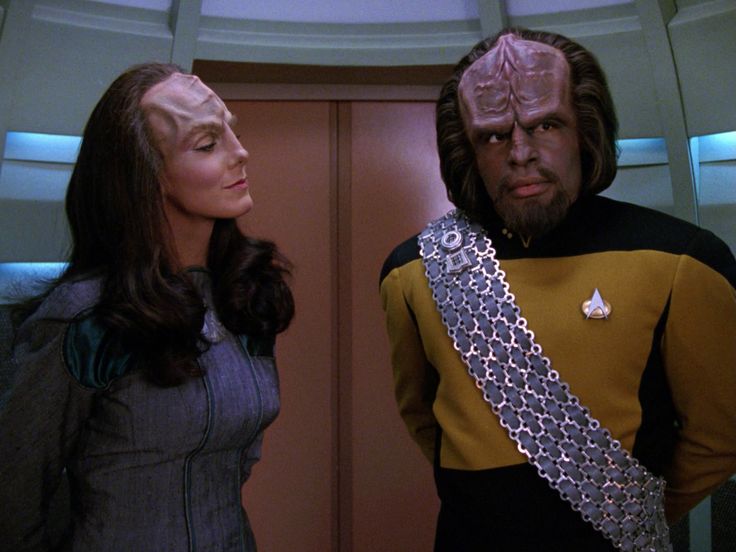
While Patrick Stewart as Captain Picard often garners the acting acclaim with his fine performances, I think Michael Dorn as Lt. Worf always gives great portrayals too. Worf’s conflicted cultural identity – between Klingon and Starfleet – always provides constant moments of explosive and introspective drama. In this episode his former love, K’Ehleyr (Suzie Plakson) returns to oversee, with Picard, the fight for the Klingon leadership. It is revealed that Worf also has a son by K’Ehleyr as the episode delivers excitement, intrigue and tragedy.


THE DRUMHEAD – EPISODE 21

This brilliant episode is unlike many others as the Enterprise crew are not faced with a divisive alien enemy. Instead, Picard and his crew come under Starfleet suspicion from the formidable Admiral Satie. Jean Simmons as Satie gives a memorable acting masterclass, as her over-zealous paranoia causes a witch-hunt culture to poison the court proceedings. I’m a big fan of the courtroom drama and this expertly paced and written episode reminded me of a reverse-engineered version of, The Caine Mutiny (1954).


THE MIND’S EYE – EPISODE 24

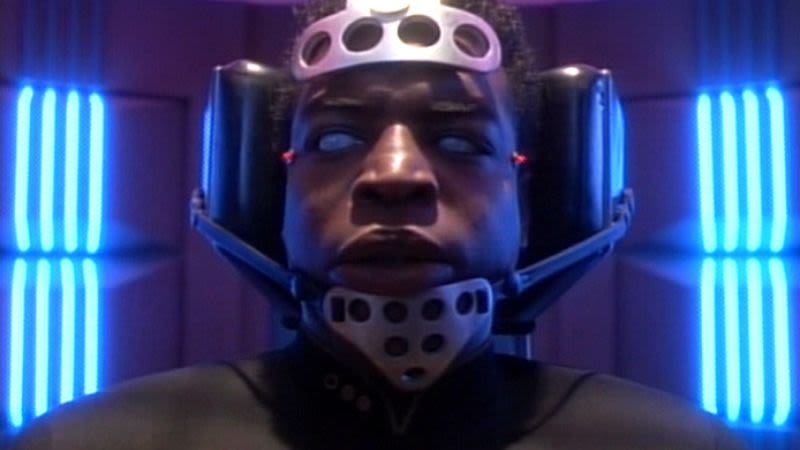
Chief Engineer Geordi La Forge is a very under-rated character within the TNG crew. He’s a brilliant engineer with a likable personality, so when he is “brainwashed” by the Romulans to commit an assassination it was intriguing to see his character go over to the dark side as it were. I especially liked the suspense and plot twists of this episode which paid homage to films such as: A Clockwork Orange (1971) and The Manchurian Candidate (1962).


REDEMPTION – PART I – EPISODE 26

This brilliant season culminated with a superlative episode which brought together all of the plots and subplots involving the battles with the Romulans and Klingons. Lt. Worf has a particularly difficult choice between his Starfleet commission and family honour. Ultimately, he chooses to fight for honour and in a wonderful conclusion to the episode joins the Klingon fleet to fight alongside his brother, Kurn (Tony Todd), against the Duras hordes. Despite the out-of-the-box temporally strained twist involving, Sela (Denise Crosby), a Tasha Yar Romulan lookalike, the episode was full of dramatic moments and provided a compelling cliff-hanger for the next season.