
Tag Archives: The Caretaker

My Cinematic Romance #26 – Robert Shaw

My Cinematic Romance #26 – Robert Shaw

I often plan my reviews and retrospective pieces around thematically linked film subjects and on other occasions it can become a random or serendipitous process. Of late, the cultural gods have nudged me towards watching and rewatching works by Harold Pinter, including the Joseph Losey directed films, The Servant (1963) and Accident (1967). I then recalled that several of Pinter’s plays had been adapted for film and were readily available on YouTube to watch for “free.”

Moreover, as I have also been on a mild William Friedkin retrospective rewatch, I saw his adaptation of The Birthday Party (1968) which led me to an earlier Pinter adaptation called The Caretaker (1963) directed by Clive Donner. Both are oblique, ambiguous renditions of human nature with dark existential absurdity and an almost impenetrable subtext. Pinter’s works are highly acclaimed, attracting a litany of incredibly talented actors and directors. One such is Robert Shaw. His haunting and magnetic performances in Pinter’s work reminded of what an incredible talent he was.
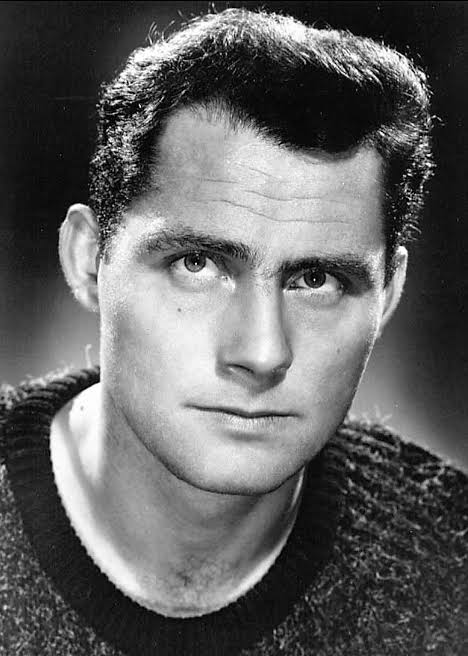


Sadly passing away aged fifty-two of a heart attack, Shaw had a tremendously varied career on stage and screen. If you were not aware he was also a successful author and playwright. Indeed, his 1968 play, The Man in the Glass Booth ran in London and Broadway to critical acclaim, later being adapted for a film in 1975. It’s reported that Pinter assisted with the adaptation of Shaw’s novel for the stage, although Shaw retains the writing credit. Therefore their collaborative connection remained resolute.

This piece highlights five of Robert Shaw’s best performances. Shaw was famously known to favour the stage and his writing over the commercial grind of Hollywood. While big-budget films brought him money, international fame and financial security, he openly disliked celebrity culture and many of his co-stars. In interviews he is often stated he viewed genre movie paydays as a way to provide for his family and fund his true passion: writing novels and plays. So, apologies to Robert Shaw’s legacy for choosing some of those Hollywood roles he’s known for. Safe to say though he is a true artist who passed away way too soon.


The Birthday Party (1968)

I was going to choose Shaw’s memorable tough guy gangster performance in The Sting (1973), but it’s too easy. Instead, I have selected his intensely complex role as Stanley in The Birthday Party. His character is one of the most tortured souls out there, full of sweat, guilt, regret and paranoia. We do not know what he may or may not of done, but I drew parallels with characters such as Josef K from The Trial and No. 6 from The Prisoner. Arguably, these works are more accessible than Pinter’s “comedy of menace,” but Shaw’s Stanley is painfully mesmerising. The two men who come for him possibly represent death. At the same time his bizarre exchanges with Dandy Nichols’ landlady, Meg, add sex to the mix, making the whole thing a painfully uncomfortable watch.


The Caretaker (1963)

A quietly strange and devastating film adaptation containing three fantastic performances from Alan Bates, Donald Pleasance and Robert Shaw. It’s mostly a character study of mental illness, loneliness, bullying and hiearchal-driven power dynamics. Pleasance is a vagrant, Mac, taken in by Shaw’s quiet soul, Aston, as an act of apparent kindness. However, Alan Bates mischievous and verbose brother, Mick, enters the fray and spies and torments. Mac. The quietly spoken, Aston, seems unaware of his brothers’ negative behaviour. Like much of Pinter’s work, a lot is left unexplained, yet the monologue Shaw delivers describing his treatment in a mental institution is one of the most subtle and powerful speeches I have witnessed on the screen.


From Russia with Love (1963)

While Shaw was known for his intelligent mind, his appearance as the nemesis, Red Grant in the second Bond film, requires him to demonstrate his considerable muscle too. From Russia with Love (1963) is one of my favourite Bond films as it retains that gritty Cold War spy style and Sean Connery is in prime form too. One could argue the villains are often more interesting than Bond, and Shaw’s steely assassin certainly matches Bond for physicality and charisma. Indeed, they are effectively mirrored characters on opposing teams. The fight-to-the-death on the train remains one of the most iconic battles in all of the Bond franchise.


Jaws (1975)

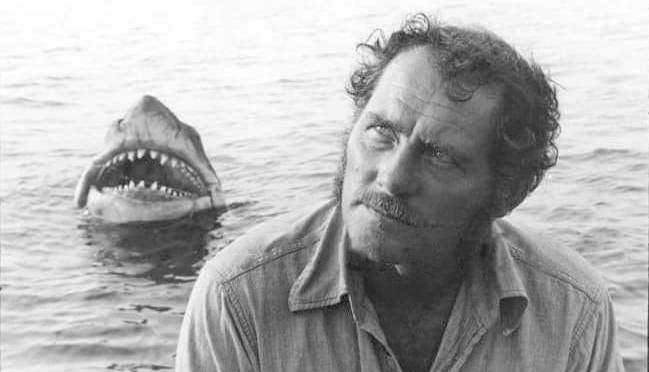
One of the greatest characters in one of the greatest films of all time. Not only that, Quint, has one of the greatest character introductions and greatest monologues in film ever too. How Shaw wasn’t nominated for best supporting actor at the Academy Awards I will never know. It’s a big performance and you could say, over-the-top, but to me it is so authentic in physical and verbal delivery, even Shaw’s sweat could have been given an award on its own.

The monologue itself comes as Quint and Hooper share “war stories” from their past experiences at sea. The men share a laugh before Brody asks Quint about a particularly nasty scar. Then the mood darkens and the old sea dog recounts a story about the U.S.S Indianapolis on which he was aboard when it sank in 1945. The chilling tale of a sinking ship and over one thousand men at the mercy of the sea, hunger, dehydration and shark attacks, is eerily recounted by Quint; loss and bitterness in his eyes. Shaw is incredible during this classic monologue as he not only establishes why Quint hates sharks, but also builds palpable suspense prior to the frenzied final shark attack on the doomed Orca.


The Taking of Pelham 123 (1974)

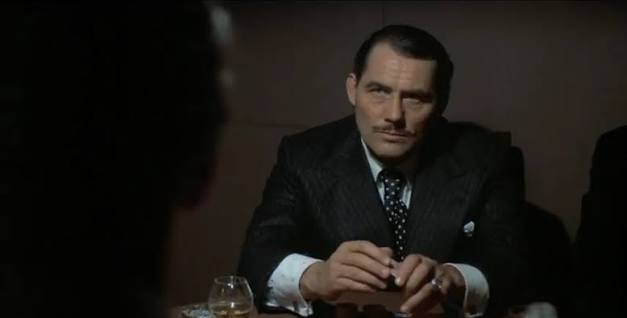
Another 1970s classic and again, Shaw, plays another memorable antagonist. His ‘Mr Blue’ is military, battle-hardened with a disciplined plan of action. His fierce precision and icy delivery finds a perfect counterpart in Walter Matthau’s more congenial and witty transit cop, Zachary Garber. Their exchanges are tense but laced with hard-boiled, sardonic humour, which add a hint of colour to the grim and grey New York underground sequences. While the well-constructed plot and rapid action raises the pulse, the film’s quality is critically raised by Matthau’s and Shaw’s committed performances.

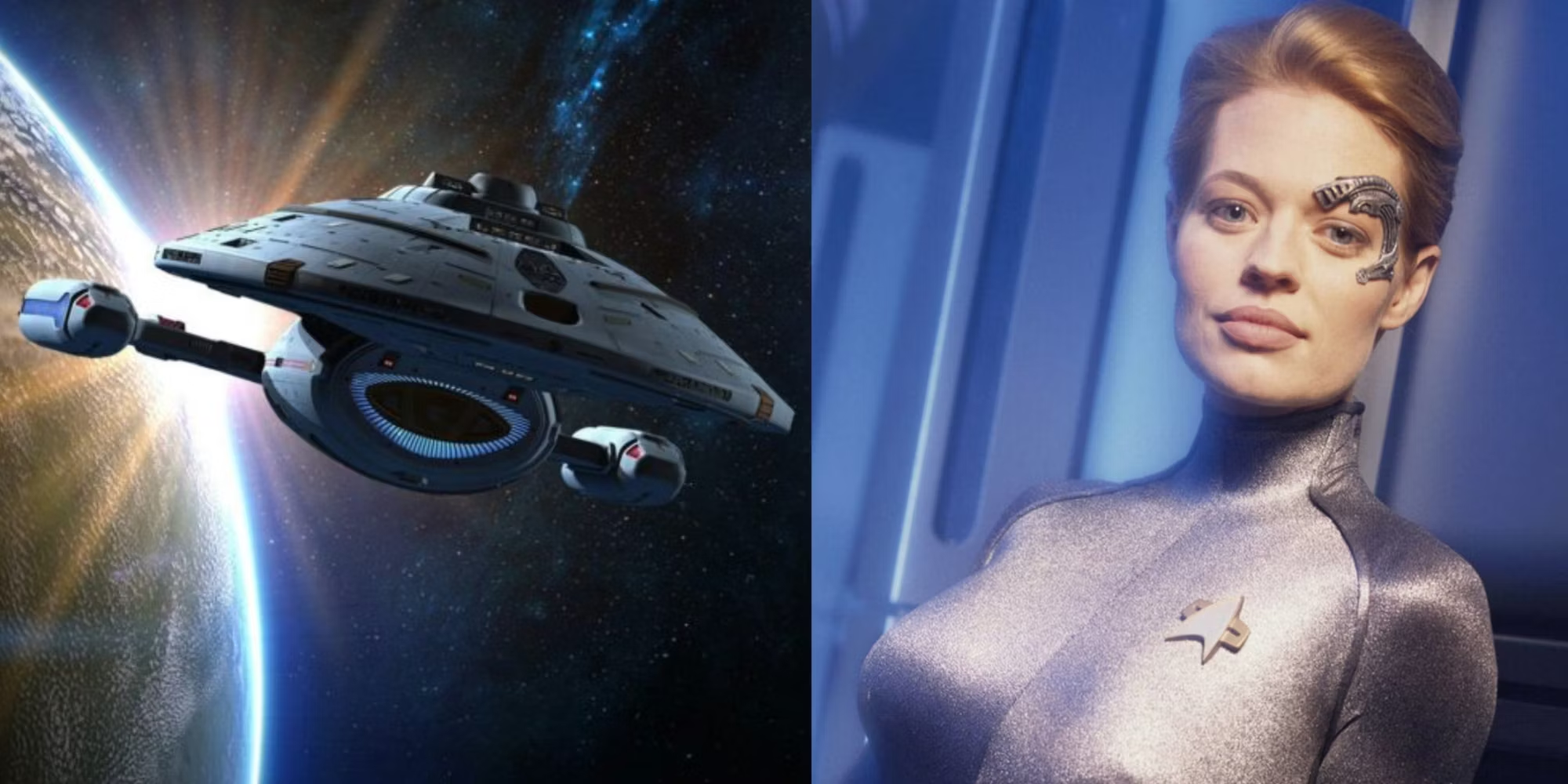
TO BOLDLY REVIEW #15 – STAR TREK: VOYAGER (1995 -2001) – SEASONS 1 – 7

TO BOLDLY REVIEW #15 – STAR TREK: VOYAGER (1995 -2001) – SEASONS 1 – 7

Created by: Rick Berman, Michael Piller and Jeri Taylor

Based on Star Trek: by Gene Roddenberry

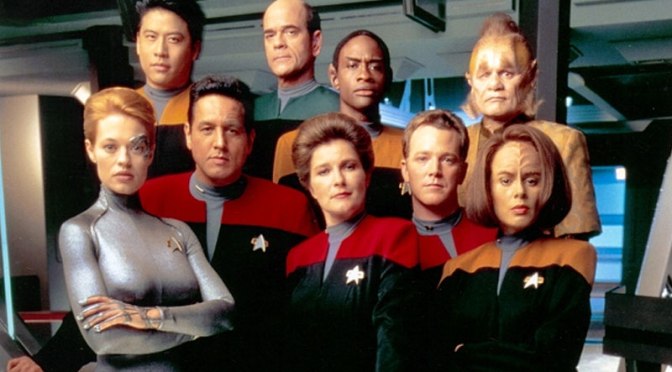
Main Cast: Kate Mulgrew, Robert Beltran, Roxann Dawson, Jennifer Lien, Robert Duncan McNeill, Ethan Phillips, Robert Picardo, Tim Russ, Garrett Wang, Jeri Ryan etc.

Notable guest stars: Kurtwood Smith, Marina Sirkis, Dwight Schultz, Joel Grey, Sarah Silverman, John De Lancie, The Rock, Michael McKean, Jason Alexander, Virginia Madsen, Tom Morello etc.

Theme music composer: Jerry Goldsmith


It’s been over a year since I reviewed the Star Trek: Deep Space Nine here. Thus, much of 2023 was spent watching the seven series of Star Trek: Voyager. The main concern with this cultural project of watching every Star Trek show and film released is that I could get serious franchise fatigue. However, Voyager was a fantastic series with some of my favourite ever Trek episodes experienced within the seven seasons.

Paramount Pictures commissioned the series after the cancellation of Star Trek: The Next Generation to run alongside Deep Space Nine in the schedules and launch their new UPN network. Created and developed by Rick Berman, Michael Piller and Jeri Taylor, Voyager uses the template of a Federation crew exploring new worlds and making contact with unknown species, but with a serious goal in place – to return home.

Because in the first episode, The Caretaker, Voyager is enveloped by a powerful energy wave that strands it in the galaxy’s Delta Quadrant, more than 70,000 light-years from Earth. I think this critical narrative drive raises the stakes and sense of jeopardy throughout the series and also gave the writers the opportunity to introduce alien species as recurring characters, namely the Kazon, Vidiians, Hirogen, and Species 8472. Having said that, the main nemesis ultimately ended up being the Borg.

Voyager was the first Star Trek series to feature a female commanding officer, Captain Kathryn Janeway (Kate Mulgrew), as the lead. Mulgrew is a terrific actor and provided formidable characterisation throughout. Interestingly, Geneviève Bujold, was originally cast as Janeway, but quit a day and a half into shooting the pilot and was replaced. Mulgrew is notably supported in the ensemble cast by Robert Beltrani, Robert Picardo, Tim Russ, and the later introduction of fan favourite, Borg designation ‘Seven-of-Nine’ portrayed by Jeri Ryan. Robert Picardo as the hologram Doctor was also especially entertaining with many fine storylines.

I enjoyed the dynamic set-up of Starfleet officers having to work with rebels such as the Maquis, and that conflict provided much drama, pathos and joy throughout the series as their relationships developed. Further, important new Trek discoveries were introduced during the show such as: holo-emitters (so the doctor leave the ship and participate in more episodes), a tachyon core, trans-warp coil, Astrometrics lab, detailed information on the Borg and Delta Quadrant inhabitants, quantum slipstream drive, nano-viruses and access to the Borg’s Transwarp hub.

So, to end this summary I’d like to pick SEVEN of my favourite episodes – one from each season. They represent some of the best examples of Voyager, an often brilliantly written, well acted, funny and moving science fiction series.

** MAY CONTAIN SPOILERS **


VOYAGER – SEVEN GREAT EPISODES (FROM EACH SEASON)

SEASON 1 – CARETAKER

The opening two hour pilot is a terrific introduction to the players and storylines which will inhabit the next seven seasons. On the hunt for Maquis rebels finds the Voyager crew dragged into the Delta Quadrant, where they lock horns with the omnipotent power that is the ‘Caretaker.’ As well as establishing all the main players from Starfleet, the show successfully welcomes series mainstays Kes and Neelix.


SEASON 2 – TUVIX

What is essentially a version of The Fly (1989) in space, Neelix and Tuvok get combined at a molecular level to create a new character called Tuvix (Tom Wright.) What initially seems quite goofy is in fact a heartfelt exploration of morality and ethics. Janeway has an almost impossible decision to make with character actor, Wright, excelling and imposing pathos as the tragic Tuvix.


SEASON 3 – SCORPION – PART 1 and 2

Just when you thought things couldn’t get worse for Voyager they meet a foe even the Borg are fearful of, namely Species 8472. In this brilliant two-parter, Janeway and her intrepid crew find themselves caught in the middle of a war between the Borg and Species 8472. These thrilling episodes also saw the first appearance of ‘7 of 9’ (Jeri Ryan.)


SEASON 4 – YEAR OF HELL – PART 1 and 2

A truly epic two-parter with a story that could easily have made an incredible feature film. The abuse of power via time travel is at the core of the story as Kurtwood Smith’s Annorax obsessively changes his time to his own will as part of the Krenim Imperium. Janeway are enslaved under threat of being wiped from existence but fight back with tremendous resilience as the writing, directing and acting reach a peak for the series as a whole.


SEASON 5 – COURSE: OBLIVION

A direct sequel to Episode 24 from Series 4, Demon, Course: Oblivion is a brave episode for a number of reasons. It has a dreamy, surreal and latterly nightmarish quality to the style and the storyline, notably the ending, is one of the bleakest in Trek history. What is so clever is that as the writing and performances make us care for the characters when they begin to perish, even though we know nothing is what it seems.


SEASON 6 – BARGE OF THE DEAD

‘7 of 9’ (Jeri Ryan) took a lot of the character development plaudits during the last three seasons, but Roxann Dawson as B’Elanna Torres had some terrific episodes too such as this and Lineage in season 7. She is brilliant in this episode as her psyche is breached by a near-death experience and has to confront her family’s past and the heft of Klingon lore and history.


SEASON 7 – BODY AND SOUL

Obviously Star Trek contains episodes that are very serious and dramatic, but it has its fair share of comedic shows too. This re-imagining of gender swap comedy, All of Me (1984), finds ‘7 of 9’ (Jeri Ryan) switching bodies and mind with the Doctor (Robert Picardo) to hilarious effect. Now Picardo has always demonstrated sharp wit throughout Voyager, but Jeri Ryan is particularly impressive as she successfully mimics the Doctor’s mannerisms to hilarious effect, contrasting her usual deadpan and stoic Borg personality.