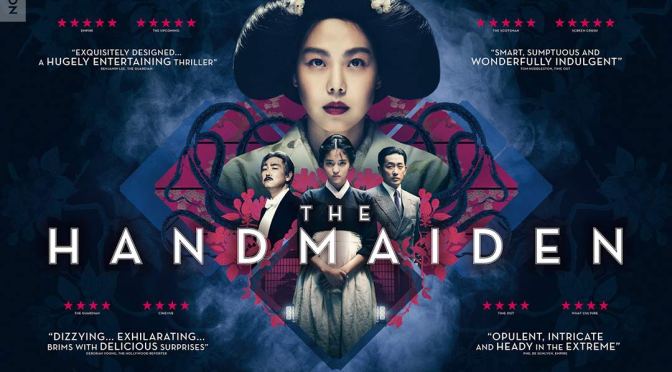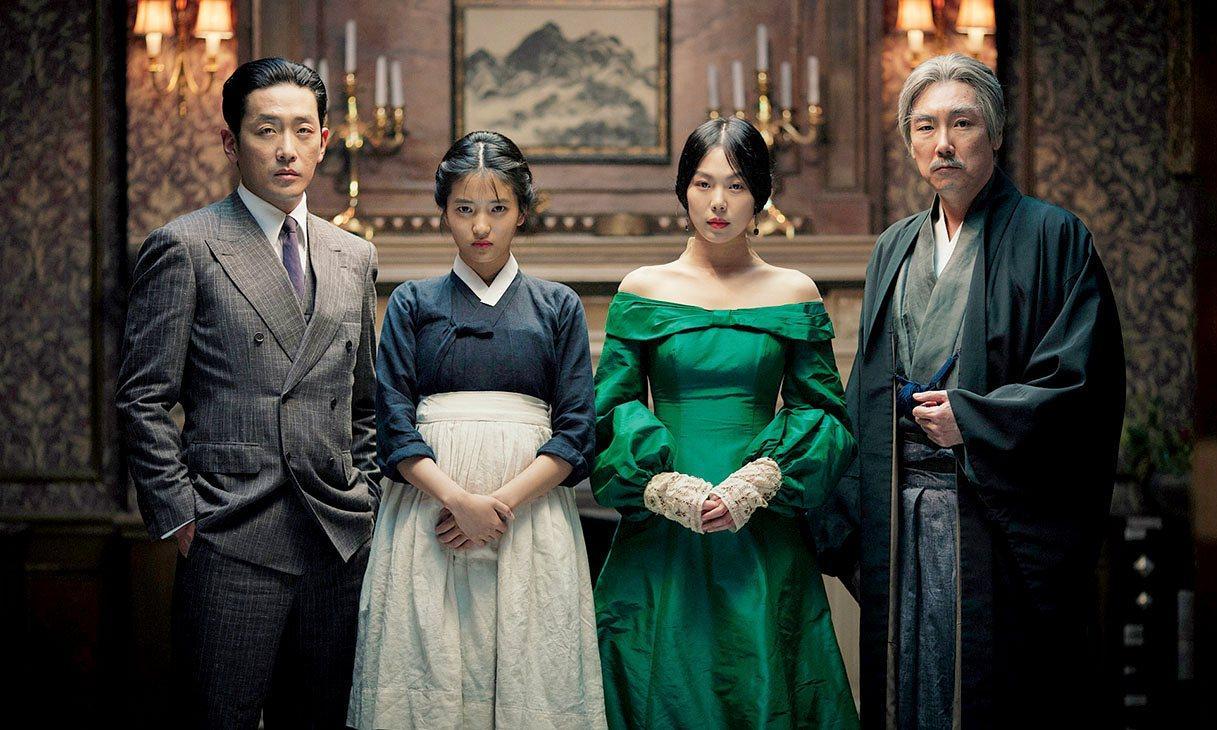
WRITERS: Park Chan-Wook, Chung Seo-kyung (from the novel Fingersmith by Sarah Waters)
CAST: Kim Min-hee, Kim Tae-ri, Ha Jung-woo, Cho Jin-woong
**MAY CONTAIN SPOILERS**
You may be too young to know or too old to remember but Channel 4 in the 1980s used to have an eclectic choice of arty independent and World Cinema films. Now you get a few on Film Four but Channel 4 was a main outlet for interesting cinema not shown on the BBC or ITV channels. Channel 4 also used to, for a short period between 1986 and 1987 have a ‘Red Triangle’ on certain films to advise of sexual scenes and material that may be considered controversial. Not surprisingly the films with a ‘Red Triangle’ guaranteed nudity and erotic scenes causing audience figures to actually rise. After some moaning from the likes of Mary Whitehouse – a right-wing puritanical harpy who was a self-appointed anti-everything woman – the ‘Red Triangle’ was vanquished by Channel 4, but not before gaining notoriety and publicity.
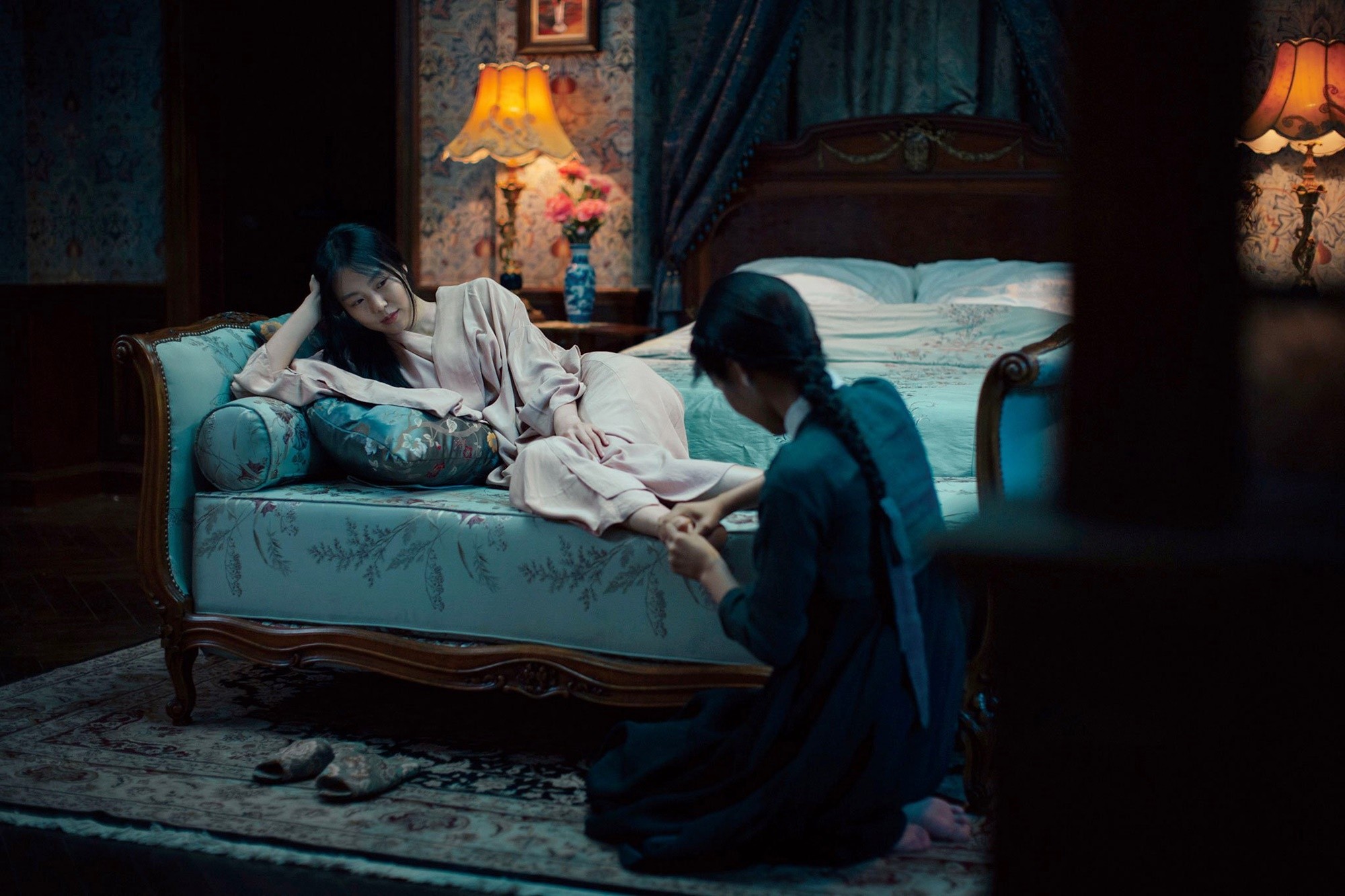
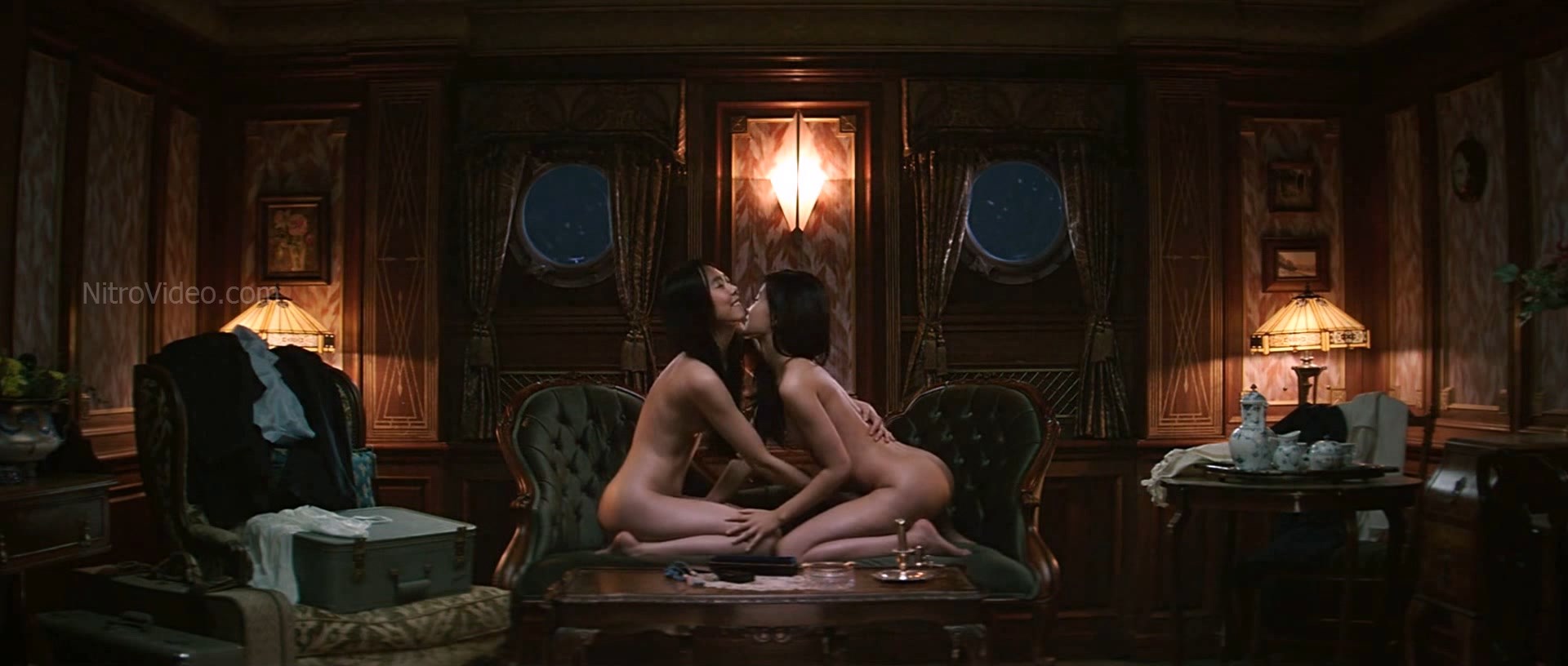
As a teenager I used to look forward to the more risqué content on Channel 4 as the Internet was at the virgin stage and yet to be invented; so titillation was often confined to late night films on a Friday night. Flash forward thirty years and because I’m more mature and it’s very easy to access pornography online I’m not a big fan of overtly sexual material in mainstream or independent features. Not sure why but I prefer subtlety and suggestion over all-out copulation. In Park Chan-Wook’s majestic erotic con-artist thriller there are some wonderfully subtle erotic scenes which raise the blood pressure and enhance the characterisation. There is also some serious scissoring between the two female leads going on too which in my view pushes the boundaries between eroticism, controversy and exploitation. However, this is the line Chan-Wook has always skipped along in classic films such as: Old Boy (2003), Sympathy for Mr Vengeance (2002), and Thirst (2009).
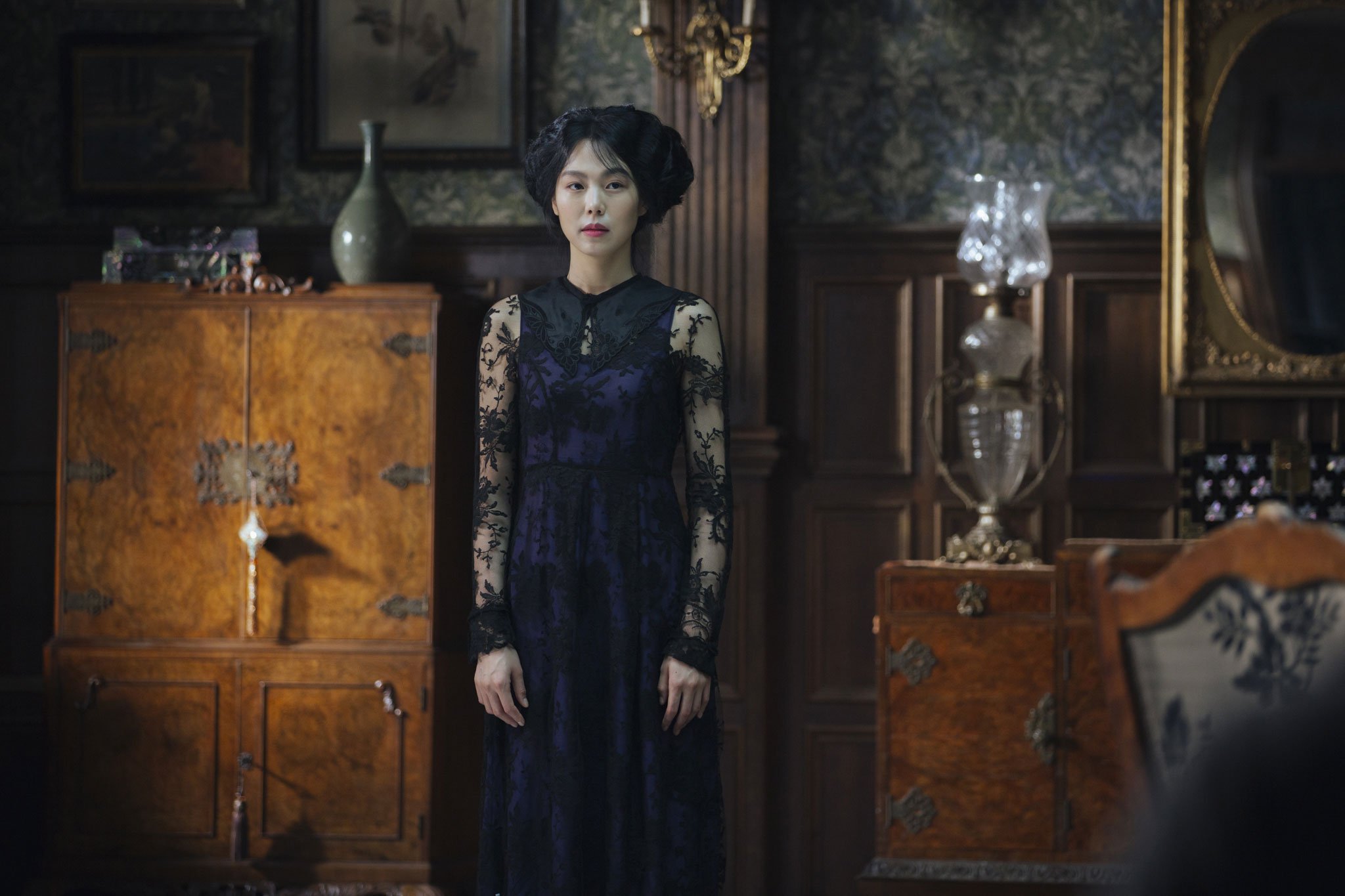
The Handmaiden is set in 1930’s Korea amidst the backdrop of the Japanese occupation and the cultural differences between the two nations are expertly drawn and examined in the story. Class differences are also highlighted in a rich text which finds Sook-hee seconded to look after the neurotic Lady Izumi Hideko, who is a ward and being groomed for marriage by her controlling Uncle Kouzuki. I will not give any further of the plot away but safe to say it is an incredibly complex narrative structured into three parts which overlap different perspectives within flashbacks and contrasting character voiceovers and angles. Did I enjoy it? Absolutely, this is a beautifully shot period masterpiece which I took great pleasure in viewing. In my view the running time was arguably over-long and a couple of the more overt sex scenes could have been trimmed. Nonetheless, the film had me gripped throughout.
Park Chan-Wook directed a gem of a noir thriller called Stoker (2013) for his first Hollywood film, but here is a bigger-budgeted and thematically richer cinema affair. It takes a complex con-artist-twisting-plot and imbues it with an erotically charged and explicit feminist love story which finds sharp-witted female characters overcoming the dominant and deviant patriarchal beast. Moreover, Chan Wook’s screenplay is a masterful adaptation of the original novel, the wonderfully titled Fingersmith, by Sarah Waters. Like the Coen Brothers, Quentin Tarantino, Martin Scorcese, Christopher Nolan, Jacques Audiard, Michael Haneke to name a few, Chan-Wook’s work is always a must-see-at-the-cinema-event and you don’t need a ‘Red Triangle’ to ensure you watch it.
WRITER: DAVID BIRKE based on the novel Oh by Phillipe Dijan
CAST: ISABEL HUPPERT, LAURENT LAFITTE, ANNE CONSIGNY, CHARLES BERLING, VIRGINIE EFIRA
**MAY CONTAIN SPOILERS**
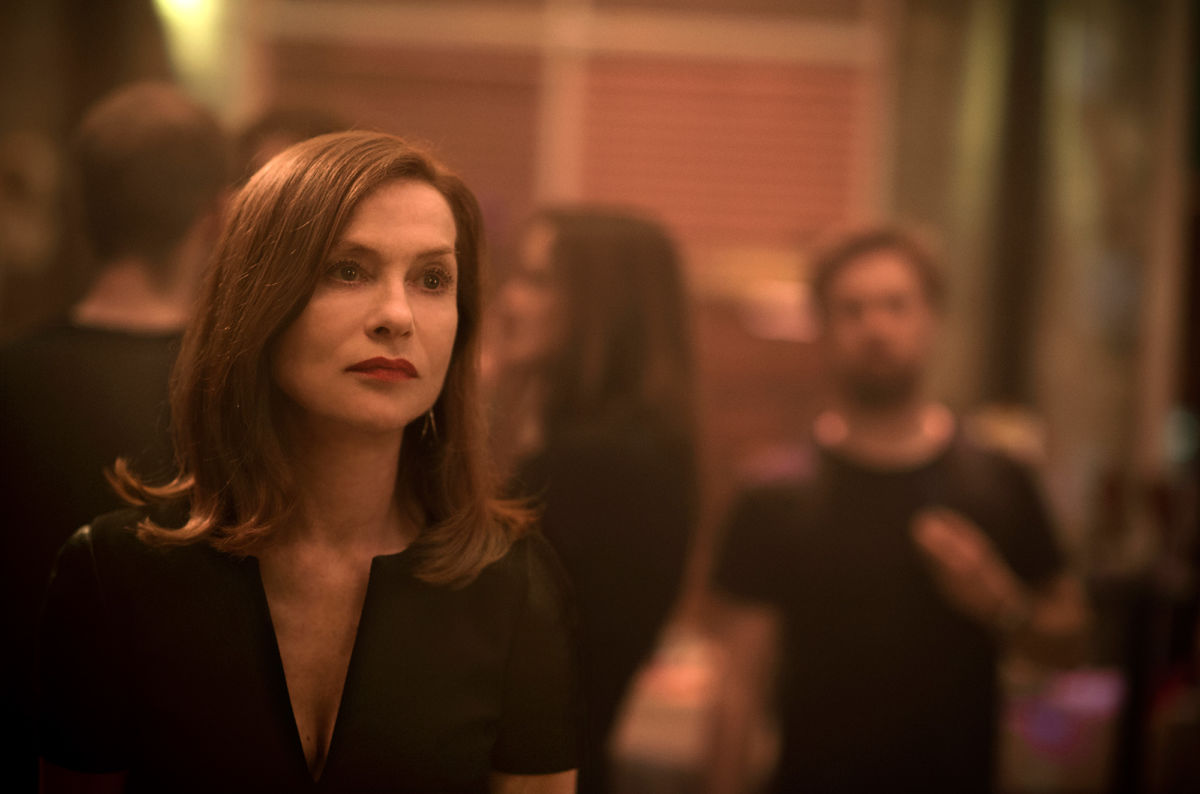
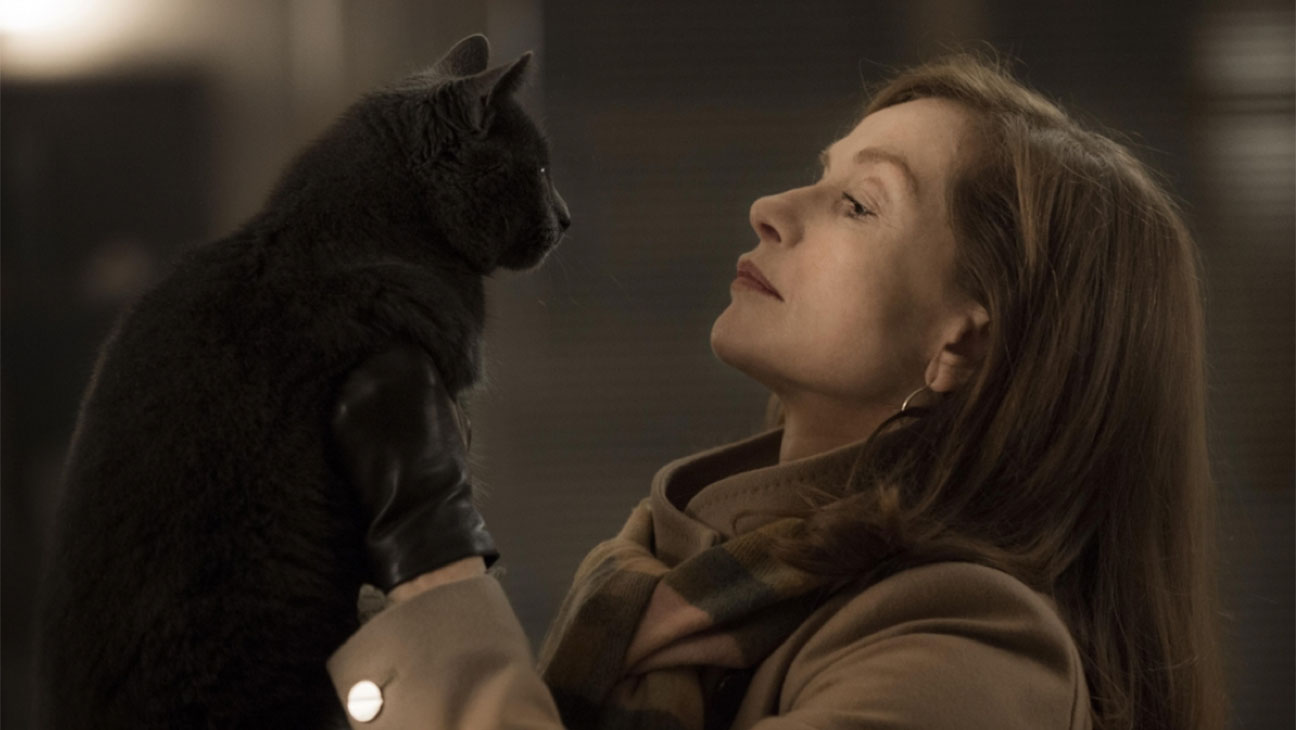
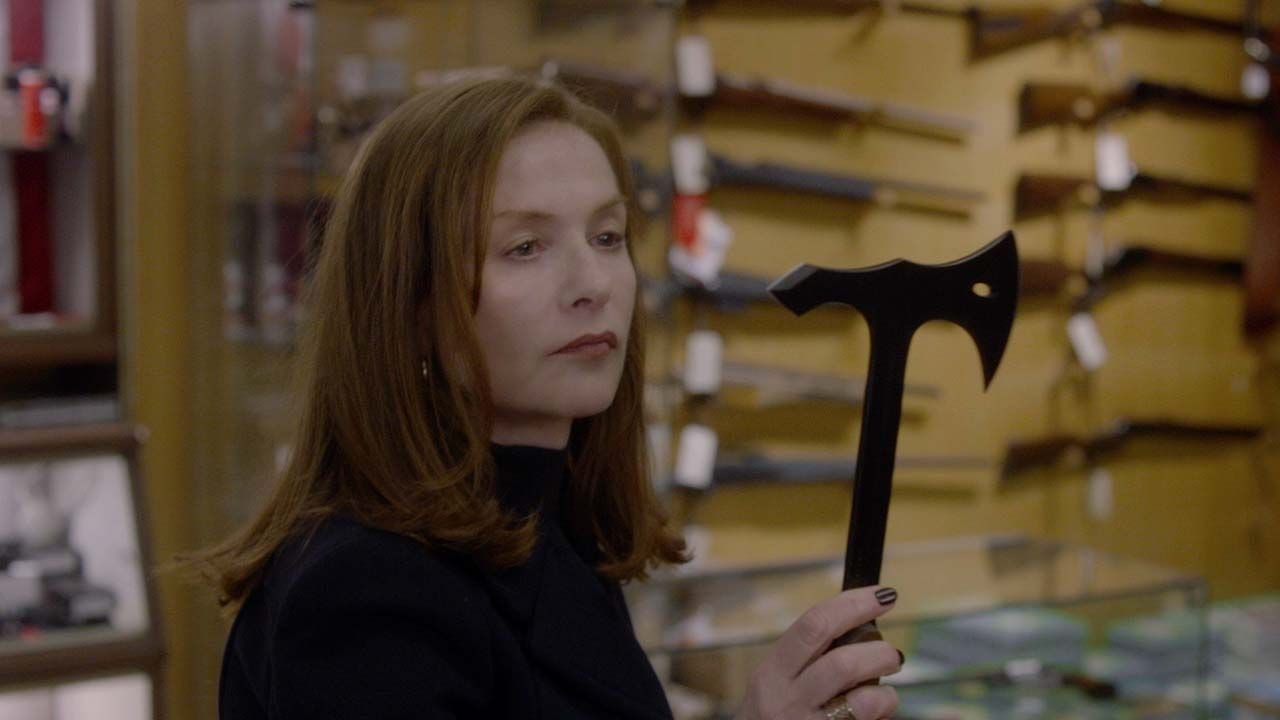
Where do I begin with this film? Is it a comedy? Is it a satire? Is it a drama? Is it a horror film? Well, all of the above I would say and then some. For starters Isabel Huppert SHOULD have won the Oscar for best actress over the candy floss performance of Emma Stone. That genuinely was a first world artistic travesty! Huppert is absolutely sensational as the damaged anti-heroine who having been part of a horrific childhood event is then subjected to a vicious sexual attack in the very first scene. Thus, immediately the film brutalises the main character and makes the audience complicit with her subsequent actions which are complex to say the least. Because as a successful business-woman with a murky past she doesn’t go down the route of victim but rather something completely different.
As it’s directed by the rambunctious cinema satirist Paul Verhoeven I expected a difficult yet entertaining ride, however, this film at times was painful to watch and not what I would call easy entertainment at all. In fact, I’m surprised there hasn’t been more controversy or outrage from the liberal left in the queasy representation of sexual violence. Don’t get me wrong there is a lot to like about the film, especially: the darkly humorous screenplay; the hilarious representations of bourgeois-middle-class-family life; and the unexpected twists in the plots take the breath away. Yet, both male and female humiliation is at the heart of the story and Huppert’s character is kind of unlikeable, making it is difficult to get behind many of her decisions.
Overall, Elle has been laden with awards and received much critical acclaim and I can certainly confirm it is a brave and challenging character drama with very risky themes at its heart. My interpretation is that the writer and filmmakers have a nihilistic view of the French bourgeoisie and that humanity in general is full of damaged lunatics out for what they can get. Essentially too, Huppert’s character has been ruined by the actions of men and her motivations are borne out of trying to gain control of a horrific situation. Thus, I would recommend this film for those who prefer their cinema to challenge, shock and question the nature of sexual politics, rather than spoon feed us fluffy and patriarchal love stories. Because, mainly, this is not a love story but rather one of hate.
(Mark: 8 out of 11 for the film)
(Mark: 11 out of 11 for Isabelle Huppert)
While going to the cinema is one of my favourite things to do the quality of television dramas has risen in quality to almost cinematic levels at times. Plus, there’s nothing quite like a box-set binge too for one’s enjoyment. Here are a few TV dramas I’ve caught up with over the last few months with marks out of 11.
**CONTAINS SPOILERS**
AMERICAN HORROR STORY: HOTEL (2015) – NETFLIX
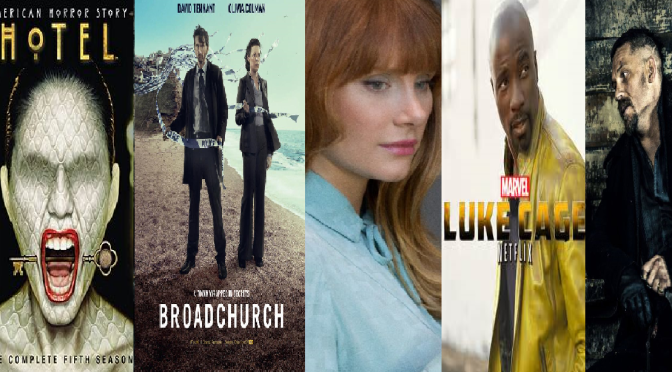
Minus Jessica Lange alas, this one had Lady Gaga to fill the void as the writers introduced a whole new set of monsters, murderers, rapists, ghouls, vampires, junkies and deviants. Set in a H.H. Holmes-style horror hotel, one can always rely on American Horror Story for over-the-top blood-letting, devilish characters trying to out-do each and pitch black humour throughout. While sickening to watch at times it never takes itself too seriously and is recommended to proper horror fans. On the whole its narrative takes second place to the demonic style; pop video vignettes and decadent shenanigans featuring historical serial killers and fantastical blood-sucking beasts. (Mark: 8 out of 11)
BLACK MIRROR (2016) – SEASON 3 – NETFLIX
This is a must-see TV programme for anyone who likes brilliant drama which has intelligent writing and a scorpion twist in the tale of every story. Six stand-alone episodes all provide an insight into the dark recesses of technology and how it can impact humanity. Social media, videogames, virtual reality, internet bullying, techno cryogenics, military mind experiments and cyber-terrorism are all filtered through Charlie Brooker’s devious imagination. A great ensemble cast of actors are seen within the anthology series including: Bryce Dallas Howard, Mackenzie Davis, Kelly Macdonald, Michael Kelly, Gugu Mbatha-Raw, Jerome Flynn and many more make this one of the best TV programmes of last or any year. If I had to choose the stand out episodes were San Junipero and Shut Up and Dance. (Mark: 10 out of 11)
BROADCHURCH – SEASONS 1 & 2 – ITV ENCORE
The 3rd season of this police procedural drama is on ITV now so I thought I’d do a quick catch up of the first two seasons. It begins with the death of a young boy and the subsequent police investigation, plus the impact this has on his family and coastal community of Broadchurch. The first season is first and foremost a terrific “whodunit” as various members of the town are all plausible suspects. Moreover, the brilliant acting duo of Olivia Colman and David Tennant spark off each other throughout the investigation. Writer Chris Chibnall deals expertly with the emotions too as the family – including Jodie Whitaker as the mother of the tragic child – are put through the wringer by the crime. The second season is almost as gripping as the child killer faces trial and Tennant’s character obsessively investigates a historical crime which blotted his police career. Overall, it is an excellent drama with many twists and a superb ensemble cast of British actors. (Mark: 9 out of 11)
LUKE CAGE (2016)– SEASON 1 – NETFLIX
Luke Cage’s reluctant superhero had previously popped up in the Marvel series Jessica Jones and the action follows up from there. He’s a humble man trying to keep a low profile but given he is virtually indestructible it’s not long before trouble finds him in the guise of Harlem gangsters Cottonmouth (Mahershala Ali), Diamond Back (Erik LaRay Harvey) and Alfre Woodard’s crooked politician Mariah Dillard. Luke Cage is decent show with a lot of style, soul and terrific musical performances. The script draws attention to many important historical black figures from history, while the direction harks back to 70s’ Blaxploitation films. Mike Colter in the lead lacks a certain charisma but has power and likeability. Overall the story felt padded out over 13 episodes by some unnecessarily long dialogue scenes and while the fights scenes were strong they lacked the wow factor of say the brilliant Daredevil show. (Mark: 7.5 out of 11)
SONS OF ANARCHY – SEASONS 4 & 5 – NETFLIX
While it’s pretty binary in its tough guys and dolls representations I’m still digging my catch-ups on this neo-Western-hard-assed biker drama. The main reasons to watch the show are the performances of Charlie Hunnam as the ever-conflicted Jax and Maggie Siff as his “old lady” Tara. Katey Sagal and Ron Perlman are also excellent as the matriarch, Gemma and grizzled patriarch, Clay. The twisting serpentine plots of Seasons 4 and 5 find, aside from other gangs and the law, new rivals in the way such as: the Mexican Cartel, businessman Damon Pope and SAMCRO themselves splinter into civil war after Clay’s skulduggery upsets the groups’ dynamic. The seasons are full of the usual grim violence, motorcycle pursuits, gunfire, black humour and lashings of naked flesh. It’s soapy at times but full of great dramatic twists making it very watchable television. (Mark: 8 out of 11)
QUARRY (2016) – SEASON 1 – SKY ATLANTIC
Pitched somewhere between Fargo and the Rockford Files this violent 1970s set thriller was a brutal watch at times. The story finds a recently returned Vietnam veteran, Mac Conway (Logan Marshall-Green) carrying out hits for a murky businessmen called The Broker (Peter Mullan) in order to clear a debt. As a troubled character, suffering from post-traumatic stress, Conway is a fascinating anti-hero and the thrills come from the hellish danger he finds himself in from episode to episode. Essentially, his whole world turns to shit and the only way out of it is to become a reluctant killer. Like Luke Cage music is featured very prominently, notably dirty blues, jazz, rock and soul; while the style is muddy water noir throughout. Marshall-Green is a dead ringer for Matthew McConaughey but is a fine lead and he, Mullan and gay hitman Damon Herriman make this bloody show most watchable. (Mark: 8 out of 11)
TABOO – SEASON 1 – BBC
Tom Hardy produced and starred in this flagship BBC period drama which ran over eight dark-hearted episodes recently. I have to say that it was sumptuous and stylish affair which oozed quality and class throughout. Hardy himself, looking very Bill Sykes in his long black coat and battered top hat, portrayed James Delaney, a man on a mission to get back his fathers’ estate and battle the East India Company for crimes against his body and soul. Hardy’s naked muscular body is something you see a lot of amidst the faux mysticism, American spies, gluttonous Royalty, gap-toothed prostitutes, tattooed ragamuffins and Oona Chaplin as Hardy’s cuckolded sister hiding a terrible secret. The supporting cast are absolutely brilliant especially: Tom Hollander, Michael Kelly, Jesse Buckley, Jonathan Pryce, Stephen Graham and Edward Hogg. Overall, it was more style than substance and the revenge plot was dragged out and did not make much sense really. Still, the smoke-and-shadows style plus the brooding Hardy made it worth a watch. The score by Max Richter though was probably the best thing in the whole show; both majestic and black in equal measures. (Mark: 8 out of 11)
Denzel Washington’s honest, down-to-earth and heart-cracking drama is a formidable character piece and acting tour-de-force. Adapted from August Wilson’s prize-winning play, the narrative bristles with authentic working class lives of 1950s Pittsburgh, and is littered with some wonderful stories and dialogue. At the heart of the drama are Denzel Washington’s complex character Troy Maxson and his long-suffering wife, Rose; portrayed with significant humility and pathos by Viola Davis. Great support comes also from Mykelti Williamson as Troy’s mentally impaired brother, Gabriel.
Troy’s character is very charismatic and he delivers some hearty yarns from his past, but he’s also bitter and a drinker and, while he has had a hard life, he bullies everyone around him. His sons and more importantly his wife Rose put up with it but eventually he grinds everyone down, pushing them away with his boorish “I-know-best” arrogance and aggression. With her quiet power Viola Davis more than matches Denzel Washington’s grandstanding and Rose’s heartfelt speech toward the end of the film is a stunning retort to her husband’s continual tirades and emotional neglect.
I’ve seen some criticisms of the film stating it is too “stagey”. Well, as it is based on a play that is understandable, yet, August Wilson’s words are a thing of beauty and therefore deserve focus. I think, while directing, Denzel Washington could quite easily have opened up the settings and had conversations on the street, but the decision was made to “fence” in the characters to create a sense of claustrophobia and intensity. By keeping the players mainly in the yard and the house we feel as trapped as they are by society, social status and their life decisions. It’s an intimate film about proper characters and real lives and overall the performances alone make the film feel cinematic. (Mark: 9 out of 11)
MOONLIGHT (2016)
Barry Jenkins low-budget contemporary drama is another brilliantly acted character memoir; although when compared to Fences it benefits from a more complex structure and cinematic style. Split into a trio of linear timelines from the same characters’ lives we get three different actors representing the life and changes which occur in Chiron’s existence; with chapters named, Little, Chiron and Black.
Each section draws us into the characters’ world as Chiron searches for meaning, identity and direction as to who he really is as a person. With his father absent Little Chiron (Alex Hibbert) cannot find satisfaction via his mother, an angry and lost woman portrayed brilliantly by Naomi Harris. Small for his age he is also at the mercy of school bullies and while a random meeting with a local drug dealer, Juan (Mahershala Ali) provides Little with a mentor to connect with it doesn’t sustain. Ali as Juan, like most of the performances, delivers a subtle realisation of a character trapped by his life choices and perhaps sees some redemption in ‘Little’. Alas, due to his lifestyle and ‘job’ he is clearly not the role model ‘Little’ needs.
In the second and third sections Chiron’s relationship with his best friend Kevin comes to the fore both in terms of some powerful drama and intimate sexual connections. Barry Jenkins framing, colour design, use of music and editing choices all commit to create a poetic and fragmented style, further drawing me into Chiron/Black’s story. Chiron’s continual search for identity and meaning in the world reflects the most essential of human needs: the search for identity and love. Overall, this is a film of harsh and beautiful moments and each segment was layered with so many emotions and so skilfully told that I wanted to see more of the characters. (Mark: 9 out of 11)
SPLIT (2016)
Split (2016) is an altogether different film about the search for identity. In fact the lead character portrayed devilishly well by James McAvoy has TWENTY-THREE different people battling around his mind and something is about to give. Let me say that a film like Split won’t be challenging the Oscars because in essence it is a terrifying B-movie thriller, however, McAvoy gives a performance of such quality it reminded me of Anthony Hopkins as Hannibal Lecter in his cannibal pomp. McAvoy’s twisted ability to switch between the many personalities was a real guilty pleasure as he earned his acting fee over and over and over again.
The story concerns three girls, Casey, Marcia and Claire (including an excellent Anya Taylor-Joy) who are kidnapped and imprisoned by the various personalities in Kevin Crumb’s head. Some – including OCD driven Dennis – are more dominant than others and attempt to wrestle total control, which is where McAvoy’s sly switches are a real joy to watch. As a cat-and-mouse plot bleeds out we also get some intriguing back-story flashbacks into Casey traumatic past. These events really add colour to the main narrative and ramp up the tension and suspense. The scenes between Kevin, his personalities and sympathetic Doctor Fletcher (Betty Buckley) also add some dark humour to the story. By the end though all humour is gone and we get a stunning and believable supernatural turn as Kevin’s mind unleashes an altogether different personality.
Writer/Director M. Night Shyamalan’s dalliance with big-budget-franchise-Hollywood-pictures – including: After Earth (2013) and The Last Airbender (2010) – did not do his career any favours. But with Split he is back on terrific form as he takes a simple abduction plot and renders it full of horror, twists and fantastical ideas. While I did not enjoy his previous film The Visit (2015) – mainly due to the stupid kid rapping throughout a decent horror story – this one is highly recommended for psycho horror fans and for McAvoy’s performance alone. (Mark: 8.5 out of 11)
– Is it the joining together of two people forever committed to a relationship built on respect and trust?
– Is it the emotion you feel for a family member or person you have bonded with over time?
– Is it nature’s way of tricking us into the act of pro-creation?
– Is it an abstract and emotional concept created by a higher power to ensure we act positively?
– Is it a form of madness which ensures we make crazy and stupid life decisions?
– Is it a dark force which enlivens obsession and stalking and violence?
– Or is it a marketing delusion forced upon us by greedy advertisers, florists and chocolate vendors?
Put simply it is: ALL OF THE ABOVE at some point in all our lives; although perhaps not the stalking!?!?
What I definitely know is that love is a big part of everybody’s lives whether it’s the positive or negative type? Moreover, love or the lack of love has provided the springboard for millions of stories, films, plays, songs, poems, slogans, TV show and adverts! So for my latest article I will review some of the films and programmes I have watched recently which had love or some version of it echoing through its’ narrative heart.
**MAY CONTAIN SPOILERS**
45 YEARS (2015) – NETFLIX
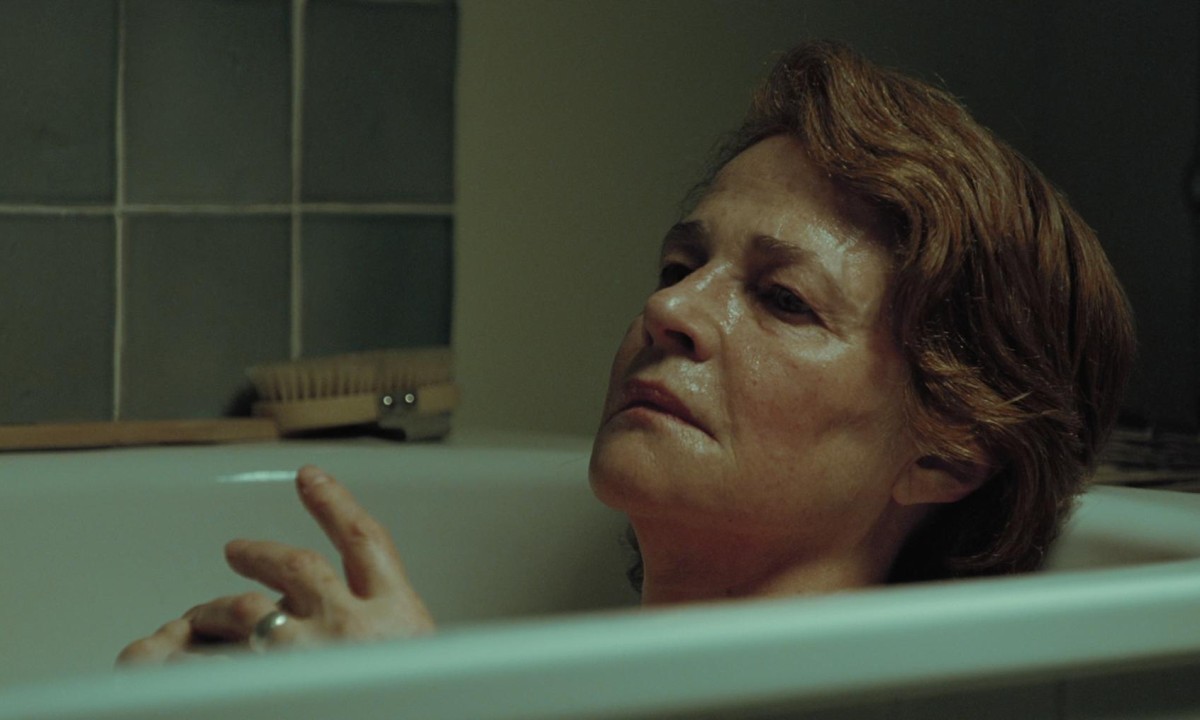
Charlotte Rampling just owns this wonderful bitter sweet drama as a woman “celebrating” forty-five years of marriage to curmudgeon Tom Courtenay. The story moves slowly but confidently as Rampling’s Kate Mercer is shook up by revelations from her husband’s past. Andrew Haigh directs with a haunting charm as love is rendered in wintry hues, while marriage is illustrated as a culmination of what-ifs-buts-and-what-could-have-beens. (Mark: 9 out of 11)
BLACK MIRROR (S3) – SAN JUNIPERO – NETFLIX
Charlie Brooker’s savage satire series cuts off your eyelids and forces one’s eyes to the see the nefarious side of technology. However, the episode San Junipero is an altogether more touching and heart-rending beast. Starring Gugu Mbatha-Raw and Mackenzie Davis as a couple of young girls who fall in love in the 80s drenched coastal town of San Junipero it builds slowly to a majestic reveal in the final act and the themes of love, euthanasia and life after death inform the romance with tearful power. (Mark: 9 out of 11)
BLUE JAY (2016) – NETFLIX
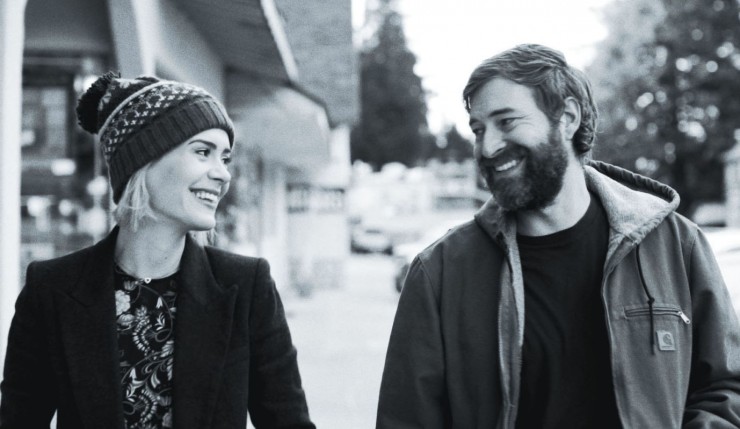
Mark Duplass is an interesting actor-writer-director-improviser who produces small, naturalistic and improvisatory films that are often quietly impressive. Blue Jay is a sporadically brilliant two-hander starring Duplass and the effervescent Sarah Paulson as a former couple who reconnect after years apart and spend a day together revelling in the past, present and future love. Paulson is stunning and Duplass is just Duplass as we spend time with very human characters just trying to get by in love and life. (Mark: 8 out of 11)
BLUE IS THE WARMEST COLOUR (2013) – FILM FOUR
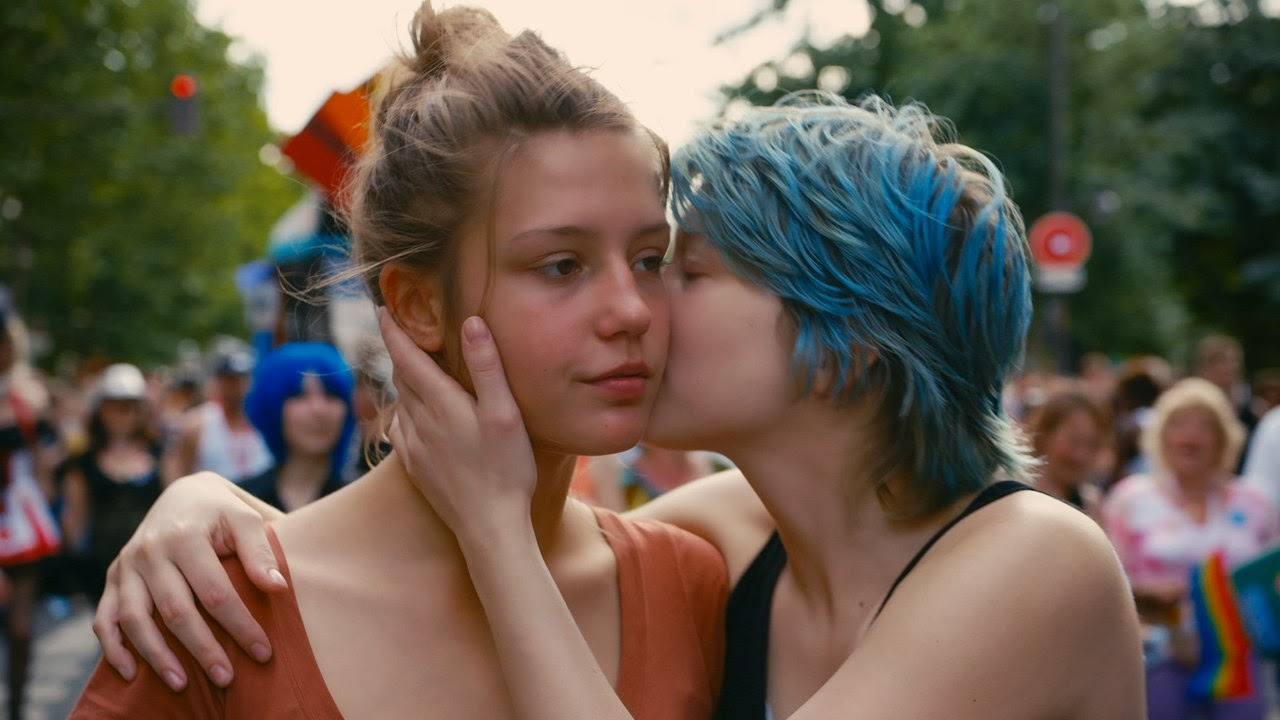
You know the story: girl-meets-girl-falls-in-love-has-lengthy-lesbian-sex-sessions-moves-in-with-girl-then-cheats-on-girl-but-not-before-there-are-more-lengthy-scissor-sister-sessions. Well, something like that. Jokes aside, this is a very honest and believable slice-of-life drama with incredible performances from Léa Seydoux and Adèle Exarchopoulos as the two lovers. The film was laden with awards at time of release and benefits from Abdellatif Kechiche’s frank and intriguing direction. Personally speaking I felt the soul-searching drama and love story were very powerful but the sex scenes were over-long and pornographic and lent nothing to the story overall. (Mark: 8 out of 11)
BROOKLYN (2015) – NETFLIX
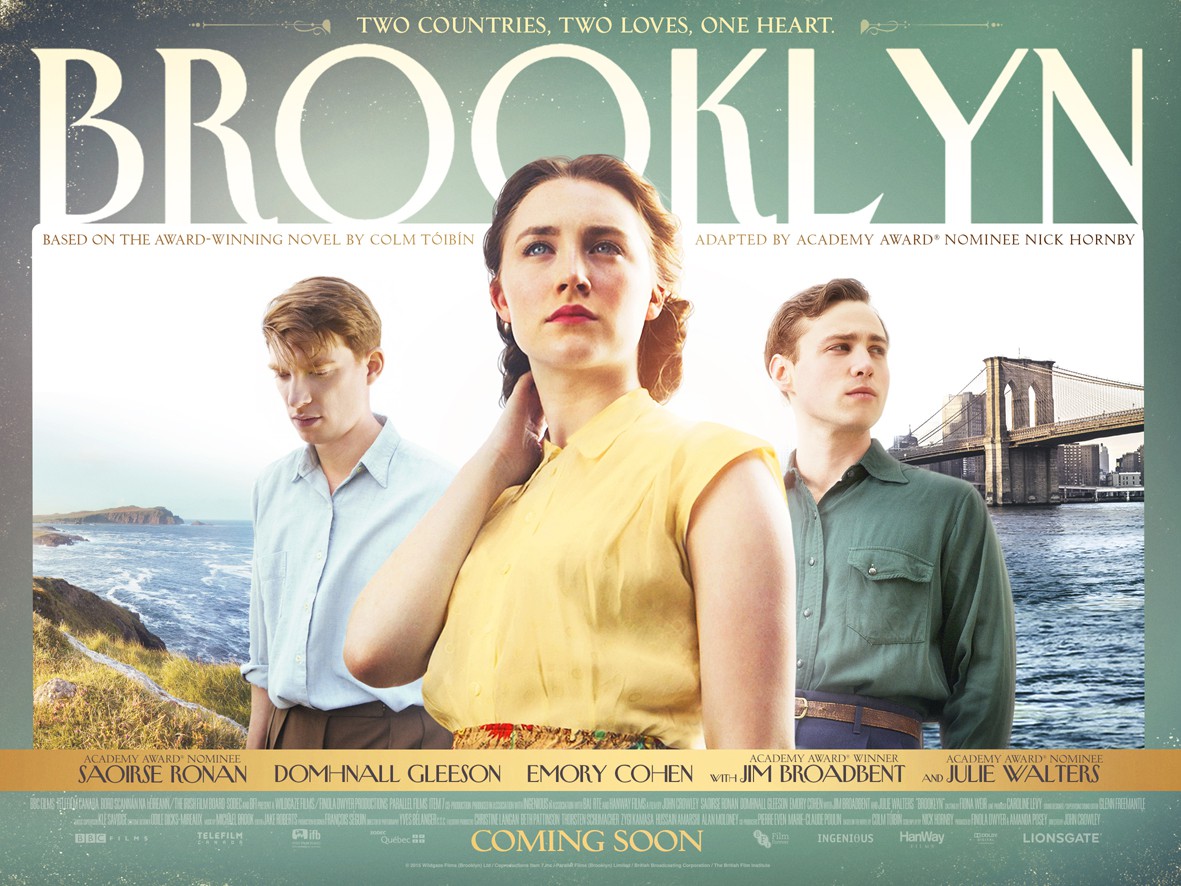
This soapy-honey-sweet 1950s set love story contains a tremendous central performance from Saoirse Ronan, as an innocent Irish girl who goes to New York in search of a job and finds love with an Italian plumber. The film delivers a pot pourri of bright colours, national and migrant archetypes and resolves much of the drama very easily; in fact, the film was so nice I expected the cast to break out into song by the end. John Crowley directs the undemanding story deftly and while, I imagine, the plight of an immigrant in those days was much harder than demonstrated this is fine Sunday matinee fare and difficult to dislike. (Mark: 7.5 out of 11)
JACKIE (2016) – CINEMA
Does this fit into the love story genre? I think as a story about a woman who lost the husband she loved, his head blown completely off by a sniper’s bullet, it qualifies as a film about the departure of love. It’s a powerful portrait of Jackie Kennedy with Natalie Portman impressing as the wife of the President left devastated by his sudden murder. Portman as Jackie carries the weight of loss and sorrow on her petite shoulders, drawing on all her strength to carry on living for the sake of a nation and more importantly her children. Her life has been condemned as a void and Portman’s haunting visage betrays an unforgettable lament throughout. Pablo Larrain directs using documentary and dramatic stylings to powerful effect and the score by Mica Levi is to die for. (Mark: 8 out of 11)
LA LA LAND (2016) – CINEMA
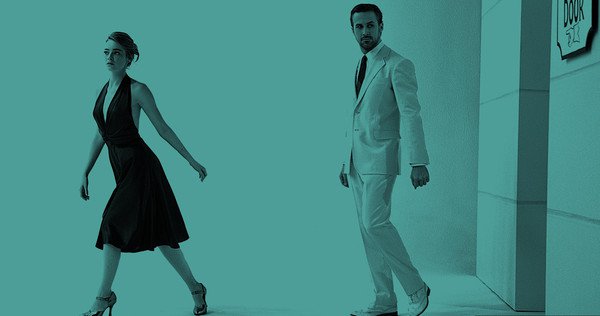
As it sweeps the boards at the awards ceremonies La La Land can certainly be praised as a funny, energetic, imaginative spectacle with fantastic direction by Damian Chazelle. Ryan Gosling and Emma Stone are also on great form, delivering some wonderful songs throughout. As a love story it works but only on the surface as the boy-meets-girl-struggling-artists’ narrative lacks depth overall. Still, it’s a great musical in the classical Hollywood model – just not a Best Film Oscar winner. (Mark: 9 out of 11)
In an oppressive near-futuristic society individuals must yield to socio-political mores and be married with children or you get turned into an animal of your choice! Well, this certainly isn’t the pitch of a love story that Hollywood would make in a hurry. However, the misadventures of Colin Farrell’s hopeless love-life are explored to dark and comical effect in Yorgos Lanthimos’ startling comedy-drama. This is one of the best films I have seen a long time which is equally bizarre yet believable in its absurd honesty. We run around attempting to find love or force romance when we should just let nature take its course. Farrell has never been better and his weird romance with Rachel Weisz is so damned original in thought and delivery it left my heart stained with pathos and delirium. (Mark: 10 out of 11)
LOVE ACTUALLY (2003) – DVD
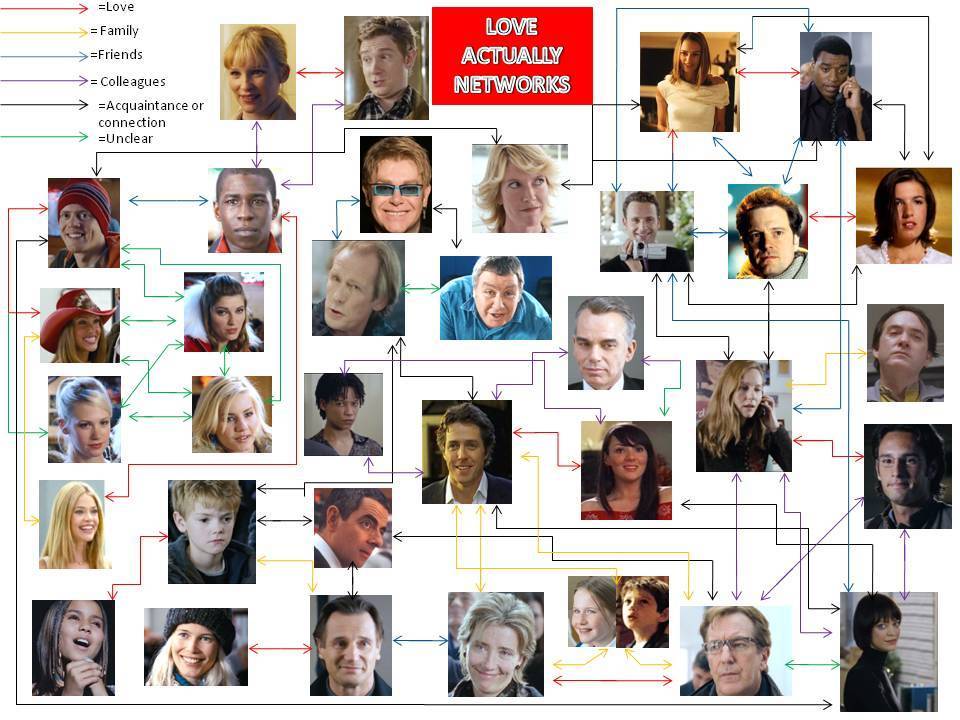
My wife “made” me watch this one at Christmas and as soon as it finished I was diagnosed with diabetes! It is such a sickly, sweet and sappy rom-dram-com that, while I think Richard Curtis deserves praise for some excellent writing, it is just too clichéd for me. I love ensemble portmanteau films and many of the overlapping stories here would make excellent short films; moreover, the cast including: Emma Thompson, Alan Rickman, Andrew Lincoln, Laura Linney, Liam Neeson, Colin Firth and many more are very watchable. But the whole love pudding is over-sweetened, over-egged and over-cooked for my taste. (Mark: 6 out of 11)
PASSENGERS (2016) – CINEMA
You and your other passengers are in stasis on a many centuries long journey to another galaxy and you’re woken up early. You are alone. In space. Until you die. If you could wake up the other passengers, but would you? Given the fellow passenger is Jennifer Lawrence you have a bloody tough choice. And what if she finds out too: you’re a murderer in effect. That’s the moral dilemma which faces Chris Pratts’ character in this frothy space-rom-drama. I enjoyed the stylish science-fiction genre flick as it looks fantastic in design and cast. It doesn’t have much depth but I found it to be lots of fun especially as Pratt is charming and funny as ever and Lawrence is easy on the eye too. (Mark: 7 out of 11)
HOW’S YOUR CATHOLIC GUILT? REVIEWING THE YOUNG POPE (2016)
**CONTAINS SPOILERS**
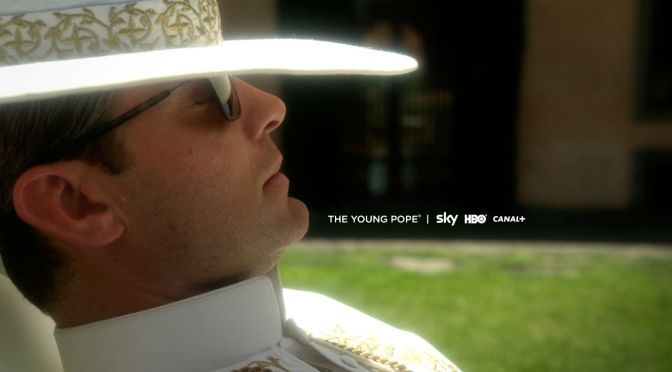
Having recently reviewed Martin Scorcese’s Silence (2016) I thought it apt to follow it up by looking at a more contemporary vision of religion and faith with a review of Paulo Sorrentino’s HBO produced The Young Pope. Created, co-written and directed by uber-Italian-auteur Sorrentino it stars the impressive Jude Law as the eponymous lead protagonist. Law’s Lenny Belardo, rather than the crusty-almost-dead-looking-Popes we’re used to seeing behind bulletproof glass or delivering sermons from the Vatican, is in fact a younger, muscular and even sexy Pope.
Now, while I respect an individual’s right to believe what they want to, be it the teachings of Christ or Mohammed or Obi Wan Kenobi for that matter, I’m not a great fan of ‘Organized Religion.’ Indeed, ‘Organized Religion’ must be up there, along with global governments, Hitler, Spanish flu, and bubonic plague, as the main cause of wars, death and the suffering of millions. More specifically, Catholicism and its representatives have been at the forefront of negative events down the years including the Medieval Witch Hunts; Spanish Inquisitions; the tragedy of the ‘Fallen Women’ in 1920s-1950s Ireland; general acquiring of huge wealth while followers live in poverty; anti-gay and Pro-life ideologies; and as most recently seen in the film Spotlight (2015), a worldwide cover-up of paedophilia by Catholic priests. So how does Sorrentino approach such issues?
Well, his creative team’s approach to the material is not one of demonization but rather playful satire, wistful respect and a formidable testing of the Vatican as an institution. His desire it not to bring down the Catholic Church but rather purge the old and modernize its way of thinking and how it represents itself. It’s a testament to the strength of the writing that it held my interest throughout and this was essentially down to the incredible characterisation and performances from Jude Law, Diane Keaton, James Cromwell and incomparable Sivio Orlando as the devious but ultimately soft-hearted-Napoli-fan Cardinal Voiello.
Over ten episodes of high quality dramatic analysis Sorrentino presents many of the issues facing the Catholic church now including: the paedophilia cases charged; the sexual behaviour, addictions and sins of Priests; the financial and political machinations of the Vatican; the importance of public relations and marketing the Vatican; and of course the very nature of faith and what it means to be a Catholic. These are indeed heavy subjects yet while serious like Scorcese’s Silence, The Young Pope contains some wry and delicate humour too. I mean ten episodes of a Vatican-based comedy it isn’t, but Paulo Sorrentino’s skewed look shows the priests and nuns, not as higher beings but rather flawed humans like the rest of us.
None are presented as more human than the lead character Lenny Belardo. Jude Law’s character is a surly, sarcastic and snappy dude from the start. He smokes and shows little respect for the elder priests, led by Cardinal Voiello and his prior mentor, Cardinal Spencer (James Cromwell) who are as surprised as him that he somehow won the Papacy due to an advantageous split in the votes. Belardo vows to break the “old boys” network and spends much of the season locking heads with Voiello and Spencer in a bitter series of power plays. This young Pope does not suffer fools and refuses to be seen in public and reneges on his public relations duties. He even at times “jokes” about not believing in God; while his first speech delivered in silhouette is an unmitigated PR disaster.
Yet, at Belardo’s heart is a dark sadness due to his abandonment by his hippy parents, who while a young boy, dumped him at an orphanage run by Sister Mary (Keaton). Keaton portrays the surrogate Mother to Lenny and his best pal, Cardinal Dussolier (Scott Shepherd) as she supports him admirably during his papal duties. We see Belardo battle his elders, his faith, his anger, loneliness and sexual temptations which are put before him; all as he finds his voice as the Pope. It is a fascinating journey which really pulls you into the Pope’s internal and external strife.
Overall, this was a heavy yet rewarding series to watch. The scenery and imagery on show dazzle as Sorrentino and his cinematographer conjure some startling holy visions and beautiful architectural compositions. The writing is also of the highest quality with some magnificently lofty, pious and poetic speeches throughout. Being very clever Sorrentino both pokes a teasing stick at the Vatican but also praises the Lord in his own inimitable way, creating several fascinating characters in the process. Jude Law has never ever been better in a show which while initially testing rewards those who keep the faith.
WESTWORLD: POST-MAPPING THE NETWORK by PAUL LAIGHT
**CONTAINS MASSIVE SPOILERS**
THE INTRODUCTION
If you want safe and conventional and sensible then listen to ‘70s pop group the Nolan Sisters. If it’s complex, serpentine narratives and emotions then it’s the Nolan Brothers you want. In this piece I take a stab at simplifying the complex narrative machine that is Westworld – written, devised and directed (in part) by Jonathan Nolan and co-creator Lisa Joy. Of course, kudos goes to the originator Michael Crichton whose 1973 sci-fi classic this brilliant TV series is based on. For your information I have also reviewed the show here:
THE MAP
Why bother having a stab at mapping Westworld? Well, I think this is a show in which enjoyment can be derived from working out the puzzle, interpreting the maze or just simply seeing if the jigsaw pieces fit? I only have a degree in Film and a Masters in Screenwriting, rather than a PHD in meta-physics, but I decided it would at least be fun to try and make sense of it.
Firstly, I come from the understanding that this is meta-fiction. It is as much about people telling us stories about characters controlling the narrative of robots; androids who don’t know they are part of a bigger narrative. Moreover, you have to accept that at some point ALL or MOST of these are unreliable narrators and the stories were being re-written as we watched. I now understand this about the characters:
Everyone is a liar.
Neither dreams nor reality are to be trusted.
Anything can change from one episode to another.
Indeed, the creators of the show have taken great liberties using: programmed dreams, back stories, overlapping narratives, flashbacks, flash-forwards, time-slips, repetitive loops, parallel action from past and present, plus many, many more cinematic, televisual and literary tricks. Also to consider while watching are three main notions:
Who are hosts and who are human?
Who are the good characters and who are the bad?
Should we care about characters that are androids?
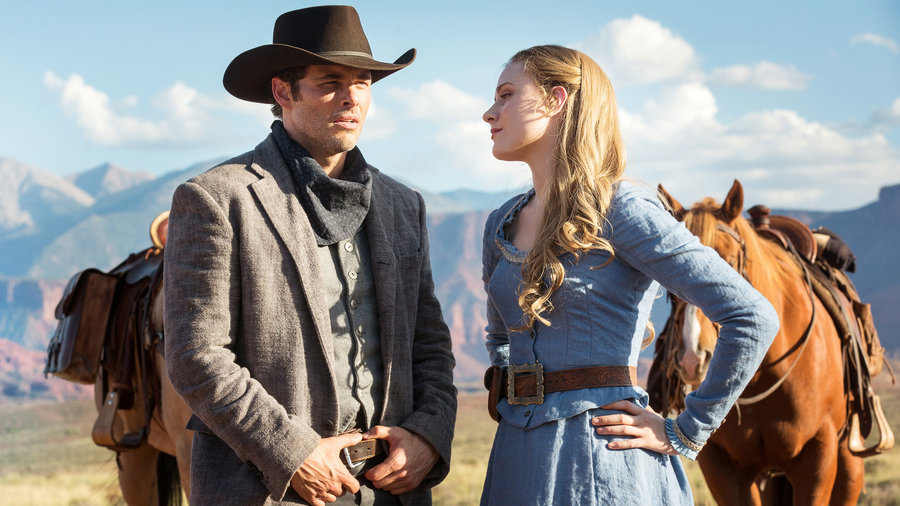
The last question was the one I struggled with most of all but from the hosts I picked Dolores and Teddy as they were the ones with, ironically, the most human emotions of love, romance and a desire to make a better life. But of course even this couple ultimately are murderous tools in the hands of their human creators. Likewise, Bernard is very sympathetic. He, arguably, has the biggest narrative turn of all when we discover he is in fact a simulacrum host and a pivotal pawn in Ford’s grand scheme.
For me there were a multitude of narrative strands in Westworld and for the final part of this piece I will list them for better understanding of the network. There is no specific order here as these storylines all overlapped but here goes. Safe to say there are MASSIVE SPOILERS!
THE NARRATIVES
Dr Robert Ford’s Grand Plan!
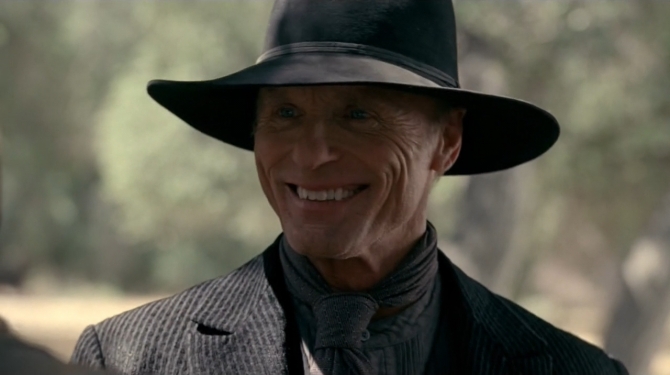
Dr Robert Ford – as portrayed by the majestic Anthony Hopkins – had a huge scheme from the start. I came to accept he was the God of Westworld and his plan was to defeat the corporate spies represented by Theresa Cullen (Sidse Knudsen), Charlotte Hale (Tessa Thompson), and in the last episode reveal, older William/Man in Black (Ed Harris). Feeling long-standing guilt because of the death of his partner Arnold, Ford’s mind has slowly warped and therefore he has programmed all the hosts to turn on the humans by the final thrilling cathartic finale. I accepted that Ford was a genius and that he had been planning this denouement for some time, thus, his programming and planning made everything happen in the end. This also conveniently covers any plot-holes in my mind.
The Corporate Sabotage Subplot! While Ford’s narrative is being written, behind the scenes, Theresa Cullen and subsequently Charlotte Hale are attempting to oust Ford and steal his network secrets. They do this initially via a modulated host but when he is discovered they plot to use one of the “retired” hosts in the basement to get the information out. Ford has been aware of the plot from the start as shown when he tells Bernard to kill Theresa and the subsequent finale when the hosts all turn on the Delos Corporation guests.
The Hosts in the Basement!
All old, malfunctioning or “retired” hosts were taken down to a dark basement never to be seen again. Many scenes played out amidst these naked, dusty android souls, and there was a sense they may come into play in this debut season. But, they remained an enigma most of the season until Charlotte Hale decided to utilise older Peter Abernathy to attempt to get Ford’s secrets out.
William, Teddy and Dolores “Love Triangle.”
Teddy and Dolores, as aforementioned, are two of the initially more sympathetic hosts. They have a genuine bond on all the narrative strands. When we first meet William (Jimmi Simpson) he is with the arsehole Logan (Ben Barnes) and quiet compared to his loutish, sex-addicted counterpart. William falls in love with Dolores and finds himself as a human; simultaneously developing a killer instinct too in the process. Confusion reigns because this storyline is a flashback and William is in fact a younger version of Ed Harris’ grizzled “Man in Black”.
“The Man in Black” narrative.
I ended up working out Man in Black/William stories were connected but some thirty-odd years apart. Even so when the reveal was delivered it was very satisfying. Ed Harris is initially introduced as a violent guest who has visited the park for many years and his arc involves his search for the “maze”. Ultimately, he is revealed to not only be older William, but the key shareholder on the Delos board. His, search for the maze was external and internal. It was also symbolic and translated as a personal odyssey by that of a warped, grieving man with a death wish. Overall, desiring the hosts to be real and a threat to his life heighten his park addiction and reveal him to be a very sick individual.
The Arnold/Bernard trajectory.
Arnold began popping up as a voice in the hosts’ head and then as the story moved along it was revealed he was in fact Ford’s business partner when the park was in its testing stage. Moreover, Arnold’s voice was their programming consciousness becoming sentient. Arnold basically wanted to destroy the park because he had become attached to the androids and did not want them to suffer the way he had. Plus, he was still grieving over the death of his son therefore emotionally disturbed, depressed and suicidal.
Ultimately it was Arnold’s work that Ford was completing thirty-five years on. In order to lift his guilt Ford also created Bernard in Arnold’s image so he would have his ‘friend’ close. Of course, Ford used Bernard to do his bidding such as kill Elsie and Theresa. The cruellest trick was to give Bernard the same memories as Arnold, notably the death of his young son. But as they say in the programme it’s the painful memories which make the androids more human.
Maeve’s nightmare!
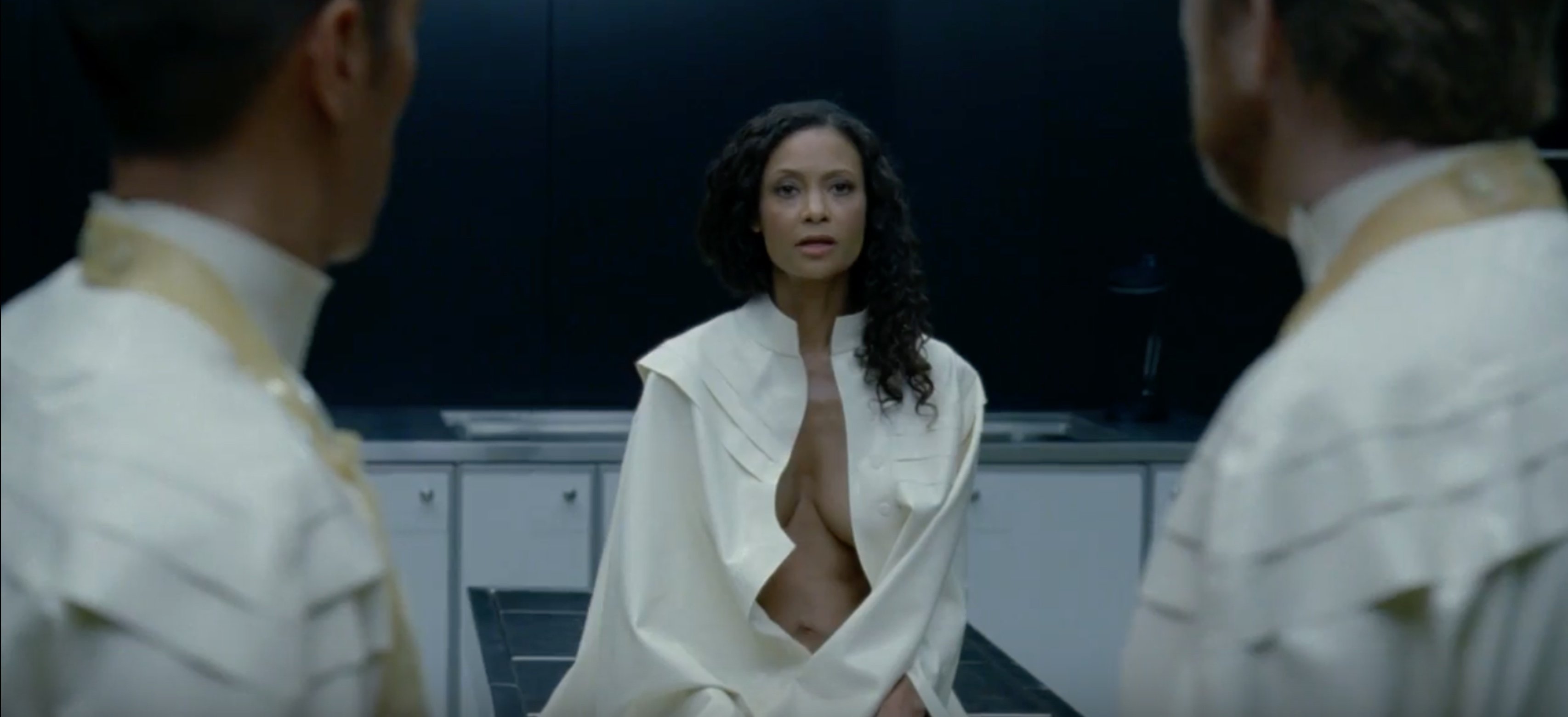
Maeve’s (Thandie Newton) story reflected the Arnold/Bernard trajectory in that she lost a child in one incarnation and was haunted by this event in another. Indeed, the Man in Black gunned her child down and subsequently her programming went haywire. Ford reprogrammed her to become a prostitute but somewhere in her wiring the memories of her loss propelled her to become more violent.
Thus, having woken up in the technician’s laboratory downstairs she ventures on a devious plot to discover who and where she is. Of course, it wasn’t that simple because it turned out Maeve’s manipulation of her own intelligence and the Lab personnel; plus the recruitment of the badass hosts including Rodrigo Santoro’s bandit, was ALSO down to Ford. He had programmed her to attempt escape; well according the reanimated Bernard anyway.
Who the hell was Wyatt?
Wyatt arrived as a seemingly key park nemesis but was in fact a “McGuffin”; a false character and memory in Teddy’s narrative. Wyatt in fact was a combination of programme and actual memory; and was revealed to be Dolores because she killed Arnold and the rest of the hosts back in the day. Poor Delores, Teddy and Bernard are ultimately tragic “Frankenstein” monsters used to carry out the vicarious desires of their makers and Wyatt was an invention to mask past events.
CONCLUSION – INTERPRETING THE MAZE!
Of course there are still many unanswered strands from the first season and I have just touched on a few of the more obvious ones. Westworld is a maze where the entrance and exits are forever shifting. The story does not go in a straight line. It is circular and a circuit which comes round and back on itself. The whole show is like an Escher drawing with each storyline and strand seeming to end but then return on the other side of an episode.
I’m not saying my mapping of the maze tidies everything up because this isn’t a show with a nice linear narrative conclusion. Westworld is about the journey and getting lost in the maze is part of the fun. Jonathan Nolan and Lisa Joy deserve kudos for adapting Crichton’s masterwork into a pulsing organic machine which delivers scientifically, cereberally and emotionally.
HBO’s Westworld was presented, previewed and marketed, like the fantastical flagbearer Game of Thrones before it, as the premium, high-end, star-studded television event of the year. Indeed, in my honest opinion it lived up to the hype and certainly turned out to be one of the shows of the year!
Everything about Westworld screamed cinematic quality! Of course it’s origins spring from Michael Crichton’s classic sci-fi film Westworld (1973) where the robot hosts started killing the rich guests on holiday at an ‘A:I’ driven amusement park. The formula would then be amped up in Jurassic Park (1993) and its sequels, where instead of sentient androids, we had dinosaur clones attacking the staff and guests. This televisual delight developed – by Jonathan Nolan and Lisa Joy – twists and turns that simple, yet ingenious premise, into a whole new machine; utilising the influences of Crichton, Kubrick, Arthur C. Clarke, Rod Serling, Harlan Ellison etc. as well as incorporating a number of their own concepts too.
HBO have pumped $100 million dollars into ten sumptuous looking episodes and the filmmakers took the brilliant decision to shoot on 35mm film. This creative choice gives us exquisite cinematographic vistas of the West while at the same time enhancing the inner sheen of the hi-spec-steam-punk engineering on show underneath the actual “amusement” park itself. Allied to this we get a whole host of A-grade movie and character actors who bring a depth and gravitas to the proceedings.
Leading the stellar cast is Anthony Hopkins as the established overlord Dr Robert Ford. His presence is felt throughout the park and initially staff and hosts seem to answer to him. Hopkins is terrifically understated in his performance but underneath the iceberg surface is an incredibly complex character who, while a technical genius, responds to human beings coldly. He sees them as obstacles to his grand narrative which seems to be written and re-written from episode to episode. While oddly unsympathetic his enigma drives the show, with his character attempting to control the hosts, staff and his environment while writing and rewriting the past and present.
Working for Ford are an army of techs and security personnel responsible for guests and hosts alike. The most honest, it would appear, and one we root for is Bernard portrayed with subtle distinction by Geoffrey Wright. His velvety voice alone is enough to project emotion and meaning within every syllable uttered. Representing the corporate personnel are a fine supporting cast, notably, Sidse Babett Knudsen and Luke Hemsworth.
Similarly, the simulacrum hosts are expertly cast with: Evan Rachel Wood, Thandie Newton, James Marsden, Rodrigo Santoro and Clifton Collins Jnr etc. bringing a glamour, edge and depth of performance to the paranoid androids. Obviously there are visitors to the park and these roles are dominated by the magisterial Ed Harris and younger bucks Jimmi Simpson and Ben Barnes.
Overall, I found the show an incredible science fiction experience. The opening theme is a haunting gift to the ears, while the incredible imagery of the opening credits are a feast for the eyes. Visually and aurally the series was crammed with wondrous sounds and vistas and the soundtrack was fabulous too including dark naked tunes by the likes of: The Cure, Radiohead and Soundgarden. Violence, action, nudity and sexuality are freely on show but this is just skin for the rich narrative and themes which power the twisting story. Indeed, the themes ask us to question everything, like: who is human and who is a host? Should we, the audience, care about a character when they’re a robot? And most importantly: when are the robots going to start killing the guests?
Halfway through though I must admit I was close to discontinuing and shutting down as I was struggling to connect emotionally with the characters. However, I realised this was a cerebral challenge; a puzzle or maze, which – much like Jonathan Nolan and his brother Christopher’s other work including: The Prestige (2006), Memento (2000) and Inception (2010) – I’ll try and solve. I’ll be honest not all of it hung together satisfactorily on first watch, however, on further views each episode’s timelines, narratives, flashbacks, flash-forwards, memories and dreams combined brilliantly, and I soon realised all the pieces were there to successfully put the puzzle together.
With its state-of-the-art effects, incredible design, brilliant actors, brutal violence, complex plots and classic Western genre setting, this postmodern masterpiece transcends genre and the storytelling process itself. Because at its core processing Westworld is about: the nature of narrative and controlling your story: past, present and future. Oh, that and lots of killer robots. So, overall, Westworld is a place I will certainly be coming back to time and time and time again. Some might say the whole Westworld experience was a-MAZE-ing!
SCREENWASH – NOVEMBER 2016 – DVD & ON DEMAND REVIEW ROUND-UP
In addition to my cinema reviews I also watched an eclectic mix of TV shows, big movies and art and indie flicks this month. As usual I have packaged them into bitesize chunks for your perusal. As usual marks are out of eleven.
**CONTAINS SPOILERS**
AMANDA KNOX (2016) – NETFLIX
The despicable murder of Meredith Kercher caused a media and legal storm in Italy over ten years ago now. Amanda Knox and her then-boyfriend, Raffaele Sollecito were charged and convicted before appealing against the crimes. This intriguing documentary lifts the lid on a case where the media and Italian legal system are on trial as much as Knox herself. (Mark: 8 out of 11)
CIRCLE (2015) – NETFLIX
Well-written-one-location-low-budget film finds many strangers in room fighting for their lives. Social, religious, gender and ethnic demographics become key to the choice of “who dies next”; in a nifty, intelligent thriller which critiques humanity in an entertaining fashion. (Mark: 7.5 out of 11)
DJANGO UNCHAINED (2012) – NETFLIX
Tarantino’s classic revisionist slave western gets better on every watch; and I would have to say that it is arguably, amidst the stylistic flourishes, his most satisfying narrative as a whole. The bone-crunching violence and bloody shootouts are a joy, yet Tarantino also draws emotional power from the love story between Jamie Foxx and Kerry Washington’s enslaved couple. Meanwhile, Christophe Waltz and Leonard DiCaprio ride off into the sunset with the acting honours. (Mark: 10 out of 11)
ENTER THE DRAGON (1973) – TCM
I loved this Bruce Lee Kung-fu classic when I was growing up. Now, it just seems like a slightly tired James Bond rip-off in terms of plot, however, Bruce Lee was a martial arts master and movie star; so it is his charisma and fighting skills which really shine through now. (Mark: 8 out of 11 – for Lee!)
GOOSEBUMPS (2015) – SKY CINEMA
This is a pretty decent meta-fictional comedy-action film with Jack Black hamming it up as a mysterious writer whose creations wreak havoc on a small town. (Mark: 7.5 out of 11)
GOTO – ISLAND OF LOVE (1969) – DVD
This is a very surreal drama from critically acclaimed Polish filmmaker Walerian Borowczyk. In the past I would have loved insane stuff like this but I couldn’t get my head around the weird inhabitants of a prison colony acting out warped love rituals while trapped on an island. (Mark: 5 out of 11)
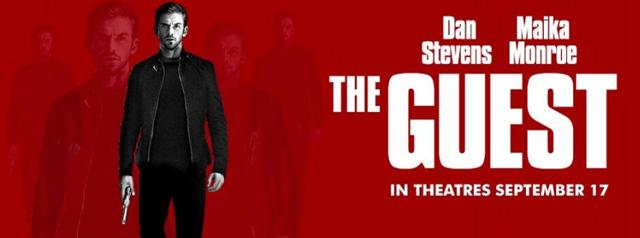
THE GUEST (2014) – FILM FOUR
The Guest (2014) is a smart, funny and violent B-movie which makes merry hell of its’ “cuckoo in the nest” plot. Dan Stevens is brilliant and has all the charm and looks of a bona fide movie star in the making and a good shout for the next James Bond. I’ve seen this a few times now and it is a genuine under-rated classic. (Mark: 9 out of 11)
THE LAKE HOUSE (2006) – ITV2
Soppy time-travel love story which kind of does and doesn’t make sense stars Keanu Reeves and Sandra Bullock. It’s a likable film with fun concept and pleasant moments. (Mark: 7 out of 11)
MATCH POINT (2005) – NETFLIX
Woody Allen’s excellent London-set thriller builds slowly and pays off wonderfully by the end. The characters are well drawn as Jonathan Rhys-Meyers young existential tennis pro darkens his soul through poor life decisions. Emily Mortimer, Scarlett Johannsson, Brian Cox and Matthew Goode complete an attractive cast in the excellent Dostoyevsky-laced crime drama. (Mark: 8.5 out of 11)
PEOPLE JUST DO NOTHING – SEASON 1 (2014) – NETFLIX
This is a funny Gervais-influenced-Office-style-mockumentary-comedy which follows the shenanigans of a West London pirate radio station. Satirizing youth culture and we get a peek into the lives of the likes of MC Grindah and feckless mates. (Mark: 7.5 out of 11)
SAW (2004) – SKY CINEMA
While it started a tortuous never-ending-cash-cow-franchise, never forget the original Saw is a genuine horror classic from James Wan and Leigh Whannell. You get two guys, one cell and a hell-of-a-dangerous serial killer on the loose that leads to some great twists and bloody murder. The ending alone is still a gob-smacking treat as you put together Jigsaw’s fiendish plan. (Mark: 9 out of 11)
SIN CITY 2: A DAME TO KILL FOR – SKY CINEMA
Roberto Rodriguez and Frank Miller’s sequel to the mind-blowing violent-noir-comic-book-digital-backlot-splatterfest Sin City (2005) was eagerly anticipated by me. This had the same hard-boiled dialogue, bone-crunching violence and some fantastic imagery, but aside from Eva Green’s terrific femme fatale it lacked the impact of the first film and fell a bit flat. (Mark: 6 out of 11)
SONS OF ANARCHY – SEASON 3 (2010) – NETFLIX
The third revving-crunching-porno-shooting-explosive season had Jax and the other gang members battling the Mayans, the FBI and going on “holiday” to Ireland to take on the “Real” Irish Republican Army. It’s a real soapy mix of violence, bullets and familial-led drama with enough plot turns and jaw-dropping set-pieces to keep you entertained throughout the fast-paced episodes. (Mark: 8 out of 11)
THE FINEST HOURS (2016) – SKY CINEMA
This Disney disaster movie set in the 1950s is a very watchable human drama sensitively directed by Craig Gillespie. It flopped at the box office, yet Chris Pine and Casey Affleck are on very good form in the leads and there are some great set-pieces too on the sea. The real star is Carter Burwell’s epic music but in my opinion the film deserved a bigger audience. (Mark: 8 out of 11)
TO THE WONDER (2012) – DVD
This is a beautifully shot yet overlong and pretentious love story with banal Olga Kurylenko and a depressive Ben Affleck sleep-walking through his role. Terence Malick is a fine auteur but despite the wondrous scenery and vaguely interesting structure this bored me overall. (Mark: 6 out of 11)
2016 BFI – LONDON FILM FESTIVAL – PHANTASM REMASTERED (1979) – REVIEW
TITLE: PHANTASM REMASTERED (1979 / 2016)
DIRECTOR/SCREENPLAY: Don Coscarelli
CAST: Michael Baldwin, Reggie Bannister, Bill Thornbury
STORY: A grieving boy and his older brother come face-to-face with an evil Funeral director named ‘The Tall Man’ and all hell breaks loose.
REVIEW (CONTAINS SPOILERS):
This brilliant low-budget cult horror film from 1979 was made independently for around $300,000 by then twentysomething Don Coscarelli. It has subsequently been lovingly remastered by J.J. Abrams production company Bad Robot and comes back to the screens in a glistening, shiny and bloody new print. Director Coscarelli introduced this screening and seeing it at the Central Picturehouse in Piccadilly was certainly a wonderful experience for this horror fan!
Where do you start with a bizarre story such as this? Well, firstly Phantasm is a great example of ideas and imagination being worth more than any big Hollywood budget. It’s the reason the film is held in such high regard by horror film fans. Indeed, if you can conjure up a series of iconic images, empathetic characters and scary moments and manage to tell a half-decent story then you have got a great chance to create a memorable experience for a cinema-going audience.
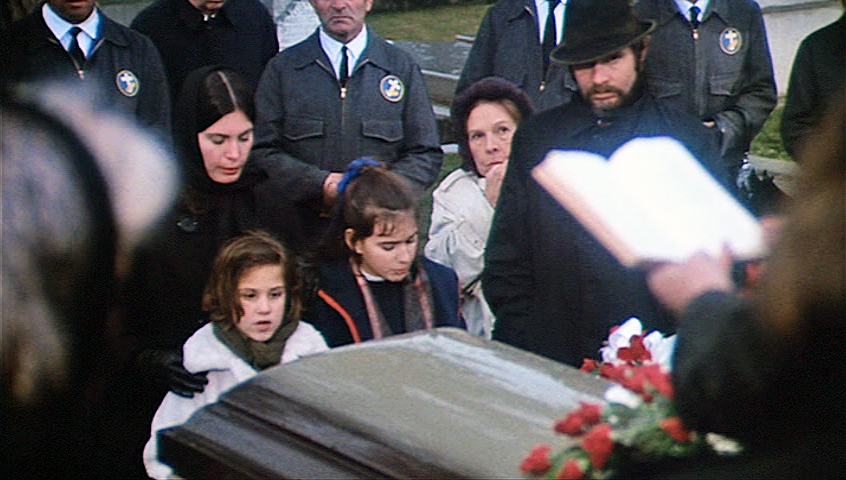
The film opens with a grisly murder and then a funeral, before we are introduced to thirteen-year-old Mike and his older brother Jody. The brothers are grieving for the recent loss of their parents but remain close. Mike hangs out at the graveyard and then becomes suspicious of the funeral director when he incredibly picks up a heavy coffin on his own. Mike manages to convince Jody and their friend Reggie (Reggie Bannister), a local ice-cream man, to investigate further and they are drawn into a series of insane and life-threatening situations.
The narrative seemingly linear jumps from one surreal set-piece to another and contains memorable images and characters such as: ‘The Tall Man’ portrayed menacingly by Angus Scrimm; the silver killing spheres; the murderous yellow-blooded dwarves; and the inter-dimensional portal which leads to a strange slave-planet. These are all unforgettable and the stuff of bloody death and nightmares. While the plot lacks clarity at times it moves at some pace and the combination of small town life mixed with insane killing devices and crazed creatures creates a wholly memorable mix.
Phantasm is a synthesis of genres from rites-of-passage, suspense, horror and science fiction. Ultimately, it’s the epitome of a cult classic and a triumph of concepts over finance. It’s full of mood and atmosphere and has a creepy synth-based soundtrack that cranks up the fear factor. Overall, super-positive Coscarelli created an imaginative fantasy concerned with death and mourning that has stood the test of time. It may lack the polish of big budget productions but the scares and surrealism reminded me of the works of Italian horror-master Lucio Fulci and Spanish filmmaking genius Luis Bunuel. It’s a film I would wholly recommend for devotees of horror and science-fiction and for those who like their movies raw, inventive and nightmarish.