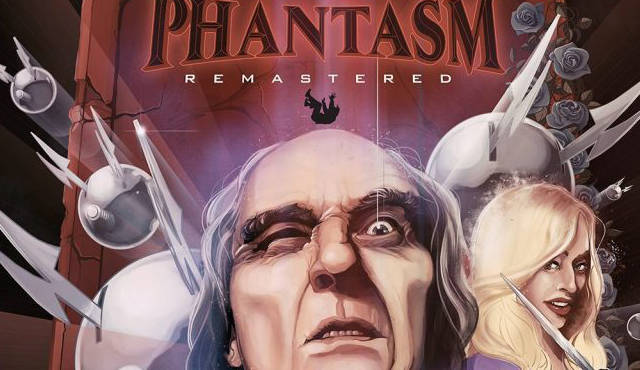
2016 BFI – LONDON FILM FESTIVAL – PHANTASM REMASTERED (1979) – REVIEW
TITLE: PHANTASM REMASTERED (1979 / 2016)
DIRECTOR/SCREENPLAY: Don Coscarelli
CAST: Michael Baldwin, Reggie Bannister, Bill Thornbury
STORY: A grieving boy and his older brother come face-to-face with an evil Funeral director named ‘The Tall Man’ and all hell breaks loose.
REVIEW (CONTAINS SPOILERS):
This brilliant low-budget cult horror film from 1979 was made independently for around $300,000 by then twentysomething Don Coscarelli. It has subsequently been lovingly remastered by J.J. Abrams production company Bad Robot and comes back to the screens in a glistening, shiny and bloody new print. Director Coscarelli introduced this screening and seeing it at the Central Picturehouse in Piccadilly was certainly a wonderful experience for this horror fan!
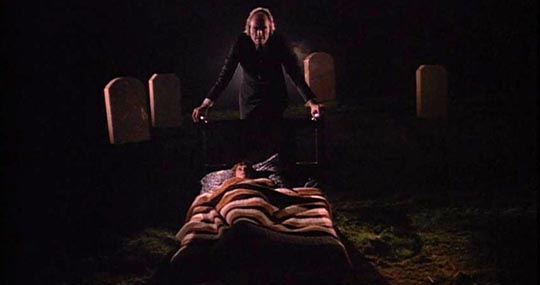
Where do you start with a bizarre story such as this? Well, firstly Phantasm is a great example of ideas and imagination being worth more than any big Hollywood budget. It’s the reason the film is held in such high regard by horror film fans. Indeed, if you can conjure up a series of iconic images, empathetic characters and scary moments and manage to tell a half-decent story then you have got a great chance to create a memorable experience for a cinema-going audience.
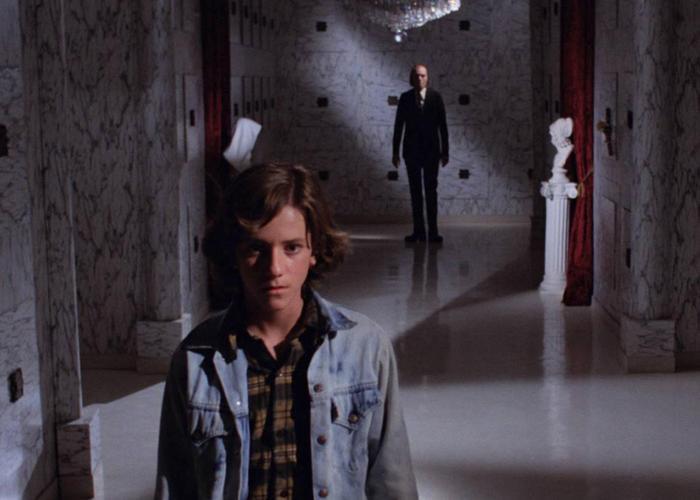
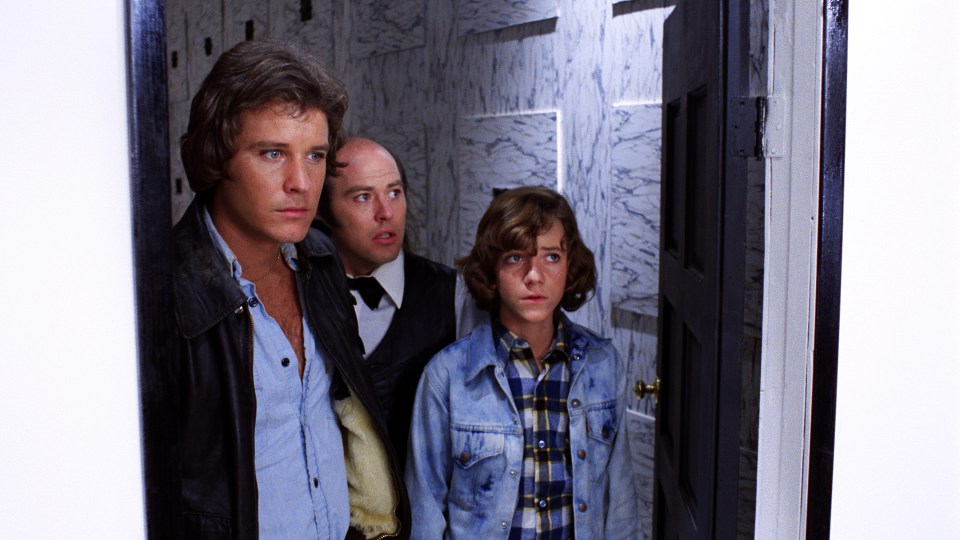
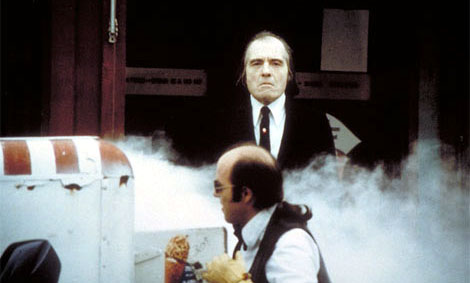
The film opens with a grisly murder and then a funeral, before we are introduced to thirteen-year-old Mike and his older brother Jody. The brothers are grieving for the recent loss of their parents but remain close. Mike hangs out at the graveyard and then becomes suspicious of the funeral director when he incredibly picks up a heavy coffin on his own. Mike manages to convince Jody and their friend Reggie (Reggie Bannister), a local ice-cream man, to investigate further and they are drawn into a series of insane and life-threatening situations.
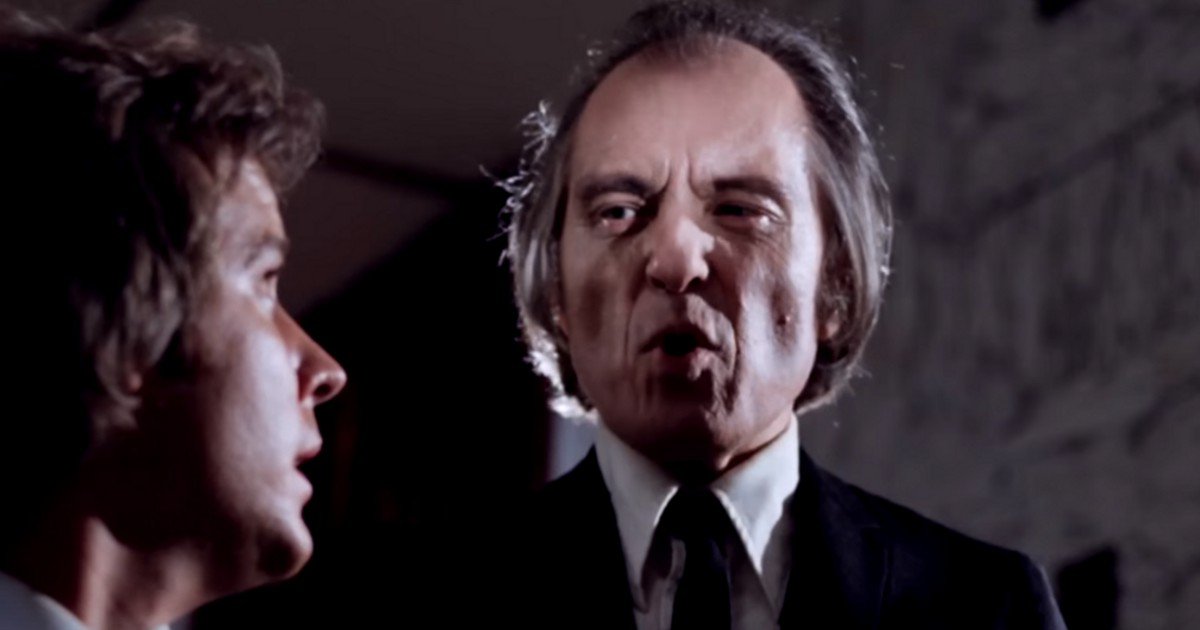
The narrative seemingly linear jumps from one surreal set-piece to another and contains memorable images and characters such as: ‘The Tall Man’ portrayed menacingly by Angus Scrimm; the silver killing spheres; the murderous yellow-blooded dwarves; and the inter-dimensional portal which leads to a strange slave-planet. These are all unforgettable and the stuff of bloody death and nightmares. While the plot lacks clarity at times it moves at some pace and the combination of small town life mixed with insane killing devices and crazed creatures creates a wholly memorable mix.
Phantasm is a synthesis of genres from rites-of-passage, suspense, horror and science fiction. Ultimately, it’s the epitome of a cult classic and a triumph of concepts over finance. It’s full of mood and atmosphere and has a creepy synth-based soundtrack that cranks up the fear factor. Overall, super-positive Coscarelli created an imaginative fantasy concerned with death and mourning that has stood the test of time. It may lack the polish of big budget productions but the scares and surrealism reminded me of the works of Italian horror-master Lucio Fulci and Spanish filmmaking genius Luis Bunuel. It’s a film I would wholly recommend for devotees of horror and science-fiction and for those who like their movies raw, inventive and nightmarish.
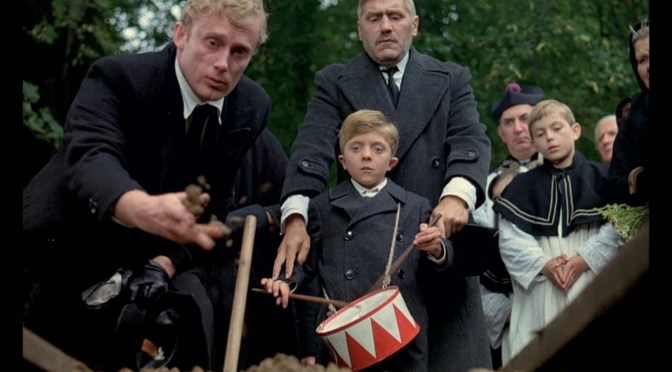
I’d never seen this film before and am so glad I did because it now in my top twenty best films I have EVER witnessed. It is a tour-de-force of writing, directing, acting, design, narration, humour, drama, sound and imagination. Based on Gunter Grass’ exceptional novel The Tin Drum – directed by Volker Schlondorff – it is set in the realistic backdrop of post-World War 1 Germany, and during World War 2, before veering into magical realism and surrealism to present a giddy allegorical tale of some wonder.
The comical opening contains a prologue which sets the ambiguous tone of humour and darkness. It establishes the ancestry of our leading character Oskar Matzerath (amazing David Bennent) and clearly echoes and influences current filmmakers such as Paul Thomas Anderson, the Coens and Wes Anderson with its’ curious oddity. From there on Oskar himself enters the world and while initially reluctant he is forced into life and what a life that is!
Born with the mind of an adult, at the age of three, Oskar decides that he will NOT grow up for as long as he chooses. Anyone who crosses him is subject to a visceral scream which is loud enough to shatter glass. In addition, Oskar also smashes a tin drum incessantly revealing a psychotic pathology which disregards the pain and suffering of those around him. My reading is that Oskar is representative of the rise of fascism and Hitler in these difficult socio-political times for Germany. This idea is further supported by the fact his mother has two men chasing her affection; a gruff German grocer, Alfred, and gentler Polish man, Jan; and either could be Oskar’s father. These are divisive and confusing times for Germany, and a child, especially one who is as precocious, strange and violent as Oskar.
The meat of the film is continual conflict, death and dark situations. The scenes on the beach with eels being captured using a dead horse’s head is full of symbolism and a black humour I will never forget. More conflict for Oskar ensues as he rejects all authority including religion. When his mother dies, seemingly from overwhelming guilt, and his friend, a Jewish toymaker, commits suicide following Nazi oppression, Oskar’s life is further stained by death. Latterly, the film enters a stage where – while he is still physically a three-year-old – he hits puberty and become sexually active. The explicit sex scenes involving Maria, a sixteen year old shop girl, are disturbing and unforgettable and this leads to further conflict with Oskar’s father who eventually marries Maria. Anger and jealousy provokes Oskar so much he literally runs off with the circus and becomes part of a troupe that entertains German soldiers during the war. It is not long though before further tragedy strikes and his strange romance with dwarf singer Roswitha, ends suddenly with her demise.
The Tin Drum is intense, visceral and brave filmmaking. While it uses history as a backbone, its’ muscle, skin and clothes are eccentricity, allegory and insanity. It was one of the most financially successful German films of the era and won the 1979 Oscar for Best Foreign Film. I guess I missed it because it is rarely shown on television, no doubt due to the controversial sex scenes involving 11 year-old Bennent. Overall, it is one of the most original stories I have seen on screen and the child actor who played Oskar was a revelation. I have rarely been so horrified, moved and made to laugh as much as I have by a recent cinema visit. I would heartily recommend this film to anyone serious about making films and those who demand intensity in their cinema viewing.
The boast of heraldry, the pomp of pow’r, And all that beauty, all that wealth e’er gave, Awaits alike th’inevitable hour. The paths of glory lead but to the grave. Thomas Gray, 1751
Stanley Kubrick is the greatest filmmaker who ever lived. That is a fact. He made films in all genres but indelibly stamped his own genius on the war, comedy, thriller, horror, satire, crime, science-fiction, historical and drama films he adapted and created for the big screen. His work contains a litany of iconic images, searing soundtracks, stupendous performances, great intelligence and provocative thought which ensures his films linger in the memory of those who have witnessed them. All hail a true cinematic master.
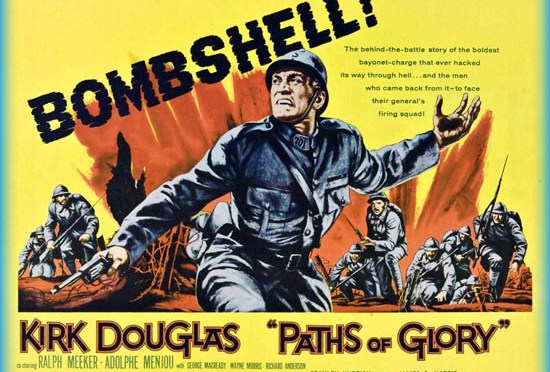
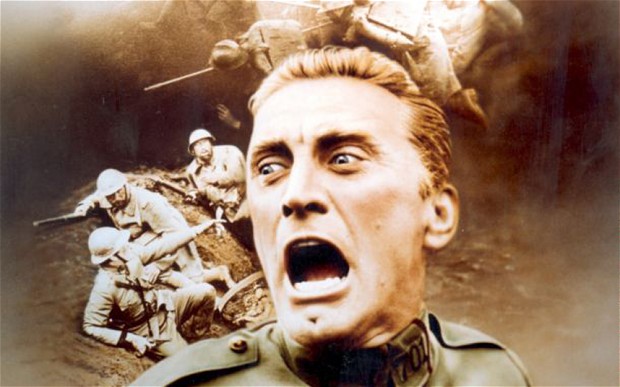
Paths of Glory (1957) was Kubrick’s fourth feature film and certainly his biggest budget film to date. His previous film had been a B-movie crime masterpiece called The Killing (1956), which meticulously examined the planning, progression and aftermath of a racetrack robbery. Using a documentary style and surgically precise narrative structure The Killing is indicative of Kubrick’s subsequent ability to reinvigorate a genre with his masterly eye. However, Paths of Glory was, emotionally speaking, even more powerful than The Killing.
The story is set in France, 1916, during the heated battle and burning mud of WW1 trench warfare. World War I is rightly (and then wrongly) thought of as the war to end all wars with millions of soldiers and civilians losing their lives in a coruscating damned hellish indictment against humanity. As if the incredible number of deaths between the warring factions were not enough the powers-that-be would also shoot their own men for cowardice and desertion believing this to be “good for morale” or at very least a warning to those who refuse the fight. This is the frankly insane setting for this formidable dramatic tale.
The main action concerns the court martial of four men chosen, apparently, at random to face a firing squad following a botched attack on a key enemy position called the ’Anthill’. War is a desperate prison even at the best of times but here the men are shown as broken, battered, starving, shell-shocked and on their knees spiritually even before the attack. When the suicide mission unsurprisingly flounders, ambitious and sociopathic General Mireau – portrayed with venal glee by George Macready – proclaims death to all who failed the glory of France. The seemingly more reasonable, yet equally poisonous Major General Broulard (Adolphe Menjou) lowers the numbers to be shot in a chilling scene that reduces human life to no more than barbaric bulls-at-a-market bartering.
The voice of reason amidst all this insanity is Kirk Douglas’ former-lawyer Colonel Dax; who himself was part of the failed raid on the ‘Anthill’ and could testify to the impossibility of the task. Dax is the audience’s conduit to the madness of those in charge; from the: choosing of one soldier by lots; the farcical trial and even the final execution where one unconscious soldier is woken up only to be shot dead moments later. Douglas is imperious in the role demonstrating a range of emotions from incredulity, despair, anger and a powerful sense of the righteousness. The final heart-breaking scene where he gives his men a few more minutes listening to the folk song tells us Dax is a sane man in an insane world run by psychopaths. The song is delivered hauntingly by the captured German girl (the actress Christine Harlan was later to become Kubrik’s wife) to men who are destined to die in the barbed-wire brutality of war.
Kubrick’s work (Barry Lyndon, Dr Strangelove, Clockwork Orange to name a few) is full of damning critiques of the upper classes, high falutin politicians and war-mongering men who use the working or lower classes to do their filthy bidding. In this film they are represented by Menjou’s politically-driven Broulard who sits comfortably in his Chateau quaffing wine and scissoring quail; all the while brave men are skewered in battle. Full of tragedy, wicked satire and black humour the screenplay based on Humphrey Cobb’s novel is eighty-eight minutes of sheer cinematic perfection, power and heartwrenching injustice and emotion.
Quite rightly Paths of Glory has been proclaimed a masterpiece and one of the greatest anti-war films of all time. Filled with the now-iconic tracking shots of bloody battle, plus many tremendous performances notably Macready, Menjou, Douglas and the scene-stealing, druggy sop that is Timothy Carey. Overall, I have watched this classic many times when young and having seen it on the big screen at the BFI recently I can testify that it has lost NONE of its grandstanding power. Forget the insipid blockbusters of today and revisit the master of cinema where and when you can: his name is Stanley Kubrick.
While it’s not a terrible film in terms of action, theme song and the villainous Christopher Walken, Roger Moore’s final outing as James Bond, A View To A Kill (1985), is on the whole a kitschy let-down. A geriatric Moore planks woodenly through the dramatic scenes and the joins between him and his wiggy stunt-doubles are plain to see. Even Roger Moore admitted, in an interview, he was “400 years too old to play Bond.”
While Moore is my least favourite Bond there were some highlights during his tenure, notably: Live and Let Die (1973) and The Spy Who Loved Me (1977), plus his battles with arch-henchmen Jaws (Richard Kiel) and some fine gadgets were always memorable. However, I found his performances too cheesy and his Bond lacked the charisma and steel of the inimitable Sean Connery. Eventually, his performances and films overall slipped into parody and Moore’s 007 was rightly retired.
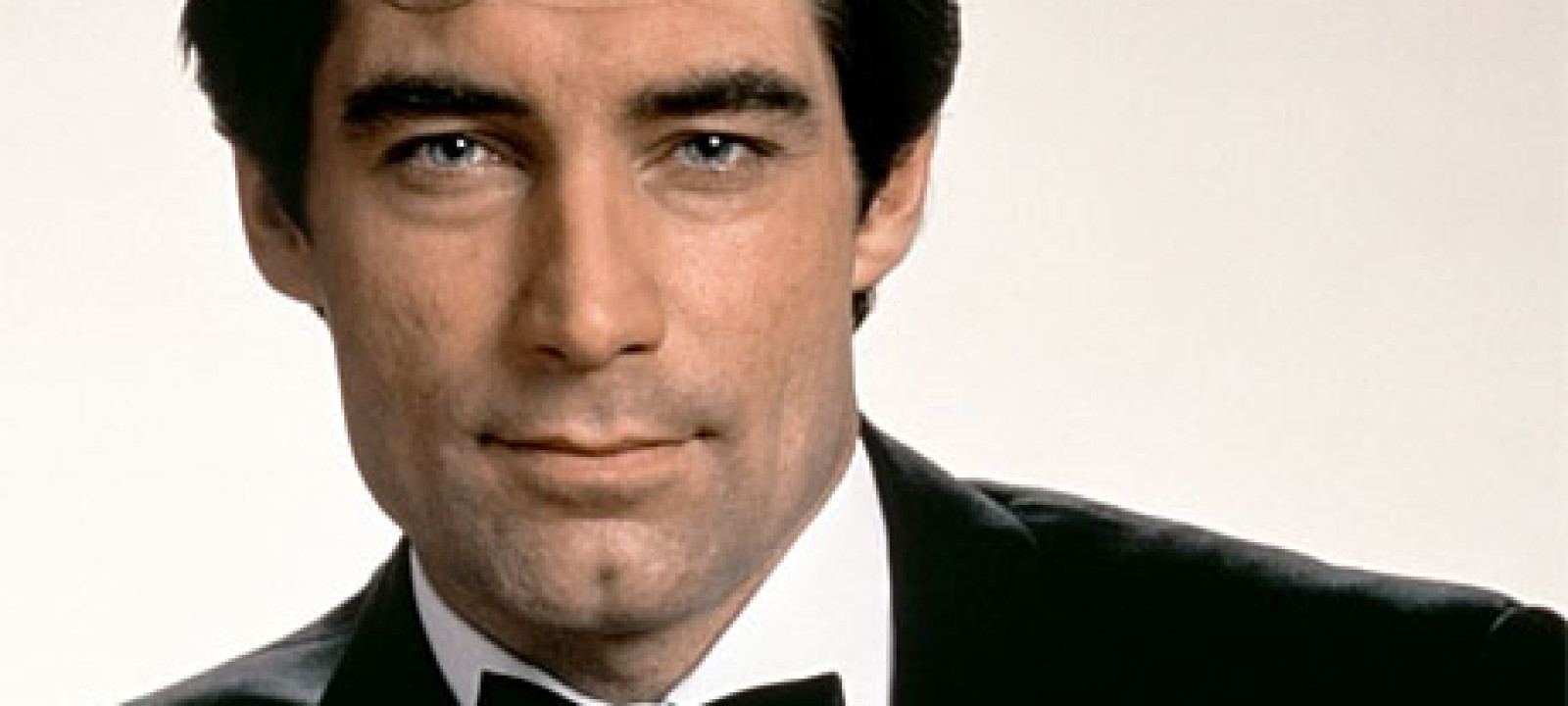
After A View to a Kill, Pierce Brosnan was all set to take over. But due to a last-ditch contract renewal of TV show Remington Steele – which ironically benefited from the publicity of Brosnan’s Bond casting – the role was taken by an actor of some standing, namely Timothy Dalton. Moore’s blonde, safari-suited playboy would be replaced by a brooding, angry, dark-haired Welshmen who had trod the boards at the Royal Shakespeare Company and played iconic roles such as Heathcliff and Mr Rochester in film and television.
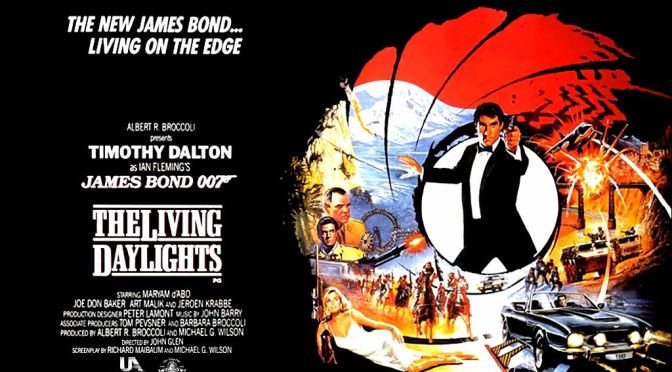
Dalton’s debut Bond was The Living Daylights (1987) and having watched most of the Bond films a few years ago – when they were replayed on Sky in 2012 – this one stood out as a right cracking espionage thriller. It was annoying because in the past I had wrongly dismissed it due to Dalton’s short career as Bond. But the Prince Charles Cinema in London began a 007 retrospective this year, screening the entire Bond series, thus I decided to experience it on the big screen for the first time.
After years of fun but hollow and almost satirical spy performances from Moore, Dalton gave a darker more nuanced tone in The Living Daylights. The film opens with a thrilling skydive and chase involving a training exercise gone wrong and culminates in Bond battling an unknown assassin on top of an exploding truck. As Bond parachutes to safety atop a passing yacht you soon realise we’re in safe hands with Dalton as he’s tough, athletic and very realistic. In fact, from research I gather he did many of his own, less dangerous, stunts in order to assure authenticity.
The plot of The Living Daylights is one of its major strengths. There’s no one single pussy-stroking-scarred-megalomaniac threatening to take over the world but more of a corporation of villains, from Joe Don Baker’s over-the-top-military-nut-with-a-Napoleon-complex, Whitaker, to Jeroen Krabbe’s Georgi Koskov; a devious Russian triple-agent attempting to reignite Cold War tensions between the KGB and British Secret Service. There’s also a formidable henchman called Necros played with physical prowess and Aryan superiority by Andreas Wisniewski.
Bond enters the fray when he is sent to take down a sniper sent to kill Koskov. In a plot twist, very much faithful to the energy of Ian Fleming’s original short story, he spares the baited “assassin”, a cellist named Kara Milovy portrayed with naive charm by Maryam d’Abo. During the “assassination” attempt on Koskov Bond senses something is wrong and spares Kara’s life. This sets in motion some wonderful cat-and-mouse espionage set-pieces and chases through the streets of Vienna and on the ski-slopes of Austria. Indeed, the relationship between Kara and Bond, while starting from a deadly position, provides a key romance and subplot but never feels forced. I especially enjoyed the integration into the story of Kara’s cello which is used throughout as a means to bring the two together; notably during the early “sniper” scene; plus when they trick KGB agents in Vienna; and when it’s employed as a makeshift snowboard while escaping capture.
The “cello ski-slope” stunt is just one of the brilliant action sequences in the film. Other great action scenes are the gadget-heavy car chase featuring the Aston Martin which precedes it plus a heart-stopping stunt at the end involving the huge cargo plane. Bearing in mind this is before any kind of computer-generated imagery was used in cinema, the feat of the stuntmen hanging out of the plane on a net while fighting just took my breath away when witnessed on the big screen. Within the action there’s a lovely pay-off too as Bond eventually uses the ticking time-bomb he set to blow up an Afghan bridge to defeat the Soviets.
Of course, while Bond is ultimately a cartoon-action-spy-thriller there are some interesting socio-political points made. Whitaker, Koskin and Necros’ nefarious plans involve using Soviet funds to pay for a huge opium purchase from the Mujahedeen in Afghanistan and in turn use the profit to buy more weapons and further the Cold War conflict. The film suggests certain Governments, Military and Secret Services often manufacture wars and assassinations for their own political and economic needs and Bond himself is the “Lone Ranger” policing the world against these crazed, avaricious warmongers. While I really like the Daniel Craig Bond era, on the main, his films do lack a certain political depth in regard to current topical events; desiring to avoid accusations of political incorrectness no doubt.
Compared to the Moore films it could be argued there’s a lack of humour in the Living Daylights. I think this is incorrect though as there’s some nifty laughs and fine one-liners throughout; it’s just Dalton plays it dark and deadpan. Yet there is also playful invention in the film, for example, I loved the way Koskin defects by being shot down a huge pipeline. Furthermore, Necros has a cheeky line in unlikely disguises and accents, while Dalton himself has some cracking puns, especially when Necros is literally given “the boot” during the final aerial punch-up. Right at the end during Cara’s cello recital we get the most risqué joke of the film as the Mujahedeen turn up adorned in full “terrorist” garb saying they “got held up at the airport.” In today’s po-faced, politically correct climate we probably wouldn’t get satire like that because it is arguably xenophobic and proffering certain derogatory Middle Eastern stereotypes. However, it gained a massive laugh while I was watching.
The Living Daylights, for me, is a very fine Bond film and Dalton is an incredibly under-rated 007. He only did two films but brought a pathos, depth and unpredictability to the role that Moore severely lacked. Bond is a stone-cold-killer-burnt-out-anti-authoritarian-adrenaline-junkie who has seen death a thousand times over; and Dalton plays him as such. Connery, Craig and at times Brosnan got this over in their performances but none as much as Dalton. The film works brilliantly on the big screen too and stands the test of time as both a sterling Bond film and cracking espionage action thriller.
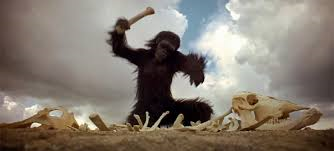
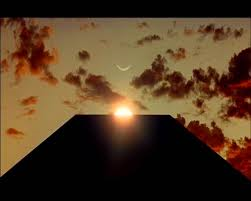
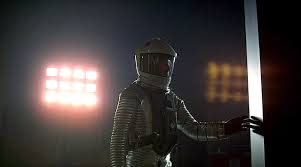
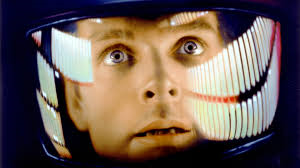
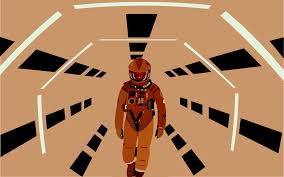
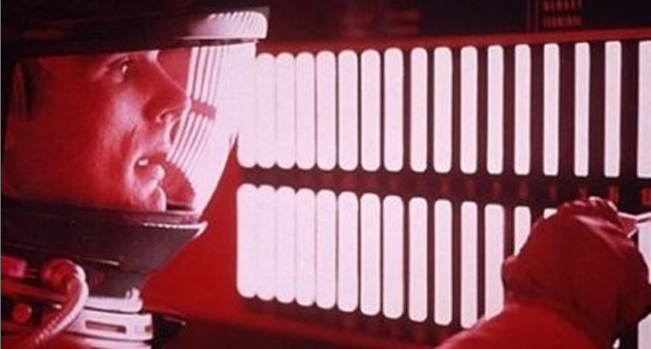
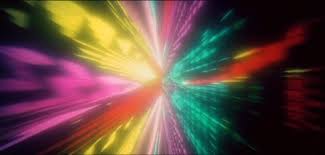
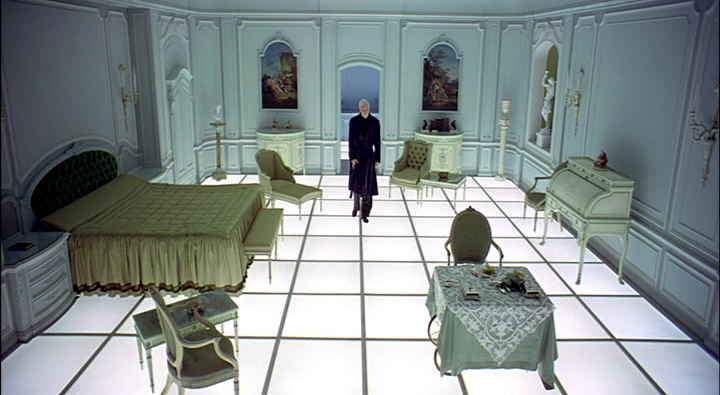
“A picture is worth a thousand words.” – Old Chinese Proverb**
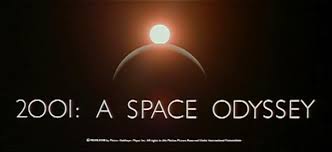
Thus, having seen Stanley Kubrik’s poetic space opera at the cinema last week I thought it unnecessary to write what can be said better with images. It is a work of absolute art which gets better on every viewing.
An influence on pretty much EVERY science-fiction film since its inception this film MUST be seen at the cinema. It’s on at the BFI at the moment so go before their brilliant sci-fi season closes.
What does it all mean? Something about life, death, future, past, present, humanity, aliens, peace, violence, Artificial Intelligence, technology, religion, heaven, hell and pretty much everything else. It’s up to the viewer to decide.
**Although there is some doubt on the Internet as to whether it was Russian author Turgenev who invented this phrase or whether it was an early 20th copywriter Fred Barnard trying to sell cars who coined this phrase. But who cares – just look at some pictures and be in awe to the genius of Stanley Kubrik and his filmmaking team.
With Christopher Nolan’s Interstellar (2014) orbiting the cinemas this week I thought I’d look back at the film which he made in between breathing life into the Batman franchise. No doubt Nolan is an important genre filmmaker and as his budgets have got more grandiose then so have his ideas. I just love that he is interested in attempting to make intelligent blockbusters where ideas, character and theme lead the story rather than rely simply on action, explosions and special effects (no offence Michael Bay.)
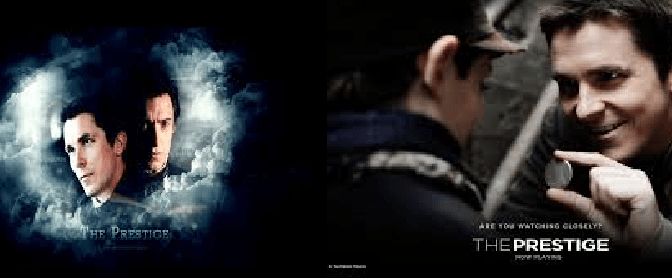
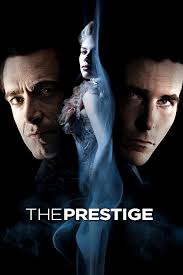
Memento (2000) was a stunning and complex low-budget noir which dealt with obsession, murder and memory and Nolan continued these themes in superior cop thriller Insomnia (2002). Having delivered a cracking origins film in Batman Begins (2005) the director followed this up with a story about battling magicians based on Christopher Priest’s novel called The Prestige (2006). For me it confirmed him as a force-to-be-reckoned with director. Following on the themes and tropes established in his prior films, The Prestige is centred around two obsessives brilliantly portrayed by the always excellent Christian Bale as Alfred Borden and the never-been-better (until Prisoners (2013), Hugh Jackman, playing his bitter rival, Robert Angier. The story starts at the end with Borden facing the hangman for Angier’s murder. After which the narrative flashes back to a time when the pair were freshman trick-smiths learning the ropes from mentor Cutter (always solid Michael Caine). When the cockney and cocky Bordens’ actions accidentally lead to the death of Angiers’ wife (Piper Perabo) – during a particularly complex and dangerous trick – the two go their separate ways. This sets in motion a story full of bitter twists of active and reactive vengeance. Each protagonist becomes so obsessed outdoing the other – with the ultimate trick – they are prepared to sacrifice the ones they love in doing so.
The film is rich in plot, character and theme and investigates thoroughly the very human aspects of obsession and revenge. The double or doppleganger trope is also integral to the story as the writers Jonathan and Christopher Nolan literally dissect the characters’ souls. The gritty, dirty period of Victorian London is wonderfully evoked and the fascinating world of magicians and their mysterious secrets is expertly represented. At it’s heart the story begins by showing us the cons of the magicians and the lengths they will go to amaze and astound an audience. By the end though the film becomes something much different with a chilling and fantastic turn which you think you see but ultimately don’t see coming.
Brilliantly directed by Christopher Nolan The Prestige is inventive, intelligent and ingenious. His cast does not let the magical screenplay down with the gorgeous Scarlett Johannson and – albeit briefly – pretty Piper Perabo bringing some glamour to the gritty proceedings. Rebecca Hall is also on commanding form bringing a subtle pain to the role of Borden’s wife.
Overall, it’s a challenging big-budget tale in which you never quite know what is real or what is a con. It keeps you guessing to the end, leaving you with a jaw-dropping final act as the story moves from sleight-of-hand tricks to science fact and finally science fiction. Ultimately, the film successfully combines fantastical, existential, and scientific elements. The film gives us a kind of magic but asks whether it’s worth the damage it causes to lives? THAT, for me, is The Prestige’s greatest trick.
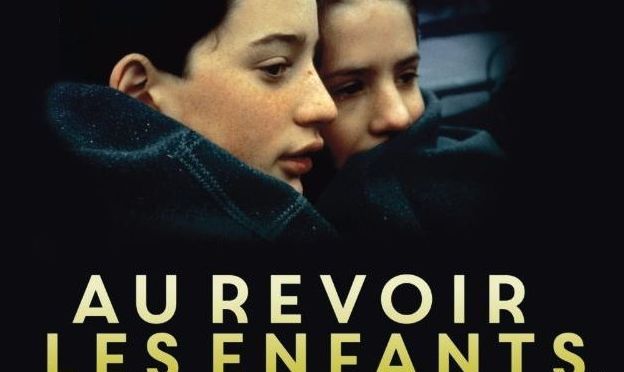
AU REVOIR LES ENFANTS (1987) – CLASSIC MOVIE REVIEW by Paul Laight
Louis Malle’s brilliant wartime drama set in a French Boarding school is a subtle, yet somehow brutal drama which perfectly captures the horrors of war during 1944 Occupied France.
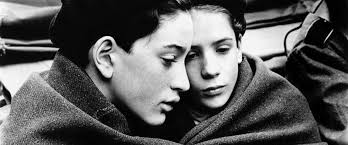
It centres on the relationship between the children who were sent from the cities of France out to the countryside to avoid the Allies bombing. More specifically it looks at the relationship between Julien Quentin and new boy at the school Jean Bonnet.
The adult characters throughout the film such as the parents, priests and teachers all do their utmost to protect the children from the fact that a war rages on. This is demonstrated by the fact the children are sent away from the city where the Allies are bombing non-stop as heard in one of Madame Quentin’s letters. Moreover, Julien’s mother is clearly a loving woman committed to protecting her sons showing this in the opening scene. On the platform Julian is quite vicious to her but she knows this is from fear and being upset at being sent away. The way she hugs him and reassures him tells us she cares very much.
Certainly, the Church and school grounds are both physically and figuratively seen as the main shelter for the children during the film. The location of the school in the countryside away from the main ally bombings also illustrates the desire to protect the children from the war. In addition, so does the blackout curtains and placing the children in the catacombs while an air raid takes place. The fact that Catholicism features heavily in the film offers religion and God as more symbolic protector of the boys.
But as the narrative progresses the world outside and events prick the temporary and flimsy protective bubble. Despite their efforts the adults cannot protect the children fully from the harshness of war with German soldiers, French Military Police and eventually the Gestapo converging on the school.
The colours throughout the film are washed out and somewhat drab with darker hues such as brown, navy blues, black and greys dominating the clothes, curtains and mise-en-scence generally. Married to these colours is a bleached, pared down cinematographical style which combine to create a cold, oppressive feeling during the film. There is a sense the characters are not only trapped by the ongoing war and in the boarding school but also by the weather. Indeed, it appears that a permanent winter hangs over the characters. Moreover, the lighting is served as naturalistic emanating from windows, candles and skylights.
Altogether, this tells the audience that the filmmakers are portraying events as realistic and this is confirmed by the knowledge the narrative comes from a real event in Louis Malles’ childhood. As such the colours, lighting and design combine to create a bleak and stifling environment for the characters; a feeling that war is a difficult climate to exist in with little in the way of bright colours or sunshine to provide escape.
As aforementioned, Jean and Julien’s relationship propels the narrative. Jean Bonnet is portrayed as a studious boy who excels at most subjects notably music and mathematics and is singled out for praise by the teachers. Initially, he attempts to keep himself to himself not forging close ties with any other children other than those he knows. The reaction from the other children is mixed. Some ignore him but others tease him about his name. Julien is indifferent until he is asked by Father Jean to keep an eye on him.
My feeling was there was a real tragedy surrounding Jean and this is testament to the director and the casting of the boy who portrayed him. While many of the children are pale in colour Jean was paler almost ghostlike. The kiss Father Jean places on his head at the beginning of the film seems innocent but becomes portentous by the films’ end. Being Jewish also lends his character a real sense of adversity and there is much suspense to be derived as to when he will be discovered.
Initially, their relationship is strained with Julien not reckoning Jean but over time they slowly begin to bond. Father Jean requests Julien becomes a ‘guardian’ to Jean and Julien takes on this responsibility. He is also naturally curious about the new boy and his background having discovered him praying in Hebrew at night.
Aside from their close proximity in the bedroom area events conspire to bring the children closer together. Julien’s bed-wetting not only causes him distress but also leads to the discovery of Jean’s religious background. Moreover, a mutual interest in playing of the piano provided common ground between the two characters as echoed in a lovely scene later in the film showing them playing together despite the air-raid going on. Indeed both music and film (Chaplin’s ‘The Immigrant’) are shown to be provide a form of escape from the horrors of the outside world.
Julien is a naturally inquisitive boy and when he sees Jean praying at night he becomes intrigued. His interest is piqued further when Father Jean asks him to look after him. This separates Jean Bonnet as different. Moreover, the way they are integrated into the school is different also. Many of the other boys arrive on the train from the city while the Jewish children arrive separately almost in secret from a mystery place.
Julien’s detective work is initially done clandestinely. He searches Jean’s locker at night and finds books with his actual name in them: Kippelstein. This gives him the impetus to begin asking his brother questions about the Jewish people and why they are disliked so. His brother reveals a lack of knowledge and thus Julien also asks his Mother too. As his ‘investigation’ continues and he gains Jean’s trust he then asks him directly about his parents and where he comes from. Over time he gains Jean’s trust and Julien finds out about him personally as well as his background. As such a bond is built via Jean’s secret.
The key event which brings them together is when they get lost in the woods. The scene separates the boys from the rest of the school and shows they support each other in their plight. Julien doesn’t dream of giving Jean up to the German soldiers in the woods and their friendship is confirmed from that moment onwards. However, there’s a sense that it is Julien who gives Jean away to the Gestapo at the end because of their bond but this is a harsh assessment.
Ultimately, it is the crippled Joseph who gives the Jewish children away. While the capture of Jean and the other boys is certainly a tragedy I find Joseph to be the saddest character in the whole film. This is a character who has been dealt a really bad hand in life. He appears to be an orphan, is disabled and is also of lower social standing compared to the richer kids who surround him. Furthermore, he is bullied mercilessly by the other children despite the fact he actually helps them get cigarettes and stamps through his racketeering on the black market.
The biggest tragedy is that he is the one who must pay for the whole ‘black market’ affair with the privileged children being castigated but essentially unpunished for their roles in breaking the rules. Even Father Jean admits as much that Joseph is the scapegoat in the event. My emotions empathised with Joseph at this point and felt maybe he could have been forgiven or at least asked to forgive his sins. But no, he is cast aside and this causes the downfall of Father Jean and the Jewish children.
There is no justification for Joseph’s actions but he’d been forced into a corner like a gutter rat and came out fighting. While his actions are reprehensible he had revenge and spite in his mind as he had lost everything. It was a decision based not only on retribution but also a desire to gain power. At the end as he smokes what he believes to be a victory cigarette the audience knows the Germans will eventually lose the war and poor Joseph has chosen the wrong side.
But does Julien betray Jean in the classic end scene where for one brief second he looks back at his new friend? No. My understanding of the meaning of betrayal is an individual going out of their way vindictively to divulge a secret or secrets for personal gain or self-preservation. And while it’s Julien’s turn and look around which gives Jean away to the Gestapo I don’t believe he has betrayed him. The look around is out of fear for his friend and is an instinct rather than a decisive move. There is no malice aforethought but rather a reaction due to the nervousness of the situation.
There’s also a question of motive. By the end Julien and Jean have become good friends so there is no real reason why he would betray Jean. Moreover, he could have given Jean up many times before that, notably when they get lost in the woods and taken back to school by the soldiers. Overall, I think it’s the Nazis who betray Jean. Their actions have ultimately led to the horror of war and moments such as these in the classroom. Thus, every innocent in this film is betrayed, not just the Jewish children and Father Jean.
Some critics have argued that Au Revoir Les Enfants is as much about childhood and a loss of innocence as it is about the Second World War. It too could be seen as a universal film about life in a boys’ boarding school. I agree with this to some extent it could be seen as a universal film about life in a boys’ boarding school. The film shows the sadness of children being separated from their parents and the closed off nature of the boarding school. It shows the rough and tumble of boys playing in the grounds and how they make fun of each other’s looks and names. Also, there is a real sense of sadness in the isolation of being away from their families and the joy provided when the parents come to visit the children. We indeed see the children cared for by the teachers and Priests so in effect there is a sense of them being orphaned but they are not deprived in any way and their childhood is nowhere near as bad as say an Oliver Twist character.
Thus, in my view, we must view the film as predominantly a film about Second World War. Without it we would have none of the major themes prevalent throughout notably the loss of innocence and childhood. WWII and its’ events give the story a real gravitas and dramatic walls to bounce off. It gives the whole film subtext and tragic events of the narrative making it difficult to view the film solely about life in a boarding school.
The film is microcosmic and analogous using the characters – in a similar way Casablanca (1942) – to represent certain groups present during WWII. One could argue Father Jean represents the Resistance; Julien represents the French nation awakening to the horrors of war; Joseph represents the colluding Vichy government; and more unambiguously Jean is the Jewish people and the Germans the Germans. Therefore, the film offers a positive portrayal of the French when Father Jean and Julien are shown both befriending and protecting Jean.
This film is what I would describe as a quiet tragedy. Big events occur almost incidentally with emotional scenes unfolding and ending before you’ve had a chance to take in the enormity of what has occurred. Louis Malle does this with a very unobtrusive and subtle filmmaking style. The camera positions are relatively neutral throughout shooting in a medium shot on the whole with hardly any close-ups or extreme long shots. The music is also very subtle and another filmmaker may have had a rousing score to deliver emotions but much of the music in the film is diegetic either from piano or violin playing during the Chaplin screening.
The filmmakers’ style allows the audience to make up their own mind about events and bring their own emotions to the scenes. This also occurs with the characters throughout the narrative. These are very human characters and aside from the Germans and the French collaborators who are seen as the enemy there are certainly many grey areas where the children are concerned. Having said that even the Germans are shown to be humans such as when the German soldier asks to provide a confession.
The beauty of this film is the subtle way it conveys its story and meaning. So, when discussing the potential legacy of guilt it is important to look at the characters and their place in the story. There are clearly defined antagonists in the Germans and positive protagonists in the children, Father Jean and his teaching staff. Moreover, in Julien and Joseph we have, in my view, the most complex characters of the film. Joseph is the anti-hero and where much of the legacy of guilt could be fed through. Additionally, there is the suggestion of guilt in Julien’s turn and look that gives Jean away. But guilt here is not necessarily overt and is conveyed between the lines in keeping with the masterful direction Malle provides throughout.
Similarly, the film does not show the French as anti-semitic throughout; quite the opposite in fact. While the children show ignorance of Judaism this is not through prejudice but rather a lack of knowledge and when given the chance to betray the Jewish children the French display grit and resistance against the Germans; something to feel proud rather than guilt about.
So, in conclusion, underneath the surface there is a sense of guilt that pervades the characters and film in general but it is subtle and underplayed and the film is all the more brilliant for it. It does not smash home any singular messages regarding a legacy of guilt but shows all facets of the French people at wartime. Both the positive and negative and the result is not a simple case of black and white but instead a powerful grey like the colour of the Nazi uniform itself.
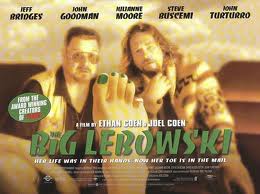
THE BIG LEBOWSKI (1998) – Classic movie review Paul Laight
“The Dude abides. I don’t know about you but I take comfort in that. It’s good knowin’ he’s out there. The Dude. Takin’ ‘er easy for all us sinners. Shoosh. I sure hope he makes the finals.” THE STRANGER
The Coen Brother’s comedy-noir-musical par excellence The Big Lebowski (1998) is a film that shouldn’t really work. A hybrid of various genres with the spine of Raymond Chandler’s classic noir novel The Big Sleep; skin and bones of upper-class, artistic and counter-cultural characters; clothes of idiosyncratic narrative twists; all the while tattooed with chimeric pop references and eclectic soundtrack. But you know what? It does work. Brilliantly! Because it has a big, big heart. A heart transplanted via the screenplay and direction of arguably the most inventive filmmakers of a generation, Joel and Ethan Coen. A heart given its’ beat by Jeff Bridges laid-back, insouciant career-defining performance as Jeffrey ‘The Dude’ Lebowski.
The Big Lebowski opens with tumbleweed drifting across the beachy Los Angeles landscape as the Sons’ Of the Pioneers warble, appropriately enough, Tumbling Tumbleweeds on the soundtrack. The Stranger’s (Sam Elliott) warm laconic tones establish time (circa 1991) and place and then introduce us to “quite possibly the laziest man in Los Angeles County” – our ‘hero’ – The Dude. But from the moment two thugs piss on the Dude’s rug, the gentle opening gives way to a series of hilarious misunderstandings and scenes involving: double-crosses, ‘kidnappings’, car-beatings, bowling, toe-cutting, naked art, doped-up musical numbers and purple lycra jump-suited pederasts.
The Big Lebowski – like many Coen Brothers’ movies – is one that actually gets better with further viewings. On first watch there is so much going on, so many elements, surprises and odd characters that’s it’s difficult to know what to make of it. It’s essentially a comedy with a noir plot which borrows heavily from Raymond Chandler’s aforementioned The Big Sleep but the plot is very loose and really just a way for the Coen Brothers to showcase their latest band of eccentrics. Indeed, as with Fargo (1996) – where the criminals are revealed from the start – the Coens’ screenplay is not interested in following genre convention. The Big Lebowski reveals a major plot point (Bunny has kidnapped herself) early in the film, thus, subverting the conventions of the detective story so reliant on mystery and intrigue.
Jeff Bridge’s ‘Dude’ is arguably one of the most memorable characters the Coen Brothers have created. He is the ultimate dope-smoking slacker and probably the most unlikely ‘detective’ in cinematic history. His relationship with Walter, and the hapless Donny, anchors the movie in a heightened, yet believable reality. These are just three working class guys chewing the fat while bowling who happen to fall into a manic misadventure involving the kidnapping of a rich man’s trophy wife. Obviously, the term ‘working class’ is used loosely where the Dude is concerned, as he doesn’t actually work. Together, Dude, Walter and Donny resemble a postmodern Three Stooges going from one crazy situation to another and while their hilarious and antagonistic dialogue at the Bowling Alley add real fizz to the story.
The roles were all written specifically for Jeff Bridges, John Goodman and Steve Buscemi and in many scenes Bridges actually wore his own clothes. Even more interesting The Dude is apparently based on a real-life character, independent film promoter Jeff ‘The Dude’ Dowd; who helped the Coen brothers secure distribution for their debut feature noir-horror, Blood Simple (1984). Meanwhile, John Goodman is quoted as saying Walter Sobchak is his favourite film role and who can blame him. Walter is a gift of a role with Goodman playing this loose cannon, Vietnam vet, “I can get you a toe, Dude” nutter brilliantly. Walter, like the Dude, is inspired, in part, by a real life person – the bombastic film director John Milius. Lastly, Steve Buscemi, as “Shut the fuck up!” Donny excels in a much understated performance; unselfishly playing the permanently bemused straight guy.
The Coens take these three social underachievers – the Dude and Walter especially – and contrasts them with a whole host of misfits, from the Dude’s dancing landlord, marmot-wrangling German nihilists to one of the most incredible individuals from all Coen Brother’s movie canon. I am of course talking about Jesus Quintano played with joyful abandon by Coen cast regular John Turturro. “The Jesus” receives a grand introduction – for a minor character with no bearing on the story – in purple, in slow motion with the Gypsy Kings’ version of Hotel California blasting over the soundtrack. And it is in this moment that you realise that you are watching a film of unbridled fun. The fact Jesus is also a “flasher” adds a guilty edge to the scene. Should we be laughing at this ridiculous character who happens to be a pederast?
Within the subtext of the screenplay there are elements of a class struggle between the Dude, his Musketeers and the upper class LA types represented by The Big Lebowski (David Huddleston) himself and his daughter Maud Lebowski (Julianne Moore). But it is not the Coen Brothers’ intention to comment on such socio-political conflict; merely an opportunity to create humour from such contrasting styles of people. Throughout the film the Dude finds himself a dupe or conduit in the underhand plans of the rich. But he’s either knocked unconscious, drunk on White Russians or so doped up that any potential drama is undercut with a sense of the ridiculous. Indeed, in another odd plot twist the Dude is ‘seduced’ by staunch feminist Maud, so she can conceive a child but have nothing to do with the father. Conversely, much of the conflict is undermined by unconventional characters and there is little palpable danger even when Dude is being attacked in the bath by the nihilistic ferret. Only poor Donny’s heart attack lends the movie a sober and poignant end but it’s a sense of reckless fun rather than suspense or danger that permeates the movie.
Overall, The Big Lebowski is an alternative comedy from filmmakers taking chances and playing with genre expectations in the most unexpected ways. It has no intrinsic meaning and makes little sense narrative wise. Flowered with coarse and colourful language (fuck is said over 250 times) it’s a rich postmodernist movie which references or pastiches everything from: Busby Berkeley musicals to porn movies, Krautrock, film noir, progressive rock, TV show Branded (1965), The Eagles, avant garde painting and even has time to feature a cameo from Saddam Hussain in one of the bizarre musical dream sequences. After the critical and commercial success of Fargo the Coen’s delivered the offbeat The Big Lebowski to confused critics and relative commercial failure. While The Big Lebowski made $27million worldwide ($15million dollar budget) it is a cult movie in the true sense of the word and in The Dude it has one of funniest characters ever committed to celluloid. But as the man himself said, “that’s just my opinion, man.”








 The Cinema Fix presents