Written by Mike Leigh – Based on 1970 stage play by Mike Leigh
Produced by Leslie Blair
Cast: Anne Raitt, Sarah Stephenson, Eric Allan, Joolia Cappleman, Mike Bradwell, Donald Sumpter etc.
Cinematography by Bahram Manocheri
Camera Assistant: Roger Pratt
Edited by Leslie Blair
One of the quiet yet profound joys of cultural life is finding a creative or sporting figure—or team—whose journey you follow from an early age, growing alongside their work as it evolves. Whether it’s the cinematic brilliance of the Coen Brothers or Mike Leigh, the ever-shifting energy of Primal Scream, or the lifelong, often agonising commitment to Tottenham Hotspur FC, these long-term relationships offer a deep sense of continuity. They become personal landmarks in our emotional and cultural landscapes, threading through decades of change and grounding us with shared history, joy, and—especially in Spurs’ case—a touch of heartache.
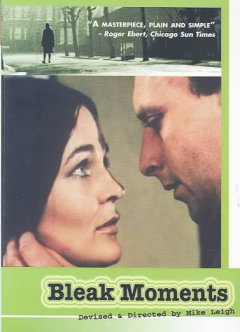
I was born just a year before Mike Leigh’sBleak Moments debuted in 1971, and it became a defining cultural touchstone for me. First encountering it in the early 1980’s, I was captivated by its raw honesty and quiet power—a film I returned to again and again on that solid-format VHS tape over the years. It marked the beginning of a lifelong relationship with Leigh’s work, a body of cinema that has shaped and shadowed my own personal and cultural journey. That connection endures to this day, most recently renewed with his 2025 release, Hard Truths—a testament to a career and vision that continue to evolve with undiminished integrity.
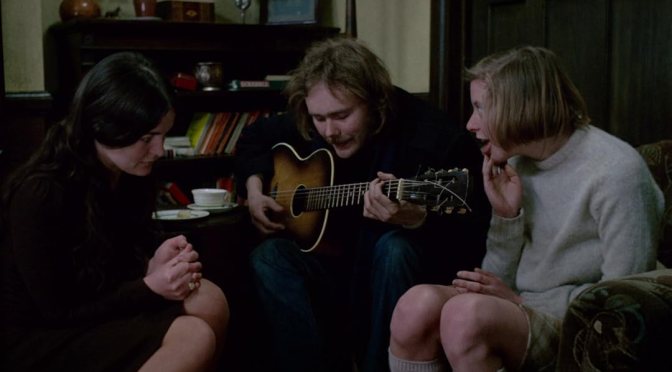
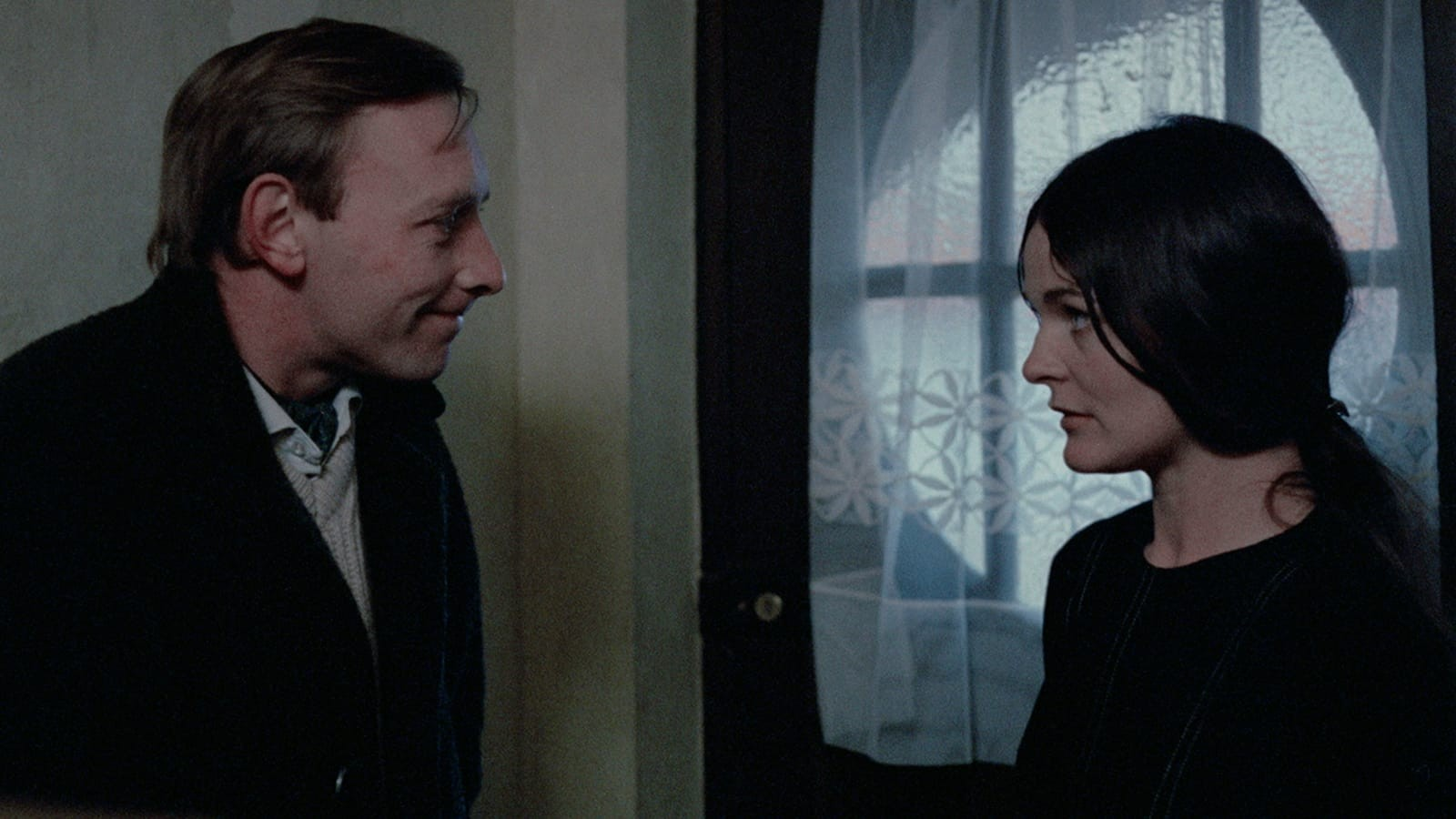
Bleak Moments centres on Sylvia (Anne Raitt), a lonely, introspective young woman navigating the quiet desolation of her suburban life while caring for her mentally challenged sister, Hilda (Sarah Stephenson). Trapped between duty and desire, Sylvia reaches tentatively toward human connection—most notably with a shy schoolteacher—yet every encounter is marked by awkward silences and emotional hesitations. Mike Leigh crafts a delicate, unflinching portrait of isolation and unmet longing, where the most powerful moments are found in what remains unsaid. Indeed, I would say it would have a powerful influence on awkward cinema or television such as Gervais and Merchant’s, seminal show The Office.
I hadn’t seen the film for twenty years and in a packed Prince Charles Cinema, what struck me was how Bleak Moments, while raw and unvarnished in style, unfolds with a beautifully episodic structure that gently accumulates emotional weight. Each scene offers a quiet vignette—moments of everyday awkwardness, tentative exchanges, and domestic stillness—that together create a deeply human portrait of loneliness and restraint. Despite its sombre tone, the film is laced with dry, observational humour and a deep sense of pathos, revealing the absurdity and ache of unspoken lives.
Mike Bradwell’s Norman and his dryly hilarious songs, and the most awkward of “romantic” dinner scenes in the Chinese restaurant just stood out to me as deeply funny. Raitt’s performance too is a masterclass of comedic understatement. Overall, these qualities—emotional nuance, character-driven storytelling, and a commitment to realism—would become defining hallmarks of Mike Leigh’s oeuvre, already fully formed in this striking debut. Finally, it was great to see and hear from Leigh, now in his eighties, answering some great questions with sharp wit and batting away some stupid ones too with his usual intelligence and droll honesty. Leigh remains a hero in my life’s cultural journey.
Thankfully 2023 was less turbulent year on the cultural landscape than the previous years impacted by THAT virus. Nonetheless, we remain in an era where streaming platforms continue to thrive. I have lost count how many there are now and have now drawn a line under the number of subscriptions I have.
Apple TV, BBC iPlayer, BFI, Channel 4 online, Disney+, MUBI, Netflix and Sky Movies subscriptions are enough!
I still have my ODEON membership and do attend the cinema too though.
So, here are my favourite TEN films of the year containing choices watched both at home and in the cinema. If they are new releases and I saw them in 2023, they qualify.
Obviously, I have not seen every new release from 2023, so if there are any glaring omissions from my list please recommend away!
As an aperitif I include my ten favourite films of 2022. Good luck and bon voyage in 2024!
TEN FAVOURITE FILMS OF 2022!
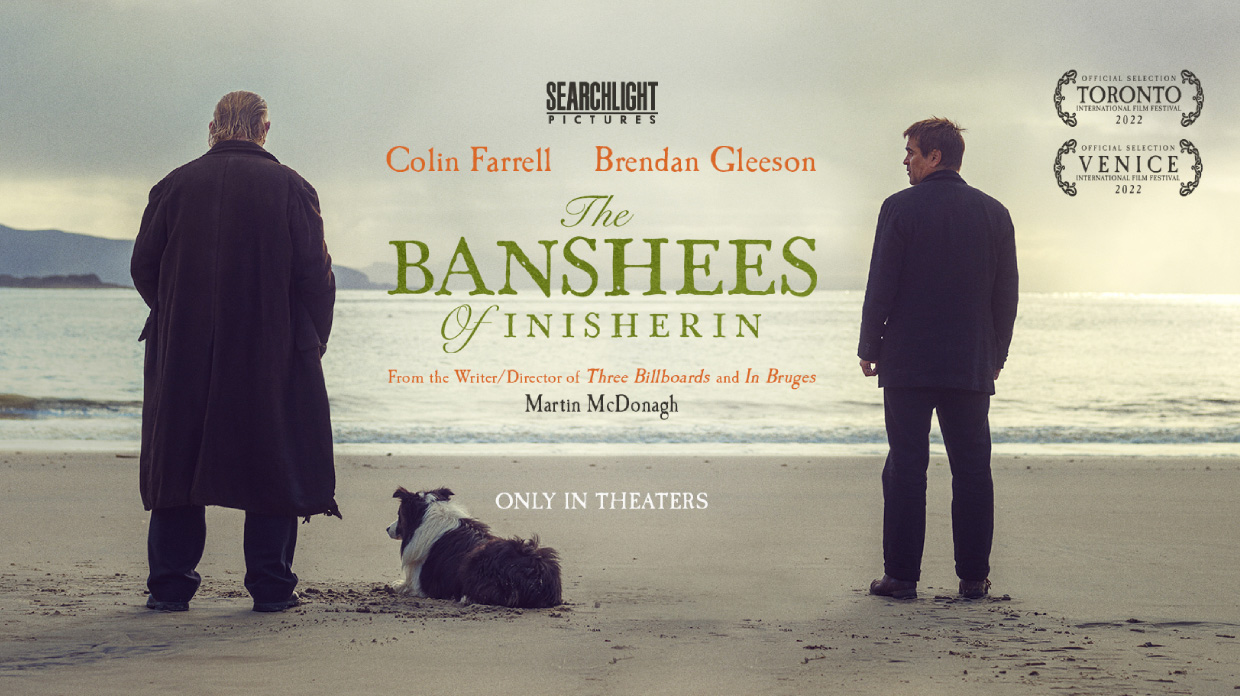
THE BANSHEES OF INISHERIN (2022) BONES AND ALL (2022) CODA (2021) DECISION TO LEAVE (2022) DOCTOR STRANGE AND THE MULTIVERSE OF MADNESS (2022) ELVIS (2022) EVERYTHING, EVERYWHERE, ALL AT ONCE (2022) THE MENU (2022) RRR (2022) TRIANGLE OF SADNESS (2022)
“. . . Anatomy of the Fall (2023) is an extremely complex film, both intelligent and thematically powerful. The courtroom exchanges between Sandra, her son Daniel, Samuel’s psychotherapist, the prosecution and defense lawyers are brilliantly written and acted. The flashback arguments between Samuel and Sandra are gut-wrenching and all too familiar to anyone who has been in or witnessed the crumbling of a marital or parental relationship. “
“. . .Asteroid City (2023) proves once again Wes Anderson is one of the most original filmmakers of this generation. Will he gain some more converts to his particular set of cinematic bag of tricks? Who knows. What I do know is that I was completely immersed in the colour, movement, pace, humour, aesthetics, performances and themes with the film. “
“. . . Broker (2022) arguably has too many intertwining subplots as it strives to redeem all of the complex characters, but the wonderfully believable performances and a brilliant screenplay really grabs you and rarely lets you go. Kore-eda’s direction is, as usual, masterly and assured as he balances the various tones confidently. Overall, this film makes you laugh, cry and is really moving as it highlights that family units can be lovingly born from collective experience, as well as blood. “
“. . . what unfolds is a superbly acted and understated drama which really gets under the skin and into the mind. While watching the ever-shifting points-of-view and identification with the characters May December (2023) became so compelling to me. . .Acclaimed director Todd Haynes directs this tonally awkward story with a deft touch drawing on the constant grey areas of drama so expertly. “
“. . . Where the film truly blooms is when Oppenheimer makes his scientific breakthrough, builds his team of geniuses and the actual construction of the nuclear weapons at Los Alamos. There is palpable suspense (even though we know what happens) in the race with the Germans to make the bomb first. I mean, imagine if the Germans had won the race. It does not bear thinking about. The history of the world would have been irrevocably altered beyond comprehension. “
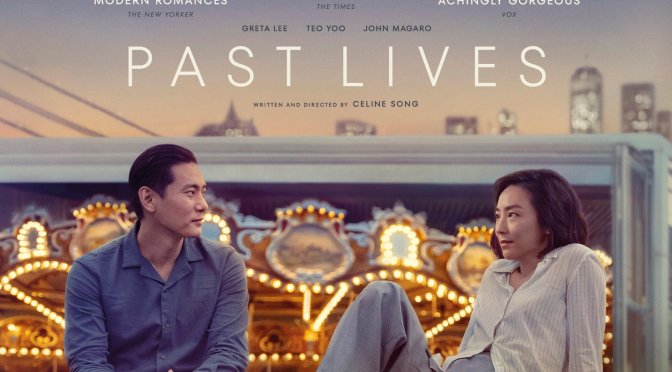
“. . . Without explosions, or car chases, or superheroes or fast-paced cutting or extraordinary heroes defeating powerful foes, Past Lives (2023), is one of the most impactful and memorable films of this year. Celine Song achieves this with a delicate hand in the writing and direction, plus a purposeful naturalistic cinematographic palette delivered by Shabier Kirchner. Above all else Song creates two characters who you root for from the start, willing them to be together, as the one feels the romantic electricity build on the screen. ”
“. . . I cannot recommend Saltburn (2023) enough for its fantastically witty script, devastatingly brilliant cast and some quite disgustingly explicit, but contextually justifiable, character moments and scenes. Fennell takes the setting and structure of Evelyn Waugh’s Brideshead Revisited and turns it upside down, spinning a devious tale of infatuation, love, privilege and social climbing. Through the character Oliver Quick, and I really don’t want to give anything away, there is a powerful and jaw-dropping character arc of upward mobility. Rosamund Pike’s and Keoghan’s performances are both amazing and award-worthy. “
“Tár (2022) is a film which works on many genre and narrative layers. It is a psychological drama, an absorbing character study, a backstage musical, a complex morality play, with suggestions of hallucinatory horror during the final act of the film. It is a triumph of filmic brilliance expertly delivered by Todd Field. It is incredible to think this is only the third film he has directed. “
“. . . I realise Totally Killer (2023) seems so contrived and derivative, but I found it to be an absolute blast. The script is clever and knowing with energetic and fun characters. Kiernan Shipka as Jamie is especially brilliant with great comedy timing and delivery. The filmmakers embrace the joy of time-travel and horror film tropes, and there’s also some excellent set-pieces involving the obligatory 1980’s false-faced psycho with a grudge. “
“. . . Is there a better actor around than Florence Pugh? I am not so sure. She is formidably brilliant in every role I have seen her in. I think that Pugh is so clever, emotional and magnetic in her screen performances, none more so than in this intense period drama. Rich in themes including religious control, Catholic guilt and the English stranglehold over Ireland between the dramatic lines in an intimate epic, anchored by Pugh’s dominant force-of-human-nature performance.”
Without planning it I watched a number of Burt Lancaster films over the last few months. It gave me a chance to reflect and re-evaluate this giant of the screen. I say “giant” because not only was Burt Stephen Lancaster physically a big guy, he also had a giant of an acting career. One which spanned fifty years in the business.
From his memorable first screen appearance in noir-classic The Killers (1946) to final performance in Field of Dreams (1989) he appeared in seventy films, as well as many television roles. Lancaster was a formidable actor, film star, producer and political activist. His fierce personality, intelligence and passion often explodes on the screen in so many classic films. But he was also capable of quiet and subtle power too. In keeping with the rules of the ‘My Cinematic Romance’ remit, here are just five of those said memorable acting performances.
** CONTAINS FILM SPOILERS **
SWEET SMELL OF SUCCESS (1957)
While this is not based around actual gangsters or career criminals you won’t find a bleaker or more cynical film noir. Morals are in short supply as Tony Curtis’ pushy press agent attempts to work his way up the greasy media pole in New York. His and many a character’s nemesis is Lancaster’s media kingpin, J.J. Hunsecker, who can make or break a career with the click of a finger. Hunsecker’s unhealthy obsession with his sister drives the downfall of all the characters where no one gets what they want. Lancaster is never afraid to play a flawed and complex personality. Razor-sharp dialogue and James Wong Howe’s stark photography, allied with Lancaster’s dominant presence, the Sweet Smell of Success (1957) is a striking morality tale warning of the perils of greed, fame and ambition.
ELMER GANTRY (1960)
Wow! I’d never seen this incendiary film adaptation of the Sinclair Lewis’s 1927 novel. Starring Lancaster, Jean Simmons, Arthur Kennedy, Shirley Jones and Patti Page, Lancaster is electric as the eponymous anti-hero. Gantry is a travelling salesmen-turned evangelist, who is down-on-his knees when he sees a golden opportunity to sell God instead of vacuum cleaners. Jean Simmons has never been better, but Lancaster delivers a devilishly complex characterisation of a man seeking wealth, sex, and adulation but without true belief. His firebrand sermons are powerful but without substance, and Gantry soon realises he cannot escape the emptiness of his soul. He preaches God without soul in a scathing damnation of organised religion set during the depression. Lancaster unsurprisingly won an Academy award for best actor in a risky role and intelligent film that rarely gets made these days.
BIRDMAN OF ALCATRAZ (1962)
I recall watching Birdman of Alcatraz (1962) when a teenager with my dad and being entranced by Burt Lancaster’s thoughtful, yet powerful performance of dangerous prisoner, turned ornithologist, Robert Stroud. Off-screen Lancaster rallied against the death penalty and argued for rehabilitation over eye-for-an-eye punishment. Thus, this story of a complex, rebellious personality who attempted personal absolution via education certainly would have had creative and thematic merit in Lancaster’s mind. From research the actual Robert Stroud was reported to be a brutal psychopath and beyond redemption. Yet, it’s a noteworthy film and stirring performance from Lancaster about a human paradox. Indeed, when did Hollywood ever let the truth get in the way of a great story. What is the truth anyway?
THE SWIMMER (1968)
Well, this was something of a surprise. I had never watched this adaptation of John Cheever’s short story, The Swimmer (1968) until I recorded it on Talking Pictures TV last month. At fifty-five, Lancaster is in incredible shape as middle-class American alpha-male, and seemingly popular, Ned Merrill. He decides one day he can “swim” across a series of Connecticut pools and back home to his wife and children. It’s certainly an original premise and peculiar take on the road movie subgenre. Merrill’s journey is peppered with both friendly and unenthusiastic meetings with his neighbours, friends and former lovers. Although it soon becomes apparent that something, despite his carefree confidence, isn’t quite right with Merrill. A progenitor to John Hamm’s Don Draper, Merrill is such a nuanced iceberg of a soul; charismatic yet with dubious ‘of-the-era’ morals. I think this could be Lancaster’s finest performance in a truly memorable masculinity-in-crisis cult character study. It’s an odd film, but worth staying with until the incredible ending.
ATLANTIC CITY (1980)
As he aged, Lancaster’s continued working with abandon. He wasn’t averse to taking a paycheck in B-movies such as The Cassandra Crossing (1977) andThe Island of Dr Moreau (1979), but he also struck critical gold in Louis Malle’s romantic crime drama, Atlantic City (1980). Both Lancaster and Susan Sarandon are impressive. They have an intense chemistry in this ‘May to December’ love story, as two characters thrown together amidst the malfeasant underbelly of the gambler and gangster strewn ocean city. It’s a morally ambiguous, powerful and complex story of two characters fighting their way out of a dangerous place. Again, Lancaster proved he wasn’t fearful of taking risky roles, even in the latter stages of his career. Atlantic City (1980) would deservedly receive several Oscar nominations, including Lancaster for Best Actor.
Story by Franco Solinas and Gillo Pontecorvo – Based on Souvenirs de la Bataille d’Alger by Saadi Yacef
Produced by Antonio Musu and Saadi Yacef
Main Cast: Jean Martin, Saadi Yacef, Brahim Haggiag, Tommaso Neri and ensemble.
Cinematography by Marcello Gatti
Edited by Mario Morra and Mario Serandrei
Music by Ennio Morricone and Gillo Pontecorvo
*** MAY CONTAIN SPOILERS ***
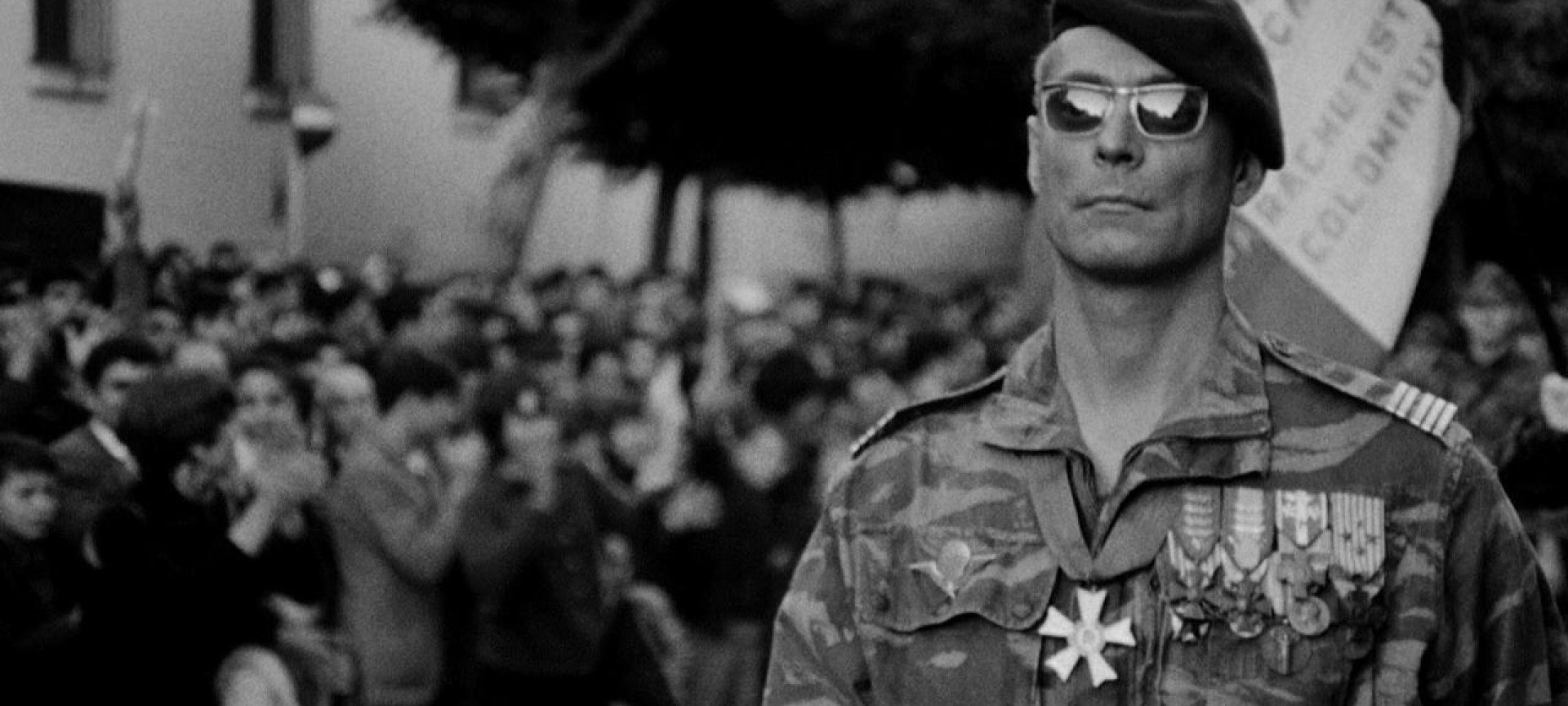
The Battle of Algiers (1966) was one of the greatest films I had NEVER seen. Now, The Battle of Algiers (1966) is one of the greatest films I have EVER seen. I’m embarrassed to admit that I had, for some unknown reason, not found the time to watch it. But wow, the “best films of all time” lists it appears on are NOT wrong. For sure, I don’t always get on with the critics’ list released by respected publications such as Sight and Sound, nevertheless with this incendiary work of cinema I am in total agreement of its deserved high ranking. In fact it could be higher.
The Battle of Algiers (1966) is set during a particularly brutal period of the Algerian War of Independence which occurred between 1954 and 1962. It is not a conflict I am too familiar with historically, nonetheless, I am aware of the desire by the Algerian National Liberation Front to decolonize themselves from French rule. Their demands were rejected by French leaders, thus the Algerian people took to the streets to wage a guerrilla campaign against both civilian and military targets.
Like many a bloody conflict lives, families, businesses, homes, properties and animals were savagely hurt and left irreparably damaged. As the prolonged fighting ensued in Algiers both sides resorted to more extreme combat measures. But with Algiers becoming a politically adverse battlefield, France’s external allies, such as the USA, moved their support away and eventually the Algerian people would overcome the hostile landlords. For the French, the Algerian rebels were terrorists. But remember, one person’s terrorist is another person’s freedom fighter.
A short review on a humble film blog cannot pretend to imagine the currency of horror, grief and pain encapsulated within this brutal conflict. Yet, incredibly, Gillo Pontercorvo, as well as producing a searing indictment against the barbarity of war, has in The Battle of Algiers (1966) made palpable such horror, grief and pain through sheer formal cinematic ingenuity. In two hours, Pontercorvo and his production team, employ a stark black-and-white-film-documentary-style, non-professional actors, chopping episodic narrative, percussive and beating sounds, handheld cameras, vérité production design and dynamic, dialectic montage to spectacularly bring the psychological power of war to the screen. Not to mention the iconic Morricone and Pontercorvo composition which pulsates throughout the soundtrack.
Intrinsically focussed on events in the Casbah, Algiers between 1954 and 1957, as the story is bookended from the perspective of Ali la Pointe (Brahim Haggiag). La Pointe is a petty criminal who is politically radicalized while in prison, but becomes a formidable force in the fight. The narrative events display a variety of bombings he organizes against the French and his attacks lead the French to bringing in experienced soldier, Lieutenant-Colonel Mathieu (the sole professional actor, Jean Martin). The paratrooper commander is tasked with bringing down the Algerian Liberation Front and his methods of torturing prisoners soon begin to turn the bloody tide.
I cannot overstate how moved I was emotionally and intellectually by The Battle of Algiers (1966). It is momentous filmmaking and made me feel both a fraud and horribly depressed at how evil human beings can behave. I am a fraud because I am safely able to live out my privileged life thankfully free of the horror I have witnessed in the film. Moreover, it is so depressing that we never learn as conflict continues to blight this poisoned planet we exist on. Lastly, Pontercorvo, redefines for me the job a what a director does. The Battle of Algiers (1966) is a pinnacle of how filmmaking style and form can match the heartfelt agony of the narrative themes on show. It is not only one of the greatest anti-war films of all time, but simply one of the most complete films ever made.
Written by: Wim Wenders, Peter Handke, Richard Reitinger
Produced by: Wim Wenders, Anatole Dauman
Cast: Bruno Ganz, Solveig Dommartin, Otto Sander, Curt Bois, Peter Falk, Nick Cave, etc.
Cinematography: Henri Alekan
*** MAY CONTAIN SPOILERS ***
I hadn’t seen Wim Wenders cinematic masterpiece,Wings of Desire (1987), for many years. Probably thirty-three years. I’m glad I waited so long because I think I am mature enough now to appreciate the poetry of the filmmaking style and the soulful gravity of the characters and themes on display.
I am of the belief that cinema is a collaborative craft in general. Yet, on fleeting occasions a film will be released that transcends the craft of the medium and become art. Wings of Desire (1987) is such a film. Moreover, while I am not a religious person watching Wings of Desire (1987) is as close to experiencing a spiritual filmic happening as I could have. It truly is a thing of transcendent beauty concerned as it is with the afterlife, the soul, humanity, angels, life, love, death and rebirth.
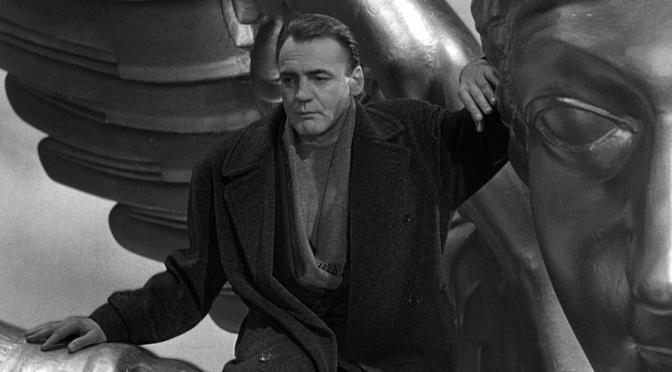
Angels walk amongst the living in a Berlin separated by the wall. Voices reveal their inner most thoughts as said Angels listen, watch, witness and gather human experience, thoughts and emotions. The Angels led by Damiel (Bruno Ganz) and Cassiel (Otto Sander) inhabit Berlin aiming to assemble, preserve and testify reality. In a stunningly beautiful opening sequence the gliding camerawork, chiming harps, poetic voiceovers and sublime photography introduces both a majestic world and compelling characterisations. The monochrome film sets a moody glow illuminating and beautifying the urban locales. If you didn’t know, the black & white sequences were shot through a filter made from a stocking that belonged to cinematographer Henri Alekan’s grandmother.
Wim Wenders directs Wings of Desire (1987) with an assured confidence throughout. Every stylistic and formal choice is driven by the characters’ hearts and an imaginative vision of both reality and the afterlife. It is incredible that Wenders and his production team did not have a traditional script when filming began. Thus, the poetic feel of the film derives from a series of experimental concepts and improvisatory creative choices. Having said that, there is a strong narrative spine amidst the seemingly loose narrative and episodic bones. The anchor amidst these hypnotic vignettes is Damiel’s journey of falling in love, ceasing to be immortal and becoming human.
As Damiel experiences the pain of existing outside human life, Bruno Ganz’s performance is heartbreakingly moving. Damiel also finds love too for Solveig Dammartin’s circus artist. His romantic longing and empathy for her and humanity overall is unforgettable. I mean this celestial and immortal being desires the opportunity to feel, taste and love. There is also humour amidst the pathos too, with a supporting story that follows the actor, Peter Falk, working on a film in Berlin. His brilliant scenes provide a quirky counterpoint to Damiel’s celestial crisis and fledgling romance. Indeed, Peter Falk called his role in Wings of Desire (1987) “the craziest thing I was ever offered”. When Wenders told him his part had not been developed yet, Falk responded, “I’ve worked that way with John Cassavetes. I prefer working without a script.”
Wings of Desire (1987) is deservedly acclaimed as one of the best films ever made. I couldn’t agree more, such is its cinematic power and beauty. It combines both visual, aural and literary styles almost to perfection. Thematically it is just as impressive. While it is a universal story about life, death, love and sacrifice, the fact it is set in Berlin adds an incredible gravitas. The politics and separation caused by the Cold War course through the veins of the film like ice. Nevertheless, Wim Wenders and his creative team wholly reject the gloom of oppression, choosing hope, life and love over said deathly wall.*
Mark: 10 out of 11
(*Note: Interestingly, filming the actual Berlin Wall was prohibited, so a replica of the wall twice had to be built close to the original. The first fake wall warped in the rain because the contractor cheated the producers and built it from wood.)
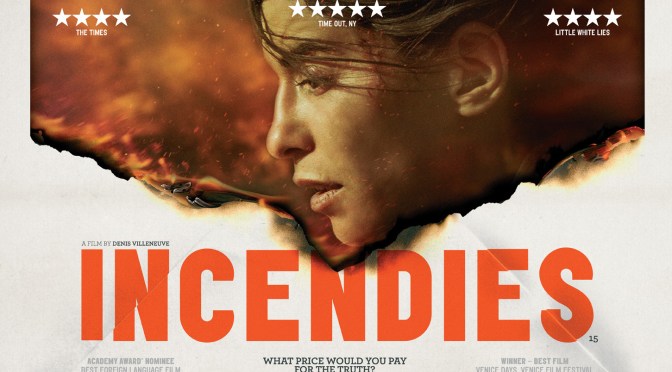
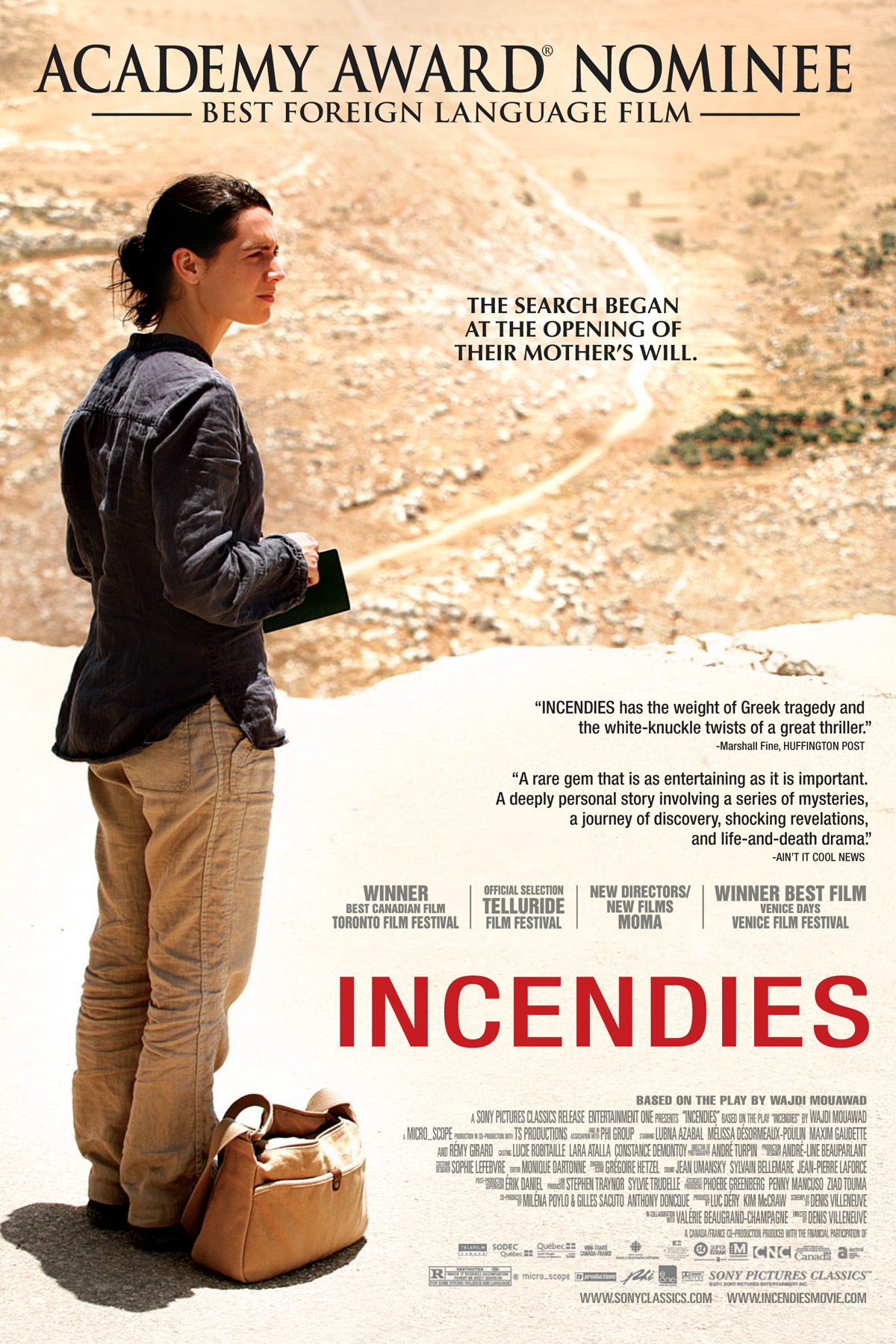
INCENDIES (2010) is the probably the best film you haven’t seen. If you have seen it then tell more people to see it. Spread the word on this incredible film. I watched Incendies (2010) for the first time a few years ago and it has stayed with me ever since. Given the lack of recent cinema releases, I felt compelled to watch it again and once more was blown away by the power of the characters and their stories. Not quite old enough to review as a classic movie, and as it stands as at No. 111 on the IMDB 250, it doesn’t qualify as an under-rated classic, I have therefore filed this contemporary classic under films that got away.
Based on a play by Wajdi Mouawad, Incendies (2010) was developed by Denis Villeneuve, who took five years developing and writing the screenplay. Villeneuve was attracted to the play because it was a modern story with Greek tragedy at its heart. It is set in both Canada and in an unnamed Middle Eastern country, with events in the narrative traversing between the these countries and different time periods. While the country where most of the action takes place is unnamed, given Mouawad is Lebanese, it is safe to say that this complex tale unfolds during the Lebanese Civil War. However, it is a masterstroke not to be specific about setting, as this ensures it is not place and politics one focusses on, but the thought-provoking human drama. And what drama it is!
Incendies tells the brutal but riveting story of Nawal (Lubna Azabal), a woman who lived through her country’s civil war.
After starting with a haunting scene from the past showing bedraggled children herded into an orphanage, the story quickly moves to the present. Twins, (Jeanne Mélissa Désormeaux-Poulin) and Simon Marwan (Maxim Gaudette) meet Jean (Remy Girard), a notary handling their deceased mother’s will. Their mother, Nawal Marwan (Lubna Azabal), has left two letters – one for the twin’s brother, and another for their father. If they can locate them and give them the letters, Nawal will allow her children to bury her with a casket and headstone. Jeanne, the calmer of the two siblings, agrees to the request. However, Simon is angry that secrets were kept and is against taking it any further.
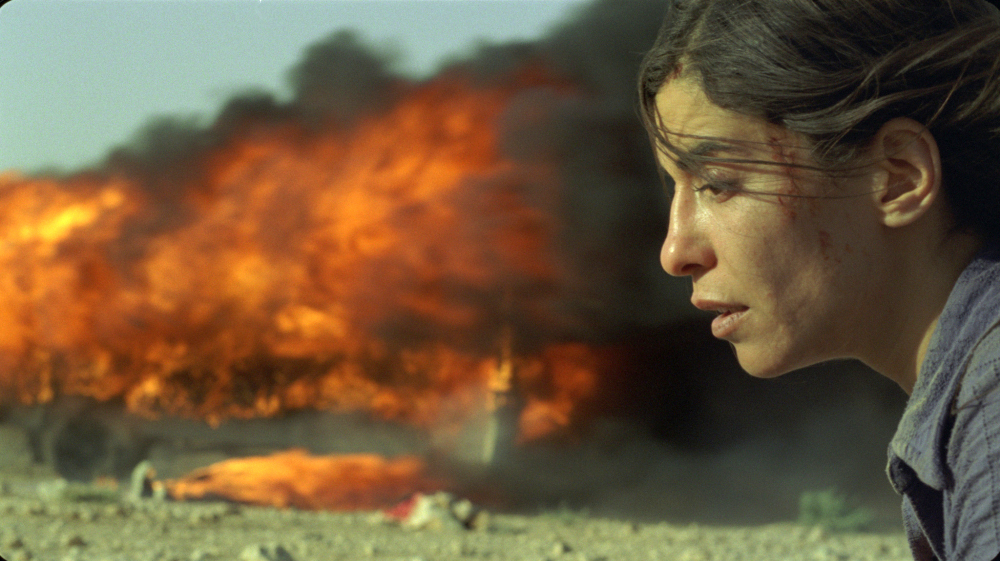
Incendies (2010) then becomes two powerful narratives intertwined to structural perfection by Villeneuve and Valérie Beaugrand-Champagne’s exceptional screenplay. Firstly, we follow Jeanne as she travels to Daresh, in the Middle East, attempting to follow in Nawal’s footsteps. Here the film becomes a compelling detective story as Jeanne (and later in the film, Simon) slowly discovers her mother’s tragic life history before she moved to Canada. Running parallel to this the narrative flashes back to show Nawal’s life as she escapes village life to go to University, only for religious civil war to tear the fabric of the country apart. Villeneuve, who has subsequently directed many visually stunning big budget films, makes the most of the sun-scorched and battle-scarred landscapes. Moreover, he also delivers a stunning and suspenseful sequence when Nawal finds herself trapped on a bus surrounded by soldiers.
I genuinely do not want to say anymore about the plot of Incendies (2010), for fear of spoiling what is such a complex and well designed story. It drives me mad when I watch films or television shows and they gratuitously use flashbacks or fractured temporal structures to create mystery. Because what many ultimately do is confuse the audience and create emotional distance from the characters. Villeneuve directs in an intelligent way, retaining empathy and emotion for both protagonists and antagonists devoured by war. Nawal Marwan’s story is especially heart-breaking and she is given a moving portrayal by Lubna Azabal. Nawal’s story is one of astounding power as the character experiences the hell of loss, war, torture and death. Her final attempt at redemption from beyond the grave gives us a searing human drama. One which will shake you to the core for days and weeks and maybe even years!
Produced by: John Heyman, Denis Johnson, Norman Priggen
Screenplay by: Harold Pinter
Based on: The Go-Between by L. P. Hartley
Cast: Julie Christie, Alan Bates, Margaret Leighton, Edward Fox, Dominic Guard, Michael Redgrave, etc.
Music by: Michel Legrand
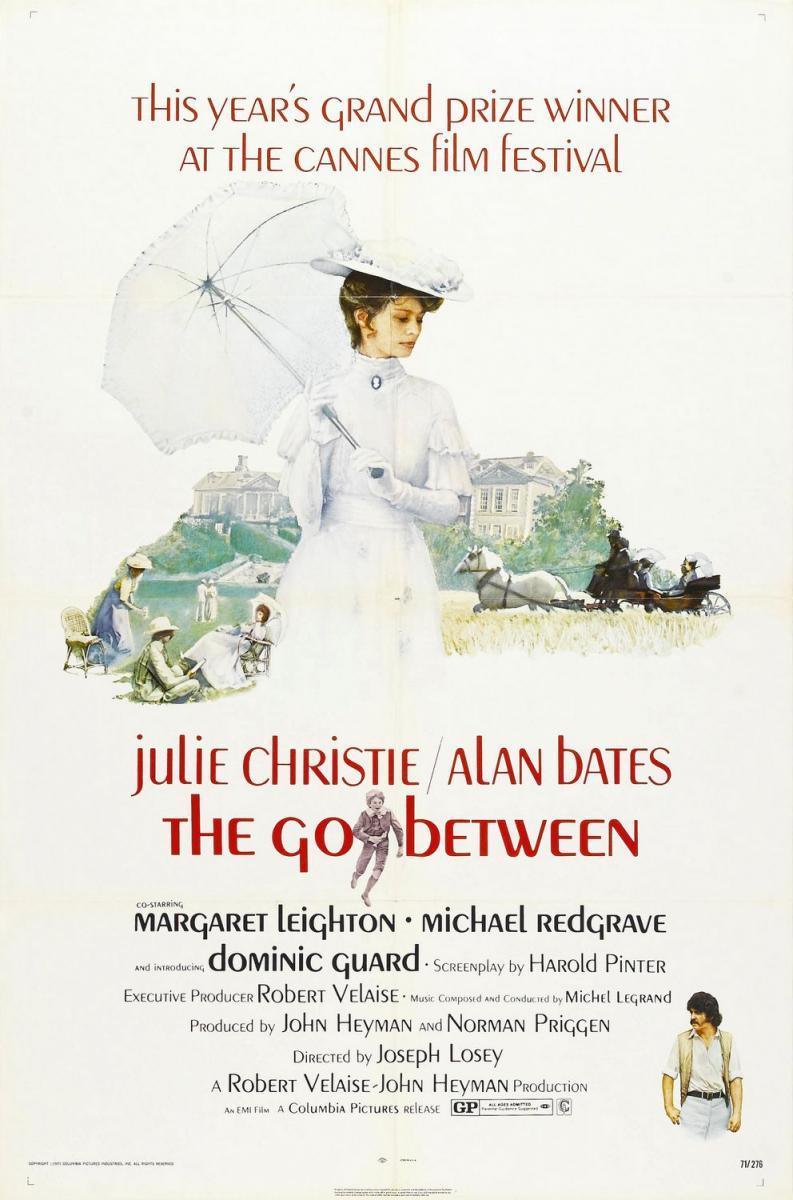
The Go-Between (1971) is one of those expert works of understated cinema which I was sure I had seen before. Yet, I would come to discover I had never seen it when I caught it on the rather marvellous digital channel, Talking Pictures. But then I love that when you find a period classic and watch it for the first time. It’s like unearthing gold in your living room. Because the film is a heartfelt rites-of-passage drama which subtly pulls at the loose end of the knitted cardigan that is the British class system. Nevertheless, while the romance, lies and regret unfold under the surface, The Go-Between (1971) certainly retains much dramatic power.
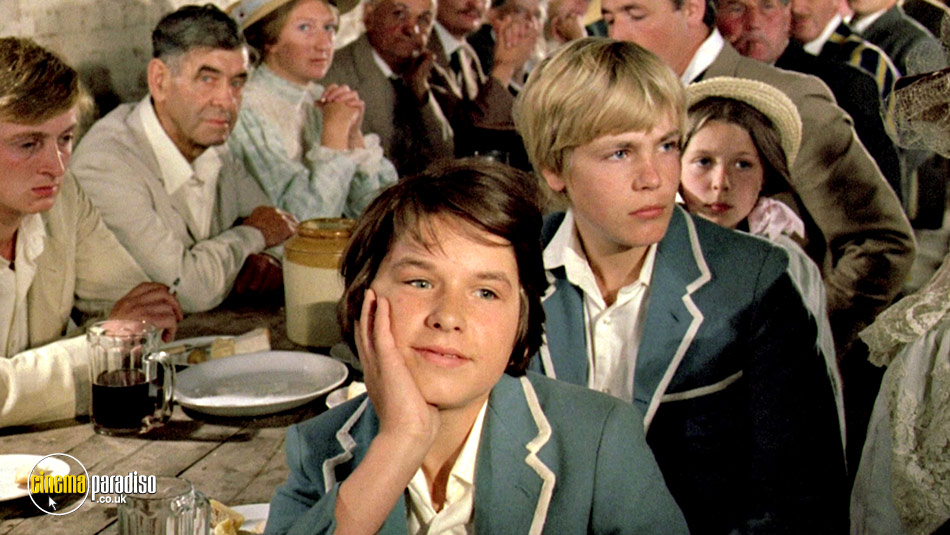
Adapted by acclaimed playwright, Harold Pinter, from the esteemed novel by L.P. Hartley, The Go-Between (1971) stars Julie Christie and Alan Bates as secret lovers separated by the chasm of class and tradition. Bates’ Ted Burgess is a charismatic and muscular farmer with a reputation as a ladies man. Christie is the beautiful and slyly rebellious daughter of the Lord of the Manor, Marian, promised in marriage to Edward Fox’s Viscount Hugh Trimingham. With peering eyes and suspicion coming from Marian’s mother, the lustful affair requires stealth, thus they enlist the help of Dominic Guard’s intelligent but less-privileged, Leo Colston. He is there as guest of Marian’s young brother as both attend the same boarding school; Leo there on a scholarship. The narrative develops very much through Leo’s sweet innocent eyes. The outsider’s point-of-view is expertly presented as it is both objective and allows the audience to make up their own mind about the characters.
Leo is pure of heart and believes he is helping by running notes back and forth between Burgess and Marian. He also makes friends with the cuckolded Viscount, as Fox gives a fine performance of a man who may or may not know whether his potential wife is being unfaithful. I think that is one of the strengths of the book and film, in that it explores the theme of duty versus passion. Burgess and Marian represent freedom, lust and nature, which are opposite to the “doing your duty” arrangements of the upper classes. Of course, dramatically speaking something has to give where the love affair is concerned. Sadly, tragedy intervenes, resulting in the loss of Leo’s innocence, and adding a layer of guilt which gravely haunts him in his later years.
Everything about The Go-Between (1971) reeks of quality. From the production design, locations, costumes, score by Michel Legrand and Gerry Fisher’s exquisite cinematography. Unsurprisingly, Harold Pinter would receive an Academy Award for his confident adaptation. Further, Joseph Losey is not a filmmaker whose work I am not particularly well acquainted with, but the performances from Fox, Bates, Christie and young Dominic Guard are assured testament to his stellar ability to convey meaning and emotion between the lines. Indeed, while some films smash you over the head with emotional melodrama, something I love too, The Go-Between (1971) instead slowly squeezes at your heart and mind. Lastly, this is not simply a damning indictment of the class system, but a lament for loss of innocence, illustrating how monolithic tradition dictates love, fate and tragedy are inextricably entwined.
Based on: Memories of Murder (play) by Kim Kwang-rim
Cast: Song Kang-ho, Kim Sang-kyung, Kim Roi-ha, Park Hae-il, Byun Hee-bong etc.
Music by: Tarō Iwashiro
Cinematography: Kim Hyung-koo
***MAY CONTAIN SPOILERS***
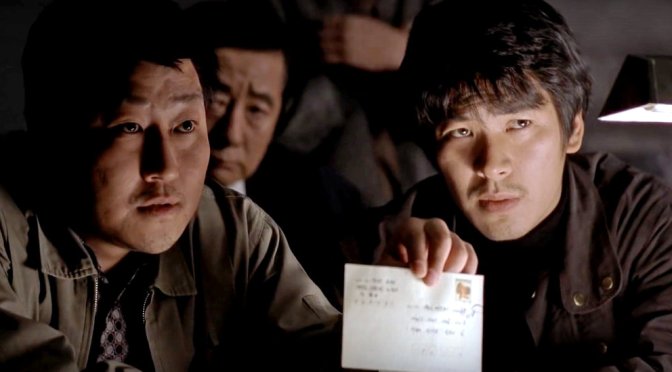
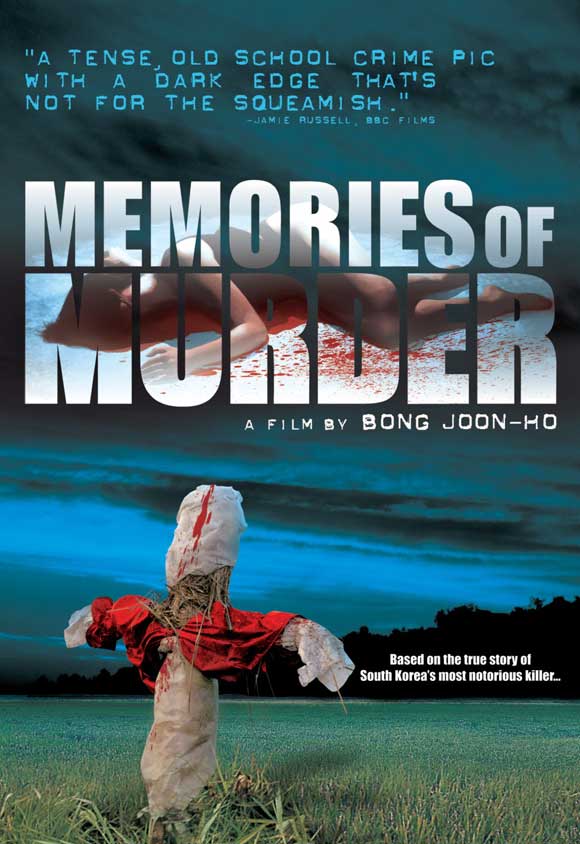
In this current COVID-19 climate it’s going to take a big film release or an extremely excellent film to get me to go to the cinema. Not only because of the underlying health risks, but also because I think social distancing is a societal duty to be respected. Moreover, it is better to be safe than sorry where health and wealth are concerned. If I was to come in contact with an individual or group who possibly had the virus then having to self-isolate would leave me in a tricky place where work is concerned. Of course, the number of new releases have been stymied too. Yet, despite these factors and armed with our face coverings and hand sanitizers, myself and my wife, ventured to Clapham Picturehouse to watch a re-released genre classic, namely Bong-Joon-ho’s, MEMORIES OF MURDER (2003).
Interestingly, it made me long for the days of the proper independent repertory films that I frequented in the late 1980’s and 1990’s like the Scala, Prince Charles and Everyman. There you could catch old, forgotten and classic movies on re-release, often on double bills or late- night line-ups. To be fair some of these cinemas are still around, but unfortunately not as many as twenty years ago. Unsurprisingly, because of the commercial and critical success of PARASITE (2019), Bong Joon-ho’s back catalogue has been plundered, hence the re-release of MEMORIES OF MURDER (2003). This truly brilliant police procedural thriller is loosely based on the true story of Korea’s first serial murders which took place between 1986 and 1991 in the Gyeonggi Province. The story follows the police department as they pursue a number of leads and suspects over a number of years. However, the killer proves incredibly cunning and, as in the David Fincher helmed crime classic, ZODIAC (2007), it becomes an almost impossible case to crack.
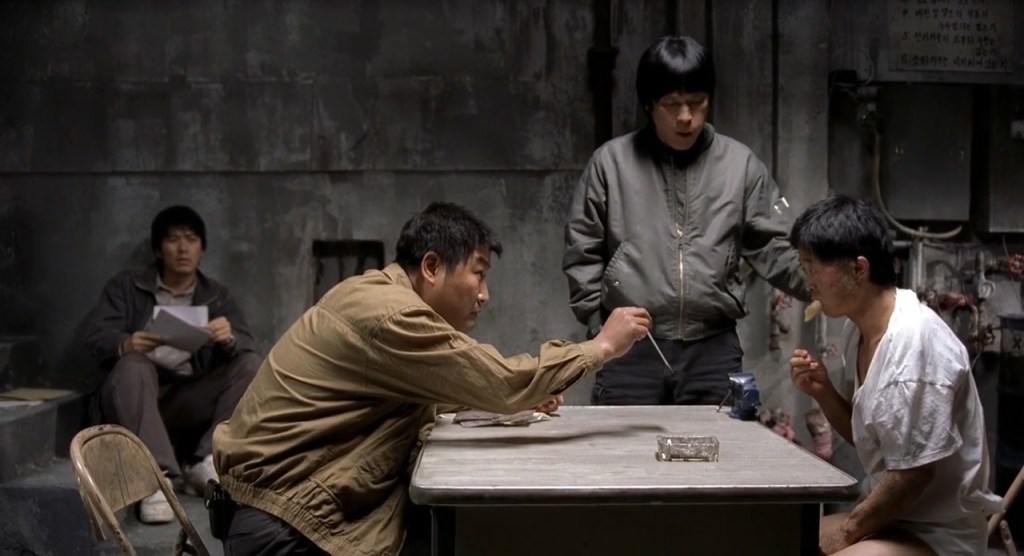
Song Kang-ho and Kim Sang-kyung star as Detective Park and Detective Seo, respectively. They are two very different cops striving to solve the murders of young women who usually wear red. Esteemed Korean actor Song Kang-ho portrays the more instinctive and emotional detective, while Kim Sang-kyung’s cop relies on thorough investigation and deduction. Kang-ho especially proves what a wonderfully natural talent he is and his character’s marital relationship provides warmth amidst the bloody horror of the serial killings. Indeed, it made a change to see a police officer who wasn’t an alcoholic, divorced or utterly cynical.
Allied to a plot that over many narrative years is full of twists and turns, the themes and characters within MEMORIES OF MURDER (2003) are what makes it a cut above the standard police drama. While the lead detectives are mostly empathetic, the screenplay finds time to critique their unscrupulous interviewing techniques of suspects. It is only when Detective Seo applies proper forensics and logic do they begin to make headway in the case. Seo especially becomes obsessed with catching this venal murderer of young women. So much so it pushes him to breaking point.
MEMORIES OF MURDER (2003) also presents an early example of the intelligent and precise directorial style of Bong Joon-ho. His framing of multiple actors in the same shot, overlapping dialogue and the exquisite cinematographic representations of both rural and urban landscapes make this an aesthetically pleasing film to experience. Joon-ho loves scenes in the rain too and these add to the film’s atmosphere. Lastly, while it deals with crimes that are dark and shocking, there is also much quirky humour within the excellent screenplay. The bickering between the exasperated police Captain his team provides laughs that spike the grim mood the murders bring. Thus, overall this is very much a film worth leaving the house and going to the cinema for.
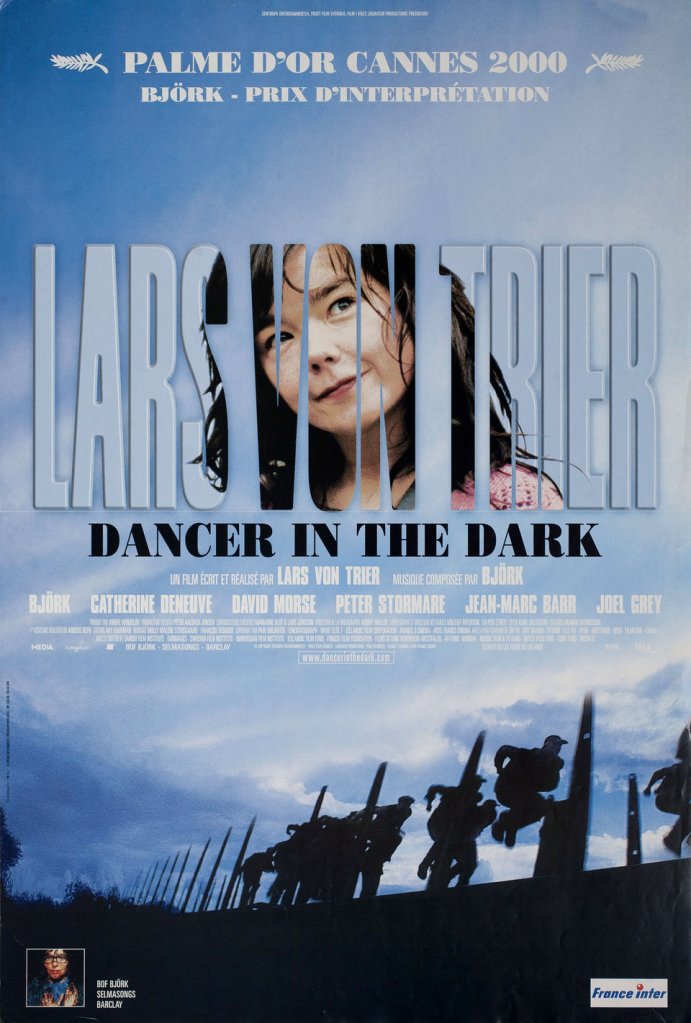
Cast: Björk, Catherine Deneuve, David Morse, Peter Stormare, Joel Grey
Music by: Björk
Cinematography: Robby Müller
Edited by: François Gédigier, Molly Marlene Stensgård
***MAY CONTAIN SPOILERS***
Rather incredibly, until very recently, I had never seen DANCER IN THE DARK (2000). However, it has quickly gone up the ranks in my mind as one of the best musical films I have ever seen. Having given it a lot of thought, it was difficult to place my review of Lars Von Trier’s eccentric, magical and moving tragedy. I could have reviewed it as a cult or under-rated classic film, but it was too high profile really; AND it won the Palm D’Or at Cannes. Thus, I decided, because it is such a compelling story and told in a magnetically creative style it definitely qualifies as a classic film.
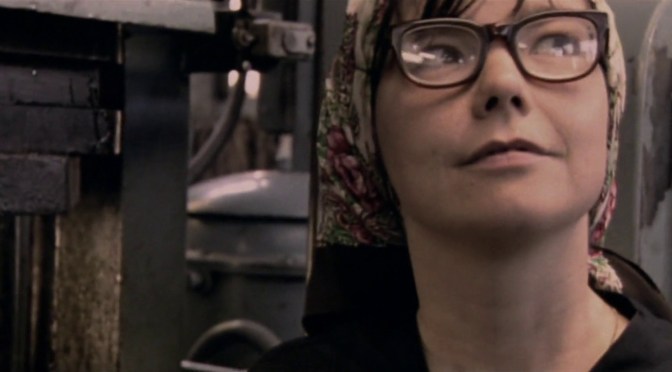
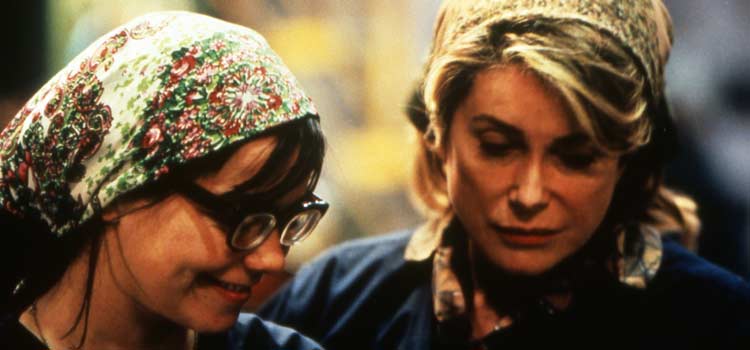
Set in Washington State, circa 1964, the story centres on the life of Selena Ježková (Bjork), a Czech immigrant, who works in a factory supporting herself and her teenage son, Jean. She is good friends with co-worker Kathy (Catherine Deneuve), and has a good relationship with her landlord, a police officer called Bill (David Morse), and his wife, Linda (Cara Seymour). Selena is also romantically pursued by Jeff (Peter Stormare). Yet despite him being a pleasant and easy-going guy she prefers to be just friends. Selena is an admirable character because she works round-the-clock with at least two jobs, striving to make ends meet. But she also hides a secret. She is, in fact, going blind. Kathy helps cover for her where she can at the factory, however, the condition is irreversible. Selena is extraordinarily brave, but foolhardy too. Her condition puts herself and factory productivity at risk. Yet, this is merely a suggestion of the drama and tragedy which later befalls her. Because someone close to her will betray a trust, setting in motion a series of extremely depressing eventualities.
In order to escape the trials of her everyday existence, Selena often daydreams in song and dance form. These fantasies are further contextualised by Selena and Kathy taking part in a town production of THE SOUND OF MUSIC, plus their visits to the cinema to watch Hollywood musicals. Von Trier is careful though to establish verisimilitude and plausible reality prior to the first musical number. Even so, it is initially extremely jarring when the song begins. Nonetheless, the power of surprise provides an electrical surge to the narrative and Selena’s characterisation. The first number set in the factory finds the mechanical sounds of the machinery providing a metronomic rhythm to the song and dance routine. Furthermore, songs such as, I’ve Seen It All (with the sequence set on a locomotive), and Smith and Wesson link Selena’s character to metal, machines and American industrialisation. Essentially, Selena’s experiences as a working class immigrant find her attempting to escape via song, but being trapped by American machines and later on in the film, their justice system too.
Filmed on digital cameras the presentation is arguably inspired somewhat by Von Trier’s established Dogme 95 style. In terms of content, DANCER IN THE DARK (2000), combines elements of melodrama and film noir reminiscent of films by Douglas Sirk. Such thematic and visual cues are then filtered through a meta-textual inversion of the Hollywood musical. While the classical musical is all about joy, love, family, companionship, song and performance, Von Trier effectively represents these genre tropes, but twists them into calamitous trials and tribulations for Selena. I for one felt such pain, regret and sympathy for her character. Indeed, Bjork, who had never acted before and has rarely acted since, gives an incredibly moving and soulful performance as the dedicated mother only trying to do her best for her son. Similarly, the songs she co-wrote with Mark Bell, Sjón Sigurdsson and Lars von Trier, sparkle and spike and tug at the heartstrings passionately.
Lars Von Trier is a divisive filmmaker and personality. He has always sailed close to the wind in regard to his challenging filmmaking style and content, as well as causing dissension over the years with his perceived outrageous comments. Moreover, Bjork herself spoke openly about a “Danish filmmaker” who oppressed and harassed her persistently on set. One must deduce that this indeed was Von Trier, thus I must respect and sympathise with the anguish she felt while filming, DANCER IN THE DARK (2000). Lastly, reviews of the film at the time were equally dichotomous. Peter Bradshaw of The Guardian dubbed it the: “most shallow and crudely manipulative film of 2000. . . and one of the worst films, one of the worst artworks and perhaps one of the worst things in the history of the world.” Yet, Roger Ebert of the Chicago Sun-Times stated: “It smashes down the walls of habit that surround so many movies. It returns to the wellsprings. It is a bold, reckless gesture.” Personally, I am with Roger Ebert, as I found the film to be one of Lars Von Trier’s most emotionally moving, stylistically daring and human dramas.
Cast: Robert De Niro, James Woods, William Forsythe, Jennifer Connelly, Elizabeth McGovern, Joe Pesci, Burt Young, Tuesday Weld, Treat Williams, William Forsythe, Richard Bright, James Hayden, Brian Bloom, William Forsythe, Adrian Curran, Darlanne Fluegel. Larry Rapp, Mike Monetti, Richard Foronji, Robert Harper, Dutch Miller, Gerard Murphy, Amy Ryder, Julie Cohen etc.
Music: Ennio Morricone
Cinematography: Tonino Delli Colli
***CONTAINS PLOT SPOILERS***
If you were, like me, thoroughly absorbed by Martin Scorsese’s recent directorial gangster epic, The Irishman (2019), you should definitely check out another incredible gangster drama, Once Upon A Time in America (1984). It is directed by acclaimed Italian filmmaker, Sergio Leone, he of “Spaghetti Western” fame. Indeed, Once Upon A Time in America (1984), was the first feature film he’d made since A Fistful of Dynamite (1971). Sadly, it was to be his final film.
With a director’s cut running at a behemoth 250 minutes and original theatrical release lasting 229 minutes, Once Upon A Time in America (1984), is certainly a marathon viewing experience and fitting epitaph to Leone’s cinematic craft. Yet, the film rarely feels over-long or slow because there are so many memorable scenes, fascinatingly complex characterisations, incredible intrigue and enough narrative density present to satisfy any audience member with the patience to let it absorb you. Structurally, the film is epic in nature too as it cross-cuts between three, arguably four, separate timelines in: 1918, the 1920’s, the 1930’s and 1968. Interestingly, I watched it via Amazon Prime in two sittings and is so long even the original ‘Intermission’ card remains.
Leone and his amazing production cast and crew took almost a year to film Once Upon A Time in America (1984). It’s reported to have had somewhere between eight to ten hours of footage on completion. He originally wanted to release it as a two-part epic, but the studio insisted it was distributed as one film. The almost-four hour theatrical release was received to great critical acclaim in Europe, however, a severely chopped down 139-minute version was put out in America. It was a critical and box office bomb. American critics however, lauded the European version, lamenting the non-release of Leone’s full cinematic vision.
For a filmmaker who was drawn to stories set in the America, Leone would generally film in European studios and locations. While some exteriors for Once Upon A Time in America (1984) were shot on location in Florida and New York, many of the interiors were recreated in Rome’s Cinecitta. Furthermore, a Manhattan restaurant was built in Venice, and incredibly, Grand Central Station was rendered at part of the Gare du Nord in Paris. Having said that, Once Upon A Time in America (1984), is so carefully and exquisitely designed and filmed, you would not notice. While possessing more than an air of European arthouse sensibilities, the film, based on a novel called The Hoods, represents Leone’s and his co-screenwriter’s tarnished vision of the American dream. Most significantly is the theme of a loss of innocence. 1920’s New York is presented through the eyes of these Jewish working-class children, many of them sons and daughter of migrants from Europe. These are tough times and the story explores the collision between young innocence and adult corruption by society and humanity. Once Upon A Time in America (1984) is also a story about friendship, loyalty, passion and crime.
The narrative revolves around the lives of young gang of Jewish friends growing up in Brooklyn called: Noodles, Max, Patsy, Cockeye and little Dominic. It’s majestic storytelling of the highest quality as we flit between past, present, now and future. Robert DeNiro’s older Noodles reminisces both from 1930 and 1968. There is a sense that he may be projecting from the hazy and drug-addled glow of an opium den. That is open to interpretation though. Thematically, the framework hangs a history of childhood friendships, juxtaposing it with the same people as adults and their victories, losses and betrayals. Further themes include: love, lust, greed, crime, broken relationships, Prohibition, union corruption; as well as focusing on the rise of mobsters in American society.
Noodles as portrayed by an imperious Robert DeNiro is calm on the outside, however, his often-rash actions show him as impetuous, emotional and wild on the inside. James Woods’ Max is much more careful, calculating and ice-cold in his business. But the two forge a friendship as teenagers which continues in adulthood. Their childhood gang subsequently becomes a renowned bootlegging and criminal outfit. Leone does not ask us to like or find sympathy for the characters, but rather respect that they are a product of a ruthless era. Sure, they could have got day jobs, but they decide to become criminals and very successful they are too. Even after Noodles gets out of jail for killing a rival, Max has saved a place for him in their illegal liquor trades. Only later does the true deception occur. Ultimately, while their stories are incredibly compelling, these men are violent lawbreakers who spill blood, bribe, threaten, kill and rape, all in an attempt to rise up the ladder of the American capitalist system.
I don’t want to spoil any more of the story, but safe to say the cast in this classic film are amazing. Along with DeNiro and Woods’ brutally convincing performances a whole host of young and older actors are directed beautifully by Leone’s careful hand. The standouts for me are Jennifer Connelly in a very early role. She portrays the younger Deborah, while Elizabeth McGovern is the older version of the same character. Connelly is a picture of angelic innocence and Noodles is smitten with her from the beginning. It’s sad therefore that when the adult Noodles’ is rejected by Deborah, his reaction is both toxic and unforgiveable.
Undeniably, sex and violence are powerful features in Once Upon A Time in America (1984). Sex especially is rarely, if at all, romantic or part of loving relationship. There are two brutal rape scenes in the adult years. Even when they are kids the character of younger Peggy is shown to use her promiscuity as a weapon to blackmail a police officer. There are some tender moments though, notably during the scene where young Patsy seeks to lose his virginity with Peggy. Her payment would be a cream cake, but Brian eats the cake and saves his innocence. Yet such scenes are fleeting as mob rule, violent robberies, fiery death and murder ultimately dominate the character’s bloody existences.
As I say, the actors all give memorable performances and the supporting cast including the likes of Treat Williams, Danny Aiello, Tuesday Weld and Joe Pesci are extremely strong too. A special mention to James Hayden who portrays the older Patsy. He doesn’t have the most dialogue compared to the characters of Max and Noodles; however, he has a quiet power which steals many scenes via strength of personality. The fact that Hayden died of a heroin overdose, in 1983, after completing filming only adds to the cult of tragedy. Dead at 30 years of age, James Hayden never got to see any completed version of Once Upon A Time in America (1984).
Given this review is getting near epic proportions itself I will begin to wrap up by heaping praise on the incredible production design. The costumes, locations, vehicles, props and era are slavishly and beautifully recreated. So much so you can almost smell the smoke as it drifts up from the Brooklyn streets. Moreover, the film is superbly photographed by Tonino Delli Colli. The music! I haven’t even mentioned the sumptuous score by the legendary Ennio Morricone. His score is a masterful symphony of haunting laments for loss of love, friendship, loyalty and life. Much indeed like Once Upon A Time in America (1984) itself, as a whole. In conclusion, if you haven’t seen it, I urge you to do so in the knowledge that Sergio Leone has transplanted that same brutally elegant vision of the Wild West to the American gangster genre with unforgettable emotional resonance and power.