Cast: Felissa Rose, Katherine Kamhi, Paul DeAngelo, Mike Kellin, Karen Fields, Desiree Gould, etc.
Music by: Edward Bilous
Cinematography: Benjamin Davis, David M. Walsh
***MAY CONTAIN SPOILERS***
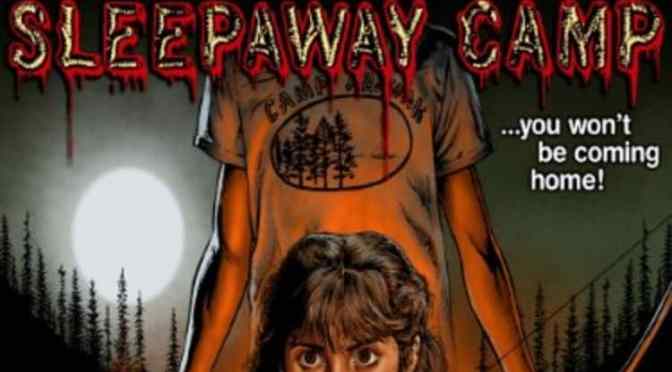
Whatever you do please do not read anything about this cult classic horror film from 1983. It has one of the most shocking twists at the end and even on second watch my jaw dropped when I witnessed the final scene. You’ll be tempted to find out but just watch the whole film. It is on YouTube here!
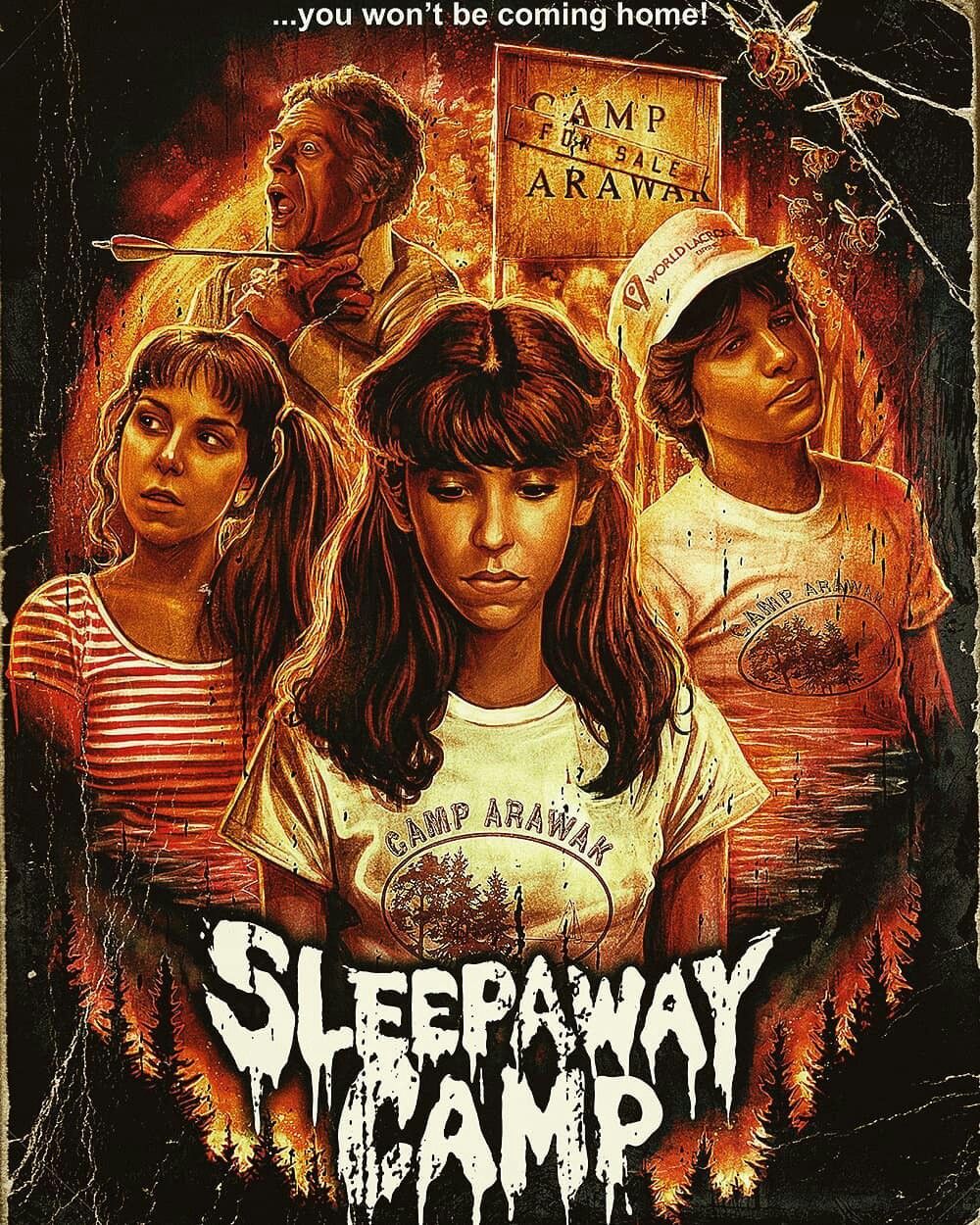
So, if you’re NOT a fan of B-movies horror exploitation films then Sleepaway Camp (1983) will not be for you! A lot of the acting is by first-timers and the director, Robert Hiltzik, is also making his debut here. In fact, he didn’t make another film after this until many years later because he became a lawyer. But the film gained a cult following among horror fans and certainly deserves cult status. It may be badly acted in many scenes and verging on the hysterical, yet it is well filmed and edited on a meagre budget of $300,000. There’s also some fantastically imaginative murder set-pieces, with excellent make-up and prosthetics work employed.
The story centres on the vulnerable teenager, Angela (Felissa Rose), who, having lost her father in an accident when younger, now lives with her Aunt Martha (Desiree Gould) and cousin, Ricky (Jonathan Tiersten). Her Aunt sends Angela and Ricky to Camp Arawak for the summer and due to her quiet demeanour she soon becomes a target for bullies. Ricky attempts to protect her, however, other than a budding romance with another teenager, Paul, Angela finds it very difficult to fit in. When dead bodies begin to turn up due to a number of grisly “accidents”, the kids and counsellors soon find themselves all in danger.
Amidst all the over-the-top acting, Felissa Rose gives a brilliant wide-eyed and subtle performance as Angela. For a film that could be classed as aFriday the 13th (1980) rip-off, her character arc throughout is both fascinating and quite unsettling. Indeed the film veers between being a strange hybrid of summer camp slice-of-life, rites-of-passage and slasher genre films. Yet despite all the uneven tone there is a decent story here with much emotional impact. Amidst all the death the film finds time to address bullying, sexual abuse and adult neglect to minors. Ultimately though, Sleepaway Camp (1983), has some fantastic gore and THAT quite astounding ending!
Produced by: Margot Robbie, Josey McNamara, Tom Ackerley, Ben Browning, Ashley Fox, Emerald Fennell, etc.
Written by: Emerald Fennell
Cast: Carey Mulligan, Bo Burnham, Alison Brie, Clancy Brown, Jennifer Coolidge, Laverne Cox, Connie Britton, etc.
Music by: Anthony Willis
Cinematography: Benjamin Kračun
*** CONTAINS MILD SPOILERS ***
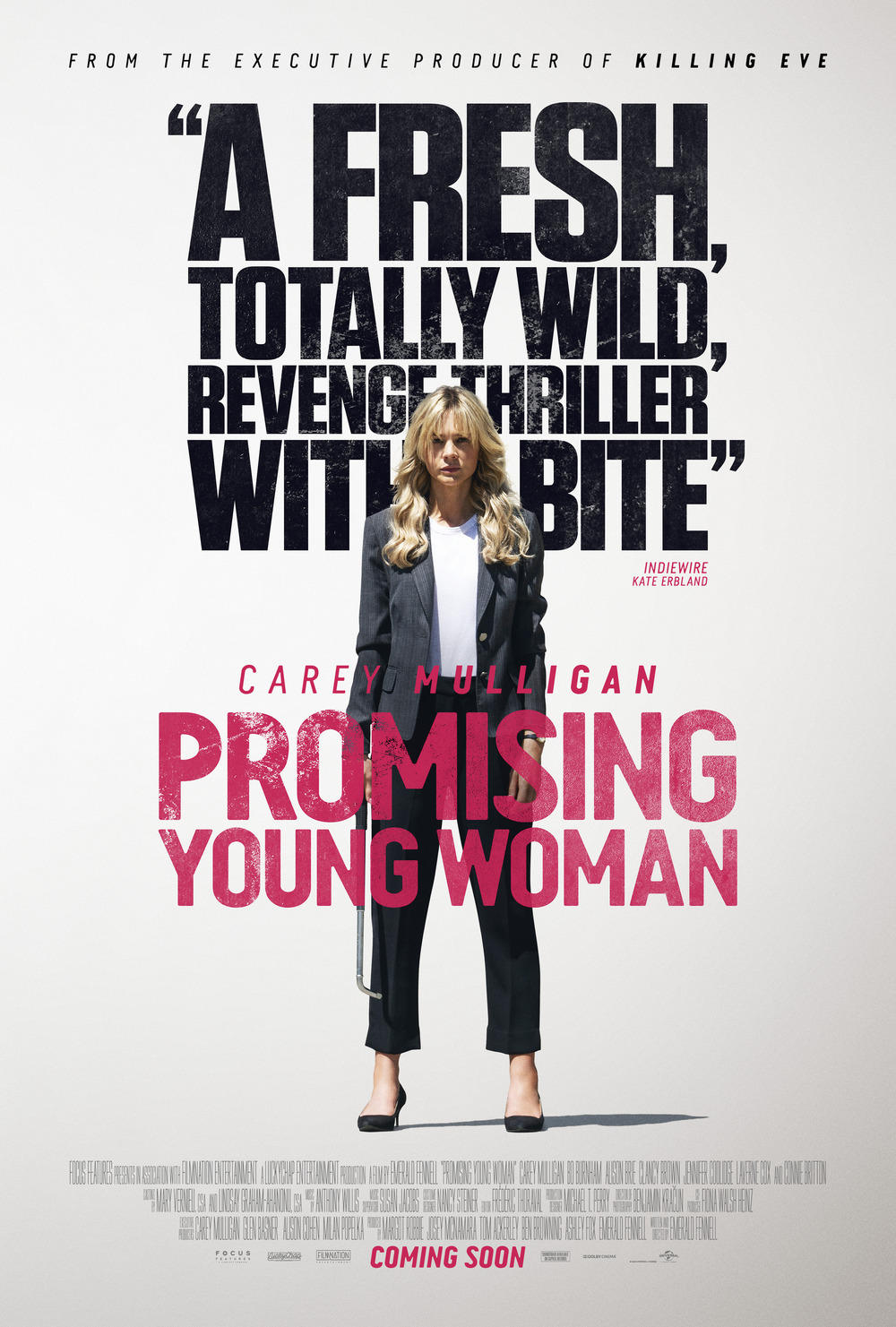
As the recent awards garnered upon Emerald Fennell’s brilliant screenplay for Promising Young Woman (2020) testify, Fennell is a major talent. She has acted in TV shows such as Call the Midwife and The Crown, as well as writing and producing the second series of Killing Eve. Not only is she an excellent actress, writer, director and producer, but she is also now an Oscar and BAFTA winner at the age of thirty-five. I am Jack’s raging envy!
But, is Promising Young Woman (2020) any good, and does it deserve these awards for best original screenplay? Well, for starters the film is not particularly original in terms of genre. It is what I would class as a B-movie revenge thriller at heart with A-list credentials. Like cinema classics such asSilence of the Lambs (1991) and Seven (1995), plus Tarantino’s Kill Bill (2003) films and the recent arthouse assassin thriller, You Were Never Really Here (2018), Promising Young Woman (2020) takes a well-worn subject matter within the crime genre and intelligently delivers a narrative experience which transcends such familiarity. Indeed, in the era of #MeToo, Fennell’s directorial debut updates and surpasses both intellectually and emotionally, similar themed films such asDeath Wish (1974) and I Spit on Your Grave (1978).
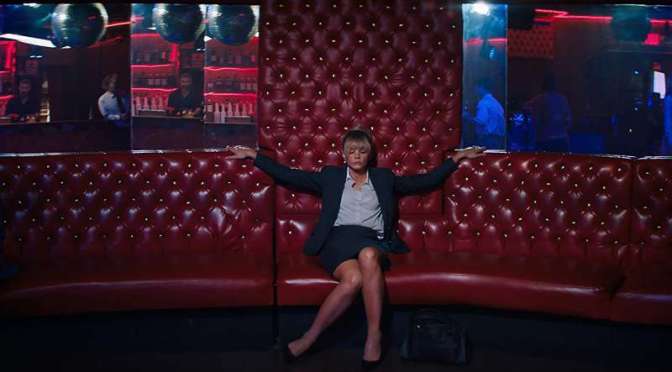
Promising Young Woman (2020) starts with one of the best opening scenes you’re likely to see in a long time. Here we meet Cassie Thomas, drunk and unable to stand, in a nightclub. Thankfully, there are “kind” gentlemen waiting to assist her, one of them being Adam Brody’s, Jerry. But instead of taking her home he takes her to his place and tries to take advantage of her inebriated state. I won’t spoil what happens next but safe to say that Cassie has other plans for Jerry. As the expertly plotted film progresses the story reveals Cassie has a long standing desire to wreak revenge on those individuals who brought tragedy to the life of her former medical school classmate and friend, Nina. A college dropout and working in a coffee shop, Cassie finds her life at a pitstop as she cannot move past what occurred to her friend. A budding romance with Bo Burnham’s charming Doctor threatens to pacify Cassie, but Fennell’s twisting plot soon puts Cassie on a deadly path right to the door of those who ruined her and, most significantly, Nina’s life.
The first three-quarters of Promising Young Woman (2020) are a witty, frightening and absolutely spellbinding exploration of negative masculine behaviour, gender politics and institutional corruption when it comes to cases of gang rape. No one is safe from Emerald Fennell’s sharpened pen and Cassie’s clever plan. As Cassie, Carey Mulligan gives a wonderfully subtle performance of a deeply pained and grieving individual. One thinks that Margot Robbie, who co-produced the film, would have made Cassie more zinging and wise-cracking. Mulligan gets it just right in terms of magnetic allure, strong personality and hidden vulnerability. It’s a shame that Fennell kind of throws Cassie under the narrative bus at the end. Don’t get me wrong the denouement ties all the previous scenes together, but I don’t think Cassie deserved such a messy fate. Unlike Fennell herself though. She deserves all the current success and that which is coming to her in the future.
Produced by: Kevin Turen, Ashley Levinson, Aaron Ryder
Screenplay by: Kata Wéber
Based on the play: Pieces of a Woman by Kornél Mundruczó and Kata Wéber
Cast: Vanessa Kirby, Shia LaBeouf, Ellen Burstyn, Molly Parker, Sarah Snook, Iliza Shlesinger, Benny Safdie, Jimmie Fails etc.
***THIS REVIEW CONTAINS SPOILERS***
Every human being has been present at one birth at least – namely their own. Not that one can remember or recall the experience, however, it is something all of us have in common. Many more people, either as parents, or life partners, or medical staff, or relatives and friends have also witnessed a child being born into the world. Birth is both a magnificent and tumultuous wonder of nature. Moreover, it can, while delivering a miracle into the world, be extremely painful for the person giving birth. The incredible progress of medical science means that it has never been safer. However, as my partner experienced when our son was born, it can be traumatic if the procedure has issues. Thankfully, our son was fine after the birth, but almost eighteen-hours in labour on an under-staffed and chaotic maternity ward was stressful. Thus, I was able to identify very much with the characters in the searing grief drama, PIECES OF A WOMAN (2020).
When I say identify, I mean I felt like I was really with the couple, Martha (Vanessa Kirby) and Sean (Shia LaBeouf) as prospective parents. Martha is heavily pregnant and when Sean returns from work as an engineer she goes into labour. Sean works on building huge bridges. Yet, as events unfold within Pieces of a Woman (2020), bridges are the last thing built metaphorically and emotionally. The opening scene is a cinematic tour-de-force which portrays the couple’s home birth in one long moving and harrowing take. Brilliantly filmed and acted, by Kirby and LaBeouf, the one-take device is employed to devastating effect as it impacts emotional power rather being a filmic gimmick. When their first-choice midwife cannot attend, the replacement, Eva (Molly Parker) arrives. The birth is not without problems and the sequence is both intense and suspenseful. The filmmakers really put you in the heart of the trauma. Quickly concern for the new-born child becomes relief when it is born alive. Alas, Martha and Sean’s joy suddenly turns to misery when nature deals the couple a fateful blow.
After the relentless tension of the opening act, Pieces of a Woman (2020), along with Sean and Martha, enters a redoubtable period of grieving. Martha’s personality prior to the event seemed outgoing and confident. After the death of her child she, unsurprisingly, transitions into an insular and hollow shell. Sean, on the other hand, is more explosive. He openly cries and shouts and self-harms by relapsing back into drug and alcohol addiction. Sean, more than Martha, attempts to fix their broken relationship, but Martha’s pain is too great and the distance between them only increases. Martha’s mother, Elizabeth Weiss (Ellen Burstyn), attempts to get some control back by taking court action again the midwife, Eva. Further, she desperately attempts to thwart her daughter from allowing the child’s body to be donated to medical science. In such moments Ellen Burstyn’s performance is absolutely formidable. Indeed, the scenes she shares with Vanessa Kirby are some of the best in the film.
Based on the play of the same name, Pieces of a Woman (2020), is overall an utterly gruelling emotional experience. I must admit I found it difficult to reach Martha’s character as she was so isolated for much of the film. However, that is exactly what the writer, Kata Wéber, and director, Kornél Mundruczó want you to feel. The loss of a child is never going to be an easy experience and it is something an individual will never get over. As I followed Martha’s journey intensely the smallest incremental shift in her personality is felt massively. Personally, I would have preferred more focus on Molly Parker’s character during the second act and more outwardly emotional scenes. Because those within the film featuring LaBeouf, Kirby and Burstyn are so compelling. Vanessa Kirby, in particular, is stunning as a woman cut-off from the world by this devastating grief, making Pieces of a Woman (2020) a memorable human drama that makes you feel fortunate to be alive.
Music by: Luis Bacalov – Theme song sung: by Rocky Roberts
***MAY CONTAIN SPOILERS***
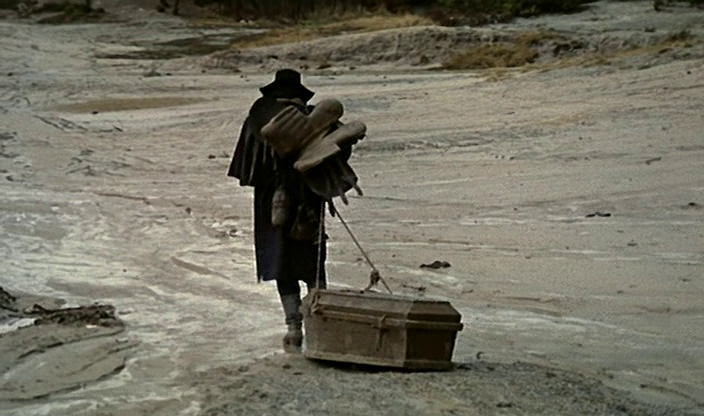
As the crooning voice of Rocky Roberts soars on the soundtrack, a lone figure adorned in dark clothes appears, saddle on his back, dragging a coffin across thick sand. Is he a hero or a criminal or a personification of death? Well, he is all three and his name is Django – the ‘D’ is silent. The opening credits and imagery of Sergio Corbucci’s cult Western, DJANGO (1966), is morbidly iconic, perfectly introducing us to the darkness, intensity and sardonic humour of what is to come.
The narrative of Django (1966) takes the tropes of a singular, tough, uncompromising anti-heroic ex-soldier, who has returned from the American Civil War, moving from town to town searching for the next payday. In the process he plots and wreaks havoc and death to all who stands against him. In his breakthrough role, the cool, handsome and blue-eyed, Franco Nero, is brilliantly cast in a similar part that would make a star of Clint Eastwood in A Fistful of Dollars (1964). The similarities do not stop there as Sergio Leone’s Spaghetti Western was, like Django (1966), heavily influenced by Akiro Kurosawa’s famous Samurai film, Yojimbo (1961). Yet while the stories owe much to Kurosawa’s seminal classic — as the Ronin character sets two opposing gangs against each other — both Leone and Corbucci instil their own distinctive style into their respective films.
Corbucci’s vision is even more cynical and violent than Leone. While Nero’s striking good looks glow like a silent matinee idol, he seemingly kills more soldiers, bandits and assorted bad guys than the Civil war itself. Django is a one-man killing machine and he never flinches at the sight of vermillion carnage. In fact, as a hollow and bitter man who has tasted the tragedy of senseless war, one can assume that killing is the only thing Django is good at now. It’s a barren muddy wasteland Django, and such adversaries as Major Jackson and General Hugo Rodriguez, exist within and nobody comes out of it clean. Mud and bullets and blood and burning crosses stain the land as the body count goes up and up as the film progresses. Redemption and hope are rarely even suggested in the hearts of the characters.
Corbucci presents chaos with style. There are a number of fantastic shoot-outs and set-pieces all directed with vibrant energy; all zooms, whip-pans and rapid cross cutting. You want to immediately know what is in THAT coffin at the start. You WILL find out and revel in the mayhem which ensues. Indeed, Django (1966) is not for the faint-hearted. Of course, when watching it now, it is nowhere near as shocking as many contemporary films, however, at the time of release the British Board of Censors saw fit to ban Django (1966). It did not get an official release until 1993. That’s a shame as Bacalov’s score alone provides glorious support to the brutal visuals. Finally, Django (1966), Corbucci and Nero’s cult legacy was secured when Quentin Tarantino delivered the incredible, DjangoUnchained(2012), an altogether different, but equally violent and memorable Western classic.
Produced by: Teddy Schwarzman, Ben Stillman, Michael Heimler, J Blakeson
Written by: J Blakeson
Cast: Rosamund Pike, Peter Dinklage, Eiza González, Chris Messina, Macon Blair, Alicia Witt, Damian Young, Isiah Whitlock Jr., Dianne Wiest, etc.
Music by: Marc Canham
**MAY CONTAIN SPOILERS**
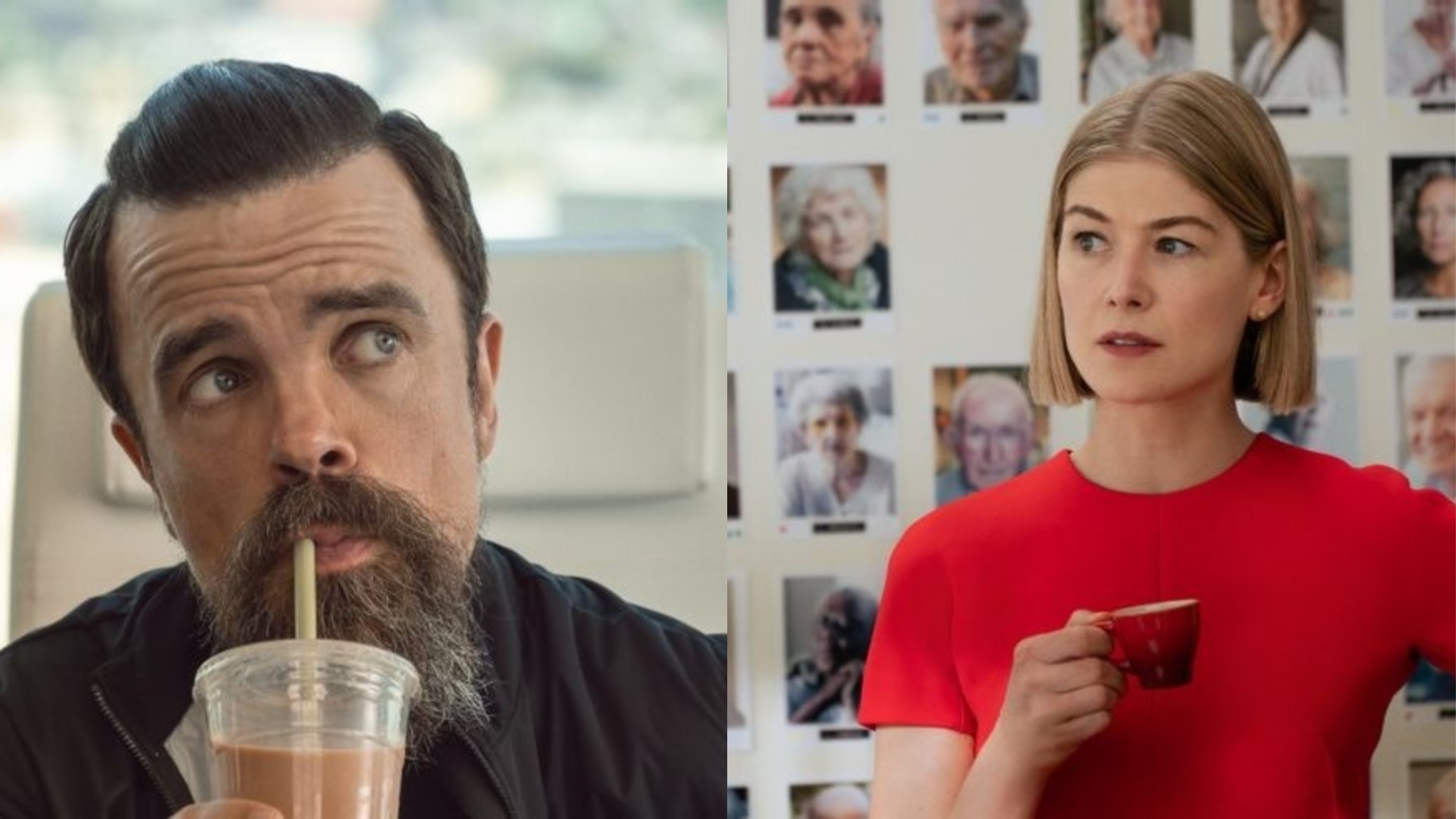
Strange that this highly entertaining and acid-humoured thriller should be a Netflix release overseas, but in the U.K. released via Amazon Prime. Anyway, streaming platform aside was I Care A Lot (2020) any good? Firstly, let’s talk about genre. Do you enjoy watching films without any redeemable or essentially heroic characters? Do you enjoy spending time with criminals? Whether they are the charismatic kind like those in Goodfellas (1990) or Layercake (2004), or romantic kind inDrive (2011), or ultra-ambitious types such as Lou Bloom in neo-noir masterpiece, Nightcrawler (2014). If you do, then you will both love and hate Rosamund Pike’s confident sociopath, Marla Grayson!
J Blakeson’s razor-sharp and barb-cracking screenplay opens with Marla’s brutally honest statement of intent. She wants it all and doesn’t care who she crushes to get it. Unlike, Lou Bloom, who was on his knees broke when we meet him, Marla already has a successful, legal but morally repugnant business going on. Marla and her associate and partner, Fran (Eiza Gonzalez) run a successful ‘Guardian Angel’ corporation. Their modus operandi is to exploit the elderly and tie them up in legal knots to asset-strip their money, properties and belongings. Complicit Doctors and retirement home directors are also in on the con, while the most frightening thing is that the American justice system assists the process. If I had had a gun, I would have shot the television after forty minutes, such was my anger toward Marla and her sordid business practices. Then she inadvertently makes a fatal mistake in choosing her next mark, Dianne Wiest’s wealthy “cherry,” Jennifer Peterson. That is a rich retiree with NO relatives or children. Marla thinks it is Christmas come early – it has not!
Without wishing to give away too much away, Peter Dinklage’s rich businessman, Roman, enters the narrative and Marla’s devious planning suddenly comes under threat. Here the film moves from spot-on satire into extremely generic territory losing the dynamism of the first half of the film. Indeed, the first hour of I Care A Lot (2020) was a fantastic critique of the care system in the USA, and no doubt across the world. In blood-boiling fashion the film tells us that getting old is extremely expensive. One can work all one’s life and then see your savings and properties ripped away by expensive health care, homes for the elderly, pharmaceutical companies jacking up their products, greedy carers and pernicious lawyers. Marla Grayson is a grinning symbol of this corrupt system and nothing will get in her way – not even Roman and his associates. This is perfectly encapsulated in a fine scene where Marla ruthlessly negotiates with Chris Messina’s slippery lawyer. But the suited shark is just the starter as Roman is now on the warpath.
Peter Dinklage again proves what a brilliant actor he is as Roman. He is extremely good at rage in many scenes. His and Marla’s ongoing battle comes to a head in the final act, and when he turns the tables on her I was so happy that she would get her comeuppance. I felt maybe the direction lost some focus in the second half of the film as J Blakeson arguably felt the audience should somehow side with Marla as she finds her life under threat. I can safely say that I wanted her to die in the most painful way possible. Because unlike the ‘Driver’ (Ryan Gosling) inDrive (2011), Marla Grayson is utterly beyond redemption. Not that she would care what anybody else thought! Overall, that’s why I found the film incredibly entertaining. It may have lost sharpness when it moved from socio-political tubthumping into more standard crime film territory, it continually made me feel proper emotion, anger mainly. Sure, it may be slightly overlong, but J Blakeson crams a lot of twists and shocks into into, I Care A Lot (2020).
CLASSIC FILM REVIEW – SCARFACE (1983) – YOUTUBE VIDEO
The Cinema Fix is a website for all film and TV lovers everywhere. It’s a mix of reviews, articles, essays, news and thoughts on new and classic releases. It is intended to be honest, irreverent, funny and hopefully intelligent. I also have a YouTube channel with loads of short films and video articles. Check it out here.
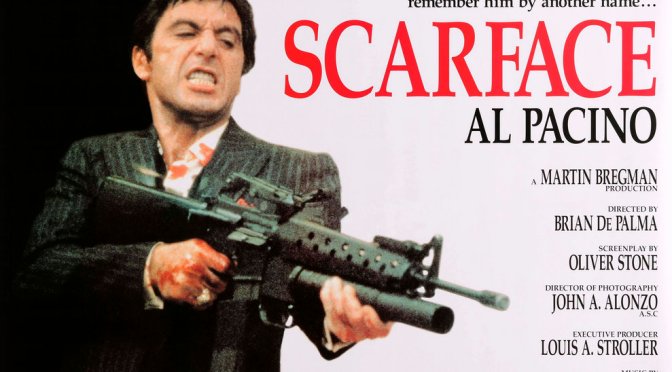
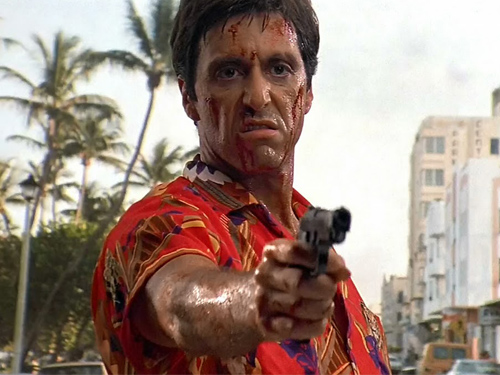
I have just created a new video article. It’s a review of the classic gangster film, Scarface (1983). You can read it here or check out the video below.
CREDITS
This video article is a fun and educational piece reviewing one of our favourite gangster films ever.
Written by: Paul Laight Narrated by: Melissa Zajk Music Produced by : Aries Beats Promoted by : CRFC
The copyright of the images and trailers are those of the film studio. I do not own any of the images or films.
Film/Trailer clips credits:
Scarface (1983) Directed: by Brian DePalma Produced by: Martin Bregman Written by: Oliver Stone. Distributed by: Universal Pictures
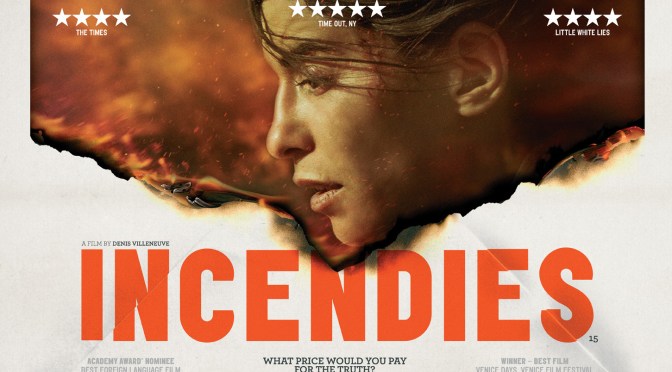
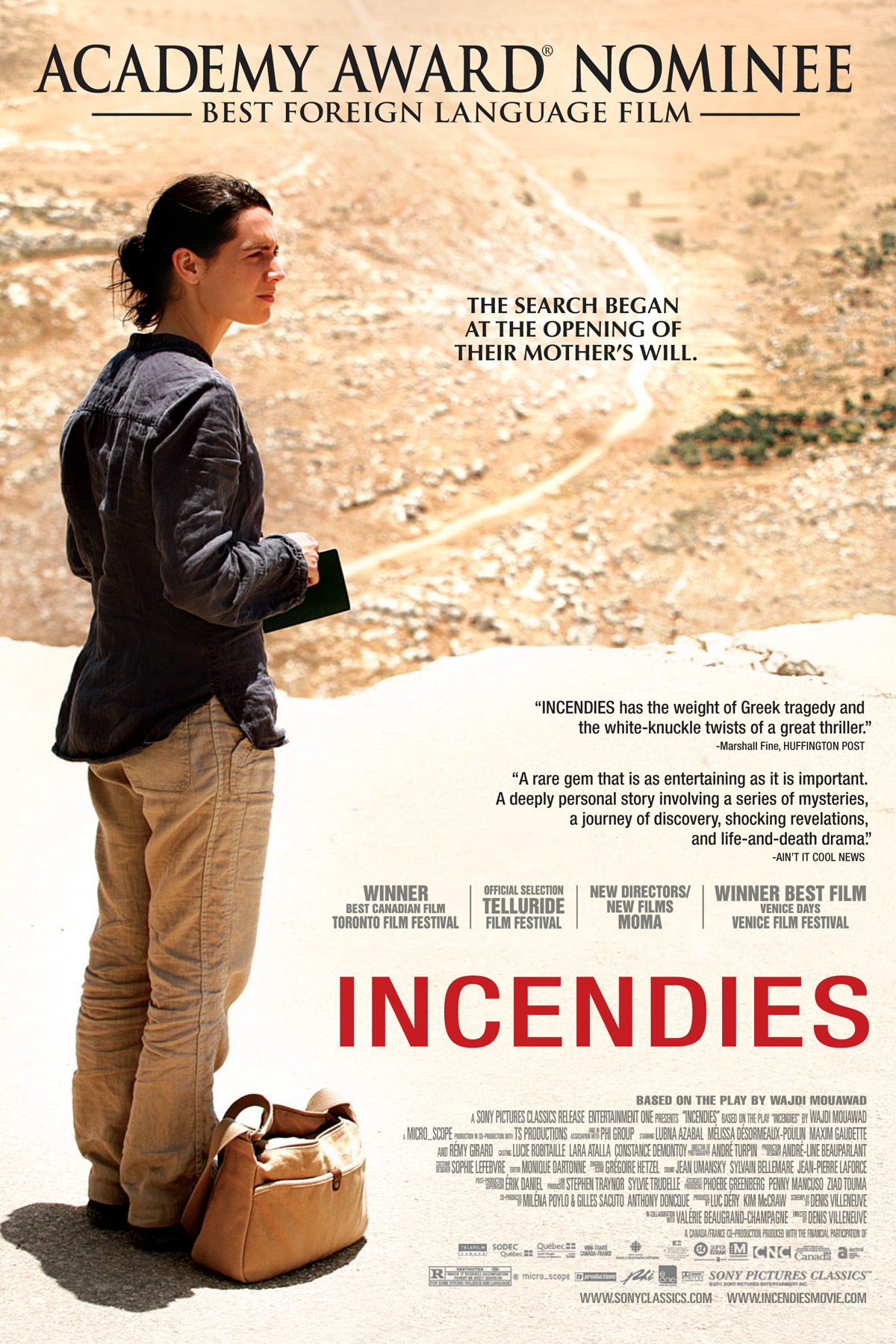
INCENDIES (2010) is the probably the best film you haven’t seen. If you have seen it then tell more people to see it. Spread the word on this incredible film. I watched Incendies (2010) for the first time a few years ago and it has stayed with me ever since. Given the lack of recent cinema releases, I felt compelled to watch it again and once more was blown away by the power of the characters and their stories. Not quite old enough to review as a classic movie, and as it stands as at No. 111 on the IMDB 250, it doesn’t qualify as an under-rated classic, I have therefore filed this contemporary classic under films that got away.
Based on a play by Wajdi Mouawad, Incendies (2010) was developed by Denis Villeneuve, who took five years developing and writing the screenplay. Villeneuve was attracted to the play because it was a modern story with Greek tragedy at its heart. It is set in both Canada and in an unnamed Middle Eastern country, with events in the narrative traversing between the these countries and different time periods. While the country where most of the action takes place is unnamed, given Mouawad is Lebanese, it is safe to say that this complex tale unfolds during the Lebanese Civil War. However, it is a masterstroke not to be specific about setting, as this ensures it is not place and politics one focusses on, but the thought-provoking human drama. And what drama it is!
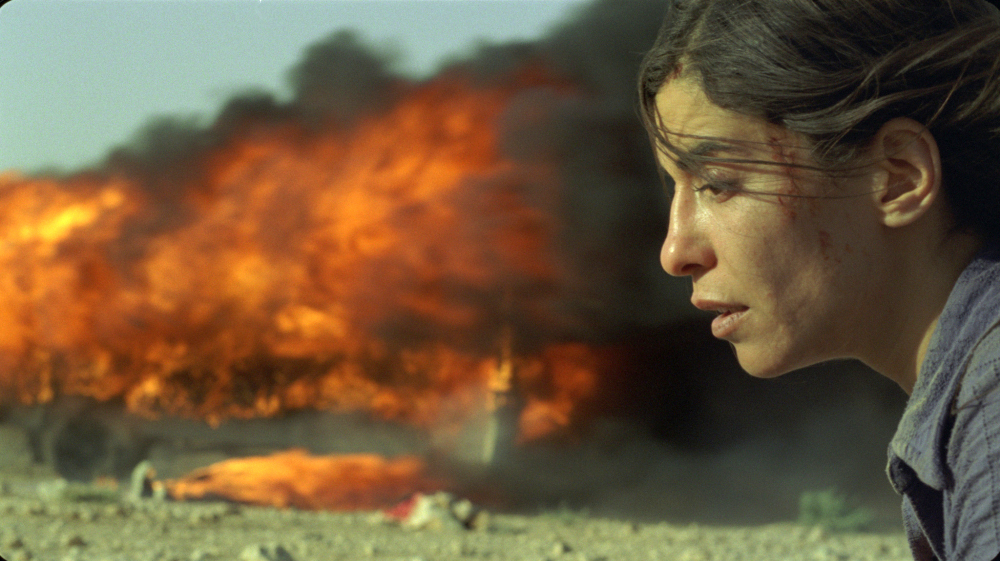
Incendies tells the brutal but riveting story of Nawal (Lubna Azabal), a woman who lived through her country’s civil war.
After starting with a haunting scene from the past showing bedraggled children herded into an orphanage, the story quickly moves to the present. Twins, (Jeanne Mélissa Désormeaux-Poulin) and Simon Marwan (Maxim Gaudette) meet Jean (Remy Girard), a notary handling their deceased mother’s will. Their mother, Nawal Marwan (Lubna Azabal), has left two letters – one for the twin’s brother, and another for their father. If they can locate them and give them the letters, Nawal will allow her children to bury her with a casket and headstone. Jeanne, the calmer of the two siblings, agrees to the request. However, Simon is angry that secrets were kept and is against taking it any further.
Incendies (2010) then becomes two powerful narratives intertwined to structural perfection by Villeneuve and Valérie Beaugrand-Champagne’s exceptional screenplay. Firstly, we follow Jeanne as she travels to Daresh, in the Middle East, attempting to follow in Nawal’s footsteps. Here the film becomes a compelling detective story as Jeanne (and later in the film, Simon) slowly discovers her mother’s tragic life history before she moved to Canada. Running parallel to this the narrative flashes back to show Nawal’s life as she escapes village life to go to University, only for religious civil war to tear the fabric of the country apart. Villeneuve, who has subsequently directed many visually stunning big budget films, makes the most of the sun-scorched and battle-scarred landscapes. Moreover, he also delivers a stunning and suspenseful sequence when Nawal finds herself trapped on a bus surrounded by soldiers.
I genuinely do not want to say anymore about the plot of Incendies (2010), for fear of spoiling what is such a complex and well designed story. It drives me mad when I watch films or television shows and they gratuitously use flashbacks or fractured temporal structures to create mystery. Because what many ultimately do is confuse the audience and create emotional distance from the characters. Villeneuve directs in an intelligent way, retaining empathy and emotion for both protagonists and antagonists devoured by war. Nawal Marwan’s story is especially heart-breaking and she is given a moving portrayal by Lubna Azabal. Nawal’s story is one of astounding power as the character experiences the hell of loss, war, torture and death. Her final attempt at redemption from beyond the grave gives us a searing human drama. One which will shake you to the core for days and weeks and maybe even years!
Produced by: Kevin Turen, Ashley Levinson, Sam Levinson, Zendaya, John David Washington
Written by: Sam Levinson
Cast: Zendaya, John David Washington
Music by: Labrinth
Cinematography: Marcell Rév
*** MAY CONTAIN SPOILERS ***
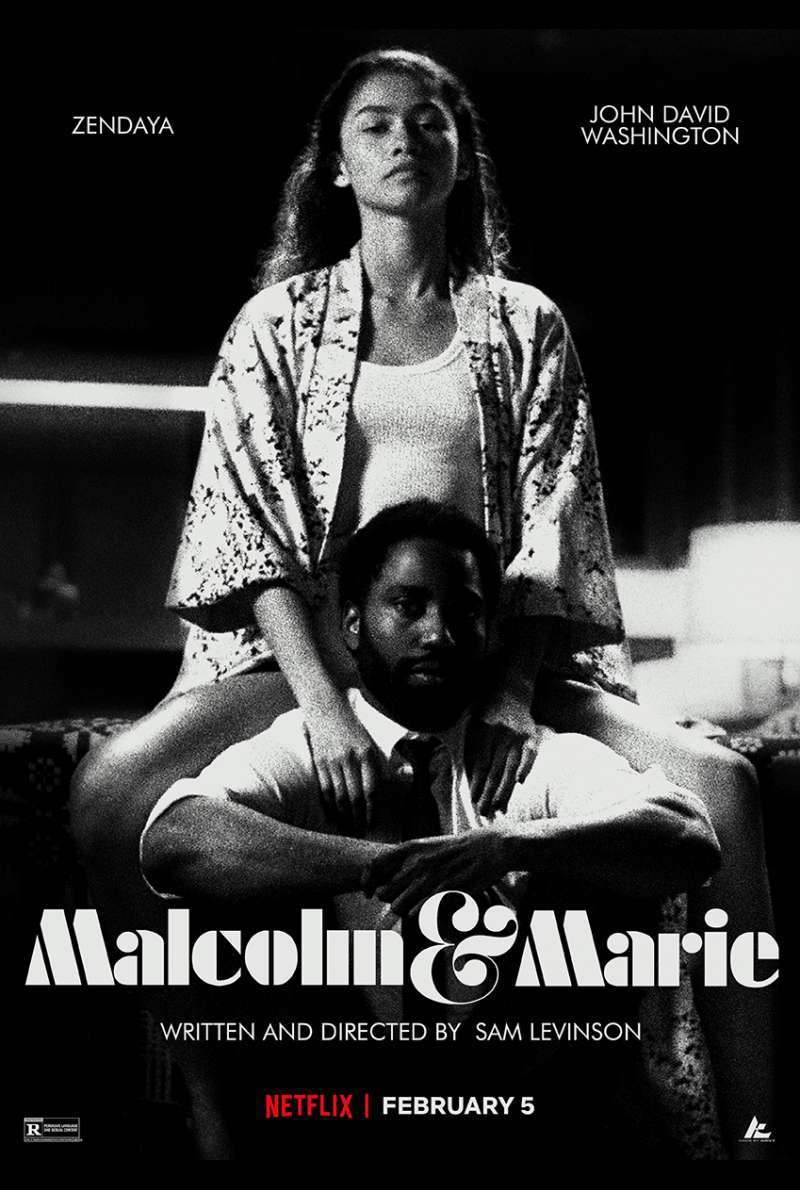
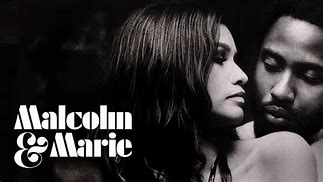
The Oscar nominations came out this week and due to the ongoing pandemic situation and consequent lockdowns, there are a number of films on the esteemed list which have yet to reach these shores, either at the cinema or via streaming platforms. Having said that, and I am aware space for nominees are limited and it has been a pretty strange year for cinema, but I was extremely surprised that Delroy Lindo did not receive an acting nomination in lead or supporting category. Similarly, I was also bewildered that Sam Levinson’s striking romantic drama, Malcolm and Marie (2021), had not received nominations in either screenplay or acting categories. Further, I was utterly shocked that critic’s reviews for the intense two-hander had been pretty mixed. Hey, it’s just opinions but I was really gripped by this highly theatrical and gorgeously cinematic two-hour argument in black-and-white. Personally, I think most of the deriders are wrong. But that’s just my view.
Maybe the film wasn’t liked because John David Washington’s, Malcolm, an up-and-coming filmmaker celebrating a successful premiere that evening, launches into a wonderfully eloquent rant about a review which he feels pigeonholes and patronises his film in purely political terms. I mean it’s actually a positive review, but who doesn’t enjoy ire toward professional critics. I mean, everyone has an opinion, or a view and the Internet has caused a mass proliferation and gaping spew of words and views and brain-thoughts in extremis. But Levinson’s script and Washington’s grandstanding acting spits that if you earn a living as a critic then you are essentially Satan! Perhaps some reviewers took umbrage with this? I loved the whole scene’s energy and Malcolm’s savage attack had me applauding throughout.
But Malcolm and Marie (2021) is more than Levinson getting back at those individuals who gave him bad reviews. It’s a sharp, funny, sexy and poignant exploration of a relationship close to breaking point. Malcolm and Marie may be different fighting weights, but they both punch hard and often. He is on a high after his film premiere success, but Marie is upset because he did not thank her during his speech. From there the conflict rises from light sparring to harsh emotional knockout blows. Both Malcolm and Marie tear at each other’s skin and flesh and figurative organs in an attempt to resolve the ever-increasing divide between them. Malcolm and Marie (2021), may not be for everyone, but any person who has been in a heated war of words with a partner or spouse, will identify with the inescapable tension on display. Levinson’s expert screenplay rides a rollercoaster journey of emotions as one moment you side with Marie and the next you’re with Malcolm. Yet, before you know it, you’re disliking both these complex, narcissistic, egotistical and infuriating humans.
Both Zendaya and John David Washington deserve so much praise for their performances in, Malcolm and Marie (2021). Washington has already demonstrated his massive talent inBlacKkKlansman (2018), while Zendaya excelled in recent HBO drama, Euphoria (2019). Levinson too directs with a deft skill. I was especially impressed by the way he balances the comedy and drama of these flailing humans, poking and picking at the scabs of each other’s past behaviour. Indeed, as well as containing some brilliant dialogue, the erudite script really sang to me. At times the coruscating repartee reminded me of Edward Albee’s acclaimed play, Who’s Afraid of Virginia Wolf. Nonetheless, for a dialogue and performance driven film, the precise framing and sumptuous black-and-white photography by Marcell Rév render the visuals wholly cinematic.
Sure, by the end of Malcolm and Marie (2021) is anything really resolved? And who is ultimately interested in this couple’s first world problems? Well, I’ve witnessed my parents fighting and also experienced such exhausting relationship arguments before. So, I must say that overall, I thoroughly enjoyed witnessing Malcolm and Marie’s nocturnal battle. Especially because I watched it all from the safety, warmth and comfort of my own home.
Produced by: John Heyman, Denis Johnson, Norman Priggen
Screenplay by: Harold Pinter
Based on: The Go-Between by L. P. Hartley
Cast: Julie Christie, Alan Bates, Margaret Leighton, Edward Fox, Dominic Guard, Michael Redgrave, etc.
Music by: Michel Legrand
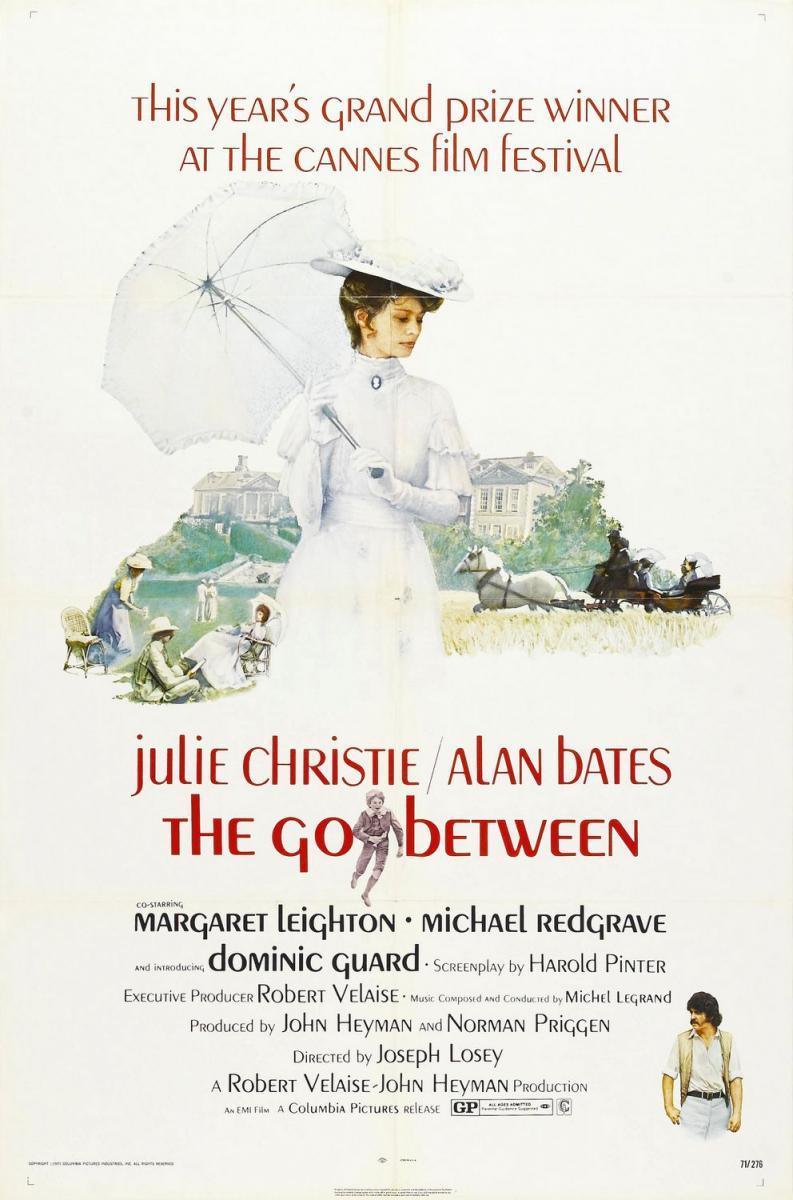
The Go-Between (1971) is one of those expert works of understated cinema which I was sure I had seen before. Yet, I would come to discover I had never seen it when I caught it on the rather marvellous digital channel, Talking Pictures. But then I love that when you find a period classic and watch it for the first time. It’s like unearthing gold in your living room. Because the film is a heartfelt rites-of-passage drama which subtly pulls at the loose end of the knitted cardigan that is the British class system. Nevertheless, while the romance, lies and regret unfold under the surface, The Go-Between (1971) certainly retains much dramatic power.
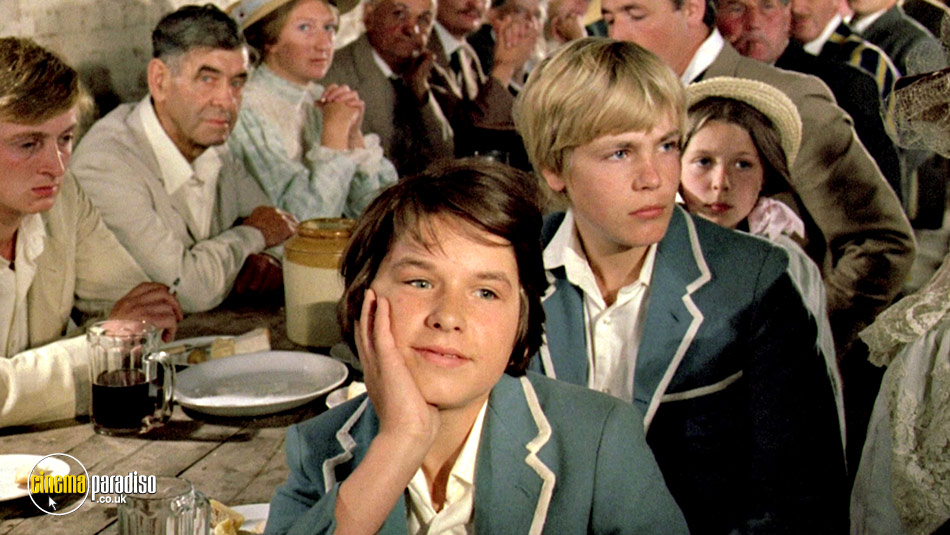
Adapted by acclaimed playwright, Harold Pinter, from the esteemed novel by L.P. Hartley, The Go-Between (1971) stars Julie Christie and Alan Bates as secret lovers separated by the chasm of class and tradition. Bates’ Ted Burgess is a charismatic and muscular farmer with a reputation as a ladies man. Christie is the beautiful and slyly rebellious daughter of the Lord of the Manor, Marian, promised in marriage to Edward Fox’s Viscount Hugh Trimingham. With peering eyes and suspicion coming from Marian’s mother, the lustful affair requires stealth, thus they enlist the help of Dominic Guard’s intelligent but less-privileged, Leo Colston. He is there as guest of Marian’s young brother as both attend the same boarding school; Leo there on a scholarship. The narrative develops very much through Leo’s sweet innocent eyes. The outsider’s point-of-view is expertly presented as it is both objective and allows the audience to make up their own mind about the characters.
Leo is pure of heart and believes he is helping by running notes back and forth between Burgess and Marian. He also makes friends with the cuckolded Viscount, as Fox gives a fine performance of a man who may or may not know whether his potential wife is being unfaithful. I think that is one of the strengths of the book and film, in that it explores the theme of duty versus passion. Burgess and Marian represent freedom, lust and nature, which are opposite to the “doing your duty” arrangements of the upper classes. Of course, dramatically speaking something has to give where the love affair is concerned. Sadly, tragedy intervenes, resulting in the loss of Leo’s innocence, and adding a layer of guilt which gravely haunts him in his later years.
Everything about The Go-Between (1971) reeks of quality. From the production design, locations, costumes, score by Michel Legrand and Gerry Fisher’s exquisite cinematography. Unsurprisingly, Harold Pinter would receive an Academy Award for his confident adaptation. Further, Joseph Losey is not a filmmaker whose work I am not particularly well acquainted with, but the performances from Fox, Bates, Christie and young Dominic Guard are assured testament to his stellar ability to convey meaning and emotion between the lines. Indeed, while some films smash you over the head with emotional melodrama, something I love too, The Go-Between (1971) instead slowly squeezes at your heart and mind. Lastly, this is not simply a damning indictment of the class system, but a lament for loss of innocence, illustrating how monolithic tradition dictates love, fate and tragedy are inextricably entwined.
Produced by: Iain Canning, Anne Carey, Emile Sherman
Written by: Chris Morris, Jesse Armstrong
Cast: Marchánt Davis, Anna Kendrick, Danielle Brooks, Kayvan Novak, Denis O’Hare, Jim Gaffigan etc.
Chris Morris is a bona fide genius. A natural prankster, a fearless satirist, writer, actor, producer, director and enfant terrible of radio, television and more recently cinema. He has been suspended by Greater London Radio and by the BBC and described by the Daily Mail as “the most loathed man on TV.” Which to me is a highly positive thing. Moreover, Morris is genuinely one of my cultural heroes and certainly one of the funniest artists to have graced the planet.
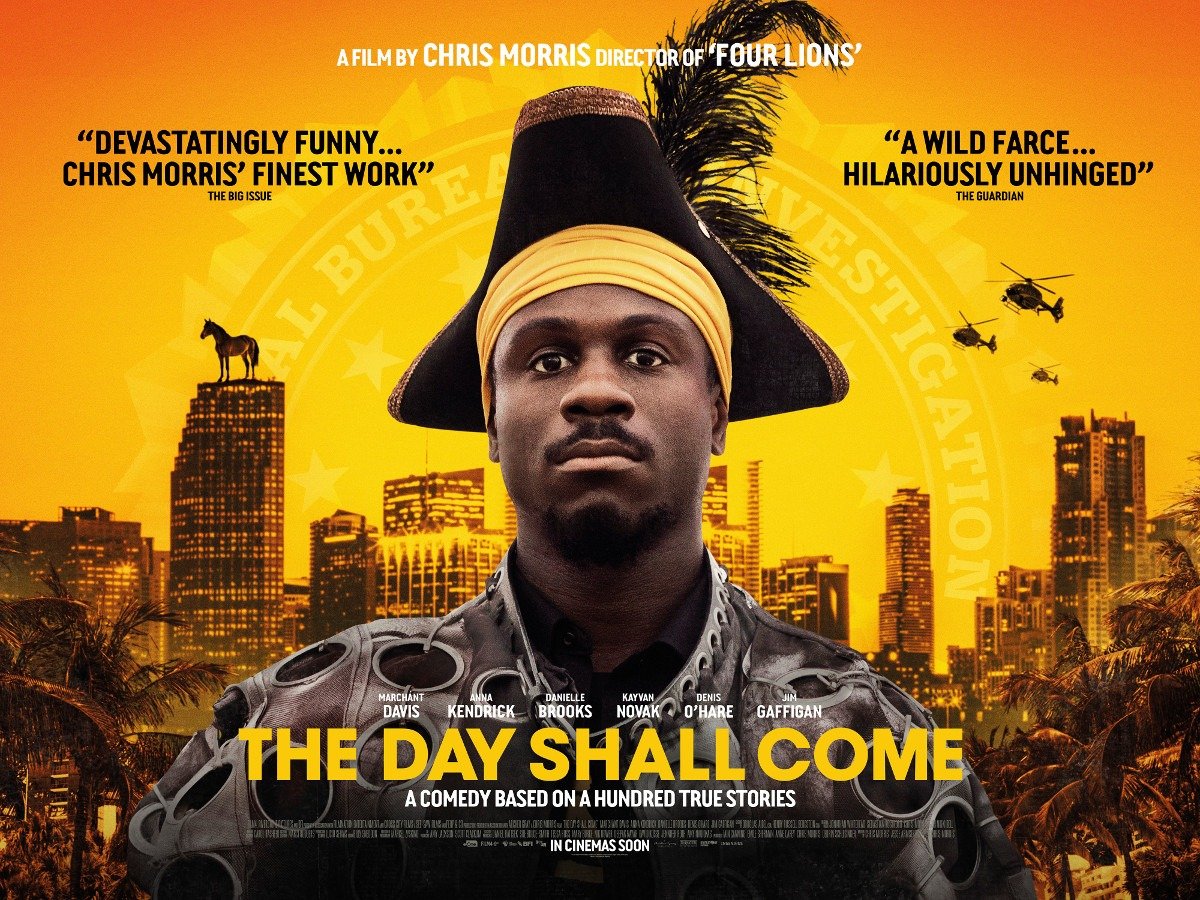
Morris’ latest cinema release is called The Day Shall Come (2019), and given I am such a fan of his work it did not make any sense why I have only just seen the film. Perhaps I had seen some negative reviews or maybe it was released at the same time as the London Film Festival in 2019? Thus, it meant I could not find time to watch it. Anyway, the story is somewhat of a mixed bag and definitely not as focussed or blisteringly funny as Morris’ prior directorial masterwork, Four Lions (2010). Centring on the idiotic efforts of the F.B.I’s terrorist taskforce to bring down targets that threaten United States security, operative Kendra Glack (Anna Kendrick) and her boss, Andy Mudd (Denis O’Hare) pull focus on Marchánt Davis as Moses Al Shabaz, an impoverished preacher, running the hapless ‘Star of Six’ commune. Moses, who is possibly bi-polar, is a likeable fool with delusions of grandeur, however, the FBI decide he is a threat and try to fit him up in many farcical scenes of entrapment.
There are funny moments and some delightfully bizarre dialogue exchanges. Furthermore, Davis excels in his role as the eccentric Moses and the under-used Danielle Brooks brings much needed humanity to her role as his wife. However, the film is full of mostly unlikeable and unlikely characters, meaning Morris’ satirical bullets rarely hit their target. Kendrick is miscast and while there are a few laugh-out-loud moments throughout, I just felt like the script was continually trying to squeeze square blocks into round holes. I even watched it twice to see if maybe I had missed something first time round. Goes to show even for a creative magician such as Chris Morris, certain tricks don’t always come off.
Mark: 7.5 out of 11
SIX OF THE BEST #29 – CHRIS MORRIS THINGS YOU MUST WATCH!
NEWSREADER: The main stories so far: Jimmy Savile drops dead at the Stoke Mandeville Boxing Day bash—but the patients are far from mourning.
CORRESPONDENT: The majority, if not all of them, are extremely relieved that he’s now dead, although I suspect that some of them will be sorry that he didn’t suffer a great deal more.
— The Chris Morris Music Show, 16 December 1994
While The Day Shall Come (2019) does not reach the dizzy heights of Chris Morris’ best output, it is still a highly thought-provoking critique of American law enforcement practices. Arguably though it misses more marks than it hits. Here are six of the best things that Chris Morris has been involved in and I urge you to try and find them on a streaming platform or on DVD or online somewhere. If you love obsidian black and controversial comedy then Chris Morris is your man!
CHRIS MORRIS RADIO SHOWS!
Morris’ creative career really formed on radio. He worked at Radio Bristol, Greater London Radio and made the The Chris Morris Radio Show on BBC Radio 1. He gained notoriety and was suspended from the BBC for announcing Conservative politician Michael Heseltine was dead. In fact, fake obituaries were one of his early favourite pranks. Later, Morris joined forces with another comedy legend, Armando Iannucci, to help create the seminal spoof news show called, On the Hour. The rest they say is history.
THE DAY TODAY (1994)
The Day Today was a TV comedy show that parodied current affairs programmes. Broadcast in 1994 on BBC2, it was created by Armando Iannucci and Chris Morris and an adaptation of the radio programme On the Hour. The genius and surreal satire The Day Today found Morris winning the 1994 British Comedy Award for Best Newcomer. The rest of the cast includingSteve Coogan, Rebecca Front, Doon Mackichan, Patrick Marber and David Schneider were incredibly good too. I wonder what happened to them?!
BRASS EYE (1997)
Chris Morris took the ferocious journalistic character he created on The Day Today (1994) into Brass Eye (1997), with one of the most scurrilous and controversial works of television ever. Once again, Morris was lampooning current affairs shows and the often hysterical way the media sensationalise issues such as drugs, sex and crime. Morris fooled many celebrities and politicians during the filming of Brass Eye (1997), getting them to commit to absurd, but fake media campaigns. A 2001 special was planned but cancelled due to fear of further controversy and litigation against Channel 4.
JAM (2000)
Ever pushing the boundaries of radio and television genre form and style, Morris’ cult sketch show Jam (2000), is a truly dark and twisted experience. Unsettling and bleak it presented unconnected and surreal sketches, unfolding over an ambient soundtrack. Buried late at night on the Channel 4 schedule it was incredibly striking in style and content with a superb cast including: Amelia Bullimore, Julia Davis, Mark Heap and Kevin Eldon.
NATHAN BARLEY (2005)
This absurdist comedy found Morris working with another comedy genius in Charlie Brooker. Here they took inspiration from Brooker’s TVGoHome – a 2001 E4 TV show parodying television – as the focus of a fly-on-the-wall documentary called Cunt. With energetic fool and influencer Nathan Barley as the lead idiot, the sitcom delivered six delicious episodes which skewered hipster characters and pretentious Shoreditch-based culture. The cast included: Julian Barratt, Ben Whishaw, Richard Ayoade, Nicholas Burns, Claire Keelan etc. and Nathan Barley is a highly recommended comedy that seems as vital now as it did in 2005.
FOUR LIONS (2010)
Oh my word! How the hell this film did NOT get banned is something that still shocks me. It is one of the the funniest and controversial films ever about the darkest subjects, namely terrorism and radicalised Jihadis. How Morris and his co-writers, Jesse Armstrong and Sam Bain, managed to successfully satirise, demonise and humanise Muslim fundamentalists is beyond belief. The wicked script and unbelievably good performances by Riz Ahmed, Nigel Lindsay and Kayvan Novak help make Four Lions (2010) one of the finest socio-political comedies of all time. It’s hilarious and actually moving at the end as I pitied, recoiled and felt for these poor misguided fools. Deservedly, Chris Morris won the award for Outstanding Debut by a British Writer, Director or Producer at the BAFTAS in 2011.









 The Cinema Fix presents