Category Archives: Reviews

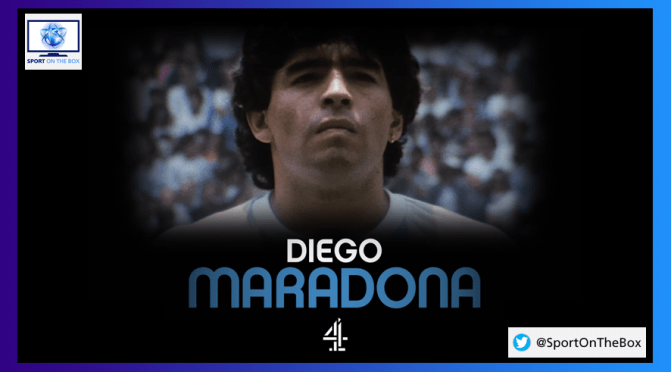
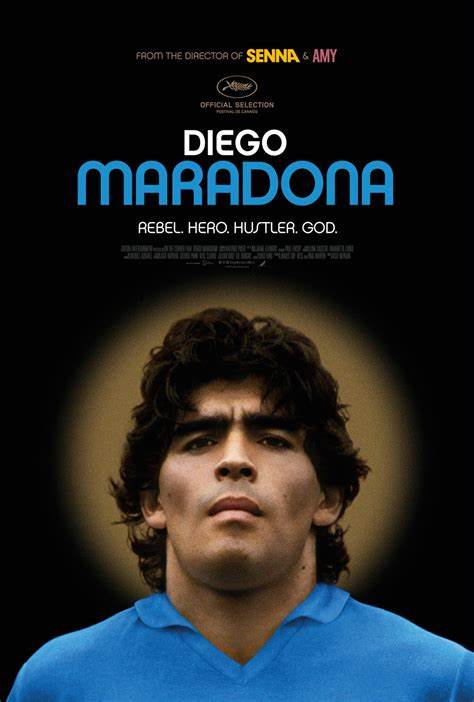
ALL 4 FILM REVIEW: DIEGO MARADONA (2019)

ALL 4 FILM REVIEW – DIEGO MARADONA (2019)

Directed by: Asif Kapadia

Produced by: James Gay-Rees, Paul Martin

Written by: Asif Kapadia

Music by: Antônio Pinto

Edited by: Chris King

Available platform: Channel 4 / All 4


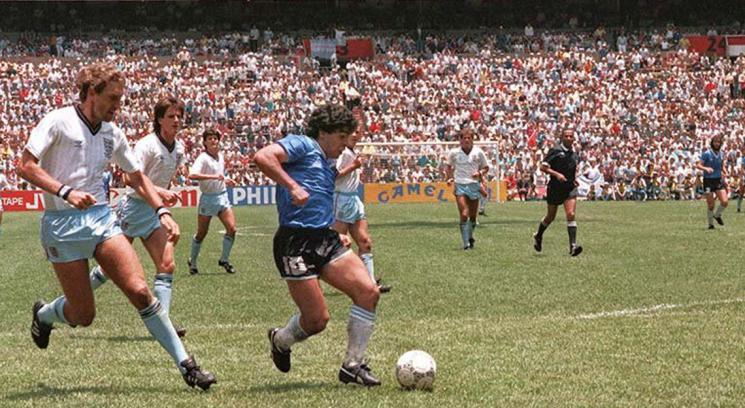
Even if you’re not a fan of football, you cannot fail to have to heard of the Argentinian player that is Diego Maradona. If you don’t know him then he rose from the shantytowns of Buenos Aires to become one of the greatest footballers of all time. A wunderkind prodigy as a teenager, he became the most expensive footballer ever when he moved to Napoli from Barcelona. In Naples he would transform a club, normally in the shadows of giants from Milan and Rome, into a title winning team. Moreover, he famously led Argentina to World Cup glory in 1986, with one of the most scintillating individual footballing performances ever witnessed. I missed Asif Kapadia’s absorbing documentary when released at the cinema, however, with Maradona sadly passing away last week, I took the opportunity to watch it on Channel 4’s streaming platform.

Kapadia has shown himself as a master filmmaker in constructing narratives from archival footage. This engrossing style and expertly edited form is brilliantly demonstrated in Senna (2010) and Amy (2015), both winning several major awards. Once again Kapadia uses the same process. He combines interviews via voiceover with Maradona, his ex-wife Claudia, his trainer and many other people, with hundreds of hours of found film footage shot by Argentine cameramen in the 1980s. Moreover, further archival footage was discovered in the home of Maradona’s ex-wife in a trunk untouched for 30 years.


Kapadia and his editors weave such sources to create an absorbing portrait of an extremely complex personality. Indeed, many interviews comment on the football star having two distinct sides. One called Diego, a sweet-natured lad who became a phenomenon on the pitch and the other Maradona, a notorious, larger than life mega-star pursued by the media, football fans, women, gangsters and money people. Whether this schism contributed to Maradona’s battles with drug addiction and other controversies, it is difficult to say. What is clear though is, despite his flaws, love for partying, fiery temperament and questionable associations, the press in Italy and the rest of the world, were permanently in Maradona’s face, creating a pressure cooker atmosphere for him and his family.

Overall, I was totally transfixed by the documentary, Diego Maradona (2019). Having grown up as a teenager watching Maradona on the television, notably the infamous ‘Hand of God’ game against England at the 1986 World Cup, I was struck by huge waves of nostalgia. Even though Maradona’s Argentina defeated England, one could never fail to be in awe at his magical skills as a player. I love football and enjoyed many scenes showing the brutal and beautiful nature of the game. Lastly, Kapadia’s main narrative thrust involves Maradona’s rise and fall from grace during Napoli’s spectacular rise to the top of the Italian league. Yet, having scored the penalty that knocked Italy out of the 1990 World Cup, his once beloved Naples would turn on Maradona, leaving him friendless and without protection from the Italian law. Ultimately, the film stands as not only a complex tribute to a footballing genius, but also a cautionary tale of the trials and tribulations of worldwide fame and notoriety.

Mark: 9 out of 11


ALL 4 DRAMA RESIDENCY – INCLUDING REVIEWS OF: THE ACCIDENT (2019), CHIMERICA (2019), KIRI (2018), NATIONAL TREASURE (2016) and more…

ALL 4 – DRAMA REVIEWS

So, I don’t get paid for doing this. I do it because I enjoy watching films and television and writing about them. It helps me to review stuff critically from both a creative perspective and absorb knowledge for when I make my own low budget films. Also, it’s something to do isn’t it; a hobby and means to immerse oneself in something that interests me. Lastly, one also learns much from the hours of viewing, especially if the narratives are grounded in reality, representations of history and social issues.

CHANNEL 4 has always been at the forefront of producing intelligent drama television built to inform, entertain and provoke thought. Their streaming platform called ALL 4 is a great place to catch up with Channel 4’s product and I have already reviewed many of their shows here on this site. Having said that, I thought I should put an even bigger effort to catch up with some of their dramas. After all, ALL 4 is — aside from watching a few adverts — is absolutely FREE! I’m glad I did because they have quality production values and are very powerful, skilfully tackling social themes and historical events. So, here are some quick reviews of Channel 4 television dramas both recent and not so recent with the usual marks out of eleven.


THE ACCIDENT (2019) – Mark: 9 out of 11

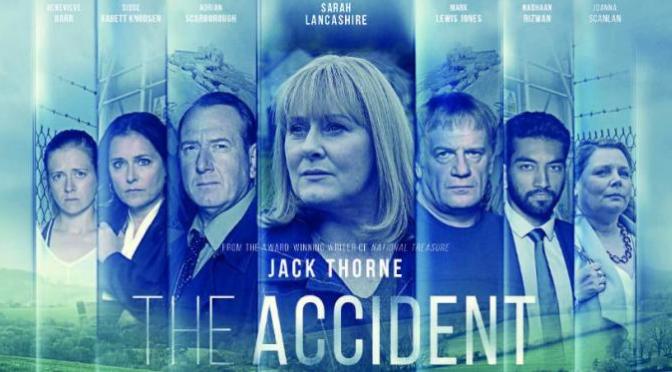
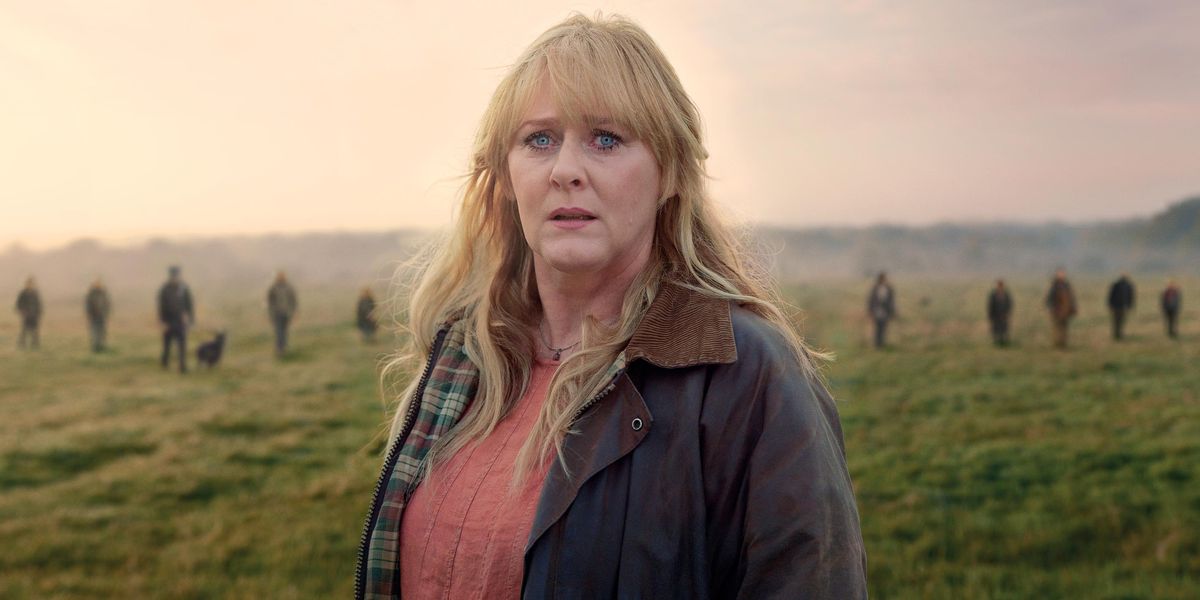
What I found from my All 4 residency was that many of the shows were written by Jack Thorne. He is a clever writer with a keen eye and ear for drama relating to everyday people’s lives. The Accident (2019) is set in Wales and concerns a small community whose lives are ripped apart by an explosion at a construction site. Many children are killed, but given they were trespassing the blame initially falls on both them and building company. The ensemble cast lead by Sarah Lancashire and Joanna Scanlan are uniformly excellent, as the impactful drama echoes actual events such as Aberfan and Grenfell Tower disasters.


CHIMERICA (2019) – Mark: 8 out of 11

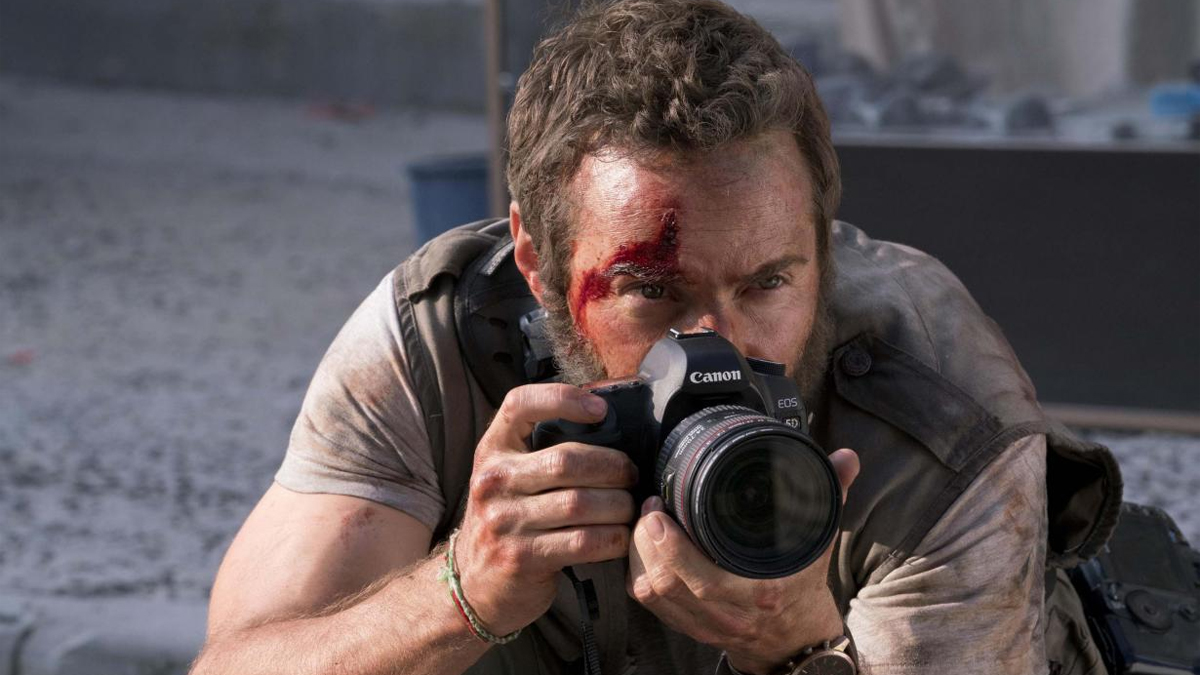
Based on Lucy Kirkwood’s play of the same name and set during the 2016 American Presidency election, this political drama sees Alessandro Nivola’s once-lauded photographer attempt to locate the “Tank Man” from the 1989 Tiananmen Square protests. Part-redemption and part-historical expose, the writing is excellent as Cherry Jones and F. Murray Abraham easily steal the acting plaudits. I was more interested in the plight of Zhang Lin’s (Terry Chen) China-set parallel storyline than the photographer’s, but, overall, I was drawn into detective plot and human conflict throughout.


THE DEVIL’S WHORE (2008) – Mark: 9 out of 11

The wonderfully titled The Devil’s Whore (2008), features a fine cast of actors including: John Simm, Peter Capaldi, Andrea Riseborough, Michael Fassbender and Dominic West. The drama focusses on the historical era of Oliver Cromwell and Charles I, filtered through the eyes of Riseborough’s strong, yet scandalised heroine, Angelica Fanshawe. Peter Flannery’s excellent script is full of violence, political and religious intrigue and works well as both a work of entertainment and chronicle of key characters from the bloody English Civil War!


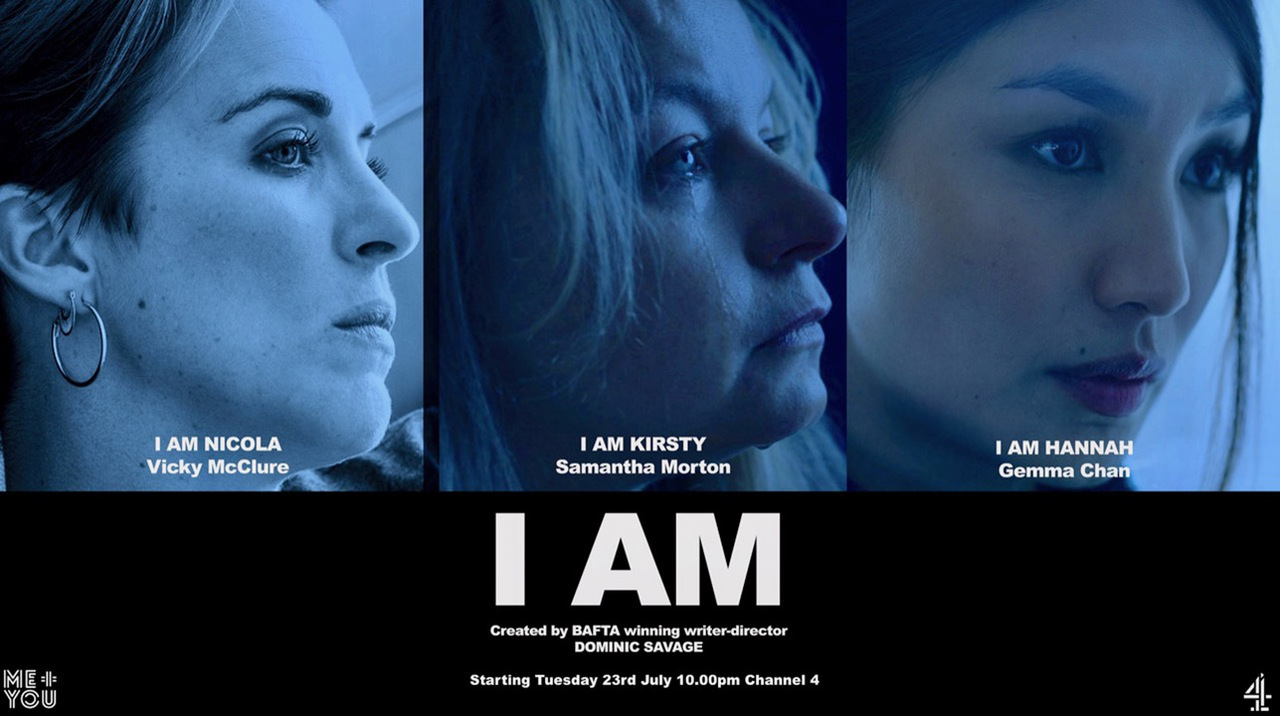
I AM. . . (2019) – Mark: 9.5 out of 11

Dominic Savage is a skilful and experienced filmmaker, who recently made the semi-improvised feature, The Escape (2017). It focussed on unhappy mother portrayed by Gemma Arterton, and while an interesting character study, it ultimately felt a little flat dramatically. Using the same improvisatory and documentary style with the anthology triptych, I Am. . . (2019), Savage casts Vicky McClure, Samantha Morton and Gemma Chan in three separate stories of women in various states of domestic plight. All of the narratives are brilliantly acted and directed, focussing on coercive relationships, gaslighting debt escalation and painful maternal inertia respectively, all delivered with tremendous emotional power.


FALLING APART (2002) – Mark: 8.5 out of 11

Mark Strong and Hermione Norris excel is this shocking drama about domestic violence. Seemingly the perfect couple, Pete and Clare fall in love and marry, only for Pete’s aggressive tendencies to come to the fore soon after the honeymoon period. Clare forgives Pete and blames work and herself and then finally thinks he may have a problem. An honest and bleak look at love gone wrong, there are many scenes that make one flinch and feel bad for those women trapped in similar situations.


KIRI (2018) – Mark: 9.5 out of 11

Sarah Lancashire is exceptional as the social worker hung out to dry when a fostered child, Kiri, is killed after a family visit to her paternal grandparents. Jack Thorne writes a subtle and compelling script which explores issues relating to: adoption, social care, race, class, and child murder. As well as Lancashire, Lucian Msamati, Paapa Essiedu, Wunmu Mosaku, Lia Williams and Sue Johnston give exceptional performances. Finally, what begins as a murder mystery drama unfolds into something far more complex, with an ending that leaves you stunned with its brave, narrative risk-taking.


NATIONAL TREASURE (2016) – Mark: 9 out of 11

Not to be confused with the Nicolas Cage film series, this searing drama, written by Jack Thorne again, springboards off the recent #MeToo and Operation Yewtree news events. Robbie Coltrane takes the lead as Paul Finchley, a once successful comedian of the 1980s and 1990s, now hosting a television quiz show, while his wife is portrayed by the exceptional Julie Walters. Finchley’s life and career is turned upside down when he is accused of rape and sexual assault, something he vehemently denies. The drama unfolds in an engrossing fashion as we flash back and forth between Finchley’s present day and past history. Again, a potentially sensationalist subject matter is dealt with mesmeric power, as it all culminates in a tense and emotional court case.


ON THE EDGE (2018) – Mark: 8 out of 11

Excellent set of short anthology dramas which focus on various issues affecting mostly younger people in Britain today. Issues explored include: knife crime, body shaming, race, neurodiversity, date rape, depression and social work. All are extremely well acted and directed, giving excellent examples of diverse drama Channel 4 excels at.

FX/BBC TV REVIEW – MRS AMERICA (2020)

FX/BBC TV REVIEW – MRS AMERICA (2020)

Created by: Dahvi Waller

Producers: Tanya Barfield, Boo Killebrew, Sharon Hoffman

Writers: Dahvi Waller, Tanya Barfield, Boo Killebrew, Micah Schraft and April Shih, Sharon Hoffman, Joshua Allen-Griffiths, etc.

Directors: Anna Boden & Ryan Fleck, Amma Asante, Laure de Clermont-Tonnerre, Janicza Bravo,

Cast: Cate Blanchett, Rose Byrne, Uzo Aduba, Elizabeth Banks, Kayli Carter, Ari Graynor, Melanie Lynskey, Margo Martindale, John Slattery, Jeanne Tripplehorn, Tracey Ullman, Sarah Paulson, and many more.

No. of Episodes: 9

Original Network: FX on Hulu / BBC (UK)

*** CONTAINS HISTORICAL SPOILERS ***


“Feminism has never been about getting a job for one woman. It’s about making life more fair for women everywhere. It’s not about a piece of the existing pie; there are too many of us for that. It’s about baking a new pie.” — Gloria Steinem

I just won’t ever understand this world and the people in it. We are capable of wonderful moments of love and compassion and just being good to one another, but equally just as capable of negativity, division and dispute. Take for example the Equal Rights movement. First proposed by the National Woman’s political party in 1923, the Equal Rights Amendment was to provide legal equality of the sexes and prohibit sex discrimination.

Initially failing, the E.R.A. was revived in the late 1960s, and throughout the 1970s tireless work was done to get it ratified. Here was a group of people striving for gender equality and generally fighting for better working conditions. This for me is a noble cause. However, unbelievably there were women, not just men, in America who were AGAINST the Equal Rights Amendment. Of course, it is a constitutional right to freedom of speech and to protest your point of view, however, arguing against something that is looking to improve lives is hard to credit.


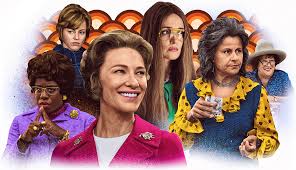
FX’s historical biopic, Mrs America (2020) is set against the backdrop of the 1970s and it dramatizes the amazing fight by those individuals and groups seeking to ratify the E.R.A. across the disunited states of America. Leading political activists such as Gloria Steinem (Rose Byrne), Betty Friedan (Tracey Ullman), Shirley Chisholm (Uzo Aduba), Bella Abzug (Margo Martindale) and Jill Ruckelshaus (Elizabeth Banks) were just a few of the people struggling to get the E.R.A. over the line. While it seems like a no-brainer to me, the 1970s was clearly another country when it came to gender roles and the treatment of women. Thus, the amendment, while slowly gathering momentum in various states, faced much opposition. The mini-series represents the major source of opposition in ultra-conservative spokesperson, Phyllis Schlafly (Cate Blanchett), an activist and lobbyist who started the No E.R.A campaign group. The battles between her group and the feminist legion gives way to much incisive drama, comedy and entertainment.

Presented in nine brilliantly written, acted and directed episodes, Mrs America (2020) is television of the highest quality. The ensemble cast is one of the finest ever assembled in my opinion and there are so many amazing performances. Cate Blanchett is magnetically charismatic as PhylIis Schlafly. Blanchett gives a complex characterisation of a formidable woman who, while striving to be taken seriously in the world of law and politics, finds she is undermined by the men she is fighting for. Sarah Paulson also gives another nuanced and exquisite rendition of a housewife on a slow journey of self-realisation. There are just too many great acting portrayals to mention, but Tracey Ullman steals every scene she is in for sure.

Overall, Mrs America (2020) takes a potentially dry subject and infuses it with the intricacies of both political intrigue and powerful personality. The script fizzes with wit, style and verve, and is supported by an amazing soundtrack and some jaw-dropping acting. No doubt many liberties have been taken with the events for dramatic purposes. But if that means bringing to prominence this important struggle then I am all for it. Rather incredibly, the E.R.A., at the time of the programme’s release this year, still had not been ratified by the number of States needed to make it law. I know it’s too complex an issue to be resolved so easily, however should this political matter still remain unratified today? It remains a sad indictment of humanity that equality for all was seen as such a negative thing in the 1970s, especially by individuals it sought to protect.

Mark: 9.5 out of 11

NETFLIX FILM REVIEW: HIS HOUSE (2020)

NETFLIX FILM REVIEW: HIS HOUSE (2020)

Directed by: Remi Weekes

Produced by: Aidan Elliott, Martin Gentles, Arnon Milchan, Ed King, Roy Lee

Screenplay by: Remi Weekes

Story by: Felicity Evans, Toby Venables

Cast: Wunmi Mosaku, Sope Dirisu, Matt Smith, etc.

Cinematography: Jo Willems

***MAY CONTAIN SPOILERS***


Similar in spirit to the Jacques Audiard directed film, Dheepan (2015), the latest Netflix film release, His House (2020), takes the migrant experience as a key narrative driver, then filters it through exciting genre style. While Dheepan (2015) started as a story of survival before crossing over into thriller territory, His House (2020) superbly combines social commentary with the horror genre. Moreover, a key plot reveal later in His House (2020) is extremely similar to that found in Dheepan (2015). Nonetheless, it is a powerful film, both unnerving and thought-provoking in equal measure.

His House (2020) introduces us to Bol (Sope Dirisu) and Rial (Wunmi Mosaku), a refugee husband and wife seeking asylum in Britain from South Sudan. Having survived a treacherous journey from this war-torn part of the world, their young daughter is not so lucky. Alas, Nyagak (Malaika Agibaka) dies during a stormy boat journey. This incident and their social status immediately garners sympathy and empathy for the protagonists. Allied to this, on achieving probational asylum status their jaded case worker, Mark (Matt Smith), brings them to a rundown council estate to live in. It is to Bol and Rial’s credit that they accept their new abode with gratitude. Bol especially is keen to mix with the locals and fit into the British way of living. However, the two soon encounter indifference, racism and prejudice.

This image has an empty alt attribute; its file name is 1024px-his_house_film_poster-1.png

As the narrative continues Bol and Rial have more to contend with than ignorant locals. Rial is resistant to integration as she desperately holds onto her Sudanese clothes and customs. While Bol is clearly trying to distract himself from the tragedy, Rial’s grieving takes the form of clinging onto the memory of her daughter and their Sudanese ways. This familial division is exacerbated by disturbing supernatural phenomena, as a strange dark spirit and the ghost of Nyagak both appear. Could it be grief and guilt manifesting such spectres? Or are they suffering from post-traumatic stress following their harrowing journey to Britain? Or has a genuinely evil spirit hijacked their attempts to build a home and find peace?

Declaring himself as a director to keep tabs on, Remi Weekes, has written and directed an excellent first feature film in, His House (2020). The pacing of the story is excellent as we get flashes of Bol and Rial’s past in Sudan, juxtaposed with their attempts to acclimatise in Britain. As someone whose life is extremely privileged when compared to that of such characters, I was both moved and fearful for the protagonists. This is not only down to an excellent script full of subtext, symbolism and dread, but also due to Sope Dirisu and Wunmi Mosaku’s compelling performances. Furthermore, you really feel the pain of the couple’s loss and suspense created by that which lurks within the stained walls of their apartment. While there are many tense moments, my one reservation with His House (2020) was there arguably wasn’t enough true horror moments. Having said that, the actual reality of Bol and Rial’s situation in losing a daughter, suffering British administrative red-tape and living amidst everyday prejudice, is far scarier than ghosts and monsters can ever be.

Mark: 8.5 out of 11

CULT FILM REVIEW: ERASERHEAD (1977)

CULT FILM REVIEW: ERASERHEAD (1977)

Directed by: David Lynch

Produced by: David Lynch

Written by: David Lynch

Cast: Jack Nance, Charlotte Stewart, Allen Joseph, Jeanne Bates,  Judith Roberts etc.

Music by: David Lynch, Fats Waller, Peter Ivers

Cinematography: Frederick Elmes, Herbert Cardwell

***CONTAINS SPOILERS***


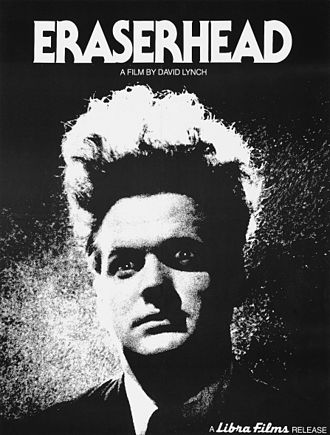
“In heaven everything is fine”, sings the ‘Lady in the Radiator’. Is it really, David, because during the course of your cinematic vision known as Eraserhead (1977), we witness all manner of things which demonstrate heaven is far from our reach. We see the scarred ‘Man in the Planet’, apparently controlling Henry Spencer’s (Jack Nance) fate with mechanical levers. There are also floating heads, blood-squirting chickens, weird alien-looking babies, an enigmatic femme-fatale, a shock-haired and shock-faced protagonist; all existing in an industrial abyss presented in bleak monochrome. If there is a heaven, no one’s getting there!

David Lynch’s debut feature film is a masterpiece of independent cinema. A surrealist, dystopian and anxiety-inducing collage of fantastic images and industrial sounds. Moreover, Eraserhead (1977) was a labour of love for the enigmatic filmmaker. Lynch took years to finish the production. So much so there is one scene where Nance’s character Henry, walks from a corridor through a door. While the edit is immediate, the filming dates were one year apart. Thankfully, Jack Nance didn’t get that famous quiff cut off. Moreover, money was tight. Lynch financed the film from doing part-time jobs, plus he received help from the American Film Institute, family members, and very good friends. There was no Kickstarter in those days.


While Eraserhead (1977) has many seemingly unconnected and bizarre images and freakish scenes, there are several powerful themes running through the film. Indeed, it is a Freudian classic with the nervous and anxious Henry, being lead from one challenging situation to another. The fear of responsibility and parenthood hangs heavy in Lynch’s psyche. Henry lacks confidence and sexual adequacy. Even when he attempts a relationship with Mary (Charlotte Stewart), his sanity is hanging on a thread. Mainly due to the fact their child is a sad, mutated monstrosity. But to Henry’s credit he attempts to love the child, even though such paternal care is doomed.

Lastly, given it had such a low-budget, took the best part of a decade to shoot and spent over a year in post-production, Lynch cinematic skills are meticulously represented in Eraserhead (1977). Kudos as well to the stark cinematography, Nance’s startling deadpan performance, plus Lynch’s incredible soundscape designed with Alan Splet. Ultimately, while it is a powerfully strange film, there is actually much method and heart in Lynch’s madness. The urban decay and freakish nature of Eraserhead (1977) taps into primal fears of bringing a child into a dark world. I, for one, can certainly identify with that.


FILMS THAT GOT AWAY #11 – WAVES (2019)

FILMS THAT GOT AWAY #11 – WAVES (2019)

Directed by: Trey Edward Shults

Produced by: Kevin Turen, Jessica Row, Trey Edward Shults

Written by: Trey Edward Shults

Cast: Kelvin Harrison Jr., Lucas Hedges, Taylor Russell, Alexa Demie, Renée Elise Goldsberry, Sterling K. Brown, Alexa Demie, Clifton Collins Jr., Vivi Pineda, etc.

Music by: Trent Reznor, Atticus Ross

Cinematography: Drew Daniels

*** MAY CONTAIN SPOILERS ***


“First your parents, they give you your life, but then they try to give you their life.”

― Chuck Palahniuk


Being a parent is an extremely difficult job and mostly impossible to get right. It is a rewarding and joyous experience, but can also be a frustrating one. Raising another human being in this world is a fluid and ever-shifting set of tasks. Once you have got past a certain age and seemingly resolved the issues of that time, their next period of growth provides a whole different set of puzzles. Whatever books you read or advice you take, or help you get, you will never be prepared enough to meet the challenge of being a parent. Even those who have had more than one child can attest that what occurred with the first child will not be the same for the next or the next after that. Every individual being is different and will have a varied set of intricacies.

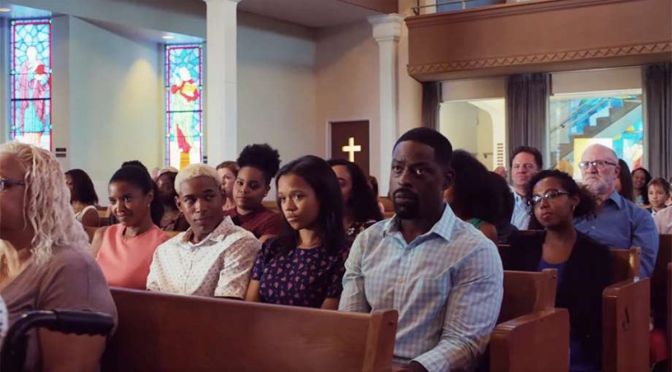
In the majestic family drama, Waves (2019), for example, Ronald (Sterling K. Brown) and Catherine Williams (Renee Elise Goldsbery), are middle-class parents with successful jobs who provide a fabulous Florida home and upbringing to their teenage children. Their son, Tyler (Kelvin Harrison Jnr.), is smart, athletic and a popular student, while their younger daughter, Emily, is quieter but equally bright. Ronald pushes Tyler to excel in every way, in study, work and on the wrestling team. He’s doing it with best intentions, but it creates incredible pressure for the lad. So much so, when Tyler suffers a serious injury and a problematic romantic situation he mentally and emotionally breaks.


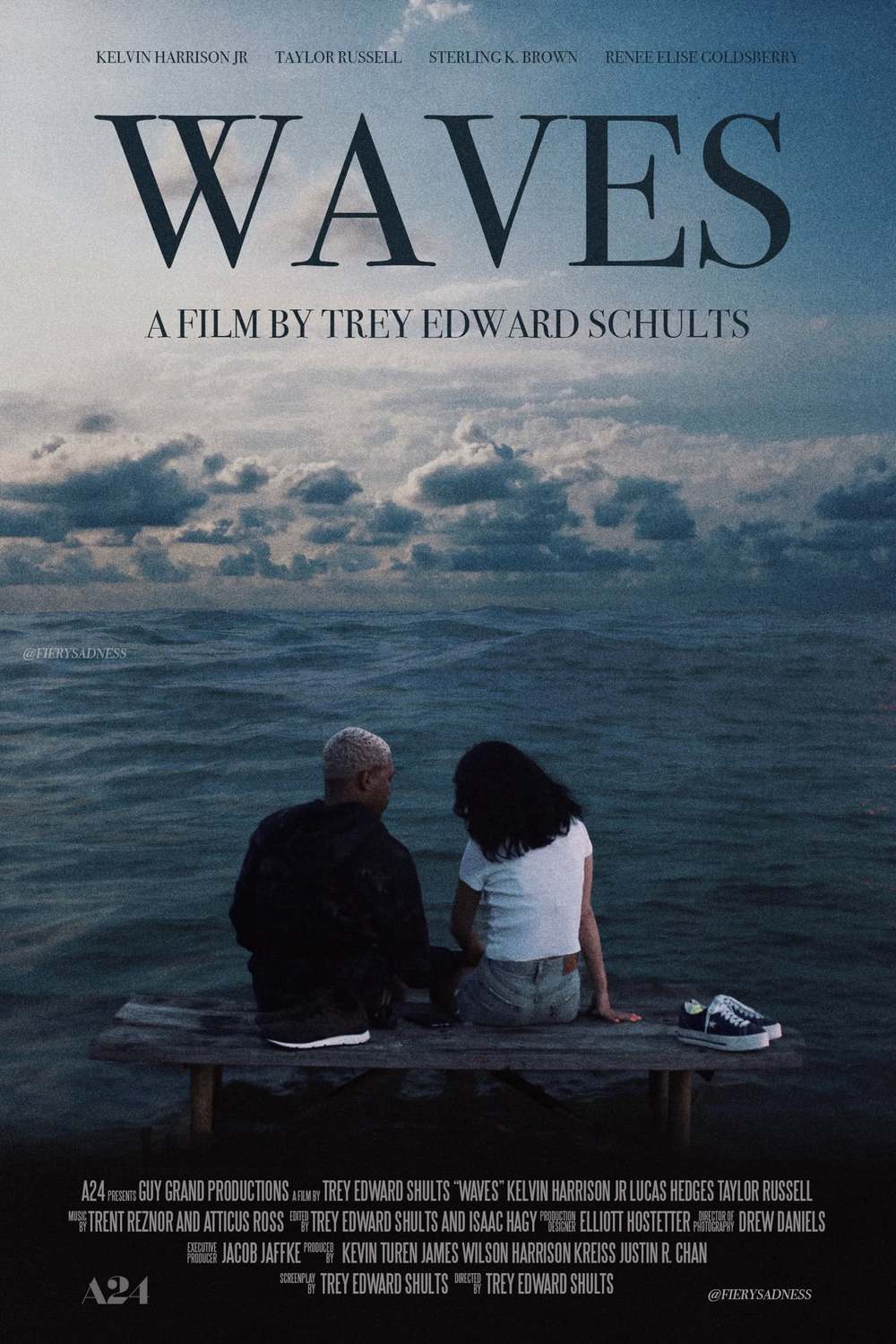
Waves (2019)

This is a tale of two children and their parents attempts to raise, guide and control them. Not control in a negative fashion, but out of love and desire to see they are on the correct path in life. But what the narrative illustrates is that even the most loving and comfortable families can have tragedy bestowed upon them via a mixture of spontaneously poor life choices, youthful emotional imbalance and the fickle finger of fate. Thus, some could argue that with subjects such as unwanted pregnancy, pushy parents and rebellious teenagers, the film is over-familiar and melodramatic in places. However, the acting, direction and cinematography render the film wholly cinematic. Special mention to the extremely talented cinematographer Drew Daniels, who also lit HBO’s stylish mini-series Euphoria (2019). The production’s choice of colour, lighting, lens differentiation and aspect ratio switches are another reason this fabulous film impacted me so much.

No disrespect intended to the films nominated for Best Picture at the last Academy Awards, but how Waves (2019) did not get on that list is beyond me. Maybe it didn’t qualify due to some technicality, but it was definitely one of the best films of last year. It’s a shame I missed it as Trey Edward Schults proves he is a formidable young director. Sterling K. Hayden is impressive as the father who thinks he knows best, but is ultimately as emotionally lost as his son. Taylor Russell as Emily is an absolute shining star in the role and Kelvin Harrison Jnr. is, following his mesmerising performance in Luce (2019), destined for great things. Lastly, I’m not sure how Waves (2019) got away from me on release, but I’m glad I finally caught up with this searing and complex drama.

Mark: 9 out of 11


CINEMA REVIEW – SAINT MAUD (2019)

CINEMA REVIEW – SAINT MAUD (2019)

Directed by: Rose Glass

Produced by: Andrea Cornwell, Oliver Kassman

Written by: Rose Glass

Cast: Morfydd Clark, Jennifer Ehle, Lily Knight, Lily Frazer, Turlough Convery, Rosie Sansom, Marcus Hutton  

Music by: Adam Janota Bzowski

Cinematography: Ben Fordesman

***MAY CONTAIN SPOILERS***


“Beware of false prophets, who come to you in sheep’s clothing but inwardly are ravenous wolves. . .” – Matthew 7:15


Also, beware of false praise from film reviewers! Because over the years I’ve often seen hyperbolic notices about films that after seeing them I wonder if I’ve been watching the same thing. Of course, any kind of review is subjective, and we cannot all like the same thing, but sometimes so-called critics rave about a cinema release for reasons I just don’t get. It could be that they genuinely like the film or are attempting to promote it on a personal or corporate level for some incestuous allegiance to the filmmaker or studio. They could even have been paid for the positive words. The latter is unlikely, but possible. Anyhow, everyone’s entitled to their opinion.

So, when I saw the glowing notices for Rose Glass’ psychological character study, Saint Maud (2019), I was initially sceptical. Thankfully after watching it at the Curzon cinema at the weekend, I concur with many of the raving critics. The film is a thoroughly absorbing and compelling exploration of religious mania, alienation, and mental breakdown. Moreover, Rose Glass, on her directorial feature debut deserves much praise for crafting a stunningly disturbing journey of one individual’s search for the Lord Almighty and rapturous redemption. Only to reveal, in Maud, a troubled outsider and lost soul, completely at odds with the people around her and society as a whole.


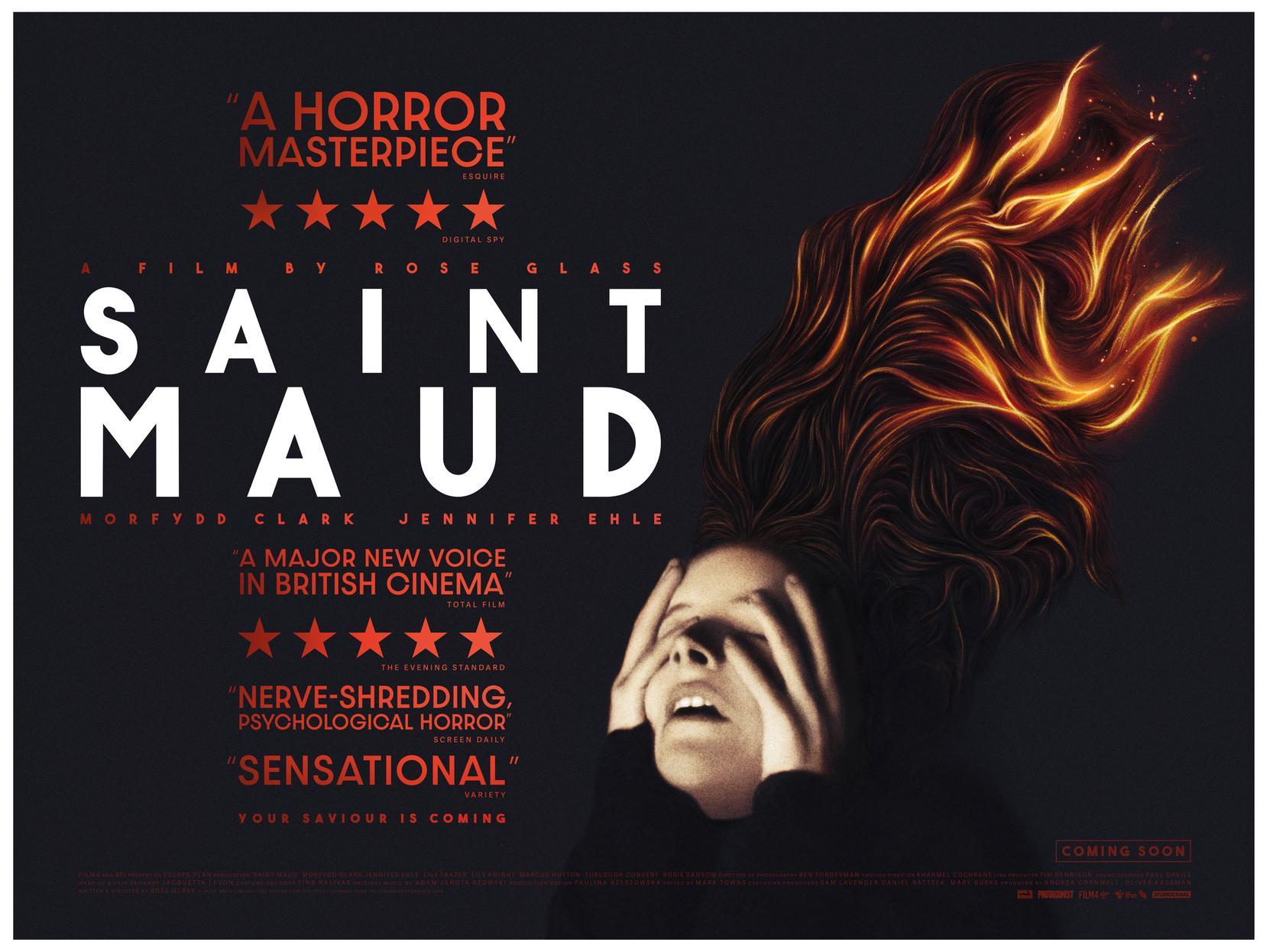
Saint Maud (2019) – directed by Rose Glass

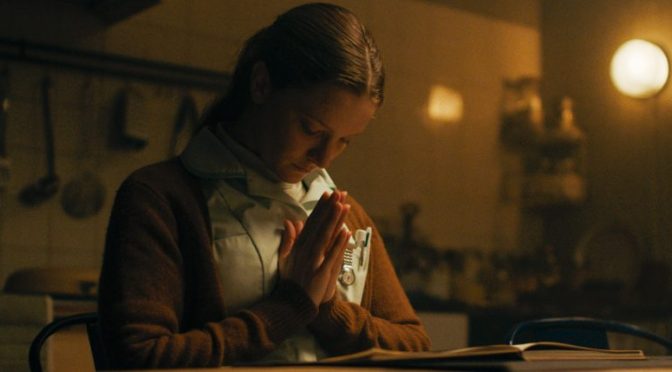
Morfydd Clark is absolutely spellbinding as the lead character. In fact, she inhabits both elements of protagonist and antagonist in this jagged narrative. Sadly, Maud becomes her own worst enemy as the film progresses. Her job as a nurse has connotations of angels and heroines, but eventually travels an alternative path. The film opens with flashes of a tragedy which has occurred at the hospital where Maud works. These events will haunt Maud like a psychological millstone; dragging her toward darkness while she seeks enlightenment. Rapidly quickening forward we then find Maud in private medical employment caring for former famed choreographer portrayed by Jennifer Ehle.

Ehle, as Amanda, gives an impressive rendition of a dying bitter woman; full of spite, bravado and fear as she nears the end of her life. Not that that stops Amanda from smoking, drinking and partying, much to the pious Maud’s displeasure. The two divergent personalities clash constantly as Maud takes it upon herself to be Amanda’s saviour. This ultimately becomes an obsessive crusade by Maud, no doubt in an attempt to find peace and redemption following the tragedy in her prior job. Such is the power of Maud and Amanda’s complex relationship of warring opposites, Saint Maud (2019) suffers minor dramatic inertia when Maud goes off the rails toward the end of the second act. Nonetheless, Glass is cleverly building Maud’s turmoil before bringing Ehle’s character back in the shocking and memorable final scenes.

Saint Maud (2019), overall, is an exceptionally well-crafted low budget work of British cinema. It is more than just a calling card for the extremely talented director, Rose Glass. Her grasp of the material is superb and the cinematography and shot composition support her dark vision brilliantly. The film may disappoint those who prefer conventional supernatural films, as it is more arthouse than classic horror. Moreover, it has much in common with searing character studies by Paul Schrader, such as Taxi Driver (1976), and the more recent, First Reformed (2017). Indeed, Maud’s voiceover permeates like a prayer to an empty sky bleeding into the powerful imagery to compelling effect. The true horror of Saint Maud (2019) is not in jump scares or one-dimensional monsters, but rather the slow descent into hell by a character who strives to be a saviour. Tragically though, Maud is a self-appointed Angel, whose mental fragility disintegrates under the weight of holy desire and biblical fervour.

Mark: 9 out of 11


TO BOLDLY REVIEW #10 – STAR TREK: NEXT GENERATION (1991 – 1992) – SEASON 5

TO BOLDLY REVIEW #10 – STAR TREK: NEXT GENERATION (1991 – 1992) – SEASON 5

Based on Star Trek & Created by: Gene Roddenberry

Season 5 writers (selected): Michael Piller, Michael Wagner, Rick Berman, Jeri Taylor, Lee Sheldon, Melinda Snodgrass, Richard Manning, Ronald D. Moore, David Bischoff, Joe Menosky, Drew Deighan, Brannon Braga, J. Larry Carroll, Hilary J. Bader, Harold Apter, Stuart Charno, Sara Charno, Maurice Hurley, Susan Sackett, Sara Charno, Stuart Charno, Randee Russell, Peter Allan Fields, Rene Echevarria etc.

Season 5 directors (selected): Jonathan Frakes, Winrich Kolbe, Corey Allen, Robert Weimer, Les Landau, Robert Scheerer, Cliff Bole, Paul Lynch, Chip Chalmers, Timothy Bond, David Carson, Gabrielle Beaumont, Patrick Stewart, David Livingston, Marvin V. Rush, Chip Chalmers, Peter Lauritson, Robert Lederman, Paul Lynch, etc.

Main Cast: Patrick Stewart, Jonathan Frakes, LeVar Burton, Whoopi Goldberg, Colm Meaney, Michael Dorn, Marina Sirtis, Brent Spiner, Wil Wheaton, Gates McFadden, Michelle Forbes, Majel Barrett, Rosalind Chao, plus guests: Matt Frewer, Ashley Judd, Kelsey Grammer and Famke Janssen etc.

Music/Composers: Alexander Courage, Jerry Goldsmith, Dennis McCarthy, Ron Jones, Jay Chattaway

Production Company(s): Paramount Television, CBS Television

**** CONTAINS SPOILERS ****


I have just finished boldly watching Season 5 of STAR TREK: THE NEXT GENERATION and it was an extremely excellent raft of science fiction television episodes. I have to say though that TWENTY-SIX episodes was a hell of a lot of TV to produce. I know they had big budgets and an army of staff working on the show, but to produce such high quality viewing, albeit within the established formula, is overall incredibly impressive.

Season 5 was up there in consistency of quality writing, acting and directing with the superlative Seasons 3 and 4. Once again the creatives and storyline team explored issues of the day (i.e. 1990s) and married them to the STAR TREK values and philosophies. Of course, we get the usual alien enemies, such as the Romulans and Ferengi, paying a visit to the Enterprise. Yet, we also found new foes, obstacles and allies encountering the Enterprise. Lastly, the formidable Michelle Forbes as the Bajoran, Ensign Roe, was a welcome addition to the crew.

Sadly, Gene Roddenberry passed away during this particular season’s making. This would cause create sadness in the STAR TREK universe, but the production was, by now in very safe hands, as they paid fine tribute to their creator during Season 5. Here are SIX of the best episodes well worth visiting or revisiting. Live long and prosper.


REDEMPTION – PART II – EPISODE 1

The concluding part to the prior season’s cliffhanger found Lt. Worf (Michael Dorn) continuing to fight for honour alongside his brother, Kurn (Tony Todd), against the Duras hordes. There are many moments of high tension throughout the episode with Dorn impressing again as the divided, but ultimately united and redeemed Klingon. Overall, the episode is full of memorable plot turns and fantastic Romulan and Klingon villains, notably Lursa and B’Etor.

See the source image


UNIFICATION – PARTS I & II – EPISODES 7 & 8

Chosen more for nostalgia as opposed to stellar storytelling, UNIFICATION is a two-parter which sees the return of a famous Trek character, namely Spock (Leonard Nimoy). We also get Mark Lenard’s final appearance as Spock’s father, Sarek, as he and Picard (Patrick Stewart) share a thoroughly moving final scene together. The story finds Spock attempting to repair years of conflict between Vulcans and Romulans, however, Starfleet believe he has defected. Thus, Picard and crew attempt another search for Spock. The narrative pace is steady, nonetheless it is great to see Nimoy don the ears and ultra-logic for a further outing as Spock.


See the source image

CONUNDRUM – EPISODE 14

While STAR TREK: THE NEXT GENERATION had more than its fair share of emotionally powerful episodes, sometimes a fast-paced and twisting plot with a bit of space espionage was more than welcomed. In CONUNDRUM, the Enterprise crew have their memory wiped by an unknown force dedicated to destroying an alien race. The audience finds suspense and dramatic irony in knowing the crew’s minds have been tampered with as they race against time to prevent war. Riker (Jonathan Frakes) and Ensign Ro’s (Michelle Forbes) simmering sexual tension adds romance and humour to a packed storyline.


See the source image

CAUSE AND EFFECT – EPISODE 18

Easily one of my favourite TNG episodes of this and many a season. This is because it features a fantastic temporal-causality loop plot and extremely high stakes where the Enterprise is concerned. Here the crew are trapped in a perpetual time cycle where the end of it results in the destruction of the Enterprise. Essentially GROUNDHOG DAY (1993) in space (even though this episode came before that classic film), it truly fizzes along with a brilliant script and powerful drama. Kelsey Grammer also guests, adding to the overall quality on display.


See the source image

I, BORG – EPISODE 23

Could an evil machine ever be humanized? That is just one of the fascinating questions posed in this thoughtful and provocative episode? While they owe much to the Cybermen, the Borg remain a powerful weapon in the STAR TREK storytelling arsenal. The only problem is they are virtually invincible, so tough to write stories for. Rather cleverly in I, BORG, the episodes isolates a single unit and Picard, Guinan (Whoopi Goldberg) and La Forge (LeVar Burton) especially, confront their hatred and desire for revenge. As the Borg unit, or Hugh (an excellent Jonathan Del Arco) as he becomes known, spends time on the Enterprise he positively changes. This provides much to consider for the crew with their emotions shifting toward Hugh/the Borg.


I Borg Star Trek TNG HD.jpg

THE INNER LIGHT – EPISODE 25

Not only is this one of the best episodes of STAR TREK: THE NEXT GENERATION, but it is also one of the best episodes of STAR TREK ever. The story is precipitated by an unknown probe which scans the Enterprise and directs an energy beam at Picard, who wakes up to find himself on Kataan, a non-Federation planet. Here Picard attempts to escape his existence as Kamin, but over time he grows into this strange new life. What begins as a simple body swap plot, unfurls into something all the more emotionally grander. We know Patrick Stewart is a fine actor, but he imbues Picard/Kamin with a gravitas of enormous propensity. I also loved how Picard, the Captain, is humbled by a more domestic life full with life and love. Lastly, Jay Chattaway’s score is absolutely beautiful.


ARROW VIDEO – GOOD , BAD AND WEIRD FILM REVIEWS!

ARROW VIDEO FILM REVIEWS!

In keeping with my theme of branching out and watching different subscribers, last month I paid around £4.99 extra for the ARROW VIDEO CHANNEL via AMAZON PRIME. This gave me access to a whole host of good, bad and very weird films. There are some newish films on there, but mainly the channel contains vintage horror, arthouse and cult movies. This was a good old trip down memory lane for me as it meant I re-watched loads of films which were considered part of the 1980’s “video nasties” era. I also watched a number of films I had never seen before.

If you didn’t know ARROW FILMS is a leading independent entertainment distribution company. Established in 1991, it is dedicated to supporting upcoming and established filmmakers of dynamic new cinema and developing a slate of fantastic films from all around the globe. Moreover, they are also a leading restorer of classic and cult films and enjoy releasing anniversary celebrations of landmark titles. You’ll find some films of both incredible and dubious quality. Safe to say though, such releases are never boring. Lastly, ARROW are never frightened to distribute films previously banned, unreleased or heavily censored. They are true pioneers in the world of cinema. Check out their website here!

***MAY CONTAIN SPOILERS***


THE HORROR! THE HORROR!

If, like me, you love horror films then an Arrow subscription is essential. But before I get onto those, they also have a decent roster of world cinema films. Directors such as Krzysztof Kieślowski, Alejandro Jodorowsky, Susanne Bier, Thomas Vinterberg, Marjane Satrapi, Vittorio De Sica, David O. Russell, Hirokazu Koreeda, Richard Kelly, Bruce Robinson, Rainer Werner Fassbinder and Nagisha Oshima have many of their works distributed by Arrow online and via DVD or BLU-RAY. Indeed, I recently watched and loved Kieslowski’s BLIND CHANCE (1987) and Oshima’s MERRY CHRISTMAS MR LAWRENCE (1983). on the Arrow channel.

Yet, it was mainly the horror and cult movies I concentrated on during my month’s sojourn into Arrow’s back catalogue. Thus, here are some mini-reviews and marks out of eleven for the numerous films I watched.


THE BEYOND (1981)

Insane, surreal and with some incredibly gory deaths, this is perhaps Lucio Fulci’s most illogical, but brilliant film. The imagery and music collude to both sicken and chill in equal measures. It also has one of the most haunting final scenes in horror cinema. Mark: 8 out of 11


THE BLACK CAT (1981)

A truly dreadful adaptation of Edgar Allan Poe’s story which is contemporised badly by Lucio Fulci and his scriptwriters. I dislike cats generally and this revenge story does nothing to appease such negativity. Mark: 2.5 out of 11


THE BURNING (1981)

Pretty decent gore-fest which, while written before FRIDAY THE 13TH (1980), suffers mildly in comparison to that murdered-teenagers-at-camp classic. Famous for being produced by the Weinstein’s and early acting appearances from Jason Alexander, Fisher Stevens and Holly Hunter. Mark: 7.5 out of 11


CONTAMINATION (1980)

Truly terrible, but actually “so-bad-it’s-entertaining” mash-up of ALIEN (1979) and the 007 Bond franchise. Dodgy effects, acting and dubbing make this Italian B-movie laughably enjoyable. Mark: 5.5 out of 11


The Beyond (1981)

DON’T TORTURE A DUCKLING (1972)

An earlier Lucio Fulci film which actually has a decent plot and some disturbing, but compelling scenes and themes. Centred amidst a rural Italian setting, a murderer is running amok killing the village children. A reporter sets out to uncover the murderer as villagers begin to suspect the kids died at the hands of witchcraft. Mark: 7.5 out of 11


THE EXTERMINATOR (1980)

I used to revel in this nasty B-movie revenge film as a teenager. The school yard would have hives of thirteen-year olds chattering about the Doberman attack scene, pimps set on fire and the gangster killed in a meat grinder. Watching it back now, it truly is a terrible piece of filmmaking and an extremely lurid viewing experience. For all its derivative faults, I still loved it! Mark: 7 out of 11


HELLRAISER (1987)

Clive Barker’s cult horror classic is not so much about narrative coherence, but an assault on the senses. That damned mysterious and devilish “Rubik’s cube” is opened, giving way to a whole host of demonic monsters breaking Earth’s dimensions and threatening an Anglo-American family. Powerful visuals, incredibly effective prosthetics and brilliant nemeses in Frank and Pinhead, make HELLRAISER (1987) an extremely memorable low-budget horror cult classic. Mark: 8 out of 11


HELLRAISER II: HELLBOUND (1988)

A direct sequel to the original, but without Clive Barker directing this time unfortunately. HELLBOUND (1988) has some wonderful gore and monstrous moments as Kenneth Cranham’s mad doctor opens up the hellish gates to the beyond. But the surreal storytelling is so deranged and ridiculous I was just laughing by the end. Mark: 5.5 out of 11


Hellraiser (1987)

MANIAC COP (1988)

I love a lot of Larry Cohen’s work, but this is arguably only a minor B-movie script from him. The clue is in the title really as a vengeful cop goes on a kill crazy rampage in the dark recesses of the city. Notable for Bruce Campbell’s turn as a bemused cop suspected of the crimes, plus the impactful silent giant of a killer. Mark: 6 out of 11


THE NEW YORK RIPPER (1982)

While I do not agree with censorship as a rule, I can see why this Lucio Fulci United States shocker was banned in Britain for many years. It is disgustingly violent and misogynistic, verging on pornography in many scenes. The biggest crime is it’s so badly made from a capable filmmaker. Avoid at all costs! Mark: 1 out of 11


RAWHEAD REX (1986)

A gigantic phallic cock-monster called ‘Rawhead’ is woken near an Irish village and kills anyone who gets in his way. Another Clive Barker short story gets a film adaptation and this is awful in every way! Barker hated it and that led to him taking more control of HELLRAISER (1987). Lacking narrative context and even basic filmmaking skills, we are in the “so bad it’s hilarious” camp here. Mark: 3 out of 11


RED EYE (2005)

A rare diversion away from the horror genre finds Wes Craven directing Cillian Murphy, Rachel McAdams and Brian Cox in this fast-paced airplane-set thriller. I had never seen this film before as McAdams and Murphy provide committed performances while possessing excellent on-screen chemistry. Extremely suspenseful for the most part until it gives way to huge explosions and shootouts at the end. Great fun overall! Mark: 7.5 out of 11


Rawhead Rex (1986)

TENEBRAE (1982)

I have to admit that I am not a big fan of Dario Argento’s films generally. I find them imaginative, but mostly loud and nonsensical. Moreover, they have little in the way of suspense or actual scares. TENEBRAE (1982) is another empty Argento exercise in misogyny and style-over-substance as an American writer finds himself pitted against a vicious killer copying murders from his novels. There are some decent horror moments, but the twist is too self-knowing and ridiculous to not find laughable. Mark: 6 out of 11


THE WITCH THAT CAME FROM THE SEA (1976)

Now, this is a weird film. Part-revenge-part-feminist-part-porn-part-horror story that was also banned in Britain as a video-nasty. Millie Perkins gives a haunting performance as a psychologically damaged individual, who is so disturbed by a childhood trauma she kills when in sexual congress. It’s almost a really good film because the characterisation and motivation is well conceived. However, it’s also rather eccentrically acted and directed in places, so approach with great caution. Mark: 6 out of 11


ZOMBIE FLESH EATERS (1979)

This classic zombie exploitation from Lucio Fulci is one I’ve seen many times. While not quite as good as the Romero classics in terms of story and theme, it has so many unforgettably bloody scenes. The moment when a zombie attacks a shark is a horror set-piece you will never forget. As Fulci rips off Romero he spins the undead genre into a frenzy with relentless dirt, maggots, sinew, bone and guts on screen, all the while accompanied by a creepy score by Giorgio Tucci. Mark: 8 out of 11


ZOMBIE FOR SALE (2019)

The most contemporary film I watched from Arrow Video is a riotously funny and moving rom-zom-com from Korea. A rural family find a way of making money out of a zombie who has escaped a science laboratory, however, their get-rich-quick-scheme backfires with bloody hilarious results. While it is overlong, it benefits from a clever script and excellent acting, although it over-does the slow motion scenes and jarring narrative tonal switches. Mark: 8 out of 11


This image has an empty alt attribute; its file name is zombieflesheaters.jpg

“CINEMA” REVIEW: THE NIGHTINGALE (2019)

“CINEMA” REVIEW: THE NIGHTINGALE (2019)

Directed by: Jennifer Kent

Produced by: Kristina Ceyton, Steve Hutensky, Jennifer Kent, Bruna Papandrea

Written by: Jennifer Kent

Cast: Aisling Franciosi, Sam Claflin, Baykali Ganambarr, Damon Herriman, Harry Greenwood, Ewen Leslie, Charlie Shotwell, Michael Sheasby, etc.

Music by: Jed Kurzel

Cinematography: Radek Ladczuk

***MAY CONTAIN SPOILERS***


THE NIGHTINGALE (2019) is a brutal film about rape and murder. It’s about the rape of an individual. The rape of a nation. The murders of youth, race, nature, humanity and life itself. It is an extremely powerful and impactful viewing experience, but not for those of a faint heart or sensitive disposition. When released it caused much controversy with some audience members walking out during festival screenings. This is no doubt due to several scenes displaying sickening moments of violence against men, women and children. However, the director Jennifer Kent, has not written and helmed a mere exploitation revenge film here. Instead, she has fashioned a beautiful and ugly tragedy, which prevails damning indictment against masculine savagery, colonialism and British rule.

Set in 1825 in the penal colony of Van Diemen’s Land (presently Tasmania), THE NIGHTINGALE (2019), follows a young female convict seeking revenge for an unspeakable act of violence committed against her family. Clare Carroll, nicknamed “Nightingale” due to her lovely singing voice, is a young mother and wife looking to be given her freedom. It is held by Sam Claflin’s abusive British officer, Hawkins. Rather than free her he decides to thrust himself upon her sexually. Yet, when she rebuffs his drunken and lurid behaviour, he goes mob-handed to take her. Then when her husband intervenes, Hawkins and his soldiers act without honour or courage, leaving a family wrecked in their wake.


Hawkins and his men venture through the bush to Launceston the next day, to gain a promotion from the top brass he believes he deserves. Claire rallies and pursues them with bloody revenge in mind. She is assisted in her search by Aboriginal guide, “Billy” Mangana (Baykali Ganambarr). Billy is initially reluctant to chase British soldiers. Not surprising as the British have ravaged his people, land and culture, leaving the indigenous people outcasts in their own country. While Claire and Billy initially conflict they soon realise they have a common foe. Thus, while revenge supplies the bones for the narrative, the screenplay fleshes out their chase with intriguing cultural clashes and reconciliation. Indeed, the unlikely pair will eventually come to respect each other’s differences and find common ground over the course of the story.

Having received much critical acclaim with the low-budget horror film THE BABADOOK (2014), Jennifer Kent has moved from inner demonic possession to a more epic and external approach to horror. Because amidst the bucolic wonder of the Australian wilderness, the British brought death and chaos to the area. While one understands the need to have a place to house its prisoners (the barbarous treatment of the working classes is a whole different story), the rapacious desolation of the indigenous culture is a vital message within the film. Claire Carroll and Billy Mangana are symbols of a lost and damaged generation. They are emblems of people who deserve justice and reparation. Moreover, the message remains valid today, especially with the rise of the alternative-right and the continued sexual abuse faced by women everyday. Lastly, with a moving and tough leading portrayal by Aisling Franciosi, Baykali Ganambarr providing a spiritual heart, and Sam Claflin giving a fearlessly repugnant representation of British aggression, THE NIGHTINGALE (2019), tells a horrific, disturbing, but righteously relevant tale.

Mark: 9 out of 11