Tag Archives: Samantha Morton

Cinema Review: The Odyssey (2026) – a loud, proud and phenomenal cinematic voyage!

Cinema Review: The Odyssey (2026)

Directed by Christopher Nolan

Screenplay by Christopher NolanBased on Homer’s Odyssey

Produced by Emma Thomas & Christopher Nolan


Main cast: Matt Damon, Tom Holland, Anne Hathaway, Robert Pattinson, Lupita Nyong’o, Samantha Morton, Zendaya, Charlize Theron, Himesh Patel, Jon Bernthal, John Leguizamo, Bill Irwin and many more!

Cinematography by Hoyte van Hoytema

Edited by Jennifer Lame

Music by Ludwig Göransson

*** REVIEW CONTAINS SPOILERS ***
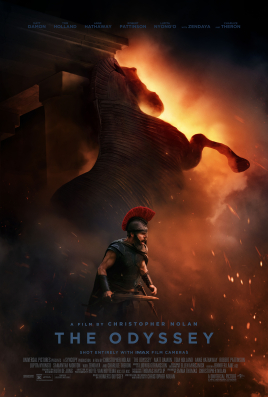


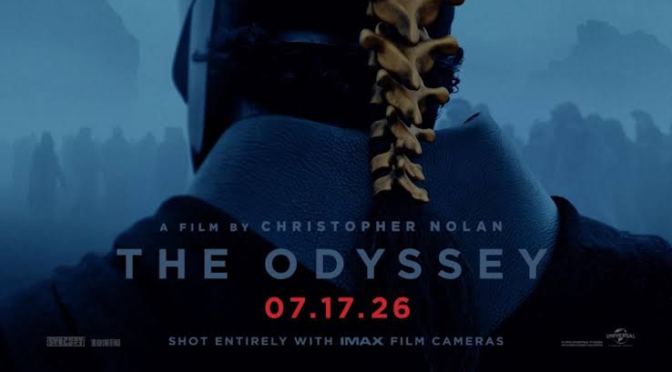
I’ve been weirdly reluctant to review Christopher Nolan’s rendition of Homer’s epic poem, The Odyssey (2026). Being honest, what I think of the film is pretty irrelevant. I mean, it’s an incredible feat of big budget filmmaking from, Sir Christopher Nolan, who remains one of the most brilliant filmmakers of the modern era. The film is likely to make more money at the box office than the debt of a small country as it sails the cinema seas. But I have to say amidst the incredible entertainment, stellar cast, jaw dropping sound and visuals and lengthy running time it does contain some dubious creative decisions, mainly where accents and casting are concerned.

I’m a big Nolan fan, but not all of his films land fully with me. My favourites remain: Memento (2000), The Prestige (2006), The Dark Knight (2008), Inception (2010) and Dunkirk (2017). Conversely, The Odyssey (2026) matches Oppenheimer (2023) for the array of Nolan’s ensemble of stars, confident and masterly direction, plus the sheer seismic scale of what his production team have committed to screen. Similarly though, while Cillian Murphy and Matt Damon give compelling performances as leaders in their field having to make tough choices to win wars, am I meant to care about these characters, who are effectively, “destroyers of worlds.”

Well, in J. Robert Oppenheimer’s case , dependent on your point of view, a huge debt of gratitude is owed to him and his team for producing a weapon to end all wars. If you ignore all the subsequent actual wars, proxy wars, invasions, conflicts and the blasted ‘Cold War’ which ensued after World War II ended, nuclear weapons have meant no other wars have occurred. So, The Odyssey (2026) is another Nolan film about war. But it’s also about duty, family, love, honour, comradeship, guilt and making the perilous journey home. Let’s be honest though, Odysseus is either a hero of Troy or a war criminal. Further, he’s a sneaky so and so – hiding in a gigantic hollow horse, and making the Trojans pull it into the city too! At least the Trojans got some cardiovascular exercise before they were all slaughtered.

Told in a non-linear fashion from shifting character perspectives, The Odyssey (2026) shows our hero and his crew facing a dangerous voyage back to Ithaca, questing the Gods, fighting nasty weather and meeting creatures like the Cyclops Polyphemus, gigantic metal knights, the Sirens, Charybdis and Scilla along the way. Furthermore, as well as focusing on Odysseus’ hazy, drugged memories, poisoned with lotus flowers by Calypso (a shrinking, Charlize Theron), we get woven historical flashes from Telemachus (Tom Holland) as he searches for his father, Penelope (Anne Hathaway) as she recounts their romantic commitments before the war, and Menelaus (Jon Bernthal), as he provides revelation on the post-war fate of his brother, King Agamemnon. I watched the stories-within-stories unfold totally enthralled and feeling like this was the Citizen Kane (1941) of epic historical cinema.


While the action and spectacle are undeniably compelling, it’s Nolan’s gift for weaving ancient myth into gripping cinema that impresses just as much. The casting, too, is full of intriguing choices. As expected, Nolan reunites with several familiar collaborators, and Matt Damon is superb as an ageing Odysseus – a battle-scarred general worn down by years of war but still determined to get his men home. Unfortunately, a string of catastrophically bad decisions ensures the gods have other ideas. In the world of The Odyssey (2026), poor judgement is practically a death sentence, and every time the crew think they’ve caught a break, another vengeful deity or monster appears to remind them who’s really in charge. None is more delightfully capricious than the witch Circe (Samantha Morton), who transforms the crew into pigs simply because… well, she can. Morton’s wonderfully imperious performance, thankfully delivered in her own British accent amidst an ocean of American ones, is a genuine scene-stealer.

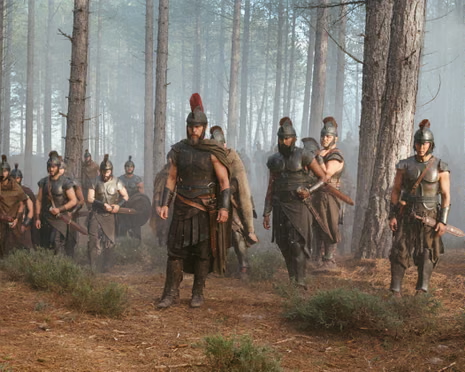
Which does raise an interesting question. Why does Tom Holland, playing Telemachus, sound American? Is he following his on-screen father? Fair enough—but then what about the suitors, led by Antinous (Robert Pattinson), who’ve spent years occupying Ithaca while pestering Penelope and circling the throne like particularly persistent estate agents? Nolan famously pursued authenticity elsewhere, filming extensively in Greece, utilizing full-sized wooden ships, combining practical effects (Jet-Skis for the killer whirlpool) with discreet CGI, even building an enormous Cyclops model for Polyphemus. Yet somehow Jon Bernthal still sounds as though he’s just wandered in from a Brooklyn deli. (I know he’s not actually from Brooklyn… but, hey, what are ya gonna do?) The quest epics I grew up with often great British Shakespearean actors in them. While Laurence Olivier and Maggie Smith are not Greek either, they paradoxically somehow seem more authentic.

Still, The Odyssey (2026) is a glorious reminder of what cinemas were built for. It is loud, proud, unapologetically epic, and although it runs for three hours, the time flies even as it threatens to blow your eardrums out. This is filmmaking on the grandest possible scale—war, monsters, storms, impossible voyages and heroes—designed to overwhelm an audience in ways no living room ever could. Nolan understands that some stories demand the biggest IMAX screen imaginable. In an age when entertainment is increasingly consumed in fragments, The Odyssey (2026) insists on total immersion. It isn’t subtle, and it isn’t trying to be. It’s spectacular cinema in the truest sense of the word.

Perhaps that’s what cinema has always been for: gathering in the dark to watch wars, death and monsters on a screen, if only to distract ourselves from the wars, death and monsters waiting for us in reality. As the philosopher Guy Debord observed, “The spectacle is not a collection of images, but a social relationship between people that is mediated by images.” And as Heraclitus famously put it, “War is the father of all things.” The Odyssey (2026) reminds us that, three thousand years later, humans are still captivated and bombarded by both.
Mark: 9.5 out of 11


ALL 4 DRAMA RESIDENCY – INCLUDING REVIEWS OF: THE ACCIDENT (2019), CHIMERICA (2019), KIRI (2018), NATIONAL TREASURE (2016) and more…

ALL 4 – DRAMA REVIEWS

So, I don’t get paid for doing this. I do it because I enjoy watching films and television and writing about them. It helps me to review stuff critically from both a creative perspective and absorb knowledge for when I make my own low budget films. Also, it’s something to do isn’t it; a hobby and means to immerse oneself in something that interests me. Lastly, one also learns much from the hours of viewing, especially if the narratives are grounded in reality, representations of history and social issues.

CHANNEL 4 has always been at the forefront of producing intelligent drama television built to inform, entertain and provoke thought. Their streaming platform called ALL 4 is a great place to catch up with Channel 4’s product and I have already reviewed many of their shows here on this site. Having said that, I thought I should put an even bigger effort to catch up with some of their dramas. After all, ALL 4 is — aside from watching a few adverts — is absolutely FREE! I’m glad I did because they have quality production values and are very powerful, skilfully tackling social themes and historical events. So, here are some quick reviews of Channel 4 television dramas both recent and not so recent with the usual marks out of eleven.


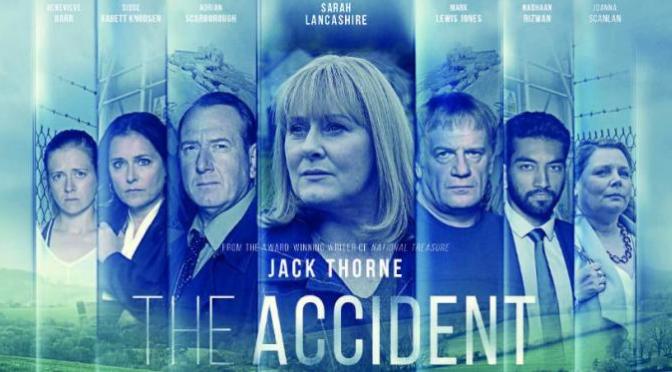
THE ACCIDENT (2019) – Mark: 9 out of 11

What I found from my All 4 residency was that many of the shows were written by Jack Thorne. He is a clever writer with a keen eye and ear for drama relating to everyday people’s lives. The Accident (2019) is set in Wales and concerns a small community whose lives are ripped apart by an explosion at a construction site. Many children are killed, but given they were trespassing the blame initially falls on both them and building company. The ensemble cast lead by Sarah Lancashire and Joanna Scanlan are uniformly excellent, as the impactful drama echoes actual events such as Aberfan and Grenfell Tower disasters.


CHIMERICA (2019) – Mark: 8 out of 11

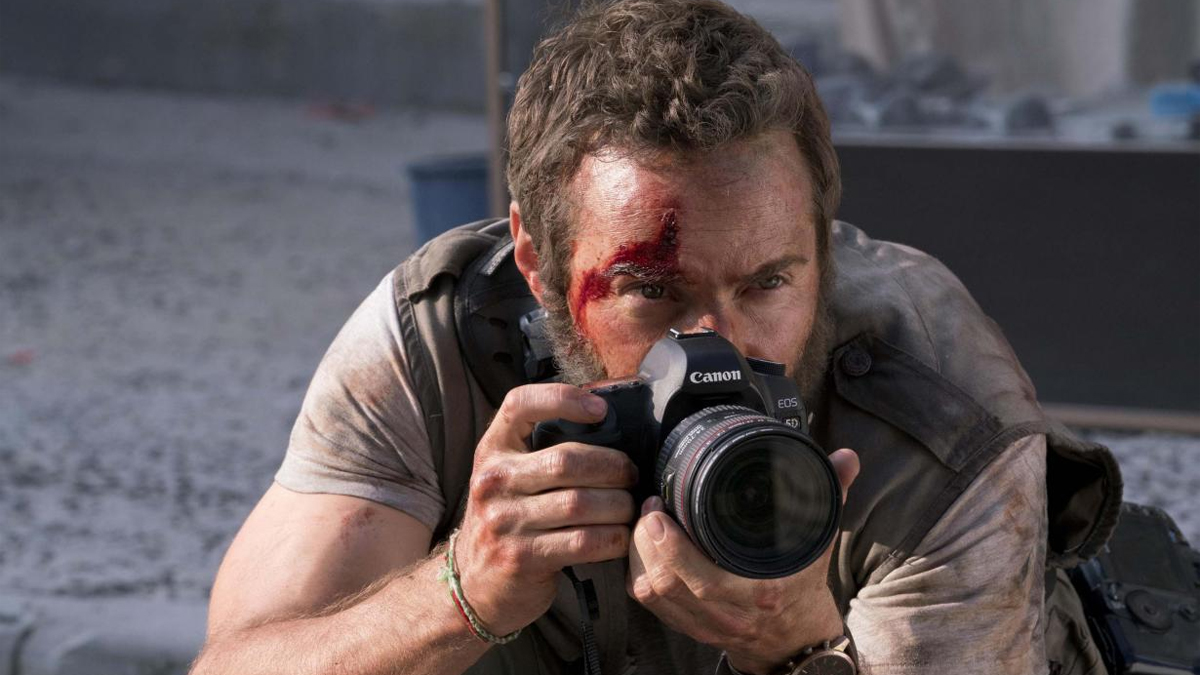
Based on Lucy Kirkwood’s play of the same name and set during the 2016 American Presidency election, this political drama sees Alessandro Nivola’s once-lauded photographer attempt to locate the “Tank Man” from the 1989 Tiananmen Square protests. Part-redemption and part-historical expose, the writing is excellent as Cherry Jones and F. Murray Abraham easily steal the acting plaudits. I was more interested in the plight of Zhang Lin’s (Terry Chen) China-set parallel storyline than the photographer’s, but, overall, I was drawn into detective plot and human conflict throughout.


THE DEVIL’S WHORE (2008) – Mark: 9 out of 11

The wonderfully titled The Devil’s Whore (2008), features a fine cast of actors including: John Simm, Peter Capaldi, Andrea Riseborough, Michael Fassbender and Dominic West. The drama focusses on the historical era of Oliver Cromwell and Charles I, filtered through the eyes of Riseborough’s strong, yet scandalised heroine, Angelica Fanshawe. Peter Flannery’s excellent script is full of violence, political and religious intrigue and works well as both a work of entertainment and chronicle of key characters from the bloody English Civil War!


I AM. . . (2019) – Mark: 9.5 out of 11

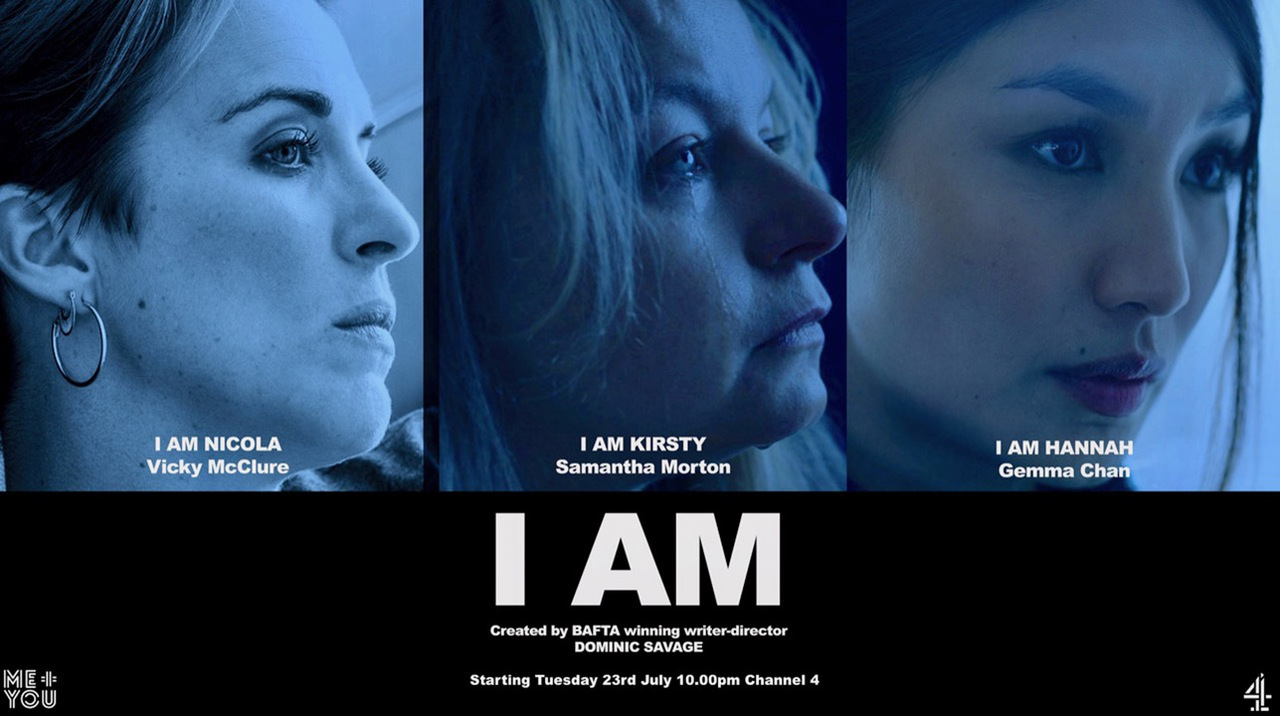
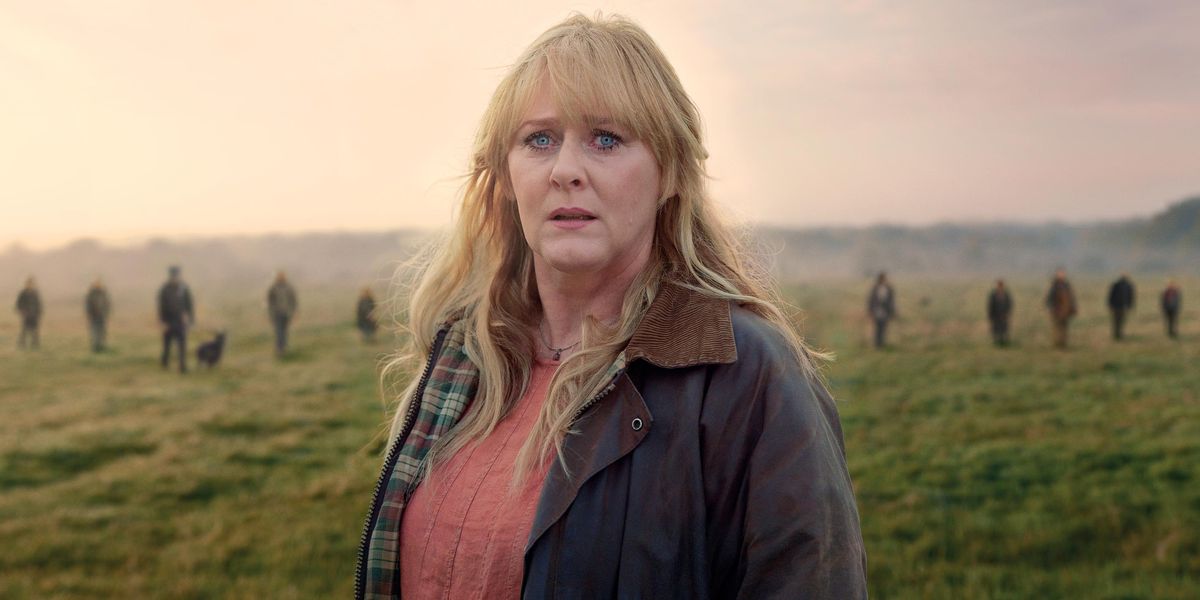
Dominic Savage is a skilful and experienced filmmaker, who recently made the semi-improvised feature, The Escape (2017). It focussed on unhappy mother portrayed by Gemma Arterton, and while an interesting character study, it ultimately felt a little flat dramatically. Using the same improvisatory and documentary style with the anthology triptych, I Am. . . (2019), Savage casts Vicky McClure, Samantha Morton and Gemma Chan in three separate stories of women in various states of domestic plight. All of the narratives are brilliantly acted and directed, focussing on coercive relationships, gaslighting debt escalation and painful maternal inertia respectively, all delivered with tremendous emotional power.


FALLING APART (2002) – Mark: 8.5 out of 11

Mark Strong and Hermione Norris excel is this shocking drama about domestic violence. Seemingly the perfect couple, Pete and Clare fall in love and marry, only for Pete’s aggressive tendencies to come to the fore soon after the honeymoon period. Clare forgives Pete and blames work and herself and then finally thinks he may have a problem. An honest and bleak look at love gone wrong, there are many scenes that make one flinch and feel bad for those women trapped in similar situations.


KIRI (2018) – Mark: 9.5 out of 11

Sarah Lancashire is exceptional as the social worker hung out to dry when a fostered child, Kiri, is killed after a family visit to her paternal grandparents. Jack Thorne writes a subtle and compelling script which explores issues relating to: adoption, social care, race, class, and child murder. As well as Lancashire, Lucian Msamati, Paapa Essiedu, Wunmu Mosaku, Lia Williams and Sue Johnston give exceptional performances. Finally, what begins as a murder mystery drama unfolds into something far more complex, with an ending that leaves you stunned with its brave, narrative risk-taking.


NATIONAL TREASURE (2016) – Mark: 9 out of 11

Not to be confused with the Nicolas Cage film series, this searing drama, written by Jack Thorne again, springboards off the recent #MeToo and Operation Yewtree news events. Robbie Coltrane takes the lead as Paul Finchley, a once successful comedian of the 1980s and 1990s, now hosting a television quiz show, while his wife is portrayed by the exceptional Julie Walters. Finchley’s life and career is turned upside down when he is accused of rape and sexual assault, something he vehemently denies. The drama unfolds in an engrossing fashion as we flash back and forth between Finchley’s present day and past history. Again, a potentially sensationalist subject matter is dealt with mesmeric power, as it all culminates in a tense and emotional court case.


ON THE EDGE (2018) – Mark: 8 out of 11

Excellent set of short anthology dramas which focus on various issues affecting mostly younger people in Britain today. Issues explored include: knife crime, body shaming, race, neurodiversity, date rape, depression and social work. All are extremely well acted and directed, giving excellent examples of diverse drama Channel 4 excels at.

ALL 4 FILM REVIEW – LONGFORD (2006)

ALL 4 FILM REVIEW – LONGFORD (2006)

Directed by: Tom Hooper

Producer: Helen Flint

Written by: Peter Morgan

Cast: Jim Broadbent, Samantha Morton, Andy Serkis, Lindsay Duncan, Robert Pugh etc.

Original Network: Channel 4

**CONTAINS SPOILERS**

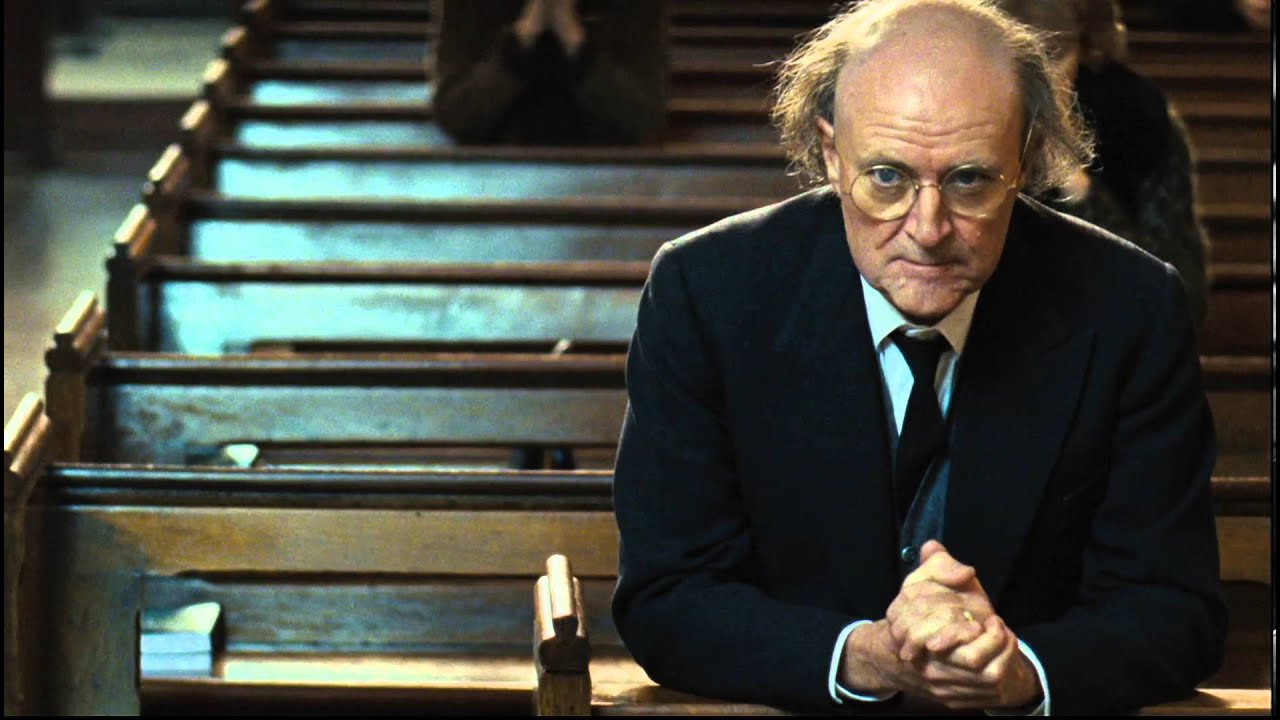
Continuing my look back on the films and shows on ALL 4, this drama is really Premier League television filmmaking of the highest quality. Written by esteemed screenwriter, Peter Morgan and directed by celebrated director of Oscar winner, The King’s Speech (2010), Tom Hooper, Longford (2006), features fine acting from Jim Broadbent, Samantha Morton, Andy Serkis and Lindsay Duncan.

A much respected but also much maligned character around the House of Lords and Parliament in Westminster, Lord Longford, or Frank as he preferred to be known, came from a very privileged background. However, in various post-war political positions he campaigned vehemently for the underclasses, especially where the prison system was concerned. A complex but kind man he had no issue switching allegiances of politics or faith during his lifetime if he felt it was the right thing to do.

The story begins in the late 1960s with Longford celebrating his programme for rehabilitating ex-convicts. When he receives a letter from infamous child killer Myra Hindley, he takes up her case. Now, I remember Lord Longford when I was growing up and the furore over his constant attempts to grant Hindley parole was often in the news. I’m still struck by what a massive naive and stubborn heart he had. The public outrage was constant, but Longford never gave up this campaign.

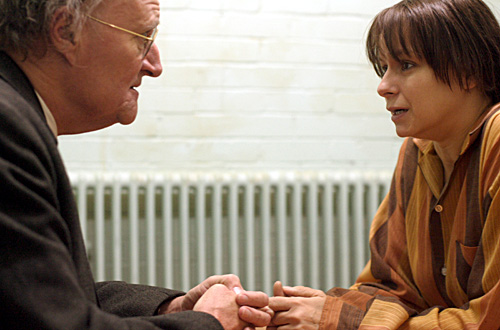
Myra Hindley and Ian Brady killed five children between 1963 and 1965 and were described as “two sadistic killers of the utmost depravity.” This character study shows Longford battling his doubts over Hindley and Jim Broadbent’s performance is so compelling. You feel empathy and horror at his decision to represent Hindley, portrayed with nervy guile by Samantha Morton. The scenes between the two are a masterclass in acting with Morton conveying pitiful vulnerability to draw the Longford in. I personally felt Hindley was manipulating Longford but due, in part to her religious conversion, he chooses to ignore such thoughts.

Andy Serkis’ performance as Ian Brady, on the other hand, is one of pure, unadulterated evil. He warns Longford he is being played for a fool, but this only confirms Longford’s belief that Brady controlled Hindley during the murders. Brady’s character is only in a couple of scenes but his cold Scottish brogue chills the heart like an Arctic wind. Obviously, Serkis has gone onto bigger things, but I don’t think he has ever given a more memorable performance.

Overall, this is an exceptional film about the sad aftermath of one of the most heinous crimes ever committed in Britain. Longford, while admirable in his philosophy, proves the adage, there’s no fool like an old fool. Peter Morgan’s script is just brilliant at catching the emotions of the characters, as Hooper’s direction draws formidable performances from a fine cast. The nation was right to be outraged at Longford’s actions, but this film illustrates his motivations in a highly compelling way.

Mark: 9 out of 11