Category Archives: Reviews

Cinema Review: The Smashing Machine (2025) – an authentic portrait of a MMA fighter that hits big!

Cinema Review: The Smashing Machine (2025)

Directed by Benny Safdie

Written by Benny Safdie

Based on documentary The Smashing Machine: The Life and Times of Extreme Fighter – Mark Kerr by John Hyams

Produced by Benny Safdie, Dwayne Johnson, Eli Bush, Hiram Garcia, Dany Garcia & David Koplan

Main cast: Dwayne Johnson, Emily Blunt, Ryan Bader, Bas Rutten, Oleksandr Usyk etc.

*** MAY CONTAIN SPOILERS ***


Benny Safdie’s The Smashing Machine (2025) is a bruising, compassionate, and unvarnished portrait of a man torn between physical dominance and emotional fragility. Centered on a three-year stretch (early 2000s) in the dramatic life of MMA pioneer Mark Kerr, the film captures both the bone-rattling intensity of the ring and the private turmoil of a fighter whose greatest battles unfold far from the crowd’s roar.

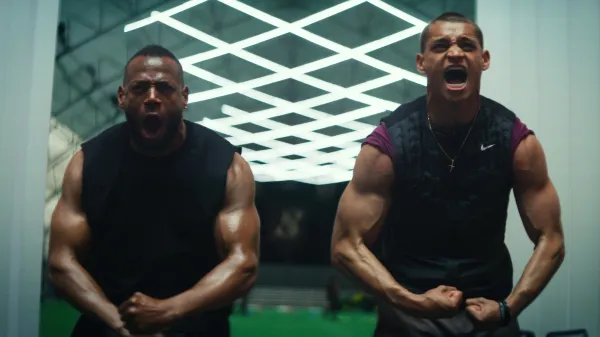
Dwayne Johnson delivers a revelatory performance as Kerr, casting aside his blockbuster charisma to reveal deep vulnerability and conflict. His portrayal is raw, unguarded, and humane—showing a man both addicted to the high of combat and trapped by the pain that follows. The film traces Kerr’s tumultuous relationship with Dawn Staples (played with nuance and sensitivity by Emily Blunt.) Together they find emotional truth in every scene, exploring the strain that MMA fighting, addiction, mental health, fear-of-losing, obsession and self-doubt place on intimacy.


The fight sequences are stunningly authentic, shot with kinetic immediacy and documentary realism. Safdie immerses the audience in the grit and chaos of early MMA, where glory was fleeting and paydays were meager compared to the sport’s modern era. Supporting performances from real fighters Ryan Bader and Oleksandr Usyk lend further credibility, grounding the film in the texture of lived experience.

Safdie’s direction is as intense and uncompromising as his subject. He resists the traditional rise-and-fall sports narrative, opting instead for a slice-of-life, near-documentary approach that prizes authenticity over heart-pounding drama. If the conflict surrounding Kerr’s addiction, rehab, and Dawn’s own mental health struggles feels under-explored, that restraint is also what makes the film feel so painfully real.

Inspired by the documentary, The Life and Times of Extreme Fighter – Mark Kerr by John Hyams, The Smashing Machine (2025) isn’t a conventional sports movie—it’s a portrait of survival, identity, addiction and the brutal intersection of ambition and vulnerability. Unflinching and deeply human, it cements Johnson’s performance as the best of his career, and confirms Safdie’s gift for finding poetry in the MMA fight scene. Ultimately, the film works best as a tribute to the trailblazing strength and passion of the fighter, Mark Kerr. The fight game is a crazy, tough business and it’s heartening to see, especially in the final scenes, that Kerr survived such battles and lived to breathe another day.

Mark: 8 out of 11


Cinema Review: One Battle After Another (2025) – an exhilarating revolutionary romp that lacks the depth of those films it attempts to emulate!

Cinema Review: One Battle After Another (2025)

Directed by Paul Thomas Anderson

Written by Paul Thomas Anderson

Inspired by Vineland by Thomas Pynchon

Produced by Adam Somner, Sara Murphy, Paul Thomas Anderson

Main Cast: Leonardo DiCaprio, Sean Penn, Benicio del Toro, Regina Hall, Teyana Taylor, Chase Infiniti, Wood Harris, Tony Goldwyn, Kevin Tighe, Shayna McHayle, etc.

Cinematography by Michael Bauman

Music by Jonny Greenwood

*** CONTAINS SPOILERS ***


It’s a brave filmmaker that quotes one of the greatest revolutionary films of all time during it’s runtime, namely Battle of Algiers (1966). But Paul Thomas Anderson’s formidable cinematic career more than earns him the right to quote a film as towering as The Battle of Algiers (1966) in his latest release One Battle After Another (2025).

Across works like Boogie Nights (1997) and Magnolia (1999), he has demonstrated a mastery of ensemble storytelling and emotional crescendo; with Punch-Drunk Love (2002) he revealed a gift for intimate, offbeat romance; and in There Will Be Blood (2007) and Phantom Thread (2017) he proved himself one of the most rigorous visual stylists and psychological dramatists of his generation. Such a body of work grants him the authority to converse with cinema’s political masterpieces, even if his more recent Licorice Pizza (2021) felt comparatively diffuse and lacking in urgency. His filmography, at its strongest, stands as evidence of a filmmaker deeply attuned to the legacies and possibilities of the medium.

Having said that, Gillo Pontecorvo’s The Battle of Algiers (1966) wields revolutionary power through its raw immediacy, embedding viewers in the lived experience of anti-colonial struggle with a documentary-like realism that blurs the line between record and re-creation. By contrast, Anderson’s One Battle After Another (2025) approaches revolution less as lived history than as a cinematic genre to be emulated, drawing on the tropes and textures of upheaval without grounding itself in the direct urgency of political struggle. Where Pontecorvo conjures revolution as something happening before our eyes, Anderson refracts it through the prism of style, making revolution as much a matter of aesthetic construction as lived reality. It is during its lengthy running time extremely entertaining though.


The opening hour is fast-paced and crams in a lot of action and personality. It establishes a fine ensemble cast, strong characters, striking palette and compelling themes which bring to life Anderson’s sharply written and fantastically filmed screenplay. The narrative focuses on “Ghetto” Pat Calhoun (Leonardo DiCaprio) and Perfidia Beverly Hills (Teyana Taylor), lovers and leaders of the far-left French 75, who storm detention centres, bomb banks, and sabotage power grids, while their soon-to-become nemesis—Officer Steven Lockjaw (Sean Penn)—becomes erotically obsessed with Perfidia, sparing her life when he catches her planting a bomb in exchange for a sexually masochistic tryst. Thus, begins a warped love/hate triangle and rivalry which provides the backbone for the action.

The second hour pivots sharply after establishing Perfidia as a commanding revolutionary presence. The focus pulls to her daughter, Willa (Chase Infiniti), some sixteen years later, now living off the grid and avoiding all but the most basic technology out of fear of surveillance. ‘Pothead’ Pat, has withered into a paranoid and barely functioning stoner-alcoholic, leaving Willa to emerge as the steadier, more mentally resilient figure in their fractured household. The film undeniably suffers from the absence of Perfidia’s charisma and drive, yet it regains momentum when the now Colonel Lockjaw revives his obsessive pursuit, setting the stage for a tense reconfiguration of the story’s revolutionary stakes.

The acting in One Battle After Another (2025) crackles with intensity, led by standout turns from Taylor, Penn, and crafty scene-stealer, Benicio Del Toro. Further, Anderson’s casting team find some amazing supporting military personnel who deliver with uncanny authenticity. Sean Penn’s performance as a swaggering officer radiates brute masculinity—his very walk and gait dripping with testosterone and worthy of awards consideration on their own. Leonardo DiCaprio, meanwhile, folds another eccentric, messy, and deeply contradictory figure into his already remarkable CV, a creation that resonates with the layered complexity of his recent work in Scorsese’s Killers of the Flower Moon (2023). He is actually far more hilarious here, as demonstrated in his desperate attempts to overcome the revolutionary helpline he calls for instructions.

Overall, One Battle After Another (2025) works best as a searing, darkly funny revolutionary black comedy, blending sexual, military, conspiracy, and social politics into a heady mix of action, crime, road movie, and romance tropes. The result is a wildly entertaining visual and musical feast, even if it stops short of delivering true socio-political depth. While the film’s closing stretch leans into deliberate plot ambiguities that complicate its resolution, Anderson ultimately serves up a combative cinematic blast—stylish, sharp, and exhilarating—if just shy of a bona fide classic.

Mark: 8.5 out of 11


Sky Cinema Review: The Apprentice (2024) – a mesmerizing portrayal of the rise of Donald Trump!

Sky Cinema Review: The Apprentice (2024)

Directed by Ali Abbasi

Written by Gabriel Sherman

Produced by Ali Abbasi, Louis Tisné, Ruth Treacy, Julianne Forde, Jacob Jarek, Daniel Bekerman

Main cast: Sebastian Stan, Jeremy Strong, Martin Donovan and Maria Bakalova, etc.

Cinematography Kasper Tuxen

*** CONTAINS SPOILERS ***


Ali Abbasi’s previous directed films such as Holy Spider (2022) and Border (2018) are brilliant and powerful films centered around stories relating to serial killers and trolls, respectively. So, I had to pause for a moment and ask: what attracted him to a film about businessman, reality TV personality and now, President of the USA, Donald Trump?

Abbasi’s The Apprentice (2024) is less a deep psychological excavation than a chillingly slick chronicle of power corrupted at its root. Framed like a “greatest hits” package of Donald Trump’s (Sebastian Stan) formative years, the film charts his transformation from brash outer-borough real estate hustler into the ruthless media manipulator and future political juggernaut — all under the tutelage of the infamous Roy Cohn (Jeremy Strong) and his three essential rules of business and life.


Sebastian Stan delivers a startling performance as a young Trump, capturing the man’s bravado, insecurity, and relentless hunger for dominance without slipping into caricature. Opposite him, Jeremy Strong is mesmerizing and serpentine as Cohn — a master manipulator who recognizes, nurtures, and ultimately weaponizes Trump’s worst instincts. Together, they form a grotesquely compelling duo: two charismatic monsters locked in a dance of mutual ambition and moral decay.

While the film occasionally skims across the surface of its characters — opting for scenes that feel like historical checkpoints rather than dramatic revelations — it compensates with a queasy momentum and sharp stylistic flair. It also looks great with the film and video stock reflecting the era of which it is set. Overall, this isn’t a biopic searching for sympathy or redemption; it’s a portrait of the making of one of the most divisive figures in modern history, seen through the lens of a mentor whose own legacy drips with cynicism and menace. In conclusion: The Apprentice (2024) may not dig as deep as it could, but what it shows is enough: monsters aren’t simply born — they’re coached.

Mark: 8 out of 11


Cinema Review: The Long Walk (2025) – a compelling adaptation of Stephen King’s anti-war allegory!

Cinema Review: The Long Walk (2025)

Directed by Francis Lawrence

Screenplay by JT Mollner

Based on The Long Walk by Stephen King

Produced by Roy Lee, Steven Schneider, Francis Lawrence, Cameron MacConomy

Main Cast: Cooper Hoffman, David Jonsson, Garrett Wareing, Tut Nyuot, Charlie Plummer, Ben Wang, Roman Griffin Davis, Joshua Odjick, Judy Greer, Mark Hamill etc.

Cinematography by Jo Willems

*** MAY CONTAIN SPOILERS ***


This compelling and moving anti-war film was adapted from the Stephen King novel, The Long Walk (1979), originally published under his pseudonym, Richard Bachman. The story is set in a dystopian alternative version of the United States ruled by a totalitarian regime; a new military-driven world order. The plot follows the fifty young male contestants of a gruelling annual walking contest, who must follow a set of rules or face the grim consequences. Ultimately, most of their fates are doomed as only the last boy standing gains the prize.

As an aside, I often wondered why King published under a pseudonym and after a quick net search I found that the author was limited to publishing one book per year, since publishing more would be “unacceptable” to the public. King therefore wanted to write under another name in order to increase his publication without saturating the market for the King “brand”. So, there you go. But what of The Long Walk (2025)? How does it compare to the plethora of other King film adaptations?


Grim, unrelenting, and devastatingly poignant, The Long Walk (2025) transforms a brutal endurance contest into an unmistakable anti-war allegory. Fifty young men, each plucked from a different state, march forward under the banner of national pride and promised glory — but what unfolds is the slow annihilation of their bodies and spirits. The premise, simple on the surface, becomes a searing critique of how nations sacrifice youth for power, money, and hollow ideals.

The film thrives on the camaraderie and conflict between the boys: fleeting alliances form, bitter rivalries crack open, and in moments of exhaustion or terror, we glimpse the fragile humanity beneath their forced bravado. Echoes of The Hunger Games franchise, also directed by Francis Lawrence, are impossible to miss. However, this story clearly influenced The Hunger Games and other examples of survivalist literature. Yet, The Long Walk (2025) is way more rawer, more intimate, and ultimately more scathing in its indictment of systemic cruelty.

Among the excellent ensemble cast, Cooper Hoffman as Ray and David Jonsson as Peter emerge with standout performances. Their characters, drawn together in unlikely connection, add emotional depth to the carnage, grounding the relentless attrition in genuine feeling. As their bond develops, the horror of the “Walk” feels sharper, the futility more unbearable. Overall, aside from slight repetition of action and an ending I’d have preferred to have gone a different way, The Long Walk (2025) carries hypnotic and bloody power. It is both a war story without a battlefield and a coming-of-age tale without the promise of adulthood — a haunting testament to how societies can destroy their own sons in pursuit of an impossible prize.

Mark: 8.5 out of 11


Cinema Review: Eddington (2025) – a daring Western satire on COVID-era America, US politics and the poison of social media!

Cinema Review: Eddington (2025)

Directed by Ari Aster

Written by Ari Aster

Produced by: Lars Knudsen, Ari Aster & Ann Ruark

Main Cast: Joaquin Phoenix, Pedro Pascal, Luke Grimes, Deirdre O’Connell, Micheal Ward, Austin Butler and Emma Stone.

Cinematography by Darius Khondji

*** MAY CONTAIN SPOILERS ***


Ari Aster’s first two horror films, Hereditary (2018) and Midsommar (2019) were rightly critically acclaimed and delivered at the box office too. His third film Beau is Afraid (2023) was a flop when compared and in my view not surprising. The film was arguably, depending on your view, a hilarious, risk-taking arthouse tragi-comedy or a self-indulgent act of egregious career self-sabotage. Safe to say I did not enjoy it, so approached the latest A24-produced film of Aster’s, Eddington (2025), with emotional caution.

Thankfully Aster’s screenplay, characters and all-round production of Eddington (2025), are far more accessible and focused than his third feature. Pedro Pascal and Joaquin Phoenix anchor Eddington (2025) superbly, as Aster delivers a blistering small-town allegory that uses a public health crisis as the spark for something far larger. What begins with Mayor Ted Garcia (Pascal) dutifully following the Governor’s lockdown orders quickly escalates when Sheriff Joe Cross (Phoenix) refuses to comply and runs for Mayor himself. This casts the town and people into a conflict that mirrors America’s own political division.


Phoenix brings his trademark intensity to Sheriff Cross, whose defiance feels equal parts principled and unhinged, while Pascal’s Mayor, revealed to be a corporate puppet, balances him as a leader losing grip on his authority. Thus, Eddington (2025) is a powerful film whose strength lies in the performances and a brave, intelligent screenplay which asks many questions. The main issues I had were under-developed character arcs for Emma Stone’s and Austin Butler’s characters. Further, as in previous films Aster relies heavily on left-field plot turns, which go more for shock, rather than understandable character development. Indeed, the final act Western-style shootout, while incredibly exciting, seems out-of-sync with the thoughtful build-up and drama established in the first hour.

Ultimately, Director Ari Aster resists turning Eddington (2025) into just a COVID-era-morality tale; instead, the film confidently threads together a powerful mix of left and right-wing US politics, toxic masculinity, historical sexual abuse, conspiracy and alternative theories, cultish religious fervour, white saviour virtue-signalling, homegrown terrorism, algorithmic influence of social media, and the creeping threat of corporate greed. Each theme and subplot fold back into the central question: who really controls the narrative in modern America or is it a nation spiraling out of control toward inevitable civil war? The result is a tense, unsettling portrait of a town—and a country—at war with itself.

Mark: 8 out of 11


Cinema Review: Dangerous Animals (2025) sprays ‘Jaws’-dropping and bloody thrills!

Cinema Review: Dangerous Animals (2025)

Directed by Sean Byrne

Written by Nick Lepard

Produced by Troy Lum, Andrew Mason, Pete Shilaimon, Mickey Liddell, Chris Ferguson & Brian Kavanaugh-Jones

Main Cast: Hassie Harrison, Josh Heuston, Rob Carlton, Ella Newton, Liam Greinke, Jai Courtney etc.

Cinematography by Shelley Farthing-Dawe

*** MAY CONTAIN SPOILERS ***


Set amidst the golden beaches and deep blue sea of the Gold Coast, Australia, the film begins with boat captain, Tucker (Jai Courtney) springing a shocking and literal tourist trap. The film then moves onto establishing a fledgling romance between surf drifter, Zephr (Hassie Harrison) and local office clerk, Moses, (Josh Heuston). What then follows is a brutal and gory thriller which had me on the edge-of-my-popcorn throughout. It also once again proves that human beings are more of a threat than the actual big fish in the sea.

Dangerous Animals (2025) consistently delivers thrills thanks to Nick Lepard’s witty, nasty script and two standout performances. Hassie Harrison shines as a gutsy fighter who refuses to play the victim, while Jai Courtney both embodies and skewers the Aussie male stereotype in a scenery-chewing turn sharper than a shark’s jaws. His hulking frame, blunt verbals and piercing looks emulate a predatory fearfulness throughout creating one of the most memorable screen villains in recent years.

After watching the trippy Kafkaesque Nicolas Cage beach thriller not long ago, The Surfer (2024), I found Australian toxic masculinity once again raising its head with blood and bite in the Jaws-meets-Silence of the Lambs suspense thriller. Dangerous Animals (2025) isn’t without minor plot snags, but ultimately Lepard’s twisted script ensures we care about the leads, weaving a believable romance amid tense shark attacks and sea-sprayed suspense. Director, Sean Byrne, orchestrates the shark and human action brilliantly on a relatively low budget, ensuring the result is a lean, bloody, and entertaining ride that bites down hard and doesn’t let go.

Mark: 8 out of 11


Sky Cinema Review: A Different Man (2024) – a multi-faceted character study on inner and outer identity.

SKY CINEMA REVIEW: A DIFFERENT MAN (2024)

Directed by Aaron Schimberg

Written by Aaron Schimberg

Produced by Christine Vachon, Vanessa McDonnell & Gabriel Mayers

Main cast: Sebastian Stan, Renate Reinsve, and Adam Pearson.

Cinematography by Wyatt Garfield

*** MAY CONTAIN SPOILERS ***


Few films in recent years feel as startlingly original as A Different Man (2024) —and yet, paradoxically, it’s a film made almost entirely from borrowed pieces. Aaron Schimberg’s latest begins as a bracing character study, anchored by Sebastian Stan’s Edward Lemuel, a socially awkward, struggling actor whose neurofibromatosis manifests in a disfiguring facial condition. These early passages are its strongest: Edward’s halting existence, his quiet desperation, disintegrating ceiling and the unnerving, tactile authenticity of his world call to mind the seedy New York grit of Abel Ferrara and Frank Henenlotter.

But just as the viewer settles into this world, the film veers via a sci-fi twist. An experimental procedure transforms Edward’s face, and with it, the narrative mutates. Suddenly we’re in a Woody Allenesque romantic entanglement—wry, neurotic, and tinged with irony—as Edward’s new identity draws him into a triangular relationship with Renate Reinsve as Ingrid and Adam Pearson as Oswald. Oswald also has neurofibromatosis, but has a confidence and popularity that Edward envies. As Oswald usurps Edward’s place in the off-Broadway play Ingrid is directing the film’s tone teeters between comedy and cruelty.


From there, A Different Man (2024) shape-shifts yet again. The third act discards linearity for a fragmented, Charlie Kaufmanesque unraveling: episodic bursts, narrative cul-de-sacs, and surreal detours that question not just Edward’s identity but the film’s own. It’s at once exhilarating and frustrating. Schimberg seems intent on deconstructing his own story midstream, leaving us with shards of multiple films rather than one fully integrated work. The ending works artistically but could, for me, have been way more dramatic with Edward confronting Oswald for, in his neurotic mind, stealing his life and identity.

That tension—between raw originality and homage—defines A Different Man (2024). It begins with remarkable clarity and empathy, only to succumb to a kind of cinematic identity crisis. Nonetheless, the film is very funny and moving and the themes are also very thought-provoking. Further, the script, direction and performances, especially from Sebastian Stan and Adam Pearson, make the film consistently compelling. Indeed, even in its unevenness, it remains one of the most daring and distinctive works of the past few years: a film that refuses to be just one thing, even if that refusal undermines certain dramatic potential.

Mark: 8.5 out of 11


Cinema Review: Weapons (2025) – a finely constructed horror mystery!

Cinema Review: Weapons (2025)

Directed by Zach Cregger

Written by Zach Cregger

Produced by Zach Cregger, Roy Lee, Miri Yoon, J. D. Lifshitz, Raphael Margules, etc.

Main Cast: Josh Brolin, Julia Garner, Alden Ehrenreich, Austin Abrams, Cary Christopher, Benedict Wong and Amy Madigan.

Cinematography by Larkin Seiple

*** MAY CONTAIN SPOILERS ***


Zach Cregger’s Barbarian (2022) was an intriguing feature debut that captivated viewers with a suspenseful, tension-filled first half, expertly building a sense of dread and mystery. The film begins with a seemingly simple premise — a woman arrives at an Airbnb, only to find it double-booked — but what starts as a quiet psychological thriller quickly takes an unexpected turn. As the plot unfolds, the sense of unease grows, drawing viewers deeper into its web of secrets.

However, the second half of the film ventures into increasingly bizarre and chaotic territory, unravelling into a frankly insane series of twists and reveals. While it might initially seem like a more grounded thriller, Barbarian (2022) pushed the boundaries of genre, diving head first into over-the-top absurdity. It’s a thrilling ride that keeps you on the edge of your seat, even if the madness of the final act leaves you both bewildered and entertained. In some ways Cregger’s follow-up Weapons (2025) shares such structural and thematic similarities with his first film, however, it is a much more controlled and impactful mystery. Until the end.

Weapons (2025) immediately hooks viewers with the mystery of the seventeen children going missing in the town of Maybrook. This instantly draws us into a world brimming with tension and unanswered questions. The authorities investigation into their disappearance soon stalls and how the townsfolk react becomes the central thread, gradually unraveling a complex, carefully structured narrative. Thus, Cregger’s postmodern fairy-tale unfolds through the eyes of various interconnected characters, each of whom brings a unique perspective and layer to the plot.


Josh Brolin plays Archer Graff, a father grieving the disappearance of his son Matthew, one of the missing children. His portrayal is poignant, balancing grief with a desperate need for answers, and his journey pushes the narrative forward with a personal stake in the outcome. Next, Julia Garner’s Justine Gandy, a dedicated teacher, adds another emotional dimension. She’s devastated when she discovers that nearly all of her students have vanished without a trace, with the exception of Alex Lilly (played by Cary Christopher), the only child from her class who remains. Justine’s struggle to find out what happened to her students, coupled with her own crumbling personal life and alcoholism, make her a compelling protagonist.

Other characters include Alden Ehrenreich’s Paul Morgan, a troubled police officer with his own set of demons, is a reluctant ally to Justine. Their past relationship adds a layer of tension as they navigate the growing sense of danger and urgency surrounding the missing children. Then, Austin Abrams brings a sense of raw, chaotic energy to James, a homeless drug addict and burglar whose past intersects with the mystery in unexpected ways. Lastly, Benedict Wong plays Marcus Miller, the school principal, who serves as an important figure in Justine’s quest for answers. Though sympathetic to her, Marcus is often caught between his professional responsibilities and the mounting pressure of the situation.

Weapons (2025) masterfully weaves its non-linear narrative with a striking array of tense, spine-chilling moments that keep audiences on edge throughout. As the plot unfolds through intersecting character arcs, the film expertly intersperses surprising scares, thrilling foot chases, and creepy locations, all while pulling you deeper into its twisting mystery. The jumps in time and the interconnected storylines create a sense of disorientation that builds forces viewers to constantly question what’s real and what isn’t.

Each character’s journey is filled with psychological unease and physical danger, leading to some genuinely heart-pounding sequences. Meanwhile, the eerie, claustrophobic settings—ranging from decaying homes to ominous, unfamiliar spaces—serve as perfect backdrops for the increasing horror. These moments contribute to the growing sense that something monstrous is lurking just beneath the surface, waiting to break free. Further, the film also plays with ambiguity, surreal dreams and unreliable narrators, allowing characters’ perspectives to fracture.

However, similar to Barbarian (2022), Weapons (2025) takes a tonal right-turn in the final moments, descending into all-out mania and Savini-style gore. The reveal of the matriarchal menace, who emerges as a central ‘Pied Piper’ type villain, feels somewhat unearned, undermining the narrative choices before. The ending also didn’t quite fully connect with the deeper themes or subtext of the film that were promised in the set-up. Yet, despite such inconsistencies Cregger’s Weapons (2025) has been marketed incredibly well and as has deservedly done great box-office business. Lastly, Creggers is a very talented filmmaker and his second film remains a smartly written and gripping ride filled with tension, scares, and that insane final act.

Mark 8.5 out of 11


Cinema Review: Bring Her Back (2025) – a powerfully disturbing study of grief, obsession and matriarchal mania!

Cinema Review: Bring Her Back (2025)

Directed by Danny and Michael Philippou

Written by Danny Philippou and Bill Hinzman

Produced by Samantha Jennings, Kristina Ceyton

Cast: Billy Barratt, Sora Wong, Jonah Wren Phillips, Sally Hawkins, Sally-Anne Upton, etc.

Cinematography by Aaron McLisky

*** MAY CONTAIN SPOILERS ***


It’s become something of a cliché to lament the state of theatrical cinema: superhero fatigue, endless sequels, spin-offs and reboots, streaming overflow. Original stories—particularly in multiplexes—feel increasingly rare. Yet one genre has bucked the trend and, against all industry logic, placed original visions front and centre: horror. In an era of IP dominance, horror’s persistence as the great innovator is growing. It thrives on shadows, but in today’s cinema landscape, it’s also the brightest light.

Across the last few years, titles like Barbarian (2022), Pearl (2022), Skinamarink (2022), Nope (2022), Talk to Me (2023), Infinity Pool (2023), When Evil Lurks (2023), Late Night With the Devil (2023), Totally Killer (2023), Heretic (2024), Longlegs (2024), Sinners (2025), and the soon-to-be-reviewed, Weapons (2025) have proved again and again that audiences crave fresh nightmares. Even 28 Years Later (2025), though technically part of an ongoing series, represents a rare franchise event grounded less in brand synergy than in directorial reinvention and raw cultural appetite.

Unlike superhero spectacles or sci-fi epics, horror thrives on modest budgets and audacious ideas. A film like Skinamarink (2022), shot for a reported $15,000, can turn experimental textures into a viral theatrical moment. Personally, I found this film difficult to digest, however, the more commercial, Talk to Me (2023), made for $4.5 million, earned nearly twenty times that worldwide. These aren’t just hits; they’re validations of originality as a business model.


Horror is also a proving ground where young or unexpected filmmakers leap into the cultural spotlight. Zach Cregger (Barbarian (2022) twisted narrative structure into something memorable. The Philippou brothers Talk to Me (2023) translated YouTube viral adrenaline into terrifying cinematic language. But, what of their latest film, Bring Her Back (2025)? Well, for me they have surpassed their debut feature not only in genuinely sickening moments of dread, but also in terms of powerfully emotional horror scenes.

The narrative of Bring Her Back (2025) begins as it means to go on with a rapidly series of unsettling scenes. After discovering their father dead in the shower, 17-year-old Andy (Billy Barratt) and his partially sighted step-sister Piper (Sora Wong) are placed in the care of Laura (Sally Hawkins). Laura is an eccentric former counselor living on the outskirts of town and suffered the loss of her teenage daughter to drowning. In her home, the siblings encounter Oliver (Jonah Wren Phillips), a mute foster boy who seems terrified of the house’s locked outhouse. Andy eventually realizes Laura’s obsessive behaviour is far more threatening than he could imagine and they are all in danger.

Like Toni Collette in Hereditary (2018) and Lupita Nyong’o in Us (2019), Sally Hawkins delivers a powerfully intense performance that pushes horror into the realm of high drama. She carries the film with raw, nerve-shredding vulnerability, shifting from fragile grief to volcanic fury with startling precision. Every gesture—whether a whispered plea or a full-bodied breakdown—feels lived-in and emotionally scalding, grounding the supernatural terror in something painfully human. Also, Billy Barratt and newcomer Sora Wong offer excellent support as the in-peril ‘Hansel and Gretel’ siblings. Barratt is especially good carrying the audience’s fearful perspective.


The Philippou brothers draw on a potent brew of horror traditions—satanic ritual, grief, abduction, parental abandonment, and matriarchal hysteria—to craft Bring Her Back, a haunting and gut-wrenching descent into obsession. The film thrives on its willingness to plunge into emotional extremity, channeling raw pain into sequences of near-operatic dread. Several knife-in-the-teeth jolts of terror punctuate the story, as everyday necessities such as water, food and parental love are twisted into deathly hazards.

While the script occasionally wavers and certain narrative and backstory elements required sharpening, the thematic and emotional core remains undeniable. At its best, Bring Her Back (2025) isn’t just another exercise in occult horror—it’s a powerful study of grieving obsession, of the lengths people will go to fill a void that cannot be healed. The result is a film that lingers, not only for its shocks but for the raw ache that underpins them.

Mark: 9 out of 11


Cinema Review: Superman (2025) – a sketch-show rollercoaster ride that I could not wait to end!

CINEMA REVIEW: SUPERMAN (2025)

Directed by James Gunn

Written by James Gunn (Based on Characters from DC)

Produced by: Peter Safran, James Gunn

Main Cast: David Corenswet, Rachel Brosnahan, Nicholas Hoult, Edi Gathegi, Anthony Carrigan, Nathan Fillion, Isabela Merced, etc.

Cinematography by: Henry Braham

Edited by: William Hoy & Craig Alper

*** MAY CONTAIN SPOILERS ***


James Gunn’s wacky adaptation Superman (2025) unfolds less like a coherent narrative and more like a frenetic sketch show, veering from one oddball choice to the next with little tonal or emotional consistency. It’s a film that seems more interested in quirky vignettes and fan-service eccentricities than in telling a grounded or resonant Superman story. The result is a fragmented, overcooked spectacle—an atonal mess that struggles to resemble proper cinema in any meaningful sense.

This is especially disappointing considering Gunn’s earlier, more focused efforts. Lower budgeted Slither (2006), Super (2010), and even the first Guardians of the Galaxy (2014) were all infused with his irreverent flair, but they also benefited from creative restraint and clear narrative through-lines. Those films felt punchy, heartfelt, and cohesive. Here, Gunn appears unchecked, indulging in whimsy for whimsy’s sake, and the film buckles under the weight of Gunn seemingly being off given too much creative control.


Despite commendable performances from Nicholas Hoult as Lex Luthor and David Corenswet as Superman—both actors working hard to inject gravitas and humanity into the chaos—they’re ultimately overshadowed by the film’s tonal whiplash and scattershot storytelling. Hoult, who is one of the best actors around at the moment, is thrown under the bus by Gunn’s spectacularly bad directorial choices. And then there’s Krypto, Superman’s dog. In what universe does that choice feel appropriate for a reboot seeking to reestablish the character’s mythos? It lands like a joke without a punchline, symbolic of the film’s broader issues. Moreover, Gunn even tries to make political points reflecting current events, but it is a truly embarrassing attempt which fails to elicit any emotional clout.

Worse still, the lack of a meaningful origin story robs the character of emotional grounding. Instead of reintroducing Superman in a way that earns his place in this new cinematic universe, the film takes shortcuts, assuming audience investment without doing the work. In a media landscape already drowning in capes and cliches, Superman had the opportunity to reignite interest in the genre. Instead, it accelerates superhero fatigue, offering more noise when clarity and restraint were desperately needed.

In short, Superman (2025) is an overblown trifle—a hot mess that left me cold—a film that wants to be everything, ends up being very little, and reminds us that bigger is not always better. Yes. I am a bitter and grumpy old man by the way and I realise this film is probably aimed at people much younger and stupider than me, but I paid my entrance fee and this is how I felt.

Mark: 5 out of 11