SCREENWRITER: James Gray (based on the non-fiction book by David Grann)
CAST: Charlie Hunnam, Robert Pattinson, Sienna Miller, Tom Holland, Angus Macfadyen
**MAY CONTAIN SPOILERS**
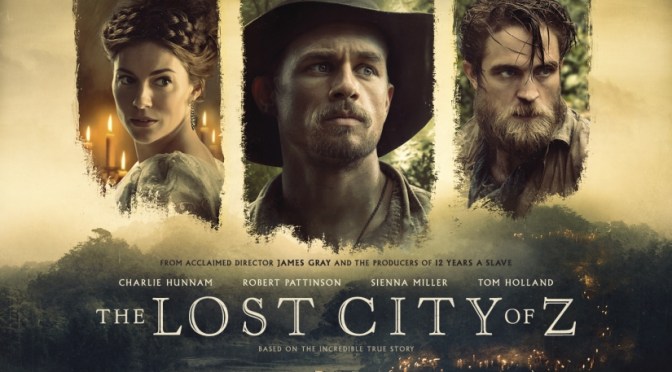
I’m not a great traveller myself. Boats and trains aren’t too bad but I can’t stand flying. If I feel the need to experience the world I am more than happy to either Google a place or vicariously familiarise myself with other worlds and cultures by absorbing it through TV or indeed at the cinema. Moreover, stories about explorers, adventurers, mountain climbers, adrenaline junkies and the like are not always my favourite kind of sub-genre film. Obviously, if it is a story well told then I am open to all genres but more often than not the obsessive and narcissistic characters in pursuit of thrills or far flung places can leave me cold. Not so with James Gray’s epic adaptation of The Lost City of Z which focuses on soldier, surveyor and explorer Percy Fawcett’s dogged search for definitive archaeological proof of a historical Amazonian civilisation.
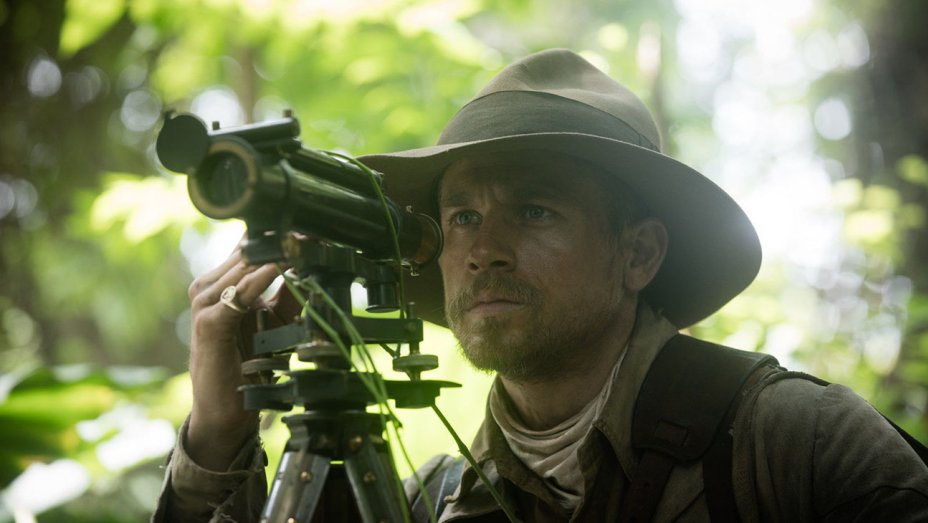
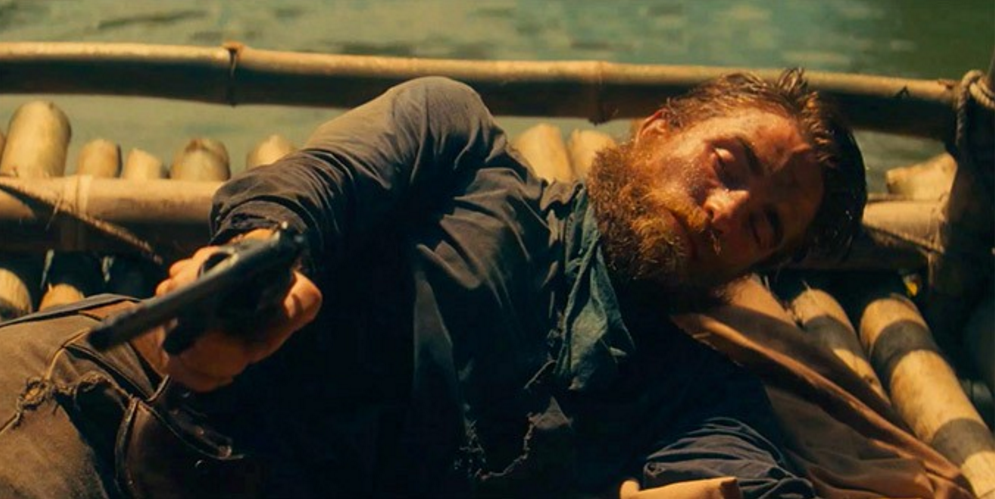
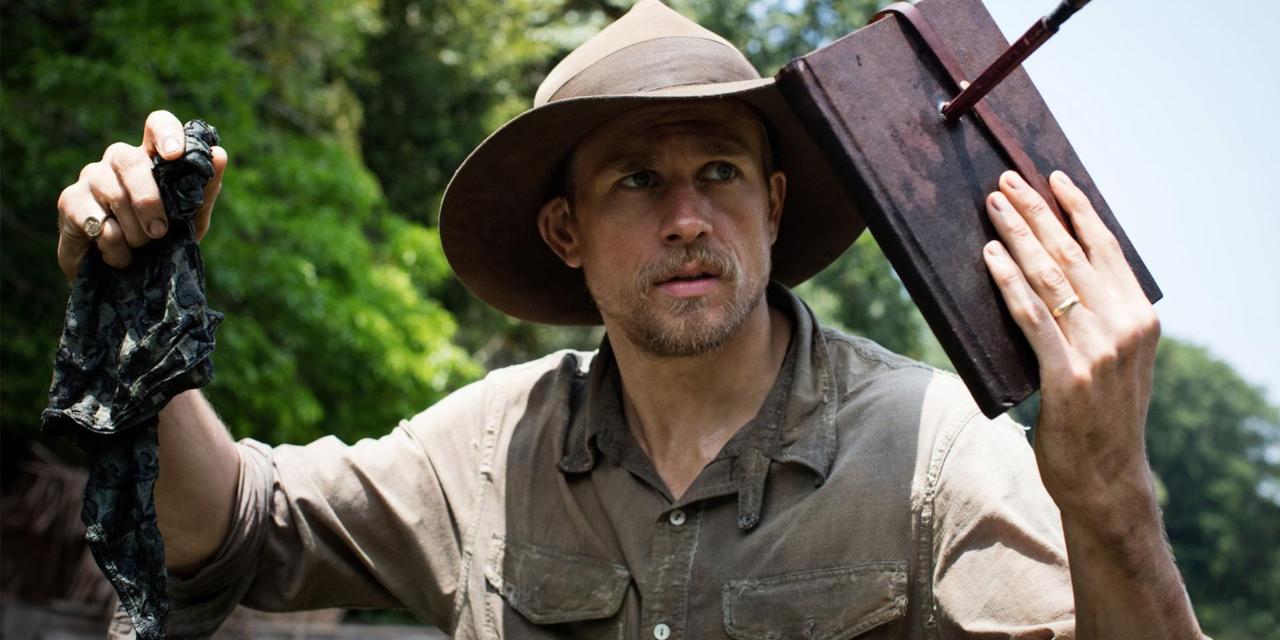
The story begins at the turn of the 20th Century where Percy Fawcett (Hunnam) is a mid-ranked officer in the British Army. Keen to find some serious military action he’s disappointed to be given the job of surveying and mapping the uncharted borders of Bolivia and Brazil. Accompanying him is his guide and aide-de-camp Henry Costin (Pattinson) and what begins as a punishing journey into the heart of darkness becomes, over the course of the film and subsequent expeditions, an obsessive ‘Holy Grail’ type quest for Fawcett. The drama in the jungle gives us Fawcett’s encounters with: the elements, piranhas, rapids, illness, wild animals, starvation, dehydration, cannibal natives and even an Opera concert at a plantation deep in the forest. However, the conflict back in Blighty is just as resonating as Fawcett battles the naysayers who question his belief that the indigenous tribes may have been in anyway civilised or cultured. Indeed, as a historical critique of the old British Empire and their inherent racism the film makes some interesting points.
I watched the film at the Picturehouse Central on a 35mm print and it really added to the old-fashioned, poetic and golden feel of this attractive sprawling epic. Charlie Hunnam, Robert Pattinson, Tom ‘new Spiderman’ Holland and Sienna Miller all provide excellent performances. Hunnam – who I know from his sterling work on Sons of Anarchy – stood out especially and given the right script choices he’s likely to become a bona fide movie star. His Fawcett is a complex, confident but honest man who, while obsessed with his pursuit of the Lost City, loves his family and stands on the side of the righteous. The director James Gray and his filmmaking team, above all else, deserve special mention for delivering a beautifully shot, acted, paced and edited historical drama. Indeed, this fascinating material deserved more screen time and it was so mesmeric I could easily have watched this film for hours. (Mark: 9 out of 11)
WRITER: DAVID BIRKE based on the novel Oh by Phillipe Dijan
CAST: ISABEL HUPPERT, LAURENT LAFITTE, ANNE CONSIGNY, CHARLES BERLING, VIRGINIE EFIRA
**MAY CONTAIN SPOILERS**
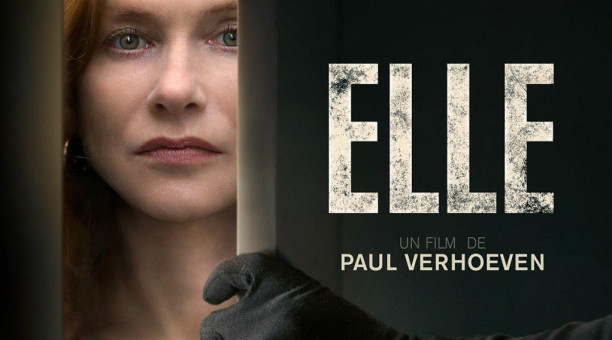
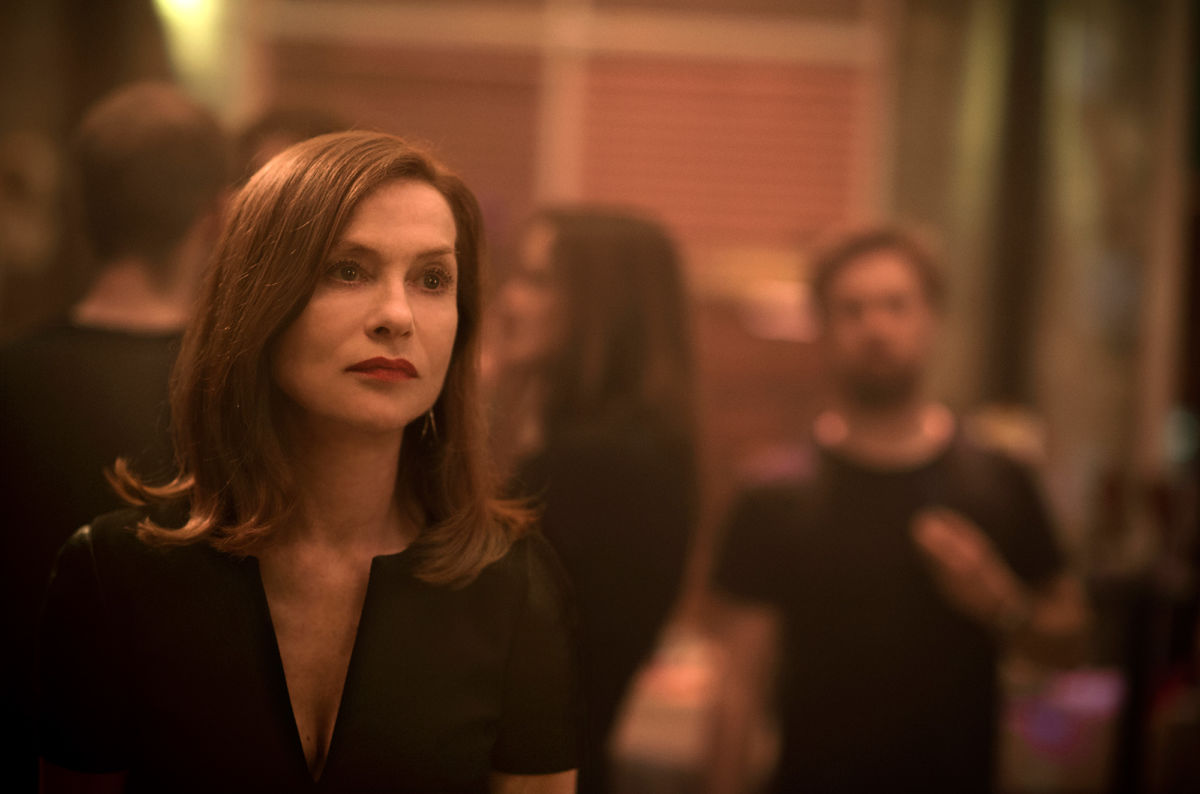
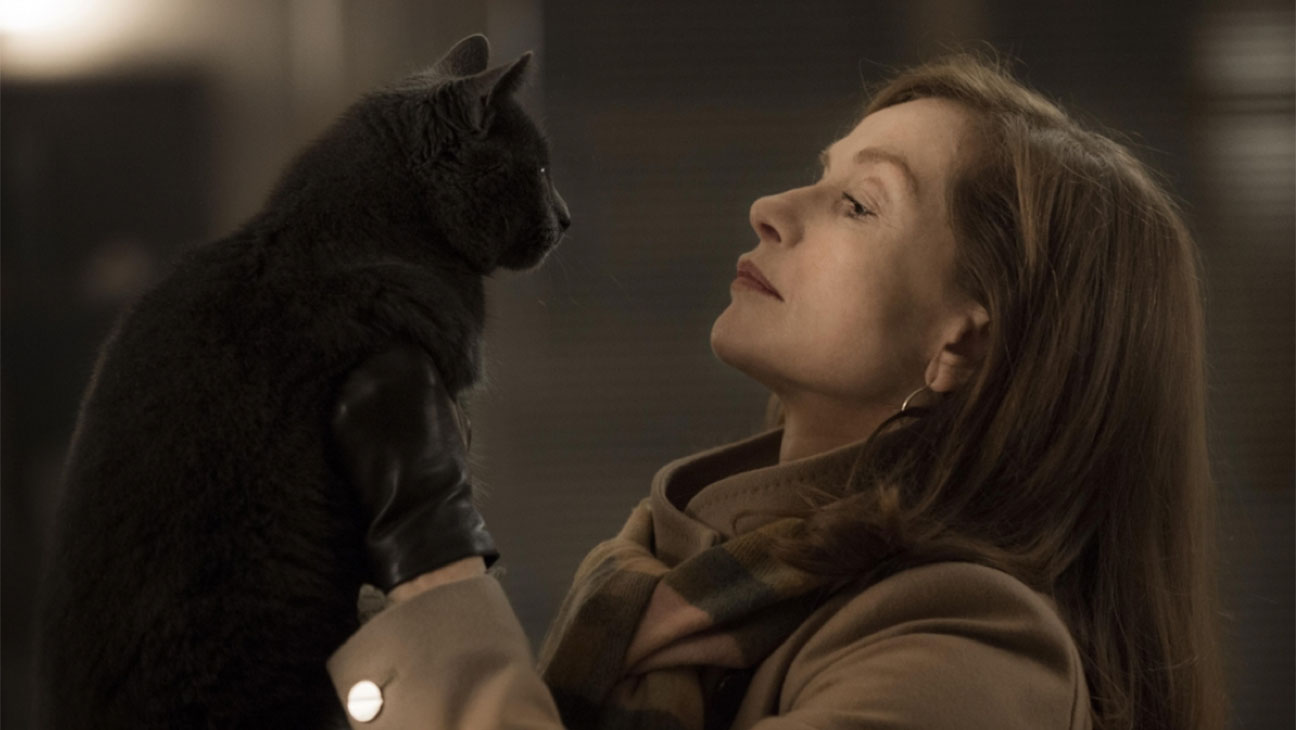
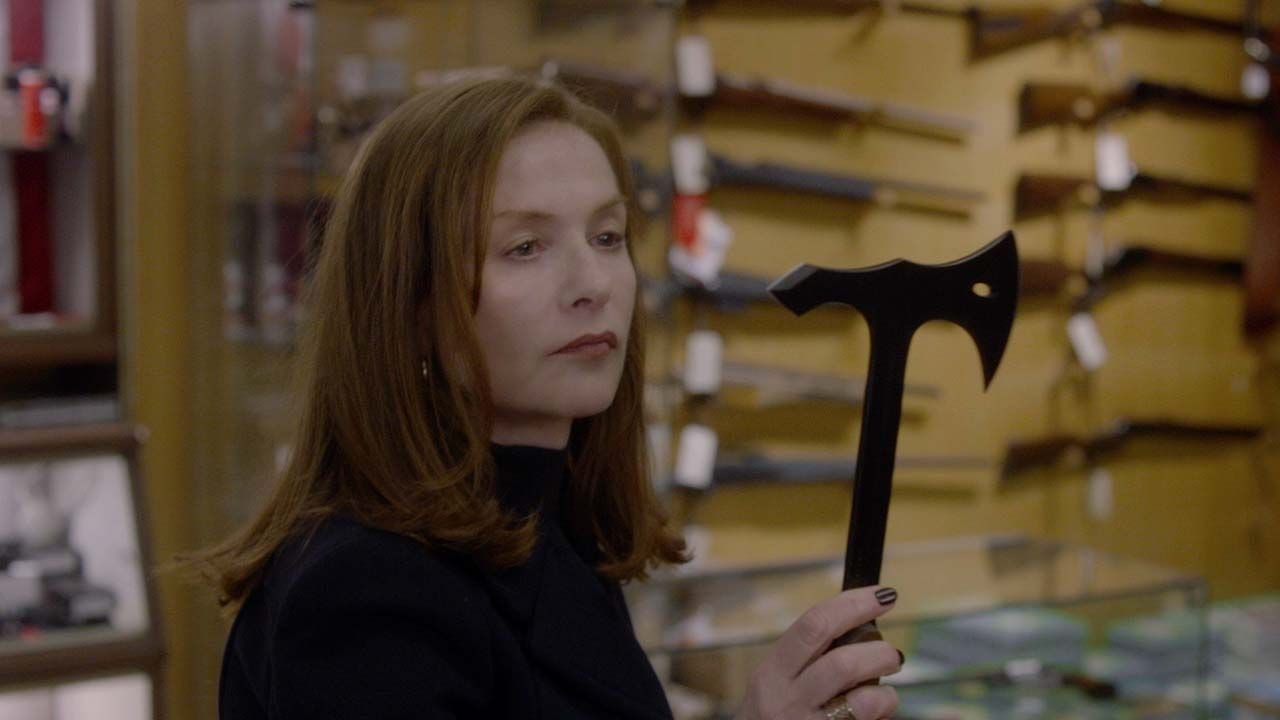
Where do I begin with this film? Is it a comedy? Is it a satire? Is it a drama? Is it a horror film? Well, all of the above I would say and then some. For starters Isabel Huppert SHOULD have won the Oscar for best actress over the candy floss performance of Emma Stone. That genuinely was a first world artistic travesty! Huppert is absolutely sensational as the damaged anti-heroine who having been part of a horrific childhood event is then subjected to a vicious sexual attack in the very first scene. Thus, immediately the film brutalises the main character and makes the audience complicit with her subsequent actions which are complex to say the least. Because as a successful business-woman with a murky past she doesn’t go down the route of victim but rather something completely different.
As it’s directed by the rambunctious cinema satirist Paul Verhoeven I expected a difficult yet entertaining ride, however, this film at times was painful to watch and not what I would call easy entertainment at all. In fact, I’m surprised there hasn’t been more controversy or outrage from the liberal left in the queasy representation of sexual violence. Don’t get me wrong there is a lot to like about the film, especially: the darkly humorous screenplay; the hilarious representations of bourgeois-middle-class-family life; and the unexpected twists in the plots take the breath away. Yet, both male and female humiliation is at the heart of the story and Huppert’s character is kind of unlikeable, making it is difficult to get behind many of her decisions.
Overall, Elle has been laden with awards and received much critical acclaim and I can certainly confirm it is a brave and challenging character drama with very risky themes at its heart. My interpretation is that the writer and filmmakers have a nihilistic view of the French bourgeoisie and that humanity in general is full of damaged lunatics out for what they can get. Essentially too, Huppert’s character has been ruined by the actions of men and her motivations are borne out of trying to gain control of a horrific situation. Thus, I would recommend this film for those who prefer their cinema to challenge, shock and question the nature of sexual politics, rather than spoon feed us fluffy and patriarchal love stories. Because, mainly, this is not a love story but rather one of hate.
(Mark: 8 out of 11 for the film)
(Mark: 11 out of 11 for Isabelle Huppert)
CAST: DANIEL KALUUYA, ALLISON WILLIAMS, CATHERINE KEENER, LIL REL HOWERY
**MAY CONTAIN SPOILERS**
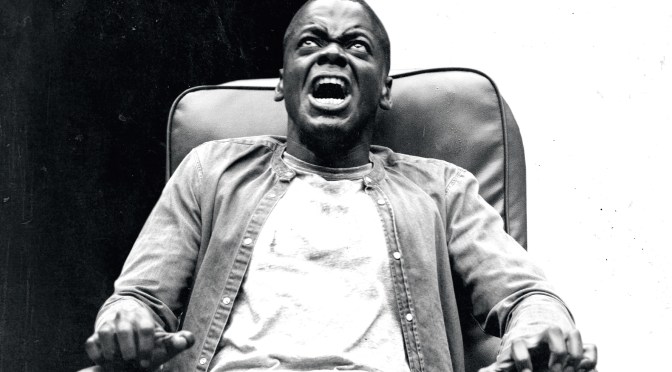
Written and directed by the very talented Jordan Peele – known for his sketch comedy work on shows such as: Key and Peele and MADtv– Get Out is a humdinger of a horror-thriller-satire. It concerns Chris Washington and his girlfriend, Rose Armitage on a “meet-the-parents” getaway weekend. At first, Chris reads the family’s overly accommodating behaviour as nervous attempts to deal with their daughter’s interracial relationship, but as the weekend progresses we get the terrifying truth about the situation.
The narrative is a tremendous mash-up of horror and social satire following in the footsteps of films such as: The Stepford Wives (1972), Night of the Living Dead (1968) and They Live (1988) which used horror stories as a means of social commentary. Moreover, Peele’s screenplay brilliantly sets up some humorous and awkward scenes between the overly politically-correct white characters before twisting into darker territory. However, there are many laughs to be had also especially from Chris’ best friend portrayed by Lil Rel Howery as a dogged and profane Trans-Airport security employee.
The cast, notably Daniel Kaluuya, Catherine Keener and Allison Williams, are all excellent but most impressive was the writing. I watch so many TV and cinema presentations which over-write dialogue or include extraneous scenes, yet nothing in Peele’s script is wasted with an impressive set-up-punchline-call-back structure within a plethora of visual, verbal and performance set-pieces.
Recent films such as Twelve Years a Slave (2013) and Birth of the Nation (2016) took audiences to very serious places in regard to slavery, however, Peele’s contemporary vision of modern society and racial tensions brilliantly satirises middle-class America and entertainingly highlights the culture experiences with many genuine scares to boot.
While going to the cinema is one of my favourite things to do the quality of television dramas has risen in quality to almost cinematic levels at times. Plus, there’s nothing quite like a box-set binge too for one’s enjoyment. Here are a few TV dramas I’ve caught up with over the last few months with marks out of 11.
**CONTAINS SPOILERS**
AMERICAN HORROR STORY: HOTEL (2015) – NETFLIX
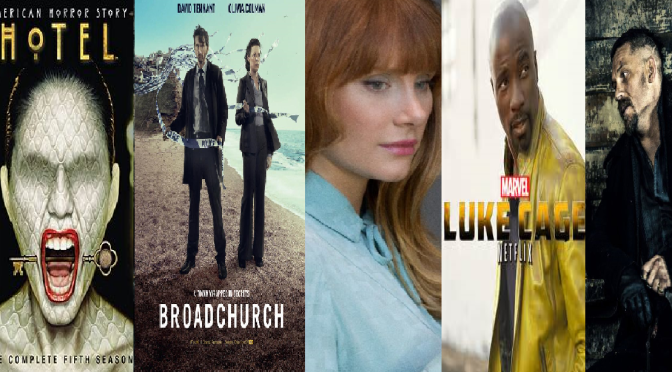
Minus Jessica Lange alas, this one had Lady Gaga to fill the void as the writers introduced a whole new set of monsters, murderers, rapists, ghouls, vampires, junkies and deviants. Set in a H.H. Holmes-style horror hotel, one can always rely on American Horror Story for over-the-top blood-letting, devilish characters trying to out-do each and pitch black humour throughout. While sickening to watch at times it never takes itself too seriously and is recommended to proper horror fans. On the whole its narrative takes second place to the demonic style; pop video vignettes and decadent shenanigans featuring historical serial killers and fantastical blood-sucking beasts. (Mark: 8 out of 11)
BLACK MIRROR (2016) – SEASON 3 – NETFLIX
This is a must-see TV programme for anyone who likes brilliant drama which has intelligent writing and a scorpion twist in the tale of every story. Six stand-alone episodes all provide an insight into the dark recesses of technology and how it can impact humanity. Social media, videogames, virtual reality, internet bullying, techno cryogenics, military mind experiments and cyber-terrorism are all filtered through Charlie Brooker’s devious imagination. A great ensemble cast of actors are seen within the anthology series including: Bryce Dallas Howard, Mackenzie Davis, Kelly Macdonald, Michael Kelly, Gugu Mbatha-Raw, Jerome Flynn and many more make this one of the best TV programmes of last or any year. If I had to choose the stand out episodes were San Junipero and Shut Up and Dance. (Mark: 10 out of 11)
BROADCHURCH – SEASONS 1 & 2 – ITV ENCORE
The 3rd season of this police procedural drama is on ITV now so I thought I’d do a quick catch up of the first two seasons. It begins with the death of a young boy and the subsequent police investigation, plus the impact this has on his family and coastal community of Broadchurch. The first season is first and foremost a terrific “whodunit” as various members of the town are all plausible suspects. Moreover, the brilliant acting duo of Olivia Colman and David Tennant spark off each other throughout the investigation. Writer Chris Chibnall deals expertly with the emotions too as the family – including Jodie Whitaker as the mother of the tragic child – are put through the wringer by the crime. The second season is almost as gripping as the child killer faces trial and Tennant’s character obsessively investigates a historical crime which blotted his police career. Overall, it is an excellent drama with many twists and a superb ensemble cast of British actors. (Mark: 9 out of 11)
LUKE CAGE (2016)– SEASON 1 – NETFLIX
Luke Cage’s reluctant superhero had previously popped up in the Marvel series Jessica Jones and the action follows up from there. He’s a humble man trying to keep a low profile but given he is virtually indestructible it’s not long before trouble finds him in the guise of Harlem gangsters Cottonmouth (Mahershala Ali), Diamond Back (Erik LaRay Harvey) and Alfre Woodard’s crooked politician Mariah Dillard. Luke Cage is decent show with a lot of style, soul and terrific musical performances. The script draws attention to many important historical black figures from history, while the direction harks back to 70s’ Blaxploitation films. Mike Colter in the lead lacks a certain charisma but has power and likeability. Overall the story felt padded out over 13 episodes by some unnecessarily long dialogue scenes and while the fights scenes were strong they lacked the wow factor of say the brilliant Daredevil show. (Mark: 7.5 out of 11)
SONS OF ANARCHY – SEASONS 4 & 5 – NETFLIX
While it’s pretty binary in its tough guys and dolls representations I’m still digging my catch-ups on this neo-Western-hard-assed biker drama. The main reasons to watch the show are the performances of Charlie Hunnam as the ever-conflicted Jax and Maggie Siff as his “old lady” Tara. Katey Sagal and Ron Perlman are also excellent as the matriarch, Gemma and grizzled patriarch, Clay. The twisting serpentine plots of Seasons 4 and 5 find, aside from other gangs and the law, new rivals in the way such as: the Mexican Cartel, businessman Damon Pope and SAMCRO themselves splinter into civil war after Clay’s skulduggery upsets the groups’ dynamic. The seasons are full of the usual grim violence, motorcycle pursuits, gunfire, black humour and lashings of naked flesh. It’s soapy at times but full of great dramatic twists making it very watchable television. (Mark: 8 out of 11)
QUARRY (2016) – SEASON 1 – SKY ATLANTIC
Pitched somewhere between Fargo and the Rockford Files this violent 1970s set thriller was a brutal watch at times. The story finds a recently returned Vietnam veteran, Mac Conway (Logan Marshall-Green) carrying out hits for a murky businessmen called The Broker (Peter Mullan) in order to clear a debt. As a troubled character, suffering from post-traumatic stress, Conway is a fascinating anti-hero and the thrills come from the hellish danger he finds himself in from episode to episode. Essentially, his whole world turns to shit and the only way out of it is to become a reluctant killer. Like Luke Cage music is featured very prominently, notably dirty blues, jazz, rock and soul; while the style is muddy water noir throughout. Marshall-Green is a dead ringer for Matthew McConaughey but is a fine lead and he, Mullan and gay hitman Damon Herriman make this bloody show most watchable. (Mark: 8 out of 11)
TABOO – SEASON 1 – BBC
Tom Hardy produced and starred in this flagship BBC period drama which ran over eight dark-hearted episodes recently. I have to say that it was sumptuous and stylish affair which oozed quality and class throughout. Hardy himself, looking very Bill Sykes in his long black coat and battered top hat, portrayed James Delaney, a man on a mission to get back his fathers’ estate and battle the East India Company for crimes against his body and soul. Hardy’s naked muscular body is something you see a lot of amidst the faux mysticism, American spies, gluttonous Royalty, gap-toothed prostitutes, tattooed ragamuffins and Oona Chaplin as Hardy’s cuckolded sister hiding a terrible secret. The supporting cast are absolutely brilliant especially: Tom Hollander, Michael Kelly, Jesse Buckley, Jonathan Pryce, Stephen Graham and Edward Hogg. Overall, it was more style than substance and the revenge plot was dragged out and did not make much sense really. Still, the smoke-and-shadows style plus the brooding Hardy made it worth a watch. The score by Max Richter though was probably the best thing in the whole show; both majestic and black in equal measures. (Mark: 8 out of 11)
WRITERS: NOEL COWARD, RONALD NEAME, ANTHONY HAVELOCK-ALLEN
MAIN CAST: CELIA JOHNSON, TREVOR HOWARD, STANLEY HOLLOWAY
While I’m not a classic romantic I must admit you can’t beat a really good love story when it’s done well. The ones I enjoy the most are usually the tragic failed or unrequited romance stories which tug, unravel and then break the heart-strings. While I have a soft spot for a jolly rock ‘n’ roller such as Grease (1978), the romance films that stay with me are the likes of: Casablanca (1942), Brokeback Mountain (2005), Dr Zhivago (1965), End of the Affair (1999), Last of the Mohicans (1992) and the sterling understatement of Remains of the Day (1993). Of course, William Shakespeare’s Romeo and Juliet is another brilliant example of a heart-breaking doomed love affair.
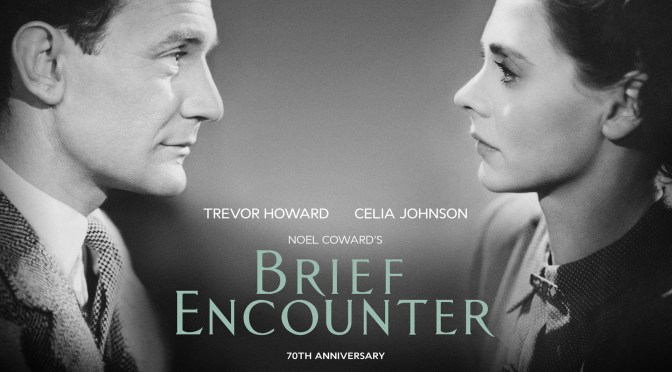
I recently went to see Brief Encounter (1945) – on Valentines’ Day in fact – with my wife at the Festival Hall. It was screened in front of a live orchestra, the London Philharmonic no less, and introduced by the daughter of actress Celia Johnson. I’m not a fan of live orchestral presentations as I’m a bit basic and practical. I always think you could be at home listening to a recording via download or CD; yes I am a philistine and have no soul! However, the live accompaniment to the screening of Brief Encounter was phenomenal; enhancing the filmic experience with beautiful renditions of Rachmaninoff’s Piano Concerto No. 2.
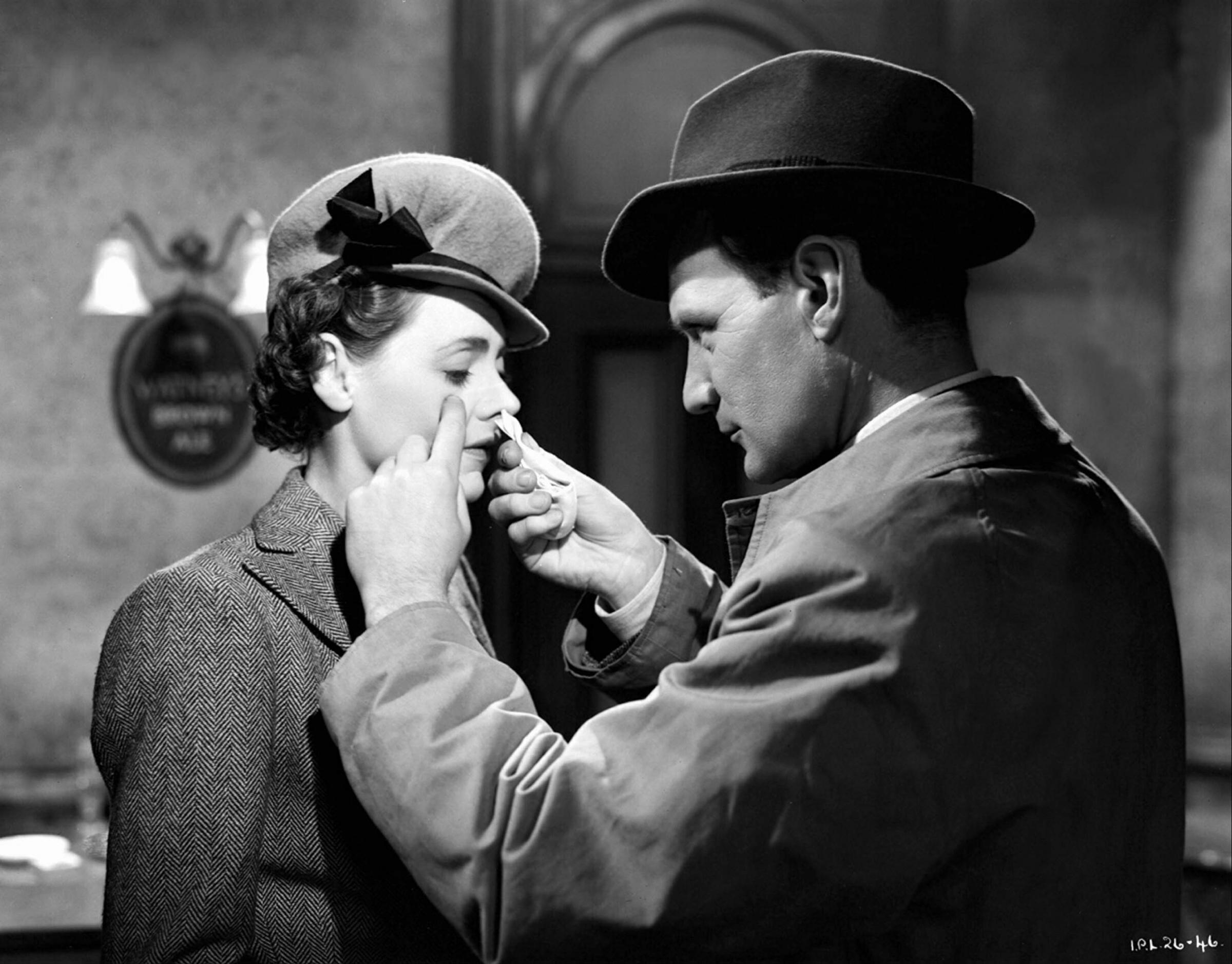
Based on Noel Coward’s one act play called Still Life, Brief Encounter really stands the test of time as a poignant narrative of romantic loss. It concerns a seemingly contented housewife, Laura Jesson, and her chance encounter with a respectable Doctor Alec Harvey. Their classic meeting on the platform where he removes grit from her eye sets in motion a touching will-they-won’t-they tryst which pulls you in throughout. The structure is sophisticated and layered with flashbacks as Laura, sitting in her comfy armchair, reminisces of her times with Alec, while her husband sits there unawares doing a crossword.
Much praise has obviously been made of David Lean’s exquisite framing and direction and the searing power of the Rachmaninoff’s music but for me the script from Coward and Celia Johnson’s sorrowful performance were also things of beauty. Her clipped and dulcet tones resonated as she delivered vignettes of secret meetings, stolen memories and pulsing regret. After all this is 1938 and middle-class women were meant to be the bedrock of the household and affairs were a massive faux pas. Plus, she loves her husband and her children; the secrets and lies were just beastly products of a wicked passion and must be repressed. Their respective sense of duty, guilt and the unfair timing of their meeting just won’t allow a happy-ever-after story. Despite it being seventy years old the film is so sad and I still felt the characters’ heartache radiate through the screen.
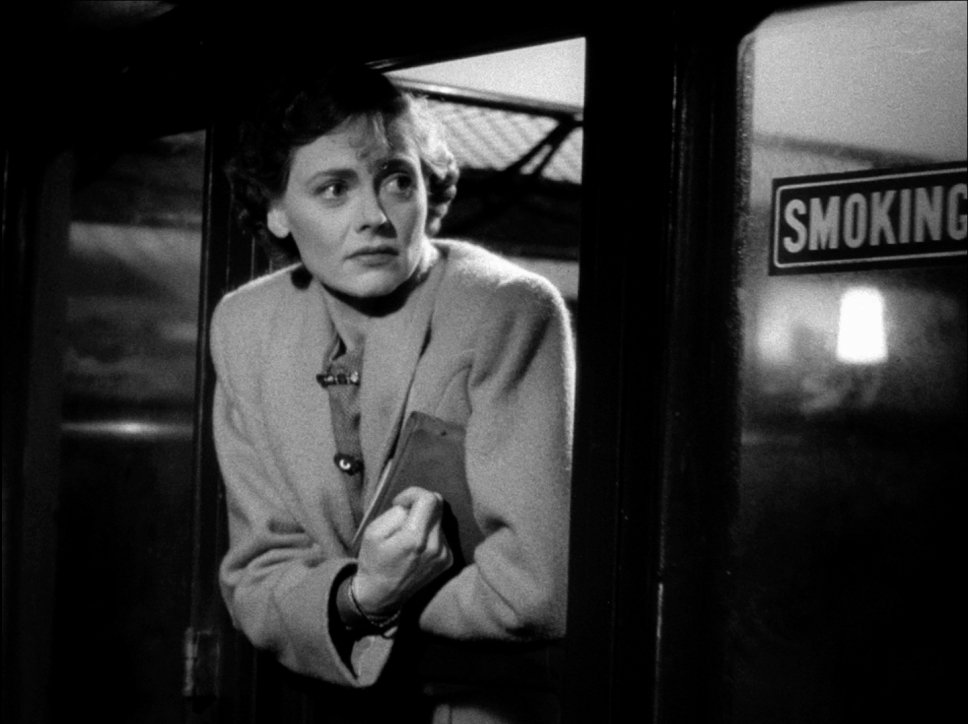
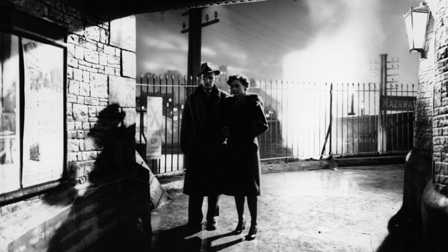
Much of the action takes place on shadowy platforms, moving trains and in the café room at the railway station. The rush of smoke, whistles and trains create a sense of urgency and panic to the love affair. The couple are always in a rush to be with and away from each other so as not create suspicion at home. Conversely Alec and Laura are like trains themselves passing each other in the night in transit but unable to couple up for the remaining life journey. It’s not all doom and gloom though as Coward’s script is full of wit, humour and suspense too. The secondary characters and extremely well drawn and while bordering on the stereotypical the characterisations reflect the various British types and the class system prevalent at the time.
Overall, Brief Encounter remains a classic romance and one of the best British films ever made. It tells us love has no logic or idea of timing as two innocent characters are made to be liars because of the power of their emotions. Only the goodness of their hearts, a sense of duty and what is right means they will ultimately return to their marriage partners. But the gaping vacuum created by love is something they will just have to contend with. Brief Encounter is a timeless classic and deserves to be seen on the big screen; especially when backed by the exquisite musicianship of the London Philharmonic Orchestra.
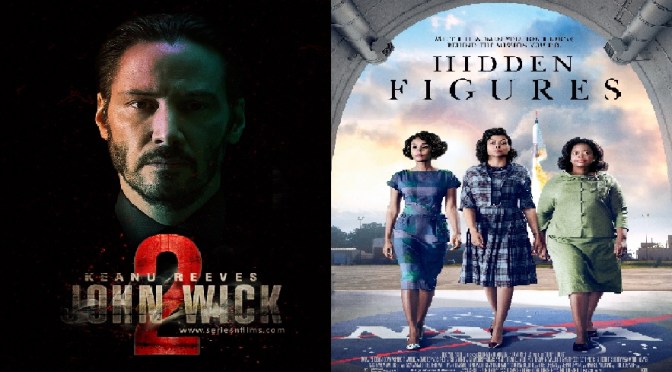
Of late I have watched a plethora of heavyweight Oscar-driven dramas such as: Arrival (2016), Manchester by the Sea (2016), Fences (2016), Hacksaw Ridge (2016) and Moonlight (2016) and the cinema-going experience was in danger of becoming far too thought-provoking a place to be. I mean I like using my brain but I was seriously getting over-worked here. Even feel-good films such as La La Land (2016) were pretty complex in their whip-bang delivery, while the bio-pic Hidden Figures (2016) dealt with issues of racial segregation and empowerment during the space race. Thankfully, my brain can take a rest from such challenging dramas as first John Wick 2 (2016) and Kong: Skull Island (2017) have come to save the day with some good old-fashioned-fast-paced-B-movie-bloody-genre-action.
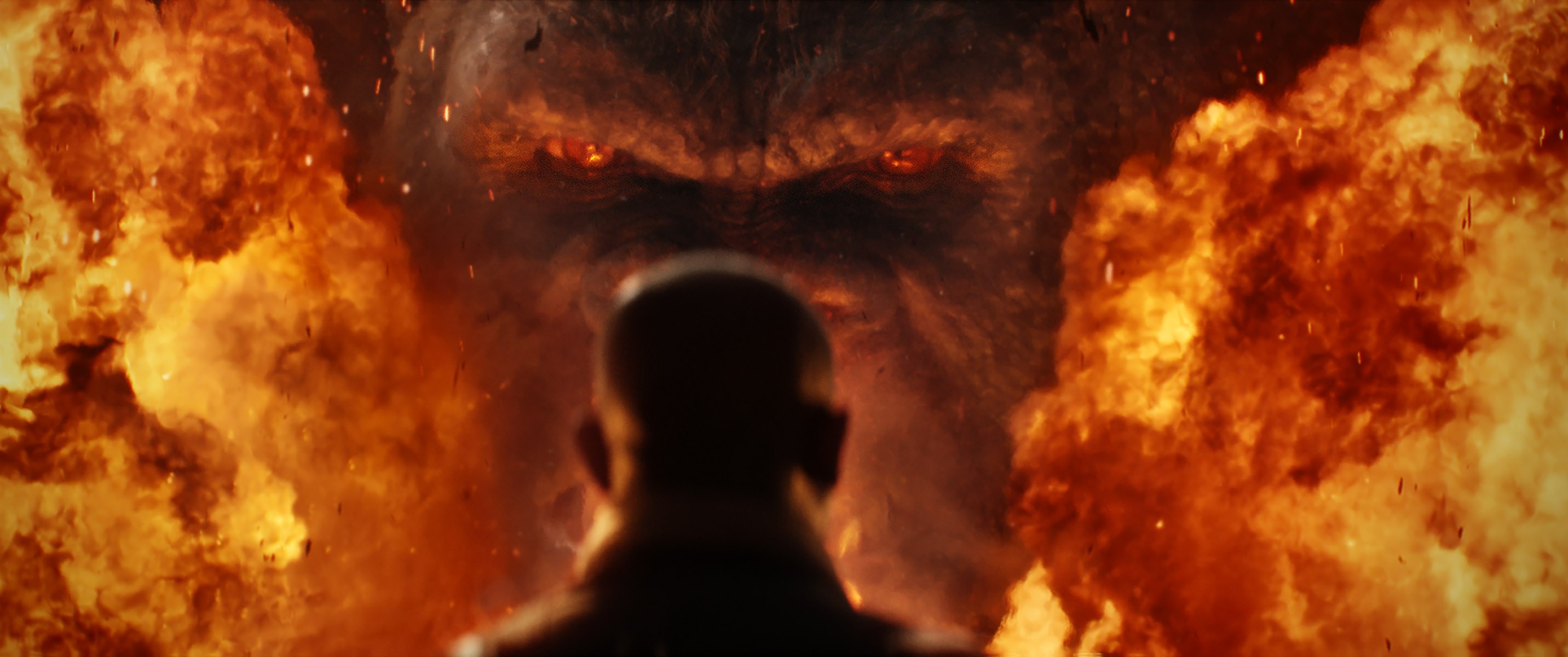
Kong director Jordan Vogt-Roberts and platoon of screenwriters have constructed a thrilling monster movie which is low on plot but high on pyrotechnics in a cinema blast which they should have called APOCALYPSE KONG!! The story, if you can call it that, involves John Goodman’s murky conspiracy theorist embarking on a “surveying” mission of an island which rarely shows up on radar. Plus, it looks like a skull on a map AND pretty much every boat or plane which goes near it vanishes. So, enter at your peril!
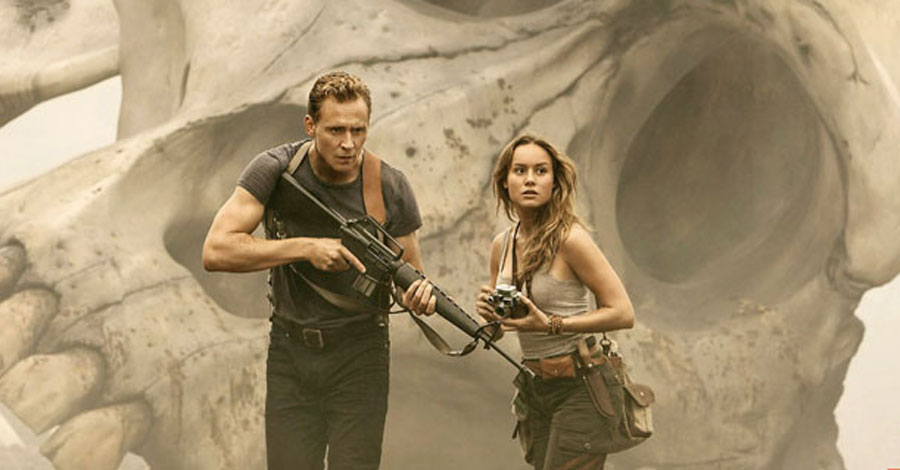
Personally, I probably would not choose this as a holiday destination yet Goodman manages to gather an army consisting of United States marines who’ve just that day finished fighting in Vietnam. These battle-weary veterans led by Samuel L. Jackson, Shea Wigham and Toby Kebbell should probably go home but Jackson’s Lieutenant-Colonel Packard has some old testament vengeance business he needs to re-enact. Meanwhile, anti-war photographer Brie Larson and SAS mercenary Tom Hiddleston also join the crew too along with a generic bunch of scientists and military grunts all destined to be Kong fodder!
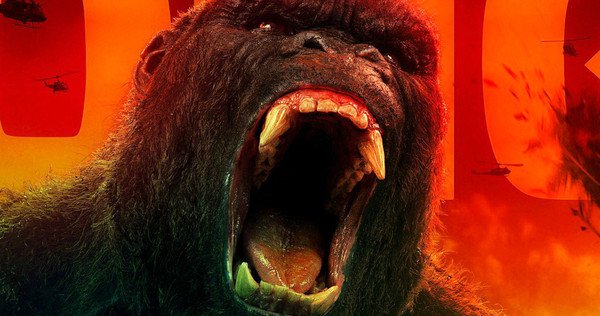
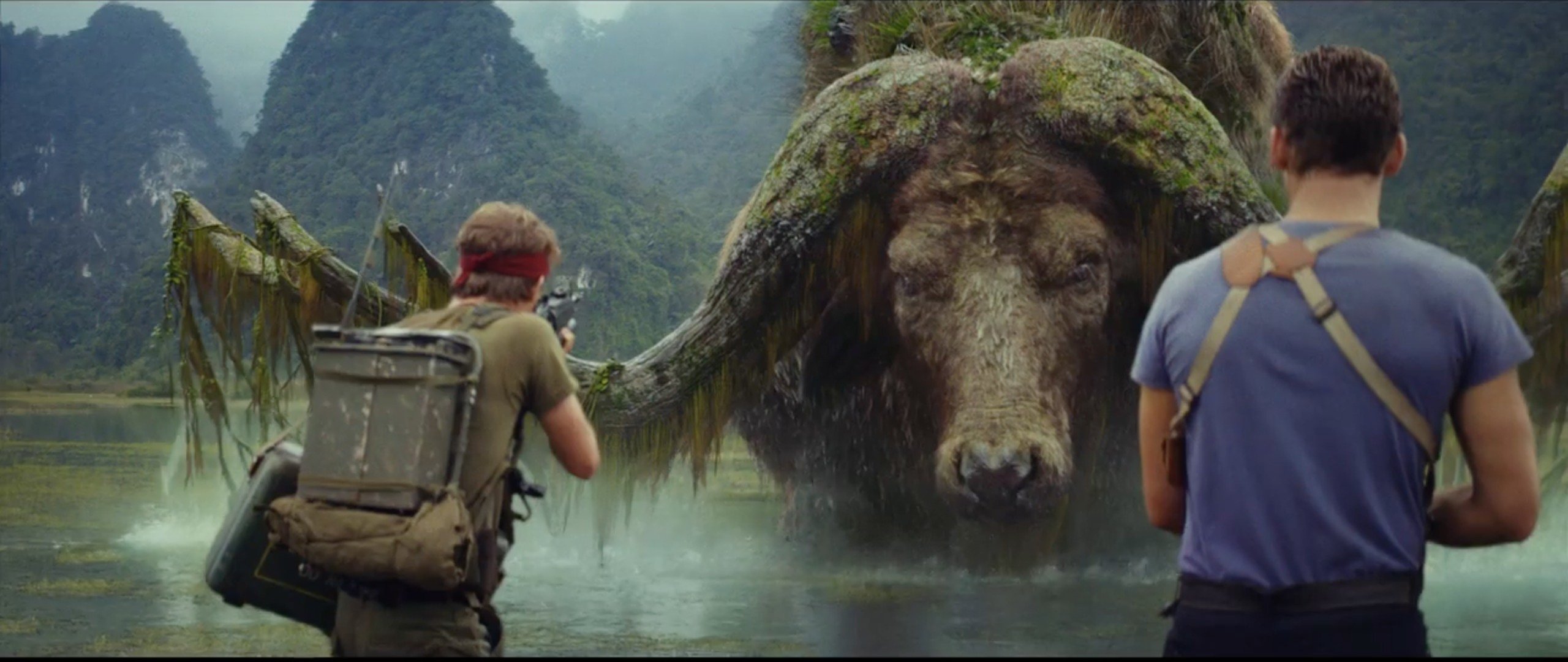
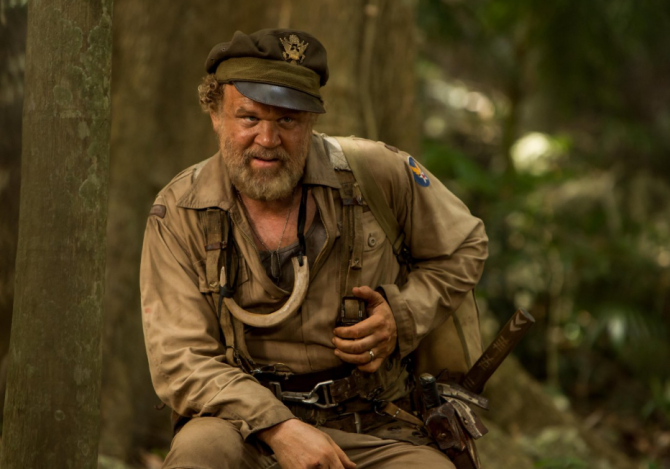
Now, I wasn’t a massive fan of the most recent Godzilla (2014) film – my review heretestifies – as it did not have enough of the monsters or action and was WAY too serious. Skull Island is a totally different beast altogether. You get monsters galore from the get-go and of course Kong is the King, as he finds his eco-system invaded by humans and their big weapons so he fights back with hairy, muscular abandon. The humanity and humour of the film is provided mainly by John C. Reilly’s WW2 soldier who has gone bamboo with the natives and his story arguably has the most emotion. But the real stars are the tree-monsters, subterranean creatures, Pterodactyls, giant Squids and Spiders, which along with Kong, leap out of the screen at regular intervals dining on humans for breakfast, lunch and supper.
Overall, the film wears its’ Jurassic-Park-Hell-In-the-Pacific-Lost-World-Predator-Apocalypse-Now-Godzilla influences on its gigantic jungle sleeves. So it’s safe to say I had a lot of fun taking my brain out and watching the fireworks and monsters in this B-movie behemoth. The story is uneven and characters paper-thin but the gorgeous imagery, fun action set-pieces and a very attractive cast including Hiddleston, Larson and Corey Hawkins, plus the off-kilter mania of John C. Reilly make it worth the admission alone. (Mark 8 out of 11 – for the monsters and mayhem mainly.)
I wasn’t a massive fan of the Brian Singer directed original X-Men series which began in the at the birth of the Millennium. However, as big budget popcorn fodder the early cinema offerings were highly entertaining and the idea of good and bad Mutants with special powers battling each other was very exciting. Of course, the biggest villains were the humans – politicians, scientists or military – attempting to control the mutant population as their kind were seen as dangerous outsiders; like multi-coloured and multi-skilled vermin who must be destroyed.
So, thematically, the X-Men comics and films are very strong as they represent the worst side of humanity which attempts to vanquish that which is different and does not fit into the hegemonic, natural and conventional norm. Indeed, human beings have (including Deadpool (2016) throughout ten films both attempted to weaponize or destroy the mutants, but it hasn’t worked! There are many more films to come.
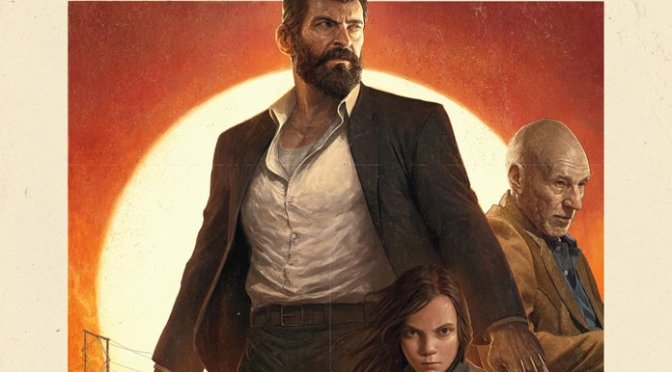
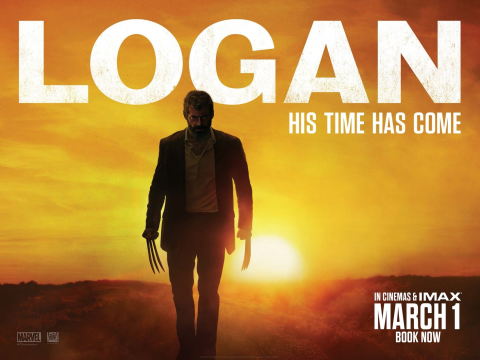
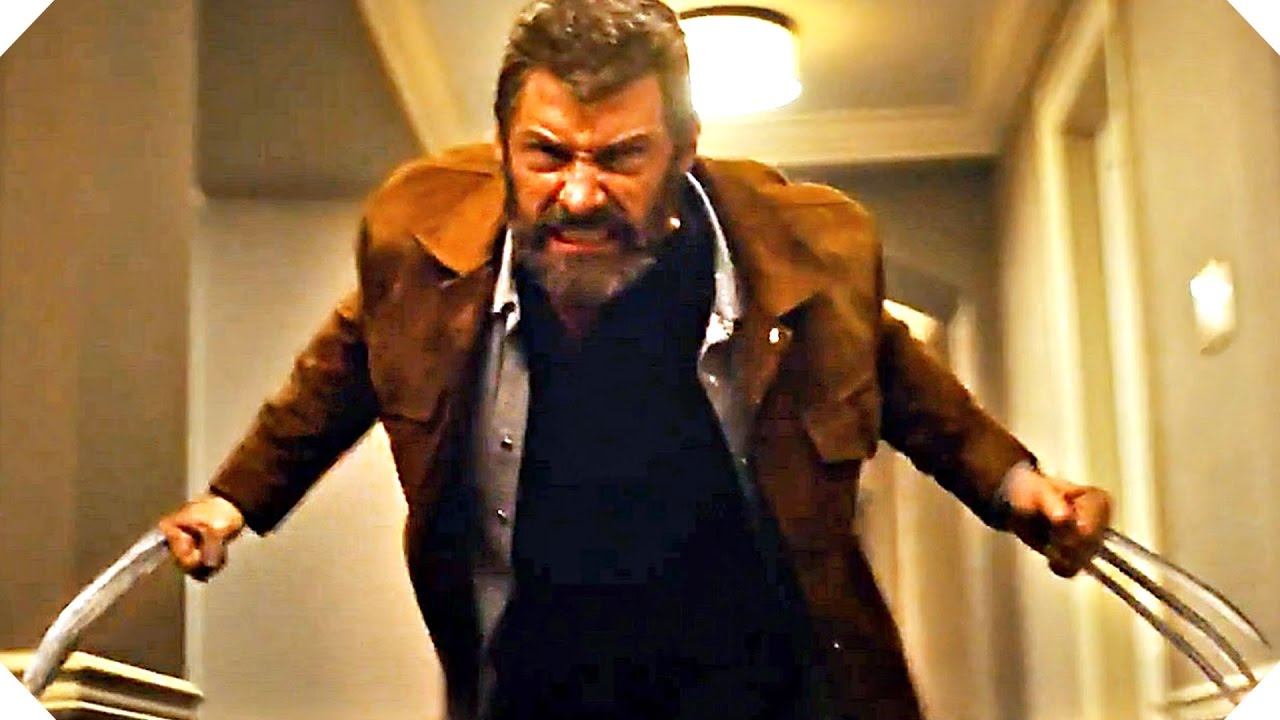
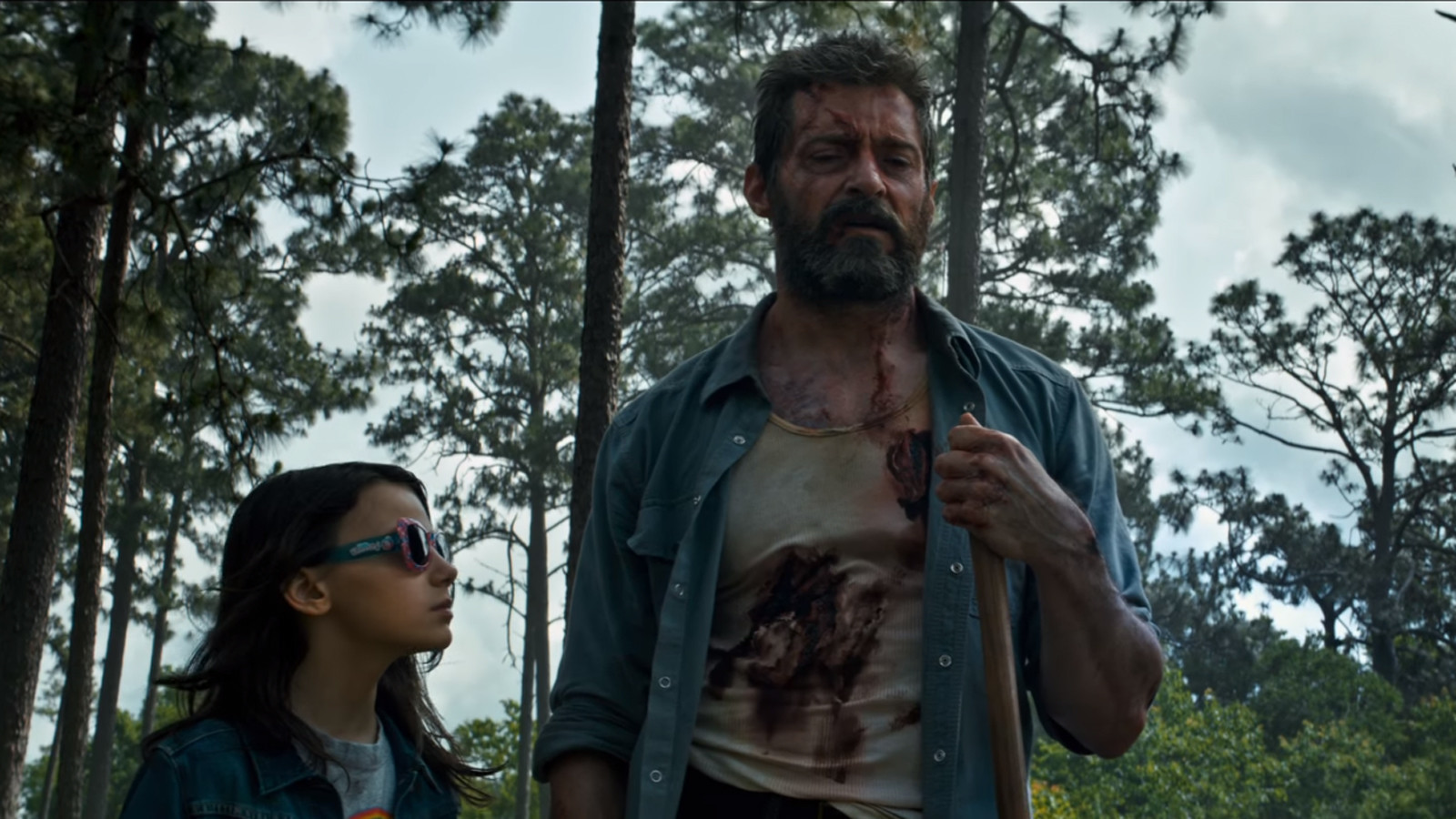
Having said that this, I have read, is Hugh Jackman’s final adventure as Jimmy Howlett AKA the Wolverine. Jackman’s presence alone is worth the admission fee on Logan and his physical prowess and acting ability, allied with his jaded wreck of a persona make this outing an entertaining, if slightly over-long popcorn muncher. I had somewhat higher expectations based on other reviews and fan responses on social media I had read. Because here was a different Wolverine film apparently, full of depth and sadness and real emotions. Well, it has that but essentially it’s another chase movie with the requisite explosions, spiking deaths and mighty roars!
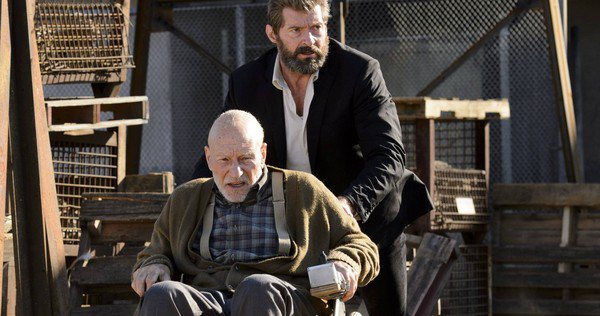
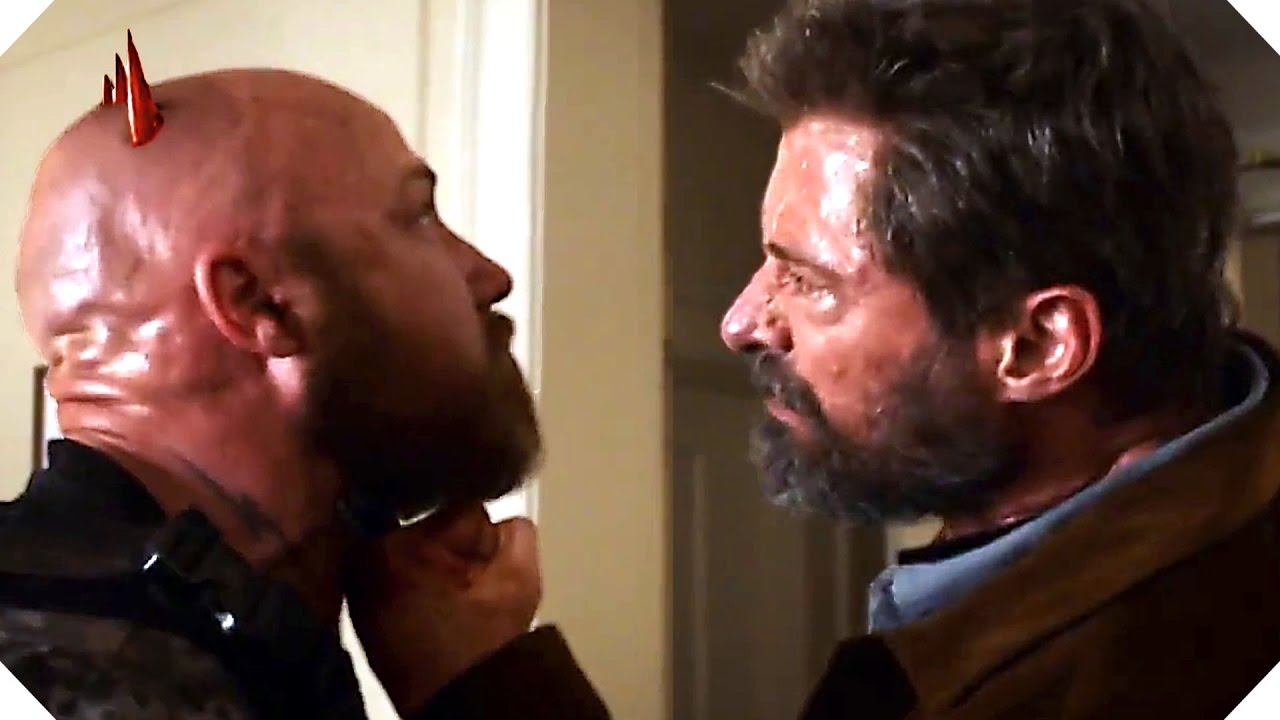
So while James Mangold and his army of writers package the usual generic and nefarious mercenaries (led by Boyd Holbrook) and a mad Scientist (Richard E. Grant) in pursuit of Wolverine, aged Professor X (brilliant Patrick Stewart) and a young girl (impressive newcomer Dafna Keen), we do get some swearing and fantastically brutal violence that really added to the enjoyment of the movie. The action scenes are also expertly handled and the surprising mutant baddie who appears is a frightening joy.
The opening scenes of the film were my favourite as Wolverine, Charles Xavier and their albino assistance Caliban – portrayed with pale compassion by an unrecognisable Stephen Merchant – are holed up on a desert-based industrial complex just trying to survive day-to-day. With Professor X’s health failing his mind is a ticking time-bomb as what seems to be Alzheimer’s takes a grip. I thought if most of the film had been like this it would have been a risky yet rewarding character drama. Indeed, the quieter moments are the best such as Logan putting his ‘father’ Xavier to bed and when they momentarily play “happy families” at the dinner table. Yet, it’s not long before the soldiers arrive again to spoil the peace and all hell breaks loose.
Overall, Logan (2017) is not as good as X-Men: First Class (2011) or Days of Future Past (2014) in terms of sheer cinematic joie de vivre in my opinion. However, the power of Jackman’s, Stewart’s and Merchant’s performances ground the film in a pathos and believable humanity many comic book adaptations lack. While I’m more of an Avengers fan it will be sad not to see Jackman and Stewart back in their iconic roles. While this is a very good X-Men genre film the opening scenes offered something far deeper than the chase movie we got. So, while it has some sad stuff it’s probably not as deep as everyone says it is. But it is an enjoyable film and a fitting finale for Jackman’s muscular-cigar-chomping-head-splitting-cynical-mutant-with-a-giant-adamantium-heart called the Wolverine. (Mark: 8 out of 11).
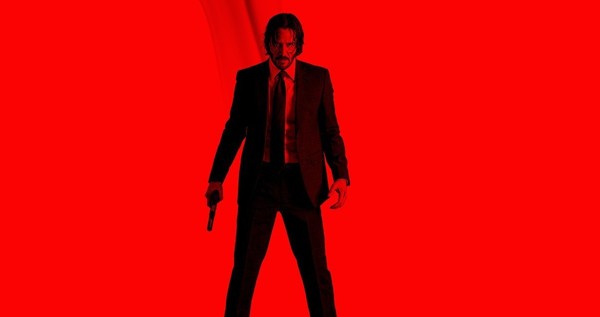
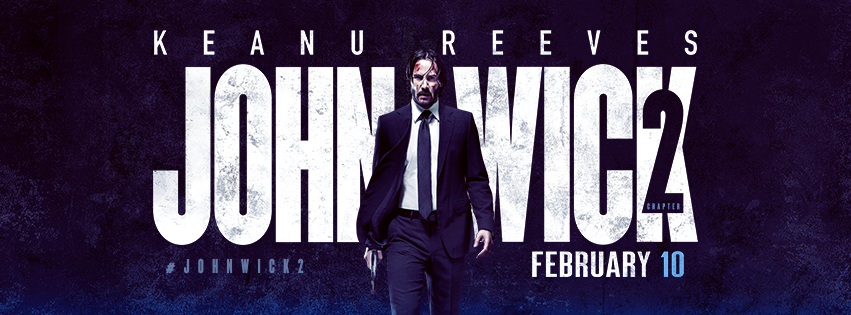
I’ve got to admit that I thought the last Bond film Spectre (2015) was extremely underwhelming for a committed fan to the franchise. It was overlong, disconnected and while the stunts were orchestrated brilliantly at times; overall, it lacked energy and a proper wow factor. Thus, when Keanu Reeves came along in the first chapter of John Wick I was fantastically surprised by the action, energy and fireworks on show. It was simple, effective, brutal action filmmaking of the highest order and more importantly got the box office buzz it deserved for sheer entertainment alone. A grieving man sets about killing the gangsters who killed his dog! I mean what more do you need from a popcorn movie? But despite the lack of plot depth the film had a terrific style, thudding soundtrack and some fantastically over-the-top kills.
John Wick 2 decides nothing is broken thus there is little to fix in the format. It is structured like a classic Bond movie complete with Q-style weapons shopping scene, as Wick this time must overcome all manner of bad guys fixing to square up a historical marker owed to an Italian crime lord. Brilliant set-piece after set-piece ensues as a battered Wick brings the noise again but this time to the streets of Rome and New York. It’s an undemanding story and probably overlong but the Assassin’s underworld is developed further with wit, colour and humour, and there are some fantastic cartoon violence on screen involving guns and pencils. Also, the final set-piece in the art installation is worth the admission alone and stylistically blew the latest Bond out of the water.
Keanu Reeves knows his limitations as an actor and revels in the physical demands, dextrous gunplay and dialogue-sparse role as he faces off against all manner of dark-suited foes. There’s also world weary pathos to his character as someone unable to escape his past crimes and history as a hired gun, thus the only way out is to kill absolutely everyone. Ultimately, John Wick 2 is like a comic-book Shakespeare – if you replaced ALL the words with bullets! I look forward to the Chapter 3 with great anticipation. (Mark: 8.5 out of 11)
HIDDEN FIGURES (2016)
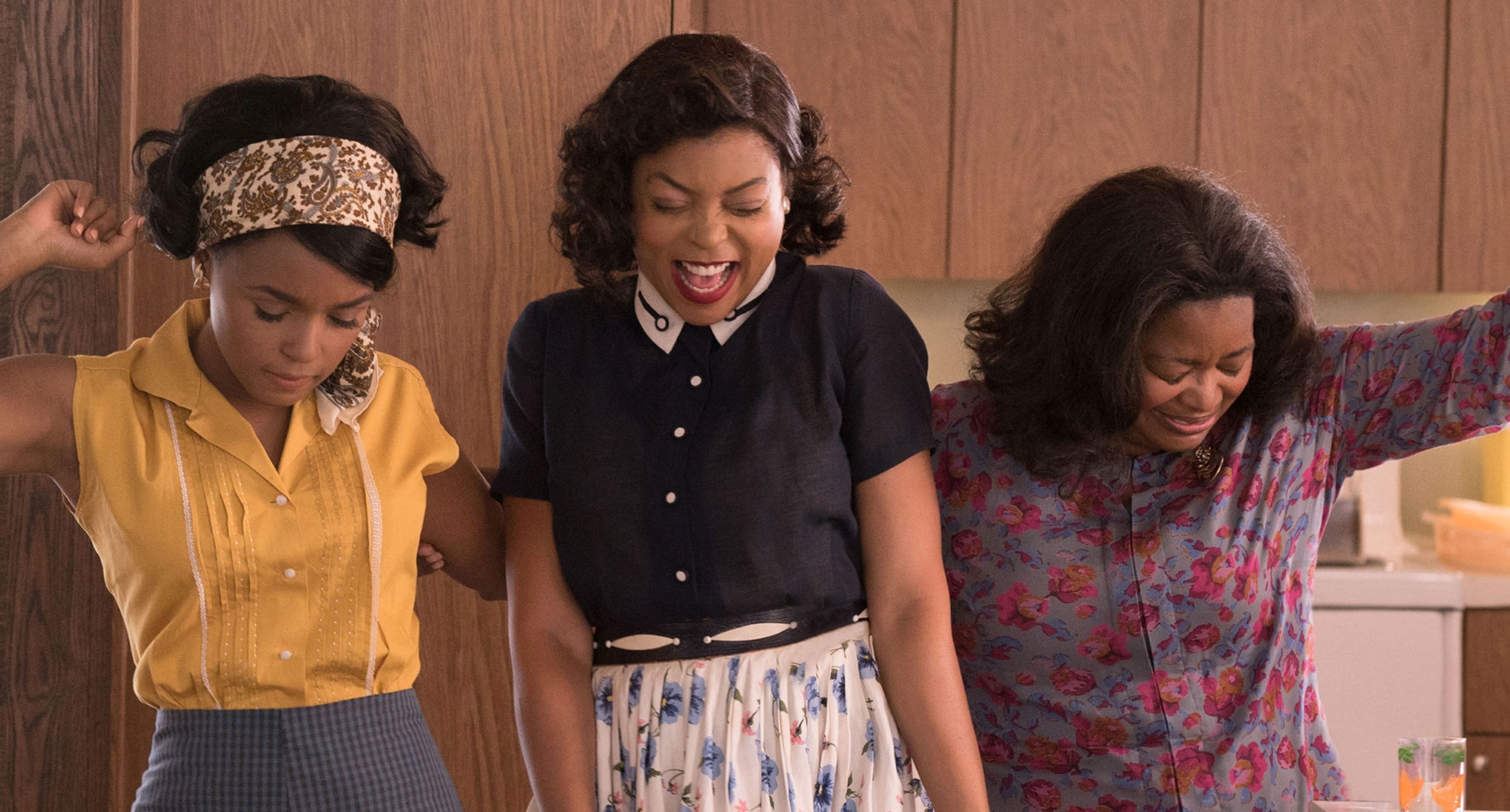
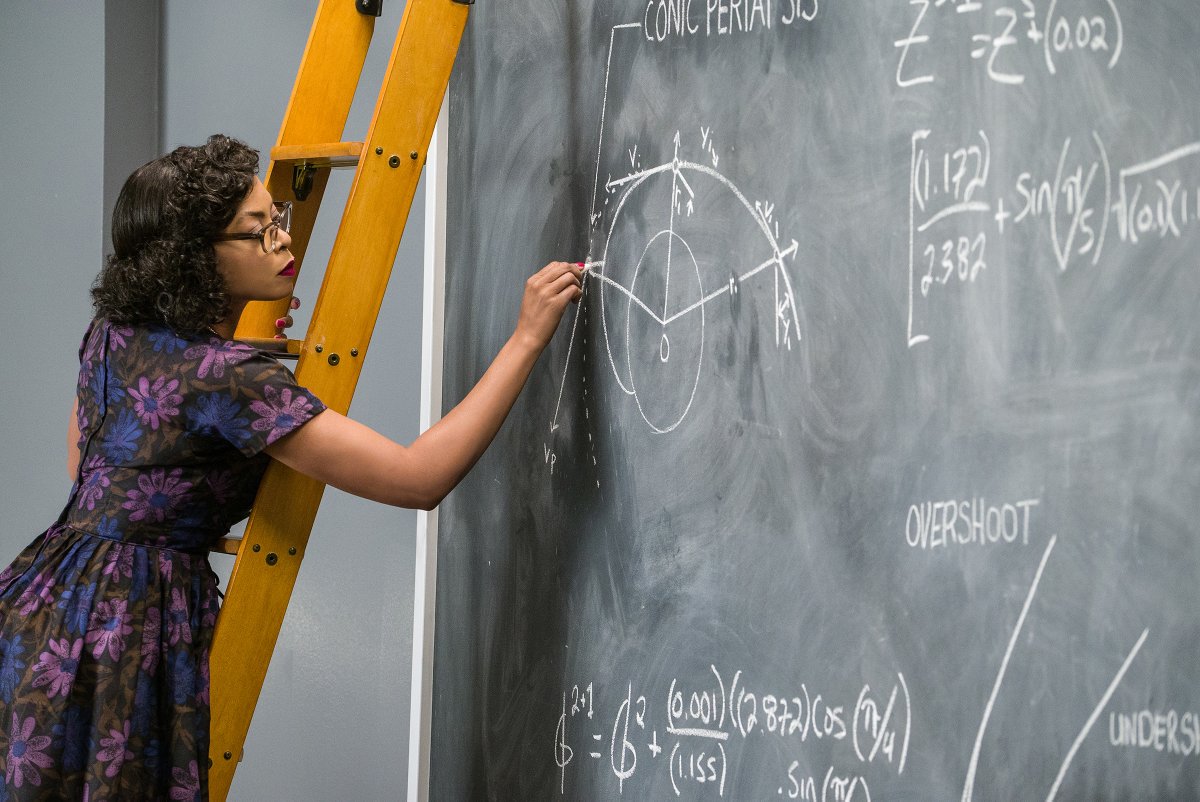
Like the story of Desmond Doss in Hacksaw Ridge (2016) the narrative of Hidden Figures (2016), was all the more enjoyable because I knew absolutely nothing about the specific history, characters and outcome. Indeed, the human interest aspects of both stories were so rich and heartfelt it was impossible not to leave the cinema without a warm glow inside. Of course, Doss’ WW2 exploits were heroic and in more bloody surroundings while saving comrades lives during the battle of Okinawa. Yet, the endeavours of the three ladies who take focus in Hidden Figures – Katherine G. Johnson (Taraji Henson), Dorothy Vaughan (Octavia Spencer), Mary Jackson (Janelle Monae) – is also incredibly brave as during the Space Race with the Russians they broke down social barriers to help their country despite being segregated by the despicable laws in place during 1960s U.S.A.
Katherine, Dorothy and Mary are three exceptionally intelligent individuals who battle against the tide of white dominance and raise their game to contribute their expertise and intelligence to the project. The film has some great scenes notably when Katherine wipes the floor with the other Space Task staff over complex equations; Al Harrison (ever-reliable Kevin Costner) smashing down the segregated Blacks only toilet; and the sparky Mary challenging the law over whether she can attend business school. In fact, throughout there are many “fist-pump” moments for the characters. I mean, my mathematics skills are not great so I am always in awe when people are able to work out these bemusing and massive equations.
I am of the position that no person should be discriminated against whatever their background, culture, age, social status, religion, gender or sexual persuasion. Our worth as a human should be judged on our actions, what we do and how we treat others. So, this film encapsulates my philosophy totally. Indeed, what the writers, director Theodore Melfi and the amazing cast show in this story is that whatever the obstacles are we will succeed if we ignore any perceived differences and work together. Personally, I am not a fan of the whole space programme and arguably the politics of the day could perhaps have been featured slightly more, so, the film lacks the socio-political punch of say Selma (2015) or Malcolm X (1992). Yet, overall, this is an unashamed uplifting movie which invests so much empathy and compassion in our hidden heroines that no one can deny them their rightful place in history. (Mark: 8.5 out of 11)
I thought I would make an effort to watch more documentaries over the last few months. Personally, I love nothing more than to immerse myself in fictional worlds created by writers, show-runners and filmmakers etc. but sometimes it’s important to face the “truth”.
Having said that are documentaries actually reflecting reality or the truth? Because the documentary genre over the years has become ultra-sophisticated and many “true” stories are not just simply filmed documents or events or interviews. Now, documentaries are often carefully constructed narratives with as much if not more drama and turns in their tales than fictional works.
I wasn’t the only one who was gripped by Netflix’s Making a Murderer (2015) or HBO’s exceptional The Jinx: The Life and Deaths of Robert Durst. Moreover, I’ve always been an avid viewer of the work of dogged filmmaker Nick Broomfield, the disarming talent of Louie Theroux, and at his best the polemical Michael Moore. However, you always have to be aware that what one is watching has been manipulated and finessed to tell a story or a certain agenda; thus truth is not always absolute and should always be questioned.
Nonetheless, the documentary film or programme remains an important tool to confront existential, sociological, historical and political events and issues. It also tends to be a lower budgeted medium – compared to fictional works – with which to illuminate and entertain an audience. So, here are some documentaries I have been watching of late.
CRIME
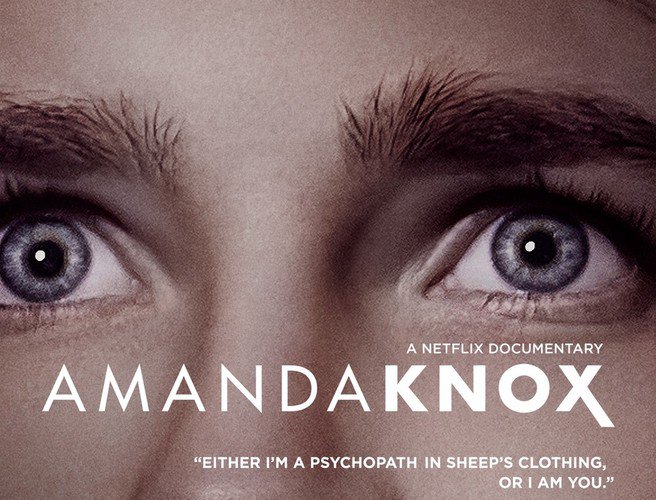
Crime documentaries are big business and along with historical Nazi dramas fill up the TV screens and online. Netflix has some well-presented and often controversial documentaries, one such is AMANDA KNOX (2016), which interviewed many of those involved in the despicable murder case of Meredith Kercher a few years back. This intriguing documentary lifts the lid on a case where the media and Italian legal system are on trial as much as Knox herself.
WAR
With the Nazis in mind, the BBC documentary AUSCHWITZ: THE NAZIS AND THE FINAL SOLUTION (2005) is a horrific examination of wartime atrocities which probes the means with which the Nazis tried to wipe out all the Jews. This is a challenging yet incredible mix of interviews, dramatic re-enactment and detailed research on the evil death camp Auschwitz. While not an easy watch it is a brilliantly devised series which illustrates the blackest stain of one of humanity’s darkest periods in history.
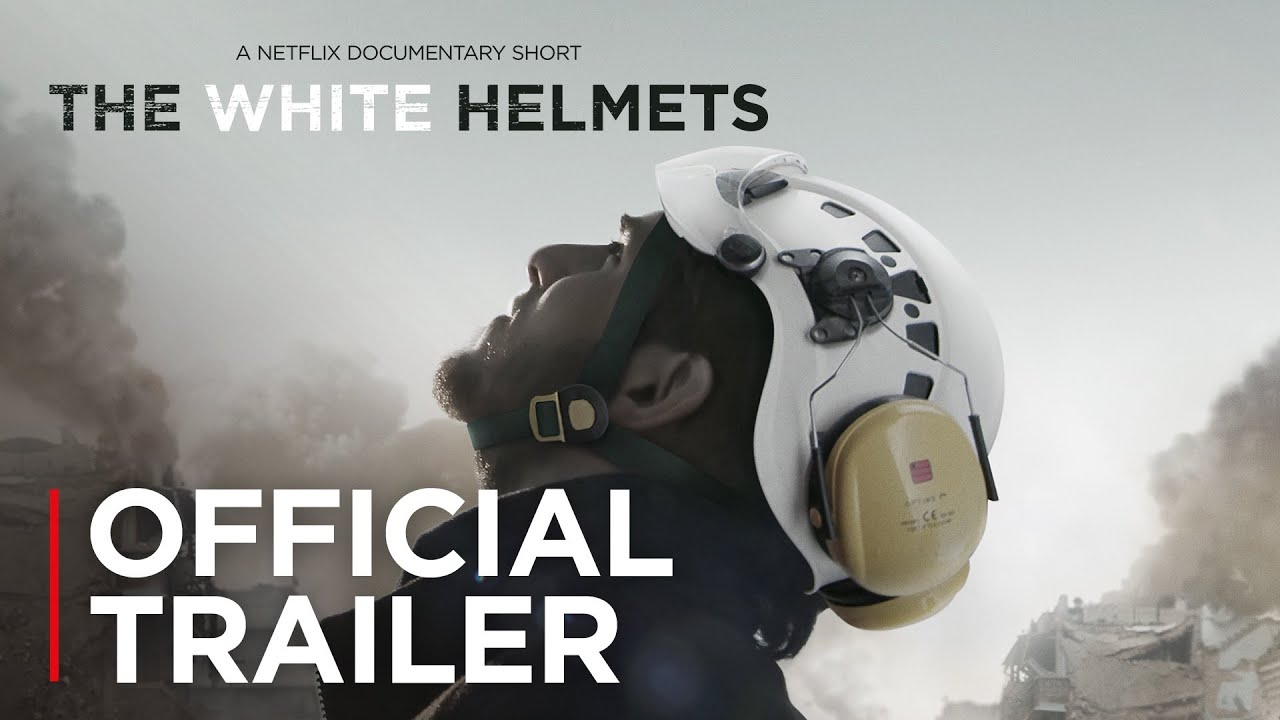
From World War II to a very contemporary conflict Netflix presents THE WHITE HELMETS (2016), which over a hard-hitting forty minutes profiles the heroism of the eponymous rescue workers striving to save civilians from conflicted Aleppo and Syria on the whole. The short film won an Oscar but having done some research online the other side of the argument suggests this is a propaganda piece and does not represent the real work of this group. All I can say is someone somewhere is blowing the hell out of Syria and it is a bloody tragedy because people are dying! Indeed, whichever side the White Helmets are on the filmmakers show the insane destruction of war and suffering occurring for reasons that are beyond my understanding.
NATURE
For something far more heart-warming I recommend the majestic film THE EAGLE HUNTRESS (2016). It documents the story of Aisholpan, a 13-year-old girl from Mongolia, as she attempts to become the first female eagle hunter in her country. Beautiful vistas and soaring eagles amidst the snow are to the fore in a very sweet tale of a young lady facing up against years of cultural chauvinism and prejudice, for something she loves doing.
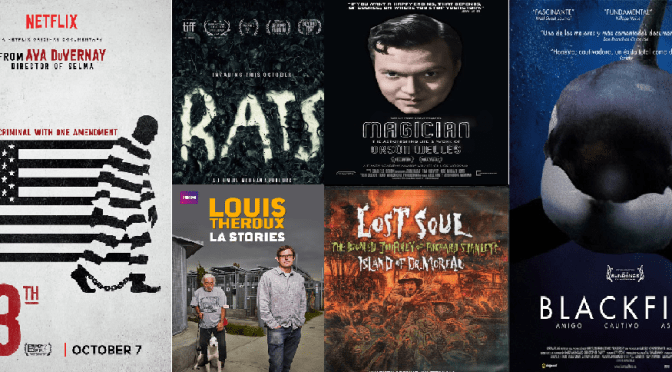
More harrowing though is the well-constructed Killer Whale documentary BLACKFISH (2013) which highlights the cruelty to these beautiful creatures in captivity and the alleged corporate greed of SeaWorld following the deaths of trainers at the park. It also illustrates, in my opinion, the idiotic folly of human beings who think it is wise to get in the water with gigantic aquatic hunters. We are imprisoning animals for our own apparent entertainment and killing ourselves because of it. Idiots!
More human lunacy can be found in the harrowing film VIRUNGA (2014) set in the Congo where director Orlando von Einsiedel stabs at the heart of darkness and finds Soco International and civil war damaging the natural beauty of Virunga National Park. It’s another sad indictment on humanity as the people who live there and the animals, notably the Gorillas, find their habitat is surely being destroyed in the name of greed and insane mercenary bloodlust.
Taking the nature documentary in the direction of horror is Morgan Spurlock’s brutal film RATS (2016). This sickeningly impressive doc takes us on a whistle-stop tour of the globe with gruesome scenes of rat-catching, scientific experimentation, baiting and butchering of rats. Most disgustingly the eating of rodents in Vietnam is considered a delicacy. Gross!
SOCIO-POLITICAL
Arguably the most powerful of the documentaries I watched was Ava DuVernay’s polemical and politically charged 13th (2016), a film which slams years of Government policies in regard to incarceration. Indeed, the evidence presented shows systematic lobbying from big business to turn the prison system into a means of enslaving the less socially advantaged. The mass rise of inmates in jail from the 1970s to now bares out this fact and the harsh stories within the documentary too are shocking. 13th is a savage indictment against the United States Government treatment, over the years, of black and Hispanic communities, and while it’s very one-sided, the points it is well researched and makes are incredibly powerful.
An altogether less incendiary and academic approach comes via Noam Chomsky’s interviews represented in REQUIEM FOR THE AMERICAN DREAM (2015) where the ultra-intellectual argues lucidly that a half-century of policies have been designed to favour the most wealthy at the expense of the majority. It’s thought-provoking and makes you wonder if this real life “They Live” style of social domination by the rich is truly real or just a dreamt up socio-liberal political conspiracy. To me, and I am not particularly bright when it comes to such matters, believe it is capitalist Darwinism at its worst and the wealthy and powerful are simply protecting what they have to the detriment or the less socially advantageous. Bastards!
I have to say that I admire the bravery of many documentary filmmakers, especially the ones who get right into the nitty gritty of the action. One such filmmaker Matthew Heinemann and his film CARTEL LAND (2015) has a lot of bottle going to Mexico and the US border to film events relating to the drug trade, criminality and nefarious Cartel factions and Government groups. Heinemann and his crew deserve praise for bringing these incredible events concerning an ongoing bloody civil war which seems to have no end in sight.
LIFE
America is a continual goldmine for fascinating documentaries and Louis Theroux has proved time and time again he is a dab hand at gently poking a stick into some of the darker areas of humanity. Two such BBC documentaries he made are LA STORIES (2014) and THE CITY ADDICTED TO CRYSTAL METH (2009) where Theroux’s unassuming style examines the lives of people and animals affected by drugs, paedophilia, death and social decay. I like Louis Theroux as he isn’t afraid to ask important questions and his work gets into your psyche, without ever smashing you over the head with a definite agenda or tunnel-vision polemics.
The comedian Russell Brand presented a more vigorous approach when challenging the UK government’s ‘war on drugs’ policy by finding out how other countries are tackling their problems of drug abuse. RUSSELL BRAND – END THE DRUGS WAR (2014) was an passionate crusade by Brand to treat drug addiction as a disease and not a crime and he made some excellent points in carrying his case to legal and Government figures.
CINEMA
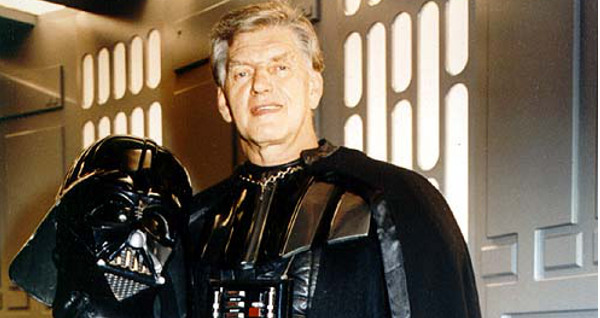
For some lighter viewing I also watched an informative documentary about filmmaker, actor and theatre genius called: MAGICIAN: THE ASTONISHING WORK OF ORSON WELLES (2014), which entertainingly ran through the career highs and lows of Orson Welles. Meanwhile, I AM YOUR FATHER (2015) was a likeable tribute to the man who WAS Darth Vader in the original Star Wars franchise – David Prowse. However, the film was ruined by the Spanish director crow-barring himself into the film and also trying to create some drama out of Prowse being gazumped by George Lucas for the shooting of Vader’s death scene. Prowse had a great career and I found the attempts at controversy were unnecessary and the film should’ve concentrated on the man in the suit himself.
Last but not least if you love filmmaking docs you must watchLOST SOUL: RICHARD STANLEY’S ISLAND OF DR MOREAU (2014). This documentary charts the journey of director Richard Stanley and his attempts to bring classic novel The Island of Dr Moreau to the silver screen. With a massive budget and filming taking place in Australia it all starts to go wrong for Stanley as tropical storms hit the set and the money men at the studio lose confidence. Add the crazy Marlon Brando, difficult Val Kilmer and hedonistic extras to the mix and you get a box office turkey burning in front of your eyes. Both funny and tragic it reveals the folly of filmmaking yet sadly also seemed to finish Stanley’s promising directorial career.
Denzel Washington’s honest, down-to-earth and heart-cracking drama is a formidable character piece and acting tour-de-force. Adapted from August Wilson’s prize-winning play, the narrative bristles with authentic working class lives of 1950s Pittsburgh, and is littered with some wonderful stories and dialogue. At the heart of the drama are Denzel Washington’s complex character Troy Maxson and his long-suffering wife, Rose; portrayed with significant humility and pathos by Viola Davis. Great support comes also from Mykelti Williamson as Troy’s mentally impaired brother, Gabriel.
Troy’s character is very charismatic and he delivers some hearty yarns from his past, but he’s also bitter and a drinker and, while he has had a hard life, he bullies everyone around him. His sons and more importantly his wife Rose put up with it but eventually he grinds everyone down, pushing them away with his boorish “I-know-best” arrogance and aggression. With her quiet power Viola Davis more than matches Denzel Washington’s grandstanding and Rose’s heartfelt speech toward the end of the film is a stunning retort to her husband’s continual tirades and emotional neglect.
I’ve seen some criticisms of the film stating it is too “stagey”. Well, as it is based on a play that is understandable, yet, August Wilson’s words are a thing of beauty and therefore deserve focus. I think, while directing, Denzel Washington could quite easily have opened up the settings and had conversations on the street, but the decision was made to “fence” in the characters to create a sense of claustrophobia and intensity. By keeping the players mainly in the yard and the house we feel as trapped as they are by society, social status and their life decisions. It’s an intimate film about proper characters and real lives and overall the performances alone make the film feel cinematic. (Mark: 9 out of 11)
MOONLIGHT (2016)
Barry Jenkins low-budget contemporary drama is another brilliantly acted character memoir; although when compared to Fences it benefits from a more complex structure and cinematic style. Split into a trio of linear timelines from the same characters’ lives we get three different actors representing the life and changes which occur in Chiron’s existence; with chapters named, Little, Chiron and Black.
Each section draws us into the characters’ world as Chiron searches for meaning, identity and direction as to who he really is as a person. With his father absent Little Chiron (Alex Hibbert) cannot find satisfaction via his mother, an angry and lost woman portrayed brilliantly by Naomi Harris. Small for his age he is also at the mercy of school bullies and while a random meeting with a local drug dealer, Juan (Mahershala Ali) provides Little with a mentor to connect with it doesn’t sustain. Ali as Juan, like most of the performances, delivers a subtle realisation of a character trapped by his life choices and perhaps sees some redemption in ‘Little’. Alas, due to his lifestyle and ‘job’ he is clearly not the role model ‘Little’ needs.
In the second and third sections Chiron’s relationship with his best friend Kevin comes to the fore both in terms of some powerful drama and intimate sexual connections. Barry Jenkins framing, colour design, use of music and editing choices all commit to create a poetic and fragmented style, further drawing me into Chiron/Black’s story. Chiron’s continual search for identity and meaning in the world reflects the most essential of human needs: the search for identity and love. Overall, this is a film of harsh and beautiful moments and each segment was layered with so many emotions and so skilfully told that I wanted to see more of the characters. (Mark: 9 out of 11)
SPLIT (2016)
Split (2016) is an altogether different film about the search for identity. In fact the lead character portrayed devilishly well by James McAvoy has TWENTY-THREE different people battling around his mind and something is about to give. Let me say that a film like Split won’t be challenging the Oscars because in essence it is a terrifying B-movie thriller, however, McAvoy gives a performance of such quality it reminded me of Anthony Hopkins as Hannibal Lecter in his cannibal pomp. McAvoy’s twisted ability to switch between the many personalities was a real guilty pleasure as he earned his acting fee over and over and over again.
The story concerns three girls, Casey, Marcia and Claire (including an excellent Anya Taylor-Joy) who are kidnapped and imprisoned by the various personalities in Kevin Crumb’s head. Some – including OCD driven Dennis – are more dominant than others and attempt to wrestle total control, which is where McAvoy’s sly switches are a real joy to watch. As a cat-and-mouse plot bleeds out we also get some intriguing back-story flashbacks into Casey traumatic past. These events really add colour to the main narrative and ramp up the tension and suspense. The scenes between Kevin, his personalities and sympathetic Doctor Fletcher (Betty Buckley) also add some dark humour to the story. By the end though all humour is gone and we get a stunning and believable supernatural turn as Kevin’s mind unleashes an altogether different personality.
Writer/Director M. Night Shyamalan’s dalliance with big-budget-franchise-Hollywood-pictures – including: After Earth (2013) and The Last Airbender (2010) – did not do his career any favours. But with Split he is back on terrific form as he takes a simple abduction plot and renders it full of horror, twists and fantastical ideas. While I did not enjoy his previous film The Visit (2015) – mainly due to the stupid kid rapping throughout a decent horror story – this one is highly recommended for psycho horror fans and for McAvoy’s performance alone. (Mark: 8.5 out of 11)






 The Cinema Fix presents