Screenplay by: Lewis John Carlino – based on the novel, Seconds, by David Ely
Cast: Rock Hudson, Salome Jens, John Randolph, Richard Anderson, Will Geer, Karl Swenson, Jeff Corey etc.
Music by: Jerry Goldsmith
***MAY CONTAIN SPOILERS***
So, I continue my articles on films which have perhaps fallen off the radar and deserve more recognition. The rules are simple. An under-rated classic can be a film I love, plus satisfy the following criteria:
Must not have won an Oscar.
Must not have won a BAFTA.
Must not appear in the AFI Top 100 list.
Must not appear in the IMDB Top 250 list.
Must not appear in the BFI 100 Great British films.
Must not appear in the all-time highest grossing movies of list.
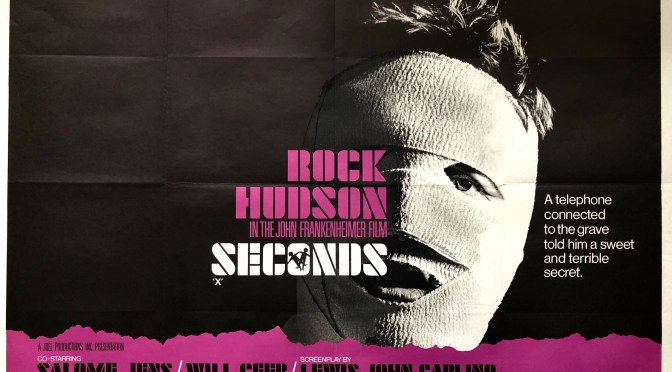
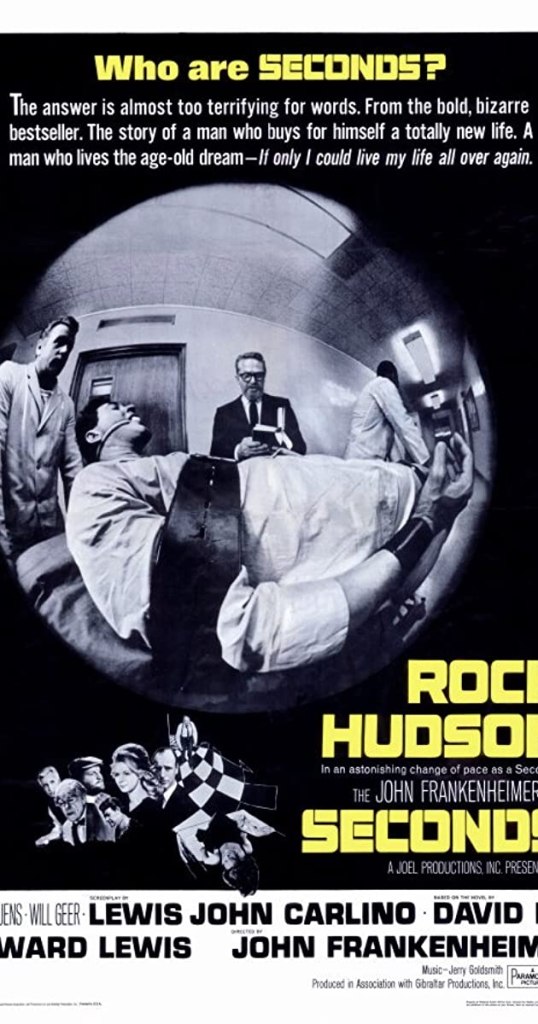
Seconds (1966) is a science fiction drama which is very much of its time, but also truly relevant today. It deals with identity and lifestyle transplants. The film explores notions of escaping one’s everyday existence and living out one’s dreams through plastic surgery and scientific procedure. However, it also contains an important message, that whatever physical, social and personal changes you make there are no guarantees your life will be better. Perhaps, it is best to accept what you have and work with what nature gave you. Make positive changes to your mind and body, but know that there is no such thing as a quick fix.
The character of Arthur Hamilton (John Randolph) certainly finds this out to his cost in the narrative of Seconds (1966). His life is reasonably good, but he is dissatisfied with his job, and love for his wife has dissipated. He discovers an outfit called ‘The Company’ can, at a price, exchange his body and life, allowing him to be reborn a new man. After the procedure that man happens to be called Tony Wilson, who has the movie star looks of Rock Hudson. Hamilton/Wilson settles into a creative and hedonistic life by the beach. Yet, the sand is always softer on the other side. Soon, holes begin to show in Hamilton/Wilson’s new life.
Seconds (1966), is a psychologically eerie body-swap-sci-fi-horror film. It’s shot in crisp black and white by influential cinematographer, James Wong Howe, and contains some psychedelic visuals, weird angles, mirrored images, fish-eye lens shots, and images of actual rhinoplasty during the transformation sequence. Brilliantly directed by John Frankenheimer, it is also thematically very powerful. Aside from the dystopic warnings about plastic surgery, it also explores the nature of cults and closed communities. Rock Hudson gives a career best performance as Tony Wilson. His desperate and paranoiac scramblings in the second half of the film are painfully stressful as the character realises he has not only lost his identity, but possibly also his mind. Overall, it’s important to reiterate that organic change in itself is a positive thing, however, as Seconds (1966) demonstrates, there are no shortcuts to happiness or success.
Produced: Antony Russo, Joe Russo, Mike Larocca, Chris Hemsworth, Eric Gitter, Peter Schwern
Screenplay by: Joe Russo – based on Ciudad by Ande Parks, Joe Russo, Fernando Leon Gonzalez
Cast: Chris Hemsworth, Rudhraksh Jaiswal, Randeep Hooda, Golshifteh Farahani, Pankaj Tripathi, David Harbour, etc.
Distribution: Netflix
***MAY CONTAIN SPOILERS***
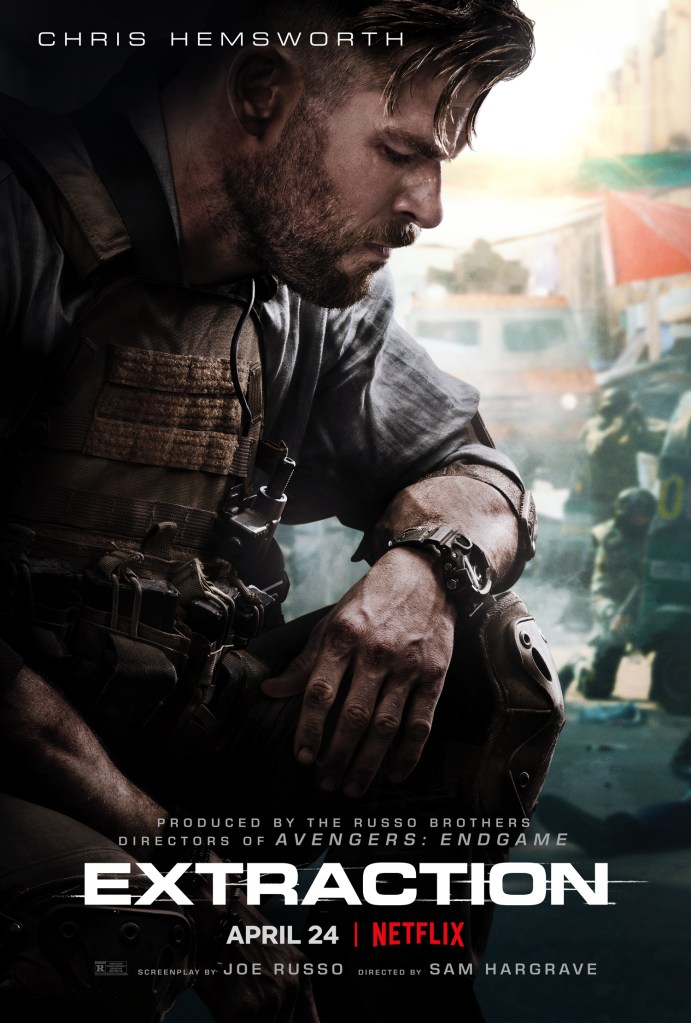
Do you remember when action heroes used to be larger than life, filling up the screens with muscles, charisma, and wise-cracking one-liners. I am old, so I certainly do. The likes of Arnold Schwarzenegger, Steven Seagal, Bruce Willis, Jean Claude Van Damme and of course, Sylvester Stallone were just some of the leading men crunching and blowing up the cinema screens. Okay, they may have been reactionary 1980s and 1990s masculine archetypes, and arguably nationalistic, sexist, militarist and incredibly over-the-top characters, but I kind of miss them. Because today’s action heroes, while equally talented at killing and delivering mayhem, are somewhat less colourful.
Don’t get me wrong, I still enjoy the technically excellent and brutally realised fight scenes and stunts of today. However, John Wick, Bryan Mills of Taken (2008), Lorraine Broughton of Atomic Blonde (2017), Jason Bourne, and now Chris Hemsworth’s mercenary, Tyler Rake in Extraction (2020), are individuals of fewer words and even less humour. I guess Jason Statham isn’t too bad, but he’s still quite serious. Lastly, while one can certainly rely on the sanitized fun of the Marvel Universe for some humour and personality within the action, it’s still not the same as a good old Arnie action flick. The more adult oriented superhero, Deadpool (2016), can be relied on for X-rated violence and constant verbal quips. But, he wears a suit and it’s just not as good as the action heroes I grew up watching. Ah, but that’s nostalgia for you.
Why the trip down memory lane, Paul? What about the kinetic and explosive action of Extraction (2020)? Yes, the well-choreographed manoeuvres are extremely exciting. They are also bone-crushingly relentless from the moment Tyler Rake enters Bangladesh to extract an imprisoned Indian gangster’s teenage son, Ovi Mahajan (Rudhraksh Jaiswal). Hemsworth and director Sam Hargrave get you in and out of hand-to-hand fights, car chases, leaps and falls from buildings, and constant gun battles with stunning brilliance throughout. The camera and editing work present virtuoso work, capped by an almost seamless eleven minute long take involving all manner of mayhem. While Ovi and Tyler kind of bond later in the film, I found myself needing more emotional or political subtext to narrative. Even John Wick (2014) created its own mythology and universe, where this relies on fast-paced movement, military tropes and lazy stereotypes. Ultimately, Extraction (2020) was like an explosive fireworks display. Great to watch while it lasted, but ultimately forgettable. Man on Fire (2004) did this story way better and with way more feeling.
Produced by: Kitty Green, James Schamus, Scott Macauley, P. Jennifer Dana, Ross Jacobson
Cinematography: Michael Latham
Cast: Julia Garner, Matthew Macfadyen, Mackenzie Leigh, Kristine Froseth, Noah Robbins etc.
*** MAY CONTAIN SPOILERS ***
Having worked initially in the documentary genre, Kitty Green now presents her first fictional film, The Assistant (2019), with the ever-impressive Julia Garner in the lead. Garner portrays the titular assistant, Jane, a PA in an unnamed New York based film production company. However, while the characters may be fictional, the events reflected are very much based in reality, as the film explores endemic sexism within the film industry and office workplaces more generally. This isn’t a sensationalist #MeToo expose or revenge story, but rather a subtle narrative which conveys it’s criticisms with hushed and damning power.
The film is structured over one day. I’m a big fan of such a convention and wrote about the positives of single day narratives here. Anyway, The Assistant (2019), begins with Jane first in the office, and ends with her being one of the last there at night. In the middle we get a succession of expertly composed scenes which find Jane working for a big-shot movie producer. The fact that we never see him, but hear him and experience the aftermath of his behaviour through Jane is an ingenious concept. By showing rather telling us directly about his covert sexist exploitation, one is truly brought into Jane’s painful situation. She is told she is lucky to have this job and it presents a great opportunity to eventually become a film producer. Yet, to do so requires her to turn a blind eye to events which other employees horrifically consider to be the norm in a media company.
Weinstein’s name is never mentioned. It doesn’t have to be. He is the sexual predator in the room and probably among many film producers who have utilised the casting couch to have their disgusting way with budding actors and actresses. That is why Kitty Green deserves so much praise because she chose a directorial style that really works for the story. Green and her cinematographer suck all of the colour out of the film industry, making it grey and beige and stark and unglamorous. Via the character of Jane, and Garner’s exquisitely reserved performance, we learn that such bullying cultures exist, and the character must choose to accept it or move on. Garner’s scene with the HR Executive, played by Matthew Macfadyen, is superb in conveying the difficult choice Jane faces.
Lastly, as well as making important points about the patriarchal corruption within the film industry, I enjoyed that it also captured the repetitive nature of administration work. Photocopiers hum, phones ring, paper flaps, printers and faxes whir, while florescent strip lights glow amidst the drudge of the daily office grind. Jane is a prisoner within a myriad of shadowy walls and filing cabinets. Further, Jane is also torn between being a just person and following her dream of working in the movies. But, at the end of another exceptionally exhausting day, that dream is soured by the insidious lust of human behaviour. Thus, The Assistant (2019) asks, will things ever change? Go watch it and decide if you think they will.
Cast: Richard E. Grant, Paul McGann, Ralph Brown, Richard Griffiths
***CONTAINS SPOILERS***
“We want the finest wines available to humanity. And we want them here, and we want them now!” Withnail
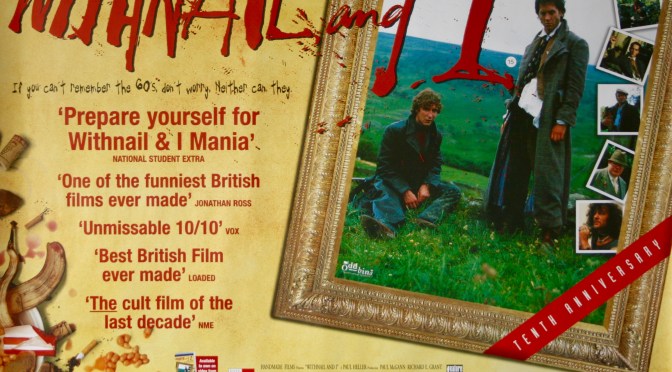
I am not one to believe in fate, but there has to be something magical about the random moment, at the age of seventeen, I was perusing my local video shop looking for a film to rent, and the cover of low-budget, British independent character drama, Withnail and I (1987), shone amidst the variety of Hollywood produced fodder. I picked up the box and for some reason the story of two unemployed actors mooching about at the fag end of the 1960s called to me. Perhaps it was the front cover featuring the debauched and worse-for-wear looking character of Withnail which drew me in? Or was it the casting of Paul McGann as the eponymous ‘I’, an actor I recognised from excellent TV drama, The Monocled Mutineer. Whatever the reasons, I rented the film and a special bond was formed forthwith. It lasts to this day.
Firmly in my top-ten-line-for-line-best-dialogue-ever-movies, Withnail and I (1987) simply bursts with memorable spats, insults, one-liners, and speeches. Another major strength of Bruce Robinson’s elegantly profane screenplay is the relationship between permanently inebriated and cowardly ‘thespian’, Withnail (Richard E. Grant) and his buddy, ‘I’ (McGann). It is a strange friendship full of mutual disrespect, petty bickering, and envy, but by the end of the film a kindly form of love is revealed. Withnail may seem an angry man, but ultimately, he’s using that ire to hide pain, sadness, and disappointment.
“I feel like a pig shat in my head.” Withnail
Richard E. Grant is incredible as the paralytic, pathetic and cowardly Withnail, who, along with ‘I’, laments a lack of career opportunities. Such bitterness, jealousy and ranting make him hugely obnoxious. However, Robinson’s exquisite writing and Grant’s subtly empathetic performance actually create an incredibly poignant character. Well, that and he’s absolutely hilarious, Indeed, it’s a hedonistic joy witnessing Withnail drinking every liquid known to humanity as he attempts to obliterate the now and tomorrow. Unbelievably, Richard E. Grant was teetotal, so director Bruce Robinson had to get him very, very drunk in preparation for a role he never bettered in his whole career.
Bruce Robinson, arguably, never reached the heights of Withnail and I (1987) again, although he does have other impressive writing credits. But this screenplay is one of the greatest ever written; conversely making it one of the funniest and tragic films of all time. Lastly, his often quoted but rarely bettered work is one of the greatest I have ever read, brimming with towering poetry, bilious insults, and drunken repartee. I mean there is little plot to the story of two actors getting drunk, going to the country, getting drunk and coming back. However, it remains one of my favourite films of all time, with one of the most memorable characters in Withnail.
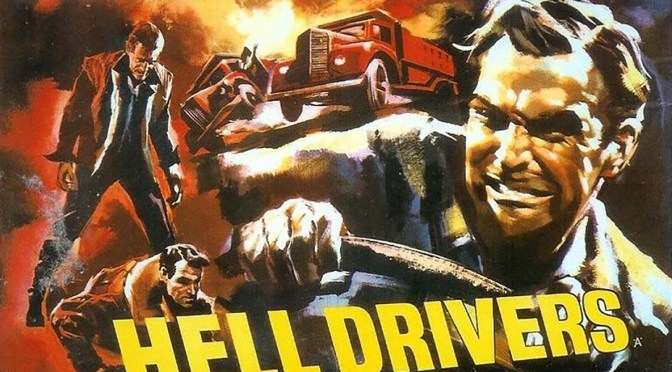
GREAT ENSEMBLE FILM CASTS #4 – HELL DRIVERS (1957)
Directed by: Cy Endfield
Produced by: Benjamin Fisz and Earl St John
Written by: Cy Endfield and John Kruse
Cast: Stanley Baker, Peggy Cummins, Patrick McGoohan, Herbert Lom, Sean Connery, William Hartnell, Alfie Bass, Sid James, David McCallum, Gordon Jackson, Jill Ireland etc.
**** CONTAINS SPOILERS ****
Often on this blog I will write about very well-known actors or films, however, sometimes it’s good to explore more forgotten cinematic gems. Hell Drivers (1957), is one such film from the past that certainly deserves revisiting. Not simply because it is an excellent action drama, but because it contains an incredible cast, with most of the players going on to have major parts in some iconic screen roles. I caught the film again on the cable channel, Talking Pictures, and it’s a really gripping low-budget British thriller.
The plot of Hell Drivers (1957) is quite simple. Tom Yateley (Stanley Baker), a drifter with an unknown past, turns up looking for work at Hawlett’s truck yard. Their group of drivers carry gravel/ballast from a quarry to site. The drama derives from the fact they must meet a certain quota per day, and this involves driving like maniacs to achieve this. Let’s just say that the Health and Safety executive would have a field day now. But that’s one of the strengths of the script. In post-war Britain men and women were desperate for work and money and therefore prepared to do anything to survive. Thus, the film, amidst the helter-skelter driving action, contains a strong social commentary in regard to the exploitation of the workers. There is of course camaraderie among the men, but fierce rivalries also develop. Such competitiveness drives the conflict within the film.
Cy Endfield, a solid American genre filmmaker, directs the ensemble cast brilliantly. What a cast it is too! It’s essentially a “who’s who?” of “before they were famous” actors, all combining to incredible effect. Stanley Baker as Tom carries the lead role. Baker would gain further success in Endfield’s war epic Zulu (1964), and become a renowned lead until his death at the age of 48. The supporting cast though, is something else. Patrick McGoohan, who plays the bruising antagonist, Red, would cement his fame in the incredible 1960’s cult classic, The Prisoner. Furthermore, we have the first Doctor Who in William Hartnell and of course, James Bond himself, Sean Connery. If that wasn’t all, The Man From Uncle star, David McCallum, features in an early role. So does the already established comedic actor Sid James. James would become synonymous with the quintessentially English, Carry On…, film series. Throw in great characters actors Herbert Lom, Gordon Jackson, Alfie Bass and a very young, Jill Ireland, and you have one hell of a cast; all starring in this excellent British film gem.
In all the excitement, I seemed to have forgotten about this feature, but will reignite it here. Essentially, I pick a favourite film actor or director or writer or composer or film craftsperson, who I have followed and admired for some time, and pick out five of their works which resonate with me. Usually it is difficult to stick to just five selections, however, I find writing with a rule or discipline sharpens the critical mind. Today’s choice is one of the greatest actors to have walked the boards, appeared on the box, and graced the silver screen. His name is of course, Denzel Washington.
Born in Mount Vernon, New York and having initially attended a military academy, Washington would later gain a BA in Drama and Journalism from Fordham University. He began by acting in Summer Stock theatre, but his first major break was in the television series, St Elsewhere. His performances as Dr Philip Chandler would lead to castings in prominent film roles, notably as Steve Biko in Cry Freedom (1987). In that film he would receive his first Academy award nomination. From then on Washington would go from strength to strength traversing stage and screen roles with incredible range and skill. As writer, director and actor he is an artist who can span genres and disciplines, equally brilliant in commercial projects and more arthouse productions. Here are just five roles which I very much think he excelled. But to be honest, there are many, many more I could have included.
GLORY (1989)
Glory (1989) was the first major Hollywood film to profile the fight of black soldiers to free themselves from slavery in the context of the U.S. Civil War. It is an excellent drama with some brutal battle scenes and memorable characters. None more so that Washington’s portrayal of Private Silas Trip. He is quite understandably an angry man determined to fight all the way against oppressors. Washington delivered a searing performance which would earn him a Best Actor in a Supporting role award. It is an outstanding portrayal full of power and strength.
MALCOLM X (1992)
Washington worked with Spike Lee on many film productions and Malcolm X (1992), is arguably their most significant and impressive film. It charts the life and death of a man born Malcolm Little who would grow to be anything but. After a troubled childhood he became a drug dealer and criminal in order to survive. Having converted to Islam he rejected his slave roots, going on to become one of the most outspoken voices against black oppression the world has ever known. Both Lee and Washington should have won Oscars for their work, and Washington’s intense performance stands as a fine cinematic tribute to a true spokesperson for a generation.
TRAINING DAY (2001)
Washington has played his fair share of heroic and complex anti-heroes trying to find their way in the world, but in David Ayer’s brilliant cop drama Training Day (2001), he revels in the role of bad-ass corrupt cop, Alonzo Harris. Washington and Ethan Hawke are both brilliant as the mentor and apprentice narcotics officers who are about to have a very intense day of plots and double-crosses. Washington spits and chews up Ayer’s meaty dialogue as Harris, who has a devilish plan up his dirty sleeves. Ultimately, the respect between the two erodes and a violent power game ensues with surprising twists ahead. Washington won the Best Actor award at the Academy Awards, and while it was well earned, it was arguably more for his body of incredible film performances overall.
MAN ON FIRE (2004)
While not necessarily the best film on Denzel Washington’s amazing acting C.V., Man on Fire (2004) is one of the more memorable films he made with uber-Hollywood genre filmmaker, Tony Scott. Washington clearly respected Scott as a man and director, and while Scott’s flashy and bombastic style could drown his actors, Washington’s talent always shone through. As John Creasy, Washington’s characterisation is that of a broken ex-military man who has killed for his country, and now realised it was all for nothing as he lost and alone. Alcoholic and suicidal, Creasy finds redemption in the guise of a young girl, portrayed brilliantly by Dakota Fanning, who following her kidnapping, goes on a vengeful kill-crazy-rampage-search-for-justice. Washington’s acting is both muscular and tender in equal measure as Scott delivers an explosive genre film of the highest quality.
FENCES (2016)
Denzel Washington’s honest, down-to-earth and heart-cracking drama is a formidable character piece and acting tour-de-force. Adapted from August Wilson’s prize-winning play, the narrative bristles with authentic working-class lives of 1950s Pittsburgh, and is littered with some wonderful stories and dialogue. At the heart of the drama are Denzel Washington’s complex character, Troy Maxson, and his long-suffering wife, Rose; portrayed with significant humility by Viola Davis. Troy’s character is charismatic, and he delivers some hearty yarns from his past, but he’s also bullies everyone around him. Moreover, Washington directs brilliantly, “fencing” in the characters to create a sense of claustrophobia and intensity. By keeping the players mainly in the yard and the house we feel as trapped as they are by society, social status and their life decisions. It’s an intimate film about proper characters and real lives and overall, the performances alone make the film feel cinematic.
Written by: Anna Winger, Alexa Karolinski, Daniel Hendler
Based on: Unorthodox: The Scandalous Rejection of My Hasidic Roots by Deborah Feldman
Cast: Shira Haas, Amit Rahav, Jeff Wilbusch, Alex Reid, Aaron Altaras, Ronit Asheri, Dina Doron, Gera Sandler, and more.
Original Network: Netflix
**** MAY CONTAIN SPOILERS ****
When one watches a memoir based on true events such as Netflix’s Unorthodox (2020), you realise how lucky you are in regard to the freedom you have. This isn’t about an individual going through social lockdown for good reason, but someone who is trapped by their strict religious and family traditions. Such traditions in themselves could be deemed acceptable as we must respect different ways of living. However, what if that person wants to leave their life and is not allowed? This is called incarceration of the soul and body. This is wrong. People must be allowed to choose their own way in life and not be tethered by dogma or ideology. I repeat, I respect people’s belief systems, but not if it has a negative effect on that person.
Based on Deborah Feldman’s bestselling autobiography, Unorthodox, is an impressive four-part drama which focusses on Esty Shapiro, portrayed with provocative emotion and vulnerability by Shira Haas. Esty is an unhappy Jewish woman, who finds herself trapped in a traditional ultra-Orthodox marriage in Williamsburg, Brooklyn. She is denied many things such as a control, position, voice, personality, expression and her love of music. The compelling episodes go back and forth in time between the build up to her marriage to inexperienced, Yanky (Amit Rahav), and Esty’s escape to Berlin, where she explores the world outside her religion for the first time.
While Yanky is shown to be kindly, he is committed, some may say brainwashed, to his faith. Therefore, the marriage process is one of suppression and control. Every moment of Esty’s life is plotted, from the shaving of her hair prior to the wedding, and after, the days they are meant to have sex. The intercourse, however, proves anxious for the young couple. Rather embarrassingly though, this private matter becomes a huge issue with other family members. Privacy, it seems, is secondary as Esty is treated no better than a brood mare. Even after she escapes to Berlin, Esty is pursued by her husband and brutish cousin, Moishe (Jeff Wilbusch). Sadly, there seems to be more control in the Hasidic community than love. Of course, this is a representation of Deborah Feldman’s experience, thus, I cannot begin to understand the nature of the Hasidic Jewish community in full. For many it is probably a safe space and designed to protect individuals from the often rotten world outside. Faith and family can be great protectors, however, in this story, for one person, that life became a living hell.
In the character of Esty we are introduced to a fascinating world, and her riveting struggle to become an individual rather than follow patriarchal doctrine. While the narrative takes a slight left turn in the final episode, I can heartily recommend this mini-series. Lastly, I cannot judge if the representation of the Samtar movement is realistic, yet the setting, costumes and culture feels authentic. The actors speak, on the main, Yiddish, and in Shira Haas’s commanding performance Unorthodox we get a very realistic encapsulation of a desire to escape oppression. Haas may be diminutive in size, but her rendition of Esty Shapiro is mighty in heart and soul.
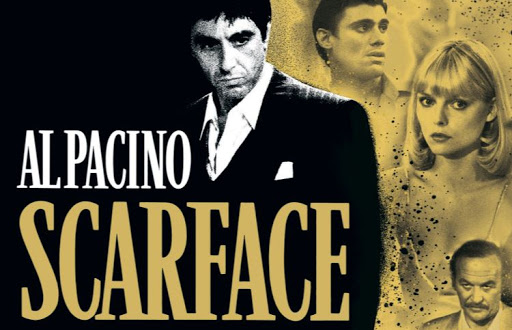
Cast: Al Pacino, Steven Bauer, Michelle Pfeiffer, Robert Loggia, F. Murry Abraham, Mary Elizabeth Mastrantonio, Paul Shenar etc.
Music: Giorgio Moroder
Cinematography: John A. Alonzo
*** CONTAINS SPOILERS ***
“I always tell the truth, even when I lie! so, say good night to the bad guy!” Tony Montana
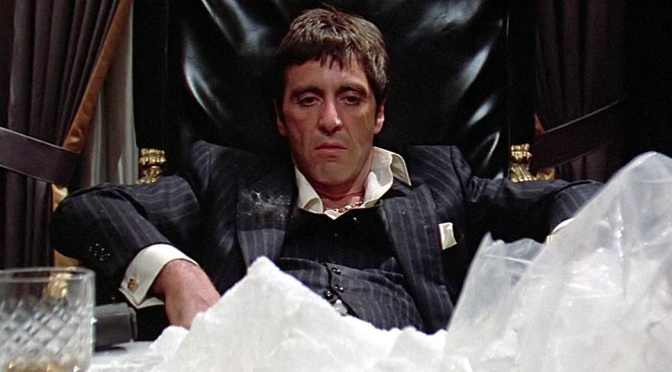
While Al Pacino is rightly lauded in the critically acclaimed Godfather Trilogy, as quietly menacing Michael Corleone, I think his spectacular performance as Tony Montana in Scarface (1983), is nothing short of cinematic gold. Tony Montana is a monstrous symbol of 1980’s excess and neo-capitalism. A product of social deprivation and cold war division. In this world, greed is not just good, but a driving force behind an evil empire which believes the extreme is only halfway. Tony Montana is small in size but big on gesture, colour and voice, both an anti-hero and villain for the eighties era. Moreover, for me, Tony Montana is the most iconic gangster ever committed to celluloid.
With a combustible screenplay written by Oliver Stone, Scarface (1983), is a cocaine driven and incendiary viewing experience. Stone himself is reported to have been battling cocaine addiction while writing it and this shows in the over-the-top world on screen. Everything is ramped up to eleven, including: the violence, shouting, swearing, shooting, politicking, drug-taking, sex, killing, avarice, money-making and corruption. There isn’t one redeemable character in the whole film. Everyone is corrupt. Actually, Tony’s mother tries her best to stay away from the darkness that follows Tony. His sister Gina (Mary Elizabeth Mastrantonio) seems pure, but is ultimately drawn into Tony’s incestuous glue, precipitated by her dangerous liaison with Manny (Steven Bauer).
“In this country, you gotta make the money first. Then when you get the money, you get the power. Then when you get the power, then you get the women.” – Tony Montana
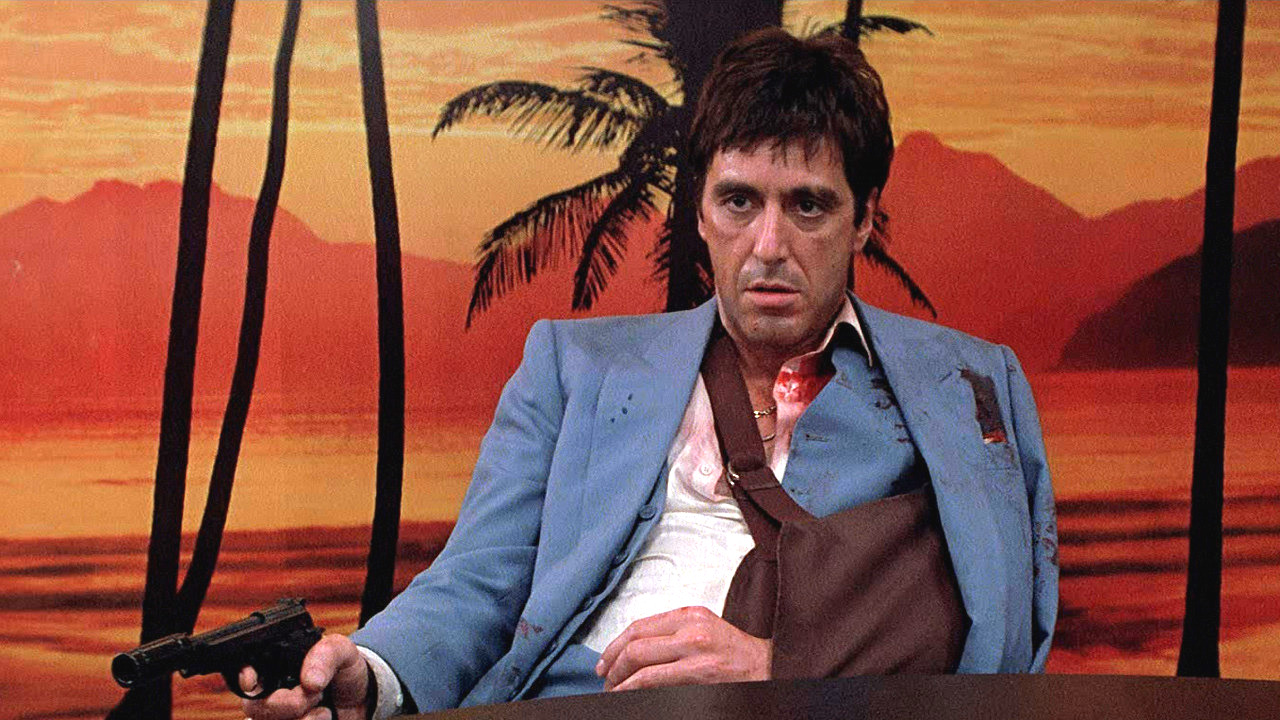
Directed with operatic and kinetic power by Brian DePalma, I have to say that Scarface (1983) is probably my favourite gangster film of all time. That isn’t to say it’s the best. That is Scorsese’s masterpiece Goodfellas (1990). But I just love this film because DePalma and Stone and Pacino revel in excess, violence and tragedy. It also contains some very dark humour too. Tony Montana is horrific, but also very funny. Georgio Moroder’s brooding synthesised score pocks the Miami streets, clubs, beaches, Bolivian boltholes, and in the final hour, Tony’s fortified mansion. I love the artificial backdrops featuring palm trees and sun because their fakeness symbolises the delusory world of the characters. Indeed, even the back-projection shots used when driving add to the illusion. The characters business foundations are built on white sand, a powder which ultimately blows away in the wind.
DePalma is the best director of a cinematic set-piece since Hitchcock. That isn’t to say he’s the best director ever per se, but rather someone who just creates so many well-conceived and memorable scenes. The infamous chainsaw scene, the killing of Frank (Robert Loggia), Tony’s bitter monologue in the restaurant, and the explosive “say hello to my little friend” ending, are just a few of the jaw-dropping moments in this epic crime drama. DePalma also gets incredible performances from all the cast. Pacino obviously blows the doors off as the tough, paranoiac, angry, greedy and hyperbolic Montana. The then, mostly unknown, Michelle Pfeiffer is equally impressive as the coke-fuelled ice-queen, Elvira, who becomes Tony’s vampiric and soulless wife.
Stone’s scenery-crunching script obviously owes much to the original film version of Scarface (1932), co-written by, among others, W. R. Bennett and Ben Hecht and directed by Howard Hawks. The structure is remarkably similar charting the rise and fall of the “political refugee” from Cuba, Tony Montana. It’s a genius stroke by Stone to transplant the exodus of Cubans to America and at the same time, echo the rise of the gangster during the prohibition era of the original film. But, instead of booze, the drug of choice is cocaine. This war on drugs is bloody and unforgiving. As the money and narcotics mount up, so do the victims. Complicit with the criminals are law enforcement, South American dictators and U.S. Government officials. Stone makes many political barbs, but never preaches at the expense of the narrative. Capitalism, the law and American foreign policy has never been more ruthless than here in Scarface (1983). As the oft-seen slogan says, ‘The World is Yours’, but tragically these characters don’t live long enough to enjoy it.
“Every day above ground is a good day.” – Tony Montana
Main Cast: Larry David, Jeff Garlin, Cheryl Hines, Susie Essman, J. B. Smoove, Ted Danson, Richard Lewis, Vince Vaughan, Kaitlin Olson etc.
Guests: Mila Kunis, Clive Owen, Laverne Cox, Chris Martin, Sean Penn, Jonah Hill, Jon Hamm, Philip Rosenthaland many more.
Distribution Platform: HBO (USA) – SKY (UK)
**CONTAINS MASSIVE SPOILERS**
“AH! INTERESTING. . . “
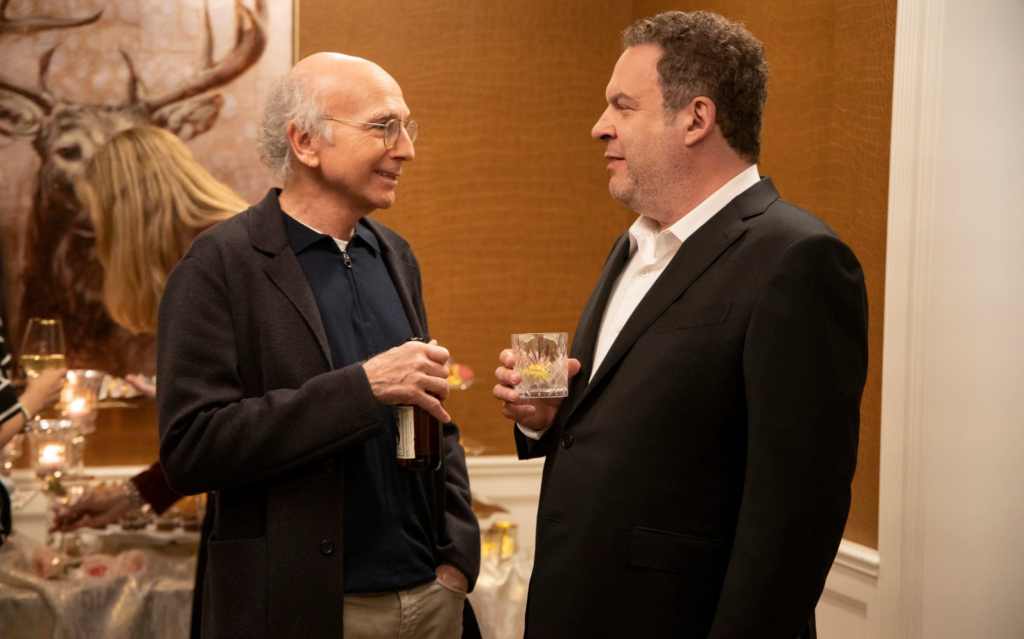
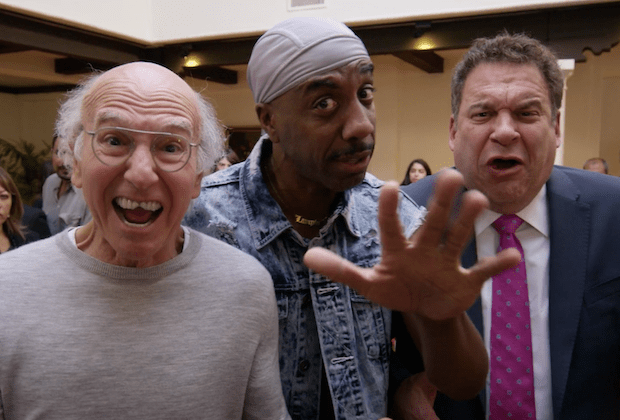
During a lengthy hiatus from 2011 to 2017, fans of Curb Your Enthusiasm were left bereft of their dose of Larry David’s inimitable and eccentric behaviour. The multi-millionaire writer of Seinfeld had carved out a wonderfully politically incorrect comedy series, full of misunderstanding, farce and hilariously embarrassing situations. Thankfully, he returned with season 9, and it was absolutely brilliant. Larry managed to get himself a death sentence, having written a musical called Fatwa, along with all manner of other comedic shenanigans. Season 10 has now followed and, once again, anti-heroic Larry delivers ten more fantastically offensive and funny episodes. More often than not we find his behaviour abhorrent as he goes about upsetting friends, family members, celebrities, and strangers on a daily basis. However, sometimes we are with Larry and his actions have merit and reason. Furthermore, due to the wonderful writing, improvising, cast and situations the humour is always more than pretty, pretty good!
NARRATIVE ARC (OF THE COVENANT)
Usually, Curb Your Enthusiasm episodes can stand alone due to the richness of the narrative strands Larry David and his writers create. But most seasons will have a very solid narrative arc running through it to provide looping rejoinders, a structural spine and a fitting conclusion. In season 10, there were echoes of storylines from prior seasons. Larry wanted to get back with Cheryl and they even committed divorced adultery, cuckolding Ted Danson in the process. However, the main arc revolved around the return of coffee store owner, Mocha Joe (Saverio Guerra). Larry pisses Mocha Joe off because he complains about “cold” coffee, wobbly tables and weak scones. Following Larry’s customary banishing he swears revenge on Mocha Joe. This takes the form of the wonderfully named ‘spite store’ he sets up next door. Thus, Latte Larry’s is born, and ten episodes of fast-paced, tit-for-tat, vengeful and hilarious scenes ensue.
“THE GOLDEN RULE” – STYLE AND THEMES
Curb Your Enthusiasm is not just funny because of the situations, dialogue, observations, guest stars and acting performances. It is also very sophisticated and stupid, combining a variety of comedy styles to fuel the humour. Earlier seasons could be argued to be more based in reality per se. The interactions between the characters felt more natural, in keeping with the pilot episode which was shot as a mockumentary about Larry returning to stand-up. Later seasons, especially seasons 9 and 10, upped the gag rate and one could even say felt slicker. Don’t get me wrong, the jokes have always come thick and fast in Curb Your Enthusiasm, but in the last two seasons there is not only a reliance on the usual comedy of embarrassment, observations and satire, but farce, slapstick and gross-out humour too have been added to the palette. Lastly, the show has always skated close to the edge in regard to non-PC humour and causing offence. Evidently, Larry David has now fully thrown himself over that edge and is happy to offend everyone in a two-fingered salute to so-called snowflakes or liberals out there.
In regard to thematics, Larry David clearly has his finger on the pulse relating to contemporary society, politics and human behaviour. Much of the humour and funny scenarios derive from what is acceptable behaviour and certain “rules” within everyday living. In season 10, Larry finds himself questioning, among other things: the behaviour of a pregnant woman; the merits of artificial fruit; what is and what isn’t’ sufficient praise; usage of disable parking badges; whether he should be in a restaurant’s ‘ugly section’; whether sex with Cheryl’s sister is post-relationship cheating; and the overall benefits of running a spite store. These elements, the running feuds with Ted Danson, Mocha Joe and Larry’s assistant, Alice, and themes relating to the Harvey Weinstein scandal and #MeToo movement; Larry and Leon’s continued chats about the nature of being black/white; Donald Trump’s presidency; fat shaming; suicide; Susie’s alleged plot to murder Jeff; nationalist ridicule; egotistic actor types; and transgender issues, all connectedly make this season a very rich product, full of ideas and challenging storylines.
“PRETTY GOOD. . . ” – EPISODE RATINGS
Episode 1 – Happy New Year – (8.5 out of 10)
Larry goes to war with Mocha Joe and reignites his romance with Cheryl. His relationship with his assistant also descends into accusations of sexual harassment.
Highlight: Larry wearing his Donald Trump, “Make America Great Again!”and ensuring no one wants to be seen with him.
Episode 2 – Side Sitting – (8.5 out of 10)
Larry’s relationship with his assistant, Alice, is possibly going to court unless he settles and makes amends. His attempts to get back with Cheryl are rebuked, so he dates his lawyer’s assistant.
Highlight: Larry gives Susie a portrait of herself as a birthday present. She loves it – but Jeff doesn’t.
Episode 3 – Artificial Fruit – (9 out of 10)
Larry’s donation to a charity fails to bring forward redemption when he refuses to hug Laverne Cox at an event, because she has a cold. Meanwhile, Richard and Larry argue over who is paying a lunch bill, leading to a very embarrassing escapade at a Spanish funeral.
Highlights: Larry is unsure if the Heimlich manoeuvre is appropriate when his assistant is choking. Plus, Larry’s doodle debate with Christine Lahti blows up into a serious disagreement.
Episode 4 – You’re not going to get me to say anything bad About! – (9 out of 10)
Larry, Donna (his new girlfriend), Cheryl, Jeff, Susie and Leon go to Cabo San Lucas for a friend’s wedding. Larry becomes fixated with Donna’s yo-yo dieting, but he and Leon do find some incredible coffee beans for Latte Larry’s.
Highlight: Larry’s determination to locate a toothbrush descends into a farcical conclusion. Later, at the wedding, Ted discovers Larry and Cheryl’s infidelity in a hilarious fashion.
Episode 5 – Insufficient Praise! – (9 out of 10)
Preparations for Latte Larry’s gather pace as Larry asks for a specific urinal type. Larry also gets a new housekeeper and is given a sex doll by Freddy Funkhouser. Meanwhile, Larry clashes with actor Clive Owen and Richard Lewis’ new girlfriend; a professional “crier”.
Highlights: Larry’s frantic battle with the sex doll resulting in his housekeeper and Cheryl catching him. Also, Clive Owen’s brilliantly pretentious send-up of narcissistic acting types.
Episode 6 – The Surprise Party! – (8.5 out of 10)
Larry meets a German inventor who has an anti-Semitic Alsatian called Adolf, and he gains joy from the use of a disabled parking badge. He also clashes with Susie over the surprise party she intends to throw for Jeff.
Highlight: Despite not having an appointment, Larry uses his cardiologist’s reception area to wait, because it’s a “waiting room”.
Episode 7 – The Ugly Section! – (9.5 out of 10)
Larry consistently keeps getting placed in the “ugly section” at the back of a restaurant. Simultaneously, he attempts to woo the widow of his friend who recently committed suicide.
Highlights: Larry asking Jane Krakowski’s character where she got the handles for her husband’s coffin. Later, Larry ruins a possible sexual liaison with her by arguing about the New York Jets. Lastly, Larry insults Susie as she should be in the restaurant “ugly section”.
Episode 8 – Elizabeth, Margaret and Larry! – (10 out of 10)
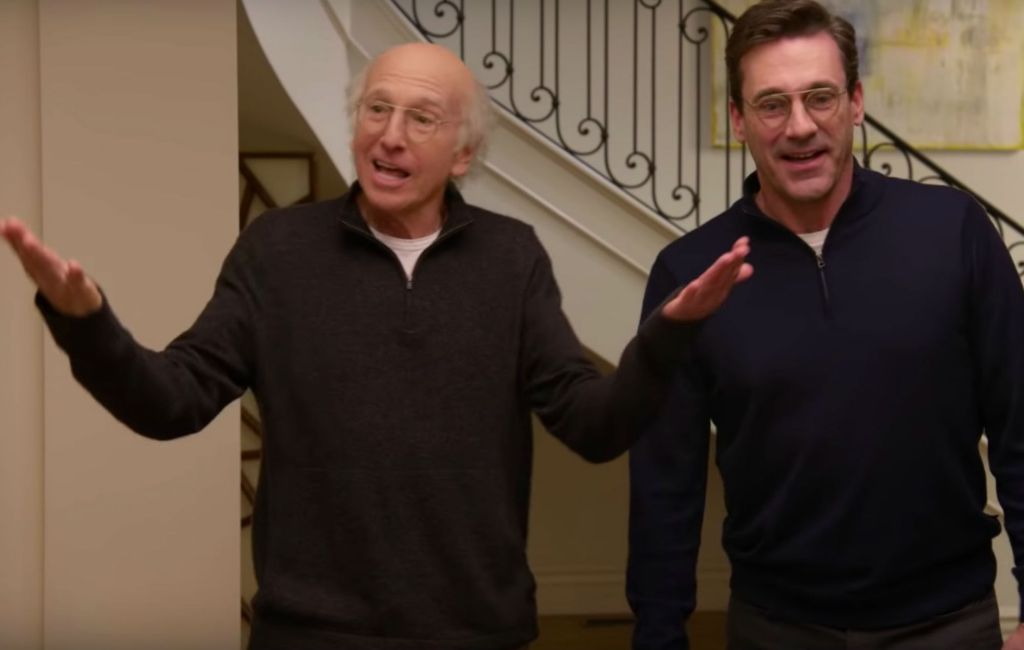
Actor, Jon Hamm, shadows Larry as he prepares to play a character like him in a film. Larry and Leon start a new business venture which initially proves profitable. Cheryl is angered when Larry spontaneously begins a relationship with her sister, Becky.
Highlights: Jon Hamm slowly turning into Larry throughout the episode, culminating in them both being ejected from a dinner party. Also, Kaitlin Olson returning as Becky and the surprising sex with Larry.
Episode 9 – Beep Panic! – (9 out of 10)
Larry strikes up a friendship with a waitress that dripped sweat into his soup. He also becomes obsessed with the liqorice at his car showroom. Meanwhile, Mocha Joe plots his own revenge using DVD film screeners.
Highlights: Leon and Larry succumb to the severe laxative effect of the liqorice in a silly bit of toilet humour.
Episode 10 – The Spite Store! – (10 out of 10)
Latte Larry’s is well and truly open, and it inspires other celebrities to open similar spite stores. Larry is irked by siren abusers and gives a job to Joey Funkhouser, but his big penis causes the store no end of issues.
Highlights: Sean Penn’s opening a spite-driven pet store. All Larry’s innovations at the coffee store ultimately lead to a very explosive downfall.
“NO GOOD?” – CONCLUSION
In preparing for this review I rewatched season 9 and watched season 10 twice. So, it’s obvious to say that I love, Curb Your Enthusiasm. Overall, I found the latest season to be a wonderful mix of old-fashioned slapstick and farce, combined with Larry David’s original and skewed vision of humanity. What was also impressive was the structural coherence of juggling so many comedy plots and situations. Plus, Larry behaves appallingly, and this is very appealing in an ever-increasingly politically correct world. Many times, throughout the season Larry is shown to be a provocative arsehole, but on occasions he very much has a valid point. Larry’s issues are very much first world problems, but because of the skilled writing and consistently high joke rate I related greatly to this season. Plus, Larry doesn’t win. His spiteful plotting and perpetual disagreements with those around him mostly fail. Indeed, ultimately, the joke is always on him.
Producers: Jason Bateman, Chris Mundy, Bill Dubuque, Mark Williams
Director(s): Jason Bateman, Alik Sakharov, Ben Semanoff, Amanda Marsalis, Cherien Dabis
Writers: Chris Mundy, Paul Kolsby, Ning Zhou, Martin Zimmerman, Miki Johnson, John Shiban, Laura Deeley
Cast: Jason Bateman, Laura Linney, Sofia Hublitz, Skylar Gaertner, Julia Garner, Lisa Emery, Janet McTeer, Charlie Tahan, Tom Pelphrey, Joseph Bedford Lloyd, Joseph Sikora, Felix Solis, Jessica Frances Dukes etc.
Original Network: Netflix
**CONTAINS SEASON 1 & 2 SPOILERS**
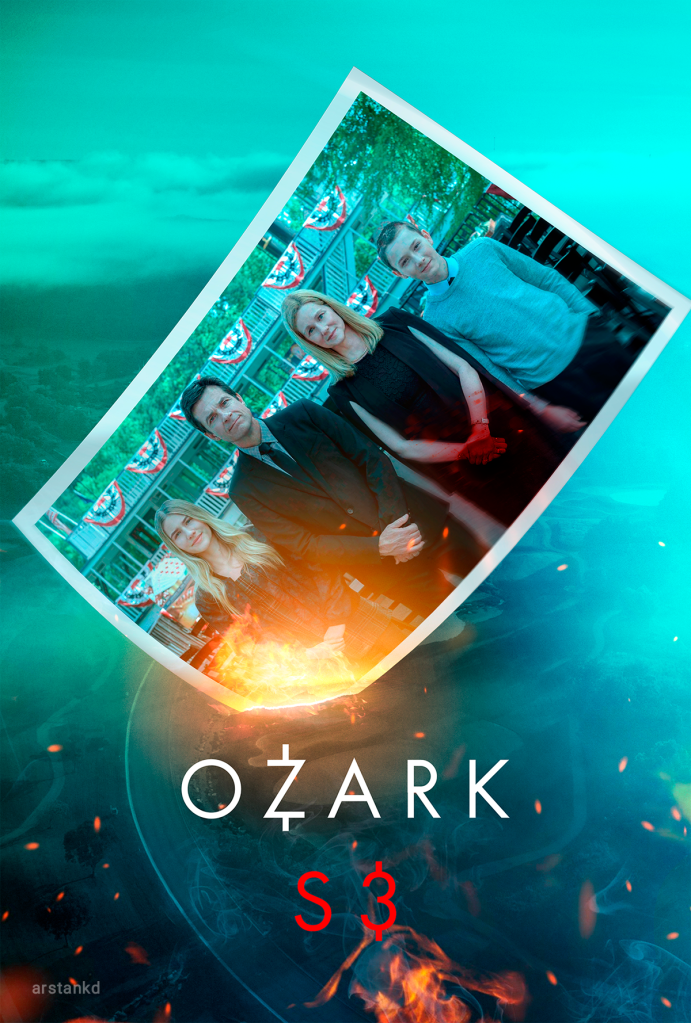
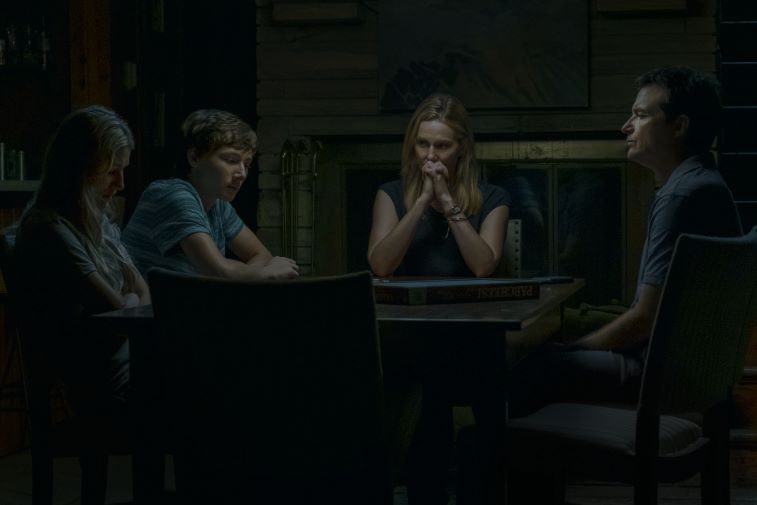
So, the third season of the Netflix crime drama, Ozark, confirms its status as one of my must-watch TV programmes. It joins the likes of Game of Thrones, Penny Dreadful, It’s Always Sunning in Philadelphia, Breaking Bad, Doctor Who, Curb Your Enthusiasm, Inside No. 9 and many more, which became essential viewing. If you haven’t seen the show, Jason Bateman plays an accountant who has to go on the run with his family to Ozark, Missouri, while working for a murderous Mexican drug cartel. Accompanying him are his wife, Wendy, portrayed by Laura Linney and their two teenage children, Jonah and Charlotte. The structure of the season one and two is to essentially place the American “nuclear family” at the heart of a noir thriller and watch them use their wits to survive. What is even more apparent though is that the ingenuity of the writing means we are rooting for the bad guys. Of course, there is always a bigger fish or predator, but slowly and surely the Byrdes are climbing a slippery ladder up the crime food chain.
Season 3 begins not long after season 2 ended. The explosive and brutal Mexican drug wars, involving the Navarro Cartel and bitter rivals, provides a violent back drop for the drama. It heightens the tension and danger for Marty and Wendy, who are now running a casino literally on the Ozark lakes. With the Cartel wars raging, the Byrdes also have major problems closer to home. They are attending marriage therapy, the FBI are about to audit their casino, Navarro himself is breathing down their necks about the flailing money-laundering operation, Janet McTeer’s devious lawyer, Helen Pierce, wants more control, and Frank Cosgrove Junior, from the Kansas City mob, is being a spoilt arsehole. His character and Julia Garner’s foul-mouthed Ruth Langmore face off many times during the season. In addition, Wendy’s erratic wanderer of a brother, Ben (Tom Pelphrey) is thrown into the heady mix, while always lurking is devilish Darlene Snell (Lisa Emery). The stakes are high, and the players are set for one almightily gripping game of life and death.
All the ingredients of what I loved in the first two seasons of Ozark are still present in the latest season. This is good old-fashioned crime and noir drama, with ultra-violence and shocking plot twists, presented via a stylish set of production values. The cinematography alone is just so stylish with natural lighting, shadows and silhouettes used to cloak the characters. Furthermore, many of the narrative twists and turns could be deemed as over-the-top, but the scriptwriting and lead performances are of such high quality you cannot fail to be drawn into this shady world of drug dealers, gangsters, assassins and liars. Indeed, pretty much every character is a liar and there are very few innocent or righteous characters in Ozark. Even the kids are in on the lies and have some of their own too.
Of the new characters introduced, FBI Agent Maya Miller (Jessica Frances Dukes) is a welcome addition to the machinations. Yet, her attempts to follow the rules leads her directly into dark water, as Marty attempts to manipulate her to his own ends. Not as innocent is Wendy’s brother, Ben. While he is lively and a bit of a maverick, he still has a good heart though. However, he has a secret which will come to the fore later in the season. This allows Wendy to face one of the most difficult life choices she ever has to make. In such scenes the acting from Tom Pelphrey and Laura Linney is incredibly powerful. Some may say that these episodes trivilize mental illness, but Ozark is not attempting to explore major issues. Instead, it uses them to serve the darker plot developments and continued tragedy within this savage world. Afterall, this is a show which literally had a character suffer a Caesarean section with a hunting knife.
Overall, season 3 of Ozark is a brutal and exciting wade through a swamp of vicious and calculating set of characters. There is also much dark humour, especially in the industrial language and biting delivery of the amazing Julia Garner. Even Jason Bateman as Marty Byrde, a cool and calm individual, continues to prove he will stop at nothing to keep him and his family alive. I think also that Marty enjoys the games and the gambles. He wants to win at all costs as demonstrated in flashbacks to his childhood experiences with a particular arcade game. Likewise, Wendy, whose character really came to the fore in season 2, is just as ruthless. To both of them death has become part of their everyday lives. As Bateman and Linney continue to give incredible performances, I’m hooked on where Ozark is leading us. Given season 4 promises old and new rivals to threaten the Byrde family, I bet it’s going to get darker and even more shocking.










 The Cinema Fix presents