The Cinema Fix presents: 12 Favourite Films of 2025!
Happy 2026! I feel like I have watched even more films last year at the cinema and the many streaming platforms.
My instinct is it’s been a decent year overall of quality films, especially from independent or what one would class as indie-minded filmmakers. The bigger budgeted films or traditional blockbusters have been mainly not great or I just didn’t enjoy them. Aside from perhaps the entertaining Mission: Impossible finale.
Of all the genres, horror has really risen to the top in terms of overall quality the last few years, doing big box office and being recognised at awards ceremonies too. Having said that, and this could be my age and is nostalgia-driven, I find myself enjoying older, cult and more obscure film releases than the today’s modern film releases.
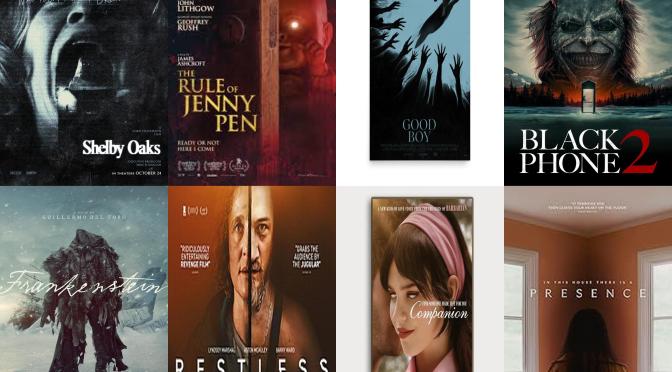
Anyway, here my my 12 FAVOURITE films of 2025. Not the BEST films, but the ones I enjoyed the most. There’s a few high quality, critically acclaimed films which do not make the list including Train Dreams (2025), Sorry, Baby (2025), Eddington (2025), Warfare (2025), Good Boy (2025), The Brutalist (2024) andI’m Still Here (2024), but remember these are my FAVOURITE films of the year.
For reference my favourite films of 2024 are below and here.
ALL OF US STRANGERS (2023) AMERICAN FICTION (2023) HERETIC (2024) THE HOLDOVERS (2023) THE IRON CLAW (2023) LATE NIGHT WITH THE DEVIL (2023) MONSTER (2023) POOR THINGS (2023) THE QUIET GIRL (2023) SPEAK NO EVIL (2024) THE SUBSTANCE (2024) THE ZONE OF INTEREST (2023)
In the languid drift of autumn, when Halloween’s shadow lengthens and winter begins its slow, expectant inhale, the world seems to slip into a more suggestive register—one where every rustling leaf feels like a whispered omen. It is, of course, the most appropriate season to surrender to the year’s latest horror releases, as though communing with these cinematic phantoms might prepare us—spiritually, aesthetically—for the deeper darkness to come.
Which basically means I have been catching up with some 2025 horror film releases I missed at the cinema during autumn. A couple of these probably warrant more in depth solo reviews, but as I edge closer to old age and the reaper’s scythe, I am economizing somewhat.
*** MAY CONTAIN SPOILERS ***
Black Phone 2 (2025)
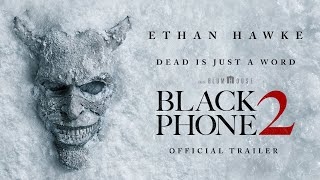
Scott Derrickson and co-writer C. Robert Cargill deliver a sequel to The Black Phone (2021) with Mason Thames, Madeleine McGraw, Jeremy Davies, and Ethan Hawke reprising their roles from the first chiller. I actually enjoyed this one more than the original, which despite the clunky set-up, finds the siblings and others trapped in a teen camp hit by a blizzard. They find themselves hunted and haunted by both The Grabber (Hawke) and other ghostly spirits haunting the area. Derrikson throws a lot of horror tropes and the characters (literally in certain scenes) at the walls, and much of it sticks. Having said that, I still don’t think The Grabber is the scariest villain ever committed to screen, despite Hawke’s presence. (Mark: 7.5 out of 11)
Companion (2025)
Companion (2025) feels like Garland’s Ex Machina (2014) colliding elegantly with Fargeat’s feral Revenge (2017)—a sunny day-horror fable that hides its nastiest surprises in plain sight. Its twists are sharp, its aesthetic confident, and its ideas far more ambitious than its modest surface first suggests. I would have admired it even more were it not, on occasions, completely dumb. Plus, the occasional drift into a comedic register undercuts its more incisive moments. The beautiful Sophie Thatcher once again commands the screen with the same riveting presence she brought to Heretic (2024). Mark: 8 out of 11.
Graduation Day (1981)
Thanks to Bobby Carroll’s site for reminding me about slasher film, Graduation Day (1981), as I had completely forgotten about it. High quality kills and gore mask a screenplay which has more nudity than character development. Yet, I am a sucker for these 1980’s exploitation flicks and this is a watchable one. Mark: 6 out of 11
Good Boy (2025)
An low-budget horror film triumph with Ben Leonberg directing his own dog, Indy, a Nova Scotia Duck Tolling Retriever, as the only witness to nasty spirits threatening his owner. The film emerges as a formal tour-de-force, whose meticulous composition and deliberate pacing elevate its simple premise into something unexpectedly resonant. Its visual precision and rhythmic control shape an atmosphere of dread that feels more sculpted than sensational, grounding the film in an emotionally impactful narrative about loyalty, vulnerability, and the unsettling spaces between trust and fear. For all its craft, and impressive animal direction, the film doesn’t quite sustain a relentless menace throughout. But, it remains a memorable feature debut from Leonberg and Indy the dog. Mark: 8.5 out of 11.
Presence (2025)
In Presence (2024), David Koepp and Steven Soderbergh demonstrate just how potent a one-location horror film can be when discipline and imagination converge. The entire piece unfolds like a controlled exhale: a slow-build structure that trusts the audience to lean in, and a drifting, almost contemplative camera that adopts the ghost’s POV to quietly—sometimes imperceptibly—reveal fragments of the story. Instead of overplaying its hand, the film slow-drips its plot elements with an elegance that keeps tension suspended in the air, letting unease pool in the corners of an otherwise ordinary space. By the time it reaches its finale, Presence (2024) delivers not only a surge of emotional and thematic clarity but two genuinely surprising twists—earned, unsettling, and executed with the kind of precision that affirms both writer and directors’ mastery of the form. Mark: 8.5 out of 11.
Restless (2024)
Really good independent British thriller with Lyndsey Marshal as a nurse, Nicky, who finds herself terrorized by 24-hour partying thug neighbours. Writer-director Jed Hart creates great empathy and identification with the situation and it’s a shame decent British films like this get short shrift at the multiplexes. Nicky’s spiral into insomnia-driven madness is compelling as her desperate attempts to sleep give way to vengeance. But the film’s final act tonal turn denies us a full-on descent into suburban hell, for something amenable but unfortunately less twisted. Mark: 7.5 out of 11
The Rule of Jenny Pen (2025)
The Rule of Jenny Pen is an original, weird, and powerful shock of a film — a mash-up of psychological thriller and nursing-home horror that lands far more often than it stumbles. Its greatest strength is, without question, the towering performances at its centre. Geoffrey Rush and John Lithgow, two masters of calibrated gravitas, turn the film’s cat-and-mouse mind game into a gripping acting showcase. Together, they elevate the film’s themes of aging, vulnerability, and institutional neglect into something both unsettling and strangely beautiful. The plotting, however, does get a bit sticky toward the end. The final act jars slightly, causing me confusion in an otherwise tight psychological narrative. Still, even as the story wobbles a tad, the film’s originality, eerie tone, and powerhouse acting keep it compelling. Mark: 8 out of 11
The Woman in the Yard (2025)
The Woman in the Yard (2025) rises on the strength of Danielle Deadwyler’s commanding lead performance. As a mother trying to protect her two children from a funereal spirit lingering in their backyard, Deadwyler grounds the supernatural dread with raw emotional honesty. The child actors match her with a believable, lived-in family dynamic that makes the haunting feel all the more personal. Where the film falters is in its structure. The script leans heavily on crow-barred flashbacks that interrupt rather than enrich the unfolding tension. A more linear approach could have built a stronger emotional momentum, allowing the story’s grief, guilt, and mental illness to accumulate naturally instead of stuttering backward at key moments. (Mark: 6 out of 11)
Together (2025)
Together (2025) gets an immediate boost from the casting of real-life couple Alison Brie and Dave Franco, whose natural chemistry gives the film an authentic emotional core. As a pair trying to rebuild their relationship after moving from the city to a rural small town, they convincingly inhabit the tensions, resentments, and unspoken fears that surface long before the horror does. Their incompatible expectations feel lived-in — and once they tumble into a sinkhole and the strange bodily transformations begin, that emotional groundwork makes the nightmare hit harder.
I loved the trailer for this film, which promised a truly skin-crawling descent into body-horror chaos. The final product, while atmospheric and often engrossing, doesn’t fully deliver on that promise. It pulls back when it could push further, leaving some of the more disgusting, surreal possibilities off-screen. But the ending — bold, surprising and unexpectedly poignant — is a fantastic payoff. Even if the film doesn’t always reach the extremes it teases, Together still manages to leave a memorably twisted impression. Mark: 8.5 out of 11
Adaptation and dialogue by Andrzej Żuławski & Frederic Tute
Produced by Marie-Laure Reyre
Main cast: Isabelle Adjani, Sam Neill & Heinz Bennent
Cinematography by Bruno Nuytten
Edited by Marie-Sophi Dubus & Suzanne Lang-Willar
Music by Andrzej Korzyński
*** MAY CONTAIN SPOILERS ***
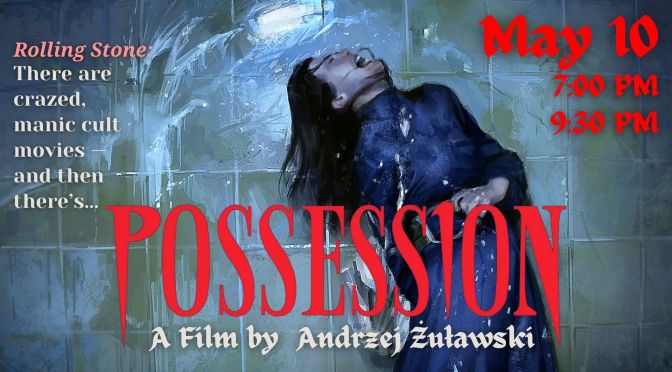
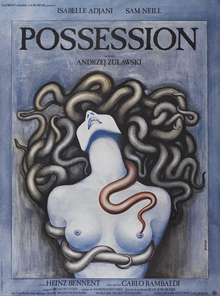
Andrzej Żuławski’s Possession (1981) is a film that doesn’t just defy genre—it annihilates the very idea of categorization. Part spy thriller, part domestic psychodrama, part Lovecraftian horror, and part apocalyptic hallucination, the film barrels forward with such manic intensity that it becomes less a movie and more an exorcism of the soul. It resists structural and emotional compartmentalizing at every turn, choosing instead to implode in a flurry of shrieks, flailing bodies, and gooey, pulsing monstrosities.
Set in a divided Berlin, the film ostensibly begins as a break-up story: Mark (Sam Neill), a shell-shocked spy, returns home to discover that his wife Anna (Isabelle Adjani, in a performance of pure, unrelenting hysteria) wants a divorce. But from there, the film spirals rapidly out of the realm of conventional melodrama and into something far more surreal and terrifying. Mark’s confusion curdles into obsession, Anna’s descent becomes biblical, and reality itself begins to warp and splinter.
Is it a Cold War spy film? Yes, but only in fragments, and those are quickly consumed by the escalating emotional chaos. Is it a break-up film? Certainly—but filtered through an expressionist nightmare where the grief and rage of separation erupt as literal body horror. Horror film? Undoubtedly, though the fear is less about monsters and more about the abyss that opens when love dies. And as the narrative crumbles into bloody symbolism and metaphysical dread, Possession(1981) begins to feel like an apocalyptic drama—one where the apocalypse is internal, intimate, and unstoppable.
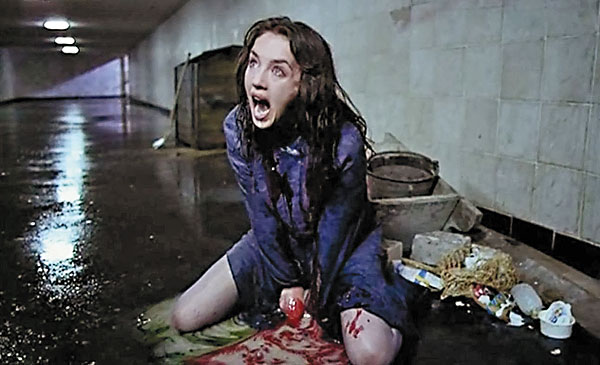
Żuławski directs like a man possessed, matching his characters’ unhinged energy with a restless camera and wild tonal shifts. The result is a fever dream of shrieking confrontations, doppelgängers, collapsing identities, and one of the most infamous subway scenes in cinema history. Possession (1981) is not an easy film—it’s messy, abrasive, and frequently overwhelming—but it’s precisely in its refusal to conform that its power lies. Indeed, much of the dialogue is obtuse non-sequitur in delivery as the actors deliver prose-like philosophical statements that have clearly influenced the writing of Yorgos Lanthimos and Efthymis Filippou.
To watch Possession (1981) is to witness cinema used as a weapon against coherence, comfort, and calm. I almost had a panic attack watching it. Neill, usually a calm on-screen presence looks as though he is lost in a nightmare he cannot escape. Heinz Bennent, as the lover, fully embraces Zulawski’s insane vision, while Adjani literally has a mental breakdown on screen. It is an unbelievably fearless embodiment of psychotic sexuality, arguably only matched in a commercial release by Eva Green’s Vanessa Ives from the majestic gothic TV series, Penny Dreadful (2014-2016). Ultimately, Possession (1981), is as much about the disintegration of self as it is about the end of a marriage, the failure of ideology, or the horror of being alive. One doesn’t simply watch Possession(1981)—one survives it.
Story by Rich Peppiatt, Liam Óg Ó hAnnaidh, Naoise Ó Cairealláin, JJ Ó Dochartaigh
Produced by Jack Tarling and Trevor Birney
Main cast: Naoise Ó Cairealláin, Liam Óg Ó hAnnaidh, JJ Ó Dochartaigh, Josie Walker, Fionnuala Flaherty, Jessica Reynolds, Adam Best, Simone Kirby, Michael Fassbender, etc.
Cinematography by Ryan Kernaghan
*** MAY CONTAIN SPOILERS ***
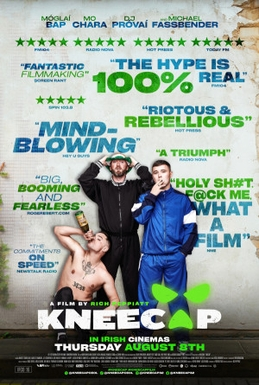
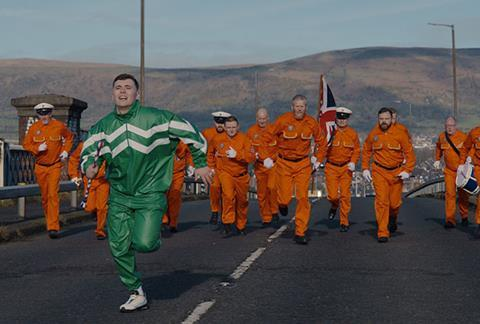
The 2024 film Kneecapis a riotous, politically charged portrait of youth in revolt, channeling the raw energy of punk and hip-hop into a uniquely Irish-language rebellion. Starring the real-life Belfast rap trio—Mo Chara, Móglaí Bap, and DJ Próvaí—as fictionalized versions of themselves, the film blends anarchic humour, biting satire, rites of passage, and cultural defiance to tell the story of how a group of working-class misfits wove their frustrations into musical gold.
Set in post-Troubles West Belfast, the film captures the lingering scars of British occupation and the generational trauma it left behind. Liam (Mo Chara) and Naoise (Móglaí Bap) are introduced as small-time drug dealers navigating poverty, police harassment, and fractured families. Their lives take a turn when JJ Ó Dochartaigh, a disillusioned Irish-language teacher, discovers their lyrical talents and joins them as DJ Próvaí. Together, they form the eponymous group, an Irish-language rap group that weaponizes music as a form of cultural resistance.
The film is unapologetically rebellious, using the Irish language not just as a means of communication but as a symbol of defiance. Arlo (Michael Fassbender), Naoise’s father and a former republican paramilitary, encapsulates this sentiment when he declares, “Every word of Irish spoken is a bullet fired for Irish freedom” . This philosophy permeates the group’s music, which tackles issues like British colonialism, drug culture, and the complexities of identity in a divided society.
Kneecap (2024), while a bold and electric celebration of youth rebellion arguably overstretches itself emotionally by attempting to cover too many themes at once. In its ambition to be both a political statement and a coming-of-age tale, a musical odyssey and a generational cry for recognition, the film occasionally dilutes its emotional impact. As the film juggles a multitude of weighty themes: the trauma of post-Troubles Northern Ireland, the fight for Irish-language preservation, the drug culture plaguing working-class communities, the fractured nature of family life, absent fathers and mothers, and the burden of political legacy. Add to this the rise of a rap group in an unexpected cultural context, and the film becomes a whirlwind of ideas competing for attention. The result is a film that sometimes feels like it’s racing to say everything at once, rather than letting its most resonant emotional threads breathe.
Nonetheless, director and co-writer, Rich Peppiatt, displays strong visual flair evoking the urban vibrancy of Trainspotting (1996) and underdog musical joy of The Commitments (1991). It helps that the film is often fucking hilarious. Plus, I realise it’s a raw reflection of their life choices, I could take or leave the perpetual scenes of gratuitous drug-taking. At the same time, the film doesn’t shy away from the gritty realities of its setting. It portrays the trio’s clashes with radical republican groups, their run-ins with the police, and the family and romantic struggles that come with their newfound fame.
Amidst the chaos, Kneecap (2024) maintains a sense of humour and humanity, offering a nuanced look at the power of art to challenge the status quo and inspire change. In essence, Kneecapis a ballsy and risk-taking celebration of rebellion, a testament to the enduring power of language and music as tools of resistance, and a vivid portrayal of youth challenging the remnants of a colonial past and a country attempting to find peace and identity after centuries of conflict.
Screenplay by David Matalon, Sasha Perl-Raver & Jen D’Angelo
Story by David Matalon & Sasha Perl-Raver
Produced by Jason Blum, Adam Hendricks & Greg Gilreath
Cast: Kiernan Shipka, Olivia Holt, Charlie Gillespie, Lochlyn Munro, Troy L. Johnson, Liana Liberato, Kelcey Mawema, Stephi Chin Salvo, Anna Diaz, Ella Choi, Jeremy Monn-Djasgnar, Nathaniel Appiah, Jonathan Potts, Randall Park, Julie Bowen, etc.
Cinematography by Judd Overton
*** MAY CONTAIN SPOILERS ***
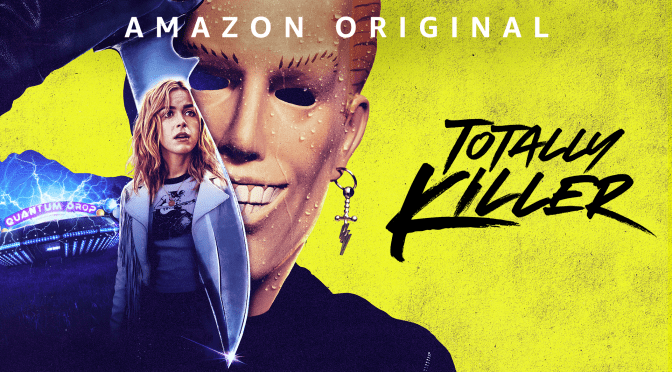
Here’s a thing that rarely happens, I actually watched a trailer and thought, “Hey, that film looks really entertaining, so I am going to watch it now.” That trailer was for Totally Killer (2023) which is currently streaming on Amazon Prime. The story is essentially Back to the Future (1985) meets Scream (1996), but the hilarious and pacey screenplay wears it’s influences proudly and even cleverly name-checks those two classic examples of the time-travel and slasher sub-genres.
Based in the present day, Totally Killer (2023) is set in the small town Vernon, USA. The film opens with a Vernon podcaster and tour guide revealing how the horrific “Sweet 16 Killer” struck killing three teenage girls in 1987. Unfortunately, the murderer suddenly reappears and kills again. In a frenetic chase through the house, Pam Hughes (Julie Bowen) battles the 1980’s masked slicer, but unfortunately she meets her demise. In grief from the death of her mother is sparky teenager, Jamie Hughes (Kiernan Shipka), and she finds solace with her friend Amelia (Kelcey Mawema), who happens to be designing a time machine as a science project. Well, what do you know!! Jamie finds herself being attacked by the “Sweet 16 Killer” and somehow goes sent back to 1987. There she has a chance to investigate the original crime and perhaps save her mum from being murdered in the future.
Even as I write this basic synopsis of the opening act I realise Totally Killer (2023) seems so contrived and derivative, but I found it to be an absolute blast. The script is clever and knowing with energetic and fun characters. Kiernan Shipka as Jamie is especially brilliant with great comedy timing and delivery. The filmmakers embrace the joy of time-travel and horror film tropes, and there’s also some excellent set-pieces involving the obligatory 1980’s false-faced psycho with a grudge. Moreover, the “fish-out-of-time” gags which derive from Jamie’s reactions to the 1980’s people, fashion and moral attitudes are a real joy. I was smiling and laughing throughout. Yet, significantly this film also deftly balances the suspense, action, horror and science-fiction aspects brilliantly. Stranger Things gets a lot of critical acclaim for stealing wholesale from Stephen King’s back catalogue. Totally Killer (2023) blatantly borrows permanently from everything and for me remains one of the consistently entertaining films of 2023.
Halloween is slowly creeping out of the fog and shadows. It’s a time of the year where horror films come to the fore. Personally, I watch horror all the year round, but it’s always fun when the genre pulls focus on the cultural calendar.
Rather than concentrate on current horror film releases, I thought it would be interesting to seek out chillers that are a tad less known. So, I had a scan through Amazon and Shudder screening platforms and unearthed several cult horror gems worth catching.
Some of these films come from the 1980’s period which encompassed the “video-nasty” era in the United Kingdom. With the advent of home video technology, the government suddenly got frightened about bloody and exploitational films and desired control. Censoring seventy-two titles and banning a flurry of films actually made people want to watch them more. This caused the government’s policy to backfire as people clamoured to watch “pirate” video versions of such films. In fact, it was in the living room watching forbidden films and the old Universal black-and-white classics where my true love of horror cinema began.
The following films may not have been banned at the time, but I was intrigued by how many of the titles I missed seeing on first release. Aside from Ben (1972), When A Stranger Calls (1979) and Phantasm (1979), I hadn’t seen the other titles. Therefore, if you’re looking for obscure horror films to watch then delve deep into the Amazon library. They have a fine feast of 1970’s and 1980’s fear inducing fare, many of them which were on the infamous “video-nasty” list. Dare you watch them!?
THE CAT OF NINE TAILS (1971)
An early Dario Argento giallo finds a blind puzzle-maker (Karl Malden) and dogged reporter (James Franciscus) investigating murders at a genetics lab. Aside from a couple of scary set-pieces, notably in a graveyard, it neither works as a detective nor horror story. It is however beautifully filmed with a vibrant restoration. (Mark: 6 out of 11)
CHUD (1984)
As the Nuclear Regulatory Commission track down missing toxic waste the New York homeless population are becoming victims to something monstrous in the sewers. An energetic sci-fi-horror hybrid combining a schlocky plot with socio-environmental themes. It’s not bad and actually quite funny, with early roles for John Heard and Daniel Stern whose acting raises the overall quality. (Mark: 6 out of 11)
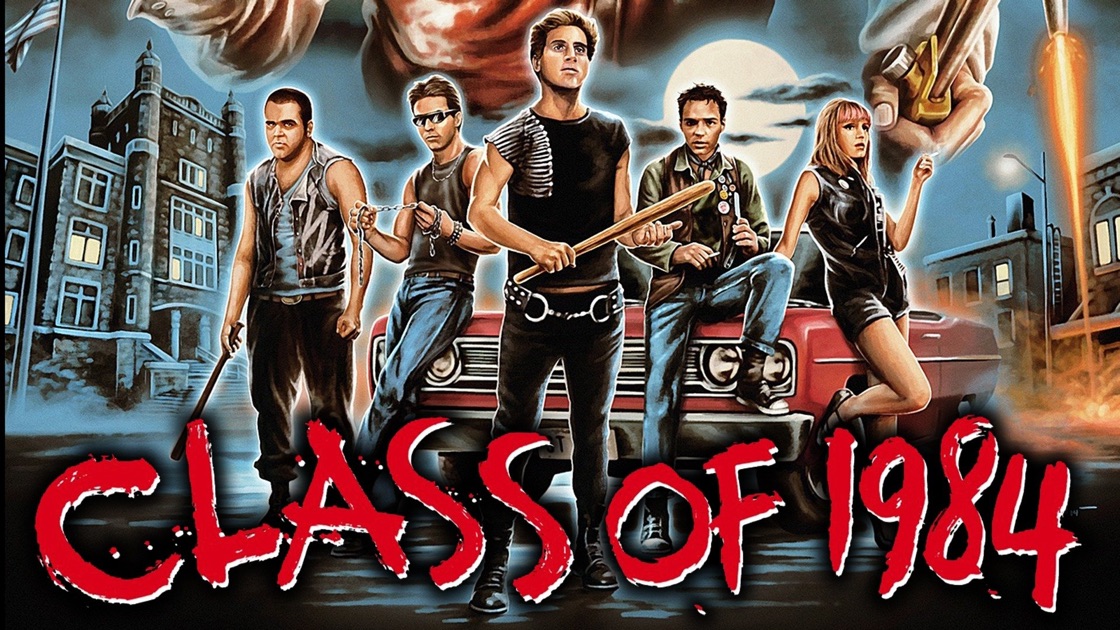
CLASS OF 1984 (1982)
I remember school kids raving about this film when I was twelve. I really wanted to see it, but could never find it in the video shop or from the “pirate” video guy. The plot merges The Blackboard Jungle (1955) with Death Wish (1974), as Perry King’s music teacher attempts to soothe the savage beast of a gang of nasty punk students. He fails and the final act revenge-driven rampage is fantastically inventive and gory. Latterly famous director, a young Tim Van Patten, portrays the psychotic, Peter Stegman, with vicious zeal. A true exploitational classic. (Mark: 8 out of 11).
HELL NIGHT (1981)
This is one of those films I had never even heard of. With a sizeable budget of $1.4 million dollars for a slasher film, it concerns four college students, including a grown-up Linda Blair, spending the night in a creepy house as part of an initiation ritual. Unfortunately, there’s a psychotic killer about hellbent on hunting them down. We’ve seen it all before, but it was nicely filmed and had decent humour. Overlong but way better than I thought it would be. (Mark: 7 out of 11)
PHANTASM II (1988)
I reviewed the remastered version of Don Coscarelli’s low-budget masterpiece here, but only just got round to watching the sequel. Phantasm II (1988) had a bigger budget and suffers from some stodgy plotting. The re-casting of Mike with James Le Gros in the role throws you. Yet, once Mike and Reggie fight with the Tall Man (inimitable Angus Scrimm), the razor-sharp spheres and the hooded monsters, the film finds real pace. Coscarelli blows-up a lot of stuff and ramps up the weaponry, but the sequel lacks the twisted magic of the original must-watch horror fantasy, Phantasm (1979). (Mark: 6.5 out of 11)
TERROR TRAIN (1980)
Another unknown mini-gem I found on Amazon. This Canadian slasher film is, you guessed it, set on a train and finds, yes you guessed it again, college students getting picked off one-by-one by a vengeful psycho. Notable for a really good plot which gives the killer empathy and understandable motivation, it also stars everyone’s favourite final girl, Jamie Lee Curtis. With disguise and magic prevalent in the themes, David Copperfield also appears in a neat role. Highly entertaining with a killer twist. (Mark: 8 out of 11)
WHEN A STRANGER CALLS (1979)
Inspired by a famous urban legend, Fred Walton’s chilling suspense thriller has one of the most nail-biting opening twenty minutes in horror cinema. Carol Kane is the babysitter terrorized by a series of tense phone calls from a mystery ringer. From that terrifying start the story falters slightly as it focusses on Charles Durning’s obsessive search for the unhinged man. Only when Kane rejoins the film some years later does the horror rise up again in a truly frightening denouement. (Mark: 8.5 out of 11)
WILLARD (1971) / BEN (1972)
This was an odd one because I knew and seen the sequelBen (1972) when I was a younger. Little did I realise the original Willard (1971) had been released the year before and became a sleeper box-office hit. Bruce Davison is excellent as the introvert, Willard, who is bullied at work by his aggressive boss, Ernest Borgnine. Only when, and take a deep breath here, Willard trains an army of rats does he gain confidence to take on the world. It’s a weird film that actually works because of Willard’s fascinating character arc and Davison’s nuanced performance. (Mark: 8 out of 11)
The follow-up Ben (1972) focusses on Willard’s alpha rat, Ben, and his friendship with lonely kid, Danny. The sequel really raises the rat count and there appears to be thousands of them in their dirty lair. Danny is a likeable kid who suffers from a serious illness that prevents him from going out. Why he would make friends with a killer rat though is still frankly nuts! A lack of thrills and goofy premise make it difficult to recommend, and is more famous for the classic Michael Jackson hit called, surprisingly enough, Ben.(Mark: 6 out of 11)
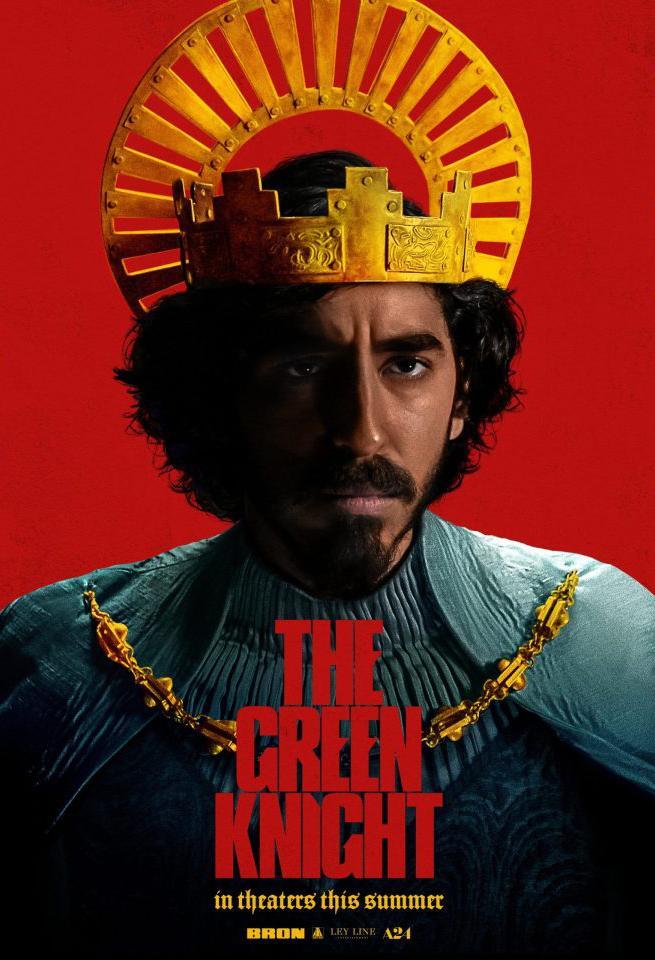
Based on: Sir Gawain and the Green Knight by Anonymous
Produced by: Toby Halbrooks, James M. Johnston, David Lowery, Tim Headington, Theresa Steele Page
Cast: Dev Patel, Alicia Vikander, Joel Edgerton, Sarita Choudhury, Sean Harris, Ralph Ineson, etc.
Cinematography: Andrew Droz Palermo
*** MAY CONTAIN SPOILERS ***
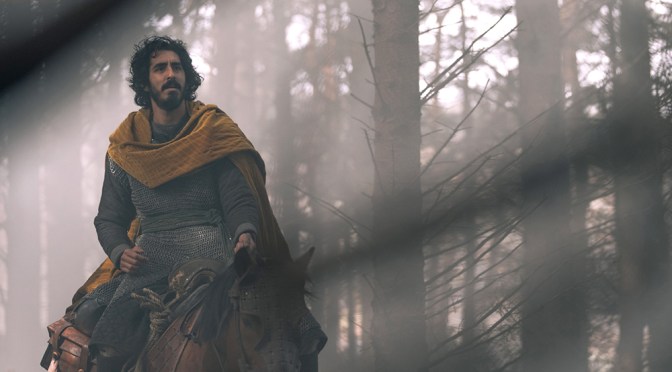
The quest to see The Green Knight (2021) has seemingly taken longer than Gawain’s mythical journey to meet his ultimate fate. Was it worth the wade through COVID determined lockdowns and distribution delays to the cinema to finally watch it on Amazon? Yes and no I would say as the filmmaking on show is of a visually magical standard. Yet, somewhere in the character’s bones is an emotional brittleness. I will expand.
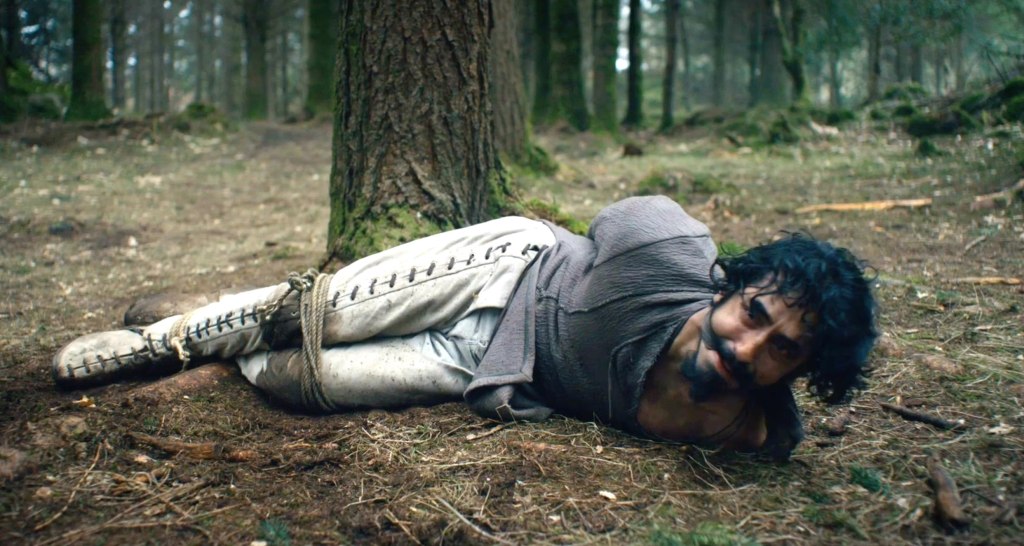
Written and directed by the formidable filmmaker David Lowery, The Green Knight (2021), is based on the rites-of-passage trials of Gawain (Dev Patel), a young subject within the court of King Arthur’s (Sean Harris) Camelot. Happy getting drunk and flirting with apparently loose women, one of which is Essel (Alicia Vikander), he is then faced with a challenge from the Green Knight (Ralph Ineson). Meeting the gamble from this stunningly created craggy work of metaphor head on sets in motion a fight for his life on the road to symbolic discovery. Throw in some exquisite montages of ominous religious and magical subtext and Gawain must face his fears, fate and foes on a dangerous quest.
Once Gawain hits the dirt tracks, bloody battlefields and ghostly houses of this cursed land the The Green Knight (2021) really finds narrative impetus. Gawain’s confrontation with the Green Knight at Arthur’s court is certainly thrilling, but Lowery spends too much time creating poetic juxtaposition and magical image systems, which while beautiful, really slow the pace of the story. King Arthur’s kingdom and Sean Harris’ performance is somewhat downbeat and drab as less time is spent establishing Gawain’s characterisation.
Dev Patel is phenomenal in the role. He brings both strength and vulnerability. But what was Gawain? Was he a fool to be taught a lesson? Was he a determined individual desiring to prove himself? Was he out for revenge? Was he doing it for love? Who is he saving? What did he want? I was never sure. Thus, The Green Knight (2021) was in danger of collapsing under its own stunning visual pretension. That is until Barry Keoghan’s effervescent thief came along and raised the stakes and energy of the story. After that Gawain’s drive was one of survival as Lowery’s screenplay gave him a succession of devilish, deadly and seductive obstacles to overcome.
David Lowery is an original thinking talent, and someone I categorise as an alternative genre filmmaker. Like Quentin Tarantino, the Coens, Bong Joon-Ho and dare I say it, Stanley Kubrick, he takes familiar content and filters it through his own inimitable style and vision. His masterpiece thus far is the truly remarkable romance, A Ghost Story (2017), a low-budget indie gem. The bigger-budgeted The Green Knight (2021) certainly has scale and magic and astounding cinematic power. But such adventure stories, for my taste and preference, need a hero with a clearer goal. Lowery gives the audience sorcery and existentialism and some nightmarishly beautiful sequences, while overall lacking clarity for Gawain’s personation. I imagine this is actually deliberate to counter genre expectations and make the viewer raise their game and apply meaning. I felt the same about Kubrick’s fatalistic, Barry Lyndon (1975), when I first saw that. Indeed, I have no doubt that on future watches The Green Knight (2021) is likely to be similarly revered as cinematic gold.
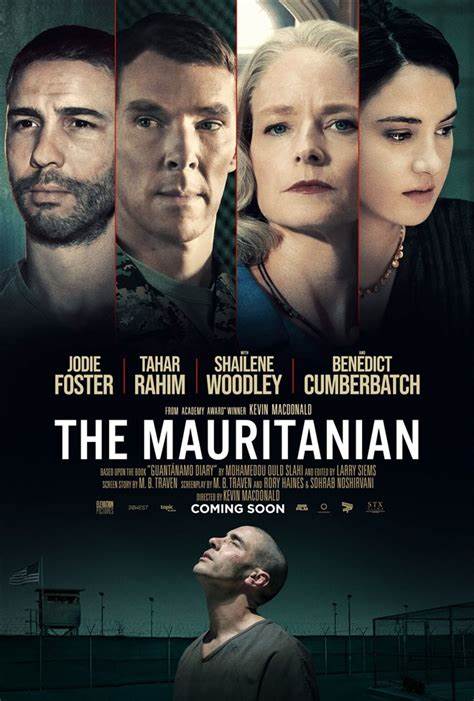
Produced by: Adam Ackland, Michael Bronner, Benedict Cumberbatch, Leah Clarke, Christine Holder, Mark Holder, Beatriz Levin, Lloyd Levin, Branwen Prestwood-Smith, etc.
Based on: Guantanamo Diary by Mohamedou Ould Slahi
Cast: Jodie Foster, Tahar Rahim, Shailene Woodley, Benedict Cumberbatch, Zachary Levi etc.
Music by: Tom Hodge
Cinematograph: Alwin H. Kuchler
***CONTAINS MASSIVE SPOILERS***
“…a writ requiring a person under arrest to be brought before a judge or into court, especially to secure the person’s release unless lawful grounds are shown for their detention.” — Basic definition of Habeus Corpus
Mohamedou Ould Slahi is a Mauritanian man who was held for fourteen years from 2002 to 2016 without charge in the Guantanamo Bay detention camp. FOURTEEN YEARS without a trial. Let that sink in.
If ever there was a living embodiment of a Kafkaesque experience then this is that. Surely, whatever crime you have or haven’t committed you should be presented to a court of law and evidence be brought to try you for the alleged crimes. Clearly, the United States have, in this singular case against Mohamedou Ould Slahi, by denying him a trial — plus torturing him for years too — committed a heinous war crime. Yes, the 9/11 atrocities were abominable acts of violence, but that does not give anyone the right to wreak revenge against other human beings without concrete evidence to justify such acts. It’s a basic tenet of existence that separates us from the beasts in the jungle, every person deserves a fair trial! To be honest the U.S. administration who were responsible for this and and many other crimes are worse than animals.
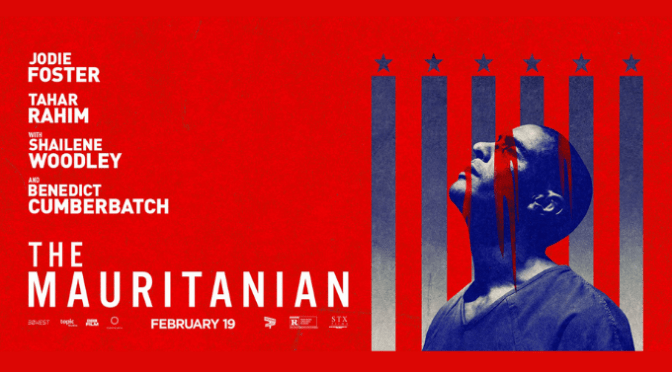
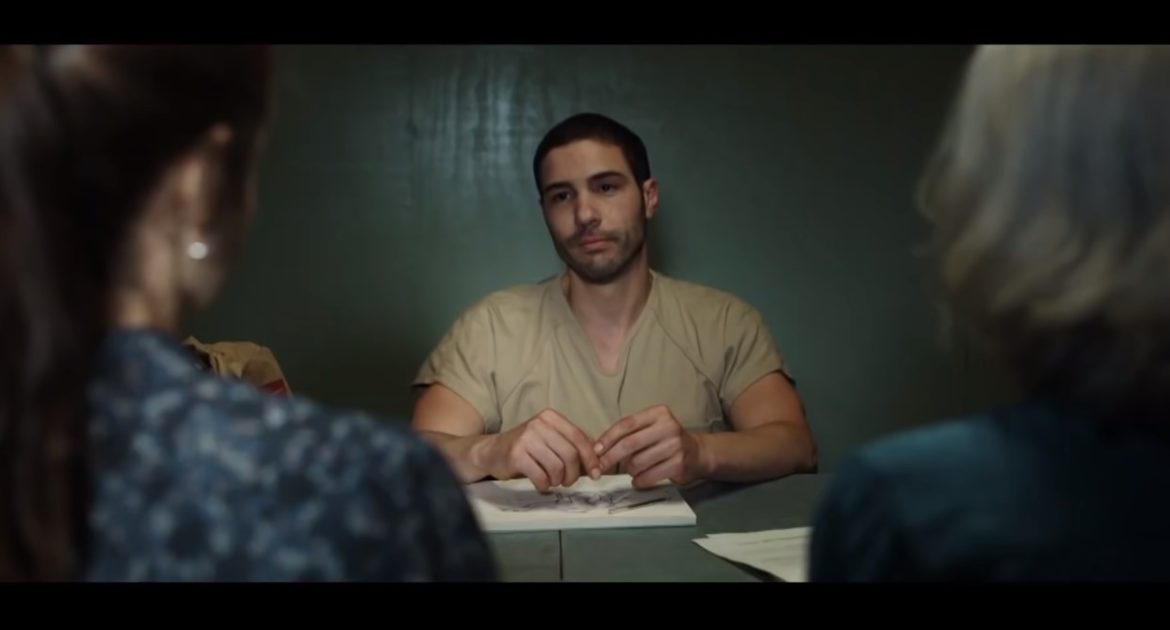
The Mauritanian (2021) is an adaptation of Mohamedou Ould Slahi’s best selling memoir, Guantanamo Diary. It opens with Ould Slahi (Tahar Rahim) attending a wedding in his place of birth. He is then picked up by local Mauritanian police and after that is imprisoned indefinitely, unknown to him, by the American military. The structure of the film compellingly builds his experiences in jail and the brutal torture he endures as the Americans attempt to gather intelligence to prove that he is a key member of the terrorist cells who organised the 9/11 attacks. As the story reveals his horrendous ordeal, lawyers represented by Nancy Hollander (Jodie Foster) and Teri Duncan (Shailene Woodley) take up his case to, at the very least, enable Ould Slahi to get a fair trial.
As well as highlighting the horrors of how Ould Slahi was treated this film is a damning indictment of American foreign policy, notably under the George Bush administration. The fact that Ould Slahi and his lawyers were successful in achieving a win against his imprisonment was not the end of his entrapment. You honestly won’t believe what occurred even after he won his case. But what about the film you may be asking? Well, I am just staggered this and many other sitautions occur in the world so this is more of an emotional review than a cinematic appraisal.
Overall, The Mauritanian (2021) is an exceptional drama which is directed effectively by seasoned filmmaker, Kevin Macdonald. As Ould Slahi, Tahar Rahim is absolutely exceptional. He brings a humanity and humour to the character’s struggle. What I absorbed most from his portrayal, and this is reflected in a moving credits sequence excerpt, is how Ould Slahi retained his humour even in the most trying times. Furthermore, while their character’s smack of white saviour personalities, the legal team — based on the real people — are expertly represented by Jodie Foster and Shailene Woodley. Foster especially shows her usual sterling gravitas in the role. Benedict Cumberbatch, arguably miscast as the military lawyer suffering a crisis of conscience, gives his usual excellent performance.
Lastly, The Mauritanian (2021), because of a slightly choppy screenplay, I felt the book deserved a longer telling via a television series. Yet, the film remains an important narrative about how bloodlust, greed and desire for revenge means humans commit horrific acts in the name of war. Mohamedou Ould Slahi was denied his freedom and human rights for crimes never proved. How he survived is an incredible feat of human endurance. Thus, whether he was innocent or guilty his freedom was earned and then some.
Writers: Steve McQueen, Courtia Newland, Alastair Siddons
Composer: Mica Levi
Cinematographers: Shabier Kirchner
Original Network: BBC and available on Amazon Prime.
*** CONTAINS HISTORICAL SPOILERS ***
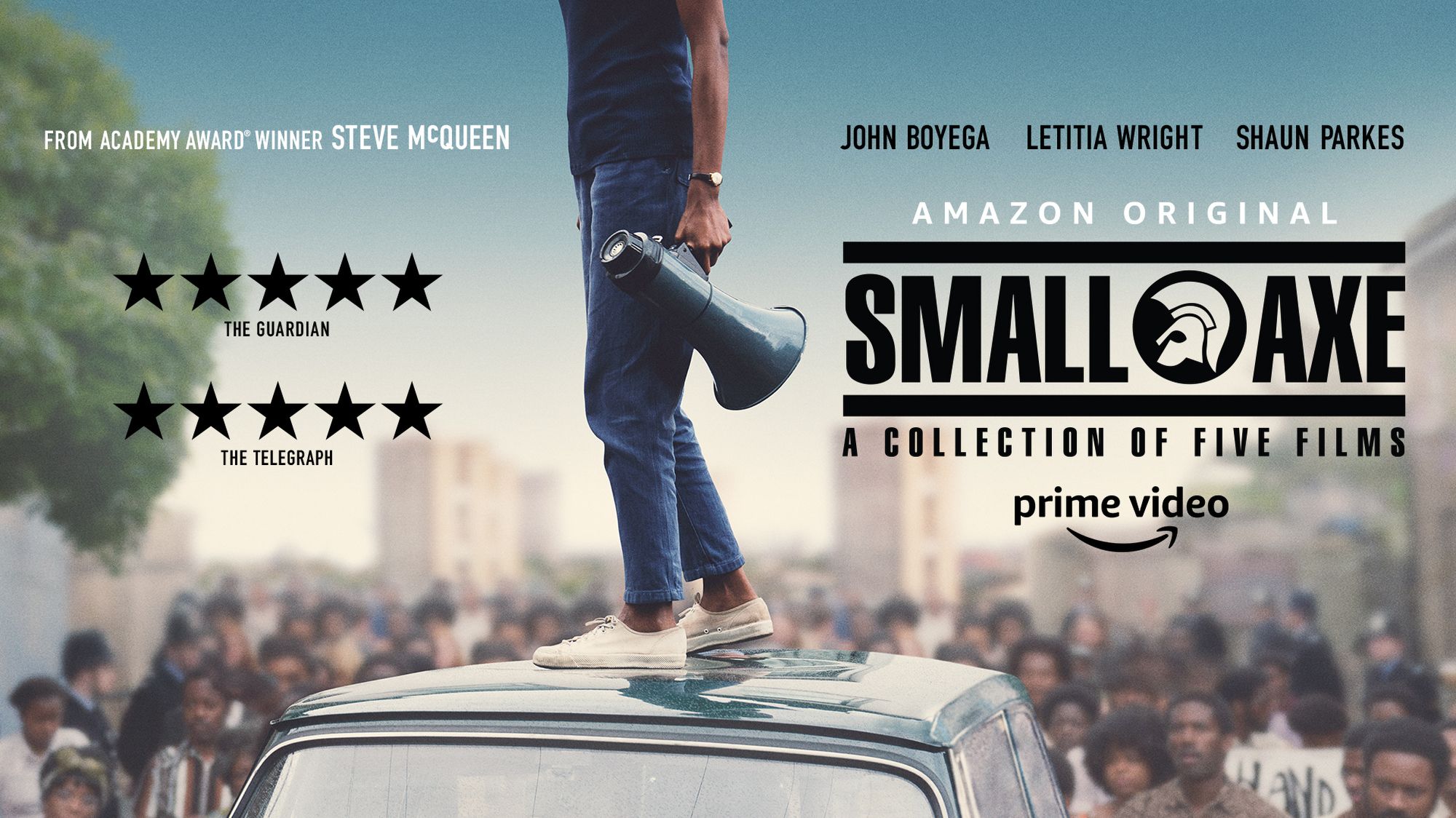
Small Axe could also be described in the vein of ‘Small Acts’. Dramatized and rich slices-of-life that reflect significant historical figures and events from black culture in the 1960s, 1970s and 1980s. MANGROVE (2020) was the first in a set of five films devised, written and directed by Steve McQueen. It premiered at the London Film Festival in 2020, before being released on the BBC television network. I reviewed the film MANGROVE (2020)here. Such was its power, the searing drama would make my list of favourite films of 2020.
Ultra-talented McQueen was not satisfied with one amazing work. He, his incredible cast and production team also delivered four more high quality dramas called LOVERS ROCK (2020), RED WHITE & BLUE (2020), ALEX WHEATLE (2020) and EDUCATION (2020). I had the privilege of viewing these films via the BBC over the New Year period and provide short reviews here.
LOVERS ROCK (2020)
Main Cast: Micheal Ward, Amarah-Jae St. Aubyn, Kedar Williams-Stirling, Shaniqua Okwok, Ellis George, etc.
As well as alluding to the main love story within the narrative, Lovers Rock also makes specific reference to a style of reggae music with a romantic sound and content. Set over one night during a London-based birthday party, the film opens with the setting up of a sound system, making of food and preparation of the large house. While mostly an ensemble piece, the story narrows its focus on prospective lovers, Franklyn and Martha, who fall for each other amidst the thumping bass and hearty vocals of the music. Surely, Lovers Rock is a testament to the power of harmony and community and love. There are brief moments of drama to spike the party mood, but ultimately this is about the joy of being alive and drunk on song and romance. Lastly, it’s arguably as close to feelgood as McQueen’s intense filmmaking style gets in this amazing anthology.
Mark: 9.5 out of 11
LOVERS ROCK (2020)
RED, WHITE AND BLUE (2020)
Main Cast:John Boyega, Steve Toussaint, Neil Maskell, Joy Richardson, etc.
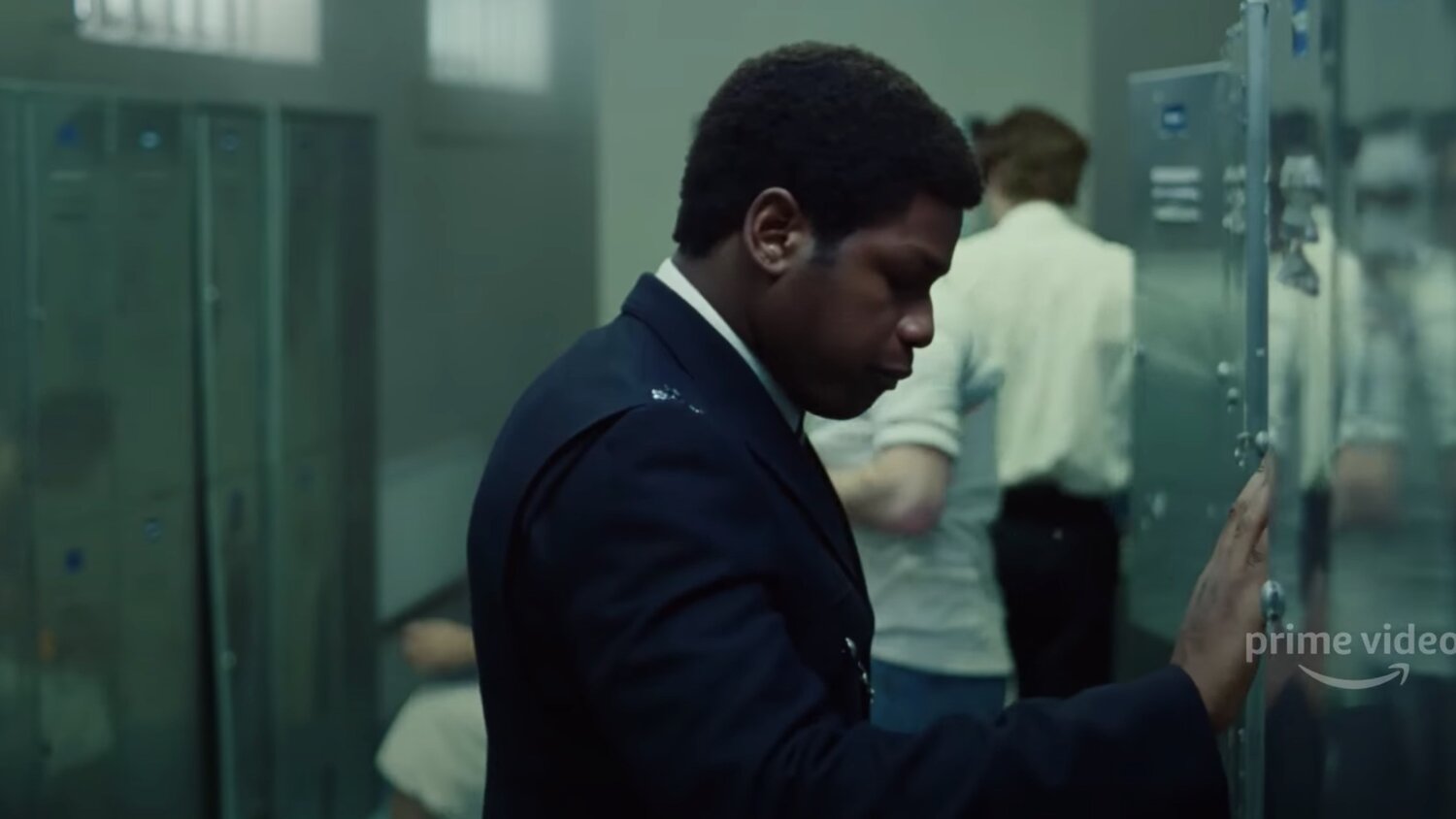
As well as evoking the socio-political landscape of the era so well, the costumes, hair, make-up and location work feel so authentic in all of the Small Axe films. Such authenticity serves the stories well, as does the virtually perfect casting too. Fresh from his energetic portrayals of Finn in the Star Wars trilogy, John Boyega’s performance as Leroy Logan in Red, White and Blue (2020), brings his character into conflict with a whole different kind of dark side. Logan was one of the first prominent black police officers in the Metropolitan police. He subsequently founded the Black Police Association and attempt to reform the police from within. No two ways around it, based on the early part of his police career, Logan is represented as a trailblazing hero. He is intelligent and tough and ready to face up to the barbaric language and violence from both white police officers and members of the black community who saw him as a traitor. Boyega is spellbinding as Logan, navigating his way up the ranks facing rancour and rejection from within the police and his own father too, who was understandably unhappy at Leroy’s controversial choice of career.
Mark: 9.5 out of 11
RED, WHITE & BLUE (2020)
ALEX WHEATLE (2020)
Main Cast:Sheyi Cole, Robbie Gee, Johann Myers, Johnathan Jules, etc.
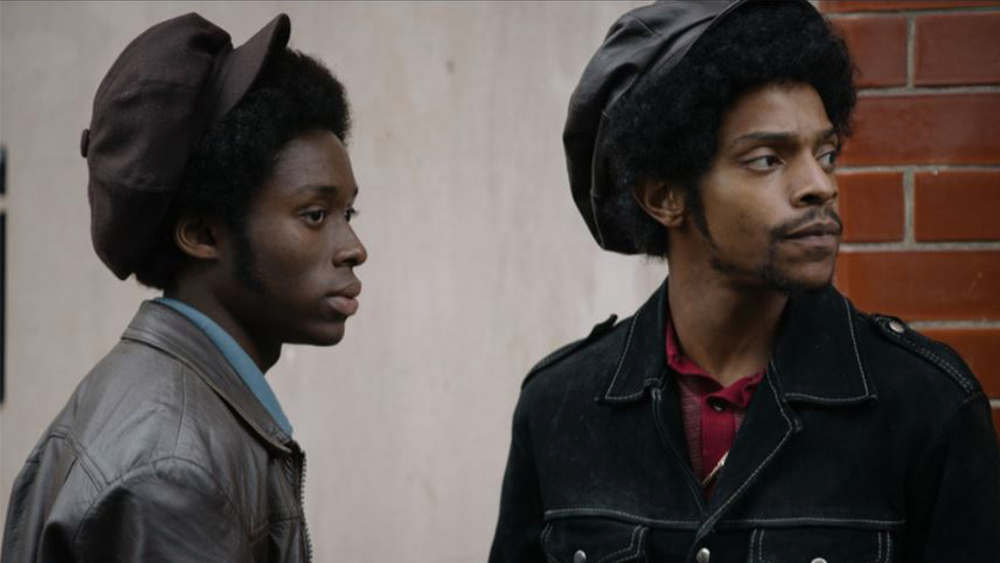
What Steve McQueen deserves praise for with Small Axe, among many other things, is bringing to the fore individuals one may not have heard of, or reminding us of important events from within recent British history. In Alex Wheatle (2020), McQueen weaves the early years of now famous author, Alex Wheatle, with circumstances relating to the Brixton riots and the New Cross fire tragedy of 1981. The latter took the lives of fourteen young black people and fuelled much anger at the time in regard to racist attacks on the black community. Alex himself was brought up in care and grows up an angry young man. He finds solace in music and expressing lyrics in a political and combative style. We first meet him in a prison cell sharing with Rastafarian, Simeon (Robbie Gee). The fractious scenes between the two, with both Gee and Sheyi Cole giving fine performances, are full of anger and humour. Far from being a comedy, there remains both witty banter and pathos fizzing around this profile of Wheatle’s formative years. This fine profile finds a young rebel discovering his voice and identity amidst the urban decay, racism and police brutality of the mean streets of London.
Mark: 10 out of 11
ALEX WHEATLE (2020)
EDUCATION (2020)
Main Cast: Kenyah Shandy, Sharlene White, Josette Simon, Tamara Lawrence, Daniel Francis, etc.
Having addressed social and cultural issues relating to civil liberties, law, music, work and identity, Steve McQueen focussed specifically on educational themes within the black community in the aptly named, Education (2020). The highest praise I can give Education (2020) and all the films in the Small Axe anthology is that I felt genuine emotion for all of the characters and the situations they were in. They may not have been perfect and had their flaws, but ultimately all five of these narratives made me feel and care about the characters. Because they were up against an unfair system which demanded to be challenged and changed to stop the systematic prejudice of the time. Education (2020) feels extremely personal to Steve McQueen as one senses the lead character, twelve-year-old Kingsley Smith (Kenyah Sandy) experiences much of the grief he may have when younger. Considered disruptive at the local Comprehensive, Kingsley is dumped into a “Special School” where he becomes lost and ill-educated. One absurd scene simply shows a teacher playing House of the Rising Sun as part of a lesson. Kingsley’s formidable mother, with help from political forces within the black community, strive to right these educational wrongs in a powerful and moving final chapter to the Small Axe anthology.
Produced by: Todd Fellman, Mike Gabrawy, Gary Hamilton, Mark Lazarus, Dana Lustig, Greg McLean
Screenplay by: Justin Monjo
Based on: Jungle by Yossi Ghinsberg
Cast: Daniel Radcliffe, Alex Russell, Thomas Kretschmann, Yasmin Kassim, Joel Jackson, Jacek Komanetc.
Music by: Johnny Klimek
***MAY CONTAIN SPOILERS***
It’s one of my least favourite sub-genres of cinema and literature: the survivalist story. Don’t get me wrong, I have nothing against an individual striving to find themselves or seek out adventure. I don’t wish them ill or death and am glad they somehow survived, or alternatively, not glad they perished. However, I do have problem when it all goes wrong and they end up gaining fame or money or praise for poor life choices. They are not heroes or heroines but narcissistic thrill seekers, generally from a privileged standing who get films made about them as apparently their stories are inherently cinematic.
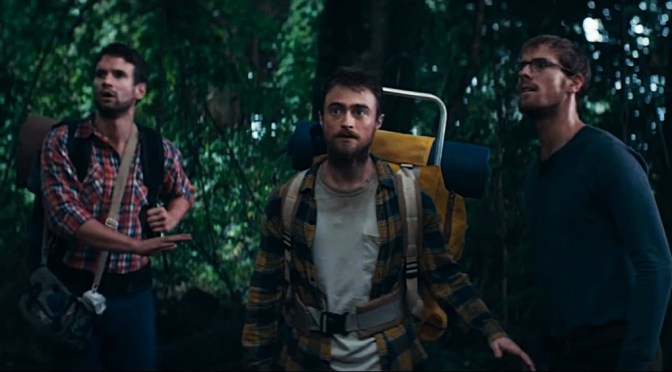
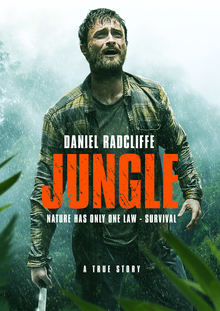
Begrudgingly, I admit, in many circumstances such as: 127 Hours (2010), Into the Wild (2007) and Touching the Void (2003), survivival stories create compelling film narratives. Alas, the film Jungle (2017) is nowhere near as good as those films I mention, but it provides a means to escape to the dark corners of the Amazon from the comfort of one’s own living room. The moronic characters we follow into said jungle are led by Daniel Radcliffe’s, Yossi. He and two friends decide, against the advice every audience member screaming at the screen, to broaden their selfish adventurous spirits by going native with Thomas Kretschmann’s shady German guide. Safe to say, after experiencing the unforgiving terrain, torrential rain and strange creatures in the jungle, this middle-class trio find they are well out of their depth. Thus, very slowly the film crawls like a giant slug toward further catastrophe.
Jungle (2017) is not a bad film, but it isn’t a particularly good one. The direction and cinematography are excellent and Daniel Radcliffe proves he is an exceptionally honest actor. Radcliffe works his guts out with a shell of a character we rarely care about or empathise with. Perhaps that’s the point? Maybe it’s a cautionary tale about how Yossi stops being such an arsehole and learns to appreciate life and the environment. My main issue was the screenplay, which rushes to get us in the jungle and then takes an age to get to the real drama. What was great about a film like Into the Wild (2007), also based on a true story, was Christopher McCandless was a character who rejected society to find his own place in the world. He wasn’t just a tourist on a holiday that went a bit wrong. I mean, in Jungle (2017), people lost their lives, but the greatest tragedy was the film doesn’t make us care about them at all.





 The Cinema Fix presents