Tag Archives: Anti-hero

Cinema Review: Marty Supreme (2025) – a breathless anti-hero journey driven by purpose, anxiety and adrenaline!

Cinema Review: Marty Supreme (2025)

Directed by Josh Safdie

Written by Ronald Bronstein and Josh Safdie

Produced by Josh Safdie, Ronald Bronstein, Eli Bush, Anthony Katagas
and Timothée Chalamet


Main cast: Timothée Chalamet, Gwyneth Paltrow, Odessa A’zion, Kevin O’Leary, Tyler Okonma, Abel Ferrara, Fran Drescher, Sandra Bernhard, etc.

Cinematography Darius Khondji

Music by: Daniel Lopatin


Anxiety cinema, though always a part of film history, has seen a surge in prominence in recent years, with directors like Gaspar Noé, the Safdie brothers, Sean Baker and Ari Aster leading the charge. These filmmakers specialize in creating films that push audiences to their emotional limits, heightening tension and discomfort without offering the cathartic release often found in more traditional thrillers or suspense films by the likes of DePalma, Hitchcock, and Spielberg. Rather than resolving the anxiety with a tidy ending or a moment of relief, these films leave viewers on edge, their blood pressure elevated, and their minds unsettled, reflecting the growing cultural sense of unease and existential dread.

It’s important to note that it would appear, with the release of the frantic Marty Supreme (2025), it is Josh Safdie and Ronald Bronstein, not Benny Safdie, who could be seen to be the driving forces behind the anxiety-driven films like Good Time (2017) and Uncut Gems (2019). Their collaborative work has come to define the frantic, high-pressure style of modern anxiety cinema. In contrast, Benny Safdie’s more recent work, The Smashing Machine (2025), highlights a shift toward more authentic and subtle character development, offering a quieter, more understated take on human drama. While Josh and Bronstein continue to escalate tension to dizzying heights, Benny’s approach focuses on exploring deeper, more introspective emotional journeys.

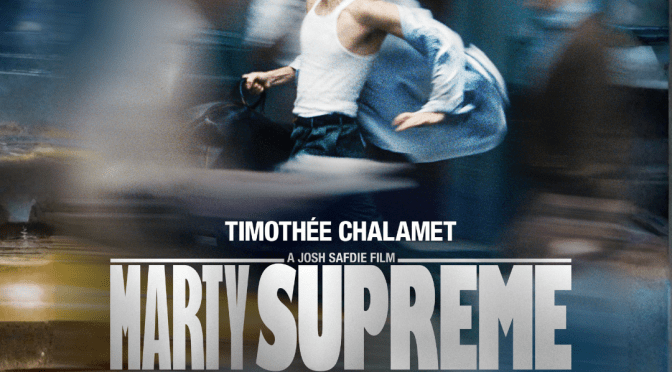
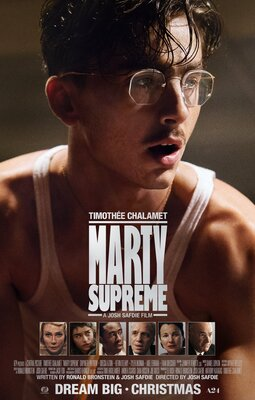
So, Marty Supreme (2025), is it any good? Let’s just say that this isn’t a Christmas or feelgood film, so I can only think the marketing team are being ironic with the poster tagline ‘Dream Big – Christmas!’ This is a 1952 period set anti-heroic-rites-of-passage rollercoaster journey profiling Marty Mauser (Timothée Chalamet), a New York shoe salesman with dreams of hitting the big time as a world champion table-tennis player. But rather than being characterised as a Rocky-style underdog sporting personality who the audience can root for, Marty (loosely based on real-life Marty Reisman), is in fact a fast-talking-arrogant-crisis-addicted-confidence-trickster and womaniser who is not averse to “friendly” armed robbery to get what he wants. Oh, by the way, Marty is also a phenomenal table-tennis player.
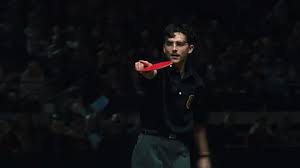


Having previously cast Robert Pattinson in Good Time (2017) and Adam Sandler in Uncut Gems (2019) as their disaster-prone, masculine leads, Josh Safdie and Ronald Bronstein took a new direction in Marty Supreme (2025) by casting Timothée Chalamet. Known for his charisma and commitment, as showcased most recently in Wonka (2023) and A Complete Unknown (2024), Chalamet brings an entirely new energy to the table. As Marty, he is nothing short of a force of nature—physically commanding as a table tennis player, yet intellectually and verbally dominating the screen. His performance captivates with a magnetic presence, delivering lines with such intensity and precision that he becomes impossible to look away from. Chalamet’s portrayal of Marty is both memorable and transformative, showcasing his versatility as an actor who can take on the manic, chaotic energy required by a character in a Safdie-Bronstein film while adding a unique layer of depth and intrigue.

Marty’s journey represents a fascinating emotional dialectic, one that leaves the audience both drawn to and repelled by his behaviour. While I didn’t necessarily enjoy his character arc, that’s exactly what makes Chalamet’s portrayal so compelling. Marty is, in many ways, his own worst enemy—he can’t follow rules, he’s a liar, and he cheats to get ahead. Yet, his raw talent and unwavering sense of purpose give him an undeniable charisma, pulling the audience in even as his decisions spiral into reckless, life-threatening situations. The character’s hustle, constant scheming, and pursuit of personal gain lead him into a series of humiliating, violent confrontations that highlight his self-destructive tendencies.

Marty’s a deeply flawed person desperately trying to make something of himself. But he also makes his own bad luck through poor decision-making. Whether it’s falling through a hotel ceiling in a bath; retrieving a missing dog for a psychopathic gangster; locking horns with the table tennis authorities and the uber-businessman he’s seeking patronship from; fighting a cuckolded neighbour whose wife, Rachel Mizler (Odessa A’zion) he possibly loves – not forgetting the scintillating table tennis games – the film is a litany of combative and panic-attack inducing set-pieces. The emotional tension lies in watching Marty repeatedly sabotage his own potential, a cycle of ups and downs that plays out as a cautionary tale. Marty’s journey doesn’t just depict failure; it explores the emotional complexity of someone trapped in their own worst impulses.

Marty Supreme (2025) stands as a masterpiece of filmmaking, with creative choices that not only subvert expectations but elevate the entire storytelling experience. From its striking cinematography to the anachronistic 1980s soundtrack, every visual and auditory detail feels meticulously crafted to immerse the audience in the world of Marty Mauser. The gritty, authentic production design brings a raw realism that grounds the film, while the ensemble cast—many of whom are quirky non-actors—brings an undeniable energy and authenticity to the narrative. In conclusion, the collaboration between Chalamet, Josh Safdie and Ronald Bronstein, and the entire cast and crew gave me both a nervous breakdown and an unforgettable cinematic experience.
Mark: 9.5 out of 11


HBO FILM REVIEW: BAD EDUCATION (2019)

HBO FILM REVIEW: BAD EDUCATION (2019)

Directed by: Cory Finley

Produced by: Fred Berger, Brian Kavanaugh-Jones, Julia Lebedev, Mike Makowsky, Oren Moverman, Eddie Vaisman

Screenplay by: Mike Makowsky – Based on: The Bad Superintendent by Robert Kolker

Cast: Hugh Jackman, Allison Janney, Geraldine Viswanathan, Alex Wolff, Rafael Casal, Stephen Spinella, Annaleigh Ashford, Ray Romano etc.

***MAY CONTAIN SPOILERS***


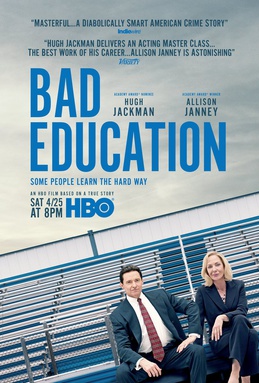
Not to be confused with Pedro Almodovar’s film of the same name — or the BBC comedy show/film, Bad Education, starring Jack Whitehall — this Bad Education (2019), is an altogether different scholastic narrative. Based on true events which occurred at the Rosslyn Union Free School District circa early 2000’s, the story centres on a massive scandal which broke involving the educational District’s managers, financiers and auditors. I am going to review this without too many spoilers, as learning the gravity of what occurred and how it happened is a major part of the film’s jaw-dropping enjoyment.

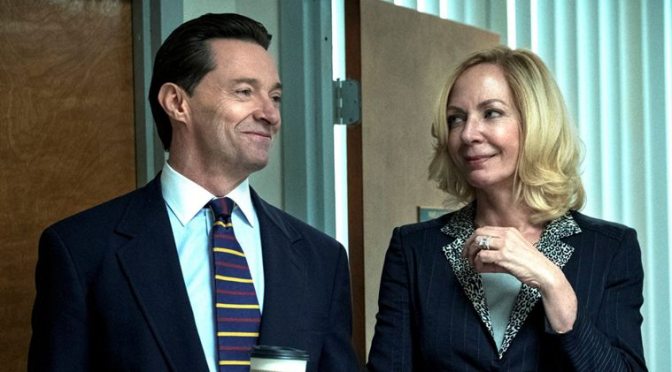
As this is a HBO TV film, there was a heightened expectation of quality on my part. I was not to be disappointed. An expertly crafted screenplay, based on an article by Robert Kolker, finds Hugh Jackman as Frank Tassone. He is a suave, vain and intelligent Superintendent who has the school staff, students and parent under a charm spell. Not only is he a smooth talker, but the exam results for the schools in his charge have improved no end. His Long Island domain has incredible returns and this ensures more middle-class families move into the area, driving up property prices. Everybody’s happy, right? Yes, for a while! Tassone is supported ably by his Financial Manager, Pam Gluckin (Allison Janney). It’s only when school reporter, portrayed impressively by Geraldine Viswanathan, starts digging deeper, that something indeed is revealed to be rotten in the district of Rosslyn High.

Directed with some skill by Corey Finley, this film is highly recommended to those who enjoy compelling dramas with a heavy dose of ironic humour. Finley’s previous film, Thoroughbreds (2017), was an incredibly dark noir character study. Bad Education (2019), on the other hand, deals with serious financial malfeasance in a lighter tone. The dialogue is very witty and full of humorous exchanges between the characters. Moreover, Hugh Jackman and Allison Janney are on top acting form in their respective roles. Jackman especially proves what charismatic and interchangeable talent he has. Indeed, it’s good to see him play a highly complex character again. Ultimately though, the almost unbelievable nature of the events portrayed, prove how bottomless human greed and corruption can become. When will we ever learn?

Mark: 9 out of 11


CLASSIC FILM REVIEW: SCARFACE (1983)

CLASSIC FILM REVIEW: SCARFACE (1983)

Directed by: Brian DePalma

Produced by: Martin Bregman

Screenplay by: Oliver Stone

Cast: Al Pacino, Steven Bauer, Michelle Pfeiffer, Robert Loggia, F. Murry Abraham, Mary Elizabeth Mastrantonio, Paul Shenar etc.

Music: Giorgio Moroder

Cinematography: John A. Alonzo


*** CONTAINS SPOILERS ***


“I always tell the truth, even when I lie! so, say good night to the bad guy!” Tony Montana


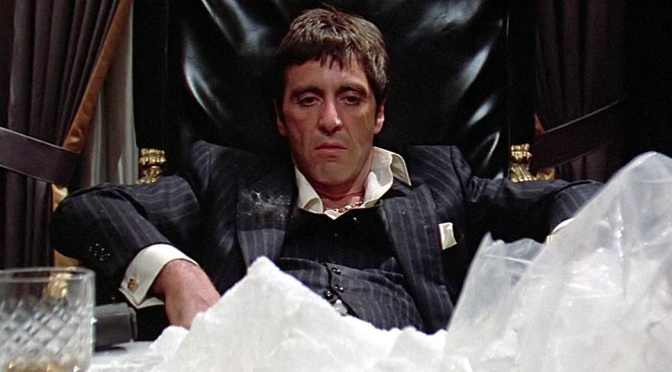
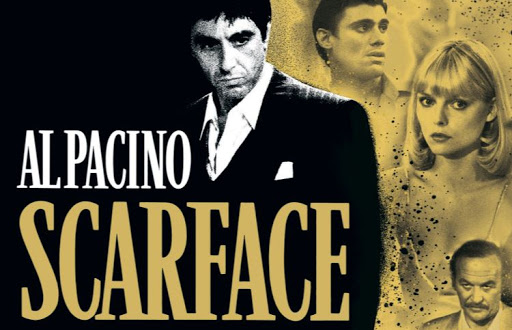
While Al Pacino is rightly lauded in the critically acclaimed Godfather Trilogy, as quietly menacing Michael Corleone, I think his spectacular performance as Tony Montana in Scarface (1983), is nothing short of cinematic gold. Tony Montana is a monstrous symbol of 1980’s excess and neo-capitalism. A product of social deprivation and cold war division. In this world, greed is not just good, but a driving force behind an evil empire which believes the extreme is only halfway. Tony Montana is small in size but big on gesture, colour and voice, both an anti-hero and villain for the eighties era. Moreover, for me, Tony Montana is the most iconic gangster ever committed to celluloid.

With a combustible screenplay written by Oliver Stone, Scarface (1983), is a cocaine driven and incendiary viewing experience. Stone himself is reported to have been battling cocaine addiction while writing it and this shows in the over-the-top world on screen. Everything is ramped up to eleven, including: the violence, shouting, swearing, shooting, politicking, drug-taking, sex, killing, avarice, money-making and corruption. There isn’t one redeemable character in the whole film. Everyone is corrupt. Actually, Tony’s mother tries her best to stay away from the darkness that follows Tony. His sister Gina (Mary Elizabeth Mastrantonio) seems pure, but is ultimately drawn into Tony’s incestuous glue, precipitated by her dangerous liaison with Manny (Steven Bauer).


“In this country, you gotta make the money first. Then when you get the money, you get the power. Then when you get the power, then you get the women.” – Tony Montana


How 'Scarface' Transformed the Way Cubans Were Perceived in the US

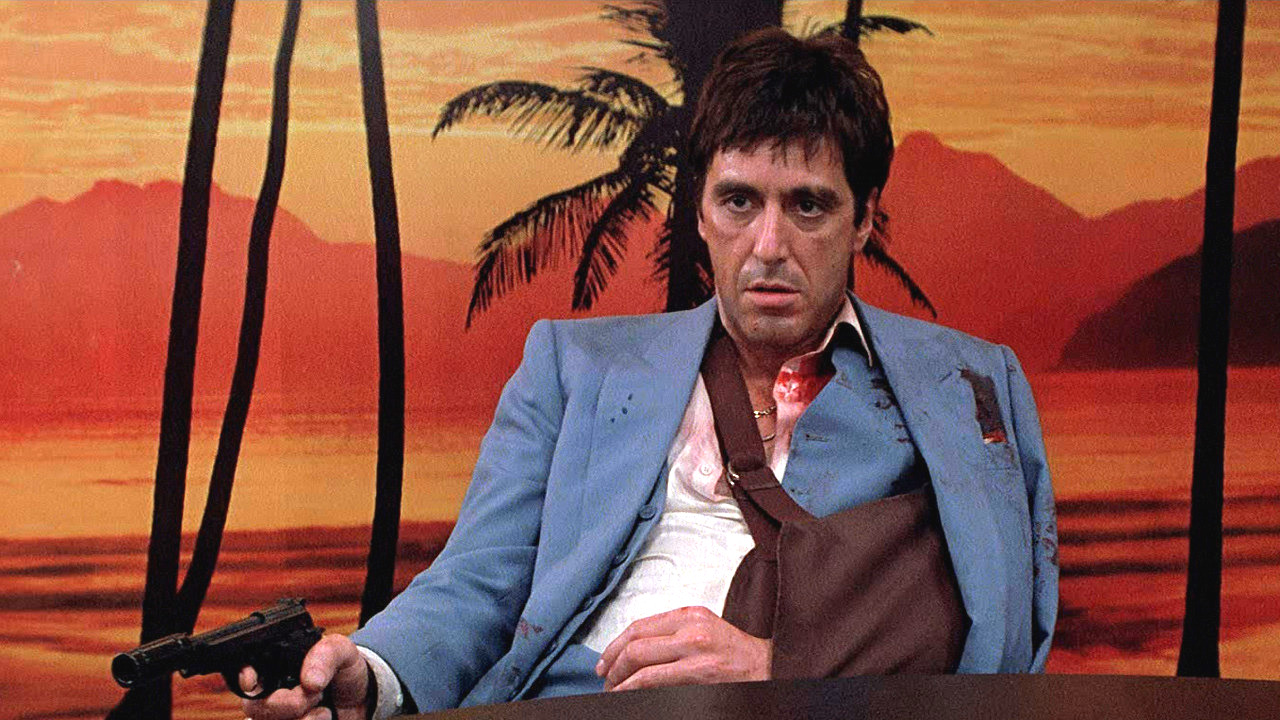
Directed with operatic and kinetic power by Brian DePalma, I have to say that Scarface (1983) is probably my favourite gangster film of all time. That isn’t to say it’s the best. That is Scorsese’s masterpiece Goodfellas (1990). But I just love this film because DePalma and Stone and Pacino revel in excess, violence and tragedy. It also contains some very dark humour too. Tony Montana is horrific, but also very funny. Georgio Moroder’s brooding synthesised score pocks the Miami streets, clubs, beaches, Bolivian boltholes, and in the final hour, Tony’s fortified mansion. I love the artificial backdrops featuring palm trees and sun because their fakeness symbolises the delusory world of the characters. Indeed, even the back-projection shots used when driving add to the illusion. The characters business foundations are built on white sand, a powder which ultimately blows away in the wind.

DePalma is the best director of a cinematic set-piece since Hitchcock. That isn’t to say he’s the best director ever per se, but rather someone who just creates so many well-conceived and memorable scenes. The infamous chainsaw scene, the killing of Frank (Robert Loggia), Tony’s bitter monologue in the restaurant, and the explosive “say hello to my little friend” ending, are just a few of the jaw-dropping moments in this epic crime drama. DePalma also gets incredible performances from all the cast. Pacino obviously blows the doors off as the tough, paranoiac, angry, greedy and hyperbolic Montana. The then, mostly unknown, Michelle Pfeiffer is equally impressive as the coke-fuelled ice-queen, Elvira, who becomes Tony’s vampiric and soulless wife.

Stone’s scenery-crunching script obviously owes much to the original film version of Scarface (1932), co-written by, among others, W. R. Bennett and Ben Hecht and directed by Howard Hawks. The structure is remarkably similar charting the rise and fall of the “political refugee” from Cuba, Tony Montana. It’s a genius stroke by Stone to transplant the exodus of Cubans to America and at the same time, echo the rise of the gangster during the prohibition era of the original film. But, instead of booze, the drug of choice is cocaine. This war on drugs is bloody and unforgiving. As the money and narcotics mount up, so do the victims. Complicit with the criminals are law enforcement, South American dictators and U.S. Government officials. Stone makes many political barbs, but never preaches at the expense of the narrative. Capitalism, the law and American foreign policy has never been more ruthless than here in Scarface (1983). As the oft-seen slogan says, ‘The World is Yours’, but tragically these characters don’t live long enough to enjoy it.


“Every day above ground is a good day.” – Tony Montana


CLASSIC MOVIE SCENES #12 – ONE FLEW OVER THE CUCKOO'S NEST (1975) – "WORLD SERIES"

CLASSIC MOVIE SCENES #12 – ONE FLEW OVER THE CUCKOO’S NEST (1975) – “WORLD SERIES”

Directed by Milos Forman

Produced Saul Zaentz, Michael Douglas

Screenplay by: Lawrence Hauben & Bo Goldman – adapted from Ken Kesey’s novel.

Cast: Jack Nicholson, Louise Fletcher, Will Sampson, William Redfield, Brad Dourif, Christopher Lloyd, Danny DeVito, Sydney Lassick etc.

Cinematography: Haskell Wexler

**** CONTAINS SPOILERS ****


Image result for one flew over the cuckoo's nest

Multi-award winning One Flew Over The Cuckoo’s Nest (1975) is easily one of the most complex, intense and darkly funny cinematic explorations of mental health I have ever seen. It is also one of the best films I have ever seen too. Based on Ken Kesey’s novel, it charts the admission of Randall P. McMurphy (Jack Nicholson) to an Oregon mental institution as he attempts to avoid hard labour at a prison farm.

McMurphy is a charismatic, anti-heroic and anti-establishment criminal, but definitely not crazy in the clinical sense. Rather than lie low and serve his time though, he constantly clashes with the staff, notably Nurse Ratched (Louise Fletcher). His unruly behaviour causes him to excite the other patients of the facility, becoming infectious. Thus, Nurse Ratched acts to quell such rebellion causing further conflict with McMurphy. Jack Nicholson is on absolutely incredible form in this film. He’s wild, funny, excitable, manipulative and very entertaining. On the other hand, Louise Fletcher is cool, calm, but equally devious. She loves to be in control and takes quiet joy in denying the inmates their wants.

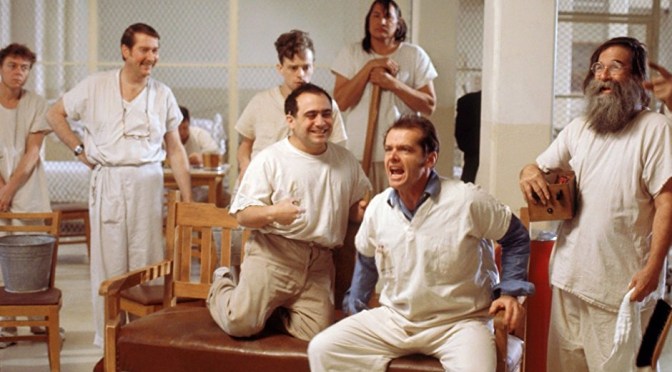
When McMurphy “loses” a vote to watch the World Series Baseball of 1963 on television, he’s determined to get his own way. So much so, in this classic scene, he enacts what he thinks is happening in a fake commentary. Nicholson is so realistic and excitable you feel like you’re actually at the game. It’s such a classic scene with the gentle music counterpointing Nicholson’s manic delivery. Moreover, the ensemble inmate’s celebrations, Nurse Ratched’s cold-hearted face and a blank television screen create a powerful set of images. Ultimately, McMurphy is a tragic character as he tries to bend the system, only to eventually break himself by the end.


EXPLORING ARCHETYPES IN CINEMA

EXPLORING ARCHETYPES IN CINEMA

“All the most powerful ideas in history go back to archetypes.” CARL JUNG

I have recently explored character names and character personas on this blog. These articles can be found here:

  1. WHAT’S IN A NAME
  2. A TEST OF CHARACTER

Now I would like to broaden the subject and have a go at defining some basic film character archetypes. My definition of this has some crossover with personas, but archetypes are not necessarily the component which make up the character – they ARE the character!

Archetypes are a common or typical shorthand; a tool writers, directors and actors can use to define character during the creative process. They are not stereotyping though. They are standardized models and structures that can be built upon to fully flesh out a character.

The archetypes I would like to consider are: Everyman/Woman, Hero, Super-Hero, Anti-Hero, Nemesis, Mentor, Sidekick and Lover/Romantic Interest. Obviously, many of these archetypes can combine, especially in more complex films, plus I’m sure there are loads of others. However, I will limit myself to these for now.


EVERYMAN / WOMAN

The staple for many, many movies is an everyman or woman or boy or girl (or gender fluid) character who is easy to relate to for the audience. It could be Tom Hanks in Castaway (2000), or Tom Hanks in Sully (2016), or Tom Hanks in basically everything – even Toy Story (1995). They tend toward the working or ordinary class with regular jobs and family units. Their stories will be everyday, or they will find themselves facing incredible situations. Alfred Hitchcock favoured everyman and woman characters who would be thrown into dangerous situations. Actors who excel in such roles include: Hanks, James Stewart, Meryl Streep, Amy Adams, Francis McDormand, Jack Lemmon and many more.


HERO

Many characters can begin ordinary or everyday, but over the course of a film become heroes. Luke Skywalker for instance is an bright farm kid with dreams of joining the academy. A series of contrasting events then cause his rise to discovery and heroism. On the other hand, some heroes are fully formed such as James Bond and Indiana Jones. The everyman character and hero are often combined, like with John McCLane or underdog characters such as Rocky Balboa. My favourite hero arcs are stories where the character starts in lower status such as The Terminator (1984), Django Unchained (2012) and Harriet (2019).


SUPER-HERO

So what’s the difference between a hero and a super-hero? For me the hero may be capable of incredible feats of action and endeavour, yet he or she is ultimately mortal. Thus, while they may be a super-hero on the surface, Batman and Iron Man are heroes to me; albeit mechanically improved ones. Superman, Wonder Woman and Thor, for example, have god-like powers, thus defining them as SUPER! Obviously, there are crossovers as illustrated by Peter Parker, Captain America and Captain Marvel. All of them begin as everyboy/man/woman characters and become super-heroes due to military experimentation or being impacted by incredible events which cause physical transformation.


ANTI-HERO

I love a good anti-hero. I think they are my favourite character archetype. They can be charismatic and just on the side of the righteous, but misanthropic and sarcastic like say, Wolverine or Blade. They can be on the wrong side of the law, but redeem themselves at the end of a film like Danny Archer and Han Solo. They can be outsiders or loners like Travis Bickle. They can be hard on the outside and soft on the inner like Juno. Moreover, certain actors have cornered the market on anti-heroes such as Jack Nicholson, Ellen Page, Leonardo DiCaprio and Clint Eastwood. My favourite anti-heroes are often cursed with supernatural forces causing them to be trapped by certain powers. The ‘Wolfman’, Lawrence Talbot, and Carrie White are fine instances of this.


NEMESIS

Given it is pantomime season there’s no harm is looking at villains! For me the greatest villains are the ones which actually have a valid cause or point. Of course, I don’t agree with their actions as they will generally involve killing people or destroying the Earth or Universe. However, villains such as Robert DeNiro’s heinous Max Cady had valid motivation. Likewise, Thanos’ plan to wipe out half of everyone was founded on sound environmental ideology. This doesn’t make it right though. Sympathetic nemeses are also interesting like Marvel’s Erik Killmonger. Moreover, King Kong for example, begins life as a threatening monster, but ultimately ends up being sympathetic compared to man. Nonetheless, you cannot beat a good old fashioned baddie like Hannibal Lecter, The Terminator, Hans Gruber, Nurse Ratched and one of my favourites, The Wicked Witch of the West.


MENTOR

The Mentor character can take many forms. They are very valuable in supporting a hero or heroine on their adventures, plus providing vital exposition or the rules of the world information. The archetypal mentor archetype is a wise, older character like Morpheus, Alfred Pennyworth, Gandalf, Mr Miyagi, or Obi Wan Kenobi. Moreover, they will often have powers and magically assist those around them. The wonderfully helpful Mary Poppins is a great example of this. Every so often mentoring is rejected by the younger partner. A case in point being Brad Pitt’s Detective Mills eschewing Morgan Freeman’s Somerset’s sage advice with deadly results. Then again, mentoring can take a more twisted and controlling turn as seen with The Devil Wears Prada’s (2006), Miranda Priestly, and in Paul Thomas Anderson’s recent arthouse classic, The Phantom Thread (2017).


SIDEKICK

The sidekick is a lower status character that can be an ally, helper, friend or even enemy that also provides comic relief or dramatic tension. Different from the bromance or traditional buddy character, because that double-act dynamic is on an equal level of status. Great sidekicks include: Hermione Granger, Short Round, Robin, Chewbacca, Dr Watson and many more. Often, the sidekick actually becomes more interesting, funny and memorable than the lead protagonist. Examples of this include the brilliant Hit Girl, Igor, Donkey and the aforementioned Hermione. Sometimes the sidekick takes a darker route such as Loki and Lady Macbeth, who use their influence for evil rather than good.


THE LOVER / ROMANTIC INTEREST

So, the love interest can be a romantic extension of the sidekick but can also be a mentor and even a villain. I would differentiate the love interest character from traditional romantic comedies or dramas. For instance, in When Harry Met Sally (1989), Sally and Harry are of equal status and classed as everyman and woman archetypes. However, in James Bond films the love interest is traditionally a female conquest. More in depth love interest characters are those that are not just trophies; they become equal in the story. Princess Leia is a heroine and love interest, likewise Marion Ravenwood in Raiders of the Lost Ark (1981). Most recently, and a reflection of our progressive times, Diana Prince/Wonder Woman found a fine love interest in Chris Pine’s heroic Steve Trevor. Thankfully, the outdated “damsel in distress” stereotype is being consigned to the past and now we have characters of all backgrounds and gender represented on an equal basis.


CONCLUSION

As I said earlier this list is just an exploration of archetypes. There are a number I could have included. That stock character the wife or husband is one which always appears regularly in films. Often, they are waiting by the phone or television screen as some disaster befalls their partner. Lastly, I could have included the double-act, the team or the ensemble archetype; where one or more characters combine to create a whole. But, I think I’ll save that for another essay.


BRIGHTBURN (2019) – MOVIE REVIEW

BRIGHTBURN (2019) – MOVIE REVIEW

Directed by: David Yarovesky

Produced by: James Gunn, Kenneth Huang

Written by: Brian Gunn, Mark Gunn

Cast: Elizabeth Banks, David Denman, Jackson A. Dunn, Matt Jones, Meredith Hagner, Gregory Alan Williams etc.

**MAY CONTAIN SPOILERS**

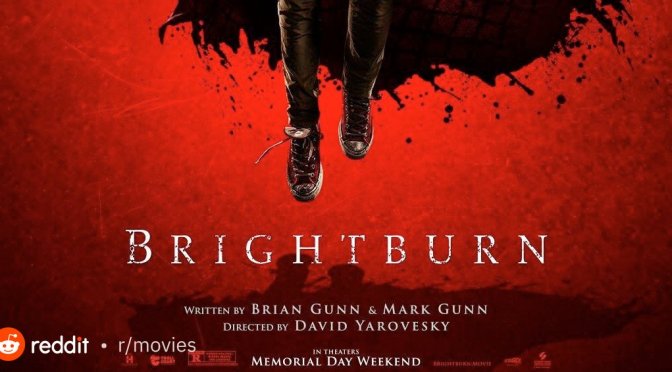
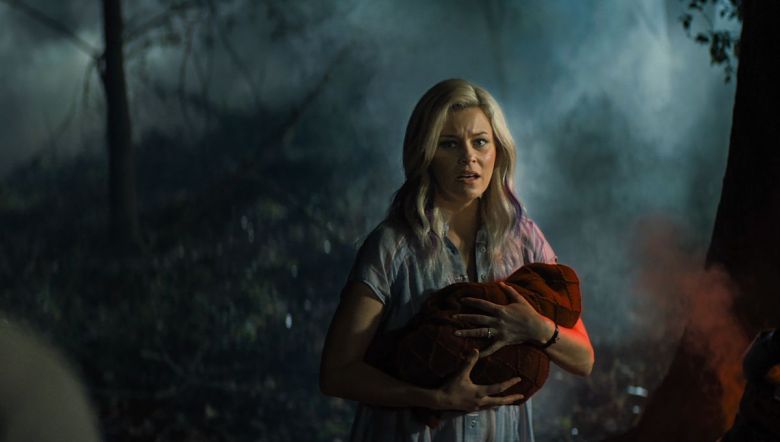
What if Superman was evil? As concepts go Brightburn (2019) has a simple but highly impressive one. The trailer too was brilliant and it was only when I saw a few negative reviews did I baulk at going to see the brisk B-movie-super-hero-horror-film. So, does a great pitch, and cool trailer lead to a great movie? In part yes; and in part no!

With the indie-turned-blockbuster director, James Gunn, in the wings producing the film, Brightburn clearly has a pedigree in superhero, comedy and horror film-making. I loved his low budget gem Super (2010) and his work helming the Guardians of the Galaxy films is also impressive. One wonders if Brightburn may have worked better with James Gunn directing but we will never know.

Set, unsurprisingly in Brightburn, Kansas, the story completely steals the Superman origin narrative and twists it in a fun and gory way. Farming couple Tori and Kyle Breyer are desperate for a kid and have failed to conceive naturally. Fortunately, or so it seems at first, a child falls from the skies, and rather than tell the authorities they adopt the kid as their own.

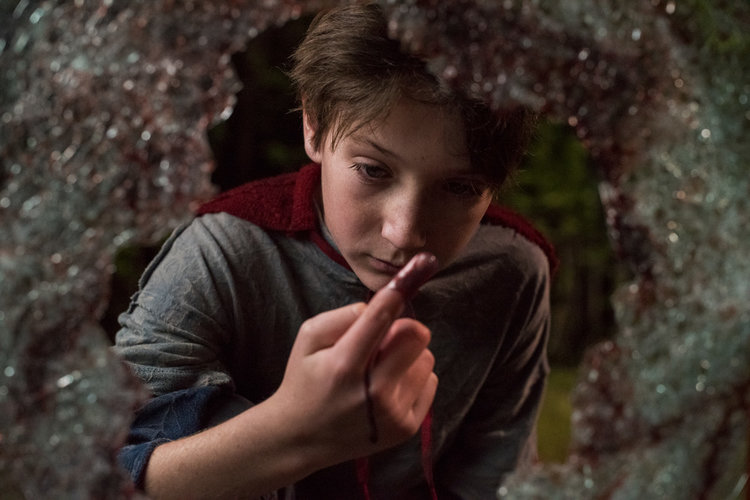
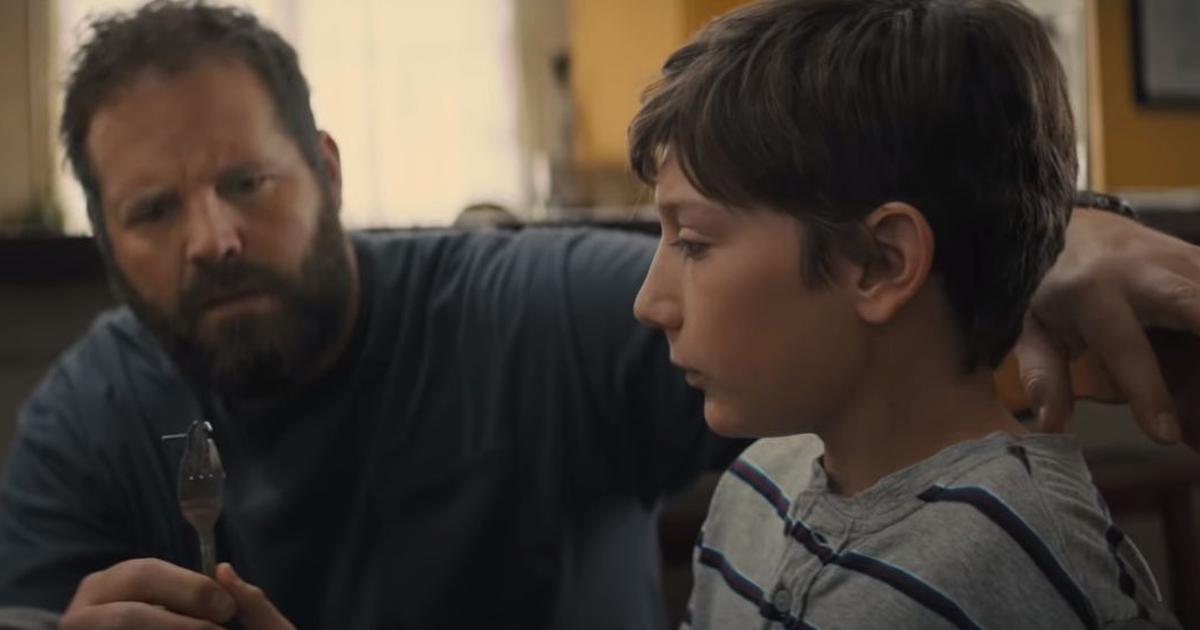
Flash-forward and Brandon is now twelve years old and puberty is fast approaching; cue bodily changes but not the kind his parents were expecting. As Brandon deals with school bullies and his first crush he suddenly begins going into trances and attempting to unlock that red glowy thing in the barn. What could it all mean? Mayhem! Bloody mayhem is what it means!

I really enjoyed Brightburn. It’s script is a bit dumb and some of the character choices are pretty ridiculous, especially when Brandon starts behaving violently at school and around the house. However, I loved the fast-pace, the concept, the dark horror, the red-masked image system, and the gore. Moreover, while many were given away in the trailer, there are some brilliant set-pieces and scares throughout.

Some of the negative reviews I have seen may have come from the wrong angle on Brightburn. Its not really meant to be taken seriously despite the compelling and dramatic performance from Elizabeth Banks. For me it’s to be watched as an imaginative low-budget B-movie feature, somewhat reminiscent of those “kids-go-bad” 1980’s horrors I used to rent from local video store.

There’s an element of depth as it touches on themes relating to puberty, adoption and the trials of parenthood; ultimately though it’s about the rise of an evil anti-hero in a gas mask with glowing red eyes!! In a nutshell, Brightburn is one for B-movie horror fans everywhere and I definitely want them to expand the universe.

Mark: 8 out of 11

TV REVIEW: LEGION (2017)

TV REVIEW: LEGION (2017) – SEASON 1

DIRECTOR(S): Noah Hawley, Michael Uppendahl, Larysa Kondracki, Tim Mielants, Hiro Murai, Dennie Gordon

WRITER(S):  Noah Hawley, Peter Calloway, Nathaniel Halpern, Jennifer Yale  – based on Marvel’s Legion created by Chris Claremont & Bill Seinkiewicz

CAST:  Dan Stevens, Aubrey Plaza, Rachel Keller, Jean Smart, Jeremie Harris, Jemaine Clement, Bill Irwin

Legion-1

**REVIEW CONTAINS SPOILERS**

Noah Hawley is a postmodern auteur par excellence. He takes established genre output and influences from film, television and literature, before translating them through his creative persona to breathe paradoxical original life into his productions. For example, he actually had the creative courage to take one of my favourite films Fargo (1996) and turn it into a brilliant and quirky television series. Similarly he has done the same with Marvel’s comic-book-X-Men-based-anti-hero Legion.

Of course the superhero/heroine genre has become massive business at the box office. I loved Nolan’s Batman trilogy and personally am also a big Marvel and Avengers fan, believing the Captain America trilogy to be representative of the height of the genre model. Meanwhile, the X-Men franchise also has some fine entries too notably X-Men: First Class (2011) and Days of Future Past (2014); and Netflix’s Daredevil (2015) has also given us two seasons of gritty and energetic delight too. Yet arguably some of the more intriguing Marvel adaptations have been the lesser known products such as: Ant Man (2015), Doctor Strange (2016) and the effervescent Guardians of the Galaxy (2014). Now, FX’s sensational television series Legion (2017) proves to be the most mind-boggling and consistently brilliant of the lot.

legion-photo-57960adbc0b22

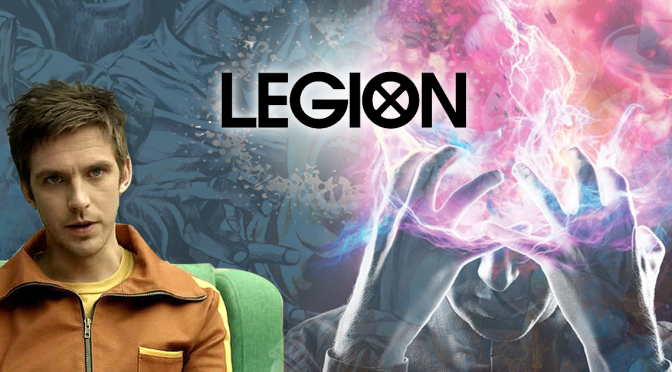
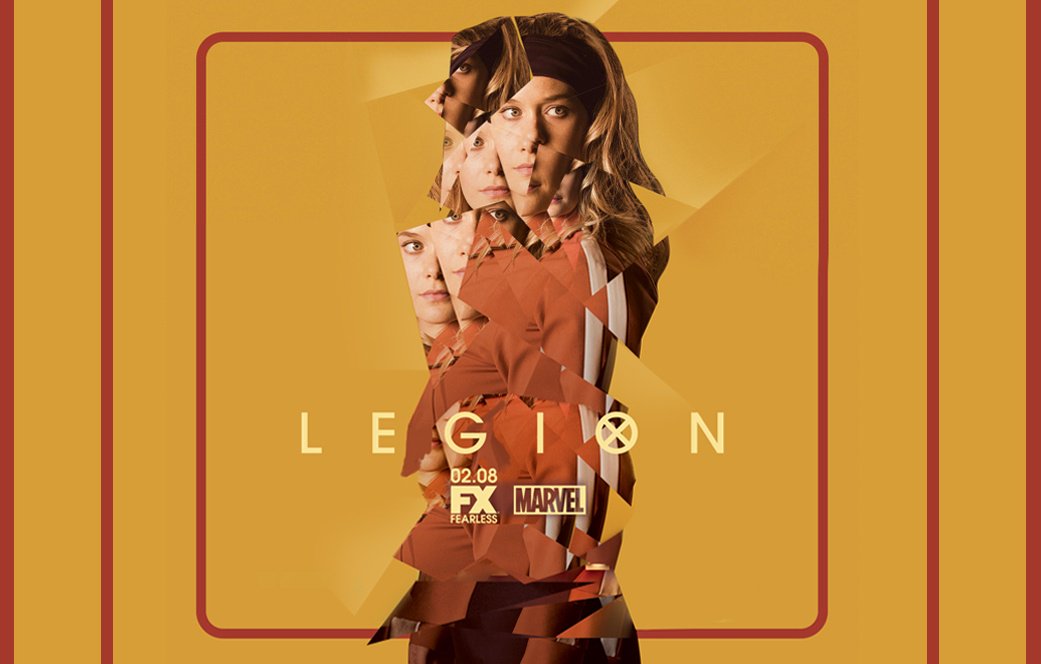
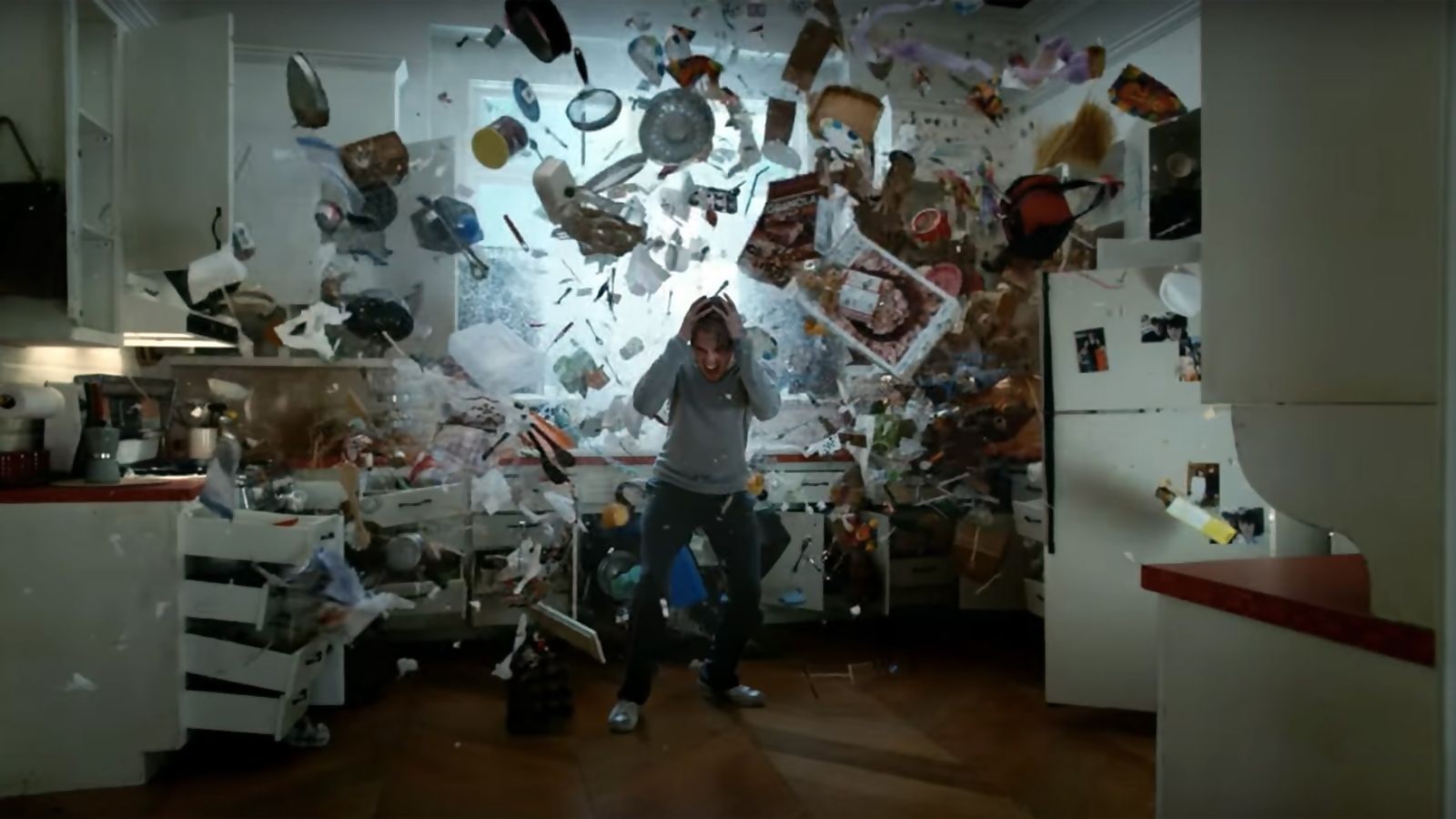
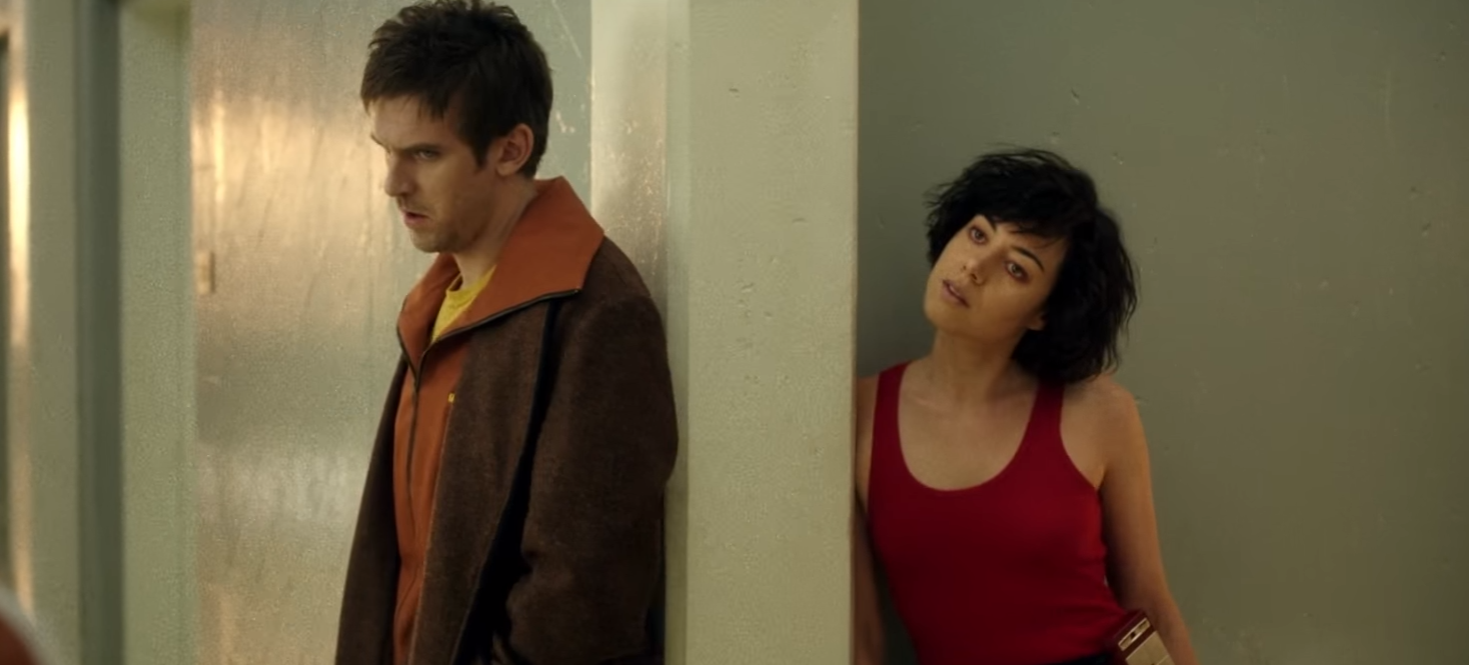
It features a talented ensemble cast led by the intensely brilliant Dan Stevens portraying a mentally disturbed young man called David Haller. The pilot episode’s opening sequence establishes his issues from a young age through teenage-hood right through to the now as he finds himself in a psychiatric hospital being treated for schizophrenia. Patients he connects with mostly are Aubrey Plaza’s eccentric and wild Lenny Busker and the more sensitive Sydney Barrett (Rachel Keller). Syd cannot stand to be touched – a character quirk which is soon to be revealed more than a phobia – yet her and David fall for each other. This romance propels one facet of the multi-stranded narrative; at the same time providing the story with much empathy and heart.

The main thrust of the narrative though is totally cerebral. While David finds himself in the middle of a war between mutants and the shady government agency called Division Three, we essentially spend many of the episodes in David’s troubled mind. There events unfold in a whirling cavalcade of images, characters and monsters all battling for supremacy of his brain. At times I could not work out what was happening yet I felt compelled, like last year’s HBO production Westworld (2016), to persist and the rewards and payoffs in the final episodes are indeed legion. Because the show, no doubt propelled by Hawley’s creativity and the original source material, is brimming with stunning ideas and visuals that literally burst out of the screen.

legion-2

The cast are incredible. Dan Stevens cements himself as one of the best emerging actors and he is destined for stardom in my view. Aubrey Plaza, who was great at laconic sarcasm in Parks and Revelations is wildly over-the-top and entertaining in her devious role; while Rachel Keller is the polar opposite: doe-eyes cute, vulnerable but with steely determination to protect David. My favourite supporting character was Flight of the Conchords’ comedian Jemaine Clement as a far-out scientist lost to the astral plane. His delivery and deportment just made me laugh out loud amidst the madness on show.

legion-tv_series-dan_stevens-rachel_Keller(1209)

This is as imaginative and original take on the superhero/mutant/X-Men genre you are going to find. Many people lost their shit over Logan (2017) but that is pedestrian compared to Legion. It also very cleverly melds themes relating to: mutation, special powers, telekinesis, split-personality, disassociation and schizophrenia expertly while wearing its’ influences neatly on its sleeves. Indeed, if you’re a fan of One Flew over the Cuckoo’s Nest (1975), I’m a Cyborg But That’s Okay (2005), Clockwork Orange (1971), Eternal Sunshine of the Spotless Mind (2004) , Inception (2010) and the work of David Lynch, then you’ll love Noah Hawley’s masterful Marvel adaptation.

(Mark: 9.5 out of 11)