Tag Archives: Cinema

Cinema Review: Black Bag (2025) – Christie meets le Carré in this stylish, sexy and witty spy whodunnit!

CINEMA REVIEW: BLACK BAG (2025)

Directed by Steven Soderbergh

Written by David Koepp

Produced by: Casey Silver, Gregory Jacobs

Main cast: Cate Blanchett, Michael Fassbender, Marisa Abela, Tom Burke, Naomie Harris, Regé-Jean Page, Pierce Brosnan, etc.


Cinematography by Peter Andrews

*** MAY CONTAIN SPOILERS ***


Steven Soderbergh’s career has been nothing short of a cinematic roller-coaster, blending big-budget spectacle, indie sensibilities, and a keen embrace of genre films in ways that defy easy categorisation. What makes his career so distinctive is his ability to seamlessly navigate between these different filmmaking realms, constantly evolving while retaining a unique voice and artistic freedom. His latest film Black Bag (2025) is a striking, starry, and decent-budgeted genre effort.

Soderbergh first rose to prominence with Sex, Lies, and Videotape (1989), a low-budget indie that catapulted him into the spotlight. The film’s success established him as one of the defining voices of American independent cinema during the 1990s. His subsequent works, such as Kafka (1991) and The Underneath (1995), reflected his interest in experimenting with narrative structures and visual styles, blending genre conventions with deep, sometimes surreal exploration of characters. These works were still firmly rooted in indie filmmaking, but they hinted at a growing ambition and versatility in his cinematic process.

Then, in the late ’90s and early 2000s, Soderbergh took a bold leap into big-budget territory. His Ocean’s Eleven (2001) series stands as a perfect example of his ability to handle mainstream, star-studded films with finesse. It combined slick, fast-paced storytelling with elements of the heist genre, demonstrating that Soderbergh could not only handle massive budgets but could also bring style, wit, and substance to a genre film. However, Soderbergh was never one to be pigeonholed, and in the same decade, he also directed both Erin Brockovich (2000) and Traffic (2000), both socially conscious, multi-layered dramas, with the latter about the war on drugs. Traffic earned him an Academy Award for Best Director, proving that Soderbergh but could also tackle politically charged narratives with profound depth.

Having moved back to indie filmmaking with The Bubble (2005) and The Girlfriend Experience (2009), Soderbergh made another unexpected turn with Magic Mike (2012), which, despite its premise (a male stripper drama), was a sharp social commentary on gender, exploitation, and masculinity. This film not only tapped into a niche market but was also a critical success, further cementing his ability to bring depth to various genres, whether mainstream or niche. Even when he announced his “retirement” from directing in 2013, he still found ways to work in other mediums, such as producing and experimenting with quality television (The Knick), and in 2017, he returned to directing with Logan Lucky (2017), a heist comedy that balanced mainstream appeal with Soderbergh’s signature offbeat style.


Soderbergh’s ability to jump between blockbuster entertainment and intimate, experimental narratives has been the hallmark of his career. Yet for me his serious genre dramas like the aforementioned Traffic (2000), plus Contagion (2011), Side Effects (2013), and his most recent project, Black Bag (2025) represent the pinnacle of his narrative precision and impact, solidifying his reputation as one of the best directors in genre cinema. One could argue that Black Bag (2025) leans heavily on spy film tropes, yet it has a certain emotional and conspiratorial depth beneath the familiar beats and sheen.

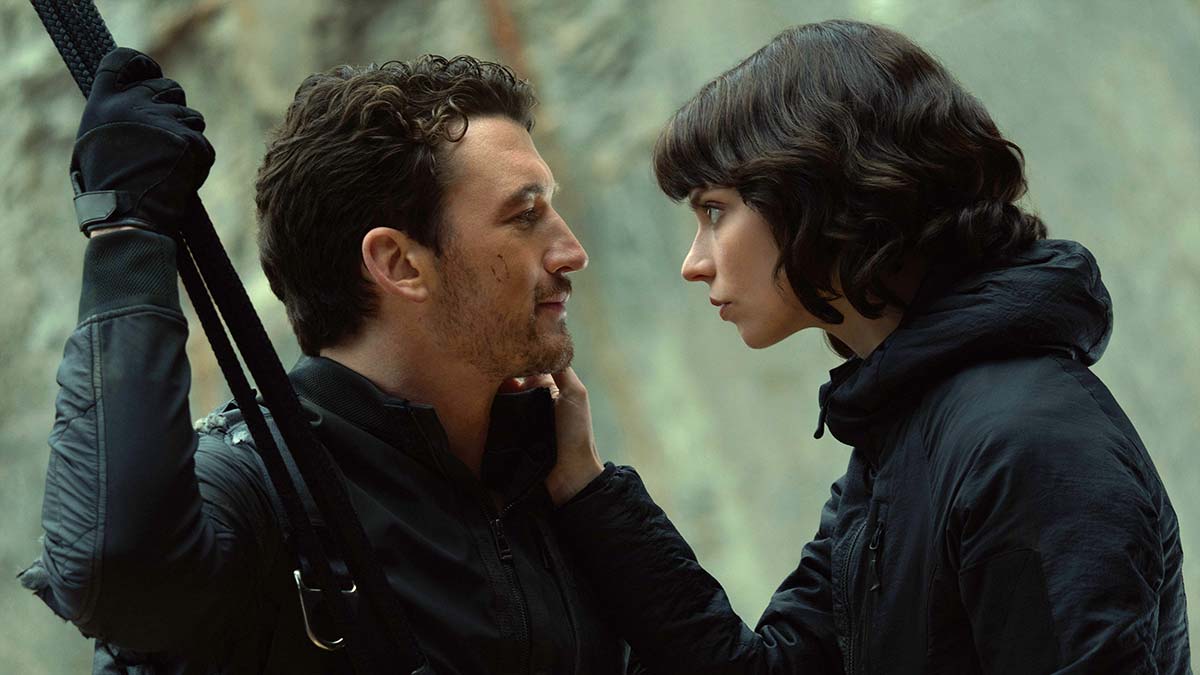
What sets these films apart from the rest of Soderbergh’s career is the seamless way in which he blends his usual intellectual ambition with a masterful, almost surgical delivery of genre tropes. Whether tackling the global panic of a viral outbreak in Contagion (2011), the psychological twists of a modern Hitchcockian thriller in Side Effects (2013), or the high-stakes political intrigue in Black Bag (2025), where a deadly uber-weapon McGuffin falls into the wrong hands. Here master-agent George Woodhouse (Michael Fassbender) must track down a mole, who may-or-may-not be one of his colleagues or indeed his wife, Kathryn (Cate Blanchett).

Black Bag (2025), expertly combines spy-game thrills within a series of “who’s-cheating-on-who” twists. It certainly helps that Soderbergh is working with an exceptionally crafted script from David Koepp and a cast to die for. Fassbender, Blanchett and Tom Burke especially stand-out, with Fassbender delivering yet another masterclass in filmic understatement. Overall, it’s a viciously funny and sexy genre piece that combines Agatha Christie, classic espionage thrillers and Soderbergh’s trademark framing, lens and lighting tricks. It’s the kind of genre filmmaking where every scene, every act, every word, every frame and every moment serves a narrative purpose. It’s a handsome bit of cinema and my word is my Bond!

Mark: 8.5 out of 11


Romford Horror Film Festival 2025 appreciation post!

Romford Horror Festival 2025 – review and thanks!

The Romford Horror Film Festival in Essex has quickly become a key destination for both emerging and established voices in horror cinema. With a mission to champion independent filmmaking talent, the festival provides a crucial platform for new directors, writers, and producers to showcase their work to enthusiastic audiences and industry professionals.

One of the festival’s standout features is its dedication to fresh, original horror storytelling. By curating a diverse lineup of indie horror shorts and feature films, the event serves as a launchpad for up-and-coming talent, offering them exposure, networking opportunities, and even awards that can propel their careers forward. The festival frequently hosts Q&A sessions, panel discussions, and filmmaker meetups, giving creatives a chance to engage directly with fans and industry insiders.


Alongside its celebration of new talent, the Romford Horror Film Festival also pays tribute to the classics of the genre. Screenings of beloved horror films from the past ensure that attendees not only experience the latest innovations in horror filmmaking but also gain an appreciation for the genre’s deep roots. By blending the past and future of horror, the festival fosters a sense of community among horror enthusiasts, creating an environment where cinephiles, filmmakers, and genre veterans can connect.

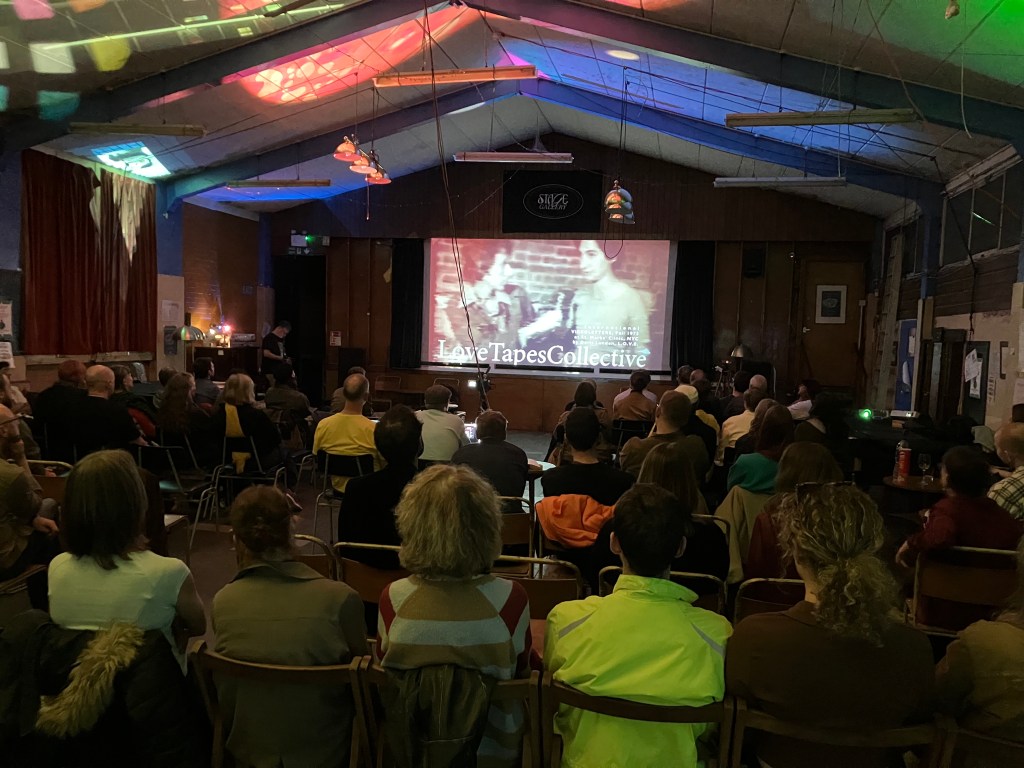
I attended on the Saturday and watched my short film Inferis (2024), plus a stream of other amazing short films. I then got to see Lucio Fulci’s gore classic, Zombie Flesh Eaters (1979) on the big screen. A very entertaining Q & A featuring cast members including Ian McCulloch followed. The programme also contained several more Fulci horrors, Threads (1984), The Evil Dead (1981), Metropolis (1927), Man Bites Dog (1992), Razor Blade Smile (1998) and many other vintage classics alongside the best of new indie releases. If you love horror films then check out their website for future events here!


Cinema Review: The Monkey (2025) – a hilarious horror sketch-show with gore masking an inconsistent totemic tale!

Cinema Review: The Monkey (2025)

Directed by Osgood Perkins

Written by Osgood Perkins

Based on “The Monkey” by Stephen King

Produced by James Wan, Dave Caplan, Brian Kavanaugh-Jones, Chris Ferguson, etc.

Main Cast: Theo James, Tatiana Maslany, Christian Convery, Colin O’Brien, Rohan Campbell, Sarah Levy, Adam Scott and Elijah Wood.

Cinematography by Nico Aguilar


Following the financial success of his 2024 psychological thriller Longlegs (2024), Osgood Perkins has recently embarked on adapting Stephen King’s short story, The Monkey, into a feature film. While I didn’t quite connect with it Longlegs (2024) it had many impressed with its strange, atmospheric tension as well as Nic Cage’s crazy look and performance. The Monkey (2025), differs in tone though as it this adaptation with a blends horror and dark comedy, allowing Perkins to showcase his versatility as a filmmaker.

The narrative of The Monkey (2025) centres on twin brothers, portrayed by Theo James, who encounter a cursed toy monkey linked to a series of gruesome deaths. Perkins expands upon King’s original short story, infusing it with themes of family, fatherhood, reconciliation and a litany of grisly sudden deaths. Having found the simian death totem as teenagers, Hal and Bill Shelburn find their lives and those around them impacted in the most bloody explosive of ways. Indeed, there is much thought and planning given to these Saw and Final Destination franchise influenced on-screen set-pieces. In fact, the exquisite surprise and laugh-out-loud hilarity which occur throughout somewhat overpowers any emotional connection with the thinly-written protagonists.


The film’s gore and relentless pace are undeniably its strongest assets — the kills are extreme, inventive, and staged with a gleeful disregard for realism, echoing the chaotic energy of ’80s horror comedies. Each death sequence feels like a miniature horror short, packed with practical effects and over-the-top carnage. Perkins crafts these moments with a twisted sense of humour, making the film feel like a sketch-show carousel of nightmarish vignettes, each more outrageous than the last.

However, despite the visceral fun, The Monkey (2025) struggles to leave a lasting impression. Unlike the original Saw (2004) by James Wan and Leigh Whannell — a film that balanced its brutal horror with sharp social commentary and tightly woven mythology — Perkins’ adaptation lacks a deeper foundation. The cursed toy monkey serves as a simple harbinger of death, but the film never establishes consistent rules for how the curse operates or why it escalates the way it does. Without clear internal logic or meaningful subtext, the horror loses weight, and the emotional stakes fizzle.

While The Monkey (2025) succeeds as a frenetic, blood-soaked thrill ride, it ultimately feels ephemeral. The film’s surface-level scares and comedic flair make for an entertaining watch, but the absence of narrative substance or thematic resonance leaves it as little more than a fleeting novelty — a film you enjoy in the moment, but rarely think about after the credits roll.

Mark: 6.5 out of 11


Cinema Review: September 5th (2024) – an inside-out snapshot of tragedy at the 1972 Munich Olympics!

Directed by Tim Fehlbaum

Written by Moritz Binder, Tim Fehlbaum and Alex David

Produced by Philipp Trauer, Thomas Wöbke, Tim Fehlbaum, Sean Penn, John Ira Palmer and John Wildermuth

Main cast: Peter Sarsgaard, John Magaro, Ben Chaplin, Leonie Benesch, Jim Mckay (archival footage), Zinedine Soualem, etc.

Cinematography by Markus Förderer

Edited by Hansjörg Weißbrich

*** MAY CONTAIN SPOILERS ***


The events of September 5th, 1972, during the Munich Olympics are deeply connected to the tragic and harrowing story of the attack by the Palestinian group ‘Black September’, which targeted the Israeli Olympic team. This day is crucial in understanding the impact of the attack, as it marks the beginning of what became known as the ‘Munich Massacre’. The documentary One Day in September (2000) directed by Kevin Macdonald, offered a detailed account of the events providing chilling footage, interviews with survivors, and insights from those who witnessed the attack and as a moment that deeply altered the course of history, influencing global politics, the perception of terrorism, and the nature of security at international events.

Steven Spielberg’s fictionalised film Munich (2005) dramatized the aftermath of the ‘Munich Massacre’, focusing on Israel’s covert response to the attack. The film based on the book Vengeance by George Jonas, told the story of a team of Israeli agents tasked with assassinating those involved in the planning of the massacre. The plot of Munich (2005) unfolds as these agents track down and kill individuals connected to ‘Black September’. The film, criticized for a series of inaccuracies, portrayed the moral complexities and psychological toll of vengeance, showing the personal conflict faced by the agents as they carry out their mission. Now, covering the same event, we have September 5th (2024), a drama-documentary that snapshots the conflict from the perspective of the ABC Sports crew and their coverage of the events.


Director, Tim Fehlbaum, and his talented production team effectively utilize constraints in geography, time, space, and structure to craft a highly claustrophobic thriller, drawing viewers into the escalating crisis as it unfolds. From the moment the athletes are taken hostage the ABC media team headed by Peter Sarsgaard as Roone Arledge, the president of ABC Sports, John Magaro as Geoffrey Mason, the head of the control room in Munich and Ben Chaplin as Marvin Bader, the head of operation at ABC Sports are on red alert striving to capture the story and prevent it being taken from them by the ABC News team. Fehlbaum makes use of limited settings, “real-time” structure, and confined spaces expertly as the audience find out information of the hostages plight and subsequent runway killings at precisely the same time as the crew do.

The films’ use of psychological space, close-ups, shadows and screens, creates a claustrophobic atmosphere, starving the audience of air and making them feel the increasing emotional pressure on each character. Like the world’s population today witnessing the brutal events unfold between Israel and Palestine on the news, they ultimately have little power over the situation as news of tragedy bleeds through to them. Further, the cast are uniformly compelling with Peter Sarsgaard, John Magaro and Leonie Benesch, as a translator for the ABC crew, stand out amongst an impressive ensemble. Lastly, special mention for the editing team led by Hansjörg Weißbrich, who skilfully weaved in actual footage from the ABC archive, creating a seamless and powerful cinematic experience.

Mark: 8 out of 11


Cinema Review: Hard Truths (2024) – an unflinching look at a family struggling with depression.

CINEMA REVIEW: HARD TRUTHS (2024)

Directed by Mike Leigh

Written by Mike Leigh

Produced by Georgina Lowe

Main Cast: Marianne Jean-Baptiste, Michele Austin, David Webber, Tuwaine Barrett, Ani Nelson, Sophia Brown, Jonathan Livingstone, etc.

Cinematography by Dick Pope

*** MAY CONTAIN SPOILERS ***


Mike Leigh’s career has been defined by an unflinching exploration of everyday existence, shaped by a commitment to realism and a deep understanding of human behaviour. His films, whether contemporary or period pieces, dissect the nuances of ordinary lives, often capturing the struggles, aspirations, and quiet triumphs of working- and middle-class individuals. His signature improvisational approach—where actors develop their characters through extensive rehearsal—allows for an organic authenticity that makes his work resonate with honesty and emotional depth.

Leigh’s early films, such as Bleak Moments (1971) and Nuts in May (1976), established his interest in the mundanities and disappointments of daily life. His later films, such as High Hopes (1988) and Life is Sweet (1990), continued this trend, portraying ordinary people navigating personal and societal challenges with humour and pathos. Secrets & Lies (1996), one of his most acclaimed works, epitomizes his fascination with human vulnerability, as it dissects family relationships, race, and identity in a way that feels raw yet tender.

Leigh’s career trajectory has also included excursions into period dramas, notably the heart-wrenching, Vera Drake (2004) and arguably his most political film, Peterloo (2018). But rather than abandoning his focus on the intricacies of human experience, he applies the same observational precision to historical subjects. Topsy-Turvy (1999), about the creation of Gilbert and Sullivan’s The Mikado, examines the creative process with the same detail he grants his modern-day working-class protagonists. Mr. Turner (2014), a biopic of the painter J.M.W. Turner, similarly explores the artist’s struggles, eccentricities, and societal context without falling into the clichés of the genre. These films reveal that, for Leigh, the past is not a grand spectacle but an extension of the same human complexities that define his contemporary work.


His latest film, Hard Truths (2024), follows in this tradition, delving into the stark realities of its characters with the same empathy and directness. Set in London in the present day, it focuses on the Deacon family unit and extended relations, notably two personality-divergent sisters, Pansy Deacon (Marianne Jean-Baptiste) and sibling, Chantelle (Michele Austin). Pansy is a middle-aged London housewife whose relentless irritability and sharp tongue mask a deep-seated inner turmoil. Her acerbic interactions—whether berating her husband Curtley, chastising her son Moses, or lashing out at unsuspecting strangers—serve as both a source of dark humour and a window into her dissatisfaction with life. Indeed, some of her rants are absolutely laugh-out-loud hilarious.

Leigh’s nuanced direction ensures that while Pansy’s outbursts may elicit laughter, they simultaneously reveal the tragic underpinnings of her character. Her vitriolic remarks, often delivered with biting wit, are symptomatic of her internal struggles, painting a portrait of a woman grappling with unarticulated pain. This duality is evident in scenes where Pansy’s caustic rants thinly veils her profound sense of isolation and despair. The film delves deeper into Pansy’s psyche during interactions with the more upbeat, Chantelle. A pivotal moment occurs during a Mother’s Day visit to their mother’s grave, where Chantelle confronts Pansy about her pervasive anger. Pansy’s anguished admission, “I don’t know!” encapsulates the bewildering nature of her depression, highlighting how her defensive humour serves as a barrier against this insidious mental illness.

Marianne Jean-Baptiste’s absorbing portrayal brings emotional depth to Pansy’s character, capturing the delicate interplay between her abrasive exterior and the fragility it conceals. Similarly, Michele Austin brings light and optimism to the screen, along with her effervescent daughters, somehow striving to combat the all-pervasive cloud of depression. Some of my favourite scenes of the film were with Chantelle in conversation with customers in her hair salon. Thus, in essence, Hard Truths (2024) presents a compelling character study that intertwines humour with the sombre realities of depression. Through Pansy Deacon, Leigh illustrates there are no easy answers to the pain of an affliction that remains silent and invisible but is ever-present within everyone’s lives.

Mark: 8 out of 11


Cinema Review: The Brutalist (2024) – There will be Concrete!

CINEMA REVIEW: THE BRUTALIST (2024)

Directed by Brady Corbet

Written by: Brady Corbet & Mona Fastvold

Produced by Trevor Matthews, Nick Gordon, Brian Young, Andrew Morrison, Andrew Lauren, D.J. Gugenheim and Brady Corbet
.

Cast: Adrien Brody, Felicity Jones, Guy Pearce, Joe Alwyn, Raffey Cassidy, Stacy Martin, Emma Laird, Isaach de Bankolé and Alessandro Nivola.

Cinematography Lol Crawley

Edited by Dávid Jancsó

*** MAY CONTAIN SPOILERS ***


A new wave of American filmmakers—directors like Todd Field, Robert Eggers, and Brady Corbet—have emerged as some of the most technically proficient and ambitious voices in contemporary cinema. Their work is marked by rigorous formal control, deep thematic ambition, and an almost obsessive dedication to craft. These filmmakers, arguably influenced by auteurs like Sofia Coppola and Paul Thomas Anderson, demonstrate an understanding of film language that is both deeply referential and boldly experimental. Whether it’s Eggers’ meticulous historical recreations, Field’s austere and cerebral storytelling, or Corbet’s overtly intellectualized narratives, they all exhibit an undeniable mastery of their medium. Their films, often dense with literary and philosophical allusions, cater to cinephiles who relish formal precision and narrative audacity.

Yet, for all their brilliance, there’s an argument to be made that their work veers into self-indulgence, if not outright pretension. Their films sometimes feel like exercises in artistic superiority, catering to an audience that appreciates the challenge but perhaps not the emotional accessibility that cinema can offer at its best. Whether it’s the cold remove of TÁR (2022), the self-serious mythologizing of The Lighthouse (2019), or the arch, affect-laden approach of Vox Lux (2018), these works often feel encased in a layer of knowing detachment. There’s a fine line between intellectual rigor and a kind of smug, insular artistry, and some critics argue that these filmmakers, however talented, sometimes tip too far in the latter direction—prioritizing aesthetic and conceptual ambition over genuine human connection. I mean, I love a lot of these filmmakers’ work, but I was raised on the American films of Coppola, Scorsese, DePalma, Spielberg, Lucas and Friedkin; auteurs who knew their art, but also how to entertain the audience too.


In Corbet’s, and film partner’s Mona Fastvold’s, phenomenally designed and constructed film, The Brutalist (2024), Adrien Brody portrays fictional László Tóth, a Hungarian-Jewish architect and Holocaust survivor. Brody’s is an incredibly memorable piece of work, acting as a spiritual performance sequel to his Oscar-winning role in The Pianist (2002). But rather than focus on an individual attempting to escape the Nazis during the war, the narrative concentrates on Tóth, who arrives in post-war America with nothing but his talent and ambition, only to find himself trapped in a system that celebrates his work while rejecting him as a person. In America, racism is delivered with a smile, and generosity is a means of control. High society rewards Tóth but also suffocates him with subtle condescension, as he is paraded around as an artistic trophy but never fully embraced as an equal.

As an epic character study of the life of an immigrant and exploitation of the financially stricken Jew in America, The Brutalist (2024), is a powerful work. Such themes compel us to think of today and the fact that America continues to struggle with the integration of people travelling there, even though it was built with the hands of migrant families. Here the screenplay exerts true power in critiquing the United States’ treatment of those travelling to America with hope. As the narrative unfolds across the decades, Corbet, Fastfold and Brody illustrate the slow erosion of Laslo’s dreams in an America that welcomes his work but not his humanity. As the key antagonist, Harrison Lee Van Buren, Guy Pearce delivers another chilling and precise character study. Van Buren is a spoilt, rich and brattish man whose charm and refinement mask a deeply exploitative nature.

Photographically, The Brutalist (2024) is indeed a work of art. Lol Crawley and the production team immerse viewers in a stark, architectural visual language—monolithic structures, rigid compositions, and a muted, desaturated color palette mirroring the emotional and physical isolation Tóth experiences. Yet, for for all its incredible craftsmanship and bold cinematic ambition, the film is a test of endurance—an unrelenting, patience-draining experience that stretches well beyond three hours. Even the inclusion of chapters, and a self-consciously “prestigious” intermission only serve to amplify the film’s pretensions, prolonging the agony of watching layer upon layer of misery unfold like a slow-moving roller-coaster that induces motion sickness with no escape. It’s a brilliant film that demands submission rather than engagement, wielding its bleakness like a weapon against the audience’s stamina. It will probably win the Academy Award for Best Film. That or Wicked (2024).

Mark: 8 out of 11


Cinema Review: A Complete Unknown (2024) – an electric but over-polished cover version!

CINEMA REVIEW: A COMPLETE UNKNOWN (2024)

Directed by James Mangold

Screenplay by James Mangold and Jay Cocks

Based on Dylan Goes Electric! by Elijah Wald

Produced by Peter Jaysen, James Mangold, Alex Heineman, Bob Bookman, Alan Gasmer, Jeff Rosen, Timothée Chalamet, Fred Berger etc.

Main cast: Timothée Chalamet, Edward Norton, Elle Fanning, Monica Barbaro, Boyd Holbrook, Scoot McNairy, Dan Fogler, etc.


James Mangold is rarely mentioned as one of the best directors around. Probably because he is not a flashy cigar-munching quote machine or a even a household name. Yet, he has consistently delivered a series of extremely entertaining genre films over the past few decades. These include: Copland (1997), Identity (2003), Girl, Interrupted (1999), Walk the Line (2005)3:10 to Yuma (2007), Logan (2017) and Ford v Ferrari (2019). His films always feature solid characterisation, compelling conflict and well-structured plots. They also have a pristine and attractive look and style. Further, they always attracts impressive A-list actors and striking ensemble casts. His cover version of the music biography, Dylan Goes Electric! by Elijah Wald is no different.

A Complete Unknown (2024) showcases events from the era of 1961 to 1965 where Dylan rose to major stardom delivering stunning and poetic lyrics with hypnotic melodies. This period culminates in his movement from acoustic guitar to full electric band, causing controversial and violent reactions from the audience and organisers of the Newport Folk Festival. This furore may seem mildly inconsequential in today’s social-media digital coliseum where intellectual debates are fought with emojis by individuals with nano-seconded attention spans. But for many, Bob Dylan’s perceived treachery of moving from the purity of folk over to the dark side of rock was a significant event of the epoch. Having said that, Dylan was always an enigmatic maverick and genius who marched to the time of his own drum. Thus, such audial rebellion was no surprise, especially when looking back at it now.


As a tribute to the incredible musical and writing brilliance of Dylan, A Complete Unknown (2024) is definitely worth a watch. Timothée Chalamet does a sterling job with the musicianship, mannerisms and vocal duties. He even brings a suggestion of character to someone who isn’t just a musician. Dylan’s a shape-shifter, a poet, a myth, a paradox wrapped in a harmonica riff. To play Dylan is not to “become” him but to capture the way he constantly eludes being known. Personally, I enjoyed Chalamet’s charismatic performance in Wonka (2023 more, but he is commanding as Dylan nonetheless. The supporting cast are terrific too, notably Edward Norton as the affable folk singer Pete Seeger and Boyd Holbrook as a muscular Johnny Cash. Mangold deserves much praise for getting so many consistently fine performances, even if the script could have been punched up with more drama throughout. Dylan being a bit of a self-driven “arsehole” and slight philanderer hardly raises the pulse.

Overall, Mangold directs with a sure hand and there are many fantastic musical set-pieces, gigs and recording sessions. But the film’s glossy sheen feels at odds with the grit of the 1960’s Greenwich Village folk scene. The world Dylan emerged from was smoky, messy, and filled with hungry artists scraping by in dimly lit coffeehouses, where folk music wasn’t just a style but a battle cry. A Complete Unknown (2024) captures the aesthetic—the period costumes, the dimly lit clubs, the jangling guitars—but everything feels just a touch too manicured, too cinematic. Dylan’s rise was not glamorous and the film makes the counterculture movement feel almost nostalgic rather than revolutionary. It’s an engaging snapshot, and Chalamet’s performance is undoubtedly compelling, but much like a pristine re-recording of an old folk song, the imperfections—the very thing that gave the music its soul—are missing.

Mark: 7.5 out of 11


Cinema Review: Wolf Man (2025) – short changes both fans of Leigh Whannell and the horror genre alike!

CINEMA REVIEW: WOLF MAN (2025)

Directed by Leigh Whannell

Written by Leigh Whannell and Corbett Tuck

Produced by Jason Blum

Main Cast: Christopher Abbott, Julia Garner, Matilda Firth and Sam Jaeger

Cinematography by Stefan Duscio


Leigh Whannell’s Wolf Man (2025) brings a fresh twist to the classic tale, grounding the werewolf transformation in a visceral metaphor for illness. The concept has undeniable merit, with the protagonist’s physical deterioration mirroring deeper themes of paternal guilt and the crushing weight of family responsibilities. Whannell’s knack for melding genre thrills with human drama is evident, as he did so effectively in Upgrade (2018) and The Invisible Man (2020). In fact, along with Predestination (2014), and the recently released, The Substance (2024), Upgrade (2018) is a low-budget masterpiece which SHOULD appear in many best-of-the-millennium-film lists, as opposed to over-rated, art-house garbage like Joanna Hogg’s, The Souvenir (2019).

Anyway, back to the Wolf Man (2025). The film’s decision to confine its narrative mostly, apart from a suspenseful flashback prologue sequence, to a single night, significantly undermines its potential. Once the parental unit portrayed by nervy and ticky, Christopher Abbott and woefully underwritten, Julia Garner is established, the rushed structure sacrifices emotional depth and character development, leaving its poignant ideas about illness, fatherhood and family obligations feeling under explored. The claustrophobic time frame allows for tense, kinetic set pieces and decent gore, but it stifles the broader emotional resonance that Whannell has demonstrated in his previous work.

For fans of Upgrade (2018) and The Invisible Man (2020), Wolf Man may feel like a missed opportunity. Those films balanced high-concept storytelling with sharp social commentary, whereas this latest effort feels more like a half-formed howl in the night. Indeed, there seemed to be a whole bite taken out of the second act with the film hurtling toward the underwhelming denouement with little tension and suspense. Further, if you have ever watched Ozark, then Julia Garner’s electric energy and acting power is truly under utilized. Plus, the film was SO dark. I know it’s a horror film, but it would be great to actually SEE what was going on as the characters go into the woods. Oh, and I did not like the monster design at all to be honest. Bring back Rick Baker I say. Overall, while there’s brilliance in the premise, the execution lacks the quality needed to fully transform it into something truly memorably metamorphic.

Mark: 6.5 out of 11


Horror-on-Sea 2025 – Fangs for the memories!

THANKS TO HORROR-ON-SEA 2025!

HORROR-ON-SEA FILM FESTIVAL is an amazing gathering in Southend-on-Sea. Every January horror filmmakers and fans flock to the Essex coastal town to satisfy their desire for all things horror.

The festival screens, over two weekends each year and features some of the most gruesome, scariest, funniest and entertaining independent horror films you’ll ever find. For more information please check out their website here.


This year Horror-on-Sea screened the short film I wrote and produced called, Inferis (2024). It’s an atmospheric horror which is a proof of concept short I intend to develop as a feature film I can describe as Saw meets The Office. You can watch it here:


Myself, Julia (who appeared in Inferis (2024) and my wife, Melissa, attended the packed 10am screening as the film supported an intriguing indie feature called The Cellar (2024). We also watched a gory and highly entertaining monster movie called, Hell-Hole (2024) that day. Many more films were screened over two weeks, plus masterclasses from horror filmmakers such as Pat Higgins.

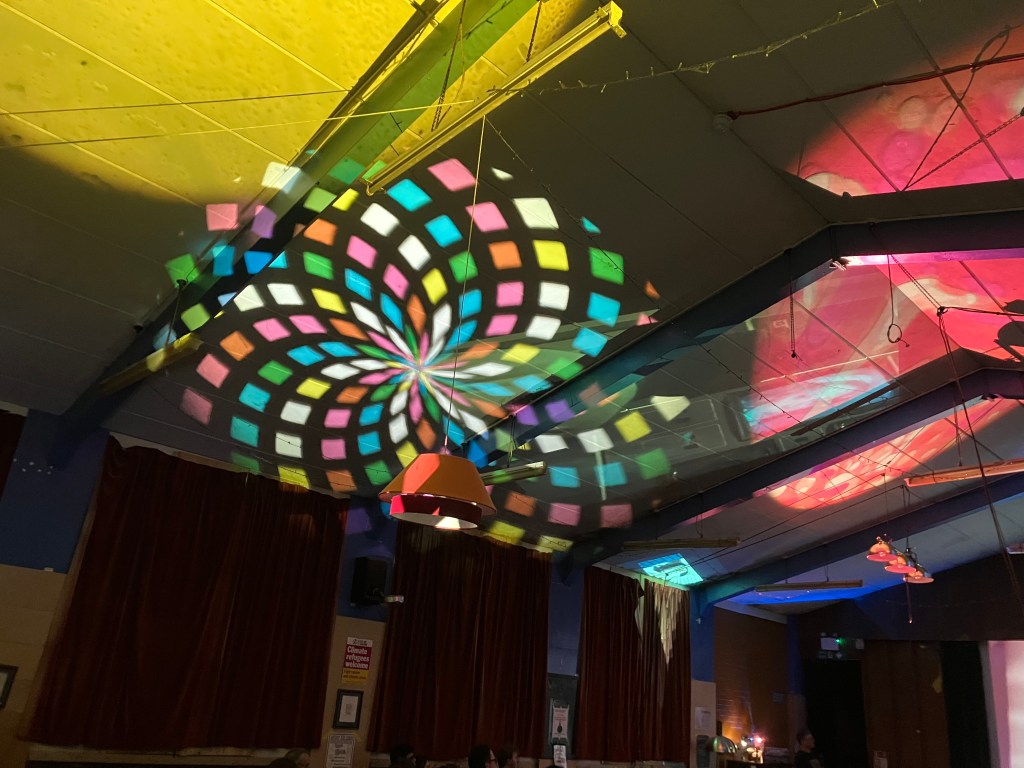
So, if you ever find yourself in Southend-on-Sea one January then do check it out. Or scroll through the gallery of photos I took over the weekend.


The Cinema Fix presents: 12 Favourite Films of 2024!

The Cinema Fix presents: 12 Favourite Films of 2024!

Good day and I hope you are well. I am slightly late to the party with these but happy new year nonetheless.

Here are my favourite films of 2024 that I watched at the cinema and on streaming platforms. The majority would have been released last year, however there were quite a few that crossed the last eighteen months or so. I cheated slightly with The Quiet Girl, but I watched in 2024, so there you go.

If I have missed any films then please let me know in the comments. I have either NOT seen them or did not enjoy them as much as you. Remember these are my FAVOURITE films seen in 2024 of new(ish) releases. So all purely subjective and am happy if you agree or disagree. Have a wonderful 2025!

Oh, for control and interest, I include my favourite films of 2023!


Ten Favourite Films of 2023

https://wordpress.com/post/thecinemafix.com/77015

ANATOMY OF A FALL (2023)
ASTEROID CITY (2023)
BROKER (2022)
MAY DECEMBER (2023)
OPPENHEIMER (2023)
PAST LIVES (2023)
SALTBURN (2023)
TAR (2022)
TOTALLY KILLER (2023)
THE WONDER (2022)


Twelve Favourite Films of 2024

ALL OF US STRANGERS (2023)


AMERICAN FICTION (2023)


HERETIC (2024)


THE HOLDOVERS (2023)


THE IRON CLAW (2023)


LATE NIGHT WITH THE DEVIL (2023)


MONSTER (2023)


POOR THINGS (2023)


THE QUIET GIRL (2023)


SPEAK NO EVIL (2024)


THE SUBSTANCE (2024)


THE ZONE OF INTEREST (2023)