Tag Archives: Comedy

Must-See Horror Films on SHUDDER. . . Mostly!

SHUDDER HORROR FILM REVIEWS (2024)

Looking for something horrifying to watch during Halloween. Well you could do far worse than getting a Shudder subscription.

A few months a year I sign up and binge bloody disgusting and scary films as my previous reviews testify. Check them out here!

This year I have done the same and watched some really good, terribly bad and hideously ugly horror films via Shudder. Peruse my short reviews below. In alphabetical order with marks out of eleven.


Host (2020)

A terrific low-budget British indie film that explores the dangers of angering ghosts during a Zoom call. While the mildly irritating characters don’t realize they can simply end the online séance, it’s still a spooky, suspenseful, and fast-paced horror flick. I’m not usually a fan of the found footage genre, but this was very well made and highly creepy. Mark: 8 out of 11


In A Violent Nature (2024)

This director will probably have an amazing career. But this film was, despite some wonderful practical-effect driven gore, SO slow and boring. The film satirizes classic horror tropes, mocking their clichés with a heavy hand. The director’s pretentious style and inflated sense of artistic ego drain the audience of any real suspense or tension. The attempt at highbrow genre obfuscation creates a hollow spectacle. Shot from behind, the killer stalks twenty-somethings in the woods in the style of Son of Saul (2015) meets every slasher film ever. Ultimately, suffering from atrocious dialogue, bad plotting and weak characterization, the visual flair fails to save a film which feels more like an exercise in intellectual vanity than a gripping thriller. Mark: 5 out of 11


Late Night With The Devil (2023)

With echoes of the recent Inside No. 9 (3×3 quiz show episode) and BBC show Ghostwatch (1992), and of course The Exorcist (1973)Late Night With the Devil (2023) is one of the most enjoyable and imaginative horror films I have seen in sometime.  One of the best horror films of the decade. Check out my longer review here. Mark: 9 out of 11


Pyewacket (2017)

Nicole Munoz’ isolated teenager summons a witch via a ritual and unleashes something not particularly scary or even present. All set-up and no catharsis! A waste of everyone’s time. Mark: 4 out of 11


Revealer (2022)

One of the best pitches I have read in a while – “A stripper and religious protester are trapped together in a peep show booth and must come together to survive the apocalypse in 1980’s Chicago!” does not unfortunately live up to expectations. However, there’s a decent female buddy dynamic and some imaginative gore which channels early Raimi, Jackson and Carpenter. Mark: 6 out of 11


Room 237 (2012)

For Stanley Kubrick completists, this fascinating documentary is divided into nine sections, with each one exploring a different aspect of The Shining (1980). Hidden theories buried under the surface relate to faked moon landings, Native American genocide and the holocaust are some of the ideas chucked at the wall. While some may stick and some don’t, it’s lovingly made and always fascinating. Mark: 8 out of 11


Skinamarink (2022)

Skinamarink was a major letdown for me, especially given the high expectations after its impressive financial success. With a $15,000 budget, it garnered over $2.1 million at the box office, creating a buzz around its unconventional style and promise of fresh horror. But despite its atmospheric tension and experimental approach, I felt the film didn’t live up to the hype. The slow pacing, abstract narrative, and reliance on ambient sounds and shadows left me unmoved. It’s an original, art-house horror so surprised it crossed over. Filmmaker, Kyle Edward Ball, clearly has a distinctive voice though. Mark: 6 out of 11


Stop Motion (2023)

The animation in Stopmotion (2023) showcases Robert Morgan’s genius, with his signature blend of hauntingly detailed stop-motion work that creates an eerie, tactile atmosphere. His craftsmanship brings a nightmarish quality to life, adding unsettling textures and depth that pull the audience into a world of psychological horror. However, while the animation excels, the plot—reminiscent of Repulsion—struggles to connect on a human level. The surreal visuals overshadow the character’s psychological journey, making it hard for viewers to engage with the protagonist’s inner turmoil, leaving the story feeling more distant and abstract than compelling. Mark: 6.5 out of 11


Superdeep (2020)

The Russian horror film Superdeep feels like a patchwork of borrowed elements from better-known sci-fi and horror movies, but without their finesse or originality. It mimics the claustrophobic tension of The Thing, the body horror of Alien, and the descent into madness of Event Horizon, yet fails to capture the essence that made those films effective. Derivative and ineffective, it at least has some ridiculously bad monster effects at the end that had me laughing. Mark: 4 out of 11


The Coffee Table (2022)

The Coffee Table is a twisted and darkly humorous horror film that pushes the boundaries of discomfort while delivering a sharp, satirical take on the horrors of parenthood. The film’s sick sense of humor blends with its unsettling premise, as it uses a seemingly mundane object—a coffee table—as the catalyst for an absurd but terrifying chain of events. Its pitch-black comedy amplifies the tension, making the film both deeply disturbing and strangely cathartic for those who understand the pressures of raising children. It’s a fearless examination of the darker side of family life, where humor and horror collide to expose the anxieties and struggles that often go unspoken. Mark: 8 out of 11


We All Went to the World’s Fair (2021)

We All Went to the World’s Fair (2021) falls short both as a horror film and as a rites of passage story. Its eerie, slow-burn approach creates an unsettling atmosphere, but the lack of a clear, escalating threat leaves it feeling aimless. Switching protagonists at the end does not work, and despite an excellent performance from Anna Cobb, the film spoils an intriguing premise. Mark: 5.5 out of 11


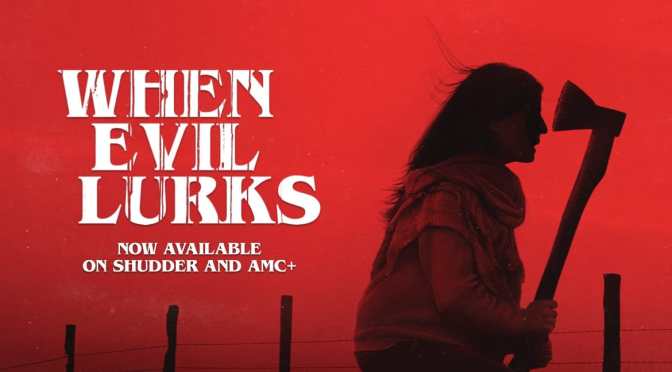
Where Evil Lurks (2023)

Where Evil Lurks (2023) skillfully employs well-known horror tropes—such as viral infection and monstrous transformations of humans—to deliver a fresh and intense experience. The film taps into the fear of contagion, using the idea of a mysterious, spreading evil that corrupts and distorts its victims. This viral-like menace is combined with disturbing body horror, as infected humans gradually turn into something grotesque and monstrous, making the familiar threat feel visceral and terrifying. The gradual, creeping transformation of people into monstrous figures is done with chilling precision, playing on the fear of losing control of one’s body and mind. By grounding these tropes in a strong narrative and unsettling atmosphere, the film elevates the horror elements, using them to amplify its emotional and psychological impact. Mark: 8.5 out of 11

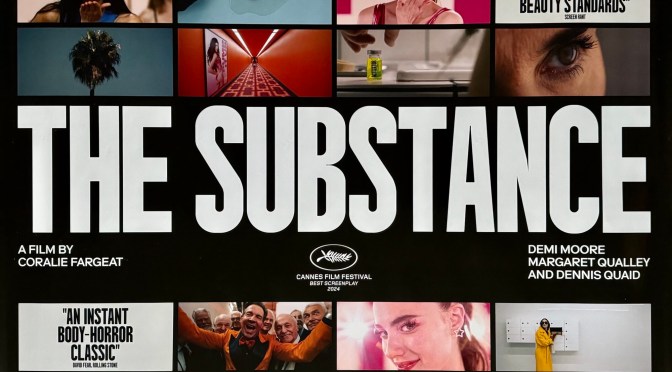
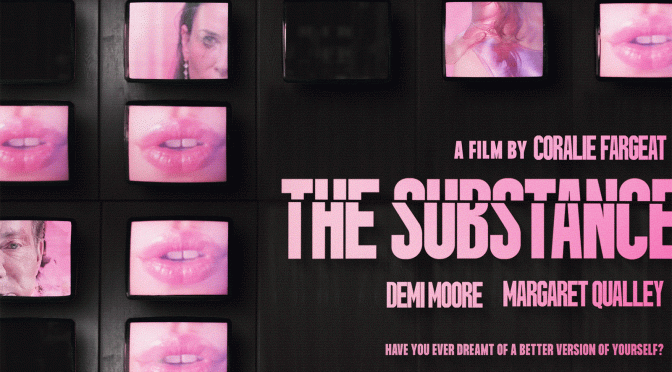
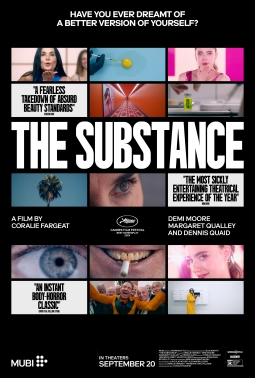
Cinema Review: The Substance (2024) – A Dark Exploration of Identity

THE SUBSTANCE (2024)

Directed by Coralie Fargeat

Written by Coralie Fargeat

Produced by: Coralie Fargeat, Tim Bevan and Eric Fellner

Main Cast: Demi Moore, Margaret Qualley and Dennis Quaid

Cinematography by Benjamin Kracun

*** MAY CONTAIN SPOILERS ***


The Substance (2024), directed by Coralie Fargeat, is a visually striking and visceral film that pushes the boundaries of body horror and psychological terror. Fargeat, known for her raw and relentless style in Revenge (2017), once again delivers an unforgettable experience by weaving references to classic literature and horror cinema into a narrative that is at once familiar and entirely original.

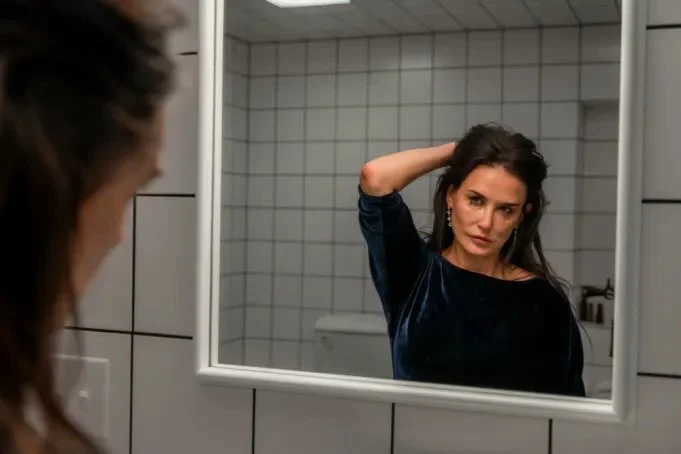
Demi Moore portrays a former Hollywood star, Elizabeth Sparkle, now relegated to doing a mildy successful cable TV aerobics show. However, Dennis Quaid’s oily production executive is on the lookout for younger talent. Elizabeth soon finds herself on the media scrapheap. Desperate to regain her youth and career, Elizabeth is drawn to the hypnotic promise of a new product called ‘The Substance.’

Before you can say, “Dorian Gray”, Elizabeth is lured to a strange white room full of lockers and has committed to the process. Similar to Gremlins (1984), there are rules to follow. As she follows the steps and injects the potions, Elizabeth goes through a painful and incredibly impactful transformation process. She literally gives birth to a young and beautiful alter ego called, Sue (Margaret Qualley). Elizabeth and Sue then get seven days each to live their life before they have to swap back. What could go wrong?


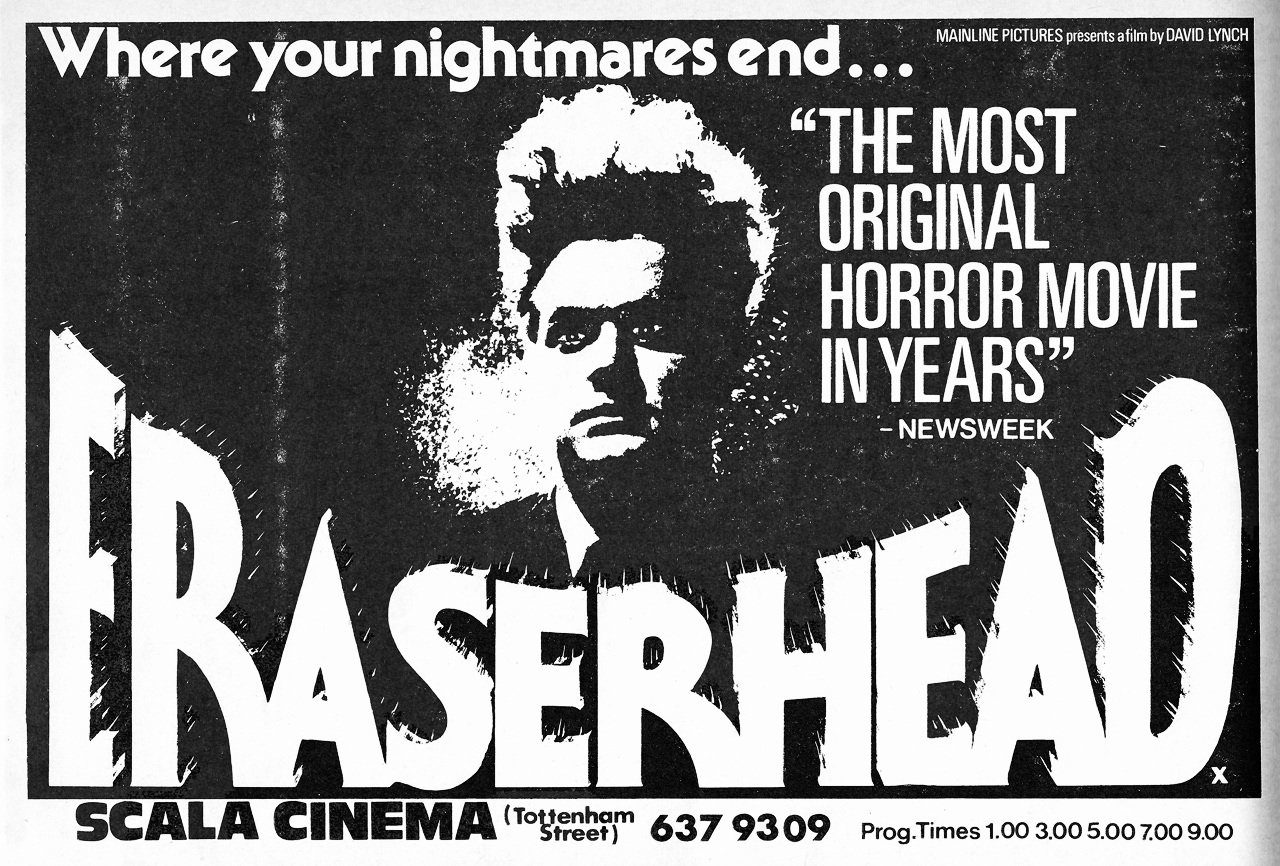
The film’s core themes draw heavily from Robert Louis Stevenson’s Dr. Jekyll and Mr. Hyde, exploring duality, identity, and the monstrous potential hidden within human nature. Like Stevenson’s tale of inner conflict, The Substance delves into the consequences of scientific ambition. It investigates moral transgression but with a modern, feminist twist. Fargeat’s use of body horror, particularly in the transformation sequences, echoes the grotesque, unsettling work of David Cronenberg. The nightmarish atmosphere and surreal visuals are reminiscent of David Lynch’s unsettling dream logic. This is notably seen in Eraserhead (1977) and Mulholland Drive (2001).

The film also pays homage to John Carpenter’s The Thing (1982), with its transmogrifying frights, sense of creeping paranoia and rising conflict. But rather than a group of men fighting each other Elizabeth and Sue turn on each other over ownership of their physical existence and Hollywood status. The final act descends into hellish and bloody satire echoing Peter Jackson’s Braindead (1992), with gore galore. Moreover, Stanley Kubrick’s influence is palpable in the film’s meticulous framing, production design and tension-building. The climactic body-morphing scenes, however, most clearly nod to Brian Yuzna’s Society (1989), with its grotesque depictions of class and conformity, fused with Fargeat’s unique vision of female empowerment, revenge and resistance.

The Substance (2024) feels like a bigger budget film in look and style, but you soon realise the minimal number of sets used and a lack of crowd scenes, finds the narrative effectively becoming a two-hander in the middle act by focusing on Sue and Elizabeth’s internal retaliatory vindictiveness. There are some amazing framing, colour design and cinematographic choices as showers become tombs to trap the protagonists. The book-ended Hollywood star montage and returning final shots are imaginative and unforgettable. Got to say that Demi Moore, as an actress taking on a role of an aging and neurotic former star is genius casting. While Qualley delivers a sexually charged and energetic performance, it is Moore who carries the weight of the complex themes as Elizabeth’s journey dives deeper into the stuff of nightmares.

Overall, The Substance (2024) is a postmodern classic and a film that honors its influences while forging its own path. Fargeat uses these references to enrich the narrative, creating a damned ugly and beautiful satire on those seeking narcissistic perfection through unnatural means, ultimately paying the price of those seeking eternal youth and fame.

Mark: 9 out of 11


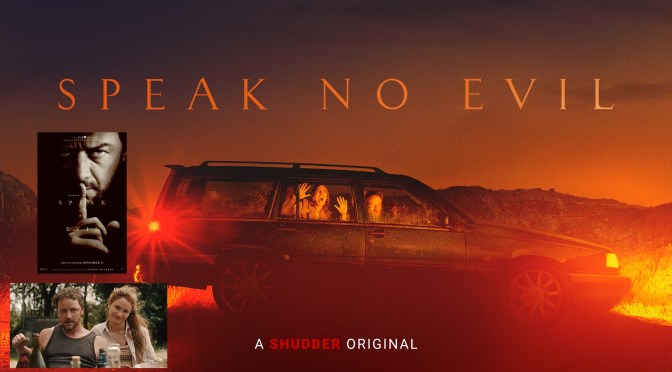
HORROR REVIEWS: SPEAK NO EVIL (2022) / SPEAK NO EVIL (2024)

SPEAK NO EVIL (2022)

Directed by Christian Tafdrup

Written by Christian Tafdrup and Mads Tafdrup

Main Cast: Morten Burian, Sidsel Siem Koch, Fedja van Huêt, Karina Smulders, Liva Forsberg and Marius Damslev.

Speak No Evil (2022), directed by Christian Tafdrup, is a chilling psychological horror that explores the perils of politeness within middle-class sensibilities, turning everyday discomfort into a waking nightmare. The film follows a Danish family with a young daughter, visiting a Dutch family unit, only to find themselves trapped in a horrifying and twisted game of cat and mouse. All smiles and charisma at first, the ‘Alpha’ Patrick, dominates his wife and young son, who unfortunately has no tongue. Tafdrup deftly dissects how the fear of offending others—deeply ingrained in bourgeois values—leads the protagonists to ignore increasingly unsettling behaviour.

Losing or not using one’s voice is inherent within the text. Further, what begins as awkward social tension escalates into something far more sinister, as the family is manipulated through their desire to maintain decorum. This dynamic plays on the anxieties of modern, polite society, where confrontation is often avoided at all costs. The film’s climax delivers a shocking, almost biblical punishment for their inability to break free from these conventions, suggesting a moral reckoning for those who allow fear of impoliteness to override survival instincts.

Subtle, creeping dread makes Speak No Evil (2022) a disturbing meditation on the dangers of middle-class complacency, and the terrifying consequences of choosing politeness over personal safety. Lastly, the film also explores the theme of toxic masculinity as the muscular ‘Alpha’ threatens the ineffective ‘Beta’ male, proving one should always stand up to bullies or face the consequences.

(Note: for those seeking out the film in the UK, it is currently screening on Shudder.)

Mark: 8.5 out of 11


SPEAK NO EVIL (2024)

Directed by James Watkins

Screenplay adaptation by James Watkins


Main cast: James McAvoy , Mackenzie Davis, Scoot McNairy, Alix West Lefler, Dan Hough, and Aisling Franciosi

The English remake of Speak No Evil (2024) delivers a faithful and unnerving adaptation of Christian Tafdrup’s original, with James McAvoy’s chilling performance at its heart. McAvoy, playing the charming yet menacing antagonist, brings a sinister edge to the character that heightens the tension and discomfort throughout the film. His portrayal effortlessly captures the unsettling power dynamics, making each of his polite gestures and subtle manipulations all the more terrifying. McEvoy relishes every moment of this characterful performance.

What truly stands out in this remake is how it retains the meticulous craftsmanship of the original. The film carefully balances tension, awkwardness, and psychological dread, maintaining the slow-burn atmosphere that made the Danish version so unsettling. Director James Watkins ensures the pacing and visual style honour Tafdrup’s vision, with each shot and interaction loaded with unease. Watkin’s adaptation also provides further exposition and fleshes out the character dynamics and motivations, notably with the children, whose actions are integral to propelling the narrative thrills.

The Cape Fear (1991)-style climax veers away from the original’s more subtle, thought-provoking and bleak ending. However, it further amplifies the anxiety, offering a nerve-shredding confrontation that feels both inevitable and brutal. The remake pays homage to the original’s themes of social etiquette, hidden danger and finding one’s voices against bullies, while delivering a climactic showdown that mirrors the power struggles found in classic thrillers. Overall, like the original Speak No Evil (2024) successfully inverts the home invasion dynamic, making it a worthy, terrifying and almost necessary remake.

Mark: 8.5 out of 11


CINEMA REVIEW: BLINK TWICE (2024)

Directed by Zoë Kravitz

Written by Zoë Kravitz & E.T. Feigenbaum

Produced by Bruce Cohen, Tiffany Persons, Garret Levitz, Zoë Kravitz and Channing Tatum

Cast: Naomi Ackie, Channing Tatum, Christian Slater, Simon Rex, Adria Arjona, Kyle MacLachlan, Haley Joel Osment, Geena Davis and Alia Shawkat etc.

Cinematography by Adam Newport-Berra

*** MAY CONTAIN SPOILERS ***


The theme of toxic masculinity is almost becoming a sub-genre of itself in the wake of the #MeToo movement. Films such as The Royal Hotel (2023), How to Have Sex (2023) and Men (2022) are powerful genre films which take the manipulative, malevolent and violent aspect of men, utilizing it as both nemesis and a destructive force the main protagonists must contend with. While She Said (2022) dealt specifically with the Harvey Weinstein legal case, Zoe Kravitz’ energetic blend of genres in Blink Twice (2024), takes a more fictional and heightened route while exposing the horrors surrounding the potential happenings at the notorious Epstein Island.

Frida (Naomie Ackie) and her friend Jess (Alia Shawkat) work at an exclusive event where Frida meets Slater King (Channing Tatum), a billionaire tech mogul who recently resigned as CEO after a public scandal. Despite the scandal Frida and Jess gladly accept an invitation to his private island, where his assistant Stacy (Geena Davis) confiscates their phones. The island hosts Slater’s friends and business partners along with three glamorous guests including Sarah (Adria Arjona). The men and women are treated to lavish rooms, gift bags, gourmet meals, cocktails, and party like hedonistic rock stars drinking champagne and taking hallucinogens.


If you’ve seen the similar island-based, The Menu (2022), which I loved, plus the less than riveting 1950’s perfect suburb-set, Don’t Worry Darling (2022), one soon realises that not all is well in paradise. Amidst the sun, sea and partying the narrative slowly builds the tension until Frida and Jess begin to suspect all may not be as it seems. Kravitz carefully ratchets up the tension, with several strange discoveries heightening the paranoia and anxiety. Latterly the suspense gives way to all-out gory horror and black comedy in the thrilling final act. Naomi Ackie and Adria Arjona are impressive “final girls”, however, the script arguably throws in too many twisty reveals at the end, testing narrative credibility.

Zoe Kravitz is clearly a talented filmmaker and Blink Twice (2024), while unsubtle, is highly entertaining. But does the diversion to the horror genre dilute the power of the themes of toxic masculinity? Kravitz aims to critique the evils of men by showcasing male characters who embody arrogance, dominance, and emotional suppression. But while Kravitz may intend to address toxic masculinity, the reliance on traditional horror tropes potentially undermines this message by exaggerating characters, victimizing women, and prioritizing sensationalism over substance. Still, as a revenge fantasy, Blink Twice (2024), is both stylishly and dynamically rendered.

Mark: 7.5 out of 11


CINEMA REVIEW: TRAP (2024)

CINEMA REVIEW: TRAP (2024)

Directed by M. Night Shyamalan

Written by M. Night Shyamalan

Produced by Ashwin Rajan, Marc Bienstock, M. Night Shyamalan

Main cast: Josh Hartnett, Ariel Donoghue, Saleka Night Shyamalan, Hayley Mills, Alison Pill, Jonathan Langdon, etc.

Cinematography by Sayombhu Mukdeeprom


*** CONTAINS SPOILERS ***


If you’re into mysterious and suspenseful genre films, M. Night Shyamalan’s most recent works Old (2021) and Knock at the Cabin (2023) left a lasting impression on me. Both movies dive deep into the human psyche, exploring themes of time, fear, and the unknown, and I really enjoyed them. Old (2021) combined Shyamalan’s signature twisty narrative with a meditation on the passage of time. Sure, the ending was over-cooked but I thought it was a brilliant Twilight Zone infused ensemble suspense twister. Meanwhile, Knock at the Cabin (2023) was a compelling claustrophobic apocalyptic thriller finding a family faced with making a horrendous sacrifice. While he is not everyone’s cinematic cup of tea, I for one have enjoyed Shyamalan’s recent output.

His latest high concept B-movie thriller is called Trap (2024). It stars Josh Hartnett as a loving and attentive father, Cooper Adams, who takes his teenage daughter, Riley, to see Lady Raven (Saleka Night Shyamalan) in a huge concert venue. Obviously, musical-based films such as A Star is Born (2018), Purple Rain (1984), and Bohemian Rhapsody (2018) feature gigs as part of their genre conventions. Here in Trap (2024) the concert becomes much more than that. Because Cooper is in fact a serial killer, and acting on a tip-off, the authorities and FBI profiler, Dr Josephine Grant (Hayley Mills), mobilize to turn the location into a means to ensare him. Thus, the whole concert becomes a living, breathing trap, a maze with which Cooper must avoid capture while ensuring his daughter, and the law, do NOT discover his evil dark side.


What follows is a dynamic series of situations where Shyamalan asks the audience to identify with Hartnett’s ‘Butcher’ and see if he can escape the law as they close in. As the music blares and the lights flash, you’re drawn into the tension of a manhunt. The ‘R and B’ pop music, while not my thing, is actually pretty decent as performed by Shyamalan’s daughter, Saleka Night Shyamalan. Can ‘the Butcher’ outsmart the law and vanish into the night, or will he be caught in this electrifying game of cat and mouse? The script certainly answers that in a thrilling set of scenes and confident twists. Of course, it’s all highly improbable and preposterous, but I found all the contrivances incredibly entertaining.

Trap (2024) has some dark and crafty humour in there too, notably in Hartnett’s committed performance. At times I almost thought he was going to speak to the audience directly. I love it when you can see an actor reveling in their performance and Hartnett has so much fun playing this OCD-controlling-complex-double-life-leading family man and serial killer. Thematically, the film is strong too as Cooper is locked in a psychological and emotional struggle against powerful matriarchal figures who inhabit his world. These are represented by his deceased mother who haunts his thoughts and the very-much-alive, Doctor Grant, the psychologist charged with stopping him.

While Trap (2024) requires the audience to swallow a huge piece of “suspend disbelief” pie, Shyamalan infuses Hitchcock levels of suspense – think Rope (1948) on steroids – that had me gripped all the way. It isn’t meant to be taken too seriously and does contain some massive plot-holes you can drive a tour bus through. But I didn’t care as Trap represents another chunk of thoroughly enjoyable genre cinema from M. Night Shyamalan.

Mark: 8 out of 11

NETFLIX FILM REVIEW: HIT MAN (2023)

Directed by Richard Linklater

Screenplay by Richard Linklater & Glen Powell

Based on “Hit Man” by Skip Hollandsworth

Produced by Mike Blizzard, Richard Linklater, Glen Powell, Jason Bateman & Michael Costigan

Main Cast: Glen Powell, Adria Arjona, Austin Amelio, Retta, Sanjay Rao, etc.

Cinematography by Shane F. Kelly


*** MAY CONTAIN SPOILERS ***


Hollywood has a history of attempting to mold certain actors into the next big film stars, often casting them in high-profile projects with hopes of catapulting them to stardom. Colin Farrell was positioned as a leading man with roles in blockbuster films like Minority Report (2002), Alexander (2004) and S.W.A.T. (2003), but despite his undeniable talent, he didn’t quite become the A-list fixture studios envisioned. Having said that Farrell has proved himself an actor of high esteem, choosing to work with some of the best directors around in Yorgos Lanthimos and Martin McDonagh.

Similarly, Sam Worthington was thrust into the spotlight with Avatar (2009) and Terminator Salvation (2009), yet struggled to keep his star power afterward. Likewise, Taylor Kitsch, Hayden Christensen, Jai Courtney, Kate Mara and Daisy Ridley were also groomed for stardom. While Ridley achieved significant recognition, sustaining that momentum outside of the galaxy far, far away has proven difficult, Cara Delevingne has found the transition from supermodel to actress somewhat challenging. Enter stage centre, Glen Powell, who is arguably the latest actor the Hollywood machine is pushing for global stardom.


Powell is a handsome, charming and intelligent actor with a winning smile who certainly carries the romance and comedic elements of Hit Man (2023) extremely well. He portrays Gary Johnson, a mild-mannered professor of Psychology and Philosophy at the University of New Orleans who also assists the New Orleans Police Department in undercover sting operations. Usually working behind the operations providing advice, Gary is suddenly thrust into the action and has to play a fake hit-man to bring a suspect down. While this set-up stretched legal credulity, we eventually learn that the events are based on a “true” story. No doubt some liberties have been taken with the source material.

Gary’s character development finds him becoming very successful as an undercover operator, taking on a series of disguises and inventing precise alter egos to match the psychological make-up of those he is trying to trap. Hit Man (2023) is a kind of “ugly duckling” story where the ‘Alpha’ identity Gary invents ultimately takes over his own ‘Beta’ personality. The romantic element of the narrative comes via the beautiful and troubled, Madison (Adria Arjona), who desires to kill her abusive boyfriend, Ray. Tasked with bringing her to justice, Gary contrives to give her a second chance, but when Ray turns up dead, Gary’s whole existence and secret identity comes under threat. While this sounds like the plot to a really compelling thriller, overall there is a lighter touch to the direction and much humour. Further, Powell’s on-screen chemistry with Arjona is convincing and sizzles throughout.

I really enjoyed Hit Man (2023). It’s familiar and conventionally structured, but has a smart genre script and winning performances from the charismatic and sexy leads. Lastly, Richard Linklater is a rare filmmaker who seamlessly navigates between art-house cinema and more commercial projects, maintaining his distinctive voice across both realms. Hit Man (2023) finds him in more crowd-pleasing territory as he was with the fantastic School of Rock (2003). Yet, will Powell ultimately become a box office success and bona fide movie star? Well, I guess with this film, the recently released, Twisters (2024), the upcoming Huntington (2025) and Edgar Wright directed, The Running Man (2025), he is well on his way.

Mark: 8 out of 11


FIX FILMS PRESENTS: SIN – EPISODES 4 – 7

SIN – EPISODES 4

Last year I wrote and produced seven monologues inspired by the deadly sins. With careful planning, myself and a quality cast and crew shot them all in one day at Raindance Film School. I’m now releasing them online via YouTube. They are in essence a proof of concept project with an aim for myself to develop them into a feature film screenplay. Below are episodes 4 to 7!


PITCH

“Let those without sin cast the first stone.”

An anthology of 7 monologues based around the seven deadly sins. Moments, drama, humour, character studies and themes exploring the darker side of human nature. Influenced by: Alan Bennett’s Talking Heads, Inside No. 9, Tales of the Unexpected and Amicus/Hammer horror film anthologies.


PRIDE starring Myles Horgan

Bishop, a retired spy with a gun in his face, delivers a powerful monologue as he attempts to deduce the identity of the assassin that faces him.


LUST starring Tom Cavendish

Danny, a police officer racked with guilt, confesses as to why he thinks he cheated on his beloved fiancé with her sister.


ENVY starring Malcolm Jeffries

Len, a covert photographer, reveals how his obsession with a client’s wife brings back haunting memories from his past.


WRATH starring Julia Florimo

Sadie describes in detail how and why she plotted revenge by poisoning her cheating ex-boyfriend, Stephen.


CREDITS

Writer and Producer: Paul Laight
Camera and Post-Production: Gary O’Brien
Sound: Ali Kivanc
Camera Assistant: Maka Natsvlishvili

Music by: Epic Violin Music NO Copyright royalty free music  
Special thanks: Raindance Film School and Universal Video


FIX FILMS PRESENTS: SIN – EPISODES 1 – 3

SIN – EPISODES 1 – 3

Last year I wrote and produced seven monologues inspired by the deadly sins. With careful planning, myself and a quality cast and crew shot them all in one day at Raindance Film School. I’m now releasing them online via YouTube. They are in essence a proof of concept project with an aim for myself to develop them into a feature film screenplay. Below are episodes 1 to 3, with episodes 4 to 7 to come soon.


PITCH

“Let those without sin cast the first stone.”

An anthology of 7 monologues based around the seven deadly sins. Moments, drama, humour, character studies and themes exploring the darker side of human nature. Influenced by: Alan Bennett’s Talking Heads, Inside No. 9, Tales of the Unexpected and Amicus/Hammer horror film anthologies.


SLOTH starring Paul Laight

Sloth, features Kevin, a Spurs fan, recounting how he took revenge on one of the laziest people he has ever met.


GREED starring Sydney Curtis

This moving monologue features, Gary, at an AA meeting, sharing how he believes greed has contributed to a close friend’s death.


GLUTTONY starring Antigone Duchesne

Kate Briggs serves up a monologue, via a video will, enacting a grudge-driven, but sweet revenge against her gluttonous pig of a brother.


CREDITS

Writer and Producer: Paul Laight
Camera and Post-Production: Gary O’Brien
Sound: Ali Kivanc
Camera Assistant: Maka Natsvlishvili

Music by: Epic Violin Music NO Copyright royalty free music  
Special thanks: Raindance Film School and Universal Video


© 2024 Fix Films Ltd


SHUDDER REVIEW: LATE NIGHT WITH THE DEVIL (2023)

SHUDDER REVIEW: LATE NIGHT WITH THE DEVIL (2023)

Written and directed by Colin Cairnes and Cameron Cairnes

Produced by Mat Govoni, Adam White, John Molloy, Roy Lee, Steven Schneider and Derek Dauchy

Cast: David Dastmalchian, Laura Gordon, Ian Bliss, Fayssal Bazzi, Ingrid Torelli, Rhys Auteri, Georgina Haig, and Josh Quong Tart

Cinematography: Matthew Temple

*** MAY CONTAIN SPOILERS ***


Some years ago I wrote an article about how I dislike the found footage sub-genre and that article can be found here. Occasionally, found footage is used well such as in Creep (2014) with Mark Duplass or REC (2007) or Chronicle (2012). Now you can add Colin Cairnes and Cameron Cairnes, Late Night With the Devil (2023) to that list of found footage films I actually enjoyed.

Technically, one could argue it isn’t really found footage and it negates such films often “amateurish” filming methods, with a truly stylish rendition of 1970’s television chat shows. However, we are asked by the narrator to view “never-before-seen” images and sounds from a previously unreleased and infamous TV chat show presented by ‘Night Owls’ host, Jack Delroy (David Dastmalchian). So, found footage it is!


David Dastmalchian is absolutely fantastic in his role as ambitious but desperate to be number-one chat show host, Jack Delroy. Often cast in supporting roles he now grabs the chance to become much more than that scene-stealing character actor. Delroy is not unlikable, but his arrogance and ambition dominate his personality. So much so, and despite his grief at losing his wife to cancer, he is prepared to allow all sorts of creepy and inappropriate situations unfold in his desperate search for TV ratings.

Delroy pits a dubious psychic Christou (Fayssal Bazzi) against skeptical former magician Carmichael the Conjurer (Ian Bliss), before asking parapsychologist author June Ross-Mitchell (Laura Gordon), and her subject Lilly D’Abo (Ingrid Torelli) to contact a demonic presence called ‘Mr Wriggles,’ live on television. Even after Christou is rushed to the hospital and Lilly contorts and spits out growling obscenities, Delroy decrees the show must go on. The Cairnes Brothers then continue to ratchet up the tension and horror to a deadly and shocking ‘Night Owls’ televisual denouement.

With echoes of the recent Inside No. 9 (3×3 quiz show episode) and BBC show Ghostwatch (1992), and of course The Exorcist (1973), Late Night With the Devil (2023) is one of the most enjoyable horror films I have seen in sometime. The 1970’s period setting and TV studio location is impressively recreated by the fantastic production team, especially on a relatively low budget. Arguably, the plot, once you dig down into it lacks emotional depth, however, the pacy and darkly funny screenplay more than compensates for this. Overall, the film’s style, design, direction and a commanding performance from Dastmalchian ensure Late Night With the Devil (2023) is essential viewing for all horror fans.

Mark: 9 out of 11


CINEMA REVIEW: AMERICAN FICTION (2023)

CINEMA REVIEW: AMERICAN FICTION (2023)

Directed by Cord Jefferson

Screenplay by Cord Jefferson

Based on Erasure by Percival Everett

Produced by Ben LeClair, Nikos Karamigios, Cord Jefferson, Jermaine Johnson, etc.

Main Cast: Jeffrey Wright, Tracee Ellis Ross, John Ortiz, Erika Alexander, Leslie Uggams, Adam Brody, Issa Rae, Sterling K. Brown, etc.

Cinematography by Cristina Dunlap

** MAY CONTAIN SPOILERS **


Cord Jefferson is a writer and director who, at first consideration, was unknown to me. However, a couple of clicks on the mouse and I soon realised he had worked on a couple of TV shows I’d really appreciated. One is the inventive and hilarious comedy The Good Place (2017-2019) and the other the riotous HBO graphic novel adaptation, Watchmen (2019). Jefferson was part of the writing team on both shows which delivered plots and events that consistently twisted and delivered fresh laughs and surreal situations which made you think.

Watchmen (2019) was especially an uber-stylish smorgasbord, splashed with crazy characters, witty hard-boiled dialogue, wild science fiction twists, lashings of violence, pockets of substance, cinematic visuals, high class production values and a cast to die for. For his debut feature, Jefferson has adapted the novel Erasure by Percival Everett into American Fiction (2023). It’s stylistically less chaotic feature film when compared to Watchmen (2019), however, it is intelligent and biting satire combining family drama, meta-literary analysis and social commentary.

The lead character, Thelonious “Monk” Ellison, is portrayed with imperious class by Jeffrey Wright. Now, I believe Cillian Murphy may get many awards (he already has the BAFTA for best actor in a leading role) for his work in Oppenheimer (2023), but Wright’s performance and character work here is beyond brilliant. It is such a nuanced and funny rendition that Wright deserves all the plaudits he could be denied. His Monk Ellison is an intellectual and academic writer whose books unfortunately do not sell very well. His agent, Arthur (John Ortiz) says publishers believe his work is “not black enough.” It’s a shocking statement delivered in understated fashion, to which Monk responds that he does not “recognise race.”


Monk is a writer who is trying to bring thoughtful, however niche, product into a culture which seems to prefer stereotyped visions of black characters, who are either addicts, or criminals or downtrodden, beaten by the police and prejudiced within society. No one is denying that people of colour are certainly prejudiced against and this needs to cease, but American Fiction (2023) seems to highlight that the books it is satirizing are cashing in and monetizing suffering and perpetuating discrimination, exacerbating the situation as opposed to resolving it.

Facing financial issues due to a lack of sales and his mother (Leslie Uggams) needing nursing care due to creeping dementia, Monk writes a parody of urban fiction called, ‘My Pafology’. Initially done as a joke he is horrified when his agent tells him it has become a literary sensation with publishers fighting for the write to release it. Here Wright’s reaction acting is a joy as Monk is caught between needing the money but at the same risking his artistic reputation from creating a “fake” book and authorial alter ego named, Stagg R. Leigh.

Jefferson and Wright combine to delicious effect in satirising intellectual and middle-class people’s reaction to what they consider to be authentic “street” culture. As Monk strives to escape the monster he has created he finds the hole getting bigger and bigger as his novel begins to get interest from Hollywood and esteemed literary awards. Yet, this is not a simple comedy as Jefferson also profiles Monk’s personal, family and romantic struggles making him a true three dimensional character to root and identify with. Wright, as I say is phenomenal but the supporting cast including Issa Rae and Sterling K. Brown stand out too. Brown almost steals a few scenes from Wright. American Fiction (2023) arguably ends with a series of meta-jokes too far, which draw away from Monk’s highly emotional journey, but overall, Jefferson demonstrates he is an original cinematic voice to watch out for in the future.

Mark: 8.5 out of 11