Tag Archives: cult film

Cult Film Review: Entertainment (2015) at The Nickel Cinema, London

Cult Film Review: Entertainment (2015) at The Nickel Cinema


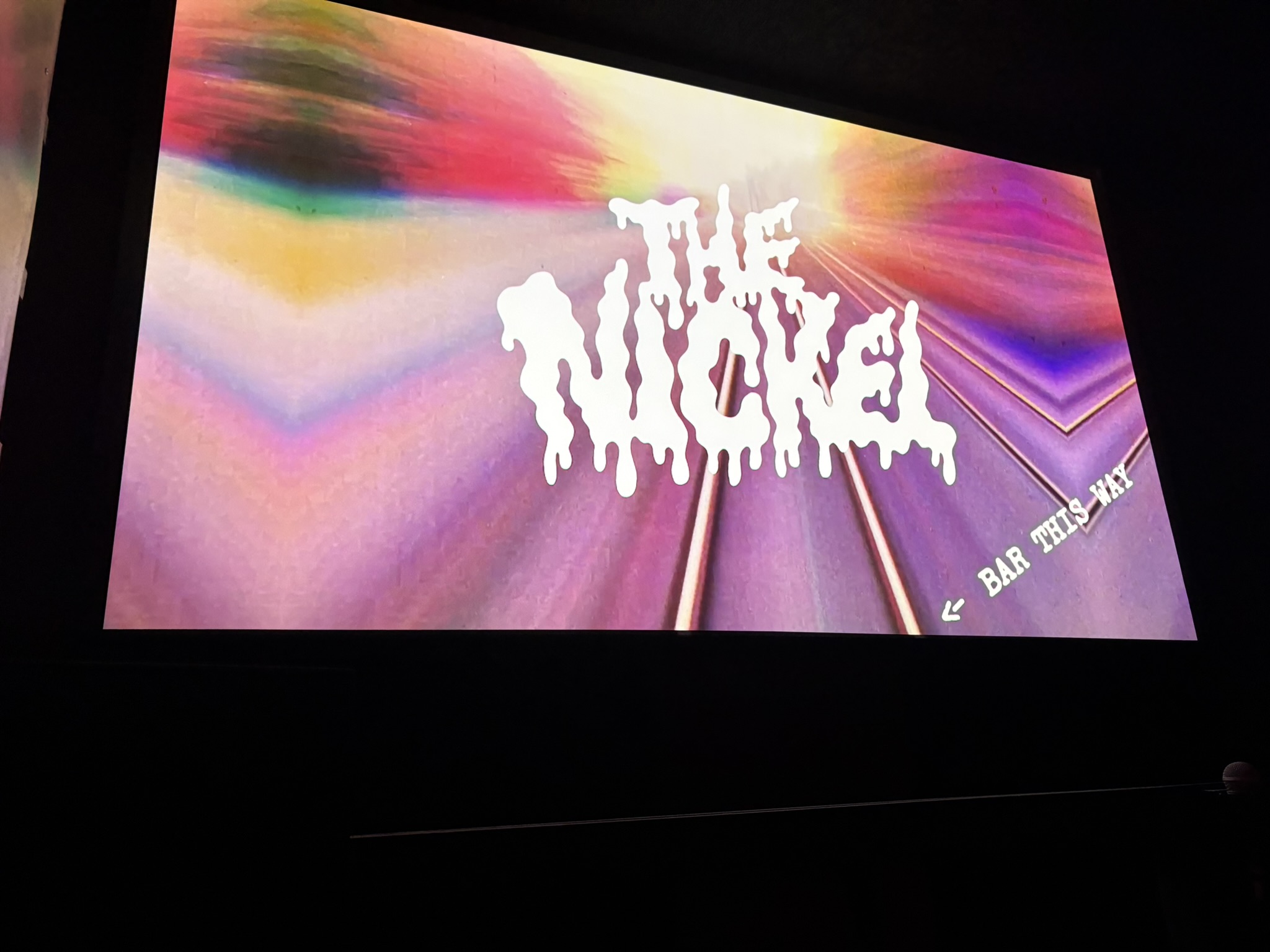
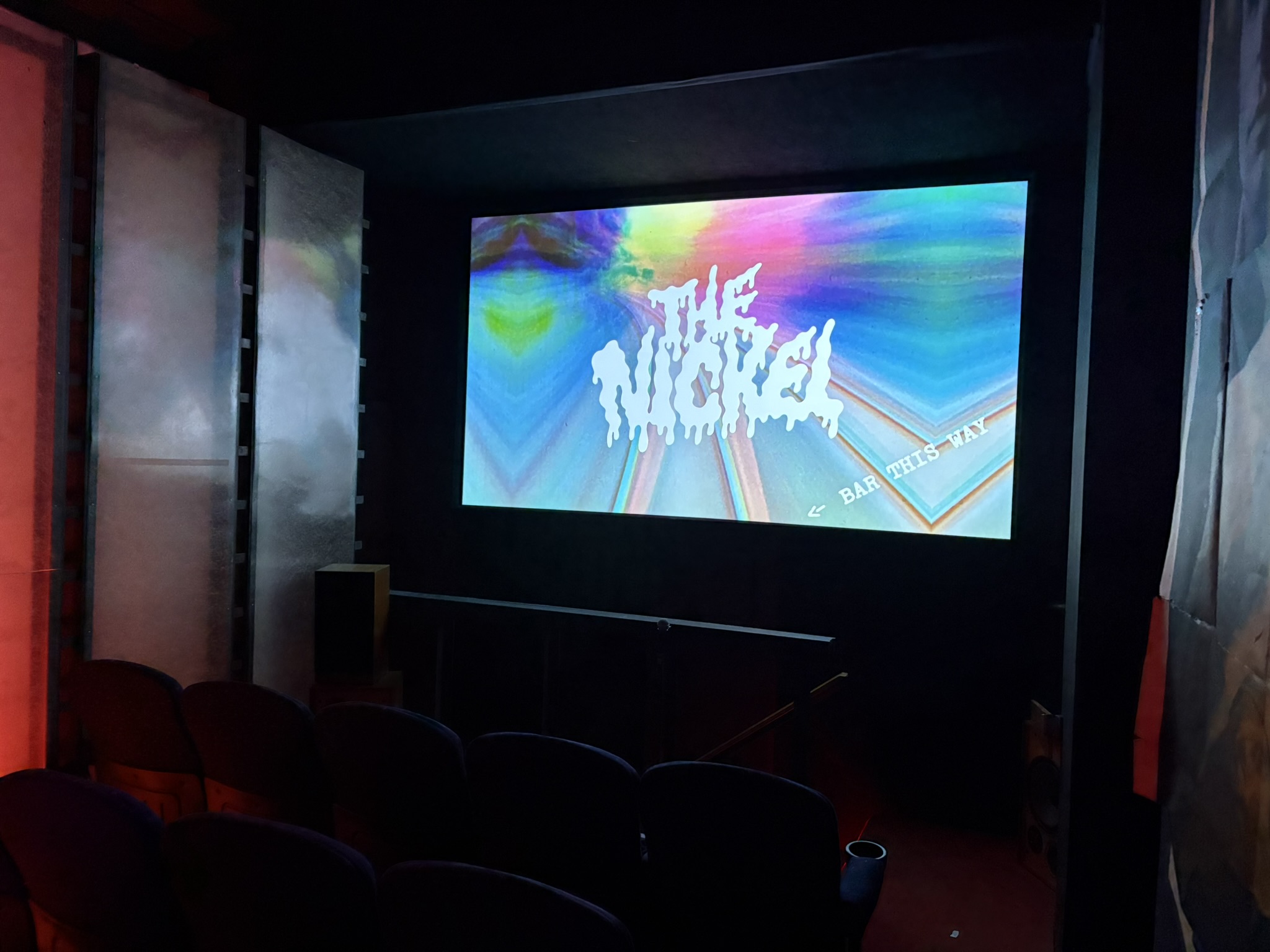
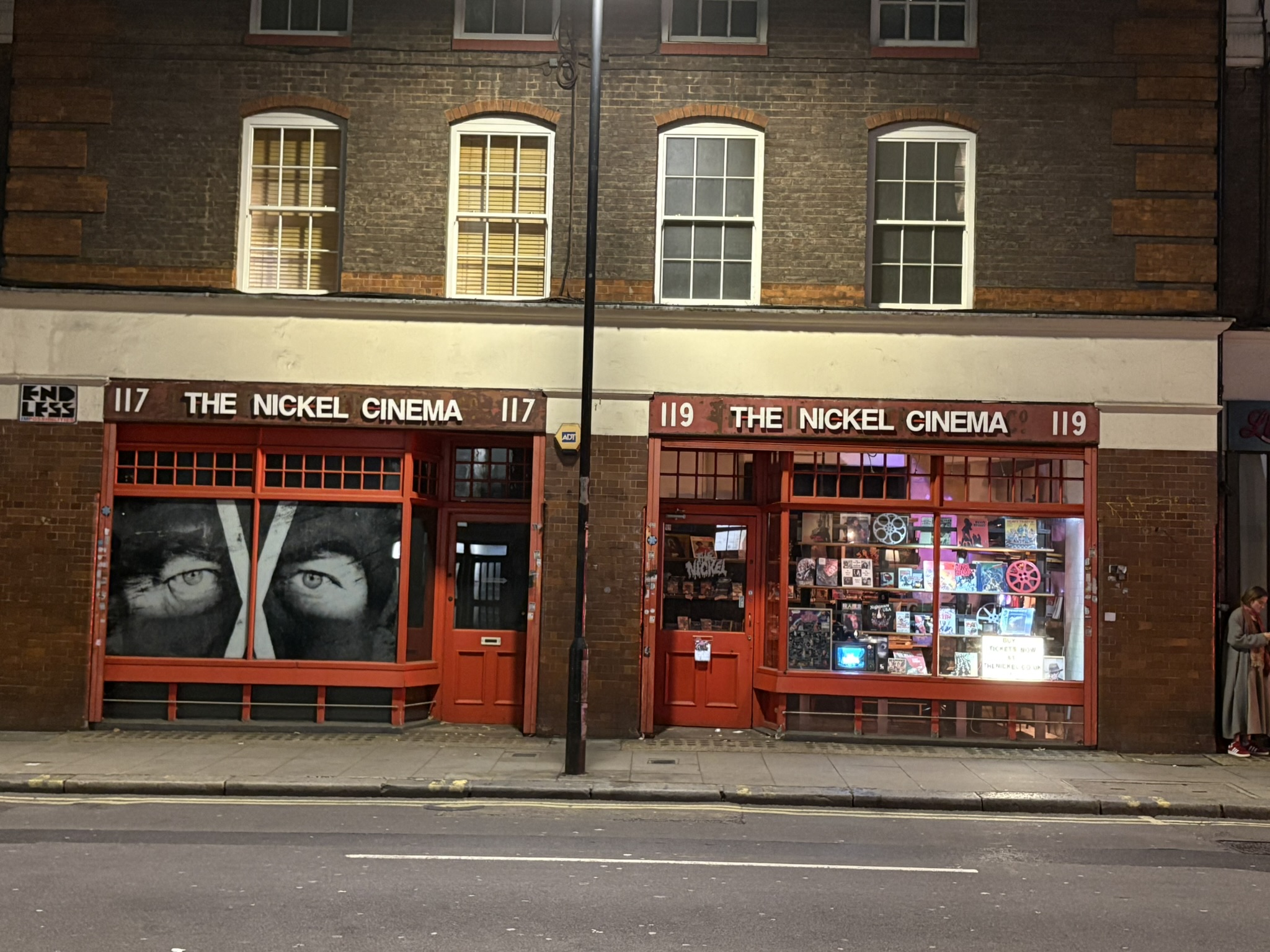
The Nickel Cinema in Clerkenwell feels like a hidden temple for London’s true film obsessives — a grindhouse gem tucked into the city’s polished heart. It’s the kind of place where the air hums with cigarette ghosts and celluloid dreams, where the screen flickers with everything from outlaw art films to midnight slashers and sleazy euro-thrillers. The décor has that lived-in, clandestine vibe — red velvet worn thin, neon bleeding through the dark, and an underground bar serving the kind of cocktails that taste like trouble.

It’s not just a cinema — it’s a refuge for the subversive, the cultish, the weird and the wonderful. You’ll find Anger next to Fassbinder, Fulci, Lynch, Jodorowsky, Korine, Ferrara, Argento, Waters, Kern, Miike, Ferrara, Korine Noe, Cohen, Breillat, Refn and many more bleeding into audiences who actually cheer when the projector rattles. The Nickel doesn’t chase trends; it worships the offbeat, the forgotten, and the dangerous. While feeling still quite new, the place somehow still feels gloriously dirty — and absolutely right up your alley. If not there is a strip club next door if that kind of business takes your fancy.

Check out their website for the latest screenings here: https://thenickel.co.uk/


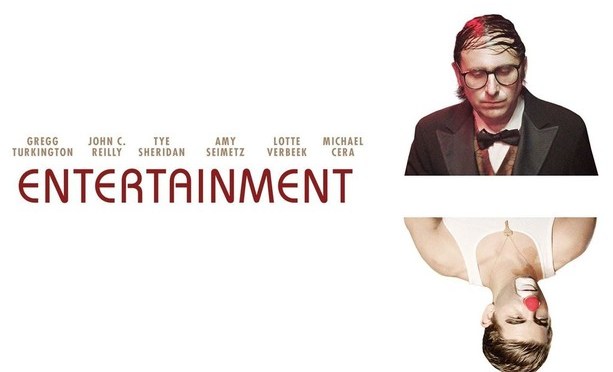
Last month I watched Rick Alverson’s Entertainment (2015) at The Nickel Cinema.

Entertainment is like watching the American dream rot in real time — a hypnotic, desolate odyssey through the dust and despair of the open road. Gregg Turkington is excellent as he plays “The Comedian,” a hollowed-out version of his Neil Hamburger persona, trudging through a series of soul-scorching stand-up gigs in half-empty bars, bowling alleys, and desert motels. Each performance is a small act of self-immolation — jokes that fall flat, laughter that curdles, a man dissolving behind the microphone as his identity blurs into the toxic sludge of showbiz delusion.

Director Rick Alverson shoots it all with a slow, clinical beauty — wide, frozen frames that turn America’s forgotten corners into alien landscapes. “The Comedian” drifts from neon-soaked diners to sulfurous desert plains, to prisons, to dead Western towns. Further, it contains some incredible locations including an unforgettable sequence at an aircraft graveyard — rows of dead machines basking in the sun, like monuments to ambition and decay. While low in budget the film makes use of such stunning locales, plus impactful acting interludes from John C. Reilly, Michael Cera and Tye Sheridan.

The film is not a comedy, not really — more anti-comedy or like an autopsy of one. Entertainment (2015) is a brutal, mesmeric study of loneliness, alienation, and the sick joke at the heart of performance itself. It’s the road movie as existential purgatory — unbearably awkward, strangely poetic, and utterly unforgettable. It doesn’t so much as have a beginning, middle and end, but a series of events which we are dropped into and experience until the credits suddenly roll. I like to ponder “The Comedian” is still out there, living and dying, on and off stage.

Mark: 8 out of 11


Cult Film Review: Possession (1981)

CULT FILM REVIEW: POSSESSION (1981)

Directed by Andrzej Żuławski

Screenplay by Andrzej Żuławski

Adaptation and dialogue by Andrzej Żuławski & Frederic Tute

Produced by Marie-Laure Reyre

Main cast: Isabelle Adjani, Sam Neill & Heinz Bennent

Cinematography by Bruno Nuytten

Edited by Marie-Sophi Dubus & Suzanne Lang-Willar

Music by Andrzej Korzyński

*** MAY CONTAIN SPOILERS ***


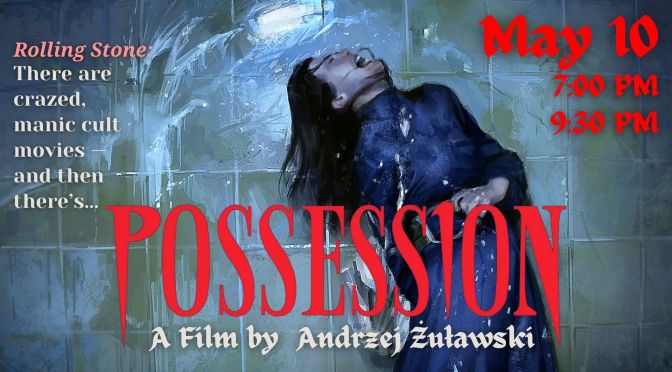
Andrzej Żuławski’s Possession (1981) is a film that doesn’t just defy genre—it annihilates the very idea of categorization. Part spy thriller, part domestic psychodrama, part Lovecraftian horror, and part apocalyptic hallucination, the film barrels forward with such manic intensity that it becomes less a movie and more an exorcism of the soul. It resists structural and emotional compartmentalizing at every turn, choosing instead to implode in a flurry of shrieks, flailing bodies, and gooey, pulsing monstrosities.

Set in a divided Berlin, the film ostensibly begins as a break-up story: Mark (Sam Neill), a shell-shocked spy, returns home to discover that his wife Anna (Isabelle Adjani, in a performance of pure, unrelenting hysteria) wants a divorce. But from there, the film spirals rapidly out of the realm of conventional melodrama and into something far more surreal and terrifying. Mark’s confusion curdles into obsession, Anna’s descent becomes biblical, and reality itself begins to warp and splinter.


Is it a Cold War spy film? Yes, but only in fragments, and those are quickly consumed by the escalating emotional chaos. Is it a break-up film? Certainly—but filtered through an expressionist nightmare where the grief and rage of separation erupt as literal body horror. Horror film? Undoubtedly, though the fear is less about monsters and more about the abyss that opens when love dies. And as the narrative crumbles into bloody symbolism and metaphysical dread, Possession (1981) begins to feel like an apocalyptic drama—one where the apocalypse is internal, intimate, and unstoppable.

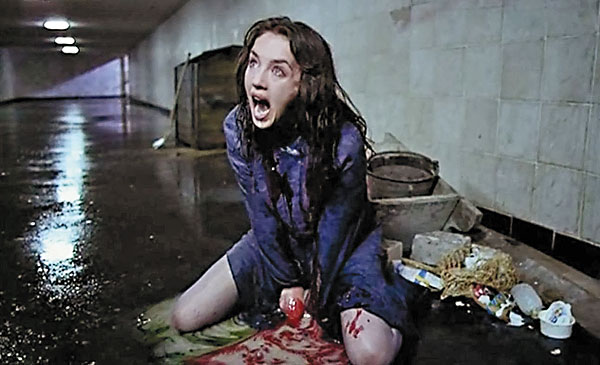
Żuławski directs like a man possessed, matching his characters’ unhinged energy with a restless camera and wild tonal shifts. The result is a fever dream of shrieking confrontations, doppelgängers, collapsing identities, and one of the most infamous subway scenes in cinema history. Possession (1981) is not an easy film—it’s messy, abrasive, and frequently overwhelming—but it’s precisely in its refusal to conform that its power lies. Indeed, much of the dialogue is obtuse non-sequitur in delivery as the actors deliver prose-like philosophical statements that have clearly influenced the writing of Yorgos Lanthimos and Efthymis Filippou.

To watch Possession (1981) is to witness cinema used as a weapon against coherence, comfort, and calm. I almost had a panic attack watching it. Neill, usually a calm on-screen presence looks as though he is lost in a nightmare he cannot escape. Heinz Bennent, as the lover, fully embraces Zulawski’s insane vision, while Adjani literally has a mental breakdown on screen. It is an unbelievably fearless embodiment of psychotic sexuality, arguably only matched in a commercial release by Eva Green’s Vanessa Ives from the majestic gothic TV series, Penny Dreadful (2014-2016). Ultimately, Possession (1981), is as much about the disintegration of self as it is about the end of a marriage, the failure of ideology, or the horror of being alive. One doesn’t simply watch Possession (1981)—one survives it.


CULT MOVIE REVIEW: XTRO (1982)

CULT MOVIE REVIEW: XTRO (1982)

Directed by: Harry Bromley Davenport

Screenplay by: Harry Bromley Davenport, Michel Perry, Iain Cassie, Robert Smith

Story by: Harry Bromley Davenport, Michel Perry

Produced by: Mark Forstater

Cast: Bernice Stegers, Philip Sayer, Simon Nash, Maryam d’Abo, Danny Brainin etc.

Cinematography: John Metcalfe

*** MAY CONTAIN SPOILERS ***


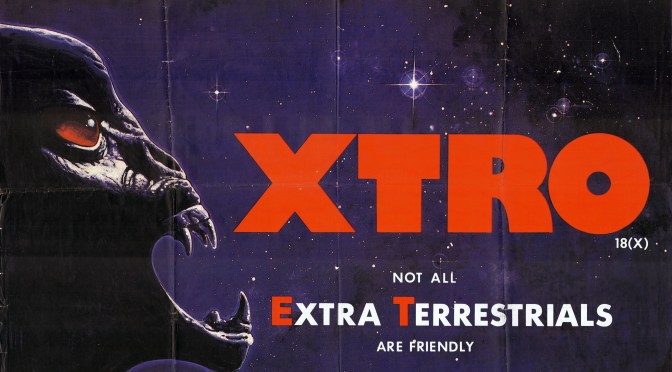
Being a fan of the horror genre never fails to spring surprises, especially if you also love trashy-B-movie-exploitation-video-nasties too. Because what often occurs is a hidden or buried or previously banned film will reanimate and be located on one of the many streaming platforms we have today. I am both surprised and even more joyous if I find I have never even seen the said film. This is certainly the case with low-budget alien monster film, XTRO (1982).

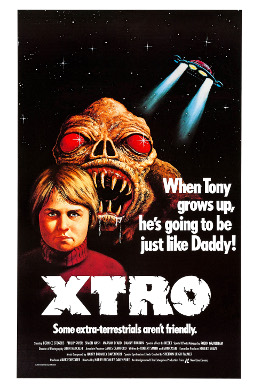
There I was pressing play via Amazon Prime, thinking it was another schlocky American indie I had missed from yesteryear, only to discover Xtro (1982) is actually a bizarre British film which twists and riffs on the box office hit that was ET: Extra Terrestrial (1982). Xtro (1982), directed by Harry Bromley Davenport, is not a comforting family science fiction drama like its more famous counterpart though. Instead, it is a gory sci-fi shocker with many outrageously violent set-pieces and a budget lower than E.T.’s lunch bill.


Critically damned at the time, Xtro (1982), when released on home video in 1983, was subject to a prosecution case in relation to British obscenity laws and labelled a “video-nasty”. Watching it now I have to admit it is quite shocking still, but the practical effects are so gloriously over-the-top they are more humorous than sickening. Having said that there are some memorably gruesome moments involving alien births, crazy clowns, a live “Action Man” doll, weird space eggs, and transformative man-into-monster effects.

The film doesn’t hang about establishing character but propels, from the opening scene of a father playing in the garden with his son, straight into the disappearing parent plot. The father (Philip Sayers) vanishes without a trace and three years later his wife (Bernice Stegers) and son are attempting to repair their lives. Yet, the boy is suffering horrific nightmares when suddenly his father reappears attempting to reconcile. The familial drama within the script itself could have been further developed to some emotional impact. However, while Bernice Stegers gives a decent dramatic performance, the film soon descends into a mix of surreal and insane set-pieces, combined with the father’s metamorphosis into something from another world.

There’s much to like and much to loathe about, Xtro (1982), notably the gratuitous nudity sprinkled throughout. Yet, if you are drawn to exploitational B-movies there is much sick entertainment to be found in the blend of impressive practical effects and creature moments. Philip Sayer and Bernice Stegers keep the shlocky elements of the plot in check with sane acting performances and despite some eccentric writing throughout Harry Bromley Davenport and his team have delivered an out-of-this-world bona fide B-movie cult classic.


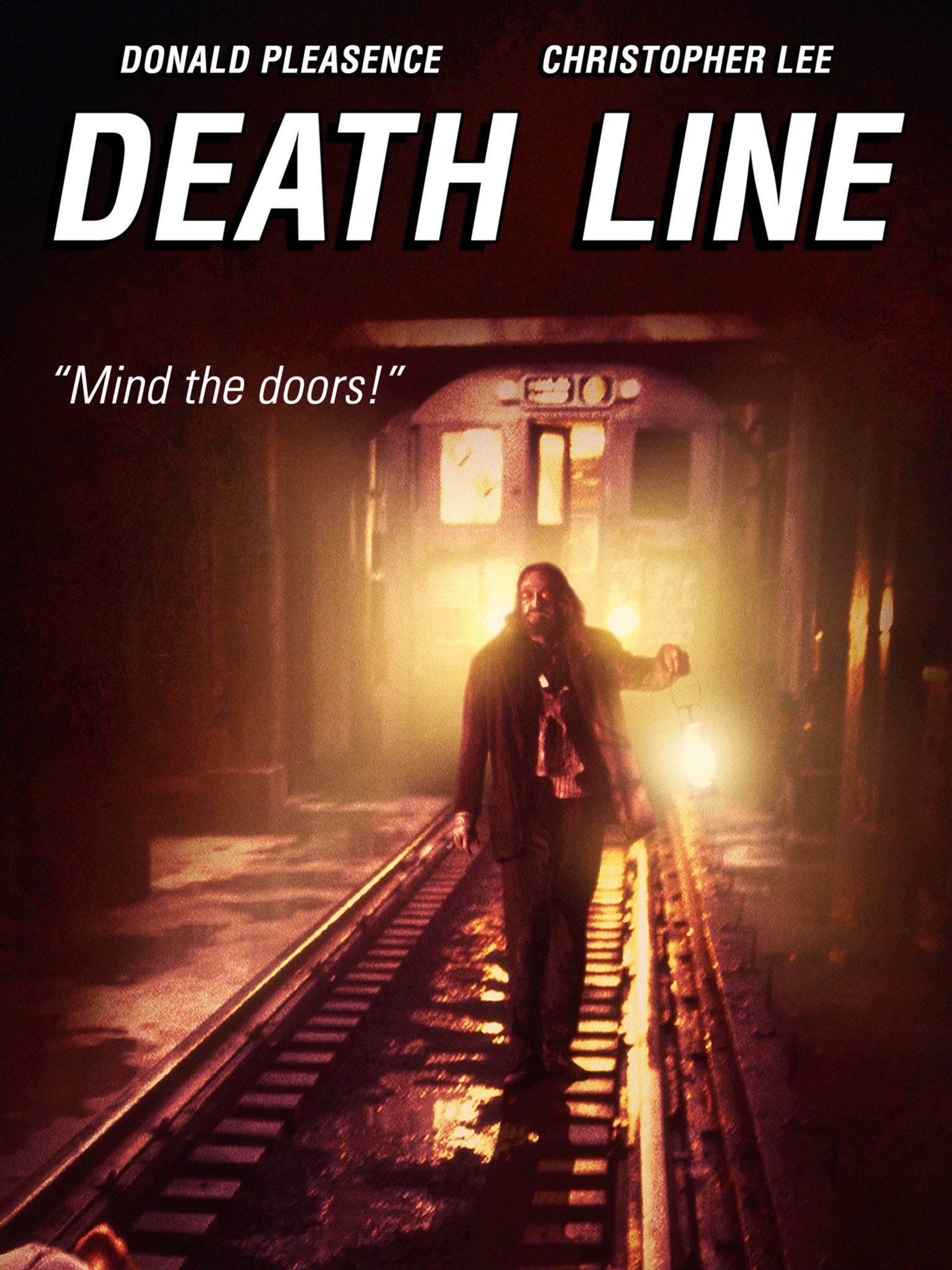
CULT FILM REVIEW: DEATHLINE (1972)

DEATHLINE (1972)

Directed (and story by) by: Gary Sherman

Screenplay by: Ceri Jones

Produced by: Paul Maslansky

Cast: Donald Pleasence, Norman Rossington, David Ladd, Sharon Gurney, Hugh Armstrong, Christopher Lee etc.

Cinematography: Alex Thomson

***CONTAINS MILD SPOILERS***


In my last review I wrote with nostalgia about trips to the video shop. Yes, an actual shop where you could hire films existed! Imagine that. Now, I further lament the splintered streaming marketplace where you have to pay a subscription to watch a film when I used to be able to see it on telly for free. Plus, there are TOO MANY platforms. Those £5.99 and £4.99 and £7.99 per month fees soon stack up. I used to love turning on Channel Four or BBC2 or latterly Film Four and there would be a cult horror film, classic film noir, World cinema, art film or early directorial release from a now famous director on there late at night – FOR FREE! Thankfully, aside from all the streaming stems I have to manage, a channel on digital TV called Talking Pictures does show some genuinely great movies that time and humanity may have forgotten. One such is Deathline (1972).

Deathline (1972) – (AKA Raw Meat in the U.S.) is a genuine cult classic horror film which is gruesome, darkly witty and incredibly moving in equal measures. In this era of constant remakes I am surprised no filmmaker has decided to transfer this grimy and quintessentially British movie into the modern day. In many ways I am glad they haven’t as it, despite some glaring flaws in characterisation of two main protagonists, borders on being a bona fide under-rated classic. The premise involves a series of missing persons who are disappearing around the area of Russell Square underground station. The sarcastic Inspector Calhoun (inimitable Donald Pleasence) is tasked with cracking the case. He does so with gallows humour and gallons of cups of tea.


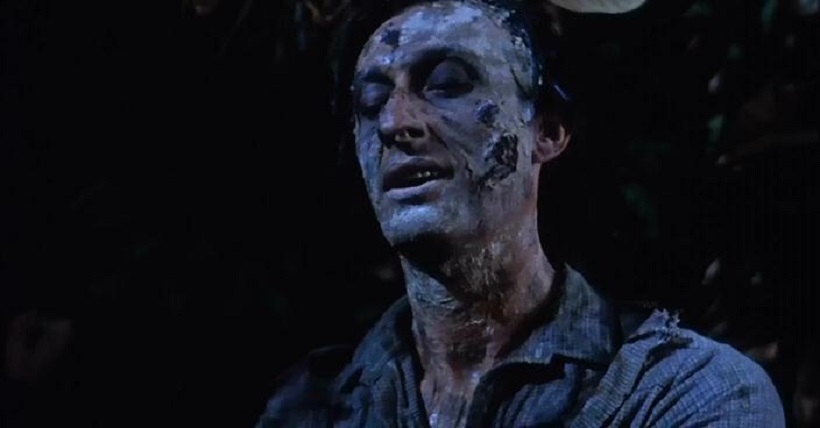
Pleasence is not the only person who gives a memorable acting performance in Deathline (1972). Because the screenplay and direction spends a lot of the grisly running time creating a thematic and visual mythology around the antagonist. Indeed, while the killer, described in the credits as the ‘Man’ (Hugh Armstrong), commits several brutal slayings and abductions, the ghastly backstory given and Armstrong’s emotionally charged portrayal really make you empathise with his situation. The combination of pustular make-up effects, the rat-infested underground lair he inhabits, plus the tragic circumstances surrounding the ‘Man’s’ plight ensure he one of cinema’s most empathetic monsters since Karloff in Frankenstein (1931).

It’s a shame therefore that more wasn’t done to develop the leading couple in the film, students Alex Campbell (David Ladd) and Patricia Wilson (Sharon Gurney). While she is at least sympathetic, he is completely unlikeable and mostly unheroic. So much so I was rooting more for the plague-pocked ‘Man’ at the end rather than him. But hey I’m watching this for the gore and deaths aren’t I? Well, there’s plenty of that in between Inspector Calhoun’s chirpy working-class snipes and demands for cups of tea. Plus, director Gary Sherman gives us a tremendous, long take which establishes the cavernous setting for the murder and horror, utilising the dank London underground tunnel system to maximum impact. While Christopher Lee is given poster billing, he’s only in one scene as a privileged MI5 agent. Finally, did you know Marlon Brando was originally cast as the ‘Man’. Well, I’m kind of glad that was an offer he did refuse. Because Armstrong’s tragic human monster lives on long in the mind, even after the film’s haunting final echoes have faded.


CULT FILM REVIEW: HOUSE/ハウス – (1977)

CULT FILM REVIEW: HOUSE (1977)

Directed by: Nobuhiko Obayashi

Produced by: Nobuhiko Obayashi, Yorihiko Yamada

Screenplay by: Chiho Katsura

Story by: Chigumi Obayashi

Cast: Kimiko Ikegami, Miki Jinbo, Ai Matubara, Kumiko Oba, Mieko Sato, Eriko Tanaka, Masayo Miyako, Yōko Minamida

Music by: Asei Kobayashi, Mickie Yoshino

***MAY CONTAIN SPOILERS***


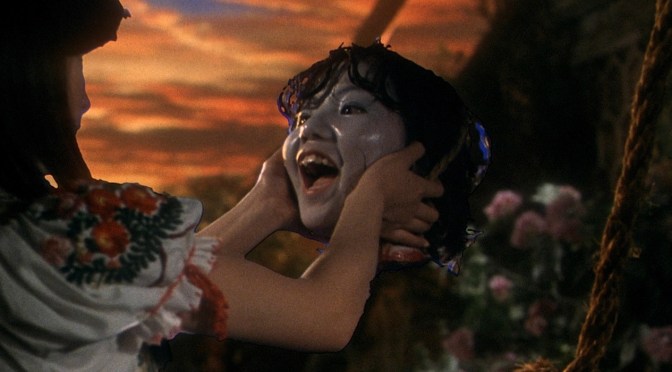
This Japanese film from the late 1970s is absolutely nuts, but a riotous genre mash-up of rites-of-passage, horror, musical, martial arts, romance, fantasy, comedy and anti-war genre movie styles. If you are a fan of the work of Takashi Miike’s both energetic and often insane genre films, you can definitely see how, House (1977), may have had a major influence on his and many other Asian filmmaker’s cinematic works.

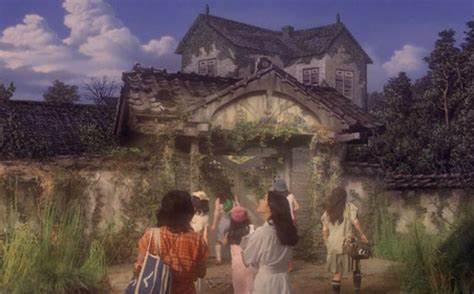
Initially receiving negative reviews, but big box office in Japan on release, House (1977), opens by introducing a set of seven teenage girls called, Gorgeous, King Fu, Prof, Melody, Fantasy, Mac and Sweet. The names give them their major characteristics too. Kung Fu for example loves martial arts, Fantasy is a daydreamer and Melody loves music etc. You get the idea. As each character is introduced in a basic fashion, the energetic performances of the actors and the quirky screenplay develops their characters beyond the initial stereotypes. Gorgeous is especially well developed as she is suffering the loss of her mother and has rejected her father’s choice of stepmother. Eschewing her kindly father’s protestations, she decides to visit her aged Aunt in the countryside.


When Gorgeous’ friend’s school trip is cancelled due to several bizarre plot turns, and a couple of crazy musical numbers later, the girls join her on the visit to the creepy house. When they finally arrive Gorgeous’ aunt behaves extremely oddly. She rarely gets visitors and only has a white cat for company. When the girls begin to disappear one-by-one and Fantasy’s daydreams begin to turn to nightmares, the true horror of the situation takes shape. The house itself is a malevolent force and has trapped the girls. What appeared to be a lovely summer vacation is now the total opposite.

Now, what I have described actually seems quite normal in terms of the narrative content. It’s a standard horror plot of characters imprisoned by supernatural forces and trying desperately to stay alive. However, director, Nobuhiko Obayashi, who devised the story with his daughter, presents a series of images and sounds David Lynch would have been proud to have devised. These include: a mirror attacking the viewer, a watermelon being pulled out of a well appearing like a human head, a pile of futons falling on and attacking a character, a carnivorous piano with biting keys and all manner of surreal fights and deaths. Allied to this the eccentric and jolly music works against the horror and suspense, so one is both laughing and disturbed simultaneously.

Ultimately, House (1977) is one wacky viewing experience, but it also taps into themes of friendship, romance, grief, as well as drawing on the horror of destruction Japan suffered when the atomic bombs hit Nagasaki and Hiroshima. It is fast paced with an abundance of imaginative ideas, film styles and practical effects throughout. Thus, if you love the work of aforementioned Miike, Lynch and Sam Raimi, you are bound to want to stay in House (1977) for the rapid eighty-eight minutes duration.


CULT FILM REVIEW: DJANGO (1966)

CULT FILM REVIEW: DJANGO (1966)

Directed by: Sergio Corbucci

Produced by: Sergio Corbucci, Manolo Bolognini

Screenplay by: Sergio Corbucci, Bruno Corbucci, Franco Rossetti, José Gutiérrez Maesso, Piero Vivarelli, Fernando Di Leo [Uncredited]

Story by: Sergio Corbucci, Bruno Corbucci

Based on: Yojimbo by Akira Kurosawa, Ryūzō Kikushima [both uncredited]

Cast: Franco Nero, Loredana Nusciak, José Bódalo, Ángel Álvarez, Eduardo Fajardo

Music by: Luis BacalovTheme song sung: by Rocky Roberts

***MAY CONTAIN SPOILERS***


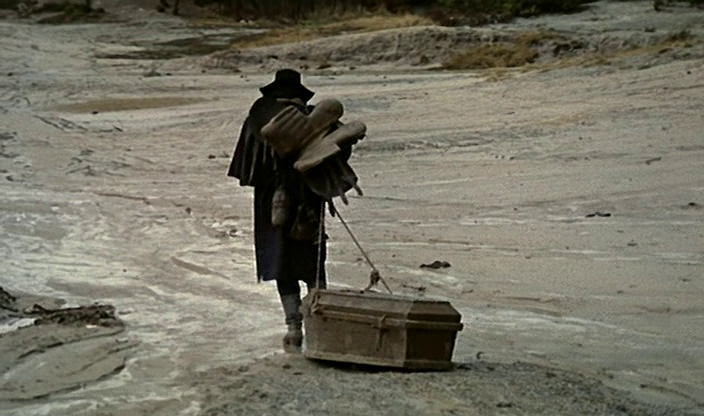
As the crooning voice of Rocky Roberts soars on the soundtrack, a lone figure adorned in dark clothes appears, saddle on his back, dragging a coffin across thick sand. Is he a hero or a criminal or a personification of death? Well, he is all three and his name is Django – the ‘D’ is silent. The opening credits and imagery of Sergio Corbucci’s cult Western, DJANGO (1966), is morbidly iconic, perfectly introducing us to the darkness, intensity and sardonic humour of what is to come.

The narrative of Django (1966) takes the tropes of a singular, tough, uncompromising anti-heroic ex-soldier, who has returned from the American Civil War, moving from town to town searching for the next payday. In the process he plots and wreaks havoc and death to all who stands against him. In his breakthrough role, the cool, handsome and blue-eyed, Franco Nero, is brilliantly cast in a similar part that would make a star of Clint Eastwood in A Fistful of Dollars (1964). The similarities do not stop there as Sergio Leone’s Spaghetti Western was, like Django (1966), heavily influenced by Akiro Kurosawa’s famous Samurai film, Yojimbo (1961). Yet while the stories owe much to Kurosawa’s seminal classic — as the Ronin character sets two opposing gangs against each other — both Leone and Corbucci instil their own distinctive style into their respective films.


Corbucci’s vision is even more cynical and violent than Leone. While Nero’s striking good looks glow like a silent matinee idol, he seemingly kills more soldiers, bandits and assorted bad guys than the Civil war itself. Django is a one-man killing machine and he never flinches at the sight of vermillion carnage. In fact, as a hollow and bitter man who has tasted the tragedy of senseless war, one can assume that killing is the only thing Django is good at now. It’s a barren muddy wasteland Django, and such adversaries as Major Jackson and General Hugo Rodriguez, exist within and nobody comes out of it clean. Mud and bullets and blood and burning crosses stain the land as the body count goes up and up as the film progresses. Redemption and hope are rarely even suggested in the hearts of the characters.

Corbucci presents chaos with style. There are a number of fantastic shoot-outs and set-pieces all directed with vibrant energy; all zooms, whip-pans and rapid cross cutting. You want to immediately know what is in THAT coffin at the start. You WILL find out and revel in the mayhem which ensues. Indeed, Django (1966) is not for the faint-hearted. Of course, when watching it now, it is nowhere near as shocking as many contemporary films, however, at the time of release the British Board of Censors saw fit to ban Django (1966). It did not get an official release until 1993. That’s a shame as Bacalov’s score alone provides glorious support to the brutal visuals. Finally, Django (1966), Corbucci and Nero’s cult legacy was secured when Quentin Tarantino delivered the incredible, Django Unchained (2012), an altogether different, but equally violent and memorable Western classic.