Tag Archives: Film Review

CINEMA REVIEW: LAST NIGHT IN SOHO (2021)

CINEMA REVIEW: LAST NIGHT IN SOHO (2021)

Directed by Edgar Wright

Screenplay by: Edgar Wright and Krysty Wilson-Cairns

Produced by: Nira Park, Tim Bevan, Eric Fellner and Edgar Wright

Cast: Thomasin McKenzie, Anya Taylor-Joy, Matt Smith, Michael Ajao, Terence Stamp, Diana Rigg, Rita Tushingham, etc.

Cinematography: Chung-hoon Chung

*** MAY CONTAIN SPOILERS ***


Edgar Wright is one of my favourite directors working today. His films possess an endless series of cinematic techniques such: long takes, quick cuts, swooping camera moves, canted frames, Steadicam, camera holds, frame switches, pans, scans, tilts, low-angles, metronomic editing, blurred dissolves, point-of-view and god’s-eye view shots. Moreover, Wright’s use of humour, music, colour, casting choices, and cross-genre collisions are spectacularly imaginative and entertaining. His latest film Last Night in Soho (2021) is no different. I was enthralled and excited throughout this ripping big-budget exploitation film, which juxtaposes influences such as Stephen King, Brian DePalma and Doctor Who, with a suggestion of Dario Argento and giallo cinema.

Last Night in Soho (2021) is both a love and hate letter to the Soho area of central London in the 1960’s and the now. If hate is too strong a word then at the very least the myriad of storylines collide to create a cautionary tale of one young person’s move from Cornwall to London to study fashion at the University of Arts. Major acting talent Thomasin Mackenzie is Ellie Turner, a passionate young woman who loves the sixties music and style, but also mourns the loss of her mother at an early age. Leaving her comfortable home she shares with her Grandmother (Rita Tushingham), Ellie experiences London and student life with initially mixed results. Finding it difficult to connect with her obnoxious room-mate, Jocasta, she moves into an antiquated bedsit, with imperious Diana Rigg as her landlady no less. All of a sudden her incredible journey into the glamorous and seedy past of Soho begins.


As with many of his films Wright establishes several storylines simultaneously. He brilliantly crosses rites-of-passage with period drama, romance, musical, detective and finally the horror genre. Ellie finds her feet at University, gets a job in a bar, receives praise for her initial designs and starts a budding romance with fellow student, John (Michael Ajao). At the same time her life becomes entwined in a surreal twist with that of Sandie (Anya Taylor-Joy), an engaging character desiring showbiz stardom who happens to live in Soho, but in the 1960’s. Ellie’s psychic link with Sandie brings her vivid dreams, but a striking empathic connection.

While Ellie is nervous and insecure within her London experiences, Sandie is the opposite. The theme of duality in their polar characters is both emotionally and visually breathtaking as their twin journey brings positive change and developing confidence in Ellie’s character. Yet, when Sandie’s career desires are exploited for nefarious gain by a local face called Jack (Matt Smith), both woman head for darker spaces in the shadows and smoke of the capital. Here the issue of mental health is intriguingly explored too. As Ellie is drawn further into Sandie’s nightmarish existence, she struggles to hold on to reality and the present.

Despite some minor wrinkles in the narrative and geographical London liberties taken, Edgar Wright has delivered one of the most thrilling and spectacularly energetic films of the year. The nostalgic and heavenly soundtrack is to die for, with so many songs I recall growing up listening to. Likewise, the cinematography and lighting design sparkle in hues of black, fluorescence, shadow and neon. Sure, Edgar Wright has his cake and eats it with mild virtue signalling relating to the “Me Too” movement. The male gaze eats up Anya Taylor Joy’s stunning charisma on screen, making us complicit in her downfall. Nonetheless, with issues relating to grief, mental health, sexual exploitation, identity, doppelgängers, urban breakdown and many more all enveloped into a craftily structured plot, you won’t find a more breathless cinematic experience all year.

Mark: 9 out of 11


MEMORABLE FILM CHARACTERS #6 – MAX FISCHER – RUSHMORE (1998)

MEMORABLE FILM CHARACTERS #6 – MAX FISCHER

Directed by Wes Anderson

Written by: Wes Anderson, Owen Wilson

Produced by: Barry Mendel, Paul Schiff

Cast: Jason Schwartzman, Olivia Williams, Bill Murray, Brian Cox, Seymour Cassel, Mason Gamble, etc.

*** CONTAINS SPOILERS ***


Having recently written positively about my favourite films of Wes Anderson I was spurred to revisit my favourite work of his, Rushmore (1998). It’s a smart, funny and poignant rites-of-passage narrative which spins off from the classic Hollywood teen films of John Hughes to deliver an esoterically beautiful set of empathetic characters. Like Hughes’ best work it is witty, warm and highly memorable.

At the heart of the story is Max Fischer (Jason Swartzman), a fifteen-year-old boy who attends Rushmore Academy. Like Ferris Bueller, he’s a maverick who drives his tutors up the wall with his rebellious behaviour. But Max is not all about looking cool, driving fast cars and singing to a crowded Chicago parade. He is far from the slacker that Ferris is, in fact he has started virtually all of the Rushmore clubs including: karate, fencing, French, and the ‘Max Fischer Players’. Their version of the film Serpico (1973), is absolutely hilarious. However, all such activities have impacted his grades causing Max to be placed on probation by the exasperated Principal, Nelson Guggenheim (Brian Cox).


Max is arrogant, confident, determined and forthright in his belief he is better than everyone, including the adults around him. But it’s a long-developed defence mechanism against one of the integral themes of Anderson’s film, grief. All the main characters including Max, Herman Blume (Bill Murray) and Rosemary Cross (Olivia Williams) are grieving the loss of a loved one. Amidst the quirky comedy Anderson therefore gives the film an air of mournful pathos, bringing us ever closer to the characters. With the theme of loss in play the Oedipal love triangle which plays out in the middle act is all the more humorous and sadder.

Max is a flawed character, but so driven that one cannot help but find him appealing. He hides his socio-economic situation, perhaps not ashamed of his working class background, but more a projection of where he wants to be. His Dad (Seymour Cassel) is a barber, not the surgeon Max tells everyone he is. Yet, there is love and respect between the two as they have clearly suffered loss together. As with Williams and Murray, Cassel gives a wonderful supporting performance.

Over the course of Rushmore (1998), amidst Max’s unrequited love for Rosemary, vengeful attacks on Herman, crazy schemes, school expulsion and hilarious plays, Max matures slowly, makes friends and finds his place in the world. Max also forges relationships with teenagers his own age and slowly releases his shield of grief. Jason Schwartzman is perfect as Max, delivering a winning combination of pathos, intellectualism and deft humour. Incredible to think it was his film debut beating, according to IMDB, 1800 auditionees to the role.


CINEMA REVIEW: DUNE (2021)

CINEMA REVIEW: DUNE (2021)

Directed by: Denis Villeneuve

Screenplay by: Jon Spaihts, Denis Villeneuve, Eric Roth

Based on: Dune by Frank Herbert

Produced by: Denis Villeneuve, Mary Parent, Cale Boyter, Joe Caracciolo Jr.

Cast: Timothée Chalamet, Rebecca Ferguson, Oscar Isaac, Josh Brolin, Stellan Skarsgård, Dave Bautista, Stephen McKinley Henderson, Zendaya, Chang Chen, Sharon Duncan-Brewster, Charlotte Rampling, Jason Momoa, Javier Bardem, etc.

Cinematography: Greig Fraser

***MAY CONTAIN SPOILERS***


I truly hope Dune: Part One (2021), an epic adaptation of Frank Herbert’s legendary Dune literary series, has a second part, otherwise I would have wasted well over two hours of my life watching the Denis Villeneuve helmed film version. Having said that, there were times where I felt the glacial pace of the narrative caused time to stand still, boring me in the process. But, I get it. It’s part one and setting all the major players up and building a strange world both visually and imaginatively. As such perhaps Herbert’s books may have suited a HBO TV adaptation rather than a cinematic version.

Maybe I’m jaded and cynical though. Have I seen too many films and stories? Is Dune: Part One (2021) even worth the journey and perhaps it’s too old-fashioned a sci-fi story to create resonance for myself and these times? Well, it absolutely looks amazing. The special effects, sandy landscapes, behemoth buildings, underground monsters and space vessels are rendered with such believable authenticity they genuinely looked real on the screen. Frank Herbert’s (I haven’t read the books) vision is astoundingly realised as this futuristic world in a far, far galaxy felt like a moving work of art. But, it was extremely beige and brown and sandy looking on Arrakis, so much so that I was glad of the dark contrast in the scenes involving House of Harkonnen. By the way, I’m not often a fan of the natural cinematography style used here where during big action scenes at night I could hardly see anything. Moan over.


The story of Dune (2021) felt a bit old-fashioned as a classic hero’s journey. It didn’t help that the in-the-sand screenplay and Denis Villeneuve’s meditative, confident direction was too subtle for this story. I mean why do we care about Timothee Chalamet’s Paul Atreides and his family’s inheritance of the spice world’s of Arrakis? Without giving anything away it becomes a poisoned chalice politically in this world and Paul’s, his parents, and the House of Atreides’ lives all become endangered. So, while Frank Herbert’s novel was originally released to powerful acclaim in 1965 and five other novels would follow year’s later, a film version of Dune (2021) now feels outdated in terms of subtext. Villeneuve is a genius filmmaker, but I’m not sure, aside from the beautiful look of the locations, sets and actors there is much of a narrative to get our teeth into. Just another ‘white saviour’ quest, which is so drawn out in terms of the interminable slow pace at times.

Of course, the cast are wonderful to look at, but Chalamet is miscast for me. He is an incredibly talented young actor, but he is not given any character to get his teeth into. Villeneuve does a less-is-more style that I love and he’s obviously playing the long game with Dune (2021), yet he really needed a young Ryan Gosling to carry Paul Atreides as Chalamet isn’t given enough to do in terms of acting. Yes, there are massive worms and big explosions and floating fat men, but the story dragged. Thankfully, Jason Momoa injected some movie star charisma in his action sequences, while Rebecca Ferguson and Javier Bardem sprinkled some of their own spice amidst the over-controlled Villeneuve design.

I really wanted to like Dune (2021). I won’t see a more attractive and technically perfect rendition of a sci-fi world in the cinema in years. But, I could not connect with the narrative or drama. I mean, Paul is possibly the chosen one or something or other but why do we care? His mother is connected to some weird cultish sect — with the “Force” — and there are big worms which made me want to watch Tremors (1990); a far superior and shorter version of the hero’s journey. Watch that instead.

Mark: 7 out of 11


MY CINEMATIC ROMANCE #23 – WES ANDERSON

MY CINEMATIC ROMANCE #23 – WES ANDERSON

quirky
[ˈkwəːki]
ADJECTIVE


“having or characterized by peculiar or unexpected traits or aspects.
“her sense of humour was decidedly quirky”


synonyms:
eccentric · idiosyncratic · unconventional · unorthodox · unusual · off-centre · strange · bizarre · weird · peculiar · odd · freakish · outlandish · offbeat · out of the ordinary · Bohemian · alternative · zany · outré ·


I thought I’d save myself a lot of time using the above variant words in one go. Because they, and the word auteur, are utterly inevitable while writing a short article in praise of the Wes Anderson films I rate. It’s intriguing to write about Anderson though. While many of the pieces in the My Cinematic Romance series concentrate on people in cinema I absolutely adore, he is more a filmmaker who I respect rather than have an undying emotional connection with.

Wes Anderson is a phenomenal filmmaker with an imaginative set of style and narrative conceits. Everyone one of his releases is a rich tapestry containing memorable ensemble casts, adjacent framing, effervescent use of colour, geographical pertinence, intellectual humour and subjects situated in the far left field of genre cinema. Yet, I don’t enjoy ALL of his films. Often they veer too far into eccentric pretentiousness. Indeed, I was going to write a review of The French Dispatch (2021), but I found it frustratingly dull and, other than the tremendous story set in the asylum with the mad artist (Benicio Del Toro) disconnected with it on the whole. But, I must say, it was another admirable work of cinema, but one I did not enjoy as a paying punter.

So, rather than write a middling review about a genius filmmaker’s latest work, here is a piece about my favourite five films of Wes Anderson.

***MAY CONTAIN SPOILERS ***


BOTTLE ROCKET (1996)

Anderson’s debut feature film is based on his short film of the same name. Co-written with Owen Wilson, it is a freewheeling take on the heist movie which eschews hard-boiled professionals for a group of hapless losers led by the positively loopy Dignan (Wilson again). Shot way before Anderson got his ruler and set square out, it’s a naturally filmed, hilarious character comedy that destabilises crime genre conventions with charming effect. Launching the acting careers of the Wilson brothers it is an oddly charming filmic treat.


RUSHMORE (1998)

This is still my favourite Wes Anderson film because it combines a perfect combination of uncommon humour and prevailing verisimilitude. What I mean is I did not feel I was watching a showcase of artistic flourishes, but a true human story full of empathetic characters, feeling and emotion. It is also incredibly funny as we follow the rites of passage story of school maverick, Max Fischer (Jason Schwartzman), a working class kid rebelling against the adults he believes are beneath him. Bill Murray’s career renaissance began here and his character’s vengeful battles with Max are one of the film’s many highlights.


THE ROYAL TENENBAUMS (2001)

The first Wes Anderson film that saw the stylistic devices and themes so prevalent in his later work to truly come to the fore. The ensemble cast crammed with famous names, the omnipotent narrator, symmetrical framing, consistent and complimentary colour palettes, typography, fantastic use of nostalgic music, distinctive costumes and stories structured in chapters of the literary kind. The Royal Tenenbaums (2001) contains many absurd comedic moments, but has several tragic scenes too. This demonstrates Anderson’s growing maturity and remains a confident vision of a dysfunctional American family of geniuses and misfits.


THE GRAND BUDAPEST HOTEL (2014)

While Rushmore (1998) is my favourite film of Wes Anderson, his best is the tour-de-force comedy, The Grand Budapest Hotel (2014). It’s the pinnacle of bravura style and well-honed narrative competence, confidently presenting the rags-to-riches story of Zero Moustafa beginning in 1930s. Europe. Moustafa’s story takes in his first love, his job at the opulent hotel and his moving friendship with the prideful Gustave, an amazing Ralph Fiennes. It’s a film packed with invention, colour, humour, sadness and romance all wrapped in themes of the rise of fascism, loss, love and the wonder of friendship.


ISLE OF DOGS (2018)

Put aside ridiculous millennial online accusations of cultural appropriation and submerge yourself within Anderson’s rich canine narrative and stop-motion tapestry. As aforementioned, I’m not always a fan of his story subjects but he is a master of style and form. Isle of Dogs (2018) is no different and is a wonderful cinematic experience. Set in Japan we concentrate on, hence the title, a bunch of stray dogs dumped on a wasteland left to die and their subsequent adventures. This is much darker than prior Anderson films, but full of the imagination, wit, colour and brilliant technique, containing funny gags and twisting drama throughout. I preferred this to his version of the Roald Dahl classic, Fantastic Mr Fox (2009), as Bryan Cranston and the marvellous cast breathe life into the Anderson’s visionary animated box of tricks.

HORROR OBSCURA FILM REVIEWS – HALLOWEEN 2021 SPECIAL!

HORROR OBSCURA FILM REVIEWS

Halloween is slowly creeping out of the fog and shadows. It’s a time of the year where horror films come to the fore. Personally, I watch horror all the year round, but it’s always fun when the genre pulls focus on the cultural calendar.

Rather than concentrate on current horror film releases, I thought it would be interesting to seek out chillers that are a tad less known. So, I had a scan through Amazon and Shudder screening platforms and unearthed several cult horror gems worth catching.

Some of these films come from the 1980’s period which encompassed the “video-nasty” era in the United Kingdom. With the advent of home video technology, the government suddenly got frightened about bloody and exploitational films and desired control. Censoring seventy-two titles and banning a flurry of films actually made people want to watch them more. This caused the government’s policy to backfire as people clamoured to watch “pirate” video versions of such films. In fact, it was in the living room watching forbidden films and the old Universal black-and-white classics where my true love of horror cinema began.

The following films may not have been banned at the time, but I was intrigued by how many of the titles I missed seeing on first release. Aside from Ben (1972), When A Stranger Calls (1979) and Phantasm (1979), I hadn’t seen the other titles. Therefore, if you’re looking for obscure horror films to watch then delve deep into the Amazon library. They have a fine feast of 1970’s and 1980’s fear inducing fare, many of them which were on the infamous “video-nasty” list. Dare you watch them!?


THE CAT OF NINE TAILS (1971)

An early Dario Argento giallo finds a blind puzzle-maker (Karl Malden) and dogged reporter (James Franciscus) investigating murders at a genetics lab. Aside from a couple of scary set-pieces, notably in a graveyard, it neither works as a detective nor horror story. It is however beautifully filmed with a vibrant restoration. (Mark: 6 out of 11)

CHUD (1984)

As the Nuclear Regulatory Commission track down missing toxic waste the New York homeless population are becoming victims to something monstrous in the sewers. An energetic sci-fi-horror hybrid combining a schlocky plot with socio-environmental themes. It’s not bad and actually quite funny, with early roles for John Heard and Daniel Stern whose acting raises the overall quality. (Mark: 6 out of 11)

CLASS OF 1984 (1982)

I remember school kids raving about this film when I was twelve. I really wanted to see it, but could never find it in the video shop or from the “pirate” video guy. The plot merges The Blackboard Jungle (1955) with Death Wish (1974), as Perry King’s music teacher attempts to soothe the savage beast of a gang of nasty punk students. He fails and the final act revenge-driven rampage is fantastically inventive and gory. Latterly famous director, a young Tim Van Patten, portrays the psychotic, Peter Stegman, with vicious zeal. A true exploitational classic. (Mark: 8 out of 11).

HELL NIGHT (1981)

This is one of those films I had never even heard of. With a sizeable budget of $1.4 million dollars for a slasher film, it concerns four college students, including a grown-up Linda Blair, spending the night in a creepy house as part of an initiation ritual. Unfortunately, there’s a psychotic killer about hellbent on hunting them down. We’ve seen it all before, but it was nicely filmed and had decent humour. Overlong but way better than I thought it would be. (Mark: 7 out of 11)

PHANTASM II (1988)

I reviewed the remastered version of Don Coscarelli’s low-budget masterpiece here, but only just got round to watching the sequel. Phantasm II (1988) had a bigger budget and suffers from some stodgy plotting. The re-casting of Mike with James Le Gros in the role throws you. Yet, once Mike and Reggie fight with the Tall Man (inimitable Angus Scrimm), the razor-sharp spheres and the hooded monsters, the film finds real pace. Coscarelli blows-up a lot of stuff and ramps up the weaponry, but the sequel lacks the twisted magic of the original must-watch horror fantasy, Phantasm (1979). (Mark: 6.5 out of 11)


TERROR TRAIN (1980)

Another unknown mini-gem I found on Amazon. This Canadian slasher film is, you guessed it, set on a train and finds, yes you guessed it again, college students getting picked off one-by-one by a vengeful psycho. Notable for a really good plot which gives the killer empathy and understandable motivation, it also stars everyone’s favourite final girl, Jamie Lee Curtis. With disguise and magic prevalent in the themes, David Copperfield also appears in a neat role. Highly entertaining with a killer twist. (Mark: 8 out of 11)

WHEN A STRANGER CALLS (1979)

Inspired by a famous urban legend, Fred Walton’s chilling suspense thriller has one of the most nail-biting opening twenty minutes in horror cinema. Carol Kane is the babysitter terrorized by a series of tense phone calls from a mystery ringer. From that terrifying start the story falters slightly as it focusses on Charles Durning’s obsessive search for the unhinged man. Only when Kane rejoins the film some years later does the horror rise up again in a truly frightening denouement. (Mark: 8.5 out of 11)

WILLARD (1971) / BEN (1972)

This was an odd one because I knew and seen the sequel Ben (1972) when I was a younger. Little did I realise the original Willard (1971) had been released the year before and became a sleeper box-office hit. Bruce Davison is excellent as the introvert, Willard, who is bullied at work by his aggressive boss, Ernest Borgnine. Only when, and take a deep breath here, Willard trains an army of rats does he gain confidence to take on the world. It’s a weird film that actually works because of Willard’s fascinating character arc and Davison’s nuanced performance. (Mark: 8 out of 11)

The follow-up Ben (1972) focusses on Willard’s alpha rat, Ben, and his friendship with lonely kid, Danny. The sequel really raises the rat count and there appears to be thousands of them in their dirty lair. Danny is a likeable kid who suffers from a serious illness that prevents him from going out. Why he would make friends with a killer rat though is still frankly nuts! A lack of thrills and goofy premise make it difficult to recommend, and is more famous for the classic Michael Jackson hit called, surprisingly enough, Ben. (Mark: 6 out of 11)


CINEMA REVIEW: THE GREEN KNIGHT (2021)

CINEMA REVIEW: THE GREEN KNIGHT (2021)

Directed by: David Lowery

Screenplay by: David Lowery

Based on: Sir Gawain and the Green Knight by Anonymous

Produced by: Toby Halbrooks, James M. Johnston, David Lowery, Tim Headington, Theresa Steele Page

Cast: Dev Patel, Alicia Vikander, Joel Edgerton, Sarita Choudhury, Sean Harris, Ralph Ineson, etc.

Cinematography: Andrew Droz Palermo

*** MAY CONTAIN SPOILERS ***


The quest to see The Green Knight (2021) has seemingly taken longer than Gawain’s mythical journey to meet his ultimate fate. Was it worth the wade through COVID determined lockdowns and distribution delays to the cinema to finally watch it on Amazon? Yes and no I would say as the filmmaking on show is of a visually magical standard. Yet, somewhere in the character’s bones is an emotional brittleness. I will expand.

Written and directed by the formidable filmmaker David Lowery, The Green Knight (2021), is based on the rites-of-passage trials of Gawain (Dev Patel), a young subject within the court of King Arthur’s (Sean Harris) Camelot. Happy getting drunk and flirting with apparently loose women, one of which is Essel (Alicia Vikander), he is then faced with a challenge from the Green Knight (Ralph Ineson). Meeting the gamble from this stunningly created craggy work of metaphor head on sets in motion a fight for his life on the road to symbolic discovery. Throw in some exquisite montages of ominous religious and magical subtext and Gawain must face his fears, fate and foes on a dangerous quest.


Once Gawain hits the dirt tracks, bloody battlefields and ghostly houses of this cursed land the The Green Knight (2021) really finds narrative impetus. Gawain’s confrontation with the Green Knight at Arthur’s court is certainly thrilling, but Lowery spends too much time creating poetic juxtaposition and magical image systems, which while beautiful, really slow the pace of the story. King Arthur’s kingdom and Sean Harris’ performance is somewhat downbeat and drab as less time is spent establishing Gawain’s characterisation.

Dev Patel is phenomenal in the role. He brings both strength and vulnerability. But what was Gawain? Was he a fool to be taught a lesson? Was he a determined individual desiring to prove himself? Was he out for revenge? Was he doing it for love? Who is he saving? What did he want? I was never sure. Thus, The Green Knight (2021) was in danger of collapsing under its own stunning visual pretension. That is until Barry Keoghan’s effervescent thief came along and raised the stakes and energy of the story. After that Gawain’s drive was one of survival as Lowery’s screenplay gave him a succession of devilish, deadly and seductive obstacles to overcome.

David Lowery is an original thinking talent, and someone I categorise as an alternative genre filmmaker. Like Quentin Tarantino, the Coens, Bong Joon-Ho and dare I say it, Stanley Kubrick, he takes familiar content and filters it through his own inimitable style and vision. His masterpiece thus far is the truly remarkable romance, A Ghost Story (2017), a low-budget indie gem. The bigger-budgeted The Green Knight (2021) certainly has scale and magic and astounding cinematic power. But such adventure stories, for my taste and preference, need a hero with a clearer goal. Lowery gives the audience sorcery and existentialism and some nightmarishly beautiful sequences, while overall lacking clarity for Gawain’s personation. I imagine this is actually deliberate to counter genre expectations and make the viewer raise their game and apply meaning. I felt the same about Kubrick’s fatalistic, Barry Lyndon (1975), when I first saw that. Indeed, I have no doubt that on future watches The Green Knight (2021) is likely to be similarly revered as cinematic gold.

Mark: 8.5 out of 11


SIX OF THE BEST #33 – MEMORABLE FILM DEATHS! ***Contains spoilers and graphic violence***

SIX OF THE BEST #33 – MEMORABLE FILM DEATHS!

Who doesn’t like a great movie death? Well, people who abhor violence and gore on the screen. But I am not one of those people. Thus, if done right in terms of combining emotional context and cinematic imagination, there’s nothing I like more than revelling or lamenting a character’s end in fine bloody fashion. Lastly, I hear you ask why no Zahler, Scorsese, Cronenberg, Miike, Peckinpah, Jackson, Fulci, Roth, Romero, Argento etc. on this list? So much death and only six make it, so please suggest any of the thousands I have missed off in the comments.

*** CONTAINS SPOILERS ***


ALIEN (1979) – “Do these eggs taste off?”

I think it may have been something Kane (John Hurt) ate or maybe something that ate him? Anyway, one of the most spectacularly surprising scenes ever still holds amazing power to this very day.


THE FURY (1978) – Separated at death!

This under-rated tele-kinetic thriller is a spiritual sequel to Carrie (1976). Adding a spy conspiracy plot to Amy Irving’s rites of passage character arc, it has a whip-cracking-pace and classic DePalma set-pieces. None more so than the explosive end of the baddie-in-black.


PSYCHO (1960) – Take a bath next time!

What more can be written about one of the most shockingly original scenes in cinema history? Not only did Hitchcock break all narrative rules killing off the main protagonist halfway through, he did it with one of the most ingenious uses of montage, music and murder ever.


PULP FICTION (1994) – The original “face-off!”

Marvin never saw it coming. But let’s face it – none of us did!


ROBOCOP (1987) – Toxic Wasted!

Whoever designed this action scene, no doubt Paul Verhoeven had much to say, delivered one of the most excessive demises in 1980’s cinema. The vehicle crash, the toxic waste, the melting bad guy, the steam coming off his body and the final disintegration are just cinematic perfection.


WILD AT HEART (1990) – Bobby Peru loses his mind!

David Lynch’s vibrant adaptation of Barry Gifford’s romantic thriller contains many colourful characters. Willem Dafoe’s Bobby Peru is a particularly nasty piece of work and he gets his comeuppance in an incredibly visceral and disturbing way!

GREAT ENSEMBLE FILM CASTS #6 – AUGUST: OSAGE COUNTY (2013)

GREAT ENSEMBLE FILM CASTS #6 – AUGUST: OSAGE COUNTY (2013)

Directed by: John Wells

Screenplay by: Tracy Letts

Based on: August: Osage County by Tracy Letts

Produced by: George Clooney, Grant Heslov, Jean Doumanian, Steve Traxler

Cast: Meryl Streep, Julia Roberts, Ewan McGregor, Chris Cooper, Abigail Breslin, Benedict Cumberbatch, Juliette Lewis, Margo Martindale, Dermot Mulroney, Julianne Nicholson, Sam Shepard, Misty Upham, etc.

Cinematography: Adriano Goldman

*** MAY CONTAIN SPOILERS ***


Unsurprisingly, the play, August: Osage County, from the typewriter of Tracey Letts – the formidable playwright behind Killer Joe and Bug – about a family suffering loss of a “loved” one was not going to be a feelgood and uplifting affair. Instead, over the period of a month we are introduced to a whole host of characters with a variety of anger, addiction and attitude issues. Brought together by apparent grief, when patriarch, Beverley Weston (Sam Shepard) drowns, the extended Weston family fight and vent spleen at each over current and past dramas, with many a secret soon to be revealed.

Winning the Pulitzer Prize for Drama in 2008, Letts play was subsequently adapted into the dark, feel-bad and tragi-comedy film in 2013. Directed by John Wells, August: Osage County (2013), brought together an unbelievable ensemble cast of actors who did spectacular work with Letts acerbic and razor-sharp dialogue. Given that many of the personalities in the narrative are dominant matriarchal characters, the casting of Meryl Streep and Margo Martindale in the roles of Violet Weston and Mattie Fae respectively, is certain to create sparks on the screen. So, it proves.

Streep has delivered so many memorable characterisations over the years, but as Violet Weston I’m not sure she’s been so bilious and cancerous, both literally and symbolically. Her daughters, portrayed by Julia Roberts, Juliette Lewis and Julianne Nicholson, all have their own issues to deal with, but with such a vicious mother it’s a surprise they aren’t in a psychiatric ward. As harsh truths and bitter revelations unfold over the dinner and kitchen table conversations, Letts shows the complex nature of family existence; how it traps us with people we have nothing in common with. Women are seemingly in charge of the Weston family as the men, represented by Ewan McGregor, Benedict Cumberbatch, Sam Shephard and Chris Cooper, appear more passive and bullied.

Altogether, August: Osage County (2013), is a difficult to watch as there’s not a lot of love shown in the Weston household. Nonetheless, as an acting and writing tour-de-force there are few films that can best it. I guess we all have family problems and many ups and downs to deal with in life. What we can learn from this play and film is that this is definitely NOT the way to behave to people you’re meant to love and care for.


FILMS THAT GOT AWAY #14 – BASKET CASE (1982)

FILMS THAT GOT AWAY #14 – BASKET CASE (1982)

Directed by: Frank Henenlotter

Screenplay by: Frank Henenlotter

Produced by: Arnold H. Bruck, Edgar Ievins, Tom Kaye

Cast: Kevin Van Hentenryck, Terri Susan Smith, Beverly Bonner

Cinematography: Bruce Torbet

Edited by: Frank Henenlotter

*** REVIEW CONTAINS SPOILERS ***


Being a massive fan of horror and cult movies, it is quite incredible that I had never seen Frank Henenlotter’s low-budget exploitation film, Basket Case (1982). So, when I saw it available via my Shudder subscription I dived straight into the basket, and found the insane premise, bad acting, zero-cash lighting style, lo-fi stop motion and monster effects, all combining to deliriously horrific and hilarious effect. Because, what it lacks in polished performances and filming style, it makes up for in riotous bad taste and shocking entertainment.

Henenlotter’s debut film was shot on grainy 16mm film and for a budget of around $35,000. The story finds the enthusiastic Duane (Kevin Van Hentenryck), visiting New York and staying at the low-rent fleapit called the Hotel Broslin. What makes Kevin so intriguing is he carries around a basket. What’s in the basket I hear you ask? Well, you soon find out that it is something quite disgusting and despicable. A grotesque freak which, when you learn it and Duane’s backstory, takes on a bizarre kind of empathy. As Duane begins to make friends, both with a prostitute neighbour and Doctor’s receptionist, his grisly telepathic and physical connection with the monster pushes him to the brink of insanity. Because the demon is driving Duane to assist him on a vengeful journey of bloodlust and murder.

While the story is certainly nuts and much of the acting is woeful, Kevin Van Hentenryck’s energetic performance makes Duane a likeable protagonist. You really root for him when he begins to fall in love, but the monster becomes jealous, wreaking havoc on Duane’s romance. Further, Henenlotter deserves so much credit for making the insanity on the screen work. I think he does this because he gives us a tragic lead character, moves the story along at a whip-crack pace, has a fantastic monster and devises many memorably gruesome deaths. All throughout I was both laughing and feeling sick at the same time. Lastly, I also just love that Henenlotter made up many of the names in the credits because only a handful of people were in the crew. Indeed, Basket Case (1982) is a true independently made gonzo-horror classic, which makes the most of the dirty-porno-sleazy New York streets it is set on. Dare YOU open the basket?

Mark 8.5 out of 11


THE RENTAL (2020) – HIDDEN FILM GEM ON AMAZON!

AMAZON FILM REVIEW: THE RENTAL (2020)

Directed by: Dave Franco

Screenplay by: Dave Franco, Joe Swanberg

Story by: Dave Franco, Joe Swanberg, Mike Demski

Produced by: Dave Franco, Elizabeth Haggard, Teddy Schwarzman, Ben Stillman, Joe Swanberg, Christopher Storer

Cast: Dan Stevens, Alison Brie, Sheila Vand, Jeremy Allen White, Toby Huss

Cinematography: Christian Sprenger

*** MAY CONTAIN SPOILERS ***


See the source image

If you’re old like me you will remember the golden era of video rental stores in the 1980’s and 1990’s. I used to love going to the video shop at the weekend and choosing which films to watch. For example, on a Saturday afternoon at Blockbuster I would choose three films usually. One would be a banker like a high quality release or made by an acclaimed filmmaker whose work I was certain to like. Another would be a more commercial choice like a high concept action film or comedy; something to take the brain out for. Lastly, I would take a gamble on either an arthouse or foreign or indie character-driven film; OR an even bigger gamble on a lower-budget or unheard horror film or thriller with a back-of-the-video-box pitch that grabbed me. Often the latter choice would end up being a terribly arty bore or a schlocky B-movie disaster. However, every now and then I would find a film gem which totally gripped me.

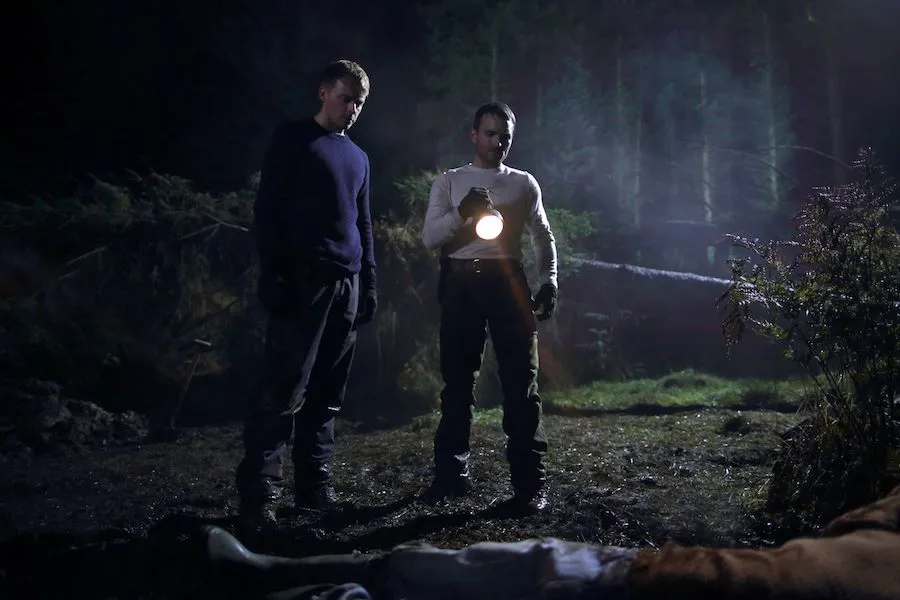
With streaming now there’s not so much of a gamble as you haven’t had to walk or drive to the video shop. Even better there’s no need to return the tapes on time and risk getting fined. You switch on your streaming device and choose your film. If you don’t like it you can turn it off, although I do tend to see things through to the end on most occasions. But hey Paul, enough about comparing the past with the present – WHAT’S YOUR POINT! Oh yes, the Dave Franco directed The Rental (2020) is one of those films which I took a chance on because of the cast and the back-of-video-box-pitch (i.e. the Amazon online trailer). I’m glad I did watch it, as it is a terrific thriller with a tension-filled script which leads and misleads you through a series of compelling twists. It’s a simple premise, involving two couples spending the weekend at a beautiful rural property where poor choices destabilise their harmony, only for all hell to break loose when a serious crime escalates the action.

The cast of Dan Stevens, Alison Brie, Shiela Vand and Jeremy Allen White are arguably punching below their weight where the B-movie material is concerned. Yet, they bring quality to the proceedings as the initial peace between the characters descends into chaos when first infidelity and then murder rears its ugly head. One of my favourite character actors, Toby Huss, is excellent here too as the suspicious property manager. I’ve seen some so-so reviews for The Rental (2020), but it’s the kind of tightly plotted suspense thriller I really thrive on. What starts as an idyllic getaway for two relatively wealthy couples is carefully unravelled by Dave Franco’s well-paced direction, complimented by Brie and Steven’s committed performances, has wonderful locations and a seriously proper killer ending.

Mark: 8 out of 11