Tag Archives: Film Review

CINEMA REVIEW: BONES AND ALL (2022)

CINEMA REVIEW: BONES AND ALL (2022)

Directed by Luca Guadagnino

Screenplay by David Kajganich

Based on Bones & All by Camille DeAngelis

Produced by: Luca Guadagnino, Theresa Park, Marco Morabito, David Kajganich, Francesco Melzi d’Eril, Lorenzo Mieli, Gabriele Moratti, Peter Spears, Timothée Chalamet

Cast: Taylor Russell, Timothée Chalamet, Michael Stuhlbarg, André Holland, Chloë Sevigny, David Gordon Green, Jessica Harper, Jake Horowitz, Mark Rylance, etc.

Cinematography: Arseni Khachaturan

*** CONTAINS STORY SPOILERS ***


After reviewing The Menu (2022) last time out, here’s another film where food and eating and death are at the very marrow of the narrative. I must confess though it’s very difficult to discuss the excellent hybrid genre film, Bones and All (2022) without giving away the main ingredient within this film. So, I give prior warning that I’m going to have to reveal it in the review. I will state therefore if this film had been called, Fine Young Cannibals, I would not have been surprised in the least. Because the theme of people eating human meat is at the heart of the story.

Bones and All (2022) is not a B-movie zombie film with bloody images of flesh-eating monsters devouring people. Yes, there are some gory scenes to satisfy horror fans, however, this arthouse adaptation of Camille DeAngelis’ 2016 novel, is more subtle and sympathetic to the young protagonists with a yearning for mortal flesh. Here murder and cannibalism occur, but it is represented as a curse for both Maren (Taylor Russell) and Lee (Timothee Chalamet), who struggle with their consumptive urges. Moreover, the feeding on flesh is highly symbolic, representing a sensual and almost religious experience for the couple. As they travel across various States, they grow as characters and people. They also explore their own love and share other people’s bodies, romance bleeding through in the process.


Bones and All (2022) is set in the 1980s. It begins with teenager Maren living with her father (Andre Holland) in Virginia. After hitting eighteen years of age, and causing a particularly nasty event at a friend’s sleepover, she is abandoned by him. Left with a cassette tape explaining her family history, Maren sets out to find her mother, meeting Lee along the way. The two are immediately drawn to each other and while driving set about sating their desire for fresh meat. This causes conflict between the couple as it is clear they are not comfortable with the nasty business of killing. Unlike the pursuing serial-killer-trophy-collecting antagonist, Sully (Mark Rylance). He is a venal force of nature, taking animalistic glee during the sacrifice of his victims.

Bones and All (2022) is directed with glacial majesty by Luca Guadagnino. He expertly blends and cooks the genres of horror, period drama, rites-of-passage, romance and road movie with a well balanced approach to tone. Extracting attractive performances from Chalamet and Russell, their onscreen chemistry is potent and touching. Acting legend Mark Rylance steals the show though as the slithery Sully. Overall, I felt the film could have been cut for pace slightly and the Romeo and Juliet-with-a-twist ending was too tragic for me. I think, despite their cannibalistic needs, Maren and Lee deserved a future together. But ultimately it’s all a matter of taste.

Mark: 8 out of 11


CINEMA REVIEW: THE MENU (2022)

CINEMA REVIEW: THE MENU (2022)

Directed by Mark Mylod

Written by: Seth Reiss, Will Tracy

Produced by: Adam McKay, Betsy Koch, Will Ferrell

Cast: Ralph Fiennes, Anya Taylor-Joy, Nicholas Hoult, Hong Chau, Janet McTeer, Reed Birney, Judith Light, John Leguizamo, etc.

Cinematography Peter Deming

*** MAY CONTAIN SPOILERS ***


I love cinema and films like The Menu (2022), as much as I love food and drink. Wow, some of the food shown on screen looked absolutely delicious, while some of it was that weird cuisine so gorged on by the pompous moneyed folk of this world. I must admit that I have had an unhealthy relationship with food. I have been an overeater and also overweight. I am a food addict, notably sugar and alcohol. I have attempted to control it with various dietary ventures. Low calorie, low carbohydrate, low sugar, running, gym, fasting, temperance and other (un)successful attempts at moderation have ensued. Presently, I am pretty fit from a cardio perspective, and twenty kilos lighter than I was ten years ago. But I could do much better.

I’ve always strived to eat healthily, but fine dining was never really for me. It was only when I met my wife eight years ago that I was introduced to gourmet dining and the dreaded tasting menu. Aside from the over-priced food, I just find those posh restaurants too pretentious for a working-class boy from Battersea. Yet, I would go out with my wife for a treat and eat at some wonderful restaurants in Edinburgh, Copenhagen, Cornwall, London and many more. Some were amazing and some I found were not really value for money. The personality cult of the celebrity chef continues to thrive also. Aside from enjoying Ramsay’s Kitchen Nightmares they’ve never really interested me. Yet, I was onboard while imbibing the skewered satire of The Menu (2022). Because it’s a sharply scripted horror film which comes to the boil slowly before delivering a killer set of courses throughout.


It’s best to experience The Menu (2022) without knowing too much. The surprises in the inventive script are a constant joy. The setting is an exclusive and expensive restaurant on a remote island called Hawthorne. The host, menu architect and epicurean is celebrity chef, Julian Slowik. Chef is portrayed with intense control and focus by Ralph Fiennes. Slowik finds himself worshipped by his kitchen acolytes, who adhere to his every demand. He is brilliant and to be feared, like many a charismatic cult leader before him. Eat your heart out, Gordon Ramsay.

Arriving by boat to the blighted isle are twelve restaurant-goers such as a team of rich finance guys, a once famous Hollywood actor (John Leguizamo) and his PA, a wealthy middle-aged couple, a food critic (Janet McTeer) and her yes-man assistant, plus the mis-matched couple, Margot (Anya Taylor-Joy) and Tyler (Nicholas Hoult). Tyler is a sycophantic fanboy of Slowik’s food and career, something that later comes to horrifying catharsis. Indeed, as well as the mysterious menu, many of the guests are harbouring a secret that this hell’s kitchen is more than prepared to burn.

Structured, unsurprisingly, around the courses of a tasting menu with titles separating each dish, the food delivered is both imaginative and beautifully presented. Margot’s character pushes back on what she considers to be both ostentatious and insubstantial food, much to Tyler’s annoyance. Their conflict intersperses the rising suspense that derives from Julian’s menu, which raises the stakes gradually, before events truly reach boiling point. In Slowik’s restaurant the customer is definitely NEVER right. Similar to Ready or Not (2019), The Menu (2022) is a fantastically twisted and funny genre film. Fiennes, Taylor-Joy, Hoult and Hong Chau are on terrific acting form. Further, the production design and cinematography make the visuals succulent and palatable. Ultimately, for those who love food, fear and vengeance, this film is certainly best served hot!

Mark: 8.5 out of 11


NETFLIX FILM REVIEW: BLONDE (2022)

NETFLIX FILM REVIEW: BLONDE (2022)

Directed and written by: Andrew Dominik

Based on: Blonde by Joyce Carol Oates

Produced by: Brad Pitt, Dede Gardner, Jeremy Kleiner, Tracey Landon, Scott Robertson

Main cast: Ana de Armas, Adrien Brody, Bobby Cannavale, Xavier Samuel, Julianne Nicholson, Evan Williams, Toby Huss, David Warshofsky, Caspar Phillipson, etc.

Cinematography: Chayse Irvin

*** CONTAINS HISTORICAL SPOILERS ***


Aside from expertly directing episodes of the Netflix drama, Mindhunter and the documentary One More Time with Feeling (2016), filmmaker Andrew Dominik’s directorial output has been sparse of late. Indeed, he hasn’t released a feature film since quirky gangster drama, Killing Them Softly (2012). I imagine this is due to many reasons including: slow-gestating methodology, several unrealized projects failing to see a greenlight, and the dreaded COVID-19. It’s a shame as I believe he is one of the most compelling filmmakers around at present. Chopper (2000) remains one of my favourite cult stories about a charismatic, larger-than-life criminal anti-hero. Similarly, The Assassination of Jesse James by the Coward Robert Ford (2007) is one of the best films I have seen from the last twenty years.  It was pretty much a box-office flop but everything about it screamed greatness to me: stunning cinematography; brilliant cast; and resonating themes regarding celebrity and legend in the Wild West.

After Chopper Read and Jesse James, once again Dominik explores the iconic life of a real person in Blonde (2022). You may have heard of her, Norma Jean Mortenson/Baker, or as she was more famously known: Marilyn Monroe. Using Joyce Carol Oates’ book as a springboard, plus no doubt many other written, visual and media sources available, Dominik has crafted a stylish and singular vision of the peroxide icon’s life and career. In no doubt should a viewer believe this to be a “true” story in the documentary-drama style, but rather an impressionistic, poetic and compelling imagining of Marilyn’s short, yet tumultuous, existence on this planet.

For me, Marilyn Monroe was one of the most stunning movie stars who ever existed. She lit up the screen and was a mightily under-rated actor also. In her heyday she was the biggest star in the world. Her role as Sugar in Some Like it Hot (1959), is one of the most gorgeously funny, beautiful and vulnerable performances ever committed to celluloid. Enter Ana De Armas as Marilyn in Blonde (2022). De Armas is a revelation on-screen in terms of her looks, movement, body language and the nuanced depth she brings to the screen siren. It’s a brave role too as the script demands much of her. Throughout many exquisitely filmed and edited scenes lies the ugly degradation of Marilyn’s body and soul. De Armas gives her all in these vignettes of domestic abuse, sexual assault, rape, abortions, overdoses, miscarriages, mental breakdowns and further sexual gaslighting at the hands of people she believed were friends.


So, why should you want to watch Blonde (2022), you may ask yourself. Well, De Armas’s performance alone is worth enduring much of the emotionally draining misery. Moreover, Dominik again proves himself to be a director of the highest quality. He’s a maverick and iconoclast who has an impressive and intelligent cinematic eye. The opening sequence where Norma, as a young child, is driven by her unwell mother through Los Angeles forest fires is a frightening and imperious interpretation of mental health, full of fear, heat, and portentous symbolism. Such fire and trauma foreshadows the distress and torment that is to come to young Norma throughout her life. A schizophrenic Mother also echoes the schism of persona that impacts Norma the individual, and Marilyn the movie star. The division of personalities is a theme which the screenplay sensitively explores, despite being buried in the more lurid and shocking events of Marilyn’s sad life.

Overall, Blonde (2022) is a startling and shocking rendition of Marilyn Monroe. Of course, hers was an existence full of drama, intensity, darkness and tragedy. But you have to think there was some light in there, some happiness, humour and joy. On some fleeting occasions during Blonde (2022), Dominik presents this, but ultimately this is a beautifully filmed yet ugly-hearted cinematic tragedy. On the surface the film genre is biopic, but it really is a horror film, as Marilyn’s exploitation by the men in her life is laid bare on the screen. I’ve read some critics describe the film as exploitational, however, this is a film ABOUT exploitation. Marilyn was exploited by agents, photographers, directors, producers, the press, the Hollywood system, the audience, her doctors, her lovers, her husbands and a President of the United States.

Dominik is perhaps suggesting Monroe did not kill herself, but was disintegrated by those who should have loved and cared for her. The ultimate tragedy is that Norma/Marilyn could not find the love and mental strength inside herself to survive those who perpetually sought to profit from this beautiful shining star. If the events realised in Blonde (2022) are to be believed, what person could?

Mark: 8 out of 11


FIVE REASONS THIS COULD BE GOOD: COCAINE BEAR (2023)

FIVE REASONS THIS COULD BE GOOD: COCAINE BEAR (2023)

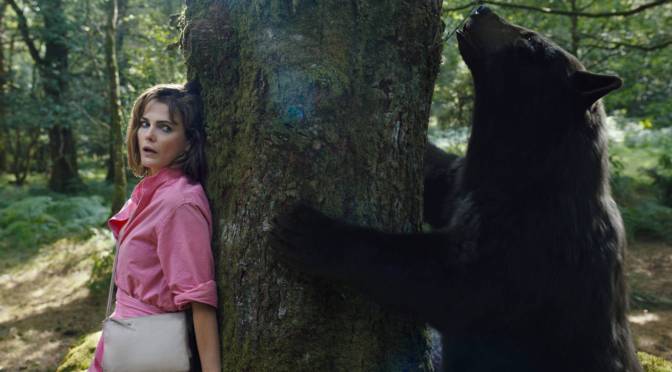
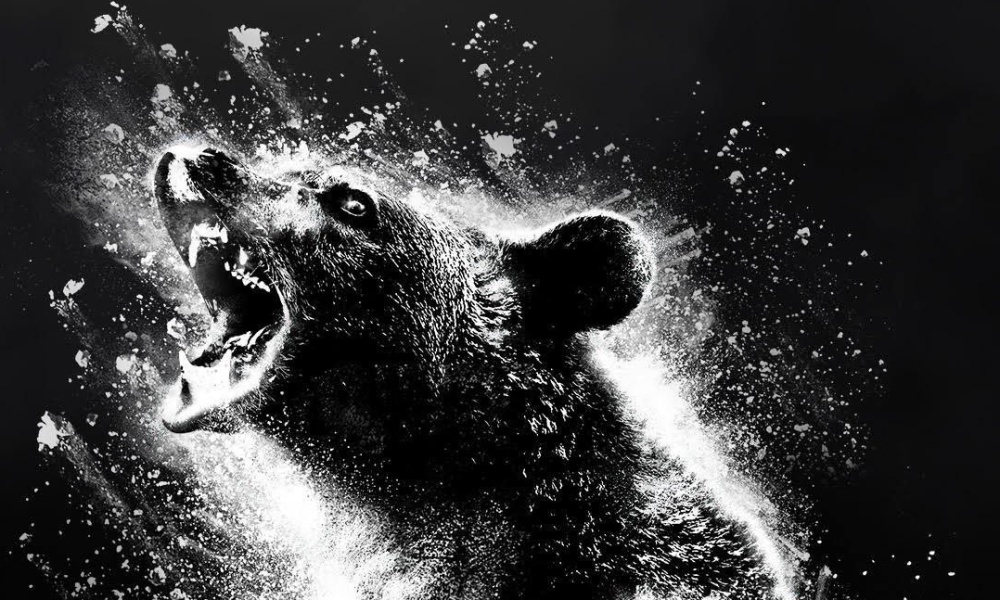
Every now and then a film title hooks you in immediately. Snakes on a Plane (2006) anyone? Now, another beast driven movie comes along and says, “Hold. . . My. . . Bear!”Enter the thrill-a-second trailer for – Cocaine Bear (2023)!

So here are five reasons, Cocaine Bear (2023) could be good!

  1. The title of the film is Cocaine Bear (2023)!
  2. It has a kill crazy bear high on cocaine in it!
  3. It is amazingly inspired by a TRUE story!
  4. It’s Ray Liotta’s R.I.P, final film.
  5. The trailer is amazing – check it out here:

Cocaine Bear (2023) releases on February 24th 2023 in the US, UK and most of the world exclusively in movie theatres.

CINEMA REVIEW: TRIANGLE OF SADNESS (2022)

CINEMA REVIEW: TRIANGLE OF SADNESS (2022)

Directed by Ruben Östlund

Written by: Ruben Östlund

Produced by: Erik Hemmendorff, Philippe Bober

Main cast: Harris Dickinson, Charlbi Dean, Dolly de Leon, Zlatko Burić, Henrik Dorsin, Vicki Berlin, Woody Harrelson etc.

Cinematography: Fredrik Wenzel

Edited by: Ruben Östlund, Mikel Cee Karlsson

Music by: Mikkel Maltha, Leslie Ming

*** MAY CONTAIN SPOILERS ***


Ruben Ostlund is fast becoming one of those go to directors who can be relied upon to deliver cinema of the highest quality. His latest film, Triangle of Sadness (2022) is his finest to date. Having said that, his Force Majeure (2014) was one of those excellent films I hated.  Technically, it was beautifully shot, performed, and directed, however, I just found the characters too irritating. Personally despising ski holidays probably didn’t help either. I actually wished the characters had been killed in the avalanche to save on all the middle-class matrimonial moaning.

Ostlund’s next film The Square (2017) was bravura arthouse storytelling containing wonderful digs at the nature of modern art and how rich people will buy any old crap if it is put in a gallery. While a tad overlong, it was wonderfully funny with hilarious mocking of the bourgeoisie, art and the rise of social media. With Triangle of Sadness (2022), Ostlund has moved up the social strata and focussed his satirical eye on the uber-wealthy, combining socialist dialectic with gross-out comedy, as Das Kapital meets Monty Python’s The Meaning of Life (1983).


The film opens with Carl (Harris Dickinson) and Yaya (Charlbi Dean), a model and Social Media influencer, as a couple whose relationship is fraught with problems. Through Yaya’s connections she secures them free passage on one of the most luxurious yachting holidays on the ocean. While they aren’t short of money, they have nothing compared to the wealthy millionaires and business types on the boat. As Carl and Yaya act as our conduits in the story, Ostlund uses them to explore the petty first world problems which impact many romances. The staff are also introduced as key players in the “Upstairs, Downstairs” character dynamic, notably Woody Harrelson’s drunken socialist Captain Thomas Smith, and Vicki Berlin’s staff supervisor, Paula. Lastly, the money is represented essentially by lonely tech millionaire, Jarmo (Henrik Dorsin), obnoxious Russian, Dimitry (Zlatko Burić) and stroke victim, Therese (Iris Berben) and her husband.

Throwing these disparate, and latterly desperate personalities, into the trapped spaces of a superyacht is great writing by Ostlund. What unfolds in the second act of the film is an extended set-piece of riotous fun. As the yacht becomes battered by the stormy sea and weather, the guests all become violently ill to devasting impact. While it may not be to everyone’s taste, I was laughing for twenty odd minutes straight at this sickening skewering of these privileged people. At the same time the drunken Dimitry and Captain Smith argue relentlessly about the differences and merits of capitalist and Marxist ideologies. It’s easily one of the funniest and impressively directed sequences of this cinematic year.

But Ostlund isn’t finished yet. These characters have not suffered enough for him, and the final section of Triangle of Sadness (2022) drenches the story in another hilarious and satirical direction. I won’t spoil the events which unfold, but Carl and Yaya’s relationship issues come to the fore as a darkly comedic peril strikes the yacht and passengers. Here Ostlund strikes a further blow against capitalism, exploring the nature of survival of the fittest and true values of human currency in a savage indictment against the obscenely rich. Overall, while the characters may not be the most likeable, that is never Ostlund’s aim. Ostlund’s desire is to critique capitalist hegemony through both high and low brow humour. He succeeds, making Triangle of Sadness (2022) one of the most thought-provoking and exhilarating cinema experiences of the year.

Mark: 9.5 out of 11


The 30th RAINDANCE FILM FESTIVAL!

Raindance 30th Film Festival

Discover. Be Discovered.


Raindance Film Festival is the largest independent film festival in the UK. Holding the 30th festival in 2022, Raindance is based in the heart of London’s buzzing West End film district.

Raindance Film Festival is officially recognised by the Academy of Motion Picture Arts and Sciences USA, the British Academy of Film and Television Arts and the British Independent Film Awards. Selected shorts will qualify for Oscar® and BAFTA considerations.

Festival Sections:
World-renowned programme of the best UK and international independent films.
– House of Raindance – talks and panels at Genesis Cinema
– Raindance VRX programme for virtual reality and new media
Networking events
– Attracting 16,000 visitors including 500 industry professionals into London.


The 30th Raindance took place between October 26 – November 5 2022 in Central and East London. I attended many of the amazing events.

Opening Night Gala and Film – Corner Office (2022)

The opening night Gala at the Waldorf Hotel, was a fantastic event and Jonathan Pryce and Vanessa Redgrave deservedly received Raindance icon awards.


The opening gala was preceded by the opening film. Starring the cast-against-type, Jon Hamm, Corner Office (2022) is a fine surreal comedy. He portrays an office worker who finds a room in the office which no other worker can see. Is he crazy or the sanest person in the company? Joachim Back directs a stylish and offbeat indie cinema treat!


House of Raindance at Genesis Cinema

At the wonderful Genesis Cinema, near Stepney Green in East London, the Raindance Film Festival created the House of Raindance and Backyard cinema marquee full of fantastic industry events and screening. These included: panels with industry professionals from TooFar Media, Paus TV, and Celtx; masterclasses with filmmaking experts and retrospective screenings of classics such as Pulp Fiction (1994), Memento (2000) and Old Boy (2003).


Closing Party and Film – Pinball: The Man Who Saved the Game (2022)

After watching over 15,000 feature and short film submissions, the Raindance programmers delivered an array of amazing cinematic works. Films screened from all over the world included: Erin’s Guide to Kissing Girls (2022), Iguana (2022), Pantafa (2022), Karaoke (2022), Little Axel (2022), Swallow (2022), Razorlight: Fall to Pieces (2022); and many shorts programmes including Raindance Film School Student Showcase, Queer, Horror, Radical Agendas and Transient Venture strands.

Having opened with a brilliant film, Raindance 30th Film Festival closed with another entertaining one too. It was the romantic, heroic and comedic 1970s period film, Pinball: The Man Who Saved the Game (2022). It’s the story of Roger Sharpe, the young midwesterner who overturned New York City’s 35 year-old ban on pinball machines. Influenced stylistically by Martin Scorsese, it is a niche but fascinating and bumping slice of American legal historia. Safe to say to the closing party at Genesis Cinema was flipping marvellous too.


See you next year at the 31st Raindance Film Festival!


[Book Review] Psychology For Screenwriters: Building Conflict In Your Script (2nd Edition) – William Indick

Psychology For Screenwriters: Building Conflict In Your Script (2nd Edition) by William Indick

Film as dream, film as music. No art passes our conscience in the way film does, and goes directly to our feelings, deep down into the dark rooms of our souls.  Ingmar Bergman


William Indick’s excellent book takes us from the dream like world of the cinema to the pages of great psychoanalytical theorists, combining Freud with screenwriting in a most intelligent and approachable way. But his is not a how-to manual for writers, instead an immersive experience mixing theoretical, practical, and thoughtful processes in regard to writing your next film.

If psychology and screenwriting are two sides of the same coin then this book is most definitely for screenwriters and filmmakers with an interest in psychoanalytic theory that enables them to explore archetypes, plot development, structure, and character building from the inside out. Moreover, the author provides an excellent framework with which to weave psychoanalytic theories into one’s writing. But not in a cookie-cutter style. This book is smarter than that.

While many of the theories are complex, the author writes with clarity and expertise. The useful bullet-pointed summaries at the end of each chapter crystallize the concepts with aplomb. Further, the various chapters also delivers ideas from a whole host of great minds of psychoanalytic and structuralist theory such as Carl Jung, Erik Erikson, and Joseph Campbell. There were also theorists I was not too familiar with such as Alfred Adler, Rollo May, and Maureen Murdock. By utilising his expansive knowledge and examples from many classic Hollywood films the author places you into the heart of the character’s mind and motivations.

What I found most fascinating was the book provides an invaluable framework to build your characters with. I certainly could see myself applying various ideas from Freud and Jung within my writing. Indeed, I was certainly drawn to Rollo May’s theories about existential anxiety driving and increasing the complexity of my characters. One could argue though, the author overuses references to Hollywood cinema. I would really have found it intriguing how certain psychoanalytical theories may relate to cinema from, e.g.  Japan, Spain, and France. Furthermore, psychological analysis of a particular director’s work such as Ingmar Bergman could also have proved so interesting.

In conclusion, to many an experienced writer the screenwriting theories, terms and structures covered are instantly recognisable, yet William Indick freshens up the study field with psychoanalytical language, breathing life into the saturated library of scriptwriting releases. Finally, each chapter succinctly bullet-points how a writer may utilise the theories within their work as the book concludes with three brilliant essays relating said theories to the Western, Fantasy and Sci-fi genres. One could even say this book is a dream to work with.


Psychology For Screenwriters: Building Conflict In Your Script (2nd Edition) is available here.

Publication date is January 2023 from https://mwp.com/

Michael Wiese Productions (MWP) was launched in San Francisco in 1976 primarily to produce films. Today, the company is known worldwide having published some 200 books. Some of the bestsellers have been translated into 18 languages, are used in over 700 film courses, in the Hollywood studios and by emerging filmmakers.

NETFLIX FILM REVIEWS: DAYSHIFT (2022), THE GRAY MAN (2022) & SPIDERHEAD (2022)

NETFLIX FILM REVIEWS: DAYSHIFT (2022), THE GRAY MAN (2022) & SPIDERHEAD (2022)

Along with fashion, football, and Formula One, the cinema is one of many capitalistic and cyclical industries which spends and makes money that seems to self-perpetuate its own existence. My lord though there are many more. But isn’t it a bit obscene that so much money is spent on movies while so many people struggle in the world?

Maybe I’m just old. Jaded. Drifting away from the dream factory where such large amounts of cash should be spent on film folly. People are starving, energy bills are rising and there are so many sick across the world, can we not divert some of that money to them? Some people may say I’m a dreamer, but I’m not the only one. Plus, I’m a hypocrite. Using film and alcohol to divert my mind from the world’s problems.

What has prompted this sober reflection? Netflix! Now, I have no idea about business and money and algorithms and subscription revenue. What I have read is that $370 million dollars have allegedly been spent on these three blockbuster films. Could the cash have been spent on more interesting and entertaining product? I mean, why not give $15 million to a whole host of up-and-coming filmmakers to produce thirty lower-budgeted films? Why not concentrate on script, characterisation and strive to explore more original concepts. Surely, the law of averages dictate that there would be a number of gems produced?

Blumhouse Productions and A24 both seem, from the outside, to have industry models which produce successful genre and arthouse films. One may not rate all of their releases, however, these studios appear to avoid burning huge sums of money on their cinematic offerings. Netflix, continue to invest in tentpole monsters which are NEVER released on a cinema screen and are of questionable quality. What of these films? Here are three short reviews of new Netflix releases I have watched recently. With the usual marks out of eleven.


DAYSHIFT (2022)

Directed by J. J. Perry

Screenplay by: Tyler Tice, Shay Hatten

Main cast: Jamie Foxx, Dave Franco, Natasha Liu Bordizzo, Meagan Good, Karla Souza, Steve Howey, Scott Adkins, Snoop Dogg etc.

I’d say this is a cheap, photo-copied and terrible rip-off of Blade (1998) drizzled with John Wick (2014) style fight-scenes, but Dayshift (2022) isn’t bloody cheap. It’s a gigantic waste of money and the viewer’s time. Jamie Foxx, portrays a pool cleaner moonlighting as a vampire hunter, pitted against a den of uber-vampires threatening to take over Los Angeles.

An insult to my intelligence, the script plunders Men in Black (1997) and the execrable R.I.P.D (2013), with the villain’s plan making no sense at all. Dave Franco adds some humour as the unlikely buddy/partner, but this one of those films where the stuntmen get most credit for some amazing fight and vehicle work. It’s a shame the story, plot and characters are so anaemic.

Mark: 5.5 out of 11


THE GRAY MAN (2022)

Directed by Anthony Russo & Joe Russo

Screenplay by Joe Russo, Christopher Markus and Stephen McFeely

Main cast: Ryan Gosling, Chris Evans, Ana de Armas, Jessica Henwick, Regé-Jean Page, Wagner Moura, Julia Butters, Alfre Woodard, Billy Bob Thornton etc.

The apparent reports that $200 million dollars were spent on this film make The Gray Man (2022) a crime against humanity. This is such a bad film. Nikita (1990) is the template as Ryan Gosling’s lifer is offered the chance to become an assassin for a secret US government agency. Flash forward a number of years and Gosling, who doesn’t look any older, gets screwed on a mission and psychotic Chris Evans has to take him down. Cue expertly choreographed death, explosions, shouting, shoot-outs, and zero emotional connection.

I like all the talent involved in this. Gosling, Evans and Ana de Armas are genuine stars. But were they trapped on a brainless rollercoaster that wouldn’t stop? Did it even have a script? And if it did who thought it was worth spending money on. The camera swoops around the globe like a maniac hoovering up the budget. Everyone takes a grand payday as the bullets fly and fire fills up the screen. I was with Gosling’s anti-heroic blank until they introduced the girl moppet and I deflated. Everyone involved is better that the $200 million spent.

Mark: 5 out of 11


SPIDERHEAD (2022)

Directed by Joseph Kosinski

Screenplay by: Rhett Reese, Paul Wernick

Based on:
“Escape From Spiderhead” by George Saunders

Main Cast: Chris Hemsworth, Miles Teller, Jurnee Smollett etc.

This is actually a brilliant film concept absolutely ruined by the miscasting of Chris Hemsworth and a director obsessed with filling the dark themes with inane humour and incongruous 1980’s music. Maybe these elements were all in George Saunders original short story from The New Yorker, but I doubt it. It’s a butchered adaptation from my instinct. By the way, Chris Hemsworth is a brilliant film star, but he cannot act.

So, imagine a Black Mirror episode done really badly with Miles Teller’s criminal being given certain freedoms within a prison as long as he tests drugs and adheres to the rules of the medical experimentation. The plot beats are impactful and Teller’s character arc is very moving. as he tries to escape his past wrongdoings and guilt, but Kosinski and Hemsworth piss over the potential with awful creative decisions that grate and drain all emotion away. It’s a character drama trapped in an insulting action comedy, which must be called out.

Netflix. Stop wasting money.

Mark: 6 out of 11


CINEMA REVIEW – ELVIS (2022)

CINEMA REVIEW – ELVIS (2022)

Directed by Baz Luhrmann

Screenplay by: Baz Luhrmann, Sam Bromell, Craig Pearce, Jeremy Doner

Story by: Baz Luhrmann, Jeremy Doner


Produced by: Baz Luhrmann, Catherine Martin, Gail Berman, Patrick McCormick, Schuyler Weiss

Cast: Austin Butler, Tom Hanks, Helen Thomson, Richard Roxburgh, Olivia DeJonge, Kelvin Harrison Jr., Xavier Samuel, David Wenham , Kodi Smit-McPhee etc.

*** MAY CONTAIN HISTORICAL SPOILERS ***


Since 1992, Baz Luhrmann has directed only six feature films. Each of them, aside from the lower-budgeted, Strictly Ballroom (1992), is a gigantic and epic extravaganza, full of colour, imagination, verve, energy, music, poetry and larger-than-life characters. Even Strictly Ballroom contains many of the stylistic and formal elements which would become part of Luhrmann’s oeuvre. I pretty much feel this auteur’s excessive approach to filmmaking including the fast-cutting, opulent settings, big musical numbers, all-star casts, plus grandiose and melodramatic narrative delivery are always a wonderful spectacle to experience.

Arguably, adapting the American novel, The Great Gatsby (2013), in this periphrastic packaging, took away from the enigma and majesty of Fitzgerald’s classic. However, with Elvis (2022), Luhrmann and his incredible production team, marry such genius excessive style with the perfect subject matter: the King of Rock and Roll! Because in colliding the life, music and films of Elvis Aaron Presley with Luhrmann’s stunning methodology brings to the screen one of the best films of the year Indeed for Luhrmann, Elvis (2022), is evidently a stylistic, subjective and thematic labour of love, marking it as his best film to date.


I wasn’t even going to watch Elvis (2022) at the cinema. I’d recently seen Spencer (2021) on Amazon Prime and was happy to have streamed that. While that eerie adaptation was a valiant attempt to breathe life into the ghost of Diana. An elegiac attempt to explain the oppressive result of her naïve choice to land her Princess dream. With Kristen Stewart’s exceptional impression rescue breathing Diana’s tragic existence, I knew the story. I knew enough to care for someone whose mental health was discarded by the heartless Windsor’s. But the monarchy have been killing the working class for years, so why should I care deeply for one singular spoilt individual? Similarly, I pondered whether I wanted to watch another film about Elvis Presley. A God-given talented singer, heartthrob, actor, musician and legendary performer had a story I was already familiar with. But, I am so happy I overcame my ignorant prejudice because Elvis (2022) is a humdinger of a part-musical-part-biopic-part-drama-part-American tragedy.

Elvis (2022) is structured around the memories of shadowy manager, Colonel Tom Parker (Tom Hanks). He is suffering illness in his old age, close to hospital demise. Parker is a grotesque in a billowing gown, drifting around the nightmarish Vegas slot-machines as Elvis’ voice echoes within his mind. Is it the guilt or the morphine? The story flashes back to a younger Parker promoting country singers at a travelling Carny. Until that fateful day when he hears a miracle on the radio, a young singer who everyone thinks is Black. But he isn’t. In the markedly racist times of 1950s America (has it really changed in certain States or Police departments?), a Black singer won’t sell records like this white dude will. Seizing his chance Parker attends Elvis’ first gig and witnesses a phenomenon. An attractive, sexual, gyrating and angelic powerhouse with an incredible voice who sends sex-waved into the audience, especially the teenage girls.


A star is born, and it takes a star to play a star. Take as many bows as you want, Austin Butler. He is a genuine phenomenon in Elvis (2022). Of course, the wardrobe, postiche and make-up artists work wonders to help recreate Elvis’ iconic looks as the narrative flashes through various stages of Presley’s devastatingly successful career, Yet, Butler just lights up the screen, producing acting fireworks in a physically, spiritually, emotionally and musically astounding screen presentation. It is not an impression, but a tour-de-force for a relatively unknown actor who has jettisoned his career to glory.

Butler, lives and breathes the King. This rendition and great direction from Luhrmann make you feel tragic empathy for a career which was manipulated and controlled by grubby gambling addict, Parker. Hank’s portrayal of the Colonel feels unnatural and theatrical compared to Butler’s organic turn. Perhaps that was the intention? Deliver a pantomime villain to boo and hiss at. Although, Hanks’ cigar-chomping and jowly make-up made me think the evil touch of Orson Welles’, Captain Hank Quinlan, had somehow been resurrected.

I cannot praise Elvis (2022) enough as a cinematic biopic and musical spectacle. While the choppy editing style is jarring at the start, once the film settles down into a groove, Butler’s stunning incarnation shines through. Overall, I was enlivened by, not only the constant remixing of Elvis Presley hits, but Luhrmann’s choice to alloy gospel, rhythm and blues, rap, rock, pop, ballad and protest songs throughout the scintillating soundtrack. Much, quite rightly, is made of how much diverse music influenced Elvis’s formative life and how he connected with Black musicians of the era. Luhrmann also ensures we are aware of how much of a threat Presley was seen by the establishment due to the sexual nature of his sang satanic verses. Sent to Germany to prevent him demonising America, his comeback special after seven years in movies is one of the finest movie set-pieces I have seen in many a year. Funny, rocking, poignant, effervescent, beautiful and astounding, just like Elvis, the man and myth, and Elvis (2022) the film.

Mark: 10 out of 11


CINEMA REVIEW: THE BLACK PHONE (2021)

CINEMA REVIEW: THE BLACK PHONE (2021)

Directed by Scott Derrickson

Screenplay by: Scott Derrickson & C. Robert Cargill

Based on “The Black Phone” by Joe Hill

Produced by: Jason Blum, Scott Derrickson, C. Robert Cargill

Main cast: Mason Thames, Madeleine McGraw, Jeremy Davies, James Ransone, Ethan Hawke


Cinematography Brett Jutkiewicz

** MAY CONTAIN SPOILERS **


Halloween party-goers now have a new mask to wear on their faces in the guise of The Black Phone (2021) villain daubed, “The Grabber”. Although one must point out the mask is highly influenced by Japanese classic horror, Onibaba (1964). Anyway, the Grabber is a sick individual who prowls and abducts kids from the Denver suburbs in the 1970s, using black balloons and a creepy van as his signature. Portrayed by Ethan Hawke, he isn’t most subtle or interesting of killers, but his chilling behaviour drives this effective horror film from director Scott Derrickson.

The story is the essence of every parent’s living nightmare. Their child goes missing having been snatched off the street in broad daylight. The film takes the time to establish many of the children’s characterisations so we have time to bond with them and feel the horror of their plight. Central to the story are teen brother, Finney (Mason Thames), and younger sister, Gwen (Madeline McGraw). Even without the threat of the murderer, their mother has passed and they are brought up by abusive and alcoholic father (Jeremy Davies). To add further woe, Finney, finds himself bullied by older kids at school. Could things get any worse? Of course! Finney finds himself the next victim of the evil Grabber!


Plunged into a gloomy and sound-proofed basement, Finney, is trapped with no way out from the Grabber’s nefarious plans. Ah, but Finney suddenly gets assistance from, not one, but two supernatural sources. Firstly, the titular black phone which hangs on the wall of the basement and scares us half to death when it rings. Who is on the other end? Well, lets just say they are not of the living. The second magical helper for Finney is that Gwen has the second sight in her dreams. Over time she is able to conveniently assist the police at significant stages of the narrative. Much suspense is raised from Finney’s attempts to escape as time begins to run out for him. His conversations on the black phone are imaginatively delivered as he reaches some weird dimension beyond life and death.

The Black Phone (2021) is both a suspenseful and silly ride, efficiently directed by expert genre filmmaker, Scott Derrickson. The characters are nicely written and you really root for them as the kids deal with all manner of terror. Themes relating to sibling community, stranger-danger, and sticking up for yourself against bullying are intelligently explored also. However, I must say the film has, for all the emotional depth felt and evocative 1970s locations and costumes displayed, a number of serious plot-holes struck me as incredibly questionable. I also thought Ethan Hawke’s villain while visually striking, lacked intelligence and a proper characterisation. I get that he is masked symbol of evil, but a great actor like Hawke was wasted in such casting. Overall though, The Black Phone (2021) is definitely a cinematic call worth answering.

Mark: 7.5 out of 11