Tag Archives: Film Review

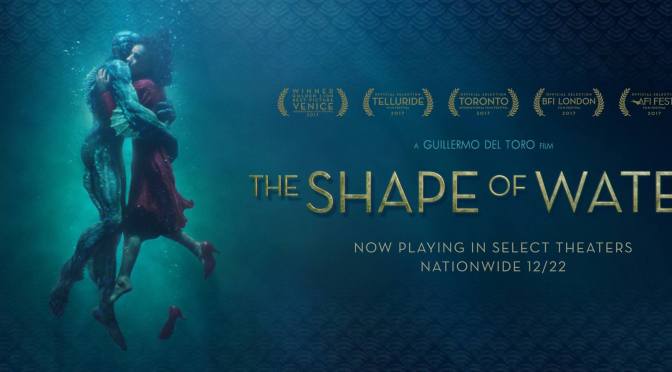
Del Toro drowns us in a sea of love and visual splendour! THE SHAPE OF WATER (2017): CINEMA REVIEW

THE SHAPE OF WATER (2017) CINEMA REVIEW

Directed by: Guillermo del Toro

Produced by: Guillermo del Toro, J. Miles Dale

Screenplay by: Guillermo del Toro, Vanessa Taylor

Starring: Sally Hawkins, Michael Shannon, Richard Jenkins, Doug Jones, Michael Stuhlbarg, Octavia Spencer

Music by: Alexandre Desplat

shape5

**CONTAINS MILD SPOILERS**

Amidst the incredible visual magic, themes of the outsider, forbidden love and the onerous scope of the patriarchy are replete within the works of fantasist Guillermo Del Toro. They are often more than not presented within allegories too where the fantastic elements are employed to both create spellbinding awe while secretly delivering an important socio-political message. For me, Del Toro in attempting to marry grandiose concepts with important messages must be praised for his risk-taking. Above all else there is no doubt, as his latest film The Shape of Water confirms, he is a filmmaker of some brilliance.

shape

Del Toro’s body of work demonstrates: outsiders, freaks, the silent minority and the shunned are never far away from his vision. In The Devil’s Backbone (2001) and Pans Labyrinth (2006), children find themselves the victims of horrific civil war. While, similarly, in Hellboy (2004) war with the Nazis is central to the core as our anti-hero, a sarcastic red ‘demon’, fights against all manner of monstrous foes. Prejudice against Hellboy is also represented within his “forbidden” love for Liz Sherman (Selma Blair), while an altogether more sinister romance is shown in gothic thriller Crimson Peak (2015). Even muscular vampire-hunter played by Wesley Snipes in Blade II (2002) is a freakish hybrid who does not fit into the societal and patriarchal order.

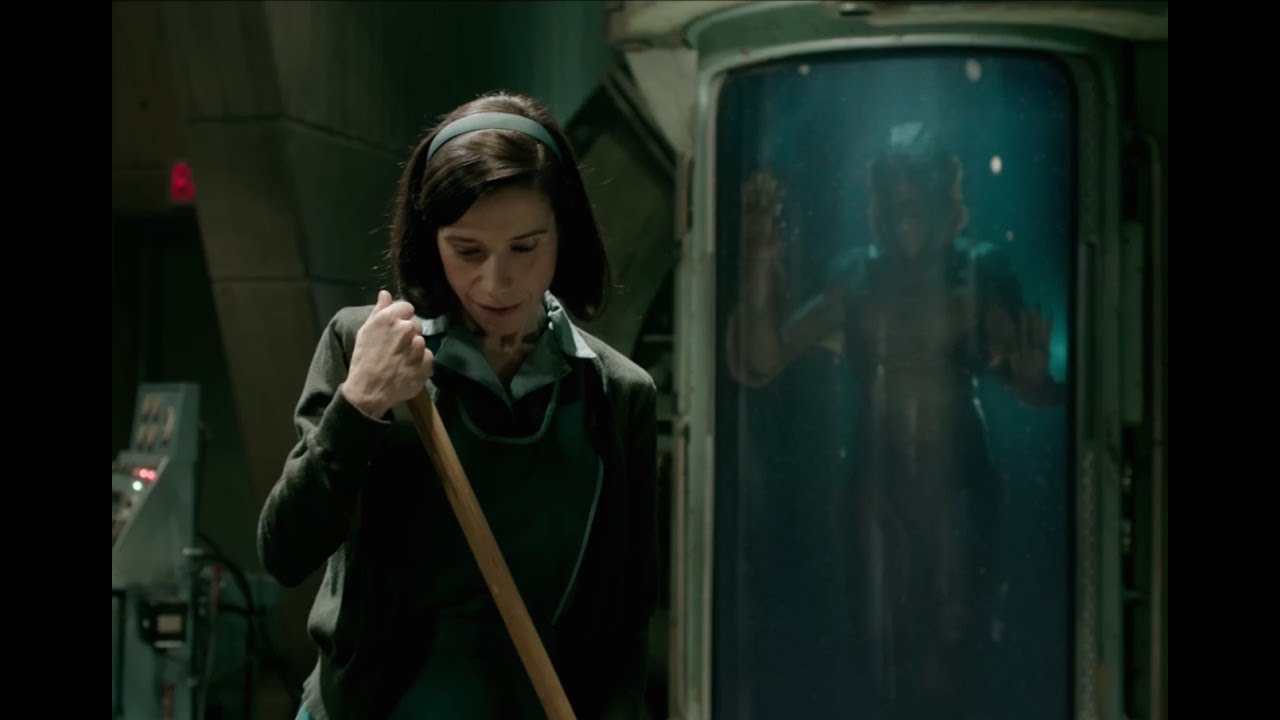
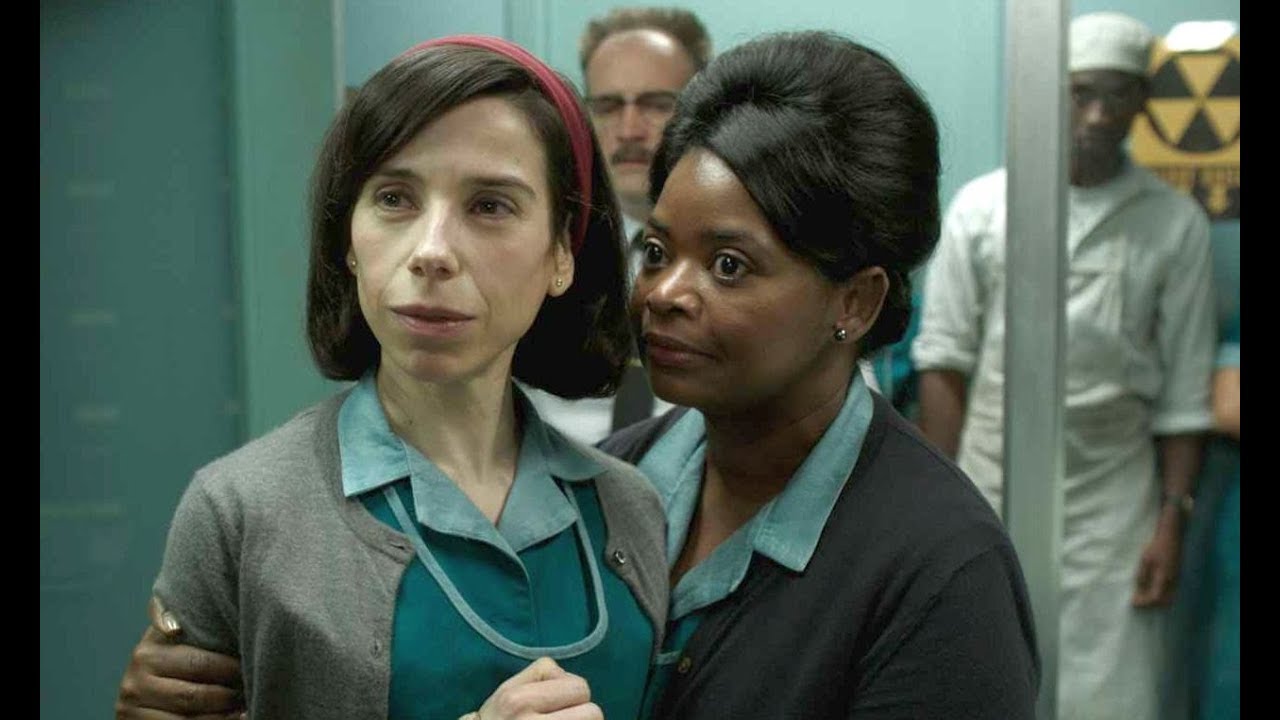
In The Shape of Water, Del Toro has successfully taken all of these elements and themes and delivered a magical, poetic, at times disturbing, but overall incredible cinematic experience. Set during the Cold War in 1950s Washington, Sally Hawkins plays mute cleaner Elisa Esposito, who along with her friend, Zelda (a wonderful Octavia Spencer), works at a top secret U.S. army base. Silent from birth, what she lacks in voice, Elisa more than makes up for in courage, compassion and confidence. She shares her living space with retired copywriter, Giles — portrayed with incredible warmth and wit by Richard Jenkins — and his army of cats. But when a mysterious “Asset” is delivered to Elisa’s place of work she suddenly becomes entwined in an incredible story of sacrifice and love.

shape 2

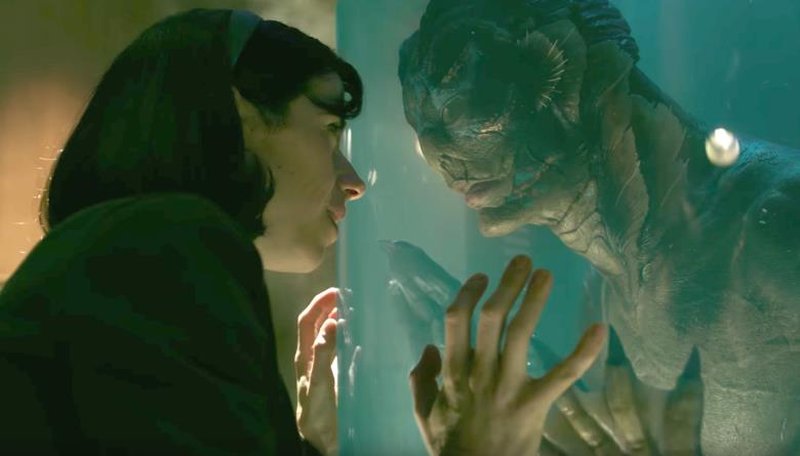
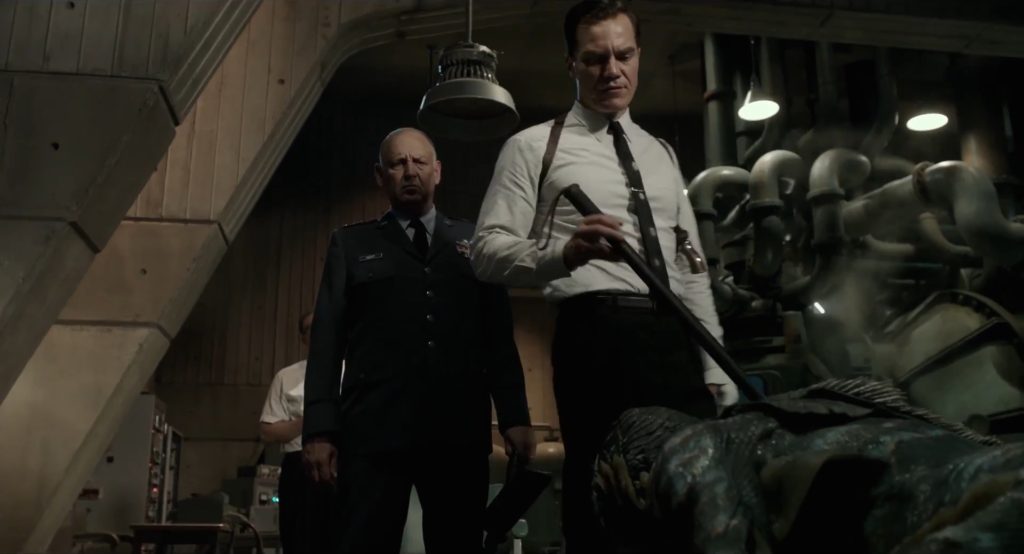
The “Asset” is considered a monster by the United States Army and the security team is led by a dominant bully and alpha male called Strickland. Here, once again, Michael Shannon proves himself a formidable actor. He doesn’t just do cartoon bad guys but, thanks to some great writing and acting, Strickland is shown to be the biggest monster of the film; full of nasty quirks and a sadistic desire for control. Doug Jones as the Amphibian Man also deserves a special mention as the scenes between him and Sally Hawkins are very special. Here two silent characters are able to say more with a look, hand signal and touch than a thousand words could achieve. Del Toro supports the acting with some terrific visuals, many of them water-based, as raindrops, bath water and aquatic underwater images submerge us in a rich palette of blues and greens. The music is cleverly used too; from Alexander Desplat’s melodious score to the old classic songs of yesteryear humming from the cinema below Elsa’s apartment building.

shape-of-water-4-1024x554-1024x554

In any other year Sally Hawkins, and she may well still do, walk away with all the Best Actress honours;  yet she is up against the incredible Frances McDormand. Nonetheless, Hawkins gives us such a nuanced and heartrending performance you forget that she cannot speak. But that is what Del Toro does so well because throughout his oeuvre he gives voices to the outsiders, orphans, children, supposed monsters and victims of oppression. This is mainly a love story but I also enjoyed the brilliant writing from Vanessa Taylor and Del Toro as the script leaps from romance to horror, suspense, action, cold-war thriller and black comedy. Overall, within this magical experience Del Toro invites us into a dark world where prejudice is ultimately defeated by tenderness; and brutality will never stop the path of true love.

Mark: 10 out of 11

Another filmmaking Masterclass from Paul Thomas Anderson! PHANTOM THREAD (2018) – CINEMA REVIEW!

PHANTOM THREAD (2018) – CINEMA REVIEW!

Directed and written by: Paul Thomas Anderson

Produced by: Paul Thomas Anderson, Megan Ellison, JoAnne Sellar, Daniel Lupi

Starring: Daniel Day-Lewis, Lesley Manville, Vicky Krieps, Julia Davis etc.

Music by: Jonny Greenwood

new-teaser-trailer-poster-and-photos-for-daniel-day-lewis-phantom-thread-social

One of the great cultural pleasures in life is finding a new filmmaker and building a relationship with them over time. When I found myself watching the quirky low-budget film Hard Eight (1996) in the late 1990s, little did I know that that film would be the beginning of a cinematic friendship with Paul Thomas Anderson. It was only when the sublime 1970s-set-ensemble-drama Boogie Nights (1997) was released that I knew I was watching a filmmaker of incredible talent; and so with subsequent releases that came to pass.

Anderson, can certainly be described, to use old-fashioned film theory parlance, as an auteur. His films formally, technically and thematically all contain recurring tropes and stylistic devices. Although one could argue he leant on his cinematic influences within his earlier works before stamping his own inimitable style in later films. Indeed, films such as: Boogie Nights and Magnolia (1999) – with their talented ensemble casts, whipping camera-moves, over-lapping music montages and a whole host of disintegrating familial and romantic relationships – echoed the films of Robert Altman and Martin Scorsese. Moreover, at the core of his films are father and son relationships, where literal and quasi-parentage is explored. Similarly in Hard Eight, Boogie Nights, Magnolia, There Will Be Blood (2007) and The Master (2012) obsession, duplicity and dysfunctional family units are examined within their respective settings.

1280x720-posterframephantomthread

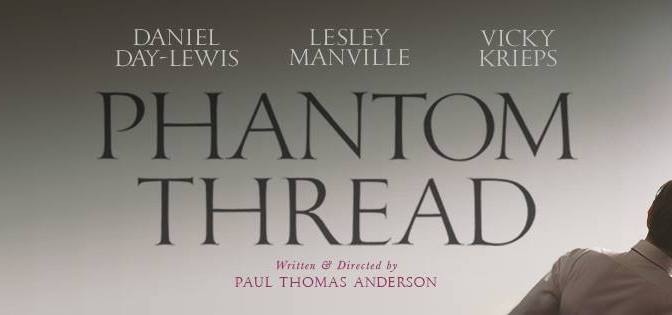
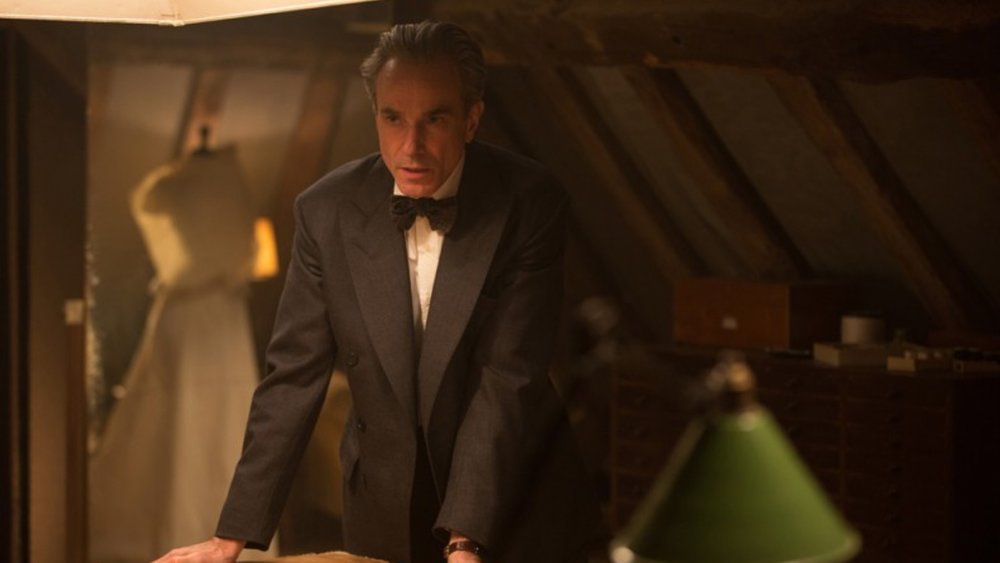
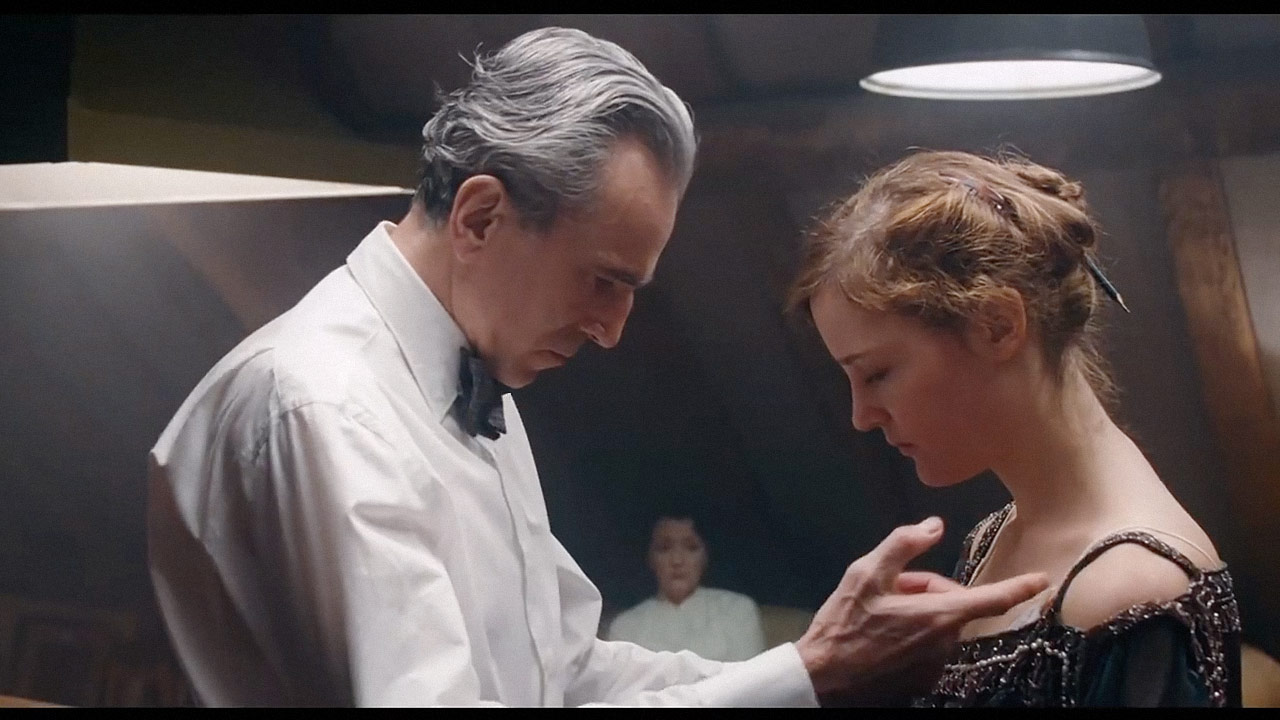
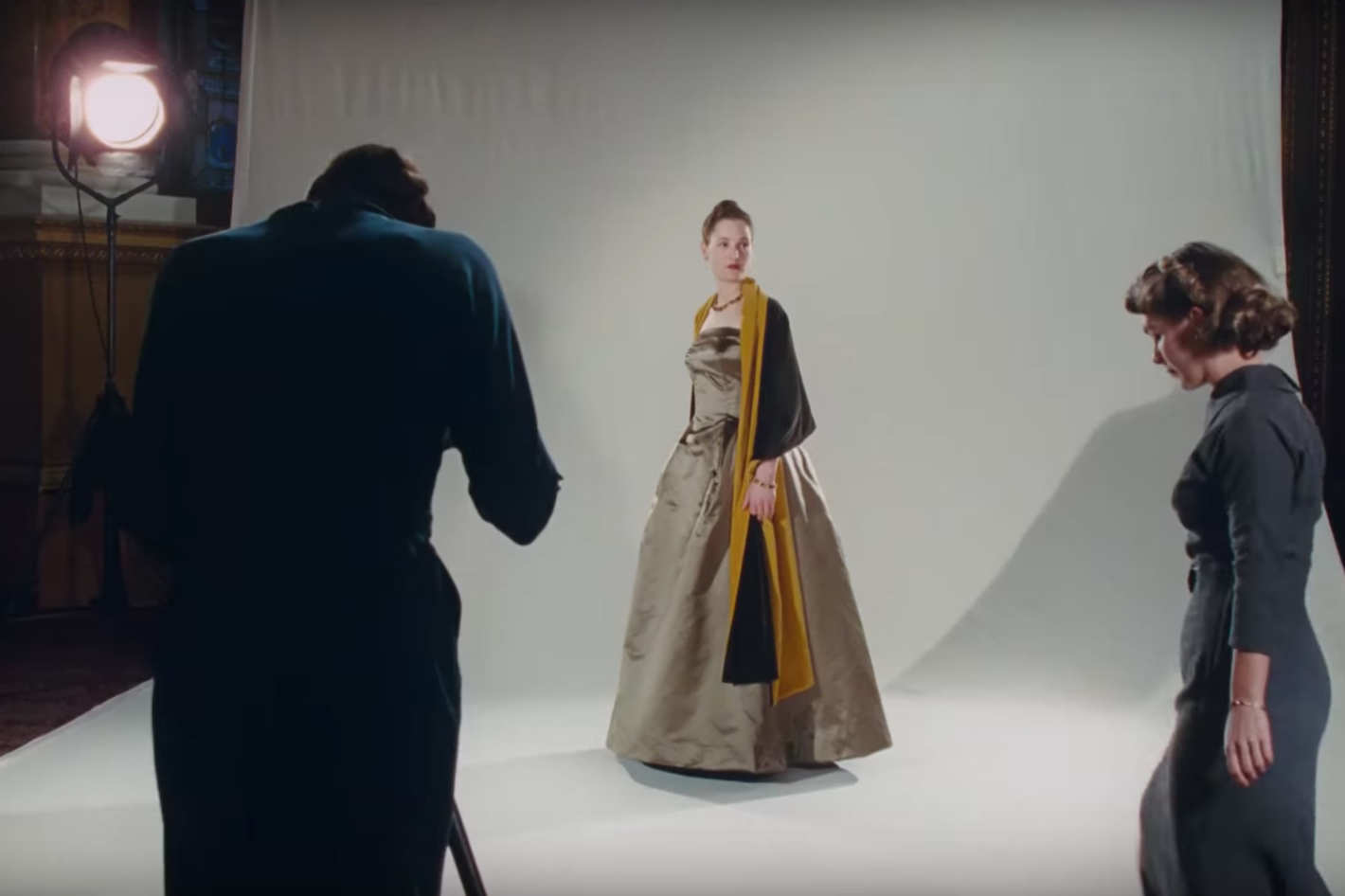
Anderson has worked a lot in the past. He has covered the 1900s with There Will Be Blood; 1950s with The Master; 1970s with Boogie Nights and strange stoner comedy Inherent Vice (2014). In his latest release, the exquisite Phantom Thread (2018) we are in 1950s London, following the elegant yet idiosyncratic life of fashion designer Reynolds Woodcock; portrayed with formidable zeal by Daniel Day Lewis. Anderson and Day Lewis are, like they were with the fierce Daniel Plainview, in complete control of this fascinating character. He is brilliant at his job but also very specific in how his work, staff and routine must go. When he meets a waitress, Alma, the impressive Luxembourg actor Vicky Krieps, the two become entwined within a less than straightforward employer-employee-lover-master-servant romance. Their complex relationship is driven by attraction, rivalry, pettiness, admiration and envy; propelling the drama as the two enter into an understated and curious battle of wills throughout the narrative.

04-phantom-thread-4.w710.h473.2x

Once again Paul Thomas Anderson, along with his incredible filmmaking team, has delivered a masterclass in cinematic storytelling with exceptional camera work, costume design, acting, lighting, plus a score to die for from Jonny Greenwood. I have to admit I was slightly alienated by Anderson’s last two films Inherent Vice and The Master due to the ambiguity of the lead characters. But I can certainly say that emotionally Phantom Thread works way better as an elegant mix of romance, thriller, character study and fashionista drama respectively. Throughout the magnificent 70mm cinema presentation I was mesmerized by the elaborate patterns my old “friend” Anderson has woven within.

Mark: 10 out of 11

Gary Oldman shines in DARKEST HOUR (2017) – Cinema Review

DARKEST HOUR (2017) – CINEMA REVIEW

Directed by: Joe Wright

Produced by: Tim Bevan, Lisa Bruce, Eric Fellner, Anthony McCarten, Douglas

Written by: Anthony McCarten

Starring: Gary Oldman, Kristin Scott Thomas, Lily James, Stephen Dillane, Ben Mendelsohn

171130_MOV_WinstonChurchill.jpg.CROP.promovar-mediumlarge

What makes human beings want to go to war?  What is it that determines thoughts and actions which will lead to the death of another human being? Is it: a genetic trait; a tribal desire; a psychological defect; financial gain; jealousy; boredom; passion; political chicanery; religion; greed; anger; revenge; or quite simply madness. Taking a life is something I have never understood. I mean, unless you are forced to defend yourself against a foe hell-bent on your destruction why would you wish to harm anyone else?

So, Adolf Hitler has a lot to answer for because, even accepting the political and social reasons for the rise of the Nazi party and his desire to repair national pride after the first World War, what the hell gives a nation the right to invade and conquer other countries. If you choose to go down that road you are signing the death certificate of a generation men and women and children. It’s not just Germany either. The British Empire, Roman Empire, Vikings, Mongols, United States of America, France and many more have waged war against humanity down the years. Will it ever stop? Sadly, I doubt it.

darkest_4

In times of war what is needed is obviously bravery, steel, fight, intelligence and more than a little luck. You need hearty human beings to stand and be counted and to die on the battlefields and in the air and in the sea. You also need leaders; figureheads who can rally the troops and galvanise that last ounce of fight in order to repel the enemy. During World War II, with the country on its knees and backs to the walls we had many leaders, but Winston Churchill, above all else, became synonymous with victory.

darkest_2

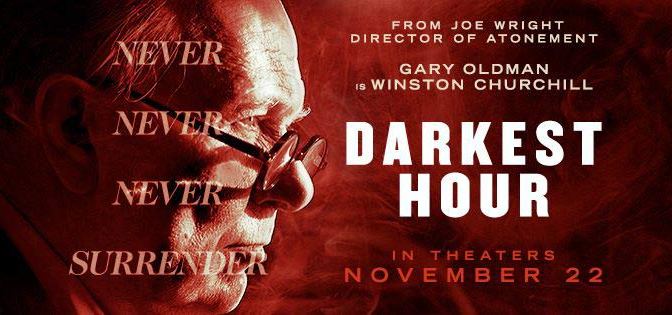
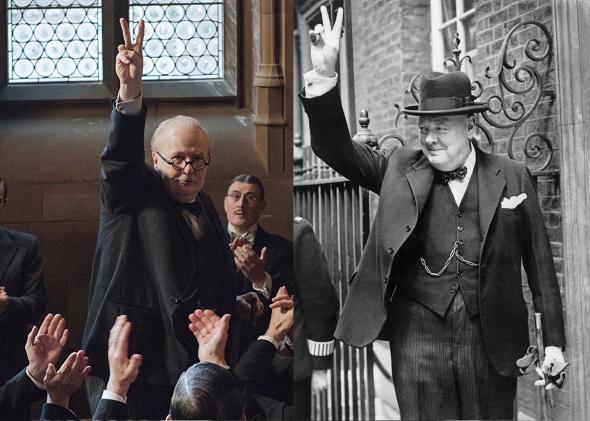
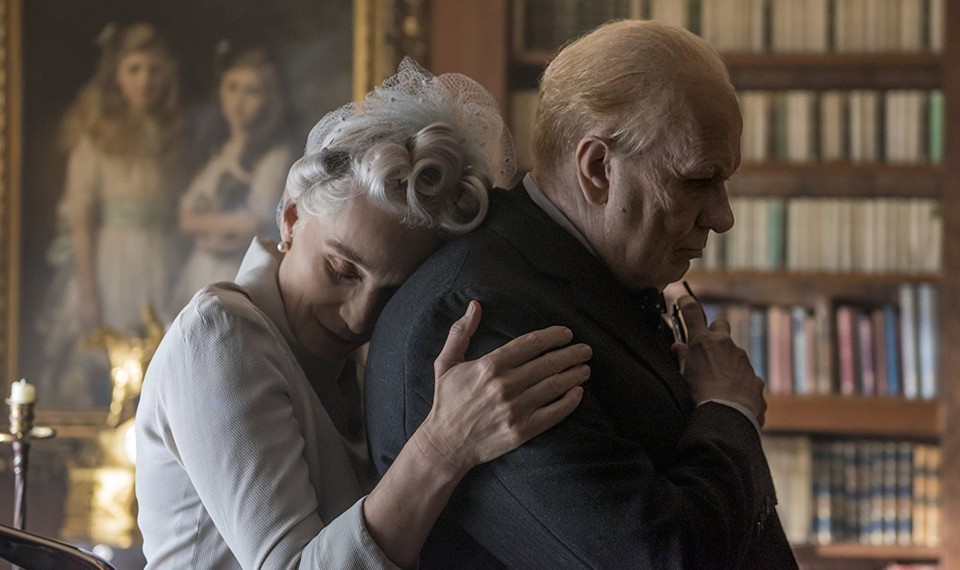
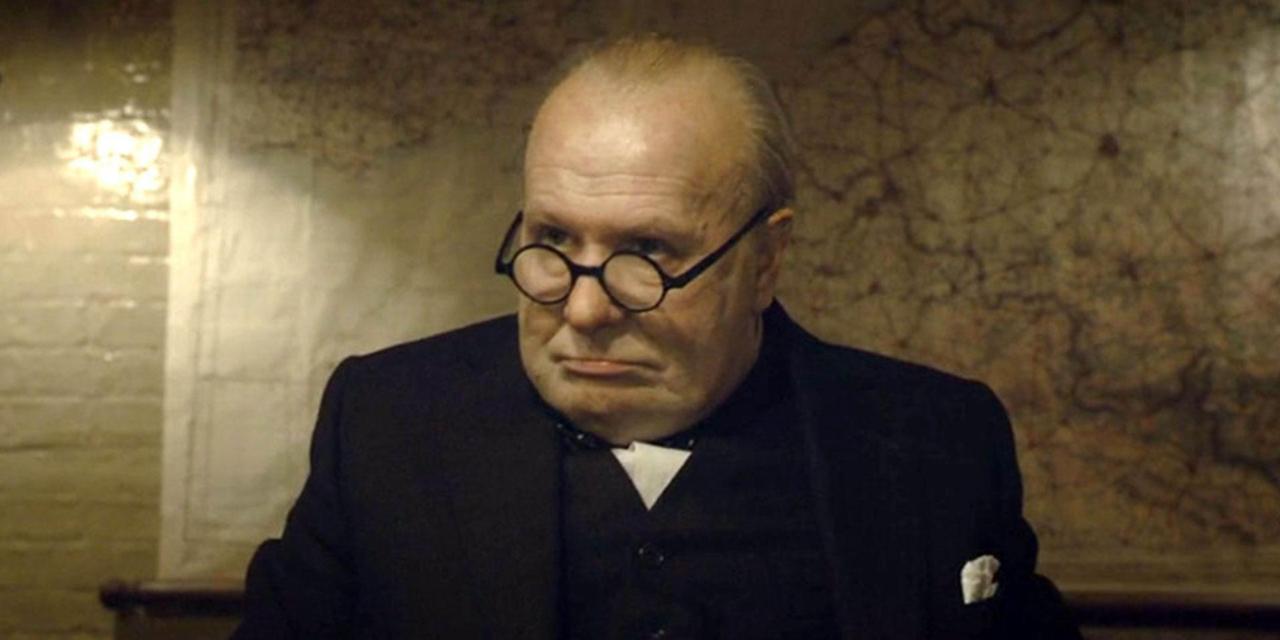
As portrayed in Joe Wright’s beautifully shot microcosmic epic, Darkest Hour, Churchill is presented as a flawed-pink-pyjama’d-cigar-chuffing-blustering-iconoclastic-functioning-alcholic prone to fits of rage, melancholy and depression. He also happens to be devilishly intelligent, full of energy, with a wicked tongue and talent for brilliant oration. Much of the plaudits must go to Gary Oldman, and his make-up team, for creating such a wonderfully human portrait. Indeed, Oldman owns the screen with his damned-near perfect impression.

darkest_3

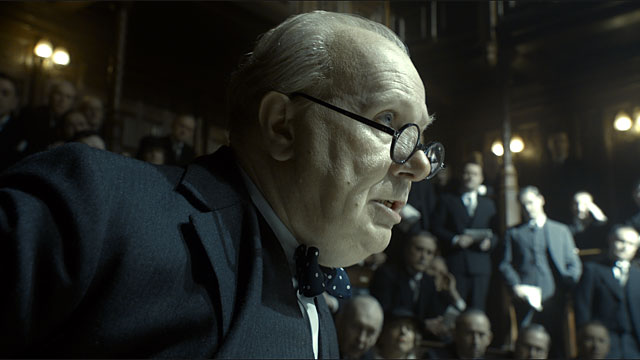
Anthony McCarten’s fine script centres on a finite number of days during World War II when Churchill became Prime Minister. Aside from one emotionally effective yet historically grating symbolic scene on the London underground, is it well written with fantastic one-liners and Churchill’s greatest verbal ‘hits’. Joe Wright is a talented director (the mis-guided Pan (2015) aside) and he evocatively conveys the shadow of looming defeat. Wright traps Churchill and ensemble in cars, lifts and in underground chambers. Shafts of light also pin the characters to the corners of the screen; pushing them toward the darkness. But through the spirit of Churchill’s never-say-die attitude we fought back against the Nazis and eventually stole victory from the jaws of defeat. War is hell. War is madness. But sometimes it is unfortunately a necessity to prevent the bullies from winning.

Mark: 8.5 out of 11

THREE BILLBOARDS OUTSIDE EBBING, MISSOURI (2017) – CINEMA REVIEW

THREE BILLBOARDS OUTSIDE EBBING, MISSOURI (2017) – CINEMA REVIEW

Directed by: Martin McDonagh

Produced by: Graham Broadbent, Pete Czernin, Martin McDonagh

Written by: Martin McDonagh

Cast: Frances McDormand, Woody Harrelson, Sam Rockwell, John Hawkes, Peter Dinklage

10threebillboards-web-master768

Marvel and DC comics continue to punt their wares in cinemas and on TV providing us with comforting visions of super-people and alien heroes guarding Earth and galaxies far, far away. We need these characters and events to, amidst the fighting and explosions, make us feel safe by providing neat, happy, ribbon-tied endings which find the evil-doers crushed and our spirits raised as we return to reality. However, there are also writers and filmmakers who challenge our perception of reality, presenting it not as black and white; good and bad; with justice and redemption prevailing. No, certain filmmakers present a muddied view of the world; an unjust and angry vision of humanity; a complex perspective where there aren’t necessarily good people doing good things but rather good people doing bad and bad people, sometimes, just sometimes, trying to be good.

Screenwriter (and director) Martin McDonagh has, in Three Billboards Outside Ebbing, Missouri constructed one of most challenging screenplays of the year.  It does not hold up to any politically correct agenda as it paints the world as a cancerous, racist and vicious place where murder and rape crimes go unsolved and grief-stricken vigilantism seems to be the only means of gaining some movement toward closure. As a playwright Martin McDonagh was always drawn to violence and dark humour. His first film, In Bruges (2008), was a darkly hilarious existential comedy-drama. His follow-up Seven Psychopaths (2012) was a heady mix of criminals versus writers in a meta-fictional Hollywood-based narrative; yet with Three Billboards, McDonagh has delivered his best film to date. With its’ singing and stinging script we have a highly emotional drama brimming with incredible characterization, dialogue and zinging one-liners.

MILDRED

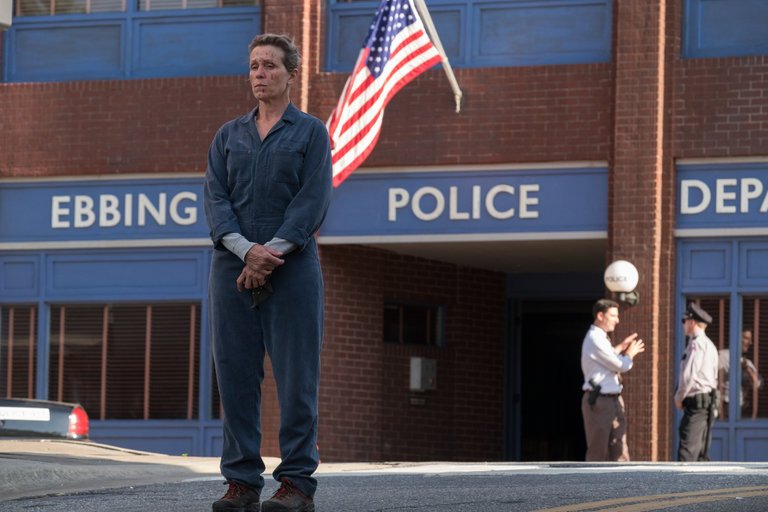
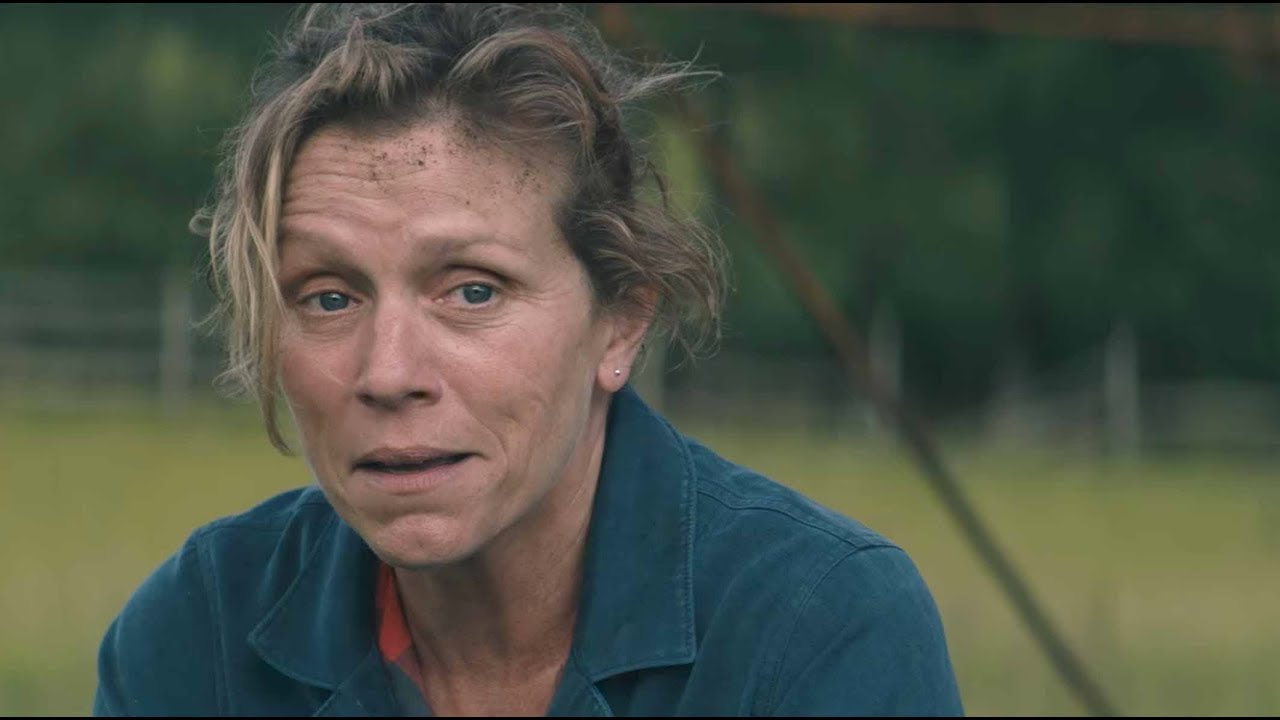
Following the murder of her daughter Mildred Hayes, portrayed with an iron veneer by the remarkable Frances McDormand, no longer prepared to sit by and wait for her daughter’s killers to be found. Firing a rocket into the patriarchal-dominated police department ran by Chief Bill Willoughby (a brilliant Woody Harrelson) she sets in motion a series of unforgettably tragic, violent and blackly comedic scenes.  In using the three billboards to question Willoughby’s investigation she utilises physical media as a larger form of the ‘Scarlet Letter’; an old fashioned “name and shame” device. Because Mildred, is refreshingly traditional and old-fashioned and in rural, small-town America the Internet just won’t hack it for her. She is about direct, in-your-face and ballsy action.

three-billboards-outside-ebbing-missouri-landscape

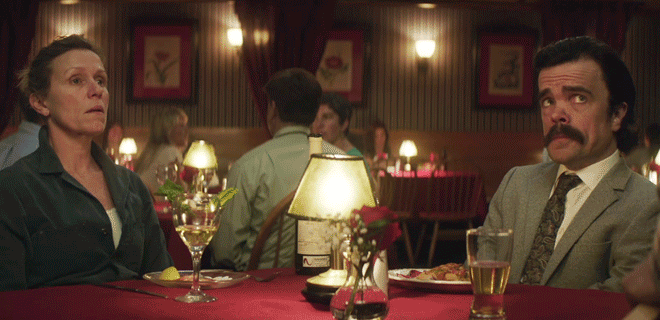
Supporting McDormand is phenomenal ensemble cast including: Harrelson, Peter Dinklage, John Hawkes, Lucas Hedges, and Abbie Cornish etc. Sam Rockwell is especially memorable as the immature, inept and thuggish mother’s boy, Jason Dixon. His scenes with both Frances McDormand and his on-screen Mother, played with deadpan gusto by Sandy Martin, crack with complex emotion and humour. Collectively they portray imperfect characters whose lives have not just been dealt a bum hand but their situation is exacerbated by poor decisions based on grief and frustration with life and the world. Rockwell’s Dixon is arguably the most controversial character as he is essentially a racist man-child and a terrible cop who, via Mildred’s violent actions, awakes from his moronic coma to strive for redemption.

THREE BILLBOARDS OUTSIDE OF EBBING, MISSOURI

McDonagh script is fantastically dark as he imbues each of the characters with a flawed, yet rounded humanity. He takes risks by making his main protagonist, despite her loss, kind of unlikeable. Yet we are always with Mildred because she is righteous and swimming against the tide of authority. Below the tough exterior though there is also a vulnerability which makes us love her too and empathise fully with her loss. Ultimately, this is an excellent cinematic experience funny, shocking and moving; only possible because of the expert script from a great writer.
 Mark: 10 out of 11

MOLLYS’ GAME (2017) – CINEMA REVIEW

MOLLYS’ GAME (2017) – CINEMA REVIEW

Directed by: Aaron Sorkin

Produced by: Mark Gordon, Amy Pascal, Matt Jackson

Screenplay by: Aaron Sorkin

Based on: Molly’s Game  by Molly Bloom

Starring: Jessica Chastain, Idris Elba, Kevin Costner, Michael Cera, Jeremy Strong, Bill Camp

Image result for mollys game POKER

As a species we like to have fun. It makes us feel good to manufacture a chemical reaction in our minds and body to create a high and distance ourselves from our own mortality. One such means of fun is gambling. It is fun right: placing bets on the outcome of a game be it chance or skill?  I mean it must be fun because so many humans do it, right? Nothing bad comes of fun surely!  Nothing bad comes of gambling? Wrong! Of course it does.

Gambling is one of the stupidest things a human being can do. You are willingly handing your money to a bookie or competitor or casino in a game of chance in the hope of winning money. Your hard earned cash is at the mercy of: the turn of a card; the roll of a dice; the kick of a ball; the speed of a horse; and the spin of a wheel. To me THAT is crazy. I know because I used to gamble on the horses and loved it but not when I lost. That high soon dissipated and fun twisted and dug and before you know it you’re in a low-hole and light is getting further and further away the deeper you go.

Image result for mollys game

There are many players out there who will say poker is not a game of chance. It is a keen game of skill relying on intelligence, guts and psychological warfare. I would go along with that but it is, unless fixed, always reliant on major elements of fate. There are a plethora of multi-millionaires out there who have got rich playing poker no doubt. Yet, I bet there are some sob stories too of players who have lost everything at the table.
Such characters litter Aaron Sorkin’s excellent biopic of poker “madam” Molly Bloom.  You’ve got the bankers, hedge-funders, cowboys, sporting legends, A-list actors and gangsters; all co-mingling around a green baize table facing off over the turn of a card. For me it’s an ostentatious representation of hedonistic narcissism. I mean: that money could be used for good but instead is being used for pointless card games which only serve to boost egos and satisfy bottomless, black-hole addictions. Nonetheless, that doesn’t mean the film is not entertaining because it is.

Image result for mollys game

Sorkin asks us to, at times, empathise for a criminal in Molly Bloom, however, she must be admired for her ballsy attitude, intelligence and organisational skills. Much of the kudos for the film goes to Sorkin’s fantastic script and the sterling performance from Jessica Chastain; who possesses a magnetic on-screen aura reminiscent of the Hollywood stars of yesteryear. Couple of reservations in that with a story about a powerful woman it was disappointing that Costner’s father and Idris Elba’s lawyer got the best speeches at the end of the film. Moreover, at no point did I REALLY care about anyone, aside from Molly when she gets in too deep. But that’s the point: the professional poker world is a shark pool full of predators and Bloom’s story is a complex one, raised above that of your standard crime drama by a zinging screenplay and Jessica Chastain’s nuanced acting.

Mark: 8 out of 11

HOSTILES (2017) – CINEMA REVIEW

HOSTILES (2017) – CINEMA REVIEW

Directed by:                      Scott Cooper

Produced by:                    Scott Cooper, Ken Kao, John Lesher

Screenplay by:                 Scott Cooper

Story by:                            Donald E. Stewart

Starring:                            Christian Bale, Rosamund Pike, Wes Studi, Adam Beach

Music by:                           Max Richter

Image result for american blooded flag

Death and America seem to go hand in hand down the realms of history; entwined bedfellows with society, industry and apparent civilisation being watered by blood and bone and marrow of humanity. The coagulation of Native American lives spread to the dust could be argued to be one of the most despicable genocidal acts ever perpetrated against a generation. And what was it all for? So, human beings from one side of a huge ocean can take what essentially belonged to the indigenous men, women and children of what we now know is called the United States of America. Red dust scorches that land and people and it’s a stain which will never ever be removed.

Even in the last one hundred years and more the Neo-Americans have militarized and invaded many other countries borne, on occasion for the greater good but generally to colonize, re-politicize and scavenge the goods of those said lands. Thus, it is never surprising when the natives choose to repel their invaders as they’d prefer their land to remain their own. For the price of defending their land history has named them savages and other cruel labels in an attempt to differentiate their culture and make them the enemy. Of course, there are good people within the U.S.A who oppose such invasions but the truth remains even they live on blooded ground.

Image result for HOSTILES

The weight of guilt and pain and death hang heavy in Scott Cooper’s slow-moving and elegant Western. It’s a character driven piece with Christian Bale, Rosamund Pike, Wes Studi and Rory Cochrane putting in dominant performances which convey the depressing murderous times borne out of the heinous and greedy need for progress. White man / woman’s guilt drives the narrative as at first Bale’s soldier refuses to accompany his enemy back to his homeland. Is it more because of the deaths of his own men on the battlefield or because he does not want to face up to his own crimes against the Native Americans?

Image result for HOSTILES

There are no easy solutions in this glacial paced, beautifully shot Western. The audience is required to analyse the characters actions and make up one’s own mind. There are no black hats or white hats save for the denouement involving the four horsemen that drift over the horizon with death in their eyes. Even the Comanche horde who perpetrate the wicked attack on Pike’s family at the beginning, while unsympathetic, are a product of the barbarity committed by the American army. Overall, this is a genre-defying Western built more on character rather than all-out action. Each slow plot turn went against my expectations and that was a positive. It’s a rich, deep and heavy film which benefits from great performances and an incredible Max Richter score.

(Mark: 8 out of 11)

MOVIE REVIEW – THOR: RAGNAROK (2017)

MOVIE REVIEW – THOR: RAGNAROK (2017)

**CONTAINS MINIMAL SPOILERS**

The Marvel Franchise bus shows no sign of slowing down and the number of Superhero passengers and routes its taking increases every year. Indeed, I’m wondering which driver (i.e. director) will be the first to get a puncture and crash their respective bus, because even though we are well past saturation point the successful formulae is still sweetly cruising along without the threat of breaking down. Even slightly lesser known heroes such as Dr Strange (2016), Guardians of the Galaxy (2014) and Ant-Man (2015) have all made loads of money, and corny vehicular metaphors aside, surely it is only a matter of time before Marvel’s monopoly on Superhero movie success flails. However, Thor: Ragnarok (2017) is most certainly NOT the film that causes the decline.

Image result for thor ragnarok

The crafty Marvel bosses have kept their products fresh by often changing directors because where DC failed artistically, in my view, was they allowed the hyperbolic effects-driven blockbuster style of Zach Snyder — until the impressive Wonder Woman (2017) that is — to dominate their bombastic releases. Marvel Studios, on the other hand have given reign to arguably more quirky, indie-flavoured filmmakers such as: Joss Whedon, James Gunn and now Taika Waititi to drive their movies forward. Thus, along with the standard heroes-versus-villains-end-of-the-world storylines, massive battle set-pieces and fantastical worlds and characters on show, such directors add an element of humour and characterization to proceedings.

Image result for thor ragnarok helA

Humour, more than anything, is what Waititi brings to Thor: Ragnarok. This is essentially the first all-out Marvel comedy pitched an octave funnier than Guardians of the Galaxy on the comedic scale; as punchline after punchline reigns down with the power of Thor’s lightning bolts. The opening scene is a case in point where Chris Hemsworth’s sly comic timing is utilised to great impact when facing the demonic Sutur. Hanging upside down and chained, Thor’s momentum swings him around and away as the fiery devil delivers his monologue, only for Thor to ask him to wait until he comes back round again. While covering the exposition in a very funny way the gag also satirizes the clichéd villains’ plot while serving as a wonderful taster for the events to come.

Image result for thor ragnarok surtur

The witty screenplay and lightning pace covers up the familiarity of the story as once again Asgard comes under attack from a hellish force, this time in the guise of the beautiful evil of Hela (Thor’s older sister) portrayed with tremendous gusto by the ultra-talented Cate Blanchett. Usually seen in more serious dramatic roles Blanchett excels as Hela, and arguably is a touch underused until the incredible battle scene at the end. Anthony Hopkins and Tom Hiddleston once again reprise their roles as Odin and Loki respectively; Loki, as usual, getting some great moments to show his dupliticity and mischief. Both Hopkins and Hiddleston take great pleasure to also parody their characters compared to the pitch black seriousness of Thor: The Dark World (2013).

Image result for thor ragnarok HULK

Waititi, the writers and production crew deserve much credit for not only delivering some familiar faces and worlds to the film but also some new ones to freshen it up. I must admit I wish the trailer hadn’t spoilt the appearance halfway through of the “Big Guy” because if I had not known that I would have been amazed at such a twist. Nonetheless, the Hulk does appear and via Mark Ruffalo’s neurotically bemused turn as Bruce Banner we get, amidst all the gladiatorial mayhem, a cracking buddy story too. Moreover, Tessa Thompson as a hard-drinking-hard-fighting “Scrapper 142” (with a hidden past) is another sterling addition to the ensemble and the visuals which derive from her backstory via flashback are the some of the most impressive I have seen all year.  Jeff Goldblum as a wacky but dangerous Space Dictator and the hilarious Taika Waititi as a wise-cracking Kronan (a rock-looking dude!?) almost steal the show too.

Image result for thor ragnarok hela valkyrie

As he showed with Eagle versus Shark (2007), What We Do In the Shadows (2013) and the exceptionally funny and touching, The Hunt for the Wilderpeople (2016), Waititi is a very talented filmmaker and he has brought his love of eccentric characterization and comedic ability to great effect within the Marvel Universe. Thor: Ragnarok is a riotous mix of stunning visuals, booming rock music, huge battles, family wars, smashing punchlines and hilarious performances. Arguably the comedy sidelines the drama and tonally the film is uneven in places and compared to the magical and hallucinatory world of Dr Strange it is not as satisfying in terms of the whole world and vision created. Nonetheless, as comic book adaptations go it is one of the most entertaining Marvel sequels to date.

(Mark: 9 out of 11)

BLADERUNNER 2049 (2017) – CINEMA REVIEW

BLADERUNNER 2049 (2017) – CINEMA REVIEW

**CONTAINS MILD SPOILERS**

Philip K. Dick’s dense, dystopic and futuristic novel, Do Androids Dream of Electric Sheep (1968), is an ugly, beautiful, depressing, obtuse, hypnotic wade-through-treacle read full of incredible concepts relating to: Artificial Intelligence; robot technology; android simulacra; animal husbandry; apocalyptic disease; virtual reality/empathy mood tech; extinguished humanity; and ultimately, of course, mortality and death. The fact that Hampton Fancher and David Webb Peoples were able to fashion a workable screenplay for Ridley Scott to direct is a creative miracle in itself. Moreover, it is testament to the writing and Scott’s incredible production team that Bladerunner (1982) is held in such high esteem among cinema fans now.

do-androids-2

The original Bladerunner, despite bombing at the box office and subsequently going through a number of cuts, re-cuts, final cuts and re-re-re-releases, has become a bona fide science fiction cinema classic. I watched the original theatrical version recently and despite the deadpan Harrison Ford voiceover and spurious, tacked on “happy” ending, it actually has a lot going for it. Obviously the ‘Unicorn Dream’ re-edits released under the guidance of Ridley Scott are the purer versions but the film holds up notably because of Ford’s gruff, depressive and world-weary performance as Rick Deckard; the imperious psychopathy of Rutger Hauer as android assassin Roy Batty; Scott’s glorious tech noir rendition of our desecrated future; as well as the evocation of Philip K Dick’s thematic existential power.

wallpaper-nissan-gtr-bladerunner

Thus, to offer up a near three-hour sequel to a box office bomb of an almost unfilmable novel was something I thought extremely brave from a creative and business perspective. However, as soon as I saw the director Denis Villeneuve was attached, I immediately knew that Bladerunner 2049 was a must-see! This filmmaker has elevated himself to the higher echelons of Hollywood directors with superlative work such as: Incendies (2010), Prisoners (2013), Enemy (2014), Sicario (2016) and Arrival (2016). In such films he was able to meld story, style, character and performance to create very accessible genre films which encapsulate the pain and drama of the human condition adroitly.

In Bladerunner 2049, the future’s orange but, like the original novel and film adaptation, it’s definitely not bright! We are in a sick, unforgiving and murderous world where a dying Earth, specifically California, is inhabited by killer replicants, pleasure models, and totalitarian law enforcement and overseen by the venal, profit driven capitalist oligarchic Wallace Corporation. In this vision of Earth, men, women, children, animals and robots are all slaves to be bought and sold to the highest bidder. I have seen some critique that the film is exploitative in its female representations but the films reflects much that is wrong with our world today and the original novel’s dystopic and misanthropic themes.

blade-runner

Both male and females are objectified and deemed commodities and alas that is true too of the sick world we live in today, yet perhaps just not as blatant? Bladerunner 2049, I does not offer solutions but depressingly mirrors society’s desire to sexualise and exploit others. Our “hero” the replicant cop ‘K’ (Ryan Gosling) is a victim of such exploitation in his touching relationship with A: I hologram Joi (Ana De Armas). Ultimately, he learns that they’re all being faked by the horrific technological nightmare they call existence. I think it extremely interesting that K’s wry smile when he realises he has been exploited by the Wallace Corp. product Joi; and paradoxically this demonstrates his humanity.

Blade+Runner+2049-1.jpg

Villeneuve, aided with startling artistry by cinematographer Roger Deakins directs from a screenplay written by original writer Hampton Fancher, plus Michael Green. One could argue that the original Bladerunner is style over content, as the story was distilled to that of Deckard basically hunting down a bunch of outlaw robots. However, the style WAS the content along with the dense richness of the themes. Similarly, Bladerunner 2049 does not have a particularly complex plot, save for one fantastic thematic reversal, yet at its heart it explores the powerful question of what it means to be human? I think all intriguing narratives should ask this and explore important notions of existence. I mean, it’s not surprise Gosling’s character is called ‘K’ – because the story echoes Kafka’s The Trial in many ways. Indeed, is his seemingly futile search for meaning or humanity just a pointless pursuit or is it reward enough to delude oneself with the possibility of hope or love? Life and the decision whether to carry on regardless is therefore very much on trial.

blade2.png

I think this is a film which will benefit from further viewings. I felt like I was watching a Tarkovsky or Bergman film on a massive budget.  It’s like Denis Villeneuve managed to combine, with the writers and designers, an indie-Hollywood-art film installation. I would say this is a character and theme led narrative rather than purely plot driven. Even Niander Wallace’s (Jared Leto) weirdness, while not essential for the plot, added to the depth of character and surface emotion. He felt like a Colonel Kurtz figure trapped in his own insane delusion and obsession. Could he have been a replicant too? Likewise, Harrison Ford’s reappearance as Deckard adds great flavour to a wonderful sci-fi broth. Yet, his aging persona is integral to the plot and not simply a meta-textual nod to the original film.

BRUNNER2049


Ultimately, we mere mortals are arguably not worthy to critique this fantastic work of genre art cinema. I understand it was slow but that almost increased the joy for me. It moved glacially but with high confidence and in Ryan Gosling it had a bona fide star to guide us through this sick yet beautiful world. Moreover, the sound design and music from Hans Zimmer and Benjamin Wallfisch was a powerful force which heightened the suspense and paranoia. While the visuals are absolutely breath-taking I was also drawn in by the existential intrigue of the themes.  Technically, within the story, the replicants are not living people but we empathise with their plight nonetheless because THEY are US. There lies the paradox and beauty of this film, in that I cared and was fascinated by what happened to actors playing robots on the cinema screen.

(Mark: 10 out of 11)

THE KILLING OF A SACRED DEER – LONDON FILM FESTIVAL 2017 – REVIEW

THE KILLING OF A SACRED DEER – LFF 2017 – REVIEW

I started writing film reviews a few years ago and the main reason was because I wanted to try and understand why I liked or disliked a film. I also wanted to improve my creative writing by understanding the thought process of others.  Living filmmakers whose work I have consistently enjoyed, save for the odd one here or there, are: Martin Scorsese, Quentin Tarantino, The Coen Brothers, Lynn Ramsay, Jonathan Glazer, Woody Allen (even some of the later ones), Park Chan Wook, David Fincher, Edgar Wright, Jacques Audiard, Darren Aronofsky, Kathryn Bigelow; and many others no doubt!

Such directors capture the quintessence of what cinema is for me. Not simply just in style and form but also powerful themes, imaginative concepts and sheer bloody entertainment. Filmmakers, of late, you can add to that list are: Denis Villeneuve, S. Craig ZAHLER and Greek filmmaker Yorgos Lanthimos. I have now seen three of his films, namely: Dogtooth (2009), The Lobster (2015) and his next release The Killing of a Sacred Deer (2017), and they all defy conventional film conventions to deliver absurd, surreal, funny, dark, thought-provoking and imaginative visions of human nature. Also, let’s not forget the writer too; so kudos to his writing partner Efthymis Filippou, who combines with Lanthimos to create such memorable cinematic offerings.

the-killing-of-a-sacred-deer-cannes-win

The story itself begins in a reasonably conventional fashion. Colin Farrell’s successful surgeon, Steven Murphy, is happily married to his wife, Anna, portrayed with glacial precision by Nicole Kidman. They have two healthy and intelligent children, a boy and a girl, and their lives are a picture of upper middle class contentment. Steven and Anna’s family equilibrium is skewed when a teenage boy, Martin, brilliantly portrayed by Barry Keoghan, inveigles his way into their lives through a combination of innocent charm and surreptitious pathos. Martin is a dark angel representative of the cloud of sickness and guilt and remorse and his actions force Steven and Anna to have to face up to a parents’ worst nightmares.

killing_deer

Lanthimos and Filippou, in Godardian fashion, constantly calls attention to cinema form; especially with a strangely effective form of anti-acting where, Farrell notably, dryly delivers dialogue as unconnected non-sequiturs. The words also constantly surprise us as the characters speak at each other with phrases that create humour and emotional disassociation. Nonetheless, such artifice only adds to the off-centre and sinister nature of the piece. The film is also beautifully shot with a wonderful symmetry to the composition of many shots. I also liked the choice of wide-angle lenses and the flowing Steadicam shots. Many were pitched at just over head-height, and provided an eerie floating sensation throughout the drama.

killing-of-a-sacred-deer

Colin Farrell (as he did in The Lobster (2015), Nicole Kidman and the rest of the cast buy completely into Lanthimos and Filippou’s striking vision which takes its’ influence from l Greek tragedy. But while Farrell excels in another praiseworthy under-stated deadpan performance, Barry Keoghan steals the show. The young actor follows up his impactful supporting appearance in Dunkirk (2017), with a compelling character study and eerily mature portrayal. Overall, this is a gripping, absurd thriller-turned-horror film which constantly wrong-footed me with its plot turns. It is a truly chilling, yet darkly comical and surreal genre film that manages to be somehow extremely accessible too.

(Mark: 9 out of 11)

THREE BILLBOARDS OUTSIDE EBBING, MISSOURI (2017) – LONDON FILM FESTIVAL REVIEW 2017

THREE BILLBOARDS OUTSIDE EBBING, MISSOURI (2017)

“There’s no question that a great script is absolutely essential, maybe the essential thing for a movie to succeed.”Sydney Pollack

Directors are often held up by critics and audience alike as the God’s of film; controlling and pointing and designing and envisioning and corralling their mass creative power to thrust upon the cinema screen. Of course, with many directors or auteurs, the lofty praise is deserved but hey, did they create that vision or story or character arc in a vacuum? No, they had blueprint on a page first. They had a screenplay written by themselves or a determined writer or writing team sitting in a windowless office smoking a thousand cigarettes while slaving to get words on a page in some semblance of a coherent filmic fashion. It seems obvious to say but a great screenplay is the (skeleton) key for any great film; it’s the bones with which to hang the meat and muscle and later the clothes of any movie.  Without powerful bones a film will not stand strong. It will fall.

mcdormand

Screenwriter (and director) Martin McDonagh has, in Three Billboards Outside Ebbing, Missouri constructed one of, if not the most, formidable screenplays of the year.  As a playwright he won many awards for his works and his film, In Bruges (2008), was a deceptively simple story of two hitmen on the run which, with rich thematic power, became a darkly hilarious existential comedy-drama. His follow-up Seven Psychopaths (2012) was a heady mix of criminals versus writers in a meta-fictional Hollywood-based narrative; which while brilliantly written and performed arguably lacked the punch of In Bruges. Now, with Three Billboards Outside Ebbing, Missouri, McDonagh has delivered his best film to date; a highly emotional human drama which contains some of incredible characterization, dialogue and zinging one-liners which bounce off the page and crackle on the screen.

woody-harrelson-sam-rockwell-three-billboards-outside-ebbing-missouri-600x324-585x324

Eschewing a more traditional structure the script’s inciting event – the murder of a young girl called Angela Hayes (Kathryn Newton) – has already occurred and therefore we are thrust immediately into the grief of main protagonist Mildred Hayes, portrayed with an iron veneer by the remarkable Frances McDormand. Her study of a grieving Mother, who is no longer prepared to sit by and wait for her daughter’s killers to be found, is awe-inspiring. Firing a rocket into the patriarchal-dominated police department ran by Chief Bill Willoughby (Woody Harrelson) she sets in motion a series of unforgettably tragic, violent and blackly comedic scenes.  In using the three billboards to question Willoughby’s investigation she utilises physical media as a larger form of the ‘Scarlet Letter’; an old fashioned “name and shame” device. Because Mildred, is refreshingly traditional and old-fashioned and in rural, small-town America the Internet just won’t hack it for her. She is about direct, in-your-face and ballsy action.

As a study of grief this is similar in feel to the majestic Manchester-by-the-Sea (2016) and no doubt, like Kenneth Lonergan, McDonagh will be picking up many awards for his nuanced screenplay. He imbues each of the characters with a flawed, yet rounded humanity. He takes risks by making his main protagonist, despite her loss, kind of unlikeable. Yet we are always with Mildred because she is righteous and swimming against the tide of authority and masculine dominance. Plus, she surprises us with her actions and language and violence. Below the tough exterior though there is also a vulnerability which makes us love her too and empathise fully with her loss.

Three_Billboards_Outside_Ebbing_Missouri-232587360-large

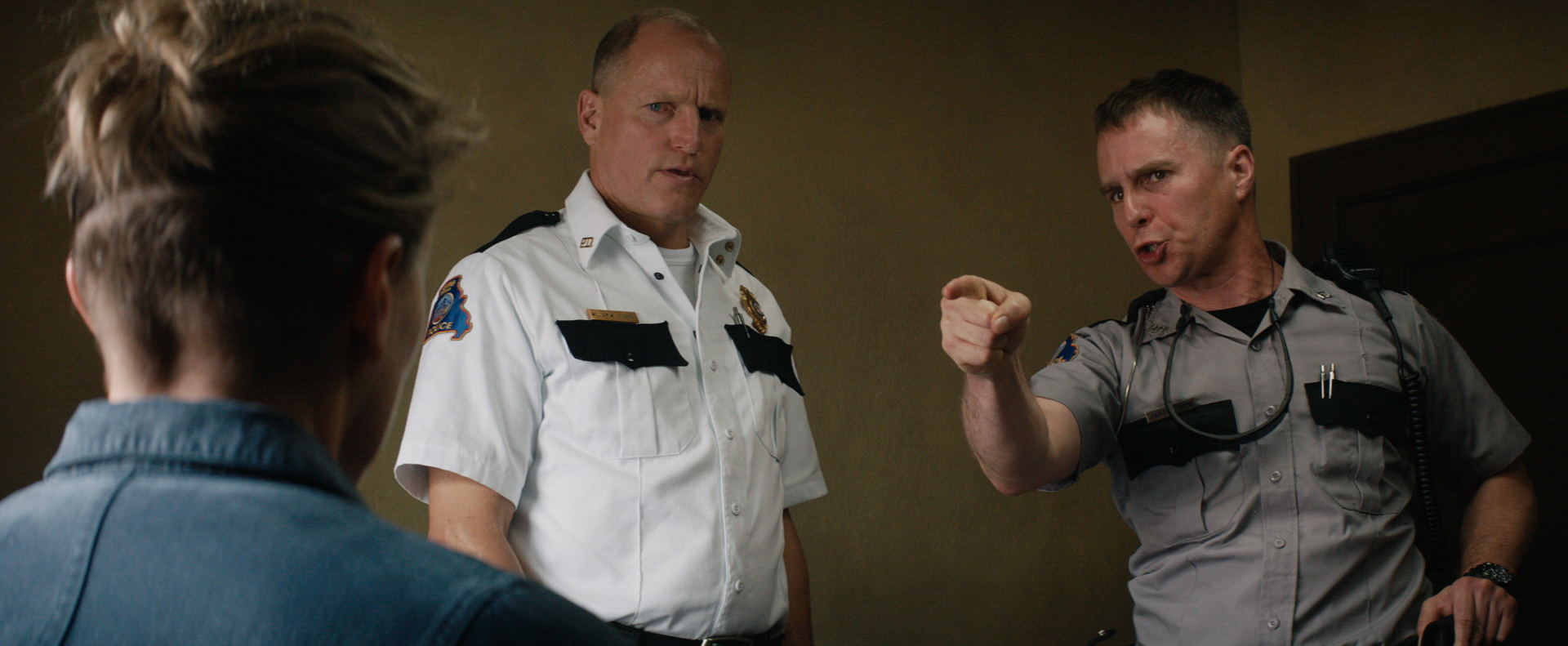
McDonagh and his filmmaking team have also put together a phenomenal ensemble cast including: Woody Harrelson, Peter Dinklage, John Hawkes, and Abbie Cornish etc. Sam Rockwell is especially memorable as the immature, inept and thuggish mother’s boy, Jason Dixon. His scenes with both Frances McDormand and his on-screen Mother, played with deadpan gusto by Sandy Martin, crack with complex emotion and humour. Collectively they portray imperfect characters whose lives have not just been dealt a bum hand but their situation is exacerbated by poor decisions based on emotion and frustration with life and the world. Ultimately, this is an excellent cinematic experience funny, shocking and moving; only possible because of the expert script from a great writer.

(Mark: 10 out of 11 – and the script goes up to 11!)