Tag Archives: Film Review

BFI Film Review: Scala (2023) – At the Altar of Nostalgia for the Scala Cinema!

BFI Film Review: Scala!!! (2023)

Directed by Ali Catterall & Jane Giles

Produced by Andrew Starke, Alan Marke & Jim Reid

Cinematography by Sarah Appleton

Edited by Andrew Starke and Edward Mills

Music by Barry Adamson


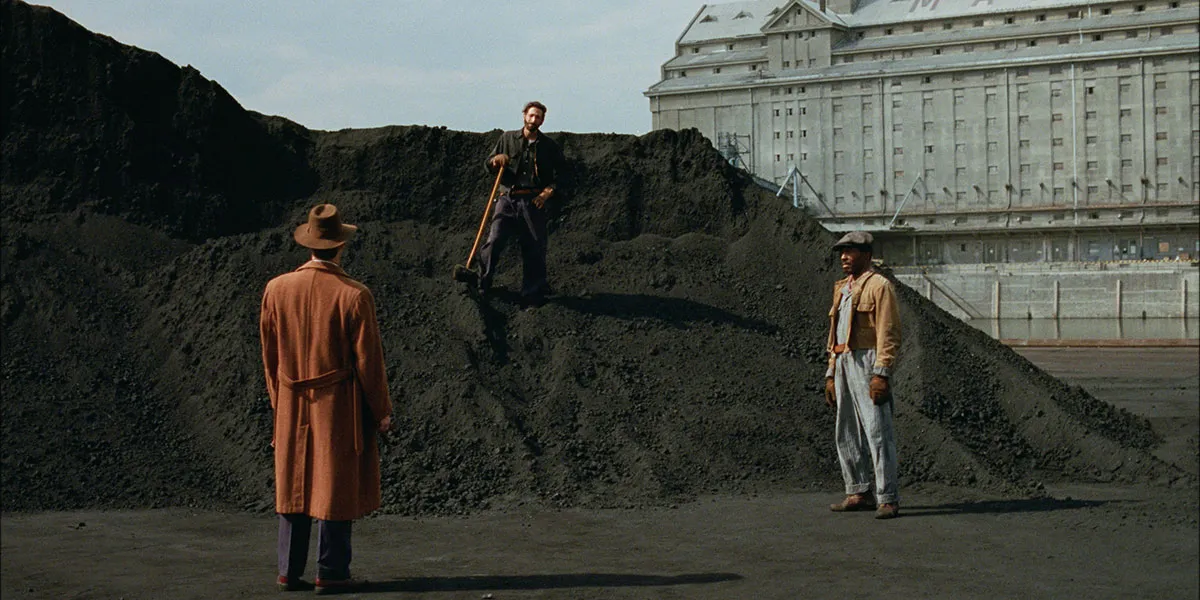
The Scala Cinema, nestled in the heart of London, was more than just a film theatre; it was a refuge, a haven for anyone with a passion for films that didn’t fit into the mainstream mold. I can still feel the sticky floors, the cats in the dark, hear the muffled sounds of the trains passing overhead, and see the hazy red glow that filled the theater. In the 1980s and 1990s, going to the Scala wasn’t just about watching a film; it was about being part of a community that celebrated the bizarre, the boundary-pushing, and the boldly artistic.

During those years, the Scala felt like my second home. It was where I could disappear into films that I couldn’t find anywhere else – obscure horror flicks, campy B-movies, gonzo-pornos, arthouse selections, and controversial classics from around the globe. It was my church. Films by David Lynch, John Waters, Yuen Woo-ping, Derek Jarman, Werner Herzog, Sam Raimi, Lucio Fulci, Russ Meyer, Kathryn Bigelow, Alex Cox, John Woo, Stanley Kubrick, Jane Campion, Orson Welles, Dario Argento, Alejandro Jodorowsky and many more – each screening felt like a small rebellion, a discovery that I’d carry with me. The Scala didn’t just show movies; it curated experiences. All-night marathons, double bills, and surprise screenings became a staple of my weekends, filling my mind with scenes that blurred the line between reality and the outrageous.


When I watched the Scala documentary on BFI Player, a flood of memories came rushing back. It was as though I’d been given a ticket back to those wild, late nights. I remembered how Scala regulars would shout lines at the screen or break into laughter at inopportune moments, making each viewing unique and unpredictable. The documentary captured not only the films but the spirit of the place – the staff who loved cinema as much as the patrons did, the strange but welcoming crowd, and the sense that Scala wasn’t just a venue but a movement. Watching it felt like reconnecting with a part of myself, an era when cinema was raw, thrilling, and unpolished.

The Scala in King’s Cross is a legend, and for those of us who were lucky enough to experience it, it’s a chapter we’ll always cherish. I was even there when they showed A Clockwork Orange (illegally), which led to the ill-fated court case which forced it to close. This documentary is both a valuable historical document and a joyous sharing of stories from those who worked there and attended the films shown, including: Mark Moore, Mary Harron, Isaac Julien, John Waters, Ben Wheatley; Barry Adamson, Matt Johnson, Adam Buxton, James O’Brien, Stewart Lee, Lisa Power and Graham Humphreys. Overall, the Scala Cinema wasn’t just about the films we watched; it was about finding a place where film became more than entertainment – they were a way of life.

Mark: 9 out of 11


Cinema Review – Exploring Music and Madness in Joker: Folie à Deux (2024)

Cinema Review: Joker: Folie à Deux (2024)

Directed by Todd Phillips

Written by Scott Silver and Todd Phillips (Based on Characters by DC Comics)

Produced byTodd Phillips, Emma Tillinger Koskoff & Joseph Garner


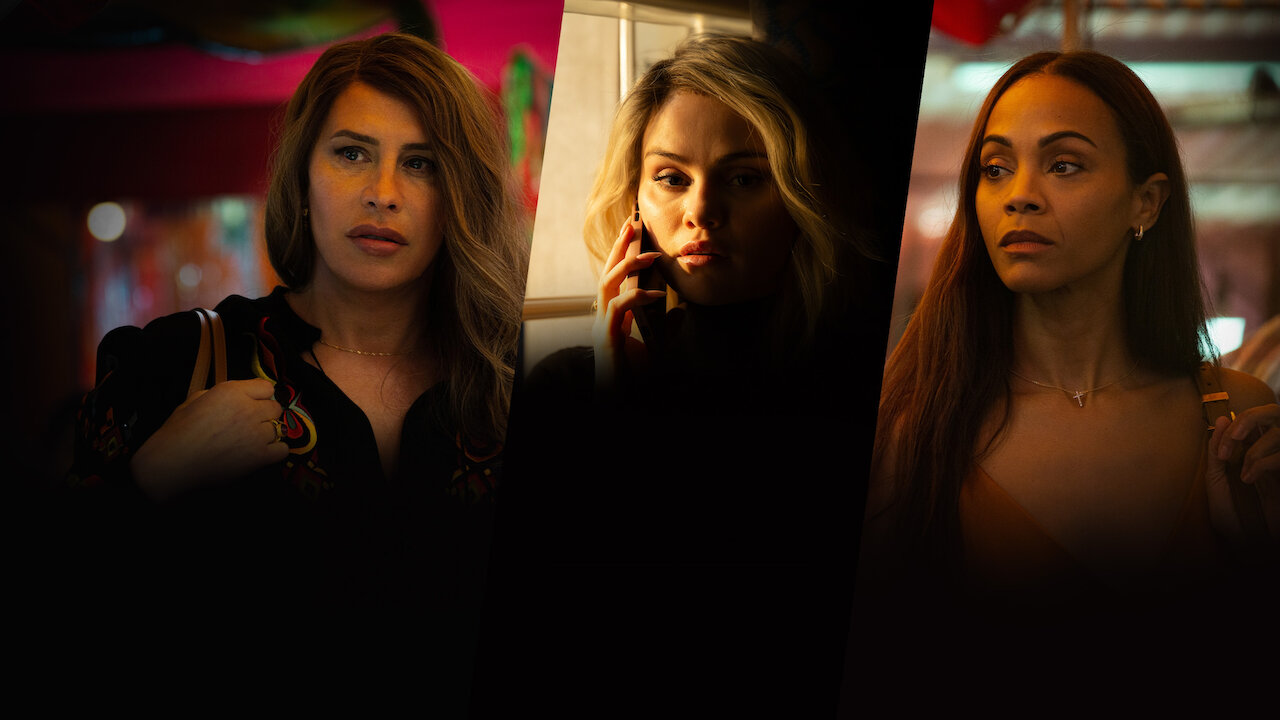
Main cast: Joaquin Phoenix, Lady Gaga, Brendan Gleeson, Catherine Keener and Zazie Beetz etc.

Cinematography by Lawrence Sher

Music by Hildur Guðnadóttir

*** MAY CONTAIN SPOILERS ***


In 2019, Todd Phillips and Joaquin Phoenix, as director and lead actor, unleashed Joker (2019) on the cinema public. It became an enormous critical and commercial hit, with Phoenix winning the ‘Best Actor’ award at the Academy Awards. Unsurprisingly, a sequel now reaches us. While the original 1980’s set period drama worked superbly, echoing the structure and themes of Scorsese’s King of Comedy (1982) and Taxi Driver (1976), the follow-up Joker: Folie à Deux (2024) is altogether different. In fact, given it experiments with musical, romance, crime, court-room and psychological horror genres, it is an altogether riskier film, which while compelling and fascinating, doesn’t always connect to a satisfactory whole. But perhaps that is the point. It is intended to reflect an inconsistent mind and unreliable narrator, a fractured soul in Arthur Fleck.

For me, in Joker: Folie à Deux (2024), Todd Phillips masterfully employs cinematic techniques of fragmentation and ambiguity to deepen the exploration of mental illness, echoing the disorienting and fractured experience of his protagonists. The film, much like its predecessor, blurs the lines between reality and delusion, but this time the ambiguity is intensified through musical elements, dreamlike sequences, and multiple perspectives. Phillips’ use of disjointed timelines and unreliable narratives immerses the audience in the chaos of Arthur Fleck’s (Phoenix) and Harley Quinn’s (Lady Gaga) unraveling psyches.


The musical numbers, set against stark, gritty environments, feel both fantastical and unnerving, reinforcing the characters’ distorted perceptions of the world. Moments of quiet introspection are suddenly broken by violent outbursts or surreal interludes, mimicking the unpredictability of their mental states. The film’s visual style shifts between stark realism and surreal imagery, reflecting the internal fragmentation of Arthur and Harley’s minds, keeping viewers on edge and questioning what is real.

Phillips’ direction ensures that the story remains rooted in ambiguity—much like the first film—inviting viewers to interpret the characters’ mental states without offering clear answers. This cracked narrative style doesn’t just illustrate their mental illness; it pulls the audience into it, making Joker: Folie à Deux a bold and unsettling exploration of madness through form as much as story. As such there isn’t much plot to speak of as Arthur’s journey essentially follows him from Arkham Asylum to court, with episodic splashes of song and dance in between, before we get to the climactic court room scenes.

As aforementioned, in Joker (2019), Todd Phillips drew heavily from Martin Scorsese’s The King of Comedy (1982), particularly in its portrayal of a lonely, unstable man seeking fame and validation in a world that cruelly rejects him. Arthur Fleck’s obsession with talk show host Murray Franklin mirrors Rupert Pupkin’s fixation on becoming a comedy star, and both films explore the dangerous consequences of societal alienation and delusional aspirations. The gritty, urban backdrop and character-driven narrative made Joker a powerful homage to Scorsese’s psychological explorations of fame and madness.


With Joker: Folie à Deux (2024), Phillips shifts toward a different Scorsese film for inspiration: New York, New York (1977). Much like Scorsese’s semi-musical about a turbulent romance between two performers, Folie à Deux integrates musical elements and centres on the chaotic relationship between Arthur and Harley Quinn (Lady Gaga). The film’s blending of harsh realism with the stylized, dreamlike sequences of musical numbers echoes New York, New York’s mix of glitzy performance and dark personal struggle. Thematically, both films explore how dreams of stardom can clash with mental instability, but Folie à Deux takes it a step further by embedding this conflict within its characters’ delusions, making the musical sequences feel like an escape from—or reflection of—their psychotic minds. This potential homage to New York, New York allows Phillips to expand Joker‘s cinematic language, fusing psychological drama with surreal musical spectacle.

Joker: Folie à Deux (2024), at time of writing, has polarized critics and cinema-goers. As someone who watches a lot of “art-house” and European cinema, I can see why this film is dividing opinion. This is what happens if Jacques Demy, by way of Bergman, were given $200 million to make a DC comic-book film. Todd Phillips takes many risks in form and structure, most notably denying the audience catharsis at the bleak finale. It is truly downbeat and it felt like Phillips and Phoenix were finally done with this clownish killer and anti-hero.

As a cinematic experience the musical score is striking. Moreover, the production is grey and oppressive and claustrophobic, set in enclosed cells and shadowed court rooms. There is little light in this film nor even a shadow at the end of the tunnel for Arthur and Harley. Phoenix is fantastic again, while Gaga’s romantic partner-in-crime is under-cooked as a character. Nonetheless, Gaga still sparkles amidst this gloomy, musical, existential journey into the mouth and down the throat of madness.

Mark: 8.5 out of 11


Cinema Review: The Substance (2024) – A Dark Exploration of Identity

THE SUBSTANCE (2024)

Directed by Coralie Fargeat

Written by Coralie Fargeat

Produced by: Coralie Fargeat, Tim Bevan and Eric Fellner

Main Cast: Demi Moore, Margaret Qualley and Dennis Quaid

Cinematography by Benjamin Kracun

*** MAY CONTAIN SPOILERS ***


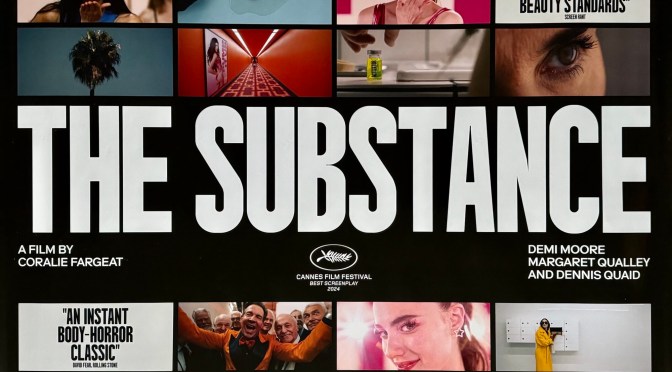
The Substance (2024), directed by Coralie Fargeat, is a visually striking and visceral film that pushes the boundaries of body horror and psychological terror. Fargeat, known for her raw and relentless style in Revenge (2017), once again delivers an unforgettable experience by weaving references to classic literature and horror cinema into a narrative that is at once familiar and entirely original.

Demi Moore portrays a former Hollywood star, Elizabeth Sparkle, now relegated to doing a mildy successful cable TV aerobics show. However, Dennis Quaid’s oily production executive is on the lookout for younger talent. Elizabeth soon finds herself on the media scrapheap. Desperate to regain her youth and career, Elizabeth is drawn to the hypnotic promise of a new product called ‘The Substance.’

Before you can say, “Dorian Gray”, Elizabeth is lured to a strange white room full of lockers and has committed to the process. Similar to Gremlins (1984), there are rules to follow. As she follows the steps and injects the potions, Elizabeth goes through a painful and incredibly impactful transformation process. She literally gives birth to a young and beautiful alter ego called, Sue (Margaret Qualley). Elizabeth and Sue then get seven days each to live their life before they have to swap back. What could go wrong?


The film’s core themes draw heavily from Robert Louis Stevenson’s Dr. Jekyll and Mr. Hyde, exploring duality, identity, and the monstrous potential hidden within human nature. Like Stevenson’s tale of inner conflict, The Substance delves into the consequences of scientific ambition. It investigates moral transgression but with a modern, feminist twist. Fargeat’s use of body horror, particularly in the transformation sequences, echoes the grotesque, unsettling work of David Cronenberg. The nightmarish atmosphere and surreal visuals are reminiscent of David Lynch’s unsettling dream logic. This is notably seen in Eraserhead (1977) and Mulholland Drive (2001).

The film also pays homage to John Carpenter’s The Thing (1982), with its transmogrifying frights, sense of creeping paranoia and rising conflict. But rather than a group of men fighting each other Elizabeth and Sue turn on each other over ownership of their physical existence and Hollywood status. The final act descends into hellish and bloody satire echoing Peter Jackson’s Braindead (1992), with gore galore. Moreover, Stanley Kubrick’s influence is palpable in the film’s meticulous framing, production design and tension-building. The climactic body-morphing scenes, however, most clearly nod to Brian Yuzna’s Society (1989), with its grotesque depictions of class and conformity, fused with Fargeat’s unique vision of female empowerment, revenge and resistance.

The Substance (2024) feels like a bigger budget film in look and style, but you soon realise the minimal number of sets used and a lack of crowd scenes, finds the narrative effectively becoming a two-hander in the middle act by focusing on Sue and Elizabeth’s internal retaliatory vindictiveness. There are some amazing framing, colour design and cinematographic choices as showers become tombs to trap the protagonists. The book-ended Hollywood star montage and returning final shots are imaginative and unforgettable. Got to say that Demi Moore, as an actress taking on a role of an aging and neurotic former star is genius casting. While Qualley delivers a sexually charged and energetic performance, it is Moore who carries the weight of the complex themes as Elizabeth’s journey dives deeper into the stuff of nightmares.

Overall, The Substance (2024) is a postmodern classic and a film that honors its influences while forging its own path. Fargeat uses these references to enrich the narrative, creating a damned ugly and beautiful satire on those seeking narcissistic perfection through unnatural means, ultimately paying the price of those seeking eternal youth and fame.

Mark: 9 out of 11


HORROR REVIEWS: SPEAK NO EVIL (2022) / SPEAK NO EVIL (2024)

SPEAK NO EVIL (2022)

Directed by Christian Tafdrup

Written by Christian Tafdrup and Mads Tafdrup

Main Cast: Morten Burian, Sidsel Siem Koch, Fedja van Huêt, Karina Smulders, Liva Forsberg and Marius Damslev.

Speak No Evil (2022), directed by Christian Tafdrup, is a chilling psychological horror that explores the perils of politeness within middle-class sensibilities, turning everyday discomfort into a waking nightmare. The film follows a Danish family with a young daughter, visiting a Dutch family unit, only to find themselves trapped in a horrifying and twisted game of cat and mouse. All smiles and charisma at first, the ‘Alpha’ Patrick, dominates his wife and young son, who unfortunately has no tongue. Tafdrup deftly dissects how the fear of offending others—deeply ingrained in bourgeois values—leads the protagonists to ignore increasingly unsettling behaviour.

Losing or not using one’s voice is inherent within the text. Further, what begins as awkward social tension escalates into something far more sinister, as the family is manipulated through their desire to maintain decorum. This dynamic plays on the anxieties of modern, polite society, where confrontation is often avoided at all costs. The film’s climax delivers a shocking, almost biblical punishment for their inability to break free from these conventions, suggesting a moral reckoning for those who allow fear of impoliteness to override survival instincts.

Subtle, creeping dread makes Speak No Evil (2022) a disturbing meditation on the dangers of middle-class complacency, and the terrifying consequences of choosing politeness over personal safety. Lastly, the film also explores the theme of toxic masculinity as the muscular ‘Alpha’ threatens the ineffective ‘Beta’ male, proving one should always stand up to bullies or face the consequences.

(Note: for those seeking out the film in the UK, it is currently screening on Shudder.)

Mark: 8.5 out of 11


SPEAK NO EVIL (2024)

Directed by James Watkins

Screenplay adaptation by James Watkins


Main cast: James McAvoy , Mackenzie Davis, Scoot McNairy, Alix West Lefler, Dan Hough, and Aisling Franciosi

The English remake of Speak No Evil (2024) delivers a faithful and unnerving adaptation of Christian Tafdrup’s original, with James McAvoy’s chilling performance at its heart. McAvoy, playing the charming yet menacing antagonist, brings a sinister edge to the character that heightens the tension and discomfort throughout the film. His portrayal effortlessly captures the unsettling power dynamics, making each of his polite gestures and subtle manipulations all the more terrifying. McEvoy relishes every moment of this characterful performance.

What truly stands out in this remake is how it retains the meticulous craftsmanship of the original. The film carefully balances tension, awkwardness, and psychological dread, maintaining the slow-burn atmosphere that made the Danish version so unsettling. Director James Watkins ensures the pacing and visual style honour Tafdrup’s vision, with each shot and interaction loaded with unease. Watkin’s adaptation also provides further exposition and fleshes out the character dynamics and motivations, notably with the children, whose actions are integral to propelling the narrative thrills.

The Cape Fear (1991)-style climax veers away from the original’s more subtle, thought-provoking and bleak ending. However, it further amplifies the anxiety, offering a nerve-shredding confrontation that feels both inevitable and brutal. The remake pays homage to the original’s themes of social etiquette, hidden danger and finding one’s voices against bullies, while delivering a climactic showdown that mirrors the power struggles found in classic thrillers. Overall, like the original Speak No Evil (2024) successfully inverts the home invasion dynamic, making it a worthy, terrifying and almost necessary remake.

Mark: 8.5 out of 11


NETFLIX FILM REVIEW: HIT MAN (2023)

Directed by Richard Linklater

Screenplay by Richard Linklater & Glen Powell

Based on “Hit Man” by Skip Hollandsworth

Produced by Mike Blizzard, Richard Linklater, Glen Powell, Jason Bateman & Michael Costigan

Main Cast: Glen Powell, Adria Arjona, Austin Amelio, Retta, Sanjay Rao, etc.

Cinematography by Shane F. Kelly


*** MAY CONTAIN SPOILERS ***


Hollywood has a history of attempting to mold certain actors into the next big film stars, often casting them in high-profile projects with hopes of catapulting them to stardom. Colin Farrell was positioned as a leading man with roles in blockbuster films like Minority Report (2002), Alexander (2004) and S.W.A.T. (2003), but despite his undeniable talent, he didn’t quite become the A-list fixture studios envisioned. Having said that Farrell has proved himself an actor of high esteem, choosing to work with some of the best directors around in Yorgos Lanthimos and Martin McDonagh.

Similarly, Sam Worthington was thrust into the spotlight with Avatar (2009) and Terminator Salvation (2009), yet struggled to keep his star power afterward. Likewise, Taylor Kitsch, Hayden Christensen, Jai Courtney, Kate Mara and Daisy Ridley were also groomed for stardom. While Ridley achieved significant recognition, sustaining that momentum outside of the galaxy far, far away has proven difficult, Cara Delevingne has found the transition from supermodel to actress somewhat challenging. Enter stage centre, Glen Powell, who is arguably the latest actor the Hollywood machine is pushing for global stardom.


Powell is a handsome, charming and intelligent actor with a winning smile who certainly carries the romance and comedic elements of Hit Man (2023) extremely well. He portrays Gary Johnson, a mild-mannered professor of Psychology and Philosophy at the University of New Orleans who also assists the New Orleans Police Department in undercover sting operations. Usually working behind the operations providing advice, Gary is suddenly thrust into the action and has to play a fake hit-man to bring a suspect down. While this set-up stretched legal credulity, we eventually learn that the events are based on a “true” story. No doubt some liberties have been taken with the source material.

Gary’s character development finds him becoming very successful as an undercover operator, taking on a series of disguises and inventing precise alter egos to match the psychological make-up of those he is trying to trap. Hit Man (2023) is a kind of “ugly duckling” story where the ‘Alpha’ identity Gary invents ultimately takes over his own ‘Beta’ personality. The romantic element of the narrative comes via the beautiful and troubled, Madison (Adria Arjona), who desires to kill her abusive boyfriend, Ray. Tasked with bringing her to justice, Gary contrives to give her a second chance, but when Ray turns up dead, Gary’s whole existence and secret identity comes under threat. While this sounds like the plot to a really compelling thriller, overall there is a lighter touch to the direction and much humour. Further, Powell’s on-screen chemistry with Arjona is convincing and sizzles throughout.

I really enjoyed Hit Man (2023). It’s familiar and conventionally structured, but has a smart genre script and winning performances from the charismatic and sexy leads. Lastly, Richard Linklater is a rare filmmaker who seamlessly navigates between art-house cinema and more commercial projects, maintaining his distinctive voice across both realms. Hit Man (2023) finds him in more crowd-pleasing territory as he was with the fantastic School of Rock (2003). Yet, will Powell ultimately become a box office success and bona fide movie star? Well, I guess with this film, the recently released, Twisters (2024), the upcoming Huntington (2025) and Edgar Wright directed, The Running Man (2025), he is well on his way.

Mark: 8 out of 11


CINEMA REVIEW: LONGLEGS (2024)

CINEMA REVIEW: LONGLEGS (2024)

Directed by Osgood Perkins

Written by Osgood Perkins


Produced by Dan Kagan, Brian Kavanaugh-Jones, Nicolas Cage, Dave Caplan, Chris Ferguson etc.

Main Cast: Maika Monroe, Blair Underwood, Alicia Witt, Nicolas Cage, etc.

Cinematography by Andrés Arochi

*** THIS REVIEW CONTAINS SPOILERS ***


As a no-budget filmmaker I have often written and produced scripts which arguably had plots and concepts that were under-served by the lack of funds. The low budget meant one’s production values suffered on screen and did not allow the requisite number of shoot days to do the finished script justice. I felt similar vibes watching Longlegs (2024), as filmmaker Osgood Perkins attempts a FBI procedural thriller on less-than-$10 million dollars. The sparseness of the production and minimal cast kind of works in its’ favour, as Perkins goes for an ultra-violent-Twin-Peaks-meets-economy-Fincher vibe, ultimately ending up with a incredibly strange brew indeed.

Maika Monroe is FBI agent, Lee Harker, investigating a series of inexplicable murder-suicides during the 1990’s. In terms of structure the breadcrumb plotting is not the films’ strength but it does allow the director to hang a whole load of janky peculiarities on the screen. Harker’s keen empathy and apparent sixth-sense bring her ever closer to a suspect who goes by the name of ‘Longlegs’. Yet, the killer is not related to a spider, but rather reminded me of Noel Fielding meets the monster from parodic film-within-a-TV-show, Doctor and the Pencil. Surprisingly, and you will not believe this, the weirdo killer, Longlegs, is portrayed weirdly by Nicolas Cage, who revels in the wig and prosthetics and is, did I say already, the height of weirdness.

Osgood Perkins directed one of the dullest horror films I have ever seen in the experimental, I Am the Pretty Thing That Lives in the House (2016). But Longlegs (2024) is a massive improvement with some chilling and suspenseful scenes, and a decent lead performance from Agent Starling-alike, Maika Monroe. Similar to Carol Morley’s Out of Blue (2018), this is an arthouse director taking on genre filmmaking without enough cash and getting it deliberately wrong. Overall, with a very strong first half, Longlegs (2024), latterly takes some insane plot turns involving Faustian pacts, parental abuse, religious mania, hypnosis and voodoo sci-fi concepts which don’t really meld but remain thematically fascinating. Cage portraying Noel Fielding as an oddball killer, as well as many fantastic on-screen deaths, definitely give this cult cinematic stew strong and curious limbs.

Mark: 7.5 out of 11


NETFLIX REVIEWS: HORROR!

NETFLIX REVIEWS: HORROR!

As regular readers of my blog will know I am a massive fan of horror films. So much so I will often theme my monthly viewing around the genre, then consolidate the reviews in one post. Here are two of the most recent posts:


For the month of June and bleeding into July, I solely focused on horror films streaming on Netflix. So, here are short reviews of the many films I watched that are currently available on Netflix!

*** CONTAINS PLOT SPOILERS ***


A CLASSIC HORROR STORY (2021)

Italian shocker that echoes Midsommar (2019), Scream 3 (2000) and The Ritual (2017). The script is meta-clever and there’s some decent gore, but overall it lacks emotional empathy for the characters. More of a knowing film satire rather than being proper scary. Mark: 6.5 out of 11


BAGHEAD (2023)

Suffers in comparison to the far more energetic and thrilling Talk to Me (2022) – which is also on Netflix. Aside from the opening with the always brilliant Peter Mullan, who sets the scene, monster and horror rules, the film contains slight characterization and low stakes when the lead protagonists enter the shadowed fray. Mark: 5.5 out of 11


BLOODY NEW YEAR (1987)

Genuinely one of the worst horror films EVER made, that somehow still has some memorably crazy moments and monsters. Watch and cry with laughter about how bad this Brit-shocker is though! Mark: 2 out of 11


CAM (2018)

Madeline Brewer is fantastic as the narcissistic Cam-Girl who finds her identity is cloned, with the added stress of a killer being on her trail. Cleverly and wittily plotted, this brilliantly directed satire rises above its exploitative material to deliver a thematically rich horror film full of suspense and shocks. Mark: 8.5 out of 11


CREEP 2 (2017)

Mark Duplass gives another strikingly weird performance as the serial killer who loves the slow-burn taunting of his victims. Both this and Creep (2015) actually make the found footage filming trope work really well. Mark: 7.5 out of 11


EMELIE (2016)

What if your babysitter isn’t the person you think they are? An incredibly chilling character study designed to give every parent sleepless nights. With a committed performance from Sarah Bolger, this has so many twisted scenes involving the kids that disturbed me and feared for their safety. A horror film that really burrows under your skin throughout. Mark: 7.5 out of 11.


FANTASY ISLAND (2020)

Taking a 1970’s high-concept drama series and turning it into a horror film is not the worst idea, especially as the original series had its darker episodes often involving cautionary tales of morality. However, the script they delivered for this misfire feels as though many, many writers have tried desperately to resuscitate it from within the cold morgue draw. There’s some drive and energy from the cast and I actually enjoyed some of the set-pieces, but it feels ultimately like over-stuffed mush. Mark: 5 out of 11.


HAUNT (2019)

An incredibly generic set-up finds a group of teenagers drawn to a haunted house at Halloween, only for crazed killers to lock them in a slash them down. Benefits from some imaginative villains and kills, plus an empathetic lead characterization by Katie Stevens as the grieving Harper. Lastly, directors Scott Beck and Bryan Woods show excellent control over tone, style and suspense. Mark: 7.5 out of 11.


RED STATE (2011)

Kevin Smith goes ‘Grindhouse’ with this gnarly horror film where a group of horny teenagers are lured into a deadly trap that threatens their existence. Starts strongly exploring themes of religious mania and family values culminating in an incredible monologue delivered by Michael Park’s charismatic church leader. Latterly descends into a chaotic siege thriller shoot-em-up with crazy cultists versus the American authorities led by the always excellent, John Goodman. Smith’s trademark chitty-chatter dialogue is good, but kind of gets in the way (monologue aside) of the drama and humanity-as-horror of the piece. Mark: 7 out of 11.


THERE’S SOMEONE IN YOUR HOUSE (2021)

Extremely well written, directed and acted film which gets stuck between the rites-of-passage and slasher tropes, serving neither of these genres satisfactorily. There’s some alright kills, but overall feels like an inferior photocopy of Scream (2000) with little of the wit or meta-brilliance. Mark: 6 out of 11.


TIN & TINA (2023)

Featuring motifs relating to religion, fascism and family values, this interesting chiller ticks all the themes present in many Spanish horror films. As Lola (Milena Smit) and Adolfo (Jaime Lorente) suffer the tragedy of a lost child, they try to redeem their grief with the adoption of two blonde, shock-haired orphans raised by nuns. Driven by their naivete and religious fervour, Tin and Tina end up committing many questionable acts which threaten to send Lola over the edge. Beautifully filmed and scored, the director also builds an impressive sense of dread throughout, yet the film is ultimately denied a higher mark by the glacial pace and disappointing ending. Nonetheless, it is thought provoking with both the creepy kids and Christianity contributing to nail-biting scenes of high anxiety. Mark: 7 out of 11

FIX FILMS PRESENTS: SIN – EPISODES 4 – 7

SIN – EPISODES 4

Last year I wrote and produced seven monologues inspired by the deadly sins. With careful planning, myself and a quality cast and crew shot them all in one day at Raindance Film School. I’m now releasing them online via YouTube. They are in essence a proof of concept project with an aim for myself to develop them into a feature film screenplay. Below are episodes 4 to 7!


PITCH

“Let those without sin cast the first stone.”

An anthology of 7 monologues based around the seven deadly sins. Moments, drama, humour, character studies and themes exploring the darker side of human nature. Influenced by: Alan Bennett’s Talking Heads, Inside No. 9, Tales of the Unexpected and Amicus/Hammer horror film anthologies.


PRIDE starring Myles Horgan

Bishop, a retired spy with a gun in his face, delivers a powerful monologue as he attempts to deduce the identity of the assassin that faces him.


LUST starring Tom Cavendish

Danny, a police officer racked with guilt, confesses as to why he thinks he cheated on his beloved fiancé with her sister.


ENVY starring Malcolm Jeffries

Len, a covert photographer, reveals how his obsession with a client’s wife brings back haunting memories from his past.


WRATH starring Julia Florimo

Sadie describes in detail how and why she plotted revenge by poisoning her cheating ex-boyfriend, Stephen.


CREDITS

Writer and Producer: Paul Laight
Camera and Post-Production: Gary O’Brien
Sound: Ali Kivanc
Camera Assistant: Maka Natsvlishvili

Music by: Epic Violin Music NO Copyright royalty free music  
Special thanks: Raindance Film School and Universal Video


CINEMA REVIEW: FURIOSA – A MAD MAX SAGA (2024)

CINEMA REVIEW: FURIOSA – A MAD MAX SAGA (2024)

Directed by George Miller

Written by George Miller & Nico Lathouris

Based on characters by George Miller & Byron Kennedy

Produced by: Doug Mitchell & George Miller

Main Cast: Anya Taylor-Joy, Chris Hemsworth, Tom Burke, Alyla Browne, Lachy Hulme, Angus Sampson, etc.

Cinematography by Simon Duggan

*** CONTAINS SPOILERS ***


George Miller’s fifth entry of the Mad Max series is Furiosa: A Mad Max Saga (2024). Given the meaning of the word ‘saga’ is defined as, “a long story of heroic achievement, especially a medieval prose narrative in Old Norse,” it’s an attempt by Miller to connect the Mad Max films to mythical storytelling and folk lore, yet paradoxically set such ye olde yarns in the future. Conversely, while being part of the post-apocalyptic sci-fi sub-genre, there is certainly more than a suggestion of marauding and pillaging Vikings within the freakish characters of the radioactive Aussie wasteland.

Of course, the hi-tech and vehicular monsters smashing up and down the ‘Fury Road’ render the action far from the medieval, replacing long boats for super-charged two, three and four-and-more-wheel souped-up demons driven by mutated future humans. The gigantic rock, bullet, fuel, and scrap metal designed bases of ‘The Citadel,’ ‘Bullet Farm’ and ‘Gas Town’ inhabited by these tattooed ravagers, while rough in exterior represent humanity’s industrial survival and base-building instincts par excellence. So much for the imperious nature of Miller’s world-building, what of the narrative?

If one is honest, the screenplays for all four of the previous Mad Max films are the exercises in economy, with hard-cut structures, granite-boiled dialogue often spat out via twisted one-liners, and poetically yelled slang-speak. Introduced as a maverick cop, but loving family man in Mad Max (1979), Max Rockatansky (Mel Gibson) is essentially a cops-versus-gangs-meets-revenge exploitation thriller. By the time gangs have killed his family and nuclear war has destroyed the world, Max has become the Road Warrior (1981), in what is one of the greatest action films and sequels of all time. However well regarded the mayhem of Fury Road (2015), and it is incredible, The Road Warrior remains one of my favourite films ever.


Beyond Thunderdome (1985) was the slicker third film, and while the action was terrific, there was too much money and sheen in there, reminiscent of what they did with the glamoured cast in the last season of Game of Thrones. Plus, the script was broken in half, with an amazing first section set in Bartertown with Tina and crew, before giving way to a more philosophical, but less exciting kids-in-a-commune driven story. In comparison Furiosa: A Mad Max Saga (2024) is certainly the most ambitious of all the narratives. It is set over several years, from the moment Furiosa (Alya Browne) witnesses her mother killed by Dementus (Chris Hemsworth) and his nasty marauders, to her rites of passage ascent toward gaining a vicious revenge.

Keeping the literary theme, the film is set over five chapters replete with headings to let the audience know what is about to occur. Easily the most impressive is – Chapter III – The Stowaway – where Furiosa comes of age in action during a brutal and mind-blowing action set-piece as the Octoboss, goes rogue and launches an air assault on the “War Rig” as it races along the ‘Fury Road.’ Here Furiosa also bonds with Praetorian Jack (Tom Burke) and the two become partners, with George Miller throwing in an under-cooked romance amidst the petrol, dust, blood and fire.

It is great that Miller and his co-writer Nico Lathouris have strived for more emotional depth and epic storytelling within Furiosa: A Mad Max Saga (2024). However, I felt that at times the rapid pacing and ramped-up action crushed any feelings I may have had about the characters of Furiosa and Jack. Plus, the film suffers a serious case of “prequelitis” where one is joining the dots of Furiosa’s backstory to connect with Charlize Theron’s characterisation in Fury Road. Yes, of course, we find out how she had her arm torn from her body, her drives and motivations, plus how she became a kick-ass future road warrior.  

Taylor-Joy is striking in the all-action role of Furiosa, but a little anorexic on screen to really dominate. Gibson and Hardy are a hard act to follow! Tom Burke stands out amidst the support ensemble, while Chris Hemsworth treats us to another revved-up messianic lunatic. With the character of Mad Max on hiatus, the true stars of this show are Miller and his impressive production, camera, editing, driving, effects and stunt teams. They have once again produced cinematic carnage of the highest order.

Mark: 8.5 out of 11


SIX OF THE BEST #38 – ROGER CORMAN

SIX OF THE BEST #38 – ROGER CORMAN

Sadly, the uber-filmmaker, Roger Corman passed away on May 9th 2024. But given the longevity of his life and career in films it’s really time to celebrate his life in cinema. To me Roger Corman is a hero because he is a true independent filmmaker, working outside of the Hollywood system producing hundreds of films, many of which were extremely successful financially.

Of course, for a man known as the “King of the B-Movies” not all of the films were the height of artistic merit, however, they were NEVER boring. So many of his films have real invention and a crazy energy. What separates Corman from say Ed Wood is he knew how to tell a proper story on a low budget. Indeed, films such as Little Shop of Horrors (1960) and Death Race 2000 (1976) would latterly get the big-budget Hollywood remake treatment. Further, without Corman’s The Wild Angels (1966) starring Peter Fonda, Hopper and Fonda’s counter-cultural phenomenon Easy Rider (1969) may not have existed.

As well as boosting the careers of Peter Fonda and Dennis Hopper, as a producer Corman also gave starts to Francis Ford Coppola, Jonathan Demme, James Cameron, Sandra Bullock, Robert DeNiro, Jack Nicholson, Martin Scorsese, Pam Grier and many more. Corman did not just have a keen eye for talent, he was canny because he knew that such hungry filmmakers and actors could be “exploited” at a lower cost than bigger Hollywood names.

So, as a mini-tribute I have selected six of the best Corman films I have seen. Rest in peace, Mr Corman – you were a true cult and cinema legend!


LITTLE SHOP OF HORRORS (1960)

Incredibly, this film was shot in three days for $28,000 and would become a cult hit after initially struggling to find distribution. Amazingly, Corman did not expect the film to be successful so he didn’t bother to copyright it. It is therefore in the public domain! I myself saw it recently on Talking Pictures and it is a so entertaining. Look out for a hilarious early performance from Jack Nicholson.


THE INTRUDER (1962)

This is perhaps the most seriously raw and challenging film of Corman’s career. William Shatner portrays charismatic racist, Adam Cramer, a travelling salesman, who becomes hellbent on preventing racial desegregation in a Southern town. It was a landmark film for Corman who decided, “It was more of a lecture. From that moment on I thought my films should be entertainment on the surface and I should deliver any theme or idea or concept beneath the surface.”


MASQUE OF THE RED DEATH (1964)

Three masters of horror for the price of one with Edgar Allen Poe, Corman and Vincent Price, combining to chilling effect in this beautifully filmed period ghost story. Arguably the most artfully directed film of Corman’s career, the cinematography was by one Nicolas Roeg, proving once again Corman was an expert at spotting film talent way ahead of time.


BLOODY MAMA (1970)

Cashing in on the success of period gangster film, Bonnie and Clyde (1967), Bloody Mama (1970) is a gloriously over-the-top chase thriller, with Shelley Winters eating the scenery in a brilliant performance. Robert DeNiro appears at Ma Barkers drug addicted son, Lloyd, showing glimpses of the acting talent that would lead to so many incredible performances. But it is Winters’ film as the “loving” and gun-toting mother who leaves a lot to be desired as a positive parental role model.


DEATH RACE 2000 (1975)

The epitome of a high concept cult movie, directed by Paul Bartel, this features the brilliantly sick idea of racing drivers killing members of the public for entertainment. Full of terrific gore and gallows humour, this is one of those Corman produced films where a bigger budget would have served the action so much better. It was still a massive hit though. The imaginative deaths, cutting satire and demented characterisations from the likes of Sylvester Stallone, Martin Kove and deadpan David Carradine are memorably fantastic. I cannot help thinking Death Race 2000 must have been an influence on The Purge franchise too.


BATTLE BEYOND THE STARS (1980)

Corman’s biggest budgeted film at the time of release at $2 million, this film is both a rip-off of Star Wars and homage to The Seven Samurai, or it is the other way round? The massive budget was essentially due to George Peppard’s and Robert Vaughan’s salaries, both of whom would become stars of The A-Team. If you didn’t know many of the inventive practical special effects were supervised and created by a certain James Cameron, who got his big break as the lead production designer and art director on Battle Beyond the Stars.