Cast: Olivia Hussey, Keir Dullea, Margot Kidder, John Saxon, Marian Waldman, Andrea Martin, Art Hindle, etc.
Cinematography by Reginald H. Morris
*** MAY CONTAIN SPOILERS ***
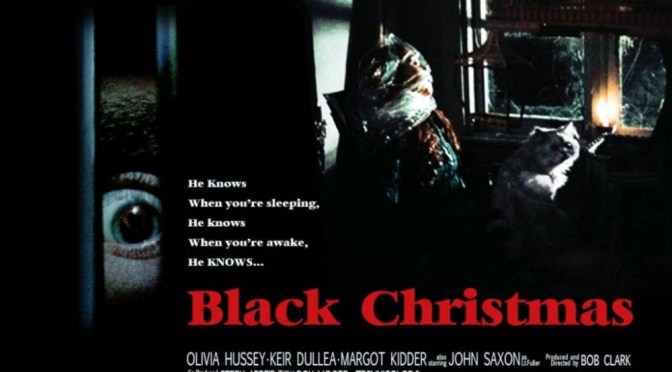
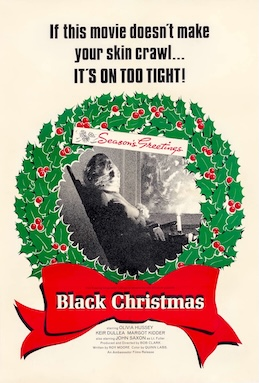
Black Christmas (1974) remains a cornerstone of cult horror, steeped in creeping dread thanks to director Bob Clark’s unnerving ability to build eerie atmospherics. As a series of obscene phone calls begin to plague a sorority house, the film patiently tightens the noose, revealing that a psychopath is homing in on the “sisters” with sinister intent. Even as the police attempt to trace the calls, Clark toys with perception, suggesting that nothing—and no one—is quite what it seems.
Beyond its surface-level shocks, Black Christmas reveals a surprisingly progressive and unsettling thematic undercurrent. The film’s menace is deeply entangled with ideas of toxic masculinity: male entitlement, surveillance, and violence seep into almost every threat faced by the women. The killer’s obscene phone calls aren’t just frightening—they’re exercises in domination, attempts to invade private space through verbal abuse and sexualised rage. Even ostensibly “normal” male authority figures are depicted as dismissive, incompetent, or quietly threatening, reinforcing the sense that danger is systemic rather than anomalous.
Most striking for its era is the film’s pro-choice stance. Jess’s determination to have an abortion—presented as a firm, rational decision rather than a moral failing—grounds the horror in real-world anxiety. Her boyfriend’s furious reaction exposes a fragile masculinity rooted in ownership and expectation, aligning emotional coercion with the film’s broader atmosphere of male control. Horror here isn’t just the killer in the attic; it’s the social pressure bearing down on women’s autonomy.
Familial breakdown also looms large. The sorority house functions as a fractured surrogate family, one that offers warmth and camaraderie but ultimately fails to protect its members. Traditional structures—parents, police, institutions—are either absent, drunk, or found wanting, leaving the women isolated within spaces that should be safe. This erosion of trust amplifies the film’s dread, making the violence feel inescapable.
The ambiguous ending remains divisive. By denying the audience catharsis or moral resolution, director Bob Clark leaves the horror unresolved, lingering long after the credits roll. For some viewers, this refusal to “close the case” is profoundly unsettling; for others, it risks dissatisfaction, as the absence of narrative justice feels incomplete rather than subversive. Yet it’s arguably this very lack of closure that cements Black Christmas’s power. The evil isn’t vanquished—it’s merely unseen, waiting—an idea that would echo loudly through the genre and unsettle audiences for decades to come.
Standout performances from wise-cracking Margot Kidder, ethereal Olivia Hussey, and the intensely unsettling Keir Dullea elevate the material. Revisiting the film after a twenty years hiatus, I felt the fear factor is occasionally undercut by arguably silly humour and moments of heightened over-acting. Yet, its influence is undeniable—paving the way for filmmakers like John Carpenter, who would refine and surpass its template with the classic Halloween (1978).
In the languid drift of autumn, when Halloween’s shadow lengthens and winter begins its slow, expectant inhale, the world seems to slip into a more suggestive register—one where every rustling leaf feels like a whispered omen. It is, of course, the most appropriate season to surrender to the year’s latest horror releases, as though communing with these cinematic phantoms might prepare us—spiritually, aesthetically—for the deeper darkness to come.
Which basically means I have been catching up with some 2025 horror film releases I missed at the cinema during autumn. A couple of these probably warrant more in depth solo reviews, but as I edge closer to old age and the reaper’s scythe, I am economizing somewhat.
*** MAY CONTAIN SPOILERS ***
Black Phone 2 (2025)
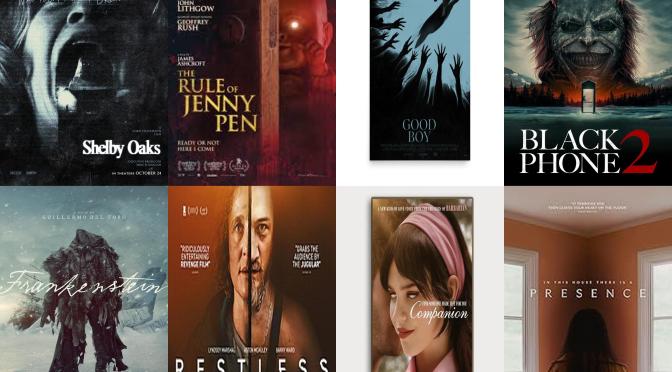
Scott Derrickson and co-writer C. Robert Cargill deliver a sequel to The Black Phone (2021) with Mason Thames, Madeleine McGraw, Jeremy Davies, and Ethan Hawke reprising their roles from the first chiller. I actually enjoyed this one more than the original, which despite the clunky set-up, finds the siblings and others trapped in a teen camp hit by a blizzard. They find themselves hunted and haunted by both The Grabber (Hawke) and other ghostly spirits haunting the area. Derrikson throws a lot of horror tropes and the characters (literally in certain scenes) at the walls, and much of it sticks. Having said that, I still don’t think The Grabber is the scariest villain ever committed to screen, despite Hawke’s presence. (Mark: 7.5 out of 11)
Companion (2025)
Companion (2025) feels like Garland’s Ex Machina (2014) colliding elegantly with Fargeat’s feral Revenge (2017)—a sunny day-horror fable that hides its nastiest surprises in plain sight. Its twists are sharp, its aesthetic confident, and its ideas far more ambitious than its modest surface first suggests. I would have admired it even more were it not, on occasions, completely dumb. Plus, the occasional drift into a comedic register undercuts its more incisive moments. The beautiful Sophie Thatcher once again commands the screen with the same riveting presence she brought to Heretic (2024). Mark: 8 out of 11.
Graduation Day (1981)
Thanks to Bobby Carroll’s site for reminding me about slasher film, Graduation Day (1981), as I had completely forgotten about it. High quality kills and gore mask a screenplay which has more nudity than character development. Yet, I am a sucker for these 1980’s exploitation flicks and this is a watchable one. Mark: 6 out of 11
Good Boy (2025)
An low-budget horror film triumph with Ben Leonberg directing his own dog, Indy, a Nova Scotia Duck Tolling Retriever, as the only witness to nasty spirits threatening his owner. The film emerges as a formal tour-de-force, whose meticulous composition and deliberate pacing elevate its simple premise into something unexpectedly resonant. Its visual precision and rhythmic control shape an atmosphere of dread that feels more sculpted than sensational, grounding the film in an emotionally impactful narrative about loyalty, vulnerability, and the unsettling spaces between trust and fear. For all its craft, and impressive animal direction, the film doesn’t quite sustain a relentless menace throughout. But, it remains a memorable feature debut from Leonberg and Indy the dog. Mark: 8.5 out of 11.
Presence (2025)
In Presence (2024), David Koepp and Steven Soderbergh demonstrate just how potent a one-location horror film can be when discipline and imagination converge. The entire piece unfolds like a controlled exhale: a slow-build structure that trusts the audience to lean in, and a drifting, almost contemplative camera that adopts the ghost’s POV to quietly—sometimes imperceptibly—reveal fragments of the story. Instead of overplaying its hand, the film slow-drips its plot elements with an elegance that keeps tension suspended in the air, letting unease pool in the corners of an otherwise ordinary space. By the time it reaches its finale, Presence (2024) delivers not only a surge of emotional and thematic clarity but two genuinely surprising twists—earned, unsettling, and executed with the kind of precision that affirms both writer and directors’ mastery of the form. Mark: 8.5 out of 11.
Restless (2024)
Really good independent British thriller with Lyndsey Marshal as a nurse, Nicky, who finds herself terrorized by 24-hour partying thug neighbours. Writer-director Jed Hart creates great empathy and identification with the situation and it’s a shame decent British films like this get short shrift at the multiplexes. Nicky’s spiral into insomnia-driven madness is compelling as her desperate attempts to sleep give way to vengeance. But the film’s final act tonal turn denies us a full-on descent into suburban hell, for something amenable but unfortunately less twisted. Mark: 7.5 out of 11
The Rule of Jenny Pen (2025)
The Rule of Jenny Pen is an original, weird, and powerful shock of a film — a mash-up of psychological thriller and nursing-home horror that lands far more often than it stumbles. Its greatest strength is, without question, the towering performances at its centre. Geoffrey Rush and John Lithgow, two masters of calibrated gravitas, turn the film’s cat-and-mouse mind game into a gripping acting showcase. Together, they elevate the film’s themes of aging, vulnerability, and institutional neglect into something both unsettling and strangely beautiful. The plotting, however, does get a bit sticky toward the end. The final act jars slightly, causing me confusion in an otherwise tight psychological narrative. Still, even as the story wobbles a tad, the film’s originality, eerie tone, and powerhouse acting keep it compelling. Mark: 8 out of 11
The Woman in the Yard (2025)
The Woman in the Yard (2025) rises on the strength of Danielle Deadwyler’s commanding lead performance. As a mother trying to protect her two children from a funereal spirit lingering in their backyard, Deadwyler grounds the supernatural dread with raw emotional honesty. The child actors match her with a believable, lived-in family dynamic that makes the haunting feel all the more personal. Where the film falters is in its structure. The script leans heavily on crow-barred flashbacks that interrupt rather than enrich the unfolding tension. A more linear approach could have built a stronger emotional momentum, allowing the story’s grief, guilt, and mental illness to accumulate naturally instead of stuttering backward at key moments. (Mark: 6 out of 11)
Together (2025)
Together (2025) gets an immediate boost from the casting of real-life couple Alison Brie and Dave Franco, whose natural chemistry gives the film an authentic emotional core. As a pair trying to rebuild their relationship after moving from the city to a rural small town, they convincingly inhabit the tensions, resentments, and unspoken fears that surface long before the horror does. Their incompatible expectations feel lived-in — and once they tumble into a sinkhole and the strange bodily transformations begin, that emotional groundwork makes the nightmare hit harder.
I loved the trailer for this film, which promised a truly skin-crawling descent into body-horror chaos. The final product, while atmospheric and often engrossing, doesn’t fully deliver on that promise. It pulls back when it could push further, leaving some of the more disgusting, surreal possibilities off-screen. But the ending — bold, surprising and unexpectedly poignant — is a fantastic payoff. Even if the film doesn’t always reach the extremes it teases, Together still manages to leave a memorably twisted impression. Mark: 8.5 out of 11
Halloween Review Special: Werewolf Films – Part #2
Happy Halloween again! Part 1 of my Werewolf film reviews can be found here on this link. So, on with Part #2 with all films marked out of 11!
*** CONTAINS SPOILERS ***
Ginger Snaps (2000)
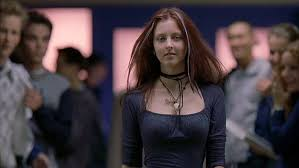
Ginger Snaps (2000) is a rare and refreshing take on the werewolf myth, shifting the focus to the female experience with wit and bite. As the awkward Bridget, Emily Perkins gives a wonderfully grounded performance, desperately trying to save her sister Ginger after a fateful wolf attack. Cleverly linking the lunar and menstrual cycles, the film transforms body horror into a sharp coming-of-age allegory. Smart, sexy, and darkly funny, it’s packed with gallows humour, fantastic gore, and a subversive energy that makes it one of the standout horror films of its era. Mark: 9 out of 11
Howl (2015)
Howl (2015) is an underrated British werewolf gem that feels like Dog Soldiers (2002) set on a train — claustrophobic, gritty, and laced with dark humour. Ed Speleers plays a weary, beta-male guard whose routine night shift derails into a fight for survival when the train breaks down in the woods. As tensions rise among the stranded passengers, he’s forced to find his courage against something far more terrifying than “leaves on the line.” Mark: 8.5 out of 11
The Howling (1981)
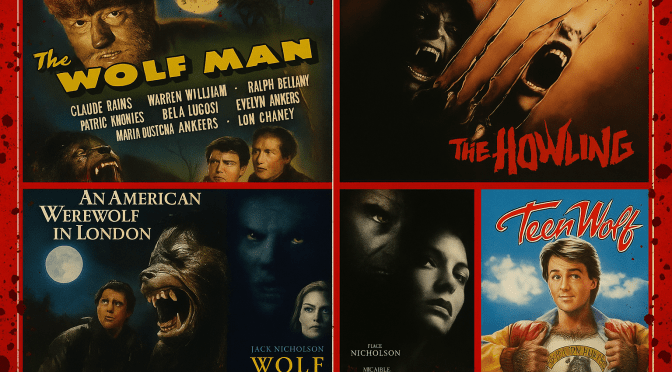
Joe Dante’s The Howling (1981) may now feel almost plotless in retrospect, but it remains a deliriously inventive slice of horror cinema. The film thrives on unforgettable set-pieces and grotesque energy — from a chillingly unrecognisable Robert Picardo as the predatory Eddie Quist to Elisabeth Brooks’ hypnotic, sensual menace. Dee Wallace delivers a strong turn as the quintessential scream queen, leading to an unintentionally funny change at the end, while Rob Bottin’s groundbreaking transformation effects still stand among the genre’s finest. Mark: 8 out of 11
Red Riding Hood (2011)
A messy yet oddly entertaining blend of Twilight-style romance, fairy-tale gothic, and werewolf whodunnit. Amanda Seyfried glows at the center of the melodrama, giving the film more heart than it deserves, while Gary Oldman chews through his lines — and the scenery — with the gusto of a man earning a very comfortable Hollywood paycheck. Mark: 5.5 out of 11
Silver Bullet (1985)
Silver Bullet (1985) carries many of the familiar hallmarks of Stephen King’s storytelling — small-town paranoia, moral rot beneath the surface, and a sense of homespun Americana under siege — but lacks the sharpness of stronger King adaptations. While it holds a nostalgic charm for 1980’s horror fans, thanks to its mix of pulp, sentimentality, Gary Busey-on-butane, and Corey Haim’s spirited performance, it’s far from essential and not one of my go-to werewolf films. Mark 6.5 out of 11
Teen Wolf (1985)
I’m ashamed to admit I’d never seen Teen Wolf (1985) until now — but it’s a charming coming-of-age comedy that finds Michael J. Fox as Scott Howard, a teenager who discovers a very hairy family secret. Scott juggles puberty, romance, bullies, and basketball glory. The adults are enjoyably eccentric, but it’s James Hampton as Scott’s warm, understanding father who grounds the film with genuine heart. Mark 7 out of 11
Werewolves (2024)
Werewolves (2024) boasts an intriguing premise — scientists racing to cure humanity of a wolf-mutant virus unleashed under a supermoon — and delivers plenty of muscular action-horror energy. Frank Grillo anchors the nocturnal mayhem with his trademark grit, like a U.S. Statham. It’s entertaining, but the world-building feels rushed, as if we’ve dropped into the sequel to an origin story that doesn’t exist yet. Mark 6 out of 11
Werewolves: The Beast Amongst Us (2012)
Werewolves: The Beast Amongst Us (2012) is an entertaining but clearly made-for-TV creature feature that feels like a bargain-bin mashup of Stephen Sommers’ The Mummyand Van Helsing — all gothic flair and monster mayhem, but without the budget, stars, or polish. Still, its pulpy enthusiasm and old-school monster-hunting energy make it a mildly fun watch for fans of B-movie beast action. Mark 6 out of 11
Werewolves Within (2021)
Werewolves Within (2021) has a sharp, witty script packed with humour and clever twists, but its over-the-top direction and eccentric ensemble make it hard to fully connect with. Sam Richardson shines as the affable Forest Ranger caught amid a group of oddball townsfolk — and a monster on the loose. Fast-paced, funny, and gory, it plays like Tremors set in the snow — just without the magic that made that classic so effortlessly great. Mark 7 out of 11
Wolf (1994)
Wolf (1994) suffers from an under cooked corporate-werewolf concept that never quite decides if it wants to be a horror film, a romance, or a satire — and ends up failing at all three. Jack Nicholson and Michelle Pfeiffer, both usually magnetic, seem oddly disengaged under Mike Nichols’ overly restrained direction. The film has flashes of intrigue and style, but it lacks bite; James Spader, simmering with sleaze and menace, could have stolen the show if only he’d been let off the leash. Mark: 6 out of 11
Wolfcop (2014)
WolfCop (2014) is a gloriously bonkers B-movie romp about an alcoholic small-town cop, Lou Garou (Leo Fafard), who becomes a werewolf and stumbles into a plot of witchcraft and sacrifice. Director Lowell Dean brings wild energy and gleeful chaos to the mix, delivering gory action and sharp humor that far outshine the film’s modest budget. It’s ridiculous, rowdy, and an absolute blast from start to finish. Mark: 7.5 out of 11
The Wolf Man (2010)
The Wolfman (2010) is a stylish, brooding gothic remake elevated by Rick Baker’s stunning creature effects and an atmosphere dripping with fog, blood, and tragedy. On rewatch, it’s far more enjoyable than it first seemed, with Benicio Del Toro and Emily Blunt grounding the film’s emotional heart while Anthony Hopkins bellows through his expositional monologues with Shakespearean gravitas. The production design, lighting, and Danny Elfman’s sweeping score are all superb, but the film’s flaws are clear — studio meddling and re-shoots leave the opening character setup feeling rushed and the narrative uneven, hinting at a richer version lost to the editing room. Mark: 7 out of 11
For fans of Upgrade (2018) and The Invisible Man (2020), Wolf Man may feel like a missed opportunity. Those films balanced high-concept storytelling with sharp social commentary, whereas Leigh Whannell’s latest effort feels more like a half-formed howl in the night. See my full review here. Mark: 6.5 out of 11
The Wolf of Snow Hollow(2020)
The Wolf of Snow Hollow (2020) delivers an effective monster story filtered through Jim Cummings’ uniquely neurotic, darkly comedic lens. Cummings stars as a frazzled small-town cop juggling alcoholism, a dementia-stricken father, and a teenage daughter — all while a vicious creature tears through the community. It’s an offbeat, entertaining indie horror with sharp writing, emotional bite, and a fantastic twist buried in the chaotic narrative pile-up of its finale. Mark 8 out of 11
The Wolfman (1941) / Frankenstein meets The Wolfman (1943)
Lon Chaney Jr. has always been my favorite tragic werewolf — a figure of deep sadness and empathy rather than pure monstrosity. I grew up watching those classic Universal horror films, and his portrayal of Larry Talbot still resonates as one of cinema’s most heartbreaking depictions of the cursed outsider. There’s a weary humanity to Chaney’s performance, a sense of a man doomed to repeat his suffering under the full moon, forever torn between guilt and fate.
While the scripts in those early Wolf Man films are often simple and melodramatic, their emotional weight endures thanks to Chaney’s sincerity and Jack Pierce’s groundbreaking makeup effects. Pierce’s work transformed the genre, creating an iconic design that remains unmatched in its tactile, hand-crafted artistry. Together, Chaney and Pierce gave the werewolf myth its soul — one that was less about savagery, and more about the tragedy of being human within a cursed lunar cycle. Mark: 9 out of 11
Halloween Review Special: Werewolf Films – Part #1
Happy Halloween! As loyal readers of this blog will know I am a massive horror film fan. Therefore I have focused August’s viewing on the Werewolf sub-genre and present some short reviews of some of my favourites and some not so good. As usual all marked out of 11!
Werewolf films have long captivated both filmmakers and audiences because they tap into primal fears and psychological complexities that transcend genre. At their core, these stories explore the theme of transformation—both physical and psychological—which resonates deeply with viewers. The metamorphosis from human to beast is not just a spectacle of horror; it’s a metaphor for the loss of control, the unleashing of suppressed desires, and the tension between civilization and instinct. This duality offers rich narrative terrain for directors and screenwriters to explore identity, morality, and the boundaries of human nature.
Psychologically, the werewolf embodies the Freudian concept of the id—the raw, instinctual part of the psyche driven by aggression and desire. The human persona represents the ego, trying to mediate between the id and the constraints of society, or the superego. When the transformation occurs, the id overwhelms the ego, resulting in violent, animalistic behavior that defies social norms. This internal conflict is dramatized through the werewolf’s struggle to reconcile their human conscience with their monstrous impulses, making the character both terrifying and tragically relatable.
The tension between animal and human also reflects broader cultural anxieties. Werewolf films often surface during times of social upheaval, when questions about identity, repression, and conformity are especially potent. The creature’s split identity—man or woman by day, beast by night—mirrors the psychological fragmentation many experience in modern life. For filmmakers, this duality offers a visual and thematic playground: the grotesque transformation scenes, the haunting aftermath, and the moral ambiguity of the protagonist all contribute to a compelling cinematic experience. For audiences, the werewolf is not just a monster—it’s a mirror, reflecting the parts of ourselves we fear, repress, and sometimes secretly crave to unleash.
American Werewolf in London(1981)
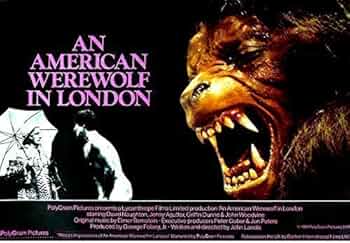
One of the greatest lycanthrope films of all time. Full of iconic scenes, scares, gore, jokes, sex and an incredible lunar-inspired soundtrack. John Landis, in a directorial purple patch at the time, managed to combine horror, comedy, mystery and a moving love story to memorable impact. Rick Baker’s make-up effects literally transformed further the art and craft of practical special effects going forward. Mark: 10 out of 11
Bad Moon (1996)
Truly dreadful film with a script that fails on most levels, notably logic. The beast is not only the werewolf in the guise of Michael Paré’s Uncle Ted, but also toxic masculinity. Single mum, Mariel Hemingway and her son spend most of the film failing to guess who the big bad wolf is until it is nearly too late. Mark: 3 out of 11
The Beast Must Die (1974)
So bad it’s almost good! The British studio, Amicus Productions, wolf-dunnit, even has the audience take a “werewolf break” where they get 30-seconds to work out who the monster is. Calvin Lockhart, Michael Gambon, and Tom Chadbon et al chew up the scenery, washing it down with bloody terrible effects. The budget was so low they had to use German Shepherd’s with mock fur as the werewolves. Mark 6 out of 11.
The Company of Wolves (1984)
Neil Jordan’s artful adaptation of Angela Carter’s short stories is a richly atmospheric triumph of mood. Though the film’s episodic structure and bookending narrative can feel a touch uneven, Jordan’s poetic direction and Carter’s dreamlike sensibility merge into something intoxicatingly strange. An excellent ensemble of character actors brings the fable-like vignettes to life, with Angela Lansbury delivering a particularly commanding and memorable turn. Mark 8 out of 11
Cursed (2005)
Wes Craven’s 2005 film The Cursed is a case where the behind-the-scenes turmoil proves far more frightening than the movie itself. A troubled production that saw Craven effectively abandon ship midway through, and it bears the scars of hasty reshoots and studio meddling. What emerges is a patchy, uneven werewolf tale with flashes of potential buried beneath the chaos. Still, a young Jesse Eisenberg lends surprising depth to the material, offering a glimpse of quality amid the hairy dross. Mark: 4 out of 11
The Cursed (2021)
Sean Ellis’s The Cursed (2021) delivers a potent blend of gothic grandeur and visceral horror, transforming familiar werewolf and Gypsy tropes into something deeply atmospheric and unsettling. With its striking visuals, meticulous period detail, and haunting score, the film conjures an eerie, painterly world where the sins of the past literally come back to bite. Beneath the blood and fog lies a thoughtful allegory about greed and the gentry’s theft of land, lending the stylish horror a surprising moral weight and emotional resonance. Mark: 8 out of 11
The Curse of the Werewolf (1961)
Hammer’s The Curse of the Werewolf (1961), is anchored by a powerful, brooding performance from Oliver Reed in his breakout role. A staple of my childhood viewing, it’s a film that surprises with its thoughtful set-up—using its Spanish setting to critique class divisions while evoking real empathy for Reed’s tragic, cursed Wolfman. The gothic atmosphere and emotional depth elevate it above typical monster fare, and Warren Mitchell’s turn as a Spanish watchman adds an unexpected and delightful touch of humour amid the savage murders. Mark: 7.5 out of 11
Dog Soldiers(2002)
Neil Marshall’s Dog Soldiers (2002) is an absolute gem of British horror and easily one of my favourites of the genre. Set in the misty isolation of the Scottish Highlands, it combines gritty military camaraderie with ferocious werewolf mayhem to brilliant effect. Kevin McKidd, Sean Pertwee, and Liam Cunningham are all superb, grounding the film with sharp performances that balance humour, heart, and genuine terror. Funny, moving, bloody, and properly scary, Dog Soldiersis a masterclass in doing a lot with a little—its creature effects and atmosphere are astonishing given the budget. A true modern classic that respects the genre with intelligently terrifying monsters and the film still howls with lunar power. Mark: 10 out of 11
Halloween is slowly creeping out of the fog and shadows. It’s a time of the year where horror films come to the fore. Personally, I watch horror all the year round, but it’s always fun when the genre pulls focus on the cultural calendar.
Rather than concentrate on current horror film releases, I thought it would be interesting to seek out chillers that are a tad less known. So, I had a scan through Amazon and Shudder screening platforms and unearthed several cult horror gems worth catching.
Some of these films come from the 1980’s period which encompassed the “video-nasty” era in the United Kingdom. With the advent of home video technology, the government suddenly got frightened about bloody and exploitational films and desired control. Censoring seventy-two titles and banning a flurry of films actually made people want to watch them more. This caused the government’s policy to backfire as people clamoured to watch “pirate” video versions of such films. In fact, it was in the living room watching forbidden films and the old Universal black-and-white classics where my true love of horror cinema began.
The following films may not have been banned at the time, but I was intrigued by how many of the titles I missed seeing on first release. Aside from Ben (1972), When A Stranger Calls (1979) and Phantasm (1979), I hadn’t seen the other titles. Therefore, if you’re looking for obscure horror films to watch then delve deep into the Amazon library. They have a fine feast of 1970’s and 1980’s fear inducing fare, many of them which were on the infamous “video-nasty” list. Dare you watch them!?
THE CAT OF NINE TAILS (1971)
An early Dario Argento giallo finds a blind puzzle-maker (Karl Malden) and dogged reporter (James Franciscus) investigating murders at a genetics lab. Aside from a couple of scary set-pieces, notably in a graveyard, it neither works as a detective nor horror story. It is however beautifully filmed with a vibrant restoration. (Mark: 6 out of 11)
CHUD (1984)
As the Nuclear Regulatory Commission track down missing toxic waste the New York homeless population are becoming victims to something monstrous in the sewers. An energetic sci-fi-horror hybrid combining a schlocky plot with socio-environmental themes. It’s not bad and actually quite funny, with early roles for John Heard and Daniel Stern whose acting raises the overall quality. (Mark: 6 out of 11)
CLASS OF 1984 (1982)
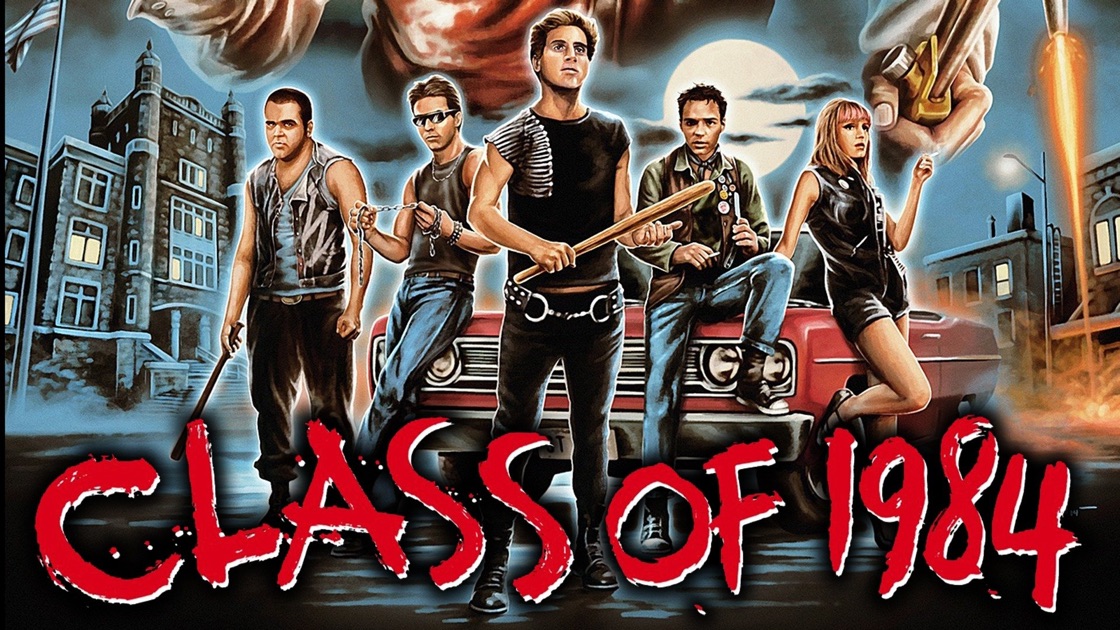
I remember school kids raving about this film when I was twelve. I really wanted to see it, but could never find it in the video shop or from the “pirate” video guy. The plot merges The Blackboard Jungle (1955) with Death Wish (1974), as Perry King’s music teacher attempts to soothe the savage beast of a gang of nasty punk students. He fails and the final act revenge-driven rampage is fantastically inventive and gory. Latterly famous director, a young Tim Van Patten, portrays the psychotic, Peter Stegman, with vicious zeal. A true exploitational classic. (Mark: 8 out of 11).
HELL NIGHT (1981)
This is one of those films I had never even heard of. With a sizeable budget of $1.4 million dollars for a slasher film, it concerns four college students, including a grown-up Linda Blair, spending the night in a creepy house as part of an initiation ritual. Unfortunately, there’s a psychotic killer about hellbent on hunting them down. We’ve seen it all before, but it was nicely filmed and had decent humour. Overlong but way better than I thought it would be. (Mark: 7 out of 11)
PHANTASM II (1988)
I reviewed the remastered version of Don Coscarelli’s low-budget masterpiece here, but only just got round to watching the sequel. Phantasm II (1988) had a bigger budget and suffers from some stodgy plotting. The re-casting of Mike with James Le Gros in the role throws you. Yet, once Mike and Reggie fight with the Tall Man (inimitable Angus Scrimm), the razor-sharp spheres and the hooded monsters, the film finds real pace. Coscarelli blows-up a lot of stuff and ramps up the weaponry, but the sequel lacks the twisted magic of the original must-watch horror fantasy, Phantasm (1979). (Mark: 6.5 out of 11)
TERROR TRAIN (1980)
Another unknown mini-gem I found on Amazon. This Canadian slasher film is, you guessed it, set on a train and finds, yes you guessed it again, college students getting picked off one-by-one by a vengeful psycho. Notable for a really good plot which gives the killer empathy and understandable motivation, it also stars everyone’s favourite final girl, Jamie Lee Curtis. With disguise and magic prevalent in the themes, David Copperfield also appears in a neat role. Highly entertaining with a killer twist. (Mark: 8 out of 11)
WHEN A STRANGER CALLS (1979)
Inspired by a famous urban legend, Fred Walton’s chilling suspense thriller has one of the most nail-biting opening twenty minutes in horror cinema. Carol Kane is the babysitter terrorized by a series of tense phone calls from a mystery ringer. From that terrifying start the story falters slightly as it focusses on Charles Durning’s obsessive search for the unhinged man. Only when Kane rejoins the film some years later does the horror rise up again in a truly frightening denouement. (Mark: 8.5 out of 11)
WILLARD (1971) / BEN (1972)
This was an odd one because I knew and seen the sequelBen (1972) when I was a younger. Little did I realise the original Willard (1971) had been released the year before and became a sleeper box-office hit. Bruce Davison is excellent as the introvert, Willard, who is bullied at work by his aggressive boss, Ernest Borgnine. Only when, and take a deep breath here, Willard trains an army of rats does he gain confidence to take on the world. It’s a weird film that actually works because of Willard’s fascinating character arc and Davison’s nuanced performance. (Mark: 8 out of 11)
The follow-up Ben (1972) focusses on Willard’s alpha rat, Ben, and his friendship with lonely kid, Danny. The sequel really raises the rat count and there appears to be thousands of them in their dirty lair. Danny is a likeable kid who suffers from a serious illness that prevents him from going out. Why he would make friends with a killer rat though is still frankly nuts! A lack of thrills and goofy premise make it difficult to recommend, and is more famous for the classic Michael Jackson hit called, surprisingly enough, Ben.(Mark: 6 out of 11)
One of the main reasons I watch films is because I love a good story. I especially like working out the ins and outs of the plot lines too. So, it stands to reason that some films may have inconsistencies in their story or even plot holes. I would define a plot hole as a gap in the story which remains unexplained by the writer or writers. Sometimes these can spoil the film, but more often than not it can add to the enjoyment. They may in fact be known to the writers, however, they may have left it as an enigma for the audience to work out. Either that or the writers made a mistake or they could not be bothered to, or were unable to close the hole. In fact, they may be hoping we don’t notice or care.
There are so many films out there and I’m sure one could nitpick holes in most stories. Here I have picked out six of my favourites. I have chosen well known films so as to differentiate between good and just plain bad storytelling. Moreover, I have also omitted horror films where people just make stupid decisions. Likewise fantastical, surreal and dream logic narratives are avoided. Lastly, the major Marvel franchise plot hole is skimmed. You know the narrative hole that occurs in the stand alone entries. E.g. in Spiderman: Far From Home (2019), if the world is being threatened why don’t the other Avengers help poor Peter Parker? Oh, they’re conveniently busy. . . hmmm. Anyway, here are six of the best plot holes I like. If you can think of more please let me know.
***CONTAINS MASSIVE SPOILERS***
KING KONG (1933 / 1978 / 2005) – how did they get King Kong back to New York?
This question is not always one that is brought up as an obvious plot hole. However, think about it. Kong is captured on Skull Island, but is suddenly revealed in New York. How did they manage to find a boat big enough to carry him to America? And what if he woke up? He would destroy any ship carrying him with a yawn and stretch. Plus, because we do not SEE him being transported a massive hole in the narrative occurs.
HALLOWEEN (1978) – who taught Michael Myers how to drive?
It chills the bones when Donald Pleasance’s Dr Samuel Loomis finds on a dark evening on October 30th, the day before Halloween, his most feared patient, Michael Myers has escaped from a maximum security facility. Myers has stolen a car and sped off into the night. The big question is, given Michael was six when he committed the murder, how the hell did he learn to drive? Obviously given Myers is a manifestation of pure evil, he somehow mastered driving through psychic force.
STAR TREK: THE MOTION PICTURE (1979) – the V’Ger probe would be coded as Voyager!
Talking of William Shatner masks, Star Trek is a wonderful science fiction television series and film franchise. It’s loved by many and given the numerous narratives involving time travel and alien species there are no doubt more plot holes in there. I mean the number of aliens who talk English and look human is quite something. However, in Star Trek: The Motion Picture (1979), there is a major plot hole involving the “V-Ger” probe. Indeed, the entire twist of the plot centers around “V-Ger” actually being “Voyager,” as demonstrated by the corroded name plate on the probe. It seems weird though that nowhere in its programming (or anywhere else) did Voyager have its name recorded. It would be like if a label of a computer, say “Dell”, had the “D” covered up, the boot-up screen would not read, “ell” during post, it would still read, “Dell”! Thus, the plot hole is entirely illogical, Captain.
THE TERMINATOR (1984) – why not just destroy the time machine and stop Kyle Reese going back?
There are loads of plot queries in James Cameron’s classic sci-fi thriller. The one I like the most is more paradoxical than plot hole, but similarly this illustrates flaws in Skynet’s overall plan. Given Skynet and The Terminator have detailed files on everyone, why didn’t they know Kyle Reese was John Connor’s father? If so, just destroy the time machine to stop him going back. If killing Sarah Connor in the past stops John from ever being born, perhaps killing Kyle or stopping him time travelling would have the same effect.
SHAWSHANK REDEMPTION (1994) – when Andy escapes, how does he put the poster back so perfectly?
This is one plot hole I love and is in fact, given Andy Dufresne’s incredible struggle to escape, one you can certainly understand. I mean, thematically speaking, Andy is coded as a spiritual Christ-like figure throughout the film. It’s very subtle, but it is there. Thus, perhaps, he had some divine intervention during his escape. He definitely earned it. Lastly, I also love that it is literally a plot hole and Andy escaped right through it.
SIGNS (2002) – why did the Aliens raid a water-based planet when it hurt them?
While the director has had his fair share of critics, I generally enjoy most of his early films and some of the more recent ones. Signs (2002) is a fantastic sci-fi thriller with themes of faith, family and alien incursion. The major hole is the aliens have to be incredibly stupid to want to invade a planet that is 70% their biggest weakness. However, as some have pointed out, it wasn’t an invasion, but a raid to get some people. However, given people are made up of water and water is in Earth’s atmosphere, perhaps Shyamalan should have made their weakness alcohol or even actual acid. Still a very entertaining film though.
Written by: Jeff Fradley, Danny McBride, David Gordon Green
Based on characters created by John Carpenter and Debra Hill
Cast: Jamie Lee Curtis, Judy Greer, Andi Matichak, Will Patton, Virginia Gardner etc.
Music by: John Carpenter, Cody Carpenter, Daniel Davies
***MAY CONTAIN SPOILERS***
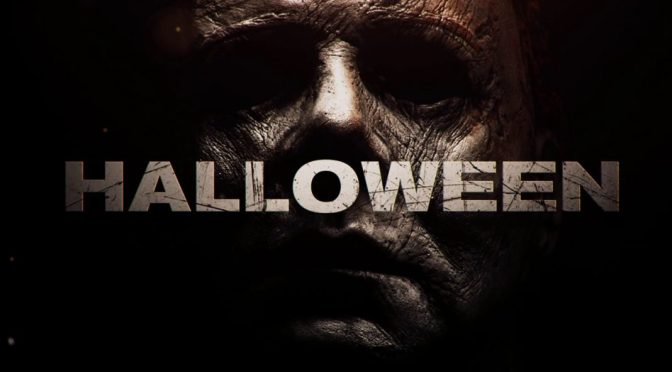
John Carpenter’sHalloween (1978) is a seminal horror film experience. It spawned an army of sequels and sidequels and reboots which darkened the cinemas, mostly failing to get anywhere near Carpenter’s low-budget masterpiece in terms of quality and scares. It also gave birth, along with Black Christmas (1974), to the slasher film genre. Of course Hitchcock’s classicPsycho (1960), could make claim to that too, but following the success of Carpenter’s Halloween (1978), the bloodgates opened. What followed was a deluge of stabbing and slashing copycat killer movies from the late 1970s onwards.
Flash forward to 2018 and with Halloween (2018), we now have the ELEVENTH film in the franchise. Having read some decent reviews I sat down to watch it last night on, aptly enough, Halloween night. My expectations were pretty low, but I was encouraged by the return of Jamie Lee Curtis, plus David Gordon Green has proved himself a very solid filmmaker in the past. Movies like decent stoner comedy, Pineapple Express (2008), and dramas Joe (2013), and Stronger (2017), were very watchable. Least said about Your Highness(2011), the better.
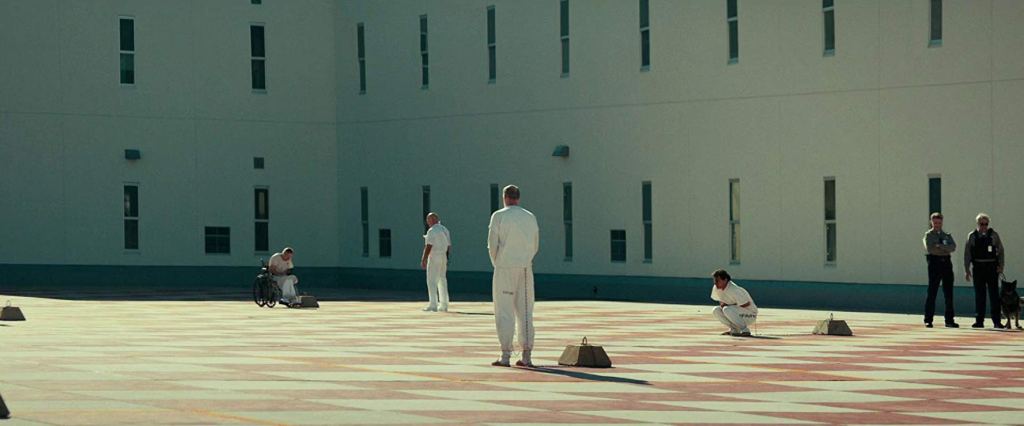
The film opens with an excellent set-piece establishing Michael Myers, some forty years older, in a maximum security mental health institution. Two reporters have come for an interview for their latest true crime podcast. Safe to say Myers isn’t interested in communicating. The editing and imagery and music combine to create a very unsettling experience, so the film starts strongly. We then re-establish Myers’ narrative counterpart, Laurie Strode (Jamie Lee Curtis).
Now, you have to swallow the fact that this is a direct sequel to the original Carpenter classic. None of the other films happened; which essentially works, despite some wonky dialogue and exposition. Thankfully, with Lee Curtis on excellent form as the post-traumatised Strode, we have a flawed but compelling heroine to root for. Strode has been waiting for Myers and preparing with firepower, high security and wits in order to defeat him. Sub-plots involving Strode’s daughter (Judy Greer) and granddaughter (Andi Matichak) are developed, but kind of lose their way as the murderous Myers mayhem begins. Still, at least they tried to write some depth into the screenplay.
After a very strong start the film begins to unravel in the middle. The machinations of the plot to get Myers on the Halloween rampage felt random and illogical in places. An important event occurs off-screen and this impacted my commitment to the story. This isn’t really a criticism as such, because genre conventions and a high death rate need to be met. However, despite some well directed set-pieces, whenever Laurie Strode was off-screen the film lost some emotional power. Having said that, if it is deaths with knives, hammers, cars and crow-bars you want, this film contains that and more.
Overall, I really wanted to enjoy this film more than I did. I think the work of Gordon Green and Curtis is especially good. The script however, suffered during a messy second act, although the final showdown was really well executed (sorry.) With $250 million made at the box office, it goes to show though that the Halloween franchise is alive and kicking and two further sequels are planned. It has some scary moments, some brilliant gore and the iconic music still haunts me to this day. Nonetheless, this reboot doesn’t hold a pumpkin flame to the original. Then again, not many horror films do.
100 NOT OUT! #2 – MORE GREAT FILMS OF 100 MINUTES OR LESS
Almost two years ago I did a piece on great films 100 minutes or less (read here) and it pretty much – aside from the Game of Thrones “great monologues” piece – got the most views of any articles I’ve done. So in keeping with the spirit of the Hollywood movie system I have decided to do a sequel.
On the previous one the classic films I listed HERE were the following:
12 ANGRY MEN (1957)
ASSAULT ON PRECINCT 13 (1976)
BROADWAY DANNY ROSE (1984)
FARGO (1996)
THE KILLING (1956)
MAD MAX: ROAD WARRIOR (1981)
NIGHT OF THE LIVING DEAD (1968)
PREDESTINATION (2014)
RESERVOIR DOGS (1992)
TRAINSPOTTING (1996)
TREMORS (1990)
UP (2009)
And in true sequel fashion I have decided to not mess with the formula and thus, here are twelve more great feature films 100 minutes or less. Feel free to suggest your own in the comments.
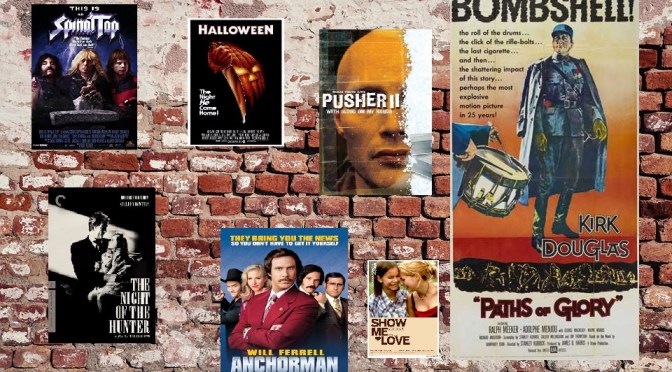
ANCHORMAN: LEGEND OF RON BURGUNDY (2004)
To some Will Ferrell is either a complete waste of space or a comedic genius. While some of his later stuff has been very hit or miss, his earlier movies are pure gold. Arguably his finest role remains the sexist and idiotic news reporter Ron Burgundy; his first outing being a riotous gag-a-second mix of satire, stupidity and songs.
BLOOD SIMPLE (1984)
The Coen Brothers’ debut film is a dirty-criss-cross-bloody-neo-noir-thriller which both contemporises and subverts the work of James M. Cain. As with their later movies the Coen Brothers create a set of characters whose various plans unhinge and devolve in to murderous and at times blackly humorous tragedy.
BREATHLESS (1960)
Jean Luc Godard’s debut “nouvelle vague” feature remains one of his most accessible films. Filtering the Hollywood crime thriller through Godard’s iconoclastic filmic style, it stars the impossibly cool Jean-Paul Belmondo and sweet Jean Seberg. Influential, simple and impactful it remains a French film classic to this day.
DARK MAN (1990)
Sam Raimi is better known for his Evil Dead and Spiderman trilogies but he has also created some other fantastic works too. The comic book stylings of Dark Man are one such B-movie as Liam Neeson portrays a scientist whose work is destroyed; leaving him burnt to a crisp and seeking revenge on those who did him wrong.
GHOST STORY (2017)
David Lowery has created one of the most original stories of recent years and his handling of composition; editing and temporal structure is a masterclass in pure cinema. This film is hypnotic, tragic and echoes the work of Bergman, Kubrik and Tarkovsky as departed Affleck haunts and loves Rooney Mara’s from the ether.
HALLOWEEN (1978)
John Carpenter’s horror classic provided the template for loads of copy-cat slasher films and unnecessary sequels. The original is easily the best as killing machine Michael Myers escapes the asylum to hunt down Jamie Lee Curtis and her school mates. The score, scares and Donald Pleasance all combine to chilling impact.
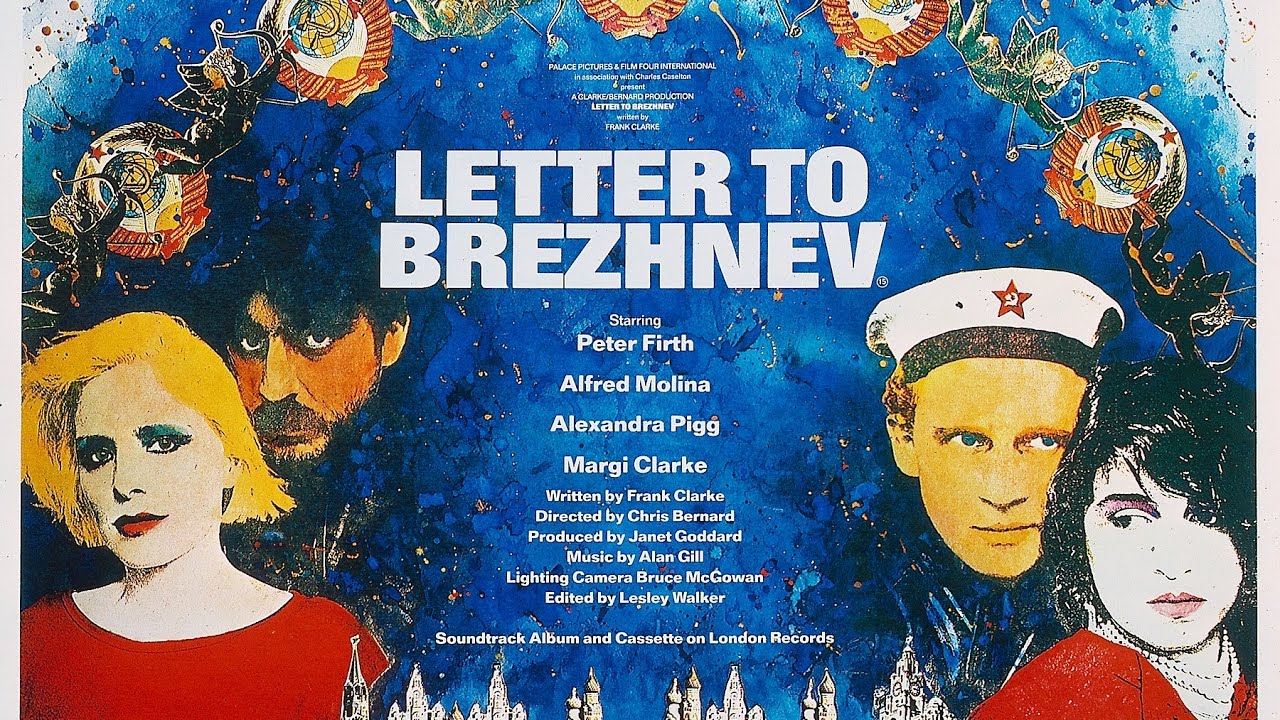
LETTER TO BREZHNEV (1985)
This classic slice-of-life-80s-set romance story finds Alexandra Pigg and Marjorie Clarke as working class Liverpool lasses looking to escape their humdrum lives. Enter Peter Finch and Alfred Molina, as Russian sailors on shore leave who spend a night with them. Full of earthy humour this is a great little film with a lot of heart.
NIGHT OF THE HUNTER (1953)
This is a genuine classic due to the fine performances, direction and amazing cinematography which places our characters in murky shadows and danger throughout. Robert Mitchum’s preacher is big and scary and money-grabbing and murderous; a symbol of religion as seen by the writer and filmmakers.
PATHS OF GLORY (1957)
Stanley Kubrik’s Paths of Glory has been proclaimed a masterpiece and one of the greatest anti-war films of all time. I have watched this classic many times when young and having seen it on the big screen at the BFI recently I can testify that it has lost NONE of its grandstanding power. A genuine ninety-minute movie classic!
PUSHER II (2004)
Nicolas Winding Refn’s early Danish films are dirty and brutal affairs. They show career criminals, dealers and addicts inhabiting the mean streets of Copenhagen. The Pusher trilogy is a grim but absorbing narrative as it finds petty thief Tonny – portrayed brilliantly by Mads Mikkelsen – trying and failing to go straight.
SHOW ME LOVE (1998)
Talented Swedish film director Lukas Moodysson has seemingly sabotaged his career by producing riskier narratives of late. Yet, his first two films Show Me Love and Together (2000) were accessible slices of life; both very funny and emotional. Show Me Love was a great coming-of-age story: warm, cold, bitter and sweet.
THIS IS SPINAL TAP (1984)
Oh, what a classic this is and in less than even ninety minutes we get one of the funniest films ever committed to celluloid. Charting the misadventures of heavy rock band Spinal Tap, this mockumentary starring Christopher Guest and Michael McKean genuinely goes up to eleven with scene after scene of parodic hilarity.













 The Cinema Fix presents