Tag Archives: musical

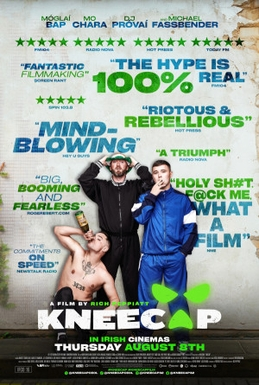
Amazon Prime Film Review: Kneecap (2024) – Irish rap rebels substitute words-for-bombs in riotous youth-in-revolt triumph!

Amazon Prime Film Review: Kneecap (2024)

Directed by Rich Peppiatt

Screenplay by Rich Peppiatt

Story by Rich Peppiatt, Liam Óg Ó hAnnaidh, Naoise Ó Cairealláin, JJ Ó Dochartaigh

Produced by Jack Tarling and Trevor Birney

Main cast: Naoise Ó Cairealláin, Liam Óg Ó hAnnaidh, JJ Ó Dochartaigh, Josie Walker, Fionnuala Flaherty, Jessica Reynolds, Adam Best, Simone Kirby, Michael Fassbender, etc.

Cinematography by Ryan Kernaghan

*** MAY CONTAIN SPOILERS ***


The 2024 film Kneecap is a riotous, politically charged portrait of youth in revolt, channeling the raw energy of punk and hip-hop into a uniquely Irish-language rebellion. Starring the real-life Belfast rap trio—Mo Chara, Móglaí Bap, and DJ Próvaí—as fictionalized versions of themselves, the film blends anarchic humour, biting satire, rites of passage, and cultural defiance to tell the story of how a group of working-class misfits wove their frustrations into musical gold.

Set in post-Troubles West Belfast, the film captures the lingering scars of British occupation and the generational trauma it left behind. Liam (Mo Chara) and Naoise (Móglaí Bap) are introduced as small-time drug dealers navigating poverty, police harassment, and fractured families. Their lives take a turn when JJ Ó Dochartaigh, a disillusioned Irish-language teacher, discovers their lyrical talents and joins them as DJ Próvaí. Together, they form the eponymous group, an Irish-language rap group that weaponizes music as a form of cultural resistance.

The film is unapologetically rebellious, using the Irish language not just as a means of communication but as a symbol of defiance. Arlo (Michael Fassbender), Naoise’s father and a former republican paramilitary, encapsulates this sentiment when he declares, “Every word of Irish spoken is a bullet fired for Irish freedom” . This philosophy permeates the group’s music, which tackles issues like British colonialism, drug culture, and the complexities of identity in a divided society.


Kneecap (2024), while a bold and electric celebration of youth rebellion arguably overstretches itself emotionally by attempting to cover too many themes at once. In its ambition to be both a political statement and a coming-of-age tale, a musical odyssey and a generational cry for recognition, the film occasionally dilutes its emotional impact. As the film juggles a multitude of weighty themes: the trauma of post-Troubles Northern Ireland, the fight for Irish-language preservation, the drug culture plaguing working-class communities, the fractured nature of family life, absent fathers and mothers, and the burden of political legacy. Add to this the rise of a rap group in an unexpected cultural context, and the film becomes a whirlwind of ideas competing for attention. The result is a film that sometimes feels like it’s racing to say everything at once, rather than letting its most resonant emotional threads breathe.

Nonetheless, director and co-writer, Rich Peppiatt, displays strong visual flair evoking the urban vibrancy of Trainspotting (1996) and underdog musical joy of The Commitments (1991). It helps that the film is often fucking hilarious. Plus, I realise it’s a raw reflection of their life choices, I could take or leave the perpetual scenes of gratuitous drug-taking. At the same time, the film doesn’t shy away from the gritty realities of its setting. It portrays the trio’s clashes with radical republican groups, their run-ins with the police, and the family and romantic struggles that come with their newfound fame.

Amidst the chaos, Kneecap (2024) maintains a sense of humour and humanity, offering a nuanced look at the power of art to challenge the status quo and inspire change. In essence, Kneecap is a ballsy and risk-taking celebration of rebellion, a testament to the enduring power of language and music as tools of resistance, and a vivid portrayal of youth challenging the remnants of a colonial past and a country attempting to find peace and identity after centuries of conflict.

Mark: 8.5 out of 11


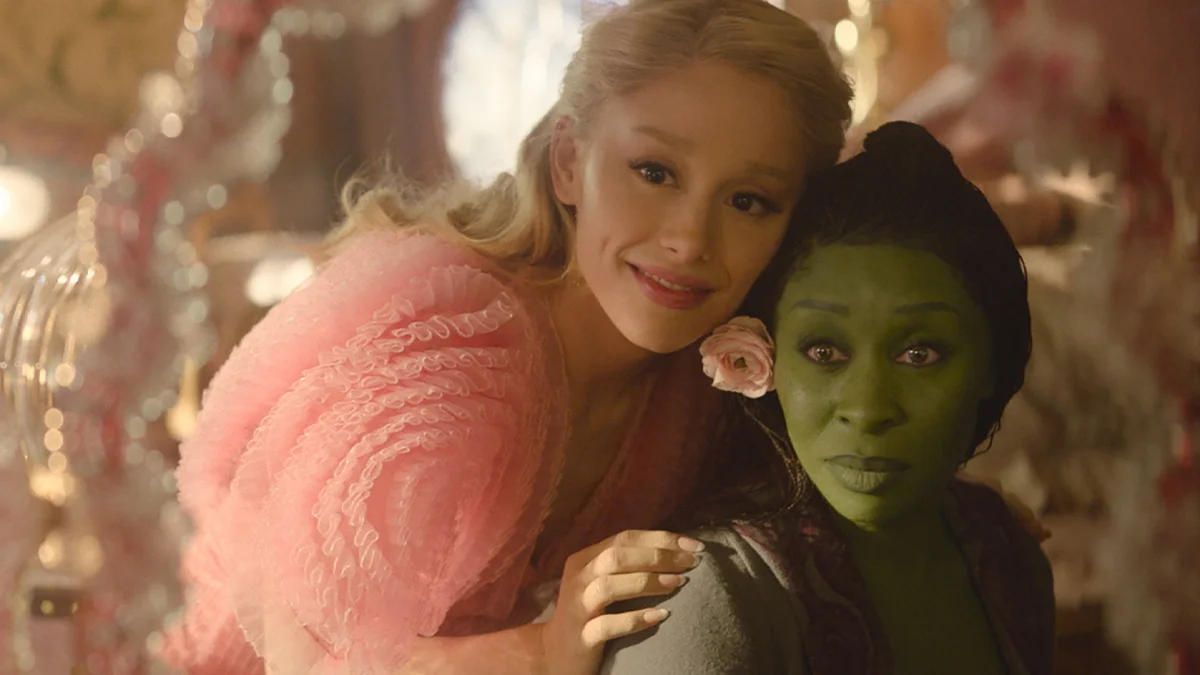
Cinema Review: Wicked (2024) – delivers a Magical Yet Overstuffed Musical Experience

Cinema Review: Wicked (2024)

Directed by Jon M. Chu

Screenplay by Winnie Holzman and Dana Fox

Based on the musical, Wicked by Stephen Schwartz & Winnie Holzman
and novel by Gregory Maguire
.

Produced by Marc Platt and David Stone

Main Cast: Cynthia Erivo, Ariana Grande-Buter, Jonathan Bailey, Ethan Slater, Bowen Yang, Marissa Bode, Peter Dinklage, Michelle Yeoh and Jeff Goldblum etc.

Cinematography by Alice Brooks

Edited by Myron Kerstein

Music by John Powell (score) and Stephen Schwartz (score and songs)

*** MAY CONTAIN SPOILERS ***


I truly believe my love of cinema began when I was aged five. Or was it six? Picture the scene. Christmas Day circa 1976 and the living room of a Battersea tower block. A television emits a classic musical fantasy called The Wizard of Oz (1939). Shades of grey with a flickering light and shadow, drew me into its spell. I sat wide-eyed, cradled by the screen’s soft glow, unaware that something wondrous lay just beyond the monochrome.

And then it happened—like a magician’s flourish, the black and white world I had known melted away. Dorothy opened that door, and the screen burst into life, a kaleidoscope of impossible hues. Emerald greens, ruby reds, a yellow road that glowed with the promise of adventure. My eyes widened. Hang on! It was black and white and NOW the images are in colour! This was magic. This was film. This was Oz!

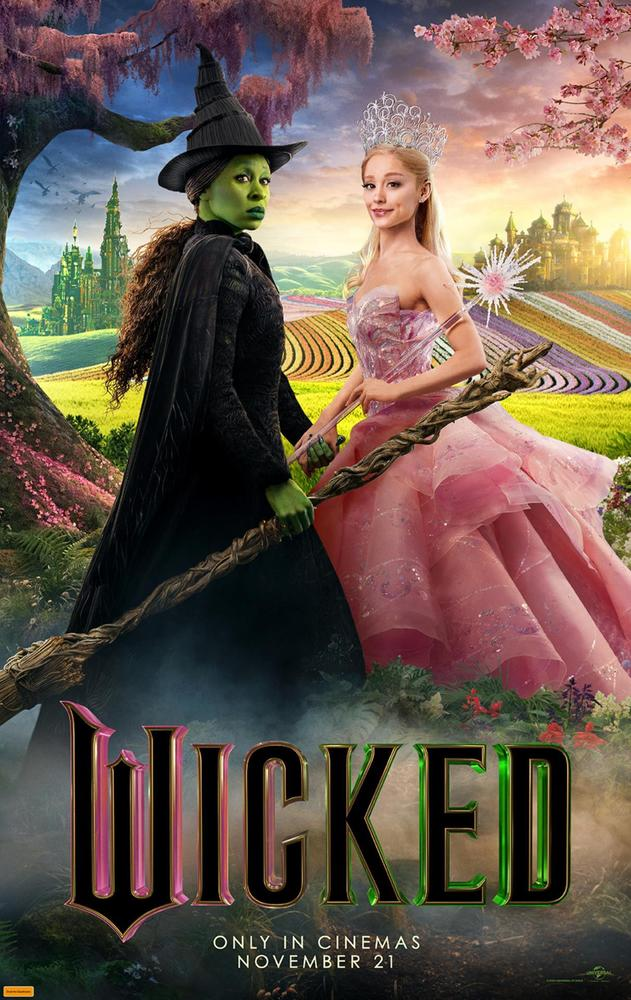
Forty-eight years later and back to the present. In 2024, I am sat in the cinema intrigued to watch the musical prequel, Wicked (2024). Based on a successful novel, then a spectacularly successful stage musical and now a big-budget Christmas cinema extravaganza indulgently split into a two-parter, does Wicked (2024) capture the cinematic sorcery I experienced in my youth? Of course it possibly cannot live up to my warm and fuzzy childhood memories, but it is a well-crafted, superbly choreographed and energetically performed Hollywood product with Cynthia Erivo and Ariana Grande on majestic form.


The film, based on Wicked: The Life and Times of the Wicked Witch of the West by Gregory Maguire, is a brilliant twist on the “what if” storytelling lens—a speculative reimagining that turns a villain into a deeply human, complex protagonist. The novel takes the flat archetype of the Wicked Witch and asks: What if we misunderstood her? What if the “wickedness” she’s condemned for is not inherent, but the result of a life shaped by prejudice, politics, and pain? Indeed, the journey of Elphaba Thropp (Cynthia Erivo) powerfully drives the story, and in some fashion Wicked (2024) works brilliantly as a Breaking Bad-meets-Mean Girls-type-rites-of-passage musical.

Unfortunately, such strong narrative bones with weighty themes of identity, morality, and the price of power are adorned in a dazzling, over-the-top spectacle. While its core narrative explores profound questions about destiny and the nature of “wickedness,” these ideas often get buried under an excessive parade of well-designed production numbers that stretch the running time and tested one’s patience. The powerful emotional arcs of Elphaba and Glinda, rich with potential, are interrupted by TOO MANY songs that (Dancing Through Life is one such culprit), while entertaining in isolation, often feel like detours from the story’s heart.

By the final curtain, the spectacular musical embellishments, though undeniably crowd-pleasing, can leave the story feeling bloated. I am probably the wrong demographic for the production, given the cinema was full of children and parents. So, while there is much to enjoy in comparison with the original film’s genius, notably the invention of the flying monkeys, Wicked (2024), for all its glitter and showmanship, finds the greedy desire for a two-parter ultimately draining Oz of pace and magic.

Mark: 7 out of 11


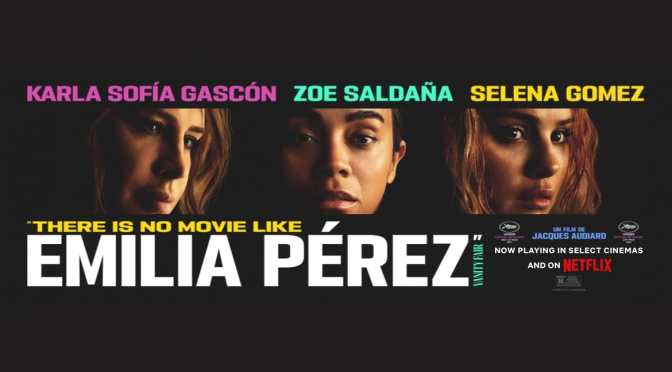
Netflix Film Review: Emilia Perez (2024) – A Trans-formative song of Risk and Redemption!

NETFLIX FILM REVIEW: EMILIA PEREZ (2024)

Directed by Jacques Audiard

Screenplay by Jacques Audiard

Based on Écoute by Boris Razon

Produced by Jacques Audiard, Pascal Caucheteux, Valérie Schermann, Anthony Vaccarello

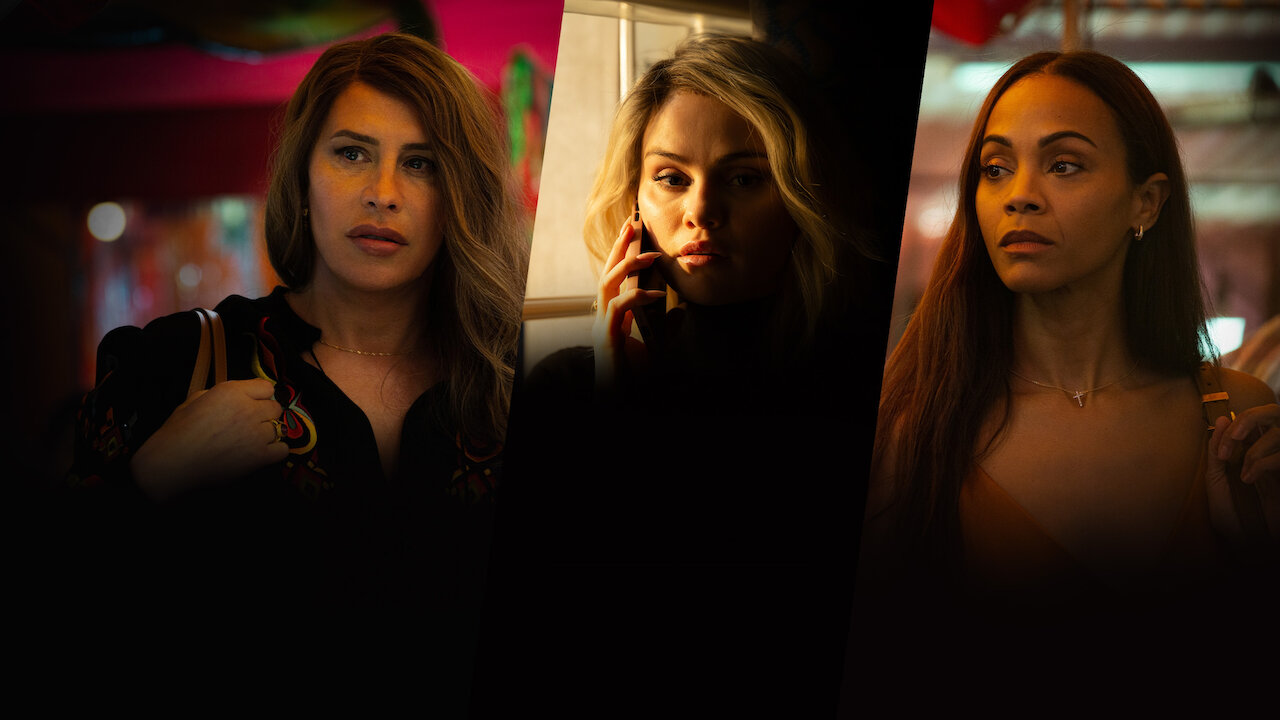
Main Cast: Zoe Saldaña, Karla Sofía Gascón, Selena Gomez, Adriana Paz, Mark Ivanir, Édgar Ramírez etc.

Cinematography by Paul Guilhaume

*** MAY CONTAIN SPOILERS ***


There’s such a thing as having too much going on.” Howard Moon from The Mighty Boosh.

I am a big champion of the films of Jacques Audiard. When his eccentric Western, The Sisters Brothers (2018), was released I wrote a positive review and tribute to several other fine films he has directed here. Audiard likes to take risks representing human beings on the edge of society and perhaps struggling with life; people who often make left-field decisions to improve or escape their existential plight. With his latest film Emilia Perez (2024) the filmmaking master challenges the audience again with a multi-blended genre film that also contains powerful themes of transformation, redemption, violence, crime and family values. Oh and there are songs too.

The narrative begins strongly as Rita Mora Castro (Zoe Saldana), a fiercely talented yet overlooked lawyer in Mexico City, finds herself thrust into the spotlight when she defends the wife of a prominent media mogul in a controversial murder trial. Despite her misgivings, Rita crafts a chillingly persuasive argument that frames the death as a suicide, securing an unexpected victory in the case—one that leaves her both celebrated and haunted.

As the dust settles, Rita’s restless dissatisfaction with her life grows louder. Then comes an anonymous phone call: an enigmatic voice offers her a chance at something extraordinary—and extraordinarily dangerous. Intrigued and desperate for change, she agrees to a clandestine meeting. The mysterious client turns out to be none other than Juan “Manitas” Del Monte (Karla Sofía Gascón), a ruthless and feared cartel kingpin. But the request they make isn’t what Rita expects from a crime-lord. Manitas dreams of living authentically by undergoing gender-affirming surgery and becoming a woman. Rita must decide: will she help Manitas rewrite their story, or will she risk becoming the next chapter in a tale of betrayal and bloodshed?


This fascinating set-up draws you in and I believe if Audiard’s narrative had concentrated mostly on the relationship between Rita, the transitioned, Emilia, then the film would have retained much emotional and thematic power. Yet, after Emilia’s operation the screenplay introduces several other story strands and characters to take in, including Selena Gomez’ feisty Jessi Del Monte, Manitas’ ex-wife who thinks “he’s” dead. This development works initially but then Audiard hurls so many more ideas and genres at the audience wall, not all of them sticking.

Admittedly, the film’s audacious blend of melodrama, crime, thriller, musical, and comedy creates an unpredictable and frenetic narrative that keeps viewers on their toes. However, this constant genre-shifting can undermine the weight of its core themes—gender and identity—by overshadowing them with spectacle and tonal inconsistency. The story’s rapid turns and refusal to settle into a single emotional or narrative groove risk, arguably trivializing the profound struggles and triumphs of its trans-protagonist. Moments that could serve as deeply reflective or cathartic explorations of gender identity are sometimes undercut by abrupt pivots into slapstick humor or hyper-stylized action. While these shifts might aim to reflect the disarray and fluidity of identity in a chaotic world, they can also dilute the thematic resonance.

At the same time, it’s clear Audiard is deliberately embracing this chaos and analysis of human flaws. The fractured tone might symbolize a world where stability and clarity are illusions, mirroring the internal and external conflicts of someone navigating personal transformation in an unyielding environment. This approach, while conceptually intriguing, can feel alienating. Nonetheless, the cast’s stellar performances anchor the film, ensuring that the characters remain compelling even when the story spirals into excess. Lastly, Emilia Perez‘ (2024) relentless energy often leaves little room for introspection, and whether this genre-chaos enriches or undermines the narrative depends largely on the viewer’s tolerance for Audiard’s embrace of choral disorder in a world seemingly allergic to calm and pattern.

Mark: 7.5 out of 11


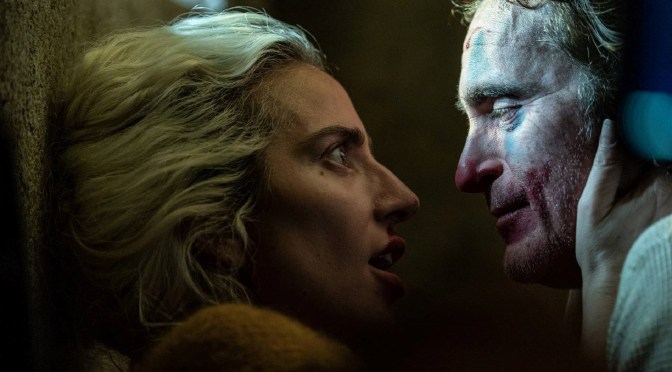
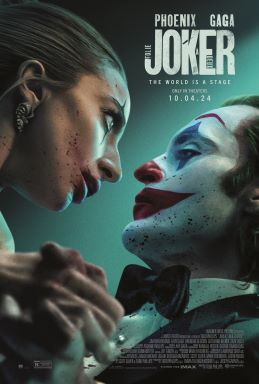
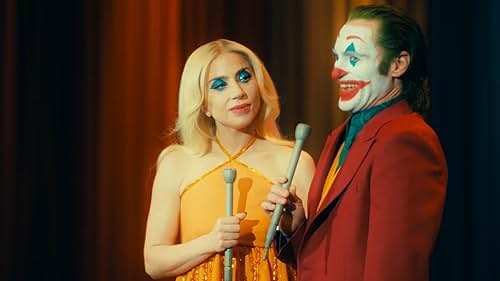
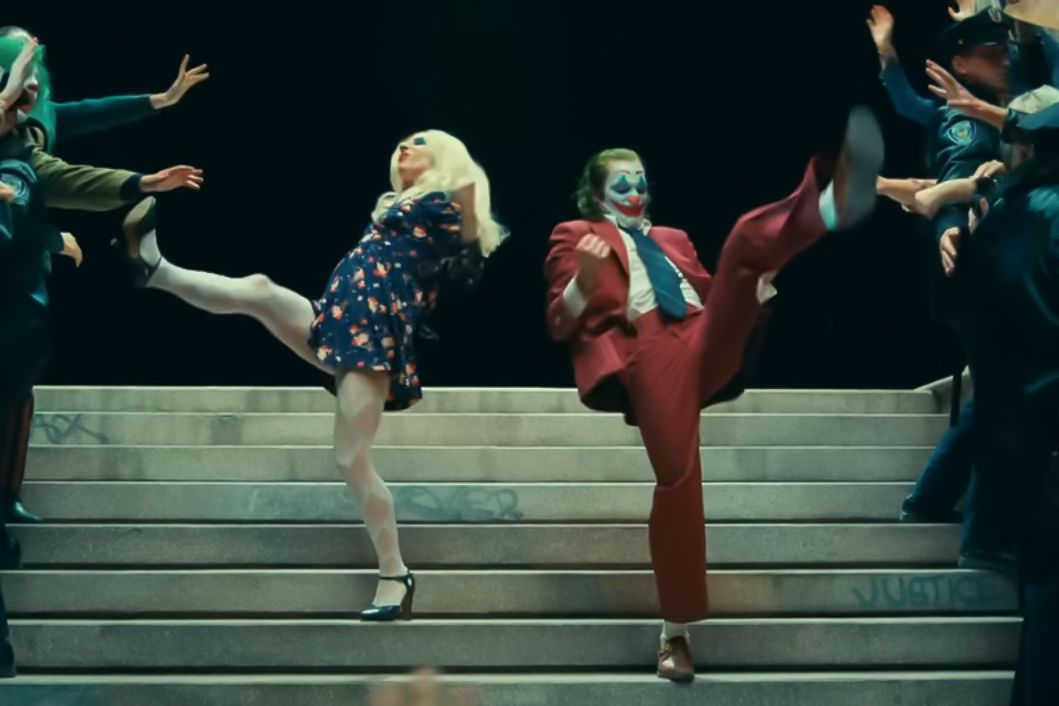
Cinema Review – Exploring Music and Madness in Joker: Folie à Deux (2024)

Cinema Review: Joker: Folie à Deux (2024)

Directed by Todd Phillips

Written by Scott Silver and Todd Phillips (Based on Characters by DC Comics)

Produced byTodd Phillips, Emma Tillinger Koskoff & Joseph Garner


Main cast: Joaquin Phoenix, Lady Gaga, Brendan Gleeson, Catherine Keener and Zazie Beetz etc.

Cinematography by Lawrence Sher

Music by Hildur Guðnadóttir

*** MAY CONTAIN SPOILERS ***


In 2019, Todd Phillips and Joaquin Phoenix, as director and lead actor, unleashed Joker (2019) on the cinema public. It became an enormous critical and commercial hit, with Phoenix winning the ‘Best Actor’ award at the Academy Awards. Unsurprisingly, a sequel now reaches us. While the original 1980’s set period drama worked superbly, echoing the structure and themes of Scorsese’s King of Comedy (1982) and Taxi Driver (1976), the follow-up Joker: Folie à Deux (2024) is altogether different. In fact, given it experiments with musical, romance, crime, court-room and psychological horror genres, it is an altogether riskier film, which while compelling and fascinating, doesn’t always connect to a satisfactory whole. But perhaps that is the point. It is intended to reflect an inconsistent mind and unreliable narrator, a fractured soul in Arthur Fleck.

For me, in Joker: Folie à Deux (2024), Todd Phillips masterfully employs cinematic techniques of fragmentation and ambiguity to deepen the exploration of mental illness, echoing the disorienting and fractured experience of his protagonists. The film, much like its predecessor, blurs the lines between reality and delusion, but this time the ambiguity is intensified through musical elements, dreamlike sequences, and multiple perspectives. Phillips’ use of disjointed timelines and unreliable narratives immerses the audience in the chaos of Arthur Fleck’s (Phoenix) and Harley Quinn’s (Lady Gaga) unraveling psyches.


The musical numbers, set against stark, gritty environments, feel both fantastical and unnerving, reinforcing the characters’ distorted perceptions of the world. Moments of quiet introspection are suddenly broken by violent outbursts or surreal interludes, mimicking the unpredictability of their mental states. The film’s visual style shifts between stark realism and surreal imagery, reflecting the internal fragmentation of Arthur and Harley’s minds, keeping viewers on edge and questioning what is real.

Phillips’ direction ensures that the story remains rooted in ambiguity—much like the first film—inviting viewers to interpret the characters’ mental states without offering clear answers. This cracked narrative style doesn’t just illustrate their mental illness; it pulls the audience into it, making Joker: Folie à Deux a bold and unsettling exploration of madness through form as much as story. As such there isn’t much plot to speak of as Arthur’s journey essentially follows him from Arkham Asylum to court, with episodic splashes of song and dance in between, before we get to the climactic court room scenes.

As aforementioned, in Joker (2019), Todd Phillips drew heavily from Martin Scorsese’s The King of Comedy (1982), particularly in its portrayal of a lonely, unstable man seeking fame and validation in a world that cruelly rejects him. Arthur Fleck’s obsession with talk show host Murray Franklin mirrors Rupert Pupkin’s fixation on becoming a comedy star, and both films explore the dangerous consequences of societal alienation and delusional aspirations. The gritty, urban backdrop and character-driven narrative made Joker a powerful homage to Scorsese’s psychological explorations of fame and madness.


With Joker: Folie à Deux (2024), Phillips shifts toward a different Scorsese film for inspiration: New York, New York (1977). Much like Scorsese’s semi-musical about a turbulent romance between two performers, Folie à Deux integrates musical elements and centres on the chaotic relationship between Arthur and Harley Quinn (Lady Gaga). The film’s blending of harsh realism with the stylized, dreamlike sequences of musical numbers echoes New York, New York’s mix of glitzy performance and dark personal struggle. Thematically, both films explore how dreams of stardom can clash with mental instability, but Folie à Deux takes it a step further by embedding this conflict within its characters’ delusions, making the musical sequences feel like an escape from—or reflection of—their psychotic minds. This potential homage to New York, New York allows Phillips to expand Joker‘s cinematic language, fusing psychological drama with surreal musical spectacle.

Joker: Folie à Deux (2024), at time of writing, has polarized critics and cinema-goers. As someone who watches a lot of “art-house” and European cinema, I can see why this film is dividing opinion. This is what happens if Jacques Demy, by way of Bergman, were given $200 million to make a DC comic-book film. Todd Phillips takes many risks in form and structure, most notably denying the audience catharsis at the bleak finale. It is truly downbeat and it felt like Phillips and Phoenix were finally done with this clownish killer and anti-hero.

As a cinematic experience the musical score is striking. Moreover, the production is grey and oppressive and claustrophobic, set in enclosed cells and shadowed court rooms. There is little light in this film nor even a shadow at the end of the tunnel for Arthur and Harley. Phoenix is fantastic again, while Gaga’s romantic partner-in-crime is under-cooked as a character. Nonetheless, Gaga still sparkles amidst this gloomy, musical, existential journey into the mouth and down the throat of madness.

Mark: 8.5 out of 11


UNDER-RATED CLASSIC #11 – THE SCORE (2021)

UNDER-RATED CLASSIC #11 – THE SCORE (2021)

Directed by Malachi Smyth

Written by Malachi Smyth

Produced by Matthew James Wilkinson & Ben Pullen

Cast: Johnny Flynn, Will Poulter, Naomi Ackie and Lydia Wilson

Cinematography by Darran Bragg

Music by Johnny Flynn

*** MAY CONTAIN SPOILERS ***


I’m not sure enough people have seen The Score (2021) to even rate it, let alone under-rate it. Because this crime-thriller-musical is a genuine curio and cult classic in my book. The reviews online are very mixed and many of them are correct in saying the film doesn’t work as either a crime film or musical or even a love story. But for some reason I have watched it twice now and really enjoyed it both times. So, for me, it is very much an under-rated classic.

For the record, for me, an under-rated classic can be a film I love, plus satisfy the following criteria:

  1. Must not have won an Oscar.
  2. Must not have won a BAFTA.
  3. Must not appear in the AFI Top 100 list.
  4. Must not appear in the IMDB Top 250 list.
  5. Must not appear in the BFI 100 Great British films.
  6. Must not appear in the all-time highest grossing movies of list.


So, being a massive fan of Johnny Flynn helps to enjoy this film. He wrote and sings, with Will Poulter and Naomi Ackie, the songs from the soundtrack. Plus, he is one of the main leads, portraying a low-level career criminal, not-as-clever-as-he-thinks, Mike. He is planning a “big job” in cahoots with, not-as-stupid-as-he-acts-sidekick, Troy (Poulter) that involves a big score. That is twenty-grand (£) from a previous job Troy’s imprisoned brother hid. Exponential growth is promised from a meet with some proper gangsters for what may or may not be a drug deal. Anyway, nothing is what it seems in this predominantly one-location thriller.

Two misfits waiting for someone who may never arrive, plus the swinging banter between Mike and Troy has vague elements of Waiting for Godot, however, there is an actual crime plot slowly burning here. As they wait impatiently at a remote cafe writer-director, Malachi Smyth, throws in some eccentric visitors plus a supporting romance plot, with Troy connecting awkwardly at first, then touchingly with cafe employee, Gloria (Naomi Ackie). Indeed, their attraction and subsequent connection virtually becomes the main narrative thrust of The Score (2021), before the final crime twist brings the action to a violent head.

Oh, do not forget the singing too. Dennis Potter had his characters lip-sync to old musical classics to reveal their emotions, and was proclaimed as genius for it. Here Malachi Smyth uses Flynn’s fantastic compositions to do a similar job. I admit it is a bit weird and jarring at first, but Flynn, Poulter and Ackie carry the tunes well for me and it adds another element to an unusual film experience. Ultimately if someone watched The Score (2021) and said it does not work at all, I couldn’t argue with them. However, I really loved it and constantly listen to the soundtrack I downloaded. I also have a soft spot for indie filmmakers, daring to fail while trying something different.


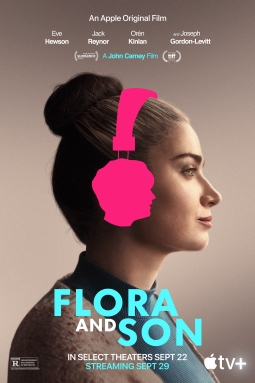
APPLE TV FILM REVIEW : FLORA AND SON (2023)

APPLE TV FILM REVIEW: FLORA AND SON (2023)

Directed by John Carney

Written by John Carney

Produced by: Anthony Bregman, John Carney, Peter Cron, Rebecca O’Flanagan and Robert Walpole.

Main Cast: Eve Hewson, Jack Reynor, Orén Kinlan and Joseph Gordon-Levitt.

Cinematography: John Conroy

Edited by: Stephen O’Connell


John Carney is a brilliant and honest filmmaker who is attracted to outsiders and people with real emotional turmoil. They tend to be at crossroads in their lives and are struggling with their dreams and relationships. He also loves musicians, flaws and all. In Begin Again (2013), a washed-up musical executive, portrayed by Mark Ruffalo, meets unhappy singer-songwriter, Keira Knightley and their first-world romance is played out to bittersweet consequences. Similarly, in Sing Street (2016), a troubled teenager comes of age through his 1980’s pop band and bittersweet romance with a rebellious and equally-troubled schoolgirl. Notice a pattern? Well, this style of music, gritty city backdrops and salty romances were established in Carney’s breakout hit, Once (2007) and are continued in his current underdog musical comedy, Flora and Son (2023).

Flora and Son (2023), believe it or not, is set in Dublin and centres around a single mum, Flora and her delinquent teenage son, Max (Oren Kinlan). Eve Hewson is the foul-mouthed-council-estate-joker, who uses anger and black humour to hide her feelings of insecurity and loss. A mourning for the loss of youth having brought up a child virtually single-handed. Her relationship with Max’s father, Ian (Jack Reynor) is fractured to say the least and they spit sarcastic barbs at each other as shared custodians of disaffected Max. While leaving her cleaning job at a middle-class household, Flora finds a battered guitar in a skip. Attempting to bond with Max, by giving him the guitar, Flora finds herself shunned. She then opens another bottle of wine, picks up the guitar and gives it a crack herself.

Taking online guitar lessons from charming and chilled American musician, Jeff (Joseph Gordon-Levitt), Flora initially flirts but then knuckles down to learn the plucking instrument. The stakes aren’t particularly high here, but the feelgood acoustic numbers from Carney and co-composer, Gary Clark, certainly breeze along nicely and breath gold onto the screen. Max’s white-rap-Irish-hip-hop tracks are pretty good too and the video he and Flora make is really funny. Thus, you get the theme again from Carney that music helps to connect and heal and provide salvation to the most troubled of human situations. Overall, Flora and Son (2023), is a slight but enjoyable film with enough earthy humour, strumming harmony and kicking beats to please most.

Mark: 7.5 out of 11


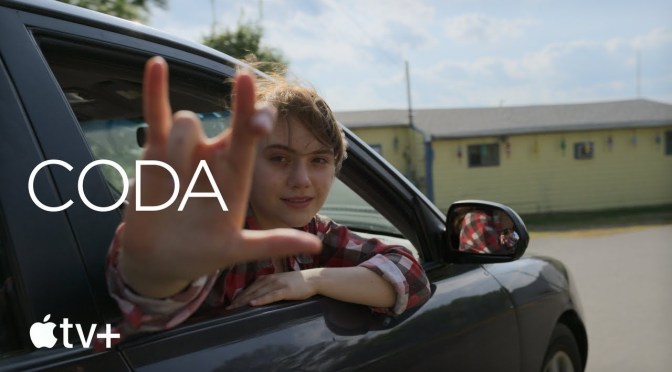
APPLE TV FILM REVIEW: CODA (2021)

APPLE TV FILM REVIEW: CODA (2021)

Directed by: Sian Heder

Screenplay by: Sian Heder

Based on: La Famille Bélier by Victoria Bedos, Thomas Bidegain, Stanislas Carré de Malberg & Éric Lartigau

Produced by: Fabrice Gianfermi, Philippe Rousselet, Jerôme Seydoux & Patrick Wachsberger

Cast: Emilia Jones, Eugenio Derbez, Troy Kotsur, Ferdia Walsh-Peelo, Daniel Durant, Marlee Matlin, etc.

Cinematography: Paula Huidobro

*** MAY CONTAIN SPOILERS ***


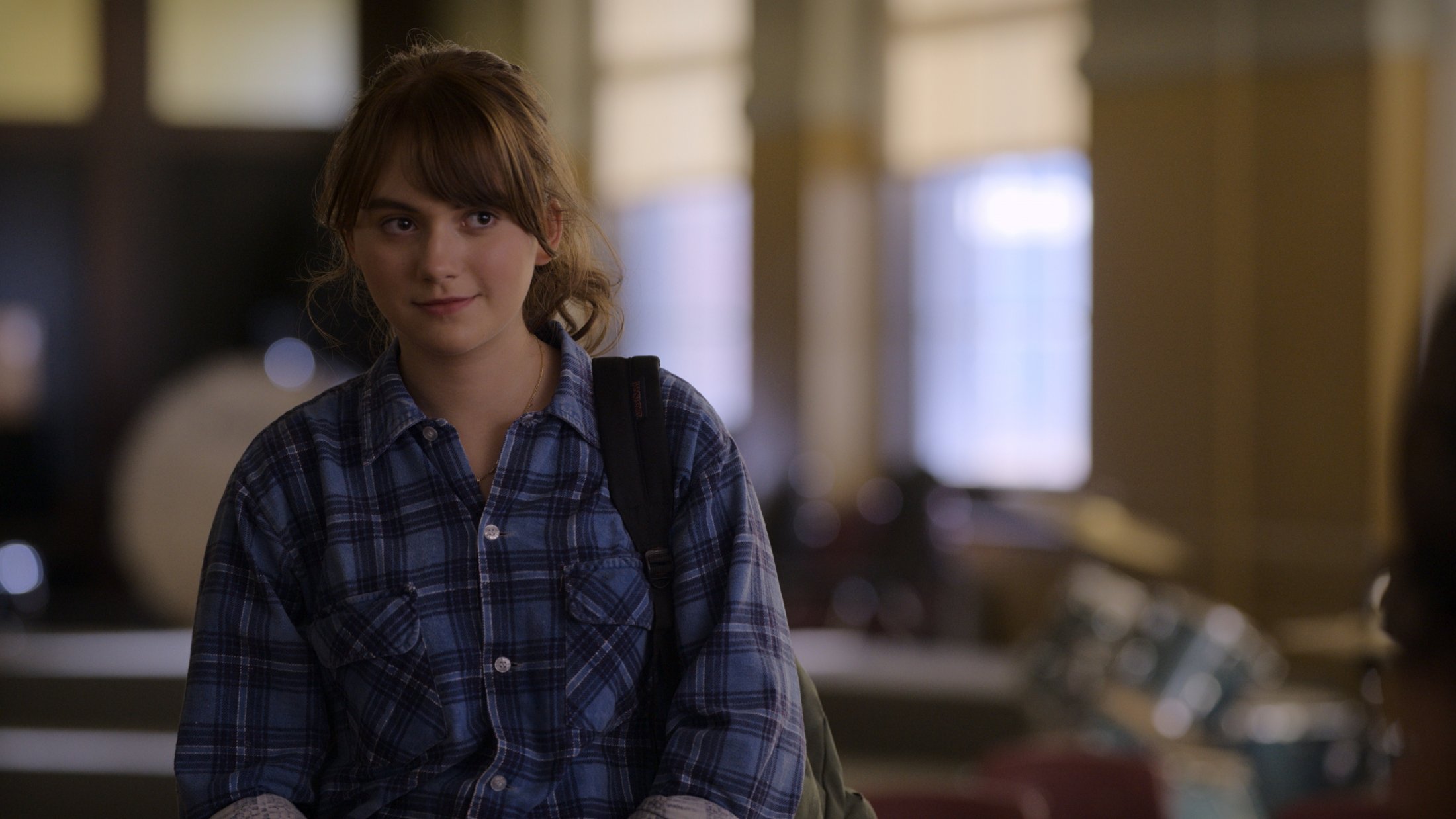
Simultaneously a feelgood film and tear-jerking emotional rollercoaster, CODA (2021) combines many familiar aspects from cinema including: Children of a Lesser God (1986), Billy Elliot (2000), Dirty Dancing (1987), and the more recent and arguably superior drama, Sound of Metal (2019). In fact, while it may seem progressive representing a family of deaf adults, the Rossi’s, and their hearing daughter, Ruby (Emilia Jones), the film feels like a Save-the-Cat-screenplay-template-box-ticker hitting wholly familiar beats and a well-trodden genre path. Coda (2021) is also a remake of a successful French-Belgian film, La Famille Bélier (2014). Having said all that, I loved Coda (2021). It is a terrifically entertaining, moving, funny and heart-warming story which, unsurprisingly won the Academy Award for best film.

Set in Massachusetts amidst the milieu of a working class deaf family, the Rossi’s, who run a struggling fishing boat and have to overcome the ignorance and prejudices of the hearing folk. Hitting the high notes at the heart of the story is Ruby Rossi (Emilia Jones). She is a brilliant character to root for; so human, enthusiastic and authentic. Ruby wants to sing but her family, father Frank (Troy Kotsur), mother Jackie (Marlee Martin), rely heavily on her to assist with business and family matters. Her proud brother Leo (Daniel Durant) desires the chance to take more responsibility and this makes him envious of the attention Ruby gets. Throughout, Coda (2021) spans many genres bringing family conflict, Ruby’s singing dream, young romance, everyday tribulations of a deaf family, as well as the plight of a fishing community into the mix. The fantastic screenplay balances all these elements superbly well.


Ruby’s emotional rites-of-passage arc anchors us through so many memorable scenes, proving pivotal as she ultimately finds her voice and independence. Emilia Jones gives a mature performance full of range and heart. Ruby’s embarrassment, shame, fear, anger, passion, guilt, humour, happiness and guts are all exposed on her journey as she fights against the tide of her own self doubt and commitment to family. Her family are well characterised too with Frank and Jackie providing humour, sympathy and pride as the parents who just don’t want Ruby to leave them. Troy Kostur deservedly won a best actor in a supporting role Oscar. Lastly, famous Mexican actor, Eugenio Derbez as Bernardo Villalobos, gives us a fresh take on the staple role of musical mentor.

Unashamedly melodramatic and occasionally cloying, Coda (2021), is a big-hearted familial comedy-drama which while predictable, contains many powerful messages. Following your dream, respecting those around you and loving your family are important missives especially in a world where political and military leaders remain hell-bent on war. Further, while I am not well versed in the world of the deaf community I felt that the representations here were sensitively managed and well-rounded. Sian Heder, as both writer and director, has adapted this story with care, humour and song. Ruby’s voice soars from her lungs, mouth and hands via the expressive sign language, culminating in a joyous experience that must be seen, heard and most importantly felt.

Mark: 9 out of 11


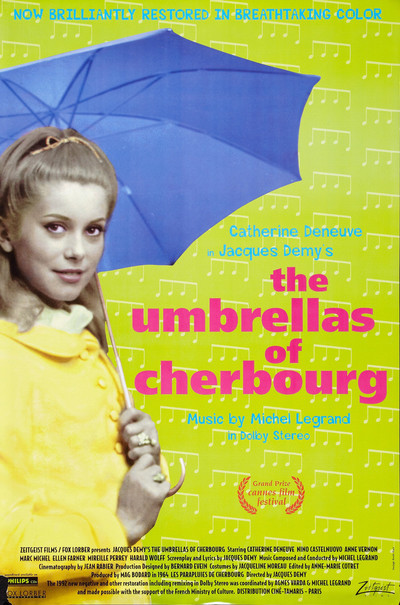
FILMS THAT GOT AWAY #6 – THE UMBRELLAS OF CHERBOURG (1964)

FILMS THAT GOT AWAY #6 – THE UMBRELLAS OF CHERBOURG (1964)

Written and Directed by: Jacques Demy

Produced by: Mag Bodard

Music by: Michel Legrand

Cast: Catherine Deneuve, Anne Vernon, Nino Castelnuovo, Marc Michel, Ellen Farmer, Mirielle Perrey etc.

**MAY CONTAIN SPOILERS**


I knew there were good reasons to get married. The obvious one is the positive nature of a caring relationship and not becoming a lonely, bitter old man. The other is that given my wife loves films too, she will introduce me to the occasional classic film I may have missed. Thus, we went to the BFI and watched the classic musical The Umbrellas of Cherbourg (1964). While she is a massive fan of the musical genre, I can take or leave it generally. Every now and then though I will really love a musical film. The Umbrellas of Cherbourg (1964) is now one of them.

Starting in 1957 and structured over three acts that end in 1963, we follow the lives and loves of two main protagonists, Genevieve (Catherine Deneuve) and Guy (Nino Castelnuovo). The ups and downs of their romance drives the narrative. The two struggle to keep their love alive amidst the obstacles of military conflict, social convention and family pressure. While the story is relatively simple, Jacques Demy’s wonderful script and direction warms you to the two young lovers. So much so, by the emotionally gut-wrenching ending, even a grizzled cynic like myself felt like crying.

The Umbrellas of Cherbourg (1964) is not your classic all-singing-all-dancing musical. It is more an opera of everyday life and love. The actors sing the dialogue all the way through and once I got used to this, the device really worked well for the story. Of course, Michel Legrand’s incredible score literally drenches the colourful sets and mise-en-scene with wonder. Moreover, Demy’s cinematographer, Jean Rabier, works miracles; his camera gliding around the actors in small spaces such as shops, garages, apartments and French cafes. Lastly, Catherine Deneuve and Nino Castelnuovo are such an attractive, but beautifully tragic screen couple. Clearly their touching story, amazing music and Jacques Demy’s cinematic brilliance had a massive influence of Damian Chazelle’s splendid La La Land (2016).

Mark: 9.5 out of 11


BOOK OF MORMON – MUSICAL THEATRE REVIEW

BOOK OF MORMON – THEATRE REVIEW

**YO!  SPOILERS!”

“Hey – Paul!  Do you want to see Book of Mormon? It’s a musical!”

“Oh – I can’t stand musicals! Apart from Grease maybe. Or a Sondheim one I can’t remember the name of.”

“But it’s made by the guys who did South Park!”

“Really? I love South Park. How much are tickets?”

“HOW MUCH?!”

So on a cheaper Wednesday matinee showing myself and a friend ventured to the Prince of Wales Theatre to see Trey Parker and Matt Stone’s wonderfully irreverent and offensive (depending on your point-of-view) musical The Book Of Mormon. And a great time was had by all. It was funny, energetic and warm and of course very rude but strangely uplifting and like all great art (high or low) it got me thinking about my own values and spirituality.

I have never been what you would call a religious person.  I am not a believer or associate myself with a particular faith.  In fact since I was young I always held a staunch antagonism toward doctrines which remove free-thinking in the individual from birth.  Furthermore much of the world’s conflicts over history have been caused in the name of religion; that and greed and money and power.

BOM2

Having said that over the years my approach to religion has matured and I have become less didactic in my thoughts. Because you know what: religion or faith can be a positive thing and give people a true set of values with which to live their life. It’s not God’s fault that human beings use his or her name to commit acts of war and spread intolerance.  In fact, in recent times the move toward Atheistic and Scientific Fundamentalism (led by the Grand Wizard Richard Hawkins) itself has also caused intolerance to rear its ugly head too.

I prefer to believe in nothing; not a void as such but no particular deity or belief system. They provide great comfort for many but it’s not something I feel I need.  I believe in freedom of choice and speech and the basic human principle of just be tolerant of, and good to others.  Because as the song says: “Religion don’t kill people – humans do!”    Of course I just made that lyric up for humorous effect and that is precisely what occurs in the wonderful, hilarious and uplifting theatrical musical Book of Mormon.

The backstory tells us of Joseph Smith who “found” the sacred eponymous text on the gold plates of Nephi. After which he gave birth to a new religion in 1830 which went viral, spreading quicker than a dancing cat video on YouTube.   Flash forward loads of years and the Church of Latter Day Saints is one of the World’s largest cults; sorry, organised religions. And this is the starting point for the story.

BOM1

Our two main protagonists are Elder Price (Billy Harrigan Tighe) — a handsome, young go-getter — and Elder Cunningham (A.J. Holmes) who is, of course, his nerdier, less confident and insecure counterpart.  Cunningham is also a compulsive liar which gives the story an essential characteristic and running theme. Together they are sent from the Missionary Training Centre in Utah to of all places, Uganda to spread the word of Mormon. But Uganda is a godless place full of famine, disease and war and hardship so religion is a hard thing to see to those with no hope.

Humour is mined from the clashes between the two wildly different cultures as the songs compare the upbeat door-knocking optimism of the Mormons with the downtrodden, hungry, maggot-balled, AIDS-ridden, clitoris-castrated Africans; who are war-lorded over by hilariously named General Butt-Fucking Naked. As with South Park the writers use all manner of stereotypes with which to cram as many offensive jokes in as possible.

BOM3

However, there is heart to the story too as it is revealed that Elder Cunningham has joined the Mormons to try and fit in and find his place in the world and most importantly: friends.  He is particularly taken with the preening narcissistic Elder Price despite the latter’s obvious discouragement and dislike of Cunningham. It’s no surprise then that while Price is clearly the more talented “salesperson” yet it is Cunningham who becomes a hit with the natives.  Having said that he does so having “made-up” loads of stories from the Book of Mormon incorporating tales from Star Wars, Star Trek and Lord Of The Rings.  From his distortions from the text plus bravery in standing up to the General Cunningham becomes a beacon of hope in the village.

Stories and faith are at the core of the satire here as Book of Mormon both lampoons and deep-down admires the Missionaries. While what Elder Cunningham says seems completely stupid and ridiculous it gives the villagers hope and faith for the future. Overall, the word of Joseph Smith is arguably “fictional” yet the message is a positive one with togetherness being the way forward.  The show asks us: if something gives hope in a hopeless world does it matter if it’s real or not?

BOM4

I have no frame of reference with regard to musicals. The only one I’ve seen outside the movies was Fame – The Musical starring ‘H’ from Steps.  But this was an absolute joy with an incredible cast and songs to boot.  My personal favourites were: Two By Two, Making Thing’s Up Again and Spooky Mormon Hell Dream.   The shifting of sets, movement and pace were fast yet controlled and the show was clearly the result of a culmination of an incredible amount of creativity, rehearsal and hard work.  As a dynamite new season of South Park currently runs on Comedy Central – I can certainly say Matt Stone and Trey Parker have another work of genius to add to their incredibly offensive yet hilarious CV.  Thank God, Allah, Ganesh, Buddha, Jesus, Mohammed, Nephi, Joseph Smith et al  for them I say!

southpark_god