Written by: Jeffrey Hatcher – Based on The Good Liar by Nicholas Searle
Cast: Helen Mirren, Ian McKellen, Russell Tovey, Jim Carter etc.
**MAY CONTAIN SPOILERS**
Bill Condon is an interesting filmmaker. His movie choices oscillate between big budget Hollywood productions such as Beauty and the Beast (2017) and mid-budget, character-led productions like Mr Holmes (2015) and his latest film The Good Liar (2019). This is, by my reckoning, his fourth collaboration with the living legend that is Ian McKellen and casting him alongside Helen Mirren is a masterstroke. In this story we get a whole different kind of ‘Beauty and the Beast’ narrative.
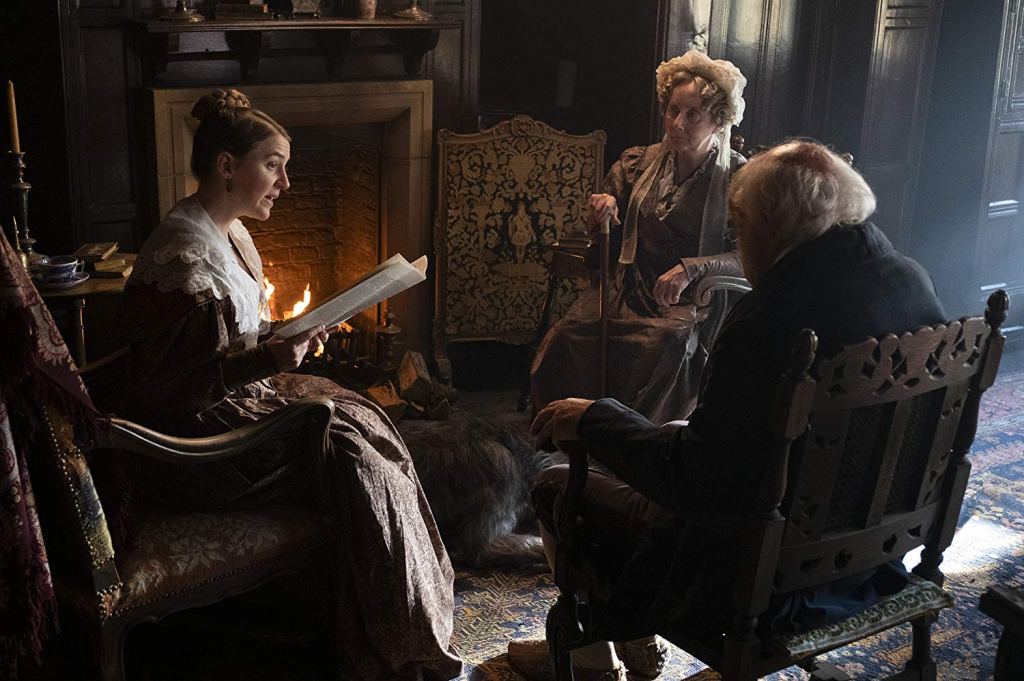
McKellen portrays charismatic septuagenarian, Roy Courtnay. He meets Helen Mirren’s widow, Betty McLeish, and they begin a friendly courtship. As the romance blossoms, her grandson Steven (Russell Tovey), begins to suspect Roy is after more than companionship. I won’t spoil the twisting plot, but safe to say the story develops in a compelling fashion. Indeed, I love a good con-artist thriller and McKellen and Mirren’s chemistry on-screen was particularly impressive.
Overall, there’s much to enjoy about The Good Liar (2019). I love it when London is used as a main location, as I will see places I know and have been to. I have to say that the twists in the story, particularly one second act reveal are very well handled too. By the end you could see where the story was going, but not the why and how. My only gripes were some of the banking machinations were a tad sloppy and the final reveal did not necessarily connect all the dots successfully. Nonetheless, this is an enjoyable thriller with an excellent cast and solid direction. It does not have the scintillating scripts con-artist films such as The Sting (1973) and Nine Queens (2000) do, but not many do.
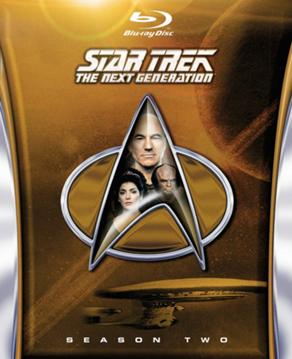
TO BOLDLY REVIEW #7 – STAR TREK: NEXT GENERATION – SEASON 2
Based on Star Trek & Created by: Gene Roddenberry
Season 2 writers (selected): Richard Manning, David Assael, Melinda Snodgrass, Scott Rubenstein, Leonard Mlodinow, Maurice Hurley, Burton Armus, Robert Iscove, Kathryn Powers, Gene Roddenberry, Joseph Stefano, Terry Devereaux etc.
Season 2 directors (selected): Winrich Kolbe, Rob Bowman, Robert Becker, Les Landau, Robert Scheerer, Joseph L. Scanlan, Cliff Bole etc.
Main Cast: Patrick Stewart, Jonathan Frakes, LeVar Burton, Whoopi Goldberg, Colm Meaney, Michael Dorn, Marina Sirtis, Brent Spiner, Wil Wheaton, Diane Muldaur, John De Lancie, Lycia Naff etc.
Music/Composers: Alexander Courage, Jerry Goldsmith, Dennis McCarthy, Ron Jones, Jay Chattaway
Production Company(s): Paramount Television, CBS Television
**THIS REVIEW CONTAINS SPOILERS**
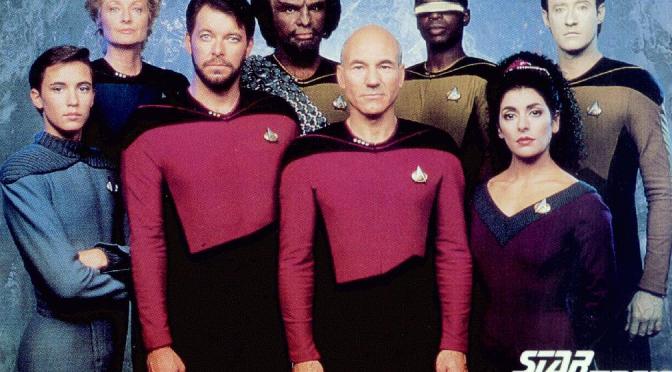
Thus, my ongoing viewing project of watching ALL the Star Trek series and films in order of release date continues. I have already covered the pro-genesis of STAR TREK: THE NEXT GENERATIONhere. So, I won’t cover the same ground again.
While the first season did a good job establishing the characters, action, plots, gadgets, themes and general formula, it was still finding its space feet, as it were. While we lost a couple of major characters, the second season transitioned into a very satisfying series of episodes.
Dr Pulaski (Diane Muldaur) replaced Beverley Crusher (Gates McFadden) for a season and she provided some stern opposition to Picard in certain narratives. But, the casting of Whoopi Goldberg as Guinan was a masterstroke. Goldberg is such an intuitive and classy actor, she added cinematic quality to some fine episodes.
I have to admit I am not so sure HOW they managed to produce so many good episodes. My understanding is shooting a twenty-plus episode season of television is an incredible feat of creativity. The rewards were certainly earned. The show would garner great viewing figures and also many Emmy nominations come TV awards season. Here are six of my favourite episodes from STAR TREK: THE NEXT GENERATION– SEASON 2.
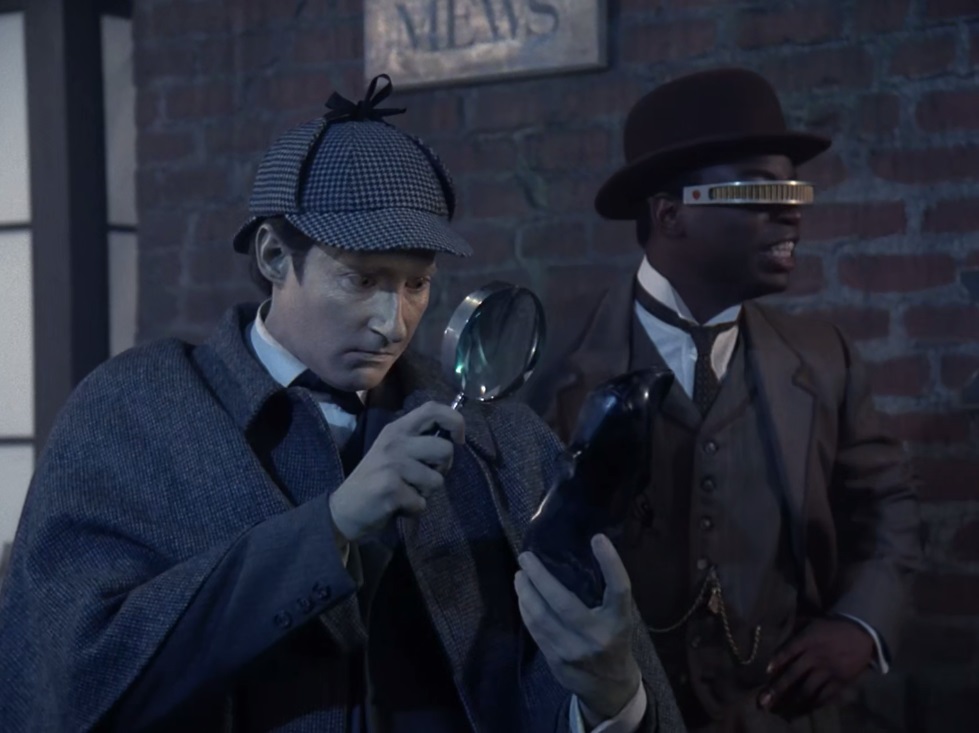
ELEMENTARY MY DEAR DATA – EPISODE 3
Data and Chief Engineer La Forge take on the roles of Holmes and Watson in another “holodeck-adventure-gone-wrong” narrative. I love Sherlock Holmes so this episode is fantastic to me. I also felt that the sentient Moriarty (Daniel Davis) brought much humanity to the classic nemesis. The La Forge and Data character dynamic is really fun too as La Forge attempts to outwit and challenge his android friend with dangerous results.
THE SCHIZOID MAN – EPISODE 6
Reminiscent of a classic Star Trek episode from the original series, and also a tribute to The Prisoner, this story contains the often used revered scientist gone rogue. More interestingly though, it explores themes of immortality and transference of human intelligence into a computer. Of course, it’s Data who finds his character split and battling an interloper seeking everlasting existence.
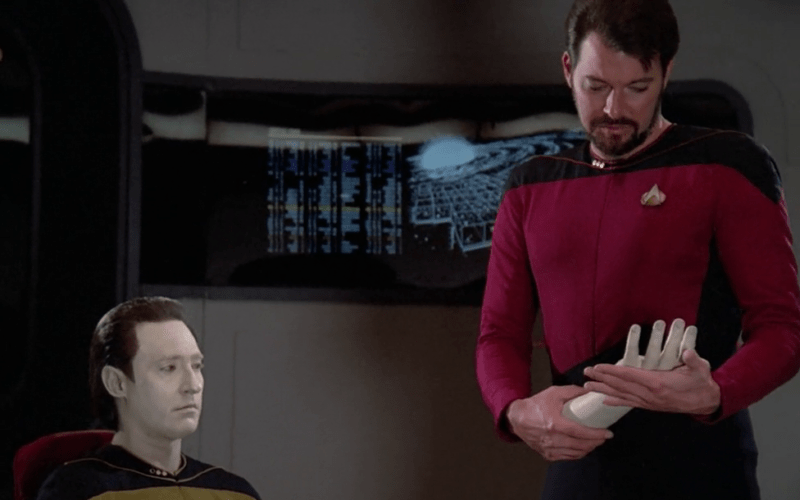
MEASURE OF A MAN – EPISODE 9
Sorry, another Data led episode. Data finds himself at a tug-of-war dispute over whether he can be determined as human or a mere piece of technology to be dismantled for science. A court case follows with Picard defending Data and Riker “prosecuting”. Spiner is superb as Data and Jonathan Frakes is especially good, having to carry out a duty he comes to hate. This episode has genuinely high class writing, acting, direction themes and narrative. Not to say most of the other episodes aren’t good, but this one is particularly great.
TIME SQUARED – EPISODE 13
I love doppelganger and time travel plots. This episode has both, as Picard must face a future version of himself and some incredibly difficult decisions to save the destruction of the Enterprise. Often time travel narratives will involve years or even decades difference, but this time it’s around six hours. This creates much drama and brings to life that always fascinating theme of the self having to face the self in a time of crisis.
Q-WHO – EPISODE 16
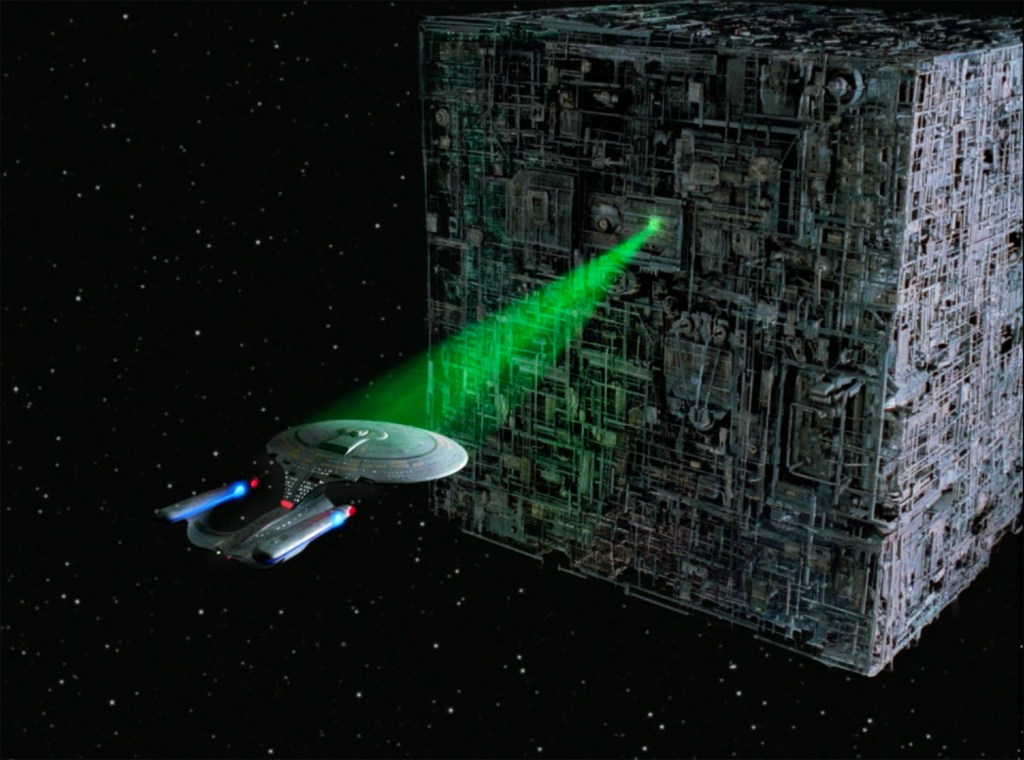
The irritating super-being Q (John De Lancie), rears his annoying head again. Although, he actually isn’t the most threatening enemy in this brilliant episode. That “honour” is bestowed upon the formidable Borg. Picard and the Enterprise crew find themselves challenged by these relentless machines and almost perish. The Borg remind me of Doctor Who‘s vicious rivals, the Cybermen, and make for impressive adversaries. The episode is also notable for the further development of Guinan’s character. Indeed, more of Whoopi Goldberg is always welcome.
THE EMISSARY – EPISODE 20
Promoting Worf (Michael Dorn) to Chief Security Office was a masterstroke of character development for the second season. The Klingon race is famed for its’ head-on approach to the fight and Worf would often find his inner Klingon battling Starfleet regulations. Here Worf is further conflicted with romantic feelings for a half-human-half-Klingon emissary, K’Ehleyr (Susie Plakson). She is sent to resolve a fascinating “Hell in the Pacific” side-plot; where a Klingon crew do not yet know the war is over. Dorn and Plakson share fantastic chemistry and it was compelling to find love and war themes combine so effectively.
Developed by Steven Levenson and Thomas Kail – based on Fosse by Sam Wasson
Executive Producers: Steven Levenson, Thomas Kail, Joel Fields, Lin-Manuel Miranda, George Stelzner, Sam Rockwell, Michelle Williams
Producers: Erica Kay, Kate Sullivan, Brad Carpenter
Directors: Thomas Kail, Adam Bernstein, Jessica Yu, Minkie Spiroetc.
Writers: Steven Levenson, Thomas Kail, Deborah Cahn, Tracey Scott Wilson, Charlotte Stouldt, Ike Holter, Joel Fields
Main Cast: Sam Rockwell, Michelle Williams, Norbert Leo Butz, Margaret Qualley, Nate Corddry, Paul Reiser, Jake Lacy, Susan Misner, Peter Scolari, Kelli Barrett, Evan Handler and many more.
Original Network: FX – UK Network: BBC
No. of Episodes: 8
**MAY CONTAIN SPOILERS**
I’m not a massive fan of musical shows or films as a genre. However, when the subject material or narrative connects with me, or the craft of song and dance transcends the form I will enjoy them. Thus, musicals I have seen and enjoyed on stage in the last few years include the brilliant Gypsy, Funny Girl, and Company. On the other hand, I could not stand Hamilton, despite the incredible talent involved in the production. Ironically, Hamilton director, Thomas Kail, is a major driving force behind this adaptation of Sam Wasson’s book about Bob Fosse and Gwen Verdon.
On the cinema screen the likes of: The Wizard of Oz (1939), Singing in the Rain (1952),Grease (1978), Moulin Rouge (2001), Chicago (2002), are just a few great examples of the genre I liked. But, the best and most exceptional musical I have seen in terms of form, style and subject matter is the Bob Fosse directed, Cabaret (1972). It’s not just a great musical, but it’s also a incredible piece of cinema. It oozes dark class in the musical set-pieces, ambiguous and fractured characterisation, sleazy sexuality and the thematic political subtext of pre-World War II Germany.
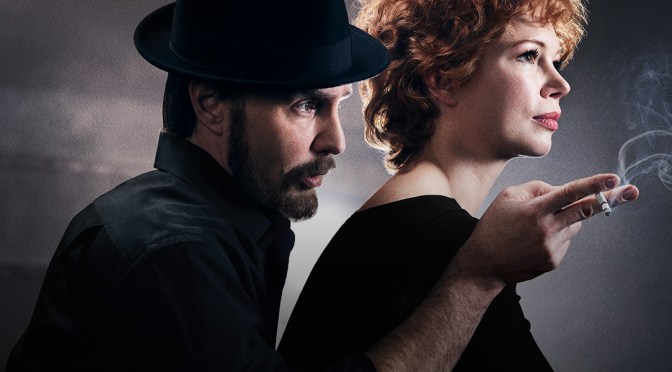
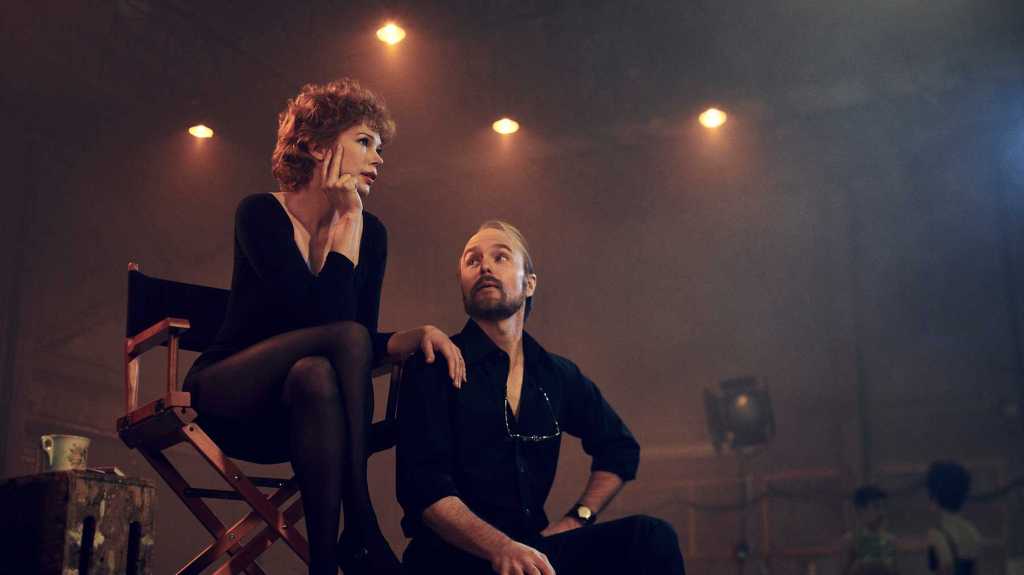
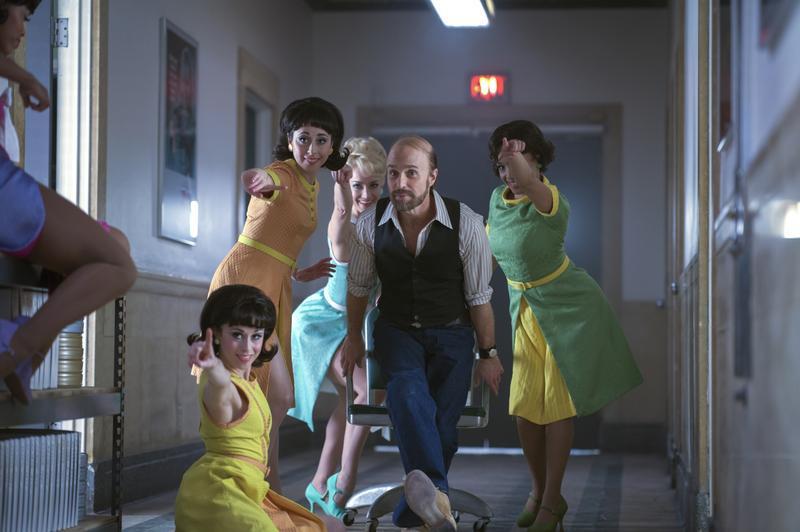
The making ofCabaret (1972) is one of the many creative events featured in Fosse/Verdon (2019). As the title suggests, it is an extensive biographical television drama about legendary director and choreographer Bob Fosse (Sam Rockwell) and the genius dancer, Gwen Verdon (Michelle Williams). Both their artistic and personal lives were entwined from the time they met on the Broadway musical Damn Yankees in 1955, to the moment of his death in 1987.
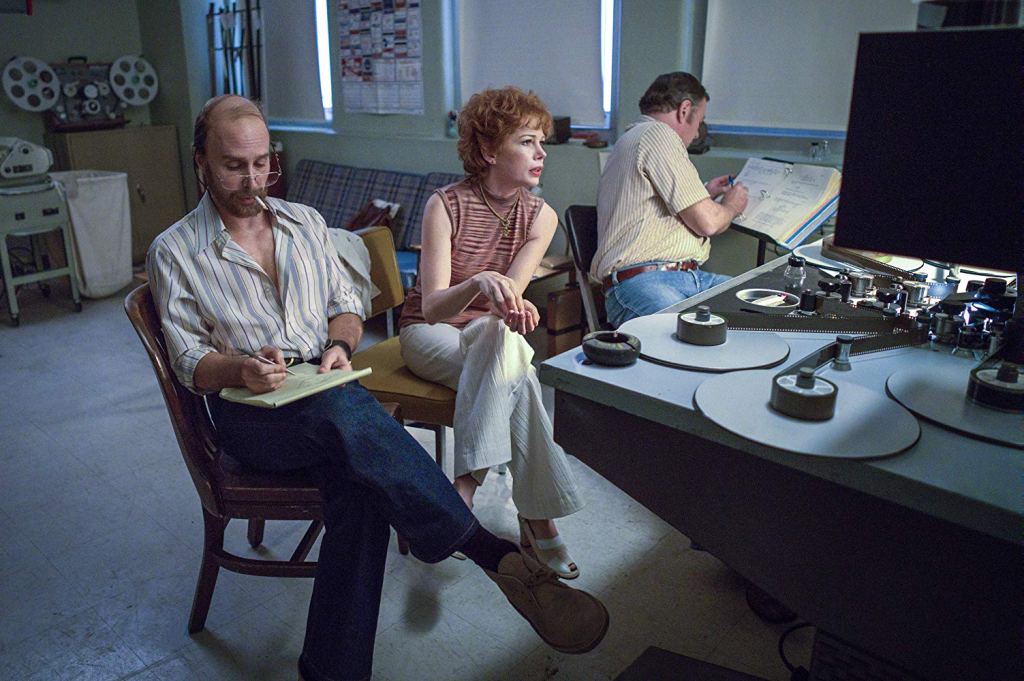
If you’re interested in musicals and the work of Fosse and Verdon then you will absolutely love this warts and all biopic. We get extensive rehearsal, on stage, on screen and edit room scenes showing Fosse and Verdon’s creative process. Songs and dance numbers from Cabaret, Sweet Charity, All That Jazz, Pippin, Chicago and many more, feature heavily in the play and fantastic soundtrack. Further, both Fosse and Verdon, were dancers from a very young age and we therefore get scenes from their formative years paying their dues in dives and flop-houses.
We also get the heavy drama of Fosse and Verdon’s marriage battles. The former being a pill-popping workaholic and womaniser was the biggest issue in their relationship. His constant affairs and narcissistic tantrums took their toll eventually. Indeed, Fosse, while an amazing creative force, is quite despicable in his lecherous use of the casting couch and exploitation of his position and power. Perhaps, even more could have been done to critique his negative acts, especially in light of the #MeToo gender issues relevant today. However, there is no aggressive damnation of his actions, but rather agnostic reflection and acceptance that this was prevalent masculine behaviour for the era.
Sam Rockwell as Fosse is outstanding. He conveys the sadness of a junkie, haunted by a dysfunctional and abusive childhood. Yet, where his work is concerned his energy and obsession is non-stop and formidable. This, in no small part, is down to his constant amphetamine abuse; something which would lead to mental and physical health issues. Similarly, Michelle Williams is incredible as Gwen Verdon. She inhabits this classy performer with an energy and drive, but also a fighting spirit when clashing with Fosse creatively and matrimonially. She is more his match than his muse though. Indeed, Verdon, is his equal and deserves to share many of his plaudits and awards. They ultimately would push each other to greater heights and achievements.
The supporting cast, including the magnetic Margaret Qualley as dancer, Anne Reiking, and Norbert Leo Butz portraying writer, Paddy Chayefsky are excellent. Also, the talent and look of the era is convincingly evoked on and off the stage. The cavalcade of dance numbers are superbly mounted and the editing perfectly reflects the fractured nature of the characters’ show business lives. Lastly, the jigsaw structure, which zigs and zags from the characters’ past to Fosse’s final days, charting triumph and adversity, complements the complexity of the characters.
Thus, overall, this works as an honest analysis of a flawed genius and his equally talented dance and life partner. It is highly recommended for those drawn to the darker side of creative artistry and personal relationships. But the question remains: should the work of Fosse be re-evaluated, especially in light of his extremely sexual and sexist behaviour? Is there a statute of limitation for genius and all that jazz? The Primetime Emmy awards panel do not seem concerned given Fosse/Verdon (2019) has received seven major nominations at time of writing. All of which it stands a great chance of winning!
Created and Written by Sally Wainwright – based on The Diaries of Anne Lister
Director(s): Sally Wainwright, Sarah Harding, Jennifer Perrott
Producer(s): Sally Wainwright, Faith Penhale, Laura Lankester, Phil Collinson
Main Cast: Suranne Jones, Sophie Rundle, Joe Armstrong, Gemma Whelan, Gemma Jones, Tom Lewis, Timothy West, Shaun Dooley, Vincent Franklin, Rosie Cavaliero, Lydia Lawton, Amelia Bullimore etc.
No. of episodes: 8
Original Network: BBC / HBO
**MAY CONTAIN SPOILERS**
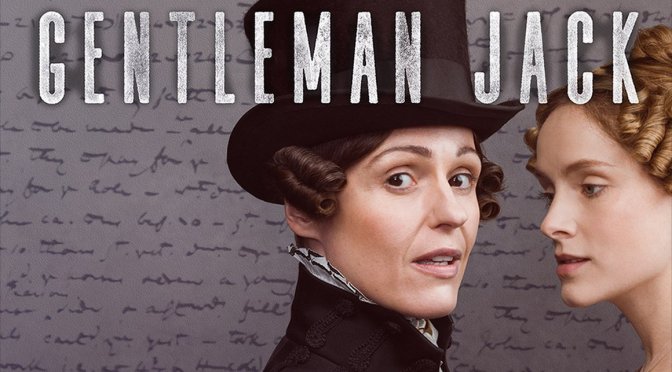
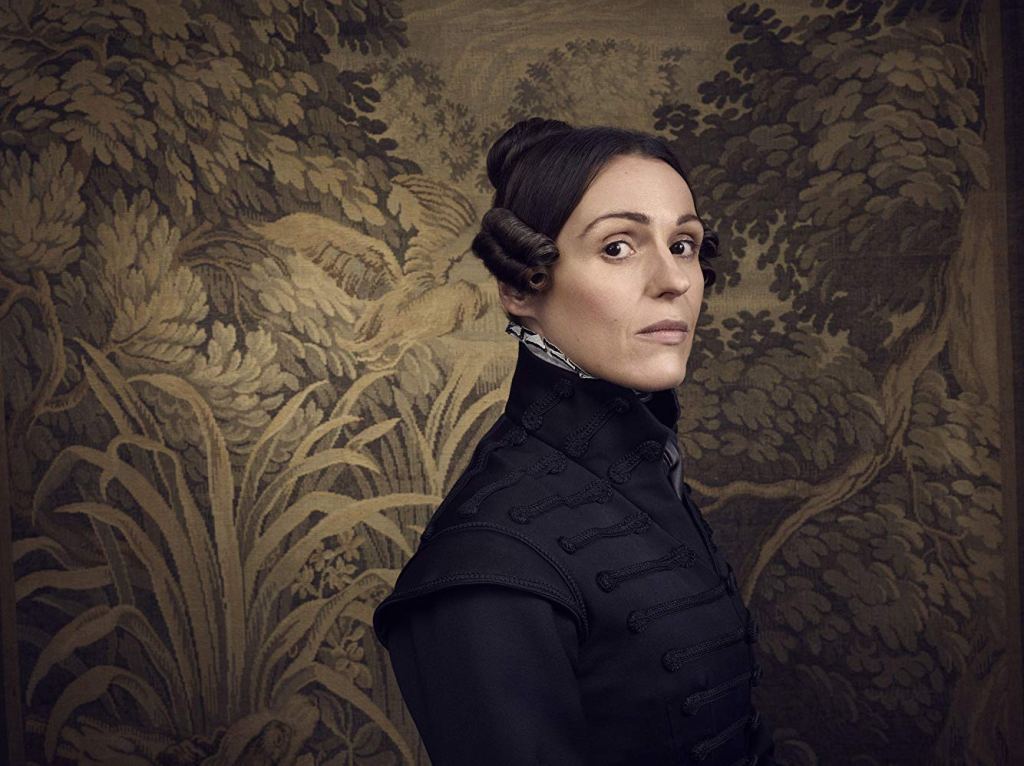
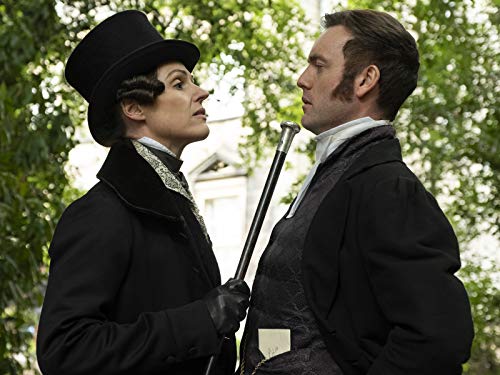
The BBC has a long history of producing classic period dramas and they have had much success with them. Likewise, HBO have an almost flawless record of producing great TV drama. Gentleman Jack caught my eye as it starred the ever impressive Suranne Jones in the lead role of Anne Lister. The titular character was a prominent industrialist and landowner in 1800s, Halifax, Yorkshire. Lister was full of energy, courage and determination as she fought the dominant patriarchal values of the day. As well as battling the men on the business plain, she also caused scandal with her preference for same-sex relationships. Much of this was documented in her extensive ‘secret’ diaries and came to light in their full explicit glory when they were de-coded some years later.
Adapted by Sally Wainwright, a very experienced writer and director, the eight episodes begins at a giddy pace. Lister has returned from abroad to her estate at Shibden Hall, after the breakdown of her most recent relationship. She wastes no time getting back into the swing of running the show and attempting to raise capital for a venture into the coal industry. Lister dotes on her Aunt and Uncle, but clashes with her more conventional sister, Marian (Gemma Whelan).
Marian disapproves of her sister’s robust, androgynous style and unsaid desire for female “companionship”. Amidst the cutthroat business conflicts with her rivals and tenants, Lister then finds a new romance with neighbour Ann Walker (Sophie Rundle). Ann Walker though is younger, delicate and somewhat inexperienced; thus, the path of love is very precarious.
The character of Anne Lister as presented by Suranne Jones is a fantastic watch. She strides around from location to location energetically controlling her estate and making plans. She clashes and stands her ground with the men of the drama, proving herself to be more than their equal. Gemma Whelan, as Marian, is also brilliant. Whelan steals many a scene with an exasperated look, sarcastic smile and witty quip. It’s a testament to her acting range she can inhabit such a bright character after the darkness shown in her role of Yara in Game of Thrones.
The actor with the most difficult role is Sophie Rundle. At times her character is so confused, mentally and emotionally, that she is hard to warm to. I personally wondered, apart from her wealth and sickly nature, what Lister was attracted to. I think there was probably sexual attraction but also a desire to protect this delicate flower. Nonetheless, the opposite nature of Lister and Walker’s personalities created intriguing and touching romantic situations.
The story had been told before in a film called The Secret Diaries of Miss Anne Lister (2010), directed by James Kent and starring Maxine Peake. I did not see that particular drama but as this latest adaptation is a co-production between the BBC and HBO, the values of the production are of course exemplary. The costumes, camerawork, style, musical score and pace create a very engaging tele-visual experience. Sally Wainwright deserves credit for adapting the diaries and creating compelling drama, romance and some darker events along the way.
I would say that perhaps the various narrative strands could have been resolved within six episodes, rather than eight. Plus, there was, on occasion, a use of Anne Lister directly addressing the audience which became jarring at times. I mean, there did not seem to be much context to the use of this stylistic device. Nonetheless, these are minor issues which did not stop me enjoying the show. Indeed, with a brilliant cast, writing and direction throughout I would highly recommend this excellent TV programme.
Writer(s): William Bridges, Kate Trefey, Paul Dichter, Curtis Gwinn
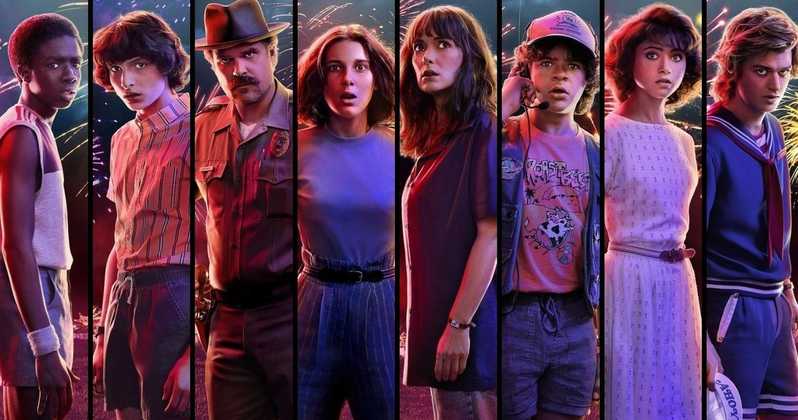
Cast: Winona Ryder, David Harbour, Finn Wolfhard, Millie Bobby Brown, Gaten Matarazzo, Caleb McLaughlin, Noah Schnapp, Sadie Sink, Natalia Dyer, Charlie Heaton, Maya Hawke, Cara Buono, Joe Keery, Cary Elwes and many, many more.
Number of episodes: 8
Original Network: Netflix
**CONTAIN MASSIVE SPOILERS**
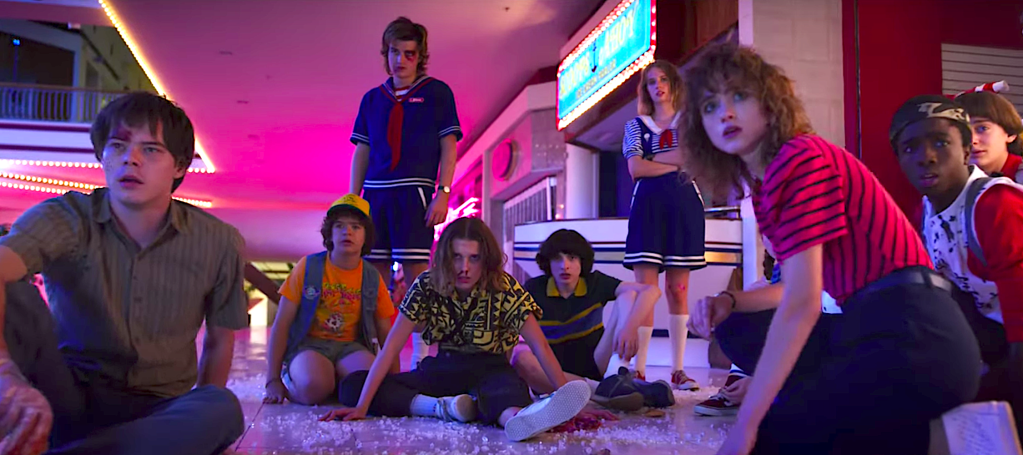
When Season 1 was released, Netflix’s phenomenally popular sci-fi-rites-of-passage-comedy-adventure-drama proved an excellent nostalgia-fest. Indeed, it evoked the 1980’s perfectly in design, sound and look, wearing Steven Spielberg, Stephen King, John Carpenter and George Lucas influences, not so much on its sleeve, but as a whole darned fashion show.
Written and directed by the Duffer Brothers, it centred on the search for a missing child in (where else) Indiana, an ultra-dimensional netherworld and a telekinetic kid called Eleven, who’s on the run from a nefarious US Government facility. Archetypal characters such as embittered drunken cop (David Harbour), distraught nutty mother (Winona Ryder), Gooniesque geeky teens all try and track down their missing friend during eight episodes containing weird and monstrous moments throughout.
I thought Season 1, while full of great design, style, suspense and mystery, was over-rated. It was still a fine work of entertainment but I found the story seriously padded out and stretched. While Season 2 is more generic it was a marked improvement as we got more pace and action. Season 3, though, is even better in terms of story-lines, pace and humour. Some may lament the move away from the mystery and darkness of Season 1, but Season 3’s humour, action and romantic sub-plots are turned right up to Eleven (pun intended).
Furthermore, amidst all the teenage romance crap, there is some fantastic gore and visceral monster goo on show. The Mind Flayer nemesis is an absolutely fearsome creature creation and way more convincing than the cartoon Russians. So, overall, I think this was my favourite season as it didn’t take itself too seriously. It just went for pure adrenaline and mind-bending chases and fights throughout. I didn’t even mind the John Hughes-style soppy romances.
Lastly, Season 3 isn’t perfect as it often verged on parody. This is notable in Episode 8, where we get a viral-bait version of The Never Ending Story (1984) theme song. Quite frankly, it was tonally inappropriate given the kids were being hunted down by Russian soldiers and an inter-dimensional monster at the time. Aside from this crime against genre occurring Season 3 is great because it featured a cavalcade of film references and homages. Well, let’s be honest, they basically stole a load of ideas from other movies.
So, rather than do a traditional review I will mark Stranger Things (2019) – Season 3, and then pick a TOP TEN movie homages or steals that featured prominently as a fun meta-bingo review. Obviously, I’ve probably missed loads out, so, if you care, let me know which ones.
Mark: 9 out of 11
TOP TEN META-REFERENCES IN STRANGER THINGS (2019)
RUSSIAN BADDIE — THE TERMINATOR (1984)
BILLY AND TOWNSFOLK ‘DOUBLES’ — INVASION OF THE BODY SNATCHERS (1956 / 1978)
THE MIND FLAYER – THE BLOB (1958) / ALIEN (1979) / THE THING (1982) / TREMORS (1990)
STEVE AND ROBIN’S “WILL THEY, WON’T THEY ROMANCE?” — ANY JOHN HUGHES FILM!
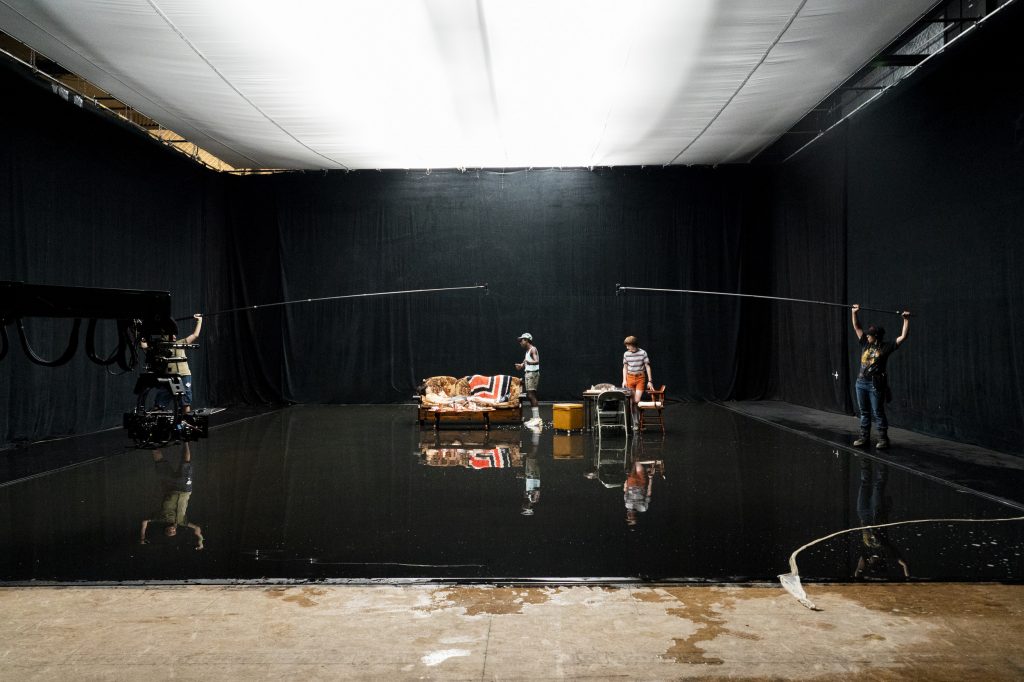
THE BLACK WATER VOID – UNDER THE SKIN (2013)
USA VERSUS RUSSIA — RED DAWN (1984), RAMBO 2 (1985) & ANY COLD WAR FILM!
BILLY’S DREAMS — DREAMSCAPE (1984) / NIGHTMARE ON ELM STREET (1984)
ELEVEN’S TELEKINETIC POWERS — CARRIE (1976), THE FURY (1978) & SCANNERS (1981) ETC. . .
KIDS ON A MISSION TO SAVE THE TOWN/WORLD (AGAIN) — THE GOONIES (1985)
FANTASY OLDER WOMEN DYNAMIC — RISKY BUSINESS (1983) / WEIRD SCIENCE (1985)
Executive Producers: David E. Kelley, Jean-Marc Vallee, Reese Wetherspoon, Bruna Papandrea, Nicole Kidman, Liane Moriarty etc.
Based on: Big Little Lies by Lianne Moriarty
Teleplays written by: David E. Kelley
Directed by Andrea Arnold
Main Cast: Reese Witherspoon, Zoe Kravitz, Nicole Kidman, Shailene Woodley, Laura Dern, Meryl Streep, Alexander Skarsgård, Adam Scott, James Tupper, Jeffrey Nordling, Kathryn Newton etc.
Cinematography: Yves Belanger, Jim Frohna
Original Network: HBO
**CONTAINS SPOILERS FOR SEASON ONE**
I hate Social Media and Twitter especially, sometimes. I also hate myself for getting dragged into the bullshit it sometimes brings. I’m referring specifically to the distorted prejudice the mind can take on when reading a few negative posts about a programme, film or personality. Such reports can obviously be accurate. However, they can mislead and stain your expectations of a show or film or actor or artist. In this case the second season production of HBO’s, Big Little Lies, came under fire from a few people on my Twitter feed. They said it was an awful and an ultimately disappointing series. Were they right? I mean, how bad could it be?
Then there was the Indiewirearticle which highlighted an issue during production. They asserted in a well written piece of click-bait that director Andrea Arnold was unceremoniously disregarded in the editing process and first season director, Jean-Marc Vallee, brought in to oversee re-shoots and final cut. If you believe the Indiewire article, this was the act of a heinous media corporation cutting down a beloved artist and robbing her of her vision. Arnold’s auteur status remains untainted for me. She is a fine director who carried out her contract and did not have final cut anyway. This belonged to HBO and they had say on who they hired during the production.
Thus, in a short period of time, a couple of tweets and one article had seriously affected my expectations of the second season of Big Little Lies. I was expecting a mess of a show. One which did not make sense and was robbed of all artistic and dramatic impetus by the HBO hierarchy. However, I can safely say I was wrong and, while not as good as the brilliant first season, it was still a really intriguing eight episodes worth of entertainment.
After the exceptional first season which found a stellar cast including: Reese Witherspoon, Nicole Kidman, Laura Dern, Adam Scott, Zoe Kravitz, Alexander Skarsgård and Shailene Woodley on top acting form, the second season follows on with the aftermath of prior events. The first season expertly inter-weaved stories concerning an unknown “murder” victim; school bullying; warring parents; extra-marital affairs; and abusive relationships, expertly played out over seven compelling episodes. With the “murder” victim revealed in the final episode, we now get an exploration of suspicion, guilt, conspiracy and a test of loyalty and friendship.
Without wishing to give too much away the newest and strongest addition to the series is Meryl Streep. She plays the mother ***SPOILER ALERT*** of the dead guy from the first season, Perry Wright (Alexander Skarsgård). His death occurred when he was pushed “accidentally” down some stairs at a party. But, the friend’s, including his wife, Celeste (Nicole Kidman), collude to say he fell instead. With the police still suspicious the main investigator is actually Streep as the dogged Mary Louise. She is passive-aggressive and subtle in her enquiries as to how her son died. It’s a delight watching her deviously pull apart each of the lead suspects. It is also an absolute masterclass in acting as Streep’s crafty characterisation makes this series a must-watch. Her scenes with Nicole Kidman’s crumbling personality are especially compelling.
Allied to the investigation into Perry’s death, the show gives some interesting narrative strands to Laura Dern’s energetic power-mum, Renata. Her world is about to disintegrate around her in the face of her husband’s financial wrong-doings. Equally powerful is Bonnie’s (Zoe Kravitz) attempt to heal the rift between herself and her mother. Bonnie suffers the most guilt as ***SPOILER ALERT*** she was the one who pushed Perry down the stairs. As she battles with the emotional repercussions of her actions, she experiences a painful re-emergence of historical parental abuse. Perhaps, not as intriguing are Madeline (Reese Wetherspoon) and Jane’s (Shailene Woodley) narrative strands. Nonetheless, they do support the series’ themes of family, trust and love that add depth and subtext.
To finish, I learnt once again that social media and Twitter surfing can have a negative impact on one’s critical expectation of a programme or film. You have to basically make your own mind up and not be swayed by the pitchforks and torch-bearers baying for blood online. Big Little Lies (2019), Season 2, therefore, while not reaching the dramatic heights of the first season is an excellent follow-up. It explores the privileged lives of the rich Monterey set instilling a sense of humanity and frailty to their lives. The more improvisational direction of Andrea Arnold works well with the fragmented impressionism of the editing style to bring this out. Mainly though, it’s the impressive cast and script which glued me to the screen while experiencing this very watchable drama.
Produced by: Megan Ellison, Dede Gardner, Jeremy Kleiner, Adele Romanski, Sara Murphy, Barry Jenkins
Based on: If Beale Street Could Talk by James Baldwin
Starring: Kiki Layne, Stephan James, Colman Domingo, Regina King, Teyonah Parris, Michael Beach, Pedro Pascal etc.
Cinematography: James Laxton
Music: Nicholas Britell
**MAY CONTAIN SPOILERS**
Barry Jenkins is clearly a talented filmmaker who is striving to transcend the boundaries between art and craft where cinema is concerned. His second feature film Moonlight (2016), was a critical smash and a sleeper box office hit, subsequently going on the win the Best Film nod at the Academy Awards. Whether it was worthy of such as award is another matter, but it was certainly a tremendous work of cinema. The rites of passage story was delivered by Jenkins with imaginative choices in casting, structure, look, music and all-round filmic endeavour.
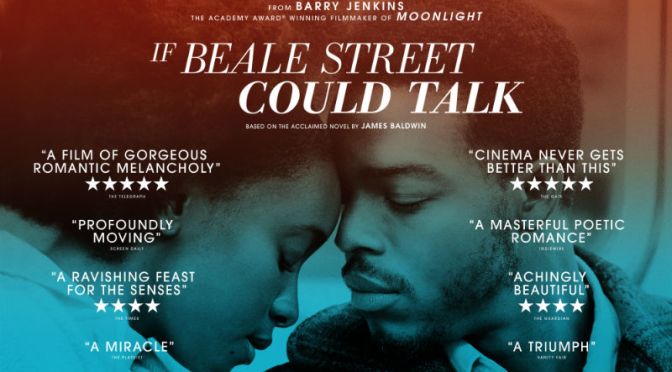
His latest film, If Beale Street Could Talk, is equally stylish and artfully rendered, but not as emotionally impactful as Moonlight. Indeed, while this is in fact his third feature, Beale Street seems to suffer from classic “2nd album syndrome”, inasmuch as Moonlight set the bar so high, it was going to be a difficult act to follow. Moonlight felt like years of heart and passion thrusted upon the screen, as Beale Street struggles to maintain that said peak. That isn’t to say that the film is not without its virtues as Jenkins once again proves himself a brilliant director.
Barry Jenkins’ IF BEALE STREET COULD TALK, an Annapurna Pictures release.
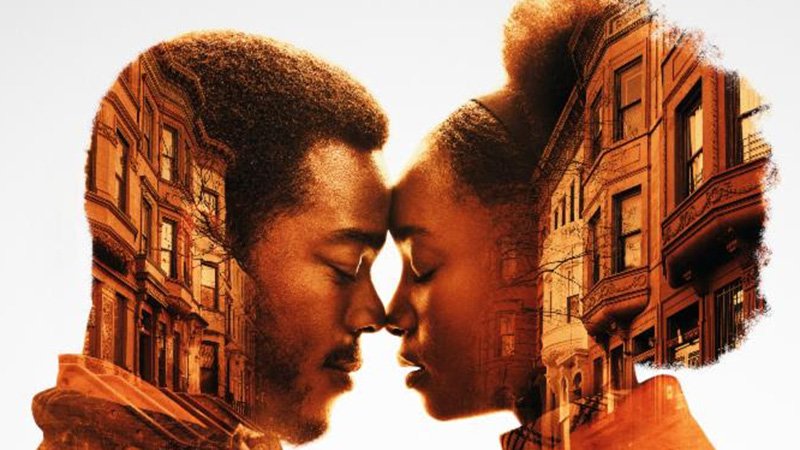
Set in 1970s, Harlem, New York and based on James Baldwin’s novel, the main protagonists are young working class couple Tish (Kiki Layne) and Fonny (Stephen James). Very much in love we open with Tish’s poignant voiceover and a wonderfully lush score supporting the urban and industrial, yet beautifully shot, imagery. Immediately, we realise Jenkins, while basing his story in realism, is presenting his film poetically. Further, Tish’s voiceover lilts and glues the elliptical, non-linear narrative together.
As with Moonlight, Jenkins uses direct address, the characters looking straight back at us drawing us into their emotional core. One may argue the device is over-used and at times distances us from the pace of the story. As Tish recounts events of her and Fonny’s relationship from childhood friends to their currently plight, you really feel a palpable sense of love, but sometimes it moves so painfully slow. Furthermore, the non-linear structure and stylistic devices also undermined the drama of the piece. Indeed, the best scene of the film in my opinion is near the beginning when Tish and Fonny’s family clash over her pregnancy. In this scene the insults spark and spit off the screen; but alas this conflict is sadly under-developed and not revisited later in the film.
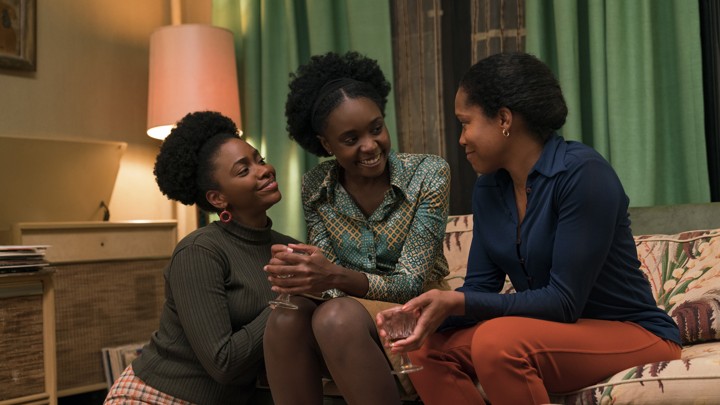
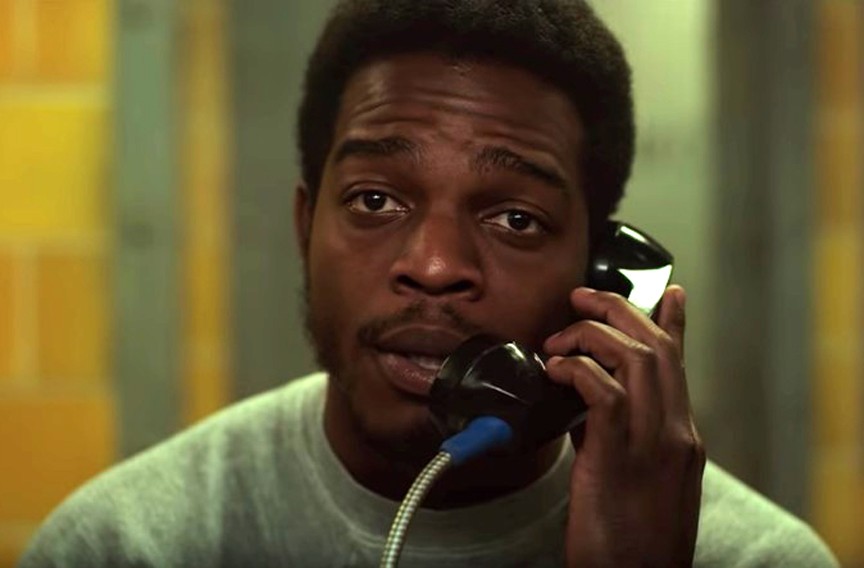
Overall, there is a great story here involving: love, romance, social unrest, police brutality, unlawful arrest and injustice, racism, family strife, hope and loyalty; however, Jenkins artistic desires build the narrative in a way that diverts emotion into the cinema style, more so than the characters. Having said that, he is a filmmaker of some brilliance and he gets fantastic performances from the fine ensemble cast, notably the magnetic Regina King. Ultimately, while the story is told slightly pretentiously for my liking, If Beale Street Could Talk, is a finely tuned work of poetic realism.
Starring: Sally Hawkins, Michael Shannon, Richard Jenkins, Doug Jones, Michael Stuhlbarg, Octavia Spencer
Music by: Alexandre Desplat
**CONTAINS MILD SPOILERS**
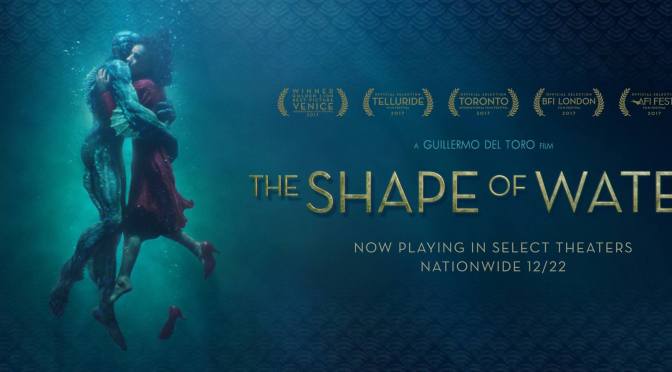
Amidst the incredible visual magic, themes of the outsider, forbidden love and the onerous scope of the patriarchy are replete within the works of fantasist Guillermo Del Toro. They are often more than not presented within allegories too where the fantastic elements are employed to both create spellbinding awe while secretly delivering an important socio-political message. For me, Del Toro in attempting to marry grandiose concepts with important messages must be praised for his risk-taking. Above all else there is no doubt, as his latest film The Shape of Water confirms, he is a filmmaker of some brilliance.
Del Toro’s body of work demonstrates: outsiders, freaks, the silent minority and the shunned are never far away from his vision. In The Devil’s Backbone (2001) and Pans Labyrinth (2006), children find themselves the victims of horrific civil war. While, similarly, in Hellboy (2004) war with the Nazis is central to the core as our anti-hero, a sarcastic red ‘demon’, fights against all manner of monstrous foes. Prejudice against Hellboy is also represented within his “forbidden” love for Liz Sherman (Selma Blair), while an altogether more sinister romance is shown in gothic thriller Crimson Peak (2015). Even muscular vampire-hunter played by Wesley Snipes in Blade II (2002) is a freakish hybrid who does not fit into the societal and patriarchal order.
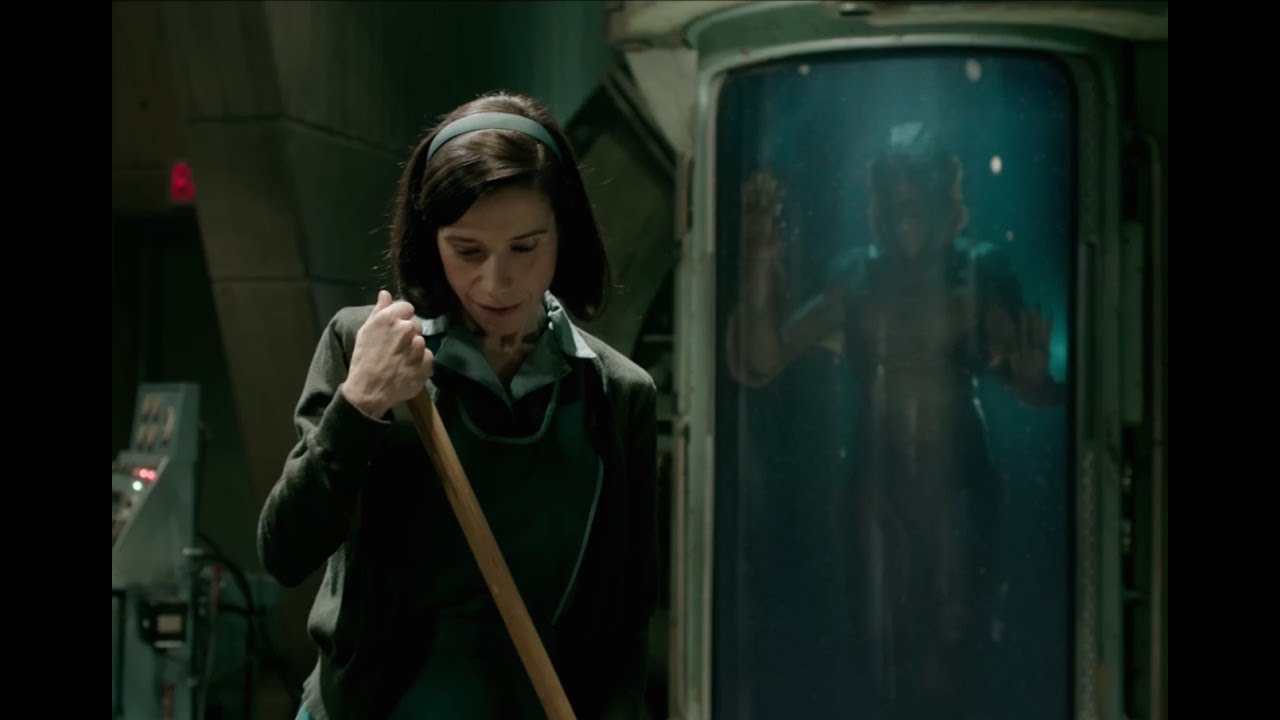
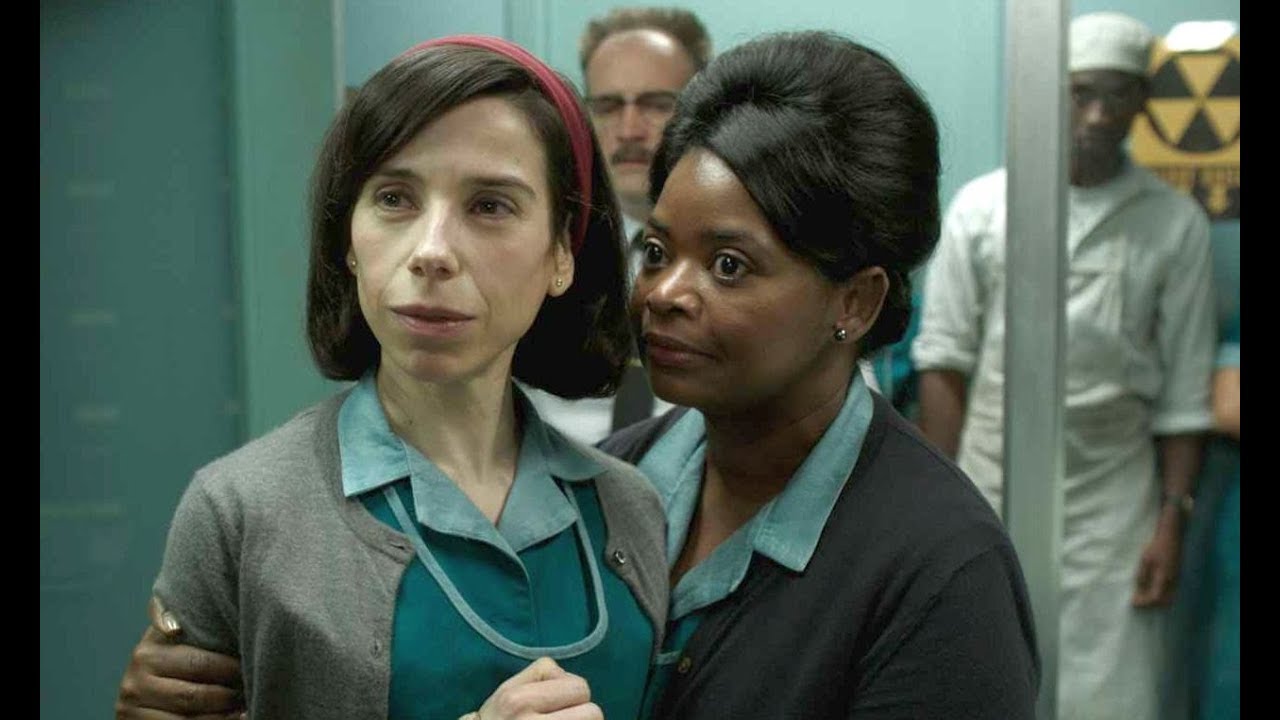
In The Shape of Water, Del Toro has successfully taken all of these elements and themes and delivered a magical, poetic, at times disturbing, but overall incredible cinematic experience. Set during the Cold War in 1950s Washington, Sally Hawkins plays mute cleaner Elisa Esposito, who along with her friend, Zelda (a wonderful Octavia Spencer), works at a top secret U.S. army base. Silent from birth, what she lacks in voice, Elisa more than makes up for in courage, compassion and confidence. She shares her living space with retired copywriter, Giles — portrayed with incredible warmth and wit by Richard Jenkins — and his army of cats. But when a mysterious “Asset” is delivered to Elisa’s place of work she suddenly becomes entwined in an incredible story of sacrifice and love.
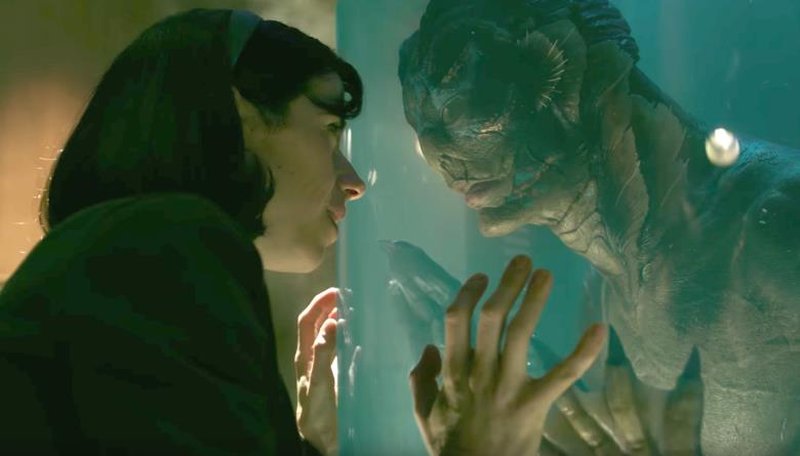
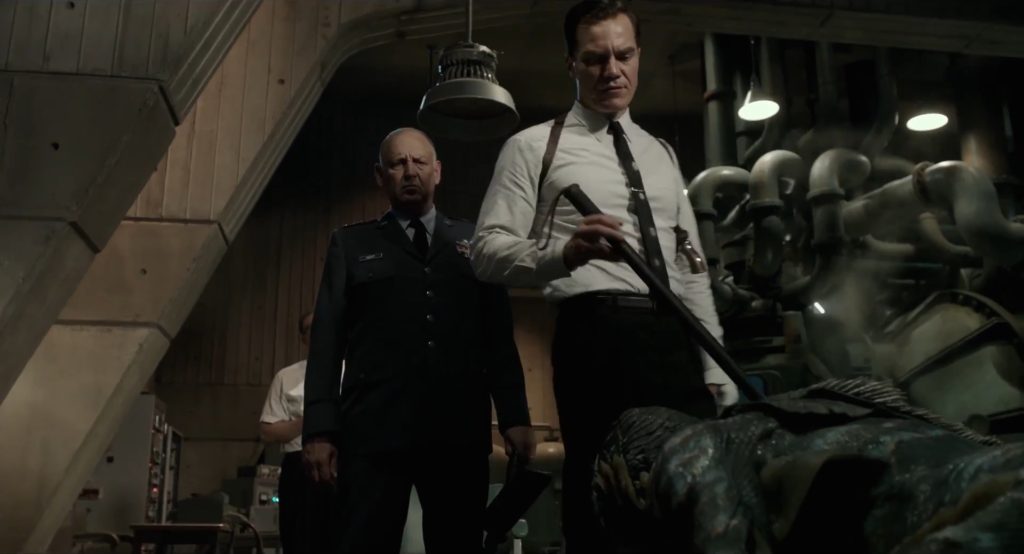
The “Asset” is considered a monster by the United States Army and the security team is led by a dominant bully and alpha male called Strickland. Here, once again, Michael Shannon proves himself a formidable actor. He doesn’t just do cartoon bad guys but, thanks to some great writing and acting, Strickland is shown to be the biggest monster of the film; full of nasty quirks and a sadistic desire for control. Doug Jones as the Amphibian Man also deserves a special mention as the scenes between him and Sally Hawkins are very special. Here two silent characters are able to say more with a look, hand signal and touch than a thousand words could achieve. Del Toro supports the acting with some terrific visuals, many of them water-based, as raindrops, bath water and aquatic underwater images submerge us in a rich palette of blues and greens. The music is cleverly used too; from Alexander Desplat’s melodious score to the old classic songs of yesteryear humming from the cinema below Elsa’s apartment building.
In any other year Sally Hawkins, and she may well still do, walk away with all the Best Actress honours; yet she is up against the incredible Frances McDormand. Nonetheless, Hawkins gives us such a nuanced and heartrending performance you forget that she cannot speak. But that is what Del Toro does so well because throughout his oeuvre he gives voices to the outsiders, orphans, children, supposed monsters and victims of oppression. This is mainly a love story but I also enjoyed the brilliant writing from Vanessa Taylor and Del Toro as the script leaps from romance to horror, suspense, action, cold-war thriller and black comedy. Overall, within this magical experience Del Toro invites us into a dark world where prejudice is ultimately defeated by tenderness; and brutality will never stop the path of true love.
MY BLOODY VALENTINE: ALTERNATIVE VISIONS OF LOVE IN THE HORROR GENRE
“Love is giving something you don’t have to someone who doesn’t want it.”
― Jacques Lacan
I continue to write articles for the excellent So The Theory Goes website and here once again is a slightly more academic approach to film analysis. You can read it here or below.
An eternal question in our society still remains: what is love? Is it the joining together of two people forever committed to a relationship built on respect and trust? Or is it the emotion you feel for a family member or person you have bonded with over time? Is it nature’s way of tricking us into the act of pro-creation? Perhaps it’s an abstract and emotional concept created by a higher power to ensure we act positively? For some it could be a dark force which enlivens obsession and stalking and violence or maybe it’s a marketing delusion forced upon us by greedy advertisers, florists and chocolate vendors? Maybe it’s simply all of the above!?
Studies by Helen Fisher of Rutgers University propose that we fall in love in three stages involving a different set of chemicals. They are: lust, attraction and attachment. Indeed, the events occurring in our mind when we fall in love are akin to mental illness. Chemicals such as: testosterone, oestrogen, dopamine, serotonin all conflict and combine to change our emotions when we’re attracted to someone. Further studies show that when choosing a partner we are at the mercy of our subconscious and inner sexual desires as proffered in psychoanalytical studies.
Love and sexual desire are a big part of everybody’s lives whether it’s the positive or negative and indeed the continuance of the species is very much reliant on it. Moreover, love or the lack of love has provided the springboard for millions of stories, films, plays, songs, poems, slogans, TV show and adverts! Conversely the horror film genre, while not synonymous with romantic love, often explores the darker side of relationships and sexuality. Indeed, as a cultural phenomenon the horror genre is wholly malleable in its narrative omni-presentation; criss-crossing literary, theatrical, dance and televisual culture offerings.
Horror intends to elicit a physiological reaction through stress and shock while presenting: monsters, ghosts, aliens, the fantastic, the supernatural, murderers, bloody gore, kidnappings, mutilation, witches, zombies, psychopaths, natural and unnatural phenomenon, demons and many more aspects which draw on our inner, societal and global fears. But what of love and how is it represented in the horror genre? For this article I would like explore notions of love and sexuality within horror cinema. I will draw on genre, gender, feminist and psychoanalytic theories and how they can be applied within the chosen films. So, if you want an alternative to the usual Valentines-clichéd-cosy-rose-petal-drenched-chocolate-card-Love-Actually-type-movies, then these films are ones you should consider.
**CONTAINS SPOILERS**
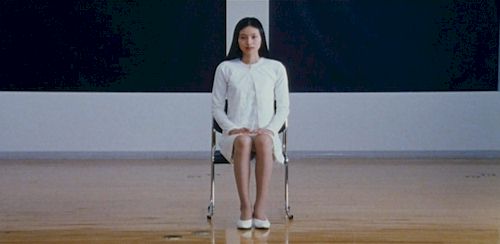
AUDITION (1999) – DIRECTOR: TAKASHI MIIKE
It would be unfair to label Miike’s gory shocker a simplistic example of ‘torture porn’. It is in fact an incredibly scary and inventive revenge satire. In her highly influential essay, Visual Pleasure and Narrative Cinema, Laura Mulvey commits the powerful theory that cinema is coded via the “Male Gaze”. According to Mulvey, “. . . pleasure in looking has been split between active/male and passive/female.”
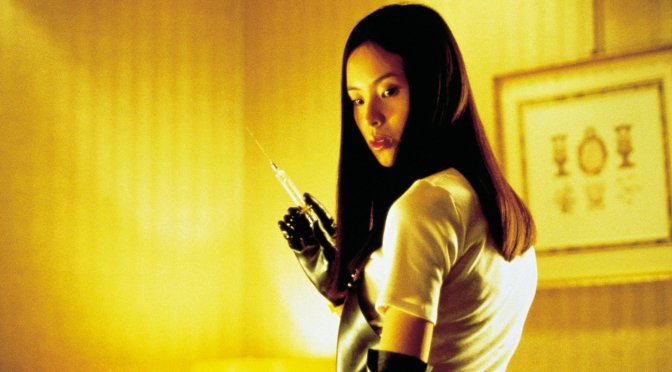
Yet, while beginning with this dynamic, Audition turns it around with the female anti-heroine Asami reversing the gaze on her male contemporaries. What starts as one man’s attempt to find a wife, via his own creepy version of the casting couch, is turned into a violent proto-feminist-carve-up-par-excellence as Asami cuts and slices her male victims with vicious aplomb.
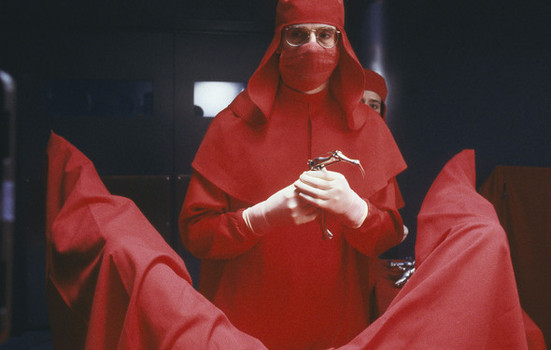
DEAD RINGERS (1988) – DIRECTOR: DAVID CRONENBERG
Freud’s work on the unconscious, dreams, repression and psychosexual stages is, of course, incredibly influential on both psychology, psychoanalysis and film theory. His concept of the unconscious feeding our everyday and the idea that repressed emotions drive our motivations is none more prevalent than in Cronenberg’s exquisite Dead Ringers.
In this psycho-incestuous-ménage-a-trois-love story, twin gynaecologists portrayed by Jeremy Irons, literally split and repress their identities in order to “romance” the same women. The film is a masterwork and encapsulates many of Freud’s theories relating to the Id, ego and superego; while the doppelganger theme also looms heavily over a dark, psychosexual and twisted narrative.
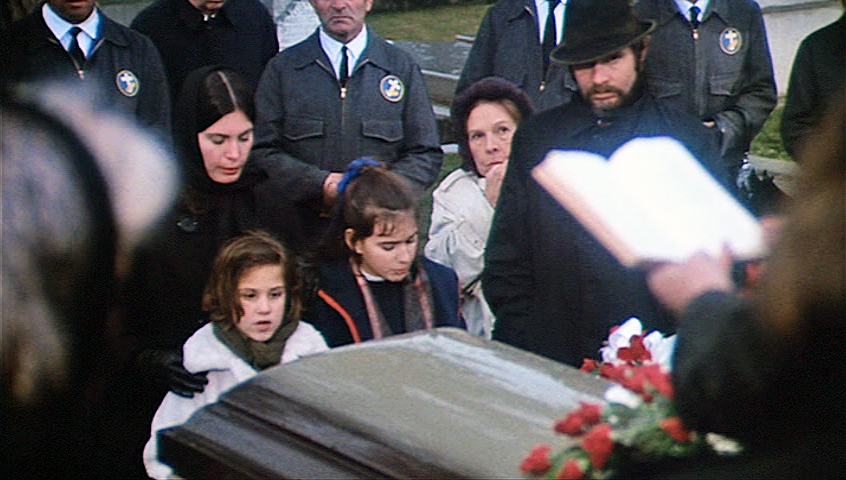
HAROLD & MAUDE (1971) – DIRCTOR: HAL ASHBY
While not technically a horror film as such Harold and Maude is a wonderful off-centre, gothic love story. The eponymous anti-hero cannot connect with his family and the world at large and through constant fake suicides he tortures his mother to the point of breakdown. It is only when Harold (Bud Cort) meets an eccentric older lady Maude (Ruth Gordon) does he begin to find some maturation. The film could be argued to embody many of the Freudian aspects of the Oedipal Complex.
Trevor Pedersen opines, “The Oedipus complex, in narcissistic terms, represents that an individual can lose the ability to take a parental-substitute into his ego ideal without ambivalence.” Indeed, through his unconventional relationship with Maude, who represents both love and death, Harold locates a maternal replacement, friend and platonic lover who brings him out of his depressed state.
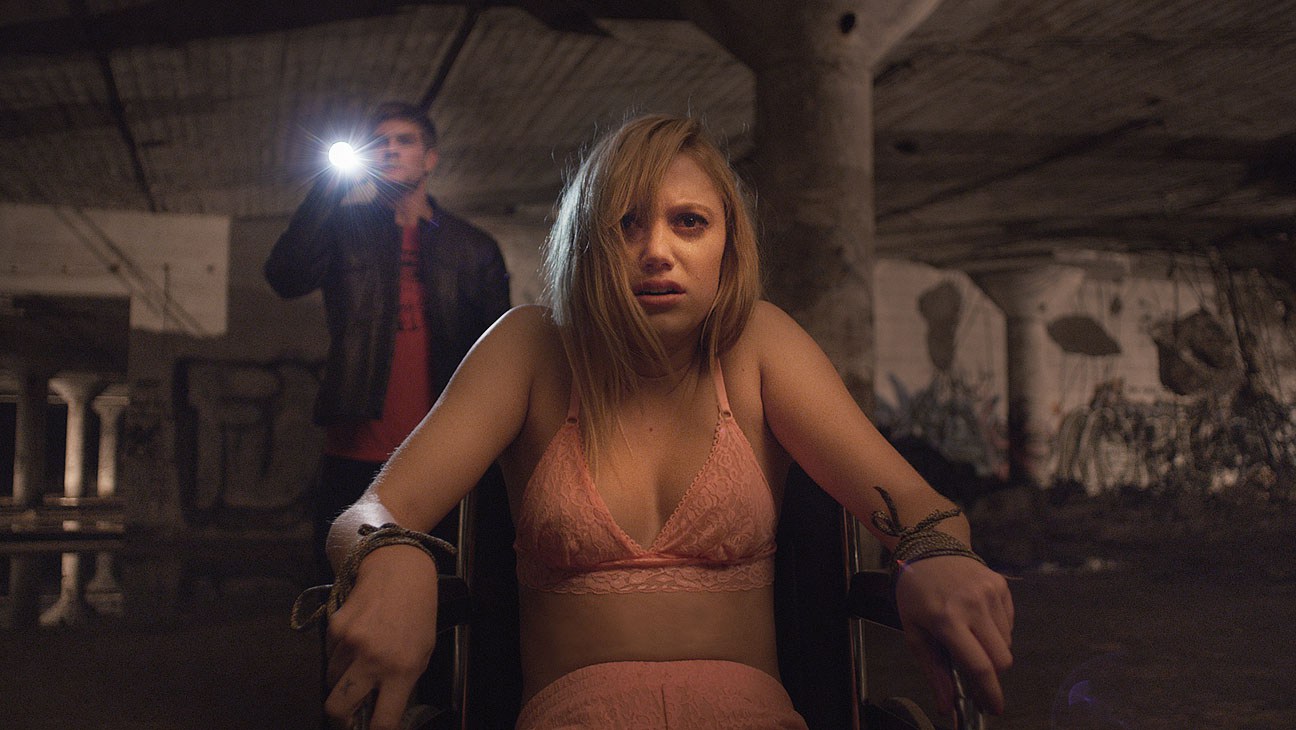
IT FOLLOWS (2014) – DIRECTOR: DAVID ROBERT MITCHELL
Mitchell’s low budget psychological horror gem contains many of the hallmarks of the ‘slasher’ subgenre which can be enshrined with the general trope, according to scholar Robin Wood, that teenagers, invariably female, are hunted down for their promiscuity. What makes It Follows such an intriguing anti-date movie is that we never see the actual evil force propelling the murders.
Maika Monroe’s heroine, Jay, finds herself in a chain of deathly sexuality which she can only break through further intercourse. Jay therefore becomes an epitome of what Carol Clover calls ‘The Final Girl’ in her marvellously titled book, Men, Women and Chainsaws. Ultimately, It Follows subverts the ‘slasher’ tropes with a symbolic metaphysical force rather than a physical monster, as the “killer” ultimately represents sexual hysteria, guilt and the malevolent force of youthful sexual abandon.
LET THE RIGHT ONE IN (2008) – TOMAS ALFREDSON
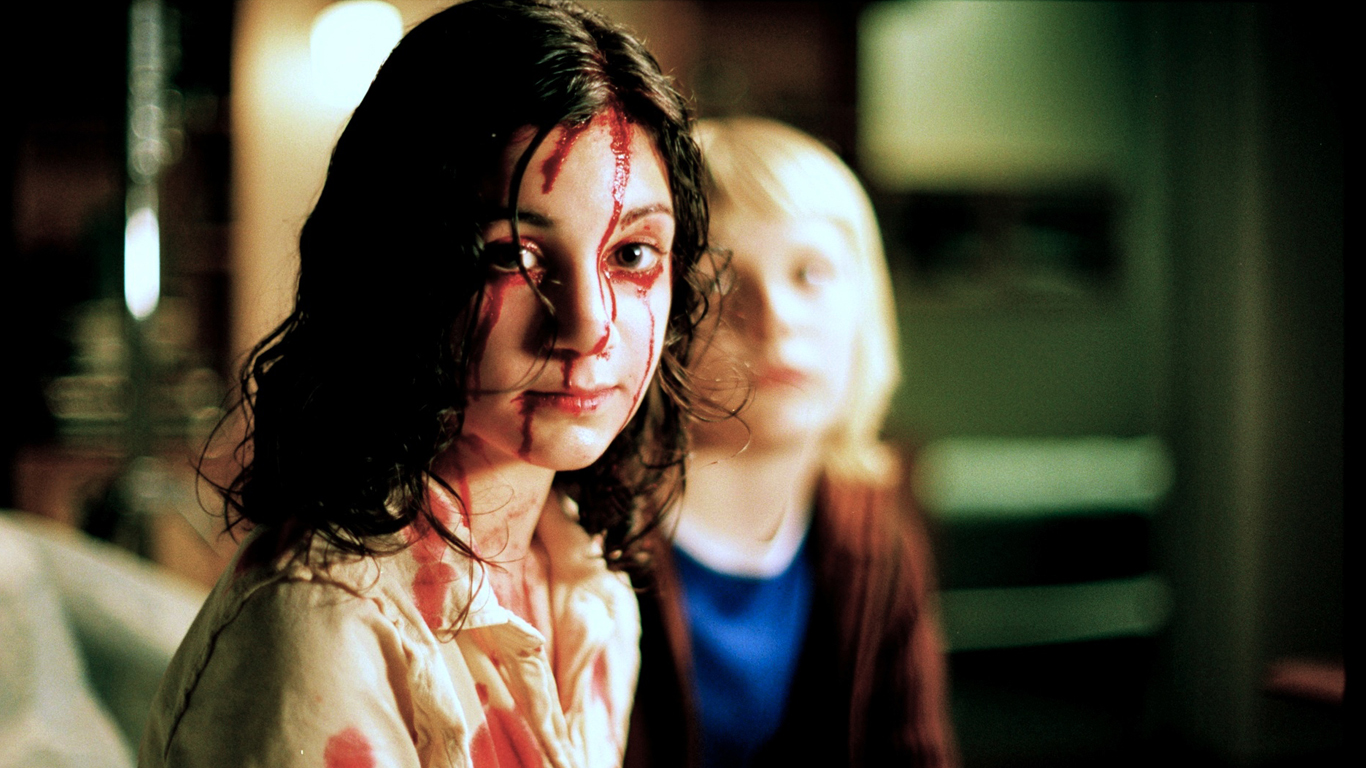
Ever since Bram Stoker’s classic novel Dracula was published we have welcomed, with fear and excitement, the vampire into our culture. Stoker’s Count Dracula was viewed as an inhuman force of destruction; as well as a metaphoric representation of sexual fervour. The vampire character is never more mesmeric and complex than in Let the Right One In. This is a sophisticated rites-of-passage-romance where a teenage boy, marginalised by his peers and family life, falls in love with a young female vampire.
However, the girl is clearly older than her looks, as the narrative bears the hallmarks of a Freudian sexual awakening for our protagonist Oskar (Kåre Hedebrant). In Eli (Lina Leandersson) Oskar finds a combination of: maternal protector, platonic companion and potential sexual partner within a complex psycho-sexual drama with hints of latent paedophilia. Of course, despite these sensitive themes under the surface, the film ultimately triumphs as a beautifully rendered story of innocence, love and friendship.
PSYCHO (1961) – DIRECTOR: ALFRED HITCHCOCK
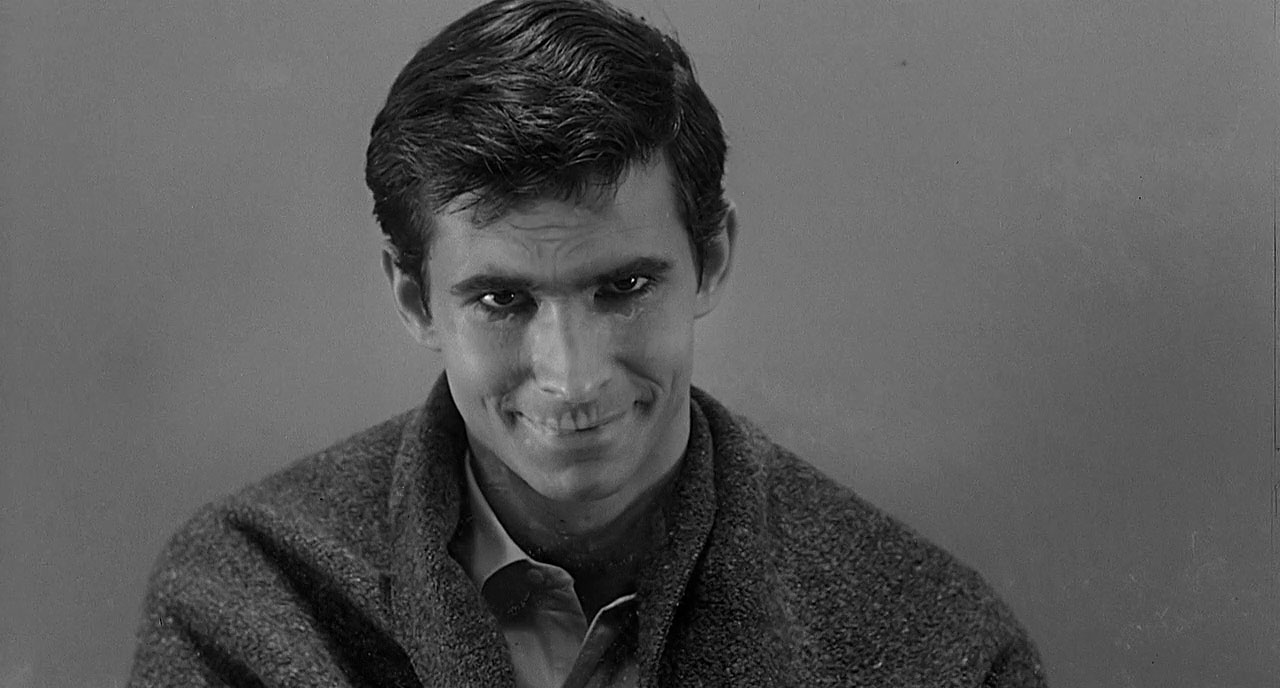
Arguably one of the greatest horror films of all time is Psycho. From a Freudian and psychoanalytical perspective, it is an absolute goldmine. The story begins with an robbery by Marion Crane (Janet Leigh) but twists into something altogether nightmarish when she hides out at the Bates Motel. The manager Norman Bates (Anthony Perkins) takes a shine to Marion, only for his “mother” to murder her. Norman’s character is the archetypal representation of the Oedipal Complex. Having killed both his mother and her boyfriend some years before the guilt he feels causes him to “become” Norma Crane in order to disassociate him from his crimes and absorb her identity.
Marion causes Norman’s sexual feelings to arise thus Norma/Norman suddenly appears to repress these desires by murder. Charles E. Bakeland opines that if an individual is unable to reconcile a love-hostility-identification relationship with parents there will be strong desires which will weigh negatively on their relationships. This thematic dynamic makes Psycho’s narrative a psychoanalytical minefield as Norma/Norman battle over her/his mind, causing havoc for those characters they come into contact with.
TEETH (2007) – DIRECTOR: MITCHELL LICHTENSTEIN
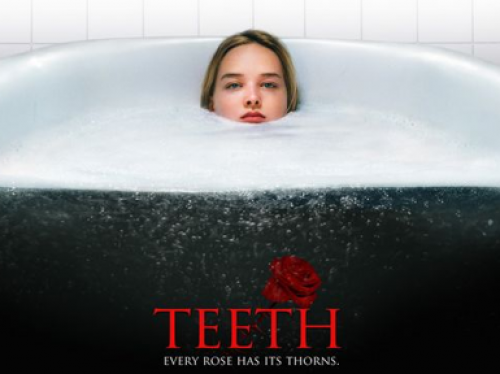
In his excellent book Genre, Stephen Neale argues horror monsters are predominantly defined as male with women as their primary victims. He continues with the idea that, “… it could be maintained that is it women’s sexuality which constitutes the real problem that horror cinema exists to explore.” One such film which reverses these notions in the excellent body horror film Teeth. Mixing body, horror, comedy with coming-of-age movies the main protagonist is a Christian virgin called Dawn (Jess Weixler). During a sexual assault by a college boy she fends him off via “Vagina dentata”; barbed teeth in her reproductive organ.
Played for shock and humour the story presents valid confirmation and subversion of Laura Mulvey’s proposal that women’s absence of a penis threatens male castration and therefore must be disavowed. Offering impressive gender satire within the sexual revenge narrative, Jess’ character refuses to be assimilated by the patriarchal order and comes of age within both her body, personality and sexuality.
CONCLUSION
In my view many of the films mentioned above demonstrate the horror genre is rich with possibilities in regard to representations of love, romance, relationships and sexuality. Through theories relating to psychoanalysis, feminism and genre theory we can begin to dip beneath the surface of the darkness of love and humanity. Both masculine and feminine sexuality and identity are constantly in crisis and under threat of death and disease, demonstrating that the path to true love is never straight but more often than not, wholly twisted.
WRITERS: NOEL COWARD, RONALD NEAME, ANTHONY HAVELOCK-ALLEN
MAIN CAST: CELIA JOHNSON, TREVOR HOWARD, STANLEY HOLLOWAY
While I’m not a classic romantic I must admit you can’t beat a really good love story when it’s done well. The ones I enjoy the most are usually the tragic failed or unrequited romance stories which tug, unravel and then break the heart-strings. While I have a soft spot for a jolly rock ‘n’ roller such as Grease (1978), the romance films that stay with me are the likes of: Casablanca (1942), Brokeback Mountain (2005), Dr Zhivago (1965), End of the Affair (1999), Last of the Mohicans (1992) and the sterling understatement of Remains of the Day (1993). Of course, William Shakespeare’s Romeo and Juliet is another brilliant example of a heart-breaking doomed love affair.
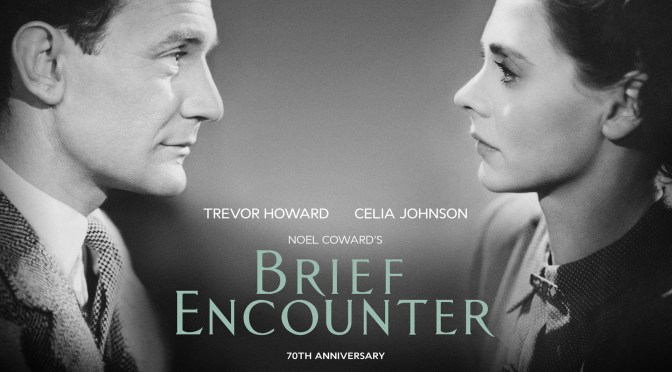
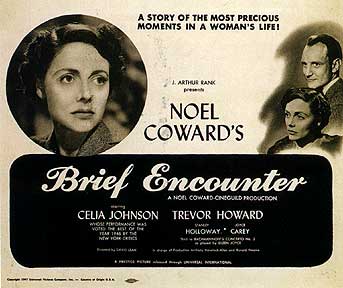
I recently went to see Brief Encounter (1945) – on Valentines’ Day in fact – with my wife at the Festival Hall. It was screened in front of a live orchestra, the London Philharmonic no less, and introduced by the daughter of actress Celia Johnson. I’m not a fan of live orchestral presentations as I’m a bit basic and practical. I always think you could be at home listening to a recording via download or CD; yes I am a philistine and have no soul! However, the live accompaniment to the screening of Brief Encounter was phenomenal; enhancing the filmic experience with beautiful renditions of Rachmaninoff’s Piano Concerto No. 2.
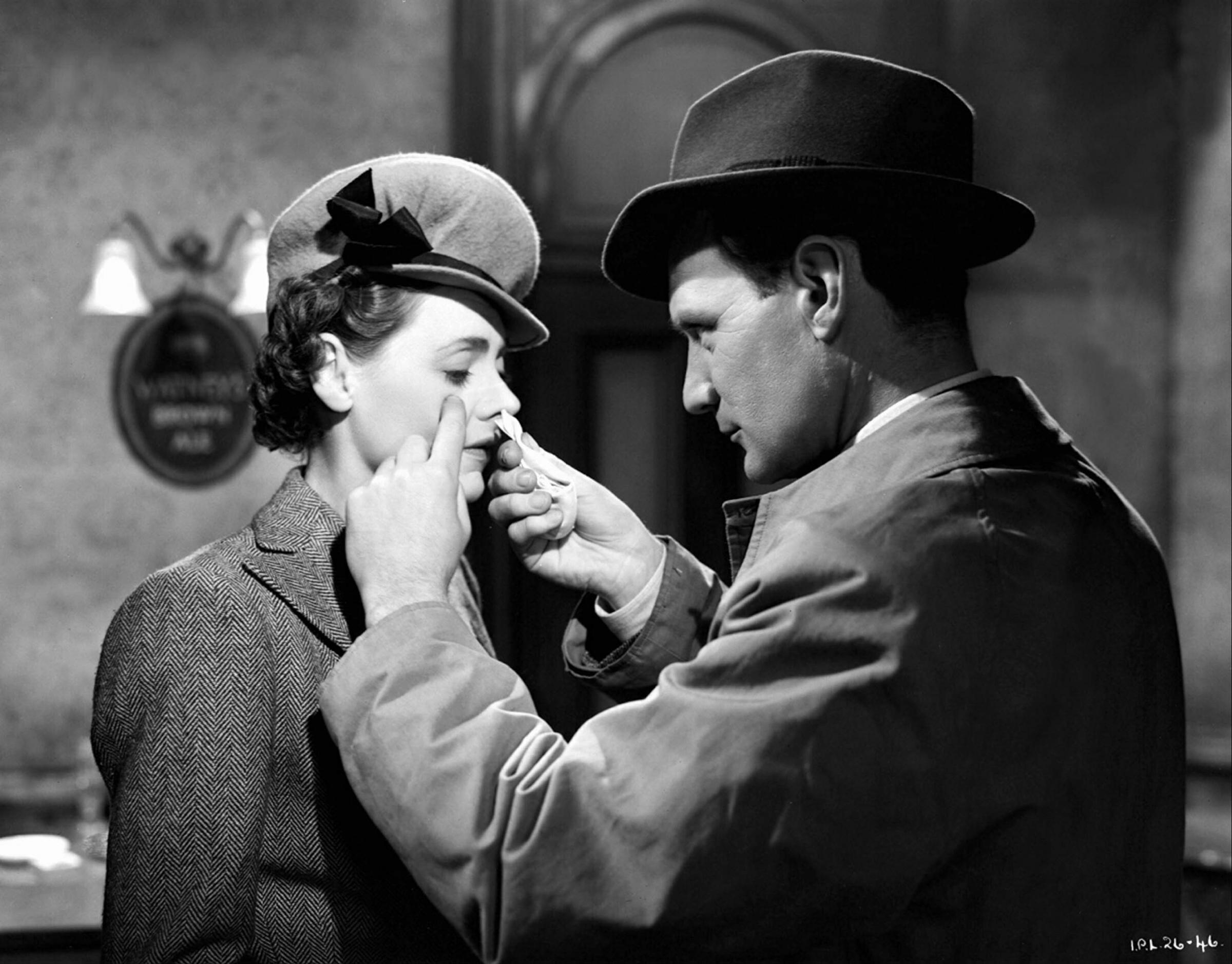
Based on Noel Coward’s one act play called Still Life, Brief Encounter really stands the test of time as a poignant narrative of romantic loss. It concerns a seemingly contented housewife, Laura Jesson, and her chance encounter with a respectable Doctor Alec Harvey. Their classic meeting on the platform where he removes grit from her eye sets in motion a touching will-they-won’t-they tryst which pulls you in throughout. The structure is sophisticated and layered with flashbacks as Laura, sitting in her comfy armchair, reminisces of her times with Alec, while her husband sits there unawares doing a crossword.
Much praise has obviously been made of David Lean’s exquisite framing and direction and the searing power of the Rachmaninoff’s music but for me the script from Coward and Celia Johnson’s sorrowful performance were also things of beauty. Her clipped and dulcet tones resonated as she delivered vignettes of secret meetings, stolen memories and pulsing regret. After all this is 1938 and middle-class women were meant to be the bedrock of the household and affairs were a massive faux pas. Plus, she loves her husband and her children; the secrets and lies were just beastly products of a wicked passion and must be repressed. Their respective sense of duty, guilt and the unfair timing of their meeting just won’t allow a happy-ever-after story. Despite it being seventy years old the film is so sad and I still felt the characters’ heartache radiate through the screen.
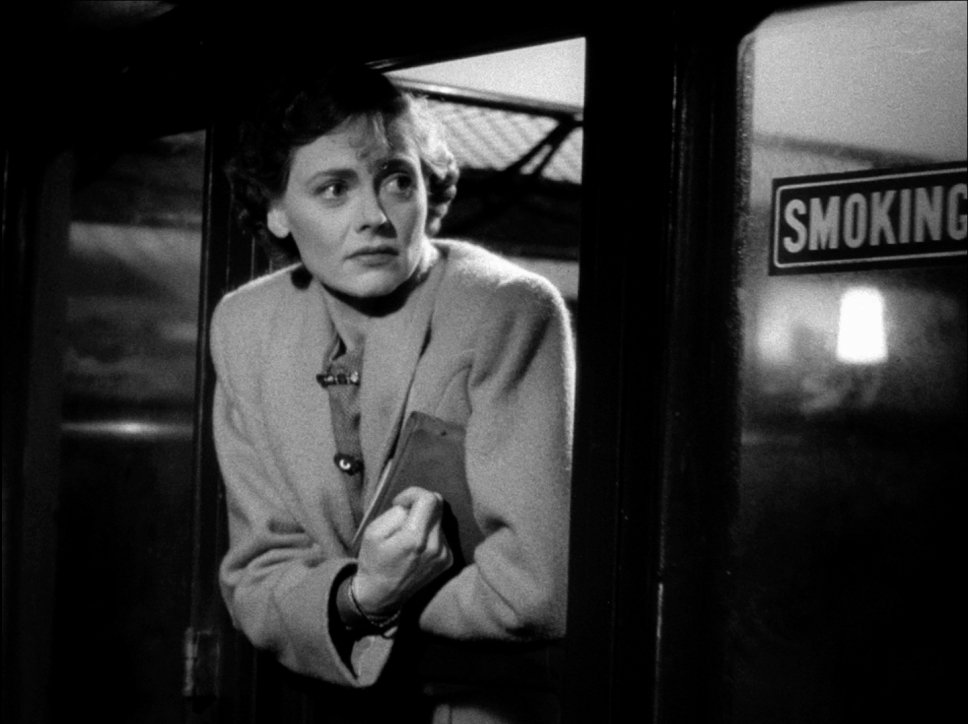
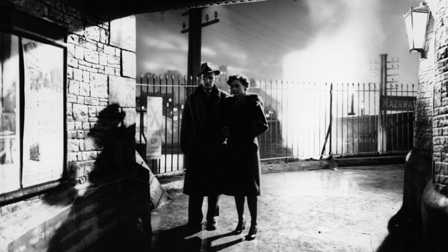
Much of the action takes place on shadowy platforms, moving trains and in the café room at the railway station. The rush of smoke, whistles and trains create a sense of urgency and panic to the love affair. The couple are always in a rush to be with and away from each other so as not create suspicion at home. Conversely Alec and Laura are like trains themselves passing each other in the night in transit but unable to couple up for the remaining life journey. It’s not all doom and gloom though as Coward’s script is full of wit, humour and suspense too. The secondary characters and extremely well drawn and while bordering on the stereotypical the characterisations reflect the various British types and the class system prevalent at the time.
Overall, Brief Encounter remains a classic romance and one of the best British films ever made. It tells us love has no logic or idea of timing as two innocent characters are made to be liars because of the power of their emotions. Only the goodness of their hearts, a sense of duty and what is right means they will ultimately return to their marriage partners. But the gaping vacuum created by love is something they will just have to contend with. Brief Encounter is a timeless classic and deserves to be seen on the big screen; especially when backed by the exquisite musicianship of the London Philharmonic Orchestra.