Produced by: Andrew Morrison, Joshua Horsfield, Viktória Petrányi, Mona Fastvold, Brady Corbet, Gregory Jankilevitsch, Klaudia Śmieja-Rostworowska, Lillian LaSalle, Mark Lampert, etc.
Main cast: Amanda Seyfried, Thomasin McKenzie, Lewis Pullman, Stacy Martin, Tim Blake Nelson, Christopher Abbott, etc.
Cinematography by William Rexer
** MAY CONTAIN SPOILERS **
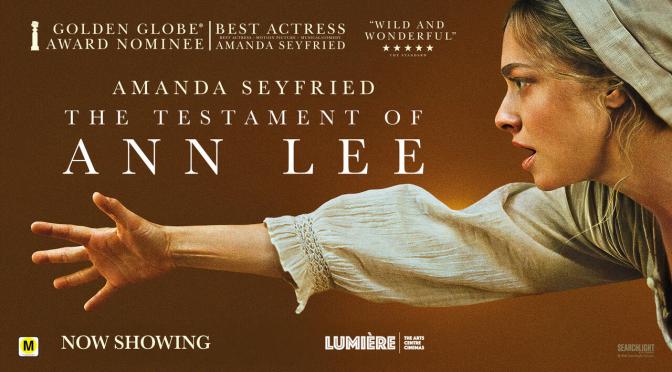
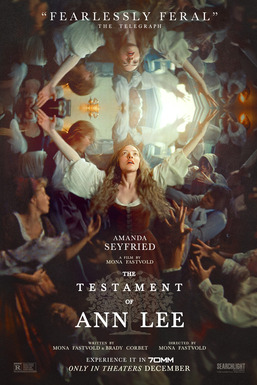
The Testament of Ann Lee (2025), directed by Mona Fastvold and co-written with Brady Corbet, is an ambitious historical musical drama that explores the life of Ann Lee, the charismatic 18th-century founder of the Shaker religious movement. With Amanda Seyfried at its centre, the film approaches Lee less as a traditional saintly figure and more as a woman shaped by trauma, conviction, and spiritual fervour. Fastvold’s direction leans heavily into atmosphere, presenting Lee’s rise to spiritual leadership as something both mystical and deeply human. The result is a film that feels reverent yet curious, as if studying a figure whose faith borders on mania.
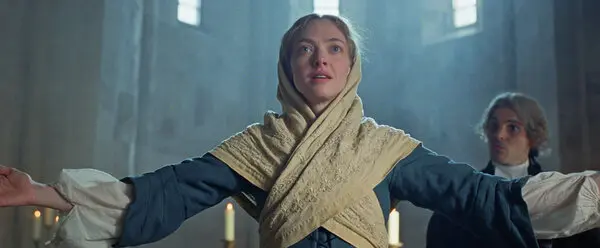
Amanda Seyfried delivers an extraordinary performance that anchors the entire film. She plays Ann Lee with an intense interiority—equal parts fragile and formidable—capturing the fervent certainty of a woman who believes she has been chosen for a divine purpose. Seyfried’s physicality, particularly in the film’s musical and ritual sequences, gives Lee a magnetic presence that makes it easy to understand why followers might be drawn to her. It’s the kind of performance that lingers long after the film ends, and it stands as one of Seyfried’s most committed and transformative roles.
Visually, The Testament of Ann Lee (2025), is stunning. The film’s cinematography and production design immerse viewers in the harsh textures of 18th-century religious life, favouring natural light, muted palettes, and a palpable sense of dirt, wood, and candle smoke. The musical sequences—staged as ecstatic communal expressions of faith—are beautifully choreographed and filmed, capturing the hypnotic rhythms of Shaker worship. Yet while these moments are striking, they begin to feel somewhat repetitive as the film progresses, emphasizing mood over narrative momentum.
For viewers fascinated by charismatic religious figures or the psychology of belief, the film offers a compelling entry point. As someone not particularly religious but drawn to stories of spiritual zeal and cult-like devotion, I found the story initially captivating. Still, Ann Lee’s narrative arc ultimately feels less dramatically satisfying than the film’s aesthetic ambitions might suggest. Rather than a searing drama or a definitive testament to a heroic religious figure, The Testament of Ann Lee (2025), settles into something quieter: a haunting, beautifully crafted piece of moving art that observes its subject with reverence but stops just short of fully interrogating her legacy.
Main cast: Mari Shirato, Junko Miyashita, Kentarō Shimizu, Jun Etō, etc.
Cinematography by Yonezou Maeda
Music by Toshiyuki Honda
*** MAY CONTAIN SPOILERS ***
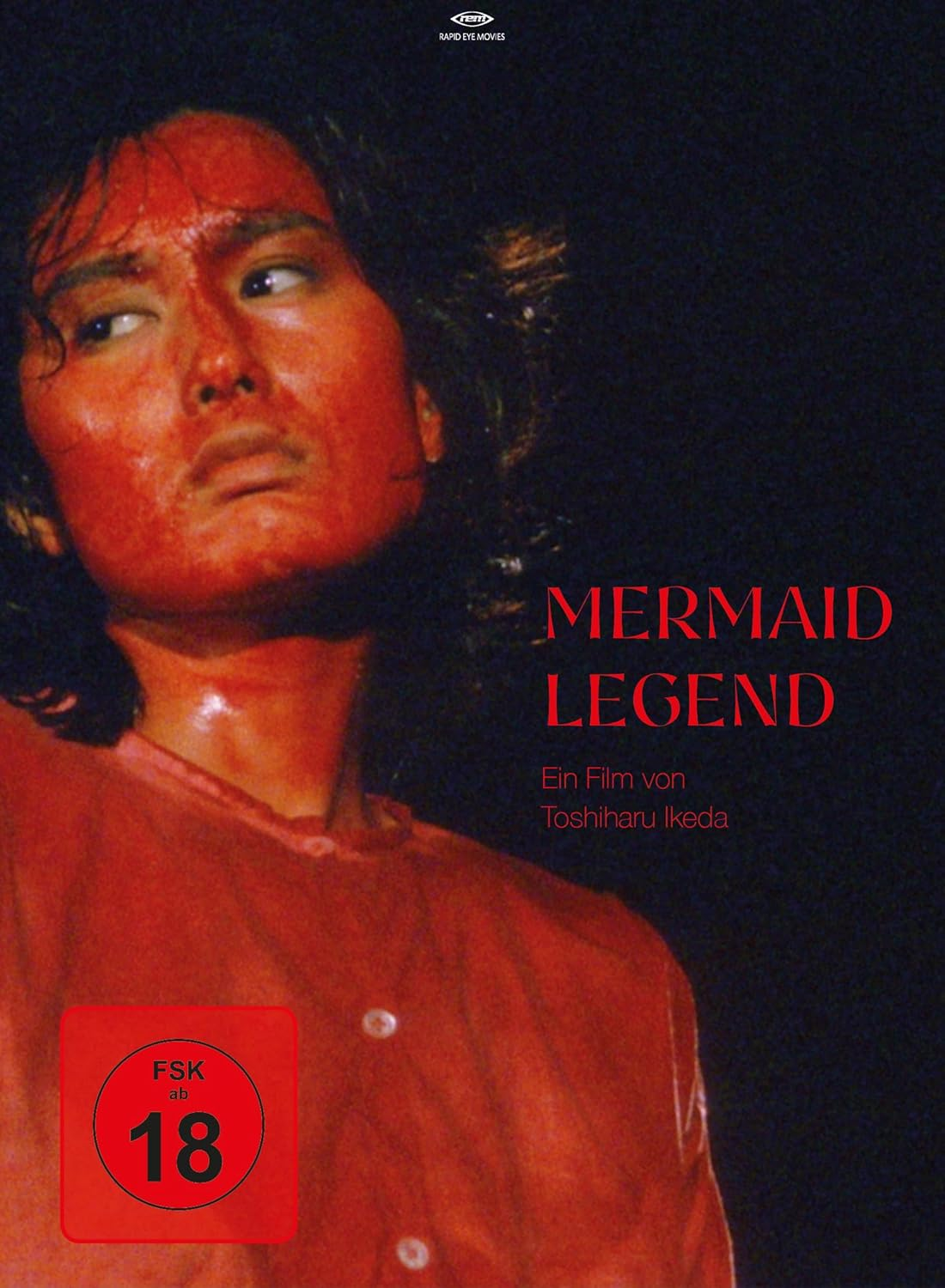
I took a gamble on an unknown Japanese film at the Nickel Cinema and walked out genuinely shaken. Mermaid Legend (1984) isn’t just a cult oddity—it’s a film that mutates before your eyes, seducing you with beauty before drowning you in blood. I was stunned by how something so lyrical could also be so brutally confrontational.
The story begins almost modestly, as a coastal drama about a fisherman and his wife, Migiwa. They bicker constantly, their marriage worn thin by poverty and exhaustion, yet there’s an undeniable bond beneath the arguments. That fragile domesticity is shattered when the fisherman stands in the way of an industrial development scheme. The business developers—faceless, polite, and utterly ruthless—have him murdered, disposing of his life as casually as industrial waste.
From there, Mermaid Legend (1984) transforms again. What starts as marital realism becomes a corporate espionage murder mystery, steeped in anger at nuclear energy, environmental destruction, and the cold machinery of corporate greed. Migiwa, a powerful-lunged pearl diver, initially hides, retreating into grief and the sea itself. But this is not a film about quiet mourning. When she decides to act, she does so with mythic force.
Played by the ethereal and astonishing Mari Shirato, Migiwa becomes something halfway between woman, avenging angel, and sea spirit. Shirato’s performance is magnetic—serene, sensual, and terrifying. As her vengeful pursuit begins, the film plunges headlong into extreme violence and explicit sexuality, reclassifying itself yet again as one of the most shocking exploitation epics I’ve seen from Japan in recent years. These scenes aren’t gratuitous in the lazy sense; they’re confrontational, weaponized, daring you to look away while refusing to let you feel comfortable for a second.
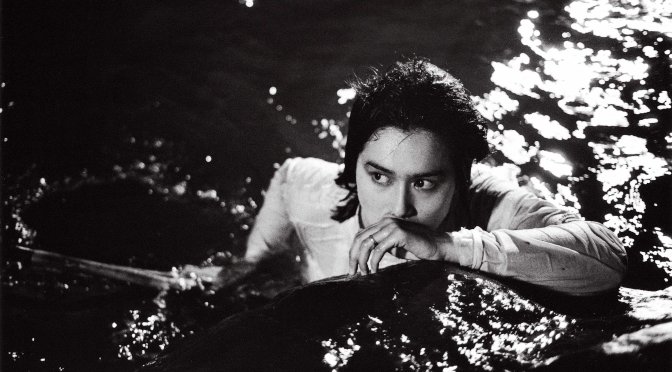
What makes Mermaid Legend (1984) so intoxicating is how its elements collide. Poetic underwater cinematography turns the ocean into a womb, a grave, and a cathedral. Religious, angelic, and environmental imagery blur together, as if Migiwa is both martyr and executioner. The music is heavenly—soaring, mournful, almost sacred—creating a surreal contrast with the carnage on screen. Beauty and brutality coexist in the same frame, each intensifying the other.
And then there’s the ending. The final, elongated pier stabbing rampage is completely off the chart—relentless, bloody, and hypnotic. It plays out like a ritual rather than an action sequence, stretching time until violence becomes abstraction, then meaning, then release. By the time the last body falls, Mermaid Legend (1984) has fully shed realism and entered the realm of legend, justifying its title in blood.
This is a film that shouldn’t work, yet does—furiously, defiantly. A genre-shifting fever dream that moves from domestic drama to political thriller to erotic exploitation to mythic revenge tragedy, Mermaid Legend (1984) is both beautiful and brutal, and I can’t stop thinking about it. Seeing it by chance at the Nickel Cinema felt like discovering a secret too powerful to stay hidden.
Based on Nosferatu by Henrik Galeen and Dracula by Bram Stoker
Produced by Jeff Robinov, John Graham, Chris Columbus, Eleanor Columbus, Robert Eggers, etc.
Main Cast: Bill Skarsgård, Nicholas Hoult, Lily-Rose Depp, Aaron Taylor-Johnson, Emma Corrin, Willem Dafoe, Simon McBurney, etc.
Cinematography by Jarin Blaschke
Music by Robin Carolan
*** MAY CONTAIN SPOILERS ***
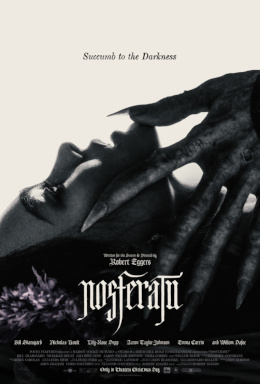
Firstly, Nosferatu: A Symphony of Horror, the 1922 silent German Expressionist vampire film directed by F. W. Murnau remains one of the greatest and most iconic horror films of all time. It is arguably the greatest adaptation of Bram Stoker’s, seminal gothic classic, Dracula, too. Of which there have been many. So, who would be brave enough to attempt to master another version of this often-told monstrous tale. Step forward the acclaimed and relatively young American auteur, Robert Eggers.
Robert Eggers has built a reputation for crafting films that blend mythical and fantastical elements with folk horror and psychological thriller sensibilities. His works often transport audiences to meticulously recreated period settings, which serve as the foundation for his exploration of human fears, desires, and the supernatural. His debut feature film. The Witch (2015) exemplified folk horror rooted in Puritanical fears of the supernatural. Set in 1630s New England, it drew heavily from folklore, historical accounts, and period-authentic dialogue. The film explored themes of isolation, religious paranoia, and the breakdown of a family due to their belief in the presence of witches.
Similarly, The Lighthouse (2019), a psychological thriller merged maritime folklore with hallucinatory horror. Set in the late 19th century, the film delved into isolation-induced madness as two lighthouse keepers grappled with mythological themes such as mermaids, sea gods, and Promethean punishment. Moreover, as with his short films Hansel and Gretel (2007) and The Tell-Tale Heart (2008) he is drawn towards established texts, with the bruising, battering ram of The Northman (2022) covering the original myth on which Hamlet was based. Eggers vision immersed the viewer in violence, Viking culture, shamanic ritual and mysticism. Unsurprising therefore, he has now delivered the German Expressionist classic, Nosferatu (2024) with his signature period aesthetic and focus on the macabre.
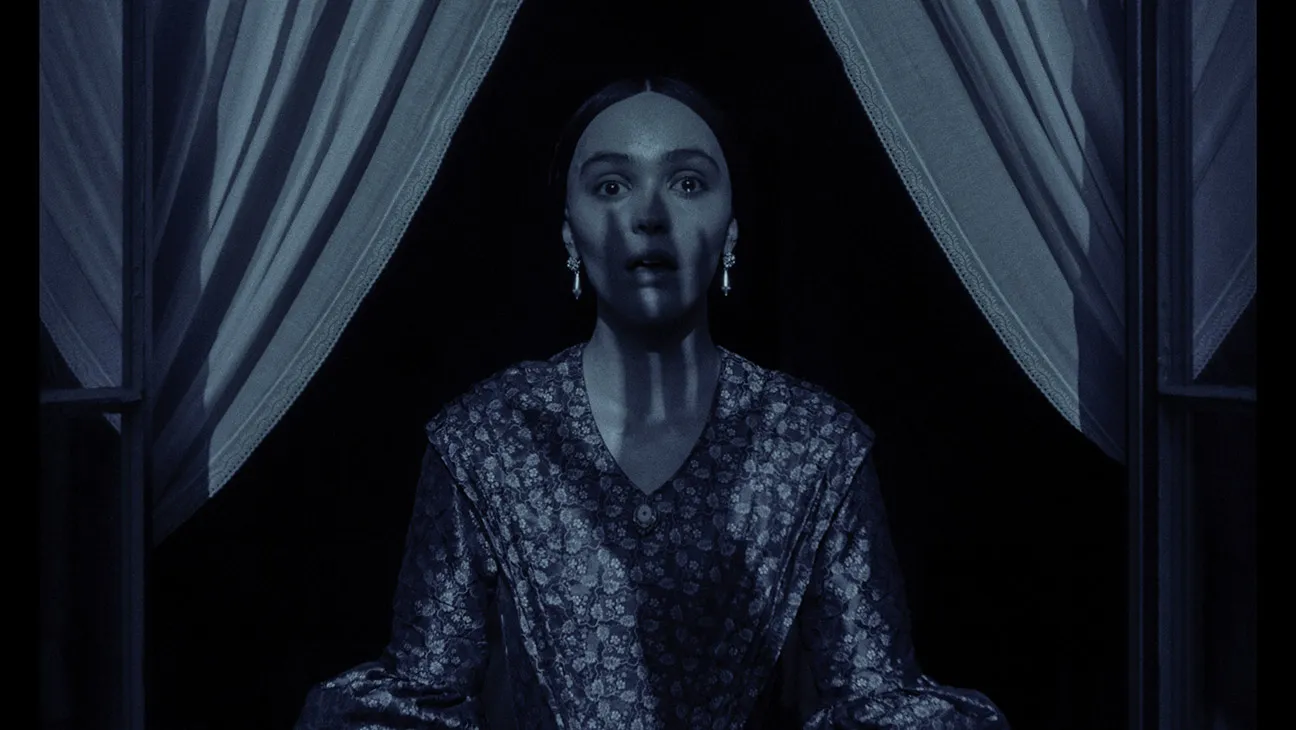
With a stellar cast, production design and incredibly stylish vision, Eggers has produced a praiseworthy example of fantastical cinema. As usual there appears to be meticulous historical research, including accurate costumes, set design, and period-specific dialogue. This attention to detail in Nosferatu (2024) grounds the supernatural elements in a believable world, enhancing their impact. Furthermore, Eggers creates a sense of dread through his use of sound design, stark cinematography, and claustrophobic settings. His restrained pacing allows for the gradual unraveling of characters’ psyches, making the supernatural elements more impactful.
Yet, while steeped in folklore, Nosferatu (2024) centres on human struggles—family disintegration, fate, guilt, madness, lust and sex. Indeed, Nicholas Hoult’s Thomas Hutter (née Harker) does not stand a chance. From the opening scene his sensual wife, Ellen, is inextricably linked via a lustful fever dream to a mysterious figure, who, if you couldn’t guess, is Count Orlok (an unrecognizable Bill Skarsgård). It is Ellen’s orgasmic connection across oceans of time which drives Orlok to lure Thomas away and commit blood-draining murder as he creeps cross-country and sails the seas from Transylvania to Germany. Ellen’s surreal and orgiastic desire unfortunately brings the plague and causes the death of extraneous supporting characters portrayed by the likes Aaron Taylor-Johnson and Emma Corrin. A note to say Willem Dafoe is as usual a joy as the ‘Van Helsing’ substitute.
Nosferatu (2024) is undeniably a sumptuous adaptation, brimming with signature attention to period detail, atmospheric dread, and a striking visual palette. However, for those seeking a viscerally terrifying Dracula film, the movie might fall short, leaning heavily into the realm of erotic horror and psychological tension rather than outright scares. While the stunning cinematography, the film’s shadow-drenched landscapes, intricate set design, and haunting score evoke the satanic allure of the original silent film this focus, however, shifts the film away from raw horror and toward a more introspective exploration of vulnerability and eroticism. Ultimately, the film’s reinterpretation of Count Orlok and its restrained approach to gore might alienate viewers expecting a more terrifying vampire film. This left me impressed but more disturbed by the overlong runtime than by the nightmarish allure of the bloodthirsty undead.
Screenplay by: Katie Silberman – Story by Carey Van Dyke, Shane Van Dyke and Katie Silberman
Produced by: Olivia Wilde, Katie Silberman, Miri Yoon, Roy Lee
MainCast: Florence Pugh, Harry Styles, Olivia Wilde, Gemma Chan, KiKi Layne, Nick Kroll, Chris Pine etc.
Cinematography Matthew Libatique
*** MAY CONTAIN SPOILERS ***
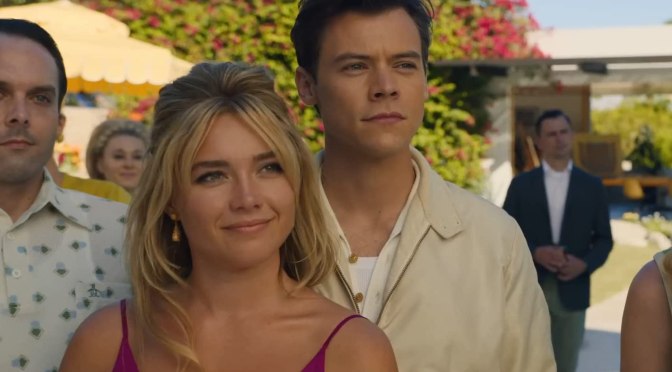
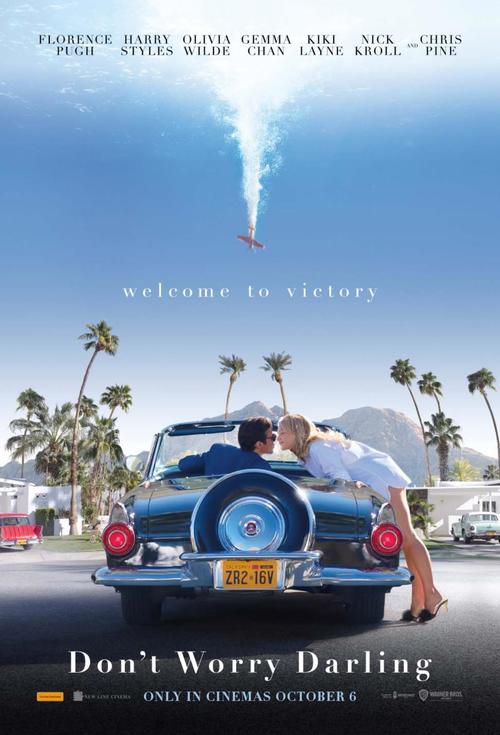
Part arthouse character study, part science fiction social satire and eventually a rushed concertinaed thriller, the Olivia Wilde directed, Don’t Worry Darling (2022) is a visual feast, anchored by Florence Pugh’s devastatingly brilliant performance. However, the ambition of the themes remains hamstrung by pacing and structure which fails to serve the story to its full potential.
Set within a utopian 1950’s sun blanched town called Victory, Wilde and her writers throw us straight into the hedonistic lives of a set of youthful and dynamic couples, drinking, partying and sexing. They work and play hard. Well, the husbands work as the dutiful women stay at home cleaning and churning out kids. So far-so-Stepford Wives! At the heart of Don’t Worry Darling (2022) is Pugh as the loyal but inquisitive, Alice. Her husband, Jack (Harry Styles) is ambitious, seeking the approval of big boss, the hubristic Frank (Chris Pine). When Alice begins to experience Kafkaesque dreams of feeling trapped by her daily life, she slowly realises all is not quite perfect in paradise.
No one does anguish and anxiety on screen like Florence Pugh. As Alice falls deeper down the rabbit hole of despair, Pugh produces true cinematic power once again. Olivia Wilde also brings a compelling image system to fully visualise Alice’s hellish descent. In comparison, the male characters are far less developed and the exchanges between Pugh and Styles, especially in the final act, are really lacking in dramatic punch. Styles himself I felt was miscast, but he does have an engaging screen presence. It’s just I didn’t feel enough threat from him.
Structurally, Don’t Worry Darling (2022) is also flawed. The major reveal comes way too late to assuage the pacing issues. While the narrative contains some striking visual set-pieces there are too many parties, barbecues and social events getting in the way of the potential thrills that could have occurred if Alice had discovered her plight much earlier. Overall, there is too much set-up and not enough punch. The longer you wait to reveal the twist, the bigger the revelation needs to be. The Outer Limits and The Twilight Zone have done this style of story with more emotional impact and better economy. Pugh and Wilde though prove once again they are major talents and thematically speaking it’s good that men get another kick in. Men are fast becoming the go-to villains of this century and long may it continue.
Cast: Agathe Rousselle, Vincent Lindon, Garance Marillier, Laïs Salameh, etc.
Cinematography: Ruben Impens
*** THE WHOLE FILM IS A SPOILER ***
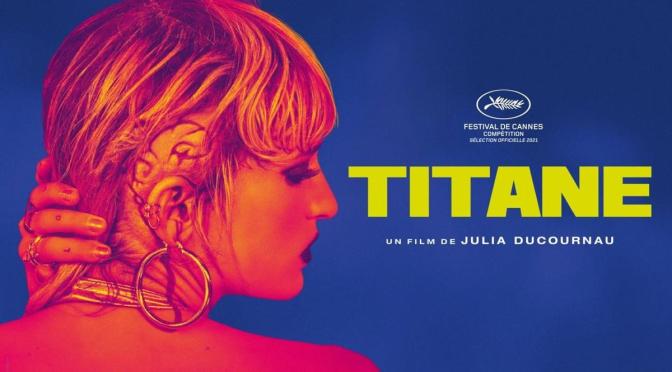
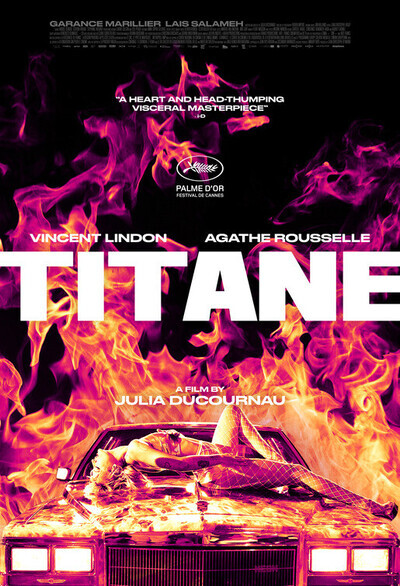
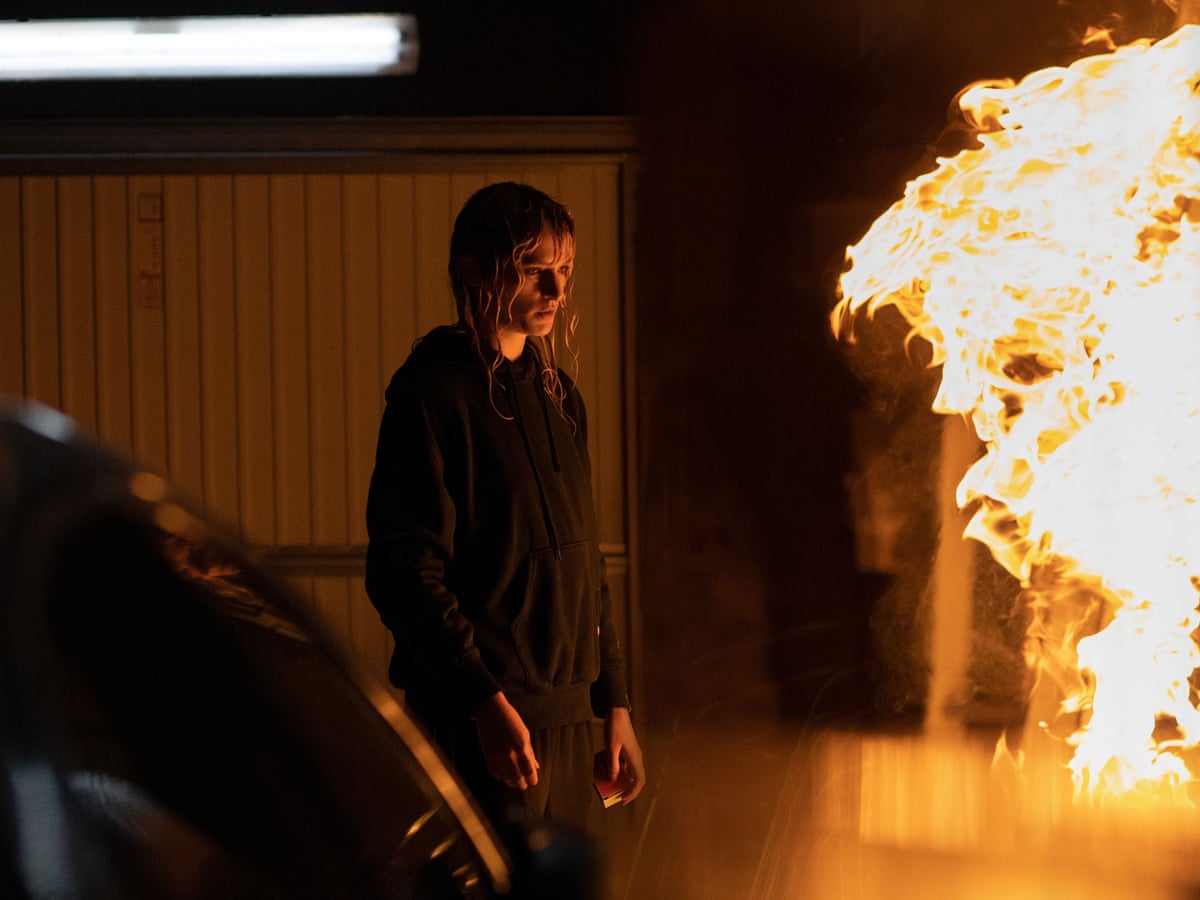
The difficult second album syndrome applies with Julie Decournau’s incredibly horrific, illogical and over-rated, Titane (2021). How the film won the Palm D’or at the Cannes Festival is beyond me. Maybe the jury were on the same acid as the ultra-talented writer-director when she created the script. Or, maybe the jury were belatedly rewarding her for the amazing contemporary horror film, Raw (2016).
Raw (2016) works on so many distinct levels with themes covered including: veganism, peer pressure, initiation, fitting in, animal cruelty, sexuality. lesbianism, same-sex attraction, animalism, sisterhood, hedonism, nature versus nurture, cannibalism, family, etc. It crosses genres effortlessly and has one of the greatest and disgusting scenes I have had the pleasure to see for some time. Raw (2016) is a shocking, intelligent and astounding modern-day masterpiece. Titane (2021) unfortunately is not.
Before I say why I did not enjoy Titane (2021), I must say that I constantly seek out challenging cinema that pushes boundaries. I love horror and want to be shocked, but also emotionally involved with the characters at the same time. Moreover, I am well prepared to commit to dream logic and surreal narratives, however, the filmmaker must also try not to over-indulge their artistic excesses, and respect the audience too. Of course, this is just my opinion, but I don’t feel Julie Decournau had a clear story path and rather went hell bent into delivering a variety of different ideas, none of which created a fulfilling emotional journey for the main protagonist, Alexia (Agatha Rouselle).
Rouselle, as the malevolent and tragic conduit of Ducournau’s twisted vision, does give a spectacularly brave performance. But her character is given so many complex set-ups at the beginning, I quickly gave up caring what happened to her. As a child she is badly injured in a car crash. This gives her a titanium plate in the skull. Alexia grows up and is an exotic dancer who either dreams of, or actually fucks cars. Oh, she is also a serial killer who violently kills for no apparent reason. Several gruesome set-pieces result in the goriest deaths ever seen in a Palm D’or winner. Indeed, by the time Alexia goes on the run and smashes her face into a sink to alter her features I was numbed by it all.
Titane (2021) at the midpoint then delivers one of the most dumb and insulting plot shifts I have seen in recent years. Yes-yes it’s an arthouse film and an expression of Julie Decournau’s vision of humanity, but I DID NOT CARE!! Not only did we get Alexia’s horrific behaviour, we are then introduced to another plot turn when she hides out with a bereaved and emotionally scarred firefighter, Vincent (Vincent Lindon). By this time I was actually laughing at certain scenes, finding it all tiresome and frankly embarrassing. I got the symbolism of human beings as machines and exploitation of females and that family represents death and blah-blah-blah! Yet, and I’m likely to be in the minority, Titane (2021) is one of the most narratively, emotionally and visually exhausting films I have seen in some time. Watch at your peril!
GREAT ENSEMBLE FILM CASTS #6 – AUGUST: OSAGE COUNTY (2013)
Directed by: John Wells
Screenplay by: Tracy Letts
Based on: August: Osage County by Tracy Letts
Produced by: George Clooney, Grant Heslov, Jean Doumanian, Steve Traxler
Cast: Meryl Streep, Julia Roberts, Ewan McGregor, Chris Cooper, Abigail Breslin, Benedict Cumberbatch, Juliette Lewis, Margo Martindale, Dermot Mulroney, Julianne Nicholson, Sam Shepard, Misty Upham, etc.
Cinematography: Adriano Goldman
*** MAY CONTAIN SPOILERS ***
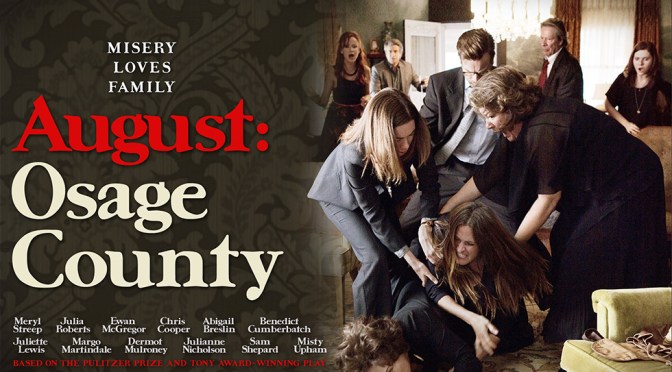
Unsurprisingly, the play, August: Osage County, from the typewriter of Tracey Letts – the formidable playwright behind Killer Joe and Bug – about a family suffering loss of a “loved” one was not going to be a feelgood and uplifting affair. Instead, over the period of a month we are introduced to a whole host of characters with a variety of anger, addiction and attitude issues. Brought together by apparent grief, when patriarch, Beverley Weston (Sam Shepard) drowns, the extended Weston family fight and vent spleen at each over current and past dramas, with many a secret soon to be revealed.
Winning the Pulitzer Prize for Drama in 2008, Letts play was subsequently adapted into the dark, feel-bad and tragi-comedy film in 2013. Directed by John Wells, August: Osage County (2013), brought together an unbelievable ensemble cast of actors who did spectacular work with Letts acerbic and razor-sharp dialogue. Given that many of the personalities in the narrative are dominant matriarchal characters, the casting of Meryl Streep and Margo Martindale in the roles of Violet Weston and Mattie Fae respectively, is certain to create sparks on the screen. So, it proves.
Streep has delivered so many memorable characterisations over the years, but as Violet Weston I’m not sure she’s been so bilious and cancerous, both literally and symbolically. Her daughters, portrayed by Julia Roberts, Juliette Lewis and Julianne Nicholson, all have their own issues to deal with, but with such a vicious mother it’s a surprise they aren’t in a psychiatric ward. As harsh truths and bitter revelations unfold over the dinner and kitchen table conversations, Letts shows the complex nature of family existence; how it traps us with people we have nothing in common with. Women are seemingly in charge of the Weston family as the men, represented by Ewan McGregor, Benedict Cumberbatch, Sam Shephard and Chris Cooper, appear more passive and bullied.
Altogether, August: Osage County (2013), is a difficult to watch as there’s not a lot of love shown in the Weston household. Nonetheless, as an acting and writing tour-de-force there are few films that can best it. I guess we all have family problems and many ups and downs to deal with in life. What we can learn from this play and film is that this is definitely NOT the way to behave to people you’re meant to love and care for.
Produced by: Margot Robbie, Josey McNamara, Tom Ackerley, Ben Browning, Ashley Fox, Emerald Fennell, etc.
Written by: Emerald Fennell
Cast: Carey Mulligan, Bo Burnham, Alison Brie, Clancy Brown, Jennifer Coolidge, Laverne Cox, Connie Britton, etc.
Music by: Anthony Willis
Cinematography: Benjamin Kračun
*** CONTAINS MILD SPOILERS ***
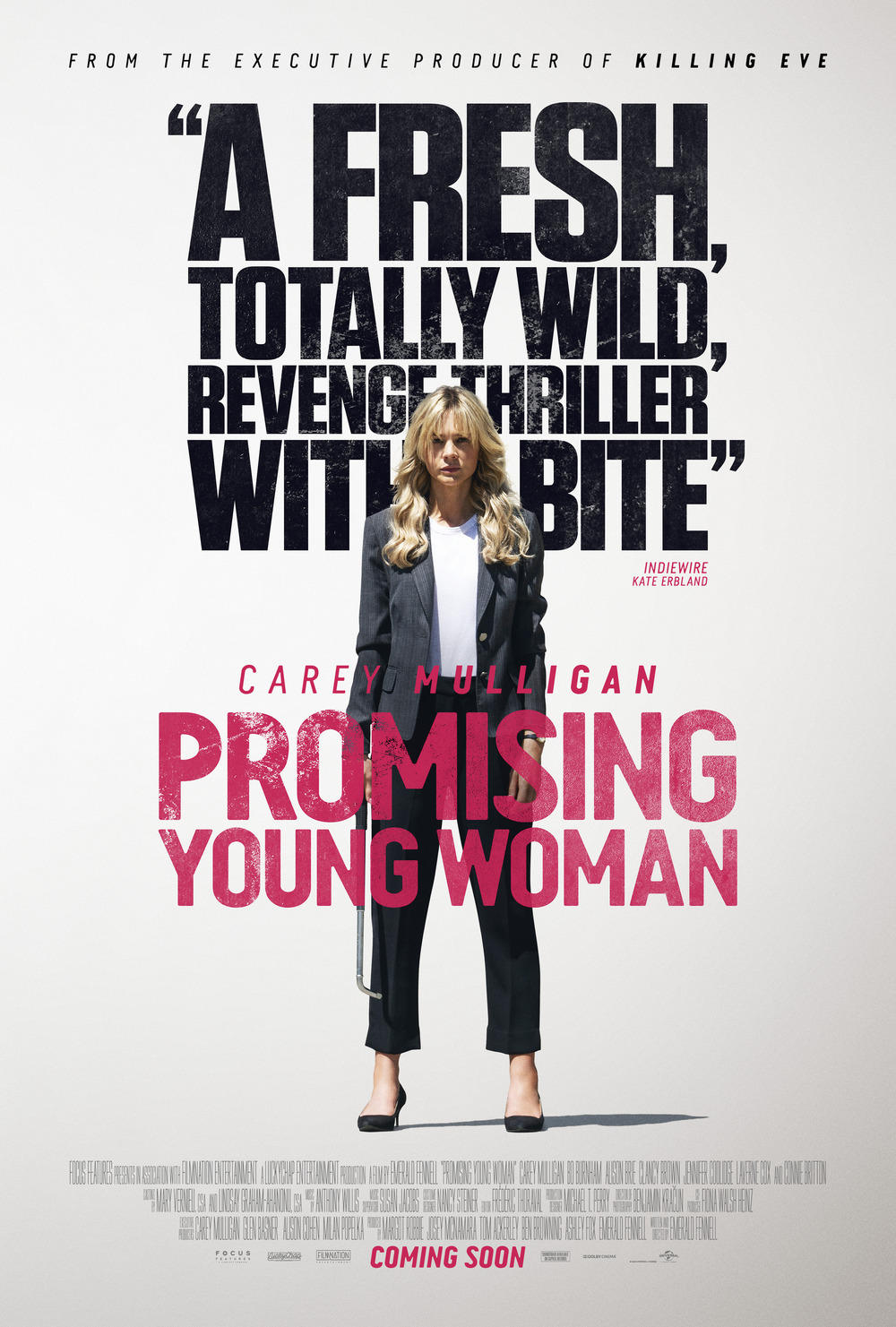
As the recent awards garnered upon Emerald Fennell’s brilliant screenplay for Promising Young Woman (2020) testify, Fennell is a major talent. She has acted in TV shows such as Call the Midwife and The Crown, as well as writing and producing the second series of Killing Eve. Not only is she an excellent actress, writer, director and producer, but she is also now an Oscar and BAFTA winner at the age of thirty-five. I am Jack’s raging envy!
But, is Promising Young Woman (2020) any good, and does it deserve these awards for best original screenplay? Well, for starters the film is not particularly original in terms of genre. It is what I would class as a B-movie revenge thriller at heart with A-list credentials. Like cinema classics such asSilence of the Lambs (1991) and Seven (1995), plus Tarantino’s Kill Bill (2003) films and the recent arthouse assassin thriller, You Were Never Really Here (2018), Promising Young Woman (2020) takes a well-worn subject matter within the crime genre and intelligently delivers a narrative experience which transcends such familiarity. Indeed, in the era of #MeToo, Fennell’s directorial debut updates and surpasses both intellectually and emotionally, similar themed films such asDeath Wish (1974) and I Spit on Your Grave (1978).
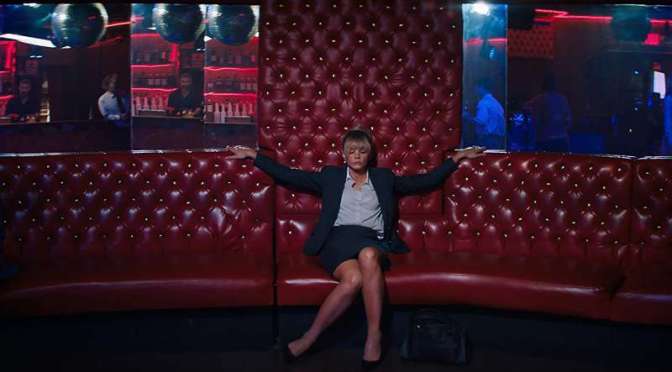
Promising Young Woman (2020) starts with one of the best opening scenes you’re likely to see in a long time. Here we meet Cassie Thomas, drunk and unable to stand, in a nightclub. Thankfully, there are “kind” gentlemen waiting to assist her, one of them being Adam Brody’s, Jerry. But instead of taking her home he takes her to his place and tries to take advantage of her inebriated state. I won’t spoil what happens next but safe to say that Cassie has other plans for Jerry. As the expertly plotted film progresses the story reveals Cassie has a long standing desire to wreak revenge on those individuals who brought tragedy to the life of her former medical school classmate and friend, Nina. A college dropout and working in a coffee shop, Cassie finds her life at a pitstop as she cannot move past what occurred to her friend. A budding romance with Bo Burnham’s charming Doctor threatens to pacify Cassie, but Fennell’s twisting plot soon puts Cassie on a deadly path right to the door of those who ruined her and, most significantly, Nina’s life.
The first three-quarters of Promising Young Woman (2020) are a witty, frightening and absolutely spellbinding exploration of negative masculine behaviour, gender politics and institutional corruption when it comes to cases of gang rape. No one is safe from Emerald Fennell’s sharpened pen and Cassie’s clever plan. As Cassie, Carey Mulligan gives a wonderfully subtle performance of a deeply pained and grieving individual. One thinks that Margot Robbie, who co-produced the film, would have made Cassie more zinging and wise-cracking. Mulligan gets it just right in terms of magnetic allure, strong personality and hidden vulnerability. It’s a shame that Fennell kind of throws Cassie under the narrative bus at the end. Don’t get me wrong the denouement ties all the previous scenes together, but I don’t think Cassie deserved such a messy fate. Unlike Fennell herself though. She deserves all the current success and that which is coming to her in the future.
Produced by: Kevin Turen, Ashley Levinson, Sam Levinson, Zendaya, John David Washington
Written by: Sam Levinson
Cast: Zendaya, John David Washington
Music by: Labrinth
Cinematography: Marcell Rév
*** MAY CONTAIN SPOILERS ***
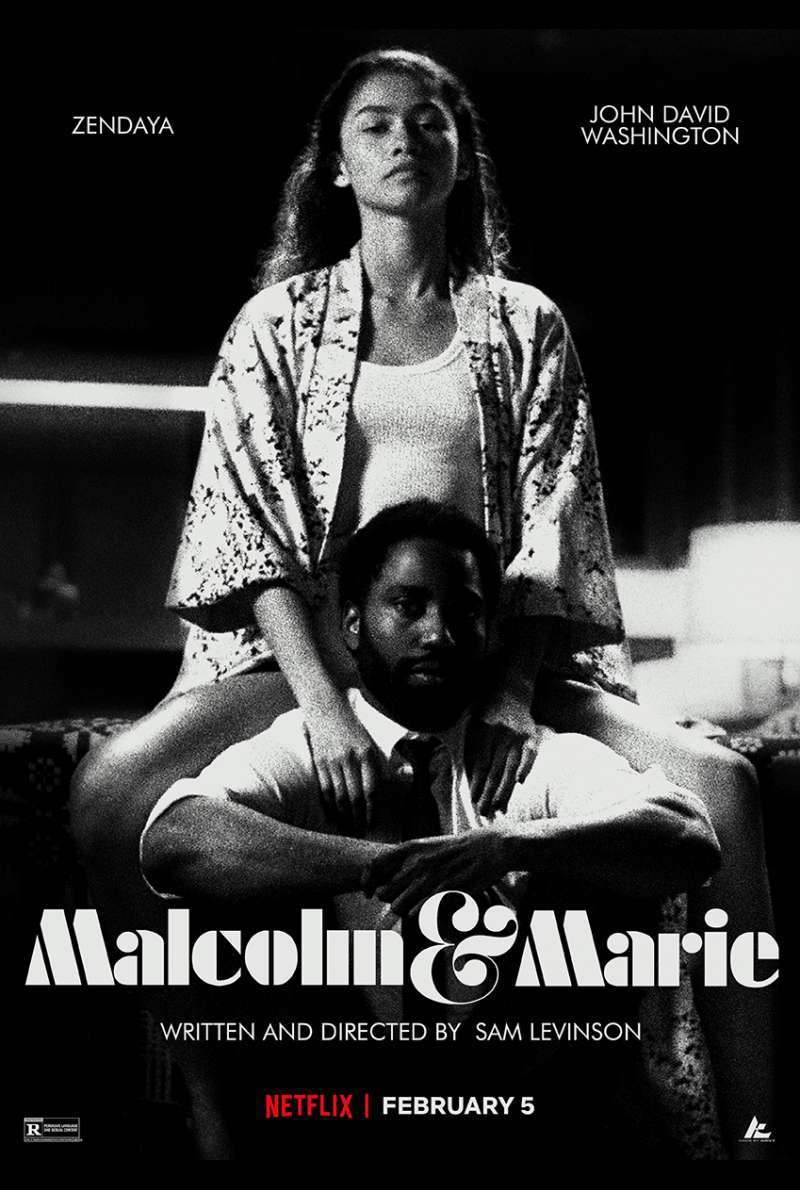
The Oscar nominations came out this week and due to the ongoing pandemic situation and consequent lockdowns, there are a number of films on the esteemed list which have yet to reach these shores, either at the cinema or via streaming platforms. Having said that, and I am aware space for nominees are limited and it has been a pretty strange year for cinema, but I was extremely surprised that Delroy Lindo did not receive an acting nomination in lead or supporting category. Similarly, I was also bewildered that Sam Levinson’s striking romantic drama, Malcolm and Marie (2021), had not received nominations in either screenplay or acting categories. Further, I was utterly shocked that critic’s reviews for the intense two-hander had been pretty mixed. Hey, it’s just opinions but I was really gripped by this highly theatrical and gorgeously cinematic two-hour argument in black-and-white. Personally, I think most of the deriders are wrong. But that’s just my view.
Maybe the film wasn’t liked because John David Washington’s, Malcolm, an up-and-coming filmmaker celebrating a successful premiere that evening, launches into a wonderfully eloquent rant about a review which he feels pigeonholes and patronises his film in purely political terms. I mean it’s actually a positive review, but who doesn’t enjoy ire toward professional critics. I mean, everyone has an opinion, or a view and the Internet has caused a mass proliferation and gaping spew of words and views and brain-thoughts in extremis. But Levinson’s script and Washington’s grandstanding acting spits that if you earn a living as a critic then you are essentially Satan! Perhaps some reviewers took umbrage with this? I loved the whole scene’s energy and Malcolm’s savage attack had me applauding throughout.
But Malcolm and Marie (2021) is more than Levinson getting back at those individuals who gave him bad reviews. It’s a sharp, funny, sexy and poignant exploration of a relationship close to breaking point. Malcolm and Marie may be different fighting weights, but they both punch hard and often. He is on a high after his film premiere success, but Marie is upset because he did not thank her during his speech. From there the conflict rises from light sparring to harsh emotional knockout blows. Both Malcolm and Marie tear at each other’s skin and flesh and figurative organs in an attempt to resolve the ever-increasing divide between them. Malcolm and Marie (2021), may not be for everyone, but any person who has been in a heated war of words with a partner or spouse, will identify with the inescapable tension on display. Levinson’s expert screenplay rides a rollercoaster journey of emotions as one moment you side with Marie and the next you’re with Malcolm. Yet, before you know it, you’re disliking both these complex, narcissistic, egotistical and infuriating humans.
Both Zendaya and John David Washington deserve so much praise for their performances in, Malcolm and Marie (2021). Washington has already demonstrated his massive talent inBlacKkKlansman (2018), while Zendaya excelled in recent HBO drama, Euphoria (2019). Levinson too directs with a deft skill. I was especially impressed by the way he balances the comedy and drama of these flailing humans, poking and picking at the scabs of each other’s past behaviour. Indeed, as well as containing some brilliant dialogue, the erudite script really sang to me. At times the coruscating repartee reminded me of Edward Albee’s acclaimed play, Who’s Afraid of Virginia Wolf. Nonetheless, for a dialogue and performance driven film, the precise framing and sumptuous black-and-white photography by Marcell Rév render the visuals wholly cinematic.
Sure, by the end of Malcolm and Marie (2021) is anything really resolved? And who is ultimately interested in this couple’s first world problems? Well, I’ve witnessed my parents fighting and also experienced such exhausting relationship arguments before. So, I must say that overall, I thoroughly enjoyed witnessing Malcolm and Marie’s nocturnal battle. Especially because I watched it all from the safety, warmth and comfort of my own home.
So, I don’t get paid for doing this. I do it because I enjoy watching films and television and writing about them. It helps me to review stuff critically from both a creative perspective and absorb knowledge for when I make my own low budget films. Also, it’s something to do isn’t it; a hobby and means to immerse oneself in something that interests me. Lastly, one also learns much from the hours of viewing, especially if the narratives are grounded in reality, representations of history and social issues.
CHANNEL 4 has always been at the forefront of producing intelligent drama television built to inform, entertain and provoke thought. Their streaming platform called ALL 4 is a great place to catch up with Channel 4’s product and I have already reviewed many of their shows here on this site. Having said that, I thought I should put an even bigger effort to catch up with some of their dramas. After all, ALL 4 is — aside from watching a few adverts — is absolutely FREE! I’m glad I did because they have quality production values and are very powerful, skilfully tackling social themes and historical events. So, here are some quick reviews of Channel 4 television dramas both recent and not so recent with the usual marks out of eleven.
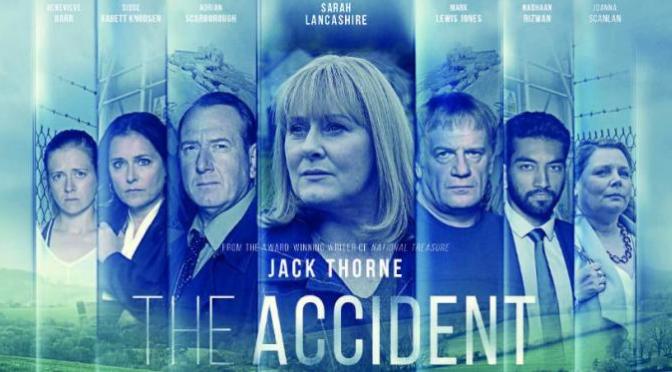
THE ACCIDENT (2019) – Mark: 9 out of 11
What I found from my All 4 residency was that many of the shows were written by Jack Thorne. He is a clever writer with a keen eye and ear for drama relating to everyday people’s lives. The Accident (2019) is set in Wales and concerns a small community whose lives are ripped apart by an explosion at a construction site. Many children are killed, but given they were trespassing the blame initially falls on both them and building company. The ensemble cast lead by Sarah Lancashire and Joanna Scanlan are uniformly excellent, as the impactful drama echoes actual events such as Aberfan and Grenfell Tower disasters.
CHIMERICA (2019) – Mark: 8 out of 11
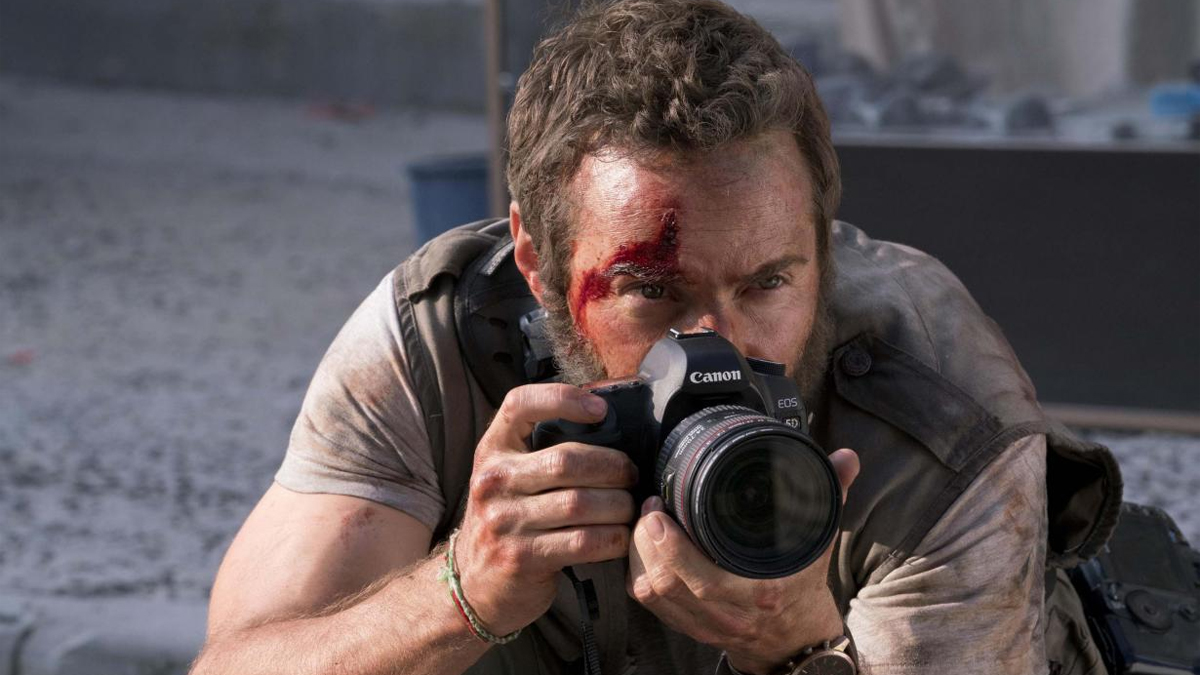
Based on Lucy Kirkwood’s play of the same name and set during the 2016 American Presidency election, this political drama sees Alessandro Nivola’s once-lauded photographer attempt to locate the “Tank Man” from the 1989 Tiananmen Square protests. Part-redemption and part-historical expose, the writing is excellent as Cherry Jones and F. Murray Abraham easily steal the acting plaudits. I was more interested in the plight of Zhang Lin’s (Terry Chen) China-set parallel storyline than the photographer’s, but, overall, I was drawn into detective plot and human conflict throughout.
THE DEVIL’S WHORE (2008) – Mark: 9 out of 11
The wonderfully titled The Devil’s Whore (2008), features a fine cast of actors including: John Simm, Peter Capaldi, Andrea Riseborough, Michael Fassbender and Dominic West. The drama focusses on the historical era of Oliver Cromwell and Charles I, filtered through the eyes of Riseborough’s strong, yet scandalised heroine, Angelica Fanshawe. Peter Flannery’s excellent script is full of violence, political and religious intrigue and works well as both a work of entertainment and chronicle of key characters from the bloody English Civil War!
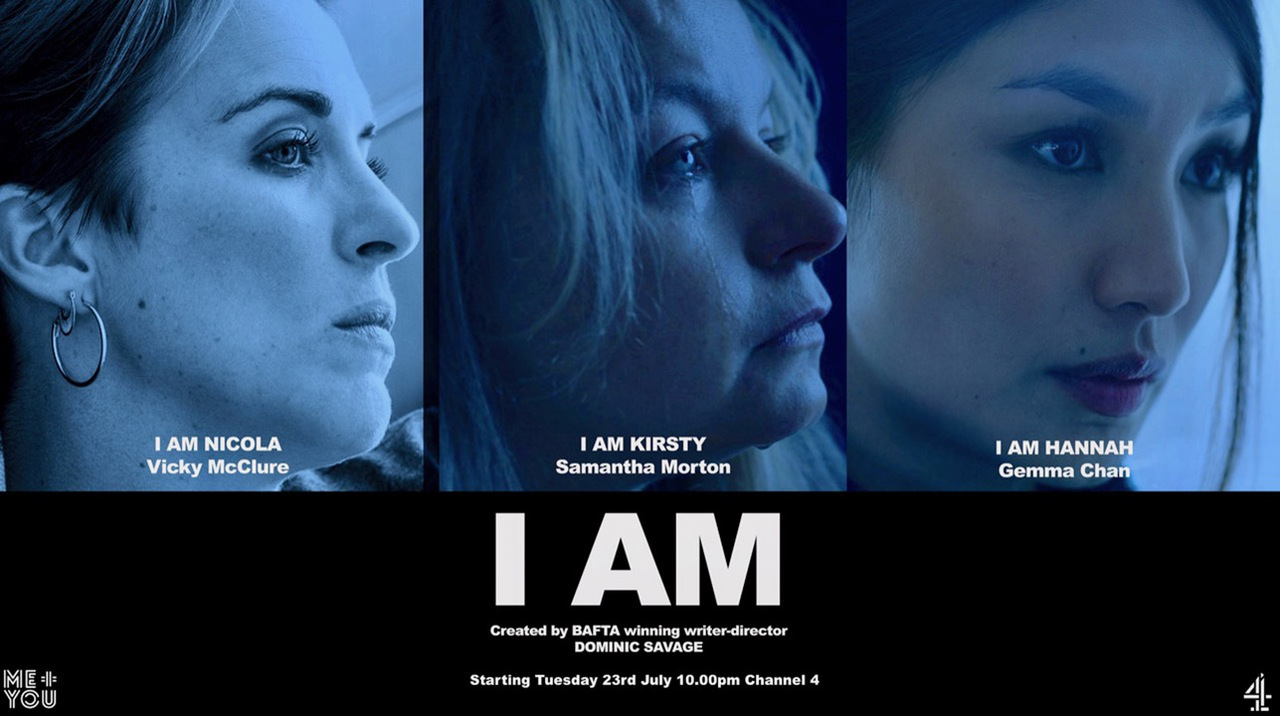
I AM. . . (2019) – Mark: 9.5 out of 11
Dominic Savage is a skilful and experienced filmmaker, who recently made the semi-improvised feature, The Escape (2017). It focussed on unhappy mother portrayed by Gemma Arterton, and while an interesting character study, it ultimately felt a little flat dramatically. Using the same improvisatory and documentary style with the anthology triptych, I Am. . . (2019), Savage casts Vicky McClure, Samantha Morton and Gemma Chan in three separate stories of women in various states of domestic plight. All of the narratives are brilliantly acted and directed, focussing on coercive relationships, gaslighting debt escalation and painful maternal inertia respectively, all delivered with tremendous emotional power.
FALLING APART (2002) – Mark: 8.5 out of 11
Mark Strong and Hermione Norris excel is this shocking drama about domestic violence. Seemingly the perfect couple, Pete and Clare fall in love and marry, only for Pete’s aggressive tendencies to come to the fore soon after the honeymoon period. Clare forgives Pete and blames work and herself and then finally thinks he may have a problem. An honest and bleak look at love gone wrong, there are many scenes that make one flinch and feel bad for those women trapped in similar situations.
KIRI (2018) – Mark: 9.5 out of 11
Sarah Lancashire is exceptional as the social worker hung out to dry when a fostered child, Kiri, is killed after a family visit to her paternal grandparents. Jack Thorne writes a subtle and compelling script which explores issues relating to: adoption, social care, race, class, and child murder. As well as Lancashire, Lucian Msamati, Paapa Essiedu, Wunmu Mosaku, Lia Williams and Sue Johnston give exceptional performances. Finally, what begins as a murder mystery drama unfolds into something far more complex, with an ending that leaves you stunned with its brave, narrative risk-taking.
NATIONAL TREASURE (2016) – Mark: 9 out of 11
Not to be confused with the Nicolas Cage film series, this searing drama, written by Jack Thorne again, springboards off the recent #MeToo and Operation Yewtree news events. Robbie Coltrane takes the lead as Paul Finchley, a once successful comedian of the 1980s and 1990s, now hosting a television quiz show, while his wife is portrayed by the exceptional Julie Walters. Finchley’s life and career is turned upside down when he is accused of rape and sexual assault, something he vehemently denies. The drama unfolds in an engrossing fashion as we flash back and forth between Finchley’s present day and past history. Again, a potentially sensationalist subject matter is dealt with mesmeric power, as it all culminates in a tense and emotional court case.
ON THE EDGE (2018) – Mark: 8 out of 11
Excellent set of short anthology dramas which focus on various issues affecting mostly younger people in Britain today. Issues explored include: knife crime, body shaming, race, neurodiversity, date rape, depression and social work. All are extremely well acted and directed, giving excellent examples of diverse drama Channel 4 excels at.
NETFLIX FILM REVIEW: THE DEVIL ALL THE TIME (2020)
Directed by: Antonio Campos
Produced by: Jake Gyllenhaal, Riva Marker, Randall Poster, Max Born
Screenplay by: Antonio Campos, Paulo Campos
Based on: The Devil All the Time by Donald Ray Pollock
Cast: Tom Holland, Bill Skarsgård, Riley Keough, Jason Clarke, Sebastian Stan, Haley Bennett, Eliza Scanlen, Mia Wasikowska, Robert Pattinson, Harry Melling, etc.
Narrated by: Donald Ray Pollock
Music by: Danny Bensi, Saunder Jurriaans
Cinematography: Lol Crawley
***MAY CONTAIN SPOILERS***
Netflix’s latest major film release is a literary adaptation of Donald Ray Pollock’s psychological thriller, The Devil All the Time (2020). One has to believe it is a pretty faithful adaptation because the novelist himself narrates the tale to us via voiceover. Set in the years after World War II, the grim events unfold in the states of Ohio and West Virginia, respectively. While the action is not located in the deep South, the story has many of the tropes synonymous with the Southern Gothic genre, notably: religious fanaticism, explicit sexuality, flawed characters, sickening violence, poverty and human alienation.
The film, directed by Antonio Campos — who helmed the under-rated character study, Christine (2016) — starts extremely purposefully. Returning soldier, Miller Jones (Bill Skarsgard), meets a waitress on his bus journey home and eventually marries her. Both Skarsgard and Hayley Bennett, portraying his wife, inhabit empathetic characters working hard to bring up their son and saving for their own place. Jones, however, is haunted by a traumatic incident in the Pacific, and strives for solace in God and family. Indeed, the corrupt force of religious mania spreads like a cancer throughout The Devil All the Time (2020), becoming a constant threat and reason for many of the characters downfall.
Just as I was connecting with Jones’ life and becoming absorbed by Bill Skarsgard’s commanding performance, tragedy strikes and the narrative takes one of several jarring switches between characters. As such the film does not really have a strong plot, meandering from one character to another witnessing all manner of horrific events fate throws at them. Because, let’s be honest, The Devil All the Time (2020), is no way close to being a feelgood film. In fact, it revels in representing the evil acts of so-called human beings. Thus, throughout I felt a constant sense of dread and anxiety. Barely had Skarsgard misery ended and we are then introduced to the tragedies of characters portrayed by Harry Melling and Mia Wasikowska. Simultaneously, Jason Clarke and Riley Keough join the fray as two violent and sex-driven thrill-seekers. Yet, they are weakly written characters who again drive the mood of the film into pitch blackness.
The film gathers some strength and momentum n the middle act when Tom Holland’s son of Miller Jones comes of age. By focussing on his story we get more drama and emotion, especially where his relationship with his step-sister (Eliza Scanlan) is concerned. Holland gives an excellent performance as the young man attempting to make his way in this filthy and ungodly world. Similarly, Robert Pattinson’s oily Preacher oozes repugnant charm in another sterling piece of acting work. Alas, Sebastian Stan’s Sheriff and Douglas Hodge’s rural gangster are given short shrift in another crime subplot which goes nowhere.
Overall, Antonio Campos delivers an extremely solid thriller from an acting and thematic standpoint. Unfortunately, the fragmented screenplay should arguably have been given a more committed plotline. Of course, it has most likely shadowed the structure of the source novel so therein lies the rub. Having said that, despite the structural shortcomings, there are many shocking and violent set-pieces to satisfy horror fans. Ultimately though, The Devil All the Time (2020) lacks redemption, catharsis and even some decent suspense. By the end we are given few characters to care about and delivered the pessimistic vision that life is a belt of misery. Even a suggestion of sugar helps the poison go down and this film offers very little in the way of sweetness or light.









 The Cinema Fix presents