Screenplay by: Harry Bromley Davenport, Michel Perry, Iain Cassie, Robert Smith
Story by: Harry Bromley Davenport, Michel Perry
Produced by: Mark Forstater
Cast: Bernice Stegers, Philip Sayer, Simon Nash, Maryam d’Abo, Danny Brainin etc.
Cinematography: John Metcalfe
*** MAY CONTAIN SPOILERS ***
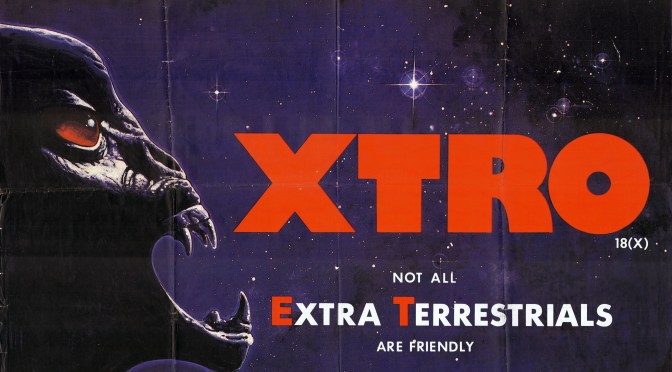
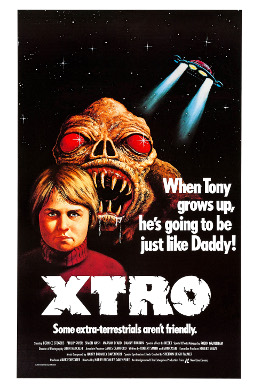
Being a fan of the horror genre never fails to spring surprises, especially if you also love trashy-B-movie-exploitation-video-nasties too. Because what often occurs is a hidden or buried or previously banned film will reanimate and be located on one of the many streaming platforms we have today. I am both surprised and even more joyous if I find I have never even seen the said film. This is certainly the case with low-budget alien monster film, XTRO (1982).
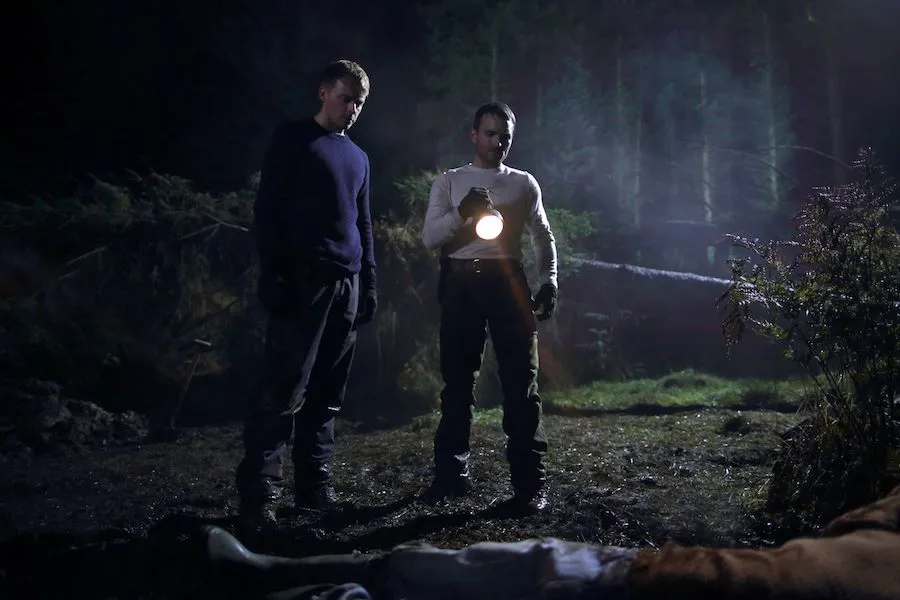
There I was pressing play via Amazon Prime, thinking it was another schlocky American indie I had missed from yesteryear, only to discover Xtro (1982) is actually a bizarre British film which twists and riffs on the box office hit that was ET: Extra Terrestrial (1982). Xtro (1982), directed by Harry Bromley Davenport, is not a comforting family science fiction drama like its more famous counterpart though. Instead, it is a gory sci-fi shocker with many outrageously violent set-pieces and a budget lower than E.T.’s lunch bill.
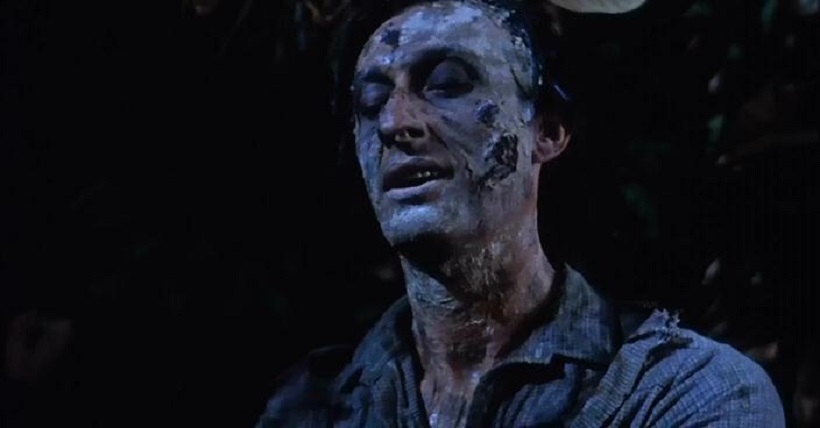
Critically damned at the time, Xtro (1982), when released on home video in 1983, was subject to a prosecution case in relation to British obscenity laws and labelled a “video-nasty”. Watching it now I have to admit it is quite shocking still, but the practical effects are so gloriously over-the-top they are more humorous than sickening. Having said that there are some memorably gruesome moments involving alien births, crazy clowns, a live “Action Man” doll, weird space eggs, and transformative man-into-monster effects.
The film doesn’t hang about establishing character but propels, from the opening scene of a father playing in the garden with his son, straight into the disappearing parent plot. The father (Philip Sayers) vanishes without a trace and three years later his wife (Bernice Stegers) and son are attempting to repair their lives. Yet, the boy is suffering horrific nightmares when suddenly his father reappears attempting to reconcile. The familial drama within the script itself could have been further developed to some emotional impact. However, while Bernice Stegers gives a decent dramatic performance, the film soon descends into a mix of surreal and insane set-pieces, combined with the father’s metamorphosis into something from another world.
There’s much to like and much to loathe about, Xtro (1982), notably the gratuitous nudity sprinkled throughout. Yet, if you are drawn to exploitational B-movies there is much sick entertainment to be found in the blend of impressive practical effects and creature moments. Philip Sayer and Bernice Stegers keep the shlocky elements of the plot in check with sane acting performances and despite some eccentric writing throughout Harry Bromley Davenport and his team have delivered an out-of-this-world bona fide B-movie cult classic.
Screenplay by Buck Henry based on To Die For by Joyce Maynard
Produced by Laura Ziskin
Cast: Nicole Kidman, Joaquin Phoenix, Matt Dillon, Casey Affleck, Dan Hedaya,
Cinematography Eric Alan Edwards
Edited by Curtiss Clayton
For the record, for me, an under-rated classic can be a film I love, plus satisfy the following criteria:
Must not have won an Oscar.
Must not have won a BAFTA.
Must not appear in the AFI Top 100 list.
Must not appear in the IMDB Top 250 list.
Must not appear in the BFI 100 Great British films.
Must not appear in the all-time highest grossing movies of list.
To Die For (1995) is a bona fide under-rated classic and I am surprised it received no Academy Award nominations, especially as Nicole Kidman was nominated for a BAFTA, and won a Golden Globe Award. Kidman is sensational in arguably her greatest performance as narcissistic and ambitious sociopath, Suzanne Stone. Indeed, Stone as the driven, media-hungry manipulator is one of the most glamorous monsters ever seen in cinema.
Told in mockumentary style, To Die For (1995) is deftly directed by Gus Van Sant in a somewhat punchier and more comedic tone than usual. Stone strives for fame as a TV newscaster but eventually becomes a weathergirl on a local TV station. Marrying local boy Tony Maretto (Matt Dillon) does not stop Stone’s ambition. In striving for hard-hitting new stories, she meets a group of young drop outs, featuring early roles for Casey Affleck and Joaquin Phoenix. The delusional Stone turns seductress and arch-conspirator as her husband becomes a victim of her venal plotting.
Both funny and tragic, To Die For (1995), has an almost perfect screenplay. There isn’t a wasted scene, with its use of direct address, media clips and interviews forming a rich tapestry of comedic scenes and character moments. The fact that Stone uses the teenagers to commit murder is so tragic as her husband, Tony, is a decent bloke who loves her so much. Such is her blind desire for fame, that while one is admirable of her forceful qualities, one questions her evil intent. Ultimately, To Die For (1995), is a film which has stood the test of time, especially in these days of rampant self-obsession on social media. Lastly, Kidman has never been better as a character who even up to her icy end thought her name would be up in TV lights.
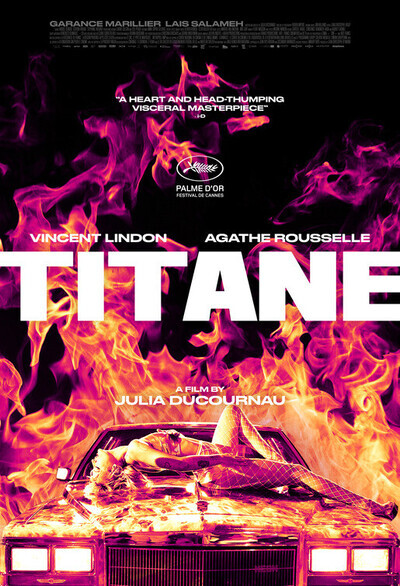
Cast: Agathe Rousselle, Vincent Lindon, Garance Marillier, Laïs Salameh, etc.
Cinematography: Ruben Impens
*** THE WHOLE FILM IS A SPOILER ***
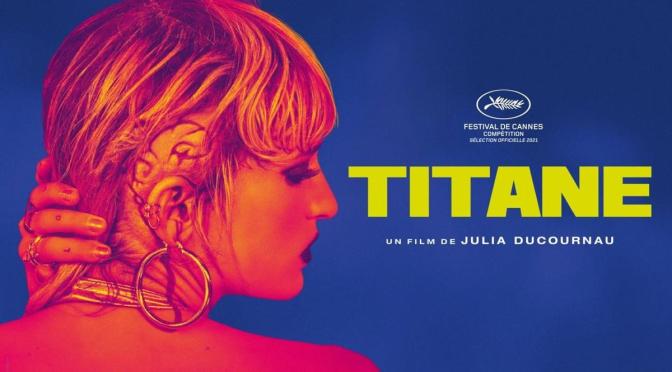
The difficult second album syndrome applies with Julie Decournau’s incredibly horrific, illogical and over-rated, Titane (2021). How the film won the Palm D’or at the Cannes Festival is beyond me. Maybe the jury were on the same acid as the ultra-talented writer-director when she created the script. Or, maybe the jury were belatedly rewarding her for the amazing contemporary horror film, Raw (2016).
Raw (2016) works on so many distinct levels with themes covered including: veganism, peer pressure, initiation, fitting in, animal cruelty, sexuality. lesbianism, same-sex attraction, animalism, sisterhood, hedonism, nature versus nurture, cannibalism, family, etc. It crosses genres effortlessly and has one of the greatest and disgusting scenes I have had the pleasure to see for some time. Raw (2016) is a shocking, intelligent and astounding modern-day masterpiece. Titane (2021) unfortunately is not.
Before I say why I did not enjoy Titane (2021), I must say that I constantly seek out challenging cinema that pushes boundaries. I love horror and want to be shocked, but also emotionally involved with the characters at the same time. Moreover, I am well prepared to commit to dream logic and surreal narratives, however, the filmmaker must also try not to over-indulge their artistic excesses, and respect the audience too. Of course, this is just my opinion, but I don’t feel Julie Decournau had a clear story path and rather went hell bent into delivering a variety of different ideas, none of which created a fulfilling emotional journey for the main protagonist, Alexia (Agatha Rouselle).
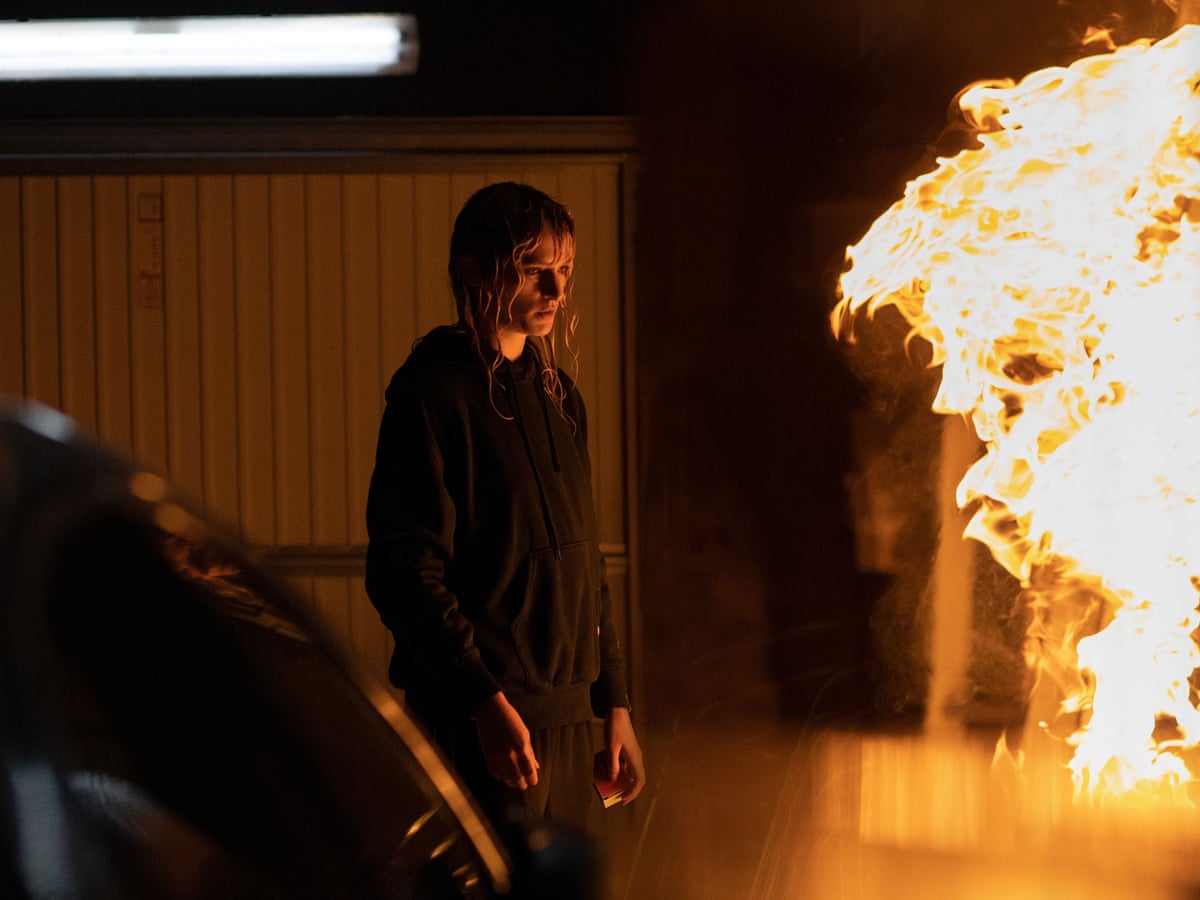
Rouselle, as the malevolent and tragic conduit of Ducournau’s twisted vision, does give a spectacularly brave performance. But her character is given so many complex set-ups at the beginning, I quickly gave up caring what happened to her. As a child she is badly injured in a car crash. This gives her a titanium plate in the skull. Alexia grows up and is an exotic dancer who either dreams of, or actually fucks cars. Oh, she is also a serial killer who violently kills for no apparent reason. Several gruesome set-pieces result in the goriest deaths ever seen in a Palm D’or winner. Indeed, by the time Alexia goes on the run and smashes her face into a sink to alter her features I was numbed by it all.
Titane (2021) at the midpoint then delivers one of the most dumb and insulting plot shifts I have seen in recent years. Yes-yes it’s an arthouse film and an expression of Julie Decournau’s vision of humanity, but I DID NOT CARE!! Not only did we get Alexia’s horrific behaviour, we are then introduced to another plot turn when she hides out with a bereaved and emotionally scarred firefighter, Vincent (Vincent Lindon). By this time I was actually laughing at certain scenes, finding it all tiresome and frankly embarrassing. I got the symbolism of human beings as machines and exploitation of females and that family represents death and blah-blah-blah! Yet, and I’m likely to be in the minority, Titane (2021) is one of the most narratively, emotionally and visually exhausting films I have seen in some time. Watch at your peril!
THE CINEMA FIX PRESENTS: 10 FAVOURITE FILMS OF 2021!
Following on from the extremely tricky global issues of 2020, the cinema saw further transitions amidst lockdowns and the rise of even more streaming platforms. Traditional timetables for film releases remain all over the place due to the effects of the pandemic on our culture. Plus, big budget productions are now going straight to the living room more often than not. Especially if the proposed cinema release date is postponed on several occasions. What studios lose in terms of cinema release profits, they are now looking to claw back with reduced marketing budgets and subscriptions to their own respective channels.
In the past my favourite film of the year lists were all films I saw at the cinema. Now they are a mixture of cinema and online releases. There is some overlap too in the given year when I watched such films due to the scheduling changes. I’m really not a fan of this as I don’t like change to routine as a rule. But if it means I still get to see my favourite films online or at the cinema then it’s hardly a trial or major issue to adjust.
List Notes
There are LOADS of films I have NOT SEEN! Please comment below MUST-SEE films not on the list.
The Bond film is not on here. It was fantastic entertainment, but NOT a good Bond movie.
There are no MARVEL/DC films on the list as I have not watched them all. Plus, I have superhero film formula fatigue.
Nomadland (2020), while good, was completely over-rated.
White Tiger (2021) would be on this list, but I only watched it yesterday. So, it qualifies for assessment in 2022.
For comparison here is my list of favourite films in 2020. A starter if you will, before the main cinematic course.
Happy New Year – have a great 2022!
TWELVE FAVOURITE FILMS of 2020!
1917 (2019) DARK WATERS (2019) DA 5 BLOODS (2020) I’M THINKING OF ENDING THINGS (2020) THE INVISIBLE MAN (2020) MANGROVE (2020) PARASITE (2019) PORTRAIT OF A LADY ON FIRE (2019) SAINT MAUD (2019) TENET (2020) THE TRIAL OF THE CHICAGO SEVEN (2020) UNCUT GEMS (2019)
“… with Thomas Vinterberg’s expert direction, evocative natural cinematography, and Mads Mikkelsen giving yet another acting masterclass, the humorous narrative soon leaves the laughs behind to become a bittersweet, yet still uplifting, work of Nordic cinema.”
“… David Lowery is an original thinking talent, and someone I categorise as an alternative genre filmmaker… The Green Knight (2021) certainly has scale and magic and astounding cinematic power.”
“… Edgar Wright has delivered one of the most thrilling and spectacularly energetic films of the year. The nostalgic and heavenly soundtrack is to die for, with so many songs I recall growing up listening to. Likewise, the cinematography and lighting design sparkle in hues of black, fluorescence, shadow and neon.”
“… Levee Green does not see the bigger picture and is sucked in by the promise of money, women and fame. He is blinded by the bright city lights and the closer he gets to them the easier it is for the record producers to pick his pocket. In such a tragic character August Wilson has created a memorably complex persona, perfectly rendered by the acting genius, Chadwick Boseman. R.I.P.”
“… the scenes where David antagonises his unconventional grandmother are hilarious. Youn Yuh-jung as the elderly matriarch is fantastic, deservedly winning a best supporting actress role at the Oscars. Moreover, Lee Isaac Chung gets a miraculous performance from child actor, Alan Kim.”
“… The loss of a child is never going to be an easy experience and it is something an individual will never get over. As I followed Martha’s journey intensely the smallest incremental shift in her personality is felt massively. Vanessa Kirby, in particular, is stunning as a woman cut-off from the world by this devastating grief.”
“… I’m not always a fan of poetic cinema, especially within a narrative presented as a quasi-Western. Mostly I like to be punched in the gut, not branded slowly from the inside out. Yet Jane Campion’s expert adaptation of Thomas Savage’s novel, The Power of the Dog (2021), contains some bite. You just don’t see when and how it happens.”
“… I’ve seen some so-so reviews for The Rental (2020), but it’s the kind of tightly plotted suspense thriller I really thrive on. What starts as an idyllic getaway for two relatively wealthy couples is carefully unravelled by Dave Franco’s well-paced direction, complimented by Brie and Steven’s committed performances, has wonderful locations and a seriously proper killer ending.”
“… Sound of Metal (2019) beats along steadily but with incredible purpose and rhythm. It teaches us that losing a major sense need not be the end of one’s life, but rather the beginning of an altogether different one.”
“… Everything about the film screams colour, energy and movement. The dancing and editing and swinging beats take you on a breathless journey through the romance and street war. West Side Story (2021) keeps all the memorably catchy songs… and if there is a better directed, choreographed and edited set-piece all year in the Gee, Officer Krupke number then I haven’t seen it.“
Screenplay by: Jon Spaihts, Denis Villeneuve, Eric Roth
Based on: Dune by Frank Herbert
Produced by: Denis Villeneuve, Mary Parent, Cale Boyter, Joe Caracciolo Jr.
Cast: Timothée Chalamet, Rebecca Ferguson, Oscar Isaac, Josh Brolin, Stellan Skarsgård, Dave Bautista, Stephen McKinley Henderson, Zendaya, Chang Chen, Sharon Duncan-Brewster, Charlotte Rampling, Jason Momoa, Javier Bardem, etc.
Cinematography: Greig Fraser
***MAY CONTAIN SPOILERS***
I truly hope Dune: Part One (2021), an epic adaptation of Frank Herbert’s legendary Dune literary series, has a second part, otherwise I would have wasted well over two hours of my life watching the Denis Villeneuve helmed film version. Having said that, there were times where I felt the glacial pace of the narrative caused time to stand still, boring me in the process. But, I get it. It’s part one and setting all the major players up and building a strange world both visually and imaginatively. As such perhaps Herbert’s books may have suited a HBO TV adaptation rather than a cinematic version.
Maybe I’m jaded and cynical though. Have I seen too many films and stories? Is Dune: Part One (2021) even worth the journey and perhaps it’s too old-fashioned a sci-fi story to create resonance for myself and these times? Well, it absolutely looks amazing. The special effects, sandy landscapes, behemoth buildings, underground monsters and space vessels are rendered with such believable authenticity they genuinely looked real on the screen. Frank Herbert’s (I haven’t read the books) vision is astoundingly realised as this futuristic world in a far, far galaxy felt like a moving work of art. But, it was extremely beige and brown and sandy looking on Arrakis, so much so that I was glad of the dark contrast in the scenes involving House of Harkonnen. By the way, I’m not often a fan of the natural cinematography style used here where during big action scenes at night I could hardly see anything. Moan over.
The story of Dune (2021) felt a bit old-fashioned as a classic hero’s journey. It didn’t help that the in-the-sand screenplay and Denis Villeneuve’s meditative, confident direction was too subtle for this story. I mean why do we care about Timothee Chalamet’s Paul Atreides and his family’s inheritance of the spice world’s of Arrakis? Without giving anything away it becomes a poisoned chalice politically in this world and Paul’s, his parents, and the House of Atreides’ lives all become endangered. So, while Frank Herbert’s novel was originally released to powerful acclaim in 1965 and five other novels would follow year’s later, a film version of Dune (2021) now feels outdated in terms of subtext. Villeneuve is a genius filmmaker, but I’m not sure, aside from the beautiful look of the locations, sets and actors there is much of a narrative to get our teeth into. Just another ‘white saviour’ quest, which is so drawn out in terms of the interminable slow pace at times.
Of course, the cast are wonderful to look at, but Chalamet is miscast for me. He is an incredibly talented young actor, but he is not given any character to get his teeth into. Villeneuve does a less-is-more style that I love and he’s obviously playing the long game withDune (2021), yet he really needed a young Ryan Gosling to carry Paul Atreides as Chalamet isn’t given enough to do in terms of acting. Yes, there are massive worms and big explosions and floating fat men, but the story dragged. Thankfully, Jason Momoa injected some movie star charisma in his action sequences, while Rebecca Ferguson and Javier Bardem sprinkled some of their own spice amidst the over-controlled Villeneuve design.
I really wanted to like Dune (2021). I won’t see a more attractive and technically perfect rendition of a sci-fi world in the cinema in years. But, I could not connect with the narrative or drama. I mean, Paul is possibly the chosen one or something or other but why do we care? His mother is connected to some weird cultish sect — with the “Force” — and there are big worms which made me want to watch Tremors (1990); a far superior and shorter version of the hero’s journey. Watch that instead.
Halloween is slowly creeping out of the fog and shadows. It’s a time of the year where horror films come to the fore. Personally, I watch horror all the year round, but it’s always fun when the genre pulls focus on the cultural calendar.
Rather than concentrate on current horror film releases, I thought it would be interesting to seek out chillers that are a tad less known. So, I had a scan through Amazon and Shudder screening platforms and unearthed several cult horror gems worth catching.
Some of these films come from the 1980’s period which encompassed the “video-nasty” era in the United Kingdom. With the advent of home video technology, the government suddenly got frightened about bloody and exploitational films and desired control. Censoring seventy-two titles and banning a flurry of films actually made people want to watch them more. This caused the government’s policy to backfire as people clamoured to watch “pirate” video versions of such films. In fact, it was in the living room watching forbidden films and the old Universal black-and-white classics where my true love of horror cinema began.
The following films may not have been banned at the time, but I was intrigued by how many of the titles I missed seeing on first release. Aside from Ben (1972), When A Stranger Calls (1979) and Phantasm (1979), I hadn’t seen the other titles. Therefore, if you’re looking for obscure horror films to watch then delve deep into the Amazon library. They have a fine feast of 1970’s and 1980’s fear inducing fare, many of them which were on the infamous “video-nasty” list. Dare you watch them!?
THE CAT OF NINE TAILS (1971)
An early Dario Argento giallo finds a blind puzzle-maker (Karl Malden) and dogged reporter (James Franciscus) investigating murders at a genetics lab. Aside from a couple of scary set-pieces, notably in a graveyard, it neither works as a detective nor horror story. It is however beautifully filmed with a vibrant restoration. (Mark: 6 out of 11)
CHUD (1984)
As the Nuclear Regulatory Commission track down missing toxic waste the New York homeless population are becoming victims to something monstrous in the sewers. An energetic sci-fi-horror hybrid combining a schlocky plot with socio-environmental themes. It’s not bad and actually quite funny, with early roles for John Heard and Daniel Stern whose acting raises the overall quality. (Mark: 6 out of 11)
CLASS OF 1984 (1982)
I remember school kids raving about this film when I was twelve. I really wanted to see it, but could never find it in the video shop or from the “pirate” video guy. The plot merges The Blackboard Jungle (1955) with Death Wish (1974), as Perry King’s music teacher attempts to soothe the savage beast of a gang of nasty punk students. He fails and the final act revenge-driven rampage is fantastically inventive and gory. Latterly famous director, a young Tim Van Patten, portrays the psychotic, Peter Stegman, with vicious zeal. A true exploitational classic. (Mark: 8 out of 11).
HELL NIGHT (1981)
This is one of those films I had never even heard of. With a sizeable budget of $1.4 million dollars for a slasher film, it concerns four college students, including a grown-up Linda Blair, spending the night in a creepy house as part of an initiation ritual. Unfortunately, there’s a psychotic killer about hellbent on hunting them down. We’ve seen it all before, but it was nicely filmed and had decent humour. Overlong but way better than I thought it would be. (Mark: 7 out of 11)
PHANTASM II (1988)
I reviewed the remastered version of Don Coscarelli’s low-budget masterpiece here, but only just got round to watching the sequel. Phantasm II (1988) had a bigger budget and suffers from some stodgy plotting. The re-casting of Mike with James Le Gros in the role throws you. Yet, once Mike and Reggie fight with the Tall Man (inimitable Angus Scrimm), the razor-sharp spheres and the hooded monsters, the film finds real pace. Coscarelli blows-up a lot of stuff and ramps up the weaponry, but the sequel lacks the twisted magic of the original must-watch horror fantasy, Phantasm (1979). (Mark: 6.5 out of 11)
TERROR TRAIN (1980)
Another unknown mini-gem I found on Amazon. This Canadian slasher film is, you guessed it, set on a train and finds, yes you guessed it again, college students getting picked off one-by-one by a vengeful psycho. Notable for a really good plot which gives the killer empathy and understandable motivation, it also stars everyone’s favourite final girl, Jamie Lee Curtis. With disguise and magic prevalent in the themes, David Copperfield also appears in a neat role. Highly entertaining with a killer twist. (Mark: 8 out of 11)
WHEN A STRANGER CALLS (1979)
Inspired by a famous urban legend, Fred Walton’s chilling suspense thriller has one of the most nail-biting opening twenty minutes in horror cinema. Carol Kane is the babysitter terrorized by a series of tense phone calls from a mystery ringer. From that terrifying start the story falters slightly as it focusses on Charles Durning’s obsessive search for the unhinged man. Only when Kane rejoins the film some years later does the horror rise up again in a truly frightening denouement. (Mark: 8.5 out of 11)
WILLARD (1971) / BEN (1972)
This was an odd one because I knew and seen the sequelBen (1972) when I was a younger. Little did I realise the original Willard (1971) had been released the year before and became a sleeper box-office hit. Bruce Davison is excellent as the introvert, Willard, who is bullied at work by his aggressive boss, Ernest Borgnine. Only when, and take a deep breath here, Willard trains an army of rats does he gain confidence to take on the world. It’s a weird film that actually works because of Willard’s fascinating character arc and Davison’s nuanced performance. (Mark: 8 out of 11)
The follow-up Ben (1972) focusses on Willard’s alpha rat, Ben, and his friendship with lonely kid, Danny. The sequel really raises the rat count and there appears to be thousands of them in their dirty lair. Danny is a likeable kid who suffers from a serious illness that prevents him from going out. Why he would make friends with a killer rat though is still frankly nuts! A lack of thrills and goofy premise make it difficult to recommend, and is more famous for the classic Michael Jackson hit called, surprisingly enough, Ben.(Mark: 6 out of 11)
Who doesn’t like a great movie death? Well, people who abhor violence and gore on the screen. But I am not one of those people. Thus, if done right in terms of combining emotional context and cinematic imagination, there’s nothing I like more than revelling or lamenting a character’s end in fine bloody fashion. Lastly, I hear you ask why no Zahler, Scorsese, Cronenberg, Miike, Peckinpah, Jackson, Fulci, Roth, Romero, Argento etc. on this list? So much death and only six make it, so please suggest any of the thousands I have missed off in the comments.
*** CONTAINS SPOILERS ***
ALIEN (1979) – “Do these eggs taste off?”
I think it may have been something Kane (John Hurt) ate or maybe something that ate him? Anyway, one of the most spectacularly surprising scenes ever still holds amazing power to this very day.
THE FURY (1978) – Separated at death!
This under-rated tele-kinetic thriller is a spiritual sequel to Carrie (1976). Adding a spy conspiracy plot to Amy Irving’s rites of passage character arc, it has a whip-cracking-pace and classic DePalma set-pieces. None more so than the explosive end of the baddie-in-black.
PSYCHO (1960) – Take a bath next time!
What more can be written about one of the most shockingly original scenes in cinema history? Not only did Hitchcock break all narrative rules killing off the main protagonist halfway through, he did it with one of the most ingenious uses of montage, music and murder ever.
PULP FICTION (1994) – The original “face-off!”
Marvin never saw it coming. But let’s face it – none of us did!
ROBOCOP (1987) – Toxic Wasted!
Whoever designed this action scene, no doubt Paul Verhoeven had much to say, delivered one of the most excessive demises in 1980’s cinema. The vehicle crash, the toxic waste, the melting bad guy, the steam coming off his body and the final disintegration are just cinematic perfection.
WILD AT HEART (1990) – Bobby Peru loses his mind!
David Lynch’s vibrant adaptation of Barry Gifford’s romantic thriller contains many colourful characters. Willem Dafoe’s Bobby Peru is a particularly nasty piece of work and he gets his comeuppance in an incredibly visceral and disturbing way!
Cast: Donald Pleasence, Norman Rossington, David Ladd, Sharon Gurney, Hugh Armstrong, Christopher Lee etc.
Cinematography: Alex Thomson
***CONTAINS MILD SPOILERS***
In my last review I wrote with nostalgia about trips to the video shop. Yes, an actual shop where you could hire films existed! Imagine that. Now, I further lament the splintered streaming marketplace where you have to pay a subscription to watch a film when I used to be able to see it on telly for free. Plus, there are TOO MANY platforms. Those £5.99 and £4.99 and £7.99 per month fees soon stack up. I used to love turning on Channel Four or BBC2 or latterly Film Four and there would be a cult horror film, classic film noir, World cinema, art film or early directorial release from a now famous director on there late at night – FOR FREE! Thankfully, aside from all the streaming stems I have to manage, a channel on digital TV called Talking Pictures does show some genuinely great movies that time and humanity may have forgotten. One such is Deathline (1972).
Deathline (1972) – (AKA Raw Meat in the U.S.) is a genuine cult classic horror film which is gruesome, darkly witty and incredibly moving in equal measures. In this era of constant remakes I am surprised no filmmaker has decided to transfer this grimy and quintessentially British movie into the modern day. In many ways I am glad they haven’t as it, despite some glaring flaws in characterisation of two main protagonists, borders on being a bona fide under-rated classic. The premise involves a series of missing persons who are disappearing around the area of Russell Square underground station. The sarcastic Inspector Calhoun (inimitable Donald Pleasence) is tasked with cracking the case. He does so with gallows humour and gallons of cups of tea.
Pleasence is not the only person who gives a memorable acting performance in Deathline (1972). Because the screenplay and direction spends a lot of the grisly running time creating a thematic and visual mythology around the antagonist. Indeed, while the killer, described in the credits as the ‘Man’ (Hugh Armstrong), commits several brutal slayings and abductions, the ghastly backstory given and Armstrong’s emotionally charged portrayal really make you empathise with his situation. The combination of pustular make-up effects, the rat-infested underground lair he inhabits, plus the tragic circumstances surrounding the ‘Man’s’ plight ensure he one of cinema’s most empathetic monsters since Karloff in Frankenstein (1931).
It’s a shame therefore that more wasn’t done to develop the leading couple in the film, students Alex Campbell (David Ladd) and Patricia Wilson (Sharon Gurney). While she is at least sympathetic, he is completely unlikeable and mostly unheroic. So much so I was rooting more for the plague-pocked ‘Man’ at the end rather than him. But hey I’m watching this for the gore and deaths aren’t I? Well, there’s plenty of that in between Inspector Calhoun’s chirpy working-class snipes and demands for cups of tea. Plus, director Gary Sherman gives us a tremendous, long take which establishes the cavernous setting for the murder and horror, utilising the dank London underground tunnel system to maximum impact. While Christopher Lee is given poster billing, he’s only in one scene as a privileged MI5 agent. Finally, did you know Marlon Brando was originally cast as the ‘Man’. Well, I’m kind of glad that was an offer he did refuse. Because Armstrong’s tragic human monster lives on long in the mind, even after the film’s haunting final echoes have faded.
Produced by: Dave Franco, Elizabeth Haggard, Teddy Schwarzman, Ben Stillman, Joe Swanberg, Christopher Storer
Cast: Dan Stevens, Alison Brie, Sheila Vand, Jeremy Allen White, Toby Huss
Cinematography: Christian Sprenger
*** MAY CONTAIN SPOILERS ***
If you’re old like me you will remember the golden era of video rental stores in the 1980’s and 1990’s. I used to love going to the video shop at the weekend and choosing which films to watch. For example, on a Saturday afternoon at Blockbuster I would choose three films usually. One would be a banker like a high quality release or made by an acclaimed filmmaker whose work I was certain to like. Another would be a more commercial choice like a high concept action film or comedy; something to take the brain out for. Lastly, I would take a gamble on either an arthouse or foreign or indie character-driven film; OR an even bigger gamble on a lower-budget or unheard horror film or thriller with a back-of-the-video-box pitch that grabbed me. Often the latter choice would end up being a terribly arty bore or a schlocky B-movie disaster. However, every now and then I would find a film gem which totally gripped me.
With streaming now there’s not so much of a gamble as you haven’t had to walk or drive to the video shop. Even better there’s no need to return the tapes on time and risk getting fined. You switch on your streaming device and choose your film. If you don’t like it you can turn it off, although I do tend to see things through to the end on most occasions. But hey Paul, enough about comparing the past with the present – WHAT’S YOUR POINT! Oh yes, the Dave Franco directed The Rental (2020) is one of those films which I took a chance on because of the cast and the back-of-video-box-pitch (i.e. the Amazon online trailer). I’m glad I did watch it, as it is a terrific thriller with a tension-filled script which leads and misleads you through a series of compelling twists. It’s a simple premise, involving two couples spending the weekend at a beautiful rural property where poor choices destabilise their harmony, only for all hell to break loose when a serious crime escalates the action.
The cast of Dan Stevens, Alison Brie, Shiela Vand and Jeremy Allen White are arguably punching below their weight where the B-movie material is concerned. Yet, they bring quality to the proceedings as the initial peace between the characters descends into chaos when first infidelity and then murder rears its ugly head. One of my favourite character actors, Toby Huss, is excellent here too as the suspicious property manager. I’ve seen some so-so reviews for The Rental (2020), but it’s the kind of tightly plotted suspense thriller I really thrive on. What starts as an idyllic getaway for two relatively wealthy couples is carefully unravelled by Dave Franco’s well-paced direction, complimented by Brie and Steven’s committed performances, has wonderful locations and a seriously proper killer ending.
Created and written by: Steve Pemberton & Reece Shearsmith
Directors (Season 6): Matt Lipsey, Guillem Morales
Original Network: BBC (available on BBC Iplayer)
No. of Episodes: 6
I have written exhaustively about how brilliant this television programme is, so much so I don’t think I can add any further other than I believe it deserves regaling as TV national treasure. Just when you think Reece Shearsmith and Steve Pemberton could be running out of creative steam they prove you wrong with another superb series of Inside No. 9. If you are interested, here are prior articles I have written about it.
However, to recap, if you have never seen Inside No. 9 I urge you to do so. It is an exceptional anthology series with six stand-alone episodes per series. Individual episodes feature a whole host of different characters and amazing actors each time led by the multi-talented Pemberton and Shearsmith. As per the prior seasons, the latest one is absolutely unforgettable. It again privileges tightly woven thirty-minute short narratives, which more often than not, feature a twist in the tale. Moreover, the events usually unfold in one location with rarely more than a handful of characters. This makes the narratives feel more focussed, intense and intimate. In series 6, there is even more growth within the anthology genre and much risk-taking where style and form are concerned.
So, here are my mini-reviews of each episode from Season 6 with marks out of nine (obviously).
*** BEWARE: POTENTIAL SPOILERS ***
EPISODE 1: WUTHERING HEIST
Main cast: Paterson Joseph, Gemma Whelan, Kevin Bishop, Reece Shearsmith, Steve Pemberton, Rosa Robson, Dino Kelly etc.
Not only are Pemberton and Shearsmith accomplished actors, writers and directors, they are also acutely aware how fans revel in their incredible work, devilishly mocking their own mythology and playing with audience expectations. They do this to dizzying impact in the puntastic opening episode, Wuthering Heist. Marrying elements from farce, crime, Commedia dell’arte and the plot of Reservoir Dogs (1992), the players wear masks, prat about and bleed over each other while attempting to pull off a diamond heist. Set in one location, a disused warehouse, Gemma Whelan is superb as the fourth-wall breaking narrator attempting to hold all the story innards together. Pretty soon though one realises that the flurry of puns, sight gags, plot contrivances and comical misunderstandings are intended as wondrous and silly fun. The lack of emotional depth is the joke here and the writers know this. Because Shearsmith and Pemberton’s script has a gag every four seconds, be it a sight jape or involve some sparky verbal dexterity. Lastly, not only do they know they are jumping the shark, but they revel in doing so during this hilarious meta-work.
Mark: 8 out of 9
EPISODE 2: SIMON SAYS
Cast: Reece Shearsmith, Steve Pemberton, Lindsay Duncan, Nick Mohammed
Among many of the recurring pleasures of watching Inside No. 9 is wondering what the number nine will refer to. It’s been a myriad of things including: a karaoke booth, a hotel room, a train sleeper car, a dressing room, a referee’s changing room, and even a shoe. In Simon Says it’s the name of a television epic called The Ninth Circle. This show is very similar to Game of Thrones in genre and scale, and likewise has a battalion of fans across the country who feel the final series undid the majesty of the prior seasons. The episode opens with immediate mystery as Steve Pemberton’s writer, Spencer, enters his flat with blood staining his clothes and conscience. Suddenly, Simon (Reece Shearsmith), is at the door saying he has evidence Spencer has committed a serious crime. Simon, a Ninth Circle uber-fan then blackmails Spencer into, among others things, rewriting the whole of the last season of The Ninth Circle into something more fan-friendly. Managing to be both funny and suspenseful in equal measures, Pemberton and Shearsmith’s characters play cat-and-mouse expertly, throwing in several big plot twists at the end of this compelling tale.
Mark: 8 out of 9
EPISODE 3: LIP SERVICE
Cast: Sian Clifford, Steve Pemberton, Reece Shearsmith
I watch some television series and films and am often struck at how much time is wasted in setting up the protagonists and story. Similarly, in unnecessarily long TV series you get either eight or ten episodes full of padding in the middle which destabilizes the momentum of the story. Nothing of the sort occurs in Inside No. 9. Stories are set-up with stylish economy and the situations immediately grab you by the throat and rarely let go. In Lip Service, Steve Pemberton’s downtrodden Felix is holed up in a hotel room waiting to liaise with a woman. But it’s not what you think. Sian Clifford’s Iris arrives and it turns out she is there to offer her services as a lip-reader. Felix suspects the woman he loves is having an affair and he requires Iris to read her and a possible lover’s lips at an adjacent hotel suite. I’ve now seen this episode three times and it truly is breathtaking. There’s empathy for Felix’s lost soul, some fine linguistic comedy, a potential romance, Clifford’s performance knocking it out of the park, Reece Shearsmith having great fun as an officious German hotel manager and THAT ending. The denouement, while totally believable, comes out of nowhere and leaves you genuinely speechless.
Mark: 8.5 out 9
EPISODE 4: HURRY UP AND WAIT
Cast: Adrian Dunbar, Steve Pemberton, Reece Shearsmith, Donna Preston, Bhavna Limbachia, and Pauline McGlynn
Quite possibly my favourite episode of the series, Hurry Up and Wait manages to achieve that difficult juxtaposition of being meta-textual and containing some real emotional power. Because it is one thing to be self-referential and satirise the creative process, in this case the making of a television police drama starring famous actor Adrian Dunbar, but it’s quite another to build in a murder mystery and empathetic characters who you root for. While Reece Shearsmith is always excellent playing angry characters, here he portrays James, a mild-mannered actor, who has got a break playing a scene with the precious talent, Dunbar. The TV drama they are in concerns a missing child and the “green room” happens to be a static caravan owned by a working-class family who may have important information about said grisly crime. Steve Pemberton and Pauline McGlynn play the parents of immature, Beverley – the brilliant Donna Preston – adding much comic relief, but all possibly hiding a dark secret. As James learns his lines he also plays detective seemingly discovering the truth until the truly chilling ending is revealed.
Mark: 9 out of 9
EPISODE 5: HOW DO YOU PLEAD?
Cast: Steve Pemberton, Reece Shearsmith, Derek Jacobi
Arguably the darkest tale, both in terms of the noir lighting and foreboding themes, it is difficult to discuss this tale of soul-searching guilt and justice without giving away too much of the story. Thus, I’ll talk about the actors and characters more. Derek Jacobi gives a deeply moving performance of a dying barrister who prides himself of, after an upturn in his early legal career, never losing a case in court until retirement. As he lies dying in bed, lungs heavy around his heart, he feels guilt about one case where he defended the indefensible. As he confesses his regret to Shearsmith’s cheery carer, it is soon revealed both men have sins they buried in the past which will soon come back to bite them. Watching these two fine actors spark off one another is as compelling as television drama can get, but there’s also comedy there too as Shearsmith delivers some spirited one-liners in between Jacobi’s grand screen gravitas. But where’s Pemberton I hear you ask? He’s sitting there waiting patiently in the shadows of this evocatively lit and thrilling tale.
Mark: 8 out of 9
EPISODE 6: LAST NIGHT OF THE PROMS!
Cast: Steve Pemberton, Reece Shearsmith, Julian Glover, Debra Gillett, Bamshad Abedi-Amin, Sarah Parish etc.
Are you aware of the work of Dennis Potter? He was one of the finest writers in British television from the 1960’s way into the early 1990’s. His scripts were always highly erotic, political and incredibly controversial. They skewered very British and human themes and burnt great sacred cows of the church, government, family, sex and marriage on the TV barbecue, leaving charcoal remains in their stead. Potter was a genius and with Last Night of the Proms, Pemberton and Shearsmith match him for bravado in deconstructing human nature and what it means to be British. Set in a well-to-do, middle-class household, a family of three generations sit down to watch the Last of the Proms on the BBC. It’s a big traditional classical music event and cultural celebration of what it means to be British. It makes me sick! Britain isn’t great. The British are racist, imperialistic and hardy murderers, who have a history and present (fucking Brexit!) they should be ashamed of. The thought-provoking screenplay here is heavy on compelling themes, memorable imagery and striking symbolism. This is a jarring and messy episode and what it lacks in precise plotting it more than makes up for in juxtaposing horror, satire, drama, surrealism, Jesus, social commentary and comedy to rather mesmerising effect. Potter’s ghost would have watched with glee and disgust and hate and love and pity and sadness; which is much how I felt witnessing Last Night of the Proms.