All posts by Paul. Writer and Filmmaker

Paul is a writer and filmmaker. He has been committed to a writing career from a very early age. In 1997, he graduated from Staffordshire University with a first class degree in Film, TV and Radio Studies. His 2nd year short film project THE ARTS FILE won a Stoke-on-Trent Young Filmmaker's award. Subsequently, he worked as a Production Assistant on a number of promos and successfully completed a work placement at Sky Movies. In 2002, he gained an MA in Feature Film Screenwriting from Royal Holloway College of London and since graduation has written several feature and many short film scripts. In 2005, he formed FIX FILMS and has written and produced many shorts to date. He has also had several short screenplays commissioned by the Mountview Film Academy and film director Jonathan Wolff. His work can be found here - https://www.youtube.com/c/FixFilmsLtd Most recently Paul wrote, produced and directed his own short horror film called FLATMATES (2018). He has subsequently written and directed the films: MISDIRECTION (2019), TOLERANCE (2019) and YOU HAVE A NEW FOLLOWER (2020). His short films have had screenings worldwide at many film festivals. His latest works are the horror, INFERIS (2024), a set of short film monologues called SIN (2024) and THE SUICIDE SHIFT (2026). PAUL is a versatile and prolific writer with ideas in abundance and a very strong feel for structure, characterisation and dialogue. He favours thought-provoking and entertaining narratives with memorable characters, images and scenes. While he values all styles of film he tends toward genre movies as opposed to overtly "arty" cinema. Moreover, being involved in the producing, casting and crewing of low budget shorts has given him great experience and insight into the filmmaking process; improving his writing no end. From 2008 until 2020, Paul had been on the exciting merry-go-round that is the stand-up comedy circuit. He has done over 1000+ gigs. Venues included: Downstairs at the King's Head, The Comedy Pit, The Comedy Cafe, Soho Comedy, London Comedy Store, Electric Mouse Comedy, Streatham Comedy Club, Mirth Control, Comedy Heat, Lion's Den Comedy etc. He also ran two comedy nights: West End Comedy @ The Comedy Pub and West End Comedy @ The Brazen Head. He used to be the resident MC at Electric Mouse's show at The Fox, Palmers Green and got regular paid bookings as a comic and MC in and out of town. In 2014 and 2016 he performed at the Brighton Fringe Festival and Camden Fringe Festival in 2014. He performed open spots for the Banana Cabaret, The Comedy Store and Up the Creek comedy clubs in London. He is also a keen film and television seer and has a love for all genres of movies from art-house to low-budget z-movies. He also loves television of all kinds notably great comedies and dramas. He is an essayist expressing passionate analysis for all elements of cinema. Links Blog: www.thecinemafix.com YouTube: www.youtube.com/c/FixFilmsLtd

THE NETFLIX PROCLAMATION – REVIEWS OF: EARTHQUAKE BIRD (2019), i LOST MY BODY (2019), THE KING (2019), THE TWO POPES (2019) and more…

THE NETFLIX PROCLAMATION – FILM REVIEW CATCH-UP MARCH 2020

With COVID-19 threatening the world’s population, it is a time to remain calm and, if required, stay indoors out of the way of potential infection. As long as the Internet holds then there are thousands of films and TV shows to watch online to keep us all occupied. Obviously, one must also take a deep breath and pray that aside from the illness affecting the world, society manages to keep it’s social, financial and medical structures in place too.

Clearly, we need distractions at this difficult time. Films may not be the solution, but they can offer diversion at least. Thankfully, I love staying in and watching movies as it is a major hobby of mine. Indeed, I have been busy lately catching up on some of the latest releases Netflix has to offer. Thus, I present some quick reviews of films currently on the streaming platform, all with the usual marks out of eleven.

***MAY CONTAIN SPOILERS***


A PRIVATE WAR (2019)

Rosamund Pike is absolutely enthralling as the brave war correspondent, Marie Colvin. Putting her life and sanity on the line to report the terrors of conflict in Sri Lanka, Libya and Syria, to name a few, Colvin was both fearless and crazy in equal measures, but remains an incredibly powerful voice. This fine biopic feels haphazard and structurally chaotic but is certainly an impressive tribute to an iconic journalist. (Mark: 8 out of 11)


DESTROYER (2018)

Nicole Kidman gives another excellent performance in this gritty neo-noir-cop-procedural drama. The clever structure — which tracks back and forth between Kidman’s burnt out character in the present and her violent past going undercover in a crime gang — arguably works against the emotional power of the film. However, director Karyn Kusama and Kidman make a formidable team in delivering a moody, bruising and bitter revenge thriller. (Mark: 8 out of 11)


EARTHQUAKE BIRD (2019)

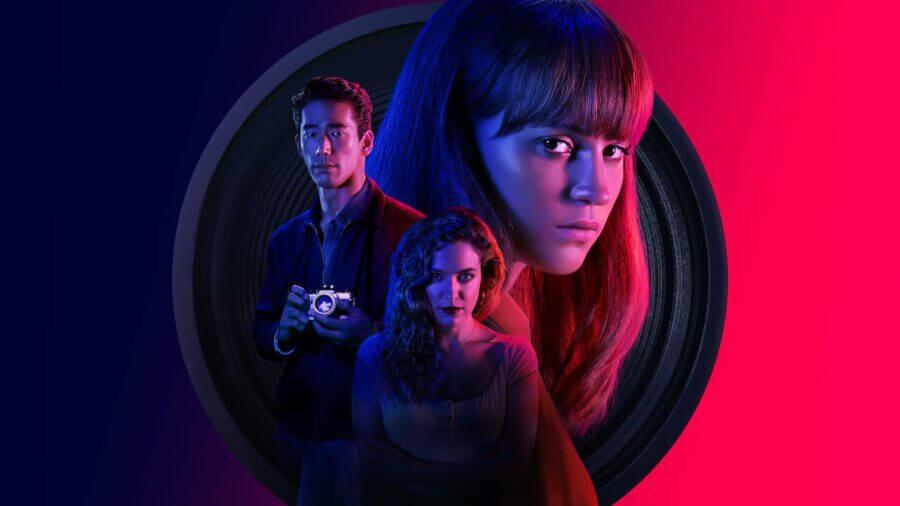
I really loved director Wash Washmoreland’s previous film, Colette (2018), because it was such a vibrant. colourful and sparkling biopic of a fascinating character. I was thus surprised to see he had followed it up with an under-cooked thriller like Earthquake Bird (2019). Alicia Vikander portrays a dour ex-patriot in Japan who gets drawn into a love triangle involving the effervescent, Riley Keough, and photographer, Naoki Kobayashi. The film felt, like Vikander’s protagonist, depressed; ultimately drifting toward a tepid denouement. (Mark: 6 out of 11)


Image result for earthquake bird

ENTEBBE (2019)

Rosamund Pike again! Here she is cast alongside Daniel Bruhl as they portray two Germans who joined a Palestinian military group that hijacked an Air France Flight in 1976. While the politics of the Israelis versus the Palestinians is explored to some extent, I felt more could have been done during the hostage situation to examine such complex issues. Instead, we get something more generic from director Jose Padiha, who inexplicably uses dance troupe montage to convey nebulous emotion and meaning. (Mark: 6 out of 11)


I LOST MY BODY (2019) – (Contains spoilers)

Both original and generic in terms of story, this romantic drama contains some of the most wonderful animation concepts I have seen in a long time. Brilliantly rendered and directed by Jeremy Chaupin, the narrative has two major strands. A severed hand – yes, a hand – seeks to unite with its body. Simultaneously, flashbacks reveal young Naoufel attempting to romance the girl he loves, Gabrielle. I really wanted to enjoy this more as the filmmaking is stunning. But, the final act of the film was too poetic, and it left me feeling cold and confused. (Mark: 7 out of 11)


THE KING (2019)

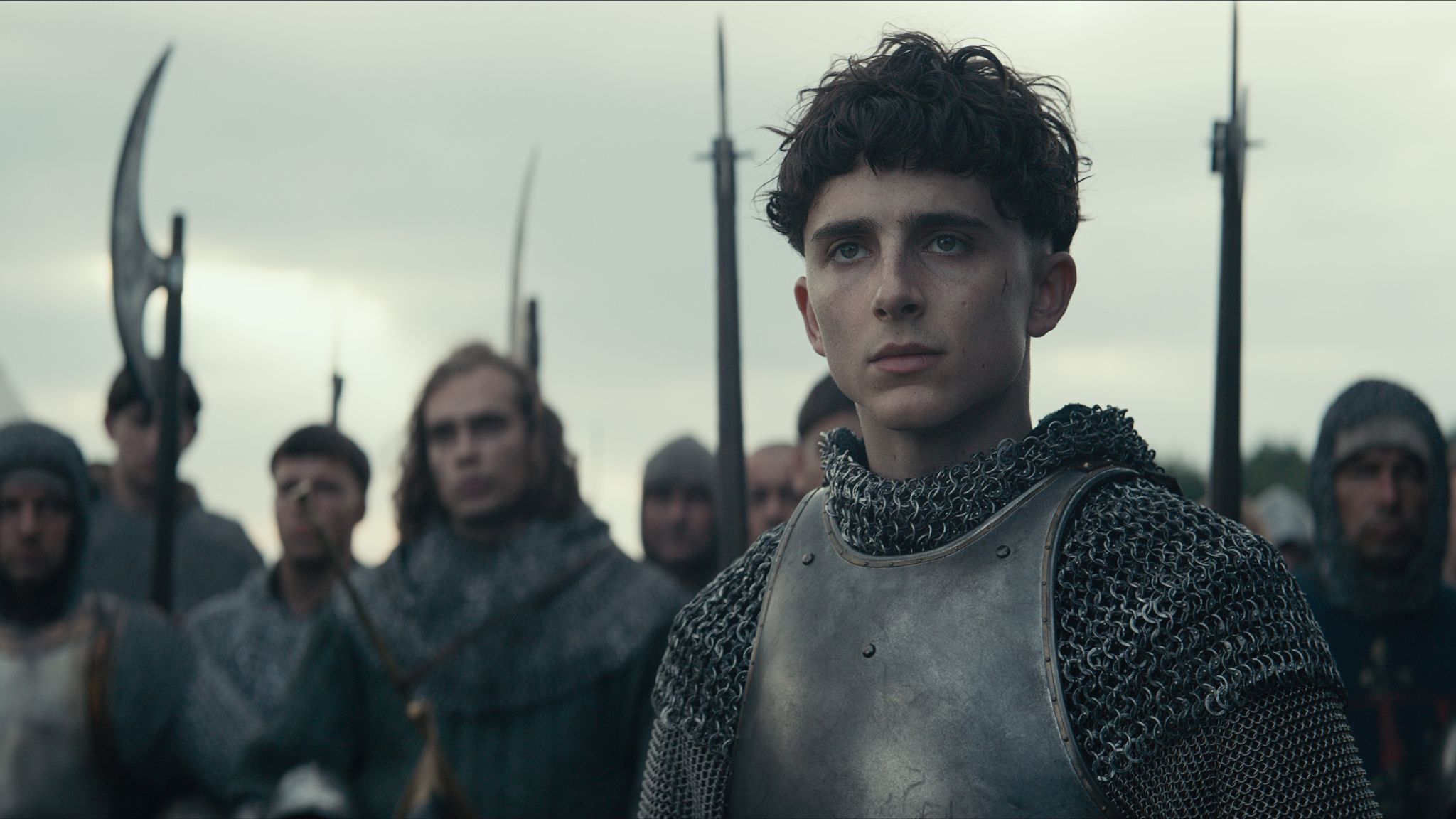
David Michod has been a filmmaker worth keeping tabs on since the release of brutal Australian crime film, Animal Kingdom (2010). After the big budget military satire War Machine (2017), failed, in my view, to hit the target, Michod has gone with another big production in The King (2019). Adapting Shakespeare’s Henry V trilogy (co-writer with Joel Edgerton) is no easy task and they deliver a film full of bravura cinematic moments. Timothee Chalamet is impressive in the lead role as the reluctant, but strong-of-heart young Prince Hal/King Henry. Lastly, Sean Harris, Robert Pattinson, Edgerton (as Falstaff) and Thomasin Mackenzie provide excellent acting support in a stirring period epic. (Mark: 8 out of 11)


Image result for the king timothee chalamet

THE LAUNDROMAT (2019)

Filmmakers Scott Z. Burns and Steven Soderbergh are usually so reliable in their cinematic endeavours. However, a star-studded cast including: Meryl Streep, Gary Oldman, Sharon Stone, Antonio Banderas, Matthias Schoenaerts and Jeffrey Wright cannot save this misguided comedy-drama about the Panama Papers scandal. I’m sure there is a great film in such financial crimes, but this was not it. (Mark: 5.5 out of 11)

MID 90s (2019)

Jonah Hill adds director to his already very successful acting, writing and producing curriculum vitae. Mid 90s (2019) owes much to the low-budget, improvisational and gritty style of filmmakers like Harmony Korine and Larry Clark, however, Hill’s approach is less extreme. The loose and episodic rites-of-passage narrative centres on Los Angeles based skater gangs and specifically Stevie (Sunny Suljic). He longs to grow up too fast and his experiences reminded me of an American version of Shane Meadow’s This is England (2006). While it’s a solid work of cinema, full of heart and believable performances, it’s ultimately quite underwhelming from an emotional perspective. (Mark: 7 out of 11)


THE TWO POPES (2019)

Fernando Merielles directs this adaptation of Anthony McCarten’s play featuring two giants of the acting world in Anthony Hopkins and Jonathan Pryce. The two heavyweight actors portray the real-life Pope Benedict XVI (Hopkins) and future Pope Francis, Cardinal Jorge Mario Bergoglio (Pryce). The duo conflict, debate and laugh about serious matters related to the history of the Catholic Church; plus, some not-so serious matters such as pizza and football. Having sat through Paulo Sorrentino’s uber-pretentious TV series The New Pope (2020) recently, I was not in the mood for more theological drama. However, the two leads are excellent, especially Pryce; and while the film is very dialogue driven, the flashbacks of Argentine history from Cardinal Bergoglio’s early years were powerfully evoked. (Mark: 8 out of 11).


TWO CHARACTERS ON THE EDGE OF A NERVOUS BREAKDOWN – FILM REVIEW DOUBLE BILL – HORSE GIRL (2020) + THUNDER ROAD (2018)

HORSE GIRL (2020) + THUNDER ROAD (2018) FILM REVIEWS

Having seen both these fascinating character studies, Horse Girl (2020) and Thunder Road (2018) recently, I was compelled to write a double bill review because similarly they feature: lower budgeted production values, a singularly powerful lead acting performance, characters who have recently lost their mothers, very uncomfortable emotionally charged scenes; as well as both exploring themes relating to mental illness. Thus, I thought it interesting to review the films with these elements in mind.

In regard to mental health, it is quite rightly being addressed more and more in society in a respectful manner. The barriers and prejudices of the past are being eroded and people are talking about it more openly. I have first-hand family experience of someone who has suffered with mental illness. Plus, I have experienced the loss of a close friend to suicide due to debilitating anxiety and have other friends on anti-depressants. I have tried to be of assistance to those people, but it is incredibly difficult to help anyone. Likewise, medical professionals seek various ways of attempting to assist, treat and counsel individuals with mental health problems.

Ultimately, it so tough to deal with such illnesses as they are powerful and invisible. I have utmost empathy for anyone suffering from anxiety, depression and serious mental health problems. It’s such a shame that I feel kind of helpless when it comes to helping people I am close to. It is not always enough to listen and understand, thus professional medical help should be sought and sometimes even that is not enough. It is not surprising therefore that cinema is also exploring such stories and themes.

With Joker (2019), mental illness was examined in a comic book genre setting in a powerful way for me. Some critics felt it trivialised mental illness. I felt that it was, while stylised and theatrical, actually accurate in the disturbing disintegration of Arthur Fleck’s downward mental spiral. Horse Girl (2020) and Thunder Road (2018) are two very different films in terms of genre, but with similar thematic trajectories as Joker (2019). Indeed, while they are independently produced and smaller in scale, they feature two frightening renditions of characters on the verge of a mental breakdown.

***THESE REVIEWS CONTAIN SPOILERS***


HORSE GIRL (2020)

Directed by: Jeff Baena

Written by: Jeff Baena and Alison Brie

Cast: Alison Brie, Molly Shannon, John Reynolds, John Ortiz etc.

Depicting mental illness accurately is a very tricky thing on film in my view. Obviously, we have over the years had all manner of psychotics and mad people chasing and killing others in horror films and thrillers. There have also been many films centred around characters in mental institutions. Some are respectful examinations, but many more could be seen as exploitation films. Horse Girl (2020) is not exploitational, but rather an oddity that falls somewhere between the gaps of arthouse drama and weird character study. Such films are difficult to assess as, however impressive the technical aspects of the production are, the strange events of the film could alienate an audience in terms of entertainment.

Despite Alison Brie’s exceptionally brave performance as Sarah, the narrative consistently disengages you emotionally, taking you to very dark and weird places. Sometimes you have to wonder whether the actor is holidaying in weirdness for the sake of it, or is genuinely drawn to characters who exist with mental issues. Given Brie is an intelligent and highly talented actor, plus she co-wrote the script, you cannot help but feel this is a very personal project. Her portrayal of a shy loner dealing with the suicide of her mother, sleepwalking, day delusions, fragmented time loss and nightmares makes Horse Girl (2020) a disorientating experience. However, in conveying the chaos and frightening nature of mental illness, the film is commendable but tough to recommend.

Mark: 7 out of 11


Thunder Road Jim Cummings

THUNDER ROAD (2018)

Written and directed by: Jim Cummings

Cast: Jim Cummings, Kendal Farr, Nican Robinson, Macon Blair etc.

Talking of films that are difficult to recommend, Jim Cummings self-produced, written, directed and acted film Thunder Road (2018) is another. Rather than giving us, like Horse Girl (2020), an unreliable narrator and escalating series of surreal events seemingly separated from reality, Cummings film deliver very real feelings of embarrassment and anxiety to the audience. Advertised on certain film sites as a comedy-drama, neither the comedy nor drama are conventionally enacted. The film is based around a series of hysterical monologues and stream of consciousness dialogues from Cummings grieving and soon-to-be-divorced troubled cop, Jim Arnaud.

Arnaud’s mental issue is not psychosis, but rather a circumstantial and emotional nervous breakdown precipitated by grief and a personality disorder. The opening scene at a funeral for Arnaud’s mother, is a case in point. Based on his original short film of the same name, Cummings produces a tour-de-force acting exercise in both awkward comedy and distanciation. Subsequently, the film’s narrative events find Arnaud attempting to be a good father, friend and police officer, however, he is constantly on the edge of an angry outburst or outpouring of emotional honesty. His character makes us empathise as he is in grief, but at the same time he’s very difficult to like due to his extreme reactions. Ultimately, as a low budget feature for Jim Cummings acting abilities, Thunder Road (2018) is a compelling character study. However, it’s tough to watch and the slightly misogynistic ending left a sour taste in what was a fascinating emotional exploration of grief and mental instability.

Mark: 7.5 out of 11


PORTRAIT OF A LADY ON FIRE (2019) – CINEMA REVIEW

PORTRAIT OF A LADY ON FIRE (2019) – CINEMA REVIEW

Directed by: Celine Sciamma

Produced by: Veronique Cayla, Benedicte Couvreur

Written by: Celine Sciamma

Cast: Noemie Merlant, Adele Haenel, Luana Bajrami, Valeria Golino

Cinematography: Claire Mathon

**MAY CONTAIN SPOILERS**


I haven’t seen any of Celine Sciamma’s previous films, but based on the romantic drama, Portrait of a Lady on Fire (2019), she is a filmmaker of formidable power and vision. I believe this is her fourth feature film directorial release and it is as sumptuous, moving, exquisitely shot and constructed a love story as you are going to witness. Moreover, it is proof that the art of screenwriting, compared to many by-the-numbers Hollywood film productions, is NOT dead.

The story is very simple. At the end of the 18th century, a young painter, Marianne, (Noemie Merlant) is commissioned to create a portrait of a young woman, Heloise (Adele Haenel). Heloise is, as is the tradition of the time, required by her mother (Valeria Golino), to marry a Milanese nobleman. He needs to see the portrait in advance in order to agree to the wedding. The only catch is, the insular Heloise, does not want to be painted for all manner of understandable reasons. What this establishes is two very intriguing characters, both with different emotions and desires.


Following the beautifully rendered story foundation, what follows is a magnetic series of scenes which subtly push these two empathetic characters together. Marianne is the artist who, at first keeps her distance, spying and analysing Heloise. Heloise is cool, sensitive and a prisoner on the Brittany island, trapped by the waves of the sea and her mother’s insistence on a society wedding. Over the space of a few days the walking companions become drawn to each other both artistically and emotionally. But, it’s no sordid desire for lust, rather a respectful and honest joining in romance. We, as the audience, literally see love grow before us thanks to some incredible acting from the leads.

Often the cinema critics will heap praise on a film and I will wonder what they have been watching. However, in regard to both Parasite (2019) and Portrait of a Lady on Fire (2019), the plaudits are so well deserved. Both are brilliantly written and shot works of cinema, that in the past may have been consigned to just the arthouse circuit. Further, given the film is about painting, it is unsurprisingly Portrait of a Lady on Fire (2019) is framed, lit and composed with an eye for the artistic. Yet, it isn’t just the look and colour of the film that impresses. Sciamma and her cinematographer, Claire Mathon, also create a series of haunting shots which will be indelibly scorched on my mind.

In terms of the themes, the film is very powerful too. As well the notion of art as a means of representing love, the narrative explores concepts of female equality and solidarity. There is an interesting subplot involving a member of the household staff, which adds to the thematic texture. Furthermore, the performances by all the actresses are superb too as Sciamma directs with such confidence. I also liked that the critique of patriarchal society was implicit rather than didactic. Also subtly realised are the tasteful love scenes, which never feel exploitational. My only minor criticism is that the opening hour could, arguably, have been trimmed slightly. However, what do you leave out of a film as beautifully composed, delicately written and emotionally compelling as Portrait of a Lady on Fire (2019)? I, a mere mortal, am not qualified to say in the face of such mesmerizing cinema.

Mark: 9.5 out of 11


YOU HAVE A NEW FOLLOWER – SHORT FILM SCREENING – CINESHOTS – 3RD MARCH 2020

YOU HAVE A NEW FOLLOWER – CINESHOTS SCREENING

My latest short film You Have A New Follower (2020) was screened earlier this week at the wonderful CineShots film night. The venue was the Streatham Space Project and a great night was had by all.

CineShots aims to give up-and-coming London filmmakers a chance to screen their films, get the feedback from a live audience, engage in Q&A and network with like-minded people for potential collaborations or just to talk film.

The only criteria the film has to fulfil is that the filmmakers are London-based, the film hasn’t been finished more than 12 months before submission and is not longer than 15 minutes. Please check out their website here and the cool trailer of the event.


All six films were received with fine appreciation by a decent crowd of filmmakers, actors and audience members. It was so good to get a premiere for You Have A New Follower (2020) too and watch it with many of the crew members. Overall, I would certainly recommend CineShots to anyone interested in attending a positive film screening night.

I look forward and hope that I can get more screenings of my film at festivals in the UK and worldwide. I am very proud of the film as it has powerful suspense, plus memorable themes relating to identity and anxiety in an urban setting. You can watch the short film trailer here:


TELL ME WHO I AM (2019) – NETFLIX REVIEW

TELL ME WHO I AM (2019) – NETFLIX REVIEW

Directed by: Ed Perkins

Produced by: Simon Chinn

Based on: Tell Me Who I Am by Joanna Hodgkin, Alex Lewis and Marcus Lewis

Cinematography: Erik Alexander Wilson

***SPOILER FREE***


I recently reviewed a number of documentaries here, but it was only during a catch-up of Netflix films did I watch the harrowing family drama, Tell Me Who I Am (2019). Now, in my younger days I was naive enough to think documentaries were a representation of the whole truth and not a mediated version of events. There was fiction on one side and documentaries on the other. It’s a documentary so it must be true and must not be questioned.

That isn’t to say that the events of this incredible story are not true. No, my point is that Tell Me Who I Am (2019) is, while based on a true story, structured like a classic Hollywood thriller akin to something Hitchcock may have produced. Conversely, I was gripped throughout by the mystery, suspense and a gut-kicking reveal halfway through. Do not read anything about this moving family story beforehand, as going in with NO knowledge will make it all the more powerful.


The film is structured in the classic three act fashion. Firstly, we find Alex Lewis describing events of an accident he had when 18. The incident led to him totally losing his memory. The only thing he remembered was he had a twin brother, Marcus. His mother, father, friends, their farmhouse, the privileged background and their dogs were all forgotten. Like a film noir protagonist he was left in the dark as to his whole history. With the help of Marcus, he slowly begins to learn about his past and rehabilitate for the future. Thus, at first one feels this is a story of an individual overcoming near-tragedy and rebuilding their life moment by moment. However, it becomes something much more than that. I shall say no more.

Shot through talking heads, photo montage and reconstruction, this is an exquisitely edited and filmed documentary. The twins, Alex and Marcus are framed in close-ups, with pale backgrounds and shadowed foregrounds. As we move back and forth between their respective sides of the story, one is slowly pulled into the incredible events that confirm truth is more horrifying than fiction. By the resolution I was shook and deeply affected by the film, with still some questions left unanswered. Ultimately though, Tell Me Who I Am (2019) is a satisfying and very emotionally charged story about searching for truth amidst familial conflict, betrayal and a longing for redemption.


DARK WATERS (2019) – CINEMA REVIEW

DARK WATERS (2019) – CINEMA REVIEW

Directed by: Todd Haynes

Produced by: Mark Ruffalo, Christine Vachon, Pamela Koffler

Screenplay: Mario Correa, Matthew Michael Carnahan

Based on “The Lawyer Who Became DuPont’s Worst Nightmare” by Nathaniel Rich

Cast: Mark Ruffalo, Anne Hathaway, Tim Robbins, Bill Camp, Victor Garber, Bill Pullman, William Jackson Harper, Mare Winningham etc.

Cinematography: Edward Lachman

**MAY CONTAIN SPOILERS**


Every now and then one watches a film you kind of wish you hadn’t. Not because it is bad, quite the contrary with director’s Todd Haynes’ legal drama, Dark Waters (2019). No, you wish you hadn’t watched it because it unveils a tragic series of events relating to environmental, corporate, chemical, legal and human corruption. I prefer to possess hope that human beings can be trusted to do the right thing. However, based on this story that is definitely not the case. Moreover, given the information revealed about huge corporation, DuPont, and their environmental procedures, it’s a damning indictment against corporate greed and community murder.

A two-hour film is certainly not long enough to do justice to a story which has taken decades to unfold and cost the lives of many people and animals, while irreparably damaging the environment in the process. However, it effectively bullet points the crimes of the DuPont conglomeration in a riveting fashion. At the heart of it is corporate lawyer, Robert Bilott, here portrayed by the always excellent, Mark Ruffalo. Beginning circa 1998, Bilott, is approached by farmer Wilbur Tennant (Bill Camp) whose livestock have died or been culled due to tumours and other cancerous illnesses. Bilott who is usually employed to act as a lawyer FOR the big companies, investigates further. Subsequently he uncovers something rotten in the state of West Virginia.


Mark Ruffalo as Bilott inhabits an intelligent, caring and dogged man, driven by his desire to see justice for Wilbur Tennant and the people of Parkersburg. It’s often remarked Ruffalo would make a great Columbo; and like that famous fictional TV detective, Bilott never ever gives up. This is even in the face of years and years of environmental tests, litigation, DuPont’s dirty legal tactics and hundreds of court appearances. Anne Hathaway as his wife Sarah Bilott is also good, although her role is slightly underwritten. Bill Camp impresses though in his turn as the exasperated farmer whose life and livestock has been destroyed by synthetic chemical waste dumped into adjacent land.

Like A Class Action (1991), A Civil Action (1998) and Erin Brockovich (2000), this film rarely transcends the genre conventions of the legal drama. There are moments where it leans toward the conspiracy thriller elements of say, The Insider (1999). Bilott’s family life almost crumbles and he becomes paranoid that their lives are in danger from chemicals and DuPont. Overall though, the film’s strength is in the conveyance of the legal proceedings and agony of a community impacted by corporate negligence. Moreover, I was seriously in awe at the diligence Bilott showed in wading through the reams of legal paperwork.

Ultimately, this is a consistently solid narrative with Bilott’s resolute determination providing a sturdy spine throughout. It was slightly surprising to see the film was directed by American arthouse auteur, Todd Haynes. Nonetheless, it is not about making poetic cinema, but rather presenting a powerful environmental message that highlights the murderous avarice of DuPont. Haynes and his cinematographer inject some creative technique in the lighting style. Murky, shadowed and opaque, the cinematography match the dark recesses of the system Bilott fights against. Lastly, Ruffalo, as he did in Foxcatcher (2014) wrestles with the DuPont family, only this time with a wholly different conclusion.

Mark: 8.5 out of 11


THE INVISIBLE MAN (2020) – MOVIE REVIEW

THE INVISIBLE MAN (2020)

Directed by: Leigh Whannell

Screenplay by Leigh Whannell – based on H. G. Wells The Invisible Man

Produced by: Jason Blum, Kylie du Fresne

Main cast: Elisabeth Moss, Aldis Hodge, Storm Reid, Harriet Dyer, Oliver Jackson-Cohen, Michael Dorman,

Music: Benjamin Wallfisch

Cinematography: Stefan Duscio

***MAY CONTAIN SPOILERS***


Many a work, home, pub, dinner party and school conversation has started with the following question: what would YOU do if you were invisible? Depending on the company it’s something that can descend into wild fantasy territory. Being invisible will allow you the freedom to spy and become the ultimate voyeur. You could also become a criminal and creep into places without being seen to thieve. You could be a prankster and play tricks on your friends and family. You could become a superhero, battle crime and help people. You could simply just disappear not just literally, but philosophically from society. The possibilities are endless.

H. G. Wells original novel is an absolute genre masterpiece. Arguably the most famous version was filmed in 1933 with incredible practical effects and an exceptional performance from Claude Rains. In this new version the conventional invisible scientist-goes-mad story is twisted successfully into an exhilarating horror suspense film with themes relating to toxic masculinity and abusive relationships. Here invisibility is used to control and instil fear, as the recently deceased Griffin (Oliver Jackson-Cohen) is, according to his ex-partner, Cecilia (Elisabeth Moss), targeting her from the grave.


Leigh Whannell has great experience writing and producing low-budget horror films including: Saw (2004) and Insidious (2010). His last directorial release, Upgrade (2018), was a fantastic mix of 1980’s B-movies, sci-fi and horror cinema. Building on the crowd-pleasing thrills of Upgrade, Whannell has crafted a paranoiac classic with Elisabeth Moss giving a fantastically nerve-shredding and physically adept performance. From the tense opening scene, we empathise with her desire to escape a controlling and malevolent force. Building slowly throughout the first act, Whannell’s script brilliantly picks up the pace and plots Cecilia’s descent into a living hell. Consequently, Cecilia’s anxiety reaches peak stress as no one believes she is being set up by a gas-lighting, unseen and venal monster.

It pays to see this film on the big screen with the finest sound quality available. I watched it on an IMAX screen where the sound design and Benjamin Wallfisch’s amazing score really enhance the fear-inducing visuals. How the production team made this film for a reported $7 million dollars is beyond me. Yet, Whannell is an economical and highly efficient filmmaker. His writing is lean and mean, as the script is full of fantastic set-pieces and plot reversals. Moreover, the story is very relevant, exploring the themes of the day relating to domestic abuse, depression and mental illness. However, it’s not an overbearing message movie, but rather a smart and surprising thriller.

Overall, The Invisible Man (2020) starts strongly and proceeds to deliver a series of gripping and, at times, heart-in-the-mouth cinematic moments. There are none of the usual scientific and over-expositional set-ups that can slow down such films. The visuals, sound, score and performances deliver the story most effectively. I felt like there were a few fuzzy plot moments that Whannell could have explained in more detail, however, that could have hindered the pace of the story. Finally, with Elisabeth Moss imbuing her character with resilience, energy and steel, we get an individual who will never give up. She sees through her ghosting nemesis and will fight to the last breath to prove her innocence and remain in control.

Mark: 9 out of 11


MEMORABLE FILM CHARACTERS #3 – LOU BLOOM – NIGHTCRAWLER (2014)

MEMORABLE FILM CHARACTERS #3 – LOU BLOOM

Written and directed by Dan Gilroy

Produced by: Jennifer Fox, Tony Gilroy, Michel Litvak, Jake Gyllenhaal, David Lancaster

Cast: Jake Gyllenhaal, Riz Ahmed, Rene Russo, Bill Paxton

**** CONTAINS SPOILERS ****


Along with Toni Collette in Hereditary (2018) and Lupita N’yongo in Us (2019), Jake Gyllenhaal’s failure to be nominated for a Best Acting Oscar for his performance as Lou Bloom never fails to astonish me. His committed acting in the thrilling and violent social satire, Nightcrawler (2014), is one of the greatest of this century so far. He inhabits the skin within this sociopathic, self-starting capitalistic hustler with such energy it’s a film I can watch over and over again.

With so many films about superheroes, it’s rare to see one about an anti-hero that is done so brilliantly and without redemption. Lou Bloom’s conniving, planning and preparedness to go the extra mile and expand his media business via sabotage and eventually murder is expertly rendered in Dan Gilroy’s stupendously good screenplay.  Bloom is a drifting social outsider until he becomes a “stringer”; a “nightcrawler” filming bloody events to sell to news stations. Bloom then becomes a monster of ambition. A monster of obsession. A monster of humanity. He’s a symbol of a monstrous media and of a bloodthirsty public searching for the next violent clip to trend or share on Twitter or Facebook over their morning coffee. Bloom is an anti-anti-anti-hero of our times. A personification of capitalist evil.

Dan Gilroy’s cutting script makes no attempt to make Bloom likeable or even sympathetic. But you kind of admire his drive, linguistic charisma and thirst for success. That is until he goes way too far filming death and selling it for profit. Ultimately Lou Bloom is a vampire; a night creature creeping between the shadows. Through Bloom, the parasitic Media New Networks and public are also shown to both be vampires draining the life out of humanity. Gyllenhaal’s performance, as I say, is one of physical, verbal and mental brilliance. In some ways it foreshadows Joaquin Phoenix’s stunning acting work in Joker (2019). Phoenix was rightly rewarded by the Academy, with Gyllenhaal’s Bloom cruelly overlooked.


GREAT ENSEMBLE FILM CASTS #3 – THE BIG CHILL (1983)

THE BIG CHILL (1983)

Directed by: Lawrence Kasdan

Produced by: Michael Shamberg

Written by: Lawrence Kasdan and Barbara Benedek

Cast: Tom Berenger, Glenn Close, Jeff Goldblum, William Hurt, Kevin Kline, Mary Kay Place, Meg Tilly, JoBeth Williams

***CONTAINS SPOILERS***


I started this particular series a while ago and posted a few times here and here with multiple entries. However, I have now decided to make it a feature, like Classic Movie Scenes and Under-Rated Film Classics. Like those I will now that concentrate on singular films rather than a group.  This enables me to be more focused and detailed with the articles.

The Big Chill (1983) was co-written and directed by Lawrence Kasdan. It concerns a group of seven former college students who gather for a weekend reunion after the funeral of one of their friends. Joining them is their friend’s girlfriend, who also mourns the loss. Having moved to different areas of the country and taken different roles in society, the friends catch up, reminisce, regret, plan, argue, laugh, cry, make love, get high, and try and work out why Alex took his own life.

Kasdan had directed neo noir thriller Body Heat (1981) and co-written screenplays for The Empire Strikes Back (1980) and Raiders of the Lost Ark (1981). He also got industry notice for writing the original screenplay of The Bodyguard (1992); eventually made years later. Thus, his stock was very high. But rather than go for a big budget production he wrote and directed The Big Chill (1983). It’s a more intimate story of grief and nostalgia with an ensemble cast, character led script and incredible soundtrack. It was a big hit on a lowish budget and the terrific mix of songs from the 1960’s and 1970’s became one of the best-selling soundtracks ever. It’s funny, smart, sad and brilliantly acted film with an amazing cast!


Glenn Close and Kevin Kline were relatively well known for their stage endeavours and William Hurt had established himself as a prominent film actor, so they, along with TV Emmy winner Mary Kay Place, were probably the most well known of the ensemble. Having said that, along with Tom Berenger, Meg Tilly, JoBeth Williams and Jeff Goldblum they were very much more toward the start of their respective careers. If you take a look back now over the last thirty-seven years since the film was made, you will now see a whole host of Oscar, Emmy and Tony award winners. Plus, they are a group of actors who have been in some of the biggest grossing films of all time. Not forgetting that Hollywood cinema giant Kevin Costner, in a very early role as the deceased friend, was edited out of the final cut. Thus, it truly is an incredible work of casting.
Having watched the film again recently I have to say that while it is definitely in the “first world problems” territory, the universal themes of grief, love, relationships and existential reflection resonated with me. Also, having lost a friend to suicide I very much connected with the group’s emotions. On reflection, through millennial eyes, the film also severely lacks diversity. However, Kasdan and his amazing cast are witty, warm, annoying, joyful and intelligent company. Moreover, that soundtrack is an absolute blast, with many memorable musical montages to counter the heavier moments of soul searching. Oh, interesting note, the house used in the film is apparently the same one used in Forrest Gump (1994).


IT’S ALWAYS SUNNY IN PHILADELPHIA – SEASON 14 REVIEW

IT’S ALWAYS SUNNY IN PHILADELPHIA – SEASON 14 REVIEW

Created by: Rob McElhenney

Developed by: Rob McElhenney and Glenn Howerton

Writers: Charlie Day, David Hornsby, Megan Ganz, John Howell Harris, Rob McElhenney, Glenn Howerton, Dannah Phirman, Danielle Schneider, Conor Galvin, etc.

Directors: Glenn Howerton, Heath Cullens, Pete Chatmon, Tim Roche, Kimberly McCullough


CAST

Charlie Day as Charlie Kelly
Glenn Howerton as Dennis Reynolds
Rob McElhenny as Mac
Kaitlin Olson as Dee Reynolds
Danny DeVito as Frank Reynolds

Mary Elizabeth Ellis as The Waitress
David Hornsby as Cricket
Dolph Lundgren as Thundergun

*****MAY CONTAIN SPOILERS, BITCHES!*****


I’ve written about the scurrilous comedy show It’s Always Sunny in Philadelphia at length here and here and reviewed Season 13 here. It is genuinely one of my favourite TV shows of all time. Moreover, it is always one of the cultural highlights of my year when a new season is released by FX/Netflix. This is the fourteenth season of the show, which now means it is one of the longest running live action comedy sitcoms in the U.S. It’s basically one of the main reasons I carry on living.

If you haven’t seen It’s Always Sunny in Philadelphia – THEN WHAT IS WRONG WITH YOU! No, seriously, it is one of the darkest, funniest and absurd shows I ever seen. It is the Anti-Christ of sitcoms and a twisted anathema to the Friends template. It concerns five narcissistic individuals who run a bar in Philadelphia called Paddy’s, and each episode tracks their weird and wonderful antics. It may not sound like it, but it is comedy gold.

Further, it’s also pretty smart in satirising zeitgeist issues relating to race, gender, politics, friendships, sport, addiction, crime, feminism and sexuality. It is quite often shocking but not just for shock’s sake, because there is a streak of intelligence running throughout the show. Season 13 felt mildly broken because Glenn Howerton seemed to have left, it still had some classic episodes like The Gang Beats Boggs: Ladies Reboot, The Gang Escapes, Mac Finds His Pride and The Gang gets New Wheels. Having said that the Dennis-shaped hole was mostly filled with Glenn Howerton appearing as Dennis in many episodes during last season. This year Howerton is back with in every episode; and he even directed a couple too.


The season opens strongly with the episode The Gang gets Romantic, which essentially involves Dennis and Mac using the Air BNB model to trap an unsuspecting woman in their flat. Frank and Charlie do the same but in a way less sophisticated fashion. Safe to say their creepy plots go badly in very unromantic and different ways. Frank and Charlie at least find some bromance with some European male counterparts, having kicked out some junkie Euro skanks. Episode 2, Thundergun 4: Maximum Cool, then found the Gang in a focus group situation. Here they tore into what they perceived to be political correctness gone mad, diverse Hollywood reboots, a lack of male nudity and the expensiveness of the cinema experience. It’s always chaotic and hilarious when they come into contact with outside agencies; and so it proves to be!

The 3rd and 4th episodes, Dee Day and The Gang Chokes were full of crazy situations. In both episodes Kaitlin Olsen is on particularly great form, as is Danny DeVito in The Gang Chokes. It’s hilarious when he chokes at the dinner table and no one jumps in to help him, forcing him to shun the group and pay back the person who saved his life. The next episode The Gang Texts is one of the highlights of the season. The Gang visit the zoo, but get a text group started to stay in touch. Mac and Dee struggle to retain control amidst the communication problems. While Dennis wants to see a lion feast on flesh, Frank tries to rile the Gorillas by teasing them with bananas. Ultimately, this episode contains the message that it’s best to live in the moment and not on your phone. That and Mac gets pissed on a lot by the others.


The Janitor Always Mops Twice was a hilarious pastiche of film noir genre films. Here Charlie is the private dick investigating a devious cherry racket. Once again Kaitlin Olsen is hilarious as Dee and Mary Elizabeth Ellis appears as a seductive femme fatale who suspiciously looks like the Waitress. The script zings along and there are many classic moments, notably when Charlie mixes cat food in his whisky. In The Gang Solves Global Warming, Paddy Has a Jumper and A Woman’s Right to Chop the series satirises some serious issues with the usual anarchic results. Climate change, suicide, streaming algorithms and abortion are important matters affecting society, but the Gang doesn’t get bogged down too much with the messages. Instead they explore and irreverently barb humanity. The Gang Solves Global Warming was particularly funny as the bar became a microcosm for Earth. A massive party ensues and as the heat rises no one wants to stop the partying even for a second.

The final episode called Waiting for Big Mo is set in a Laser Quest establishment as writer, David Hornsby, cleverly turns it into a curiously florescent parody of Beckett’s seminal play, Waiting for Godot. The Gang are essentially controlled by Dennis who is obsessively sticking to his plan of winning the game. Mac, Charlie, Dee and Frank just want to have fun and play like children. The show examines existential philosophies amidst some hilarious exchanges between the characters, including Charlie not knowing the difference between riddles and jokes. Ultimately, it was a fun, daft, and at times, intelligent end to a very satisfying season of one of the greatest comedy shows of all time.

Mark: 9.5 out of 11