Tag Archives: isolation

Classic Film Review: Woman in the Dunes (1964)

Classic Film Review: Woman in the Dunes (1964)

Directed by Hiroshi Teshigahara

Screenplay by Kōbō Abe
Based on The Woman in the Dunes
by Kōbō Abe


Produced by Kiichi Ichikawa and Tadashi Ono

Main cast: Eiji Okada, Kyōko Kishida, Kōji Mitsui

Cinematography by Hiroshi Segawa

*** MAY CONTAIN SPOILERS ***
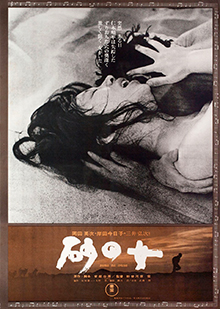


I’d never seen Woman in the Dunes (1964) before, but after watching the director’s cut on the BFI Player, it has now catapulted into one of the best films I have ever seen. This could be first-watch bias, however, thematically, emotionally, philosophically and stylistically speaking, it absolutely touched upon, connected and spoke to me greatly about my life’s experiences and the human condition.

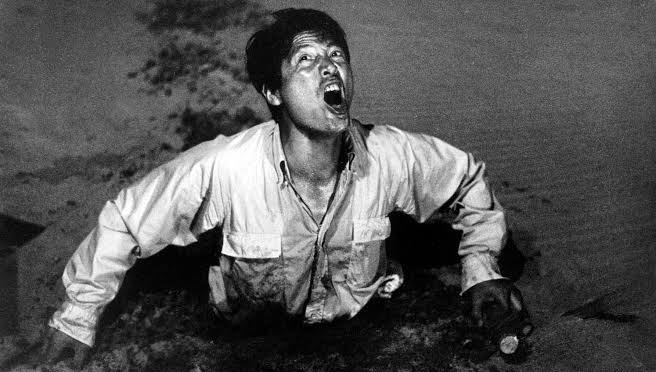
Niki Junpei (Eiji Okada), a frustrated schoolteacher and amateur entomologist from Tokyo, travels to a remote coastal village in search of rare insects. After missing the last bus home, he accepts an invitation to stay overnight with a young widow (Kyōko Kishida) who lives alone in a hut at the bottom of a vast sand dune. He soon learns that her husband and daughter were killed in a sandstorm and that she spends every night shovelling away the endless sand that threatens to bury her home. Though Junpei initially sees himself as a temporary guest, strange comments from the villagers hint that something more sinister is unfolding.

The following morning, Junpei discovers that the rope ladder leading out of the sand pit has been removed. Trapped by the villagers, he realizes he has been chosen to become the widow’s permanent companion and labourer, helping her dig sand that the village secretly sells for profit. As he struggles to escape, Junpei learns that the widow is also a prisoner of the community, both of them controlled through dependence on the villagers for food and water. What begins as an accidental overnight stay becomes a nightmare of confinement, survival, and the gradual erosion of freedom beneath the relentless weight of the sand.
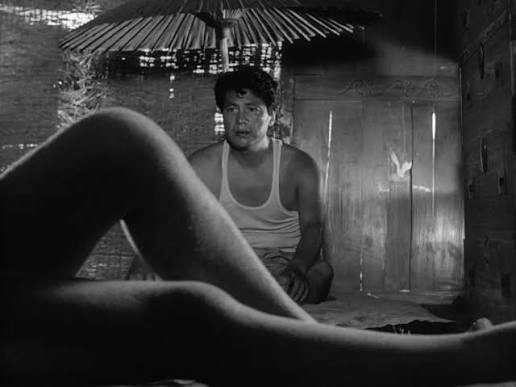


Hiroshi Teshigahara’s Woman in the Dunes (1964) is one of those rare films where image, character, theme and performance become inseparable. Shot in pristine black and white by cinematographer Hiroshi Segawa, it is visually astonishing: every grain of sand, bead of sweat and shadow across a human body is rendered with an almost microscopic intensity. The beauty of the photography is deliberately juxtaposed with the darkness of Niki Junpei’s predicament. What begins as an innocent expedition to collect insects becomes an existential prison, as he finds himself trapped by commerce, a surrogate marriage and, most powerfully, the natural wall of sand that pins both him and the unnamed widow to their strange subterranean existence.

The sand is both physical and metaphorical. It shifts, pours, consumes and rebuilds itself, turning Junpei’s captivity into a distinctly Sisyphean struggle. Every attempt at escape merely seems to return him to where he started, yet what makes Junpei such a compelling character is his absolute refusal to surrender. He builds ladders, devises increasingly ingenious escape plans, attempts to train crows to carry messages and continually tries to outwit the villagers who have ensnared him. Each failure intensifies rather than diminishes his determination. Like Sisyphus pushing the rock back up the hill, Junpei is condemned to confront an obstacle that endlessly renews itself.

Yet Woman in the Dunes (1964) is far more complicated than a straightforward story of imprisonment. Junpei is trapped by the villagers, but also by economic necessity, social expectation and an enforced domestic relationship that gradually begins to resemble a marriage. The villagers need the sand removed; the widow needs a man to help her survive; Junpei needs water, food and eventually human companionship. Teshigahara transforms this bizarre situation into a miniature society in which freedom itself becomes increasingly difficult to define. The more Junpei fights against his surroundings, the more deeply he becomes connected to them.

The relationship between Junpei and the widow, played with extraordinary physical and emotional commitment by Eiji Okada and Kyōko Kishida, gives the film its human core. Their intimacy moves between hostility, dependency, tenderness and desire without ever becoming conventional romance. Although sex is an important element of the film, Teshigahara rarely needs explicit imagery. Bodies appear as silhouettes, fragments and outlines; Kishida’s naked form is often suggested rather than displayed. A shoulder, a curve, a shadow or sand clinging to skin can communicate more than an explicit image ever could. One sees more from less throughout.
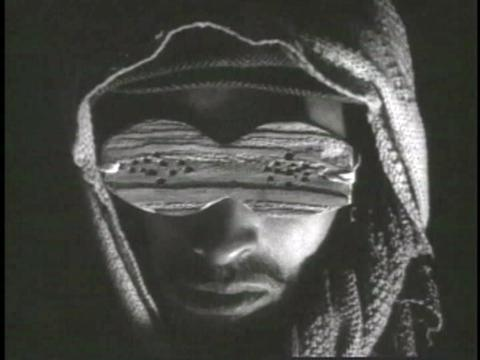


That principle extends to the entire film. Teshigahara makes the smallest details monumental. Sand resembles water, skin resembles landscape and the walls of the pit sometimes appear infinite. Extreme close-ups turn grains of sand into an entire universe, while wider compositions emphasise just how insignificant these two people are against the enormous shifting landscape surrounding them. The immaculate monochrome photography makes the film simultaneously beautiful and suffocating. The sand can look almost luminous in one shot and utterly threatening in the next.

There is also a wonderful irony at the heart of Junpei’s predicament. He arrives as an entomologist searching for insects, only to become a specimen himself: captured, observed and contained within a pit from which he cannot escape. The collector has become the collected. Teshigahara never labours the metaphor because he does not need to. It exists naturally within the imagery and situation, allowing the audience to discover its implications rather than having them explained.

Woman in the Dunes (1964) is virtually flawless in character, theme, cinematography, direction and performance. More than sixty years after its release, it remains startlingly modern and visually unlike almost anything else. Its central image — two human beings endlessly shovelling away a mountain of sand that will simply return tomorrow — is cinema distilled into an unforgettable metaphor for existence itself.

The only negative? Why didn’t I watch it sooner?

Mark: 10.5 out 11


THE NETFLIX PROCLAMATION – REVIEWS OF: EARTHQUAKE BIRD (2019), i LOST MY BODY (2019), THE KING (2019), THE TWO POPES (2019) and more…

THE NETFLIX PROCLAMATION – FILM REVIEW CATCH-UP MARCH 2020

With COVID-19 threatening the world’s population, it is a time to remain calm and, if required, stay indoors out of the way of potential infection. As long as the Internet holds then there are thousands of films and TV shows to watch online to keep us all occupied. Obviously, one must also take a deep breath and pray that aside from the illness affecting the world, society manages to keep it’s social, financial and medical structures in place too.

Clearly, we need distractions at this difficult time. Films may not be the solution, but they can offer diversion at least. Thankfully, I love staying in and watching movies as it is a major hobby of mine. Indeed, I have been busy lately catching up on some of the latest releases Netflix has to offer. Thus, I present some quick reviews of films currently on the streaming platform, all with the usual marks out of eleven.

***MAY CONTAIN SPOILERS***


A PRIVATE WAR (2019)

Rosamund Pike is absolutely enthralling as the brave war correspondent, Marie Colvin. Putting her life and sanity on the line to report the terrors of conflict in Sri Lanka, Libya and Syria, to name a few, Colvin was both fearless and crazy in equal measures, but remains an incredibly powerful voice. This fine biopic feels haphazard and structurally chaotic but is certainly an impressive tribute to an iconic journalist. (Mark: 8 out of 11)


DESTROYER (2018)

Nicole Kidman gives another excellent performance in this gritty neo-noir-cop-procedural drama. The clever structure — which tracks back and forth between Kidman’s burnt out character in the present and her violent past going undercover in a crime gang — arguably works against the emotional power of the film. However, director Karyn Kusama and Kidman make a formidable team in delivering a moody, bruising and bitter revenge thriller. (Mark: 8 out of 11)


EARTHQUAKE BIRD (2019)

I really loved director Wash Washmoreland’s previous film, Colette (2018), because it was such a vibrant. colourful and sparkling biopic of a fascinating character. I was thus surprised to see he had followed it up with an under-cooked thriller like Earthquake Bird (2019). Alicia Vikander portrays a dour ex-patriot in Japan who gets drawn into a love triangle involving the effervescent, Riley Keough, and photographer, Naoki Kobayashi. The film felt, like Vikander’s protagonist, depressed; ultimately drifting toward a tepid denouement. (Mark: 6 out of 11)


Image result for earthquake bird

ENTEBBE (2019)

Rosamund Pike again! Here she is cast alongside Daniel Bruhl as they portray two Germans who joined a Palestinian military group that hijacked an Air France Flight in 1976. While the politics of the Israelis versus the Palestinians is explored to some extent, I felt more could have been done during the hostage situation to examine such complex issues. Instead, we get something more generic from director Jose Padiha, who inexplicably uses dance troupe montage to convey nebulous emotion and meaning. (Mark: 6 out of 11)


I LOST MY BODY (2019) – (Contains spoilers)

Both original and generic in terms of story, this romantic drama contains some of the most wonderful animation concepts I have seen in a long time. Brilliantly rendered and directed by Jeremy Chaupin, the narrative has two major strands. A severed hand – yes, a hand – seeks to unite with its body. Simultaneously, flashbacks reveal young Naoufel attempting to romance the girl he loves, Gabrielle. I really wanted to enjoy this more as the filmmaking is stunning. But, the final act of the film was too poetic, and it left me feeling cold and confused. (Mark: 7 out of 11)


THE KING (2019)

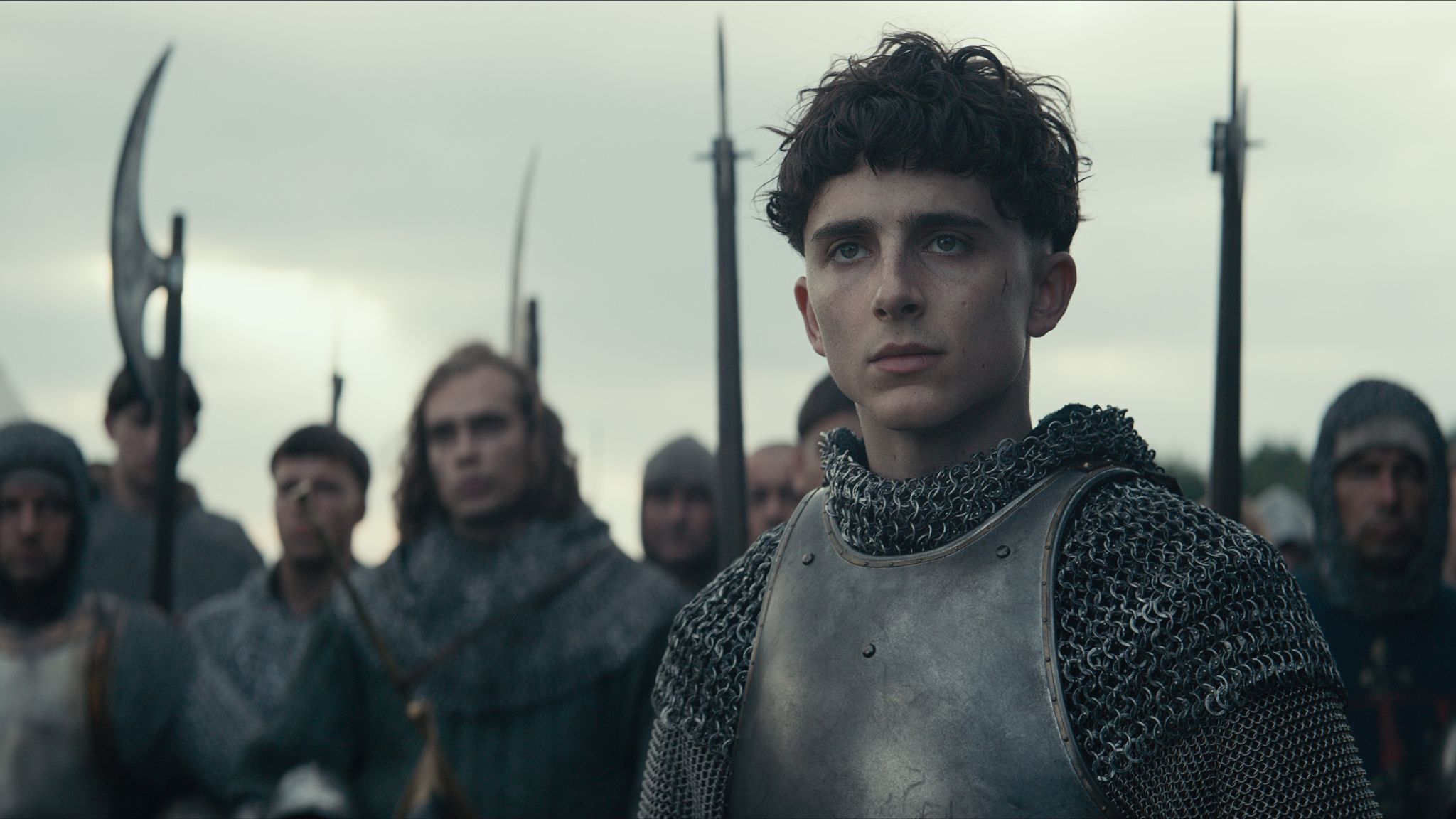
David Michod has been a filmmaker worth keeping tabs on since the release of brutal Australian crime film, Animal Kingdom (2010). After the big budget military satire War Machine (2017), failed, in my view, to hit the target, Michod has gone with another big production in The King (2019). Adapting Shakespeare’s Henry V trilogy (co-writer with Joel Edgerton) is no easy task and they deliver a film full of bravura cinematic moments. Timothee Chalamet is impressive in the lead role as the reluctant, but strong-of-heart young Prince Hal/King Henry. Lastly, Sean Harris, Robert Pattinson, Edgerton (as Falstaff) and Thomasin Mackenzie provide excellent acting support in a stirring period epic. (Mark: 8 out of 11)


Image result for the king timothee chalamet

THE LAUNDROMAT (2019)

Filmmakers Scott Z. Burns and Steven Soderbergh are usually so reliable in their cinematic endeavours. However, a star-studded cast including: Meryl Streep, Gary Oldman, Sharon Stone, Antonio Banderas, Matthias Schoenaerts and Jeffrey Wright cannot save this misguided comedy-drama about the Panama Papers scandal. I’m sure there is a great film in such financial crimes, but this was not it. (Mark: 5.5 out of 11)

MID 90s (2019)

Jonah Hill adds director to his already very successful acting, writing and producing curriculum vitae. Mid 90s (2019) owes much to the low-budget, improvisational and gritty style of filmmakers like Harmony Korine and Larry Clark, however, Hill’s approach is less extreme. The loose and episodic rites-of-passage narrative centres on Los Angeles based skater gangs and specifically Stevie (Sunny Suljic). He longs to grow up too fast and his experiences reminded me of an American version of Shane Meadow’s This is England (2006). While it’s a solid work of cinema, full of heart and believable performances, it’s ultimately quite underwhelming from an emotional perspective. (Mark: 7 out of 11)


THE TWO POPES (2019)

Fernando Merielles directs this adaptation of Anthony McCarten’s play featuring two giants of the acting world in Anthony Hopkins and Jonathan Pryce. The two heavyweight actors portray the real-life Pope Benedict XVI (Hopkins) and future Pope Francis, Cardinal Jorge Mario Bergoglio (Pryce). The duo conflict, debate and laugh about serious matters related to the history of the Catholic Church; plus, some not-so serious matters such as pizza and football. Having sat through Paulo Sorrentino’s uber-pretentious TV series The New Pope (2020) recently, I was not in the mood for more theological drama. However, the two leads are excellent, especially Pryce; and while the film is very dialogue driven, the flashbacks of Argentine history from Cardinal Bergoglio’s early years were powerfully evoked. (Mark: 8 out of 11).


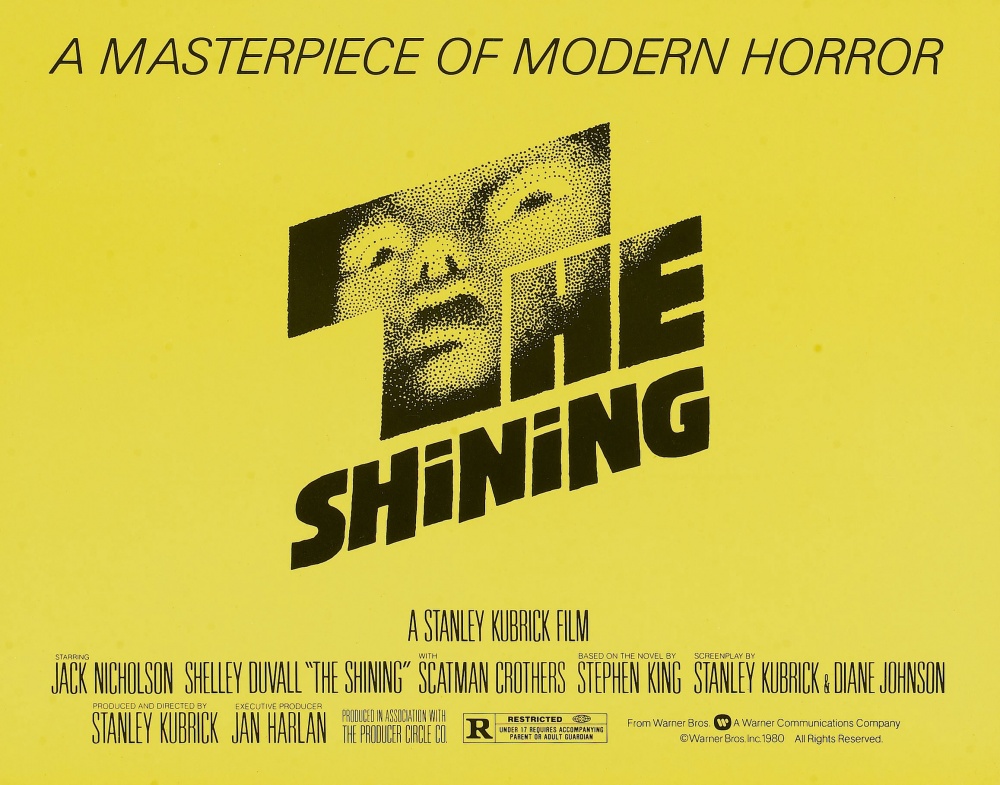
CLASSIC FILM SCENES #10 – THE SHINING – “HERE’S JOHNNY!”

CLASSIC FILM SCENES #10 – THE SHINING (1980) – “HERE’S JOHNNY!”

Directed and Produced by: Stanley Kubrick

Screenplay by: Stanley Kubrick & Diane Johnson – based on The Shining by Stephen King

Cast: Jack Nicholson, Shelley Duvall, Danny Lloyd and Scatman Crothers.

Music by: Wendy Carlos and Rachel Elkind

Cinematography: John Alcott

**CONTAINS SPOILERS**


With Stephen King’s latest adaptation Doctor Sleep (2019), hitting the cinemas, I thought it interesting to remind myself of the original classic horror film of which it is a sequel, The Shining (1980).

Uber-writer Stephen King was not a fan of Kubrick’s adaptation. Indeed, he was alleged to have been asked to cease complaining, in exchange for the book rights reverting back to him. Nonetheless, The Shining (1980) is quite rightly lauded as a horror classic. It slowly shows a writer’s descent into madness; something which is exacerbated by the ghosts living in the creepy Overlook Hotel.

Jack Nicholson plays Jack Torrance with a brooding menace throughout, exploding into full insanity after several encounters with the phantom hotel’s grim residents. In the famous “Here’s Johnny!” scene, Jack pursues his poor wife, Wendy, (Shelley Duvall) and gifted son, Danny, with an axe in hand. Wendy is trapped in the bathroom and Duvall’s petrified performance is chilling.

Beautifully framed, edited and acted, the scene is scary and nerve-wracking. The mania of Jack also casts a dark humour at the end. It took, according to Shelley Duvall, three days and sixty doors to shoot. Moreover, it has been widely reported the, “Heeerree’s Johnny!” line was famously improvised on set by Jack Nicholson. The rest they say is history.