Category Archives: Amazon Prime

Amazon Prime Film Review: Kneecap (2024) – Irish rap rebels substitute words-for-bombs in riotous youth-in-revolt triumph!

Amazon Prime Film Review: Kneecap (2024)

Directed by Rich Peppiatt

Screenplay by Rich Peppiatt

Story by Rich Peppiatt, Liam Óg Ó hAnnaidh, Naoise Ó Cairealláin, JJ Ó Dochartaigh

Produced by Jack Tarling and Trevor Birney

Main cast: Naoise Ó Cairealláin, Liam Óg Ó hAnnaidh, JJ Ó Dochartaigh, Josie Walker, Fionnuala Flaherty, Jessica Reynolds, Adam Best, Simone Kirby, Michael Fassbender, etc.

Cinematography by Ryan Kernaghan

*** MAY CONTAIN SPOILERS ***
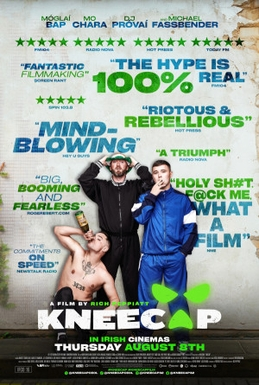


The 2024 film Kneecap is a riotous, politically charged portrait of youth in revolt, channeling the raw energy of punk and hip-hop into a uniquely Irish-language rebellion. Starring the real-life Belfast rap trio—Mo Chara, Móglaí Bap, and DJ Próvaí—as fictionalized versions of themselves, the film blends anarchic humour, biting satire, rites of passage, and cultural defiance to tell the story of how a group of working-class misfits wove their frustrations into musical gold.

Set in post-Troubles West Belfast, the film captures the lingering scars of British occupation and the generational trauma it left behind. Liam (Mo Chara) and Naoise (Móglaí Bap) are introduced as small-time drug dealers navigating poverty, police harassment, and fractured families. Their lives take a turn when JJ Ó Dochartaigh, a disillusioned Irish-language teacher, discovers their lyrical talents and joins them as DJ Próvaí. Together, they form the eponymous group, an Irish-language rap group that weaponizes music as a form of cultural resistance.

The film is unapologetically rebellious, using the Irish language not just as a means of communication but as a symbol of defiance. Arlo (Michael Fassbender), Naoise’s father and a former republican paramilitary, encapsulates this sentiment when he declares, “Every word of Irish spoken is a bullet fired for Irish freedom” . This philosophy permeates the group’s music, which tackles issues like British colonialism, drug culture, and the complexities of identity in a divided society.



Kneecap (2024), while a bold and electric celebration of youth rebellion arguably overstretches itself emotionally by attempting to cover too many themes at once. In its ambition to be both a political statement and a coming-of-age tale, a musical odyssey and a generational cry for recognition, the film occasionally dilutes its emotional impact. As the film juggles a multitude of weighty themes: the trauma of post-Troubles Northern Ireland, the fight for Irish-language preservation, the drug culture plaguing working-class communities, the fractured nature of family life, absent fathers and mothers, and the burden of political legacy. Add to this the rise of a rap group in an unexpected cultural context, and the film becomes a whirlwind of ideas competing for attention. The result is a film that sometimes feels like it’s racing to say everything at once, rather than letting its most resonant emotional threads breathe.

Nonetheless, director and co-writer, Rich Peppiatt, displays strong visual flair evoking the urban vibrancy of Trainspotting (1996) and underdog musical joy of The Commitments (1991). It helps that the film is often fucking hilarious. Plus, I realise it’s a raw reflection of their life choices, I could take or leave the perpetual scenes of gratuitous drug-taking. At the same time, the film doesn’t shy away from the gritty realities of its setting. It portrays the trio’s clashes with radical republican groups, their run-ins with the police, and the family and romantic struggles that come with their newfound fame.

Amidst the chaos, Kneecap (2024) maintains a sense of humour and humanity, offering a nuanced look at the power of art to challenge the status quo and inspire change. In essence, Kneecap is a ballsy and risk-taking celebration of rebellion, a testament to the enduring power of language and music as tools of resistance, and a vivid portrayal of youth challenging the remnants of a colonial past and a country attempting to find peace and identity after centuries of conflict.

Mark: 8.5 out of 11


Amazon Prime Film Review: Sing Sing (2023) – displays the redemptive power of art and performance!

Amazon Prime Film Review: Sing Sing (2023)

Directed by Greg Kwedar

Screenplay by Clint Bentley & Greg Kwedar

Story by Clint Bentley, Greg Kwedar, Clarence Maclin & John “Divine G” Whitfield

Based on “The Sing Sing Follies” by John H. Richardson and Breakin’ the Mummy’s Code by Brent Buell

Produced by Clint Bentley, Greg Kwedar & Monique Walton

Main cast: Colman Domingo, Clarence Maclin, Sean San José,
Paul Raci, Sharon Washington, Jon-Adrian “JJ” Velazquez, Patrick “Preme” Griffin, Sean “Dino” Johnson, Miguel Valentin and more.


Cinematography by Pat Scola


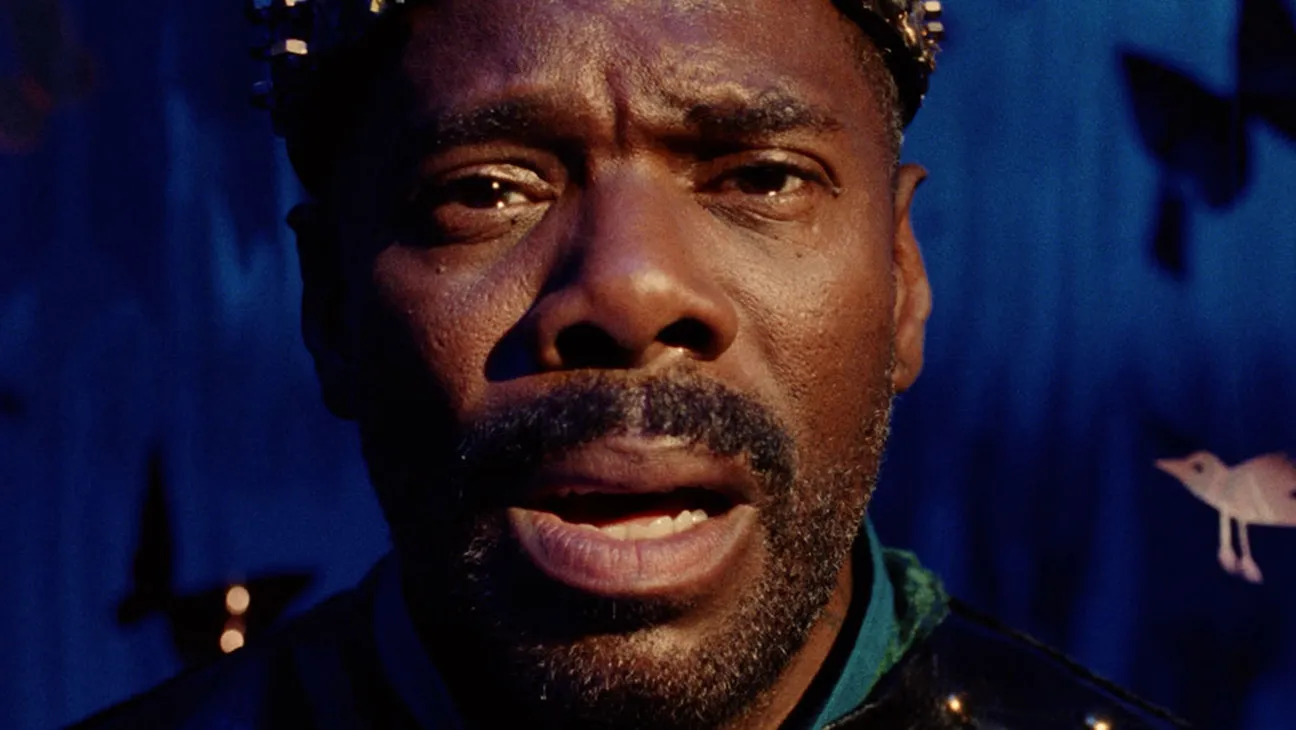
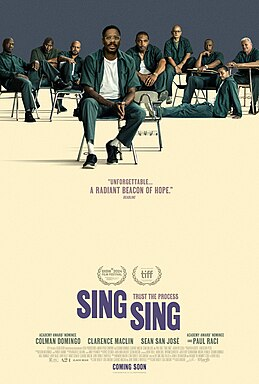
Sing Sing (2023) is a powerful prison drama directed by Greg Kwedar, based on the real-life Rehabilitation Through the Arts (RTA) program at New York’s Sing Sing Correctional Facility. The film follows John “Divine G” Whitfield (portrayed by Colman Domingo), a wrongfully convicted man who finds purpose and transformation through participation in a prison theatre group. As the group prepares to stage an original comedy, tensions arise, particularly between Divine G and a new, skeptical member, Clarence “Divine Eye” Maclin (played by himself).

The reported $2 million budget for the prison-based theatrical drama Sing Sing (2023) underscores a powerful truth in filmmaking: emotional impact and narrative power are not dictated by the size of a production’s budget. In an industry often dominated by multi-million dollar spectacles and high-concept visual effects, Sing Sing (2023) stands out as a reminder that authenticity, performance, and purposeful storytelling can achieve more than sheer spending ever could. In this way, the film charts a path forward for filmmakers: it shows that profound emotional connection comes not from lavish resources but from the courage to tell deeply human stories with clarity, care, and conviction.

By investing modestly but wisely—prioritizing casting choices, intimate direction, and a grounded script—the filmmakers harness the emotional gravity of the story itself. Featuring real formerly incarcerated individuals alongside professional actors, the film creates a resonance that can’t be manufactured with money alone. The restraint in budget mirrors the thematic focus of the film: confinement, transformation, and human dignity. There’s a raw, stripped-down sincerity in Sing Sing (2023) that aligns with its financial humility, allowing viewers to focus not on spectacle but on spirit.


At the heart of the film is Colman Domingo majestic performance. Without question he is one of the most enthralling actors working today. With a presence that radiates both gravitas and vulnerability, he has the rare ability to inhabit characters so fully that they feel less like performances and more like revelations. In Sing Sing, his work is restrained, generous, and deeply moving—serving not just as a lead, but as a quiet conduit for the emotional power of those around him. It’s the kind of performance that reminds you what acting is for.

There’s a grounded nobility to Domingo’s recent choices—films that matter, that uplift overlooked voices, and that seek to transform rather than simply entertain. In an era where so many talented actors get absorbed into the ever-expanding Disneyverse or other IP-driven machines, one can only hope that Domingo continues on this path. His gifts are too profound, too precise, to be flattened into quips and CGI battles. He belongs in films like Sing Sing (2023) where the stakes are human and the impact is lasting.

Directed with subtle power by Greg Kwedar he delivers a drama of transcendent creative expression as the inmates forge deep bonds, confront personal demons and change societal perceptions. Featuring performances by both professional actors and real-life formerly incarcerated individuals, Sing Sing (2023) offers an authentic and moving exploration of redemption, resilience, and the transformative power of art. Of course not all of them are innocent and are guilty. The film does not apologise for their crimes or glamourise them, but allows these men to find light amidst the darkness; a spiritual and cultural escape from the walls and bars which surround them.

Mark: 9 out of 11


UNDER-RATED CLASSIC #11 – THE SCORE (2021)

UNDER-RATED CLASSIC #11 – THE SCORE (2021)

Directed by Malachi Smyth

Written by Malachi Smyth

Produced by Matthew James Wilkinson & Ben Pullen

Cast: Johnny Flynn, Will Poulter, Naomi Ackie and Lydia Wilson

Cinematography by Darran Bragg

Music by Johnny Flynn

*** MAY CONTAIN SPOILERS ***


I’m not sure enough people have seen The Score (2021) to even rate it, let alone under-rate it. Because this crime-thriller-musical is a genuine curio and cult classic in my book. The reviews online are very mixed and many of them are correct in saying the film doesn’t work as either a crime film or musical or even a love story. But for some reason I have watched it twice now and really enjoyed it both times. So, for me, it is very much an under-rated classic.

For the record, for me, an under-rated classic can be a film I love, plus satisfy the following criteria:

  1. Must not have won an Oscar.
  2. Must not have won a BAFTA.
  3. Must not appear in the AFI Top 100 list.
  4. Must not appear in the IMDB Top 250 list.
  5. Must not appear in the BFI 100 Great British films.
  6. Must not appear in the all-time highest grossing movies of list.


So, being a massive fan of Johnny Flynn helps to enjoy this film. He wrote and sings, with Will Poulter and Naomi Ackie, the songs from the soundtrack. Plus, he is one of the main leads, portraying a low-level career criminal, not-as-clever-as-he-thinks, Mike. He is planning a “big job” in cahoots with, not-as-stupid-as-he-acts-sidekick, Troy (Poulter) that involves a big score. That is twenty-grand (£) from a previous job Troy’s imprisoned brother hid. Exponential growth is promised from a meet with some proper gangsters for what may or may not be a drug deal. Anyway, nothing is what it seems in this predominantly one-location thriller.

Two misfits waiting for someone who may never arrive, plus the swinging banter between Mike and Troy has vague elements of Waiting for Godot, however, there is an actual crime plot slowly burning here. As they wait impatiently at a remote cafe writer-director, Malachi Smyth, throws in some eccentric visitors plus a supporting romance plot, with Troy connecting awkwardly at first, then touchingly with cafe employee, Gloria (Naomi Ackie). Indeed, their attraction and subsequent connection virtually becomes the main narrative thrust of The Score (2021), before the final crime twist brings the action to a violent head.

Oh, do not forget the singing too. Dennis Potter had his characters lip-sync to old musical classics to reveal their emotions, and was proclaimed as genius for it. Here Malachi Smyth uses Flynn’s fantastic compositions to do a similar job. I admit it is a bit weird and jarring at first, but Flynn, Poulter and Ackie carry the tunes well for me and it adds another element to an unusual film experience. Ultimately if someone watched The Score (2021) and said it does not work at all, I couldn’t argue with them. However, I really loved it and constantly listen to the soundtrack I downloaded. I also have a soft spot for indie filmmakers, daring to fail while trying something different.


AMAZON FILM REVIEW: TOTALLY KILLER (2023)

AMAZON FILM REVIEW: TOTALLY KILLER (2023)

Directed by Nahnatchka Khan

Screenplay by David Matalon, Sasha Perl-Raver & Jen D’Angelo

Story by David Matalon & Sasha Perl-Raver

Produced by Jason Blum, Adam Hendricks & Greg Gilreath

Cast: Kiernan Shipka, Olivia Holt, Charlie Gillespie, Lochlyn Munro, Troy L. Johnson, Liana Liberato, Kelcey Mawema, Stephi Chin Salvo, Anna Diaz, Ella Choi, Jeremy Monn-Djasgnar, Nathaniel Appiah, Jonathan Potts, Randall Park, Julie Bowen, etc.

Cinematography by Judd Overton

*** MAY CONTAIN SPOILERS ***


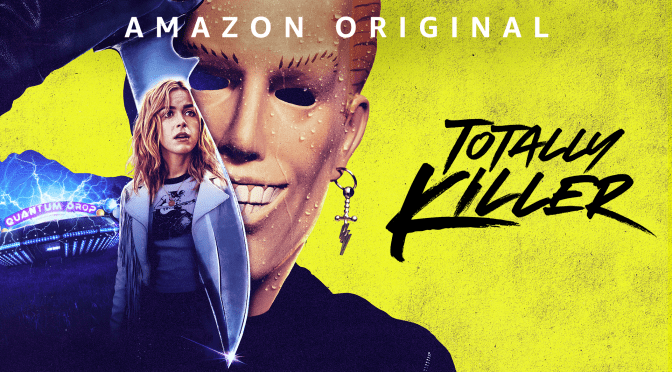
Here’s a thing that rarely happens, I actually watched a trailer and thought, “Hey, that film looks really entertaining, so I am going to watch it now.” That trailer was for Totally Killer (2023) which is currently streaming on Amazon Prime. The story is essentially Back to the Future (1985) meets Scream (1996), but the hilarious and pacey screenplay wears it’s influences proudly and even cleverly name-checks those two classic examples of the time-travel and slasher sub-genres.

Based in the present day, Totally Killer (2023) is set in the small town Vernon, USA. The film opens with a Vernon podcaster and tour guide revealing how the horrific “Sweet 16 Killer” struck killing three teenage girls in 1987. Unfortunately, the murderer suddenly reappears and kills again. In a frenetic chase through the house, Pam Hughes (Julie Bowen) battles the 1980’s masked slicer, but unfortunately she meets her demise. In grief from the death of her mother is sparky teenager, Jamie Hughes (Kiernan Shipka), and she finds solace with her friend Amelia (Kelcey Mawema), who happens to be designing a time machine as a science project. Well, what do you know!! Jamie finds herself being attacked by the “Sweet 16 Killer” and somehow goes sent back to 1987. There she has a chance to investigate the original crime and perhaps save her mum from being murdered in the future.

Even as I write this basic synopsis of the opening act I realise Totally Killer (2023) seems so contrived and derivative, but I found it to be an absolute blast. The script is clever and knowing with energetic and fun characters. Kiernan Shipka as Jamie is especially brilliant with great comedy timing and delivery. The filmmakers embrace the joy of time-travel and horror film tropes, and there’s also some excellent set-pieces involving the obligatory 1980’s false-faced psycho with a grudge. Moreover, the “fish-out-of-time” gags which derive from Jamie’s reactions to the 1980’s people, fashion and moral attitudes are a real joy. I was smiling and laughing throughout. Yet, significantly this film also deftly balances the suspense, action, horror and science-fiction aspects brilliantly. Stranger Things gets a lot of critical acclaim for stealing wholesale from Stephen King’s back catalogue. Totally Killer (2023) blatantly borrows permanently from everything and for me remains one of the consistently entertaining films of 2023.

Mark: 8.5 out of 11


CINEMA REVIEW: SALTBURN (2023)

CINEMA REVIEW: SALTBURN (2023)

Directed by Emerald Fennell

Written by Emerald Fennell

Produced by Emerald Fennell, Josey McNamara and Margot Robbie

Cast: Barry Keoghan, Jacob Elordi, Rosamund Pike, Richard E. Grant, Alison Oliver, Archie Madekwe, Carey Mulligan, Paul Rhys, etc.

Cinematography by Linus Sandgren

*** MAY CONTAIN SPOILERS ***


As the awards garnered upon Emerald Fennell’s brilliant Promising Young Woman (2020) will testify, she is clearly a major talent. Fennell has also acted in TV shows such as Call the Midwife and The Crown, as well as writing and producing the second series of Killing Eve. Not only is Fennell an excellent actress, writer, director and producer, but is also now an Oscar and BAFTA winner. Thus, Fennell’s “difficult second film” arrives in the guise of the pitch black comedy, Saltburn (2023). Although to describe this hilarious, bleak, sexy, and often twisted exploration of the British class system as such evidently tests the very definition of comedy.

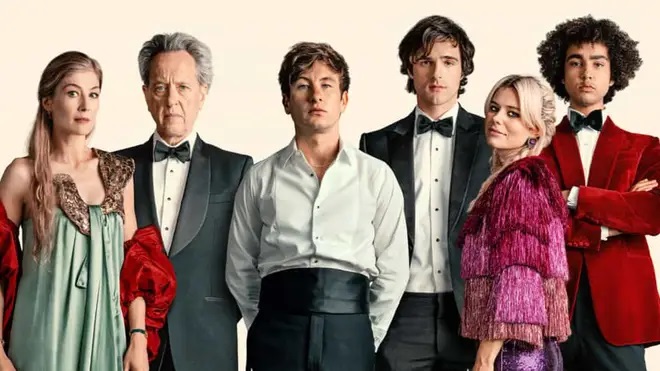
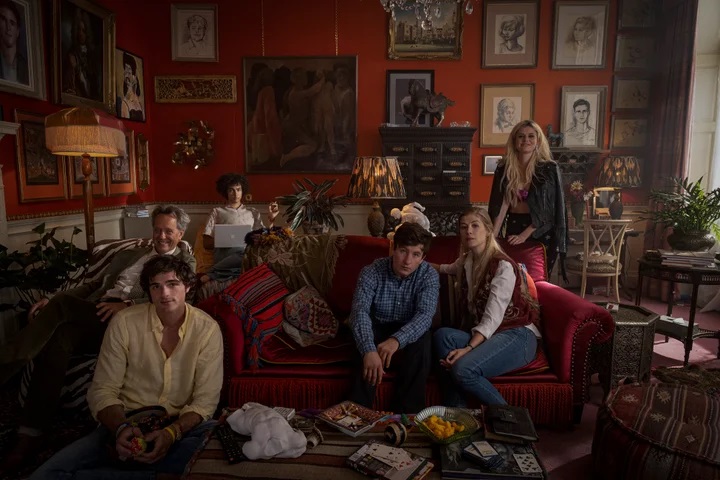
Saltburn (2023) is set in 2006. Oliver Quick (Barry Keoghan) attends Oxford University as a naive fresher with an inferiority complex and desire for company. While he is incredibly intelligent, coming from a lower class background places bookish Oliver as a very small fish in big water. Especially when compared to the so-called Oxford elite including handsome and wealthy, Felix Catton (Jacob Elordi) and his cousin, the handsome and not-as-wealthy, Farleigh Start (Archie Madekwe). While Farleigh is suspicious of Oliver, Jacob soon befriends him and takes the Northerner under his wing. The two connect and form an “odd couple” bromance, with Felix even going so far as to invite Oliver to his stately home, Saltburn, for the summer. There we meet the rest of Felix’s family including his flaky sister, Venetia (Alison Oliver), eccentric father, Sir James (Richard E. Grant) and effervescent mother, Lady Elspeth (Rosamund Pike).


After building Oliver and Felix’s characters carefully during their time at Oxford, Fennell’s savage and satirical screenplay gathers pace in the second act at Saltburn. Here Oliver tries to fit in and ingratiate himself into the Catton family, but it soon becomes clear that however friendly they may be, he will only ever be an outsider to them. Simultaneously, Farleigh sees Oliver as a rival for the Cattons’ emotional and financial affections and the two begin a retaliatory personal war amidst the balmy summer days, breakfasts, dinner parties and social gatherings. Oliver’s main journey is to connect as much with Felix as possible, so much so his passion veers toward obsession. But Felix is a roaming spirit and a hedonist and does not quite requite Oliver’s feelings. Yet, Felix does show compassion for Oliver, as illustrated when he drives him on a mercy mission to visit Oliver’s family. This is where the story takes an intriguing and ever deadly turn.

I cannot recommend Saltburn (2023) enough for its fantastically witty script, devastatingly brilliant cast and some quite disgustingly explicit, but contextually justifiable, character moments and scenes. Fennell takes the setting and structure of Evelyn Waugh’s Brideshead Revisited and turns it upside down, spinning a devious tale of infatuation, love, privilege and social climbing. Through the character Oliver Quick, and I really don’t want to give anything away, there is a powerful and jaw-dropping character arc of upward mobility. Rosamund Pike’s and Keoghan’s performances are both amazing and award-worthy. While the final act twists certainly do shock and surprise they arguably are rushed when compared with the more effective pacing of the opening and middle acts. Moreover, I am also unsure why the exquisite cinematography and stunning locations were presented in the 4:3 (1:33:1) aspect ratio. Why squeeze in Linus Sandgren’s light and framing and not expand them to the widescreen format?

Ultimately, Emerald Fennell proves herself an important voice in British cinema. Unafraid to test the boundaries of taste, genre, and audience expectations, she has crafted one of the most consistently challenging films of the year with Saltburn (2023). One could easily describe the themes presented here as a critique of the upper classes and how the uber-rich are bad people to be brought down to their knees. However, Fennell’s script is not that simplistic. It cleverly careers between love/hate for the characters and irony-bombing the class system, before becoming a damning indictment on the darkest flaws of humanity. Lest one forget the indelible one-liners throughout and THAT final dance sequence, which are both to die for!

Mark: 9.5 out of 11


HAIL BRITISH CINEMA! REVIEWS OF: AFTER LOVE (2020), BOILING POINT (2021), CALIBRE (2018), COUNTY LINES (2019) & ROSE PLAYS JULIE (2019)

HAIL BRITISH CINEMA!

Tired of watching big-budget homogeneous Hollywood product dominated by superheroes, sequels, remakes, prequels and remakes of prequels to sequels? I kind of am. Not that I don’t love a genre blockbuster when it’s done well. However, from time to time it’s good to diversify and watch films with more depth.

BFI Player has some terrific new and classic releases from all over the world. So, of late I have concentrated on watching some of the newer releases made by British filmmakers. My homeland has always been rich in talented people both in front and behind the camera. This has meant an incredible array of actors, filmmaking artists and technicians being poached by Hollywood. This is not just an artistic decision but an economic one. There just isn’t the money here to make big budget films, however, that doesn’t mean there isn’t some cinematic gold coming out of Britain.

While there have been some very successful film studios in the past, the British film industry has the air of an independently driven environment now. Film Four, the BFI, Aardman, BBC films, Heyday, Baby Cow, Salon Pictures, Marv Films and Number 9 films are all production companies which inhabit the industry. However, it is difficult competing with the gigantic corporate film companies, especially those that dominate distribution at the cinemas.

Yet, here are several brilliant British films I have watched on BFI Player, Netflix and Amazon lately. They are low-budget, mostly independently produced and highly recommended. Check them out as they certainly offer a divergent and absorbing change from the standard generic product at the multiplexes. With marks out of the usual eleven.

*** MAY CONTAIN SPOILERS ***


AFTER LOVE (2020) – BFI PLAYER

Written and directed by: Aleem Khan

Main cast: Joanna Scanlan, Natalie Richard, Talid Arliss etc.

Joanna Scanlan is mesmerising as a Western woman, Mary Hussain, who converted to Islam when she married her childhood sweetheart. In the present, her husband dies suddenly and she discovers he had a secret history. Dealing with both grief and shock at this news, this beautifully acted and directed character study is quietly devastating and moving. Covering themes relating to family, religion, love and fidelity After Love (2020), deservedly won best film at the British Independent film awards. Scanlan, more synonymous with comedic roles, is outstanding and Aleem Khan is a filmmaker who is definitely going places.

Mark: 9 out of 11


BOILING POINT (2021)

Written by: Philip Barandini, James Cummings

Directed by: Philip Barandini

Main cast: Stephen Graham, Vinette Robinson, Ray Panthaki etc.

I’m not a big fan of one-take films generally as it is kind of an unnecessary gimmick, yet this fantastic restaurant-set drama makes full dramatic use of the technique. Stephen Graham is the Head Chef at a Dalston eatery and has to navigate a stressful shift with environmental health, marital, staffing, customer, financial and culinary issues all mounting up around him. There’s even a food critic in the venue. It is brilliantly acted and directed and extremely tense throughout. Graham is always a cracking watch, but Vinette Robinson, as his over-worked deputy, really brings the soup to a boil, serving up a tasty performance amidst the fine ensemble.

Mark: 9 out of 11


CALIBRE (2019) – NETFLIX

Written and directed by: Matt Palmer

Main cast: Jack Lowden, Martin McCann, Tony Curran etc.

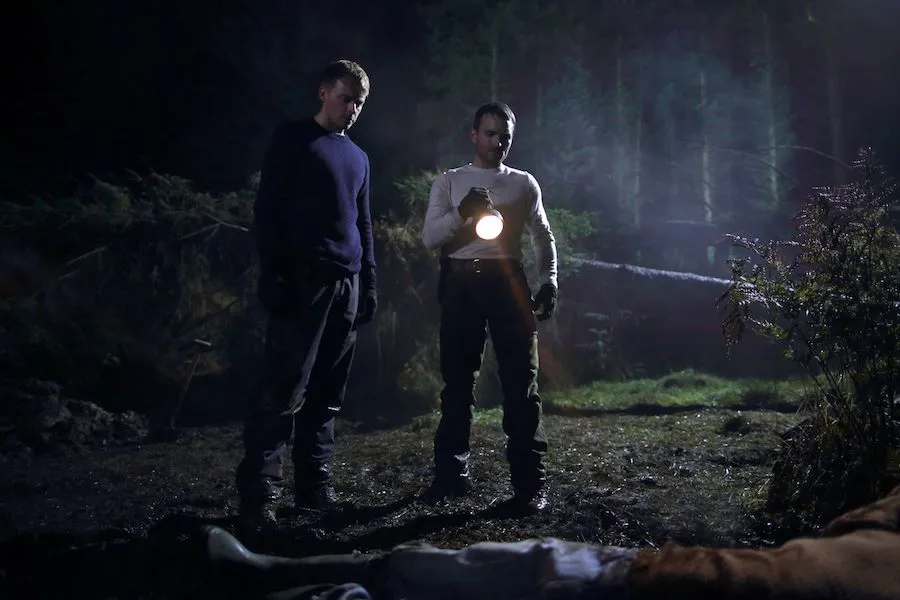
This nerve-wracking thriller takes two former boarding-school friends, Vaughn and Marcus, portrayed by Lowden and McCann, on a shooting trip to the Highlands of Scotland and throws them into the pits of despair when tragedy strikes. Taut is not the word when a fateful shooting incident occurs, as a series of bad decisions places their fractious relationship at the mercy of the angry locals. Further conflict derives as Vaughn’s attempts to mature are countered by the reckless Marcus’ aggressive behaviour. Meanwhile, the film also pointedly comments on the corporate invasion of Scottish nature. Overall, Calibre (2019), had me on the edge-of-my-seat, not wasting a moment to raise the pulse. Finally, Lowden is superb, giving a nuanced performance in an impressively directed feature film debut.

Mark: 8.5 out of 11


COUNTY LINES (2019) – BFI PLAYER

Written and directed by: Henry Blake

Main cast: Conrad Khan, Ashley Madekwe, Harris Dickinson etc.

If you didn’t know ‘County Lines’ is the practice of trafficking drugs into rural areas and small towns, away from bigger cities. Traffickers often recruit vulnerable children, including those who have been excluded from school, as drug dealers. Part-thriller and part-cautionary tale, Henry Blake’s gritty and impactful film draws on his own experiences working in a pupil referral unit. Lead character, teenager Tyler (Conrad Khan), is groomed and drawn into a murky world of drugs, only to learn some harsh life lessons. Ashley Madekwe gives a fighting performance as the mother who fears her son is lost to the mean streets of London and Harris Dickinson’s charismatic dealer.

Mark: 8 out of 11


ROSE PLAYS JULIE (2019) – BFI PLAYER

Written and directed by: Christine Molloy and Joe Lawlor

Main cast: Ann Skelly, Orla Brady, Aiden Gillen etc.

Similar in style and tone to Lynn Ramsay’s intense You Were Never Really Here (2018), this poetic thriller takes a generic revenge narrative and delivers an eerie experience through haunting performances, direction, editing and musical composition. While the story moves at a glacial pace it retains power and purpose, as Ann Skelly portrays adoptee, Rose/Julie, a veterinarian student searching for her biological parents. Her detective work unearths devastating secrets which then precipitate twisted turns into thematically dark territory. Skelly gives a subtle but intelligent performance, while Orla Brady and Aiden Gillen also give emotional depth to their respective roles. Ultimately, despite the film delivering certain plot points too enigmatically, one cannot fail to be moved by Rose’s shocking journey of discovery.

Mark: 8 out of 11


Lest we forget. . .

SAINT MAUD (2019) – AMAZON PRIME

Written and directed by: Rose Glass

Main cast: Morfydd Clark, Jennifer Ehle etc.

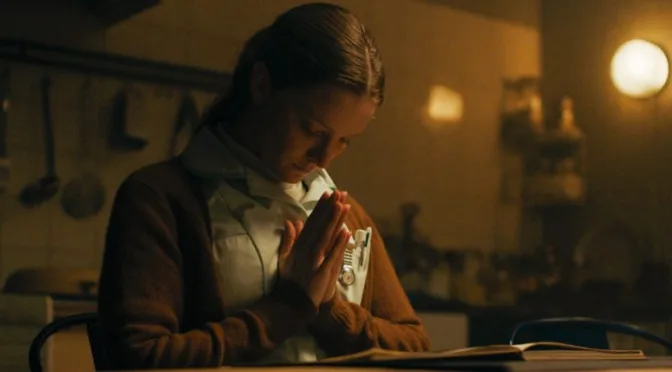
The film is more than just a calling card for the extremely talented director, Rose Glass. Her grasp of the material is superb and the cinematography and shot composition support her dark vision brilliantly. The film may disappoint those who prefer conventional supernatural films, as it is more arthouse than classic horror. Moreover, it has much in common with searing character studies by Paul Schrader, such as Taxi Driver (1976), and the more recent, First Reformed (2017). Indeed, Maud’s voiceover permeates like a prayer to an empty sky bleeding into the powerful imagery to compelling effect. The true horror of Saint Maud (2019) is not in jump scares or one-dimensional monsters, but rather the slow descent into hell by a character who strives to be a saviour. Tragically though, Maud is a self-appointed Angel, whose mental fragility disintegrates under the weight of holy desire and biblical fervour.

Mark: 9 out of 11


CULT MOVIE REVIEW: XTRO (1982)

CULT MOVIE REVIEW: XTRO (1982)

Directed by: Harry Bromley Davenport

Screenplay by: Harry Bromley Davenport, Michel Perry, Iain Cassie, Robert Smith

Story by: Harry Bromley Davenport, Michel Perry

Produced by: Mark Forstater

Cast: Bernice Stegers, Philip Sayer, Simon Nash, Maryam d’Abo, Danny Brainin etc.

Cinematography: John Metcalfe

*** MAY CONTAIN SPOILERS ***


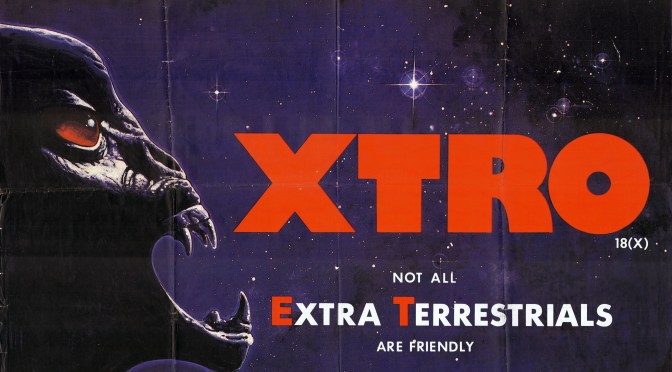
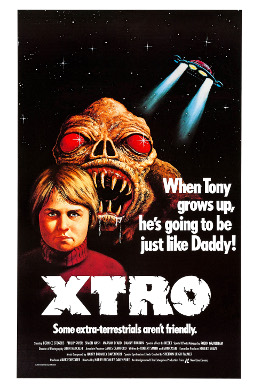
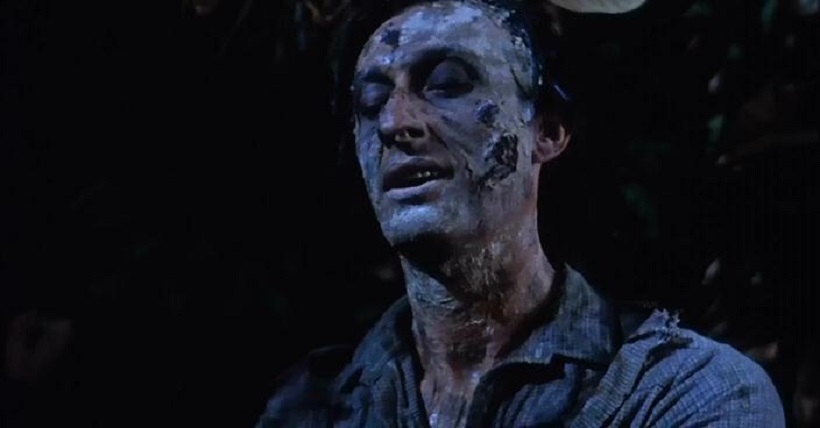
Being a fan of the horror genre never fails to spring surprises, especially if you also love trashy-B-movie-exploitation-video-nasties too. Because what often occurs is a hidden or buried or previously banned film will reanimate and be located on one of the many streaming platforms we have today. I am both surprised and even more joyous if I find I have never even seen the said film. This is certainly the case with low-budget alien monster film, XTRO (1982).

There I was pressing play via Amazon Prime, thinking it was another schlocky American indie I had missed from yesteryear, only to discover Xtro (1982) is actually a bizarre British film which twists and riffs on the box office hit that was ET: Extra Terrestrial (1982). Xtro (1982), directed by Harry Bromley Davenport, is not a comforting family science fiction drama like its more famous counterpart though. Instead, it is a gory sci-fi shocker with many outrageously violent set-pieces and a budget lower than E.T.’s lunch bill.


Critically damned at the time, Xtro (1982), when released on home video in 1983, was subject to a prosecution case in relation to British obscenity laws and labelled a “video-nasty”. Watching it now I have to admit it is quite shocking still, but the practical effects are so gloriously over-the-top they are more humorous than sickening. Having said that there are some memorably gruesome moments involving alien births, crazy clowns, a live “Action Man” doll, weird space eggs, and transformative man-into-monster effects.

The film doesn’t hang about establishing character but propels, from the opening scene of a father playing in the garden with his son, straight into the disappearing parent plot. The father (Philip Sayers) vanishes without a trace and three years later his wife (Bernice Stegers) and son are attempting to repair their lives. Yet, the boy is suffering horrific nightmares when suddenly his father reappears attempting to reconcile. The familial drama within the script itself could have been further developed to some emotional impact. However, while Bernice Stegers gives a decent dramatic performance, the film soon descends into a mix of surreal and insane set-pieces, combined with the father’s metamorphosis into something from another world.

There’s much to like and much to loathe about, Xtro (1982), notably the gratuitous nudity sprinkled throughout. Yet, if you are drawn to exploitational B-movies there is much sick entertainment to be found in the blend of impressive practical effects and creature moments. Philip Sayer and Bernice Stegers keep the shlocky elements of the plot in check with sane acting performances and despite some eccentric writing throughout Harry Bromley Davenport and his team have delivered an out-of-this-world bona fide B-movie cult classic.


AMAZON FILM REVIEW: BEING THE RICARDOS (2021)

AMAZON FILM REVIEW: BEING THE RICARDOS (2021)

Directed and written by: Aaron Sorkin

Produced by: Todd Black, Jason Blumenthal, Steve Tisch

Cast: Nicole Kidman, Javier Bardem, J. K. Simmons, Nina Arianda, Tony Hale, Alia Shawkat, Jake Lacy, Clark Gregg, etc.

Cinematography: Jeff Cronenweth

*** MAY CONTAIN SPOILERS ***


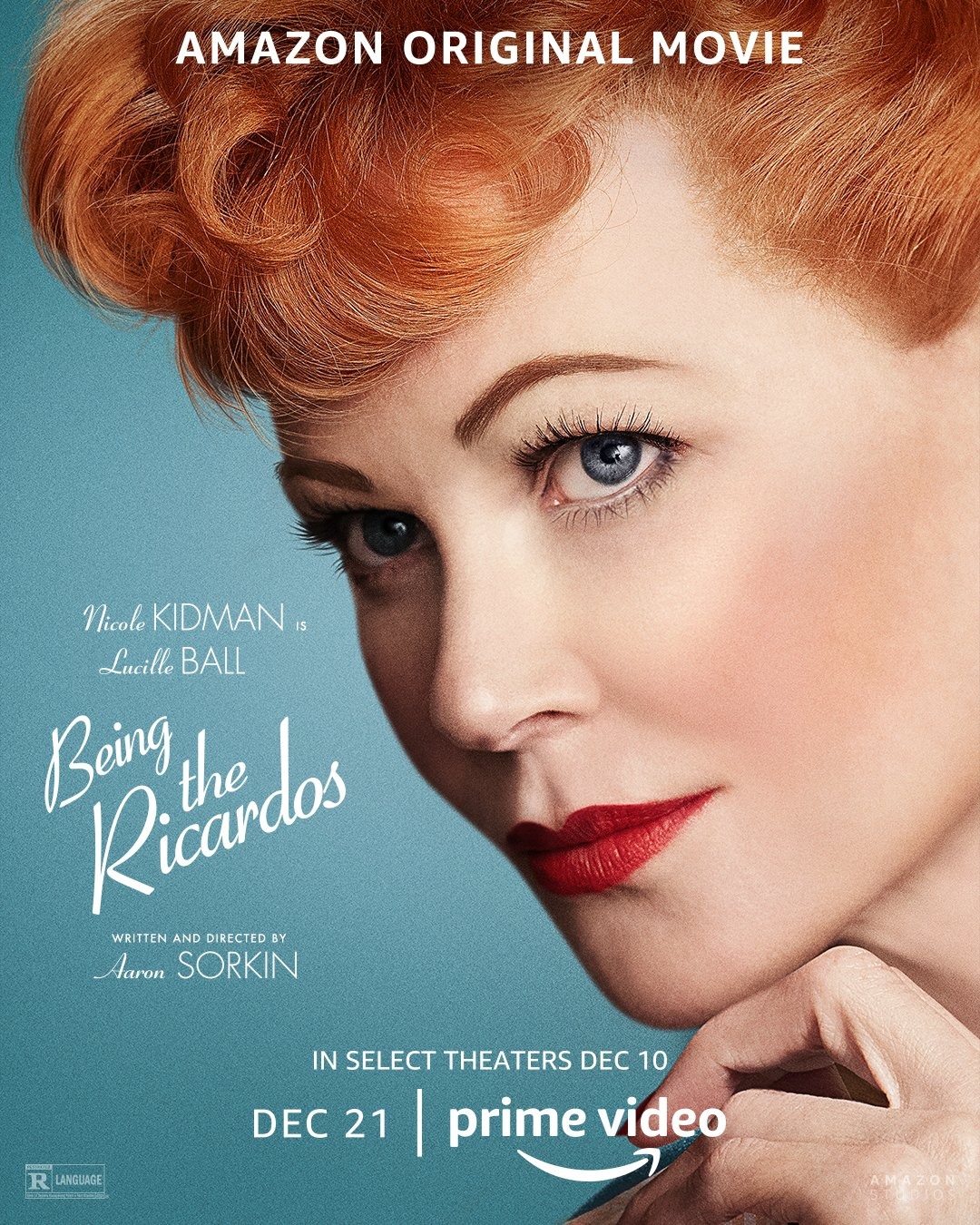
Lucille Ball and Desi Arnaz were entertainment, musical and business pioneers during the classic Hollywood television period. Lucille Ball alone was nominated for 13 Primetime Emmy Awards, winning five times, and the recipient of many other accolades, before being inducted into the Television Hall of Fame. Not only did the married couple produce and star in the seminal U.S. situation comedy, I Love Lucy, but their Desilu Studios production company would be the driving force behind creating famous TV series including Star Trek and Mission: Impossible. The couple broke viewing records and barriers in regard to race, gender and business practices. While they were not of my era, I recognise both Lucille Ball and Desi Arnaz as consummate professionals, business trailblazers and iconic stars.

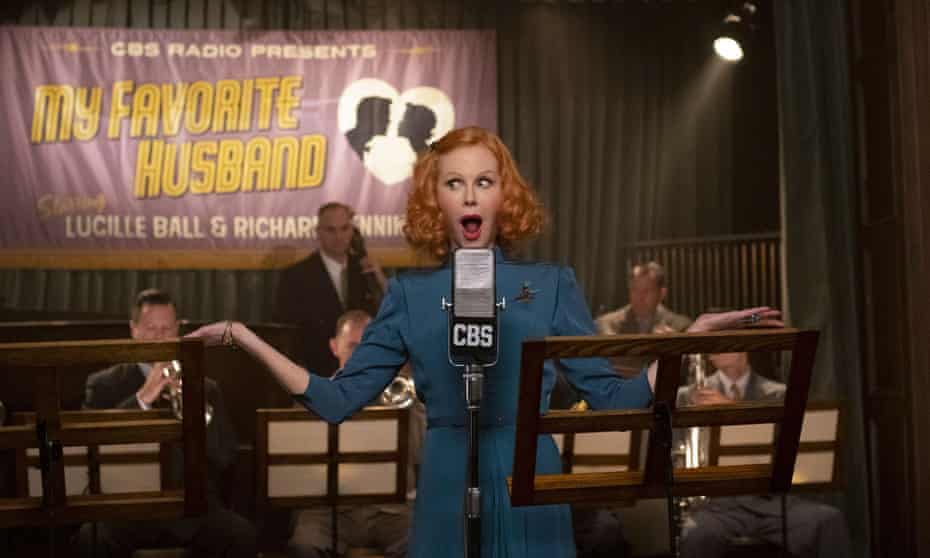
Aaron Sorkin’s Being the Ricardos (2021), adapts a week-in-the-life of Lucille Ball (Nicole Kidman) and Desi Arnaz (Javier Bardem) as they prepare, audition and perform the episode ‘Fred and Ethel Fight’ of I Love Lucy. At the same time, Lucille faces shocking revelations about her alleged Communist past. Moreover, her marriage to Desi is also tested by suspicions he has slept with other women. Interspersed around these events Sorkin flashes back to reveal how the couple met, and Lucille’s flailing film career as a dramatic actress was re-ignited by a chance switch to radio comedy. As a consummate screenwriter Sorkin hops between these time periods with great aplomb and his customary whip-cracking dialogue fires zingers throughout. The production process of the TV episode is particularly brilliant, with crafty Nina Arianda and the awesome J. K. Simmons providing superb support as Lucille and Desi’s supporting couple, William Frawley and Vivian Vance, respectively.


Being the Ricardos (2021) spins a great many plates within the running time and it is rock solid entertainment. As he did with The Trial of the Chicago Seven (2020), Aaron Sorkin arguably takes liberties with the time of events to compress and finesse the truth for the sake of dramatic and comedic effect. But that’s fine as this is not a documentary. What we get instead is an authentic production design which expertly evokes the mood, look, glamour, costumes and sounds of the era. It also explores the business, sexual and ideological politics of age with Desi and Lucille facing and pushing back at sponsor and studio demands. Those who know I Love Lucy will be overjoyed at the recreation of some memorable comedy sketches.

At the heart of the film Nicole Kidman and Javier Bardem combine formidably to breathe life into these legendary talents. Kidman is an actor who is extremely brave taking on the role of an icon. Sure, she gets paid millions of dollars, but her performance as Lucille Ball is energetic and intelligent and very funny. It could be easy to criticise her casting but Kidman does sterling work here. She gives Ball’s characterisation an effervescence, intelligence and perfectionist approach to her craft one cannot help but admire. Javier Bardem is a cinematic dream. With effortless panache he lights up the screen and just is so damned charming. Together they create fine on-screen chemistry as Sorkin’s bullet-paced dialogue is delivered superbly by the stars and terrific ensemble cast.

Ultimately, neither dramatic enough to tug the heartstrings or funny enough to be called an all-out comedy classic, Being the Ricardos (2021) remains another intelligent Aaron Sorkin rendition of real people and actual events. It’s a classy affair with a stunning cast and script, overall paying fine tribute to the genius of Lucille Ball and Desi Arnaz.

Mark: 8.5 out of 11


THE CINEMA FIX PRESENTS: 10 FAVOURITE FILMS OF 2021!

THE CINEMA FIX PRESENTS: 10 FAVOURITE FILMS OF 2021!

Following on from the extremely tricky global issues of 2020, the cinema saw further transitions amidst lockdowns and the rise of even more streaming platforms. Traditional timetables for film releases remain all over the place due to the effects of the pandemic on our culture. Plus, big budget productions are now going straight to the living room more often than not. Especially if the proposed cinema release date is postponed on several occasions. What studios lose in terms of cinema release profits, they are now looking to claw back with reduced marketing budgets and subscriptions to their own respective channels.

In the past my favourite film of the year lists were all films I saw at the cinema. Now they are a mixture of cinema and online releases. There is some overlap too in the given year when I watched such films due to the scheduling changes. I’m really not a fan of this as I don’t like change to routine as a rule. But if it means I still get to see my favourite films online or at the cinema then it’s hardly a trial or major issue to adjust.

List Notes

  1. There are LOADS of films I have NOT SEEN! Please comment below MUST-SEE films not on the list.
  2. The Bond film is not on here. It was fantastic entertainment, but NOT a good Bond movie.
  3. There are no MARVEL/DC films on the list as I have not watched them all. Plus, I have superhero film formula fatigue.
  4. Nomadland (2020), while good, was completely over-rated.
  5. White Tiger (2021) would be on this list, but I only watched it yesterday. So, it qualifies for assessment in 2022.

For comparison here is my list of favourite films in 2020. A starter if you will, before the main cinematic course.

Happy New Year – have a great 2022!


TWELVE FAVOURITE FILMS of 2020!

1917 (2019)
DARK WATERS (2019)
DA 5 BLOODS (2020)
I’M THINKING OF ENDING THINGS (2020)
THE INVISIBLE MAN (2020)
MANGROVE (2020)
PARASITE (2019)
PORTRAIT OF A LADY ON FIRE (2019)
SAINT MAUD (2019)
TENET (2020)
THE TRIAL OF THE CHICAGO SEVEN (2020)
UNCUT GEMS (2019)


TEN FAVOURITE FILMS of 2021!

ANOTHER ROUND (2020)

“… with Thomas Vinterberg’s expert direction, evocative natural cinematography, and Mads Mikkelsen giving yet another acting masterclass, the humorous narrative soon leaves the laughs behind to become a bittersweet, yet still uplifting, work of Nordic cinema.”


THE GREEN KNIGHT (2021)

“… David Lowery is an original thinking talent, and someone I categorise as an alternative genre filmmaker… The Green Knight (2021) certainly has scale and magic and astounding cinematic power.”


LAST NIGHT IN SOHO (2021)

“… Edgar Wright has delivered one of the most thrilling and spectacularly energetic films of the year. The nostalgic and heavenly soundtrack is to die for, with so many songs I recall growing up listening to. Likewise, the cinematography and lighting design sparkle in hues of black, fluorescence, shadow and neon.”


MA RAINEY’S BLACK BOTTOM (2020)

… Levee Green does not see the bigger picture and is sucked in by the promise of money, women and fame. He is blinded by the bright city lights and the closer he gets to them the easier it is for the record producers to pick his pocket. In such a tragic character August Wilson has created a memorably complex persona, perfectly rendered by the acting genius, Chadwick Boseman. R.I.P.”


MINARI (2020)

“… the scenes where David antagonises his unconventional grandmother are hilarious. Youn Yuh-jung as the elderly matriarch is fantastic, deservedly winning a best supporting actress role at the Oscars. Moreover, Lee Isaac Chung gets a miraculous performance from child actor, Alan Kim.”


PIECES OF A WOMAN (2020)

“… The loss of a child is never going to be an easy experience and it is something an individual will never get over. As I followed Martha’s journey intensely the smallest incremental shift in her personality is felt massively. Vanessa Kirby, in particular, is stunning as a woman cut-off from the world by this devastating grief.”


THE POWER OF THE DOG (2021)

“… I’m not always a fan of poetic cinema, especially within a narrative presented as a quasi-Western. Mostly I like to be punched in the gut, not branded slowly from the inside out. Yet Jane Campion’s expert adaptation of Thomas Savage’s novel, The Power of the Dog (2021), contains some bite. You just don’t see when and how it happens.” 


THE RENTAL (2020)

… I’ve seen some so-so reviews for The Rental (2020), but it’s the kind of tightly plotted suspense thriller I really thrive on. What starts as an idyllic getaway for two relatively wealthy couples is carefully unravelled by Dave Franco’s well-paced direction, complimented by Brie and Steven’s committed performances, has wonderful locations and a seriously proper killer ending.”


SOUND OF METAL (2019)

“… Sound of Metal (2019) beats along steadily but with incredible purpose and rhythm. It teaches us that losing a major sense need not be the end of one’s life, but rather the beginning of an altogether different one.”


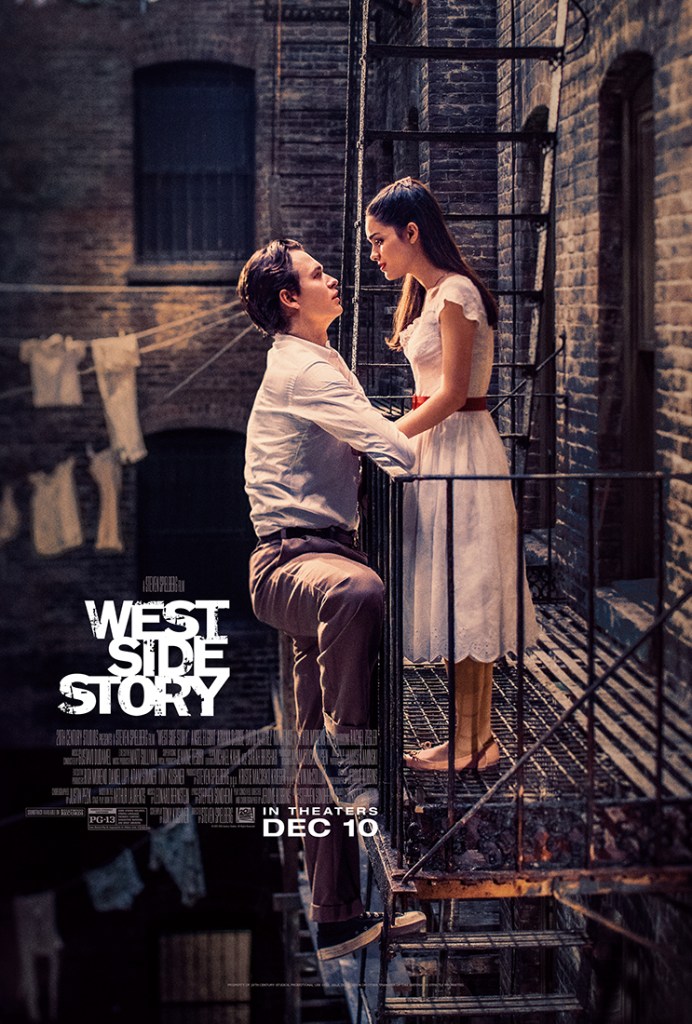
WEST SIDE STORY (2021)

“… Everything about the film screams colour, energy and movement. The dancing and editing and swinging beats take you on a breathless journey through the romance and street war. West Side Story (2021) keeps all the memorably catchy songs… and if there is a better directed, choreographed and edited set-piece all year in the Gee, Officer Krupke number then I haven’t seen it.


HORROR OBSCURA FILM REVIEWS – HALLOWEEN 2021 SPECIAL!

HORROR OBSCURA FILM REVIEWS

Halloween is slowly creeping out of the fog and shadows. It’s a time of the year where horror films come to the fore. Personally, I watch horror all the year round, but it’s always fun when the genre pulls focus on the cultural calendar.

Rather than concentrate on current horror film releases, I thought it would be interesting to seek out chillers that are a tad less known. So, I had a scan through Amazon and Shudder screening platforms and unearthed several cult horror gems worth catching.

Some of these films come from the 1980’s period which encompassed the “video-nasty” era in the United Kingdom. With the advent of home video technology, the government suddenly got frightened about bloody and exploitational films and desired control. Censoring seventy-two titles and banning a flurry of films actually made people want to watch them more. This caused the government’s policy to backfire as people clamoured to watch “pirate” video versions of such films. In fact, it was in the living room watching forbidden films and the old Universal black-and-white classics where my true love of horror cinema began.

The following films may not have been banned at the time, but I was intrigued by how many of the titles I missed seeing on first release. Aside from Ben (1972), When A Stranger Calls (1979) and Phantasm (1979), I hadn’t seen the other titles. Therefore, if you’re looking for obscure horror films to watch then delve deep into the Amazon library. They have a fine feast of 1970’s and 1980’s fear inducing fare, many of them which were on the infamous “video-nasty” list. Dare you watch them!?


THE CAT OF NINE TAILS (1971)

An early Dario Argento giallo finds a blind puzzle-maker (Karl Malden) and dogged reporter (James Franciscus) investigating murders at a genetics lab. Aside from a couple of scary set-pieces, notably in a graveyard, it neither works as a detective nor horror story. It is however beautifully filmed with a vibrant restoration. (Mark: 6 out of 11)

CHUD (1984)

As the Nuclear Regulatory Commission track down missing toxic waste the New York homeless population are becoming victims to something monstrous in the sewers. An energetic sci-fi-horror hybrid combining a schlocky plot with socio-environmental themes. It’s not bad and actually quite funny, with early roles for John Heard and Daniel Stern whose acting raises the overall quality. (Mark: 6 out of 11)

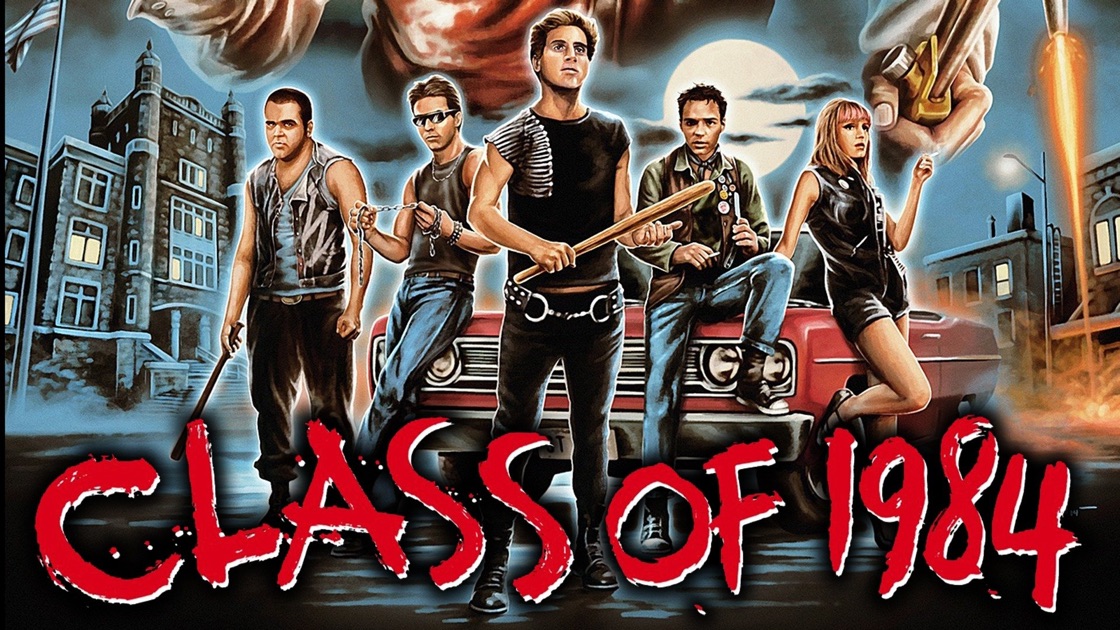
CLASS OF 1984 (1982)

I remember school kids raving about this film when I was twelve. I really wanted to see it, but could never find it in the video shop or from the “pirate” video guy. The plot merges The Blackboard Jungle (1955) with Death Wish (1974), as Perry King’s music teacher attempts to soothe the savage beast of a gang of nasty punk students. He fails and the final act revenge-driven rampage is fantastically inventive and gory. Latterly famous director, a young Tim Van Patten, portrays the psychotic, Peter Stegman, with vicious zeal. A true exploitational classic. (Mark: 8 out of 11).

HELL NIGHT (1981)

This is one of those films I had never even heard of. With a sizeable budget of $1.4 million dollars for a slasher film, it concerns four college students, including a grown-up Linda Blair, spending the night in a creepy house as part of an initiation ritual. Unfortunately, there’s a psychotic killer about hellbent on hunting them down. We’ve seen it all before, but it was nicely filmed and had decent humour. Overlong but way better than I thought it would be. (Mark: 7 out of 11)

PHANTASM II (1988)

I reviewed the remastered version of Don Coscarelli’s low-budget masterpiece here, but only just got round to watching the sequel. Phantasm II (1988) had a bigger budget and suffers from some stodgy plotting. The re-casting of Mike with James Le Gros in the role throws you. Yet, once Mike and Reggie fight with the Tall Man (inimitable Angus Scrimm), the razor-sharp spheres and the hooded monsters, the film finds real pace. Coscarelli blows-up a lot of stuff and ramps up the weaponry, but the sequel lacks the twisted magic of the original must-watch horror fantasy, Phantasm (1979). (Mark: 6.5 out of 11)


TERROR TRAIN (1980)

Another unknown mini-gem I found on Amazon. This Canadian slasher film is, you guessed it, set on a train and finds, yes you guessed it again, college students getting picked off one-by-one by a vengeful psycho. Notable for a really good plot which gives the killer empathy and understandable motivation, it also stars everyone’s favourite final girl, Jamie Lee Curtis. With disguise and magic prevalent in the themes, David Copperfield also appears in a neat role. Highly entertaining with a killer twist. (Mark: 8 out of 11)

WHEN A STRANGER CALLS (1979)

Inspired by a famous urban legend, Fred Walton’s chilling suspense thriller has one of the most nail-biting opening twenty minutes in horror cinema. Carol Kane is the babysitter terrorized by a series of tense phone calls from a mystery ringer. From that terrifying start the story falters slightly as it focusses on Charles Durning’s obsessive search for the unhinged man. Only when Kane rejoins the film some years later does the horror rise up again in a truly frightening denouement. (Mark: 8.5 out of 11)

WILLARD (1971) / BEN (1972)

This was an odd one because I knew and seen the sequel Ben (1972) when I was a younger. Little did I realise the original Willard (1971) had been released the year before and became a sleeper box-office hit. Bruce Davison is excellent as the introvert, Willard, who is bullied at work by his aggressive boss, Ernest Borgnine. Only when, and take a deep breath here, Willard trains an army of rats does he gain confidence to take on the world. It’s a weird film that actually works because of Willard’s fascinating character arc and Davison’s nuanced performance. (Mark: 8 out of 11)

The follow-up Ben (1972) focusses on Willard’s alpha rat, Ben, and his friendship with lonely kid, Danny. The sequel really raises the rat count and there appears to be thousands of them in their dirty lair. Danny is a likeable kid who suffers from a serious illness that prevents him from going out. Why he would make friends with a killer rat though is still frankly nuts! A lack of thrills and goofy premise make it difficult to recommend, and is more famous for the classic Michael Jackson hit called, surprisingly enough, Ben. (Mark: 6 out of 11)