MEMORABLE FILM CHARACTERS – SARAH CONNOR – VIDEO ARTICLE
I have already written a text article regarding this subject and that can be read here. However, I am trying to promote my YouTube site too, and thus have been busy creating short online video content which may interest some cineastes. So here is a tribute to one of the most memorable film characters of all time – SARAH CONNOR.
CREDITS
This video article is a fun and educational piece highlighting our one of our favourite film characters – SARAH CONNOR.
Written by: Paul Laight
Narrated by: Melissa Zajk
Music: Sci Fi – Bensound | Royalty Free Music – No Copyright Music | Bensound Music
The copyright of the images and trailers are those of the film studios. I do not own any of the images or films.
Film/Trailer clips credits:
1) The Terminator (1984) – Orion Pictures 2) Terminator 2: Judgement Day (1991) – TriStar Pictures 3) Terminator: Dark Fate (2019) – Paramount Pictures / 20th Century Fox
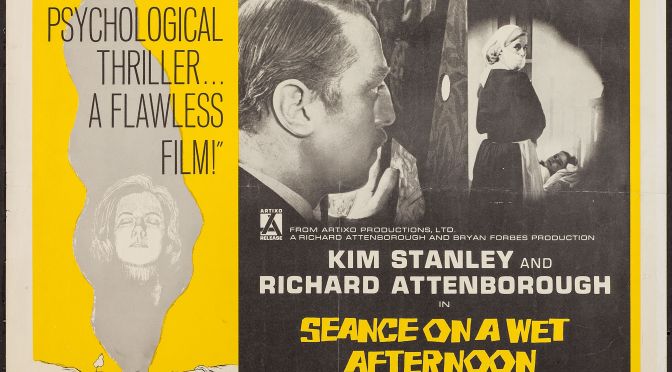
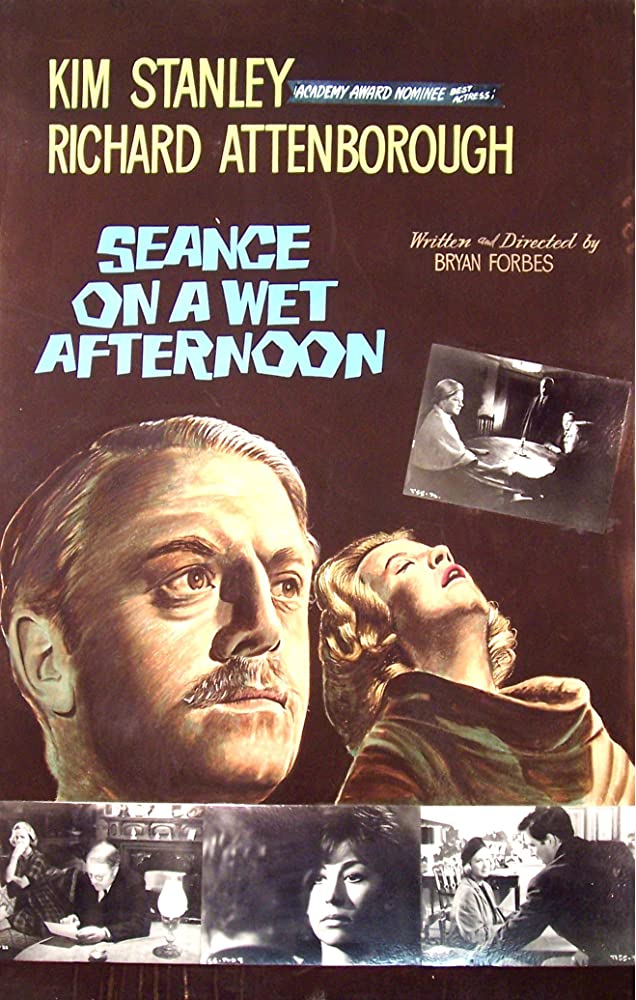
UNDER-RATED CLASSICS #6 – SEANCE ON A WET AFTERNOON (1964)
Directed by: Bryan Forbes
Produced by: Richard Attenborough, Bryan Forbes
Written by: Bryan Forbes (based on the novel by Mark McShane)
Cast: Kim Stanley, Richard Attenborough, Nanette Newman, Mark Eden,Judith Donner, Gerald Sim, Patrick Magee
Music by: John Barry
***MAY CONTAIN SPOILERS***
I started this series a while ago and posted a few times on the subject with multiple entries; however, I have now decided to make it a feature, like ‘Classic Movie Scenes’, concentrating on singular films. My rules are simple. An under-rated classic can be a film I love, plus satisfy the following criteria:
Must not have won an Oscar.
Must not have won a BAFTA.
Must not appear in the AFI Top 100 list.
Must not appear in the IMDB Top 250 list.
Must not appear in the BFI 100 Great British films.
Must not appear in the all-time highest grossing movies of list.
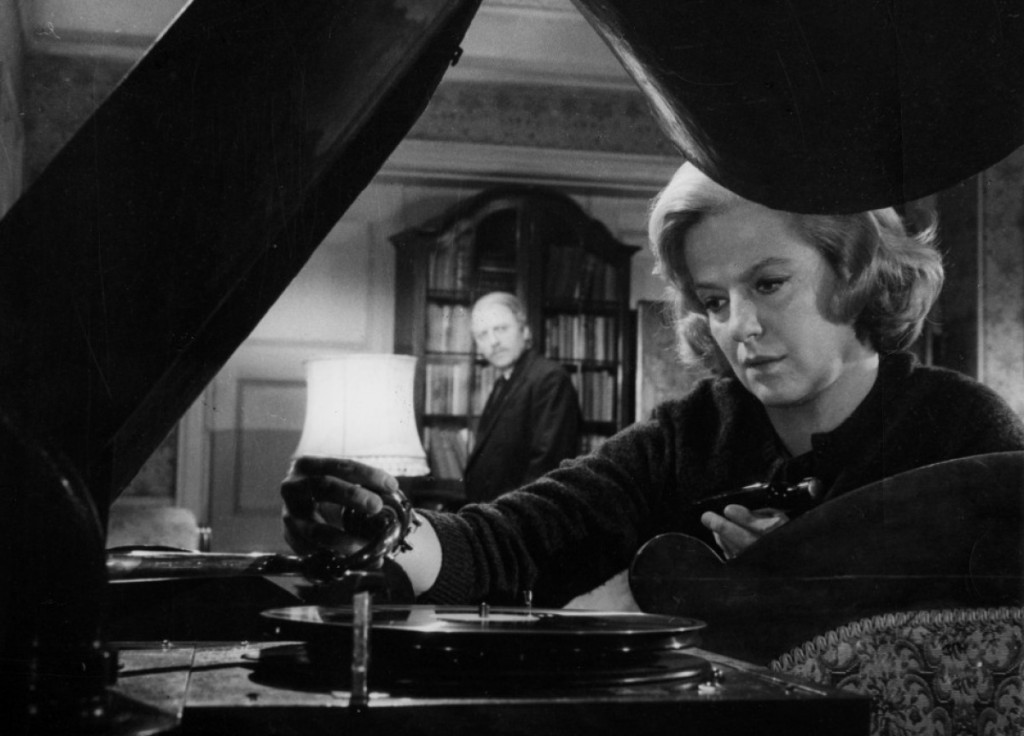
The latest film I have chosen did receive some critical acclaim when released, but it has since slid into mild obscurity. I only caught it on the cable channel Talking Pictures by chance. This channel, if you didn’t know, is like a British equivalent of TCM. However, it does have less well-known films and TV shows when compared to the American cable channel. Occasionally though, Talking Pictures will have a total gem and that is the case with Seance on a Wet Afternoon (1964).
Adapted and directed by experienced British writer and director, Bryan Forbes, Seance on a Wet Afternoon (1964), casts Kim Stanley and Richard Attenborough as a married couple called the Savages. Stanley portrays Myra Savage. She is a psychic medium who hosts seances for small groups of people, while her more timid husband, Billy (Richard Attenborough), assists. They seem to have a comfortable life and live in a nice house; however, their history is blighted by the tragedy of losing a child. This leaves Myra’s personality, while dominant over Billy, somewhat neurotic and nervy. Determined to elevate her career as a psychic, she plots the kidnapping of a millionaire businessman’s young daughter. With Billy reluctantly agreeing to carry out the physical part of the crime, Myra intends to then use her psychic “skills” to help the police and family locate the missing girl. This and the ransom money will secure their financial future.
While we are all familiar with hostage plots, Seance on a Wet Afternoon (1964), is more complex than a basic crime thriller. It explores themes relating to psychic ability, grief and mental illness. Rather creepily, Myra often uses the spirit of her dead son, Arthur, as a guide to her decisions. Moreover, it also contains a series of suspenseful scenes relating to the kidnapping of the girl and the handing over the ransom money. While these are staple tropes of the kidnap genre the film does break with convention. Indeed, while revealing the kidnappers from the very start, the narrative also concentrates many scenes on the gradual breakdown of their fraught marriage. The Savages are not your everyday career criminals and their risky plan is testament to that.
Overall, Seance on a Wet Afternoon (1964) is a brilliant film which should be held in much higher regard. It contains one of the greatest acting performances I have witnessed in a while. Kim Stanley as the psychic, Myra Savage, is a haunted individual full, not only of hidden grief, but also a controlling sociopathy. One feels equally appalled by her and sympathetic at the same time. Richard Attenborough gives a quieter and unselfish performance as husband Billy, his character attempting to keep his tragic wife from going over the edge. The Savages may be kidnappers, but the skill in the writing, while not condoning their actions, makes you understand their skewed motives. In the end, Kim Stanley would be deservedly nominated for an Oscar, but lose to Julie Andrews as Mary Poppins. As we are aware, there is no justice in the world, and it doesn’t take a psychic to know which film and performance is the more memorable.
Cast: Ivan Massague, Antonia San Juan, Zorian Eguileor, Emiliano Buale Coka, Alexandra Masangkay
Cinematography: Jon D. Dominguez
Original Platform: Netflix
*** MAY CONTAIN SPOILERS ***
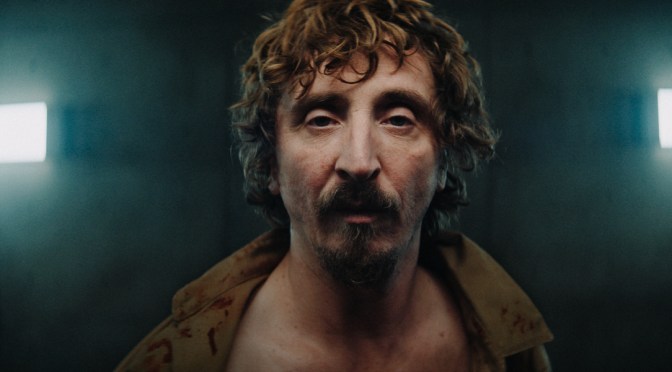
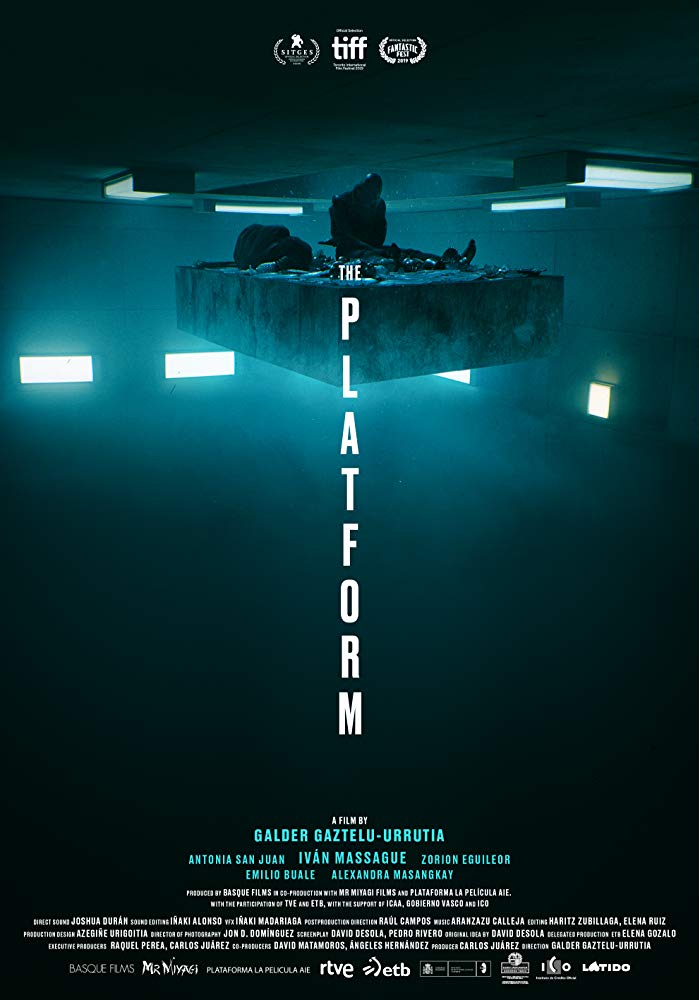
Last night, just under a week into the stricter UK social distancing procedures, I finally got pangs of withdrawal symptoms from NOT going to the cinema. Of course, my feelings or emotions at this time pale into insignificance when compared to the thousands of people affected by or those who have lost their lives to the COVID-19 virus. Moreover, while one could describe our planet as currently resembling a massive open prison, it’s nothing compared to the horrific conditions of the vertical prison in Spanish horror thriller, The Platform (2019). Be warned: do not watch this film while eating your dinner, as it could affect your appetite.
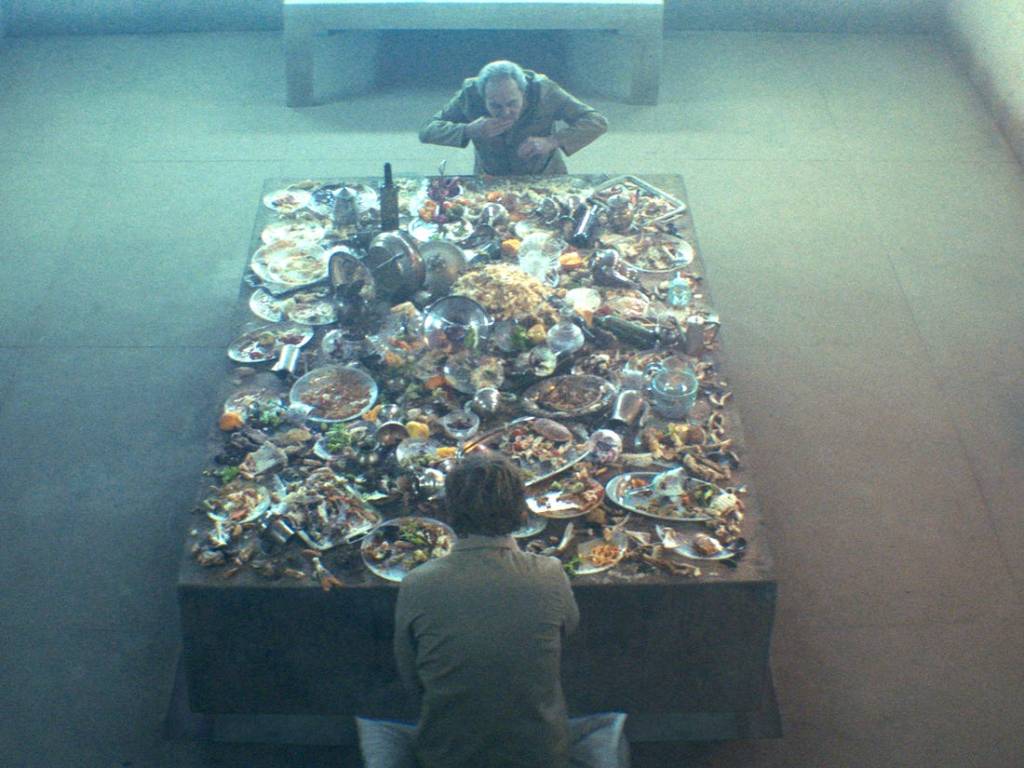
While I recently wrote an article about some films that could make you feel better in this global crisis (link here), paradoxically a horror film such as The Platform (2019) can also work to make you feel better too. Because a film where prisoners are trapped in a multi-level jail and whose food intake is based on how high they are within the prison, is an ingenious, yet terrifying concept. Knowing my life can never be as bad as the main protagonist and the prisoners he encounters made me feel somewhat relieved. Furthermore, the gore levels, plot twists and social satire on display took my mind off the reality of my own situation.
Ivan Massague, with his hangdog-Zlatan-Ibrahimovic features is Goreng, our reasonable everyman at the start. For some bizarre reason he has volunteered to be in this Kafkaesque hell for reasons I won’t spoil. His first cellmate is an older man, Trimagasi (Zorian Eguileor). He is in for committing manslaughter. Trimagasi explains how the system works in the jail. Food comes down on a platform and is meant to be shared with everyone from top to bottom. Of course, it doesn’t work like that as greed prevails. The lower down you are the less food you get. What happens when you don’t eat? You look for alternative food sources. Goreng is naive initially, while Trimagasi knows how to play this vicious game, especially because they never know what level they will be on month to month. This is no Shawshank Redemption (1994), where the mentor coaches the younger man positively. In this environment it is a dog eat dog world; and it’s every dog for him or herself.
The Platform (2019) has a brilliant script, thus is a wicked delight from start to finish. Even the ambiguous ending, which while leaving our gallant lead protagonist’s fate open to interpretation, is fitting for a constantly surprising genre film. It is both a joy as horror film and social commentary. Indeed, the film has its pound of flesh and eats it. I just have to say there is some fantastic gore and memorably crunching deaths throughout of man, woman and beast. The film doesn’t have all the answers. In fact, it is actually quite nihilistic about human behaviour and our inability to share the wealth around. But as high concept and low budget horror movies go, it’s one of the most entertaining I have seen in sometime. Anything to take one’s mind off what is really happening in this world can only be positive.
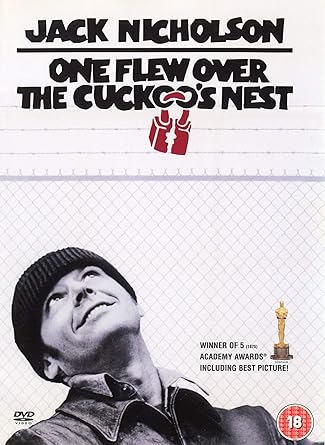
CLASSIC MOVIE SCENES #12 – ONE FLEW OVER THE CUCKOO’S NEST (1975) – “WORLD SERIES”
Directed by Milos Forman
Produced Saul Zaentz, Michael Douglas
Screenplay by: Lawrence Hauben & Bo Goldman – adapted from Ken Kesey’s novel.
Cast: Jack Nicholson, Louise Fletcher, Will Sampson, William Redfield, Brad Dourif, Christopher Lloyd, Danny DeVito, Sydney Lassick etc.
Cinematography: Haskell Wexler
**** CONTAINS SPOILERS ****
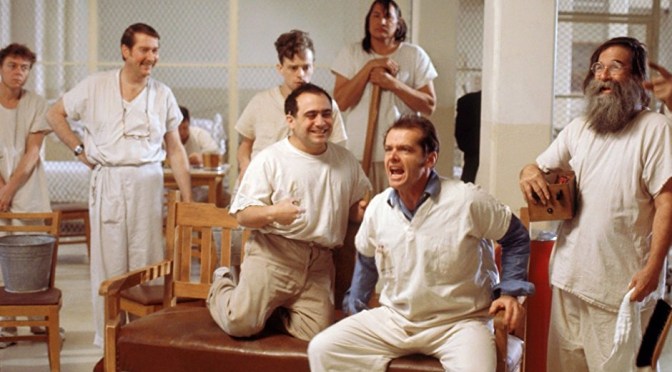
Multi-award winning One Flew Over The Cuckoo’s Nest (1975) is easily one of the most complex, intense and darkly funny cinematic explorations of mental health I have ever seen. It is also one of the best films I have ever seen too. Based on Ken Kesey’s novel, it charts the admission of Randall P. McMurphy (Jack Nicholson) to an Oregon mental institution as he attempts to avoid hard labour at a prison farm.
McMurphy is a charismatic, anti-heroic and anti-establishment criminal, but definitely not crazy in the clinical sense. Rather than lie low and serve his time though, he constantly clashes with the staff, notably Nurse Ratched (Louise Fletcher). His unruly behaviour causes him to excite the other patients of the facility, becoming infectious. Thus, Nurse Ratched acts to quell such rebellion causing further conflict with McMurphy. Jack Nicholson is on absolutely incredible form in this film. He’s wild, funny, excitable, manipulative and very entertaining. On the other hand, Louise Fletcher is cool, calm, but equally devious. She loves to be in control and takes quiet joy in denying the inmates their wants.
When McMurphy “loses” a vote to watch the World Series Baseball of 1963 on television, he’s determined to get his own way. So much so, in this classic scene, he enacts what he thinks is happening in a fake commentary. Nicholson is so realistic and excitable you feel like you’re actually at the game. It’s such a classic scene with the gentle music counterpointing Nicholson’s manic delivery. Moreover, the ensemble inmate’s celebrations, Nurse Ratched’s cold-hearted face and a blank television screen create a powerful set of images. Ultimately, McMurphy is a tragic character as he tries to bend the system, only to eventually break himself by the end.
“It’s the end of the World as we know it – and I feel fine!” Michael Stipe
With the world gripped by the COVID-19 virus threat one’s mind can run amok and look to possible futures. Thus, I thought it interesting to explore some visions of the Apocalypse as seen on the film. I mean you have to hand it to humanity; it’s able to distract itself from the possible end of the world by creating stories and entertainment ABOUT the end of the world! Here’s TEN of the best I could think of.
***CONTAINS MASSIVE SPOILERS***
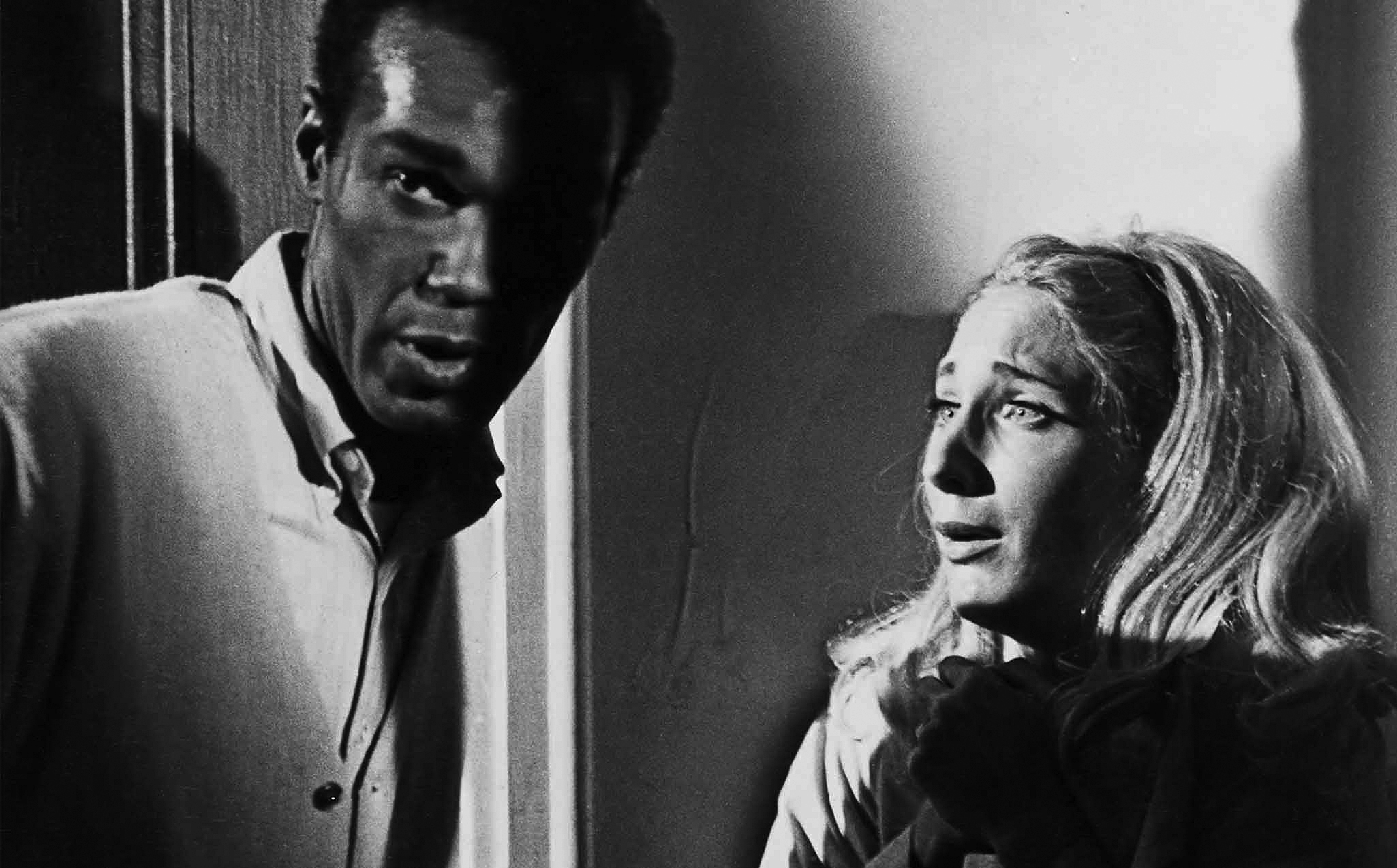
NIGHT OF THE LIVING DEAD (1968) – UNKNOWN CAUSE
George Romero’s seminal classic zombie film gave birth (and death) to a whole subgenre of horror films. The low budget is no barrier to an ingenious concept involving the dead rising up and attempting to wipe out the rest of humanity. Both powerful as a horror narrative and social commentary, it remains one of the most influential films of all time.
PLANET OF THE APES (1969) – NUCLEAR WAR
Poor old Charlton Heston never had much luck with the future as his characters often ended up in dystopian visions of hell. Such films included: Soylent Green (1973), Omega Man (1971) and the classic Planet of the Apes, where simian humanoids are running the planet and enslaving the savage natives. One of the great sci-fi epics with probably the greatest film ending of all time, the film remains a timeless vision of the future.
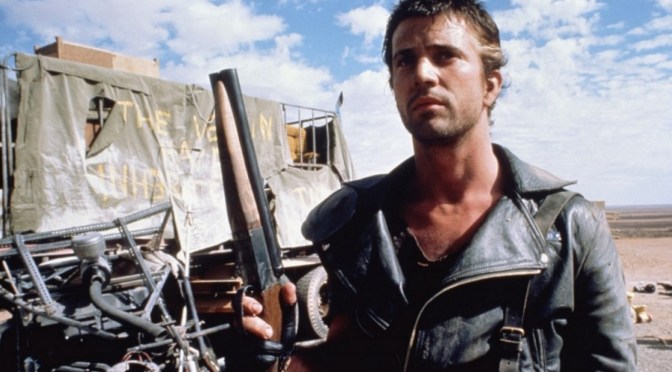
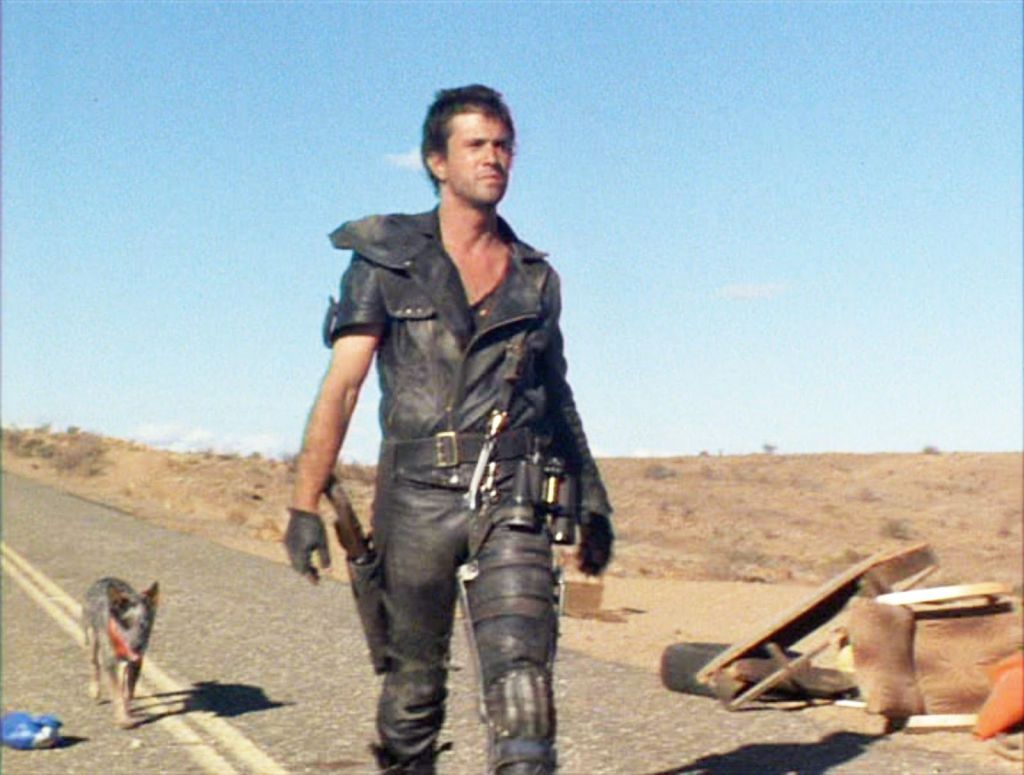
MAD MAX: ROAD WARRIOR (1981) – NUCLEAR WAR
In between the road-raging original and this brilliant sequel there was some kind of global nuclear meltdown hitherto bringing about a dusty wasteland where fuel is God and humans will kill to get their hands on it! Out of the dust rises a reluctant hero, Max Rockatansky (Mel Gibson), who strives to survive while battling hordes of petrolheads, psychos and punks! Definitely one of the best sequels of all time, George Miller spectacularly remade it with the equally pulsatingFury Road (2015).
THE TERMINATOR (1984) – ARTIFICIAL INTELLIGENCE
Bloody Internet, sorry Skynet! We create these wonderful computers to help us with everyday life including our Missile Defence Systems and they turn on us! Only a Mother and her child – who hasn’t been born yet – can save us from a life of death and slavery at the hands of the machines. Cameron’s seminal sci-fi action film delivers an unforgettable feast of story, concepts and emotion, containing in Sarah Connor’s, one of the best character arcs of all time.
THE MATRIX (1999) – ALIEN MACHINES / ARTIFICIAL INTELLIGENCE
Damned alien machines enslaving humanity and feasting on our fluids and organs for energy in some sick, twisted vision of a futuristic Harvest festival. Then again, compared to some of the shitty office jobs I’ve had I think I’d choose the “Matrix” over those; just don’t tell me I’m in the Matrix! Neo (Keanu Reeves) chose the other pill and it’s a good job he, Morpheus and Trinity did, because we get some kick-ass slow-motion action out of it.
WATERWORLD (1995) – GLOBAL WARMING
In this future we will basically live in the water and grow gills. Also, pure dirt and water will be our most priceless commodity. Well, that’s what will occur according to this apocalyptic-polar-ice-caps-melting-earth-swimming-pool-with-pirates movie. At the time it was one of the most expensive film flops in history, but IT actually wasn’t THAT bad. Kevin Costner plays a softer and more soaked version of Mad Max, while Dennis Hopper chews up the scenery as the over-the-top Napoleonic baddie at sea.
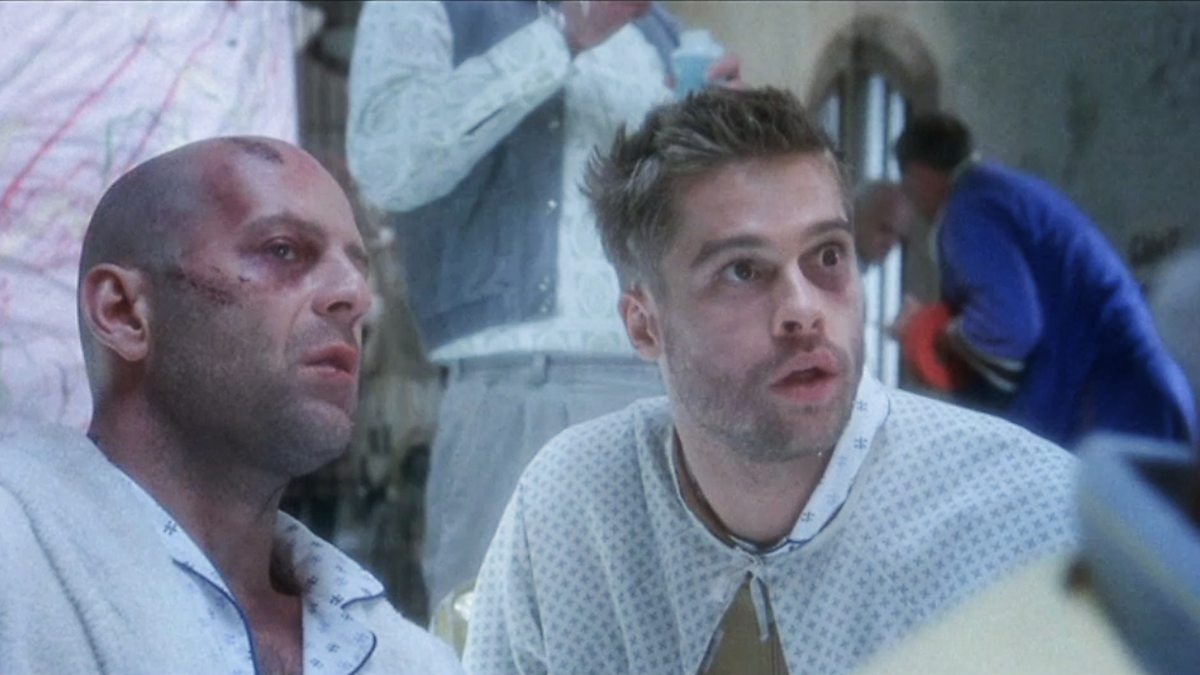
TWELVE MONKEYS (1995) – DEADLY VIRUS
Seeing someone close to you die in front of your eyes as a child is not a future you really need is it? But what if THAT person is. . . Following the opening of this brilliant film, the plot centres around future prisoners being sent back in time to find the cause of the deadly viral apocalypse. The awesome mind of Terry Gilliam filtering Chris Marker’s classic short La Jetée (1962), makes this an intelligent and exciting end-of-the-world blockbuster. Bruce Willis and Brad Pitt are on particularly good form too amidst Gilliam’s frightening visuals.
28 DAYS LATER (2002) – RAGE VIRUS
Alex Garland and Danny Boyle’s blistering British horror classic springboards a Day of The Triffids style opening as Cillian Murphy wakes up in a seemingly empty London. Alas, he is not alone as he finds, along with a ragtag bunch of survivors, the world has been populated with raging and rapid zombies hellbent on feeding. Boyle directs with a low budget, yet prodigious inventive flair in a modern-day monstrous classic.
THE WORLD’S END (2013) – ALIEN INVASION
The third in the Edgar Wright, Simon Pegg and Nick Frost ‘Cornetto Trilogy’ is often seen as the weakest of the three. That’s because the first two are so strong, The World’s End suffers slightly in their shadow. However, a stellar British cast all combine brilliantly as a group of friends reuniting to enact the same town pub crawl they had done year’s before. It’s just a shame a bunch of aliens have decided to take over the town at the same bloody time!
THIS IS THE END (2013) – BIBLICAL APOCAPLYPSE
The end of days has never been so hilarious and dumb as in this Seth Rogen and Evan Goldberg directed apocalyptic comedy. The stellar who’s-who cast of rising Hollywood actors including: Jonah Hill, Rogen, James Franco, Craig Robinson, Jay Baruchel, Danny McBride plus many more cameos turns, all find themselves battling monsters, fiery sinkholes and each other, in an irreverent and gleeful disaster movie.
SIX OF THE BEST #24 – FILMS TO HELP YOU KEEP CALM AND FEEL BETTER!
As everyone knows we’re all being impacted by the medical pandemic and COVID-19 virus in some way. Essentially, these are troubled times for everyone and my sympathies go out to anyone who has the virus, lost someone to it or knows someone who has it. Similarly, if you are vulnerable and isolated, I wish you all the best. If we can, as a species, all keep calm, work together and NOT panic, I think we can work through this. That is my hope, anyway.
The United Kingdom is slowly moving toward, like many other European countries, some kind of lockdown scenario. Indeed, cinemas have shut down, so that means we will be watching a lot of movies indoors. Obviously, there may be a clamouring to watch apocalyptic or dystopian visions of society. However, I would advise watching some feel good or feel better films too. So, here are Six of the Best Films to Help you Keep Calm and Feel Better! Please note that some of these films have darker themes and events, but the narratives represent hope and light, finding resilient and positive characters overcoming the odds.
BABE (1995)
“This is a tale about an unprejudiced heart, and how it changed our valley forever.”
E. T. THE EXTRA TERRESTRIAL (1982)
“You could be happy here, I could take care of you. I wouldn’t let anybody hurt you. We could grow up together, E.T.”
IT’S A WONDERFUL LIFE (1946)
“What is it you want, Mary? What do you want? You want the moon? Just say the word and I’ll throw a lasso around it and pull it down. Hey. That’s a pretty good idea. I’ll give you the moon, Mary.“
SEABISCUIT (2003)
“I was crippled for the rest of my life. I got better. He made me better. Hell, you made me better.”
THE SHAWSHANK REDEMPTION (1994)
“I guess it comes down to a simple choice, really. Get busy living, or get busy dying.”
UP (2009)
“Hey, I know a joke! A squirrel walks up to a tree and says, “I forgot to store acorns for the winter and now I am dead.” Ha! It is funny because the squirrel gets dead.”
THE NETFLIX PROCLAMATION – FILM REVIEW CATCH-UP MARCH 2020
With COVID-19 threatening the world’s population, it is a time to remain calm and, if required, stay indoors out of the way of potential infection. As long as the Internet holds then there are thousands of films and TV shows to watch online to keep us all occupied. Obviously, one must also take a deep breath and pray that aside from the illness affecting the world, society manages to keep it’s social, financial and medical structures in place too.
Clearly, we need distractions at this difficult time. Films may not be the solution, but they can offer diversion at least. Thankfully, I love staying in and watching movies as it is a major hobby of mine. Indeed, I have been busy lately catching up on some of the latest releases Netflix has to offer. Thus, I present some quick reviews of films currently on the streaming platform, all with the usual marks out of eleven.
***MAY CONTAIN SPOILERS***
A PRIVATE WAR (2019)
Rosamund Pike is absolutely enthralling as the brave war correspondent, Marie Colvin. Putting her life and sanity on the line to report the terrors of conflict in Sri Lanka, Libya and Syria, to name a few, Colvin was both fearless and crazy in equal measures, but remains an incredibly powerful voice. This fine biopic feels haphazard and structurally chaotic but is certainly an impressive tribute to an iconic journalist. (Mark: 8 out of 11)
DESTROYER (2018)
Nicole Kidman gives another excellent performance in this gritty neo-noir-cop-procedural drama. The clever structure — which tracks back and forth between Kidman’s burnt out character in the present and her violent past going undercover in a crime gang — arguably works against the emotional power of the film. However, director Karyn Kusama and Kidman make a formidable team in delivering a moody, bruising and bitter revenge thriller. (Mark: 8 out of 11)
EARTHQUAKE BIRD (2019)
I really loved director Wash Washmoreland’s previous film, Colette (2018), because it was such a vibrant. colourful and sparkling biopic of a fascinating character. I was thus surprised to see he had followed it up with an under-cooked thriller like Earthquake Bird (2019). Alicia Vikander portrays a dour ex-patriot in Japan who gets drawn into a love triangle involving the effervescent, Riley Keough, and photographer, Naoki Kobayashi. The film felt, like Vikander’s protagonist, depressed; ultimately drifting toward a tepid denouement. (Mark: 6 out of 11)
ENTEBBE (2019)
Rosamund Pike again! Here she is cast alongside Daniel Bruhl as they portray two Germans who joined a Palestinian military group that hijacked an Air France Flight in 1976. While the politics of the Israelis versus the Palestinians is explored to some extent, I felt more could have been done during the hostage situation to examine such complex issues. Instead, we get something more generic from director Jose Padiha, who inexplicably uses dance troupe montage to convey nebulous emotion and meaning. (Mark: 6 out of 11)
I LOST MY BODY (2019) – (Contains spoilers)
Both original and generic in terms of story, this romantic drama contains some of the most wonderful animation concepts I have seen in a long time. Brilliantly rendered and directed by Jeremy Chaupin, the narrative has two major strands. A severed hand – yes, a hand – seeks to unite with its body. Simultaneously, flashbacks reveal young Naoufel attempting to romance the girl he loves, Gabrielle. I really wanted to enjoy this more as the filmmaking is stunning. But, the final act of the film was too poetic, and it left me feeling cold and confused. (Mark: 7 out of 11)
THE KING (2019)
David Michod has been a filmmaker worth keeping tabs on since the release of brutal Australian crime film, Animal Kingdom (2010). After the big budget military satire War Machine (2017), failed, in my view, to hit the target, Michod has gone with another big production in The King(2019). Adapting Shakespeare’s Henry V trilogy (co-writer with Joel Edgerton) is no easy task and they deliver a film full of bravura cinematic moments. Timothee Chalamet is impressive in the lead role as the reluctant, but strong-of-heart young Prince Hal/King Henry. Lastly, Sean Harris, Robert Pattinson, Edgerton (as Falstaff) and Thomasin Mackenzie provide excellent acting support in a stirring period epic. (Mark: 8 out of 11)
THE LAUNDROMAT (2019)
Filmmakers Scott Z. Burns and Steven Soderbergh are usually so reliable in their cinematic endeavours. However, a star-studded cast including: Meryl Streep, Gary Oldman, Sharon Stone, Antonio Banderas, Matthias Schoenaerts and Jeffrey Wright cannot save this misguided comedy-drama about the Panama Papers scandal. I’m sure there is a great film in such financial crimes, but this was not it. (Mark: 5.5 out of 11)
MID 90s (2019)
Jonah Hill adds director to his already very successful acting, writing and producing curriculum vitae. Mid 90s (2019) owes much to the low-budget, improvisational and gritty style of filmmakers like Harmony Korine and Larry Clark, however, Hill’s approach is less extreme. The loose and episodic rites-of-passage narrative centres on Los Angeles based skater gangs and specifically Stevie (Sunny Suljic). He longs to grow up too fast and his experiences reminded me of an American version of Shane Meadow’s This is England (2006). While it’s a solid work of cinema, full of heart and believable performances, it’s ultimately quite underwhelming from an emotional perspective. (Mark: 7 out of 11)
THE TWO POPES (2019)
Fernando Merielles directs this adaptation of Anthony McCarten’s play featuring two giants of the acting world in Anthony Hopkins and Jonathan Pryce. The two heavyweight actors portray the real-life Pope Benedict XVI (Hopkins) and future Pope Francis, Cardinal Jorge Mario Bergoglio (Pryce). The duo conflict, debate and laugh about serious matters related to the history of the Catholic Church; plus, some not-so serious matters such as pizza and football. Having sat through Paulo Sorrentino’s uber-pretentious TV series The New Pope (2020) recently, I was not in the mood for more theological drama. However, the two leads are excellent, especially Pryce; and while the film is very dialogue driven, the flashbacks of Argentine history from Cardinal Bergoglio’s early years were powerfully evoked. (Mark: 8 out of 11).
HORSE GIRL (2020) + THUNDER ROAD (2018) FILM REVIEWS
Having seen both these fascinating character studies, Horse Girl (2020) and Thunder Road (2018) recently, I was compelled to write a double bill review because similarly they feature: lower budgeted production values, a singularly powerful lead acting performance, characters who have recently lost their mothers, very uncomfortable emotionally charged scenes; as well as both exploring themes relating to mental illness. Thus, I thought it interesting to review the films with these elements in mind.
In regard to mental health, it is quite rightly being addressed more and more in society in a respectful manner. The barriers and prejudices of the past are being eroded and people are talking about it more openly. I have first-hand family experience of someone who has suffered with mental illness. Plus, I have experienced the loss of a close friend to suicide due to debilitating anxiety and have other friends on anti-depressants. I have tried to be of assistance to those people, but it is incredibly difficult to help anyone. Likewise, medical professionals seek various ways of attempting to assist, treat and counsel individuals with mental health problems.
Ultimately, it so tough to deal with such illnesses as they are powerful and invisible. I have utmost empathy for anyone suffering from anxiety, depression and serious mental health problems. It’s such a shame that I feel kind of helpless when it comes to helping people I am close to. It is not always enough to listen and understand, thus professional medical help should be sought and sometimes even that is not enough. It is not surprising therefore that cinema is also exploring such stories and themes.
With Joker (2019), mental illness was examined in a comic book genre setting in a powerful way for me. Some critics felt it trivialised mental illness. I felt that it was, while stylised and theatrical, actually accurate in the disturbing disintegration of Arthur Fleck’s downward mental spiral. Horse Girl (2020) and Thunder Road (2018) are two very different films in terms of genre, but with similar thematic trajectories as Joker (2019). Indeed, while they are independently produced and smaller in scale, they feature two frightening renditions of characters on the verge of a mental breakdown.
***THESE REVIEWS CONTAIN SPOILERS***
HORSE GIRL (2020)
Directed by: Jeff Baena
Written by: Jeff Baena and Alison Brie
Cast: Alison Brie, Molly Shannon, John Reynolds, John Ortiz etc.
Depicting mental illness accurately is a very tricky thing on film in my view. Obviously, we have over the years had all manner of psychotics and mad people chasing and killing others in horror films and thrillers. There have also been many films centred around characters in mental institutions. Some are respectful examinations, but many more could be seen as exploitation films. Horse Girl (2020) is not exploitational, but rather an oddity that falls somewhere between the gaps of arthouse drama and weird character study. Such films are difficult to assess as, however impressive the technical aspects of the production are, the strange events of the film could alienate an audience in terms of entertainment.
Despite Alison Brie’s exceptionally brave performance as Sarah, the narrative consistently disengages you emotionally, taking you to very dark and weird places. Sometimes you have to wonder whether the actor is holidaying in weirdness for the sake of it, or is genuinely drawn to characters who exist with mental issues. Given Brie is an intelligent and highly talented actor, plus she co-wrote the script, you cannot help but feel this is a very personal project. Her portrayal of a shy loner dealing with the suicide of her mother, sleepwalking, day delusions, fragmented time loss and nightmares makes Horse Girl (2020) a disorientating experience. However, in conveying the chaos and frightening nature of mental illness, the film is commendable but tough to recommend.
Mark: 7 out of 11
THUNDER ROAD (2018)
Written and directed by: Jim Cummings
Cast: Jim Cummings, Kendal Farr, Nican Robinson, Macon Blair etc.
Talking of films that are difficult to recommend, Jim Cummings self-produced, written, directed and acted film Thunder Road (2018) is another. Rather than giving us, like Horse Girl (2020), an unreliable narrator and escalating series of surreal events seemingly separated from reality, Cummings film deliver very real feelings of embarrassment and anxiety to the audience. Advertised on certain film sites as a comedy-drama, neither the comedy nor drama are conventionally enacted. The film is based around a series of hysterical monologues and stream of consciousness dialogues from Cummings grieving and soon-to-be-divorced troubled cop, Jim Arnaud.
Arnaud’s mental issue is not psychosis, but rather a circumstantial and emotional nervous breakdown precipitated by grief and a personality disorder. The opening scene at a funeral for Arnaud’s mother, is a case in point. Based on his original short film of the same name, Cummings produces a tour-de-force acting exercise in both awkward comedy and distanciation. Subsequently, the film’s narrative events find Arnaud attempting to be a good father, friend and police officer, however, he is constantly on the edge of an angry outburst or outpouring of emotional honesty. His character makes us empathise as he is in grief, but at the same time he’s very difficult to like due to his extreme reactions. Ultimately, as a low budget feature for Jim Cummings acting abilities, Thunder Road (2018) is a compelling character study. However, it’s tough to watch and the slightly misogynistic ending left a sour taste in what was a fascinating emotional exploration of grief and mental instability.
I haven’t seen any of Celine Sciamma’s previous films, but based on the romantic drama, Portrait of a Lady on Fire (2019), she is a filmmaker of formidable power and vision. I believe this is her fourth feature film directorial release and it is as sumptuous, moving, exquisitely shot and constructed a love story as you are going to witness. Moreover, it is proof that the art of screenwriting, compared to many by-the-numbers Hollywood film productions, is NOT dead.
The story is very simple. At the end of the 18th century, a young painter, Marianne, (Noemie Merlant) is commissioned to create a portrait of a young woman, Heloise (Adele Haenel). Heloise is, as is the tradition of the time, required by her mother (Valeria Golino), to marry a Milanese nobleman. He needs to see the portrait in advance in order to agree to the wedding. The only catch is, the insular Heloise, does not want to be painted for all manner of understandable reasons. What this establishes is two very intriguing characters, both with different emotions and desires.
Following the beautifully rendered story foundation, what follows is a magnetic series of scenes which subtly push these two empathetic characters together. Marianne is the artist who, at first keeps her distance, spying and analysing Heloise. Heloise is cool, sensitive and a prisoner on the Brittany island, trapped by the waves of the sea and her mother’s insistence on a society wedding. Over the space of a few days the walking companions become drawn to each other both artistically and emotionally. But, it’s no sordid desire for lust, rather a respectful and honest joining in romance. We, as the audience, literally see love grow before us thanks to some incredible acting from the leads.
Often the cinema critics will heap praise on a film and I will wonder what they have been watching. However, in regard to both Parasite (2019) and Portrait of a Lady on Fire (2019), the plaudits are so well deserved. Both are brilliantly written and shot works of cinema, that in the past may have been consigned to just the arthouse circuit. Further, given the film is about painting, it is unsurprisingly Portrait of a Lady on Fire (2019) is framed, lit and composed with an eye for the artistic. Yet, it isn’t just the look and colour of the film that impresses. Sciamma and her cinematographer, Claire Mathon, also create a series of haunting shots which will be indelibly scorched on my mind.
In terms of the themes, the film is very powerful too. As well the notion of art as a means of representing love, the narrative explores concepts of female equality and solidarity. There is an interesting subplot involving a member of the household staff, which adds to the thematic texture. Furthermore, the performances by all the actresses are superb too as Sciamma directs with such confidence. I also liked that the critique of patriarchal society was implicit rather than didactic. Also subtly realised are the tasteful love scenes, which never feel exploitational. My only minor criticism is that the opening hour could, arguably, have been trimmed slightly. However, what do you leave out of a film as beautifully composed, delicately written and emotionally compelling as Portrait of a Lady on Fire (2019)? I, a mere mortal, am not qualified to say in the face of such mesmerizing cinema.
Based on: Tell Me Who I Am by Joanna Hodgkin, Alex Lewis and Marcus Lewis
Cinematography: Erik Alexander Wilson
***SPOILER FREE***
I recently reviewed a number of documentaries here, but it was only during a catch-up of Netflix films did I watch the harrowing family drama, Tell Me Who I Am (2019). Now, in my younger days I was naive enough to think documentaries were a representation of the whole truth and not a mediated version of events. There was fiction on one side and documentaries on the other. It’s a documentary so it must be true and must not be questioned.
That isn’t to say that the events of this incredible story are not true. No, my point is that Tell Me Who I Am (2019) is, while based on a true story, structured like a classic Hollywood thriller akin to something Hitchcock may have produced. Conversely, I was gripped throughout by the mystery, suspense and a gut-kicking reveal halfway through. Do not read anything about this moving family story beforehand, as going in with NO knowledge will make it all the more powerful.
The film is structured in the classic three act fashion. Firstly, we find Alex Lewis describing events of an accident he had when 18. The incident led to him totally losing his memory. The only thing he remembered was he had a twin brother, Marcus. His mother, father, friends, their farmhouse, the privileged background and their dogs were all forgotten. Like a film noir protagonist he was left in the dark as to his whole history. With the help of Marcus, he slowly begins to learn about his past and rehabilitate for the future. Thus, at first one feels this is a story of an individual overcoming near-tragedy and rebuilding their life moment by moment. However, it becomes something much more than that. I shall say no more.
Shot through talking heads, photo montage and reconstruction, this is an exquisitely edited and filmed documentary. The twins, Alex and Marcus are framed in close-ups, with pale backgrounds and shadowed foregrounds. As we move back and forth between their respective sides of the story, one is slowly pulled into the incredible events that confirm truth is more horrifying than fiction. By the resolution I was shook and deeply affected by the film, with still some questions left unanswered. Ultimately though, Tell Me Who I Am (2019) is a satisfying and very emotionally charged story about searching for truth amidst familial conflict, betrayal and a longing for redemption.