Category Archives: Cinema

CLASSIC FILM REVIEW: THE DEPARTED (2006)

CLASSIC FILM REVIEW: THE DEPARTED (2006)

Directed by: Martin Scorsese

Produced by: Brad Pitt, Brad Grey, Graham King

Screenplay: William Monahan

Based on: Infernal Affairs (2002) by Alan Mak and Felix Chong

Cast: Leonardo DiCaprio, Matt Damon, Jack Nicholson, Mark Wahlberg, Martin Sheen, Vera Farmiga, Ray Winstone, Anthony Anderson, Alec Baldwin etc.

Cinematography: Michael Ballhaus

**CONTAINS MASSIVE SPOILERS**


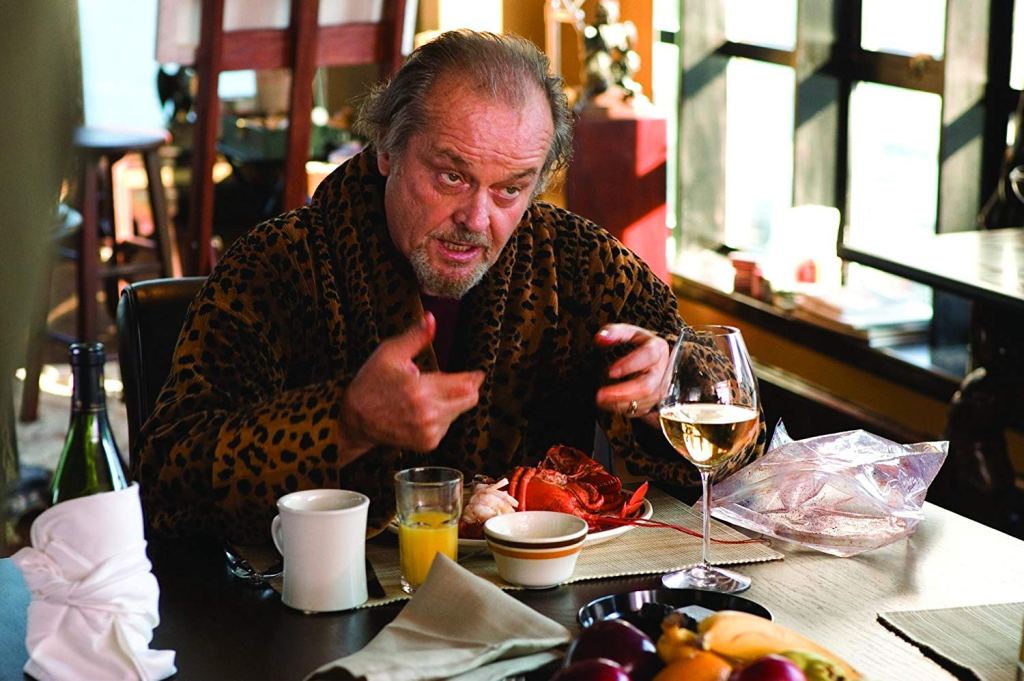
“In my day you had two choices – be a criminal or a cop! When you’ve got a gun pointed at you – what’s the difference?” Frank Costello


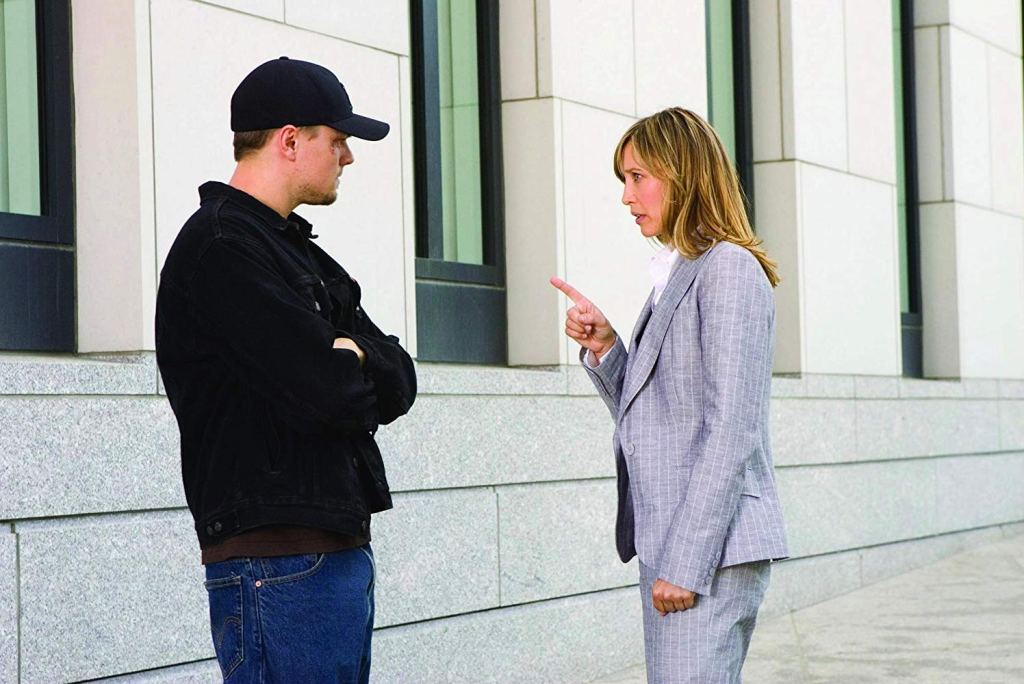
Oscar-winning gangster film, The Departed (2006), is a vicious, double-crossing, paranoiac remake of the equally brilliant thriller, Infernal Affairs (2002). With a cast that reeks of testosterone and star quality, the incendiary William Monahan script is ferociously directed by filmmaking genius, Martin Scorsese. The legendary director and his production team, plus the terrific ensemble cast including Ray Winstone, Vera Farmiga, Matt Damon, Jack Nicholson, Martin Sheen and Leonardo DiCaprio, lift this story above the run-of-the-mill cops and robbers genre movie.

The Departed (2006) moves at a heady pace from the start, establishing Sullivan (Damon) and Costigan (DiCaprio) as”Staties” in the Massachusetts force. They both have deep secrets; both go deep undercover unknowingly trying to catch the other. Sullivan is a criminal masquerading as a brilliant cop in order to further gangland boss, Costello’s (Nicholson) power games. The edgy, streetwise Costigan, on the other hand, joins Costello’s gang in order to bring him down from the inside.


The film is shot and edited, as expected, with immaculate precision; crammed with unrelenting and bone-crushing thrills and violence. Thematically, it’s powerful too. Throughout, honesty and truth are obliterated by lies and death. Costigan and Sullivan are no more than pawns at the hands of a corrupt system that lets people down from a great height. This is literally the case where Martin Sheen’s Captain Queenan is concerned. His death is probably the most brutal demise of all. At times, I must admit, my head was spinning because of the twisting plot as Sullivan, in a Kafkaesque turn, ends up chasing himself as part of a serious crime investigation.

The screenplay by William Monahan is a ballsy joy, full of despicable protagonists and biting dialogue. While many of the characters are difficult to like, the plot. thrusting soundtrack, incredible performances and narrative suspense really get the heart racing. Nicholson and Wahlberg take special glee in spouting their offensive dialogue. DiCaprio too is brilliant as the paranoid cop, dragged into the mix through some screwy sense of righteousness. Lastly, Matt Damon’s portrayal of Sullivan is particularly astute, as he plays against that all-American good guy he is often cast as.


Amidst the cat-and-mouse shenanigans, merciless tragedy pervades throughout. Virtually everyone is a rat or cheating on someone as the film deconstructs the notion of loyalty. Consequently, most scenes blur the lines between good and bad, as characters attempt to out-wit and out-kill one other. By the end there is no good or bad in the traditional sense, just a bunch of wasted lives in an ultimately nihilistic pursuit of money and power. The characters exist in a rodent-infested Boston setting, distorting the distinction between truth and lies. Is there a difference? The Departed (2006), doesn’t discriminate; and there lies the truth.


FILMS THAT GOT AWAY #3 – PATERSON (2016)

FILMS THAT GOT AWAY #3 – PATERSON (2016)

Directed and Written by Jim Jarmusch

Produced by: Joshua Astrachan, Carter Logan

Cast: Adam Driver, Golshifteh Farahani, Barry Shabaka Henley, Cliff Smith, William Jackson Harper, Chasten Harmon, Nellie the Dog etc.

Music: Carter Logan

Cinematography: Frederick Elmes

**MAY CONTAIN SPOILERS**


I’ve recently been working on a screenwriting development programme with someone studying at the National Film and Television School. The idea is to further develop one of my feature film scripts and hopefully improve it. The Script Developer is assessed on the work we do together.

I tell you this because we discussed my script, which is a slice-of-life-bittersweet comedy, in relation to character journeys and arcs. I was keen to present a script made more of humorous and dramatic situations that do not necessarily bring about change in the character. I wanted to go against the general rules of screenwriting manuals to create something more akin to the works of Mike Leigh or Jim Jarmusch.


Eventually, I have decided that the screenplay did need a bit more narrative impetus, however, a film such as Paterson (2016), brilliantly shows what cinematic beauty you can achieve without having a critical character journey or narrative arc. It is cinema of poetry, repetition, small moments, character interaction, and subtle performance full of emotional impact. I’m not sure why I missed it at the cinema, but there you go.

Paterson (2016) is set in Paterson, New Jersey. Adam Driver is a bus driver who has the same name as the place he lives in. This amusing coincidence is mentioned a few times throughout the film. Paterson lives with his wife Laura (Golshifteh Farahani), who spends her days working on her art and has a love for black and white patterns. Farahani and Jarmusch fill this character with an idealised innocence and energy which perfectly complements Paterson’s more deadpan insouciance. I sensed that perhaps Paterson was depressed but I think he was happy deep down. The couple themselves are very content with their simple existence.


We spend a week with Paterson, his wife and Nellie the Dog and his days are pretty much the same. While some may wonder where the story is and when something will happen, I was hypnotised by the repetition. Jarmusch infuses the bus driving, dog walking and quiet moments of reflection with excerpts from Paterson’s and other poets’ works. These are recited by Driver with a laconic charm and mesmeric power.

Personally, I could watch Adam Driver all day. He has such a subliminal and easy acting style, yet you feel such empathy for his character. I thought the back-story of Paterson being a marine was underplayed, but also intriguing. The performance is so good we do not need to know what happened in Paterson’s past, because we can feel it in Driver’s face and being. Moreover, via Paterson we get introduced to another set of eccentric Jarmusch characters which dip in and out of his days.

In conclusion, Jim Jarmusch has created another exquisite character study where very little happens in terms of plot or character development. But that’s the point with this beautifully rendered slice-of-life. The care and love he pours into the lead protagonists, supporting characters and his passion for poetry, make this a modern mini-masterpiece. It is also a charming tribute to all those creative people who work a regular day job but aspire to express their vision of the world around them.

Mark: 9.5 out of 11

5 REASONS THIS COULD BE GOOD: AD ASTRA (2019)

AD ASTRA (2019) – FILM PREVIEW

Directed by: James Gray

Producer(s): Brad Pitt, Dede Gardner, Jeremy Kleiner, James Gray, Anthony Katagas, Rodrigo Teixeira, Arnon Milchan

Written by: James Gray, Ethan Gross

Cast: Brad Pitt, Tommy Lee Jones, Ruth Negga, Liv Tyler, Donald Sutherland, Jamie Kennedy and more.

UK Release: 20th September 2019


5 REASONS AD ASTRA (2019) COULD BE GOOD

I haven’t done one of these for a while so thought I’d reignite my movie preview section. The main reason is the trailer for science-fiction epic, Ad Astra (2019) looked absolutely brilliant, so I’m very excited to see it at the cinema when released. Here are five reasons it could be good.

1) THE STORY

I love the science fiction genre and space especially is a great place to create mystery and drama. The narrative to Ad Astra (2019) finds Roy McBride (Brad Pitt) travelling to the depths of the galaxy to find his missing father (Tommy Lee Jones). While it appears to be an original script, the story owes much to Joseph Conrad’s Heart of Darkness. Thus, if we get anywhere near as incredible as Apocalypse Now (1979), but set in space, this could be really great.


2) THE DIRECTOR

Director James Gray has steadily built up a very impressive film C.V. of character and crime dramas. His last film, The Lost City of Z (2016). a jungle epic was a box office loser, but a really compelling drama about exploration and obsession in the Victorian era. Ad Astra (2019) is his biggest budgeted film so far, but given his filmmaking skills and experience, it could be his best yet.


3) THE STAR

Flying high from starring in Tarantino’s twisted movie fairytale, Once Upon A Time In Hollywood (2019), Brad Pitt is proving his star quality still burns brightly. Pitt is always a commanding lead actor and he has played: Nazi Hunters, bare-knuckled fighters, disaffected thirty-something alter-egos, baseball coaches, infamous cowboys, romantic heroes, stoners, vampires, cops, psychopathic drifters, hit-men and many more characters. Here he plays an astronaut and I think it is only his second sci-fi film after the superb Twelve Monkeys (1995). Thus, Brad Pitt’s appearance is another reason to get excited.


4) SPECIAL EFFECTS

While I’m a screenwriter myself and more drawn to story rather than effects driven films, The Moving Picture Company are leading special effects experts. They have worked with Method Studios, Mr X, Weta, Brainstorm Digital etc. on this film and so the work on this space opera looks like it could be incredible. Indeed, The Moving Picture Company alone have provided effects for: Blade Runner 2049 (2018), The Jungle Book (2017), Sully (2017), The Martian (2016), The Guardians of the Galaxy (2015) and many more!


5) THE TRAILER

Because I am so experienced and probably jaded where trailers are concerned, it takes a lot to get my attention when at the cinema. But, the trailer for Ad Astra (2019) absolutely rocked. It did not give ALL the story away and made me want to watch the film. Don’t take my word for it – here it is:


ONCE UPON A TIME IN HOLLYWOOD (2019) – FILM REVIEW – A $90 MILLION “ARTHOUSE” & FETISHISTIC CLASSIC!

ONCE UPON A TIME IN HOLLYWOOD (2019) – FILM REVIEW

Directed and Written by: Quentin Tarantino

Produced by: David Heyman, Shannon McIntosh, Quentin Tarantino

Cast: Leonardo DiCaprio, Brad Pitt, Margot Robbie, Emile Hirsch, Timothy Olyphant, Margaret Qualley, Austin Butler, Al Pacino, Mike Moh, Bruce Dern, Dakota Fanning, Damien Lewis, Kurt Russell and many, many more.

Cinematography: Robert Richardson

**MAY CONTAIN SPOILERS**

From watching the trailers for Quentin Tarantino’s ninth film, Once Upon A Time in Hollywood (2019), I remember thinking: this looks so cool and I’m glad they haven’t given away much of the story here. Because, I hate those darned trailers which give away the story!

So, you watch Quentin Tarantino’s ninth film and then you realise, after the excessive running time, THERE ISN’T REALLY ANY STORY as such! Okay, DiCaprio’s character suffers an existential career crisis but that’s kind of it. Instead, you get mostly a nigh-on three-hour historical and cultural nostalgia trip down memory lane filtered through the artistic and fetishistic vision of one of cinemas great filmmaking iconoclasts.

Once Upon A Time in Hollywood (2019), is essentially an arthouse character study where you get to hang out with two-and-a-half lead protagonists, plus a whole army of fictional and ‘real’ life supporting characters from the 1969 Hollywood era. Our two main “heroes” are neurotic, alcoholic B-movie actor, Rick Dalton (Leonardo DiCaprio), and tough, handsome and laconic, Cliff Booth (Brad Pitt). The two characters contrast and complement each other perfectly. Moreover, the star quality, chemistry and fine performances of the lead actors bind the movie together amazingly.

Brad Pitt is especially brilliant. His character is not, until the violent ending, given much to do story wise; however, he does it with such charm. He imbues a character who has accepted his place in the world with such easy-going humour and control, it is an absolute joy to watch. It’s an iceberg performance which seems shallow on the surface, but has hidden and unsaid depth. I really wanted to know more about his character, especially what appeared to be a very colourful backstory.

DiCaprio, on the other hand, has the showier performance. Edgy, hungover and insecure due to his characters’ fading Hollywood career, DiCaprio gives another fantastic movie performance. He commits to the Dalton character and features in some wonderful sketches which pay homage and parody B-movies, TV variety shows and old TV Westerns. What I loved was his ability to demonstrate different levels of acting skills. DiCaprio can fuck up Dalton’s acting on set one moment, but then deliver acting on a Shakespearean level the next.

Margot Robbie, who we know is a brilliant actor in her own right, alas, is not afforded the same level of care in regard to the characterisation of Sharon Tate. More of an ornamental character in the film, she looks great going to the cinema, packing a suitcase, driving and generally just being effervescent. Yet, it’s truly is one of the film’s major flaws that it doesn’t make more of Robbie’s acting talent. Even the fantastic ending, which Tarantino, takes incredible liberties with in regard to actual events, finds Tate’s character development unfortunately left bereft of emotion.

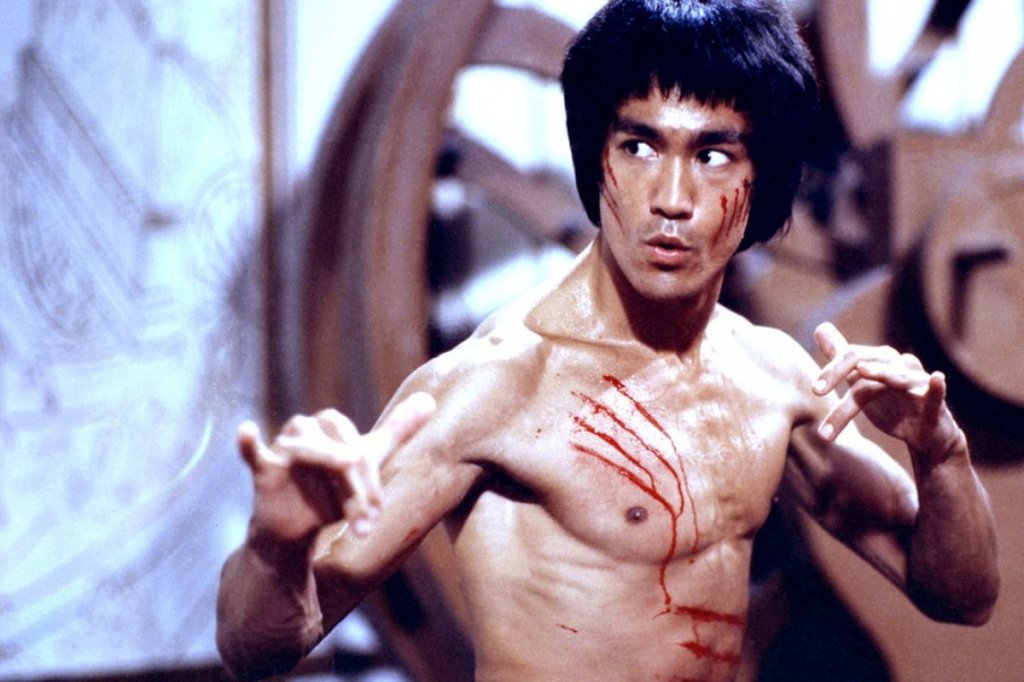
Similarly, the Hollywood cameos echoing throughout the films are pure style over substance. For example Steve McQueen, Roman Polanski and Bruce Lee feature but these are mostly inconsequential encounters. The Bruce Lee representation and scene is actually really funny as Cliff Booth and the martial arts star face off in a hilarious flashback. Typically, Tarantino has caused controversy with his Bruce Lee (Mike Moh) rendition. Personally, I respect that people may be offended, however, it’s more comedic and iconoclastic rather than overt racism. After all, this is a fairy-tale vision of Hollywood and not a documentary. Plus, Tarantino knows he’s going to piss people off so it’s obvious he’s playing with people here.

While Bruce Lee’s persona is playfully satirized or racist depending on your point-of-view, Tarantino’s representation of the Manson family is more damning. It’s clear he absolutely hates hippies, especially acid-looped killer hippies. Dalton and Booth represent the old-school, honest Hollywood working class, so are the antithesis of the drop-out youths. The culture clashes between this era and the new flower-power cults is something Tarantino explores. Charles Manson, who barely features, is a ghost-like figure though. Instead, it is the character of Tex (Austin Butler) and the females of the commune who are most prominent.

Margaret Qualley as Pussycat is especially hypnotic in her role. Exuding both sexuality and acid-drenched nihilism, Pussycat is a siren hitcher, luring drivers to symbolically crash against the cliffs. For me, Tarantino should have made way more of the old and new California culture clash themes, as they resonated powerfully when on screen. Plus, the scenes on the commune were actually quite creepy, so more should have been made of this threat from a dramatic perspective. Lastly, the irreverent and violent final act carnage exploits the clashing of these two different cultures, but more could have done throughout to enhance this dynamic.

Overall, Once Upon A Time In Hollywood (2019) is a near three-hour arthouse classic. If you like films about film and TV making, driving, feet, ensemble casts, films within films, cinema-going, Los Angeles, more feet; and hanging with the marvellous DiCaprio and Pitt in a 1969 setting, then you will love this beautifully rendered and lovingly crafted film about Hollywood. Otherwise, you will probably find it a boring, indulgent and style-over-substance folly. Either way you have to admire Tarantino’s exquisitely controlled writing and direction. He certainly does!!

Safe to say though Tarantino will not care either way, because most of his filmic output has made a lot of money at the box office. This has now allowed him the luxury, like that of true cinema artists such as Kubrick, Altman and Antonioni, to make whatever films a studio is prepared to give him the money for. He’s basically making films for himself and doesn’t care if the audience likes it or not.

I personally found myself magnetically drawn to Tarantino’s vision and from a purely filmmaking and artistic perspective I was totally immersed throughout. Having said that, if the incessant driving and shots of dirty feet were cut and Dalton and Booth had been given a proper plot, rather than the thin stranded narrative within the impressive gallery of cameos and set-pieces, I would definitely expect to be writing about one of the best films ever made.

Mark: 9.5 out of 11

GREAT ENSEMBLE FILM CASTS #2

GREAT ENSEMBLE FILM CASTS #2

Way back in September 2015 I wrote an article listing some great ensemble film casts. Please feel free to read it here at this link.

If you can’t be bothered to read it the list of films are as follows:

12 ANGRY MEN (1957)
AVENGERS ASSEMBLE (2012)
GRAND BUDAPEST HOTEL (2014)
INCEPTION (2010)
LA CONFIDENTIAL (1997)
THE MAGNIFICENT SEVEN (1960)
MAGNOLIA (1999)
MEANTIME (1984)
THE OUTSIDERS (1983)
PULP FICTION (1994)
SHORT CUTS (1993)
TINKER, TAILOR, SOLDIER, SPY (2011)

Never one to worry about originality, I have decided to follow up this article with another list of great ensemble film casts.

The challenge second time round though is to EXCLUDE the films of directors or franchises ALREADY LISTED.

For those who may have lazy-read this I WILL REPEAT!!!

NO DIRECTOR’S OR FRANCHISE WORK FROM LIST ONE WILL BE ON LIST TWO!!!

It would be so easy to include all of Paul Thomas Anderson, Quentin Tarantino’s or the Marvel films. So I am not going to do that. Anyway, here are another TEN films with great ensemble casts (in alphabetical order).

ANCHORMAN: THE LEGEND OF RON BURGUNDY (2004)

AUGUST: OSAGE COUNTY (2013)

THE DIRTY DOZEN (1967)

GOSFORD PARK (2001)

THE GREAT ESCAPE (1963)

HAIL CAESAR (2016)

LORD OF THE RINGS: FELLOWSHIP OF THE RINGS (2001)

SUICIDE SQUAD (2016)

THE WILD BUNCH (1969)

THE WOLF OF WALL STREET (2014)

FILMS THAT GOT AWAY #1 – REVIEW – SUSPIRIA (2018)

SUSPIRIA (2018) – FILM REVIEW

Directed by: Luca Guadagnino

Produced by: Marco Morabito, Brad Fischer, Luca Guadagnino, Silvia Venturini, Francesco Melzi d’Eril, William Sherak, Gabriele Moratti

Screenplay by: David Kajganich – Based on Suspiria (1977) by Dario Argento and Dari Nicolodi

Cast: Dakota Johnson, Tilda Swinton, Mia Goth, Angela Winkler, Ingrid Caven, Elena Fokina, Chloe Grace Moretz, Malgosia Bela, Lutz Ebersdorf, Jessica Harper etc.

Music by: Thom Yorke

Cinematography: Sayombhu Mukdeeprom

**MAY CONTAIN SPOILERS**

There are so many films released that it is virtually impossible to see them all. Plus, even if you didn’t have to work to earn a damned wage or physically need sleep you still wouldn’t be able to watch everything at the cinema. More specifically though, we may choose NOT to go to see a film on the big screen for certain reasons. Collectively, I consider these movies to be “one’s that got away!”

Thus, in a new section called, unsurprisingly, FILMS THAT GOT AWAY, I will be reviewing films which I missed first time round at the cinema and have subsequently caught up with on Sky, Amazon, Netflix, Blu-Ray or even good old-fashioned terrestrial television. I will consider the film critically as entertainment and why I missed it first time round. As usual the film will be marked out of eleven.

When the UK release of Suspiria (2018) was announced there were many reasons I was immediately put off from wanting to see it. Firstly, despite having watched it three times, I genuinely could not stand the original Dario Argento film. I know people consider it a horror classic; however, I think story wise, it’s a bad film. It’s neither scary from an emotional point-of-view or actually makes any sense logically. I know it’s meant to be based on surreal and nightmarish imagery, montage and performance, but the story or characters did not connect with me. The colour design, gore and soundtrack are outstanding but, overall, I felt I was trapped watching the manic outpourings of an Italian psychopath.

The second reason I did not want to watch it is I haven’t always got on with Luca Guadagnino’s cinematic works. Don’t get me wrong, he is a brilliant filmmaker. However, I find him an indulgent artist whose tone, pace and direction seems haphazard. Of the films I have seen, I Am Love (2009) was a brilliant character study, anchored by a stunning Tilda Swinton performance. But A Bigger Splash (2011) and Call Me By Your Name (2017), were expertly constructed but indulgent and over-rated travelogues littered with narcissistic bores. Nonetheless, I really liked Suspiria (2018). It is almost, but for Guadagnino’s typical excesses, a horror masterpiece.

Set in 1977 (when the original was released), at the height of the Cold War in divided Germany, Suspiria, is a heady mix of rites of passage, cold war and horror genres. There are many narrative strands with which the screenplay, by David Kajganich, attempts to balance. Further, we also have personal, political, religious, artistic, gender and communal themes prevalent through the story. While it’s an ensemble cast the focus is Dakota Johnson’s Susie. She is a young aspiring dancer, from an Amish background, who joins the world-famous Markos dance company. In the process she is determined to impress Tilda Swinton’s commanding mentor. The parallel narrative involves psychiatrist Dr Josef Klemperer and his investigation into a missing patient (Chloe Grace Moretz); who also happens to be a dancer from the troupe.

As the story unfolds Susie proves herself an incredibly powerful dancer. At the same time, it is revealed that the elders and teachers of the dance group are hiding a sinister secret with darkness and ritual to the bloody fore. Memorable dance sequences full of beauty, energy and gore dominate, with Dakota Johnson giving an impressively physical acting portrayal. I also liked the nuanced control within her character as she grows stronger with each dance. Meanwhile, further dark events occur as Dr Klemperer’s investigations draw him closer to the troupe’s shadowy doors.

As I said, Suspiria is almost a horror masterpiece. The filmmaking, cinematography, art direction, choreography and score by Thom Yorke all collide to create an incredibly tense and terrifying experience. Moreover, while I was fully committed to the characters in the dance troupe and Susie’s movement up the ranks, the choice to juxtapose the socio-political events seemed to belong in another film. The religious context and notions of family and matriarchal dominance were incredibly powerful too and served the horror well. However, Guadagnino, in my humble view should have shaved some scenes from the running time. While I much prefer this film to the Argento original, a further edit for pace would have made this even better. Nonetheless, it had me riveted throughout through the sheer quality of filmmaking. I was incredibly impressed by the melding of dance and death. Indeed, the final orgiastic ritual with buckets of blood, decapitations and gnarled monsters was supernaturally unforgettable.

Mark: 9 out of 11

MY CINEMATIC ROMANCE #17 – SPIKE LEE

MY CINEMATIC ROMANCE #17 – SPIKE LEE

Shelton Jackson “Spike” Lee has been a prolific actor, director, producer and polemicist for some time now. An ultra talented and outspoken cinematic artist, he has directed thirty fiction and documentary films since his debut feature film She’s Gotta Have It (1986). Plus, all manner of promos, commercials, music videos, short films and television series.

To celebrate his work and the fact he finally got recognised for his amazing filmmaking skills by the Oscars this year, I would like to highlight, five of his finest films that are worth watching and rewatching. An energetic firebrand of a director he has made films in many genres and is a risk-taker in subject, theme and style. Whether you agree with what he has to say he is a filmmaker who is always creating situations and characters who must be heard. Here are some great examples of his cinematic work.

**MAY CONTAIN SPOILERS**

DO THE RIGHT THING (1986)

Spike Lee’s incendiary look at the day in the life of a Brooklyn neighbourhood finds a variety of characters coping with both rising temperatures and simmering racial tension. Lee’s brilliant script is fully of boldly written and brightly sketched characters presented via a succession of hilarious and dramatic vignettes. The formal excellence on show too from Lee is to be applauded as he uses devices from: music video and cinema to tell his rich stories. The day does not end well as the neighbourhood erupts into tragic violence with Lee proving himself adept at balancing humour, politics and tragedy in equal measure.

MALCOLM X (1992)

Arguably, Malcolm X (1992), is Spike Lee’s most significant and impressive film. It charts the life and death of a man born Malcolm Little who would grow to be anything but. After a troubled childhood he became a drug dealer and criminal in order to survive. Having converted to Islam he rejected his slave roots, going on to become one of the most outspoken voices against black oppression the world has ever seen. The project took decades to come to the screen and Lee and Washington both faced objections from many parties for their involvement. However, the finished film a masterful biography capturing the spirit of an intelligent, passionate and outspoken individual trying to right the wrongs within American society and history. Both Lee and Washington should have won Oscars for their work. The film stands ultimately as a fine cinematic tribute to a true spokesperson for a generation.

HE GOT GAME (1998)

From my basic research Spike Lee is revealed to be a New York Knicks fan. It’s no surprise then his love of basketball really shines through in this mix of sport, crime and personal drama. The story follows young hot-shot basketball prospect, Jesus Shuttlesworth, and the decision he has to make in regard to which college he goes to. On paper it’s Jesus’ choice but in reality he has all manner of people attempting to influence him. These include: his girlfriend, his coach, agents, local gangsters and most pressing of all, his jailed father portrayed by Denzel Washington. Ray Allen is excellent as Jesus and Lee invokes an empathetic character study with lashings of verve and style.

INSIDE MAN (2006)

Spike Lee directs in confident style, with Denzel Washington and Clive Owen both excellent as the lead cop and main criminal. Jodie Foster is brilliant too as a venal fixer brought in by Christopher Plummer’s bank owner. What makes Lee’s direction ping here is his deft handling of a complex structure within the heist genre. Moreover, Lee demonstrates he is able to convey a genre story with impeccable skill and deliver fine screen performances to boot. I especially loved the diversity of the supporting characters and the film oozes a pure New York atmosphere throughout.

BLACKKKLANSMAN (2018)

BlacKKKlansman (2018) is a complex film which expertly mixes many genres, infusing musical, thriller, Blaxploitation, comedy and documentary styles, making it a joy to experience. Spike Lee has never been afraid of experimenting and sometimes his films have not worked because of it. However, with this he succeeded in making one of the best films of 2018. It should have won Best Film Oscar in my view. It is thought-provoking but never preachy for the sake of it and uses humour most often as a weapon to undermine the senseless ideologies of the KKK. Indeed, in ridicule there is hope they may eventually be side-lined to the shadows of history.

HORROR DOUBLE BILL: THE DEAD DON’T DIE (2019) & ANNABELLE COMES HOME (2019) REVIEWS

HORROR DOUBLE BILL REVIEWS

THE DEAD DON’T DIE (2019)

Written and directed by: Jim Jarmusch

Cast: Adam Driver, Bill Murray, Chloe Sevigny, Tilda Swinton, Steve Buscemi, Caleb Landry-Jones, Danny Glover, Selena Gomez, Tom Waits and many more.

As a big fan of Jim Jarmusch films and a big fan of zombie films I was really looking forward to the Dead Don’t Die (2019). Interestingly though, it neither works as an arthouse horror film or dramatic zombie film. There’s a lot to enjoy, especially with the deadpan wit, but overall the film felt underwhelming to me.

Set in the fictional American town of Centerville, we find out fracking or some similar stupid human being industrial act has caused a global disaster. Suddenly we get a disparate set of townsfolk including hermits, Republican farmers, waitresses, cops, morticians, College kids, all fighting the living dead. The acting led by Adam Driver, Bill Murray and Tilda Swinton is the best thing about the film. Yet, while I was chuckling at many of the dry lines of dialogue, the film falls flat with a plodding and disappointing ending. Jarmusch, in his inimitable style essentially undermines the raft of intriguing archetypes he has established with a deconstructive and knowing final act.

I think the main problem is Jarmusch, while paying lip service to the likes of George A. Romero, did not commit fully to making a proper zombie film. This is a comedic parody and satire which lost me when Adam Driver’s character become overly self-reflexive. Jarmusch sets up some great characters to fight the dead but throws them away for clever-clever-Godardian-oh-we’re-in-a-movie references which undermine the comedy, drama and horror. I love Jarmusch’s style and he has made some cult cinema classics. This, alas, is not one of them.

Mark: 6.5 out of 11

ANNABELLE COMES HOME (2019)

Directed and written by: Gary Dauberman

Cast: McKenna Grace, Madison Iseman, Katie Sarife, Patrick Wilson, Vera Farmiga etc.

Having watched the Dead Don’t Die (2019), I decided to make the most of my Odeon Limitless card and watch the next instalment in a franchise which shows absolutely no sign of dying. I really liked The Conjuring and Insidious franchises, which involved horror experts including James Wan and Leigh Whannell. However, the monstrous creations such as Annabelle and The Nun are pretty thin in terms of credible horror threat and cinematic quality. Having said that this latest film Annabelle 3 film already made $200 million at the box office, so what do I know!?

The story is pretty threadbare, but it concerns Ed and Lorraine Warren’s demonic spirit room which, for some bizarre reason they entrust a teenage babysitter, Mary Ellen (Madison Iseman) and their daughter, Judy (McKenna Grace), NOT to open while they’re away. Guess what happens? A friend of Mary Ellen, Daniela (Katie Sarife), opens the spirit room and all hell breaks loose due to Annabelle the evil doll causing all the devilish spirits to rise up and frighten the characters half to death.

I actually liked the cast of young actors here, most notably McKenna Grace, who is very talented. Daniela’s character also had some decent motivation for her ridiculous actions as she sought closure with her dead father. At times I was quite fearful due to some decent jump scares, deadly creatures and creepy use of lighting tricks. However, the whole thing seemed like a cash-in with new monsters being introduced to expand the franchise further. Even fine actors such as Patrick Wilson and Vera Farmiga seemed happy, laughing all the way to the bank with their book-ended cameos.

Mark: 5.5 out of 11

CLASSIC FILM REVIEW: DON’T LOOK NOW (1973)

CLASSIC FILM REVIEW: DON’T LOOK NOW (1973)

Directed by: Nicolas Roeg

Produced by: Peter Katz

Screenplay by: Allan Scott and Chris Bryant

Based on the story: Don’t Look Now by Daphne Du Maurier

Cast: Julie Christie, Donald Sutherland, Renato Scarpa, Massimo Serato, Hilary Mason, Clelia Matania, Sharon Williams etc.

Cinematography: Anthony B. Richmond

Music: Pino Donaggio

**MAY CONTAIN SPOILERS**

I watched this classic film again on the big screen at the British Film Institute in a 4K restoration recently. It has not lost any of its cinematic power. Don’t Look Now (1973), indeed, remains one of the greatest films in the horror and thriller genre of all time.

The story is a powerful study of grief and how a couple vainly attempt to overcome the tragic death of their young daughter, Christine. The opening scene is a masterclass in image system building, cinematography, performance and editing. It is an incredible example of pure cinema, establishing the dread and suspense representative throughout the film. It truly is an iconic sequence and a rarely bettered opening cinematic salvo.

A few months later, the bereaved parents, John and Laura Baxter, are in Venice for his architectural work on an ornate church. He seems to be handling Christine’s death by throwing himself into this project. Laura is more sensitive and wears her emotions close to her skin. An encounter with two mature women causes her grief to explode as one, a psychic, states she can see Christine on the “other side.” The girl is passed but happy and smiling in the spirit world. John is sceptical, but Laura is overjoyed there is a chance to make contact with Christine.

After this encounter Christine seems to appear within the Venice tunnels, her footsteps and laughs echoing in the darkness. With a murderer also on the loose in Venice, the creeping fear within the story heightens and the suspense intensifies. With Laura keen to contact Christine again, themes and symbols relating to religion, the afterlife and occult all combine to add to the terror. Moreover, religious iconography, water, the red mac, children, tunnels, mistaken identity, death, past, present and future also add to the rich tapestry of images.

Julie Christie and Donald Sutherland are so natural in their roles. They give beautiful and haunted acting performances as the bereaved couple. The memorable love scene contained within the second act was very controversial at the time. However, the editing, loving tenderness in performance and sumptuous score illuminate a brief moment of reprieve from the prior horror and terror to come.

The ending of the film contains two big reveals which will shake even the most experienced horror genre viewer. Interestingly, when released the film was double-billed with The Wicker Man (1973), so lord knows what audiences were feeling when they left the cinema. Lastly, Nicolas Roeg and Anthony B. Richmond shoot and direct the film with precise and spectacular style. Shadows threaten, water forebodes, and the masque of the red death hangs heavy over proceedings.

With young filmmakers such as Ari Aster causing a stir with contemporary horror films about grief, death and rituals, I would certainly advise you to catch Don’t Look Now (1973) on the biggest screen you can find. It was a masterpiece of cinema when released and remains so today.

Mark: 10.5 out of 11

SIX OF THE BEST #18 – FILM ANTHOLOGIES

SIX OF THE BEST #18 – FILM ANTHOLOGIES

While we all love a good proper feature film containing one continuous narrative, the anthology or portmanteau film has thrown up some fine cinematic entertainment over the years. Generally, an anthology film can be described as a collection of works with a linked theme, genre, style and author etc.

Thus, in my occasional Six of the Best series I have decided to pick some favourite ones. To make it more interesting I have chosen them from different genres. Otherwise, I would have just chosen all horror films. So, here are six of the film anthology films worth watching.

**MAY CONTAIN SPOILERS**


THE BALLAD OF BUSTER SCRUGGS (2018) – WESTERN

The Ballad of Buster Scruggs is a mischievous alchemy of stories. Here, the Coen Brothers reach into their cinematic bag of tricks to deliver an entertaining and memorable collection of characters, songs, bloody death, jokes, pathos, landscapes, snappy dialogue, dark humour and action. Coen’s films often improve with each viewing as their work is so full of stylish depth and this is no different. Quite often, you’re laughing so much you miss the philosophical happenstance which is occurring in many of these fine stories.

Image result for buster scruggs

DEAD OF NIGHT (1945) – HORROR

It seems sacrilege not to include the likes of George Romero’s Creepshow (1982) or one of Amicus’ unhinged collections such as Dr Terror’s House of Horror (1965). But, having watched this classic recently I can certainly say it has some brilliant and scary stories which stand the test of time. Full to the brim with the cream of British acting, writing and directing talent, the standout tale is Michael Redgrave’s troubled ventriloquist, although the whole film is a nightmarish treat for horror fans.

Image result for DEAD OF NIGHT

FANTASIA (1940) – ANIMATION

With the current trend for Disney to remake their back catalogue as “live” action films in mind, I very much doubt they will doing this with Fantasia. Conceived as a short to re-invigorate the slowing career of Mickey Mouse, the film is unlike any other Disney have made. It consists of experimental, non-narrative and hallucinogenic vignettes mainly set to wondrous classical music. A masterpiece of hand-drawn animation, style, colour and design, it’s certainly not just for kids. I recall many images giving me nightmares when saw it as a child and it remains a powerful cinematic work to this day.

Image result for fantasia

NIGHT ON EARTH (1991) – COMEDY

I was going to choose Woody Allen’s erotic sketch film, Everything You Wanted to Ask About Sex but were Afraid to Ask (1972), for the comedy section. However, I decided to select a more deadpan and character oriented film. What better then, than a Jim Jarmusch curiosity. I love the concept of the film as Jarmusch sets several themes and parameters in place. There are five slice-of-life vignettes set on the same night in the cities of Helsinki, New York, Rome, Paris and Los Angeles, all starring some of Jarmusch’s favourite actors. Relationships and quirky interactions between cab driver and passenger are explored in the filmmakers’ inimitable style.


PULP FICTION (1994) – CRIME

Quentin Tarantino’s second feature film remains a fresh masterpiece of colliding gangsters, uber-cool hitmen, fixers, boxers, sexual deviants, femme fatales, drug addicts and general criminal types. With an over-lapping timeline that kind of does a figure of eight, we get stories ranging from a couple robbing a diner; a boxer double-crossing a crime boss; and an employee almost killing his boss’s wife. Tarantino breathes life into the crime genre and the stock pulp characters with one of the greatest screenplays ever written; full of incredible dialogue, startling twists and a brilliant ensemble cast.


WILD TALES (2014) – DRAMA

Damián Szifron conjures up a delectable and devilish set of stories mostly based around the themes of obsession and revenge.  It opens with a breath-taking little prologue featuring a horrific incident on a plane and culminates in arguably the wildest tale when the Bride goes on the rampage at her wedding.  Everyone’s favourite Argentinian actor Ricardo Darin pops up in the middle as an explosives expert who enacts revenge on City Parking fascists. I love the whole thing as the film delivers a full deck of twists that master of the macabre Roald Dahl would be proud of.