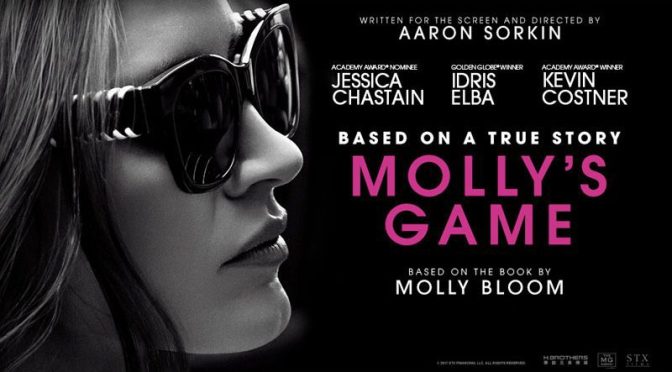
Produced by: Mark Gordon, Amy Pascal, Matt Jackson
Screenplay by: Aaron Sorkin
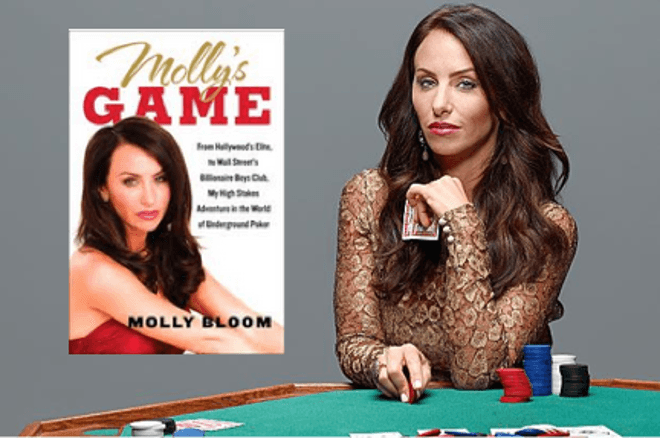
Based on: Molly’s Game by Molly Bloom
Starring: Jessica Chastain, Idris Elba, Kevin Costner, Michael Cera, Jeremy Strong, Bill Camp
As a species we like to have fun. It makes us feel good to manufacture a chemical reaction in our minds and body to create a high and distance ourselves from our own mortality. One such means of fun is gambling. It is fun right: placing bets on the outcome of a game be it chance or skill? I mean it must be fun because so many humans do it, right? Nothing bad comes of fun surely! Nothing bad comes of gambling? Wrong! Of course it does.
Gambling is one of the stupidest things a human being can do. You are willingly handing your money to a bookie or competitor or casino in a game of chance in the hope of winning money. Your hard earned cash is at the mercy of: the turn of a card; the roll of a dice; the kick of a ball; the speed of a horse; and the spin of a wheel. To me THAT is crazy. I know because I used to gamble on the horses and loved it but not when I lost. That high soon dissipated and fun twisted and dug and before you know it you’re in a low-hole and light is getting further and further away the deeper you go.
There are many players out there who will say poker is not a game of chance. It is a keen game of skill relying on intelligence, guts and psychological warfare. I would go along with that but it is, unless fixed, always reliant on major elements of fate. There are a plethora of multi-millionaires out there who have got rich playing poker no doubt. Yet, I bet there are some sob stories too of players who have lost everything at the table.
Such characters litter Aaron Sorkin’s excellent biopic of poker “madam” Molly Bloom. You’ve got the bankers, hedge-funders, cowboys, sporting legends, A-list actors and gangsters; all co-mingling around a green baize table facing off over the turn of a card. For me it’s an ostentatious representation of hedonistic narcissism. I mean: that money could be used for good but instead is being used for pointless card games which only serve to boost egos and satisfy bottomless, black-hole addictions. Nonetheless, that doesn’t mean the film is not entertaining because it is.
Sorkin asks us to, at times, empathise for a criminal in Molly Bloom, however, she must be admired for her ballsy attitude, intelligence and organisational skills. Much of the kudos for the film goes to Sorkin’s fantastic script and the sterling performance from Jessica Chastain; who possesses a magnetic on-screen aura reminiscent of the Hollywood stars of yesteryear. Couple of reservations in that with a story about a powerful woman it was disappointing that Costner’s father and Idris Elba’s lawyer got the best speeches at the end of the film. Moreover, at no point did I REALLY care about anyone, aside from Molly when she gets in too deep. But that’s the point: the professional poker world is a shark pool full of predators and Bloom’s story is a complex one, raised above that of your standard crime drama by a zinging screenplay and Jessica Chastain’s nuanced acting.
In this stinking cesspool of a world run by greedy corporations, bringers-of-war and crazed megalomaniacs it’s important one finds some solace with which to hide from the slings and arrows of this venal society. Indeed, one has to keep an eye out from the barricades and parapets, holding out a shield to deflect, and mirror to reflect, the emotional barbs of every day existence. One such means of deflection is to laugh at the world and its leaders, gods, physicians, media outlets and political snake-oil salesmen, who twist and dance and continually sell us bullshit on a daily basis.
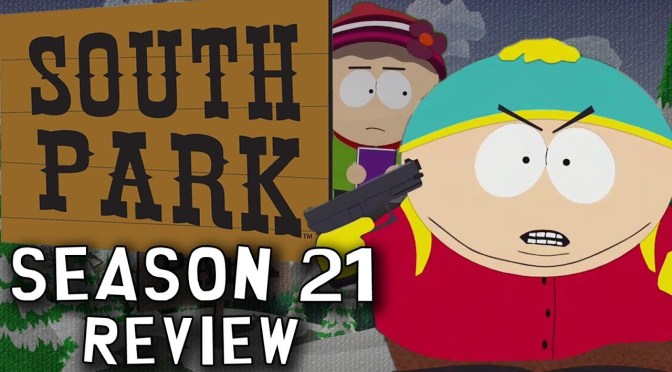
Television is a valuable tool with which to cocoon one’s heart and mind against the stream of negativity and injustice brought down up on us within the oppressive capitalist system. It gives us a chance to laugh and cry at the world through comedy and drama. One such longstanding shield against the tide of money and war is the always-relevant South Park. For twenty-one seasons it has now poked, prodded, electrified, boiled and defecated on the sacred cows of civilisation such as: religious figures, moronic yet dangerous politicians, gluttonous fats cats, media whores and narcissistic plastic celebrities.
After the incredible satirical and narrative success of Season 19 (review here), where showrunner Trey Parker committed to a superlative serialization structure the bar was raised very high. Thus, Season 20 (review here), suffered in comparison as it over-egged the pudding somewhat with a convoluted multi-stranded plot dominated by internet cyber-trolling. Nonetheless, South Park, even firing at three-quarter’ capacity is funnier, on-point, and more scathing than any show out there.
As South Park is a phenomenal staple of my televisual calendar I was very happy when: Cartman, Stan, Randy, Cartman’s mum, Wendy, Butters, PC Principal, Kyle, President Garrison et al were back in Season 21 with satire of the highest order! Moreover, gone was the complex interlinking plots and in this run we experienced some wonderful stand-alone episodes which ran a zeitgeist hyper-link to many of the cultural, political and social events of 2017.
The one thematic web which was woven through the ten shows was Cartman’s dysfunctional and destructive relationship with his girlfriend Heidi. This narrative found Heidi actually becoming a female Cartman much to the other kids’ horror. Here, the writing mined some familiar, almost soap-operatic, but mature story lines to much satisfaction overall; especially in episode 7, Doubling Down, and episode 8, Moss Piglets.
Season 21 was, in keeping with the previous 20 seasons, crammed to the brim with references to media and socio-political culture, while also being fucking hilarious. The opening episode White People Renovating Houses poked humour at the latest Alexa culture and the hailstorm of “flipping” property shows. While Randy, the hare-brained addict, became obsessed with genetically re-correcting his heritage in the hilarious 3rd episode: Holiday Special.
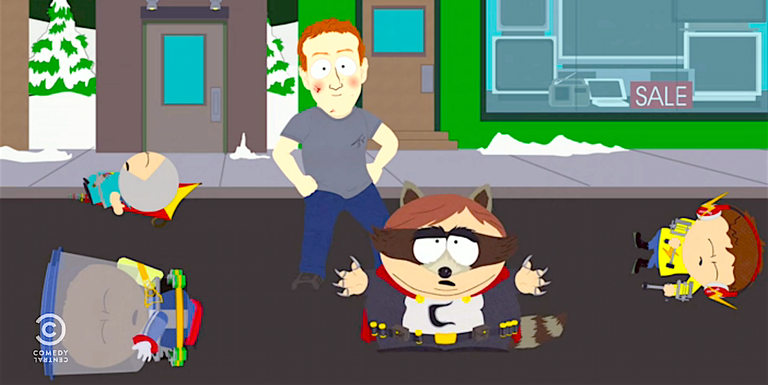
Of course the kids took centre stage in many of the shows, notably Franchise Prequel, where their superhero alter egos – scurrilously led by Cartman’s ‘Coon’ – attempt to get their own Netflix and movie franchise off the ground to rival Marvel and DC. Mark Zuckerberg makes an appearance as a goofy, geeky Scott Pilgrim-type-video-game-end-boss too. Here the seeming bottomless pit of money that is called Netflix is also amusingly slated; mainly due to apparently green-lighting any project irrespective of its’ quality.
Trey Parker and his team took many swipes at the egregious political and, arguably hysterical social media “movements”. In episode 6, Sons of Witches the Harvey Weinstein “situation” was skewed, with all parties involved: men, women and social media keyboard warriors critiqued with much humour. Of course, based on the evidence presented in the media, Weinstein is a stain on humanity, a sexual animal exploiting his powerful position and money-balls! But Sons of Witches was keen to point out that while many men are dicks, they are not ALL bad witches so perhaps some calm and perspective is also required.
While the final two episodes Super Hard PCness and Splatty Tomato ended with President Garrison gone into hiding due to the bombing of Canada, the episodes also had some fine gags on recent horror adaptations It (2017) and Stranger Things (2017). But my favourite episodes of the series were Put It Down, which put the boot into that moron in the White House and his inexplicably dumb twitter feed that spews out an inordinate amount of bile and idiocy. Finally, episode 5, Hummels & Heroin, brilliantly satirised prison movies by transplanting the genre tropes to an old people’s home; advocating ire for pharmaceutical companies pushing drugs on old people and damning poor medical practices.
What makes South Park great and still valid is it does not takes sides. The liberal left and fascistic right are all shown to be, in certain circumstances, controlling and hysterical. Trey Parker and his team do not respect authority or celebrity or media fads or political correctness or social bandwagons; so long may their intelligent, crass, scurrilous, scatological, offensive, all-singing, all dancing satire continue! With Trump in the White House some may say satire is dead but we need the South Park team alive to protect us from this slew of never-ending societal insanity and above all else: MAKE US LAUGH!
Starring: Christian Bale, Rosamund Pike, Wes Studi, Adam Beach
Music by: Max Richter
Death and America seem to go hand in hand down the realms of history; entwined bedfellows with society, industry and apparent civilisation being watered by blood and bone and marrow of humanity. The coagulation of Native American lives spread to the dust could be argued to be one of the most despicable genocidal acts ever perpetrated against a generation. And what was it all for? So, human beings from one side of a huge ocean can take what essentially belonged to the indigenous men, women and children of what we now know is called the United States of America. Red dust scorches that land and people and it’s a stain which will never ever be removed.
Even in the last one hundred years and more the Neo-Americans have militarized and invaded many other countries borne, on occasion for the greater good but generally to colonize, re-politicize and scavenge the goods of those said lands. Thus, it is never surprising when the natives choose to repel their invaders as they’d prefer their land to remain their own. For the price of defending their land history has named them savages and other cruel labels in an attempt to differentiate their culture and make them the enemy. Of course, there are good people within the U.S.A who oppose such invasions but the truth remains even they live on blooded ground.
The weight of guilt and pain and death hang heavy in Scott Cooper’s slow-moving and elegant Western. It’s a character driven piece with Christian Bale, Rosamund Pike, Wes Studi and Rory Cochrane putting in dominant performances which convey the depressing murderous times borne out of the heinous and greedy need for progress. White man / woman’s guilt drives the narrative as at first Bale’s soldier refuses to accompany his enemy back to his homeland. Is it more because of the deaths of his own men on the battlefield or because he does not want to face up to his own crimes against the Native Americans?
There are no easy solutions in this glacial paced, beautifully shot Western. The audience is required to analyse the characters actions and make up one’s own mind. There are no black hats or white hats save for the denouement involving the four horsemen that drift over the horizon with death in their eyes. Even the Comanche horde who perpetrate the wicked attack on Pike’s family at the beginning, while unsympathetic, are a product of the barbarity committed by the American army. Overall, this is a genre-defying Western built more on character rather than all-out action. Each slow plot turn went against my expectations and that was a positive. It’s a rich, deep and heavy film which benefits from great performances and an incredible Max Richter score.
“Just because you want it doesn’t mean it can happen.”
DIRECTOR(S): James Franco / Tommy Wiseau
WRITERS: Screenplay by Scott Neustadter & Michael H. Weber (Based on: The Disaster Artist: My Life Inside The Room, the Greatest Bad Film Ever Made by Greg Sestero & Tom Bissell
CAST: James Franco, Dave Franco, Seth Rogen, Ari Graynor, Jackie Weaver, Alison Brie, Hannibal Buress etc.
**CONTAINS MINIMAL SPOILERS**
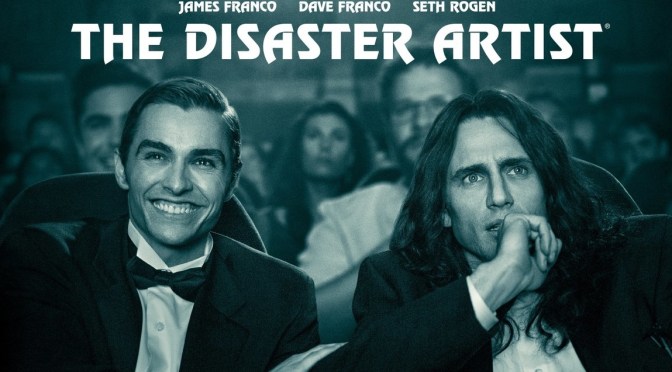
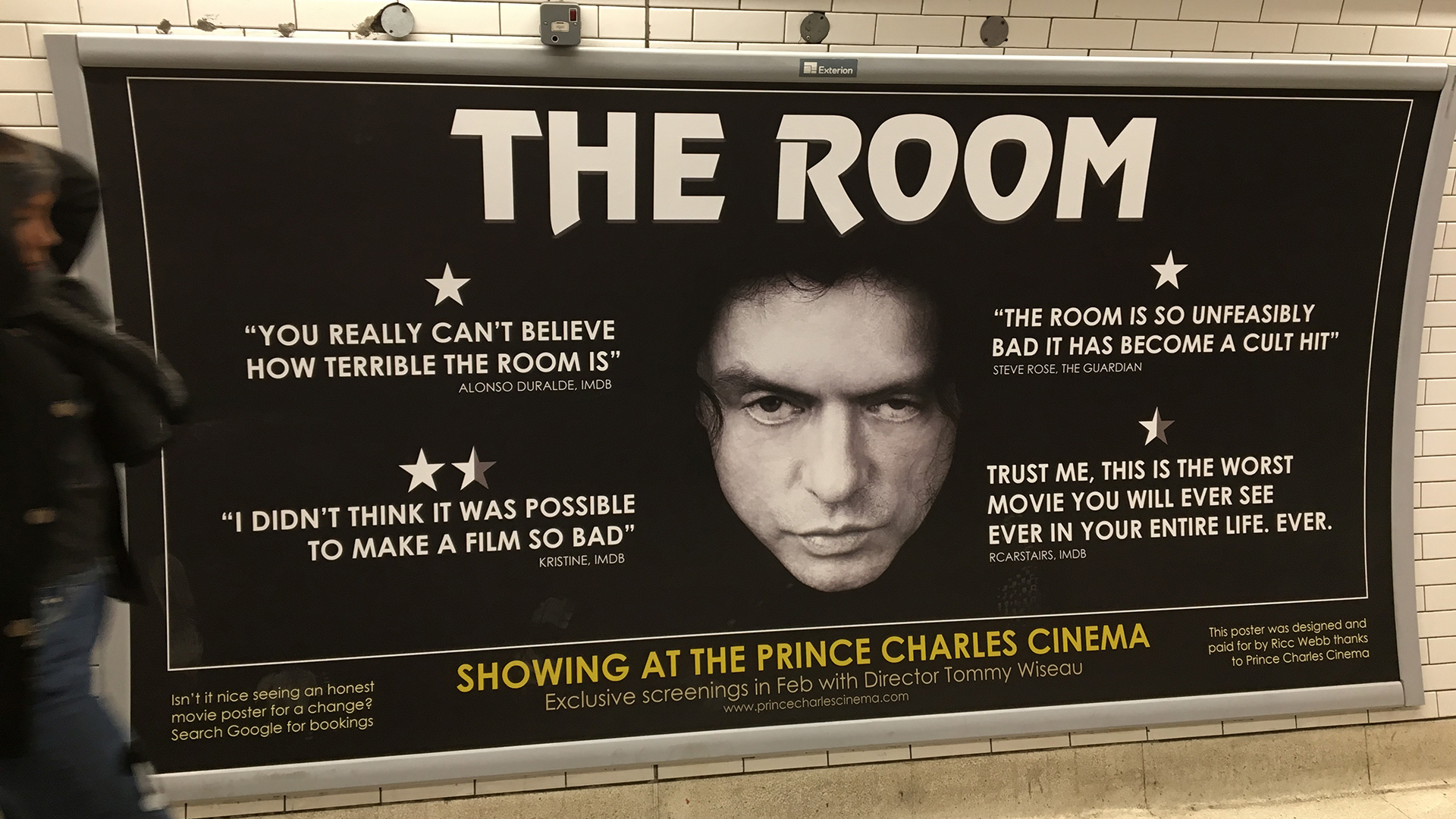
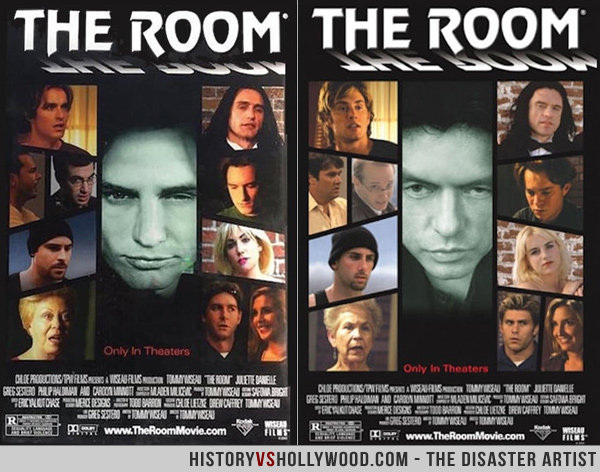
I’d never seen the cult “bad” movie, The Room (2003). I’d seen clips on YouTube of actor, producer and director, Tommy Wiseau’s magnum opus drama, and not only found it excruciatingly painful to watch but, like a car crash I couldn’t take my eyes of it, transfixed at the creative carnage on show. From the initial limited release in 2003, The Room has subsequently become celebrated as a paean to bad filmmaking as armies of hipsters and millennials laugh and quote-along to agonising performances and dialogue on the silver screen. Even during the showing of The Disaster Artist (2017) I was at, a couple of audience members quoted along to some of fantastically simulated scenes from The Room.
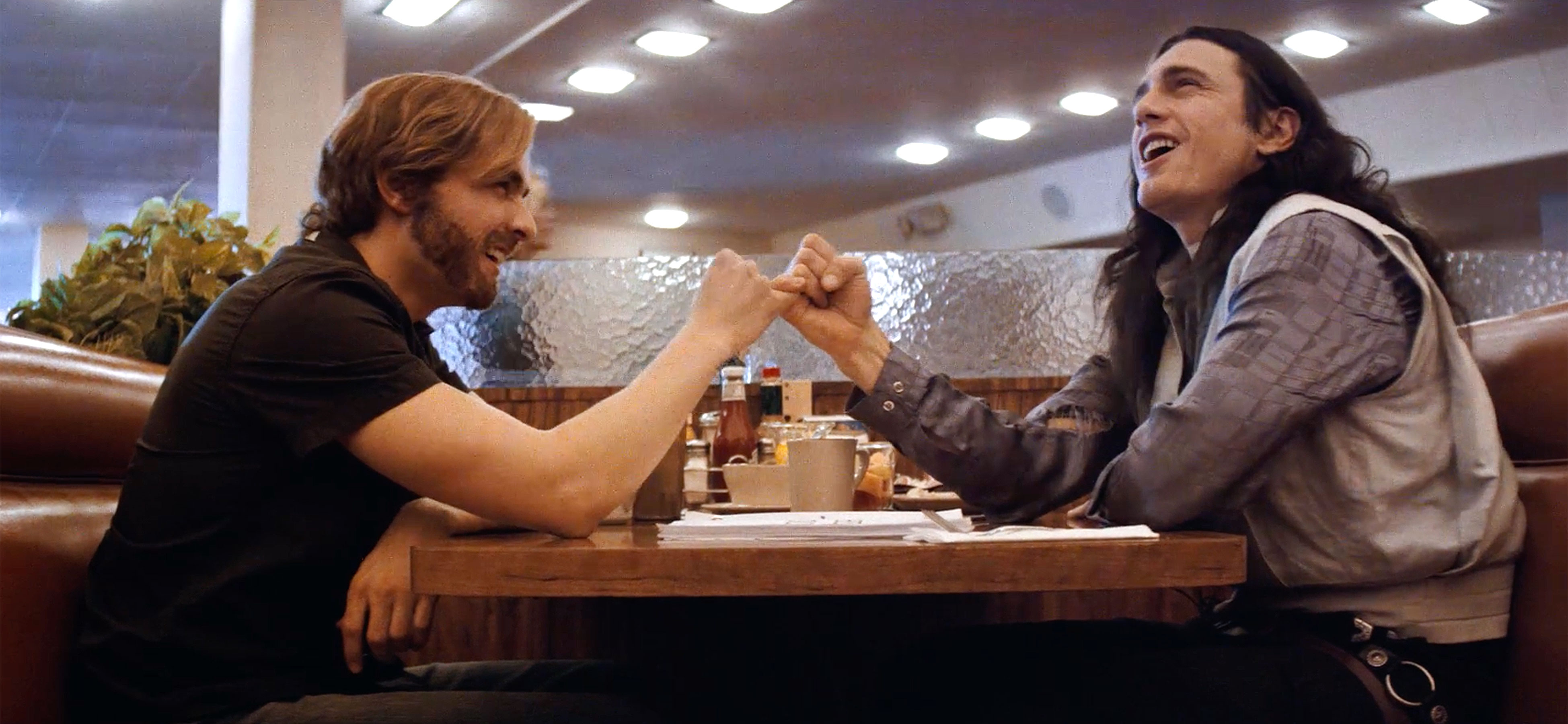
Films within films and the movie-making process have provided, down the years, a rich vein of comedic and dramatic output from: Singing in the Rain (1952), Living in Oblivion (1995), The Player (1992), State and Main (2000); plus, the film The Disaster Artist most reminds me of, Tim Burton’s glorious tribute to the hopeless, yet determined, director called Ed Wood (1994). Structured around two struggling actors in Tommy Wiseau and Gregg Sestero this hilariously skewed yet somehow likeable buddy movie is propelled by the Franco brothers’ brilliant performances as European eccentric Wiseau and the younger, naïve, and ever-smiling Sestero.
Wiseau’s character is an actors’ gift as he exists in some delusional yet over-confident Neverland. We do not know Wiseau’s age, background and how he managed to become so wealthy, yet Sestero is drawn to his outrageously up-to-eleven acting performance during a class, and the two soon become inseparable. Moving to Hollywood they valiantly try to make it as actors and the film lurches from one desperately funny scene to another. Despite their apparent lack of ability they won’t be deterred and decide if Hollywood won’t come to them then they will come to Hollywood. They will make their own movie!
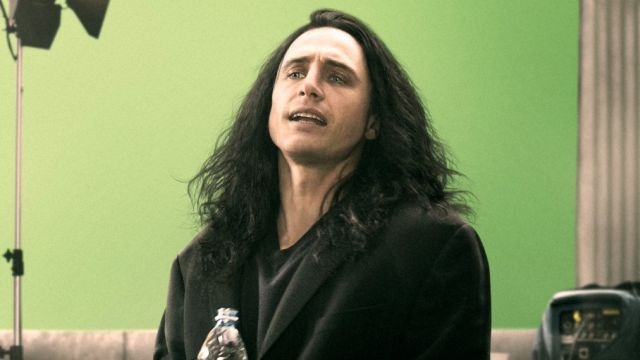
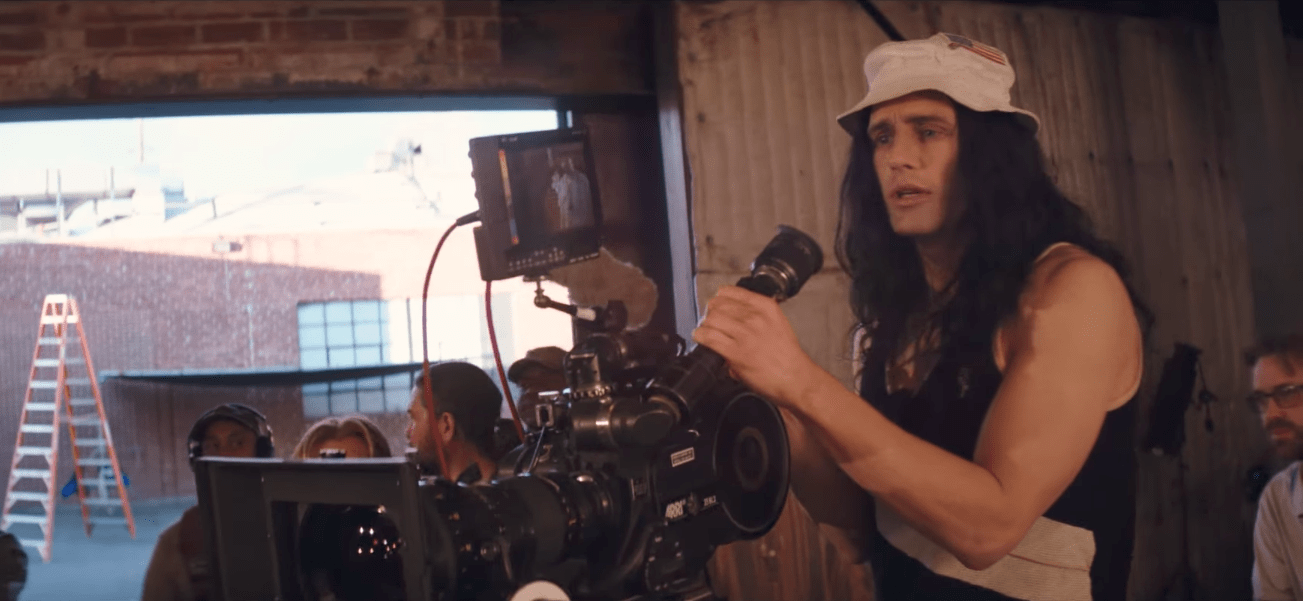
Here The Disaster Artist really becomes a wonderful comedy of filmmaking flaws as we get scene after scene where all manner of rookie errors are committed by Wiseau. James Franco really excels as Wiseau; as the production is clearly beyond him his deluded power and determination will not yield, despite run-ins with the script supervisor (Seth Rogen) and various cast members who have no idea what the hell The Room is about. Here the story becomes compelling as Wiseau’s mania and lack of discipline flies in the face of established filmmaking conventions. During the making of the The Room, Wiseau is genuinely funny, monstrous, and yet somehow sympathetic. He is a true outsider’s outsider; he is a bona fide Hollywood version of Frankenstein’s monster.
James Franco has an odd career trajectory and has kind of stamped himself as a scattergun jack-of-all-trades, giving impressive performances in such films as: Spiderman (2002), 127 Hours (2010) and Rise of the Planet of the Apes (2011); but also starring in some haphazard comedies of which the hilarious This is the End (2013) was the best. Amidst his prodigious work ethic he has also produced some turkeys (i.e. Your Highness (2011); as well as pretentious adaptations of literary classics by William Faulkner. If pushed I would say that his faithful recreation of the cult of Wiseau is his greatest performance to date. The fact he directed the film too is also remarkable as he got the pitch of parody and drama just perfectly.
Meta-textually, comedically and entertainment-wise this film is a highly satisfying cinematic experience. As the credits roll the sequence which compares scenes from The Room and Franco’s faithful simulacrum is a joy to behold. I can certainly recommend The Disaster Artist to anyone who enjoys seeing massive fails in the creative process of filmmaking. Having said that though this is a film which also pays tribute to the deluded fools trying to make it in Hollywood. I mean, however impossible it may seem Wiseau and Sestero, refuse to buckle in light of insurmountable odds. Their reward is one of the worst films ever made in The Room; but paradoxically it is a success as it has given so much joy to people at the same time. It’s this joie de vivre that the Franco’s bring forth and the underlying message is that without friendship, dreams and hopes you are nothing in Hollywood or life.
CAST: Aubrey Plaza, Elizabeth Olsen, Billy Magnussen, O’Shea Jackson Jr., Wyatt Russell, Pom Klementieff,
**CONTAINS MINIMAL SPOILERS**
Grief is something which we will, or have already experienced, and given the dramatic possibilities, death and overcoming the death of a loved one propels many narratives in the cinema, literature and music etc. Ingrid Knows Best is one such narrative and while much is made of the plague that is social media and Instagram culture, this is ultimately a story of how our anti-hero deals with the loss of her mother and, in some ways, her own identity. In short: she doesn’t handle it very well, but rather disassociates her grief and fixates on so-called on-line celebrities in order to distract herself and escape the pain.
Aubrey Plaza is brilliant as Ingrid and she is fast becoming one of my favourite actors. I loved her in Office-influenced sitcom, Parks and Recreation and the brilliant lo-fi-sci-fi-rom-com Safety Not Guaranteed (2012). However, in this film and the mind-bending science fiction series Legion (2017), she completely owns the show. Plaza has a rare skill for vulnerable insanity where she does crazy stuff but at the same time you really empathise with her character.
In the opening scene she commits an act of pretty despicable revenge but once you see her living arrangements and family situation you really gain understanding of her character. Even when Ingrid heads west and begins stalking her next obsession, Plaza’s doe-eyed-butter-wouldn’t-melt façade and crumbling inner humanity ensure you never lose empathy for her. The writing is excellent as the script creates humour, drama and skilful satire of the facile, narcissistic and selfie-obsessed culture we live in today. Elizabeth Olsen too is impressive as the “Instagram Queen” and object of Ingrid’s obsession.
Overall, this was just #brilliant #dark #funny #sad! I was really satisfied with this film and while the slightly off-kilter crime-plot-turn near the end slightly unhinged the character study, the touching and thematically perfect ending was a brilliant pay-off for Ingrid’s character. Plaza though is the shining light of the film as she imbues Ingrid with not only the pathos of a zeitgeist Travis Bickle, but also a comedic mania which really brings the satire home.
HEARING STORIES: SOME THOUGHTS AND REVIEWS ON AUDIO-BOOKS
Six months ago I was reading a physical book of Joseph Heller’s Catch 22 and I was just not feeling it. Not the actual book as it is a classic novel of our time but the actual activity of reading itself. I just did not want to read anymore. Of course, I can do it but my mind just didn’t have the desire or energy. What did this mean?
Had I been dumbed down and rendered attention deficient by virtue of the constant viewing of films, TV and the barrage of internet viewing. Perhaps my brain had been become punch-drunk and distorted my mind, like an over-the-hill boxer who’d just had one too many fights. It was confusing. I’ve always loved reading and did not want to stop.
So, I thought why not try out the Audio-book route? What’s the worst that could happen? I could LISTEN to someone reading the book to me and experience the literature from an aural perspective. I have to be honest – I’m glad I did! Because I have been listening to a number of audio-book productions and they have been very rewarding from all manner of dramatic, artistic, comical and emotional directions. Moreover, I listen to these books while walking and at the gym so my “reading” has become a very pleasing mobile pursuit.
Anyhow, here are some reviews of the books I have been listening to over the past months. If you also listen to audiobooks please feel free to suggest any good “reads” or narrations.
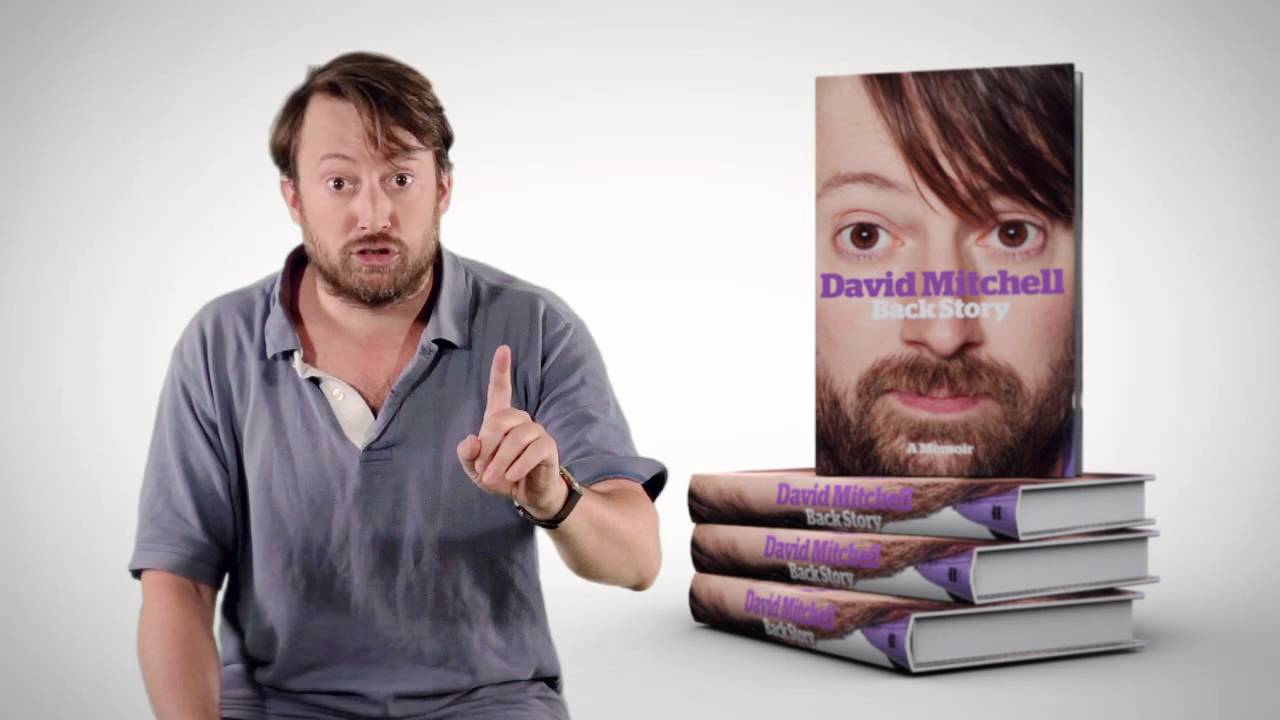
BACK STORY – DAVID MITCHELL (narrated by David Mitchell)
Comedian, actor, panel-show humourist and writer David Mitchell takes us on a literal walk of London landmarks and streets, while also wandering down his own personal memory lanes and avenues. Pedantic, neurotic, angry and insightful in equal measures this is an entertaining and intelligent journey full of hilarious rants and stories relating to Mitchell’s life; one which is blighted, not by personal tragedy, but rather a very painful bad back. His narration too is very funny and listening to him speak is like having your very own personal version of the brilliant comedy show Peep Show in your head. I especially, from a creative point-of-view, enjoyed his analysis of comedy past, present and the actualities of writing sketches, jokes and performing too.
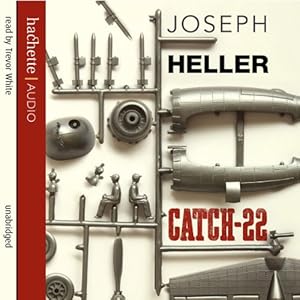
CATCH 22 – JOSEPH HELLER (narrated by Trevor White)
The novel which began my whole diversification into the audiobook territories is a startling anti-war character drama full of tragedy and black comedy, highlighting the folly of humanity during conflict. I was both laughing out loud and crying inside as Heller’s seminal work crashes us into the heart of madness during World War II. Featuring any number of crazed pilots either being killed or trying not to be killed while flying over Italy, this novel expertly takes you up and down and up and down. Heller does this with a meticulously acute writing style and via characters such as the wonderfully named: Yossarian, Milo Minderbinder, Doc Daneeka, Snowden, Nately, Nurse Cramer, Captain Aardvark, Colonel Cathcart and many more lunatics. This is a sprawling insane war-set epic which satirizes and laments the folly and destructive behaviour of mankind, and is all the more relevant today because we still can’t fucking learn to stop killing each other over ridiculous things like money, land, God and love.
DO ANDROIDS DREAM OF ELECTRIC SHEEP – PHILIP K. DICK (narrated by Scott Brick)
Dick’s classic science-fiction novel is better known now as Blade Runner and the film versions are incredibly stylish and powerful genre works. Yet, Scott Brick’s narration of Dick’s source novel is absolutely perfect in its rendition, creating a haunting pathos beyond that featured in the film. The story covers one day in the life of Rick Deckard – an “Andy” or android bounty hunter who must track down a series of superior robots of the Nexus Six variety. The original Blade Runner (1982) film did well to distil and simplify the narrative but it only touched the sides where the complex themes are concerned. The novel is far more involved with subtext relating to: simulations; animal husbandry; Artificial Intelligence; Virtual-reality religious fervour; and the existential pain or humans and robots, being explored within the rotting dystopic, Earth setting.
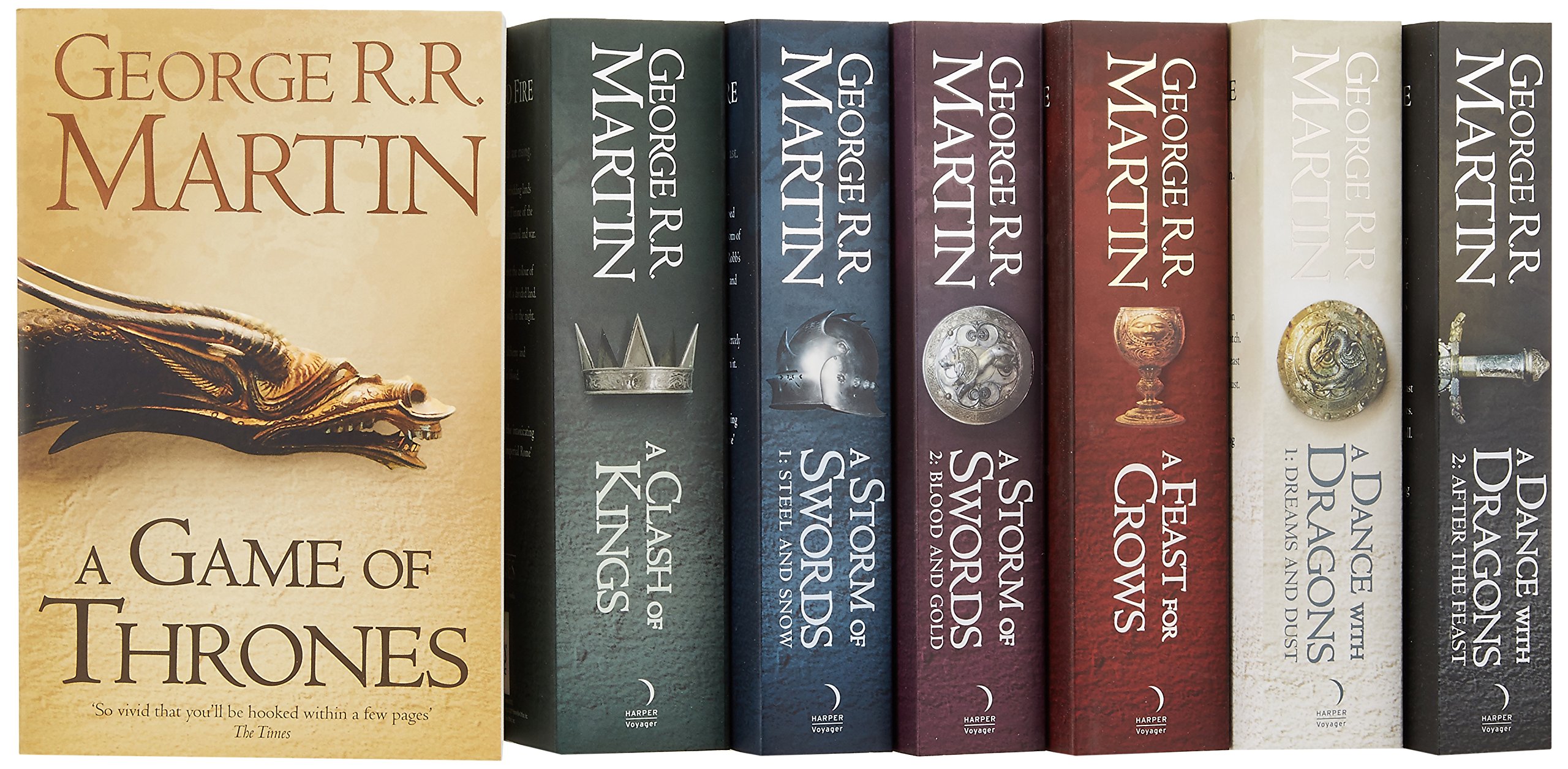
GAME OF THRONES – GEORGE R.R. MARTIN (narrated by Roy Dotrice)
George R. R. Martin’s North-versus-South-Westerosian fantasy epic has provided hours of entertainment via HBO’s massive hit TV adaptation. The original source novel is a literary monster of a book with an over 33 hours running time, so kudos to the talented, yet ageing actor, Roy Dotrice for staying alive during the recording and finding the energy to narrate it. If you don’t know the Game of Thrones TV show, it has become an iconic narrative of Starks versus Lannister’s versus Targaryen’s versus zombies versus dragons and all manner of: lords, ladies, monsters, whores, hordes, henchmen, sorcerers, warriors, Kings, Queens and peasant scum; all fighting and spitting hate at each other for a baying public’s bloodthirsty satisfaction.
The book, of which Game of Thrones is based, is an intricately plotted, brilliantly characterised and action-packed joy. Not for the faint-hearted it is explicit from a violence and erotic perspective and Martin’s writing is believable unbelievability of the highest order. While it may be fantastic in regard to many of the concepts it is grounded in a raw and human reality as the flawed characters conflict with each other in all manner of familial jousting, hearty battling and political chicanery. The book has all the greatest qualities of the television show and much more besides and well worth the many hours it took me to “read”.
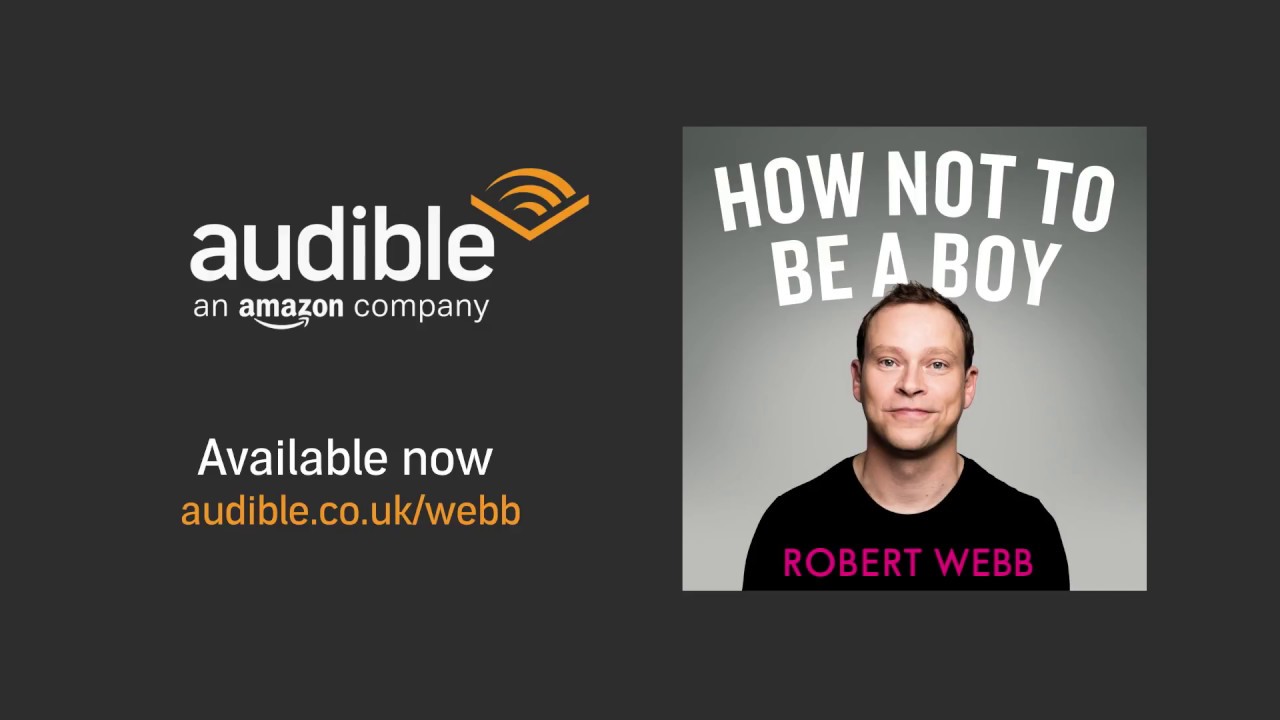
HOW NOT TO BE A BOY – ROBERT WEBB (narrated by Robert Webb)
The other half of the Mitchell and Webb double-act, Robert, narrates his own story with an adept sarcasm, intelligence and over-riding sense of grief throughout. As a big fan of Peepshow, his brilliance as an actor is playing unlikeable-selfish-man-boys with devilish charisma. He’s obviously very funny too and his anecdotes and memories of growing up in a Lincolnshire town and overcoming family heartache before joining the so-called Cambridge academic elite are very honest and personable. I would have liked a bit more detail about his creative process but reading between the lines I felt that it all came very naturally and unpretentiously to Webb. Overall, this is a terrific listen, full of funny and tragic moments; plus given I’m the same age as Webb, his references to televisual, pop, film and comedy culture were immediately recognisable to me, only adding to the book’s enjoyment.
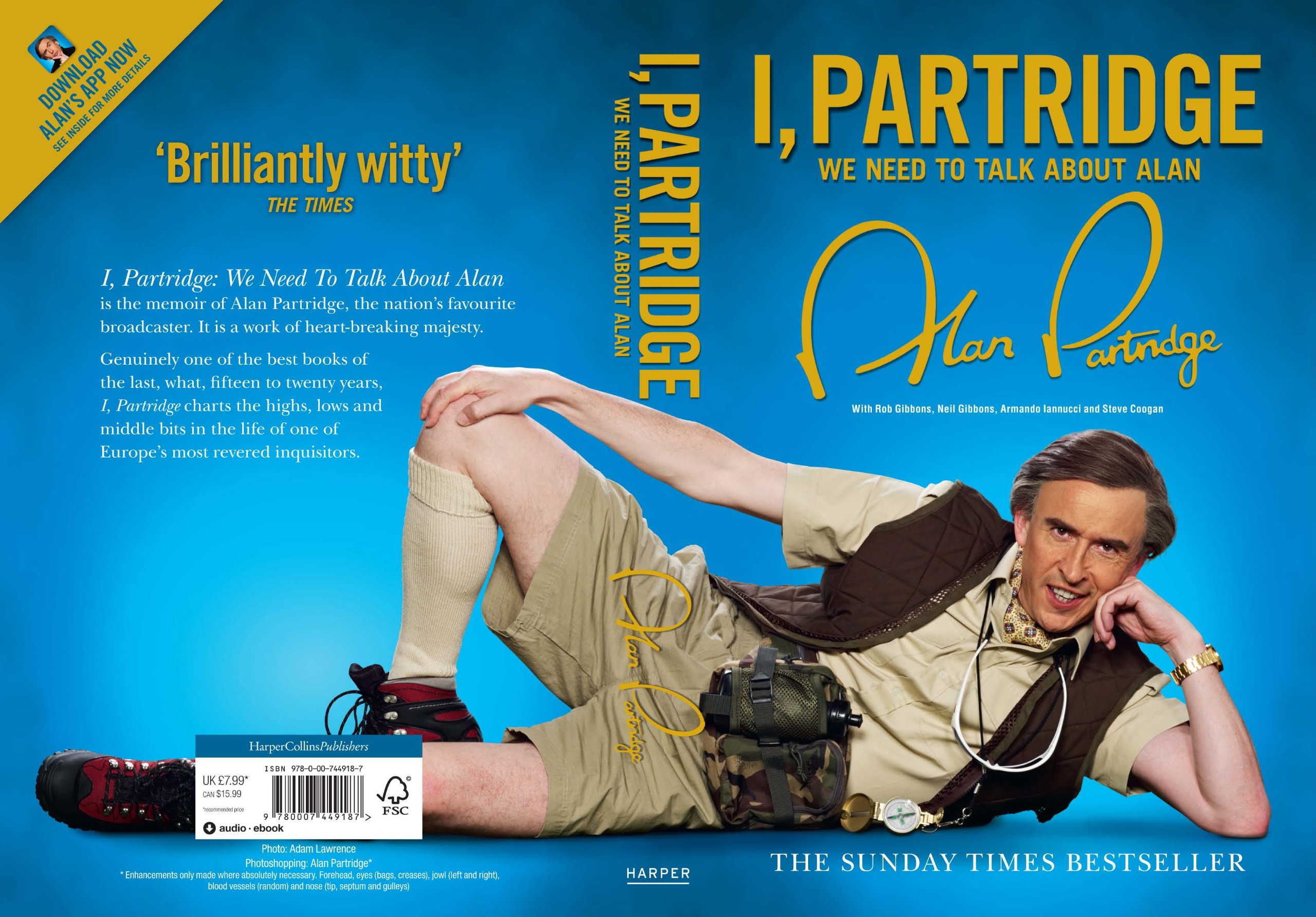
I, PARTRIDGE: WE NEED TO TALK ABOUT ALAN – ALAN PARTRIDGE (read by Alan Partridge)
Steve Coogan’s genius comedy creation Alan Partridge has been part of my life since the 1990s when I first saw him on the brilliant satire show The Day Today. There he presented the sports and would subsequently go on to a kind of greatness as a chat show host on Knowing Me, Knowing You and starring in one of the best sitcoms of all time, I’m Alan Partridge. It is a testament to the acting ability, quality of writing and sheer stamina of Coogan that he continues to mine comedy gold from the hills of Partridge, as it were. Coogan narrates (in the glorious character of Partridge) a fictional autobiography from actual cradle to career grave. It also hilariously covers how he bounced back from the precipice of a chocolate-driven-frenzied-nervous-breakdown-suicide-attempt in Dundee. I have never laughed so much as six hours of comedic gold entered my brain and left me in stitches throughout. This is one of the funniest things I have had the pleasure to listen too; full of bitter rants, vengeful asides, over-elaborate similes and a litany of what I can only call Partridgeisms! Is that a word: well it is now!
Sometimes it’s not necessary to go on and on about a film so here’s a rapid-fire round-up of films I’ve seen over the last couple of months. It’s like speed-dating for films but without the crushing romantic disappointment of mass rejection in one evening. As usual I accompany the reviews with marks out of eleven.
**SPOILER-FREE**
1922 (2017) – NETFLIX
Thomas Jane excels as a scheming farmer haunted by death, greed and rats! (Mark: 8 out of 11)
THE ACCOUNTANT (2016) – SKY CINEMA
An OCD-assassin portrayed by Ben Affleck wreaks havoc in a very tidy fashion. (Mark: 8.5 out of 11)
ANDY AND JIM (2017) – NETFLIX
Schizoid-meta-textual-yet-intriguing Jim Carrey / Andy Kaufmann documentary. (Mark: 7.5 out of 11)
ANTHROPOID (2016) – NETFLIX
Gripping WWII story concerning Czech resistance fighters assassinating Nazis. (Mark: 8 out of 11)
ASSASSINS’ CREED – SKY CINEMA
Stunning production values and cast are let down by a bemusing plot and script. (Mark: 6 out of 11)
THE BAR (2017) – NETFLIX
Spanish comedy-thriller has selfish occupants trapped in a bar all turn on each other! (Mark: 7.5 out of 11)
BLEED FOR THIS (2016) – NETFLIX
Miles Teller excels as boxer Vinny Pazienza battling for survival in and out of the ring. (Mark: 8 out of 11)
DEATHNOTE (2017) – NETFLIX
Hamstrung horror film throws away a brilliant concept via hopeless script and acting. (Mark: 5 out of 11)
FREE STATE OF JONES (2016) – AMAZON
Watchable American Civil War historical drama with McConaughey on good form. (Mark: 7.5 out of 11)
GOLD (2016) – AMAZON
McConaughey again shines as a modern day gold prospector in compelling drama. (Mark: 8.5 out of 11)
LIVE BY NIGHT (2016) – SKY CINEMA
Affleck as gangster anti-hero in stylish but empty “Roaring Twenties” adaptation. (Mark: 7 out of 11)
THE MEYOROWITZ STORIES (2017) – NETFLIX
Narcissistic family members talk at each other about life in pretentious drama. (Mark: 7 out of 11)
SNOWDEN (2016) – NETFLIX
Oliver Stone brings the famous whistle-blower’s story to life in a well-shot drama. (Mark: 7.5 out of 11)
TRUE STORY (2015) – NETFLIX
Franco and Hill sleepwalk through a compelling real-life murder case narrative. (Mark: 6.5 out of 11)
THE WAILING (2016) – NETFLIX
Incredibly rendered yet abstract Korean horror centring on Shamans and viral death. (Mark: 8 out of 11)
WAR MACHINE (2017) – NETFLIX
Tonally haphazard mix of war satire, biopic and drama with Brad Pitt hamming it up. (Mark: 6 out of 11)
The Marvel Franchise bus shows no sign of slowing down and the number of Superhero passengers and routes its taking increases every year. Indeed, I’m wondering which driver (i.e. director) will be the first to get a puncture and crash their respective bus, because even though we are well past saturation point the successful formulae is still sweetly cruising along without the threat of breaking down. Even slightly lesser known heroes such as Dr Strange (2016), Guardians of the Galaxy (2014) and Ant-Man (2015) have all made loads of money, and corny vehicular metaphors aside, surely it is only a matter of time before Marvel’s monopoly on Superhero movie success flails. However, Thor: Ragnarok (2017) is most certainly NOT the film that causes the decline.
The crafty Marvel bosses have kept their products fresh by often changing directors because where DC failed artistically, in my view, was they allowed the hyperbolic effects-driven blockbuster style of Zach Snyder — until the impressive Wonder Woman (2017) that is — to dominate their bombastic releases. Marvel Studios, on the other hand have given reign to arguably more quirky, indie-flavoured filmmakers such as: Joss Whedon, James Gunn and now Taika Waititi to drive their movies forward. Thus, along with the standard heroes-versus-villains-end-of-the-world storylines, massive battle set-pieces and fantastical worlds and characters on show, such directors add an element of humour and characterization to proceedings.
Humour, more than anything, is what Waititi brings to Thor: Ragnarok. This is essentially the first all-out Marvel comedy pitched an octave funnier than Guardians of the Galaxy on the comedic scale; as punchline after punchline reigns down with the power of Thor’s lightning bolts. The opening scene is a case in point where Chris Hemsworth’s sly comic timing is utilised to great impact when facing the demonic Sutur. Hanging upside down and chained, Thor’s momentum swings him around and away as the fiery devil delivers his monologue, only for Thor to ask him to wait until he comes back round again. While covering the exposition in a very funny way the gag also satirizes the clichéd villains’ plot while serving as a wonderful taster for the events to come.
The witty screenplay and lightning pace covers up the familiarity of the story as once again Asgard comes under attack from a hellish force, this time in the guise of the beautiful evil of Hela (Thor’s older sister) portrayed with tremendous gusto by the ultra-talented Cate Blanchett. Usually seen in more serious dramatic roles Blanchett excels as Hela, and arguably is a touch underused until the incredible battle scene at the end. Anthony Hopkins and Tom Hiddleston once again reprise their roles as Odin and Loki respectively; Loki, as usual, getting some great moments to show his dupliticity and mischief. Both Hopkins and Hiddleston take great pleasure to also parody their characters compared to the pitch black seriousness of Thor: The Dark World (2013).
Waititi, the writers and production crew deserve much credit for not only delivering some familiar faces and worlds to the film but also some new ones to freshen it up. I must admit I wish the trailer hadn’t spoilt the appearance halfway through of the “Big Guy” because if I had not known that I would have been amazed at such a twist. Nonetheless, the Hulk does appear and via Mark Ruffalo’s neurotically bemused turn as Bruce Banner we get, amidst all the gladiatorial mayhem, a cracking buddy story too. Moreover, Tessa Thompson as a hard-drinking-hard-fighting “Scrapper 142” (with a hidden past) is another sterling addition to the ensemble and the visuals which derive from her backstory via flashback are the some of the most impressive I have seen all year. Jeff Goldblum as a wacky but dangerous Space Dictator and the hilarious Taika Waititi as a wise-cracking Kronan (a rock-looking dude!?) almost steal the show too.
As he showed with Eagle versus Shark (2007), What We Do In the Shadows (2013) and the exceptionally funny and touching, The Hunt for the Wilderpeople (2016), Waititi is a very talented filmmaker and he has brought his love of eccentric characterization and comedic ability to great effect within the Marvel Universe. Thor: Ragnarok is a riotous mix of stunning visuals, booming rock music, huge battles, family wars, smashing punchlines and hilarious performances. Arguably the comedy sidelines the drama and tonally the film is uneven in places and compared to the magical and hallucinatory world of Dr Strange it is not as satisfying in terms of the whole world and vision created. Nonetheless, as comic book adaptations go it is one of the most entertaining Marvel sequels to date.
Over the past few months I’ve focussed my extra-curricular viewing on BBC produced dramas via the BBC channels and catch-up on Netflix. The British Broadcasting Corporation, being the public-service-tax-payer-funded-beast that it is has a commitment to produce quality programming for national viewing and also overseas sales too. I then got to thinking; why not check out where some of my £12.12 per month money goes. So, here are some bitesize reviews of recent BBC dramas with marks out of the usual eleven.
**CONTAINS MILD SPOILERS**
THE CHILD IN TIME (2017)
Based on Ian McEwan’s prize-winning novel this was an interesting drama which worked in many respects but did not quite connect in others. Benedict Cumberbatch and Kelly McDonald are parents whose child goes missing while out shopping. The drama and grief of this was very well evoked but the supporting story of a publisher’s regression and mental collapse did not quite thematically meld for me. No doubt McEwan’s original source is a master work and I enjoyed many of the emotional moments provided by the excellent acting. (Mark: 8 out of 11)
DOCTOR FOSTER – SEASON 1 (2015) + SEASON 2 (2017)
Suranne Jones is absolutely stunning in this domestic drama written by Mike Bartlett. She acts her heart and soul out as the eponymous GP, who in the face of her husband’s suspected infidelity, attempts to find both the truth and maintain her family unit and sanity. It’s a brilliantly written TV series which creates great drama from the “whodunnit” aspect of the potential spousal treachery. Plus, in addition to the Hitchcockian elements Dr Foster herself is very unpredictable in her actions; making for some nail-biting scenes. Bertie Carvel also excels as the charismatic husband and the second season, while not reaching the emotional heights of the first, and feeling more contrived, had some decent dramatic twists too.
(Season 1 – Mark: 9.5 out of 11)
(Season 2 – Mark: 8 out of 11)
LONDON SPY (2015)
The always-impactful actor Ben Whishaw is superbly supported by thespian giants Jim Broadbent and Charlotte Rampling in this obtuse spy thriller. Playing a troubled warehouse worker called Danny, Whishaw falls for the enigmatic genius, Alex (Edward Holcroft); and is thrown into a murky and murderous world of spymasters and upper-class family feuds. Beautifully acted and designed the story moved too slowly for me. Over five episodes the slow-bleed plot of character despair, double-crosses and cover-ups did not sustain the suspense and tension throughout. (Mark: 7.5 out of 11)
THE SECRET OF CRICKLEY HALL (2012)
Suranne Jones (again!) leads the acting line in an earlier post-Coronation Street role. She portrays a mother who, along with her family, seeks the solace of the countryside after their young child has gone missing. However, the house they reside in is haunted by ghosts from the past and as the family attempt to overcome their grief, evil spirits threaten their present. The contemporary narrative works well with the wartime scenes in a decent haunted house scenario that was adapted from the book by horror legend James Herbert; also featuring an early role for Maisie Williams. (Mark: 7.5 out of 11)
SMALL ISLAND (2009)
Notable for its excellent ensemble cast and featuring before-they-were-famous roles for: Ruth Wilson, David Oyelowo, Naomi Harris, Benedict Cumberbatch and Ashley Walters, this excellent drama focussed on the war and post-war lives of several disparate characters whose lives become intertwined by fate. Based on Andrea Levy’s novel it is especially rich in regard to the diasporic characterizations and experiences of Jamaican immigrants in war-torn England. The writing is solid and there’s some fine acting and emotional moments to keep one enthralled and I enjoyed how the stories dovetailed dramatically at the end. (Mark: 8 out of 11)
TOP OF THE LAKE (2013)
Hey, what if Jane Campion wrote and directed a cop drama? Well, the answer is Top of the Lake! This is a slow-burn, who-why-how-dunnit with a superb cast, beautiful New Zealand vistas and eccentric, dark characters. Some may find it too slow and artsy, while certain decisions by the characters and plot turns were intriguingly weird. However, Elizabeth Moss excels as the burnt-out cop (is there any other kind?) searching for a missing pregnant teenager, while Peter Mullan is suitably vicious as the rural patriarch; and Holly Hunter is fantastic too as the leader of a women’s commune. Overall, Campion’s barbed world-view satirizes humanity and cop show clichés in a compelling crime drama. (Mark: 8.5 out of 11)
TOP OF THE LAKE 2: CHINA GIRL (2017)
Screened earlier this year on the BBC, the follow-up finds Elizabeth Moss, now back in Sydney, tracking down the killer of an Asian prostitute while battling illegal adoption rings and all manner of sexist-pig-men. Like the original it pulls you in with its richly drawn characters and brilliant cast all committing to the lurid and quirky plotlines. Moss is always reliable and does the brooding, melancholic and troubled cop perfectly, while Nicole Kidman is brilliant as the middle-class academic out of her depth with the emotions of her adopted daughter. The sinister beta-male-nemesis Puss portrayed by David Dencik was a great rendition of spurious masculinity while it was great to see Gwendoline Christie out of her Game of Thrones armour, as a naïve rookie cop assisting Moss’ detective. (Mark: 8.5 out of 11)
TRUST ME (2017)
Jodie “New Doctor Who” Whittaker leads the cast as a downtrodden nurse and single-mum struggling with an NHS cover-up over poor service delivery. Faced with the sack she decides to engage in a cover-up herself by taking on the identity of a Doctor; and then the real drama kicks in. Whittaker is very empathetic and natural, while the suspense was very thrilling at times as her character gets deeper and deeper into the mire. Overall, it was a very tense and fun medical drama which made some very good social points in regards to a Doctors’ life and the NHS in general. Ultimately, it made me appreciate what the NHS does for us but also want to avoid getting ill in the future too!
(Mark: 8.5 out of 11)
WAR AND PEACE (2016)
Well, the BBC certainly pushed the budget boat out on this one with a who’s who of new and experienced acting talent including: Jim Broadbent, Paul Dano, Lily James, Tuppence Middleton, Aneurin Barnard, Adrian Edmondson, Jessie Buckley, Tom Burke, Rebecca Front, Greta Scacchi, Brian Cox, Stephen Rea, Gillian Anderson and many more. Adapting Tolstoy’s gigantic and classic doorstop novel must have been some feat and it is indeed and sumptuous and incredible production. As a drama it drew me in with its’ stories of over-privileged Russian lives set during the Napoleonic wars as they live, love, cheat, duel, war and die. Yet, while I did not feel too much empathy for the characters, the acting, design and directing is a joy to behold and I garnered a certain hypnotic pleasure bathing in the high quality of the whole shebang. (Mark: 8 out of 11)
Philip K. Dick’s dense, dystopic and futuristic novel, Do Androids Dream of Electric Sheep (1968), is an ugly, beautiful, depressing, obtuse, hypnotic wade-through-treacle read full of incredible concepts relating to: Artificial Intelligence; robot technology; android simulacra; animal husbandry; apocalyptic disease; virtual reality/empathy mood tech; extinguished humanity; and ultimately, of course, mortality and death. The fact that Hampton Fancher and David Webb Peoples were able to fashion a workable screenplay for Ridley Scott to direct is a creative miracle in itself. Moreover, it is testament to the writing and Scott’s incredible production team that Bladerunner (1982) is held in such high esteem among cinema fans now.
The original Bladerunner, despite bombing at the box office and subsequently going through a number of cuts, re-cuts, final cuts and re-re-re-releases, has become a bona fide science fiction cinema classic. I watched the original theatrical version recently and despite the deadpan Harrison Ford voiceover and spurious, tacked on “happy” ending, it actually has a lot going for it. Obviously the ‘Unicorn Dream’ re-edits released under the guidance of Ridley Scott are the purer versions but the film holds up notably because of Ford’s gruff, depressive and world-weary performance as Rick Deckard; the imperious psychopathy of Rutger Hauer as android assassin Roy Batty; Scott’s glorious tech noir rendition of our desecrated future; as well as the evocation of Philip K Dick’s thematic existential power.
Thus, to offer up a near three-hour sequel to a box office bomb of an almost unfilmable novel was something I thought extremely brave from a creative and business perspective. However, as soon as I saw the director Denis Villeneuve was attached, I immediately knew that Bladerunner 2049 was a must-see! This filmmaker has elevated himself to the higher echelons of Hollywood directors with superlative work such as: Incendies (2010), Prisoners (2013), Enemy (2014), Sicario (2016) and Arrival (2016). In such films he was able to meld story, style, character and performance to create very accessible genre films which encapsulate the pain and drama of the human condition adroitly.
In Bladerunner 2049, the future’s orange but, like the original novel and film adaptation, it’s definitely not bright! We are in a sick, unforgiving and murderous world where a dying Earth, specifically California, is inhabited by killer replicants, pleasure models, and totalitarian law enforcement and overseen by the venal, profit driven capitalist oligarchic Wallace Corporation. In this vision of Earth, men, women, children, animals and robots are all slaves to be bought and sold to the highest bidder. I have seen some critique that the film is exploitative in its female representations but the films reflects much that is wrong with our world today and the original novel’s dystopic and misanthropic themes.
Both male and females are objectified and deemed commodities and alas that is true too of the sick world we live in today, yet perhaps just not as blatant? Bladerunner 2049, I does not offer solutions but depressingly mirrors society’s desire to sexualise and exploit others. Our “hero” the replicant cop ‘K’ (Ryan Gosling) is a victim of such exploitation in his touching relationship with A: I hologram Joi (Ana De Armas). Ultimately, he learns that they’re all being faked by the horrific technological nightmare they call existence. I think it extremely interesting that K’s wry smile when he realises he has been exploited by the Wallace Corp. product Joi; and paradoxically this demonstrates his humanity.
Villeneuve, aided with startling artistry by cinematographer Roger Deakins directs from a screenplay written by original writer Hampton Fancher, plus Michael Green. One could argue that the original Bladerunner is style over content, as the story was distilled to that of Deckard basically hunting down a bunch of outlaw robots. However, the style WAS the content along with the dense richness of the themes. Similarly, Bladerunner 2049 does not have a particularly complex plot, save for one fantastic thematic reversal, yet at its heart it explores the powerful question of what it means to be human? I think all intriguing narratives should ask this and explore important notions of existence. I mean, it’s not surprise Gosling’s character is called ‘K’ – because the story echoes Kafka’s The Trial in many ways. Indeed, is his seemingly futile search for meaning or humanity just a pointless pursuit or is it reward enough to delude oneself with the possibility of hope or love? Life and the decision whether to carry on regardless is therefore very much on trial.
I think this is a film which will benefit from further viewings. I felt like I was watching a Tarkovsky or Bergman film on a massive budget. It’s like Denis Villeneuve managed to combine, with the writers and designers, an indie-Hollywood-art film installation. I would say this is a character and theme led narrative rather than purely plot driven. Even Niander Wallace’s (Jared Leto) weirdness, while not essential for the plot, added to the depth of character and surface emotion. He felt like a Colonel Kurtz figure trapped in his own insane delusion and obsession. Could he have been a replicant too? Likewise, Harrison Ford’s reappearance as Deckard adds great flavour to a wonderful sci-fi broth. Yet, his aging persona is integral to the plot and not simply a meta-textual nod to the original film.
Ultimately, we mere mortals are arguably not worthy to critique this fantastic work of genre art cinema. I understand it was slow but that almost increased the joy for me. It moved glacially but with high confidence and in Ryan Gosling it had a bona fide star to guide us through this sick yet beautiful world. Moreover, the sound design and music from Hans Zimmer and Benjamin Wallfisch was a powerful force which heightened the suspense and paranoia. While the visuals are absolutely breath-taking I was also drawn in by the existential intrigue of the themes. Technically, within the story, the replicants are not living people but we empathise with their plight nonetheless because THEY are US. There lies the paradox and beauty of this film, in that I cared and was fascinated by what happened to actors playing robots on the cinema screen.