MANIAC (2018) – NETFLIX REVIEW

MANIAC (2018) – NETFLIX REVIEW

Created by: Patrick Somerville

Based on: Maniac by Espen PA Lervaag, Håakon Bast Mossige, Kjetil Indregard, Ole Marius Araldsen

Developed by: Cary Joji Fukunaga & Patrick Somerville for Netflix

Directed by: Cary Joji Fukunaga

Starring: Emma Stone, Jonah Hill, Justin Theroux, Sonoya Mizuno, Gabriel Byrne, Sally Field

**MAY CONTAIN SPOILERS**
Maniac

What’s your view on striving for originality in storytelling and entertainment? It could be argued that there is no such thing and creators are simply moving creative chess pieces around the same board; or playing the same musical notes but in a different order. One perspective is that you prefer a writer or director to be bold and aim for originality; with the potential risk they alienate the audience. Some creators actually don’t care about the audience but many others do, preferring to connect emotionally within the casing of genre conventions. Personally, I prefer to be moved emotionally firstly and if the filmmaker or writer has presented their story in an impressive style then this serves to enhance the enjoyment of the narrative.

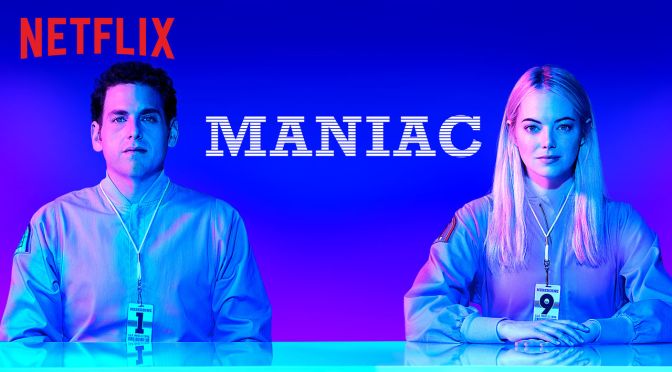
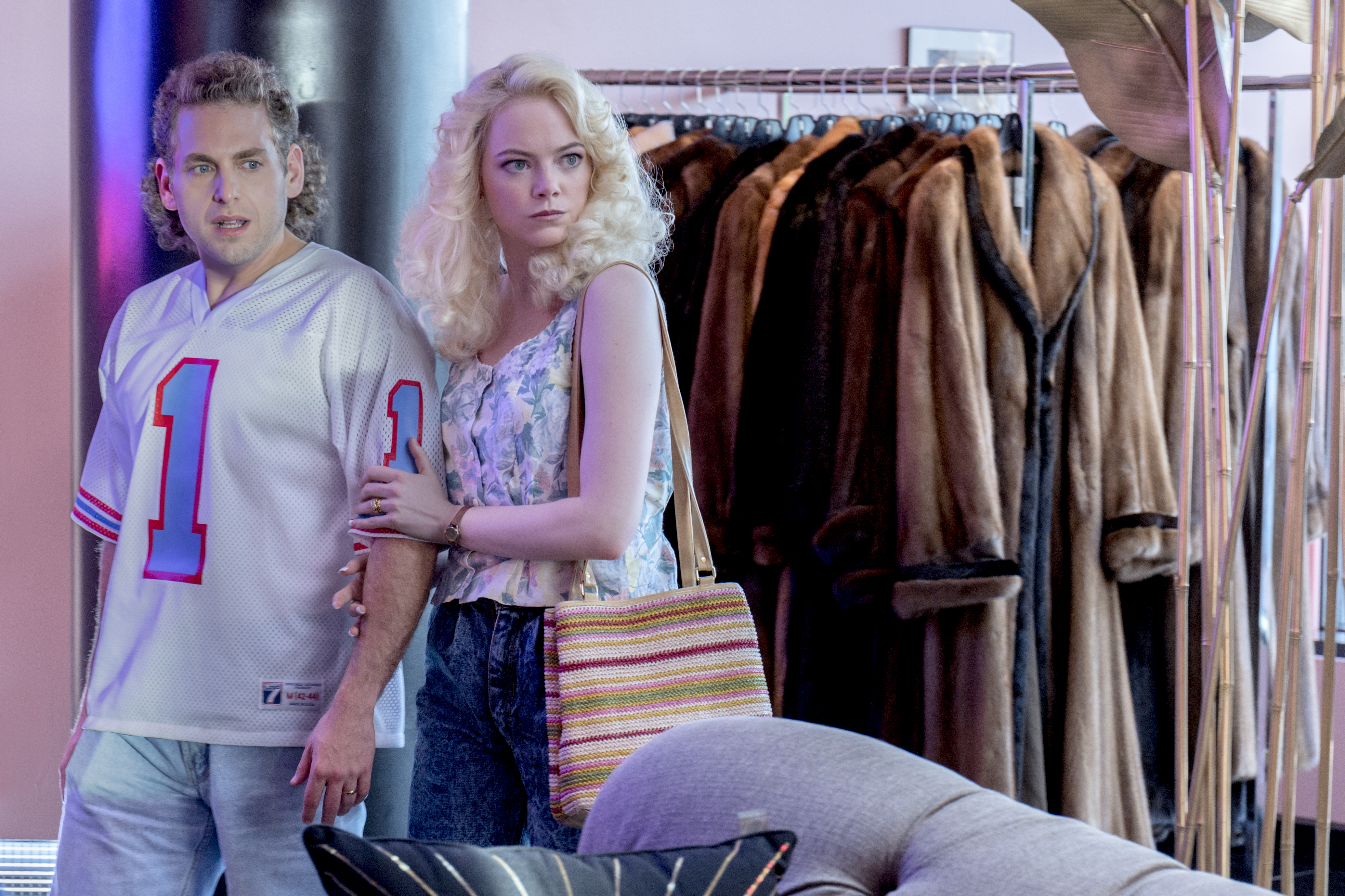
Cary Joji Fukunaga is a genre filmmaker who has established himself capable of developing impressive genre works such as: Jane Eyre (2011), True Detective (2014), and the brilliant film Beasts of No Nation (2015). Recently, he has also been involved in bringing It (2017) and The Alienist (2018) to the screen; although he did not serve as final director on such products. His latest directorial offering is an adaptation of a Norwegian comedy drama called Maniac. Over ten hit-and-miss episodes we follow the misadventures of a depressive and unstable Owen (Jonah Hill), and grieving pill-addict Annie (Emma Stone), as they enter a medical trial run by the secretive Neberdine Pharmaceutical organisation.

The trial itself involves taking a series of pills and the participants’ cerebral responses being recorded on a sentient artificially intelligent computer called GRTA. Here, Owen and Annie’s lives and minds become internally entwined as the story enables us to visualise their mental anxieties and re-enact their fears during the trial. Owen’s angst is caused by a family issue involving his brother, while Annie still blames herself for a family tragedy. The bizarre surrealist events are very effectively established, however, over the dizzying spectrum of several genre-crossing episodes we essentially get told the same two stories within the: crime, romance, gangster, fantasy and spy genres.

The performances are interesting. Fukunaga has created a world that exists somewhere in between the real and surreal and the future, past and current times. Because of this there’s a sense he has freed the actors from naturalism and at times created a stylistic distanciation. Conversely, Emma Stone was brilliant as always and she is skilled enough to make the strangeness resonate emotionally. However, I felt Jonah Hill, while giving a fine and committed performance, was miscast. Interestingly, Justin Theroux features in a curious turn as a Doctor on the edge of a nervous breakdown. Theroux is a fascinating actor who I think is sabotaging his career and could be the next George Clooney but continues to choose weirdo roles which serve his career no benefit. But hey what do I know!?  Maybe he’s having a lot of fun.
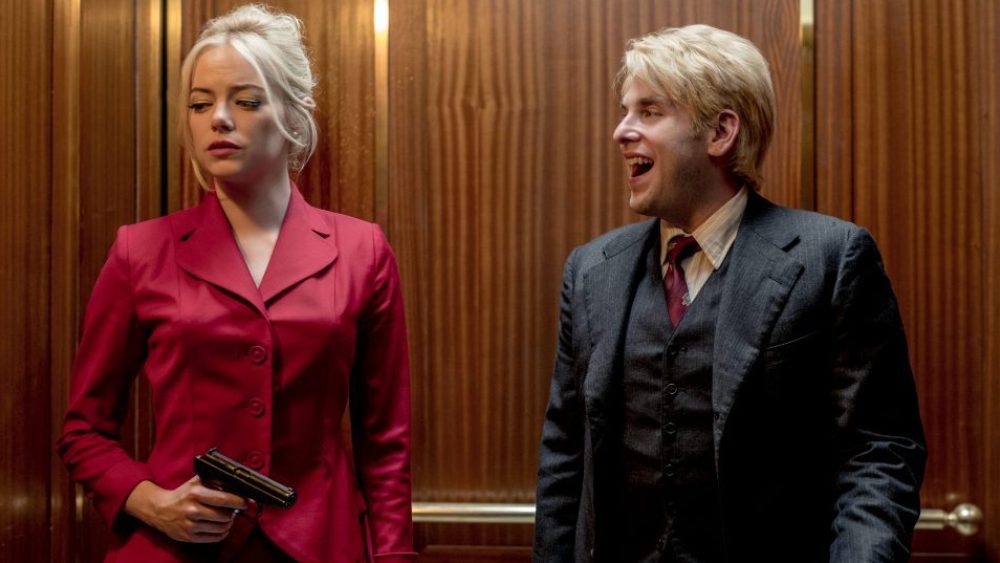
Ultimately, the postmodern stylings cloaked a pretty conventional love story and once again, with a Netflix show, I felt that ten episodes were stretching the narrative a tad. Fukunaga’s combination of different genres and eccentric characters plus a smattering a bloody violence and techno-humour is always interesting. Moreover, much fun is to be had from the references to One Flew Over The Cuckoo’s Nest (1975), 2001: A Space Odyssey (1968), Lord of the Rings and many more films.  Nowhere near as brilliant as True Detective or Beasts of No Nation, Cary Fukunaga still impresses as a director even if Maniac is arguably style over content. Nonetheless, Fukunaga should still be commended for striving for a semblance of originality and ambition, rather than just go for an big payday on a franchise studio genre film.
(Mark: 7.5 out of 11)

DOCTOR WHO –S11 – EP. 9 REVIEW – IT TAKES YOU AWAY (2018)

DOCTOR WHO REVIEW – IT TAKES YOU AWAY (2018)

Directed by: Jamie Childs

Written by: Ed Hime

Cast: Jodie Whittaker, Mandip Gill, Bradley Walsh, Tosin Cole, Ellie Wallwork, Kevin Eldon, Christian Rubeck, Lisa Stokke 

Produced by: Nikki Wilson

Executive producer(s): Chris Chibnall, Matt Strevens, Sam Hoyle

Music composer: Segun Akinola

**MAY CONTAIN SPOILERS**

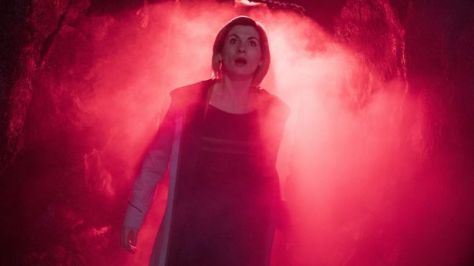
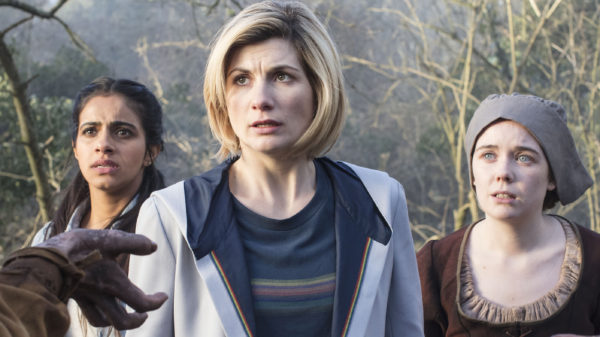
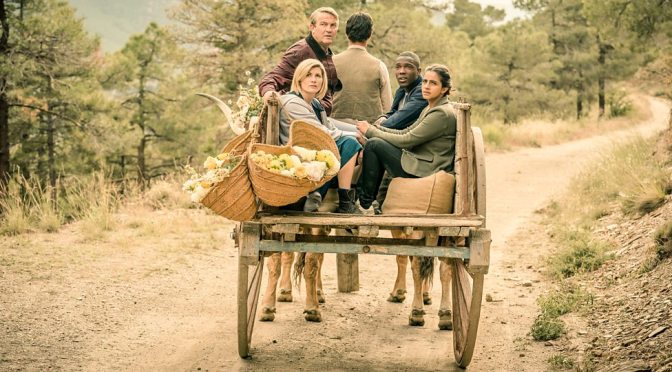
This episode, depending on your point of view, was either a strange, but moving science fantasy surrealist hybrid classic; or a collection of half-baked concepts that fell apart with an incredibly bizarre and silly ending.

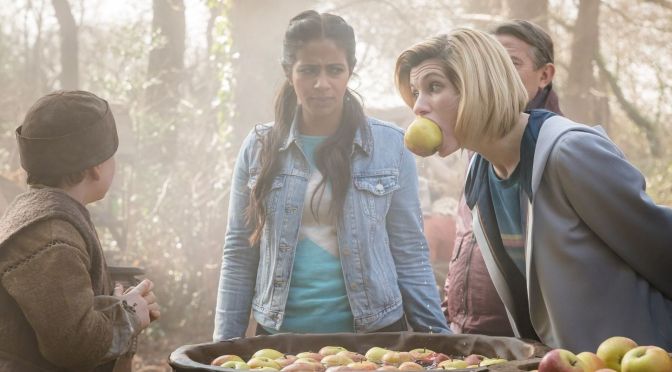
Yet, It Takes You Away starts off very promisingly. For a start the title evokes suspense, mystery and an underlying sense of loss. The suspense builds when the Doctor and companions arrive in Scandinavia and are immediately faced with a mystery in the Norwegian wood. The beautiful landscape of blue fjords, green brush and scattered timber hide a dark secret within a boarded up cabin. The impressive cinematography also evokes an eerie atmosphere. Moreover, there’s a frightening monster hiding somewhere within nature. Or is there?

In the cabin, the Doctor finds a lone teenage girl, Hanne, blind and seemingly abandoned by her father. Of course, they all agree to help protect Hanne against the monster and find her father too. Up to this point the drama and mystery were intriguing and finely poised. Subsequent events descend to a strange place called the ‘Anti-Zone’. This is where it all begins to fall apart narratively speaking.

Emotionally the episode had some very powerful moments drawing on the breakdown of family relationships; Graham’s grief for the loss of his wife and whether it is better to live in or out of reality. However, within these fascinating themes were some stupid bloodsucking moths and the brilliant character actor Kevin Eldon was under-used as an underground demon-type creature. The less said about the ending the better, which I can only think was going for Twitter-like-clickbait trending rather than a coherent and believable pay-off.

The denouement, together with another massive exposition dump from the Doctor scrambling to convince us it all made sense, found the episode completely laughable.  It was a shame as it had some fine ideas and Bradley Walsh gave a moving performance as Graham. Ultimately though, this season of DoctorWho is flailing having started so promisingly and It Takes You Away plummeted to a new low.          

(Mark: 5 out of 11)

FIX FILMS RETROSPECTIVE #6 – THE CHESS GAME (2012)

FIX FILMS RETROSPECTIVE #6 – THE CHESS GAME (2012)

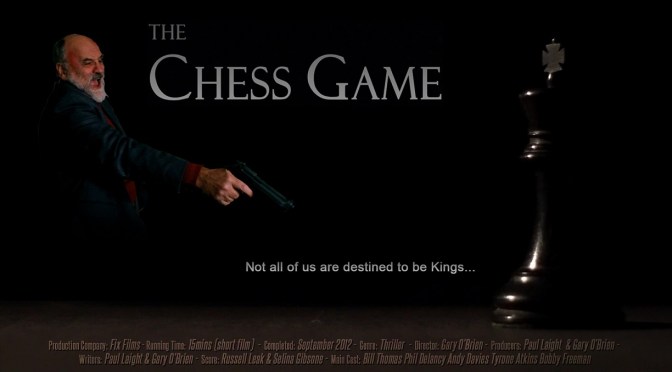
TITLE: THE CHESS GAME (2012) – short film (15 mins)

TAGLINE: “Not all of us are destined to be Kings!”

DIRECTOR: Gary O’Brien

WRITERS/PRODUCERS: Paul Laight and Gary O’Brien

CAST: Philip Delancy, Bill Thomas, Tyrone Atkins, Bobby Freeman and Andy Davies

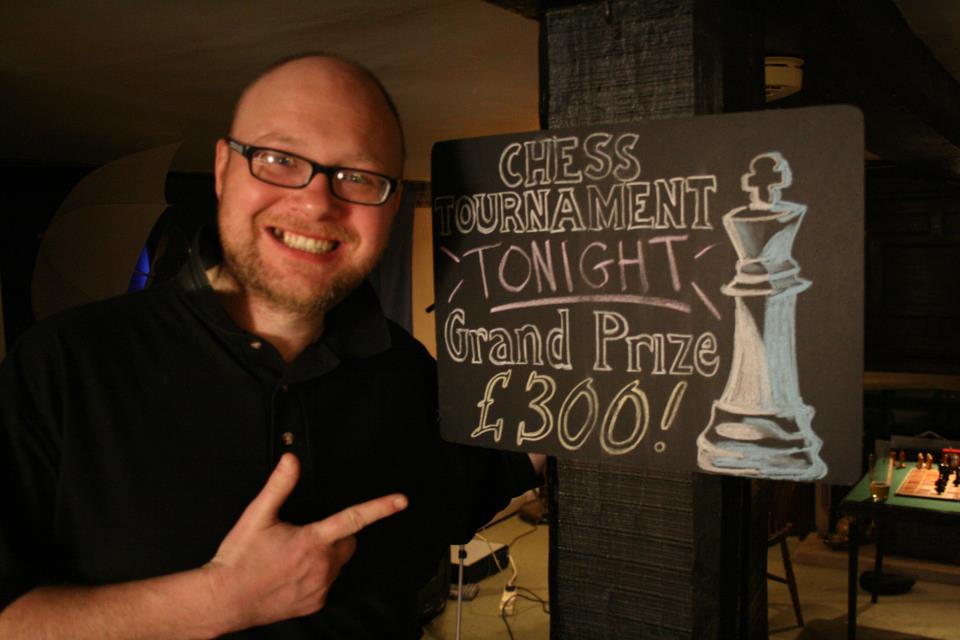
I haven’t written one of these short film retrospectives for a while but I thought I’d look back on my sixth short film – The Chess Game – and how it came to be made.

We hadn’t written or produced a film since 2008 when Elephant Trunk (2008) was released. Looking back it was for a mixture of personal and financial reasons. I mean making short films is a passion but sometimes the amount of work you put in can sometimes be the only reward. It is pleasing to complete a film but then what do you do? With Elephant Trunk (2008) I should have tried to get it into more festivals but ultimately I did not market it well enough. Moreover, I’d started doing more stand-up comedy as a creative hobby so decided to commit to that for a few years. I basically did not have enough time for filmmaking, especially with other family and work commitments.

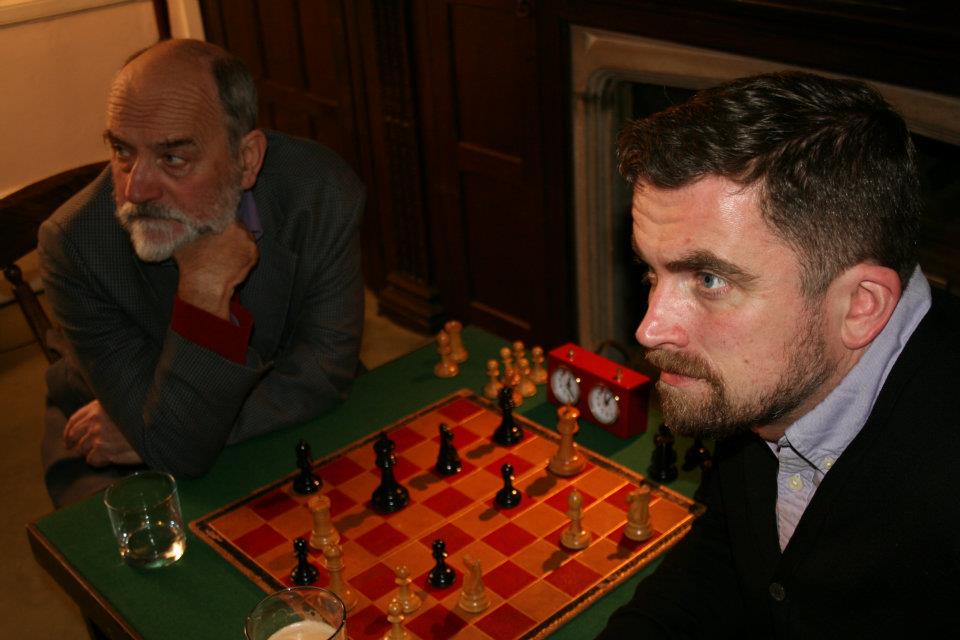
In 2012, my filmmaking partner, Gary got in touch and quite rightly said it was about time we got back on the horse, as it were, thus we began working on the script that would become The Chess Game (2012). He had a basic premise of a seemingly harmless person living in a village fully integrated into the community. However, that said individual was actually hiding a secret past.  We wrote the screenplay and, in terms of its length, became an ambitious thriller focussing on themes of guilt, revenge and war. It starts simply with the offer of a ‘friendly’ chess match between two strangers and spirals into a game of cat and mouse culminating in a deadly end game. Arguably, the story would probably have suited a Tales of the Unexpected half-hour length but we felt, given the lack of budget, we could do it justice at fifteen minutes.

Once we were happy with the script we raised the very low budget from independent sources and set about casting. We decided to use the talented Phil Delancy, who we’d worked with before and could be trusted to deliver a great performance. We also cast three excellent actors I knew from the comedy circuit in Tyrone Atkins, Andy Davies and Bobby Freeman. With regard to the lead role of Viktor, we knew we’d have to cast someone of great experience. Here was a character with charm keeping a dark secret close to his chest. Eventually, we cast seasoned professional Bill Thomas; an experienced screen actor who had been in many television and film roles including: The House Of Eliot, Cutting It, The Bill, Doctors, Holby City, Pusher (2012) and Alice Through the Looking Glass (2016) etc.

The rehearsal process was fantastic as myself, Gary, Phil and Bill really stress-tested the story and characters. Conversely, it was a script which changed a lot prior to production; not in terms of structure but rather the development of the characters’ motivations. Ultimately, the production would be a very successful shoot over two weekends in Oxfordshire. The story itself stands up to a re-watch as it twists and turns to a big reveal. My only regret is the end of the shoot was a bit rushed, however, the cast and crew were amazing and I think the film is not too bad, despite being shot on a shoestring budget.

Please check out subscribe to our respective YouTube channels if interested in short films and other clips:

Fix Films Ltd – subscribe HERE

FPSD – subscribe HERE

CREED II (2018) – MOVIE REVIEW

CREED II (2018) – MOVIE REVIEW

Directed by: Steven Caple Jr.

Produced by: Sylvester Stallone, Kevin King-Templeton, Charles Winkler, William Chartoff, David Winkler, Irwin Winkler

Screenplay by: Juel Taylor, Sylvester Stallone

Starring: Michael B. Jordan, Sylvester Stallone, Tessa Thompson, Wood Harris, Phylicia Rashad, Dolph Lundgren etc.

**MAY CONTAIN SPOILERS**

The boxing rags-to-riches story of Rocky (1976) was one of the film classics I grew up watching as a kid. With several successful subsequent sequels the franchise would come to a reasonably decent end with Rocky Balboa in 2006. But, you cannot keep a good man down and Rocky was back in 2015 acting as a boxing coach and life guide to Apollo Creed’s illegitimate son, Donny. Subsequently, Creed (2015), in the deft directorial hands of Ryan Coogler and with a bona fide star turn by Michael B. Jordan, became a big sleeper hit, ensuring a sequel was very much on the cards.

We all know the beats of the story; it’s a sub-genre formula that works very well. Our boxing hero must overcome insurmountable odds inside and outside the ring in order to become or sustain his place at the top. Donny Creed’s story in the first film was that of an angry “orphan” knocked from pillar to post in foster homes before being adopted by his father’s wife into a lap of luxury. However, he desires a ring career to make his mark and succeeds with Rocky’s help. The sequel finds Donny settling down with Tessa Thompson’s Bianca and continuing his successful fight career.

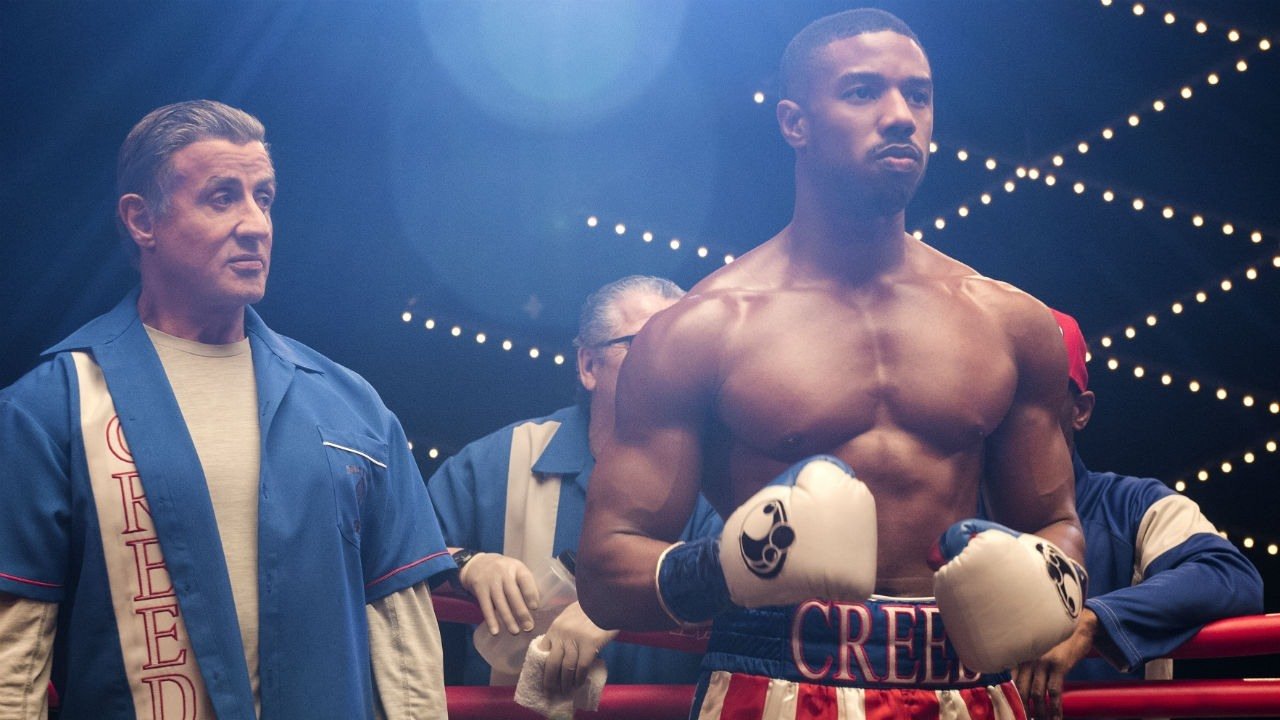
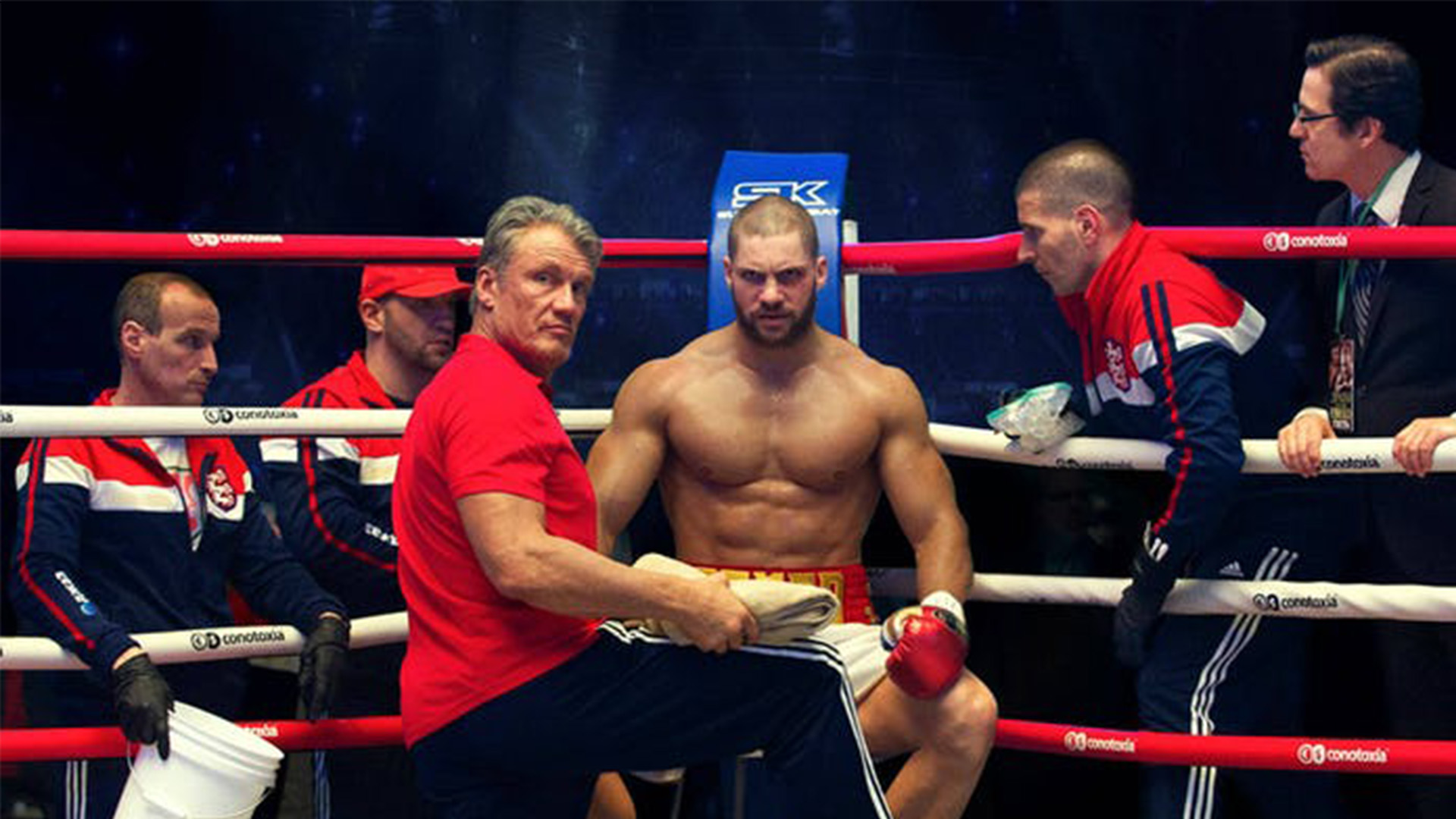
With our hero on terra firma what the narrative demands is a nemesis. Enter a blast from the past and beast from the east in the guise of the Ivan Drago and his son Viktor. Virtually exiled to the Ukraine, Dolph Lundgren’s Drago is a bitter and broken man who lost everything after to his defeat by Rocky in the fourth instalment. Living vicariously through his son he craves revenge. Similarly, Donny is prepared to take the fight in order to gain revenge for Drago killing his father. While Lundgren doesn’t have much dialogue his chiselled and lined face aches with desolate pain, rendering him a key antagonist within the film. Indeed, the moment the older Drago and Rocky meet is pure filmic dynamite.

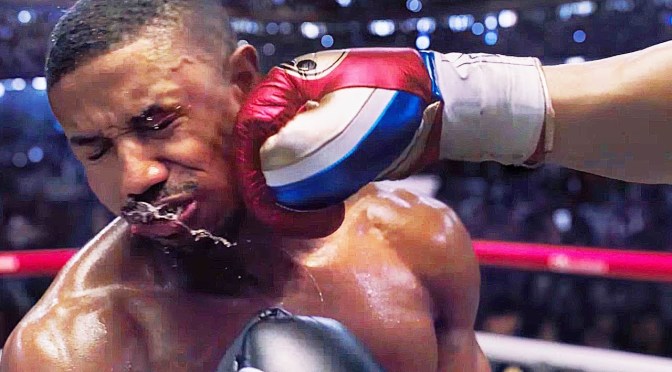
Sylvester Stallone, who also co-wrote the screenplay, once again brings his sage-like experience and star quality to a role he was born to play. The script is full of thematic power with a trio of father and son relationships at the heart of the drama. In fact, the family dramas almost shade the fight scenes for impact. However, the final ring battle and the preceding desert training montage do not disappoint for explosive style and action. Overall, while very familiar, Creed 2, is a well-crafted film that will not disappoint Rocky and boxing movie fans.

(Mark: 7.5 out of 11)

THE NETFLIX EQUINOX – HORROR FILM REVIEW ROUND-UP

THE NETFLIX EQUINOX – HORROR FILM REVIEW ROUND-UP

Wow, Netflix just keep churning out the content; either original, bought and on hire. I just don’t know how they can make a profit; especially on their big-budget movies,which DO NOT get a cinema release. Perhaps it’s a loss leader gamble they hope will pay off in the long run? Nonetheless, Netflix remains a solid go-to-place for viewing pleasure.

So, over the last few weeks I’ve caught up on a number of horror films on Netflix; some good, some not too bad, and some dreadful. Anyway, here they are with marks out of the usual eleven.

**MAY CONTAIN SPOILERS**

APOSTLE(2018)

I felt that all the elements were there to make this a classic cult horror thriller and Dan Stevens was brilliant in it. However, his character was so rushed at the beginning I did not feel that connected to his drifter searching a religious cult for his kidnapped sister. Still, the film had some fascinating themes, searing gore and horror moments, which altogether made it well worth a watch.  

(Mark: 7.5 out of 11)

BEFORE I WAKE (2016)

Having been impressed with Mike Flanagan’s direction of The Haunting of Hill House (2018), I decided to check out his other films. Before I Wake tells the moving story of an orphaned boy fostered by Thomas Jane and Kate Bosworth’s grieving parents. This was a dream like and touching tale with a powerful element of horror which benefits from great performances by Bosworth and Jacob Tremblay.

(Mark: 8 out of 11)

THE BOY (2016)

Lauren Cohan stars in this gothic chiller which flirts between intriguing suspense and silly horror moments.  Cohan is Greta, an American nanny, who escapes to a big manor house in England, only to find herjob is to babysit a boy dummy for an eccentric old couple. Director William Brent Bell, despite the strange premise, gets a decent tune out of this story and I really enjoyed it; even when it goes pretty bonkers at the end.

(Mark: 7.5 out of 11)

GERALD’S GAME (2017)

Mike Flanagan directs again, this time adapting Stephen King’s psychological horror novel into a very satisfactory movie. Carla Gugino and Tony Greenwood play a middle-class and wealthy couple attempting to spice up their sex life with some role-play and bondage. Safe to say the “game” goes awry and Gugino must battle physical and mental challenges, plus a haunted past, in order overcome a grim and horrific ordeal.

(Mark: 8 out of 11)

HOLD THE DARK (2018)

Jeremy Saulnier directs this ponderous thriller which centres on a search for a missing child on a Native American reservation. Jeffrey Wright, as a wolf expert and novelist, does his best with the paucity of material as Alexander Skarsgard sleep-walks through another role. Saulnier holds back a key piece of the narrative for no apparent reason and aside from gratuitous shoot-out in the middle I was bored.

(Mark: 6 out of 11)

I AM THE PRETTY THING THAT LIVES IN THE HOUSE (2016)

Even the brilliant Ruth Wilson cannot save this horrifically slow and dull horror film which literally has NO story and hardly any scares. It is genuinely one of the worst and most pretentious films I have ever seen. 

(Mark: 2 out of 11)

THE INVITATION (2015)

Another hidden horror gem I found on Netflix, this moves slowly but with brooding dread and suspense. Logan Marshall Green portrays, Will, a grieving ex-husband invited with his girlfriend to a dinner party thrown by his ex-wife. Soon the dinner takes a strange turn of events as the odd behaviour of the hosts raises his suspicion and paranoia. Overall, this is a compelling movie directed withsubtle aplomb by Karyn Kusama.  

(Mark: 8 out of 11)

JIGSAW (2017)

Another attempt to re-do one of the best low-budget horror films ever made in Saw (2004), fails to engage or horrify. It is really just a pointless retread of everything we’ve seen before and while there’s some decent gore in it, the characters are paper-thin and one for franchise completists only.

(Mark: 5 out of 11) 

MALEVOLENT (2018)

Even the very talented Florence Pugh cannot save this bang-average medium-in-a-haunted-house story. The screenwriter Ben Ketai has some decent horror credentials but this one did not really make much sense narratively or emotionally. Lastly, Pugh’s brother in the film was so dislikeable that I could not wait for him to die horribly. 

(Mark: 5 out of 11) 

THE VAULT (2017)

This was almost a decent horror thriller as it had such a great premise. Bank robbers –includingFrancesca Eastwood and Taryn Manning – hold up a bank only to find ghosts haunt the Vault and are intent on hurting the criminals. Despite the horrific monsters in the basement and James Franco’s intriguing turn, the script doesn’t make much sense until the reveal at the end. But by that time I was too confused to care very much.

(Mark: 6 out of 11) 

DOCTOR WHO– S11 – EP. 8 REVIEW – THE WITCHFINDERS (2018)

DOCTOR WHO– S11 – EP. 8 REVIEW – THE WITCHFINDERS (2018)

Directed by: Sallie Aprahamian

Written by: Joy Wilkinson

Cast: Jodie Whittaker, Mandip Gill, Bradley Walsh, Tosin Cole, Alan Cumming, Siobhan Finneran, Tilly Steele, Tricia Kelly, Arthur Kay  

Produced by: Alex Mercer

Executive producer(s): Chris Chibnall, Matt Strevens, Sam Hoyle

Composer: Segun Akinola

**MAY CONTAIN SPOILERS**

Well, after enjoying a number of this season’s episodes for fascinating writing and emotional exploration of important historical events, we finally got one that didn’t work for me on the whole. The Witchfinders found the Doctor and the now tiresomely named “gang”, in attempting to time travel to the Coronation of Elizabeth I, ending up in a bitter backward village in Lancashire. There they discover all manner of horrific deeds being dealt upon the women folk; all accused of witchcraft by the aptly named matriarch of the manor, Becca Savage.

It is announced by Savage – an excellent Siobhan Finneran – that Satan’s work is legion in the village and witches will be tried by dunking. If they survive and are able to breath under water then they are damned as a witch. Yet, if they drown they are not a witch. This medieval version of “Catch 22” was actually a real thing and while incredible to today’s woke audiences shows our ancestors in a very poor light. There is often some reflection and resonance to current times where Doctor Who is concerned and here there is no difference. Indeed, witch-hunts often occur in society now via the press or new-fangled “demon” – the damned social media.

Along with Finneran as Savage, Alan Cumming also guest stars as King James I. It’s a slyly camp and arguably over-the-top performance that Cumming excels at and was enjoyable nonetheless. However, as the episode proceeded the strength of the witch-hunt ideas gave way to a really badly written script and the Doctor and Graham wearing hats anachronistically for weak comic effect. I guess the Doctor has a bit more action, rather than being a cypher for history; and at least finds herself in a bit more peril too. But I have to admit I don’t think Jodie Whittaker is getting hold of the role of the Doctor in the way her predecessors did. It’s almost as if she’s copying David Tennant or Matt Smith too much. It’s a shame, but you cannot just blame sloppy writing or directing, as it’s now clear Whittaker is not owning the role.

The ending of the episode, while containing some brilliant monsters, was so hurried. We got a barrage of exposition in a final face-off scene which also contained some very shoddy effects. The Witchfinders was therefore a bang average episode, which started very promisingly but drowned by the end in a lake of mediocrity. Indeed, if you go to YouTube you will find a plethora of postings which are decrying the end of Doctor Who as we know it. I myself believe it’s far too early to grab a torch and join that mob. Because, on the whole, the series has had some great episodes, but unfortunately this wasn’t one of them.  

Mark: 6 out of 11

MOUNTVIEW FILM ACADEMY RETROSPECTIVE #1 – THE BLACK ROOM (2008)

MOUNTVIEW FILM ACADEMY RETROSPECTIVE #1 – THE BLACK ROOM (2008)

A rather indulgent post this!!  

Between the years of 2008 and 2011, I did some screenwriting work for the Mountview FilmAcademy; a filmic extension of the Mountview Academy of Theatre Arts. Based in London, they would produce a number of student acting projects including many low budget short films. Notable Mountview Alumni include: Craig Parkinson, Eddie Marsan, Lois Chimimba, Connie Fisher, Douglas Henshall, Rebecca Trehearn and many more.

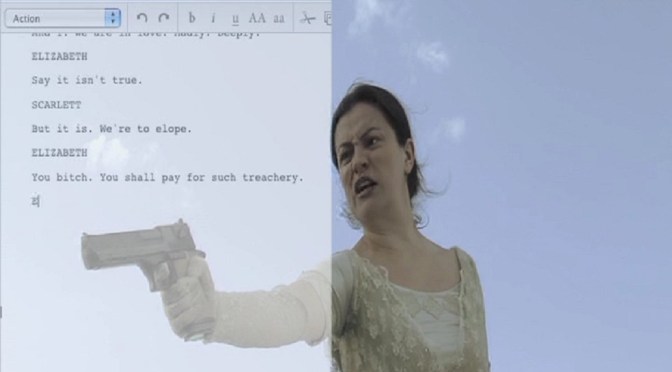
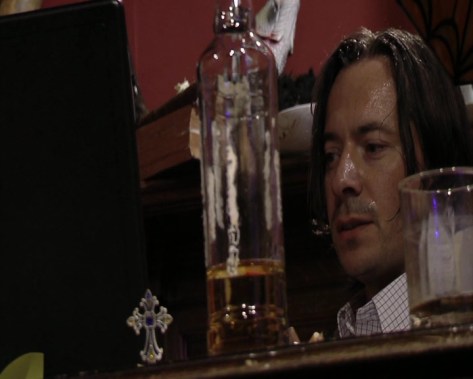
Writers would be shuttled in and given a remit to create short films using specified actors,locations and length of film.  In 2008, I wrote a film called THE BLACK ROOM. It featured some talented actors and was directed by Jonathan Wolff. It’s a black comedy farce, concerning a writer who is struggling so much to write a period drama he starts to go a bit mad.

Watching the film back after ten years is interesting from a creative perspective. I actually think it works really well still and the story holds up despite the very low budget. Indeed, in places I still think the short film is pretty funny; echoing, on a very minor level, Charlie Kaufman’s meta-textual work in the film Adaptation (2002). Anyway, here it is:

DOCTOR WHO – S11 – EP. 6 REVIEW – DEMONS OF THE PUNJAB (2018)

DOCTOR WHO – S11 – EP. 6 REVIEW – DEMONS OF THE PUNJAB (2018)

Directed by: Jamie Childs

Written by: Vinay Patel

Cast: Jodie Whittaker, Mandip Gill, Bradley Walsh, Tosin Cole, Leena Dhingra, Amita Suman, Shane Zaza, Hamza Jeetooa etc.

Produced by: Alex Mercer

Executive producer(s): Chris Chibnall, Matt Strevens, Sam Hoyle

Composer: Segun Akinola

**MAY CONTAIN SPOILERS**

Doctor Who Demons of the Punjab

This season of Doctor Who is now settling into a strong mix of diversity, narrative simplicity and emotional resonance. I’ve read some negative comments bemoaning the quality of the writing and weakness of the stories in general, however, as Sunday night teatime entertainment goes the show is a success in my view. Indeed, the latest episode, Demons of the Punjab was another involving and fascinating watch.

This week it was Yaz’ character which took centre stage as her curiosity about her grandmother, Umbreen, found the Doctor breaking time-travel protocol. If you’ve seen the Doctor Who episode Father’s Day and film classic Back to the Future (1985) we all know how dangerous it can be for anyone to cross their own timeline. Indeed, while the Doctor has actually crossed her own timeline before many times she should really know better!


Doctor Who India

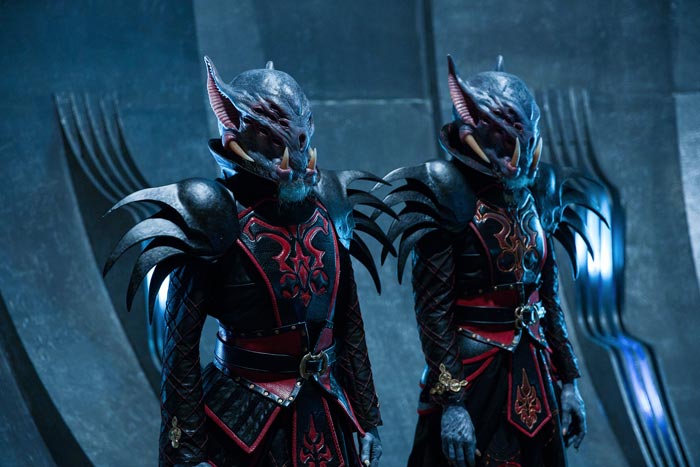
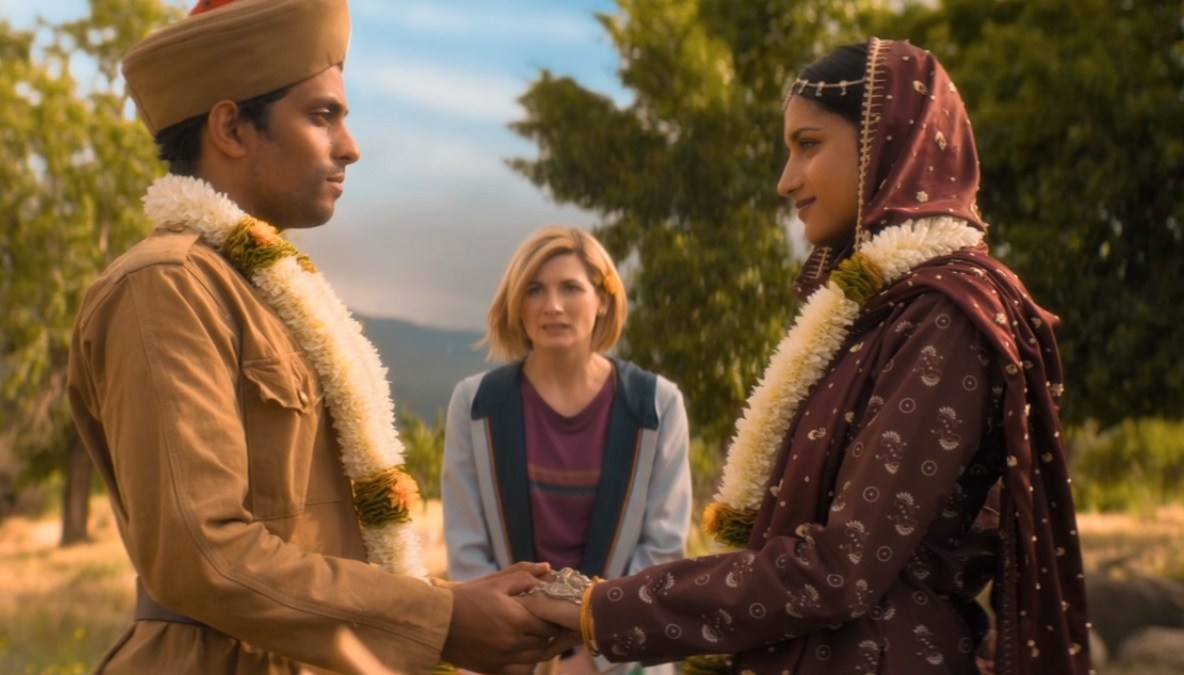
Thus, Team TARDIS travelled back to 1947 as the Partition of India took place. Here Yaz gets to meet her own family members as her grandmother is about to marry. Of course the path of true love and time travel rarely goes smoothly and the course of history is threatened by Yaz’ presence and her and the Doctor must attempt to not interfere with events. Of course, it would not be a Doctor Who episode without some kind of alien threat and this is provided by the Vajarians; a mystical race who appear where chaos is ensuing across the universe. Their presence adds an air of mystery to the episode, but ultimately they are an emotional subplot to the main conflict relating to how the Partition of India affects Yaz’ family.

Overall, Demons of the Punjab successfully combined political, historical, romance and drama in amidst the usual science fiction concepts. It was especially strong from an emotional perspective. By the end as a family is torn apart by the situation I felt a real sadness in my heart. The division of India by the British Empire was an event which divided people based on their religion and ethnic background and created a huge schism between families, colleagues and friends. Doctor Who merely skims the surface of the impact it would have and the lives affected by the subsequent conflict. Yet, what the episode teaches us is that while we may not be able to change history we must learn from it. We must learn that division and conflict can only lead to heartache and pain.

Mark: 8.5 out of 11


SIX OF THE BEST #15 – BILLY WILDER

SIX OF THE BEST #15 – BILLY WILDER

Samuel “Billy” Wilder is arguably one of the finest screenwriters that ever put fingers to typewriter; and certainly one of the best writer-directors of all time. Indeed, until Woody Allen surpassed him he was nominated for best screenwriter at the Academy Awards TWELVE times! Overall, he would win six Oscars plus a special Academy Award.

Wilder was born in 1906 in Austria Hungary; in an area which is now part of Poland. Having moved to Berlin in his twenties, Wilder served an apprenticeship as a writer on a newspaper. However, he soon got work as a screenwriter in the German film industry and a star was born. The rise of the Nazis caused Wilder to move again, to Paris and then latterly to Hollywood. There he would have an incredible career in movie-making spanning over thirty years, writing, producing and directing over thirty-odd films, many of the classics of cinema.

So, in keeping with the remit of this occasional series I have decided to pick out six of Wilder’s best films and explain why they are just brilliant. To be honest I could probably pick out twenty of the best where Wilder is concerned, but will stick to six!

**MAY CONTAIN SPOILERS**


Double Indemnity (1944)

For any screenwriters out there Wilder’s work is often a technical and intricate joy. Character, dialogue, plot and twists are all combined to create an incredibly deep texture within the work. Double Indemnity was adapted from James M. Cain’s devious noir novella and found Fred MacMurray and Barbara Stanwyck plotting to kill her husband for the insurance money. Wilder worked on the screenplay with Raymond Chandler and while the two didn’t hit it off their collaboration produced one of the classic film noirs of the period. The film was nominated for seven Academy Awards and confirmed the star status of both Stanwyck and MacMurray. As MacMurray’s desperate voiceover reveals the events of the story we are pulled into a web on deceit and murder which show human nature as greedy, vicious and unforgiving.


The Lost Weekend (1945)

It is worth noting that Wilder’s success would perhaps not been as successful if not for his partnership with producer and writer Charles Brackett. They worked on many successful films together and The Lost Weekend was one such triumph. Based on Charles Jackson’ novel about an alcoholic writer teetering on the edge of self-destruction, Ray Milland’s character found himself awash in an existential and drunken haze. Wilder’s work as a screenwriter is again brilliant as he takes a very unsympathetic character and makes him both human and empathetic. This is down to both Milland’s fine performance and Wilder’s key direction; both would win Academy Awards. Overall, it’s a tragic struggle which reflects those individuals who constantly battle against the booze. Many see alcohol as a friend but it can quickly turn into an enemy without warning or notice.


Sunset Boulevard (1950)

Working from an original story Wilder and Brackett turned the eyes and ears inward toward the Hollywood machine; asking the question: what happens to the Hollywood legends after their star has crashed and burned. The answer was the character of Norma Desmond, a silent movie star craving a comeback and refusing to accept her career is over. Gloria Swanson is absolutely terrifying as the ageing screen goddess, as she spits out famous lines such as: “I am big; it’s the pictures that got small!” Meanwhile, William Holden is also superb as the cynical writer beaten down by his own world weariness within the Hollywood system. The classic opening scene of his limp dead body lying face down in a swimming pool as he recounts how he came to be there is one of the most iconic images in all cinema.


Witness for the Prosecution (1957)

I probably could have gone for a number of Wilder’s movies including: Ace in the Hole (1951), Stalag 17 (1953), Sabrina (1954) or The Fortune Cookie (1966), which was the first film to place Walter Matthau and Jack Lemmon on screen together; however, I’m a sucker for a good Agatha Christie story. Witness for the Prosecution features two stunning acting turns from Marlene Dietrich as the wife of the murder suspect, and Charles Laughton as the barrister charged with defending him. In his final film Tyrone Power plays the accused Leonard Vole, who is on trial for murdering a wealthy widow. Laughton’s eccentric barrister defends him but he has help on the way from an unexpected source. Wilder directs his cast with wit and suspense, making the most of Agatha Christie’s dynamite plot which has two grand and unexpected twists at the end.


Some Like It Hot (1959)

Arguably the best film comedy ever and also one of the best films of all time, Some Like It Hot, on paper, shouldn’t really work. Two male musicians dress up as women to go on the run from the mob is as silly an idea as you could get. However, with Billy Wilder and I.A.L Diamond’s intricate script, Tony Curtis and Jack Lemmon so good in the leads, plus an effervescent Marilyn Monroe at the height of her star power you get all-round cinematic gold. Combining gangster, comedy, musical and romance elements the film fizzes with style, humour and song, as the complex plot involves hilarious identity and gender switches. At one point Curtis’ Joe has split himself into three parts. Ultimately, Wilder and his collaborators have created almost a perfect movie featuring one of the finest end lines in cinema history.


The Apartment (1960)

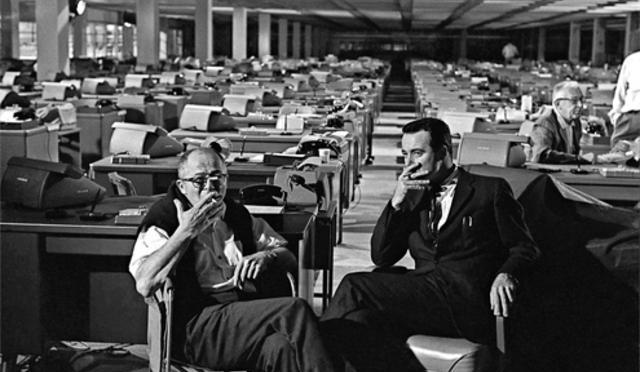
While Some Like It Hot veered toward comedic farce, The Apartment is a somewhat more mature and darker-themed comedy. Once again starring Jack Lemmon, he portrays C.C. Baxter, a downtrodden office worker whose apartment is used by executives for their extra-marital dalliances. While these liaisons see him gain promotion he begins to doubt his actions and his conscience gets the better of him. The guilt is especially heightened when he begins to fall for Shirley MacLaine’s elevator operator, Fran. Fighting back against the corporate bosses does him no favours but it does bring him closer to Fran. Both a satire against odious men and their sexist practices, plus a touching romance, Jack Lemmon illuminates the screen all hang-dog expressions and nagging angst. MacLaine too shines in a sympathetic role as a woman treated like a perpetual door-mat. The film won five Oscars and once again proved the genius of Billy Wilder.

WIDOWS (2018) – CINEMA REVIEW

WIDOWS (2018) – CINEMA REVIEW

Directed by: Steve McQueen

Produced by: Steve McQueen, Iain Canning, Emile Sherman, Arnon Milchan

Screenplay by: Gillian Flynn & Steve McQueen

Based on: Widows by Lynda La Plante

Starring: Viola Davis, Michelle Rodriguez, Elizabeth Debicki, Cynthia Erivo, Colin Farrell, Brian Tyree Henry, Daniel Kaluuya, Jacki Weaver, Robert Duvall, Liam Neeson

**MAY CONTAIN SPOILERS**

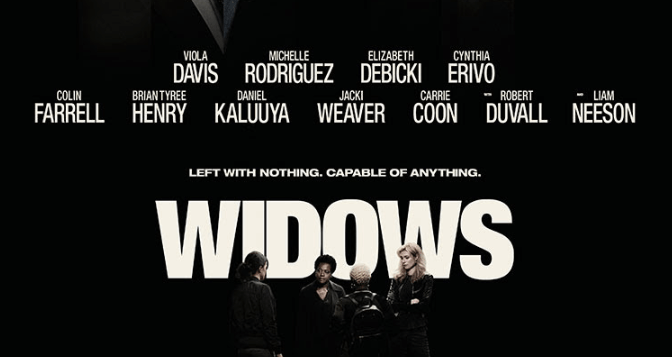
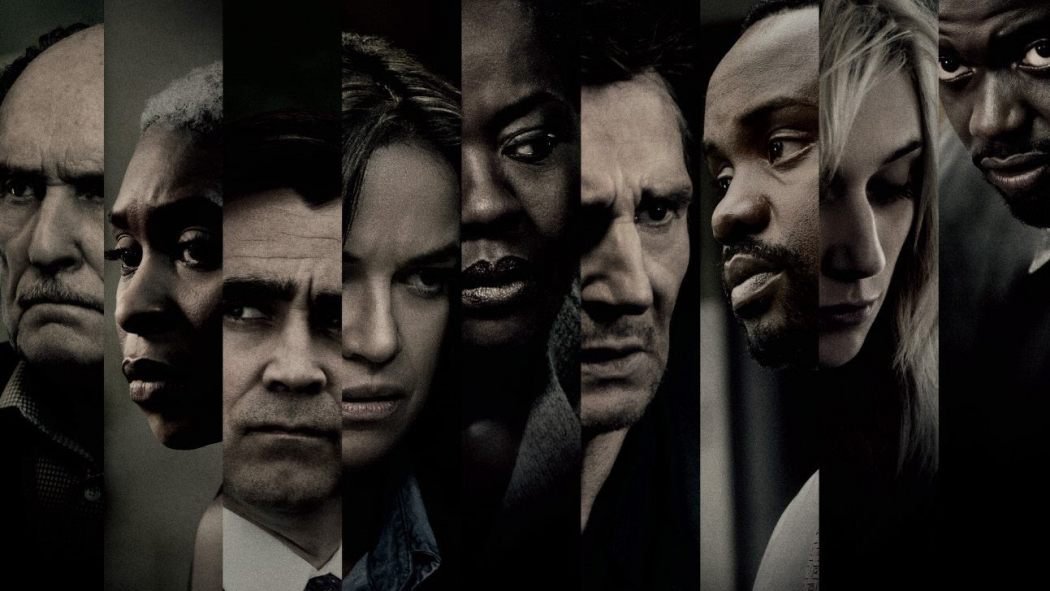
Widows Film Poster

I was really looking forward to this new film from acclaimed and highly talented filmmaker Steve McQueen. Firstly, his previous directorial releases including 12 Years a Slave (2013), Shame (2011) and Hunger (2008) were all fierce works of drama. Secondly, the story is based on Lynda La Plante’s excellent British television series from the 1980s; plus it has a fantastic ensemble cast led by Viola Davis, Liam Neeson, Colin Farrell, Daniel Kaluuya and many more. So, why was I slightly underwhelmed by the end of the film? I mean all the cinematic elements were of the highest quality, yet, for me, it just did not catch fire.


Liam Neeson and Viola Davis

After the death of her husband, Harry Rawlins (Neeson), Viola Davis’ Veronica, decides to use his plans to attempt a daring robbery enlisting the help of the other crime widows. The stakes are high as Harry’s last job pissed off some dangerous people and they want their money back. Transplanting the action from the La Plante’s tough London setting to contemporary Chicago retains the gritty backdrop of the original. Indeed, Gillian Flynn and Steve McQueen’s script keep the beats of the heist plot and structurally the film is very sound. However, the addition of political subplots involving a district Alderman Election between Colin Farrell’s Jack Mulligan and Brian Tyree Henry’s Jamal Manning, while adding extra flavour to the mix, at times, slow down the pace of the heist narrative. Even a subplot flashback involving Viola Davis’ son, while adding important empathy for her character, felt like it was from another film. Thus, a movie can be about many things; however, I just felt that a lot of the themes were at a surface level of emotion.


Daniel Kaluuya and Brian Tyree Henry
Daniel Kaluuya and Brian Tyree Henry in Twentieth Century Fox’s WIDOWS. Photo Credit: Courtesy Twentieth Century Fox.

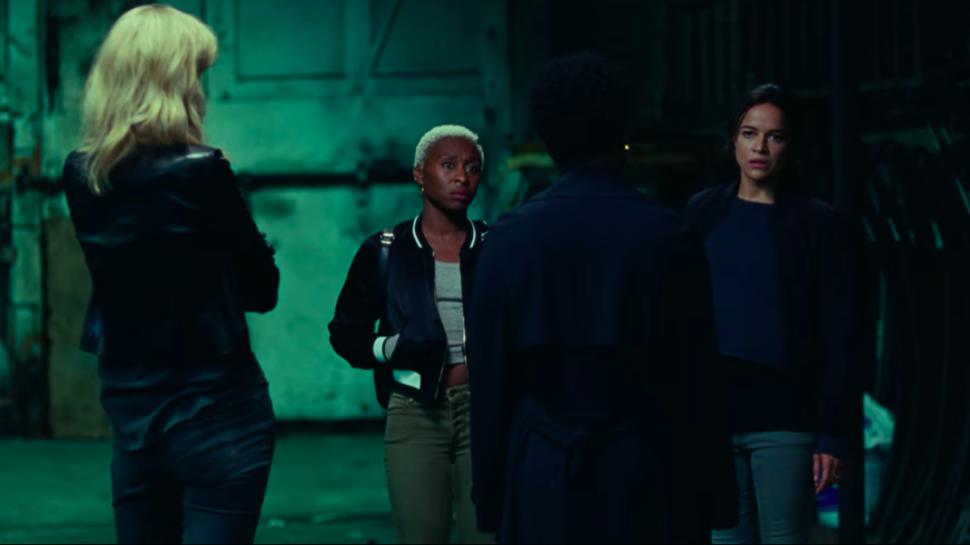
The acting and direction in the film is excellent. Viola Davis, Michelle Rodriguez, Elizabeth Debicki and Cynthia Erivo are all brilliant; although, Erivo’s character seemed to be introduced slightly late for me. Yet, I wanted the film to be even more about the women’s struggle in this traditionally masculine world. Maybe I’m being harsh as the filmmaking is really good, but it got bogged down by too many sub-plots. Moreover, where suspense could have been gained when Debicki’s character goes to buy guns we get a throwaway scene played for humour. The male characters are generally portrayed as corrupt, psychopathic or simply evil; especially where Daniel Kaluuya’s psycho turn is concerned. Brian Tyree Henry is a very interesting actor too and I have watched a lot of him in the TV show Atlanta. However, his impact on the story is slowly dissipated throughout.


Cynthia Erivo, Michelle Rodriguez, Viola Davis, Elizabeth Debicki

Overall, Widows is a very solid genre offering from Steve McQueen and his team. All the elements are there for a barnstorming crime thriller with racial and political elements as texture. Plus, while I knew of a couple of decent twists from the original the script delivers them very well. However, there were also several plot-holes within the story which could not be reconciled. I guess with my expectations high I was expecting the doors to be totally blown off due to the incredible talent involved. However, they remained firmly on their hinges by the time the credits rolled.

Mark: 7 out of 11


Thoughts on Cinema and Filmmaking