Tag Archives: action

Cinema Review: The Monkey (2025) – a hilarious horror sketch-show with gore masking an inconsistent totemic tale!

Cinema Review: The Monkey (2025)

Directed by Osgood Perkins

Written by Osgood Perkins

Based on “The Monkey” by Stephen King

Produced by James Wan, Dave Caplan, Brian Kavanaugh-Jones, Chris Ferguson, etc.

Main Cast: Theo James, Tatiana Maslany, Christian Convery, Colin O’Brien, Rohan Campbell, Sarah Levy, Adam Scott and Elijah Wood.

Cinematography by Nico Aguilar


Following the financial success of his 2024 psychological thriller Longlegs (2024), Osgood Perkins has recently embarked on adapting Stephen King’s short story, The Monkey, into a feature film. While I didn’t quite connect with it Longlegs (2024) it had many impressed with its strange, atmospheric tension as well as Nic Cage’s crazy look and performance. The Monkey (2025), differs in tone though as it this adaptation with a blends horror and dark comedy, allowing Perkins to showcase his versatility as a filmmaker.

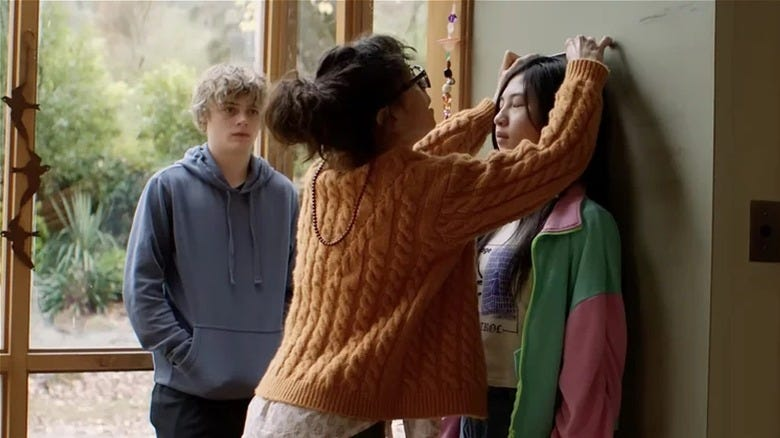
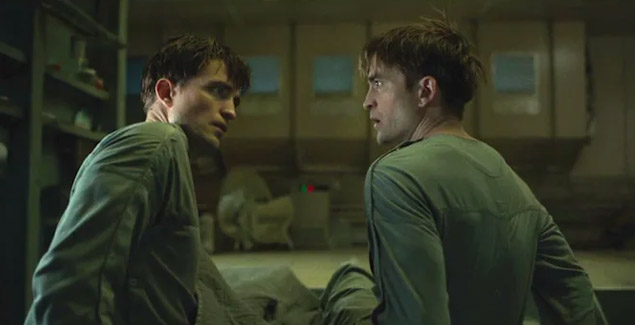
The narrative of The Monkey (2025) centres on twin brothers, portrayed by Theo James, who encounter a cursed toy monkey linked to a series of gruesome deaths. Perkins expands upon King’s original short story, infusing it with themes of family, fatherhood, reconciliation and a litany of grisly sudden deaths. Having found the simian death totem as teenagers, Hal and Bill Shelburn find their lives and those around them impacted in the most bloody explosive of ways. Indeed, there is much thought and planning given to these Saw and Final Destination franchise influenced on-screen set-pieces. In fact, the exquisite surprise and laugh-out-loud hilarity which occur throughout somewhat overpowers any emotional connection with the thinly-written protagonists.


The film’s gore and relentless pace are undeniably its strongest assets — the kills are extreme, inventive, and staged with a gleeful disregard for realism, echoing the chaotic energy of ’80s horror comedies. Each death sequence feels like a miniature horror short, packed with practical effects and over-the-top carnage. Perkins crafts these moments with a twisted sense of humour, making the film feel like a sketch-show carousel of nightmarish vignettes, each more outrageous than the last.

However, despite the visceral fun, The Monkey (2025) struggles to leave a lasting impression. Unlike the original Saw (2004) by James Wan and Leigh Whannell — a film that balanced its brutal horror with sharp social commentary and tightly woven mythology — Perkins’ adaptation lacks a deeper foundation. The cursed toy monkey serves as a simple harbinger of death, but the film never establishes consistent rules for how the curse operates or why it escalates the way it does. Without clear internal logic or meaningful subtext, the horror loses weight, and the emotional stakes fizzle.

While The Monkey (2025) succeeds as a frenetic, blood-soaked thrill ride, it ultimately feels ephemeral. The film’s surface-level scares and comedic flair make for an entertaining watch, but the absence of narrative substance or thematic resonance leaves it as little more than a fleeting novelty — a film you enjoy in the moment, but rarely think about after the credits roll.

Mark: 6.5 out of 11


The Cinema Fix presents: 12 Favourite Films of 2024!

The Cinema Fix presents: 12 Favourite Films of 2024!

Good day and I hope you are well. I am slightly late to the party with these but happy new year nonetheless.

Here are my favourite films of 2024 that I watched at the cinema and on streaming platforms. The majority would have been released last year, however there were quite a few that crossed the last eighteen months or so. I cheated slightly with The Quiet Girl, but I watched in 2024, so there you go.

If I have missed any films then please let me know in the comments. I have either NOT seen them or did not enjoy them as much as you. Remember these are my FAVOURITE films seen in 2024 of new(ish) releases. So all purely subjective and am happy if you agree or disagree. Have a wonderful 2025!

Oh, for control and interest, I include my favourite films of 2023!


Ten Favourite Films of 2023

https://wordpress.com/post/thecinemafix.com/77015

ANATOMY OF A FALL (2023)
ASTEROID CITY (2023)
BROKER (2022)
MAY DECEMBER (2023)
OPPENHEIMER (2023)
PAST LIVES (2023)
SALTBURN (2023)
TAR (2022)
TOTALLY KILLER (2023)
THE WONDER (2022)


Twelve Favourite Films of 2024

ALL OF US STRANGERS (2023)


AMERICAN FICTION (2023)


HERETIC (2024)


THE HOLDOVERS (2023)


THE IRON CLAW (2023)


LATE NIGHT WITH THE DEVIL (2023)


MONSTER (2023)


POOR THINGS (2023)


THE QUIET GIRL (2023)


SPEAK NO EVIL (2024)


THE SUBSTANCE (2024)


THE ZONE OF INTEREST (2023)

Netflix Film Reviews: Indonesian Action Maestro – Timo Tjahjanto Trilogy

Netflix Film Reviews: The Timo Tjahjanto Trilogy

When Welsh filmmaker Gareth Evans burst on the cinematic scene with martial arts film, Merantau (2009) and followed it with the seminal action classic, The Raid (2011), he precipitated a welcome interest in Indonesian cinema and visceral fight films too. On reflection, Evans’ rise has influenced Indonesian director, Timo Tjahjanto, and their collaboration played a significant role in shaping the latter’s career. The two directors worked together on the action-packed Safe Haven segment of the anthology film V/H/S/2 (2013), which gained critical acclaim for its intensity and creativity. This partnership showcased Tjahanto’s knack for blending horror, action, and suspense, a style Evans is also known for through his work on the aforementioned The Raid series.

Thus, as a massive fan of The Raid (2011), I decided to watch Tjahjanto’s most recent Netflix releases. Their shared focus on high-octane action and stylized, bloody violence has led to comparisons between each of the filmmakers’ work and a sense of mutual inspiration. Tjahjanto has often expressed admiration for Gareth Evans’ meticulous approach to action choreography and storytelling. Evans’ ability to balance fast-cutting action, physically powerful actors and pulsating sound effects likely resonated with Timo, who has implemented similar techniques in his own films.

Here are three short reviews of those Netflix actioners from Tjahjanto, who is soon to be directing Nobody 2 (2025). I realise scenes where characters are garroted, decapitated, strangled, snapped, shot, hung and impaled with their own splintered bones are not the most seasonal of films to recommend, but if you absolutely love fist-blade-gun-bomb-stick-knife-head-tools-led set-pieces then do check them out.

** MAY CONTAIN SPOILERS **


THE NIGHT COMES FOR US (2018)

Main cast: Joe Taslim, Iko Uwais, Julie Estelle, Sunny Pang and Zack Lee

Fans of the The Raid series will recognise Iko Uwais immediately, however, he is not the main hero in this frenetic and ultra-violent crime thriller. Not that there are not many heroes on show here. Tjahjanto is very much a genre writer and director, presenting big archetypal gangs involving the South East Asian Triads, groups called ‘The Big Six’ and characters called ‘The Operator.’ While there is an attempt to create emotion, Tjahjanto’s strength is in directing and choreographing blistering battle scenes between these various gangs.

The Night Comes For Us (2018) plot finds Joe Taslim’s, Ito, as enforcer saving a young girl’s life and trying to turn his back on crime and violence. It’s easier said than done as all hell breaks loose when various crime factions pursue him in a myriad of ferocious set-pieces. Here Tjahjanto vision of violence serves as more than just a tool for storytelling; it becomes an overwhelming, nihilistic force that shapes the film’s worldview and emotional tone. The relentless brutality and graphic depiction of human suffering go beyond entertainment, creating a numbing effect that forces viewers to confront the inescapable cycle of destruction and loss. The theme of redemption is at the heart of Ito’s journey, but ultimately it’s the high body count that stays with you.

Mark: 8.5 out of 11


THE BIG 4 (2022)

Main cast: Abimana Aryasatya, Putri Marino, Lutesha, Arie Kriting and Kristo Immanuel etc.

The Big 4 (2022) takes a sharp tonal shift from the grim and nihilistic world of The Night Comes for Us, embracing a blend of high-octane action and irreverent humour. While both films showcase the director’s trademark flair for elaborate action choreography and over-the-top violence, The Big 4 tempers its brutality with comedic undertones, a zany dysfunctional family dynamic, and a sense of fun reminiscent of The A-Team.

The film is peppered with witty banter, physical comedy, and absurd situations that lighten the mood, even during intense action sequences. The violence, while still extreme, is stylized in a way that leans more toward cartoonish spectacle than visceral horror, allowing the audience to laugh along with the chaos rather than feel emotionally drained by it. At the heart of The Big 4 is the relationship between its central group of misfit assassins, who operate more like a chaotic, bickering family than a traditional hit squad. The result is a film that retains Timo Tjahjanto’s penchant for adrenaline-fueled spectacle while delivering a more comedic and uplifting familial experience.

Mark: 7.5 out of 11


THE SHADOW STRAYS (2024)

Main cast: Aurora Ribero, Hana Malasan, Taskya Namya, Agra Piliang, Andri Mashadi, Chew Kin Wah etc.

Tjahjanto’s latest release, The Shadow Strays (2024) melds the sleek, character-driven intensity of Nikita (1990) with the mythic, stylized world-building of John Wick, resulting in a brutal and visceral cinematic experience that showcases his signature flair for action. The film blends high-octane combat with a dark, morally ambiguous narrative, creating a layered world filled with shadowy organizations, unrelenting assassins, and a protagonist caught between vengeance and redemption.

The well-worn plot shows a young trainee assassin called, Thirteen (Aurora Ribero), trying to find her own identity, at the same time of rescuing a young orphan from nefarious drug dealers and corrupt politicians. The narrative explores themes of identity, loyalty, and betrayal, grounding the hyper-stylized violence in a story of personal stakes and transformation. Her journey resonates with a sense of tragedy, as she grapples with the toll her violent profession takes on her psyche and relationships. While The Shadow Strays pays homage to its influences, it remains distinctly Tjahjanto, weaving his trademark brutality with Ribero confirming herself as bona fide film action star. The overall result is a gripping, unrelenting, if overlong journey, into a violent underworld where every choice comes with a cost.

Mark: 8 out of 11


Netflix Film Review: Emilia Perez (2024) – A Trans-formative song of Risk and Redemption!

NETFLIX FILM REVIEW: EMILIA PEREZ (2024)

Directed by Jacques Audiard

Screenplay by Jacques Audiard

Based on Écoute by Boris Razon

Produced by Jacques Audiard, Pascal Caucheteux, Valérie Schermann, Anthony Vaccarello

Main Cast: Zoe Saldaña, Karla Sofía Gascón, Selena Gomez, Adriana Paz, Mark Ivanir, Édgar Ramírez etc.

Cinematography by Paul Guilhaume

*** MAY CONTAIN SPOILERS ***


There’s such a thing as having too much going on.” Howard Moon from The Mighty Boosh.

I am a big champion of the films of Jacques Audiard. When his eccentric Western, The Sisters Brothers (2018), was released I wrote a positive review and tribute to several other fine films he has directed here. Audiard likes to take risks representing human beings on the edge of society and perhaps struggling with life; people who often make left-field decisions to improve or escape their existential plight. With his latest film Emilia Perez (2024) the filmmaking master challenges the audience again with a multi-blended genre film that also contains powerful themes of transformation, redemption, violence, crime and family values. Oh and there are songs too.

The narrative begins strongly as Rita Mora Castro (Zoe Saldana), a fiercely talented yet overlooked lawyer in Mexico City, finds herself thrust into the spotlight when she defends the wife of a prominent media mogul in a controversial murder trial. Despite her misgivings, Rita crafts a chillingly persuasive argument that frames the death as a suicide, securing an unexpected victory in the case—one that leaves her both celebrated and haunted.

As the dust settles, Rita’s restless dissatisfaction with her life grows louder. Then comes an anonymous phone call: an enigmatic voice offers her a chance at something extraordinary—and extraordinarily dangerous. Intrigued and desperate for change, she agrees to a clandestine meeting. The mysterious client turns out to be none other than Juan “Manitas” Del Monte (Karla Sofía Gascón), a ruthless and feared cartel kingpin. But the request they make isn’t what Rita expects from a crime-lord. Manitas dreams of living authentically by undergoing gender-affirming surgery and becoming a woman. Rita must decide: will she help Manitas rewrite their story, or will she risk becoming the next chapter in a tale of betrayal and bloodshed?


This fascinating set-up draws you in and I believe if Audiard’s narrative had concentrated mostly on the relationship between Rita, the transitioned, Emilia, then the film would have retained much emotional and thematic power. Yet, after Emilia’s operation the screenplay introduces several other story strands and characters to take in, including Selena Gomez’ feisty Jessi Del Monte, Manitas’ ex-wife who thinks “he’s” dead. This development works initially but then Audiard hurls so many more ideas and genres at the audience wall, not all of them sticking.

Admittedly, the film’s audacious blend of melodrama, crime, thriller, musical, and comedy creates an unpredictable and frenetic narrative that keeps viewers on their toes. However, this constant genre-shifting can undermine the weight of its core themes—gender and identity—by overshadowing them with spectacle and tonal inconsistency. The story’s rapid turns and refusal to settle into a single emotional or narrative groove risk, arguably trivializing the profound struggles and triumphs of its trans-protagonist. Moments that could serve as deeply reflective or cathartic explorations of gender identity are sometimes undercut by abrupt pivots into slapstick humor or hyper-stylized action. While these shifts might aim to reflect the disarray and fluidity of identity in a chaotic world, they can also dilute the thematic resonance.

At the same time, it’s clear Audiard is deliberately embracing this chaos and analysis of human flaws. The fractured tone might symbolize a world where stability and clarity are illusions, mirroring the internal and external conflicts of someone navigating personal transformation in an unyielding environment. This approach, while conceptually intriguing, can feel alienating. Nonetheless, the cast’s stellar performances anchor the film, ensuring that the characters remain compelling even when the story spirals into excess. Lastly, Emilia Perez‘ (2024) relentless energy often leaves little room for introspection, and whether this genre-chaos enriches or undermines the narrative depends largely on the viewer’s tolerance for Audiard’s embrace of choral disorder in a world seemingly allergic to calm and pattern.

Mark: 7.5 out of 11


Cinema Review: Gladiator II – an Epic Sequel that Echoes the original in Eternity

CINEMA REVIEW: GLADIATOR II (2024)

Directed by Ridley Scott

Screenplay by David Scarpa

Story by Peter Craig, David Scarpa

Based on Characters by David Franzoni

Produced by Ridley Scott, Michael Pruss, Douglas Wick, Lucy Fisher, Walter F. Parkes, Laurie MacDonald and David Franzoni
.

Main cast: Paul Mescal, Pedro Pascal, Joseph Quinn, Fred Hechinger, Lior Raz, Derek Jacobi, Connie Nielsen and Denzel Washington.

Cinematography by John Mathieson

*** MAY CONTAIN SPOILERS ***


Ridley Scott’s Gladiator (2000) stands as a modern genre classic, redefining the historical epic with its visceral storytelling, evocative visual style, and emotional depth. The film not only revitalized interest in the sword-and-sandal genre but also solidified Russell Crowe as a major star, earning him an Academy Award for Best Actor. Crowe’s portrayal of Maximus Decimus Meridius—a betrayed Roman general seeking justice—exudes both raw power and profound vulnerability, making him an enduring figure in cinematic history.

Gladiator’s superb screenplay intricately followed the structure of Joseph Campbell’s Hero’s Journey, charting Maximus’ transformation from a celebrated general to a fallen slave, and ultimately to a venerated martyr. Also invoking the archetype of one of Christopher Booker’s seven basic plots, ‘Overcoming the Monster’. Indeed, Maximus’ journey aligns with the ‘Overcoming the Monster’ archetype, where the hero confronts a seemingly insurmountable evil. Commodus and the Roman Empire embodies the “monster,” wielding unchecked power, moral corruption, and cruelty. Maximus battles not only physical opponents in the gladiatorial arena but also the corrupt system that Commodus represents. His ultimate triumph over Commodus is both personal vengeance and symbolic justice, restoring balance to a fractured world.

Finding Ridley Scott at arguably the height of his directorial power, Gladiator’s success rested on its ability to blend archetypal storytelling with deeply human emotions. It revitalized the historical epic for modern audiences by prioritizing character-driven drama over spectacle, though its battle sequences remain iconic. With its sweeping Hans Zimmer score and Russell Crowe’s unforgettable performance, the film transcended its genre, made a lot of money and become a modern myth that continues to resonate with audiences worldwide. So, the burning question is why did it take so to make a sequel?


I’d say the answer to this question is that because the original was so iconic and powerful it didn’t need a sequel. Still, when has that ever stopped the money-making behemoth of the Hollywood machine from not following up. The surprise is that it took twenty-four years to bring to the screen. Which is a similar length of time after the first one that Gladiator II (2024) is set, namely 211AD. Similarities do not cease there.

So, I will just say I had so much fun watching Gladiator II. It is an exhilarating return to the grandeur of the Roman Empire, delivering breathtaking visuals, high-stakes action, and a muscular lead performance from Paul Mescal as Hanno, a fighter with a mysterious history. However, despite its ambitious scale and technical brilliance, the sequel draws heavy parallels to the original, feeling more like a reimagining than a bold continuation. Hanno’s journey echoes Maximus’ so closely that it lacks the freshness that made the 2000 film a groundbreaking modern epic.

Indeed, Hanno’s arc is essentially a mirror image of Maximus’ but while Gladiator II adheres to the same Hero’s Journey structure that defined the first film, the beats feel overly familiar. Hanno’s transformation, while compelling, doesn’t quite reach the mythic resonance of Maximus’ odyssey. Where Maximus was a reluctant hero drawn into a larger-than-life struggle, Hanno’s motivations and journey feel more cloudy and contrived, lacking the gravitas of the original’s moral and emotional complexity. Script and character inconsistencies do not help, with Hanno too quickly switching emotions where Connie Nielsen’s Lucilla is concerned.


That said, the sequel contains many strengths. The world-building is as immersive as ever, with Ridley Scott’s regal direction ensuring that every frame pulsates with life and detail. The sheer energy and brutality of the Colosseum set-pieces are worth the admission alone. The flooding of the arena battle and introduction of a number of fantastic and vicious beasts are especially memorable. The action is bloody and gripping, the score soars, and the themes of resilience and justice remain timeless. Moreover, Mescal delivers a commanding performance, injecting moments of raw intensity and vulnerability into the role.

Having said that, it is Denzel Washington’s Macrinus who pulls narrative focus and power throughout. Washington brings his trademark gravitas and charisma to the role, crafting a character arc that is both morally complex and emotionally resonant. Macrinus’ journey of manipulation, becomes the film’s most compelling thread, overshadowing Hanno’s more conventional hero’s path. Washington imbues Macrinus with subtlety, allowing audiences to see flashes of vulnerability and moral conflict beneath his stoic exterior. He oscillates effortlessly between commanding authority and quiet introspection, making every line delivery impact. Washington’s natural charisma ensures that Macrinus commands attention in every scene. His dialogue crackles with intensity, and his moments of silence speak volumes, often eclipsing Hanno’s more straightforward emotional beats.

Gladiator II undeniably thrills as a cinematic experience, but its adherence to the original’s blueprint leaves it struggling to step out of Maximus’ shadow. While it showcases the enduring power of its core narrative themes, it ultimately feels more like a polished homage than a groundbreaking sequel, relying on echoes of past triumphs rather than forging an entirely new path. For fans of the original, this familiarity is a strength and weakness, yet nonetheless Scott’s epic facsimile remains a powerful and bone-crunching adrenaline rush.

Mark: 8 out of 11


Must-See Horror Films on SHUDDER. . . Mostly!

SHUDDER HORROR FILM REVIEWS (2024)

Looking for something horrifying to watch during Halloween. Well you could do far worse than getting a Shudder subscription.

A few months a year I sign up and binge bloody disgusting and scary films as my previous reviews testify. Check them out here!

This year I have done the same and watched some really good, terribly bad and hideously ugly horror films via Shudder. Peruse my short reviews below. In alphabetical order with marks out of eleven.


Host (2020)

A terrific low-budget British indie film that explores the dangers of angering ghosts during a Zoom call. While the mildly irritating characters don’t realize they can simply end the online séance, it’s still a spooky, suspenseful, and fast-paced horror flick. I’m not usually a fan of the found footage genre, but this was very well made and highly creepy. Mark: 8 out of 11


In A Violent Nature (2024)

This director will probably have an amazing career. But this film was, despite some wonderful practical-effect driven gore, SO slow and boring. The film satirizes classic horror tropes, mocking their clichés with a heavy hand. The director’s pretentious style and inflated sense of artistic ego drain the audience of any real suspense or tension. The attempt at highbrow genre obfuscation creates a hollow spectacle. Shot from behind, the killer stalks twenty-somethings in the woods in the style of Son of Saul (2015) meets every slasher film ever. Ultimately, suffering from atrocious dialogue, bad plotting and weak characterization, the visual flair fails to save a film which feels more like an exercise in intellectual vanity than a gripping thriller. Mark: 5 out of 11


Late Night With The Devil (2023)

With echoes of the recent Inside No. 9 (3×3 quiz show episode) and BBC show Ghostwatch (1992), and of course The Exorcist (1973)Late Night With the Devil (2023) is one of the most enjoyable and imaginative horror films I have seen in sometime.  One of the best horror films of the decade. Check out my longer review here. Mark: 9 out of 11


Pyewacket (2017)

Nicole Munoz’ isolated teenager summons a witch via a ritual and unleashes something not particularly scary or even present. All set-up and no catharsis! A waste of everyone’s time. Mark: 4 out of 11


Revealer (2022)

One of the best pitches I have read in a while – “A stripper and religious protester are trapped together in a peep show booth and must come together to survive the apocalypse in 1980’s Chicago!” does not unfortunately live up to expectations. However, there’s a decent female buddy dynamic and some imaginative gore which channels early Raimi, Jackson and Carpenter. Mark: 6 out of 11


Room 237 (2012)

For Stanley Kubrick completists, this fascinating documentary is divided into nine sections, with each one exploring a different aspect of The Shining (1980). Hidden theories buried under the surface relate to faked moon landings, Native American genocide and the holocaust are some of the ideas chucked at the wall. While some may stick and some don’t, it’s lovingly made and always fascinating. Mark: 8 out of 11


Skinamarink (2022)

Skinamarink was a major letdown for me, especially given the high expectations after its impressive financial success. With a $15,000 budget, it garnered over $2.1 million at the box office, creating a buzz around its unconventional style and promise of fresh horror. But despite its atmospheric tension and experimental approach, I felt the film didn’t live up to the hype. The slow pacing, abstract narrative, and reliance on ambient sounds and shadows left me unmoved. It’s an original, art-house horror so surprised it crossed over. Filmmaker, Kyle Edward Ball, clearly has a distinctive voice though. Mark: 6 out of 11


Stop Motion (2023)

The animation in Stopmotion (2023) showcases Robert Morgan’s genius, with his signature blend of hauntingly detailed stop-motion work that creates an eerie, tactile atmosphere. His craftsmanship brings a nightmarish quality to life, adding unsettling textures and depth that pull the audience into a world of psychological horror. However, while the animation excels, the plot—reminiscent of Repulsion—struggles to connect on a human level. The surreal visuals overshadow the character’s psychological journey, making it hard for viewers to engage with the protagonist’s inner turmoil, leaving the story feeling more distant and abstract than compelling. Mark: 6.5 out of 11


Superdeep (2020)

The Russian horror film Superdeep feels like a patchwork of borrowed elements from better-known sci-fi and horror movies, but without their finesse or originality. It mimics the claustrophobic tension of The Thing, the body horror of Alien, and the descent into madness of Event Horizon, yet fails to capture the essence that made those films effective. Derivative and ineffective, it at least has some ridiculously bad monster effects at the end that had me laughing. Mark: 4 out of 11


The Coffee Table (2022)

The Coffee Table is a twisted and darkly humorous horror film that pushes the boundaries of discomfort while delivering a sharp, satirical take on the horrors of parenthood. The film’s sick sense of humor blends with its unsettling premise, as it uses a seemingly mundane object—a coffee table—as the catalyst for an absurd but terrifying chain of events. Its pitch-black comedy amplifies the tension, making the film both deeply disturbing and strangely cathartic for those who understand the pressures of raising children. It’s a fearless examination of the darker side of family life, where humor and horror collide to expose the anxieties and struggles that often go unspoken. Mark: 8 out of 11


We All Went to the World’s Fair (2021)

We All Went to the World’s Fair (2021) falls short both as a horror film and as a rites of passage story. Its eerie, slow-burn approach creates an unsettling atmosphere, but the lack of a clear, escalating threat leaves it feeling aimless. Switching protagonists at the end does not work, and despite an excellent performance from Anna Cobb, the film spoils an intriguing premise. Mark: 5.5 out of 11


Where Evil Lurks (2023)

Where Evil Lurks (2023) skillfully employs well-known horror tropes—such as viral infection and monstrous transformations of humans—to deliver a fresh and intense experience. The film taps into the fear of contagion, using the idea of a mysterious, spreading evil that corrupts and distorts its victims. This viral-like menace is combined with disturbing body horror, as infected humans gradually turn into something grotesque and monstrous, making the familiar threat feel visceral and terrifying. The gradual, creeping transformation of people into monstrous figures is done with chilling precision, playing on the fear of losing control of one’s body and mind. By grounding these tropes in a strong narrative and unsettling atmosphere, the film elevates the horror elements, using them to amplify its emotional and psychological impact. Mark: 8.5 out of 11

Cinema Review: The Substance (2024) – A Dark Exploration of Identity

THE SUBSTANCE (2024)

Directed by Coralie Fargeat

Written by Coralie Fargeat

Produced by: Coralie Fargeat, Tim Bevan and Eric Fellner

Main Cast: Demi Moore, Margaret Qualley and Dennis Quaid

Cinematography by Benjamin Kracun

*** MAY CONTAIN SPOILERS ***


The Substance (2024), directed by Coralie Fargeat, is a visually striking and visceral film that pushes the boundaries of body horror and psychological terror. Fargeat, known for her raw and relentless style in Revenge (2017), once again delivers an unforgettable experience by weaving references to classic literature and horror cinema into a narrative that is at once familiar and entirely original.

Demi Moore portrays a former Hollywood star, Elizabeth Sparkle, now relegated to doing a mildy successful cable TV aerobics show. However, Dennis Quaid’s oily production executive is on the lookout for younger talent. Elizabeth soon finds herself on the media scrapheap. Desperate to regain her youth and career, Elizabeth is drawn to the hypnotic promise of a new product called ‘The Substance.’

Before you can say, “Dorian Gray”, Elizabeth is lured to a strange white room full of lockers and has committed to the process. Similar to Gremlins (1984), there are rules to follow. As she follows the steps and injects the potions, Elizabeth goes through a painful and incredibly impactful transformation process. She literally gives birth to a young and beautiful alter ego called, Sue (Margaret Qualley). Elizabeth and Sue then get seven days each to live their life before they have to swap back. What could go wrong?


The film’s core themes draw heavily from Robert Louis Stevenson’s Dr. Jekyll and Mr. Hyde, exploring duality, identity, and the monstrous potential hidden within human nature. Like Stevenson’s tale of inner conflict, The Substance delves into the consequences of scientific ambition. It investigates moral transgression but with a modern, feminist twist. Fargeat’s use of body horror, particularly in the transformation sequences, echoes the grotesque, unsettling work of David Cronenberg. The nightmarish atmosphere and surreal visuals are reminiscent of David Lynch’s unsettling dream logic. This is notably seen in Eraserhead (1977) and Mulholland Drive (2001).

The film also pays homage to John Carpenter’s The Thing (1982), with its transmogrifying frights, sense of creeping paranoia and rising conflict. But rather than a group of men fighting each other Elizabeth and Sue turn on each other over ownership of their physical existence and Hollywood status. The final act descends into hellish and bloody satire echoing Peter Jackson’s Braindead (1992), with gore galore. Moreover, Stanley Kubrick’s influence is palpable in the film’s meticulous framing, production design and tension-building. The climactic body-morphing scenes, however, most clearly nod to Brian Yuzna’s Society (1989), with its grotesque depictions of class and conformity, fused with Fargeat’s unique vision of female empowerment, revenge and resistance.

The Substance (2024) feels like a bigger budget film in look and style, but you soon realise the minimal number of sets used and a lack of crowd scenes, finds the narrative effectively becoming a two-hander in the middle act by focusing on Sue and Elizabeth’s internal retaliatory vindictiveness. There are some amazing framing, colour design and cinematographic choices as showers become tombs to trap the protagonists. The book-ended Hollywood star montage and returning final shots are imaginative and unforgettable. Got to say that Demi Moore, as an actress taking on a role of an aging and neurotic former star is genius casting. While Qualley delivers a sexually charged and energetic performance, it is Moore who carries the weight of the complex themes as Elizabeth’s journey dives deeper into the stuff of nightmares.

Overall, The Substance (2024) is a postmodern classic and a film that honors its influences while forging its own path. Fargeat uses these references to enrich the narrative, creating a damned ugly and beautiful satire on those seeking narcissistic perfection through unnatural means, ultimately paying the price of those seeking eternal youth and fame.

Mark: 9 out of 11


NETFLIX FILM REVIEW: HIT MAN (2023)

Directed by Richard Linklater

Screenplay by Richard Linklater & Glen Powell

Based on “Hit Man” by Skip Hollandsworth

Produced by Mike Blizzard, Richard Linklater, Glen Powell, Jason Bateman & Michael Costigan

Main Cast: Glen Powell, Adria Arjona, Austin Amelio, Retta, Sanjay Rao, etc.

Cinematography by Shane F. Kelly


*** MAY CONTAIN SPOILERS ***


Hollywood has a history of attempting to mold certain actors into the next big film stars, often casting them in high-profile projects with hopes of catapulting them to stardom. Colin Farrell was positioned as a leading man with roles in blockbuster films like Minority Report (2002), Alexander (2004) and S.W.A.T. (2003), but despite his undeniable talent, he didn’t quite become the A-list fixture studios envisioned. Having said that Farrell has proved himself an actor of high esteem, choosing to work with some of the best directors around in Yorgos Lanthimos and Martin McDonagh.

Similarly, Sam Worthington was thrust into the spotlight with Avatar (2009) and Terminator Salvation (2009), yet struggled to keep his star power afterward. Likewise, Taylor Kitsch, Hayden Christensen, Jai Courtney, Kate Mara and Daisy Ridley were also groomed for stardom. While Ridley achieved significant recognition, sustaining that momentum outside of the galaxy far, far away has proven difficult, Cara Delevingne has found the transition from supermodel to actress somewhat challenging. Enter stage centre, Glen Powell, who is arguably the latest actor the Hollywood machine is pushing for global stardom.


Powell is a handsome, charming and intelligent actor with a winning smile who certainly carries the romance and comedic elements of Hit Man (2023) extremely well. He portrays Gary Johnson, a mild-mannered professor of Psychology and Philosophy at the University of New Orleans who also assists the New Orleans Police Department in undercover sting operations. Usually working behind the operations providing advice, Gary is suddenly thrust into the action and has to play a fake hit-man to bring a suspect down. While this set-up stretched legal credulity, we eventually learn that the events are based on a “true” story. No doubt some liberties have been taken with the source material.

Gary’s character development finds him becoming very successful as an undercover operator, taking on a series of disguises and inventing precise alter egos to match the psychological make-up of those he is trying to trap. Hit Man (2023) is a kind of “ugly duckling” story where the ‘Alpha’ identity Gary invents ultimately takes over his own ‘Beta’ personality. The romantic element of the narrative comes via the beautiful and troubled, Madison (Adria Arjona), who desires to kill her abusive boyfriend, Ray. Tasked with bringing her to justice, Gary contrives to give her a second chance, but when Ray turns up dead, Gary’s whole existence and secret identity comes under threat. While this sounds like the plot to a really compelling thriller, overall there is a lighter touch to the direction and much humour. Further, Powell’s on-screen chemistry with Arjona is convincing and sizzles throughout.

I really enjoyed Hit Man (2023). It’s familiar and conventionally structured, but has a smart genre script and winning performances from the charismatic and sexy leads. Lastly, Richard Linklater is a rare filmmaker who seamlessly navigates between art-house cinema and more commercial projects, maintaining his distinctive voice across both realms. Hit Man (2023) finds him in more crowd-pleasing territory as he was with the fantastic School of Rock (2003). Yet, will Powell ultimately become a box office success and bona fide movie star? Well, I guess with this film, the recently released, Twisters (2024), the upcoming Huntington (2025) and Edgar Wright directed, The Running Man (2025), he is well on his way.

Mark: 8 out of 11


CINEMA REVIEW: THE BIKERIDERS (2023)

CINEMA REVIEW: THE BIKERIDERS (2023)

Directed by Jeff Nichols

Screenplay by Jeff Nichols (Based on The Bikeriders by Danny Lyon)

Produced by Sarah Green, Brian Kavanaugh-Jones and Arnon Milchan

Main Cast: Jodie Comer, Austin Butler, Tom Hardy, Michael Shannon, Mike Faist, Norman Reedus, Boydf Holbrook etc.

Cinematography by Adam Stone

*** MAY CONTAIN SPOILERS ***


Set in the mid-sixties, the biopic The Bikeriders (2023), centres on a bike club (or what we could be considered a ‘Hell’s Angel’ gang of the era) called ‘The Vandals.’ Started by Tom Hardy’s, leader Johnny, as a motorbike racing club, it develops into a social place for men to meet and play and look cool and party and fight. More significantly, ‘The Vandals’ club allows the men to gain a sense of authority and identity within the shifting state of America during the 1960’s. The terrific ensemble cast includes Austin Butler as moody Benny, plus his sparky narrator wife, Jodie Comer, as Kathy. All are very good, yet there is something lacking thematically and in terms of plot.

Story-wise The Bikeriders (2023), is more like a verbal and pictorial diary with Comer’s affected Chicago accent gluing the various events together without reaching a height of dramatic satisfaction. Butler and Hardy are really cool and moody, echoing visitations of James Dean and Marlon Brando, respectively. But there needed to be more differentiation in their characters as TWO strong and silent types created a dramatic vacuum for me. Classic scene stealers such as Michael Shannon, Boyd Holbrook and Norman Reedus do add colour and charisma. I kind of wanted more of those guys because they had strong personalities, and actually spoke! Meanwhile, the props, costumes, production design and cinematography are all brilliantly rendered, clothing the film in an authentic and gritty sense of style.

Ultimately, the nostalgic, “anti-hero” driven period drama, so well delivered by Martin Scorsese over the years gets another solid run-out in The Bikeriders (2023) from the talented filmmaker, Jeff Nichols. Whereas Scorsese brings incendiary cinematic fireworks and complex tales of morality to your face, mind and heart, Nichols is a more under-stated director. He presents his stories and characters without too much push, with the audience having to lean in to catch the whispers of drama. That isn’t to say The Bikeriders (2023) doesn’t have action, racing, fighting, crashes, and blood, but the characters are lacking a powerful narrative engine to drive the strong performances forward. Plus, the themes of loss, war, and masculinity in crisis needed more gas. The film motors along just fine, but without ever getting into fifth, let alone sixth gear.

Mark: 7 out of 11

FIX FILMS PRESENTS: SIN – EPISODES 4 – 7

SIN – EPISODES 4

Last year I wrote and produced seven monologues inspired by the deadly sins. With careful planning, myself and a quality cast and crew shot them all in one day at Raindance Film School. I’m now releasing them online via YouTube. They are in essence a proof of concept project with an aim for myself to develop them into a feature film screenplay. Below are episodes 4 to 7!


PITCH

“Let those without sin cast the first stone.”

An anthology of 7 monologues based around the seven deadly sins. Moments, drama, humour, character studies and themes exploring the darker side of human nature. Influenced by: Alan Bennett’s Talking Heads, Inside No. 9, Tales of the Unexpected and Amicus/Hammer horror film anthologies.


PRIDE starring Myles Horgan

Bishop, a retired spy with a gun in his face, delivers a powerful monologue as he attempts to deduce the identity of the assassin that faces him.


LUST starring Tom Cavendish

Danny, a police officer racked with guilt, confesses as to why he thinks he cheated on his beloved fiancé with her sister.


ENVY starring Malcolm Jeffries

Len, a covert photographer, reveals how his obsession with a client’s wife brings back haunting memories from his past.


WRATH starring Julia Florimo

Sadie describes in detail how and why she plotted revenge by poisoning her cheating ex-boyfriend, Stephen.


CREDITS

Writer and Producer: Paul Laight
Camera and Post-Production: Gary O’Brien
Sound: Ali Kivanc
Camera Assistant: Maka Natsvlishvili

Music by: Epic Violin Music NO Copyright royalty free music  
Special thanks: Raindance Film School and Universal Video