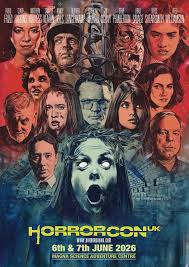
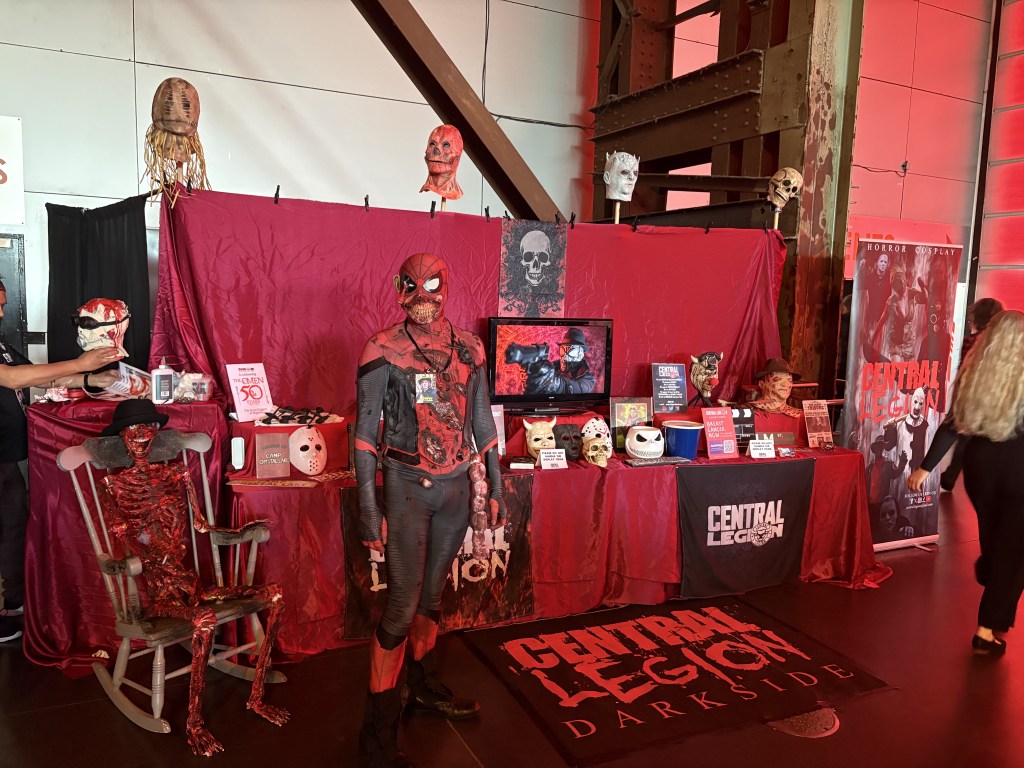
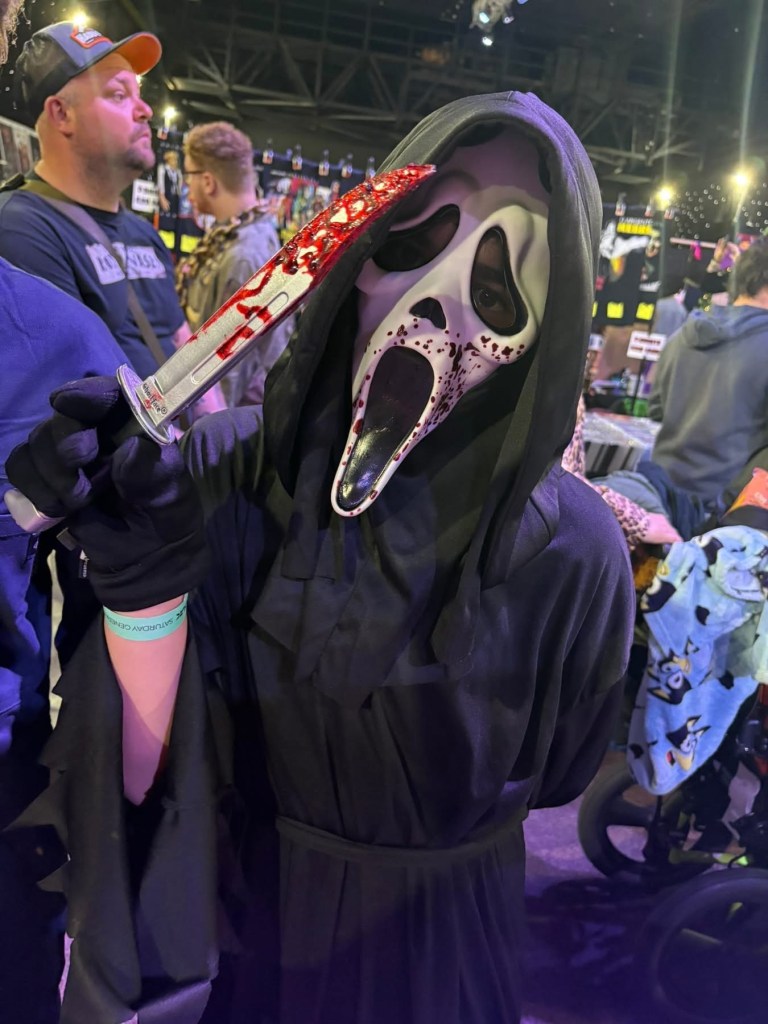
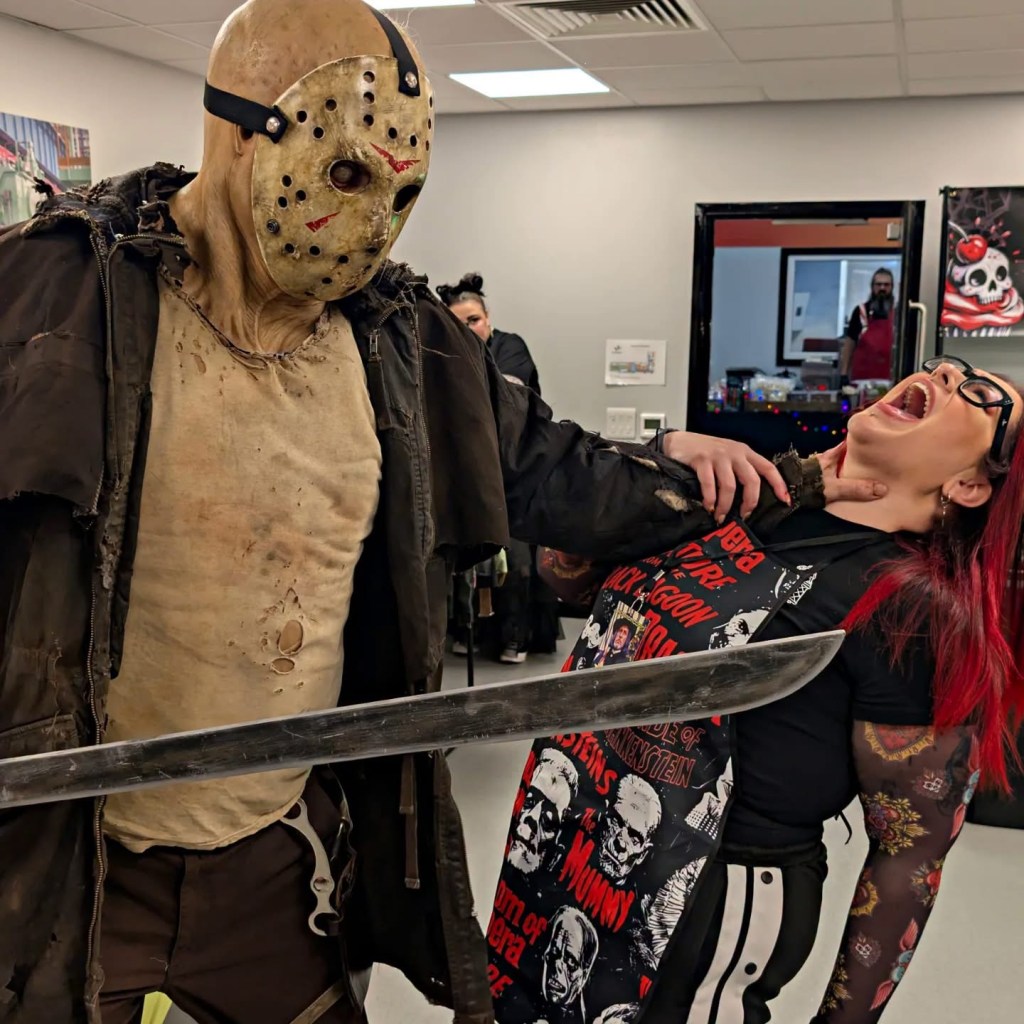
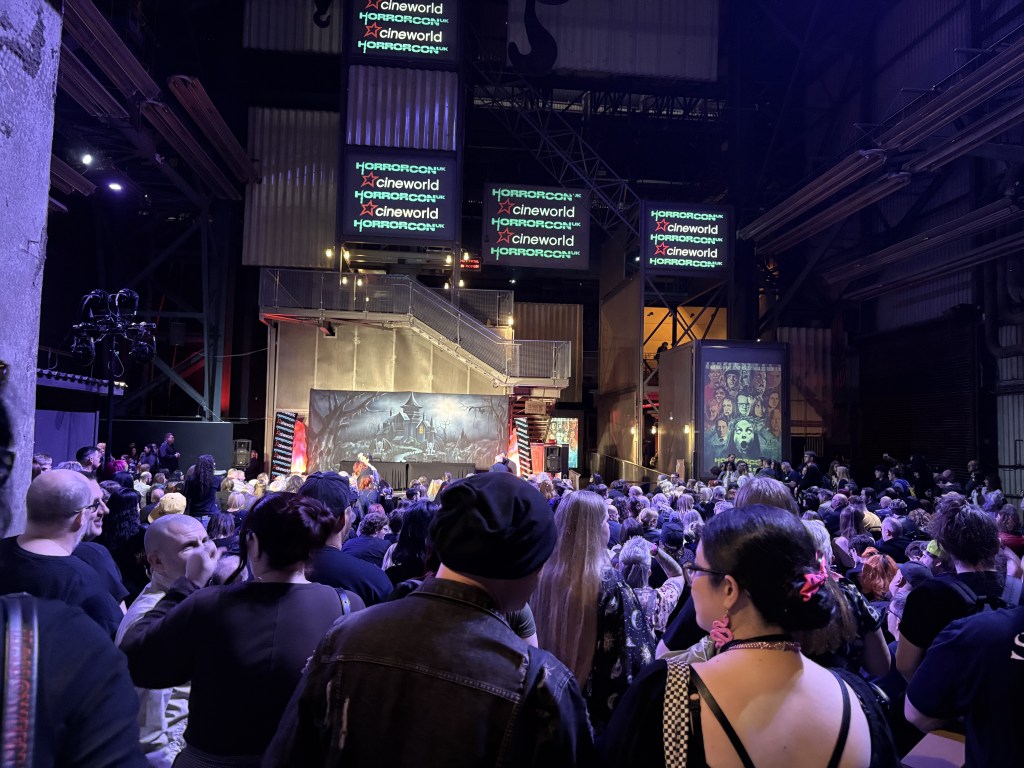
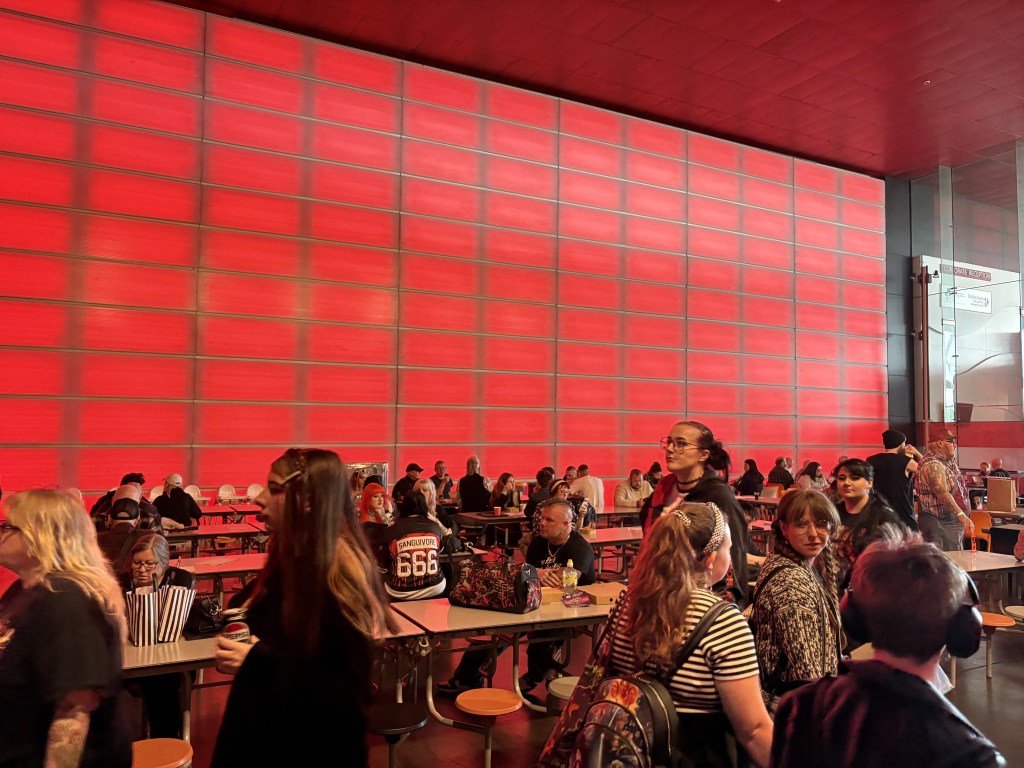
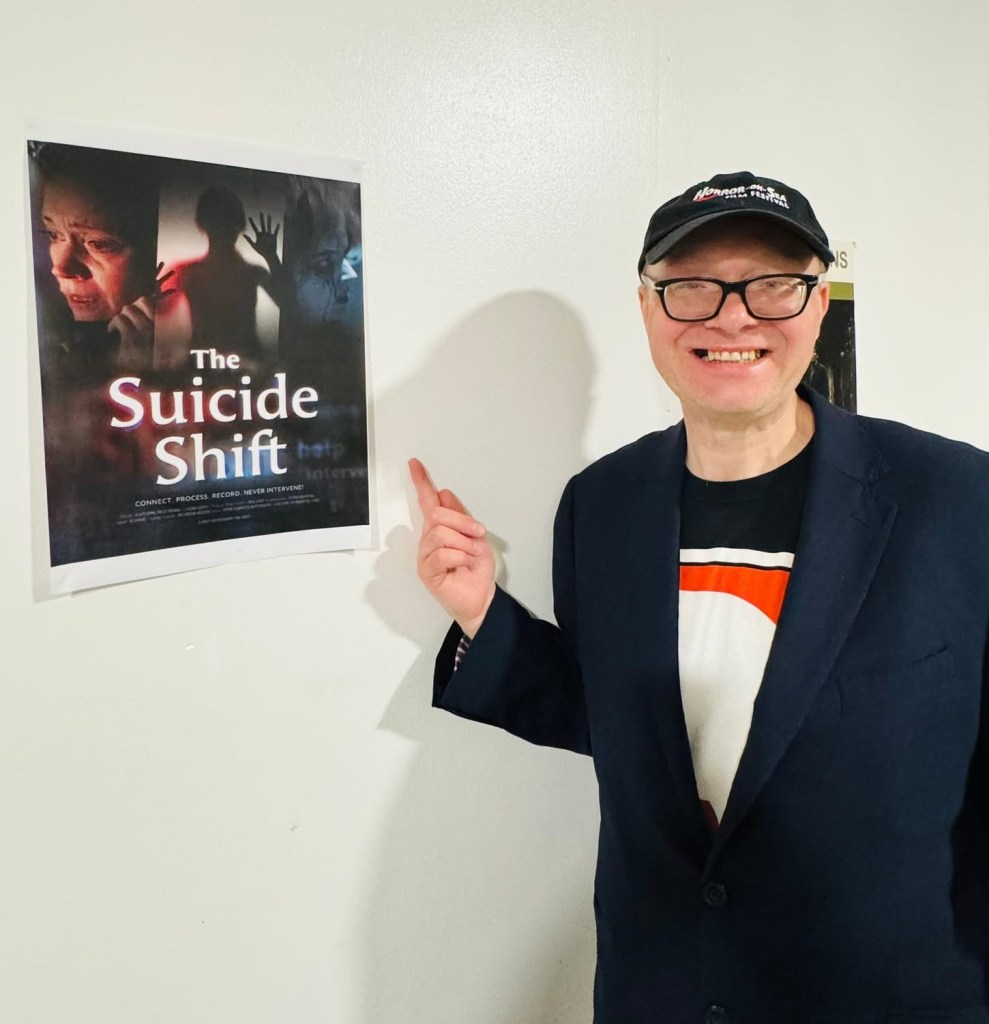
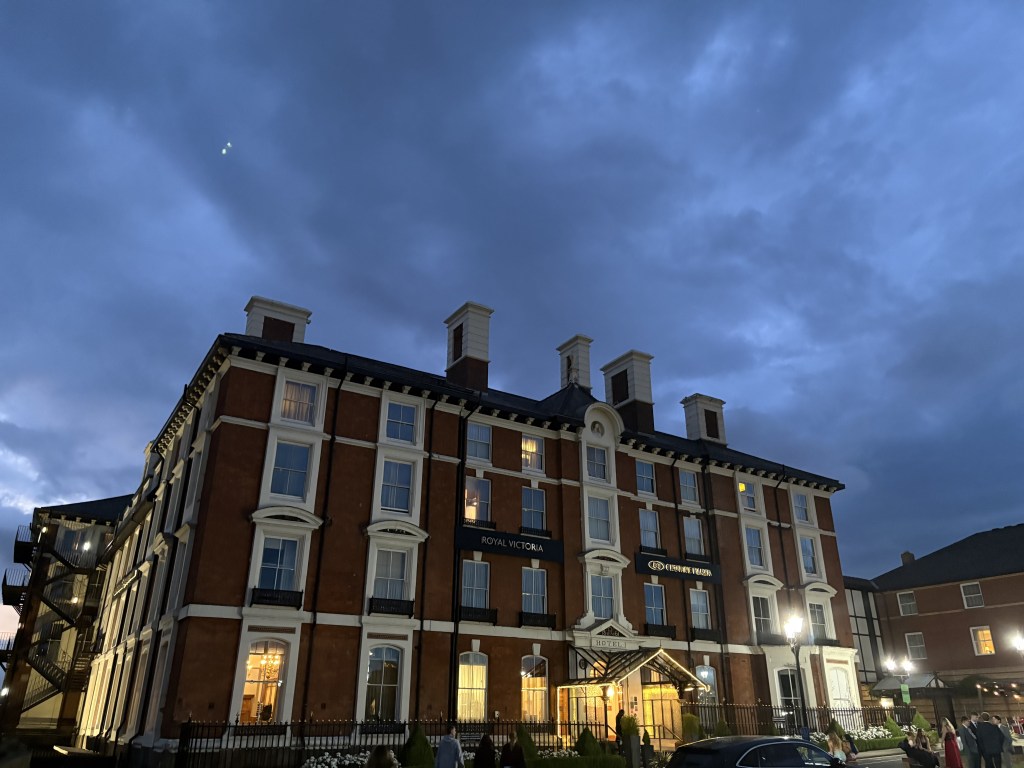
Earlier this month – appropriately running from 06.06.2026 to 07.06.2026 – myself and my wife attended the Horror Con 2026 event in Sheffield, England. My short film The Suicide Shift (2026) screened alongside many other great indie horror shorts there amidst a plethora of other wonderful happenings and people.
If you are a fan of all things horror from films, television, comic books, music, theatre, literature, posters, cos-play and also a memorabilia collector then this is definitely an event you should visit. As well as meet, greets and talks from horror stars, actors, writers, directors and musicians of now and yesteryear there are a myriad of stalls containing all manner of fantastic merchandise and collector’s items.
For more information check out their website here!
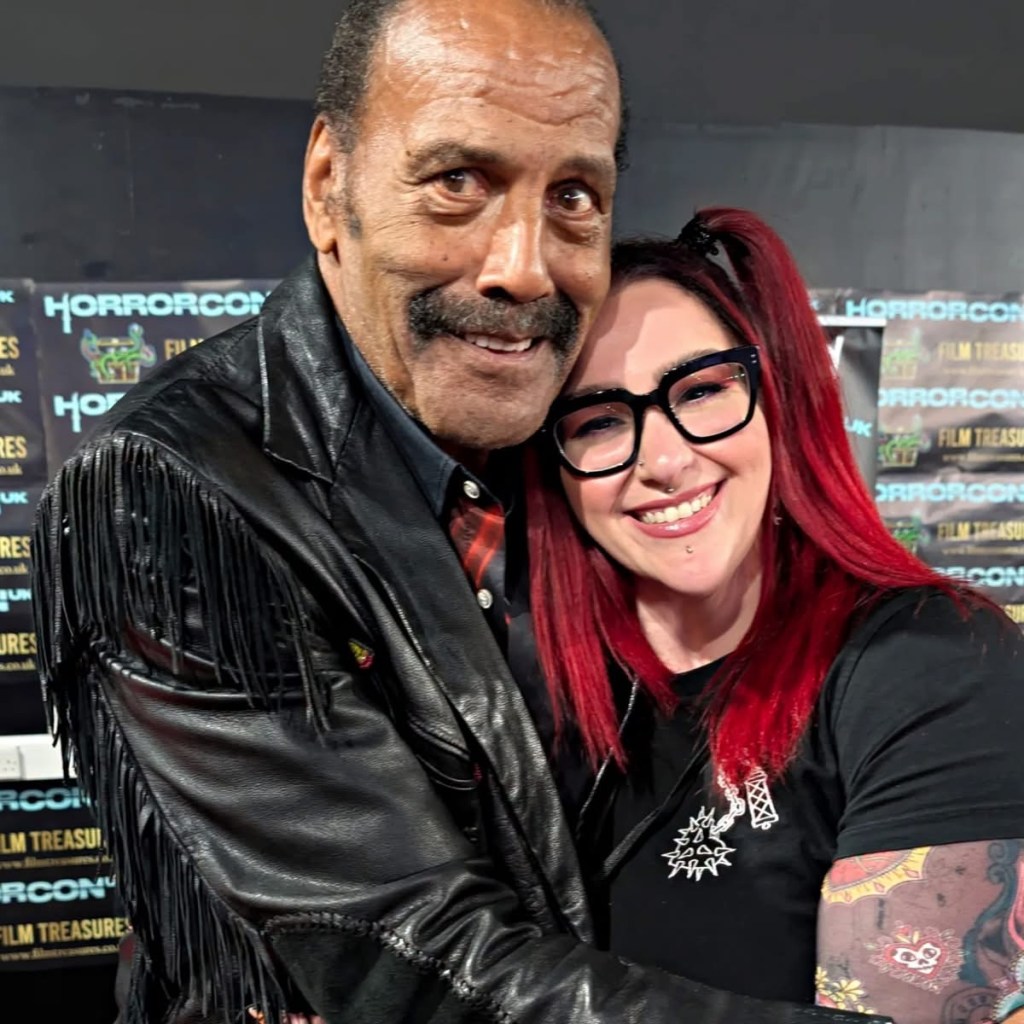
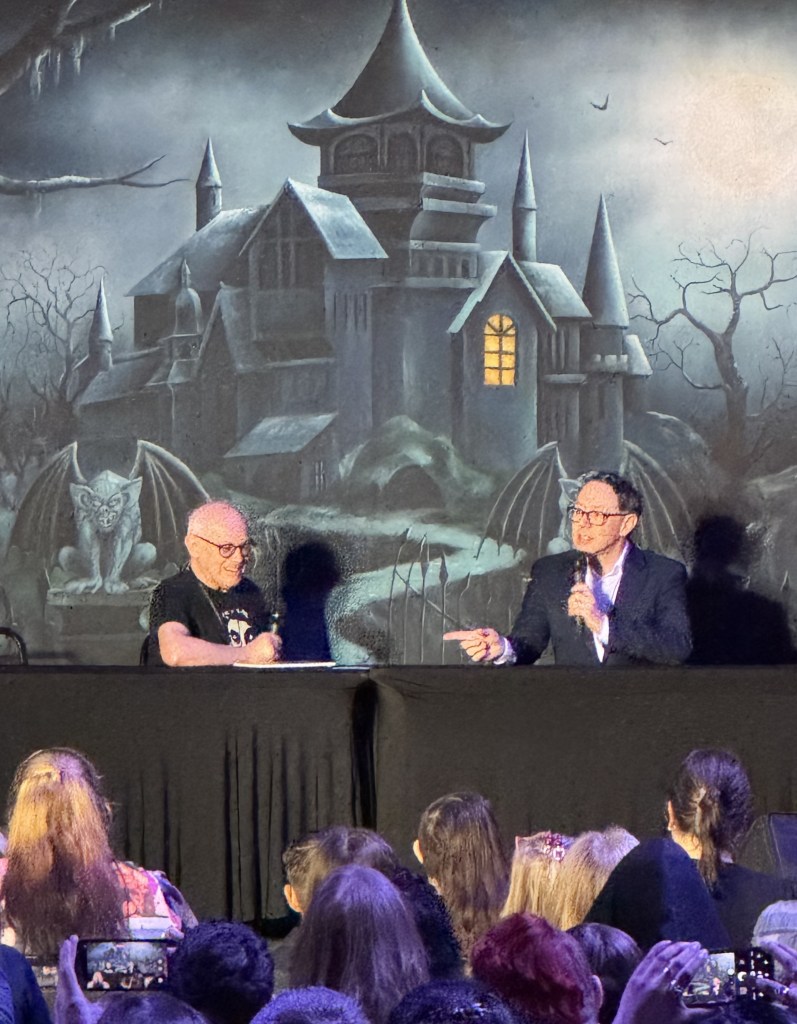
As well as the screening of The Suicide Shift (2026), the event was an opportunity to meet and hear from the legends of horror, cinema and TV more generally. I specifically met Fred Williamson, former American football star, actor from Black Caesar (1973), From Dusk til Dawn (1996), The Inglorious Bastards (1978) and many more blaxploitation and action films. He’s 88 years young and was so full of energy and it was amazing to meet and get his autograph.
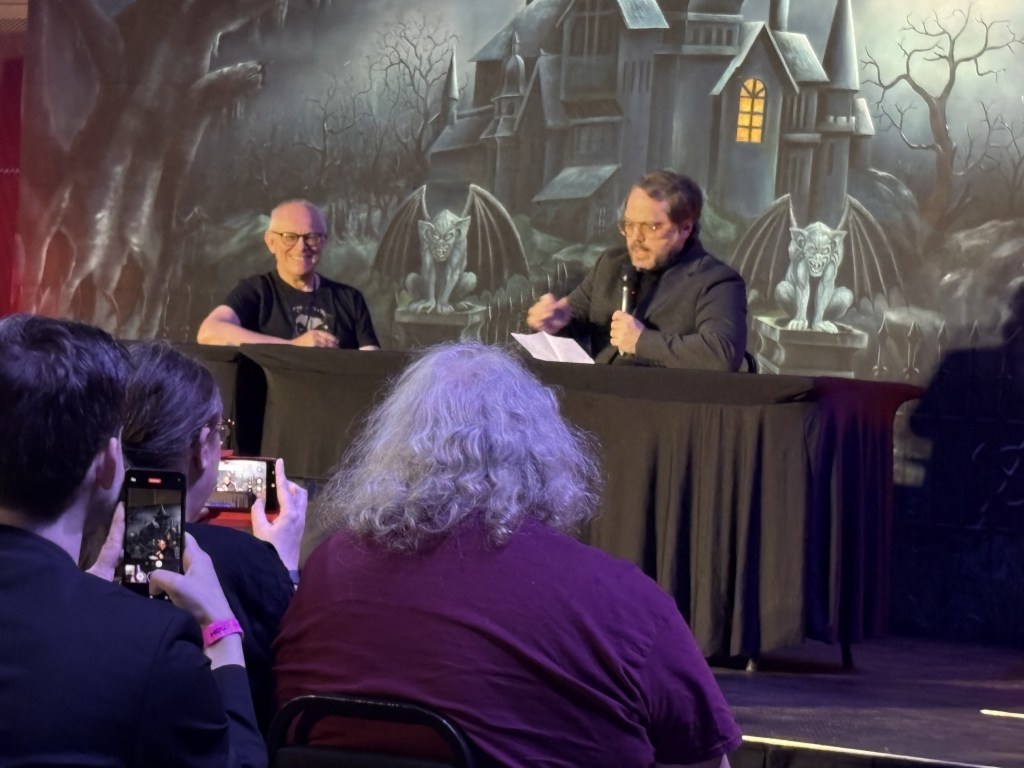
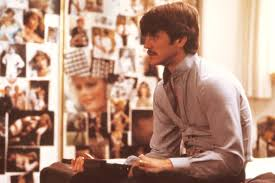
Further, I also had the pleasure of meeting and speaking to self-proclaimed genius horror author, TV writer/producer/actor, Garth Marenghi, whose Channel 4 horror-comedy show Garth Marenghi’s Dark Place(2004) was an essential early-millennium watch. I spoke with him about his experience and knowledge working on the weird horror filmPossum (2018). Garth remarked that was done by the ‘other guy’, Matthew Holness, and it nearly broke him as the writer and director of that feature film. It was a highly amusing experience, even just chatting for a short time, to a performer so fiercely staying “in character.”
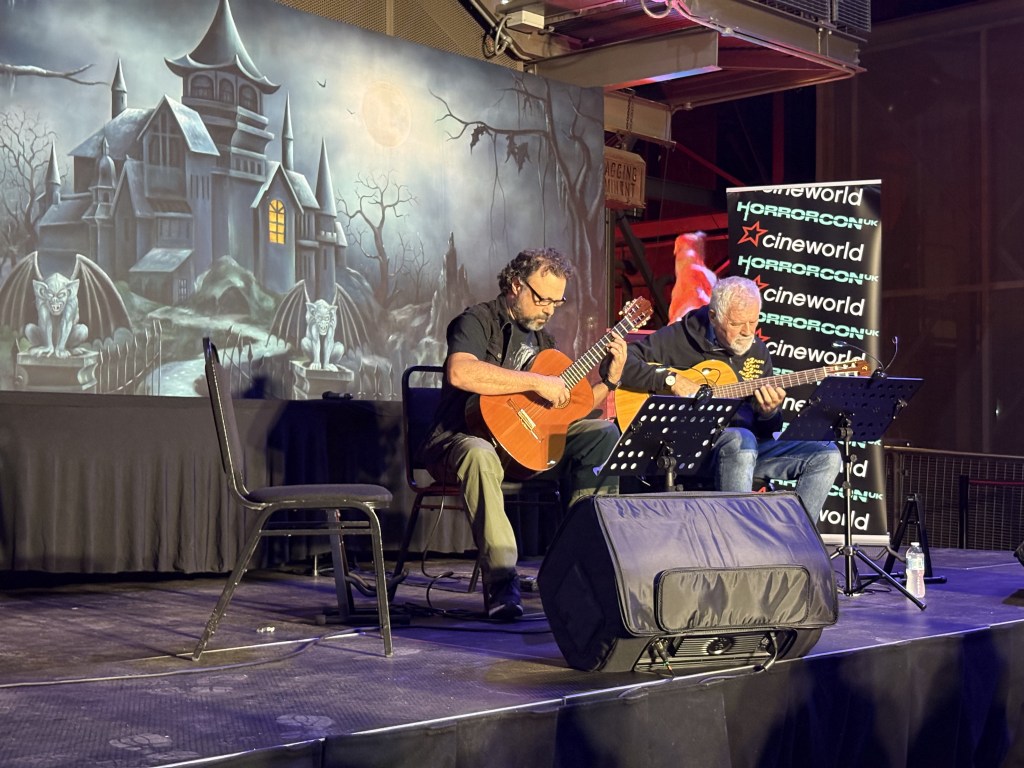
My wife, Melissa, would herself meet and get the autograph of comedy and horror great, Reece Shearsmith on the Sunday. His creative partner, Steve Pemberton (Saturday only), was also in attendance along with such luminaries as Ian Ogilvy, Heather Langenkamp, Caroline Munro (who I met at Romford Horror Festival 2026), Camille Keaton, Nancy Loomis (Kyes), plus the most intriguing appearance from composer and longtime Lucio Fulci collaborator, Fabio Frizzi. Most pleasing of all was Fabio and a fellow guitarist gave a classical guitar performance in the event hall of many of his horror film compositions. Along with the talks from the hilarious, Garth Marenghi, and brilliant, Reece Shearsmith, Frizzi’s musical performance was one of the major highlights of the weekend.
If you love horror I can certainly recommend making the annual pilgrimage to the Magna Centre in the Rotherham area of Sheffield in the future. It has been going for over a decade now and grows ever popular.
Here is a slideshowselection of photos from the event.
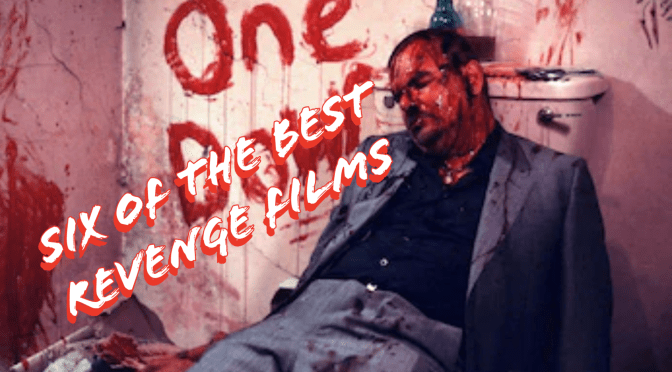
This year I have set myself a creative challenge to learn the fundamentals of video editing software such as Adobe Premiere and DaVinci Resolve. In order to achieve this I have set myself a target of writing, filming, editing and releasing on social media platforms various short videos and films, documentary or narrative. This video essay was based on a recent blog post I wrote that can be found here. So, I basically adapted, narrated and edited a video version of six of the best revenge films down below. Check it out!
Film Credits
DEAD MAN’S SHOES (2004) GET CARTER (1971) KILL BILL: THE WHOLE BLOODY AFFAIR (2004) MERMAID LEGEND (1984) MS. 45 (1981) OLD BOY (2003) ONCE UPON A TIME IN THE WEST (1968) REVENGE (2017)
Credits
Written, narrated and edited by: Paul Laight Music: Suspense Piano composed and recorded by Oak Studios.
The copyright of the images and trailers are those of the film studios. I do not own any of the images or films. This video article is an educational piece highlighting my favourite revenge genre films.
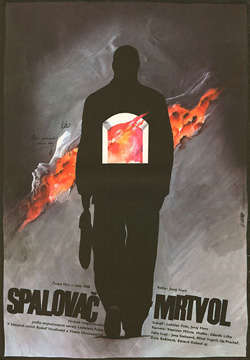
Main cast: Rudolf Hrušínský, Vlasta Chramostová, Jana Stehnová, Miloš Vognič, etc.
Cinematography by Stanislav Milota
Music by Zdeněk Liška
Few films feel as spiritually diseased as The Cremator (1969). Directed by Juraj Herz at the height of the Czech New Wave, the film is not simply a horror story about fascism or madness — it is a suffocating psychological descent into moral annihilation. Released in 1969, shortly after the crushing of the Prague Spring, the film arrived like a nightmare smuggled out of a collapsing world.
At first glance, The Cremator(1969) appears grotesque, even absurd. Its protagonist, Karl Kopfrkingl, is a Prague crematorium worker obsessed with death, cleanliness, Tibetan mysticism, and social respectability. But as the film unfolds, its black comedy slowly curdles into something far more terrifying: an anatomy of how spiritual emptiness and ideological seduction can fuse into psychopathy.
Set during the backdrop of the political radicalization of Europe during the 1930s, and the installation of the Protectorate of Bohemia and Moravia under Hitler’s Germany in 1939, the events become a startling microcosm of the Nazi onslaught against humanity. The film’s power lies not only in its themes, but in the unnerving collision of performance, photography, editing, and tone. It is funny, horrifying, philosophical, and surreal all at once — a cinematic experience unlike almost anything else.
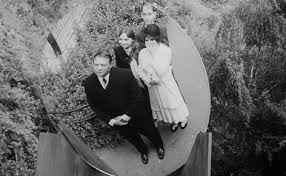
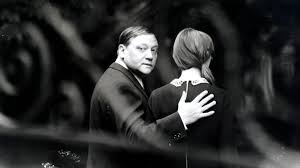
At the centre of the film is the extraordinary performance by Rudolf Hrušínský. His portrayal of Karl Kopfrkingl may be one of the greatest performances in horror cinema, precisely because he never behaves like a conventional villain. Kopfrkingl is soft-spoken, polite, articulate, even charming. He speaks in comforting aphorisms and philosophical musings. He adores his wife. He dotes on his children. He smiles constantly. Yet every sentence he utters feels faintly poisoned.
Hrušínský plays the character with such eerie serenity that the horror emerges not through aggression, but through calmness. He embodies a man who has entirely dissolved the boundary between compassion and cruelty. When Kopfrkingl speaks about cremation “liberating souls from suffering,” he genuinely believes himself to be merciful. That conviction is what makes him terrifying. The performance captures a specific kind of psychopathy rarely depicted on screen: not the explosive violence of rage, but the bureaucratic psychopathy of moral detachment. Kopfrkingl is capable of atrocity because he has transformed murder into an abstraction. He speaks of death with the same pleasant tone one might use to discuss gardening or architecture.
In this sense, the film becomes a chilling study of fascism’s psychological appeal. Fascism in The Cremator(1969) is not introduced through screaming speeches or military spectacle. It arrives through vanity, social aspiration, pseudo-spiritual rhetoric, and the desire to belong to something “pure.”
One of the film’s most unsettling dimensions is its use of Buddhist imagery and philosophy. Kopfrkingl constantly references the Tibetan Book of the Dead, reincarnation, liberation from suffering, and transcendence. Yet the film presents these ideas not as genuine spirituality, but as corrupted fragments filtered through narcissism and delusion. Real Buddhist philosophy emphasizes compassion, ego dissolution, and liberation from suffering through awareness. Kopfrkingl instead weaponizes spiritual language to avoid confronting guilt or empathy. He uses metaphysics to anesthetize morality.
Unlike many anti-fascist films, The Cremator (1969) does not portray Nazism as an external force invading society. Instead, fascism emerges as something already latent within ordinary life. Kopfrkingl is primed for it long before political ideology fully enters the narrative. He is obsessed with order, status, beauty, ritual, and cleanliness. He fears impurity. He wants social advancement. He craves meaning. Nazism merely gives structure to impulses already present within him.
The crematorium itself becomes the perfect metaphor for industrialized fascism. It is clean, efficient, mechanical, and emotionally sterile. Bodies move through the system with ritualistic precision. Death becomes administration. Kopfrkingl thrives in this environment because it allows him to feel spiritually important while remaining emotionally absent.
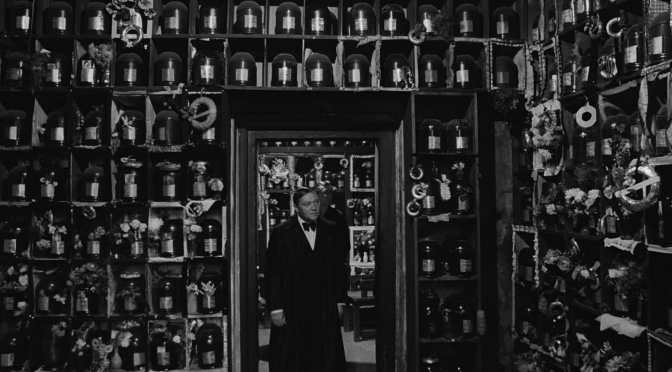
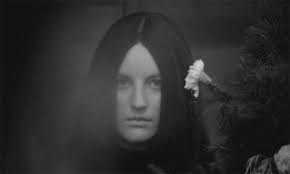
Visually, The Cremator (1969) is astonishing. Its black-and-white cinematography feels simultaneously elegant and diseased, full of warped close-ups, fisheye distortions, drifting shadows, and claustrophobic compositions. Faces loom unnaturally close to the camera. Rooms seem to bend inward. Mirrors fracture identity. The world feels unstable even before the narrative fully collapses into horror.
The editing in The Cremator may be its most radical achievement. The film’s montage structure constantly fractures time, space, and emotional continuity. At times, the film feels like it is edited according to subconscious logic rather than narrative logic. This creates a sensation of spiritual suffocation. The viewer experiences Kopfrkingl’s psychological fragmentation from the inside as he begins his reign of murder. The film itself begins to think like its protagonist. What is remarkable is how modern the editing still feels. The film doesn’t simply tell a story about insanity — it formally reproduces insanity.
Perhaps the film’s greatest achievement is its impossible tonal balance. The Cremator (1969) is genuinely funny. Kopfrkingl’s pompous speeches, obsessive vanity, and bizarre philosophical tangents often border on absurdist comedy. Some scenes play like dark satire, exposing the ridiculousness of authoritarian self-importance. And yet the laughter quickly becomes uncomfortable. This fusion of horror, drama, and comedy is what makes the film feel so original. Most horror films separate terror from satire. The Cremator (1969) understands that the truly grotesque often contains both simultaneously. The result is a film that feels spiritually corrosive in the best possible way — a nightmare that smiles while it strangles you.
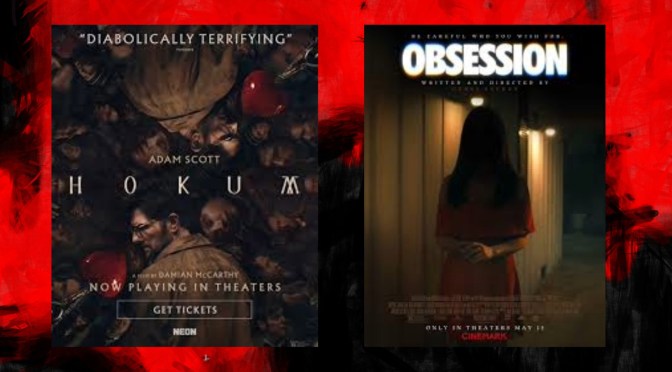
It is a testament to the continued popularity and money-making ability of the horror genre that it is now receiving prime release dates throughout the year at the multiplex cinemas. While Halloween is a favoured release period for horror films at the cinema, as well as the many streaming platforms, the genre is now a staple of the spring and summer schedules. Two films released within a week of each other, namely, Hokum (2026) and Obsession (2025). While both films differ in themes, it kind of made sense to offer a dual review.
*** MAY CONTAIN SPOILERS ***
Hokum (2026)
Directed and written by Damian McCarthy
Main cast: Adam Scott, Florence Ordesh, Peter Coonan, David Wilmot & Michael Patric
Damian McCarthy’s previous film Oddity (2024) was a genuinely unnerving mix of ghostly, vengeful and creepy doll manifestations. While drawing on familiar horror elements it felt fresh and is definitely recommended. McCarthy’s new film,Hokum (2026) is similarly unsettling and slow burn in approach, however, the narrative elements are far more recognizable. Indeed, Adam Scott is Ohm Bauman, a grizzled and successful writer suffering from creative block. So-far-so-Stephen-King. In an attempt to break his inertia he takes a trip to rural Ireland to lay-to-rest his parents ashes, while also dealing with a festering childhood trauma.
The blocked writer overcoming grief and trauma within the ghostly trap of an old building, in this instance a hotel, has been done many times before. Yet, Damian McCarthy is an ultra-talented director and he creates atmosphere, startling images, shivering scares and a pervading sense of dread throughout. The main issue I had was Scott’s Ohm is unlikeable and I did not really care if he lived or died. I cared even less that he finished the novel he was working on. The most empathetic character, Fiona, meets an early demise becoming a plot point and victim, despite Florence Ordesh’s memorable screen presence. Overall, Hokum (2026) contains some fantastic visuals and chilling moments despite not wholly reconciling the themes of grief, ghosts, witches, toxic masculinity, guilt, trauma, murder and nefarious hotel staff.
Mark: 7.5 out of 11
Obsession (2025)
Directed, written and edited by Curry Barker
Main cast: Michael Johnston, Inde Navarrette, Cooper Tomlinson, Megan Lawless & Andy Richter
Another horror film and another ultimately unsympathetic male protagonist where late-twentysomething, Bear (Michael Johnston), finds himself deservedly terrorised by a primal and horrific cycle of events. Unlike the confident, Ohm from Hokum, Bear is a low-self-esteem-Beta-male who is obsessed with, but “friend-zoned” by his work colleague, Nikki. Unfortunately he is so crippled by shyness he cannot ask her on a date for fear of rejection. When Bear desperately makes a wish using a “One Wish Willow”, (monkey paw equivalent), his desire for Nikki to “love him more than anything in the world” completely backfires as she succumbs entirely and frighteningly to the wish. While I empathised with such romantic anxiety it’s incredibly painful to watch.
But that is Curry Barker’s thing! He is committed to creating as many awkward, sickening and shocking moments as possible. He takes this horror / gag set-up and runs the plays ensuring the conceit gets sicker and sicker with each scene. Using Inde Navarrette’s phenomenally psychotic performance, gross bodily outpourings, satanic smiles, and severe moments of self-harm Barker delivers terror of the highest order. His use of shadowed figures, head-smashing violence and sound effects especially created a heady mix of nervous laughter and palpable tension. My main criticism is that many scenes were TOO dark and I could not see the characters. Yeah, I know I this was deliberate but it’s a recent lighting style many cinematographers choose that I really dislike.
Zach Cregger, the Philippou brothers and now Curry Barker have moved from short film, sketch, viral video and comedy content to the horror genre with incredible success. Sudden shocks, surprises, and powerful punchlines work brilliantly for both comedy and horror although, of the three, the Philippou brothers have delivered the more emotionally resonant films compared to Cregger and now, Barker. Still, Barker’s propensity for sickening gore and humour is to be admired. Further, the true horror is in Barker’s exploration of toxic masculinity and the desire to trap femininity. The place where Nikki’s consciousness was imprisoned is where the resonant evil of Obsession (2025) truly remains.
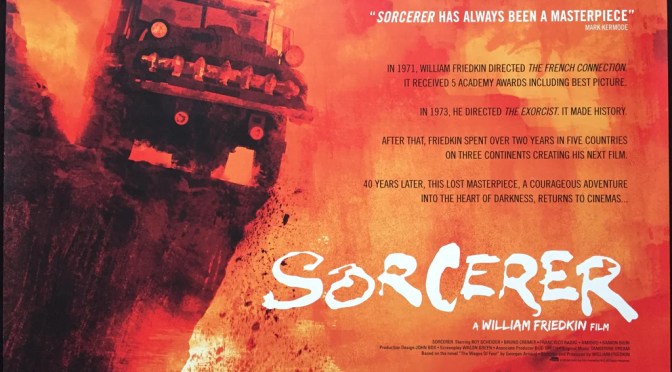
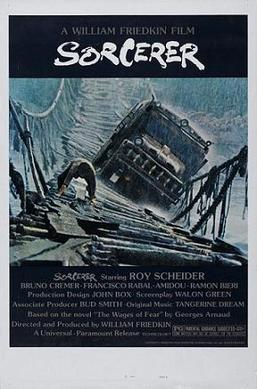
Screenplay by Walon Green – Based on The Wages of Fear (1950 novel) by Georges Arnaud
Produced by William Friedkin
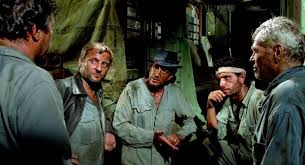
Main cast: Roy Scheider, Bruno Cremer, Francisco Rabal, Amidou, Ramon Bieri, etc. Cinematography by John M. Stephens & Dick Bush
Music by Tangerine Dream
*** MAY CONTAIN SPOILERS ***
I love The Wages of Fear (1953). It is one of my favourite films of all time. I have reviewed it here. Yet, for years I had never seen William Friedkin’s adaptation of the same 1950 novel, titled, Sorcerer (1977), but thankfully it was screened on Film Four a few years ago, so finally caught up with it. Even better, during the first May Bank Holiday this year it was screened at the Prince Charles Cinema in central London. Amidst a packed crowd I marvelled in the crazed and majestic vision of Friedkin’s filmic adaptation.
Sorcerer (1977) represents one of the clearest examples of how a major studio film can become both a catastrophic commercial failure and, decades later, a revered cult masterpiece. Friedkin, who was at the height of his directorial power, unfortunately did not receive the deserved commercial or critical response during its release and the film disappeared from public view for years. A major reason for the film bombing is it ran directly into the release of Star Wars (1977).
Audiences suddenly wanted escapist fantasy, optimism, and spectacle. Sorcerer (1977) offered the exact opposite: bleak existentialism, sweaty paranoia, moral ambiguity, long stretches of tension and despair and no traditional heroes. Further, audiences were confused by the title, which sounded supernatural even though the film has nothing to do with magic. Many viewers assumed it was a horror or fantasy film and mixed initial reviews, a slow, demanding pace and the film’s nihilistic tone did not help.
The narrative is tension personified. Four desperate fugitives are handed what is essentially a suicide mission: drive two battered, barely functioning trucks 218 miles through a brutal Latin American jungle, carrying crates of decaying dynamite so unstable that every pothole, every jolt, every wrong move could ignite the sweating nitroglycerin inside and annihilate them instantly. The road is collapsing beneath them, the jungle is unforgiving, and death is riding in the back seat with every mile. This premise gave rise a series of double-crossing plot events and incredible action set-pieces, notably the crumbling bridge scene where you can virtually feel the stormy weather on your face while watching.
As such — the trucks crossing a collapsing rope bridge during a storm — became one of the hardest sequences ever filmed at the time. Friedkin refused miniatures or obvious effects work. The crew built a full suspension bridge over a real river in the Dominican Republic. Then the river dried up. They had to abandon the location, search for another river, rebuild portions of the bridge, and engineer artificial rain systems powerful enough to create a storm effect. Due to this and crew members falling ill in the tropical conditions, the production went over schedule and over budget.
The drama after release did not end. Sorcerer (1977) became trapped in rights issues and studio neglect where quality prints were difficult to find and television broadcasts were rare. Friedkin himself even left a comment on a DVD copy on sale on Amazon saying “DO NOT BUY THIS!” Thankfully a fully restored Blu Ray version was released in 2014 and The Criterion Collection released Sorcerer (1977) on Blu-ray and Ultra HD Blu-ray in June 2025. Thus, the story behind the film mirrors the narrative itself with obsessive men undertaking an impossible task, pushing beyond reasonable limits, suffering incredible stress and barely surviving the journey.
At the time, Hollywood treated Sorcerer (1977) as evidence that the auteur era had gone too far. In retrospect, many see it as one of the last uncompromising masterpieces before blockbuster logic transformed the industry permanently. Lastly, while the characters are all anti-heroic and difficult to root for in Sorcerer (1977), the sheer brilliance of the practical effects, epic Tangerine Dream soundtrack, nerve-shredding editing, stunning cinematography and insane effort make this one of the most suspenseful and incredible action films of all time.
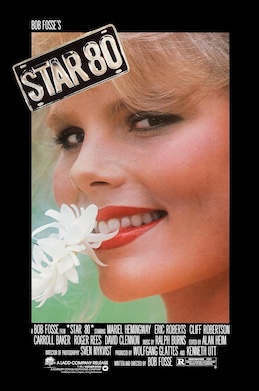
Written by Bob Fosse – Based on Village Voice article, “Death of a Playmate” by Teresa Carpenter
Produced by Wolfgang Glattes & Kenneth Utt
Main cast: Mariel Hemingway, Eric Roberts, Cliff Robertson, Carroll Baker, Roger Rees, David Clennon, etc.
Cinematography by Sven Nykvist
*** CONTAINS SPOILERS ***
Bob Fosse remains one of the most singular figures in American entertainment — a director and choreographer whose style fused seduction, cynicism, theatrical precision, and emotional exhaustion into something instantly recognizable. Emerging from Broadway before conquering Hollywood, Fosse developed a visual language built around angular movements, tilted hats, snapping fingers, smoky jazz-club sensuality, and a relentless awareness of performance as both liberation and self-destruction.
Films like Cabaret (1972), Lenny (1974), and especially All That Jazz (1979) transformed the movie musical into something darker and psychologically raw, stripping away optimism in favour of obsession, ego, mortality, and the corrosive cost of show business. His influence can still be felt across modern cinema, music videos, and stage choreography, from contemporary Broadway revivals to filmmakers drawn to stylized performance and fractured antiheroes.
His final film, Star 80 (1983), stands as perhaps the bleakest expression of that worldview. Based on the true-crime murder of Playboy model Dorothy Stratten by her estranged husband Paul Snider, the film abandons glamour almost entirely in favour of a grim examination of exploitation, fame, misogyny, and possessive violence. Despite strong performances and critical admiration over the years, Star 80remains comparatively difficult to encounter on television or major streaming platforms, partly because of the film’s emotionally punishing tone and its frank, lascivious depiction of the exploitation surrounding Stratten’s rise and death.
Unlike nostalgic Hollywood biographies that soften tragedy into inspiration, Fosse offers no comforting catharsis. The film ends not with redemption, but with the crushing inevitability of a young woman destroyed by the appetites of the men around her. That uncompromising darkness has contributed to the film’s lingering reputation as both a major work and an uncomfortable one — admired more often than it is revisited. So, thanks to the Nickel Cinemain London for screening this dark 1970’s based cult classic.
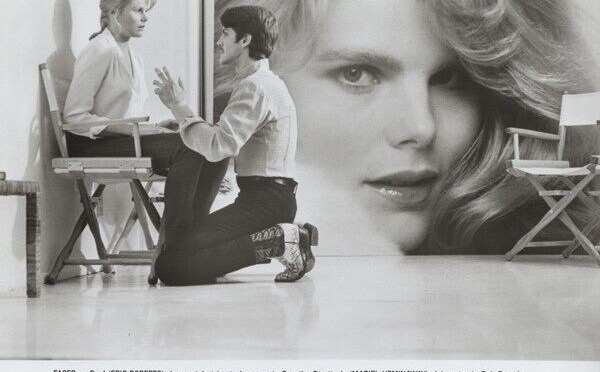
In Star 80 (1983), Mariel Hemingway gives an emotionally vulnerable performance of as Dorothy Stratten. Hemingway captures Stratten not as a caricature of Playboy fantasy, but as a genuinely sweet, almost painfully open young woman whose natural beauty and modest charm made her seem like the quintessential girl-next-door suddenly thrust into the machinery of adult celebrity. There is an innocence in Hemingway’s performance that never feels naïve or artificial; she understands Dorothy as someone eager to please, hungry for affection, and slowly awakening to her own independence just as the forces around her become more dangerous. Fosse frames her as both radiant and tragically exposed — a woman transformed into an object of desire by an industry that sees glamour as currency and vulnerability as weakness.
Opposite her, Eric Roberts delivers a frighteningly intense performance as Paul Snider, one that avoids simple imitation in favour of total embodiment. Roberts plays Snider as a man consumed by insecurity, narcissism, and desperate possessiveness, turning toxic masculinity into something sweaty, twitching, and deeply pathetic. He is not charismatic in the conventional movie sense; instead, Roberts makes him volatile and emotionally ravenous, a man whose entire identity depends on controlling the woman he helped “discover.” The performance becomes increasingly difficult to watch because of how recognizable the psychology feels — jealousy mutating into resentment, then humiliation, then violence.
Fosse refuses to sensationalize that descent in Star 80 (1983). The naked glamour of the Playboy world, the pornographic undercurrent of the entertainment industry, and the seductive surfaces of Los Angeles all become drenched in sordid, emotional decay. There is nudity and a sense of exploitative lingering on the feminine form, but there is understandable context. Cliff Robertson’s appearance as Hugh Hefner is not simply a caricature, but rather a caring, avuncular figure, despite building an empire out of, arguably, the exploitation of women. Further, Aram Nicholas (a thinly veiled, Peter Bogdanovich ) is a film director who tries to make Dorothy Stratten a movie star, but begins an affair too, sending Snider over the edge. Thus Stratten’s body and soul pinballs between these dominating men.
Overall, Star 80 (1983) lingers long after it ends. Fosse, Hemingway, Roberts and Sven Nykist’s cinematography contribute memorable work. Beneath its glossy imagery lies an overwhelming feeling of bleakness — the sense that every flashbulb, every photo shoot, and every promise of fame is shadowed by exploitation, stolen innocence, and inevitable tragedy.
Revenge is one of the oldest narrative engines in storytelling. Long before cinema, it powered myths and literature—from the blood-soaked cycles of Greek tragedy to the meticulous retribution of The Count of Monte Cristo. These stories hinge on a simple but potent question: what happens when justice fails, and an individual takes it upon themselves to restore balance? Cinema inherited this question and, over time, fractured it into multiple forms—some cathartic, others corrosive, and many deeply ambiguous.
A Brief History of Revenge on Screen
Early revenge narratives in cinema often mirrored their literary roots: structured, morally legible, and driven by transformation. A Woman Branded (1931) is sometimes cited as an early precursor of a woman seeking revenge. Films like Kind Hearts and Coronets (1949) or adaptations of The Count of Monte Cristo framed revenge as an almost intellectual exercise—precise, controlled, and, in the case of the Ealing classic, even darkly humorous.
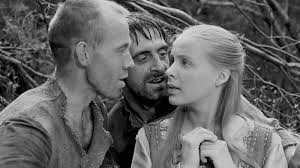
While revenge is a foundational narrative theme dating back to early cinema, Ingmar Bergman’s The Virgin Spring (1960) is widely considered the earliest major film establishing the “rape-revenge” subgenre. It follows a father seeking brutal vengeance for his daughter’s murder, influenced by a 13th-century Swedish ballad and Japanese cinema.
During the late 1960s and 1970s, something shifted. Disillusionment seeped into cinema, and revenge stories grew harsher, more grounded. Neo-noir works like Point Blank (1967), Get Carter (1971), and the classic Western, Once Upon a Time in the West (1968), reframed revenge as something mythic yet emotionally compelling. Sergio Leone’s film in particular bridges classical and modern revenge—turning personal vengeance into operatic inevitability while still rooted in grief and loss. Further, the 1960 / 1970s “Spaghetti” and Clint Eastwood westerns were also heavily driven by vengeful characters, as well as brutal bounty hunters and mercenaries. Overall, the 1970s marked a surge in mainstream vigilante revenge films, with Last House on the Left (1972) and Death Wish (1974), to name a couple, are widely seen as cementing the genre’s popularity.
At the same time, exploitation cinema erupted with raw, confrontational narratives—I Spit on Your Grave (1978), Coffy (1973), Ms. 45 (1981), and Thriller: A Cruel Picture (1973)—often centring female vengeance in ways that were both provocative and controversial. Japanese cinema contributed key films like Lady Snowblood (1973), which would later echo through global cinema. Asian cinema embraced the brutality of the subgenre with revenge films like Vengeance is Mine (1979), Park Chan Wook’s The Vengeance Trilogy and the visceral I Saw the Devil (2010) which interrogated obsession and extreme violence in equal measures.
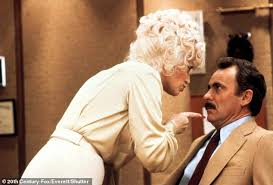
Thus, there are many faces to the revenge including: stage plays, classic literature, gangster, Western, arthouse, war, horror and even comedic ones such as 9 to 5 (1980). Each mode reflects a different cultural anxiety. Some seek catharsis; others deny it entirely. Some empower; others dismantle the very idea of empowerment. What remains is that revenge is a primal drive and offers clear motivation as to a characters’ wants. Above all else a good vengeance narrative offers high stakes satisfaction and entertainment when done right. Here are six filmic examples of this.
Six of the Best Revenge films
What unites the six chosen films is not just quality, but how distinctly each approaches revenge. The six films selected here demonstrate the breadth of what revenge can mean on screen: spectacle, despair, inevitability, and even self-annihilation.
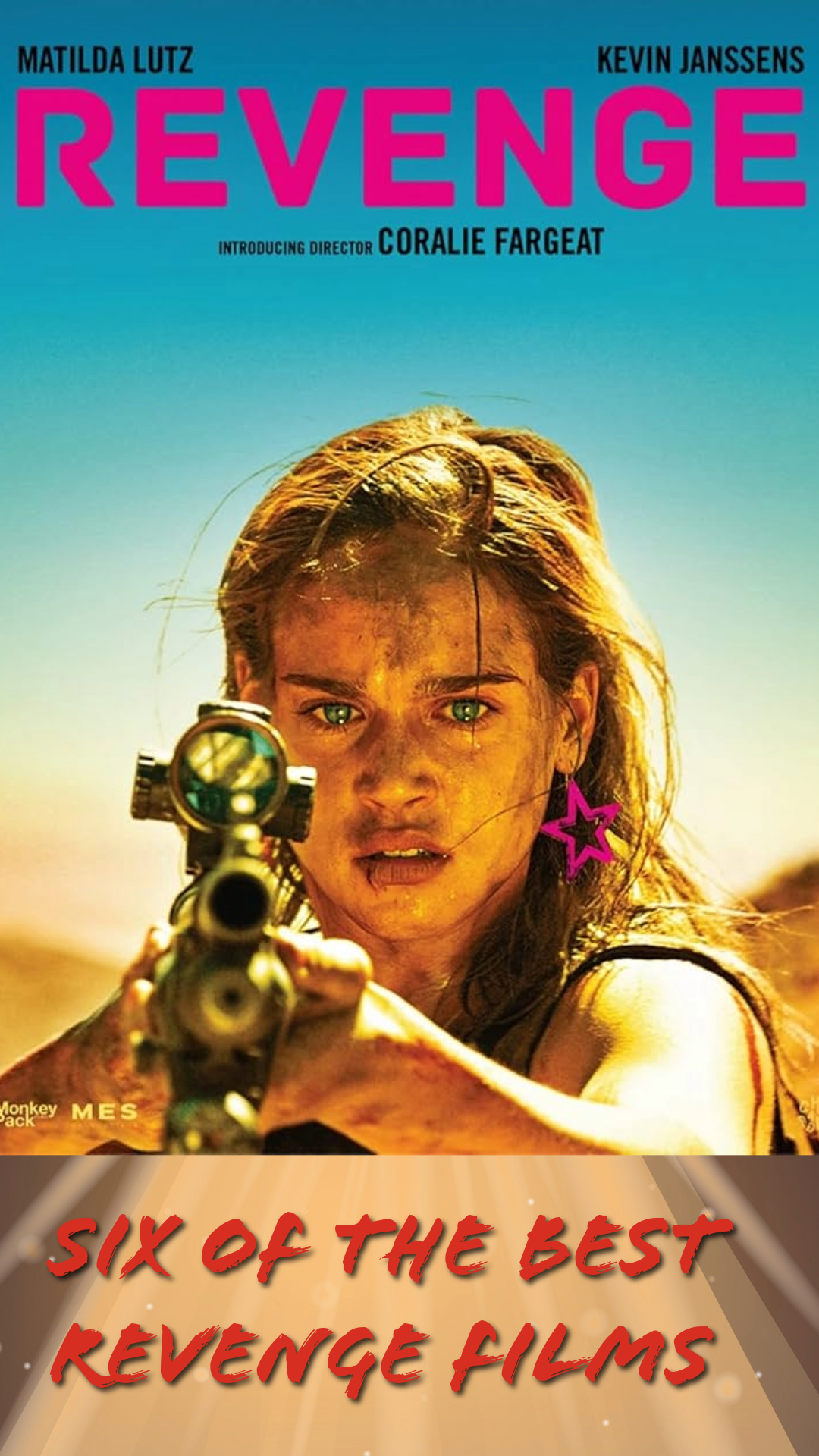
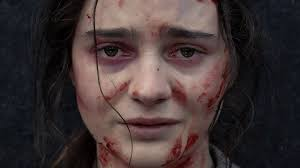
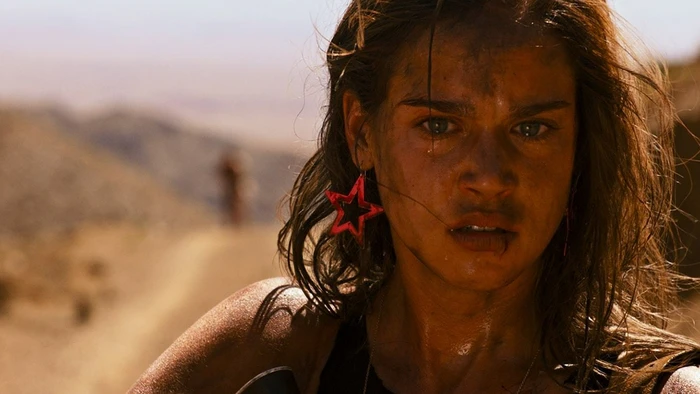
I really wanted to include Revenge (2017), a film which revisits the roots of exploitation film but reclaims them with precision. Coralie Fargeat transforms the genre’s historically exploitative gaze into something confrontational, self-aware and sexual. Violence is stylised and glamorous, but never empty—it becomes a language through which the protagonist reasserts control over her own narrative. Alas, it does not make the list.
*** MAY CONTAIN SPOILERS ***
Dead Man’s Shoes (2004)
I’ve written about Dead Man’s Shoes (2004) before but for me it is one of the best British films ever. Shane Meadows classic low-budget revenger evolves a brother’s vengeance into something more intimate and tragic. Meadows reframes revenge as grief and guilt, culminating in a devastating reversal that questions whether vengeance can ever truly be directed outward. It is revenge turned inward, a psychological reckoning masquerading as retribution. Paddy Considine delivers one of the rawest and most angry performances ever put on screen.
Get Carter (1971)
Get Carter (1971) is cold, methodical, and stripped of glamour, like a Northern neo-noir. Michael Caine’s Jack Carter moves through a decaying Newcastle like an agent of inevitability. There is no triumph here—only the suggestion that violence begets nothing but itself. Caine’s performance delivers the dialogue with razor-sharp timing and dark wit. A violent gangster but relentless detective hunting down the thugs who killed his brother. The clever screenplay (based on a novel) ensures those Carter is after are even worse than him as ultimately Northern decay meets moral collapse.
Kill Bill: The Whole Bloody Affair (2025)
As revenge epics and Asian cinema homages go,Kill Bill: The Whole Bloody Affair (2025) is a staggering piece of synthesis from Quentin Tarantino. Beatrice Kiddo’s (Uma Thurman) quest isn’t just a trail of vengeance—it’s ritualised, almost sacred, each confrontation unfolding like a chapter in a blood-soaked myth. Tarantino fuses global influences—from Anime, samurai cinema like Lady Snowblood (1973) to grindhouse exploitation—into something heightened and unmistakably his own: a world of colour, blood, incredible choreography, and cutting precision. Violence here isn’t merely destructive; it becomes a form of expression, even purification. In this universe, revenge is not corrosive or self-defeating but clarifying, elevating Beatrice’s journey from victim to legend.
Mermaid Legend (1984)
Mermaid Legend (1984) stands as a startlingly powerful vengeance film, elevated by Mari Shirato’s ethereal, magnetic performance as Migiwa—at once woman, avenging angel, and elemental force. Her transformation drives the film into increasingly confrontational territory, where extreme violence and explicit sexuality feel less gratuitous than weaponised, forcing the viewer into a state of unease. What makes the revenge so compelling is its inevitability: this is not a quest but a metamorphosis, as Migiwa becomes something beyond human, guided as much by the sea and spirit as by rage. The film’s brilliance lies in how it fuses beauty and brutality into a singular vision. Lyrical underwater imagery and sacred, mournful music elevate the violence into something ritualistic, culminating in a final pier rampage that feels less like action than ceremony—hypnotic, relentless, and mythic. By the end, revenge is no longer just an act but a form of transcendence, pushing the film beyond exploitation into legend.
Old Boy (2003)
Oldboy (2003) is a film I can watch over and over and it still shocks me. The narrative feels like a perverse inversion of The Count of Monte Cristo. But, where Dumas offers revenge as a calculated, almost righteous act, Park Chan-wook and the source material it is based on presents it as something recursive and inescapable. The brilliance of Oldboy (2003) lies in its dual revenge structure: what begins as Oh Dae-su’s pursuit of answers gradually reveals itself to be the final movement in someone else’s long-orchestrated vengeance. Both protagonist and antagonist are locked into mirrored roles, each defined—and ultimately destroyed—by the same impulse. The film’s infamous twists don’t just shock; they reframe the entire narrative as a closed system of suffering, where revenge ceases to be cathartic and instead becomes a mechanism of obscene chaos. The antagonist’s revenge is meticulous, psychological, and total, while Dae-su’s reactive violence only tightens the trap. Both men are ultimately consumed, their identities hollowed out by the nihilistic revenge that defines them.
Once Upon a Time in the West (1968)
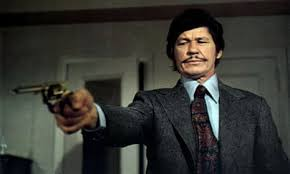
Once Upon a Time in the West (1968) is a great revenge film and classic Western. It precisely because it strips vengeance down to something elemental, patient, and almost mythic. Charles Bronson’s ‘Harmonica’ is not a conventional protagonist but a force moving through the landscape with quiet, relentless purpose. He speaks little, explains nothing, and yet every gesture feels loaded with intent. His pursuit of Henry Fonda’s Frank—a brutal mercenary introduced through shocking, child-murdering violence—is not driven by impulse but by memory, by something buried so deep it can only be expressed through action. What elevates the film is its methodical pacing and Leone’s operatic control. Violence is withheld, stretched out across long silences, close-ups, and Ennio Morricone’s mournful score, turning each encounter into ritual. When ‘Harmonica’ finally unleashes havoc, it is not chaotic but precise—measured, almost ceremonial. The eventual revelation of his motive reframes everything: this is not just revenge, but the completion of a trauma that has defined his entire existence.
Conclusion
To distil revenge cinema into six films is, inevitably, an incomplete task. The genre is too vast, too varied spanning everything from canonical works to obscure, difficult films that remain unseen or underexplored. There are countless other entries, including many lesser-known or unseen works, that could reshape or challenge this selection.
And yet, that is precisely why revenge endures. It is a universal impulse, endlessly adaptable to tone, culture, and form. Whether stylised, brutal, philosophical, or deeply personal, revenge remains one of cinema’s most powerful motivations—for characters and filmmakers alike.
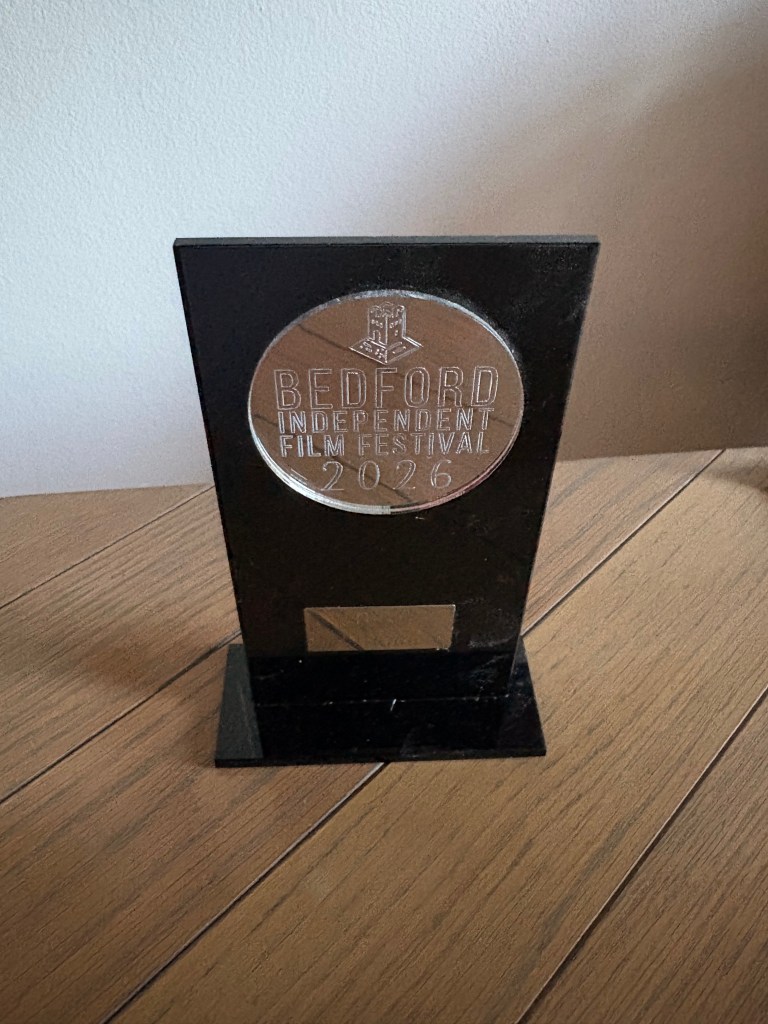
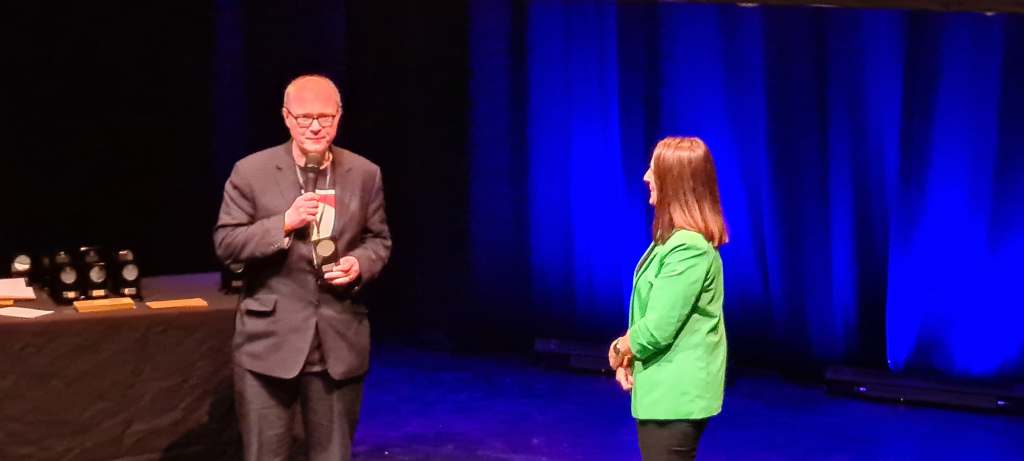
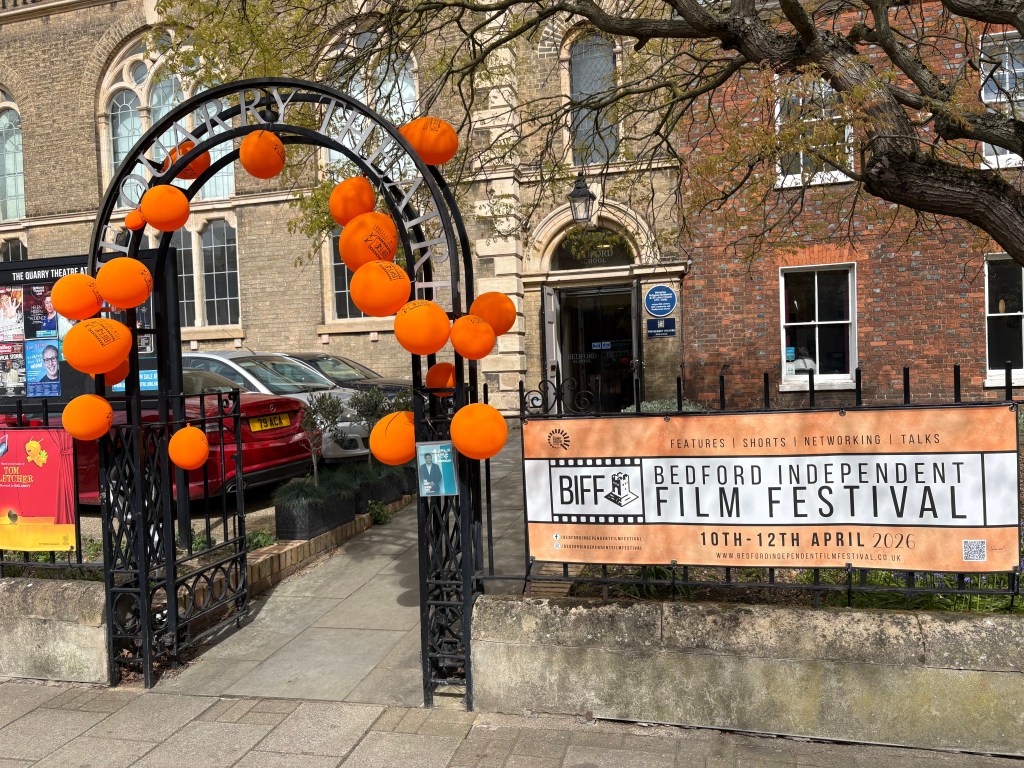
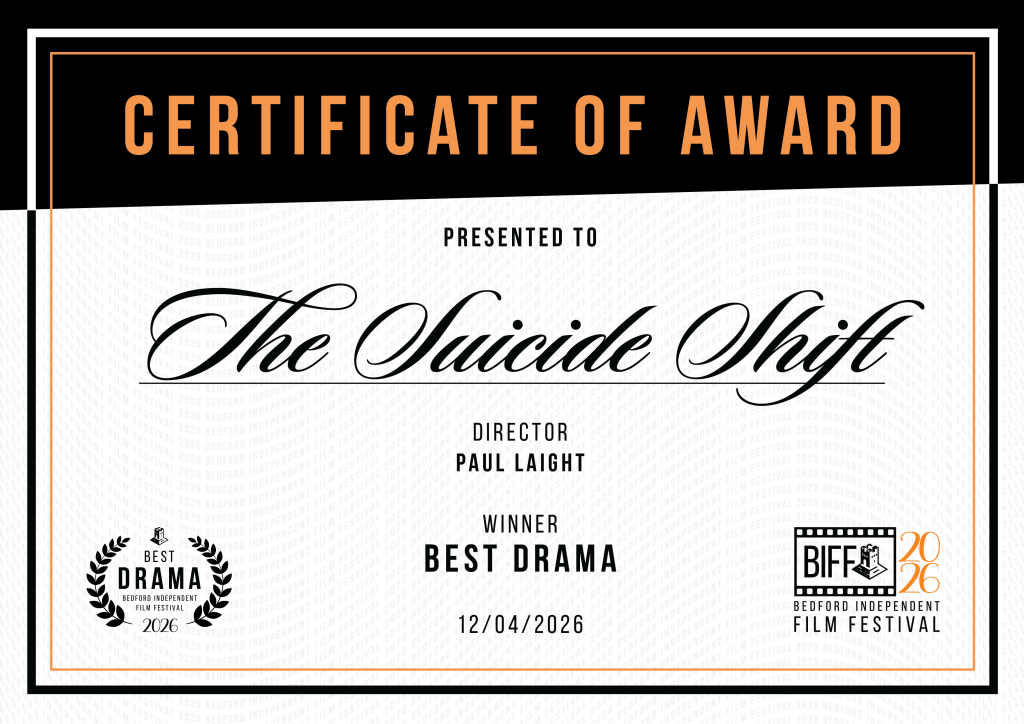
The Bedford Independent Film Festival is a well run event based in Bedford (really) and screens over three days and nights showing the best indie shorts and features films from around the world. The festival culminates in an awards ceremony, of which I am pleased to say The Suicide Shift (2026) won an award for best short drama. Thanks to everyone involved in the film and the festival organisers.
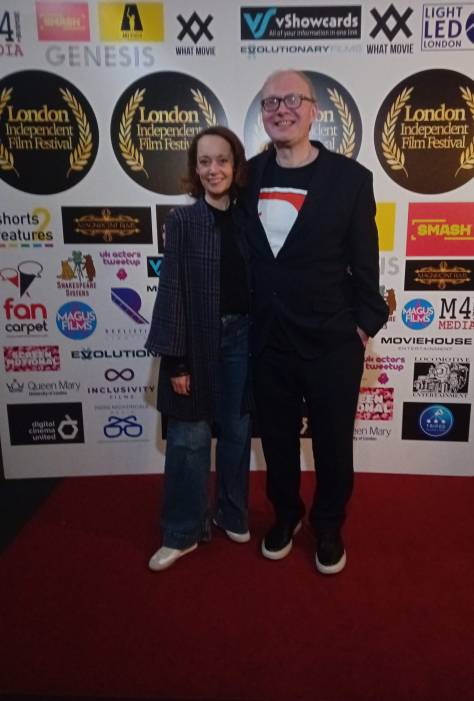
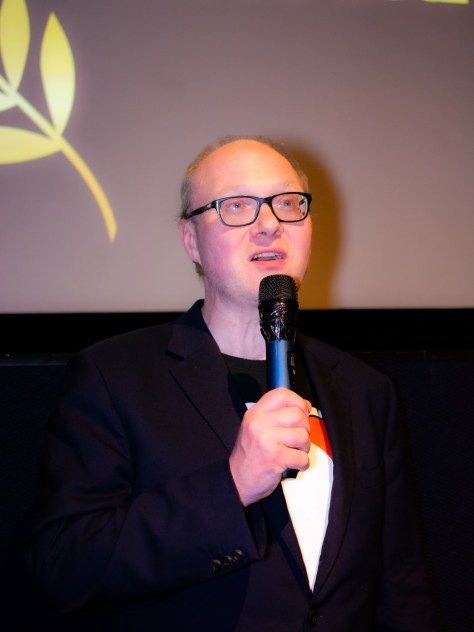
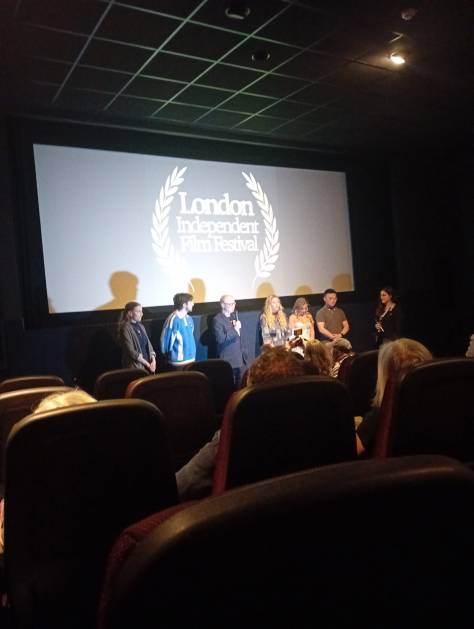
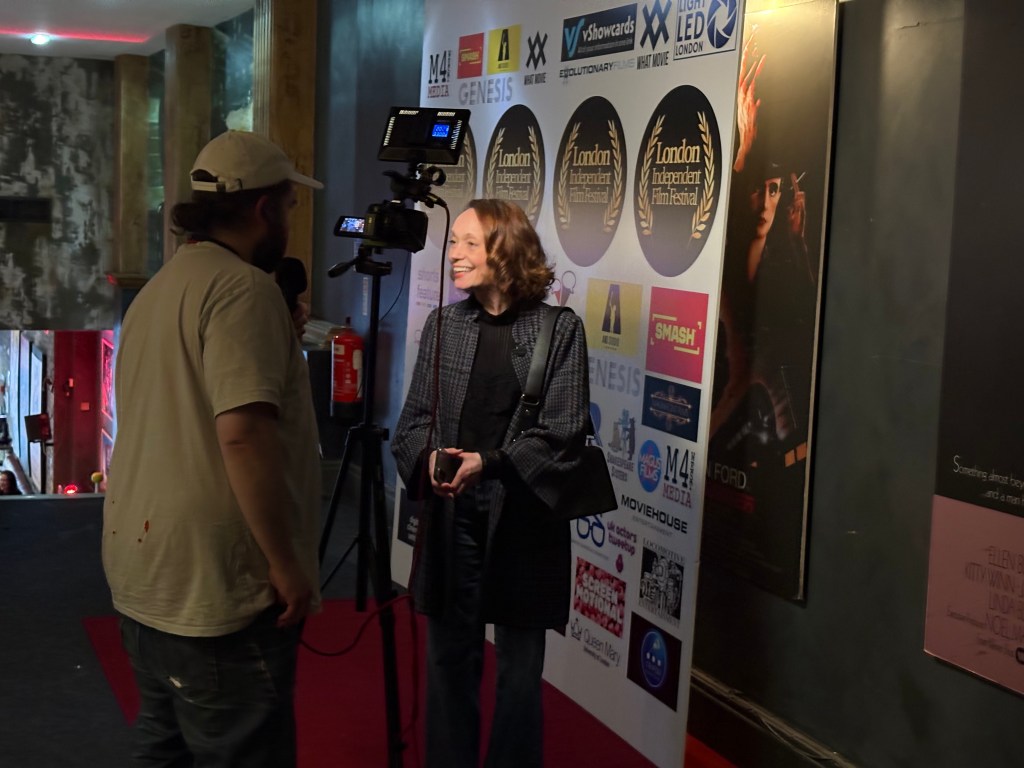
The London Independent Film Festival ran from 10th April 2026 to 19th April 2026 and The Suicide Shift (2026) screened on Saturday 18th April 2026. It was a fantastic night at the Genesis Cinema in Whitechapel and there were so many great films screened there. I attended with many of the cast and crew from the film and it was amazing to see the film on the big screen.
Produced by Ari Aster, Lars Knudsen, Tyler Campellone
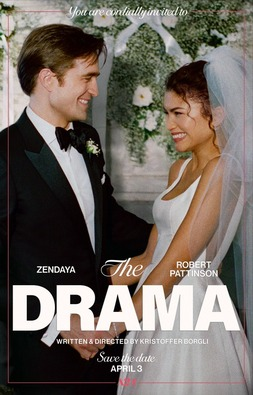
Main cast: Zendaya, Robert Pattinson, Alana Haim, Mamoudou Athie, Hailey Gates, Zoe Winters etc.
Cinematography by Arseni Khachaturan
Edited by Joshua Raymond Lee & Kristoffer Borgli
*** MAY CONTAIN SPOILERS ***
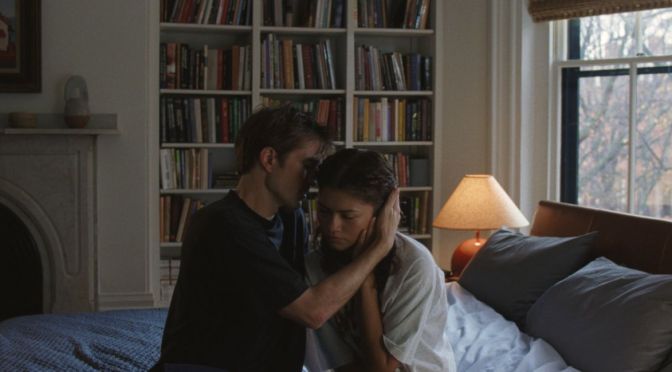
I haven’t seen Kristofer Borgli’s prior film, Dream Scenario (2023), but have added it to the watchlist. I did see his hilarious black comedy Sick of Myself (2022) and found it to be a sharply executed and engaging piece of dark satire. Borgli expertly delivered a thought-provoking and unsettling reflection of modern attention culture, mental health and narcissism. With The Drama (2026) he has delivered an even more impressive and darkly awkward comedic farce! Yet, this is no traditional rom-com, but rather a panic attack inducing series of set-pieces predicated on a compelling moral dilemma at its heart.
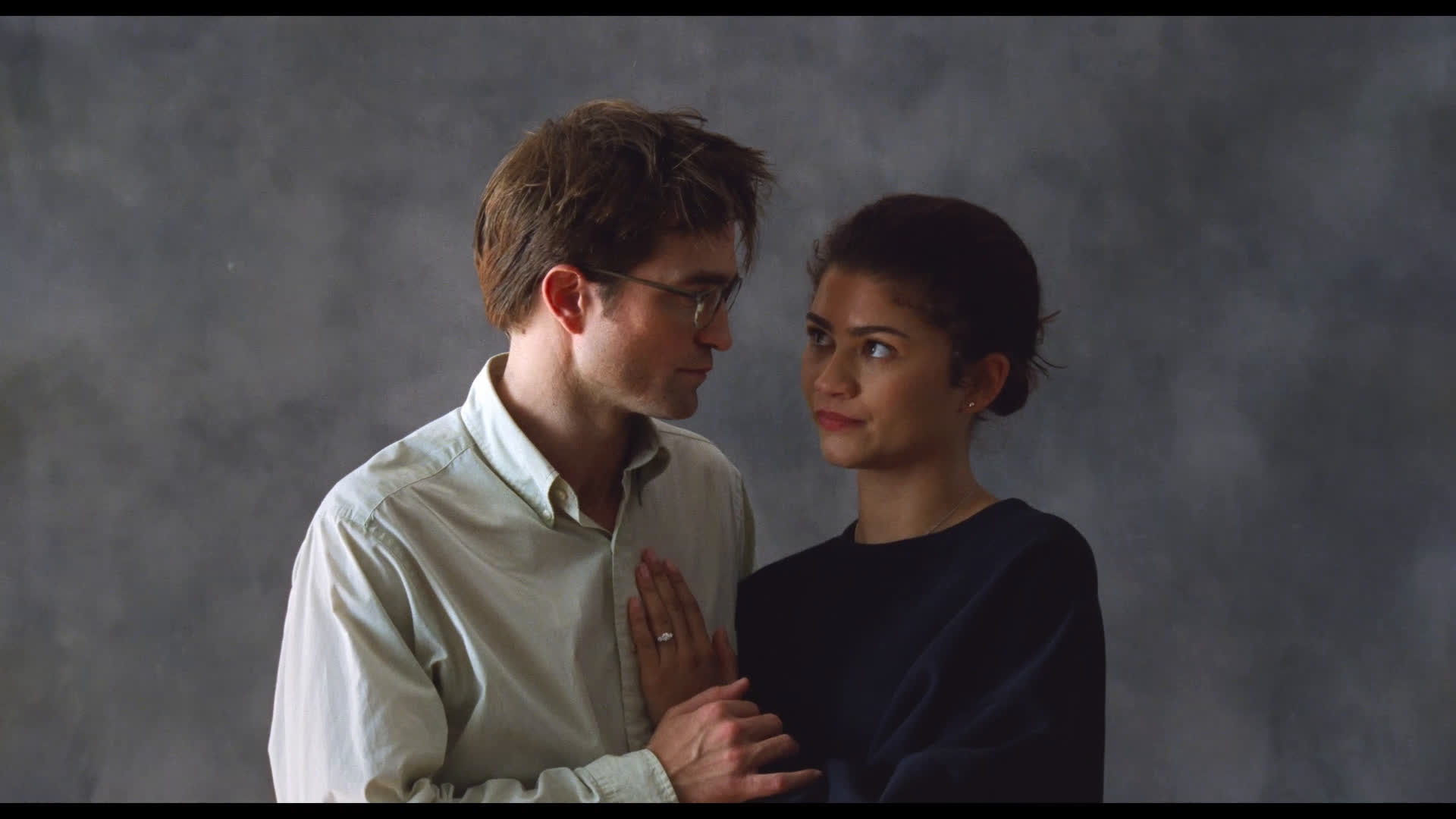
The Drama (2026), contains magnetic performances from Zendaya and Robert Pattinson, and the couple have seriously good on-screen chemistry. Structured around their initial meet-cute the narrative builds comedic and emotional momentum as they fast approach their wedding day. Films built around weddings often use the impending ceremony as a pressure cooker, where personal insecurities and social expectations are forced to the surface. As such Four Weddings and a Funeral (1994) or My Best Friend’s Wedding (1997), find marital ceremonies representing both an ideal and a threat—exploring themes of timing, missed chances, and emotional honesty. Darker visions of wedding themes can be found in Melancholia (2011), but The Drama (2026) occupies a similar chaotic take like Rachel Getting Married (2008), but is arguably a more heightened exploration of love, identity, anxiety, and the uneasy gap between societal ideals and personal truth.
The Drama (2026) is a sharp, unnervingly perceptive piece of writing, elevated by a screenplay that constantly balances wit, discomfort, and emotional truth. Borgli has a remarkable ability to construct scenes that feel both grounded and quietly volatile, allowing tension to simmer beneath even the most mundane interactions. The film’s central premise hinges on a brilliantly executed moral and social dilemma—one that I won’t spoil—but it functions as an irresistible hook, drawing the audience into a spiral of increasingly complicated behaviour. What makes it so effective is how Borgli subtly turns the lens back on us, inviting us to question how we might respond under similar circumstances, and whether our own instincts would be any less flawed.
The casting is pitch-perfect across the board. Robert Pattinson delivers some of his most finely tuned reactive work as Charlie. His attempts to process Emma’s bombshell revelation are nothing short of priceless—awkward, hilarious, and painfully real all at once. Zendaya is just spotless, carrying much of the dramatic weight effortlessly. Alongside her, Alana Haim brings a compelling mix of confidence and fierce unpredictability, while Mamoudou Athie proves immensely likeable, grounding the film with a warmth that makes the emotional stakes land even harder. The supporting cast, too, feel carefully chosen, each performance adding texture to Borgli’s tightly controlled world.
Despite the undercurrent of anxiety that runs through many scenes, the film never alienates. Instead, it draws you closer. The characters are flawed but recognisable, and I found myself genuinely rooting for them to make it work, even as their decisions became more questionable. Borgli’s direction complements the script beautifully—never overstated, always precise—allowing the performances and writing to take centre stage. The result is a film that is as entertaining as it is thought-provoking: a brilliantly acted, sharply written, and quietly devastating exploration of modern relationships.
Main ensemble: Carmen Argenziano, Harold Beaulieu, Jim Bohan, Stan Armsted, Paul Alelyanes etc.
Cinematography by Joan Churchill & Peter Smokler
** MAY CONTAIN SPOILERS **
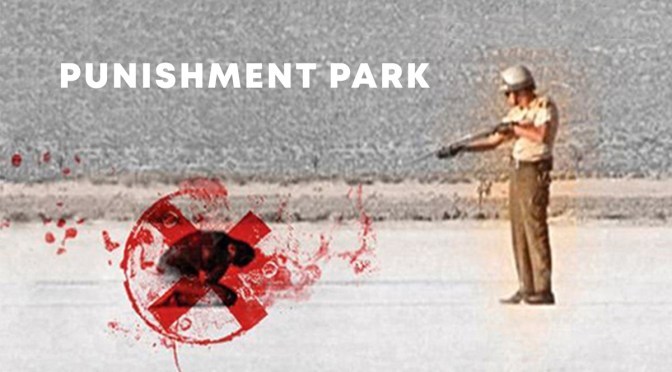
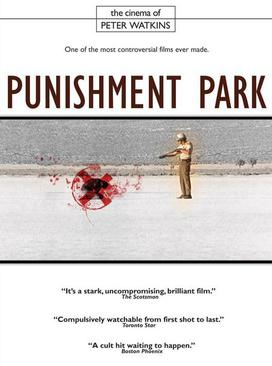
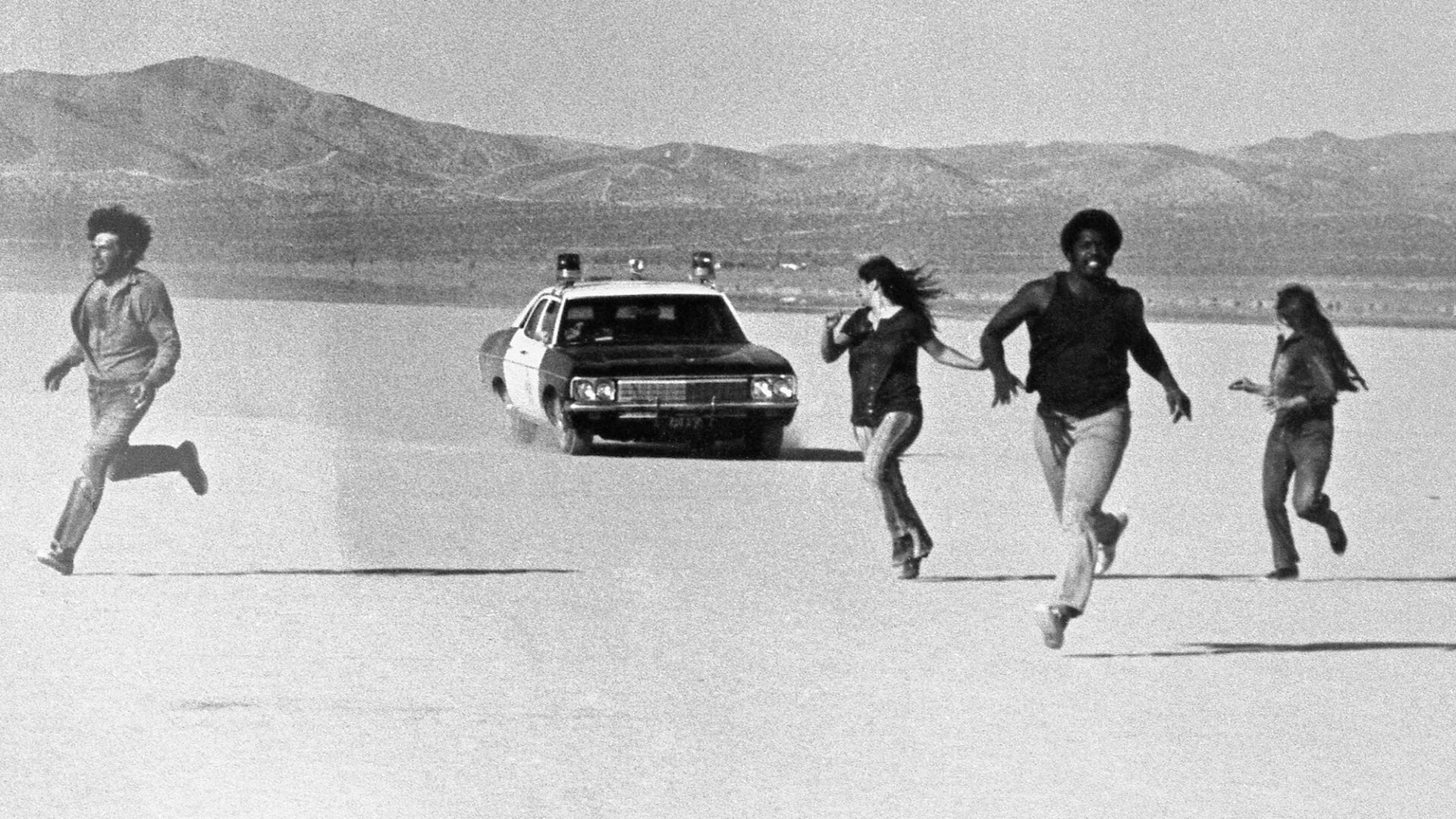
Although Punishment Park (1971) itself is fictional, the documentary style is so raw and realistic you can almost smell the fear, blood, lead alloy and bullet-smoke on the screen. The film also highlights many of the elements found within parallel social and political events of the time, such as police brutality, counterculture rebellion, the trial of the Chicago Seven, the Kent State shootings, and political polarisation bordering on civil war. With the United States governments continually driving a “world police” agenda, perhaps they should look closer to home before starting external conflicts.
For years, Punishment Park (1971) sat just out of reach for me — one of those films you hear about in whispers, invoked in conversations about “the most confrontational cinema ever made,” but never quite encountered at the right moment. Now, having finally caught up with Peter Watkins’ 1971 film, I can’t shake the feeling that I’ve been missing something essential. Not just a film, but an experience — raw, furious, and uncomfortably alive in a way that few works of cinema ever achieve.
What strikes first is its sheer lack of polish — and how vital that is to its power. Watkins doesn’t present a narrative so much as he detonates one. Shot in a pseudo-documentary style, with handheld cameras and overlapping dialogue, the film feels less like something constructed and more like something captured in real time. The performances — many from non-actors — are jagged, unpredictable, and often feel on the verge of spilling out of the frame. There’s no safety net here, no aesthetic distance to retreat into. It’s messy, chaotic, and utterly convincing.
That rawness feeds directly into the film’s political force. Punishment Park (1971) isn’t subtle, and it has no interest in being so. It’s angry — openly, unapologetically angry — at systems of power that disguise brutality behind procedure and patriotism. The tribunal sequences are particularly harrowing, not because they’re exaggerated, but because they feel so plausible. The language of authority, the casual dismissal of dissent, the bureaucratic calm in the face of injustice — it all lands with a chilling familiarity. Watkins doesn’t ask you to interpret; he demands that you confront.
And yet, what lingers most is how contemporary it feels. Despite being rooted in the tensions of its time, the film plays less like a historical artifact and more like a warning that never stopped being relevant. Its vision of a state turning on its own citizens, of media observing rather than intervening, of truth becoming something contested and fragile — all of it resonates with unsettling clarity today. It’s the kind of film that doesn’t age so much as it waits.
I’m grateful, genuinely, to have finally seen it. Some films entertain, some impress, but very few burn a hole in your mind. Punishment Park (1971) is one of those rare works that burns with purpose — a film that refuses comfort, refuses neutrality, and refuses to be forgotten. It makes one sad that, to be honest, the world hasn’t changed for the better since it was made. While there are many who strive for peace, there are so many who choose aggression, violence and war to control and destroy.
Punishment Park (1971) can currently be seen on YouTube.