Tag Archives: class

Cinema Review: Bugonia (2025) – Lanthimos has a blast with this dark conspiracy-class-war-kidnap-comedy!

Cinema Review: Bugonia (2025)

Directed by Yorgos Lanthimos

Screenplay by Will Tracy – Based on Save the Green Planet! (2003) by Jang Joon-hwan

Produced by Ed Guiney, Andrew Lowe, Yorgos Lanthimos, Emma Stone, Ari Aster, Lars Knudsen, Miky Lee, Jerry Kyoungboum Ko


Main Cast: Emma Stone, Jesse Plemons, Aidan Delbis, Stavros Halkias, Alicia Silverstone, etc.

Cinematography by Robbie Ryan

*** MAY CONTAIN SPOILERS ***
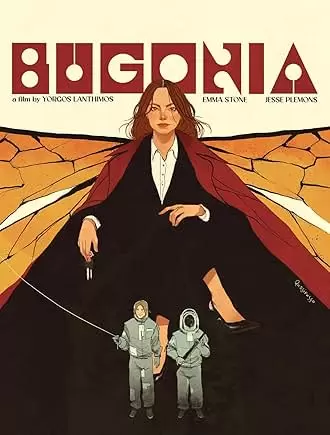

Yorgos Lanthimos has once again sneaked out of his uncanny terrarium and unleashed another piece of beautifully deranged cinema. Bugonia (2025)—a remake of Jang Joon-hwan’s cult classic Save the Green Planet!—is part sci-fi fever dream, part hostage farce, and part spiritual meltdown. It’s like Ruthless People (1986) got trapped in a socio-political, beekeeping suit and force-fed ayahuasca.

Will Tracy’s script hums with the manic energy of someone who’s read too many conspiracy subreddits and decided to turn it into Oscar bait. The film pairs Jesse Plemons (whose face seems genetically engineered for moral unease) with Alden Delbis (playing his twitchy, Kool-Aid-eyed partner in cosmic delusion) as two eco-anarchist truthers who kidnap a pharma/tech CEO, played with imperial chill by Emma Stone. Their reasoning? Well, just wait and see. It is incredibly crazy with some severe plot turns. Yet, somehow Lanthimos and his terrific cast maintain verisimilitude within the setting and just about hang onto emotional connection for the characters.
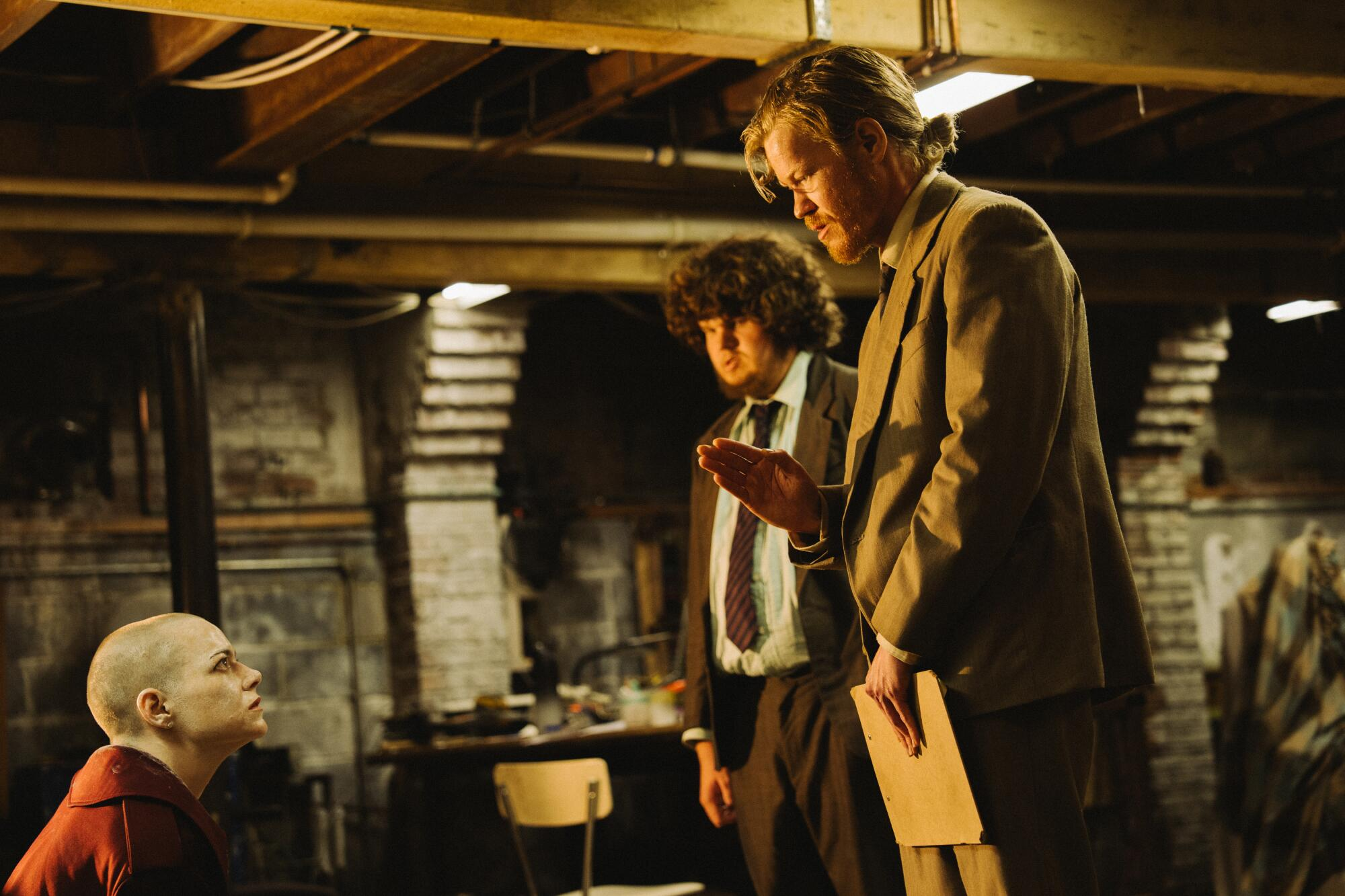


What follows is a deranged pas de trois of torture, empathy, and total philosophical collapse. Plemons and Delbis interrogate Stone with the intensity of people who’ve seen too many YouTube conspiracy documentaries, while Lanthimos and cinematographer, Robbie Ryan shoot it with the intensity of a nature documentary directed by Lucifer. There are bees. There is honey. There are monologues about pollution, pharmaceutical company threat and environmental collapse. Further, Stone, who has now fully ascended into Lanthimos’ personal pantheon of holy weirdness, plays her role like a woman being both worshipped and flayed at the same time. She’s terrifyingly serene—like she’s founded a doomsday cult and smiled through the apocalypse.

It’s all utterly ridiculous, but Bugonia (2025) thrives in that space between laughter and dread. Lanthimos once again proves that absurdism isn’t about nonsense—it’s that nonsense is the only sane response to the modern world. I enjoyed this film way more than the obtuse Kinds of Kindness (2024). It has more akin, although not as devastatingly memorable, as his earlier Greek-language classics or The Killing of a Sacred Deer (2017). Moreover, if The Favourite (2018) was about power, and Poor Things (2024) was about rebirth, Bugonia (2025) is bleak, fatalistic morality tale about environmental apocalypse.

By the time the film’s final shots roll I was equal parts horrified, moved, and deeply amused. It’s an eco-horror-comedy that gorily plays like Saw (2004) meets famous beekeeping philosopher, Aristotle. Overall, Bugonia (2025) proves once again that Yorgos Lanthimos is cinema’s reigning apiarist of absurdity—and his audience are all his buzzing little drones.
Mark 8.5 out of 11


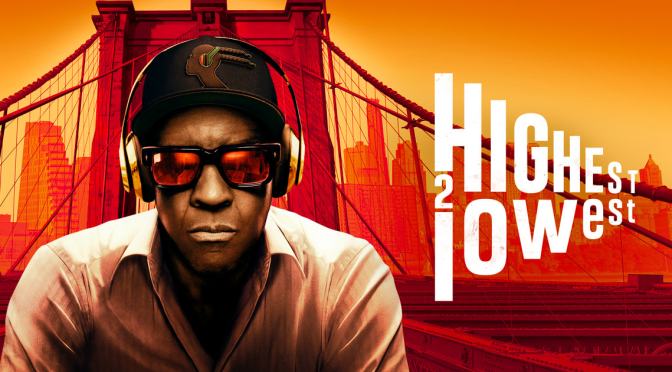
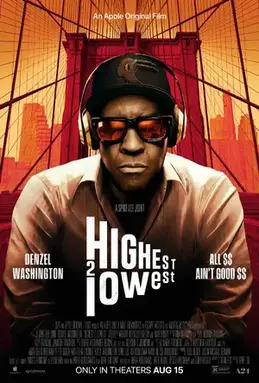
Apple TV+ Film Review: Highest 2 Lowest (2025) – a vibrant, musical and pacy, if unnecessary, remake.

Apple TV+ Film Review: Highest 2 Lowest (2025)

Directed by Spike Lee

Screenplay by Alan Fox

Based on High and Low (1963 film) by Akira Kurosawa, Hideo Oguni,
Ryūzō Kikushima, Eijirō Hisaita, and King’s Ransom (1959 novel) by Ed McBain.


Produced by Todd Black and Jason Michael Berman

Main cast: Denzel Washington, Jeffrey Wright, Ilfenesh Hadera, ASAP Rocky, John Douglas Thompson , Dean Winters, LaChanze, Aubrey Joseph, etc.

Cinematography by Matthew Libatique


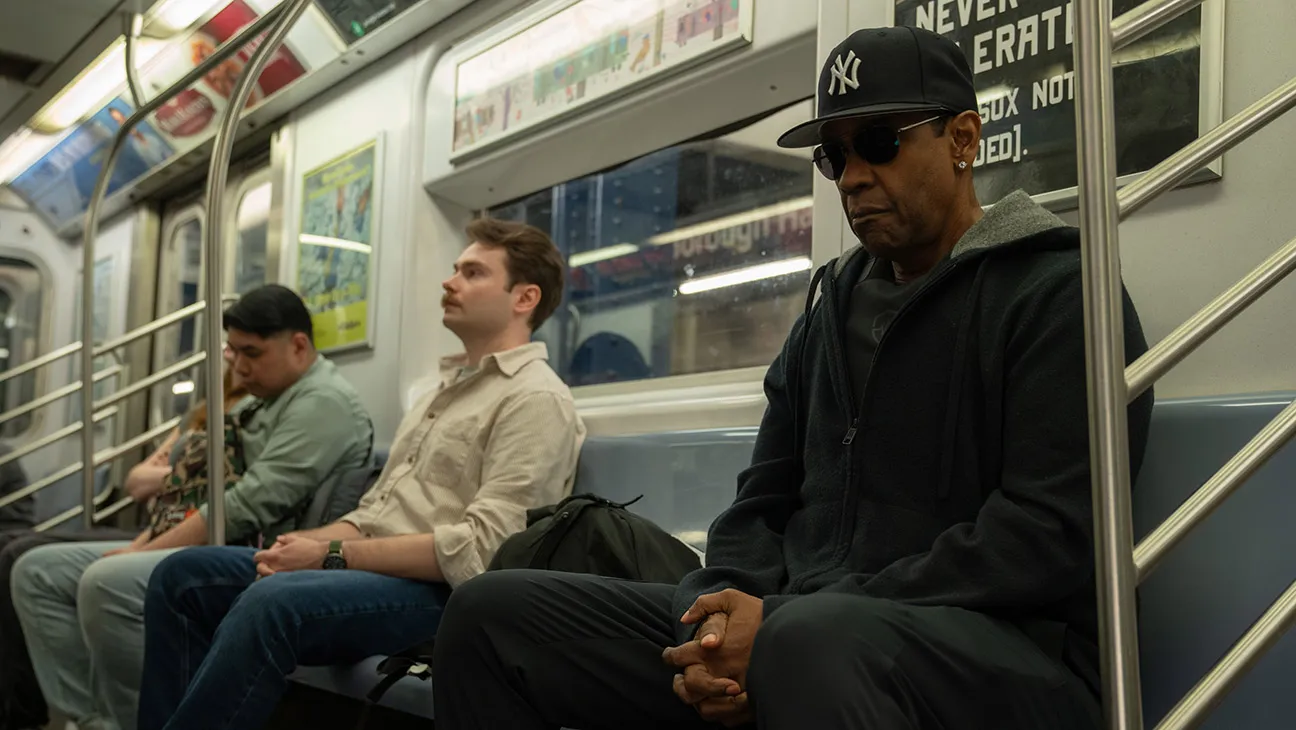
Spike Lee’s Highest 2 Lowest (2025) is a kinetic, vividly modern reimagining of Akira Kurosawa’s High and Low (1963), transplanting the Japanese master’s class-conscious thriller into the bustling, chaotic pulse of contemporary New York City. As expected from Lee, the film bursts with visual flair and political verve — the camera rarely rests, and the city itself becomes a character, glowing with heat, colour, and tension. The streets hum with energy, from glassy penthouses to subway platforms, creating a dynamic canvas on which the moral dilemmas unfold.

Denzel Washington, as usual, delivers a commanding performance as David King, a renowned independent producer and record label owner, torn between his conscience and his ambition when the kidnapping of his son occurs. Washington captures both the quiet torment and moral exhaustion of a man staring down the gulf between his privilege and his humanity. Jeffrey Wright, offers great support as his friend and chauffeur. The narrative navigates class and corporate tensions, bringing a soulful intelligence to every scene, grounding the film’s intensity with empathy and authority.


The film moves at a thrilling pace, carried by a propulsive soundtrack that fuses hip-hop, jazz, and gospel with Lee’s trademark flair for musical storytelling. Nowhere is this energy more palpable than in the ransom handover sequence — a masterclass in direction and editing — cutting feverishly across New York’s boroughs and metro trains, while the Puerto Rican Day Parade swells in a euphoric, near-operatic crescendo. It’s a breathtaking montage that exemplifies Lee’s command of rhythm, geography, and social texture. It proves to be Highest 2 Lowest (2025)’s biggest high.

Where Highest 2 Lowest (2025) falters is in the handling of its central moral crisis, which in turns undermines the all-to-rapid ending too. Indeed, it seemed to be missing a betrayal twist for me. The decision David King must make — the film’s spiritual core — arrives and resolves too swiftly around the midpoint, leaving the second half conflict, after the exhilarating Puerto Rican Day Parade, more focused on wrapping up loose ends quickly than psychological reckoning. It’s a missed opportunity for the deeper character study that Kurosawa’s original sustained so brilliantly.

Still, as an adaptation, Lee’s film is an entertaining piece of work — bold, stylish, and alive with the contradictions of the modern city. While Kurosawa’s High and Low (1963) remains the more compelling exploration of social class and moral responsibility, Highest 2 Lowest (2025) finds its own voice: vibrant, urgent, and unmistakably Spike Lee.

Mark: 7 out of 11


CINEMA REVIEW: SALTBURN (2023)

CINEMA REVIEW: SALTBURN (2023)

Directed by Emerald Fennell

Written by Emerald Fennell

Produced by Emerald Fennell, Josey McNamara and Margot Robbie

Cast: Barry Keoghan, Jacob Elordi, Rosamund Pike, Richard E. Grant, Alison Oliver, Archie Madekwe, Carey Mulligan, Paul Rhys, etc.

Cinematography by Linus Sandgren

*** MAY CONTAIN SPOILERS ***


As the awards garnered upon Emerald Fennell’s brilliant Promising Young Woman (2020) will testify, she is clearly a major talent. Fennell has also acted in TV shows such as Call the Midwife and The Crown, as well as writing and producing the second series of Killing Eve. Not only is Fennell an excellent actress, writer, director and producer, but is also now an Oscar and BAFTA winner. Thus, Fennell’s “difficult second film” arrives in the guise of the pitch black comedy, Saltburn (2023). Although to describe this hilarious, bleak, sexy, and often twisted exploration of the British class system as such evidently tests the very definition of comedy.

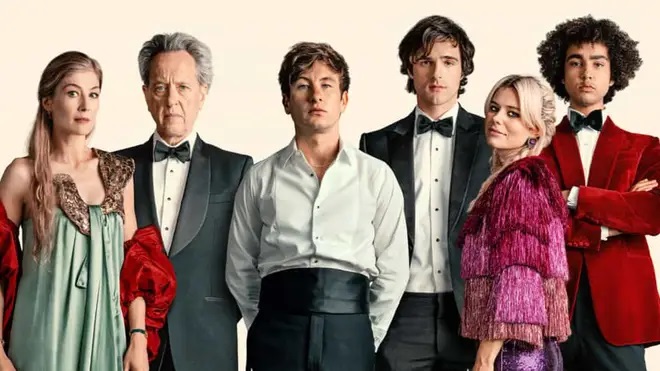
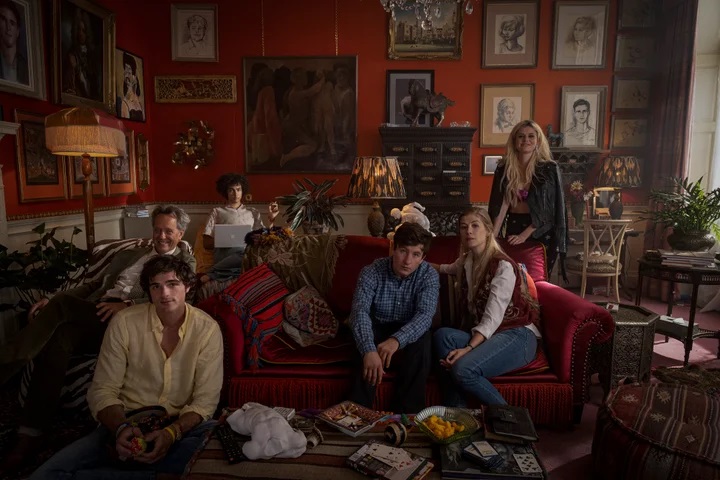
Saltburn (2023) is set in 2006. Oliver Quick (Barry Keoghan) attends Oxford University as a naive fresher with an inferiority complex and desire for company. While he is incredibly intelligent, coming from a lower class background places bookish Oliver as a very small fish in big water. Especially when compared to the so-called Oxford elite including handsome and wealthy, Felix Catton (Jacob Elordi) and his cousin, the handsome and not-as-wealthy, Farleigh Start (Archie Madekwe). While Farleigh is suspicious of Oliver, Jacob soon befriends him and takes the Northerner under his wing. The two connect and form an “odd couple” bromance, with Felix even going so far as to invite Oliver to his stately home, Saltburn, for the summer. There we meet the rest of Felix’s family including his flaky sister, Venetia (Alison Oliver), eccentric father, Sir James (Richard E. Grant) and effervescent mother, Lady Elspeth (Rosamund Pike).


After building Oliver and Felix’s characters carefully during their time at Oxford, Fennell’s savage and satirical screenplay gathers pace in the second act at Saltburn. Here Oliver tries to fit in and ingratiate himself into the Catton family, but it soon becomes clear that however friendly they may be, he will only ever be an outsider to them. Simultaneously, Farleigh sees Oliver as a rival for the Cattons’ emotional and financial affections and the two begin a retaliatory personal war amidst the balmy summer days, breakfasts, dinner parties and social gatherings. Oliver’s main journey is to connect as much with Felix as possible, so much so his passion veers toward obsession. But Felix is a roaming spirit and a hedonist and does not quite requite Oliver’s feelings. Yet, Felix does show compassion for Oliver, as illustrated when he drives him on a mercy mission to visit Oliver’s family. This is where the story takes an intriguing and ever deadly turn.

I cannot recommend Saltburn (2023) enough for its fantastically witty script, devastatingly brilliant cast and some quite disgustingly explicit, but contextually justifiable, character moments and scenes. Fennell takes the setting and structure of Evelyn Waugh’s Brideshead Revisited and turns it upside down, spinning a devious tale of infatuation, love, privilege and social climbing. Through the character Oliver Quick, and I really don’t want to give anything away, there is a powerful and jaw-dropping character arc of upward mobility. Rosamund Pike’s and Keoghan’s performances are both amazing and award-worthy. While the final act twists certainly do shock and surprise they arguably are rushed when compared with the more effective pacing of the opening and middle acts. Moreover, I am also unsure why the exquisite cinematography and stunning locations were presented in the 4:3 (1:33:1) aspect ratio. Why squeeze in Linus Sandgren’s light and framing and not expand them to the widescreen format?

Ultimately, Emerald Fennell proves herself an important voice in British cinema. Unafraid to test the boundaries of taste, genre, and audience expectations, she has crafted one of the most consistently challenging films of the year with Saltburn (2023). One could easily describe the themes presented here as a critique of the upper classes and how the uber-rich are bad people to be brought down to their knees. However, Fennell’s script is not that simplistic. It cleverly careers between love/hate for the characters and irony-bombing the class system, before becoming a damning indictment on the darkest flaws of humanity. Lest one forget the indelible one-liners throughout and THAT final dance sequence, which are both to die for!

Mark: 9.5 out of 11


CLASSIC FILM REVIEW – THE GO-BETWEEN (1971)

CLASSIC FILM REVIEW – THE GO-BETWEEN (1971)

Directed by: Joseph Losey

Produced by: John Heyman, Denis Johnson, Norman Priggen

Screenplay by: Harold Pinter

Based on: The Go-Between by L. P. Hartley

Cast: Julie Christie, Alan Bates, Margaret Leighton, Edward Fox, Dominic Guard, Michael Redgrave, etc.

Music by: Michel Legrand


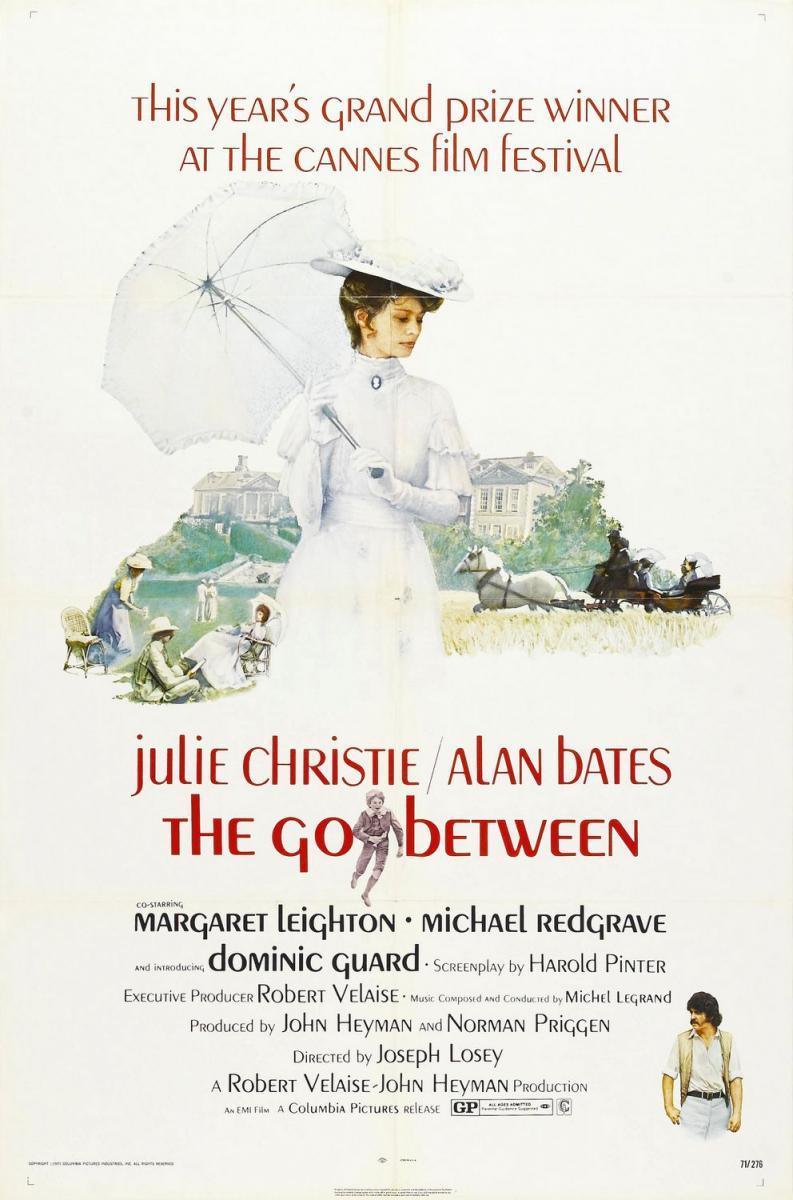
The Go-Between (1971) is one of those expert works of understated cinema which I was sure I had seen before. Yet, I would come to discover I had never seen it when I caught it on the rather marvellous digital channel, Talking Pictures. But then I love that when you find a period classic and watch it for the first time. It’s like unearthing gold in your living room. Because the film is a heartfelt rites-of-passage drama which subtly pulls at the loose end of the knitted cardigan that is the British class system. Nevertheless, while the romance, lies and regret unfold under the surface, The Go-Between (1971) certainly retains much dramatic power.

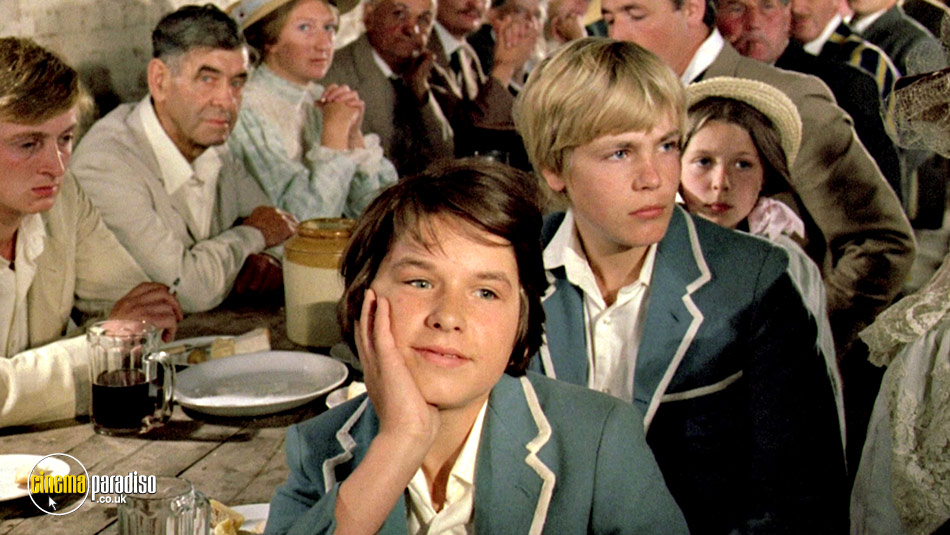
Adapted by acclaimed playwright, Harold Pinter, from the esteemed novel by L.P. Hartley, The Go-Between (1971) stars Julie Christie and Alan Bates as secret lovers separated by the chasm of class and tradition. Bates’ Ted Burgess is a charismatic and muscular farmer with a reputation as a ladies man. Christie is the beautiful and slyly rebellious daughter of the Lord of the Manor, Marian, promised in marriage to Edward Fox’s Viscount Hugh Trimingham. With peering eyes and suspicion coming from Marian’s mother, the lustful affair requires stealth, thus they enlist the help of Dominic Guard’s intelligent but less-privileged, Leo Colston. He is there as guest of Marian’s young brother as both attend the same boarding school; Leo there on a scholarship. The narrative develops very much through Leo’s sweet innocent eyes. The outsider’s point-of-view is expertly presented as it is both objective and allows the audience to make up their own mind about the characters.


Leo is pure of heart and believes he is helping by running notes back and forth between Burgess and Marian. He also makes friends with the cuckolded Viscount, as Fox gives a fine performance of a man who may or may not know whether his potential wife is being unfaithful. I think that is one of the strengths of the book and film, in that it explores the theme of duty versus passion. Burgess and Marian represent freedom, lust and nature, which are opposite to the “doing your duty” arrangements of the upper classes. Of course, dramatically speaking something has to give where the love affair is concerned. Sadly, tragedy intervenes, resulting in the loss of Leo’s innocence, and adding a layer of guilt which gravely haunts him in his later years.

Everything about The Go-Between (1971) reeks of quality. From the production design, locations, costumes, score by Michel Legrand and Gerry Fisher’s exquisite cinematography. Unsurprisingly, Harold Pinter would receive an Academy Award for his confident adaptation. Further, Joseph Losey is not a filmmaker whose work I am not particularly well acquainted with, but the performances from Fox, Bates, Christie and young Dominic Guard are assured testament to his stellar ability to convey meaning and emotion between the lines. Indeed, while some films smash you over the head with emotional melodrama, something I love too, The Go-Between (1971) instead slowly squeezes at your heart and mind. Lastly, this is not simply a damning indictment of the class system, but a lament for loss of innocence, illustrating how monolithic tradition dictates love, fate and tragedy are inextricably entwined.


THE GENTLEMEN (2020) – MOVIE REVIEW

THE GENTLEMEN (2020) – MOVIE REVIEW

Written and directed by: Guy Ritchie

Produced by: Guy Ritchie, Ivan Atkinson, Bill Block

Story by: Guy Ritchie, Ivan Atkinson Marn Davies

Cast: Matthew McConaughey, Charlie Hunnam, Henry Golding, Michelle Dockery, Jeremy Strong, Eddie Marsan, Colin Farrell, Hugh Grant etc.

**MAY CONTAIN SPOILERS**


THE GENTLEMEN (2020)

Having dipped a big foot in the Hollywood studio pool with franchise hits like Sherlock Holmes and most recently Disney’s live action version of Aladdin (2019), Guy Ritchie is back to the crime genre where he made his mark. His reboot of The Man From Uncle (2015) was very under-rated, and while his King Arthur: Legend of the Sword (2017) didn’t quite work as a swords and geezer epic, Ritchie remains an excellent genre director and almost always produces very entertaining movies.

With Lock, Stock and Two Smoking Barrels (1998)Snatch (2000) and Rock N Rolla (2008), Ritchie excelled at carving himself a name in fast-paced-twisting-crime stories. They are full of hard nuts, femme fatales, dodgy geezers, businessmen, travellers, assassins, gamblers, plus working- and upper-class types all trying to outwit and out do each other in a variety of dodgy dealings. The films also feature fine ensemble casts, crunching violence, colourful language and cracking soundtracks. All of this combines to create fine entertainment all round. It may lack subtlety, suspense and emotion, but crime has never been so much fun.


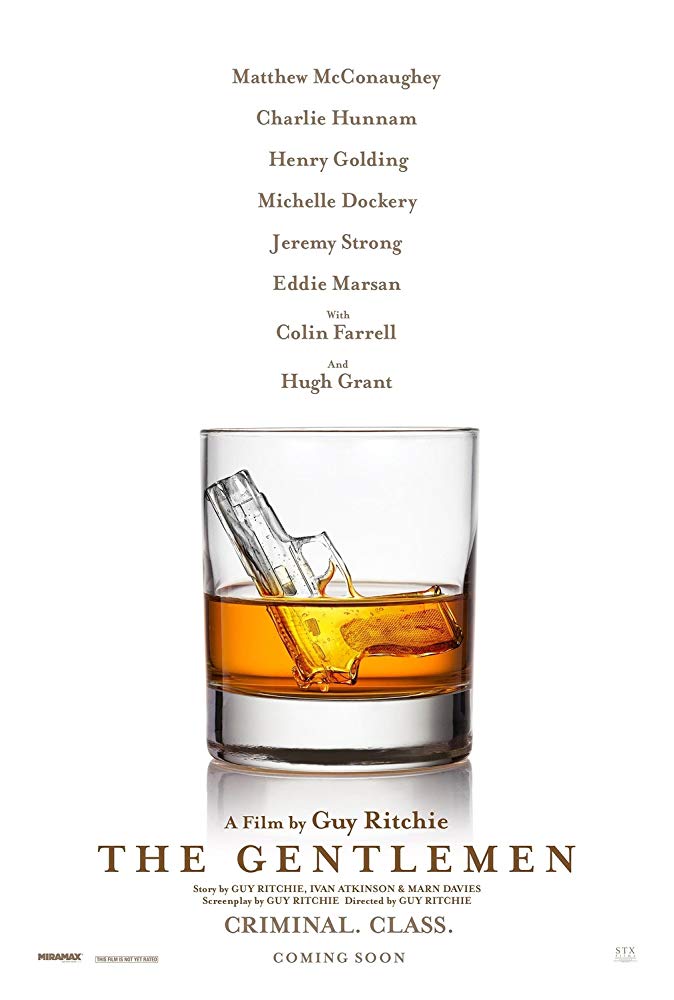
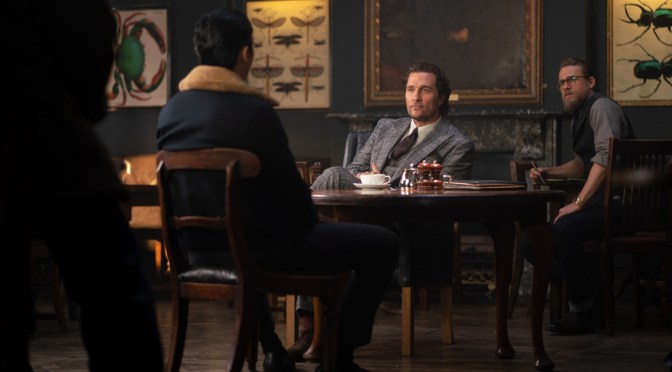
The Gentlemen (2020) continues Guy Ritchie’s decent form in the gangster comedy genre. Matthew McConaughey is the “Kingpin”, Mickey Pearson, whose underground marijuana empire is about to come under threat from various rival gangs. The plot is essentially a story of a capitalistic hostile takeover with added bullets, punch-ups, YouTube viral videos, boxers, junkies and copious use of the C-word.

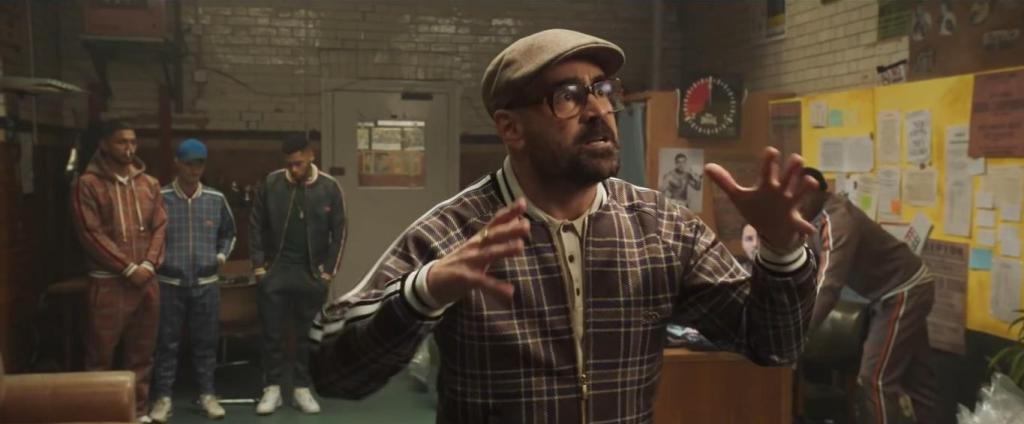
Ritchie may not be everyone’s cup of tea, but he certainly knows how to put together a movie. Using lashings of music to compliment the freeze frames, voice-overs, whip-pans, flashbacks, flash-forwards, close-ups, canted frames, slow motion and anything else that smashes the story along is fine by me. Plus, don’t forget the over-the-top, but ever quotable zinging dialogue and the unreliable narrator that is Hugh Grant’s weasly tabloid newspaper investigator. Grant is the standout performer here along with Colin Farrell and Charlie Hunnam’s cool but deadly fixer and second-in-command. Able support also comes from Jeremy Strong, Michelle Dockery, Eddie Marsan and Henry Golding.

Overall, The Gentlemen (2020) is not a particularly subtle film. In fact, many may find the language rather offensive in this age of the woke generation. Don’t get me wrong I’m all for political correctness and equality, but sometimes it’s just great to have a laugh and Ritchie provides this in many hilarious scenes of action and dialogue. There’s an element of substance provided in regard to the destruction drugs can cause and very mild analysis of England’s class system. However, such themes only skim the surface in what is a wonderfully irreverent, over-the-top, violent, offensive and entertaining crime comedy.

Mark: 8.5 out of 11


FIVE REASONS THIS COULD BE GOOD: THE GENTLEMEN (2020)

FIVE REASONS THIS COULD BE GOOD: THE GENTLEMEN (2020)

Written and directed by: Guy Ritchie

Produced by: Guy Ritchie, Ivan Atkinson, Bill Block

Story by: Guy Ritchie, Ivan Atkinson Marn Davies

Cast: Matthew McConaughey, Charlie Hunnam, Henry Golding, Michelle Dockery, Jeremy Strong, Eddie Marsan, Colin Farrell, Hugh Grant etc.

UK Release Date: 1st January 2020

***SPOILER FREE***


THE GENTLEMEN (2020)

Guy Ritchie’s new film is released on New Year’s Day 2020 in the UK, and here are five reasons why it could be good.

1. THE DIRECTOR

Having dipped a big foot in the Hollywood studio pool with franchise hits like Sherlock Holmes and most recently Disney’s live action version of Aladdin (2019), Ritchie is back to the crime genre where he made his mark. His reboot of The Man From Uncle (2015) was very under-rated, and while his King Arthur: Legend of the Sword (2017) didn’t quite work as a swords and geezer epic, Ritchie remains an excellent genre director and almost always produces very entertaining movies.

2. THE GENRE

With Lock, Stock and Two Smoking Barrels (1998), Snatch (2000) and Rock N Rolla (2008), Ritchie excelled at carving himself a name in fast-paced-twisting-crime stories. They are full of hard nuts, femme fatales, dodgy geezers, businessmen, travellers, assassins, gamblers, plus working and upper class types all trying to outwit and out do each other in a variety of dodgy dealings. The films also feature fine ensemble casts, crunching violence, colourful language and cracking soundtracks. All of this combines to create fine entertainment all round. It may lack subtlety, suspense and emotion, but crime has never been so much fun.


3. THE STYLE

Guy Ritchie may not be everyone’s cup of tea, but he certainly knows how to put together a movie. Some may also argue he’s all style and no substance. However, his visual style and ability to direct a brilliant action set-piece always stand out for me. Using lashings of music to compliment the freeze frames, voice-overs, whip-pans, flashbacks, flash-forwards, close-ups, canted frames, slow motion and anything else that smashes the story along is fine by me. Plus, don’t forget the over-the-top, but ever quotable zinging dialogue!


4. THE CAST

Ritchie must be a very positive on-set filmmaker to work with. Because ever since Lock Stock and Two Smoking Barrels (1998) was released he’s managed to bag a proper good cast in all of his films. The Gentlemen (2020) is no different. Here we get Matthew McConaughey, Colin Farrell, Jeremy Strong, Michelle Dockery, Charlie Hunnam, Henry Golding and Hugh Grant too. The trailer shows Grant effecting an interesting Michael Caine impression, while Farrell looks like he’s having the most fun as a chav-meets-traveller type gangster up for a bit of trouble!


5. THE TRAILER

The trailer dropped recently and looks really quite decent. Here it is:


US (2019) – CINEMA REVIEW

US (2019) – CINEMA REVIEW

Directed by: Jordan Peele

Produced by: Jason Blum, Ian Cooper, Sean McKittrick, Jordan Peele

Written by: Jordan Peele

Starring: Lupita Nyong’o, Winston Duke, Elisabeth Moss, Tim Heidecker, Shahadi Wright Joseph, Evan Alex etc.

Music: Michael Abels

Cinematography: Mike Gioulakis

**MAY CONTAIN SPOILERS**

Orson Welles is reportedly quoted as saying, “A movie in production is the greatest train set a boy could ever have.” Thus, Jordan Peele proves this point with an unstoppable cinematic train ride in Us (2019); that while threatening to career off the rails on occasions, proves to be a thrilling work of horror-meets-social-satire entertainment.

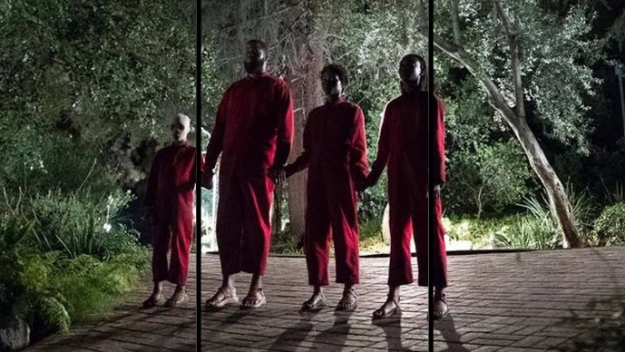
The film centres on an everyday normal family of four — the Wilsons: Adelaide (Lupita Nyong’o), Gabe (Winston Duke), and their two children — as they visit their summer home by the beach. Haunted by a scary incident in a hall of mirrors when a child, Adelaide is afraid to return to the beach where it occurred, until her husband’s goofy enthusiasm wins her over.

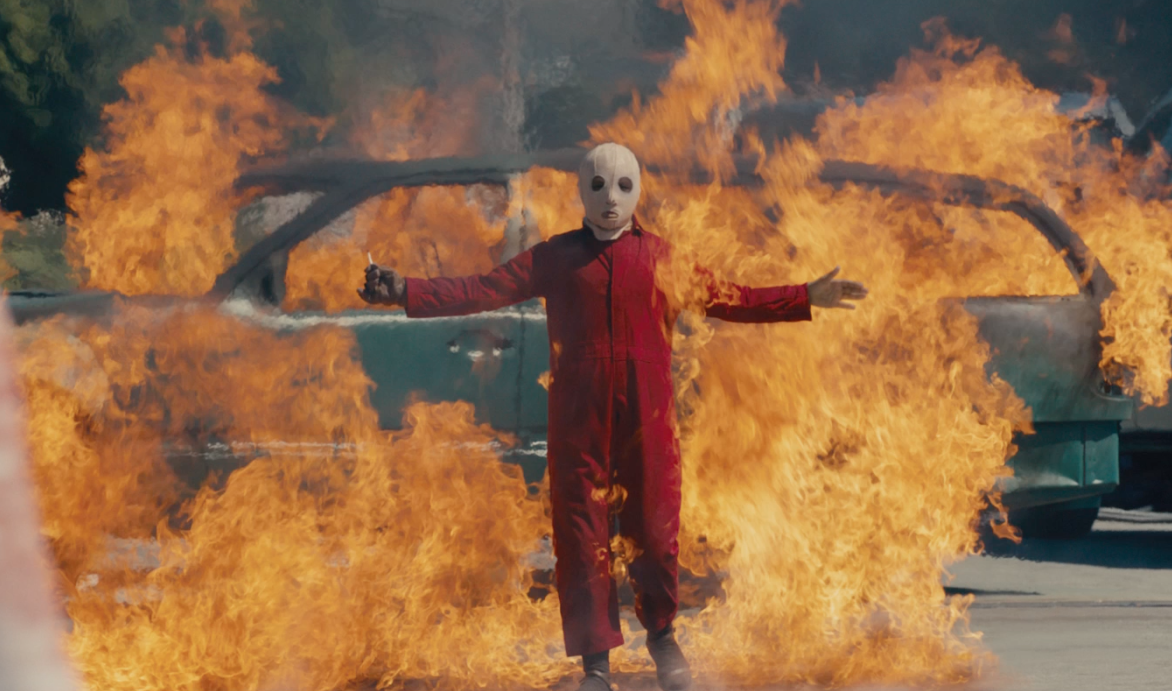
Events begin to turn and twist askew when their son, Jason, seems to go missing for a while. Even though he returns, paranoia and fear sneaks into Adelaide’s psyche. Things become even stranger when a mysterious family of four appear in the Wilsons’ drive in the dead of night. This is when the true face of horror surfaces and a pulsating home invasion and prolonged chase sequence ensues.

Peele has clearly seen a lot of horror films. As such the early scenes build tension perfectly with: stormy weather; a strange drifter with biblical sign haunting the boardwalk; creepy hall of mirrors; the choral soundtrack reminiscent of Rosemary’s Baby (1968); the son, Jason wearing a Jaws (1975) movie t-shirt; the flock of seagulls on the beach echoing Hitchcock’s The Birds (1963); and so it goes.

Such horror tropes build a huge wall of tension so effectively it’s almost a relief when released during the big doppelganger reveal. Subsequently, the blood-letting ensues in some meaty fights and exchanges involving weapons, such as: baseball bats, metal pokers, ornaments and golf clubs. The doppelgangers themselves are clearly a reflection of the self; twisted visions of humanity turning against the characters, as they literally become their own worst enemies.

The cast are expertly marshalled by Peele, as he gets doubly great performances from all the actors. The logistics of shooting doubles must have been tough, especially so many at a time. The featured cast are very good, notably Winston Duke as Gabe Wilson. He offers some light, comedic and physical humour amidst the gore. Meanwhile, Lupita Nyong’o steals the show in the dominant twin roles of Adelaide and the nefarious Red.

It’s Adelaide’s personal journey of double/split identity which provides the spine of the film. As she fights to save her family she must also literally battle the demon inside and outside herself. This thematic is the most powerful of the film for me, as Nyong’o’s acting is full of emotional resonance.

Perhaps, not as successful, when compared to Get Out, is the attempt to marry the personal conflict to the socio-political landscape. While Peele’s first film was an overt satire of slavery and white America oppression and exploitation, Us’ targets are intellectually more ambiguous and open to interpretation. I mean take your pick from: class, capitalism, consumerism, race, de-politicization, narcissism, over-population, split personalities, government conspiracies; and over-arching fear of ‘the other’.

These and many more themes are on Peele’s radar, as is his overall critique of the United States (U.S. = US – geddit!). That they don’t quite gel coherently is not a criticism but a positive indictment of his ambition. Conversely, while I felt the underlying power of Peele’s call-to-arms and desire for human unity in Us, one could argue the fire, smoke and mirrors of these ideas subtract from the power of the families’ personal struggle. Moreover, what is the solution to the government copying us or burying our doubles underground? Is it to kill the others and hold hands in unity? Who knows? What I can say is such naive idealism in horror has never been so entertaining.

After the success of the slavery-soul-swapping and genre bending thriller, Get Out, Jordan Peele has tasked himself with trying to top that fine movie. Well, if Get Out was the starter, Us is the main meal. In fact, one could argue the film is so full of ideas that it threatens to fail due to sensory overload. However, Peele is such a multi-talented storyteller he skilfully delivers, wholly thanks to great writing, masterful film production, an exceptional soundtrack and an incredible cast.

Mark: 9.5 out of 11

EVERYBODY KNOWS (2018) – CINEMA REVIEW

EVERYBODY KNOWS (2018) – CINEMA REVIEW

Directed by: Asghar Farhadi

Produced by: Alexandre Mallet-Guy, Alvaro Longoria

Written by: Asghar Farhadi

Starring: Javier Bardem, Penelope Cruz, Ricardo Darin, Barbara Lennie etc.

Cinematography: Jose Luis Alcaine

**MAY CONTAIN SPOILERS**

Asghar Farhadi is one of those filmmakers whose work is always of the highest quality. For some reason I actually missed seeing his prior film The Salesman (2016), so definitely need to catch up with that. However, The Past (2013) and A Separation (2011) were both compelling human dramas. A Separation, in fact, was one of the best films I have seen in the last decade. It took everyday scenarios involving as divorce and class conflict and spun a heartfelt, intense and intelligent narrative which was emotionally very powerful. While Farhadi was born in Iran and his early works are based there, his oeuvre transcends geography; projecting visions of humanity which stay with you way after the film has ended.

Farhadi’s eighth feature as a director is arguably his most accessible and while not reaching the dramatic heights of his previous films, remains a very solid personal drama. Everybody Knows concerns a large family unit converging for a wedding celebration in Spain. The setting is a small town set amidst beautiful countryside just outside Madrid. It’s the kind of place where everybody knows each others’ business and the community, while seemingly convivial on the outside, carries class, family and business conflicts under the surface.

The film begins with Laura driving her children, notably teenage Irene, back to the town where she was born. The wedding celebrations ensue until terror strikes and Irene is stolen in the night by unknown assailants. Forbidden from contacting the police by the kidnappers, Laura, her family and former childhood boyfriend, Paco (Javier Bardem), desperately seek to find Irene before tragedy occurs. It isn’t long before history converges on the drama and past events involving stolen land and romantic affairs threaten to destabilise the whole town.

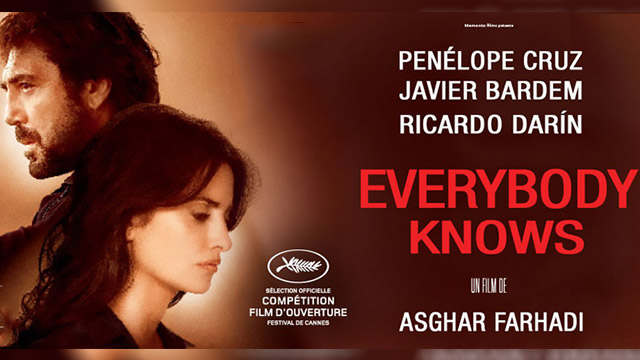
With Penelope Cruz and Javier Bardem cast as your leading protagonists, and the brilliant Ricardo Darin in support, you’re always guaranteed an enthralling screen experience. Nonetheless, what is so impressive in the performances and direction is they feel like real people with proper emotions, not simply starry versions of themselves emulating reality. Moreover, Farhadi concentrates on the human aspects of the story rather than the crime, as the characters, relationships and town itself begin to unravel. Further, while the film may lack his usual socio-political subtext, Farhadi really pulls you into the drama, as secrets and revelations are unearthed throughout. Overall, this is a consistently watchable piece of cinema that keeps up Farhadi’s impressive hit-rate, while perhaps feeling more familiar and generic compared to the other films of his I have seen.

Mark: 8 out of 11

ON CHESIL BEACH (2017) – CINEMA REVIEW

ON CHESIL BEACH (2017) – CINEMA REVIEW

Directed by: Dominic Cooke

Produced by: Elizabeth Karlsen, Stephen Woolley

Screenplay by: Ian McEwan (Based on: On Chesil Beach by Ian McEwan)

Starring: Saoirse Ronan, Billy Howle, Emily Watson, Anne-Marie Duff, Samuel West, Adrian Scarborough

Cinematography: Sean Bobbitt

**MAY CONTAIN SPOILERS**

on-chesil-beach-600x450

I watch a lot of films. I also write screenplays. Indeed, over the last twenty-five years I have studied and read many “how to” write screenplay courses, books, and articles. One of the major rules of screenwriting, as opposed to radio and television writing is to SHOW and not tell. Deliver your story via the images, performance and shot composition rather than obvious dialogue which spells everything out. As a writer of incredible talent Ian McEwan has, along with director Dominic Cooke and their editor, created an intriguing story of lost love and romance. It flashes forward and back between the past and present beautifully and certainly shows rather than tells the story in a less than obvious fashion. In fact, for me it was ultimately TOO subtle in delivery and the emotional ramifications of certain events are lost in the subtext.

saoirseyouhavemyheart

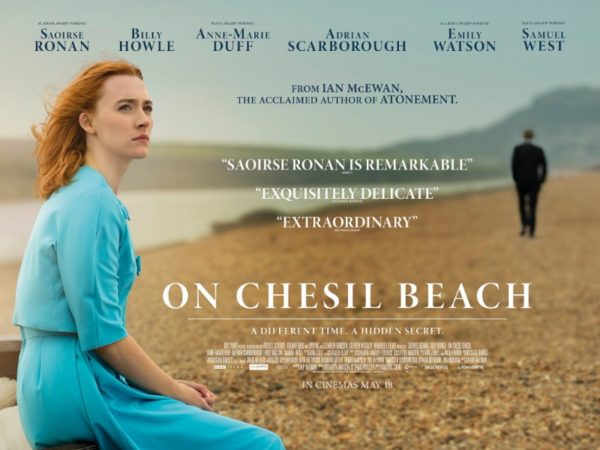
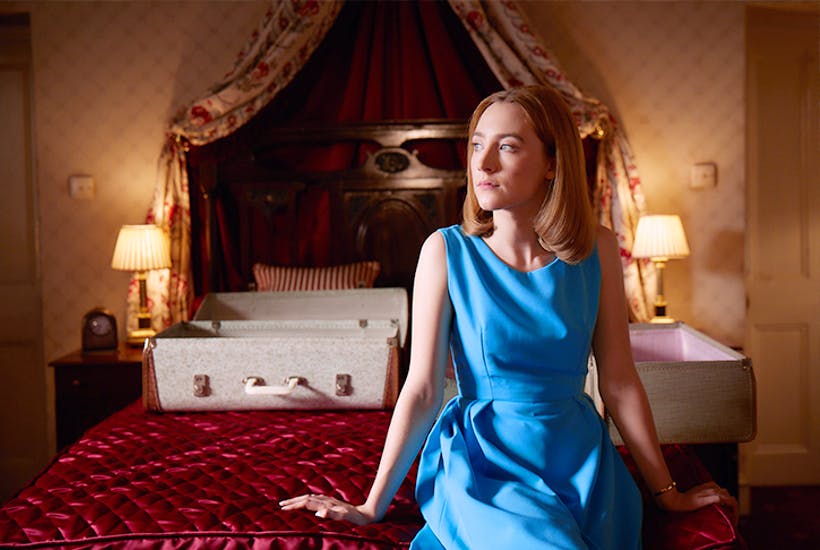
The story begins in the 1960s as newlyweds, Florence and Edward, nervously entwine on their wedding day. As portrayed by the imperious Saoirse Ronan and compelling Billy Howle we are immediately empathetic of their situation and time. Because traditionally, unlike the more sexualised mores of today, religion and social convention would dictate that the couple were more likely to be virgins. Therefore the nervous glances and small-talk slowly build a sexual tension creating an incredibly awkward and embarrassing mid-point moment between the characters. McEwan’s script also flashes back to the past establishing how the characters met. Edward is a lower-middle class boy from a rural background while Florence’s family are more upper-middle class capitalists. As presented in other McEwan works class tensions also propel the drama as Florence’s family look down on Edward somewhat.

There is a lot of depth within the characterisations notably from Ann-Marie McDuff as Edward’s unfortunate mother. Although, at times I wasn’t sure how her mental condition was linked to the themes of the piece, the performance of the actor alone was fascinating throughout. Ultimately, it’s a film about love, loss and terrible secrets; notably how past events can haunt the present. However, in choosing to bury the big reveal within a blink-and-you-miss-it flashback, the poetic editing, in my opinion, took away from the dramatic power and potential catharsis in denouement. On occasions telling us as well as showing us can empower an audience to feel even more for the characters.

lg_b549311376ba-on-chesil-beach-tiff-still-1200x520

Dominic Cooke marshals the film with an assured hand as befits an experienced theatre director. Ronan and Howle give brilliant performances. In fact, I don’t think there is a better and more consistent young actor than Saoirse Ronan. In films such as: Atonement (2007), Hanna (2011), Brooklyn (2015), Lady Bird (2017) and now On Chesil Beach (2017), she has proved herself capable of capturing depth and emotional power with her performances. Ronan and her romantic counterpart, Howle, make the film worthy of your attention even if I was left mildly bewildered, valiantly trying to work out why their characters’ relationship was doomed to fail.

(Mark: 8 out of 11)