Tag Archives: DEATH

Cinema Review: Sinners (2025) – a blazing, bold and bloody blues opera!

Cinema Review: Sinners (2025)

Directed by Ryan Coogler

Written by Ryan Coogler

Produced by Zinzi Coogler, Sev Ohanian, Ryan Coogler

Main cast: Michael B. Jordan, Hailee Steinfeld, Miles Caton, Jack O’Connell, Wunmi Mosaku, Jayme Lawson, Omar Miller, Delroy Lindo, etc.

Cinematography by Autumn Durald Arkapaw


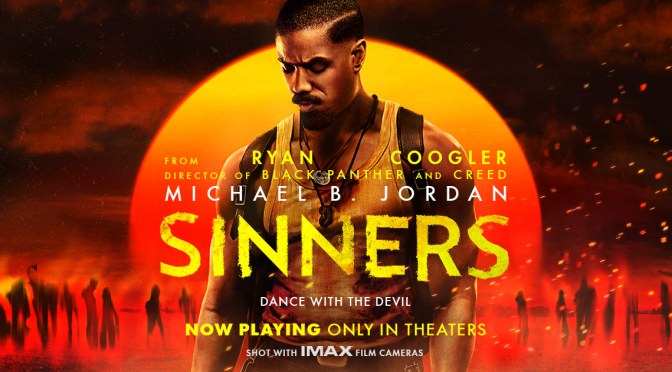
After the bleakly lustful vision of Robert Eggers’ Nosferatu (2024) — a film steeped in shadow, dread, and tragic sensuality — Ryan Coogler offers a wildly different, electrifying take on the vampire mythos: a bold, colourful, and deeply soulful experience that pulses with life even as it drinks from the dead. Where Eggers lingers in gothic majesty, with Sinners (2025), Coogler surges forward with kinetic energy, blending grind-house thrills and emotional depth with From Dusk Till Dawn-style narrative turns.

Coogler’s film is set in the richly textured American South of the 1930s, a world still nursing the scars of the Great War and on the cusp of social upheaval. Into this volatile landscape, he drops the muscular Michael B. Jordan as twin war veterans turned Chicago gangsters, Smoke and Stack — men who carry both physical and spiritual wounds from the trenches — now repurposed as businessman looking to set up a juke joint. These characters feel reminiscent of the working class anti-heroes of Peaky Blinders, their emotional trauma rendered in everything from flickering glances to bursts of brutal, operatic violence. The twins have ghosts of the past and present to battle including relationship issues with Stack’s ex-girlfriend, Mary (Hailee Steinfeld), as well as Smoke’s painful reunion with his wife, Annie (Wunmi Mosaku).

Sinners (2025) plot is muscular and sinewy, establishing the characters impressively before shifting the moody Southern gothic tale into an all-out genre-bender. The film contains a fine ensemble cast knitting a series of substantial supporting characters each with their own personalities, humour and wants. The most striking is Miles Caton as the twins’ cousin, Sammie “Preacher Boy” Moore, a young blues musician with an incredible ability, that proves to be a somewhat dangerous talent. Delroy Lindo also throws in another memorable performance as the ebullient pianist, Delta Slim. With the first night’s festivities in full swing three mysterious strangers appear from the near dark, desiring to be let in. Their leader is charismatic Remmick (Jack O’Connell) and he has more than partying in mind.
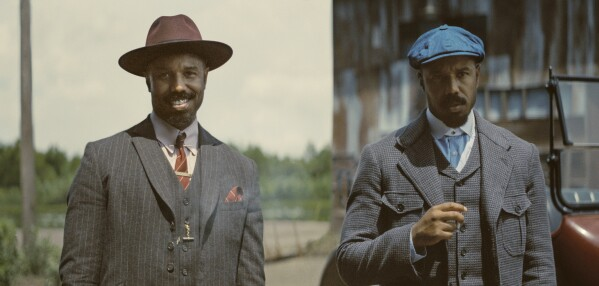


Visually, Coogler lets his imagination loose, notably in a memorable cross-generational musical montage that literally burns up the cinema screen. Gone is the shadow-heavy monochrome of Eggers; in its place is a palette of dusk reds, moonlit silvers, and deep bayou greens. The film pulses with colour, sex, motion, and sweat. Blood flows, but it never feels gratuitous — it feels earned, ritualistic, even sacramental. But what ultimately makes Coogler’s film so potent is its soul. Amid the genre thrills and gore, there’s a beating heart full of soul. These vampires are not romanticised, nor merely feared; they are hungry creatures. Coogler gives them back their humanity, and in doing so, reanimates the genre with urgency.

Music is where the film truly soars. Coogler and his production team, attuned to the cultural pulse, curate a soundtrack that fuses Delta blues, Appalachian folk, and early jazz into a feverish, ghostly soundscape. There are scenes where the music alone tells the story: a backwoods funeral scored by a bone-dry slide guitar; a juke joint confrontation where the rhythm of violence matches the stomp of the blues; a haunting lullaby sung by Remmick the migrant vampire that channels generations of sorrow. It is music as memory, as resistance, as raw emotional texture.

Sinners (2025) is not just a vampire film. It’s a blues opera. A folk horror elegy. A pulpy, poignant, and powerfully visceral story about the things that haunt us, and how we fight to keep our humanity intact. What begins as a slow-burning period drama smolders into a blood-soaked explosion of action and moral reckoning. Coogler even delivers a Klan-blasting and redemptive shoot-out final act set-piece. Lastly, in Coogler’s hands, the vampire becomes more than a monster; it’s a metaphor for trauma, addiction, religion, racism, and survival. Coogler reclaims the myth for a new generation, one shaped by history, crime, grief, music, and spiritual struggle, delivering a genre masterpiece that bites deep and lingers long after the lights come up.
Mark: 9.5 out of 11


Cinema Review: Mickey 17 (2025) – a multi-faceted sci-fi adaptation that leaves one drunk, but somehow still thirsty!

Directed by Bong Joon Ho

Screenplay by Bong Joon Ho – Based on Mickey 7 by Edward Ashton


Produced by Dede Gardner, Jeremy Kleiner, Bong Joon Ho and Dooho Choi

Main Cast: Robert Pattinson, Naomi Ackie, Steven Yeun, Toni Collette, Mark Ruffalo, Patsy Ferran, Cameron Britton, Daniel Henshall, Anamaria Vartolomei, etc.

Cinematography by Darius Khondji


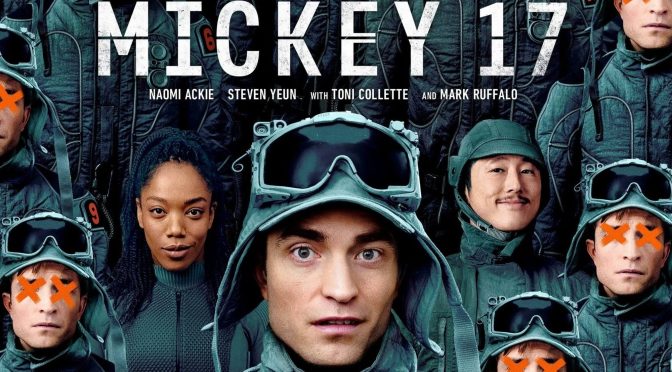
Bong Joon Ho’s adaptation of Mickey 7, the 2022 sci-fi novel by Edward Ashton, showcases a compelling convergence of the director’s distinctive thematic interests with the novel’s narrative. Known for his ability to blend genre elements with incisive social commentary, Bong’s version of Mickey 7, now titled Mickey 17 (2025) is a comedic, at-times-crazy and imaginative sci-fi film exploring human resilience, class struggles, scientific malpractice, environmental abuse, genocidal terra-forming, plus the existential impact of technology within the workplace.

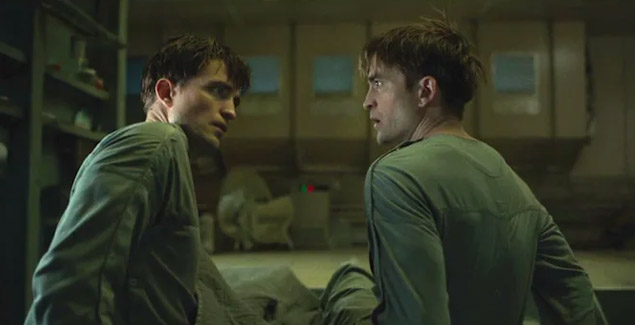
Robert Pattinson is the eponymous Mickey, a “disposable” worker sent on perilous missions to terra-form a distant planet, with his life repeatedly put in danger only for him to be replaced if he dies. This directly ties into Bong’s recurring exploration of human resilience in the face of dehumanizing systems, something seen in his earlier films, such as Snowpiercer (2013) and Okja (2017). Bong’s protagonists are often ordinary people facing systems designed to strip away their individuality, and Mickey’s repeated resurrections emphasize the fragility of life within these systems.

Another prominent theme in Bong’s films is the exploration of class and social inequality. In Parasite (2019), he delved into the gap between the wealthy Park family and the impoverished Kim family, using the home as a microcosm of societal hierarchies. In Mickey 17 (2025), the corporate-driven space mission echoes the exploitation seen in these films. Mickey’s status as an expendable worker mirrors the broader economic systems that exploit individuals for labour without regard for their well-being. The fact that Mickey is repeatedly discarded without consequence is an unsettling reflection of how capitalist structures often devalue human life for the sake of profit.

Bong has always critiqued the alienation of labour, especially how working-class individuals are treated as replaceable cogs in the machine. In Mickey 17 (2025), this theme is amplified as Mickey’s life is literally expendable, offering a stark commentary on the commodification of labour within the context of futuristic colonization. The struggle for survival and dignity, against an uncaring corporate entity, will likely resonate with themes Bong has previously explored. Likewise, in Memories of Murder (2003), the search for truth is tied to the characters’ understanding of themselves and their roles in society. Such societal and existential crises fit perfectly with Bong’s broader thematic preoccupation with the fragility of the human experience in the face of overwhelming, often oppressive, external forces. The question remains: is Mickey 17 (2025) any good?


Robert Pattinson, who plays various versions of the titular character Mickey, brings his signature range of brooding intensity and offbeat charisma to the role. His performance is a key part of what makes the film such an intriguing watch. Pattinson excels in portraying Mickey’s emotional journey—a man repeatedly resurrected after dying in increasingly perilous circumstances, struggling with his own identity, and questioning the morality of the system that disposes of him so easily. However, Pattinson’s performance also contributes to the film’s unevenness. While his portrayal is captivating, the character’s arc and motivations can occasionally feel too vague or inconsistent, leading to moments where it’s unclear whether Mickey is supposed to be a tragic figure, a comic relief, or something in between.

The visual effects in Mickey 17 (2025) are nothing short of stunning. Bong Joon Ho, along with his team, creates a visually immersive universe, blending futuristic technology, the planet landscapes of Niflheim, quirky alien creatures and mind-bending visuals to evoke a sense of awe. The digital photo-copying resurrection process that Mickey undergoes is a feat of visual storytelling, with the film using cutting-edge effects to show Mickey’s multiple deaths and resurrections in creative and striking ways. The film’s alien planet, with its strange, luminous terrain and exotic creatures, also adds a surreal and fantastical quality to the narrative. Indeed, the theme of environmental and indigenous protection is vital, but does eventually clash with that of the existential worker.

Where Mickey 17 (2025) truly shines—and stumbles—is in its wacky, unpredictable storytelling. Bong Joon Ho has always been a director unafraid to blend genres and tones, and here he creates a narrative that swings wildly between dark comedy, sci-fi absurdity, and existential dread. One moment, you’re laughing at Mickey’s off-kilter interactions with his fellow colonists, and the next, the film veers into dark, serious territory as Mickey grapples with his own mortality and the ethical dilemmas of his existence. Moreover, the film’s narrative structure itself is erratic. There are moments where the plot careers off course, lost in the chaos of its high-concept premise.

As Robert Pattinson’s charismatic, multi-faceted performance anchors the film, the performances of Mark Ruffalo and Toni Collette—as the grotesque antagonists—topple the tone too far into bad theatre. Finally, Bong Joon Ho’s trademark brilliance is evident throughout, but Mickey 17 (2025) ultimately suffers from the very risk-taking that makes it unique. It’s a thrilling, uneven ride that fascinates, frustrates, makes one laugh and leaves you with a lot to think about—once the space dust has settled. Perhaps I should have had what Bong Joon Ho and his production team were drinking before I watched it. If so, I should certainly of made it a double!

Mark 7.5 out of 11


Cinema Review: The Monkey (2025) – a hilarious horror sketch-show with gore masking an inconsistent totemic tale!

Cinema Review: The Monkey (2025)

Directed by Osgood Perkins

Written by Osgood Perkins

Based on “The Monkey” by Stephen King

Produced by James Wan, Dave Caplan, Brian Kavanaugh-Jones, Chris Ferguson, etc.

Main Cast: Theo James, Tatiana Maslany, Christian Convery, Colin O’Brien, Rohan Campbell, Sarah Levy, Adam Scott and Elijah Wood.

Cinematography by Nico Aguilar


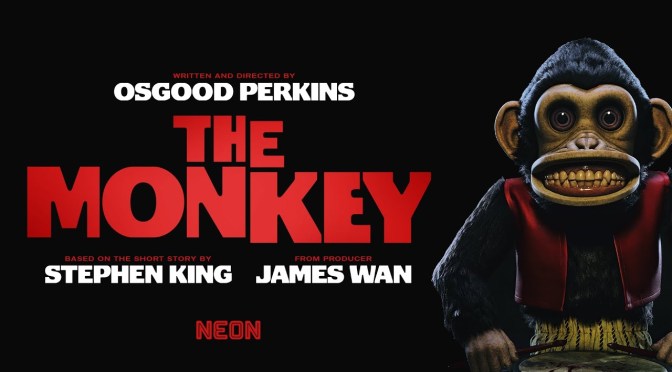
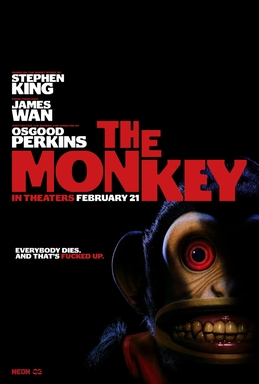
Following the financial success of his 2024 psychological thriller Longlegs (2024), Osgood Perkins has recently embarked on adapting Stephen King’s short story, The Monkey, into a feature film. While I didn’t quite connect with it Longlegs (2024) it had many impressed with its strange, atmospheric tension as well as Nic Cage’s crazy look and performance. The Monkey (2025), differs in tone though as it this adaptation with a blends horror and dark comedy, allowing Perkins to showcase his versatility as a filmmaker.

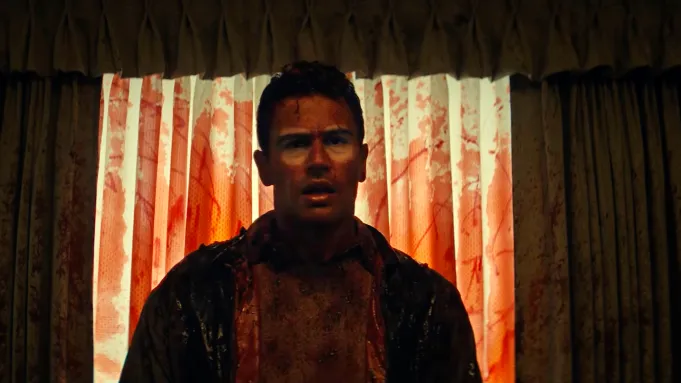
The narrative of The Monkey (2025) centres on twin brothers, portrayed by Theo James, who encounter a cursed toy monkey linked to a series of gruesome deaths. Perkins expands upon King’s original short story, infusing it with themes of family, fatherhood, reconciliation and a litany of grisly sudden deaths. Having found the simian death totem as teenagers, Hal and Bill Shelburn find their lives and those around them impacted in the most bloody explosive of ways. Indeed, there is much thought and planning given to these Saw and Final Destination franchise influenced on-screen set-pieces. In fact, the exquisite surprise and laugh-out-loud hilarity which occur throughout somewhat overpowers any emotional connection with the thinly-written protagonists.


The film’s gore and relentless pace are undeniably its strongest assets — the kills are extreme, inventive, and staged with a gleeful disregard for realism, echoing the chaotic energy of ’80s horror comedies. Each death sequence feels like a miniature horror short, packed with practical effects and over-the-top carnage. Perkins crafts these moments with a twisted sense of humour, making the film feel like a sketch-show carousel of nightmarish vignettes, each more outrageous than the last.

However, despite the visceral fun, The Monkey (2025) struggles to leave a lasting impression. Unlike the original Saw (2004) by James Wan and Leigh Whannell — a film that balanced its brutal horror with sharp social commentary and tightly woven mythology — Perkins’ adaptation lacks a deeper foundation. The cursed toy monkey serves as a simple harbinger of death, but the film never establishes consistent rules for how the curse operates or why it escalates the way it does. Without clear internal logic or meaningful subtext, the horror loses weight, and the emotional stakes fizzle.

While The Monkey (2025) succeeds as a frenetic, blood-soaked thrill ride, it ultimately feels ephemeral. The film’s surface-level scares and comedic flair make for an entertaining watch, but the absence of narrative substance or thematic resonance leaves it as little more than a fleeting novelty — a film you enjoy in the moment, but rarely think about after the credits roll.

Mark: 6.5 out of 11


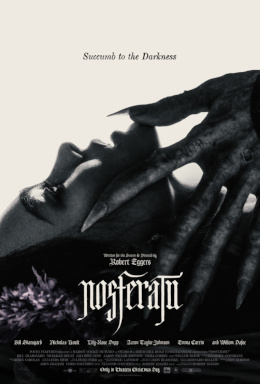
Cinema Review: Nosferatu (2024) – At the Intersection of Horror and Eroticism!

Cinema Review: Nosferatu (2024)

Directed by Robert Eggers

Screenplay by Robert Eggers

Based on Nosferatu by Henrik Galeen and Dracula by Bram Stoker

Produced by Jeff Robinov, John Graham, Chris Columbus, Eleanor Columbus, Robert Eggers, etc.

Main Cast: Bill Skarsgård, Nicholas Hoult, Lily-Rose Depp, Aaron Taylor-Johnson, Emma Corrin, Willem Dafoe, Simon McBurney, etc.

Cinematography by Jarin Blaschke

Music by Robin Carolan

*** MAY CONTAIN SPOILERS ***


Firstly, Nosferatu: A Symphony of Horror, the 1922 silent German Expressionist vampire film directed by F. W. Murnau remains one of the greatest and most iconic horror films of all time. It is arguably the greatest adaptation of Bram Stoker’s, seminal gothic classic, Dracula, too. Of which there have been many. So, who would be brave enough to attempt to master another version of this often-told monstrous tale. Step forward the acclaimed and relatively young American auteur, Robert Eggers.

Robert Eggers has built a reputation for crafting films that blend mythical and fantastical elements with folk horror and psychological thriller sensibilities. His works often transport audiences to meticulously recreated period settings, which serve as the foundation for his exploration of human fears, desires, and the supernatural. His debut feature film. The Witch (2015) exemplified folk horror rooted in Puritanical fears of the supernatural. Set in 1630s New England, it drew heavily from folklore, historical accounts, and period-authentic dialogue. The film explored themes of isolation, religious paranoia, and the breakdown of a family due to their belief in the presence of witches.

Similarly, The Lighthouse (2019), a psychological thriller merged maritime folklore with hallucinatory horror. Set in the late 19th century, the film delved into isolation-induced madness as two lighthouse keepers grappled with mythological themes such as mermaids, sea gods, and Promethean punishment. Moreover, as with his short films Hansel and Gretel (2007) and The Tell-Tale Heart (2008) he is drawn towards established texts, with the bruising, battering ram of The Northman (2022) covering the original myth on which Hamlet was based. Eggers vision immersed the viewer in violence, Viking culture, shamanic ritual and mysticism. Unsurprising therefore, he has now delivered the German Expressionist classic, Nosferatu (2024) with his signature period aesthetic and focus on the macabre.


With a stellar cast, production design and incredibly stylish vision, Eggers has produced a praiseworthy example of fantastical cinema. As usual there appears to be meticulous historical research, including accurate costumes, set design, and period-specific dialogue. This attention to detail in Nosferatu (2024) grounds the supernatural elements in a believable world, enhancing their impact. Furthermore, Eggers creates a sense of dread through his use of sound design, stark cinematography, and claustrophobic settings. His restrained pacing allows for the gradual unraveling of characters’ psyches, making the supernatural elements more impactful.

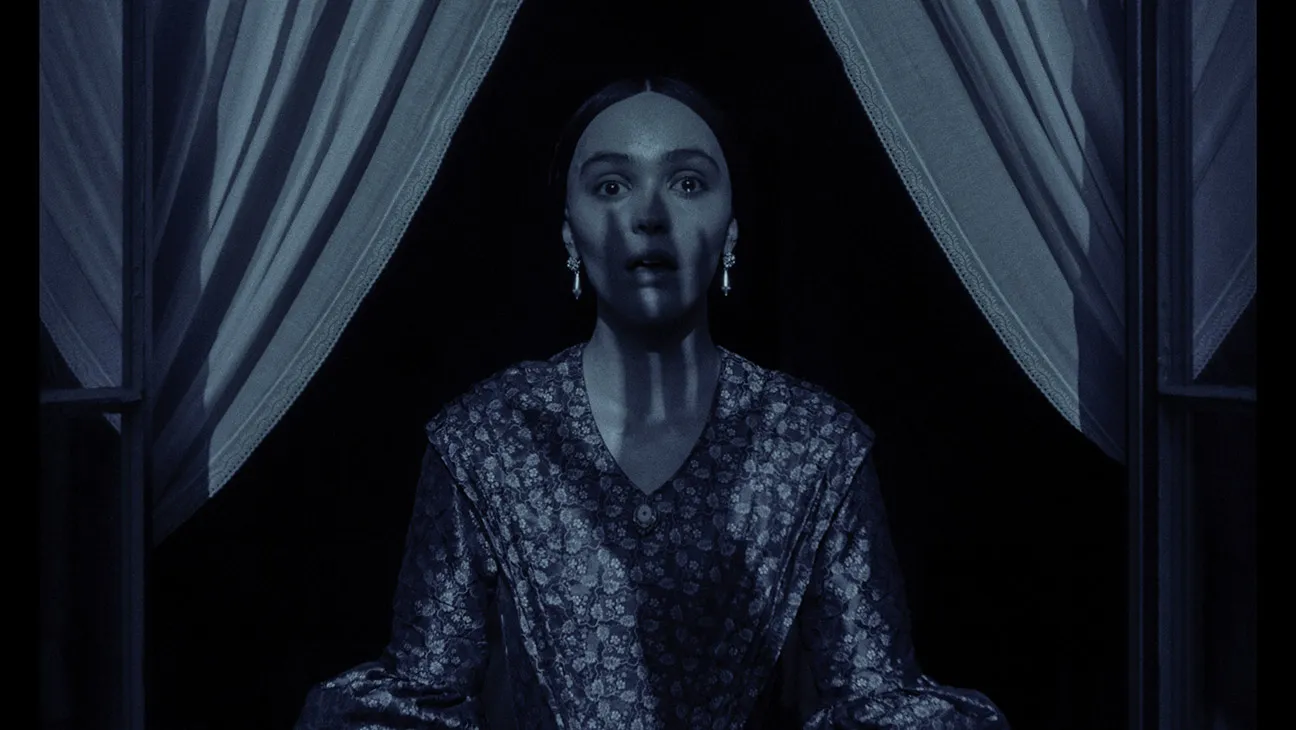
Yet, while steeped in folklore, Nosferatu (2024) centres on human struggles—family disintegration, fate, guilt, madness, lust and sex. Indeed, Nicholas Hoult’s Thomas Hutter (née Harker) does not stand a chance. From the opening scene his sensual wife, Ellen, is inextricably linked via a lustful fever dream to a mysterious figure, who, if you couldn’t guess, is Count Orlok (an unrecognizable Bill Skarsgård). It is Ellen’s orgasmic connection across oceans of time which drives Orlok to lure Thomas away and commit blood-draining murder as he creeps cross-country and sails the seas from Transylvania to Germany. Ellen’s surreal and orgiastic desire unfortunately brings the plague and causes the death of extraneous supporting characters portrayed by the likes Aaron Taylor-Johnson and Emma Corrin. A note to say Willem Dafoe is as usual a joy as the ‘Van Helsing’ substitute.

Nosferatu (2024) is undeniably a sumptuous adaptation, brimming with signature attention to period detail, atmospheric dread, and a striking visual palette. However, for those seeking a viscerally terrifying Dracula film, the movie might fall short, leaning heavily into the realm of erotic horror and psychological tension rather than outright scares. While the stunning cinematography, the film’s shadow-drenched landscapes, intricate set design, and haunting score evoke the satanic allure of the original silent film this focus, however, shifts the film away from raw horror and toward a more introspective exploration of vulnerability and eroticism. Ultimately, the film’s reinterpretation of Count Orlok and its restrained approach to gore might alienate viewers expecting a more terrifying vampire film. This left me impressed but more disturbed by the overlong runtime than by the nightmarish allure of the bloodthirsty undead.

Mark: 8 out of 11


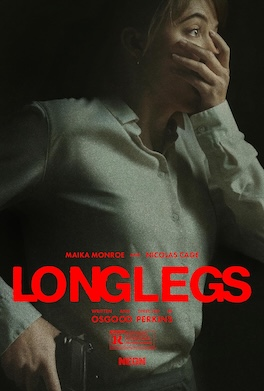
CINEMA REVIEW: LONGLEGS (2024)

CINEMA REVIEW: LONGLEGS (2024)

Directed by Osgood Perkins

Written by Osgood Perkins


Produced by Dan Kagan, Brian Kavanaugh-Jones, Nicolas Cage, Dave Caplan, Chris Ferguson etc.

Main Cast: Maika Monroe, Blair Underwood, Alicia Witt, Nicolas Cage, etc.

Cinematography by Andrés Arochi

*** THIS REVIEW CONTAINS SPOILERS ***


As a no-budget filmmaker I have often written and produced scripts which arguably had plots and concepts that were under-served by the lack of funds. The low budget meant one’s production values suffered on screen and did not allow the requisite number of shoot days to do the finished script justice. I felt similar vibes watching Longlegs (2024), as filmmaker Osgood Perkins attempts a FBI procedural thriller on less-than-$10 million dollars. The sparseness of the production and minimal cast kind of works in its’ favour, as Perkins goes for an ultra-violent-Twin-Peaks-meets-economy-Fincher vibe, ultimately ending up with a incredibly strange brew indeed.

Maika Monroe is FBI agent, Lee Harker, investigating a series of inexplicable murder-suicides during the 1990’s. In terms of structure the breadcrumb plotting is not the films’ strength but it does allow the director to hang a whole load of janky peculiarities on the screen. Harker’s keen empathy and apparent sixth-sense bring her ever closer to a suspect who goes by the name of ‘Longlegs’. Yet, the killer is not related to a spider, but rather reminded me of Noel Fielding meets the monster from parodic film-within-a-TV-show, Doctor and the Pencil. Surprisingly, and you will not believe this, the weirdo killer, Longlegs, is portrayed weirdly by Nicolas Cage, who revels in the wig and prosthetics and is, did I say already, the height of weirdness.

Osgood Perkins directed one of the dullest horror films I have ever seen in the experimental, I Am the Pretty Thing That Lives in the House (2016). But Longlegs (2024) is a massive improvement with some chilling and suspenseful scenes, and a decent lead performance from Agent Starling-alike, Maika Monroe. Similar to Carol Morley’s Out of Blue (2018), this is an arthouse director taking on genre filmmaking without enough cash and getting it deliberately wrong. Overall, with a very strong first half, Longlegs (2024), latterly takes some insane plot turns involving Faustian pacts, parental abuse, religious mania, hypnosis and voodoo sci-fi concepts which don’t really meld but remain thematically fascinating. Cage portraying Noel Fielding as an oddball killer, as well as many fantastic on-screen deaths, definitely give this cult cinematic stew strong and curious limbs.

Mark: 7.5 out of 11


CINEMA REVIEW: THE IRON CLAW (2023)

CINEMA REVIEW: THE IRON CLAW (2023)

Directed by Sean Durkin

Written by Sean Durkin

Produced by: Tessa Ross, Juliette Howell, Sean Durkin, Angus Lamont, Derrin Schlesinger

Cast: Zac Efron, Jeremy Allen White, Harris Dickinson, Maura Tierney, Stanley Simons, Holt McCallany and Lily James.

Cinematography: Mátyás Erdély

*** CONTAINS SPOILERS ***


According to research on the internet the biggest killer of men in the UK under fifty-years of age is suicide. Nationally and locally seventy-five percent of those that die by suicide are men, with the highest numbers being forty-five to fifty-four years of age. In the USA, reports show suicide is the second leading cause of death among Americans ages ten to thirty-four, and the fourth leading cause of death in the thirty-five to fifty-four age group. I personally have known two close male friends who have taken their own lives in the last decade.

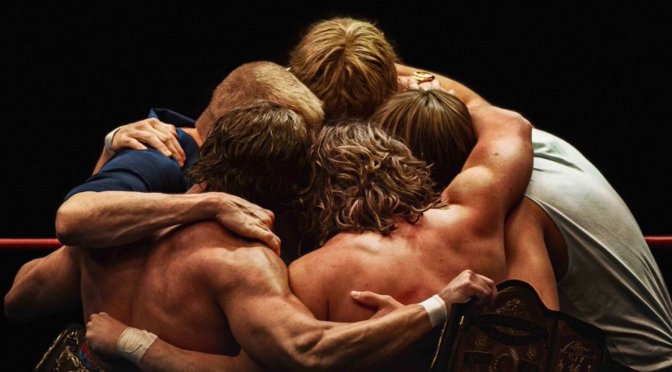
In addition, mortality rates for professional wrestlers are reportedly up to 2.9 times greater than the rate for men in the wider United States population. Statistics also show that the early deaths of professional wrestlers were significantly higher than that of athletes in other sports. Potentially due to the consistent mental and physical detriment as well as a proclivity toward higher rates of cardiovascular disease, depression and drug addiction. Thus, with this in mind, Sean Durkin’s film, The Iron Claw (2023), a profile of the Von Erich family, while full of exciting wrestling action, is NOT one of those generic feelgood underdog sports dramas. It is however a complex exploration of masculinity, familial pressure, sports politics, suicide, grief, religion, addiction, love, and the resilience of the human spirit.


A prologue establishes Jack “Fritz” Von Erich (Holt McCallany) as an uncompromising professional wrestler in the 1960s with a signature move called the ‘Iron Claw.’ A number of years later Von Erich Snr. is a wrestling promoter who runs successful WCCW events in Texas. His unique selling point for the shows is that he has four sons, Kevin (Zac Efron), Kerry (Jeremy Allen White), David (Harris Dickinson) and Mike (Stanley Simons), who throughout the narrative, all test themselves to the limit in the wrestling ring.

While it is certainly a strong ensemble cast, the main focus of Durkin’s compelling screenplay is Zac Efron’s, Kevin. A strong, fast and muscular athlete in the ring, Kevin, however, is not a confident personality out of it. He, and his brothers, live in the shadow of his domineering father, who controls and dictates to those around him. Jack’s resentment at not winning the NWA Worlds Heavyweight Championship during his career, and dissatisfaction at the politics of the higher-ups in wrestling, has made him a bitter, angry man. Thus, the theme of toxic masculinity bleeds throughout the story as Jack keeps his sons, and wife (Maura Tierney), under control. Therefore The Iron Claw (2023) is not just a signature wrestling move, but also the means with which the Von Erich family are treated by Jack.

There are moments of glory in the ring for the brothers, notably Kevin, Kerry and David in The Iron Claw (2023). Indeed the wrestling action is often pulsating and Durkin does include several genre-pleasing action montages. But, tragedy is never far away from the Von Erich family. Kevin even tells his wife-to-be, Pam (Lily James) that he believes the family are cursed. She dismisses this, but given what occurs during the film and the heartbreak which befalls the brothers, you begin to think he may be right. As Kevin, Zac Efron gives an incredibly moving performance as the brother seeking love, success and family community. Lastly, I truly disliked Sean Durkin’s last film The Nest (2020), as it said very little about people I did not care about. The Iron Claw (2023), on the other hand, says so much about people I was emotionally rooting for, with Kevin Von Erich in particularly admirable as he showed ultimate fighting spirit by surviving such unforgiving loss.

Mark: 9 out of 11


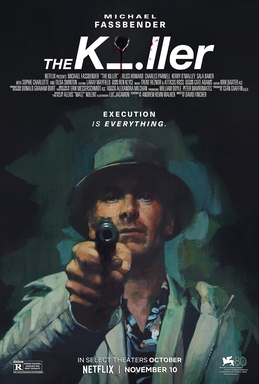
NETFLIX FILM REVIEW: THE KILLER (2023)

NETFLIX FILM REVIEW: THE KILLER (2023)

Directed by David Fincher

Screenplay by Andrew Kevin Walker

Based on: The Killer by Alexis “Matz” Nolent and Luc Jacamon

Produced by: William Doyle, Peter Mavromates, Ceán Chaffin

Cast: Michael Fassbender, Arliss Howard, Charles Parnell, Kerry O’Malley, Sala Baker, Tilda Swinton and Sophie Charlotte.

*** MAY CONTAIN SPOILERS ***


David Fincher is one of those filmmakers whose form and style is often unsettling and remarkable. He has built up a formidable body of directorial work over the years and his qualities were displayed perfectly in the Netflix FBI drama Mindhunter. Greens, dark yellows and browns stained the screen as Fincher and other series directors created a haunting stylistic palette. Furthermore, with the gripping narratives, great direction and memorable performances I just did not want the latest season of Mindhunter to end. Choosing to stay with the theme of death, Fincher now presents The Killer (2023), again released by Netflix.

Michael Fassbender is the unnamed assassin who has a specific set of rules. The film opens with him currently preparing for his latest job. He chimes and opines via a voiceover like a monk praying allowing us into his way of working. Methodical and meticulous, the ‘Killer’ waits patiently for the moment his planning comes to a head and he shoots. All the while he listens to songs by Mancunian indie band, The Smiths. The opening sequence is the strongest of the film and is a masterclass of visual storytelling, character work by Fassbender and suspense building. Inevitably, for a consummate professional and organiser, the hit goes awry and the ‘Killer’ find himself a target for death himself.

After such a memorable opening, reminiscent of one of Paul Schrader’s compelling existential-lone-man-in-a-room dramas, the remainder of the film is a more generic series of chases and fights enlivened by one stand-out acting duologue scene between Fassbender and Tilda Swinton. Moreover, for a character to have renounced emotional connections with anyone or anything, the ‘Killer’s’ motivations to wreak revenge on those who harmed his girlfriend seemed at odds with his governing principles. Also, for someone who is meant to “stick to the plan” he does improvise a fair amount. Putting my personal pedantry aside, this is a fine B-movie in the assassin crime subgenre with terrific work by Fassbender as the quirky killer and also Fincher, who even in second gear, is capable of delivering darkly compelling filmic entertainment.

Mark: 8 out of 11


CINEMA REVIEW: TALK TO ME (2022)

CINEMA REVIEW: TALK TO ME (2022)

Directed by Danny Philippou and Michael Philippou

Written by: Danny Philippou, Bill Hinzman

Based on an idea by: Daley Pearson

Produced by: Samantha Jennings, Kristina Ceyton

Cast: Sophie Wilde, Alexandra Jensen, Joe Bird, Otis Dhanji, Miranda Otto, Zoe Terakes, Chris Alosio, Marcus Johnson, Alexandria Steffensen, etc.

Cinematography: Aaron McLisky

*** MAY CONTAIN SPOILERS ***


A cold paw of death, stiff fingers, rotting black nails, gripped by a living hand and opening a portal, a link to the other side to make contact with lost spirits. What does the hand represent or symbolise in terms of contemporary subtext? Is it mobile phones? Or social media? Or is it just a creepy device with which to layer chills and suspense and scare teenagers on a Friday night at the cinema. Does a horror film have to have a deeper meaning as long as it scares us?

Saw (2004), Paranormal Activity (2007), The Blair Witch Project (1999), Night of the Living Dead (1968) and most recently, Get Out (2017), are low budget horror films which became breakout box office hits. Similarly, to Peele’s debut chiller, Talk To Me (2022), is at the higher echelon of “low” budget cinema costing circa $4 million to produce. Yet, it has given A24 its biggest hit to date thanks to a nifty premise, impressive young cast, and compelling direction from yet another filmmaking sibling duo in Danny and Michael Philippou.


The film takes the phrase “talk to the hand” literally as a bunch of dopey Aussie teens play party games for kicks by connecting with the afterlife through a disembodied hand. Before you can say, “Candyman, Candyman, Candyman!” the ghost has decided they don’t want to return home and chooses to remain with the living. I hate it when that happens! Cue all sorts of creepy and unsettling shenanigans.

The emotional core of this overfamiliar ghoulish tale is represented in the grieving teen angst of Sophie Wilde’s Mia. In attempting to overcome the recent passing of her mother, Mia leaves herself open to the torment of the nefarious spirits. So, once she has shook the dead hand at a party she is suddenly connected with her dead mother’s spirit. Or is she cursed by something altogether more evil. What do you think?

For all the over-used tropes within Talk to Me (2022) is a very suspenseful and scary film. While Wilde’s acting is slightly overwrought, her character is the least irritating of the dumb teenage protagonists not thinking through the consequence of their actions. Thematically it is quite strong as it explores the nature of grief and how it impact one’s mental health. My one main criticism of the production was Aaron McLisky’s cinematography was too dark, even for a horror film. Nonetheless, the hand itself is an iconic prop, and will no doubt lead to a slew of most likely inferior franchised sequels.

Mark: 7.5 out of 11


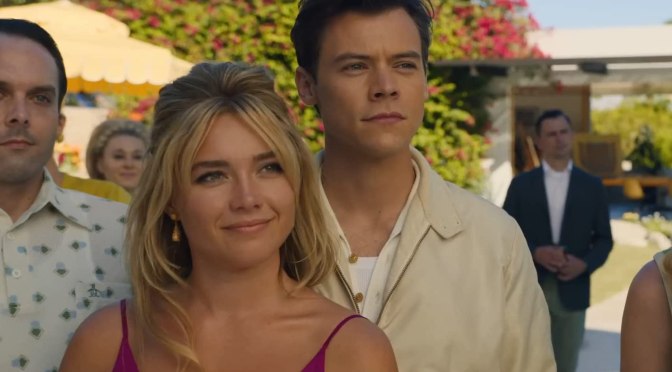
CINEMA REVIEW: DON’T WORRY DARLING (2022)

CINEMA REVIEW – DON’T WORRY DARLING (2022)

Directed by: Olivia Wilde

Screenplay by: Katie Silberman – Story by Carey Van Dyke, Shane Van Dyke and Katie Silberman

Produced by: Olivia Wilde, Katie Silberman, Miri Yoon, Roy Lee

Main Cast: Florence Pugh, Harry Styles, Olivia Wilde, Gemma Chan, KiKi Layne, Nick Kroll, Chris Pine etc.

Cinematography Matthew Libatique

*** MAY CONTAIN SPOILERS ***


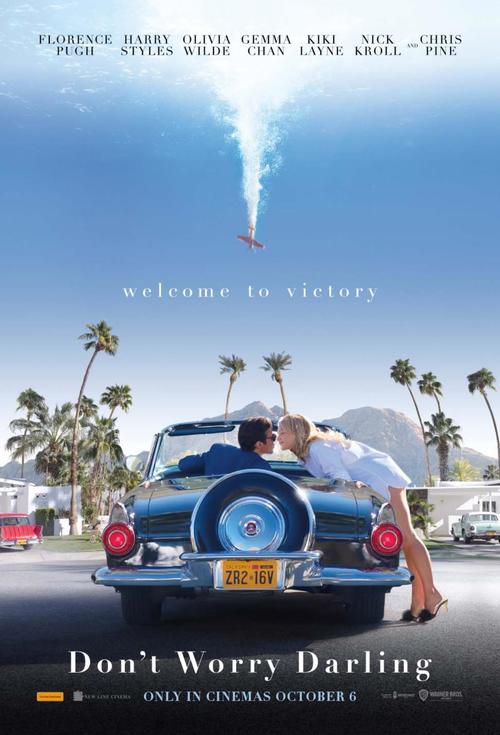
Part arthouse character study, part science fiction social satire and eventually a rushed concertinaed thriller, the Olivia Wilde directed, Don’t Worry Darling (2022) is a visual feast, anchored by Florence Pugh’s devastatingly brilliant performance. However, the ambition of the themes remains hamstrung by pacing and structure which fails to serve the story to its full potential.

Set within a utopian 1950’s sun blanched town called Victory, Wilde and her writers throw us straight into the hedonistic lives of a set of youthful and dynamic couples, drinking, partying and sexing. They work and play hard. Well, the husbands work as the dutiful women stay at home cleaning and churning out kids. So far-so-Stepford Wives! At the heart of Don’t Worry Darling (2022) is Pugh as the loyal but inquisitive, Alice. Her husband, Jack (Harry Styles) is ambitious, seeking the approval of big boss, the hubristic Frank (Chris Pine). When Alice begins to experience Kafkaesque dreams of feeling trapped by her daily life, she slowly realises all is not quite perfect in paradise.


No one does anguish and anxiety on screen like Florence Pugh. As Alice falls deeper down the rabbit hole of despair, Pugh produces true cinematic power once again. Olivia Wilde also brings a compelling image system to fully visualise Alice’s hellish descent. In comparison, the male characters are far less developed and the exchanges between Pugh and Styles, especially in the final act, are really lacking in dramatic punch. Styles himself I felt was miscast, but he does have an engaging screen presence. It’s just I didn’t feel enough threat from him.

Structurally, Don’t Worry Darling (2022) is also flawed. The major reveal comes way too late to assuage the pacing issues. While the narrative contains some striking visual set-pieces there are too many parties, barbecues and social events getting in the way of the potential thrills that could have occurred if Alice had discovered her plight much earlier. Overall, there is too much set-up and not enough punch. The longer you wait to reveal the twist, the bigger the revelation needs to be. The Outer Limits and The Twilight Zone have done this style of story with more emotional impact and better economy. Pugh and Wilde though prove once again they are major talents and thematically speaking it’s good that men get another kick in. Men are fast becoming the go-to villains of this century and long may it continue.

Mark: 6.5 out of 11


CLASSIC FILM REVIEW: WINGS OF DESIRE (1987)

CLASSIC FILM REVIEW: WINGS OF DESIRE (1987)

Directed by: Wim Wenders

Written by: Wim Wenders, Peter Handke, Richard Reitinger

Produced by: Wim Wenders, Anatole Dauman

Cast: Bruno Ganz, Solveig Dommartin, Otto Sander, Curt Bois, Peter Falk, Nick Cave, etc.

Cinematography: Henri Alekan

*** MAY CONTAIN SPOILERS ***


I hadn’t seen Wim Wenders cinematic masterpiece, Wings of Desire (1987), for many years. Probably thirty-three years. I’m glad I waited so long because I think I am mature enough now to appreciate the poetry of the filmmaking style and the soulful gravity of the characters and themes on display.

I am of the belief that cinema is a collaborative craft in general. Yet, on fleeting occasions a film will be released that transcends the craft of the medium and become art. Wings of Desire (1987) is such a film. Moreover, while I am not a religious person watching Wings of Desire (1987) is as close to experiencing a spiritual filmic happening as I could have. It truly is a thing of transcendent beauty concerned as it is with the afterlife, the soul, humanity, angels, life, love, death and rebirth.

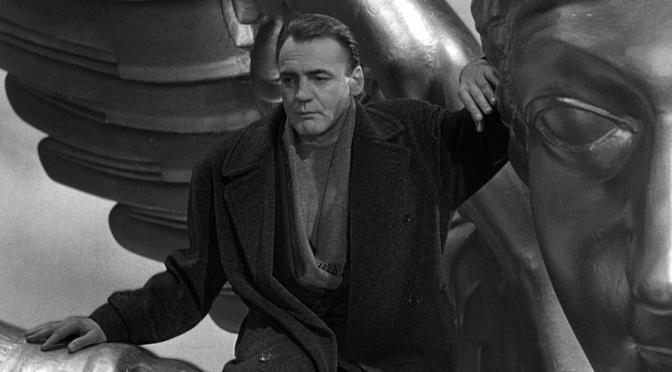
Angels walk amongst the living in a Berlin separated by the wall. Voices reveal their inner most thoughts as said Angels listen, watch, witness and gather human experience, thoughts and emotions. The Angels led by Damiel (Bruno Ganz) and Cassiel (Otto Sander) inhabit Berlin aiming to assemble, preserve and testify reality. In a stunningly beautiful opening sequence the gliding camerawork, chiming harps, poetic voiceovers and sublime photography introduces both a majestic world and compelling characterisations. The monochrome film sets a moody glow illuminating and beautifying the urban locales. If you didn’t know, the black & white sequences were shot through a filter made from a stocking that belonged to cinematographer Henri Alekan’s grandmother.


Wim Wenders directs Wings of Desire (1987) with an assured confidence throughout. Every stylistic and formal choice is driven by the characters’ hearts and an imaginative vision of both reality and the afterlife. It is incredible that Wenders and his production team did not have a traditional script when filming began. Thus, the poetic feel of the film derives from a series of experimental concepts and improvisatory creative choices. Having said that, there is a strong narrative spine amidst the seemingly loose narrative and episodic bones. The anchor amidst these hypnotic vignettes is Damiel’s journey of falling in love, ceasing to be immortal and becoming human.

As Damiel experiences the pain of existing outside human life, Bruno Ganz’s performance is heartbreakingly moving. Damiel also finds love too for Solveig Dammartin’s circus artist. His romantic longing and empathy for her and humanity overall is unforgettable. I mean this celestial and immortal being desires the opportunity to feel, taste and love. There is also humour amidst the pathos too, with a supporting story that follows the actor, Peter Falk, working on a film in Berlin. His brilliant scenes provide a quirky counterpoint to Damiel’s celestial crisis and fledgling romance. Indeed, Peter Falk called his role in Wings of Desire (1987) “the craziest thing I was ever offered”. When Wenders told him his part had not been developed yet, Falk responded, “I’ve worked that way with John Cassavetes. I prefer working without a script.”

Wings of Desire (1987) is deservedly acclaimed as one of the best films ever made. I couldn’t agree more, such is its cinematic power and beauty. It combines both visual, aural and literary styles almost to perfection. Thematically it is just as impressive. While it is a universal story about life, death, love and sacrifice, the fact it is set in Berlin adds an incredible gravitas. The politics and separation caused by the Cold War course through the veins of the film like ice. Nevertheless, Wim Wenders and his creative team wholly reject the gloom of oppression, choosing hope, life and love over said deathly wall.*

Mark: 10 out of 11


(*Note: Interestingly, filming the actual Berlin Wall was prohibited, so a replica of the wall twice had to be built close to the original. The first fake wall warped in the rain because the contractor cheated the producers and built it from wood.)